Gallipoli: The Scale of Our War: Te Papa Tongarewa exhibition (Wellington, NZ)

Given the state of the world at the time of this writing, I’d much rather be doing an exhibition of frayed knots or whatever. But on the other hand, I guess there’s no time like the present to remember that war is absolute bullshit. And anyway, this exhibit is pretty great and very well done.

Te Papa, the national museum of New Zealand, will definitely get its own entry eventually. It’s very large and hosts pretty grand temporary exhibitions. The Scale of Our War is technically not permanent, but it is still a few years from the end of its run (2015 to 2025) and it is very grand. The figures that anchor each section are 2.4 times life size and were created by local prop maker Weta Workshop. Maybe you’ve heard of them.
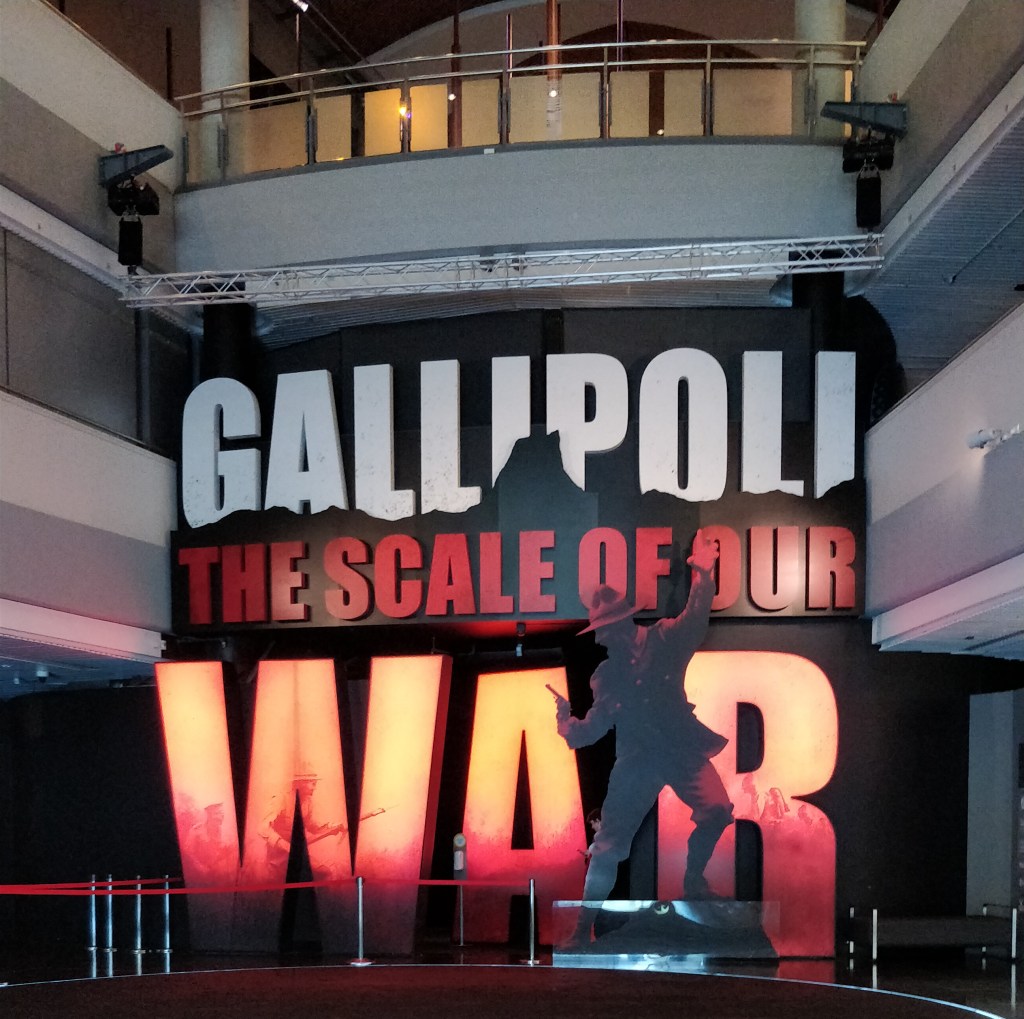
You can’t wander in on accident.

The history of World War I is complicated and brutal and well worth reading about, especially if you’re looking to really trace how exactly a conflict that resulted in so much devastation and death could feel both entirely preventable and wholly inevitable. It was a blood-soaked baptism into the modern age. There are many horrific parts to the whole thing–Ypres, the Somme, the Argonne, etc etc etc–but for New Zealand and Australia, Gallipoli looms largest.

I won’t try to lay out the ebbs and flows of the campaign, because it was eight months of hell spent in service of trying to knock the Ottoman Empire out of the war, and it absolutely did not work. It started with a bad landing, continued with failed offensives, and ended in an evacuation when command decided there were better positions to die for in Europe. The Allies lost 44,000 lives. The Ottoman Empire lost 87,000. It made little difference to the wider war–but it helped shape the national identities of Australia, New Zealand, and Turkey.

The exhibit includes overviews of the campaign as well as the stories of eight New Zealanders, who are depicted by those very large statues. It’s an effective way to hook the audience into a dense topic. You start with Lt. Spencer Westmacott.
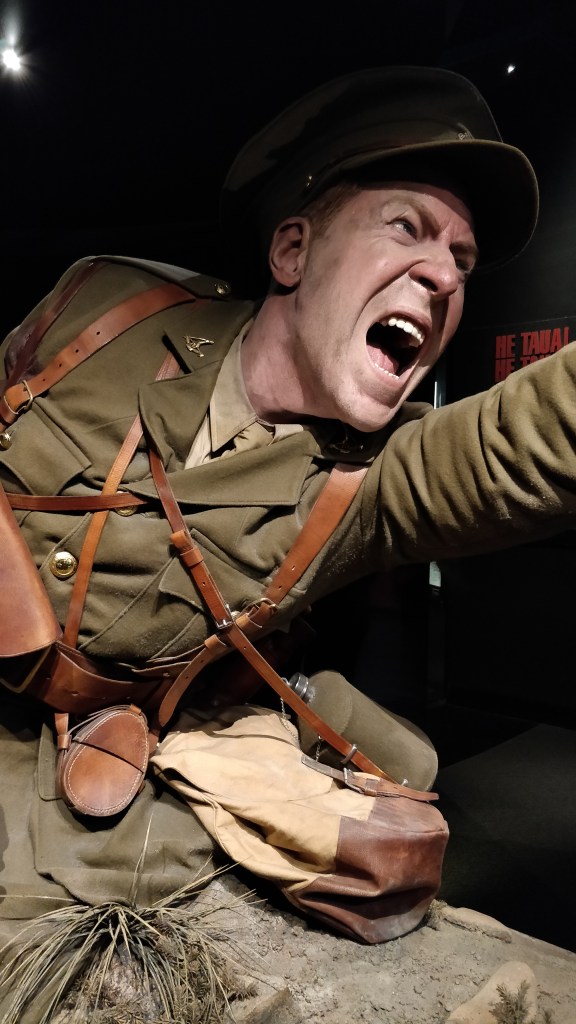
Westmacott would land at Gallipoli on April 25, sustain wounds that would cost him his right arm, and be evacuated that night. His feelings about his experience there reminded me of the narrations in They Shall Not Grow Old, where many soldiers spoke fairly warmly of their time at the front.
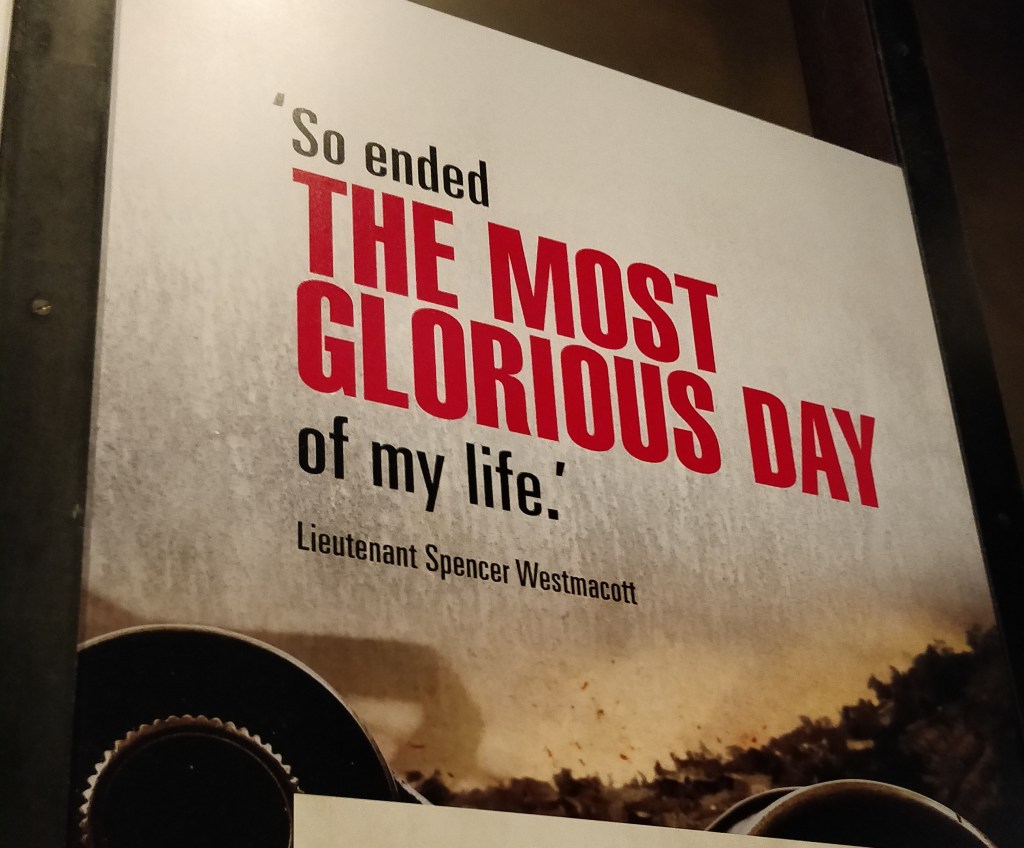
Chrissy-Teigen-grimace.gif

The space of the exhibit is laid out pretty well, in my opinion. You follow the line, which not only helps the flow of traffic but also guides you through with a sense of how time was passing during the campaign.

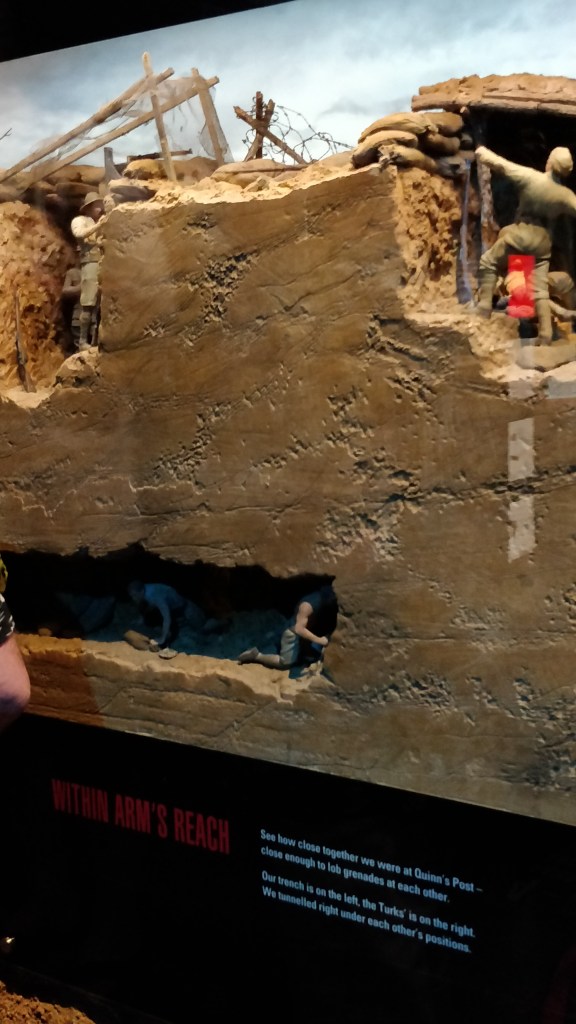
As I mentioned, I’m not going to go through the details of story here–for one thing, this post has been in drafts for some months and I currently have covid; for another, I’ve already linked to one good overview–but I have a lot of admiration for a history-based museum exhibition that does a solid job of engaging the patron. History can be tough for engagement, as it tends to be text-dense, rely on not-immediately-eye-catching artifacts, and generally has taken place somewhere else, leaving a museum-goer without even a bare spatial context within which to imagine the action. Gallipoli tries hard to give some of that context, with 3D maps, models, first-person accounts, footage and photos (some rendered in 3D) and interactive elements.

Artifacts are often positioned within the walking space, which I think helps them be noticeable among the flashier visual elements.
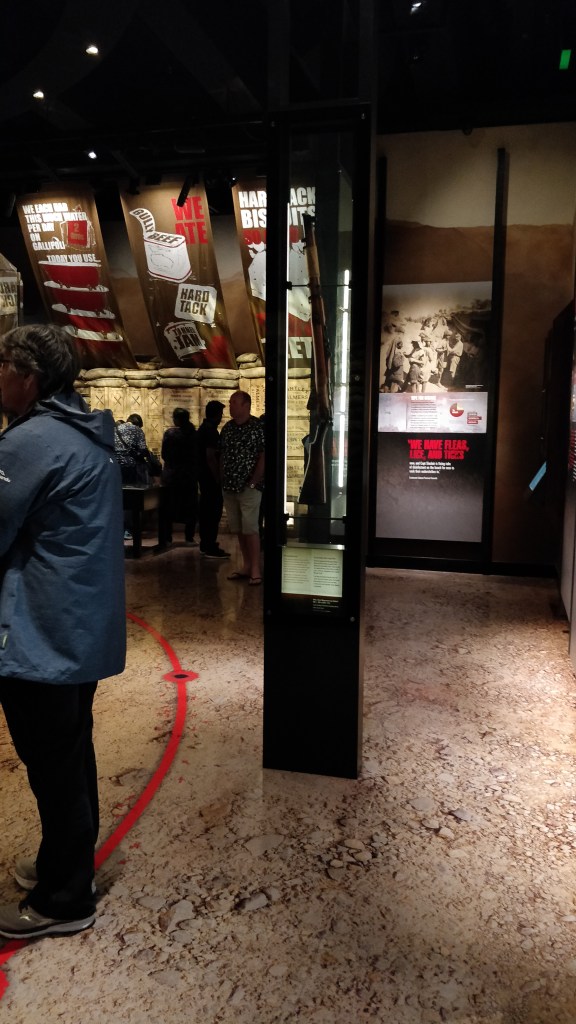
One of the most effective features is a screen that demonstrates the effect of various weapons on the human body. The viewer selects which one and the skeleton takes the hit.

I have no jokes for this

The interactive parts are very well done, and of course there isn’t much in the way of emotional relief throughout the space. While all of the various types of elements are represented throughout the viewer’s walk, the experience is anchored in the statues of the people whose stories make up the narrative of the exhibit, and really, those statues are extraordinary in their detail.
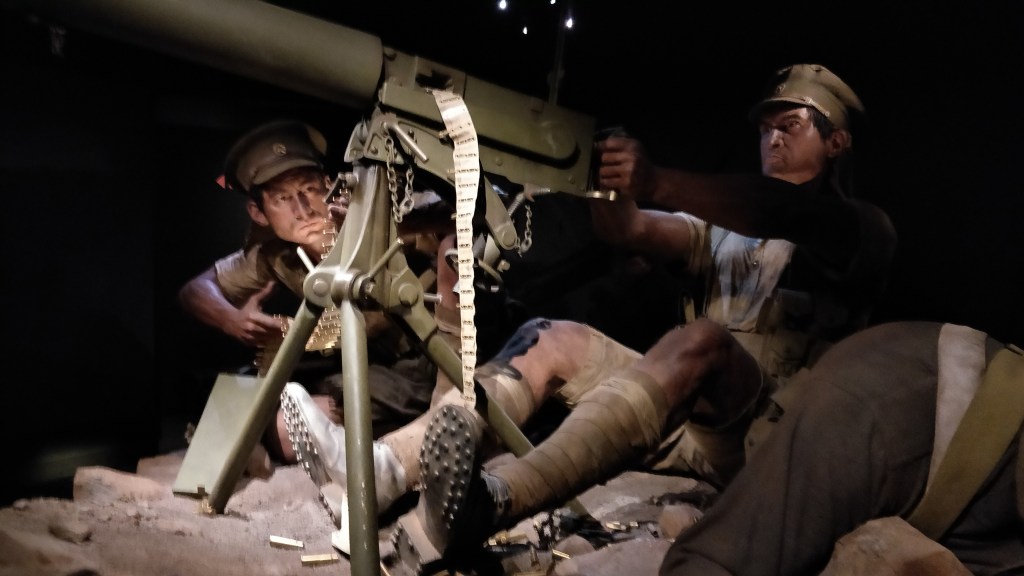
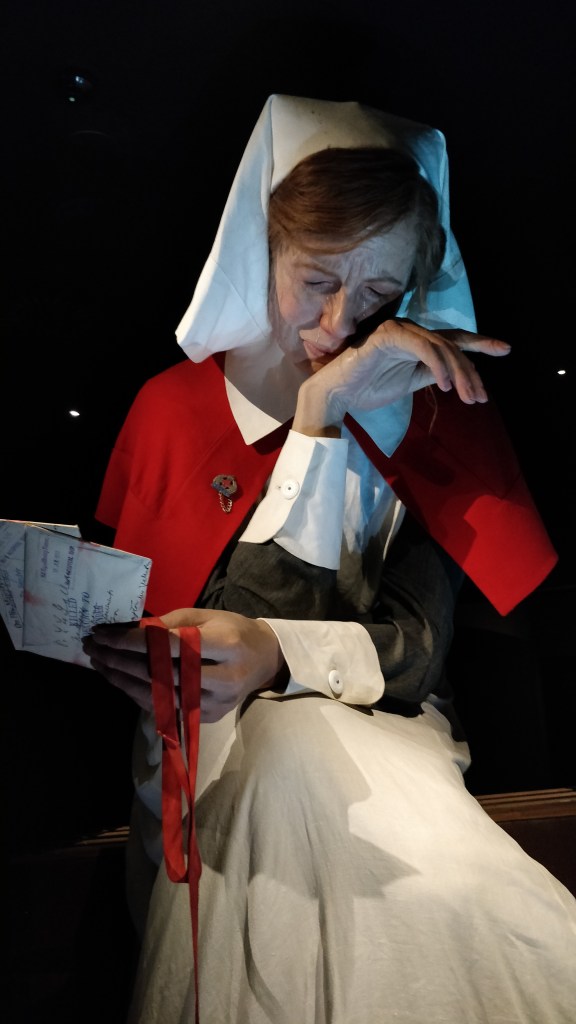
I had a lot of problems photographing the statues, and it’s now driving me crazy

Conditions at Gallipoli were absolutely awful in just about every way. How awful? This awful:
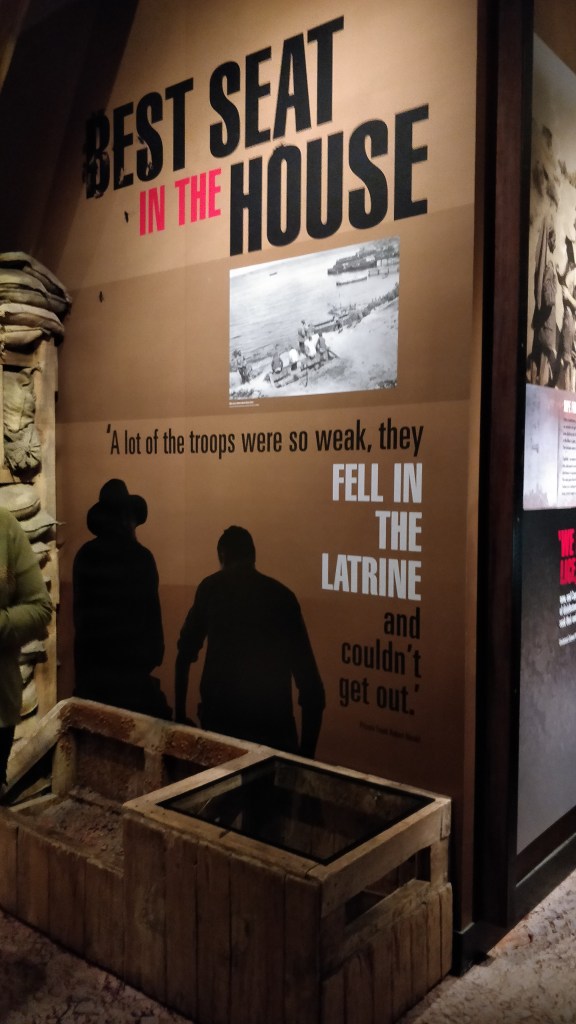
No.

And finally, as you leave, there is one more figure–surrounded by paper poppies left by other visitors–that serves as a stark reminder that this campaign was early in the war and many other hells awaited.

Again, the subject matter of Gallipoli: The Scale of Our War cannot be uplifting. I have always had some trouble with writing up exhibits that document the worst of humanity (long-time visitors to this blog might have noticed that I never did write about the ESMA in Buenos Aires). Regardless, Gallipoli is remarkably well done. It is well worth the visit to Te Papa, which is itself a wonderful museum. The exhibition is free (as is entry into Te Papa), and open every day except Christmas.

Wellington Museum [Wellington, NZ]

Do you know what is generally incomparably delightful? A well-done city museum.

I know of what I speak.

We saw it in the wonderful Manaus museum in Brazil, and we see it again in the Wellington Museum. During my visit, I carefully selected my photo choices, ending up with a discerningly curated 50 or so. I, uh, will not be using all of them.

In the late 1800s, the museum’s building was the Bond Store, a warehouse for bonded cargo. I do have a video of the little holographic rat that runs around the storage room display, but WordPress issues require a workaround to post it and I’m not prepared to put that energy into it today. Use your imagination.

The first floor, Telling Tales, recounts the history of Wellington in the 20th century in vignettes and related artifacts.

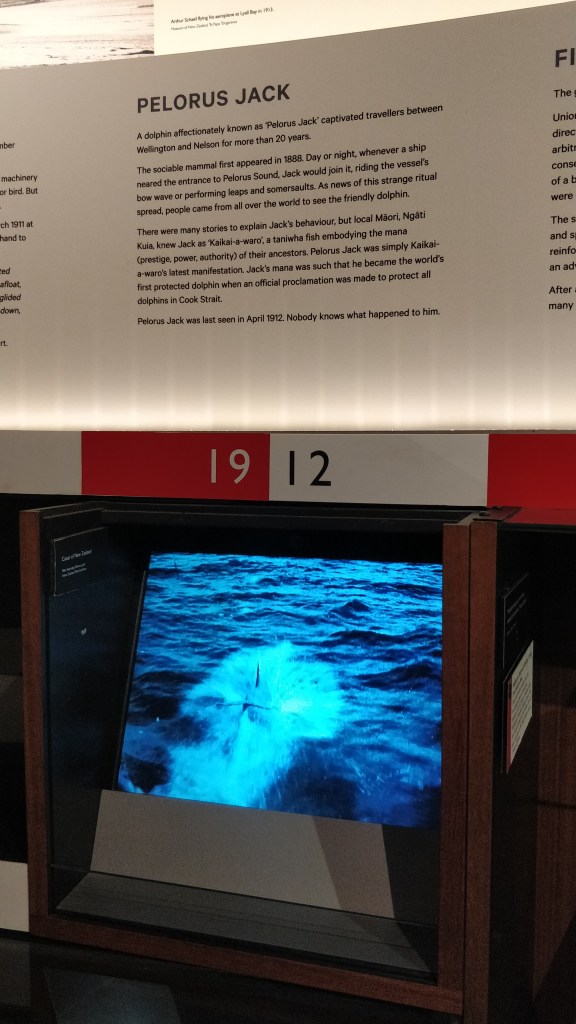
Having just crossed the Cook Straight myself, I can confirm there was no sign of Pelorus Jack.

The little displays cover things like establishing libraries, local lawmaking, and social issues–including the banishment of a Chinese immigrant diagnosed with leprosy to a tiny island in Wellington Harbour in 1903, where he lived in a cave until his death the following year. His food was delivered by boat or by flying fox, and whether that was a zipline or actual giant bat is not clarified.

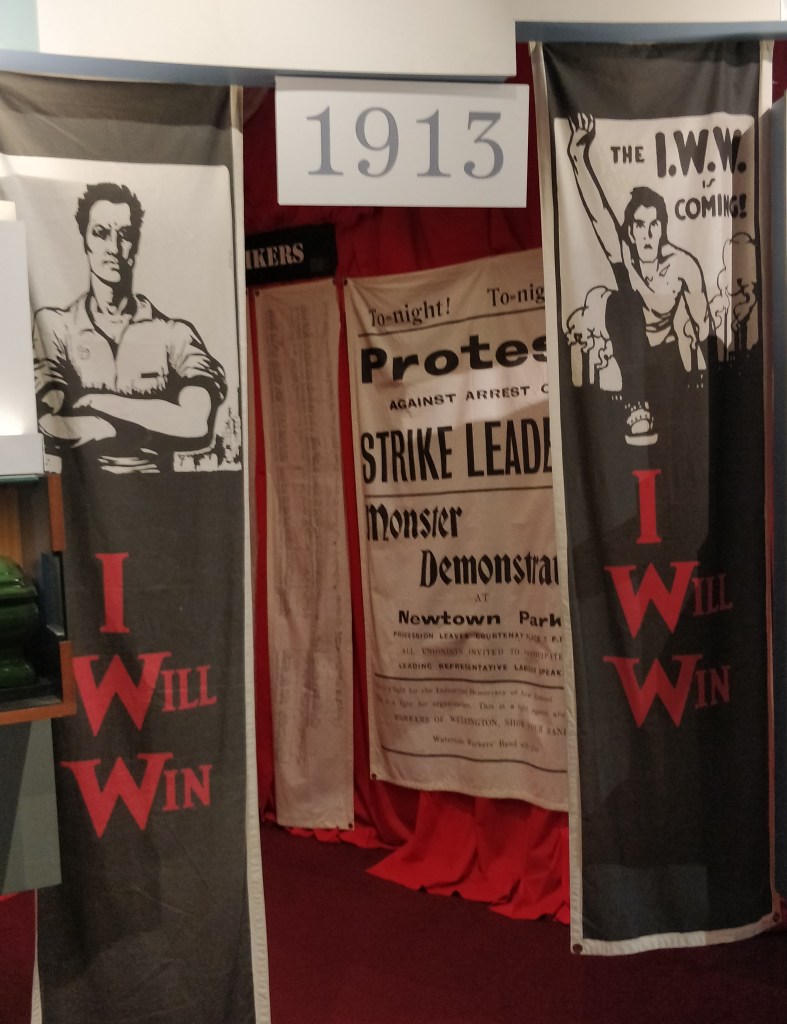
Time for labour rights struggles!

The general strike that year–following a broken miners’ strike the year before–nearly led to civil war, according to the display, with the striking workers ultimately on the beaten end of street brawls with the better-armed cops. The strike lasted a week.

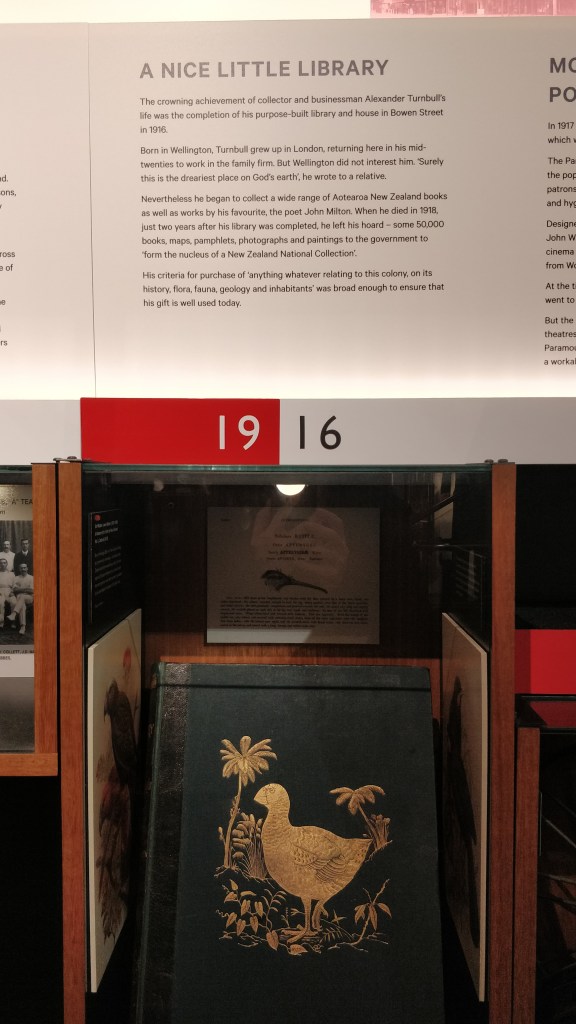
The Turnbull Library is now a division of the National Library.

During World War II, the country had its own internment location on Matiu/Somes Island in the city’s harbour. Some internees were out-and-loud Nazi sympathizers. Some were just people with German names. The island’s prisoner population ended up including Jews, Pacific Islanders, Italians, Japanese, and actual Nazis all together. Shockingly, this led to some “tension and strife.”

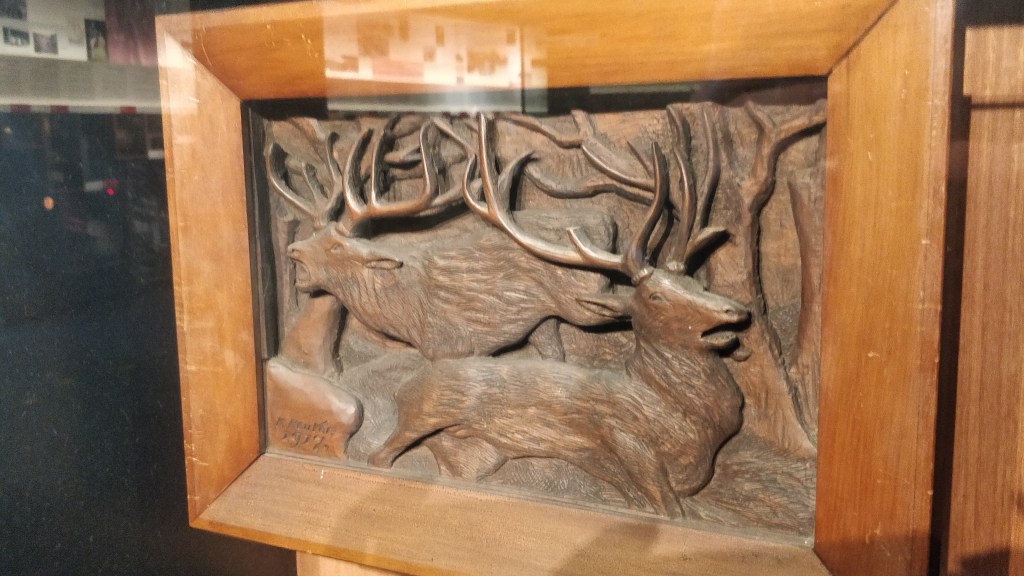
Some prisoner art from the island internment camp.

And so on, around the room to the present day, as this blurry-ass photo somewhat illustrates.

Squinting won’t help.

That’s most of the ground floor. Next floor is devoted to the maritime history of Wellington.

Throughout, the museum has little interactive elements and multimedia displays, which of course I appreciate, and which I thought I’d mention here because I hadn’t yet, even though it doesn’t have anything to do with the photos.

“By the Sea We Live”

Part of the floor is devoted to the sinking of the Wahine ferry in the Wellington Harbour (Cook Straight has seen many shipwrecks) in 1968. Two storms–Cyclone Giselle moving south and another moving north from Antarctica–merged over Wellington as the ferry came out of the straight, in just about the worst possible case scenario. Fifty-three of the 734 people on board died.

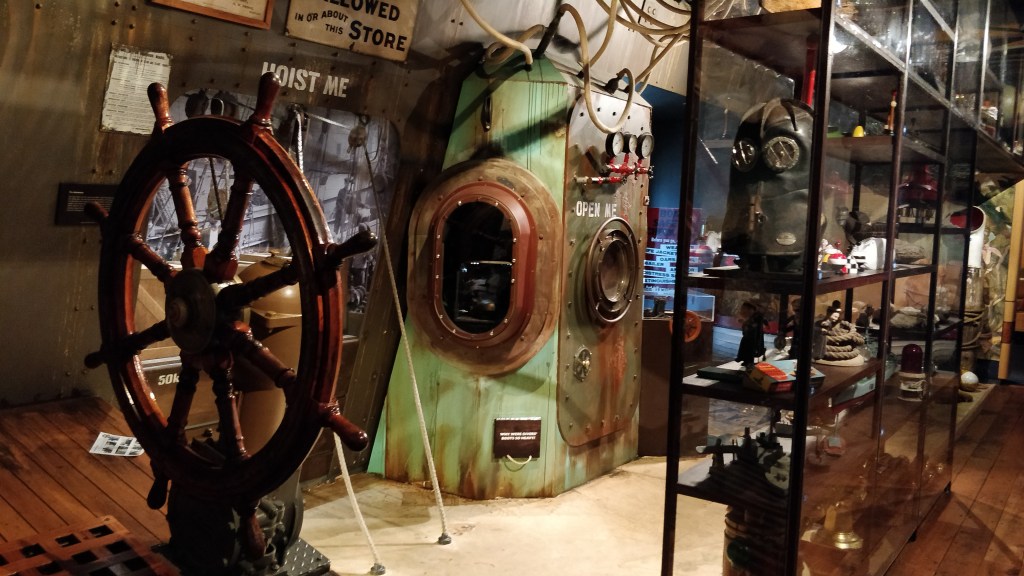
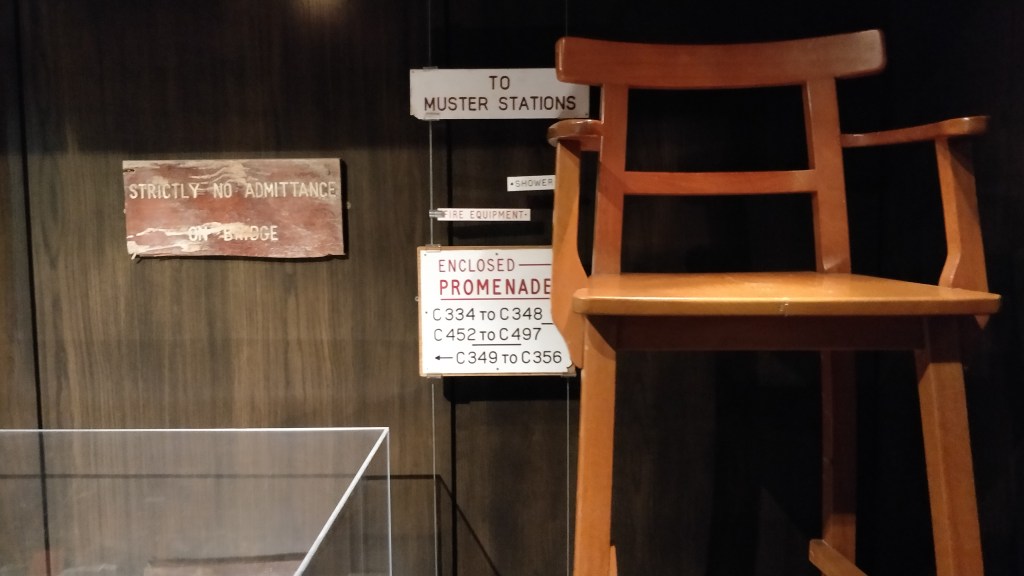
Several items from the ship are on display.

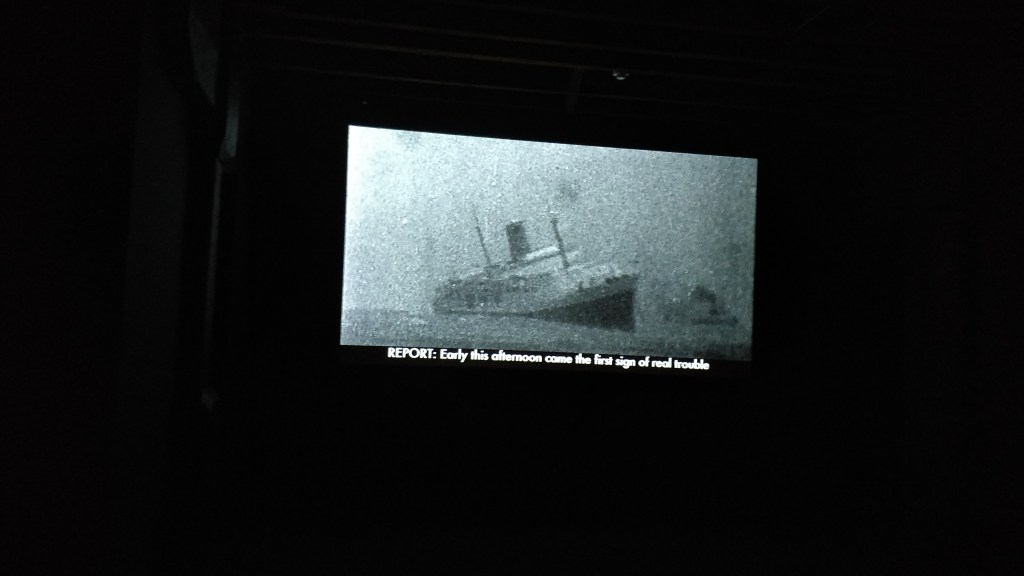
A short film is shown in the Wahine area.

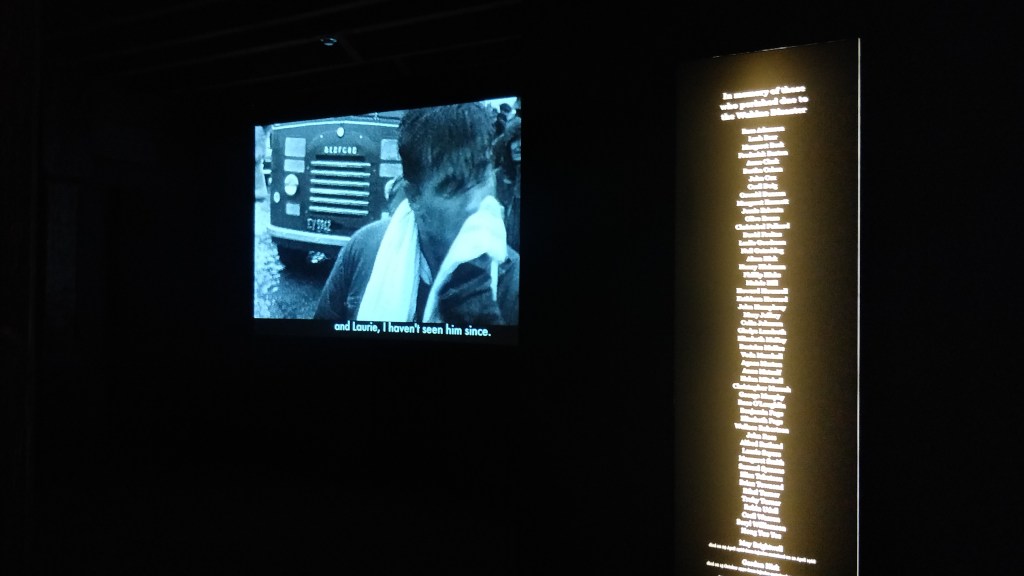
This man recounts how his friend and he each grabbed a child before going overboard. He lost his grip on the child and couldn’t locate his friend after he reached land. The friend’s name is on the victims list to the right.

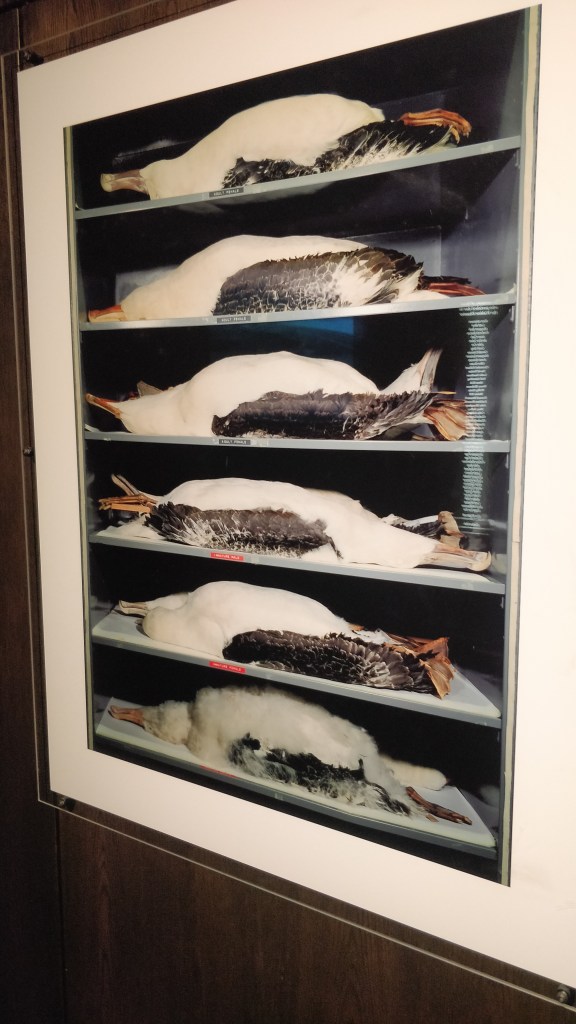
The storm was truly a disaster; it also killed nearly 200 albatrosses in the Wellington area–birds that do not readily succumb to harsh sea conditions.

It’s the nature of history-focused museums to have some pretty emotionally difficult sections to them, and hopefully the physical space of the building is used to help ease the visitor back into the collections. In this case, the Wahine disaster is at the end furthest from the staircase, and so you do have the walk back to it to decompress a bit before ascending to the next floor.

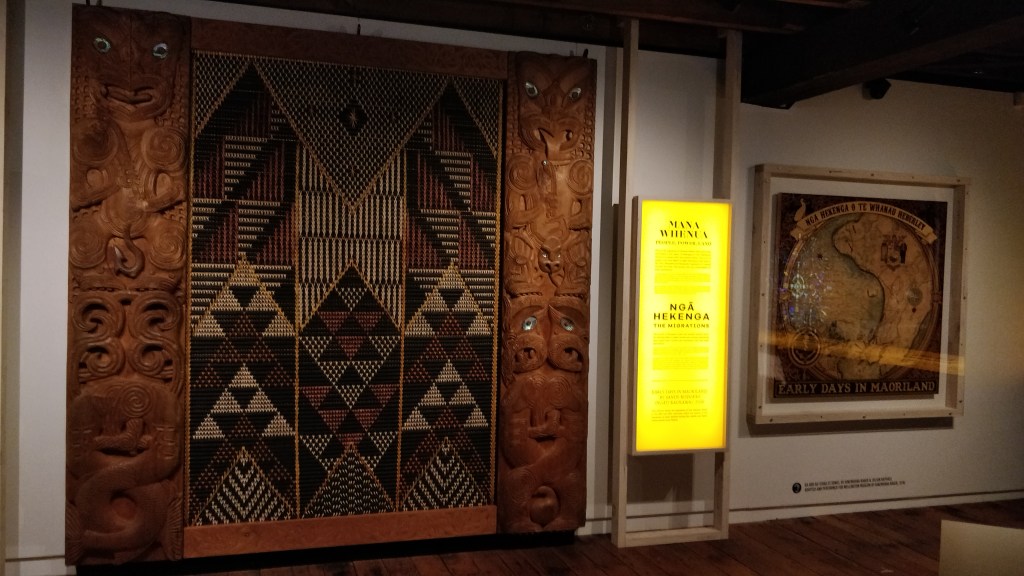
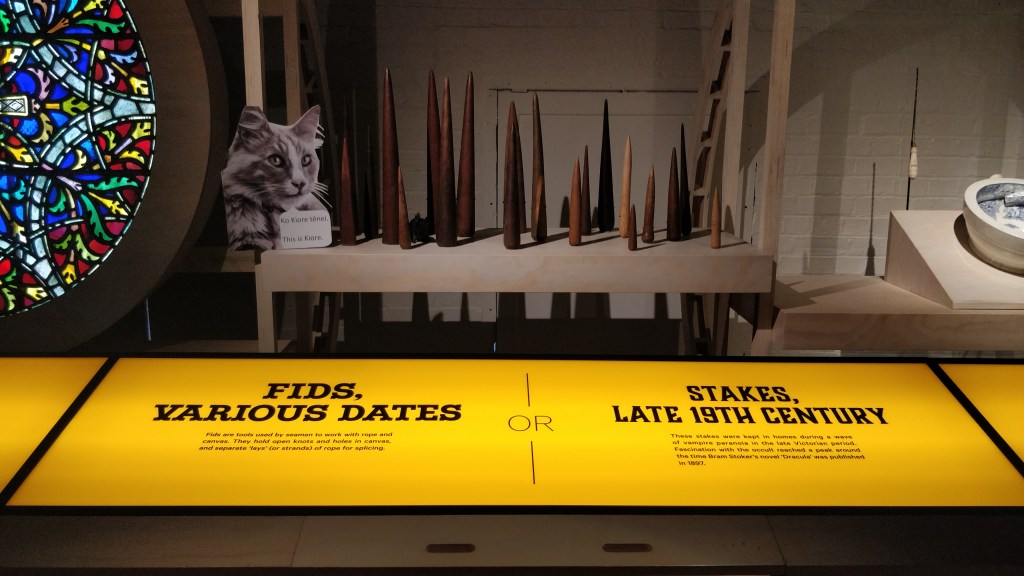
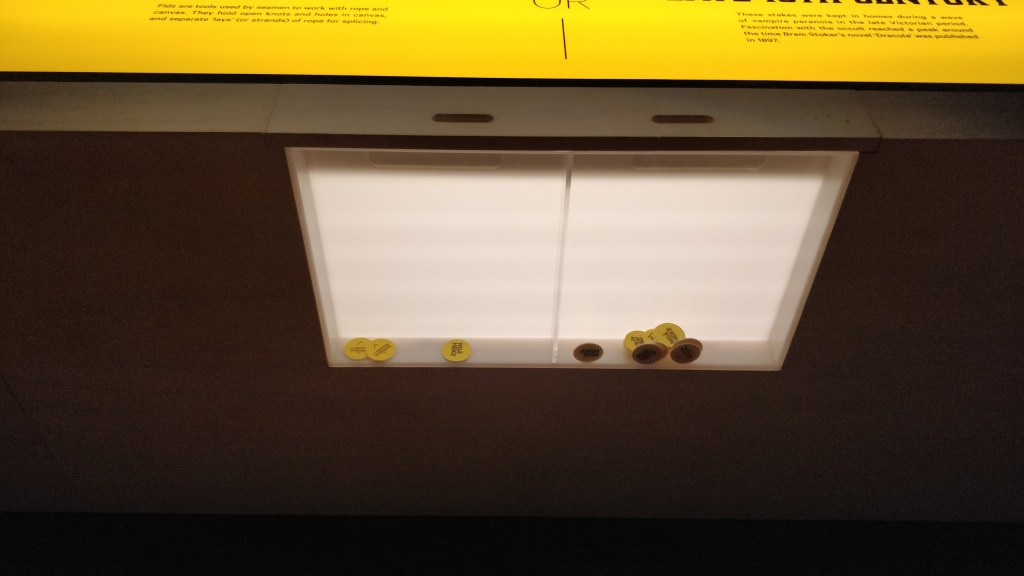
The Ngā Heke floor houses a beautiful work of Māori art, Te Whanganui a Tara, and other works of contemporary Māori artists, and it also presents objects with imaginary histories “as a way to think about what history is and whose voice tells it.” Visitors can take tokens to choose which story they prefer for the objects.

Don’t mind the cat there; he had his own exhibit and appeared throughout the museum. More on him later.
Choose your own history with the tokens.

There was a Māori stories exhibit on this floor that was closed for a booked group when I was there, so I look forward to returning to see that.

Instead of making this just crazy long, I am going to Tiny Tour the Attic, which definitely has its own vibe, as well as the temporary exhibit on Mittens, noted Wellington cat. In the meantime, you can find the Wellington Museum on the city’s waterfront, being generally awesome from 10am to 5pm, seven days a week. Entry is free, so hit that amazing gift shop on the way out.