The Cemetery Series: Cementerio de la Recoleta

God, you know what sucks? Knowing that you’ve been to a place a gajillion times and you definitely took a bunch of photos, but this was years ago and somehow, you can’t find any of them.
And last time I was in Buenos Aires I had other priorities

So I’m going to cobble together a post with what I can scrounge up and some royalty-free photos taken by actual photographers. At least the lighting will be good.

Recoleta Cemetery is renowned the world over, packed with mausoleums for Argentina’s wealthy and notable. It opened as the city’s first public cemetery in 1822, after the disbanding of the Franciscan order that settled there roughly 100 years before. Occupying 14 acres of some of the ritziest real estate in Buenos Aires, smack dab in the middle of the Recoleta neighborhood, the cemetery is a perennial stop for tourists and taphophiles alike–so much so that it is the first of three examples in the Wikipedia article on tombstone tourism (and yes, I have been to all three).
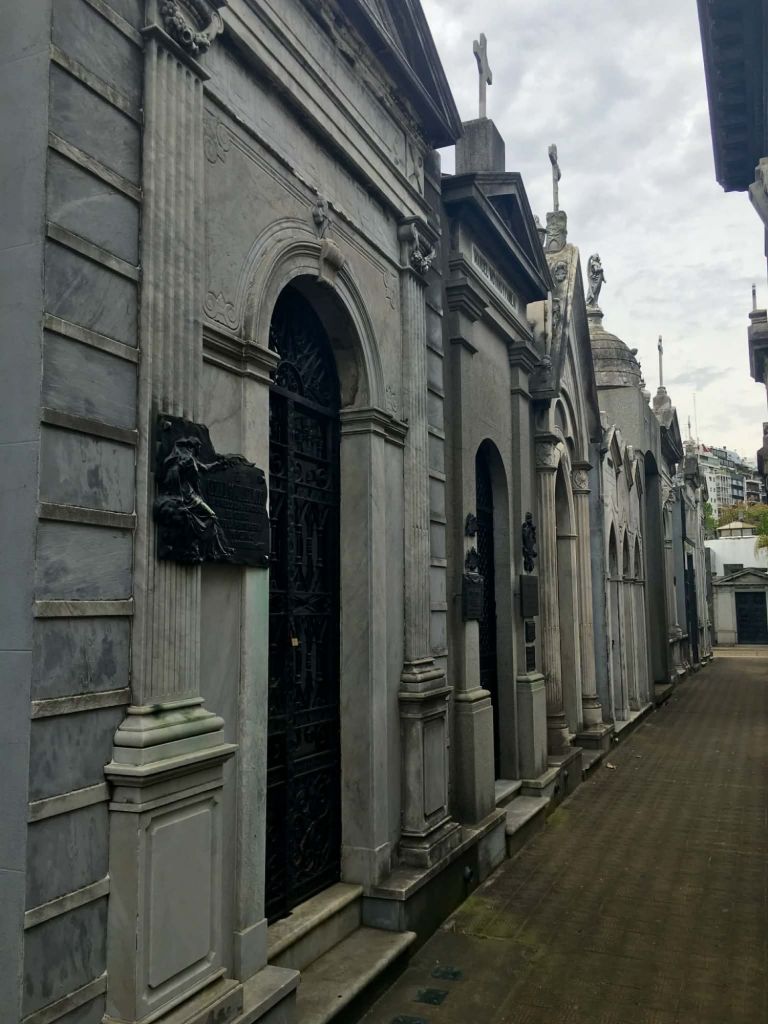
The side streets are quieter; you definitely don’t want to buy on the main drag.   (Photo by my amazing sister-in-law.)

There is no lack of tour guides available at the gates, so even if you turn up without one you can probably still hire one on the spot. Alternatively, there’s an app.

It is very brown, but also free.

At the time of this writing, the audio is only available in Spanish, but the text guide is in Spanish, French and English, sort of. You can choose a route that highlights authors, scientists, presidents, or “our selection,” which includes a few from the other routes plus other notable tombs.

But nevermind the Great and Good and Total Bastards–let’s talk about the ones I wanna talk about.
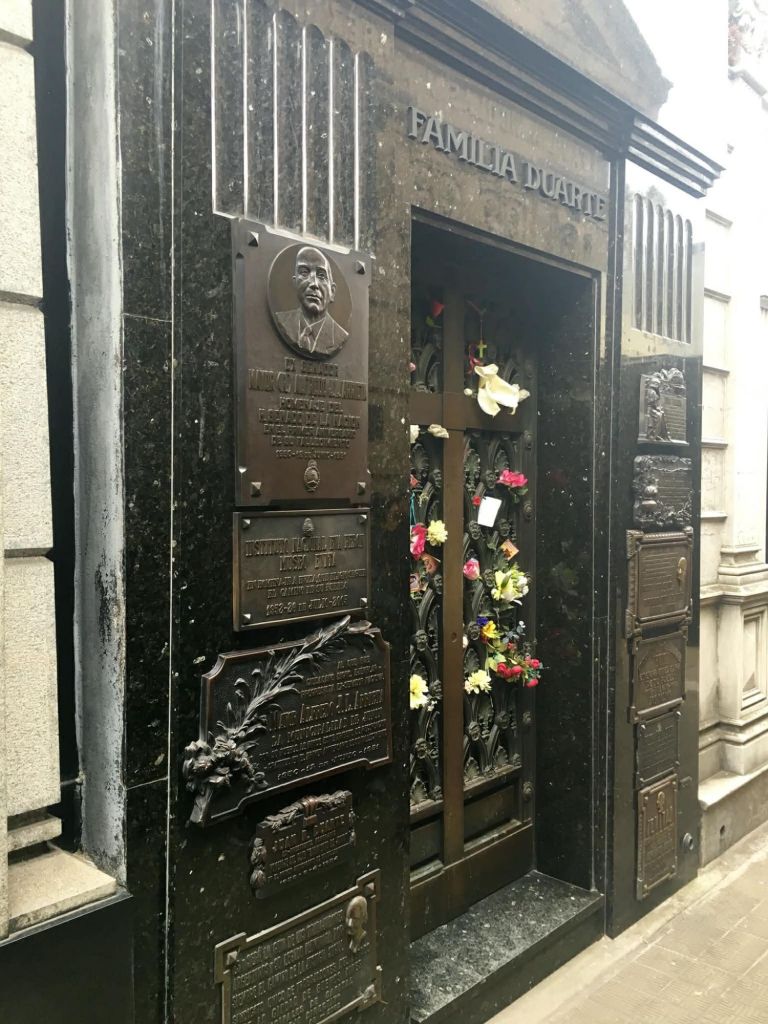
Yes Eva Perón is buried here in herfathersfamilycryptseemsweirdtomegivenherfamilyhistoryyestherearealwaysflowersandvisitorsandtourgroupsanywaymovingooooooon

Liliana Crociati de Szaszak was killed in an avalanche in Europe while on honeymoon, aged 26. She’s depicted in her wedding dress outside her Neo-Gothic tomb.
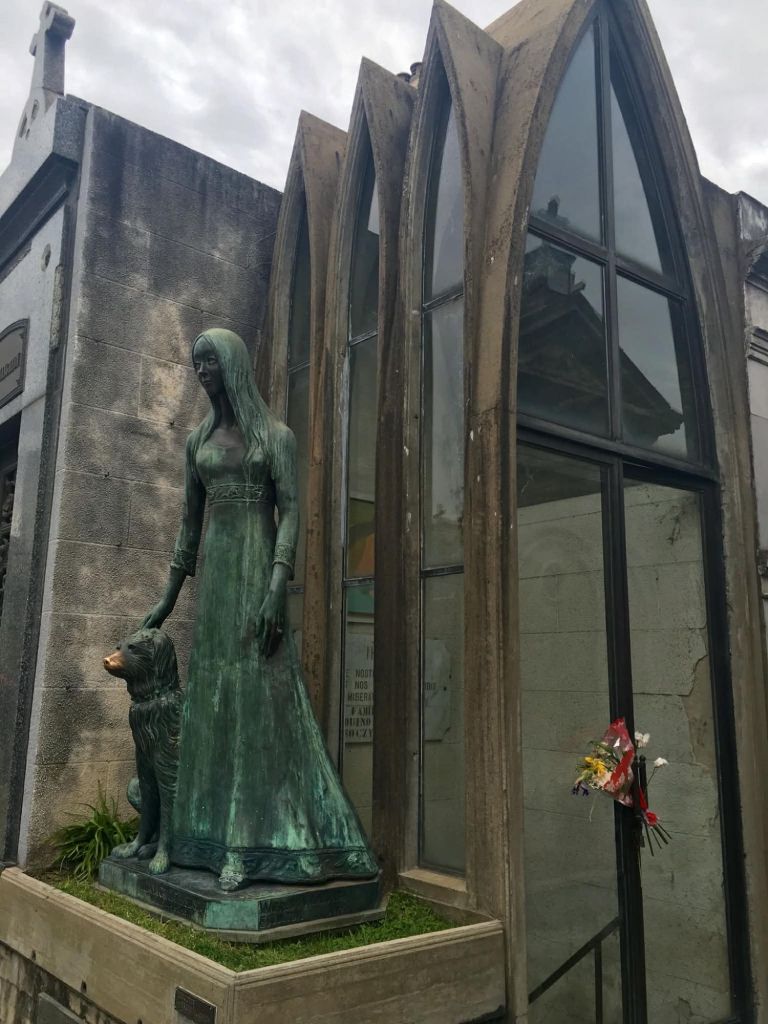
After her dog, Sabú, died, his sculpture was made and placed next to her. Visitors rub his nose, hence the shine. (Photo by my excellent sister-in-law.)

As we all know, young women make the best ghost stories and while I don’t know of any specifically linked to Liliana, 19-year-old Rufina Cambacérès is said to haunt the place.
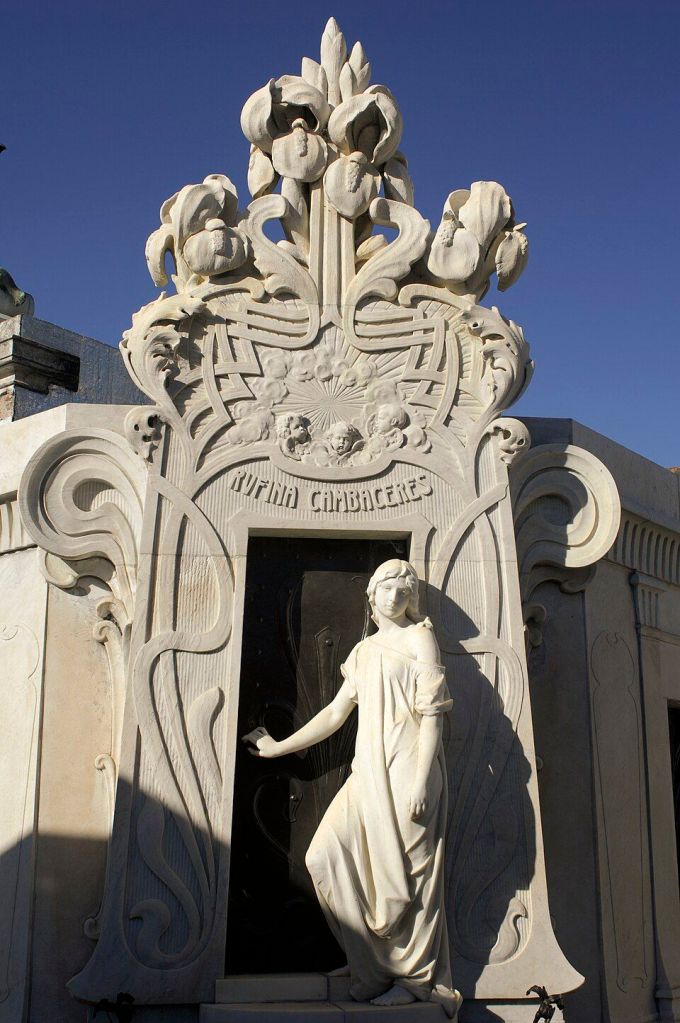
And frankly, not without cause. 
(Photo by Andrew Shiva, who is not my sister-in-law but I’m sure is cool.)

The story goes that Rufina collapsed and was pronounced dead, only to–you guessed it–not actually be dead. After discovering the displaced coffin (or investigating after hearing noises the previous night, depends on the version you hear), she was found having died, for real this time, in a panic after frantically clawing at the coffin lid.
The face you make when your mom cannot just give it a minute before interring you.

General Tomás Guido, national hero and bestie of José de San Martín, took part in San Martin’s grueling campaign, the Crossing of the Andes, during the wars of independence. He wanted to be buried under those mountains where so many had died, and in the great tradition of loopholes, his son had stones from the Andes brought to Buenos Aires and built the tomb himself.
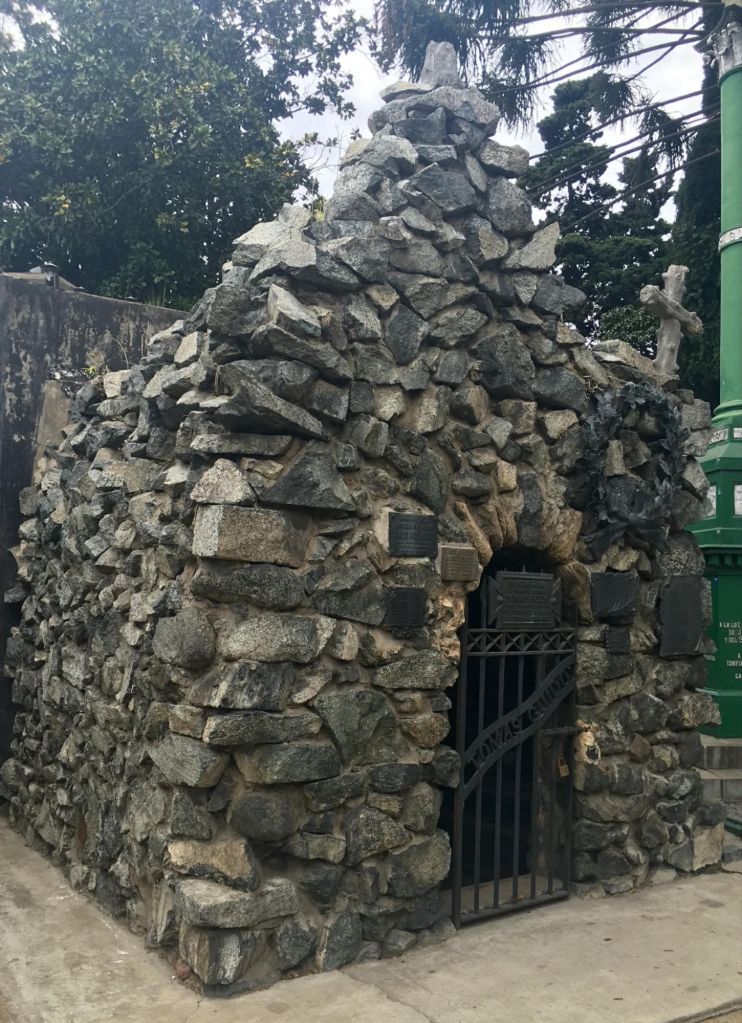
“See you’re technically under the Andes, Dad.”

Annoying technicalities aside, it’s a unique tomb, sharply contrasting with its neighbors. Also, Guido is no longer there. But he still isn’t under the Andes! He was relocated to the Cathedral of Buenos Aires next to San Martín, because who doesn’t want to be buried with their boss.

Speaking of work-adjacent entombment, cemetery caretaker David Alleno saved up for years for his own statue and burial. He supposedly killed himself upon the vault’s completion. His statue depicts him with his keys, duster, broom and watering can.
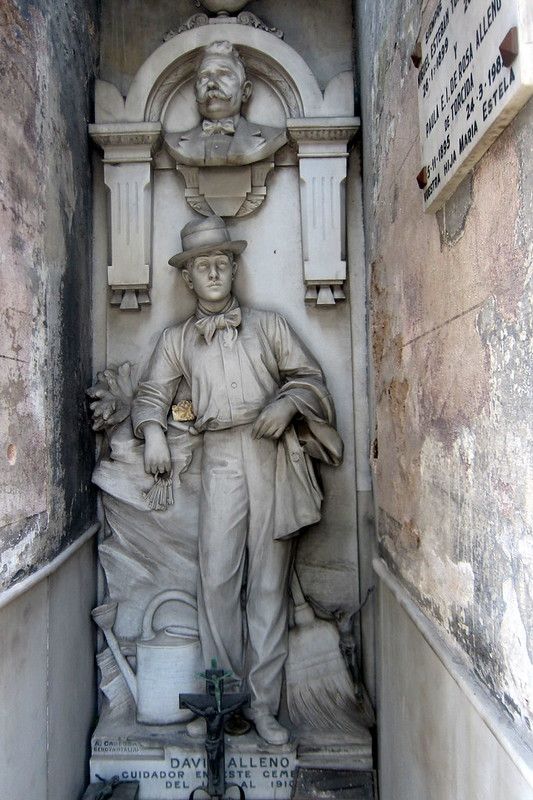
Sure, why not.  (Photo by Wally Gobetz.)

The story is tantalizingly incomplete. It seems like the purchaser of the crypt was his brother, Juan, and I don’t know why one brother would be wealthy enough to buy a family vault in the exclusive cemetery while the other is just a caretaker there. There’s a death certificate that cites “trauma and cerebral contusion” as the cause of death with apparently no follow up available. It’s said that his keys can be heard clinking at night or dawn, so perhaps David himself also feels his story is unresolved.
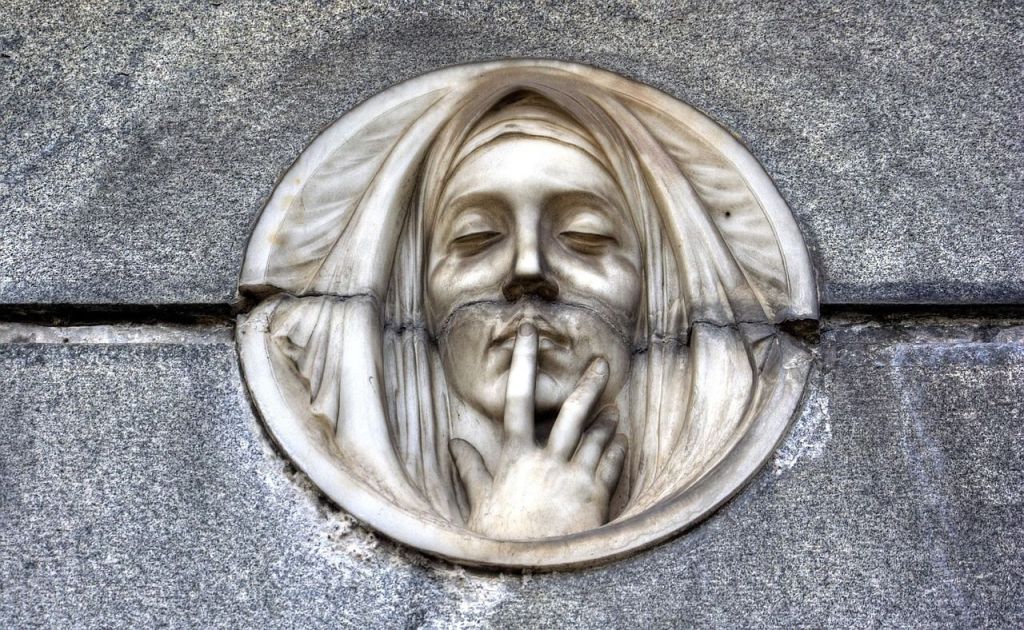
Maybe the Avelino Quijano vault just wants him to keep it down

Of course, there are some massive family crypts, the kind you can commission when you own half of Argentina.
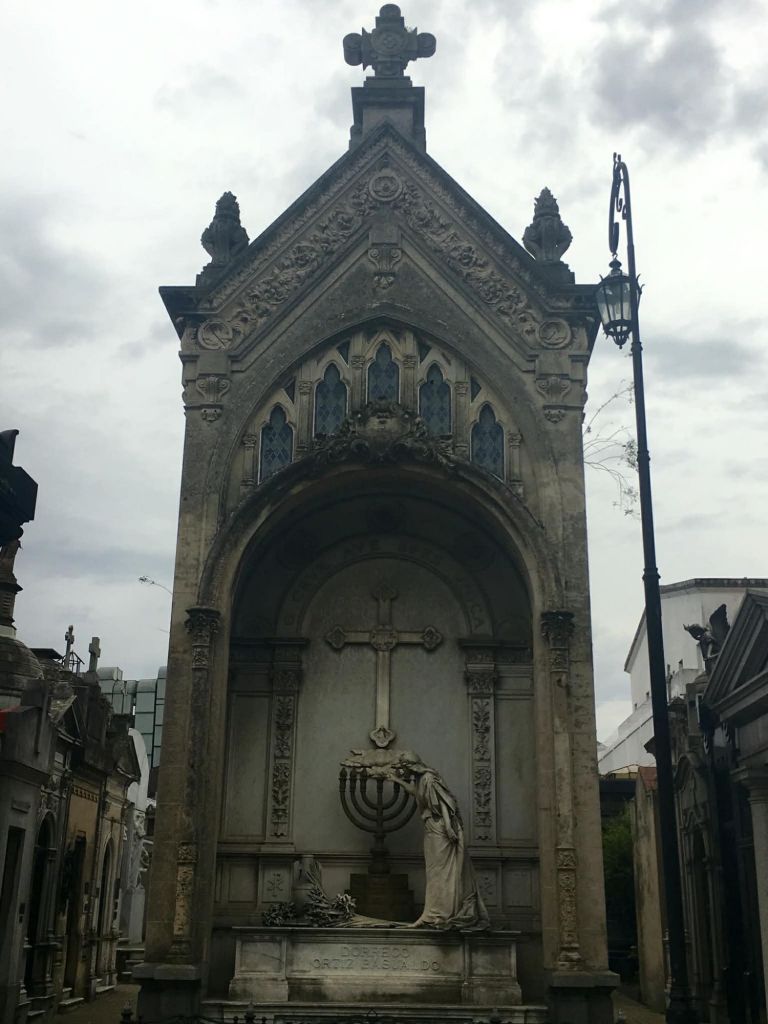
Probably not hyperbole.    (Fantastic sister-in-law strikes again.)

The Dorrego-Ortiz Basualdo family died as they lived: flexing on the rest of the neighborhood. One of the former family residences is the current French embassy.

Then there is the mausoleum of Justa Lima de Atucha, who as far as I can tell had it built after her husband died and labeled it “Justa Lima de Atucha to her husband.”
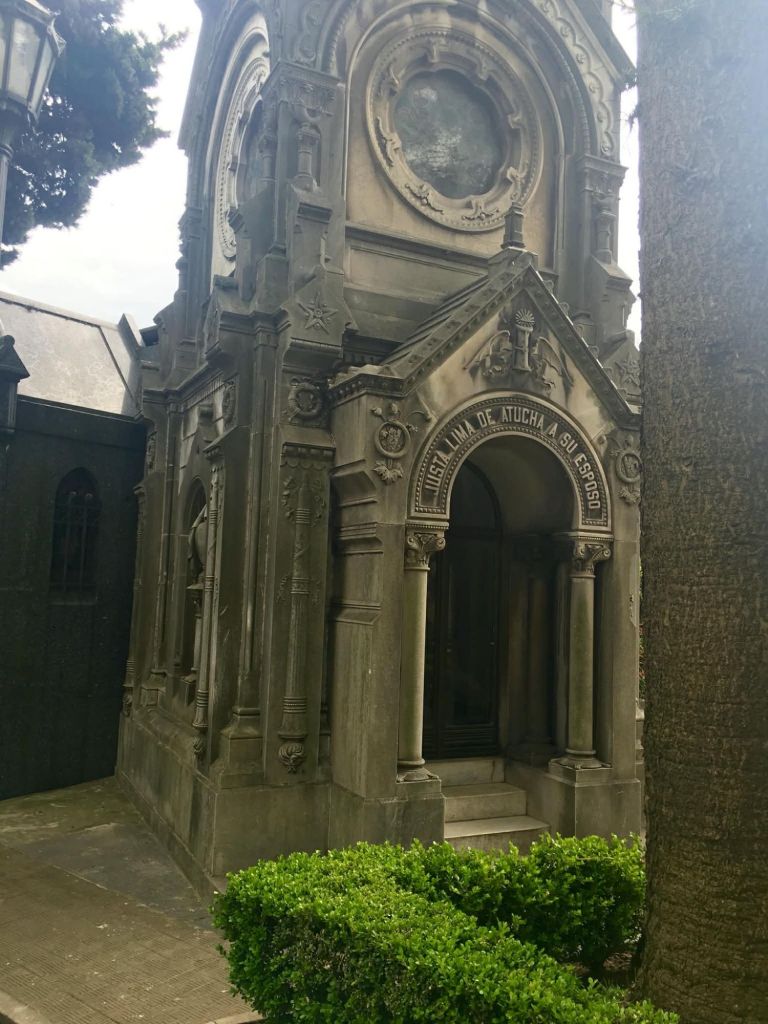
(Sister-in-laaaaaaaaw.)

Despite the opulence of most of the vaults, there are many that are now neglected and broken, and in this way the cemetery mirrors the city itself. I have no photos of those, however, so you’ll have to go hunt them out yourself. Or Google it I guess.

Finally, there is another big draw at Recoleta, unmatched in dignity, presence, and grace.
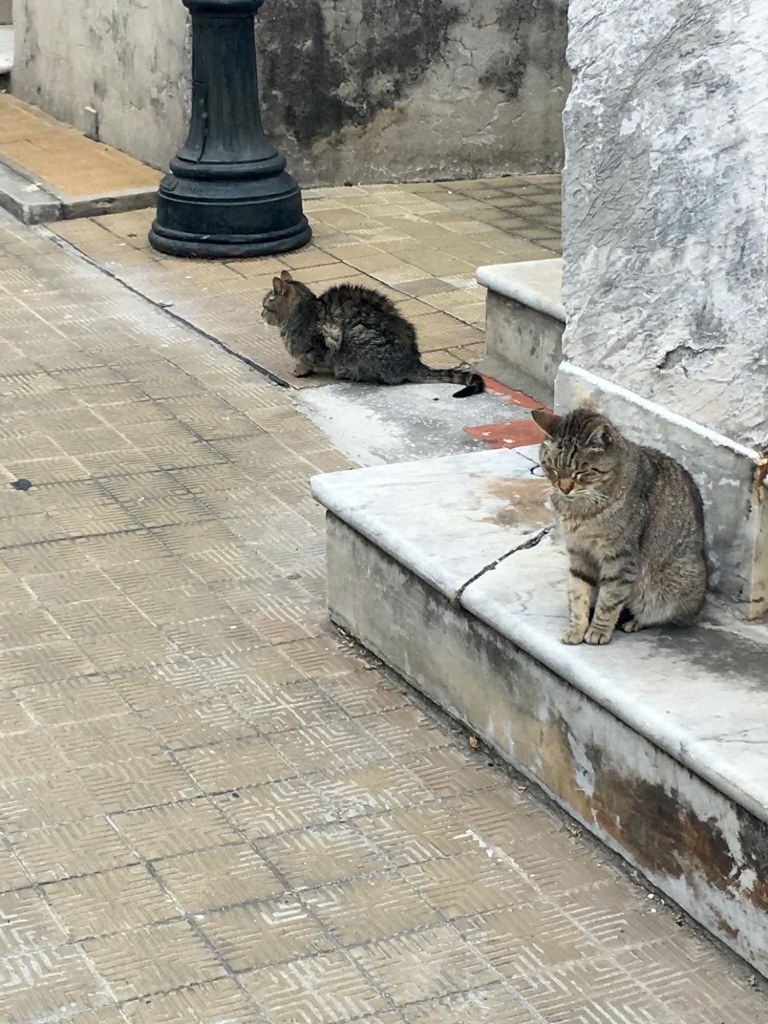
Do. Not. Touch.

There are only six cats left in Recoleta Cemetery, and they are meant to be the last. If you happen to spot one during your visit, consider yourself fortunate. I don’t know how they’re going to keep the ghosts in line after that; presumably the final six felines will deign to haunt the place as well.

El Cementerio de la Recoleta is at Junín 1760 in, yes, the Recoleta neighborhood. It’s next to a mall, a large park that hosts a huge weekend feria, an absolute unit of a gomero tree, museums, hotels, that big flower sculpture and innumerable public transportation stops. It’s open daily from 9 to 5. You will not miss it unless you try.

National Museum, New Delhi (India)

*sheepishly peeks around the website*

…hello?

So. Been a hot minute.

But hey let’s pretend like it hasn’t been! Let’s just jump right into talking about big ol’ collections of neat stuff.

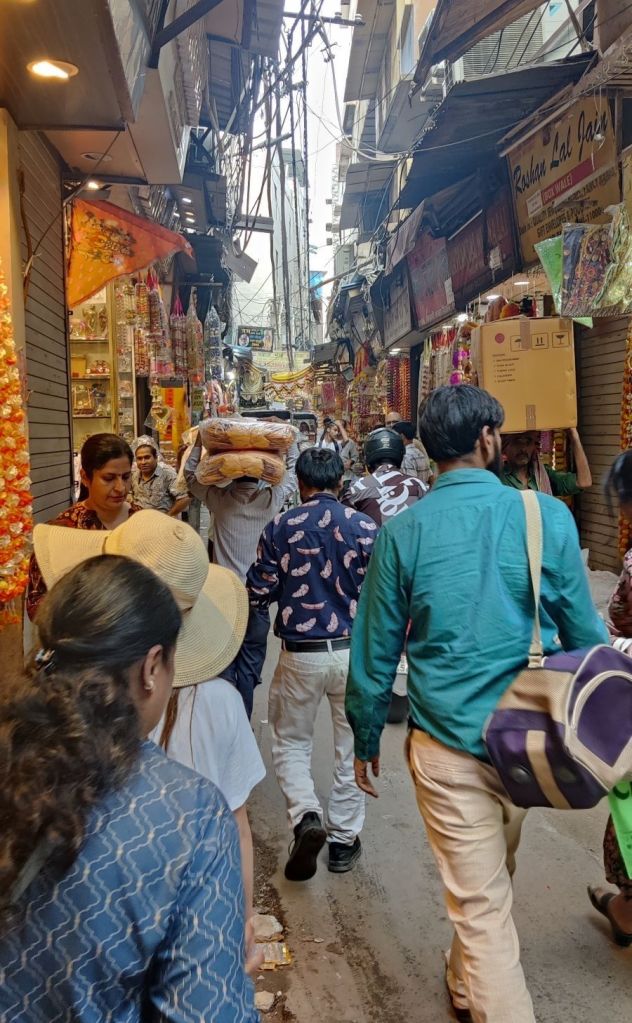
About a year and a half ago, I found myself in India, as you do. I’d never been there before. I have been in a few very large cities, and Delhi makes Buenos Aires feel like Megacity Easy Mode.

The population of Delhi is about 30 million, and they are all on the same block as you.

As a pedestrian, if you are waiting for someone to let you through/across/around, you are waiting forever. You live on that spot now. You are either an active entity of self-determination or a passive obstacle.

To travel in a vehicle in India is to experience existence as a drop of ocean water.

As far as I could tell, there are only two traffic laws in India: fortune favors the brave, and it doesn’t matter what color the traffic light is as long as it’s green in your heart.

…which way are we supposed to be facing

There is clearly a logic and rhythm to the flow of traffic; otherwise there would just be piles of bodies and tuktuks everywhere all the time. But as an outsider, you do not understand it. It is language you cannot speak, and you can only consign yourself to the expertise of your translator/driver or if on foot, make tenuous, lamb-like attempts at the basic grammar of crossing the street. Traffic density is lessened outside of the cities, but your driver is going to book it regardless of the slower road obstacles, so buckle up and sit tight while he plays cow slalom.

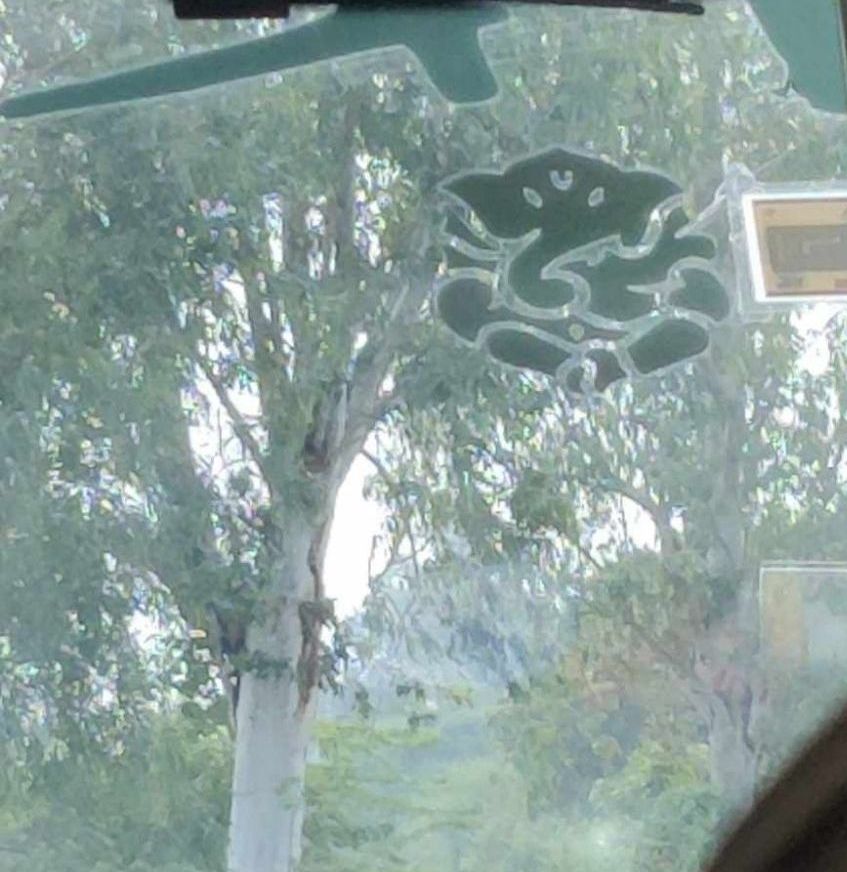
Ganesh is my copilot.

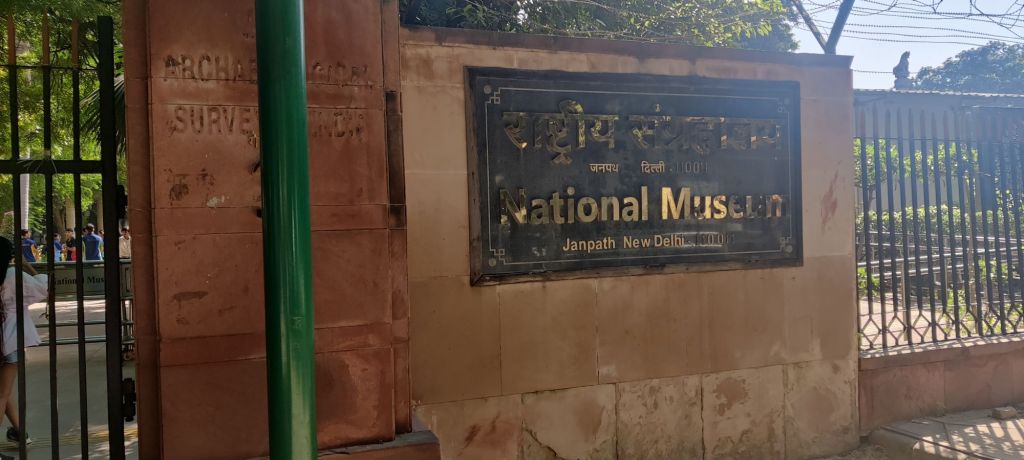
But back to the big city. Despite offering all the personal space of a platelet in a blood stream, Delhi is an amazing experience that should be visited if at all possible. It’s been a city for a couple thousand years, and a capital for hundreds of those years. It is rich with culture, history and art. Among its many museums is the National Museum, which holds artifacts that span 5,000 years.

The first thing to remember is that when you are in line in India, you are either pushing up against the person in front of you or you are not, in fact, in line. I was without a guide on that day and while purchasing the tickets, I found myself not so much in line as standing near the ticket counter as others filed past me. A teenage girl immediately clocked my problem and attempted to convey how to line up effectively, and after some moments and, likely, pity on the part of some of my fellow line mates, I managed to pay.

After pausing in the entry hall for a group selfie with some teens on a school trip (embrace being in strangers’ photos), I set about exploring in no particular pattern, which will be reflected in my random-ass pictures.

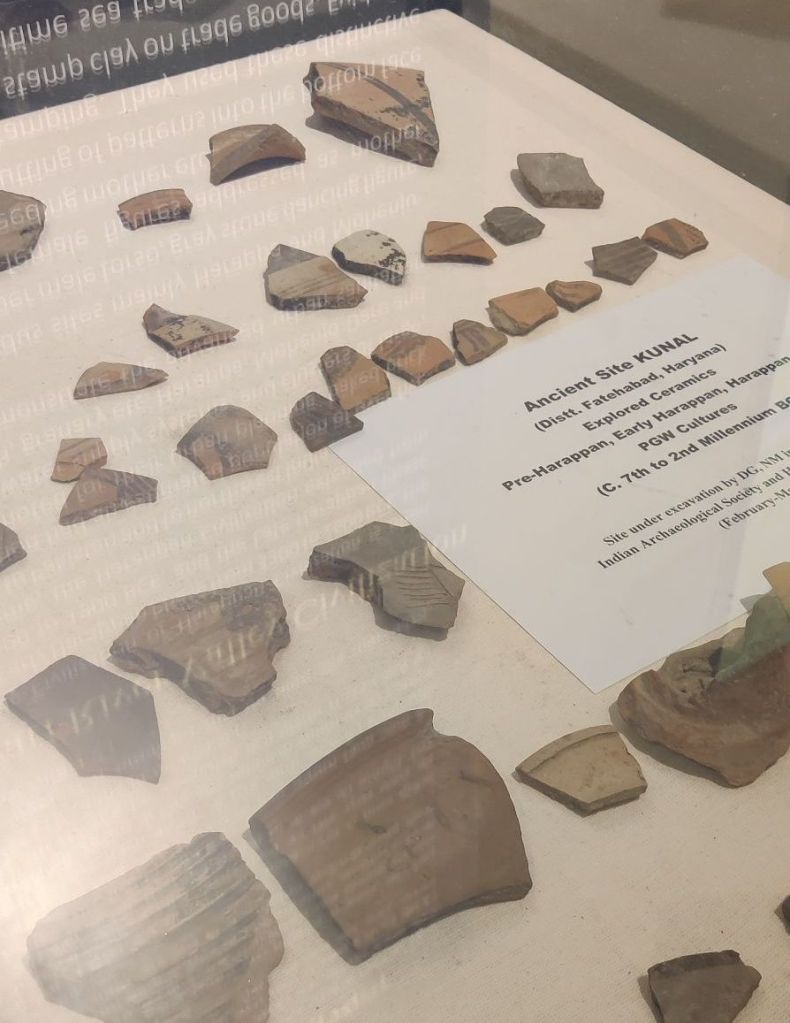
Some of this pottery is Nine. Thousand. Years. Old.

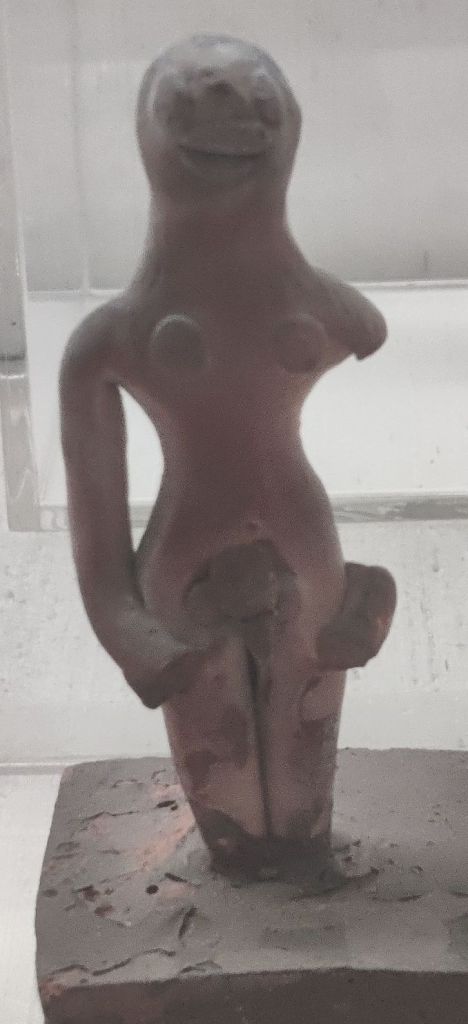
The museum holds a huge collection of artifacts from the Harappan era, the Indus Valley civilization of the Bronze Age, and earlier.

With apologies to the Harappan sculpture for taking a craptastic photo and slapping it on the Internet four thousand years later.
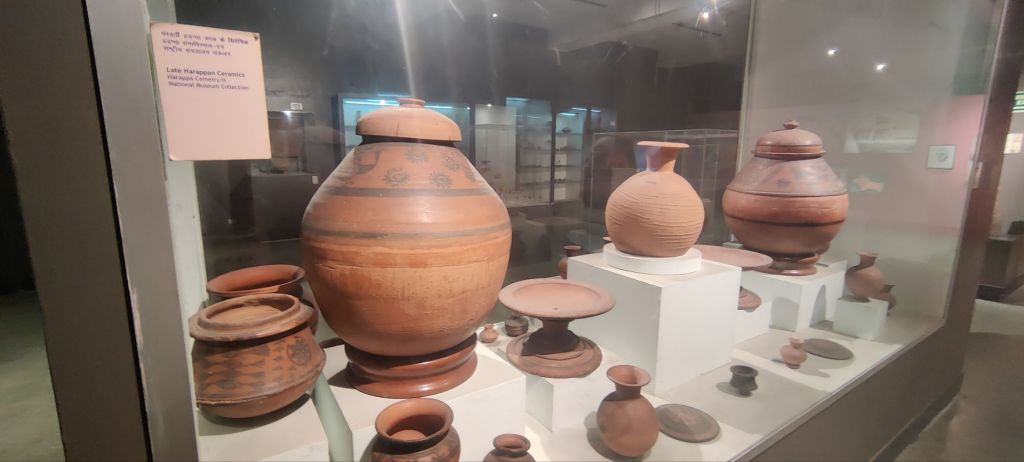
Late Harappan ceramics, flexing the kind of durability Pyrex can only dream of.

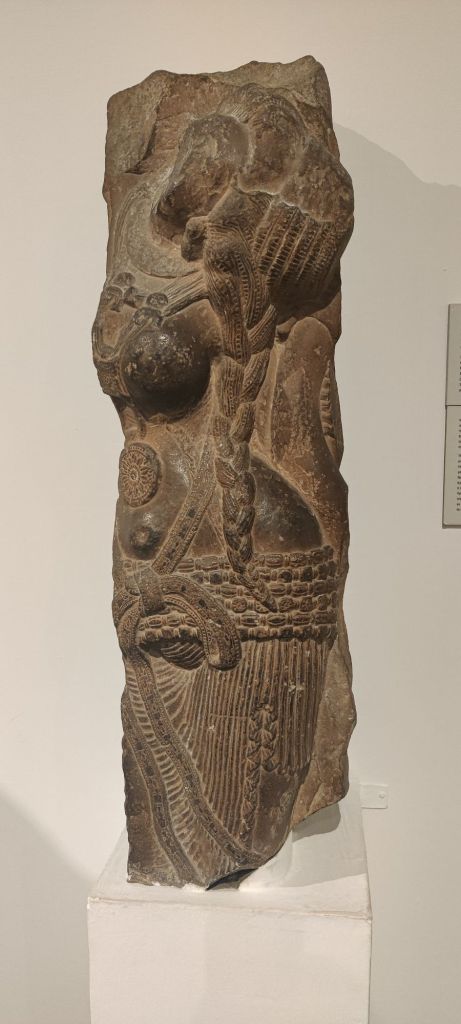
Excuse me while I shamelessly skip centuries of treasures and move to the Kushana Gallery, which includes this sandstone pillar from a Buddhist stupa, carved in the second century. The figure is a tree spirit motif rooted in a pre-Buddhism fertility rite, here incorporated into a stupa’s pillar to bless the site it was built on.

I am a noted tree enthusiast and so she makes the blog cut.

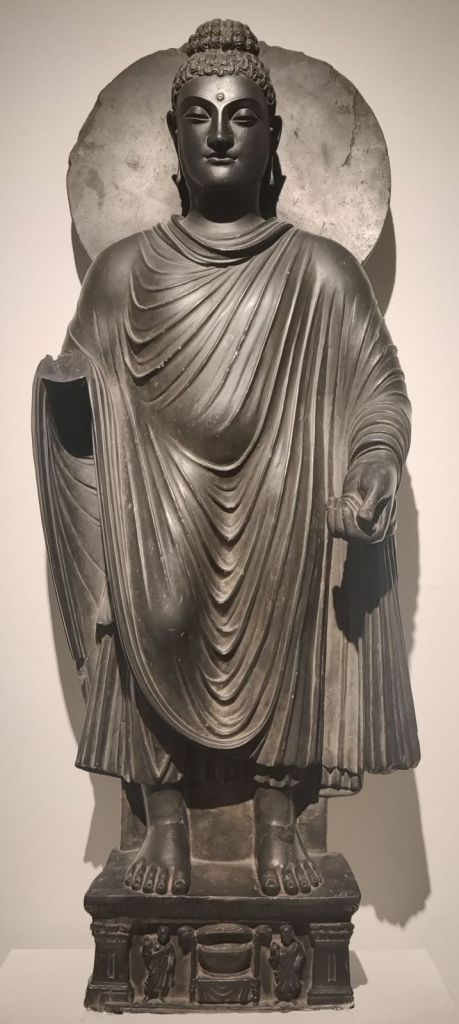
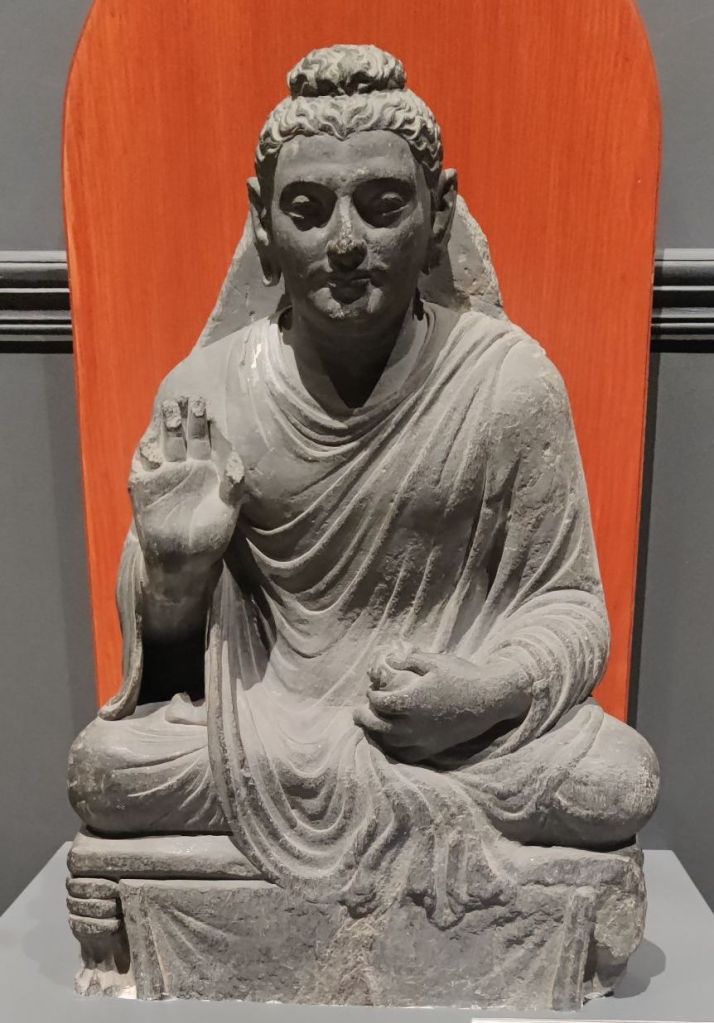
From the same time period is this Standing Buddha from the Gandhara School, which was heavily influenced by Greek art. The standing Buddhas of this era mark the start of depicting Buddha in human form.

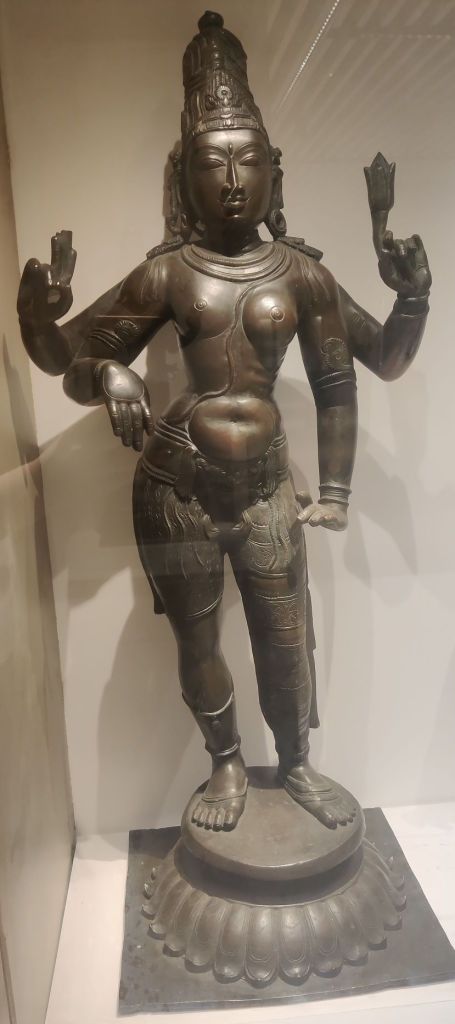
And one more statue before we go stampeding to the Decorative Arts galleries; that of a bronze Ardhanarishvara–a god form of Shiva and Parvati combined–from the 15th century.

Now, let’s get ornamental in the Decorative Arts galleries!

The two galleries are divided by material rather than time period, and between them cover pre-history to the present day.

Speaking of stampeding

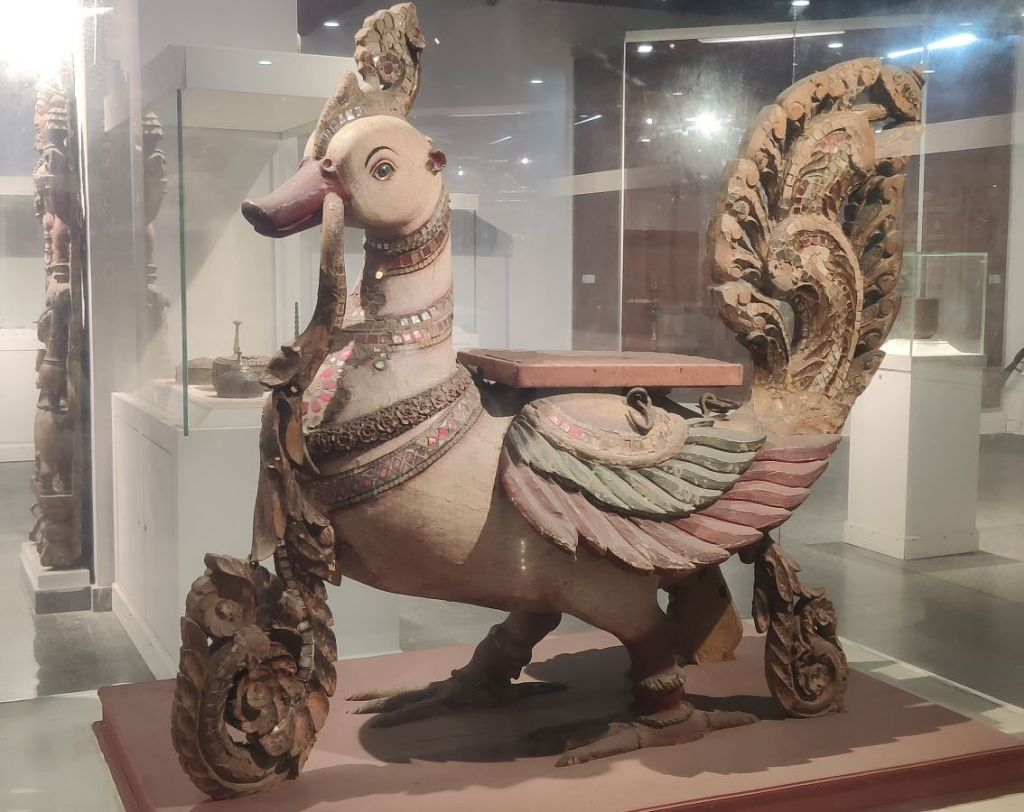
This is a wood and glass peacock, the mount of war god Karttikeya, from the 1800s.

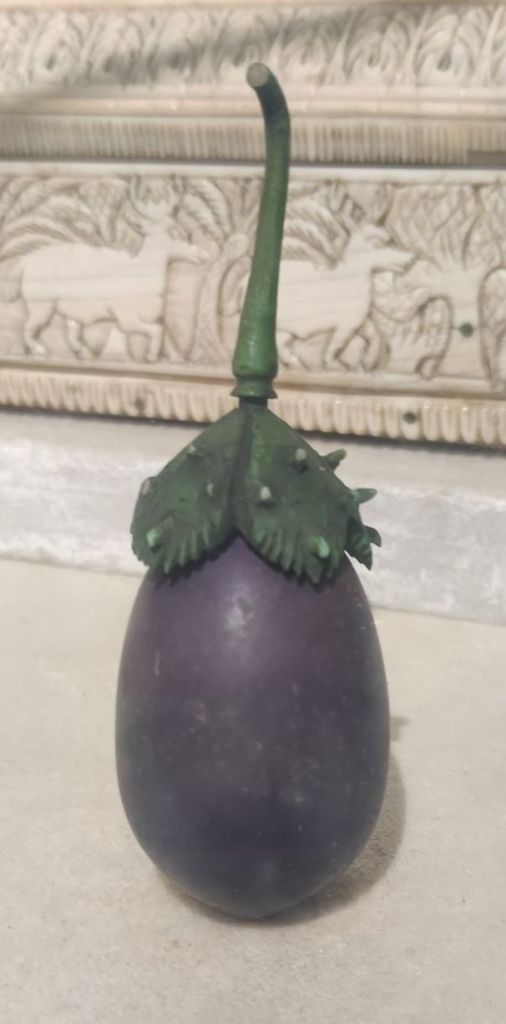
And I passed over photographing many magnificent objects in favor of this 20th century ivory eggplant-shaped perfume container, solely because it amused me:

🍆

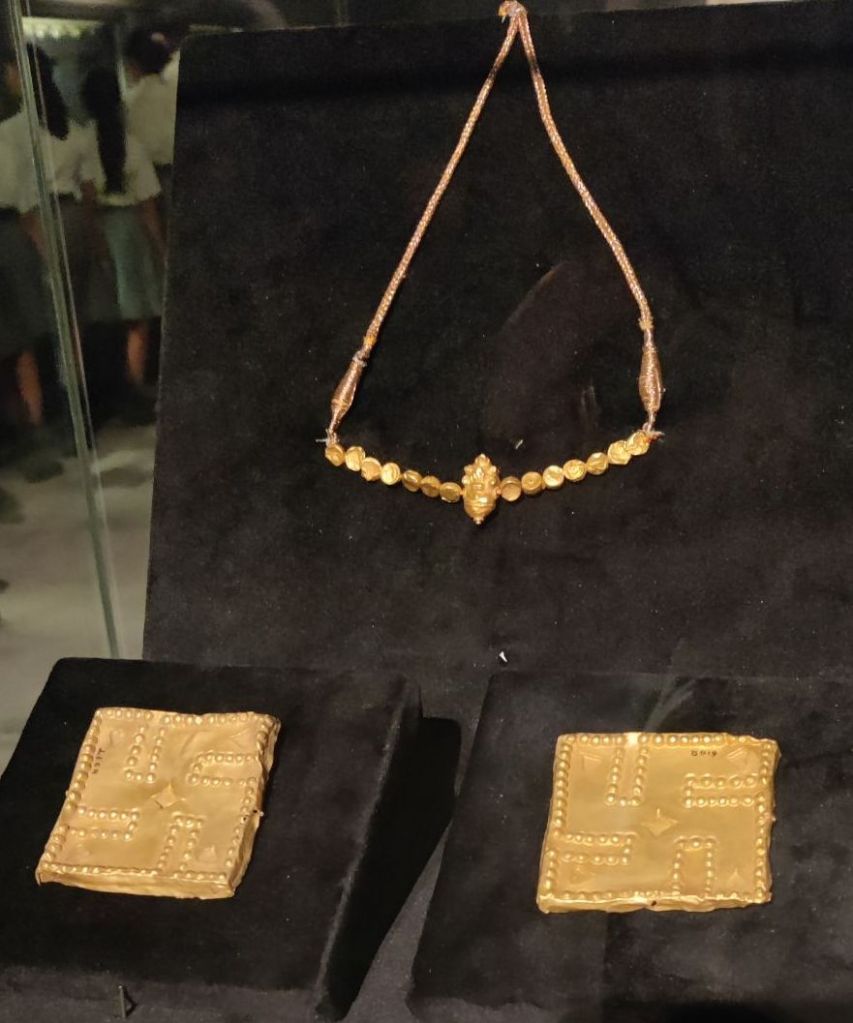
And in metalworking, gold amulets from the first century:

Photos at a weird angle brought to you by my eternal struggle with glare

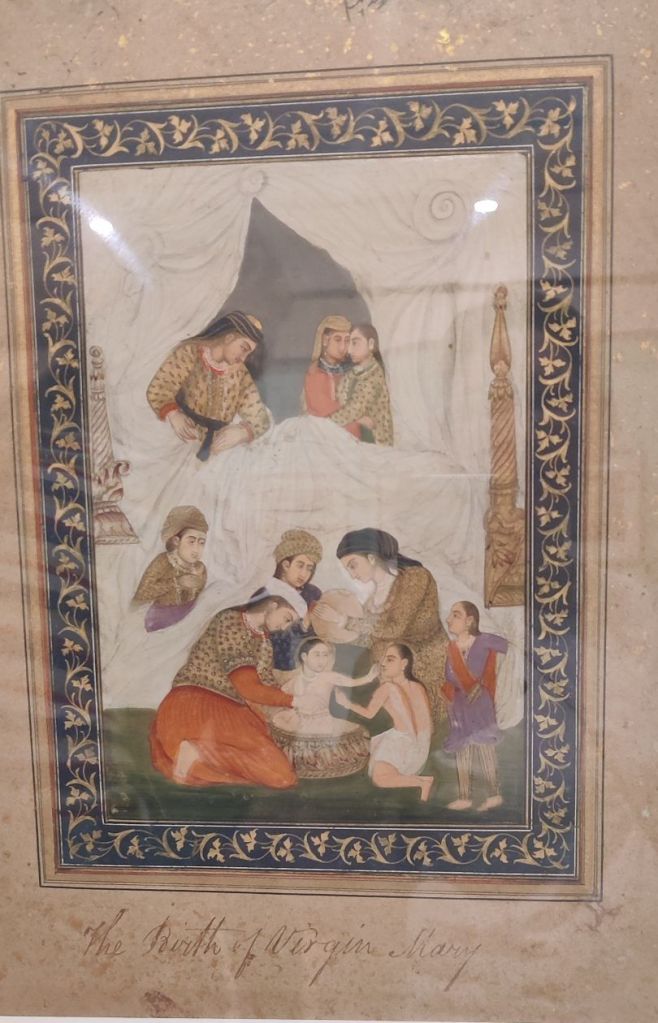
Here’s one quick example from the Miniature Paintings gallery, Mughal division. The plaque says “The Nativity” but the writing on the painting says “Birth of Virgin Mary.” From 1720ish.

In the Holy Adult-Baby tradition

There’s a Coins gallery for all your numismatic needs and desires, and if you’re wondering if the National Museum also has some unsettling mannequin type things, the Coins section has an answer for you.

Coin minting has never looked so gooey.

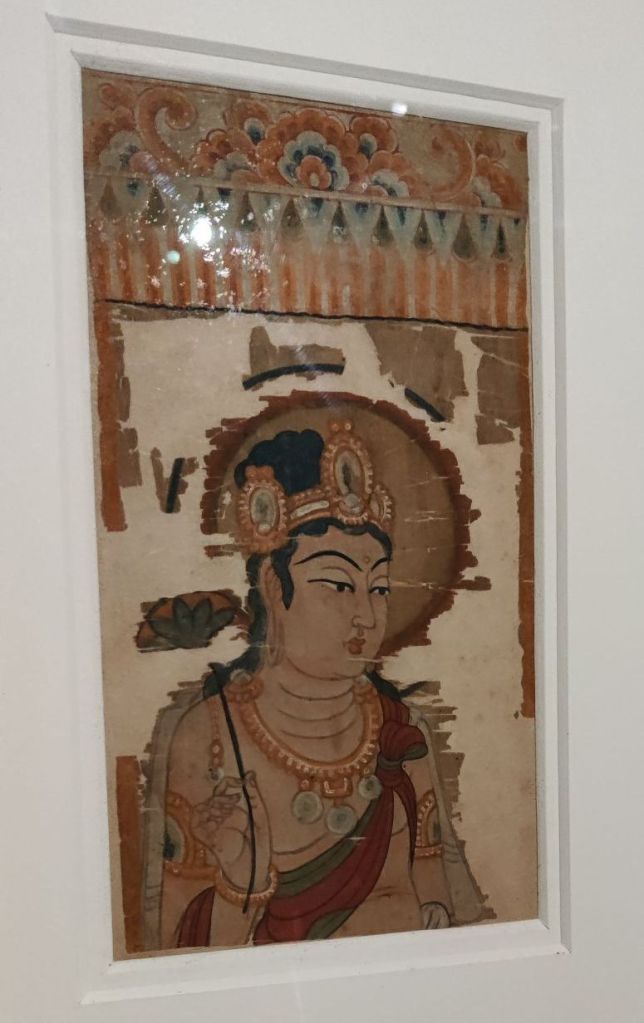
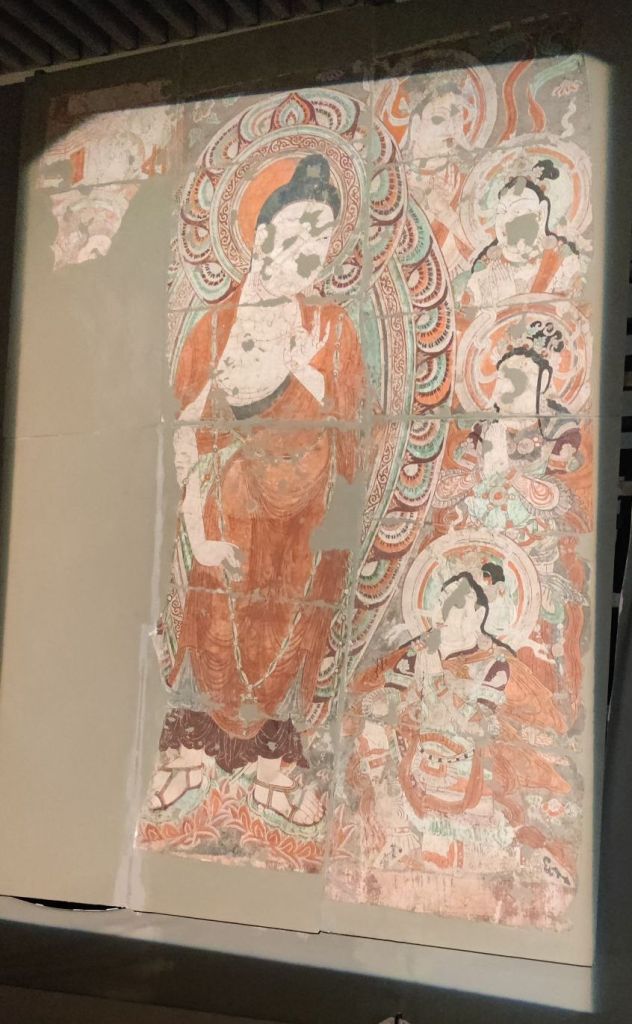
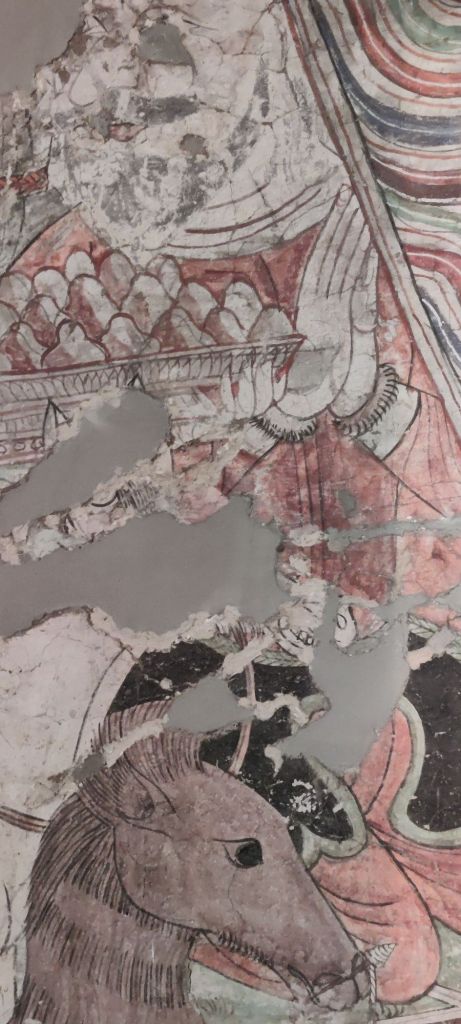
From the Central Asian collection, there are murals from the Mogao Caves  (Thousand Buddha Grottoes) in China, which were an important site along the Silk Road. The caves hold a thousand years of Buddhist sculpture and painting, making them a UNESCO World Heritage site. The Library Cave was discovered in 1990 with tens of thousands of manuscripts; most of the silk paintings in this room are from there.

There are also some works from the Bezeklik Thousand Buddha Caves, also a site on the Silk Road in China.

One Buddha….two Buddhas…
…982 Buddhas…
Ctrl C, Ctrl V

Absolutely stunning stuff.

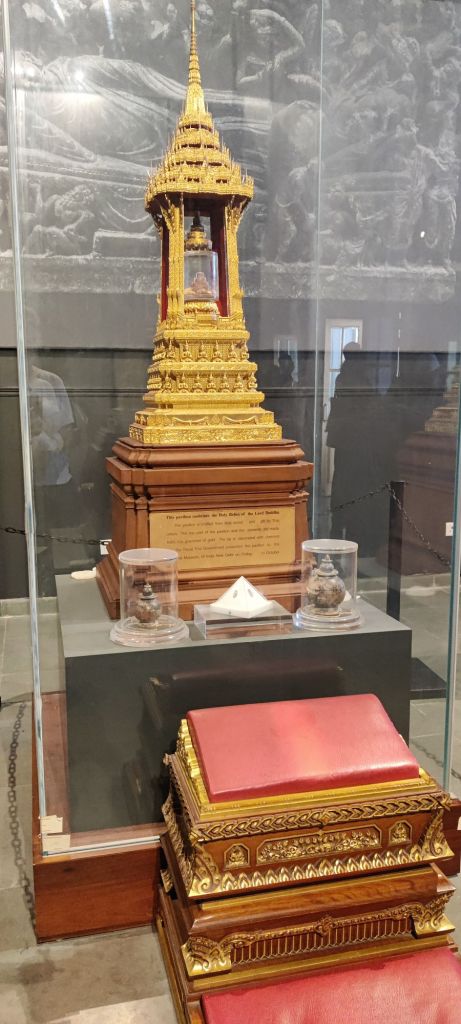
There is a huge collection of Buddhist objects in the museum, and some of the most important and exemplary are housed in the Buddha pavilion. This exhibit has objects from all over Asia, in varying materials and from many time periods. The centerpiece is a reliquary holding bone fragments excavated from Piprehwa and believed to be those of the Buddha.

There is a guard with an automatic rifle in the room and he’s pretty chill, but it does distract just a teensy bit.
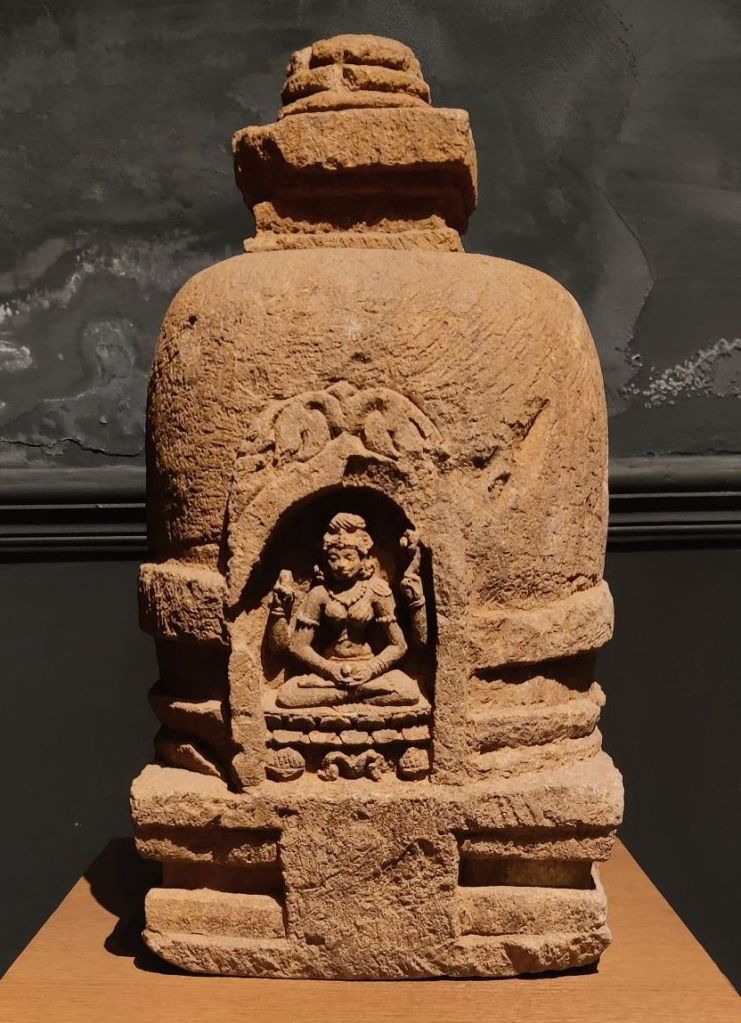
Chunda with four arms, a goddess of some Buddhist traditions, on a votive stupa from the 700s
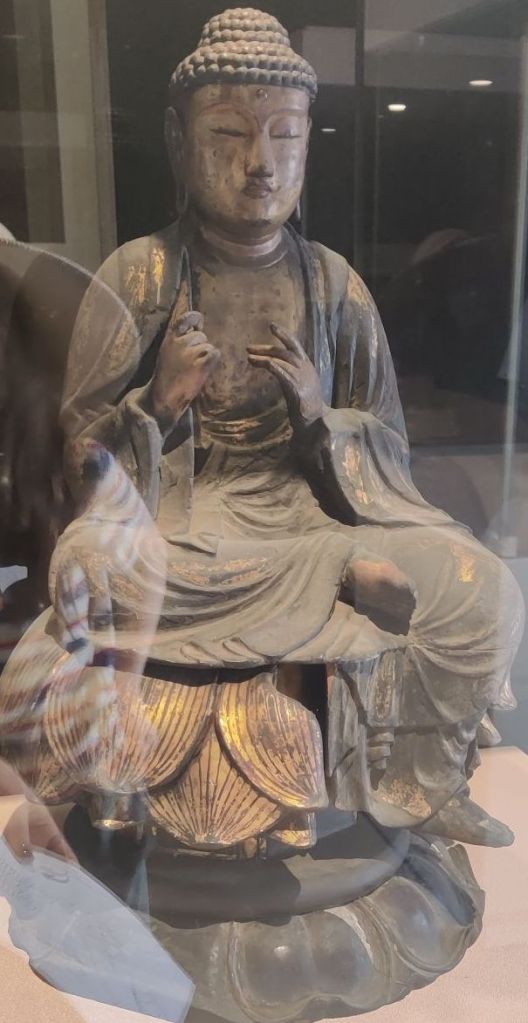
A 15th century wooden Buddha from Japan, and reflections of tourists reflecting on him
A second century stone Buddha from Gandhara, and my personal favorite thing in the museum.

There is. So. Much. More. The history of Indian writing, textiles, bronzes, manuscripts, maritime history, whatever was in all those crates being stored in the corridors–artifacts, relics and art for days. There is a small store with very inexpensive books available, so don’t miss that. The National Museum is open 10-6, Tuesday through Friday and 10-8 Saturday and Sunday. You can get there by hiring a driver and telling him that’s where you want to go.

Te Ara – Cook Islands Museum of Cultural Enterprise (Rarotonga, Cook Islands)

If you are lucky enough to find yourself on Rarotonga, the big island of the Cook Islands, you will find a pace of life altogether unfamiliar to anyone who was not brought up in Rarotonga, or similar locations. I personally was raised, lived, and vacationed in expansive places and had never been to anywhere as small and geographically isolated. It took me 45 minutes to drive the entire circumference of the island, and it only takes that long because the speed limit is 40 kph. So if you’re on this enchantingly beautiful rock in the middle of Absolutely Nowhere, Pacific Ocean, and you would like to visit Te Ara, you literally cannot miss it.

You actually can’t miss it. It’s on the one main road, Ara Tapu.

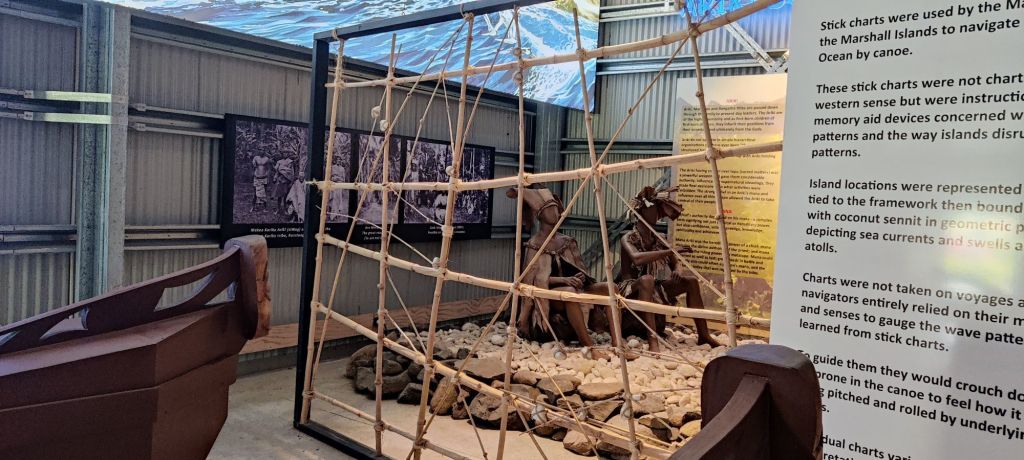
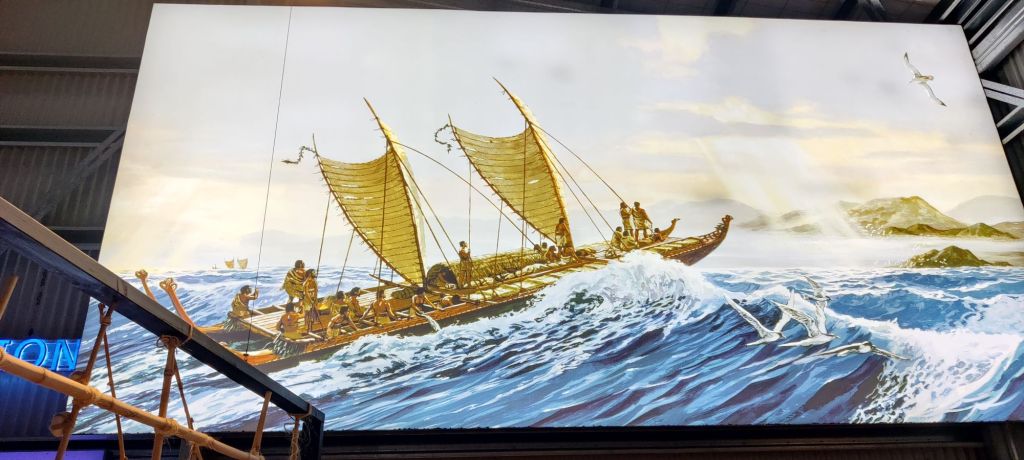
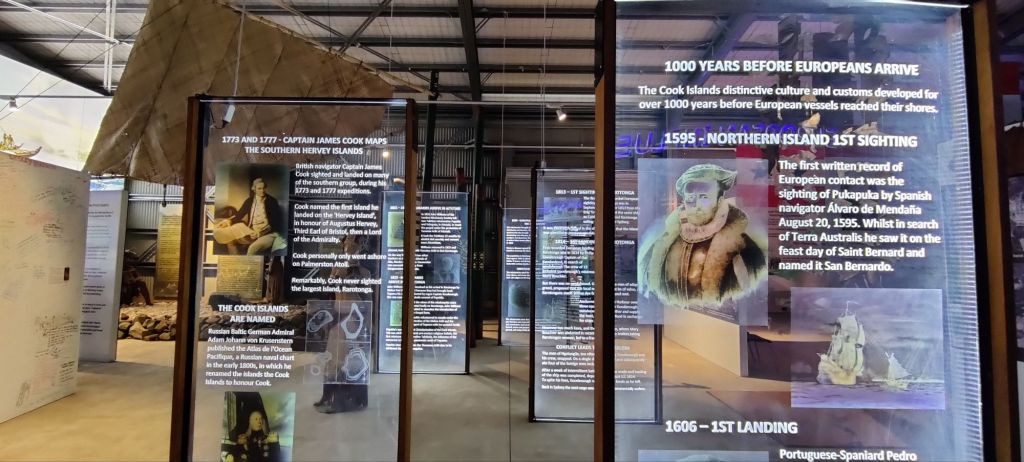
Te Ara serves multiple purposes for its community, one of which is a museum of Cook Islands history. And that history starts out roughly 3000 years ago, as Polynesian explorers working their way through, and I cannot stress this enough, an near-entirely empty Pacific Ocean found Rarotonga. Those navigators did that sort of thing with canoes and stick charts. I cannot get around a city I have lived in for four years without Google Maps.

Stick charts, used onshore (it was all memory and observation at sea) in the Marshall Islands, helped navigators recall swell patterns and island locations and were unique enough to be useful only to their creators.
Every ocean voyage exhibit I have ever been to reinforces my conviction that I am not cut out for sea travel.

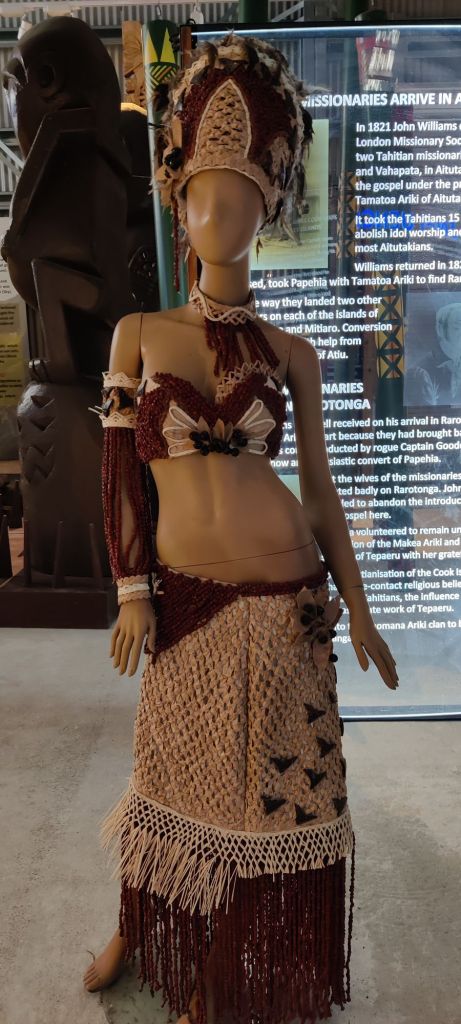
There are examples of traditional garments on display, and also this modern creation, worn by Alanna Smith, 2016 Miss Cook Islands, based on the warrior Aketairi, from the island of Atiu:

Beyond these exhibits you get to the post-European contact period, and we all know how that goes. It’s a pretty reading-intensive set up, but not overwhelmingly so.

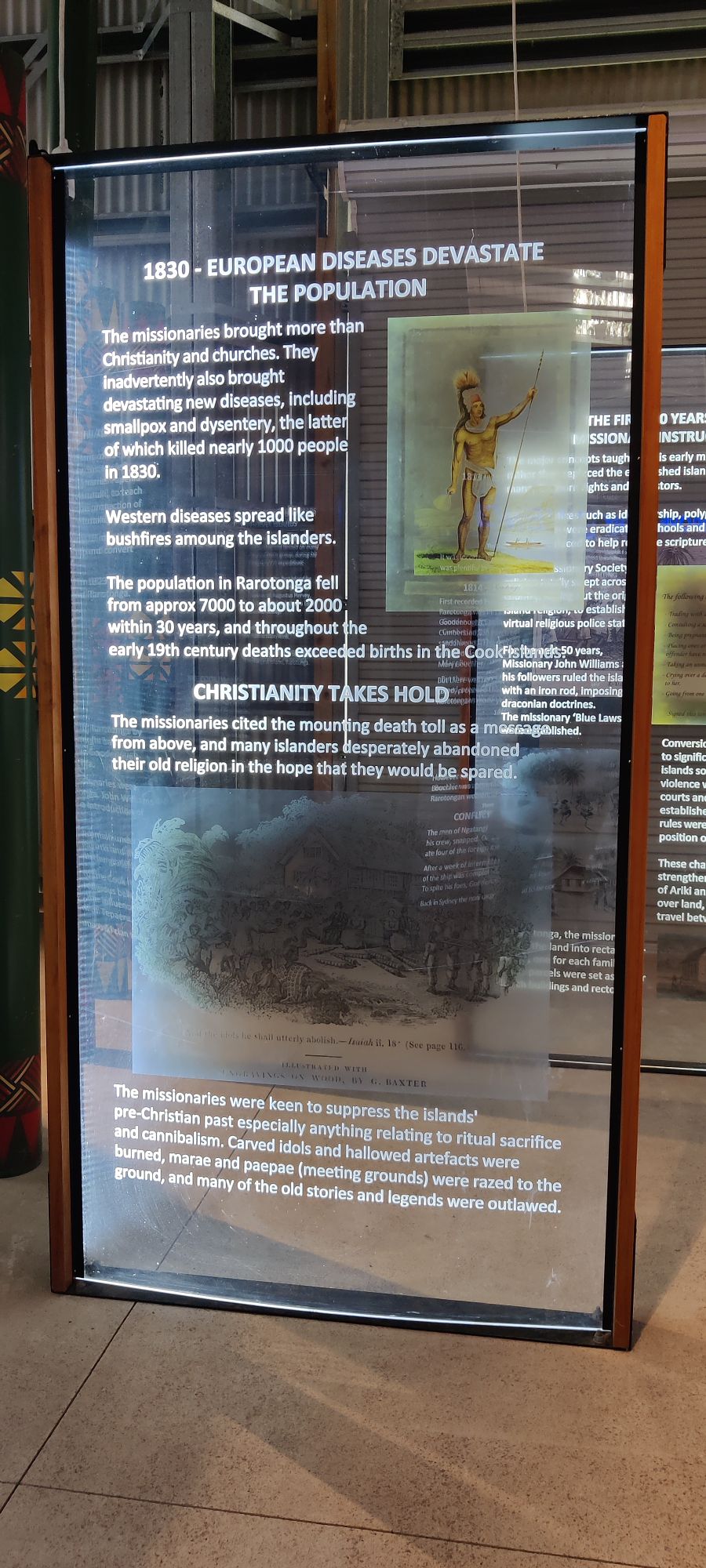
Here comes the disease, etc.

The arrival of missionaries and prolonged European contact in 1821 spurred a seismic upheaval in life. As it does. The diseases decimated the population, and the local practices and worldview were overwritten. The London Missionary Society had no chill.

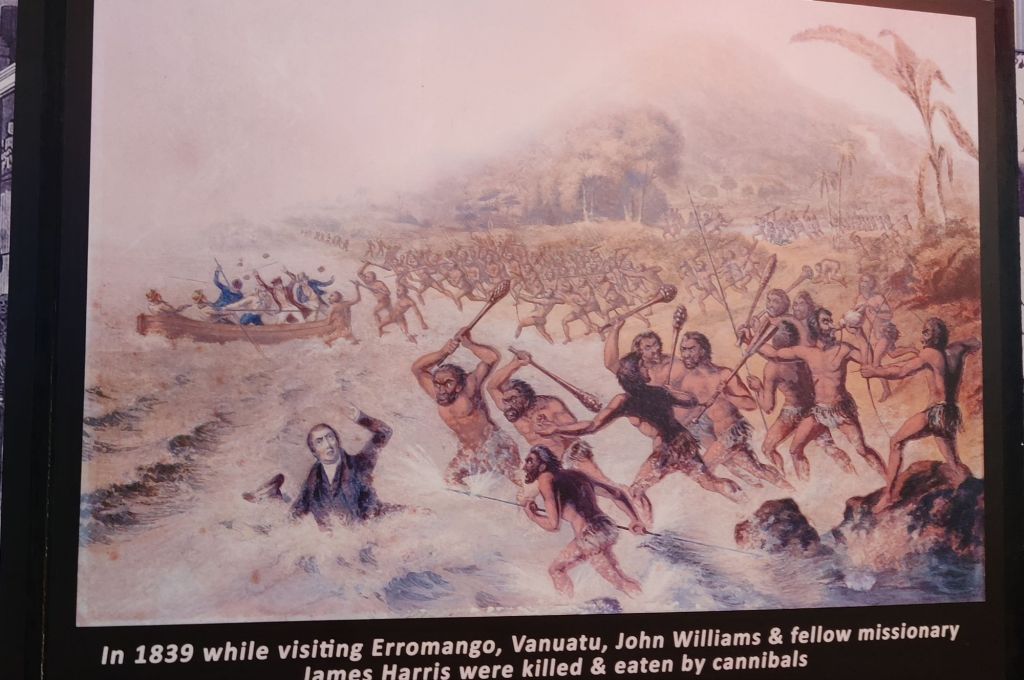
I vaguely recall (I was there some months ago now) that women’s lives were marginally improved under the new religion, although 19th century Christianity wasn’t great on that front in general, and everything else it brought was objectively terrible. This is the depressingly familiar pattern, but I mention it because the museum also has this illustration, whose blasé caption sort of off-handedly remarks on the end of missionary ruler John Williams’s adventures.

Happens.

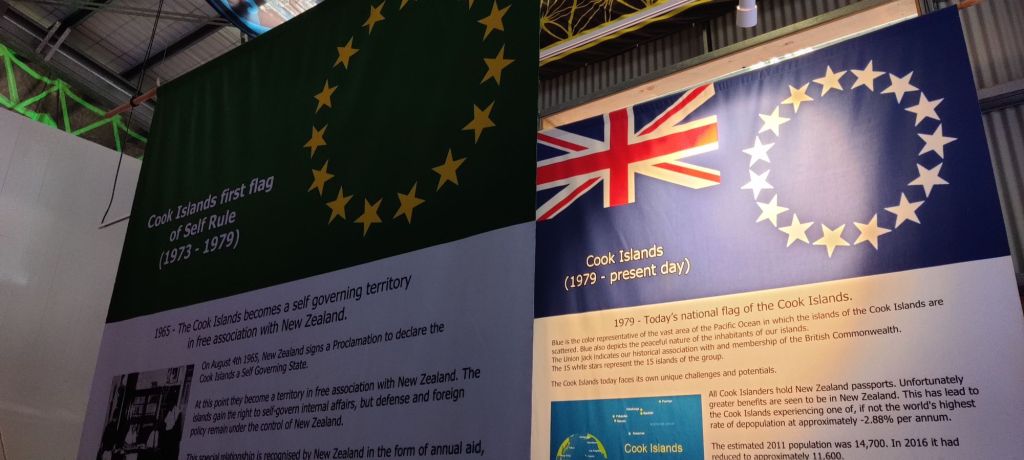
The exhibit continues through Cooks history up to contemporary times, as the political changes it’s undergone are marked in part via the changing of the flag through the years.

I rather like the older one.

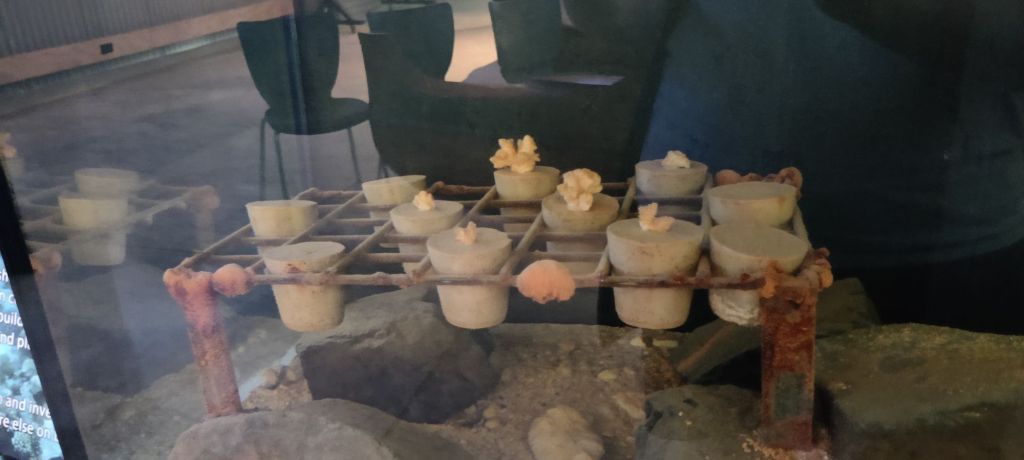
The Cooks are dependent on tourism, environmentally double-edged blade that it is, and are incredibly vulnerable to the effects of climate change. The country’s challenges, environmentally and economically, are manifold and complex. In that vein, Te Ara includes some displays on the local ecology and its protection, as seen here in this tank demonstrating reef regeneration, at the end of your walk through the building.

Hey, gotta start somewhere.

Te Ara is a fine way to spend a few of your non-snorkeling hours on Raro, and being open daily from 9am (10am on Sundays) to 3 pm makes it one of the most open places there is (when I say life moves different in the Cooks, I mean it). There’s also a small café and store with locally produced goods.

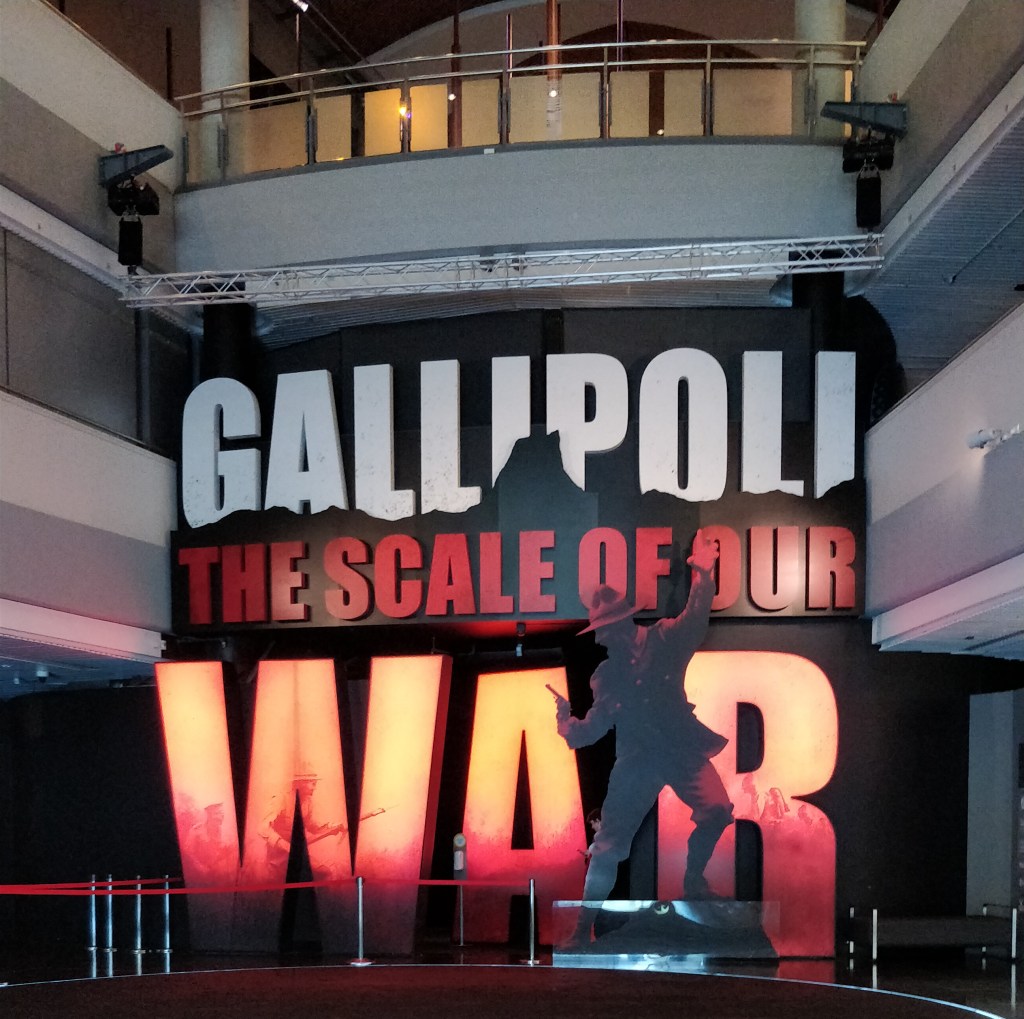
Gallipoli: The Scale of Our War: Te Papa Tongarewa exhibition (Wellington, NZ)

Given the state of the world at the time of this writing, I’d much rather be doing an exhibition of frayed knots or whatever. But on the other hand, I guess there’s no time like the present to remember that war is absolute bullshit. And anyway, this exhibit is pretty great and very well done.

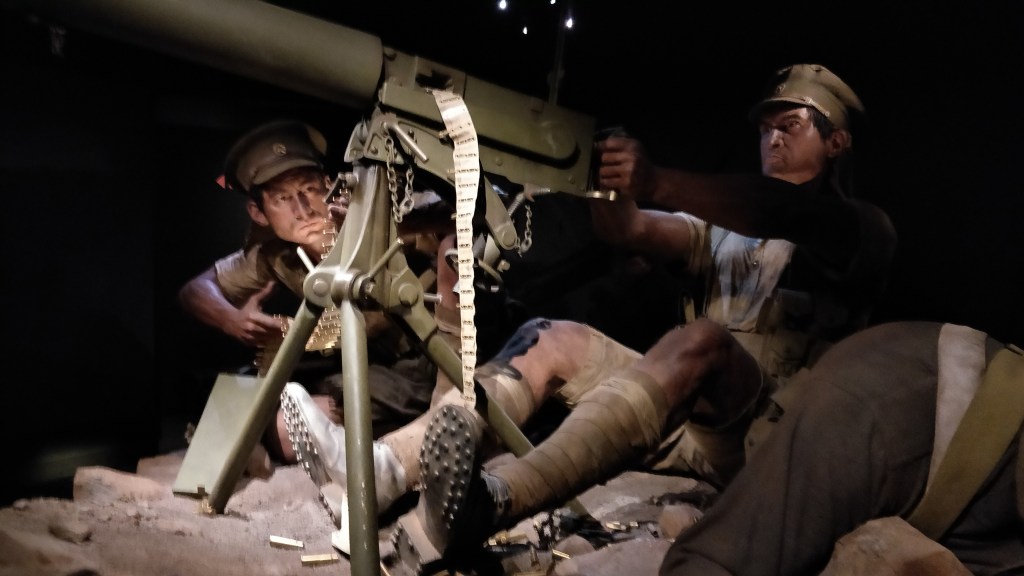
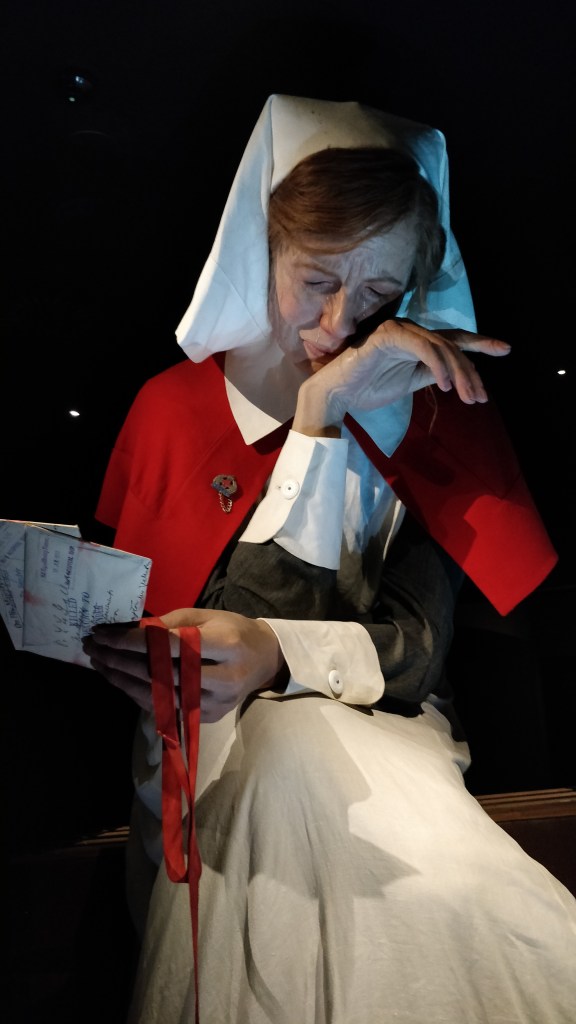
Te Papa, the national museum of New Zealand, will definitely get its own entry eventually. It’s very large and hosts pretty grand temporary exhibitions. The Scale of Our War is technically not permanent, but it is still a few years from the end of its run (2015 to 2025) and it is very grand. The figures that anchor each section are 2.4 times life size and were created by local prop maker Weta Workshop. Maybe you’ve heard of them.

You can’t wander in on accident.

The history of World War I is complicated and brutal and well worth reading about, especially if you’re looking to really trace how exactly a conflict that resulted in so much devastation and death could feel both entirely preventable and wholly inevitable. It was a blood-soaked baptism into the modern age. There are many horrific parts to the whole thing–Ypres, the Somme, the Argonne, etc etc etc–but for New Zealand and Australia, Gallipoli looms largest.

I won’t try to lay out the ebbs and flows of the campaign, because it was eight months of hell spent in service of trying to knock the Ottoman Empire out of the war, and it absolutely did not work. It started with a bad landing, continued with failed offensives, and ended in an evacuation when command decided there were better positions to die for in Europe. The Allies lost 44,000 lives. The Ottoman Empire lost 87,000. It made little difference to the wider war–but it helped shape the national identities of Australia, New Zealand, and Turkey.

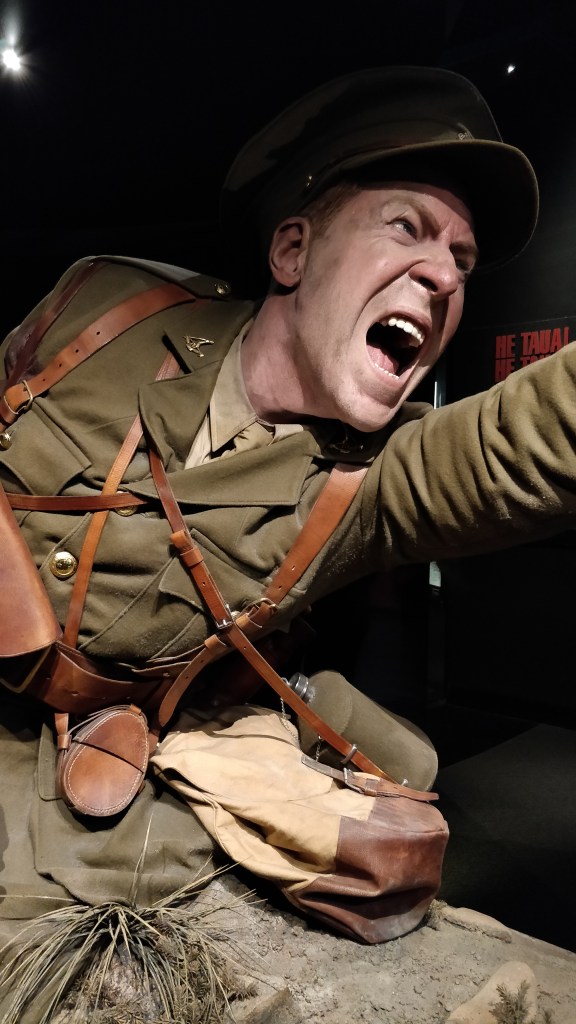
The exhibit includes overviews of the campaign as well as the stories of eight New Zealanders, who are depicted by those very large statues. It’s an effective way to hook the audience into a dense topic. You start with Lt. Spencer Westmacott.

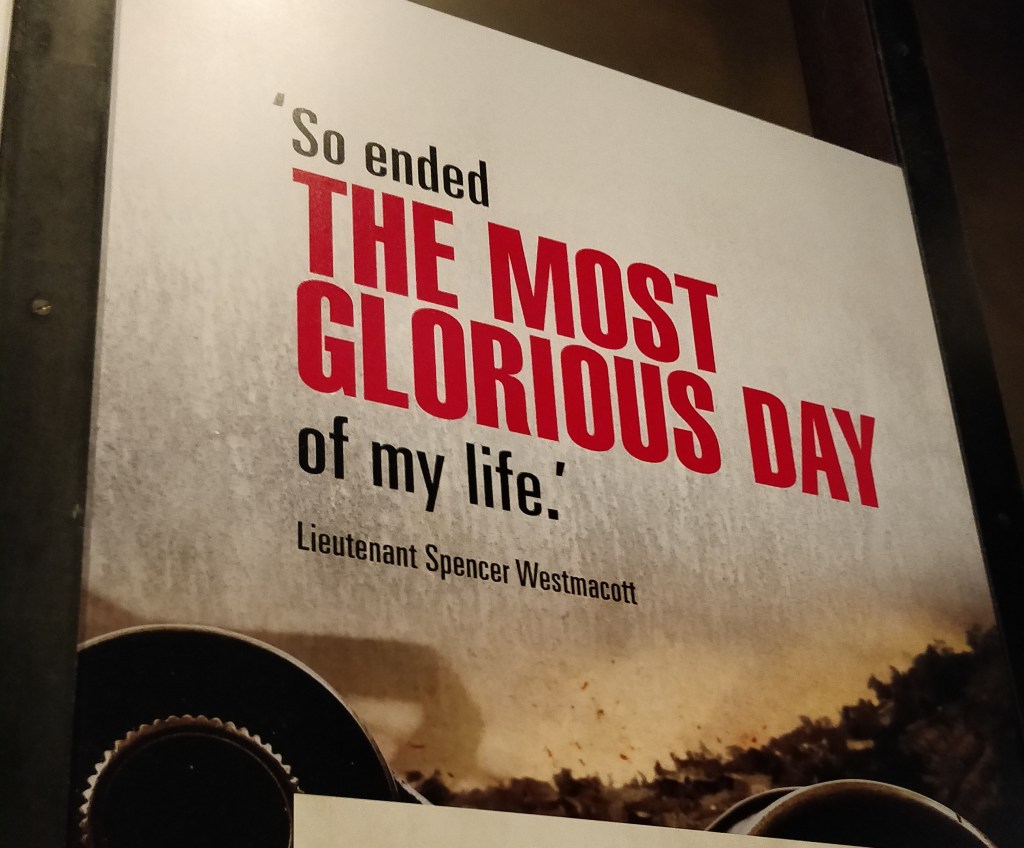
Westmacott would land at Gallipoli on April 25, sustain wounds that would cost him his right arm, and be evacuated that night. His feelings about his experience there reminded me of the narrations in They Shall Not Grow Old, where many soldiers spoke fairly warmly of their time at the front.

Chrissy-Teigen-grimace.gif

The space of the exhibit is laid out pretty well, in my opinion. You follow the line, which not only helps the flow of traffic but also guides you through with a sense of how time was passing during the campaign.

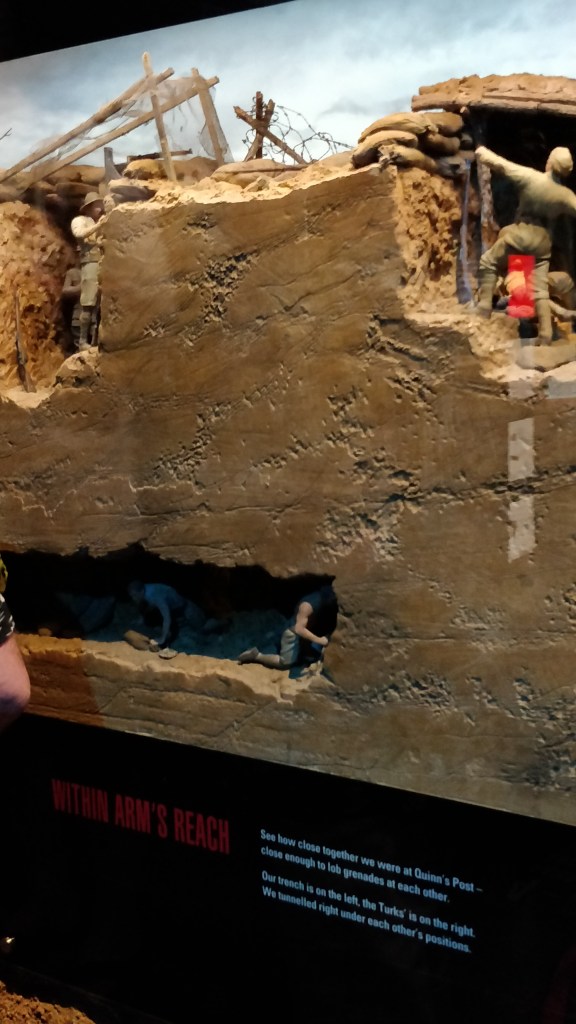
As I mentioned, I’m not going to go through the details of story here–for one thing, this post has been in drafts for some months and I currently have covid; for another, I’ve already linked to one good overview–but I have a lot of admiration for a history-based museum exhibition that does a solid job of engaging the patron. History can be tough for engagement, as it tends to be text-dense, rely on not-immediately-eye-catching artifacts, and generally has taken place somewhere else, leaving a museum-goer without even a bare spatial context within which to imagine the action. Gallipoli tries hard to give some of that context, with 3D maps, models, first-person accounts, footage and photos (some rendered in 3D) and interactive elements.

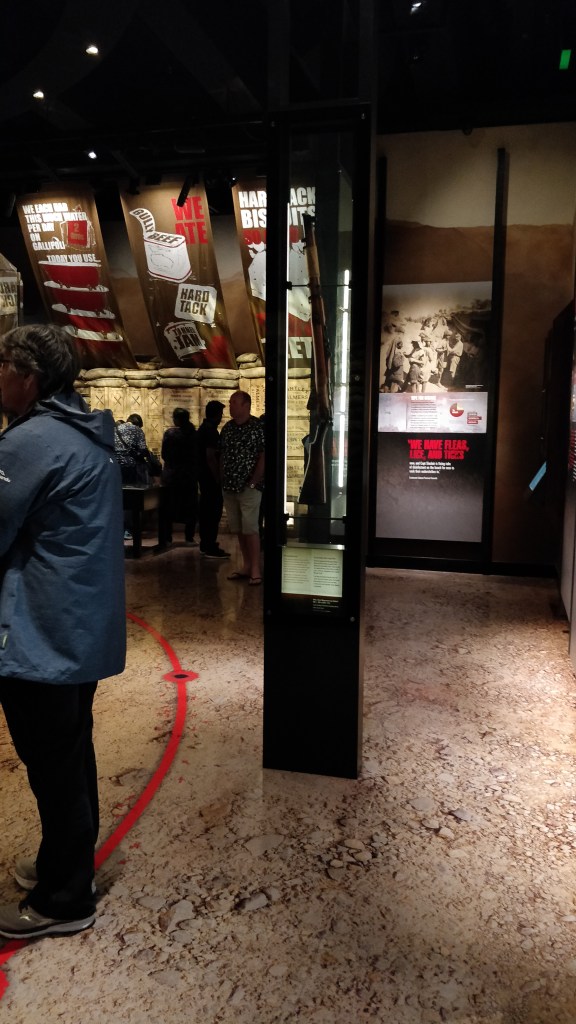
Artifacts are often positioned within the walking space, which I think helps them be noticeable among the flashier visual elements.

One of the most effective features is a screen that demonstrates the effect of various weapons on the human body. The viewer selects which one and the skeleton takes the hit.

I have no jokes for this

The interactive parts are very well done, and of course there isn’t much in the way of emotional relief throughout the space. While all of the various types of elements are represented throughout the viewer’s walk, the experience is anchored in the statues of the people whose stories make up the narrative of the exhibit, and really, those statues are extraordinary in their detail.

I had a lot of problems photographing the statues, and it’s now driving me crazy

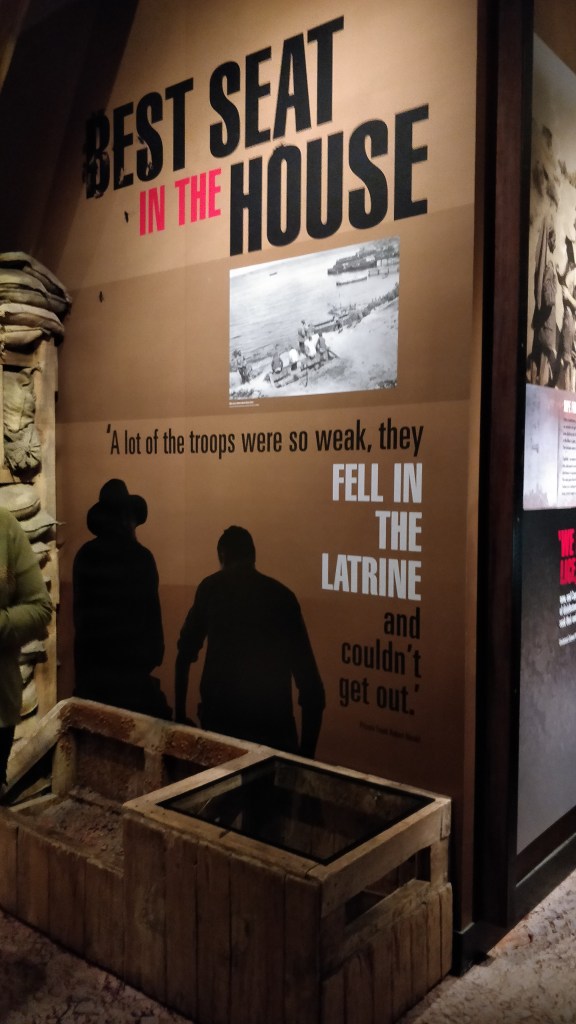
Conditions at Gallipoli were absolutely awful in just about every way. How awful? This awful:

No.

And finally, as you leave, there is one more figure–surrounded by paper poppies left by other visitors–that serves as a stark reminder that this campaign was early in the war and many other hells awaited.

Again, the subject matter of Gallipoli: The Scale of Our War cannot be uplifting. I have always had some trouble with writing up exhibits that document the worst of humanity (long-time visitors to this blog might have noticed that I never did write about the ESMA in Buenos Aires). Regardless, Gallipoli is remarkably well done. It is well worth the visit to Te Papa, which is itself a wonderful museum. The exhibition is free (as is entry into Te Papa), and open every day except Christmas.

Fell Locomotive Museum (Featherson, NZ)

Trains are often depicted as heroes.

Thomas.
Chuggington.
Choo. Choo.

Nobody doesn’t love train rides. Anyone who claims otherwise is lying. When I was in college I knew a guy called “Chooch.” Trains are inherently interesting to everyone and for a good reason. The romance! The unparalleled ability to move stuff! The metaphor for determination!

The extraordinary specificity of the local museum!

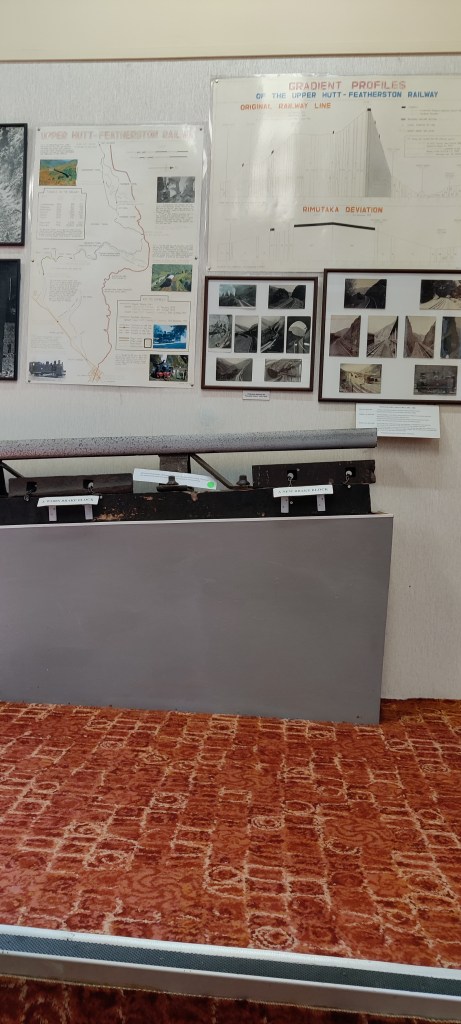
Which brings us to Featherson and the Remutaka Range (this is the acknowledged spelling, although you will still see it spelled Rimutaka in places). Construction on the railway was authorized in 1871. The site for the Remutaka Incline had a gradient that was, in technical terms, “steep AF.”

As seen here.

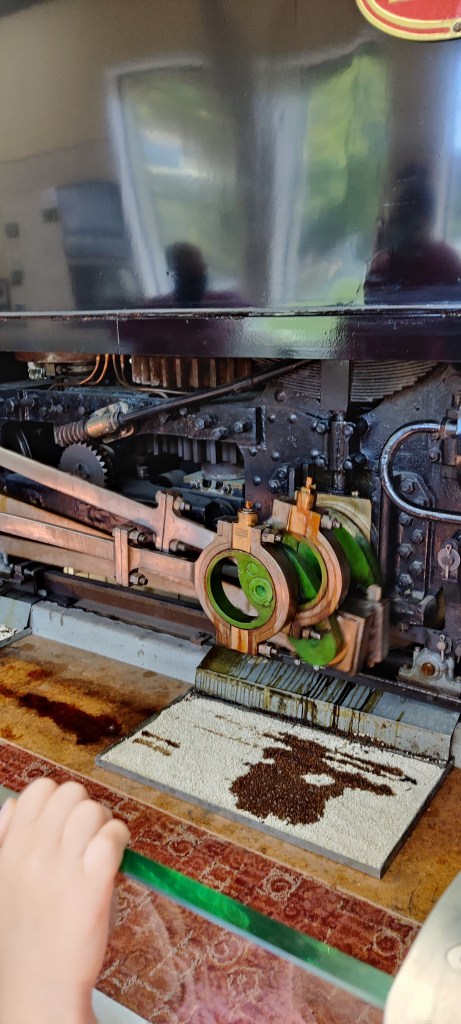
The system chosen to get trains up and over the incline was that of the Fell locomotive. It was arduous and slow but ran from 1877 to 1955. And the Fell Locomotive Museum is in possession of one of the six Fell locomotives that served the line, and now the only Fell locomotive in the world. It’s been restored enough to demonstrate its movements, which you can see here with the power of your imagination (I do have a video but I refuse to upgrade my WordPress account at this time).

chugga chugga chugga chugga

The museum has been nicely funded, and the exhibits include a model of the railworkers’ settlement and film of the train and workers in action. Mr. Exhibitist felt the film was perhaps a rosy presentation of what was an extremely isolated lifestyle for the workers’ families, but it is very nicely done.

As long as you didn’t have any sort of urgent need because there was everything was a slow, arduous train ride away.

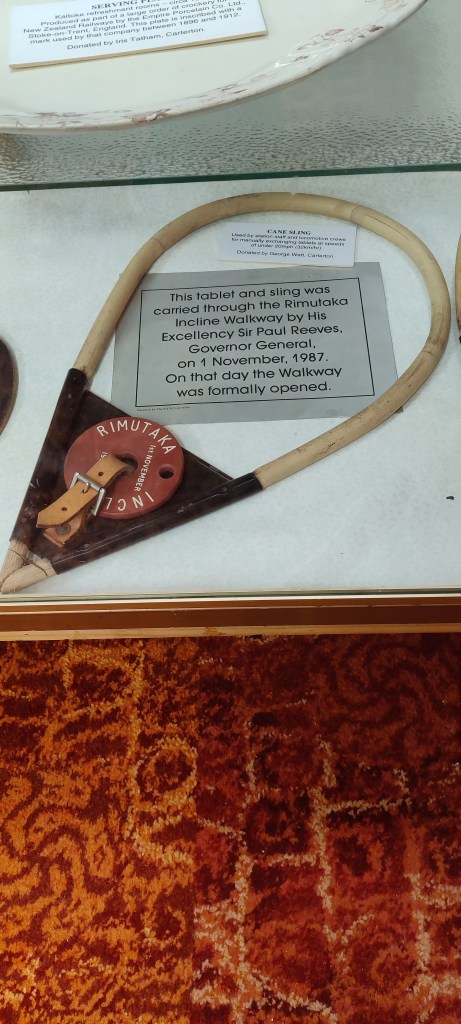
Various artifacts of the rail line (there is still a train running through Featherson, but not on the Incline–the Fell locomotives and the line they ran on were taken out of service when the tunnel was made), news coverage, and information about the operation of Fell locomotives are in the museum, and the very knowledgeable volunteer docent can tell you a lot about it. I absorbed roughly nothing of these facts, but I remember that these contraptions had to do with passing identification disks to and from the trains. I think.

Probably if you zoom in you can find out

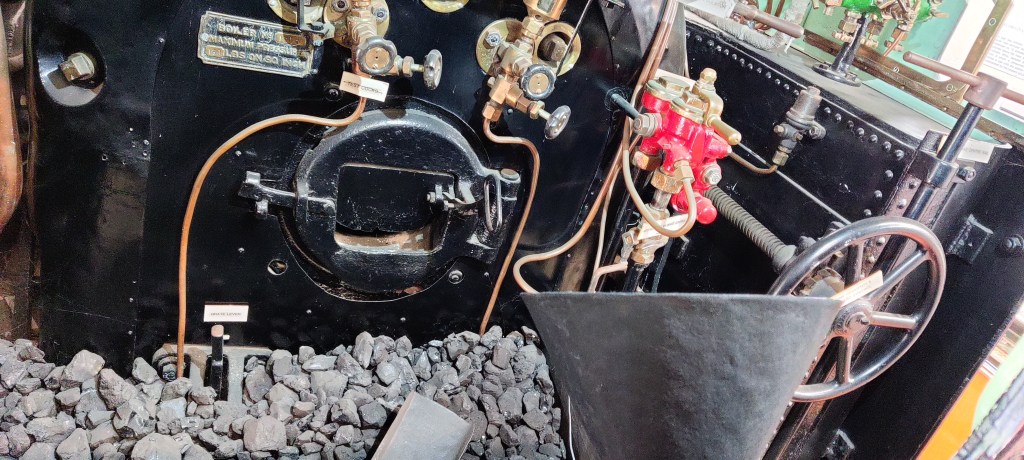
The centerpiece of the museum is obviously the locomotive itself, and you can get pretty up close with it.

Shoveling coal probably sucked.

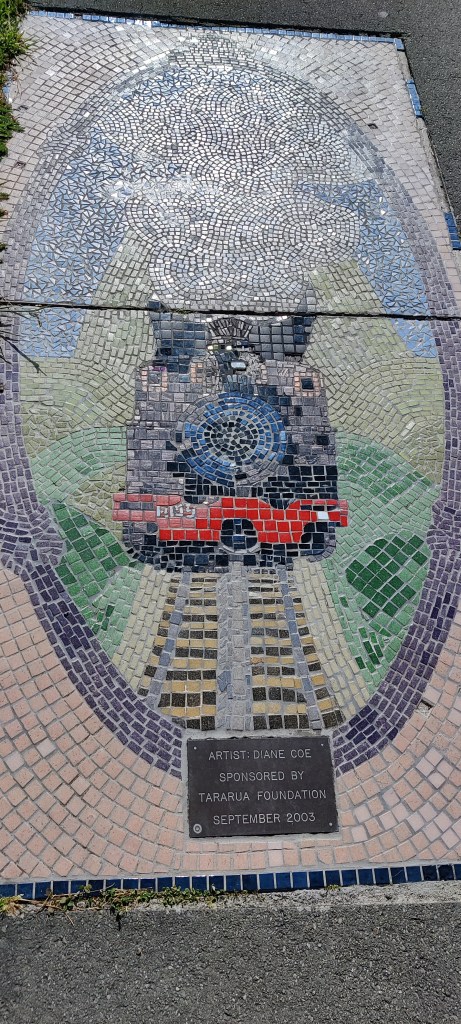
Anyway, the Fell Locomotive Museum is a nice way to kill some time in Featherson, which is itself a pleasant place to kill some time outside of Wellington. It’s also a Book town, with many small bookshops and literary events. Just a swell little town. Entry to the museum is $6 for adults, $2 for children over 5, and/or $13 for a family. There’s a little shop! I bought a tea towel.

Not my tea towel; a sidewalk mosaic.

Golders Cottage (Upper Hutt, NZ)

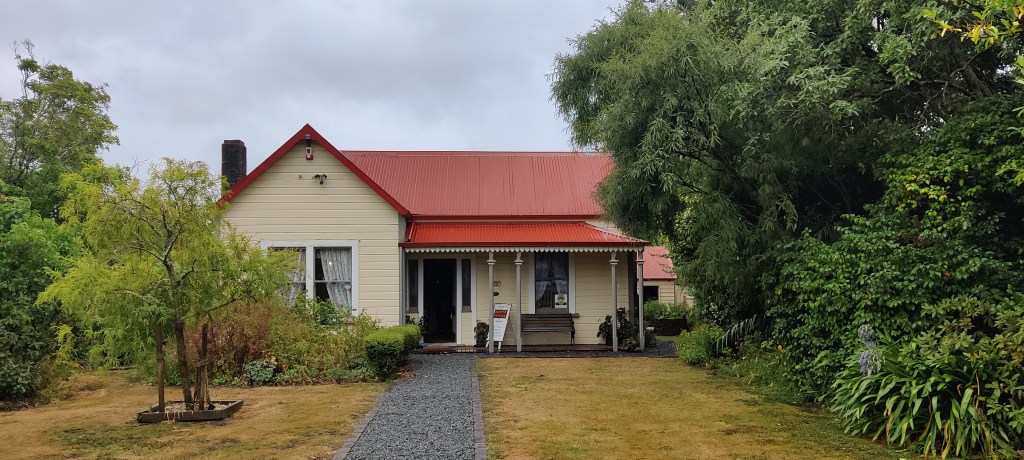
Happy 2022! Yes? February still ok for new year wishes? Has any of us emotionally marked time in any meaningful way in the last two years? Probably not. Have I been visiting museums? Still not like I used to. But having covered the country’s castle last year, let’s look at a slightly more modest historic home, built in 1876, five years after Larnach Castle.

Far more successful as a family home than Larnach, frankly

Golders Cottage was built by John Golder, the son of Scottish immigrants and a real DIY kind of guy. The house was occupied by the Golder family up until 1985. Several pieces of furniture and other items in the house were made by John and have spent their whole existence there, now keeping company with some other period displays donated by the community.

No Golder has ever needed an IKEA

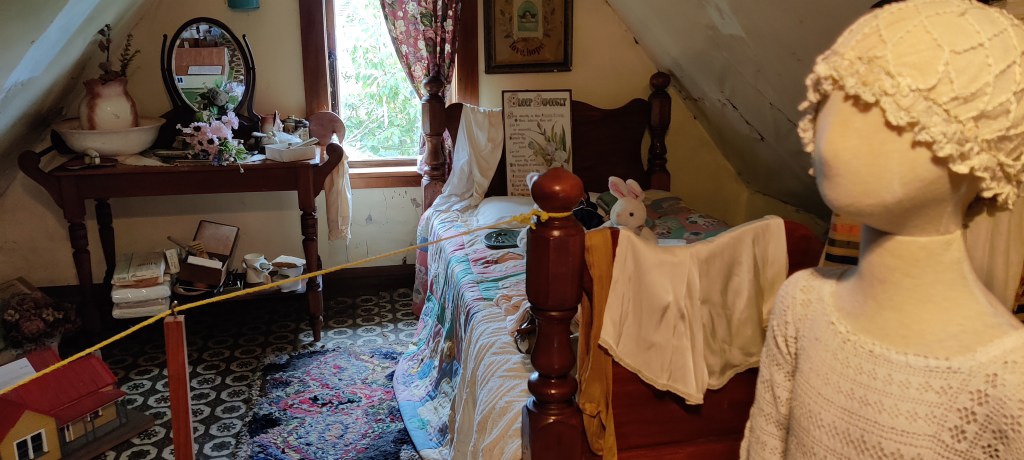
John married Jane Martin the year after the cottage was built; they added 12 children and a few more rooms to it before John was killed in an accident in 1902. On our visit the guide asked, “Can you imagine 12 children in this house?” but frankly I cannot imagine 12 children. How do you think of names for them all. The original cottage was a bedroom and living/dining room downstairs with two small bedrooms upstairs, and the additions started in the 1880s, as it presumably got hard to breathe in there pretty quickly.

The eldest two children were moved to the upstairs rooms in 1889 and used them until their deaths in 1968.
Now I feel bad about throwing out my dried wedding flowers before moving to New Zealand

A kitchen and scullery were eventually added, but that was six kids in and Jane did the cooking over the fire in the living room up to then. John kept busy being a notable community person, but I can’t help thinking more about the monumental effort Jane had to make every day in a tiny space to keep the whole thing going, while being pregnant like, all the time.

Lots of stew.

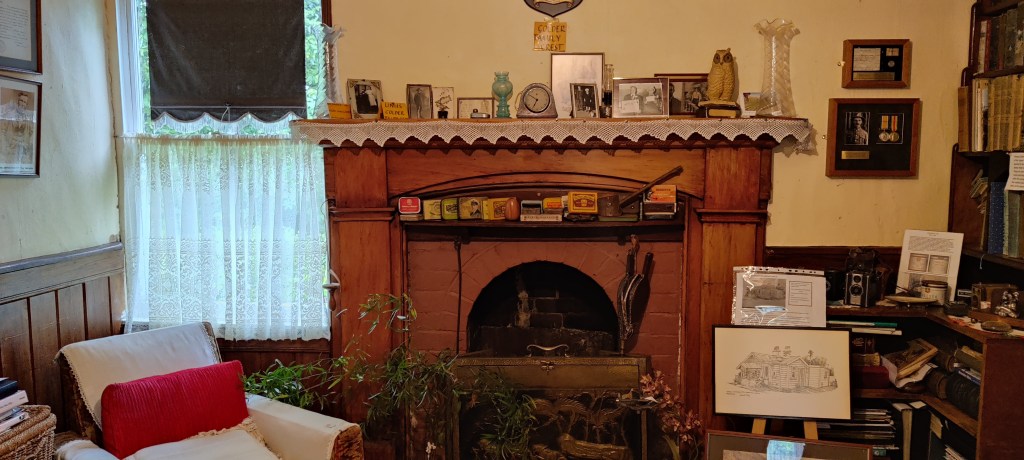
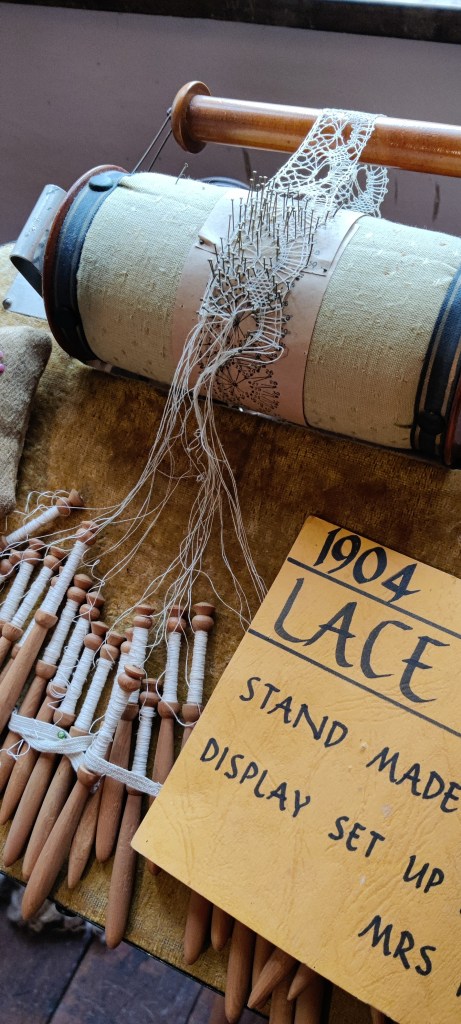
The cottage is full of objects (as noted, some original to the house) from the late 1800s and early 1900s, from textile-making stuff to cooking implements to clothing to toys to books. Perhaps you’ve never seen how lace is made by hand:

Short answer: witchcraft

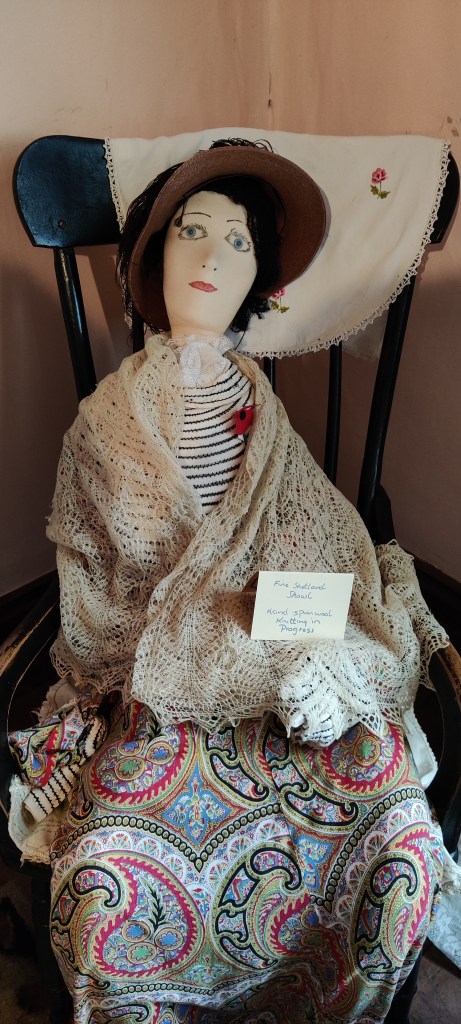
And I am, as always, pleased to report the presence of several unsettling human stand-ins, which I’ll never get tired of.

Knitted shawls please the guardians and keep them still

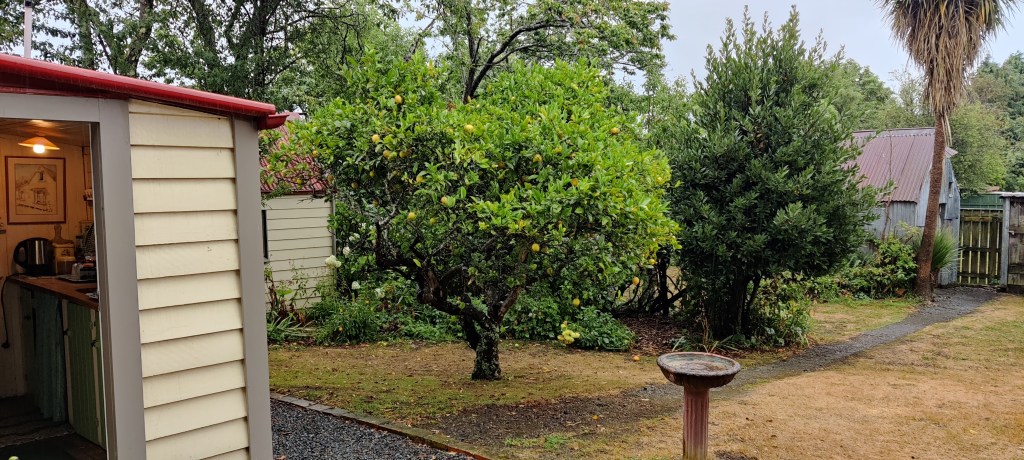
The garden of the cottage (which I definitely must put in a good word for because my own kid has started volunteering as a garden helper) still has a few very old specimens, such as this lemon tree, which is over 100 years old.

You will not age this well

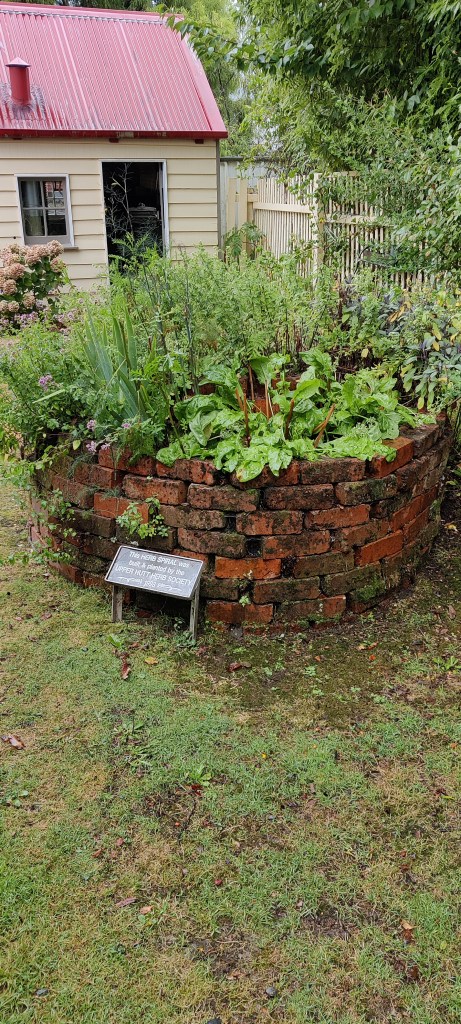
There’s also this really lovely herb spiral, put in in the 1990s, and I want one. It’s so cool.

FREAKIN’ COOL

Golders Cottage is a great example of a well and long lived-in period home and worth a visit. It’s open on Saturdays and public holidays from 1:30-4:00. I believe for adults the entry fee is $5 (bring cash or be ready to make a bank transfer). Check out their website for more information about the cottage and the Golder family.

The Edwin Fox Ship and Visitor Centre (Picton, NZ)

I think we can all agree that 2020-2021 have not been great years for museum-going motivation. Even here in the relatively normal New Zealand, I haven’t got much energy for museums or blogging. I do have a few to catch up with though, so I’m going to power through it. But one place you should not just power through is Picton, NZ, however strong the temptation might be to view it as big ol’ ferry lobby.

Picton is the South Island end of the Wellington-Picton ferry services across the Cook Straight, but you’d be missing something neat if you don’t build in a couple hours to visit the Edwin Fox before boarding your own hopefully far more seaworthy vessel.

Scale model. Do not attempt to board.

The Edwin Fox ship and Visitor Centre is the site of the remains of the Edwin Fox, built in 1853. According to the Centre’s website, the ship is the last surviving (it meets perhaps the most generous definition of “surviving” but as 168 years is a long time to hold anything together, I will grant it) wooden Crimean War troop transport and the last surviving Australian convict ship. It’s also the oldest merchant vessel and the oldest wooden NZ immigrant ship.

Let’s start with a look at ship life for the convicts being sent from Britain to Australia on the 1858 prison trip, starting with this sampling of offenders. Marvel at the consistency of sentencing in the 1850s. Ten years for stealing pants? Presumably they were awesome pants. Six years for stealing an ox? Damn those pants must have been frickin’ amazing.

I’m sure there’s a logical reason for a 17 year old to be sentenced to 14 years for sacrilege.

Prisoners spent most of their voyage below decks, which I’m sure was singularly unpleasant. The holding space could only be accessed through one very tiny door.

Duck

And in the great tradition of unsettling museum mannequins, here’s this guy’s tear- and/or sweat-streaked face.

Yikes

But the Edwin Fox had quite the life outside that one time it was a prison bus. In addition to the merchant activities, it was also the immigration bus:

It ended its functionality as a refrigeration and storage ship, having been stripped of the parts unnecessary for a floating cooler, until it was finally abandoned to the elements in 1950. Fifteen years later there was interest in preserving what was left of the Edwin Fox and it wound up in permanent dry dock in Picton. Artifacts found with the ship are on display in the visitor centre:

After strolling through the visitor centre, visitors then move to the outside-but-covered area that houses the ship itself. It’s kind of spooky!

I like to think of the beams as flying buttresses
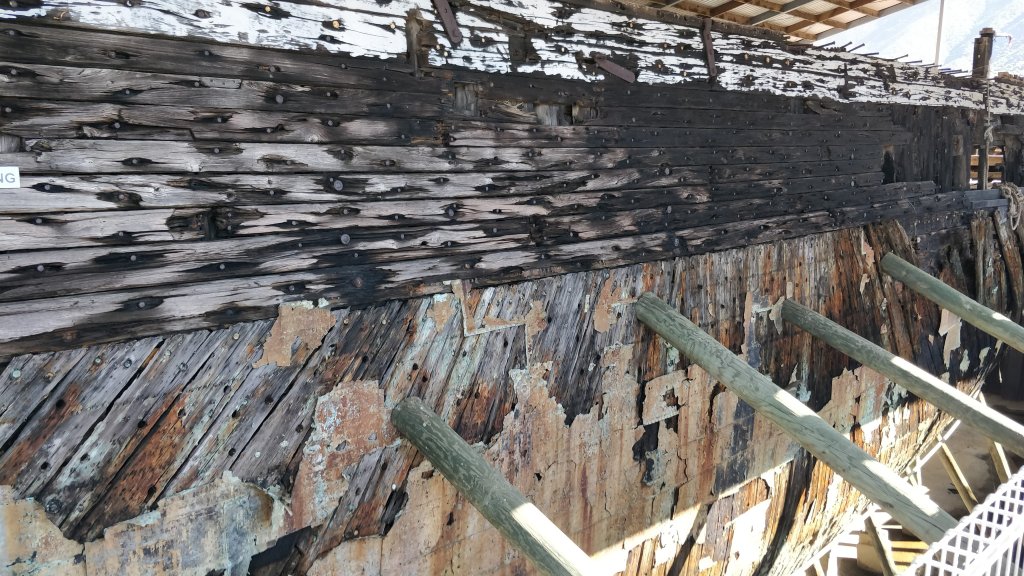
Inside the hull

The fun parts of the ship itself are the set ups that show what life was like on board. If you could avoid travelling steerage, I would recommend dodging it.

Mealtime spaces seem fine until you think about how many people were using them:

Like a perpetually damp picnic

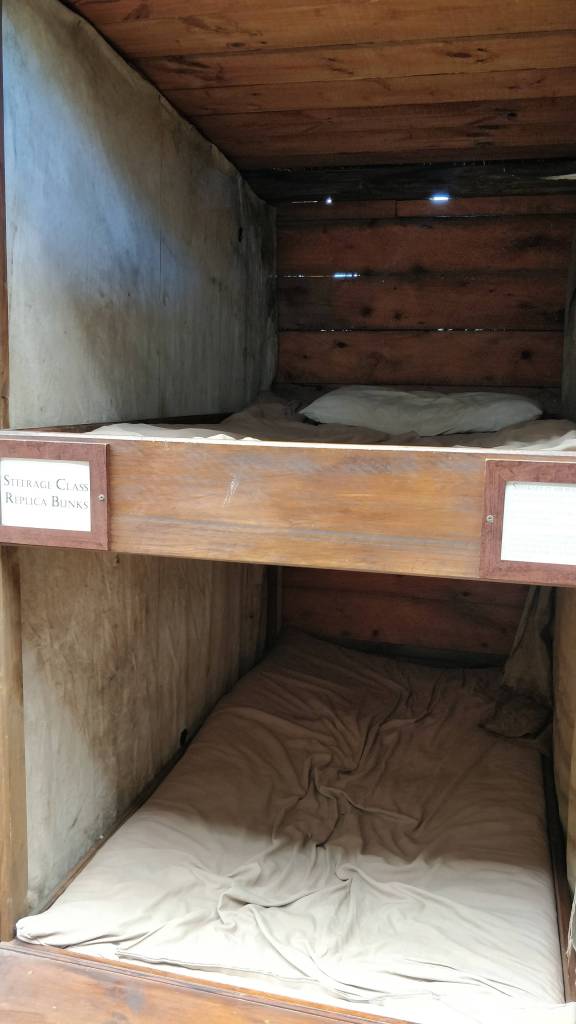
But it’s still preferable to the steerage “cabins,” which housed the whole family (up to six: two parents and four kids). The straw mattresses would be frequently dripped on from the deck above. It stunk, literally. The whole trip would take 12 to 14 weeks. And instead of running full tilt down the gangway and on to dry land to put the memory of your journey forever behind you, you actually dismantled the bunks and used the wood in your house.

Up to six people. Six. SIX.

Of course, the prisoner cells were just a bit worse.

Not shown: the actual barred doors.

Not all of the ship accommodation was so tight and gross. I can’t remember exactly but this might be the replica for the captain’s bunk (or maybe first class?):

Look at you with your fancy drawers, lah-dee-dah.

Finally, there’s a nice replica wheel and compass on deck, which look a little jarring next to the haunted, not-wholly-there deck itself.

Watch your step

Definitely check out the Edwin Fox and its visitor centre; it’s open every day but Christmas from 9 am. People 15 and up are $15 (the young are free). There’s a nice little swag shop, and they give little kids a free activity booklet.

Larnach Castle (Larnachs Castle, Otago, NZ)

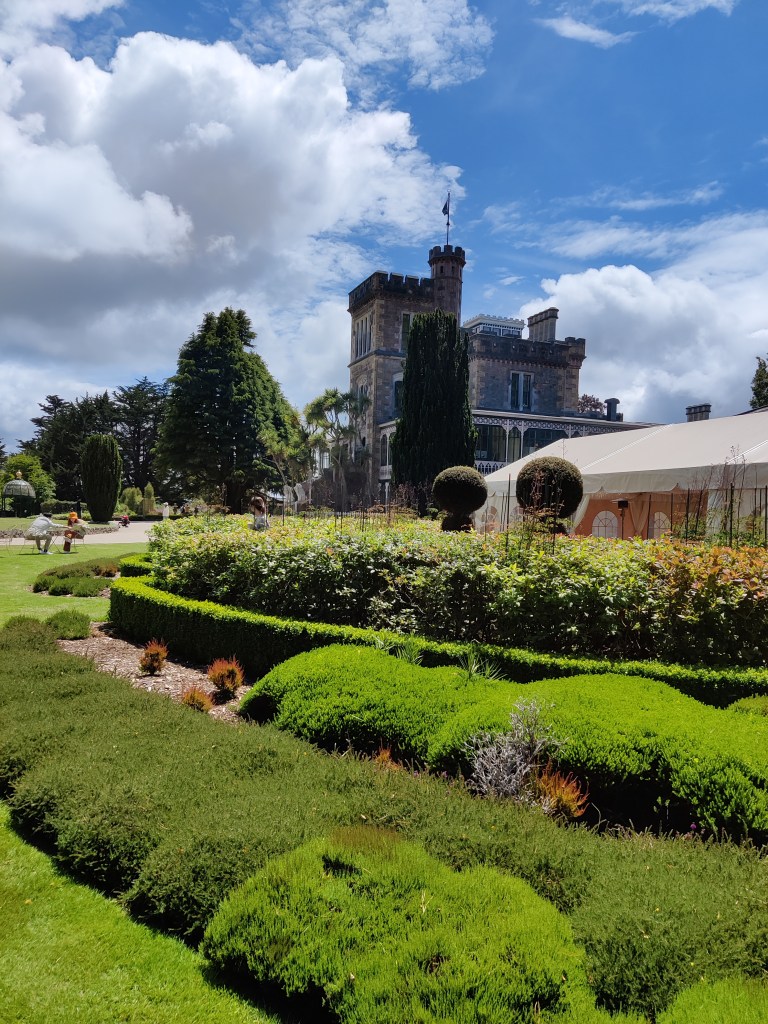
This is the story of New Zealand’s only castle, built in 1871 by William Larnach, a merchant and politician. Everyone in this story hated each other and also the castle.

Money can buy you a lot, including colossal family mess.

That’s a slight exaggeration, but very slight. The castle is some distance from the city of Dunedin and has some very impressive grounds and views. It was fairly remote in the 1870s-80s, which is why the family ladies didn’t really like living there to begin with. William Larnach himself was not home much, as far as I can tell, so its deficiency as a residence for people who depended on social calls to avoid going insane with boredom probably escaped him. He didn’t escape much else though!

Drama awaits.

Briefly, the story of the castle and the Larnach family goes like this: William built it for his first wife (whatever that means, exactly), sparing no expense. Of course, we now know what sort of harbinger that is because we’ve all seen “Jurassic Park.” William, unfortunately, pre-dated that morality tale.

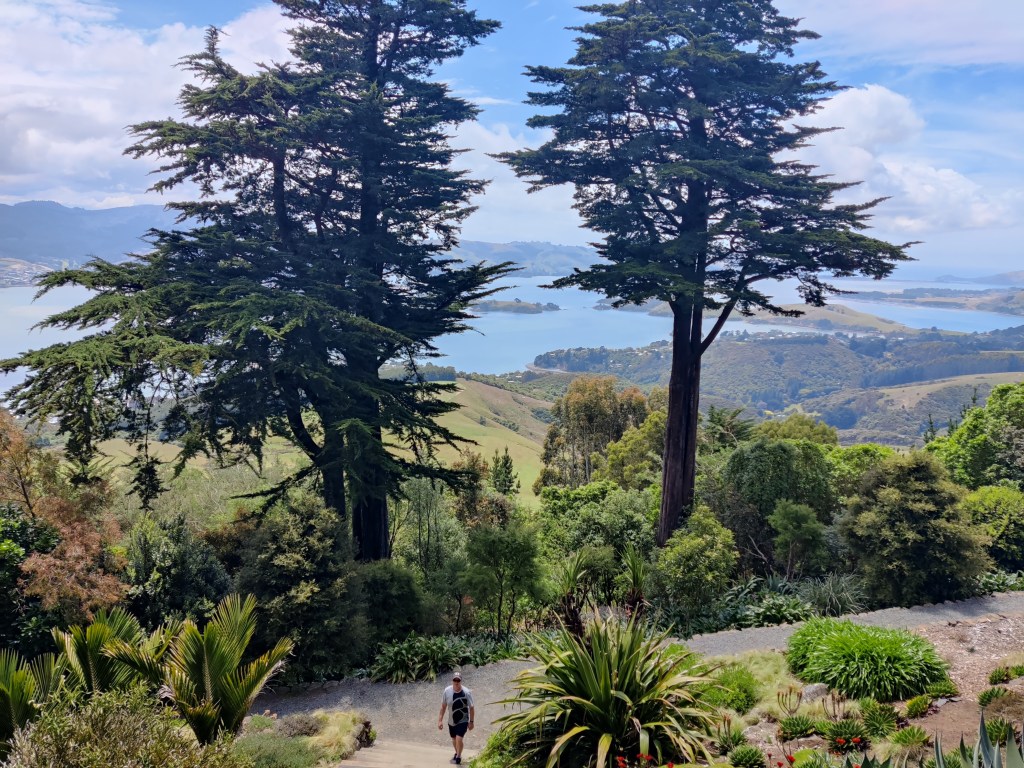
That view tho.
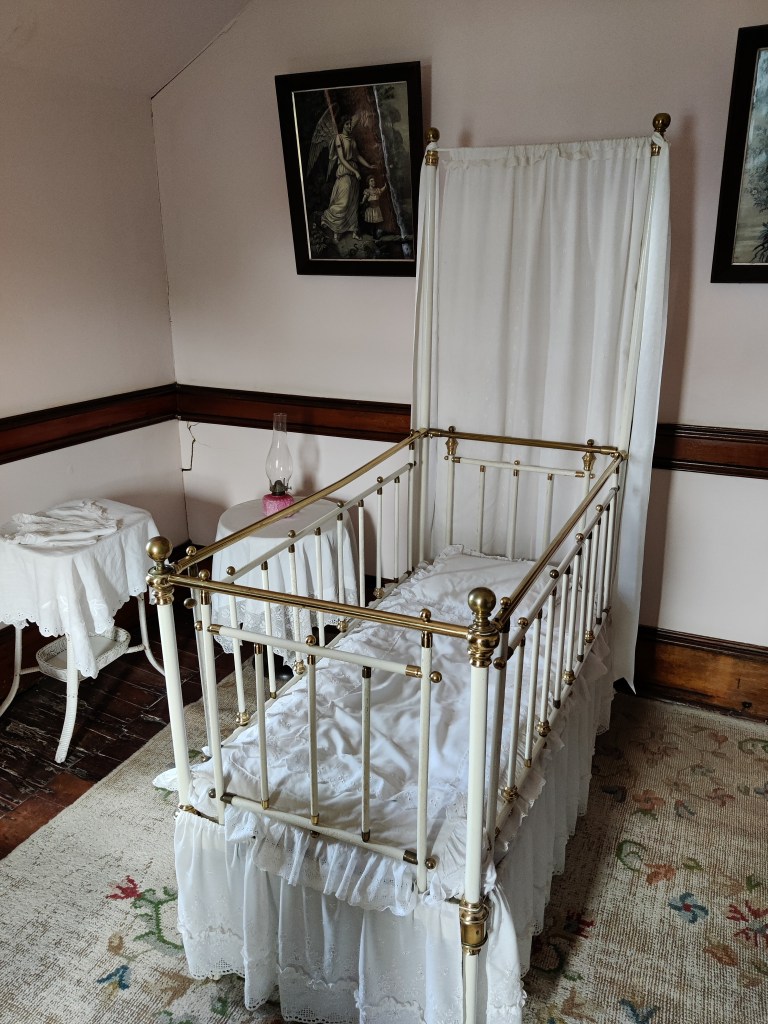
I always feel like old nurseries are made pre-haunted.

First wife Eliza had six children, but died at 38. William then married his wife’s sister, Mary, which the castle’s history room helpfully tells us was legal due to “The Deceased Wife’s Sister Marriage Act” of 1880. The fact that a whole-ass law had to be passed to make this sort of thing permissible also indicates that a lot of people thought it was gross. Some people who definitely thought it was gross were William’s children. There was some serious inheritance at stake. We’ve also all seen “Hamlet.”

The disapproving kids didn’t kill Mary or Polonius or anything like that, but they did also didn’t stick around. Neither did William, who was in Wellington for politician stuff for months on end. Mary was left with a big ol’ house and a drinking problem. She also died at 38, five years later.

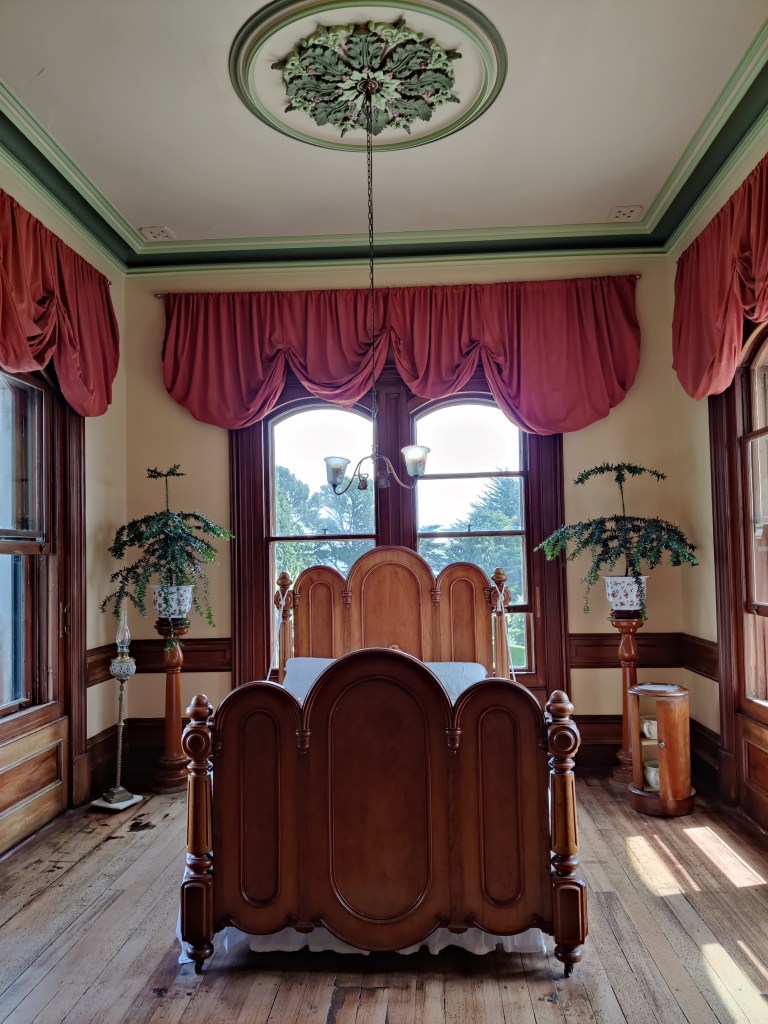
One of the bedrooms, just sitting there not being someone a desperately lonely woman could talk to.

Various properties and holdings had been put in Mary’s name because William’s business was going south, and Mary left the children everything, as she had agreed to. This was probably fine with them but it sure suddenly sounded like a terrible idea to William, who did not have control over his own assets anymore. What does a reasonable man do in this situation? He forces his adult children to sign some papers without letting them see what the papers say, naturally. These papers were an agreement to relinquish their newly-inherited stuff. Family dinners were probably really great.

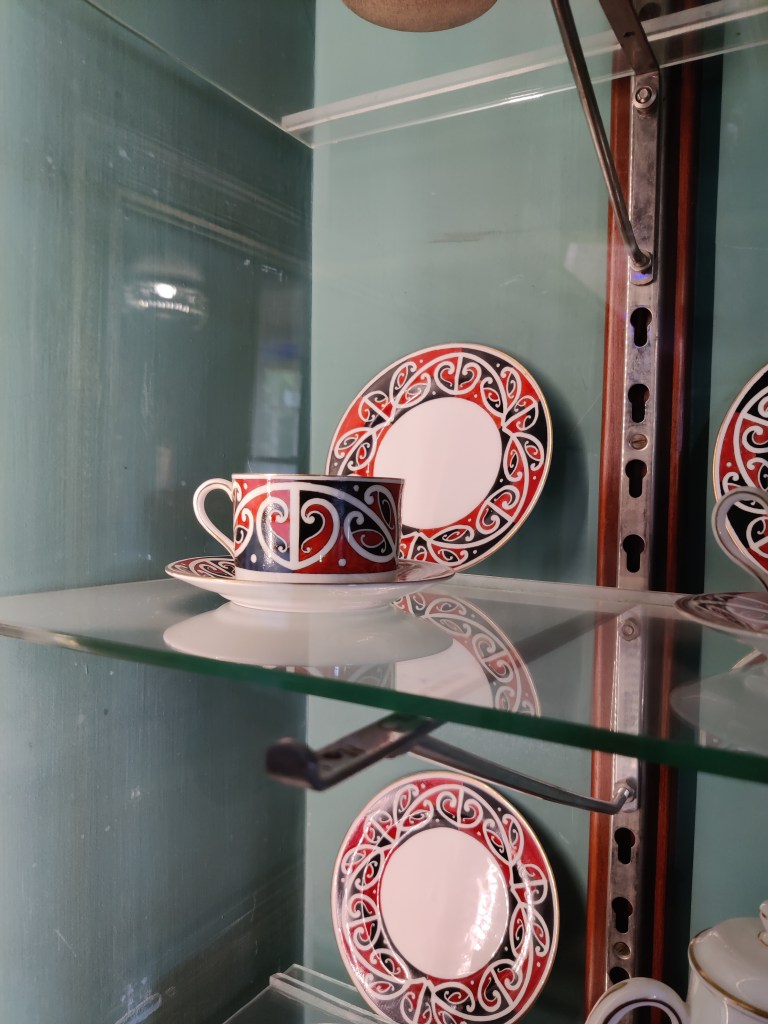
The castle was very European in design but had a lot of the native land in it (not unlike the mansions of Manaus in Brazil). This china features Māori design.

William married a much younger woman next, Constance (we see you, tired cliche). His business deals went wholly belly-up and there were rumors that Constance was sleeping with his youngest son. Ruined and humiliated, William killed himself in a Parliament building in 1898. The surviving family fractured itself further fighting over his will, illustrating that once again, family fortunes mainly get inherited by lawyers.

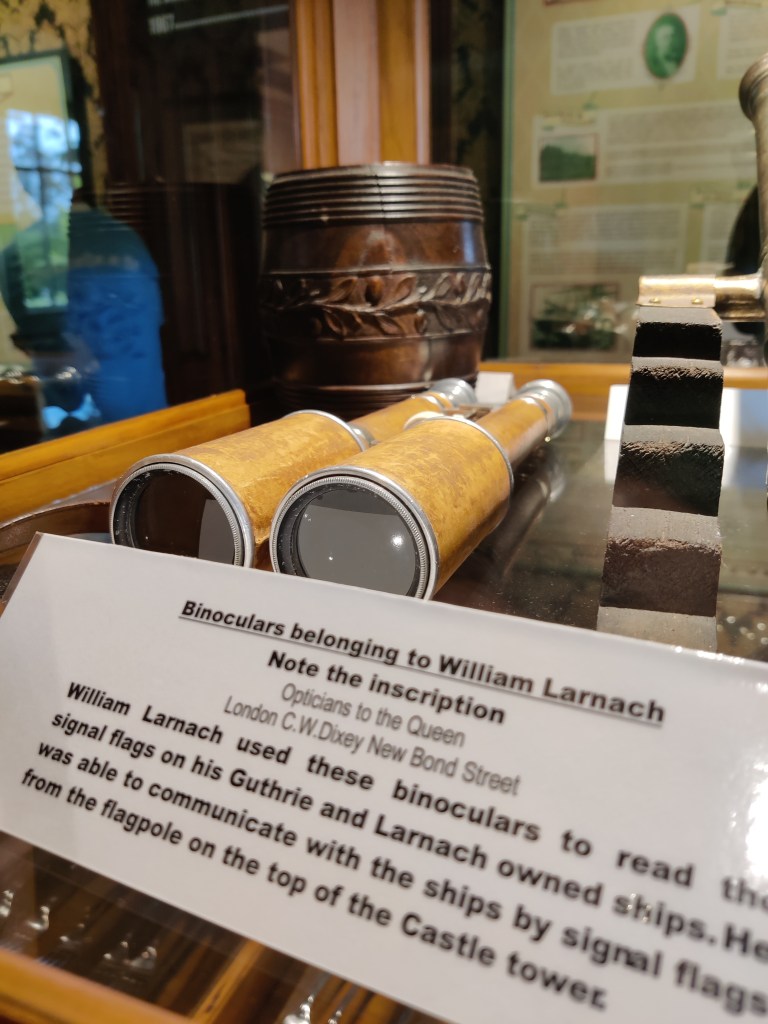
The castle does still retain some of William’s personal effects.

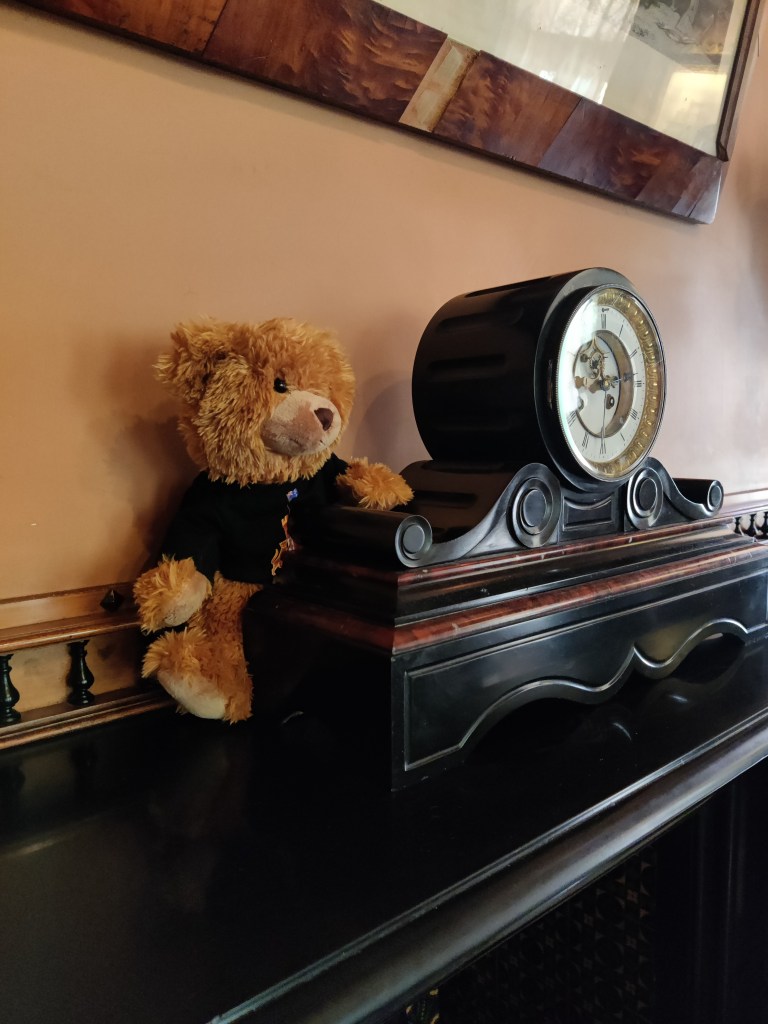
The castle fell into ruins and went through several owners before the current ones, who’ve spent years restoring the place. The castle now has guest quarters, a cafe, and gift and garden shops. It operates as a museum and hosts events and is a fine way to spend an afternoon.

There was a children’s quiz and bears to spot when I visited, which is a fun way to keep little ones engaged throughout the self-guided tour. Should you find the bears too adorable to leave behind, they’re available in the gift shop.

Obviously.

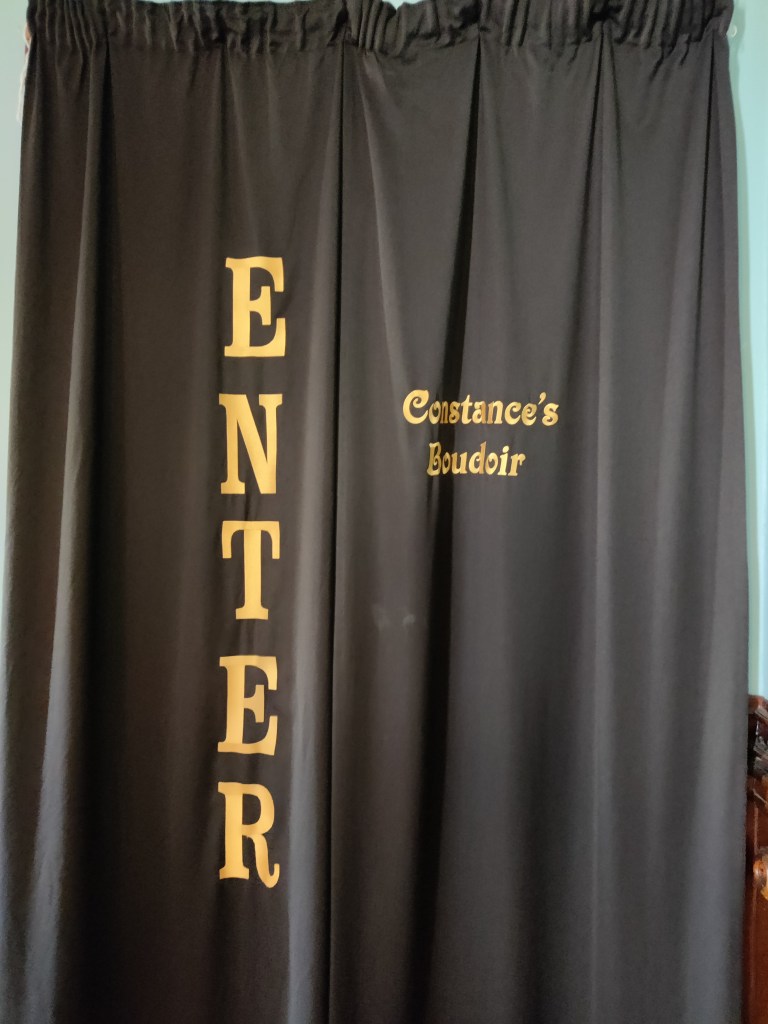
The whole thing is interesting enough and the grounds really are lovely. I was rather puzzled by one particular room’s presentation, though. All the other rooms were restored to something like how they would have been in their time of use, in line with the numerous other old houses and palaces I’ve been to. Except Constance’s.

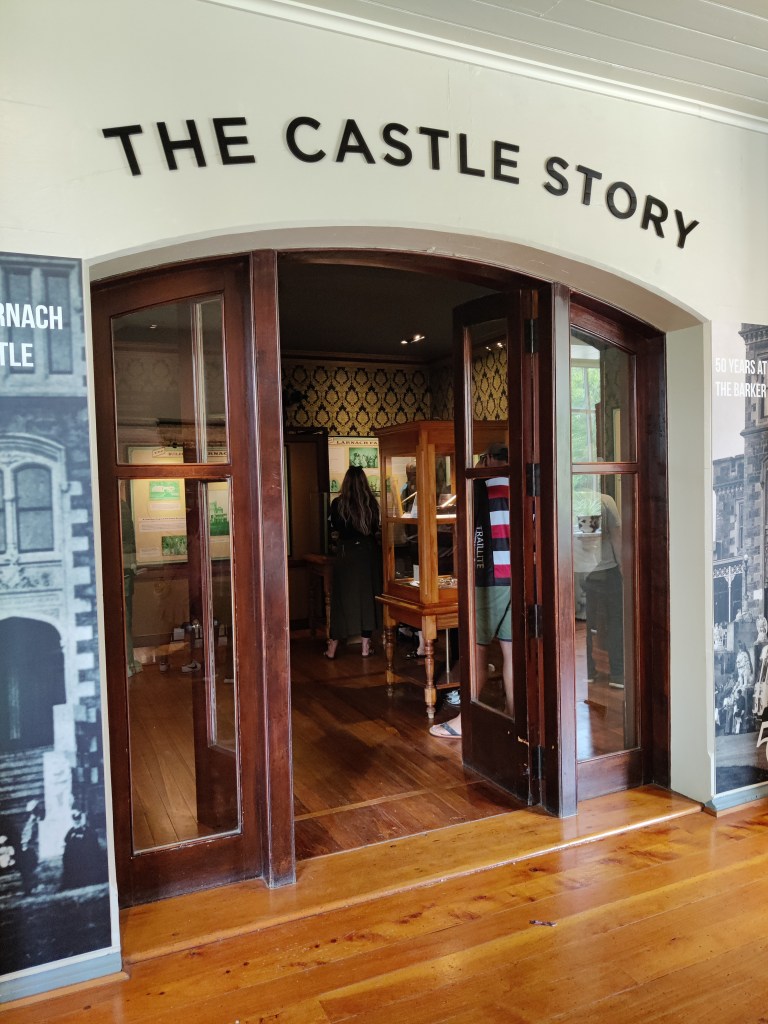
I was not entirely sure what to expect when faced with this doorway.

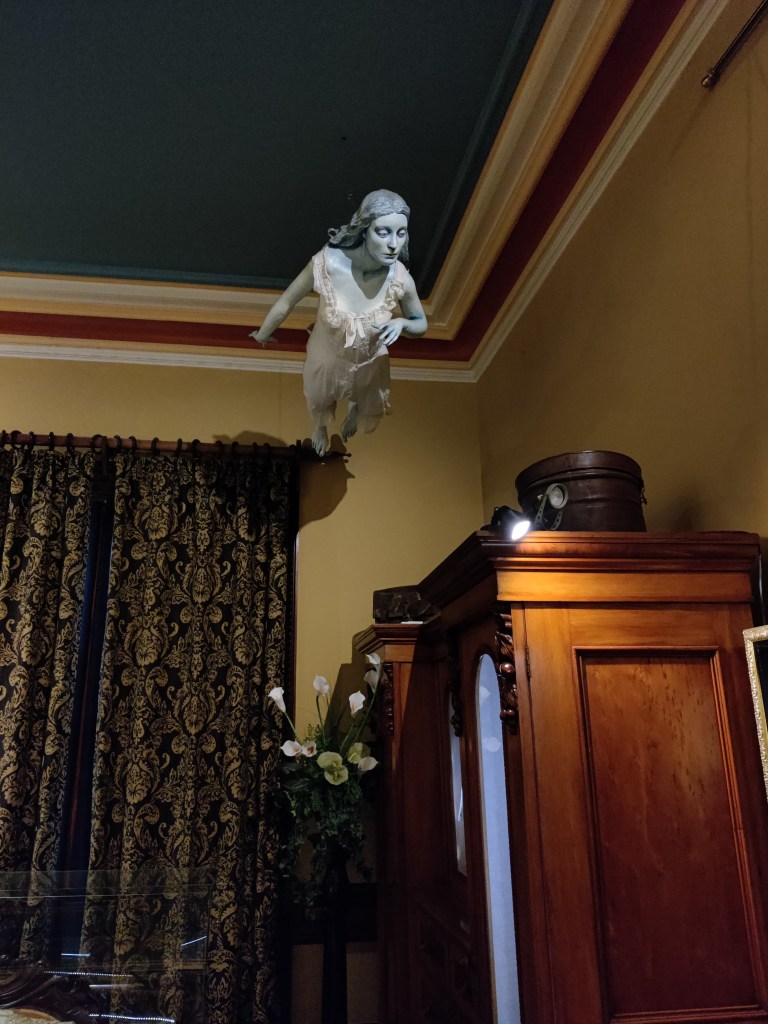
Contance’s room–or boudoir, if we must–does contain a number of personal effects, such as clothing. But then some parasols are just floating around:

?

And also there’s a ghost?

…are you okay

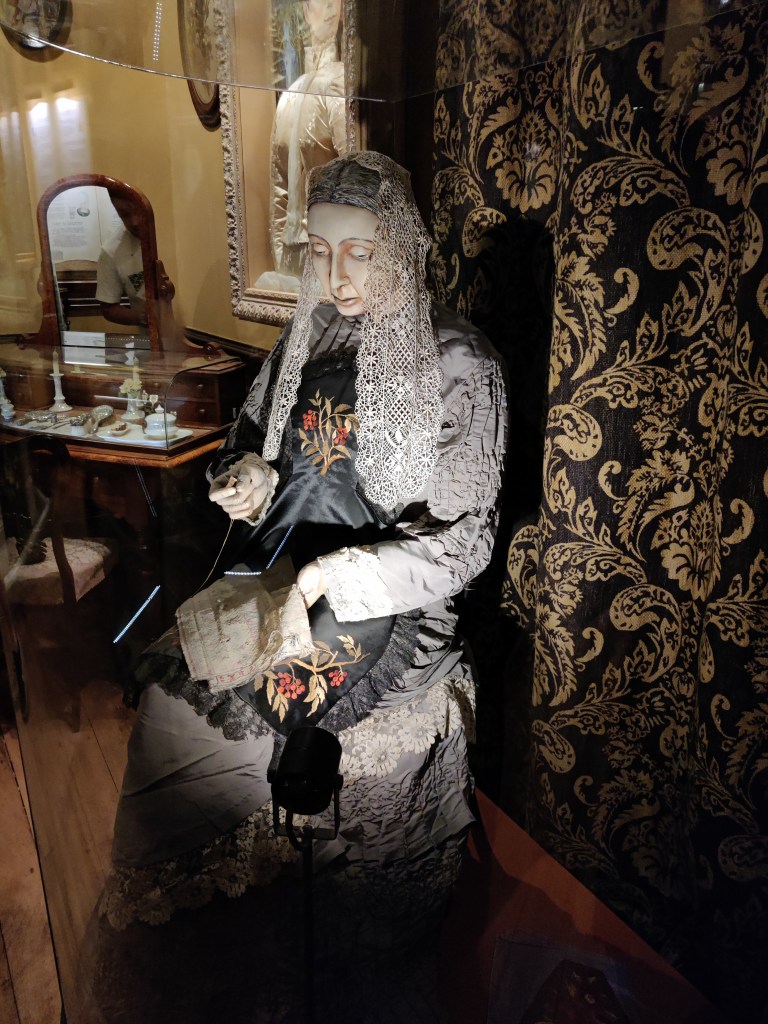
And an old lady?

Who the hell are you even supposed to be

As far as I know, Constance didn’t grow old in the castle–she was much younger than William and the family sold it in 1906. So what is happening here? If there was an explanation anywhere, I missed it. It’s just so tonally different from the rest of the house. It’s wild.

Anyway, you can have a pleasant walk around the gardens, and the food in the cafe was very good. The views really are something else, especially from the tower.

Finally, I have no idea which room this book was in but I really loved it.

First edition of the Spiderwick Chronicles

Larnach Castle is a nice place to visit and have lunch or tea (and presumably also stay overnight). It’s open 365 days a year and relatively pricey to go, so do take your time and get your money’s worth. Check the website for all sorts of availability, reservations, and pricing.

The House of Shrek [Tarras, New Zealand]

Gather ’round, children, and hear the tale of Shrek.

You were not, I hope, expecting an ogre.

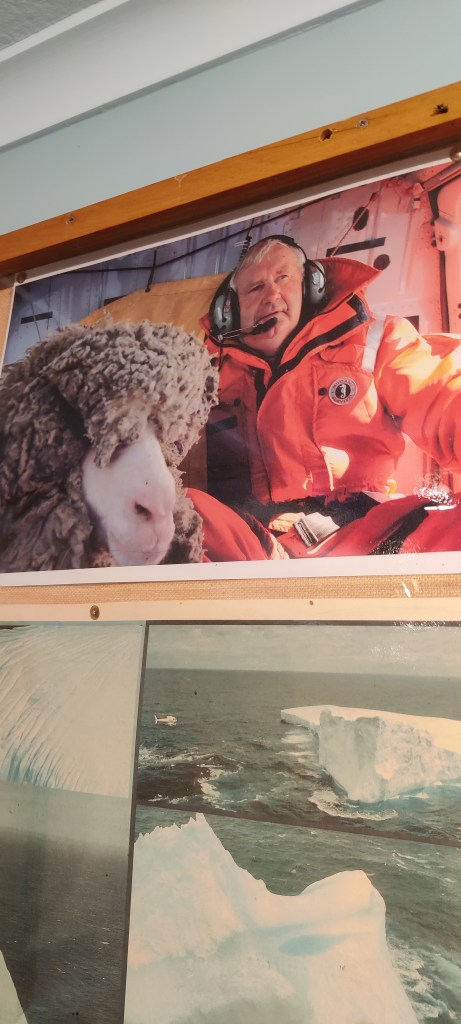
New Zealand celebrity Shrek the sheep was a wily Merino sheep belonging to Bendigo Station, near Tarras on the South Island, that evaded shearing for six years, apparently by hiding in caves. After his capture, he was shorn on live TV by New Zealand’s top shearers, giving up a 60 lb (27 kg) fleece, which the linked article helpfully quantifies as enough for 20 large men’s suits. I am not saying that Shrek is the most famous and beloved native son of this country, but I am saying that Taika Waititi does not have his own museum.

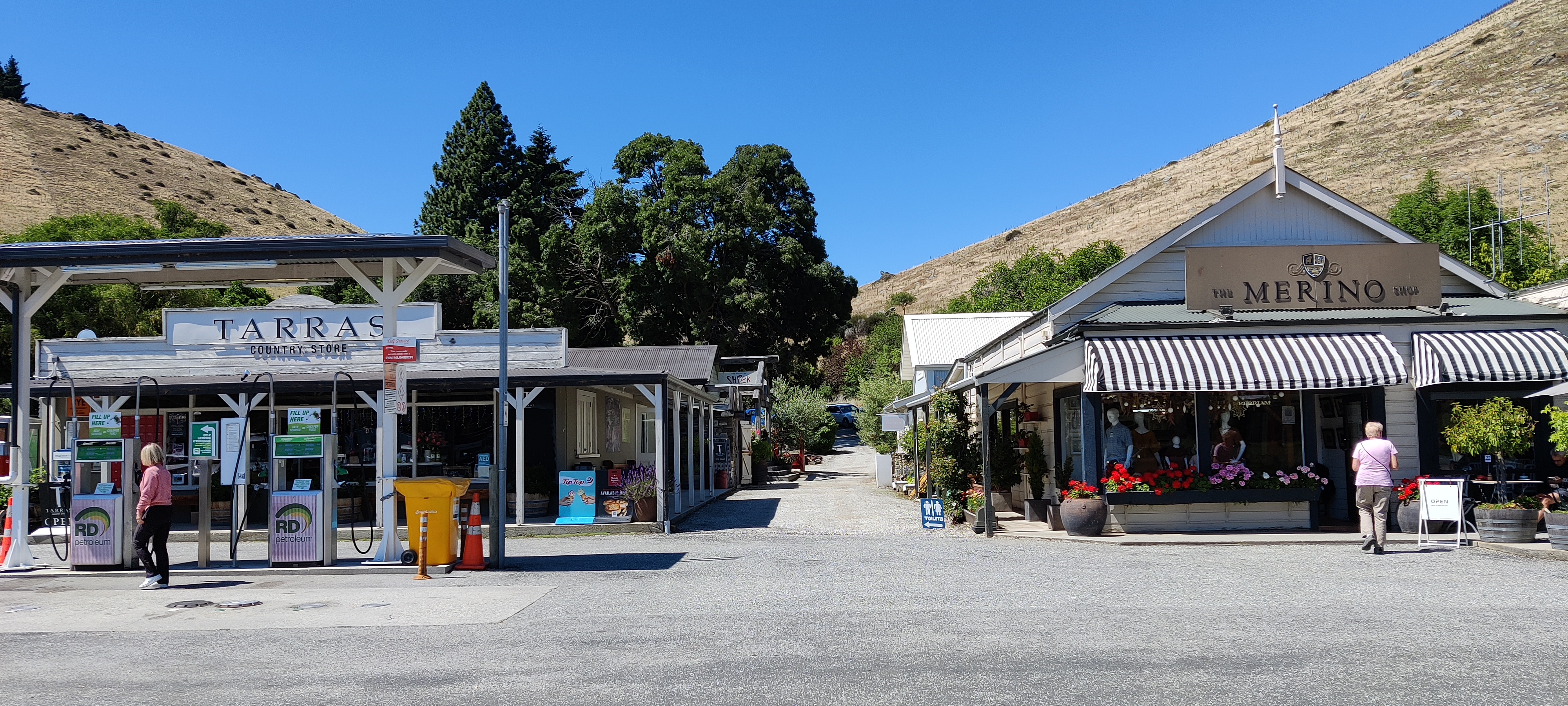
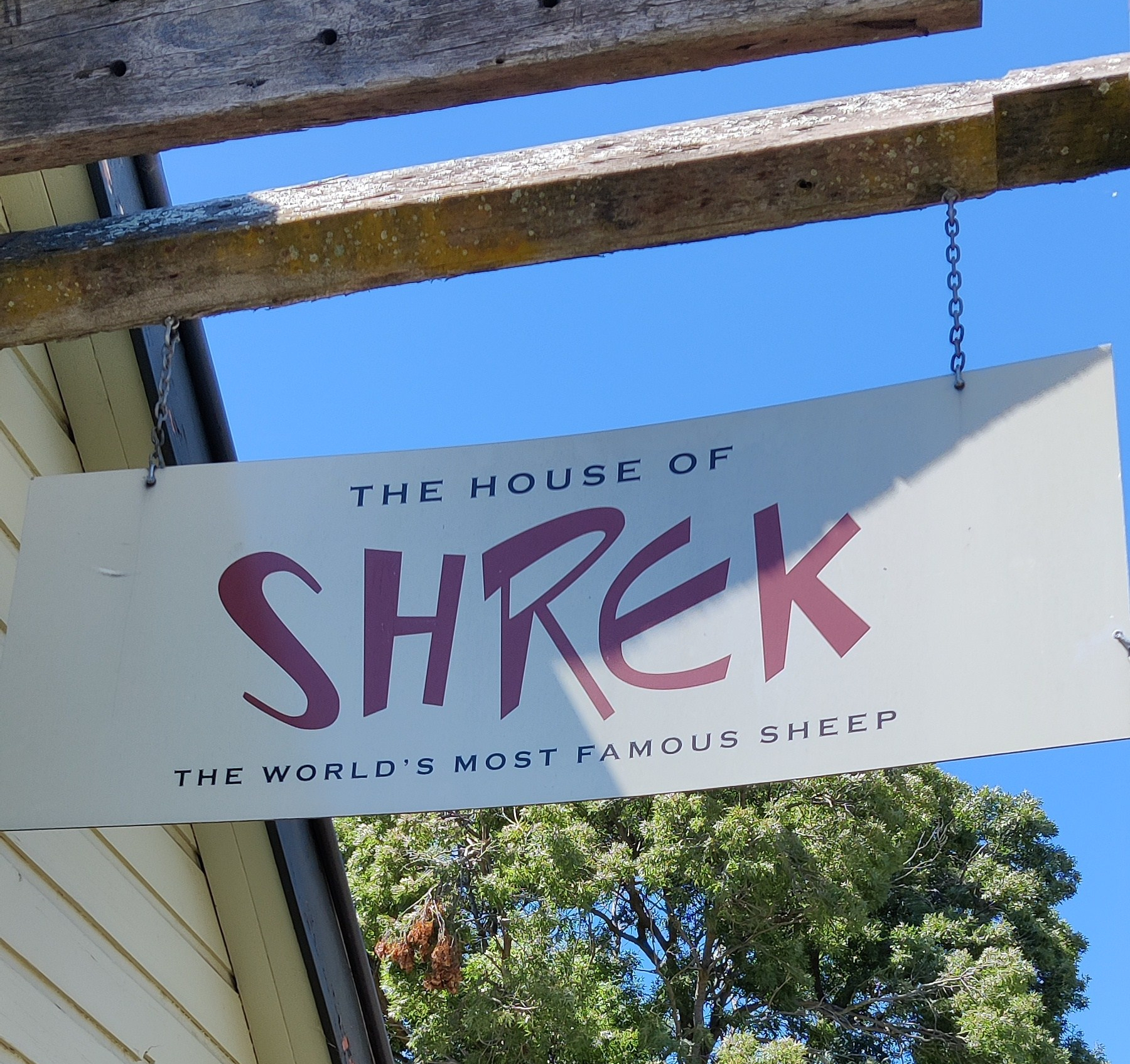
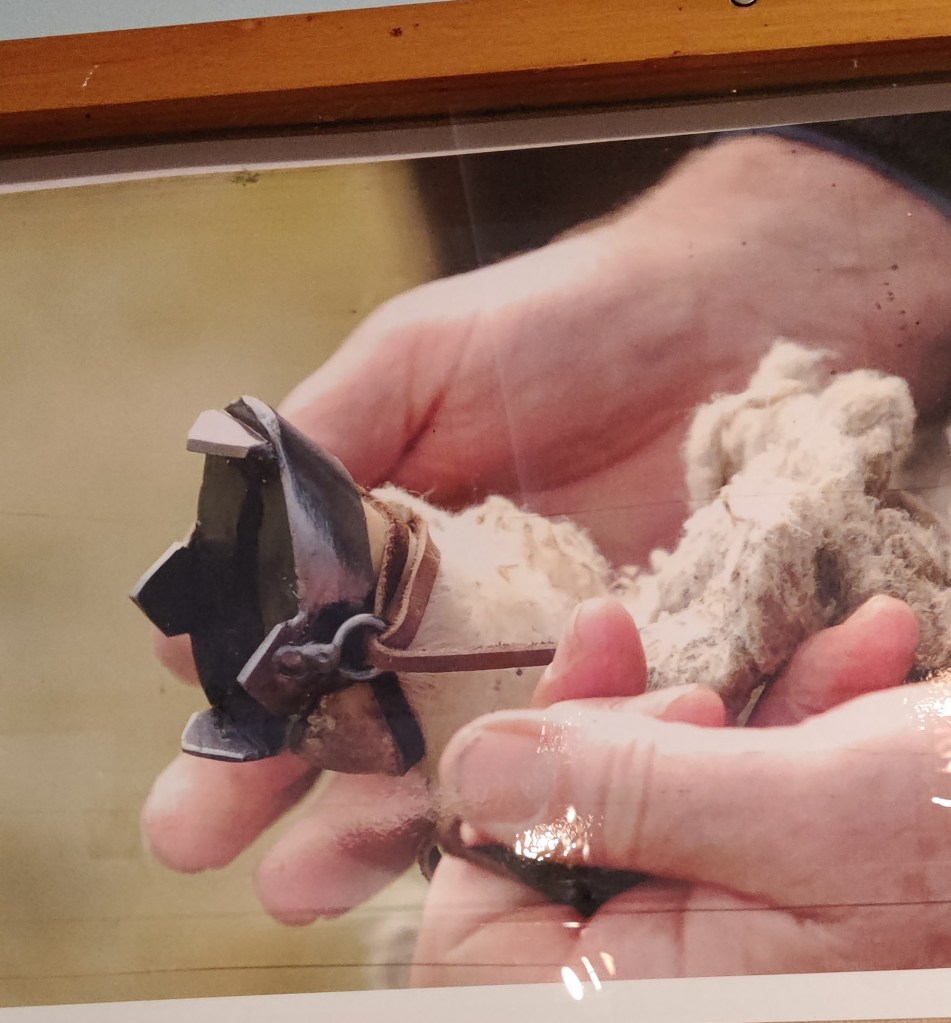
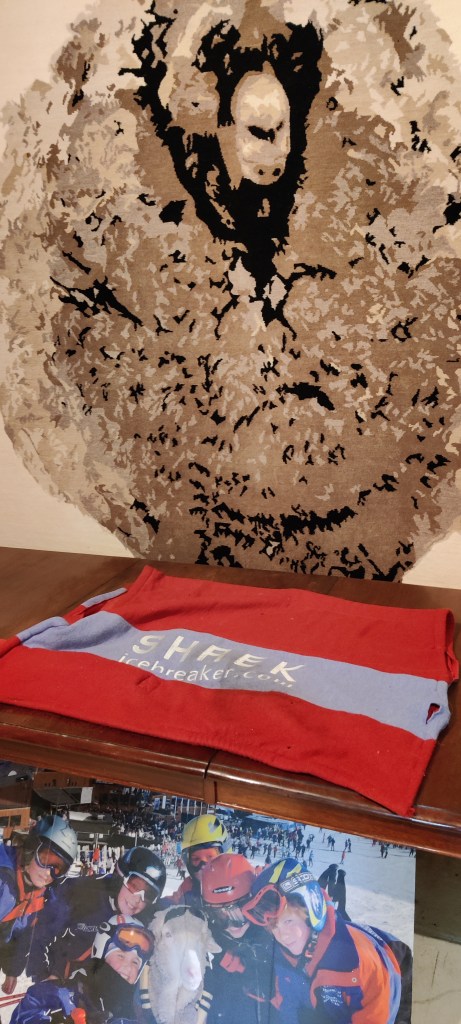
Stop by the tiny town of Tarras and walk down this alley and you’ll find the House of Shrek, a two-room temple dedicated to this blessed icon of New Zealand industry. Here you will discover that Shrek’s massive fleece was not in fact turned into 20 men’s suits, but limited-edition sweaters auctioned off for charity by garment-maker Icebreaker. Icebreaker also made a coat for Shrek out of that fleece which sounds both reasonable and terribly weird for some reason.
The famous sweater in question.

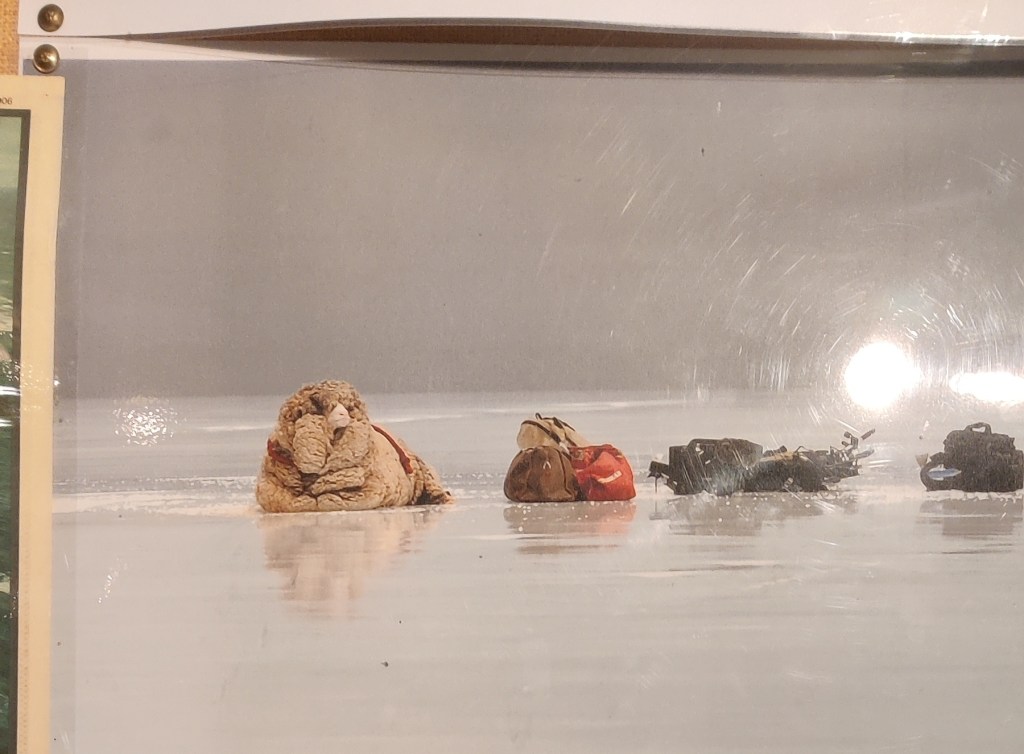
Now why would a sheep need a sweater of its own? And why does Shrek appear to be taking an over-ocean helicopter ride in the first photo of this entry? Well, in 2006, small icebergs had drifted curiously close to the Otago coast, causing something of a sensation. Shrek was already raising money for Cure Kids via NZ$10,000 corporate appearances (he visited children and old folks’ homes for free). But there were other heights to scale. It was time for Shrek to get his second stunt shearing.

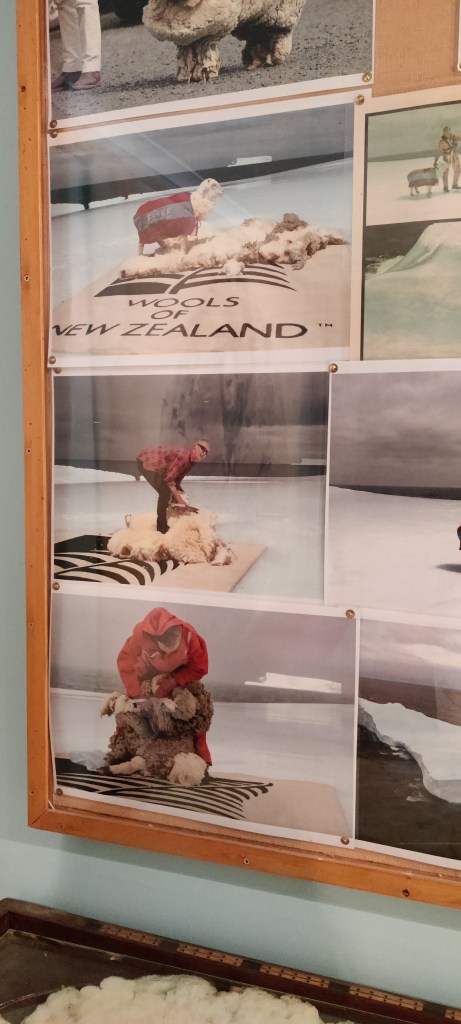
This shearing was done by another champion shearer, Jim Barnett, shown above not wearing a coat while standing on a damned iceberg, proving that shearers are just a different kind of people than the rest of us mortals.

Now you might think that custom coat of his own fleece was the best accessory possible for Shrek on this visit to an iceberg, but I assure you it is not. The best accessory was the teeny crampons he had to wear to walk on the ice.

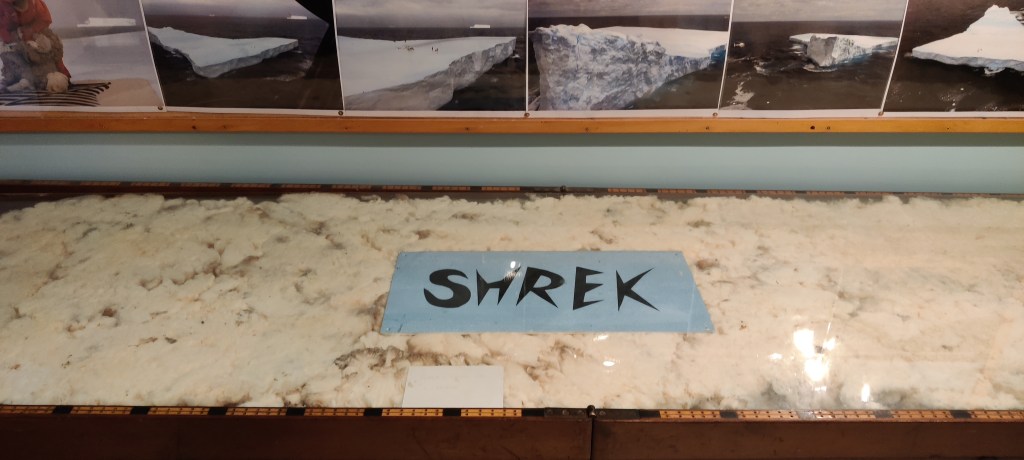
You can view part of this fleece at the House of Shrek, and if you are ever in Otago, I insist you do so.

Do it.

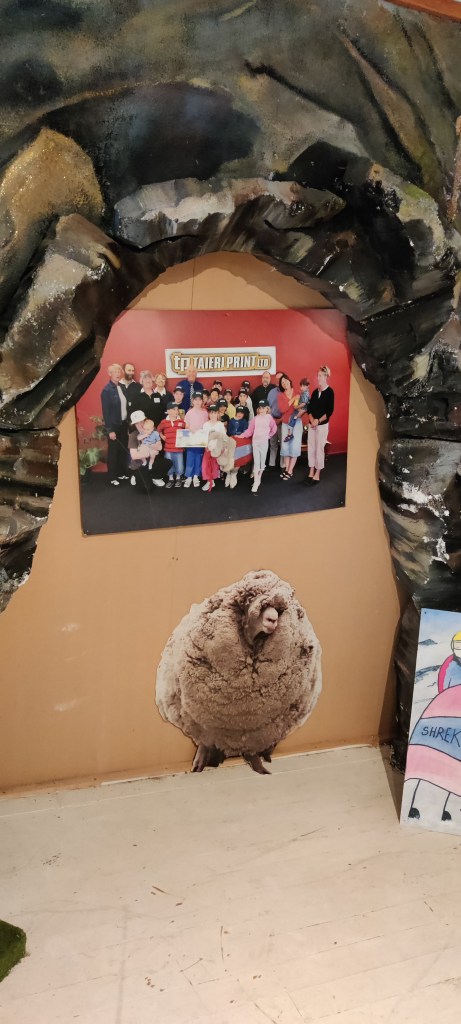
Shrek’s charity work went beyond the hefty amount he raised for Cure Kids; he also raised money to save the local school. It was about to close in 2006, when the children wrote a book about Shrek as a fundraiser. That book was so successful that a second book was published the following year. Conquering the world of publishing was added to Shrek’s list of enviable achievements, and the school received over $100,000 and remained open. Shrek was very chill and excellent with children. One of his many photo ops with children is included in the House’s own photo op for visitors, where you might sit next to a pre-sheared Shrek in his cave.

Hero.

The House has many artistic tributes done by children on display, and it is very sweet.

Shrek lived to age 16, and his passing was international news. He lives on in our hearts, however, and in the books written by the Tarras School students (available, along with postcards, at the wool store across the alley) as well as a biography, Shrek: The Story of a Kiwi Icon. The House of Shrek is free and open while the surrounding businesses are I assume (I don’t recall seeing a sign and it doesn’t have a website–just drive through Tarras during normal working hours and walk right in). At a minimum, everyone you know needs to receive a Shrek postcard.

As you leave the House and Tarras, try to remember to live in the spirit of Shrek: be kind to children, be charitable, hideout in caves to avoid anything you don’t want to do, and always look as unbothered as possible, even if you’re floating on a tiny iceberg.

Wellington Museum [Wellington, NZ]

Do you know what is generally incomparably delightful? A well-done city museum.

I know of what I speak.

We saw it in the wonderful Manaus museum in Brazil, and we see it again in the Wellington Museum. During my visit, I carefully selected my photo choices, ending up with a discerningly curated 50 or so. I, uh, will not be using all of them.

In the late 1800s, the museum’s building was the Bond Store, a warehouse for bonded cargo. I do have a video of the little holographic rat that runs around the storage room display, but WordPress issues require a workaround to post it and I’m not prepared to put that energy into it today. Use your imagination.

The first floor, Telling Tales, recounts the history of Wellington in the 20th century in vignettes and related artifacts.

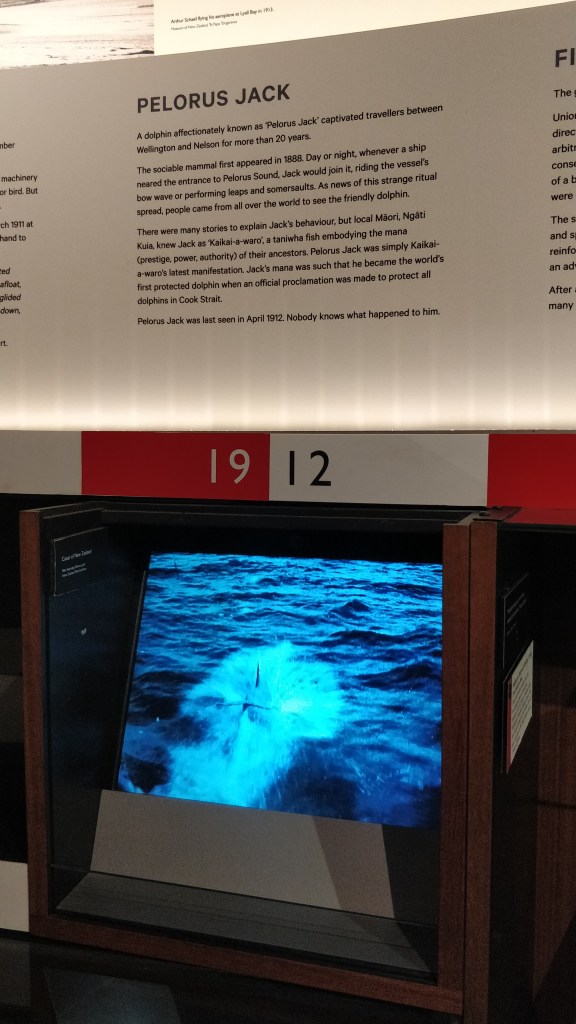
Having just crossed the Cook Straight myself, I can confirm there was no sign of Pelorus Jack.

The little displays cover things like establishing libraries, local lawmaking, and social issues–including the banishment of a Chinese immigrant diagnosed with leprosy to a tiny island in Wellington Harbour in 1903, where he lived in a cave until his death the following year. His food was delivered by boat or by flying fox, and whether that was a zipline or actual giant bat is not clarified.

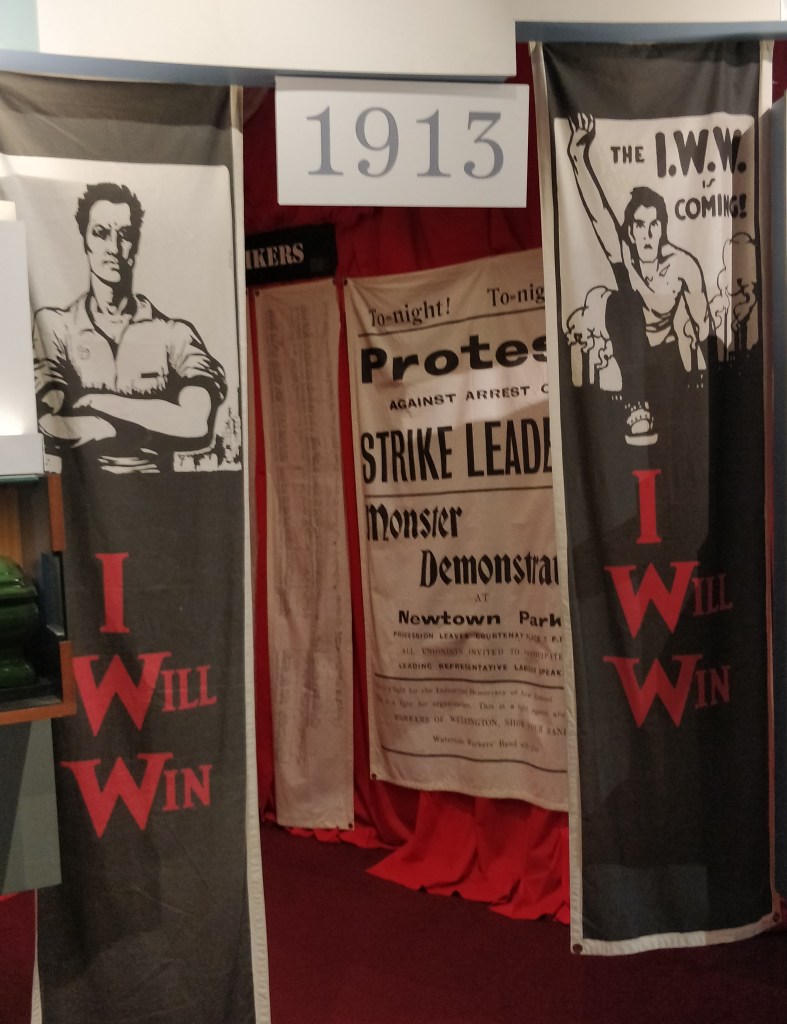
Time for labour rights struggles!

The general strike that year–following a broken miners’ strike the year before–nearly led to civil war, according to the display, with the striking workers ultimately on the beaten end of street brawls with the better-armed cops. The strike lasted a week.

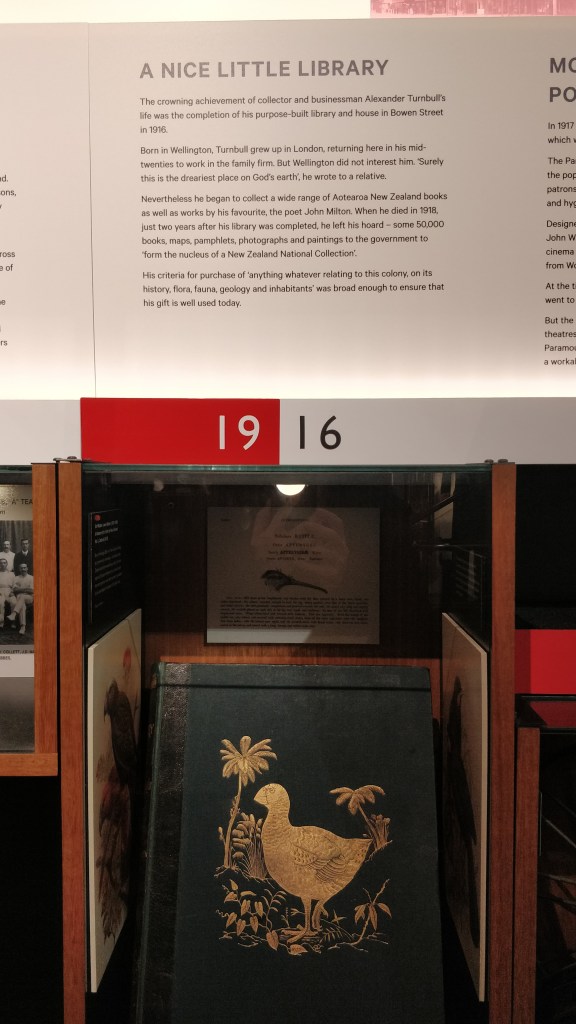
The Turnbull Library is now a division of the National Library.
During World War II, the country had its own internment location on Matiu/Somes Island in the city’s harbour. Some internees were out-and-loud Nazi sympathizers. Some were just people with German names. The island’s prisoner population ended up including Jews, Pacific Islanders, Italians, Japanese, and actual Nazis all together. Shockingly, this led to some “tension and strife.”

Some prisoner art from the island internment camp.

And so on, around the room to the present day, as this blurry-ass photo somewhat illustrates.

Squinting won’t help.

That’s most of the ground floor. Next floor is devoted to the maritime history of Wellington.

Throughout, the museum has little interactive elements and multimedia displays, which of course I appreciate, and which I thought I’d mention here because I hadn’t yet, even though it doesn’t have anything to do with the photos.

“By the Sea We Live”

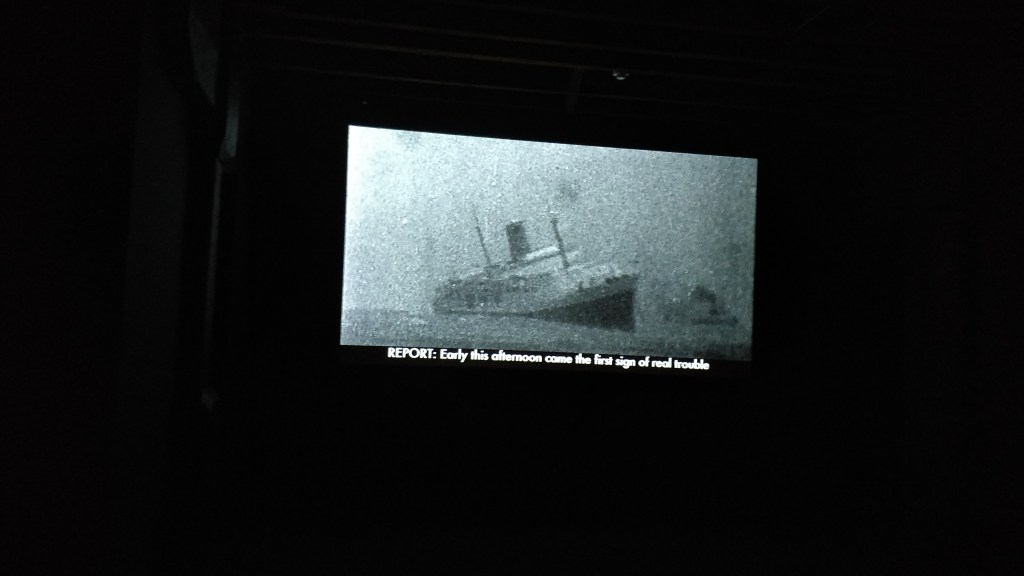
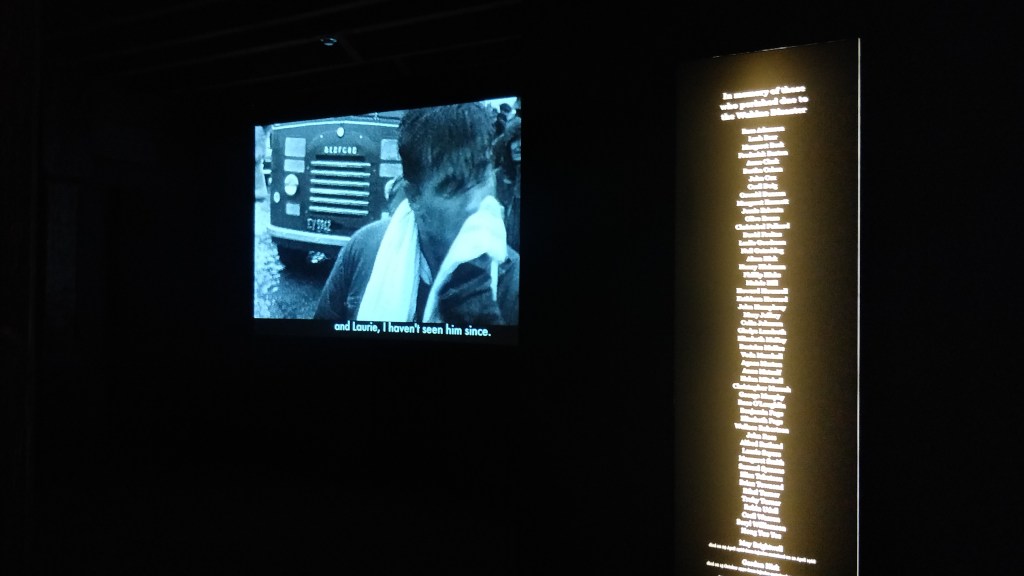
Part of the floor is devoted to the sinking of the Wahine ferry in the Wellington Harbour (Cook Straight has seen many shipwrecks) in 1968. Two storms–Cyclone Giselle moving south and another moving north from Antarctica–merged over Wellington as the ferry came out of the straight, in just about the worst possible case scenario. Fifty-three of the 734 people on board died.

Several items from the ship are on display.

A short film is shown in the Wahine area.

This man recounts how his friend and he each grabbed a child before going overboard. He lost his grip on the child and couldn’t locate his friend after he reached land. The friend’s name is on the victims list to the right.
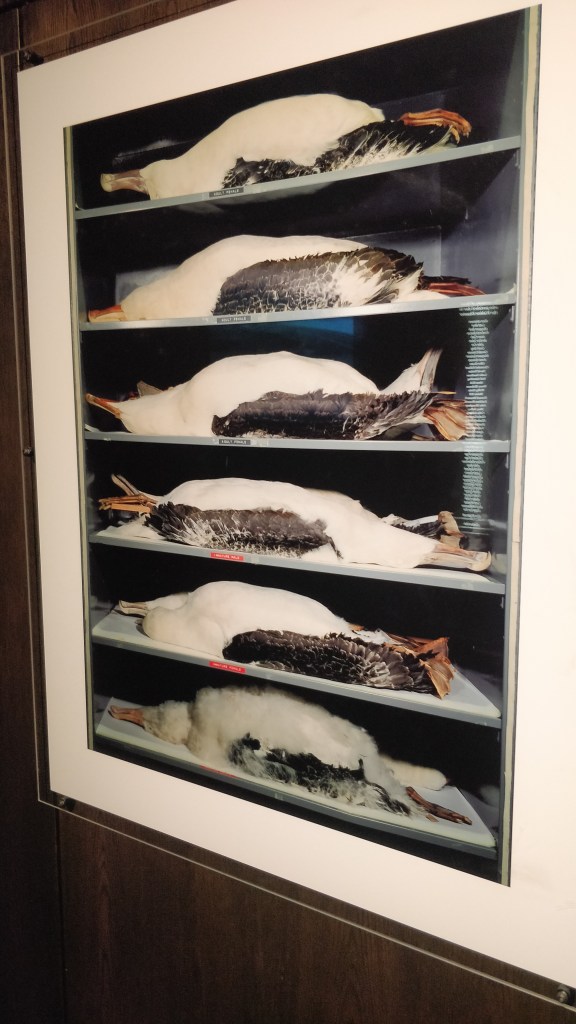
The storm was truly a disaster; it also killed nearly 200 albatrosses in the Wellington area–birds that do not readily succumb to harsh sea conditions.

It’s the nature of history-focused museums to have some pretty emotionally difficult sections to them, and hopefully the physical space of the building is used to help ease the visitor back into the collections. In this case, the Wahine disaster is at the end furthest from the staircase, and so you do have the walk back to it to decompress a bit before ascending to the next floor.

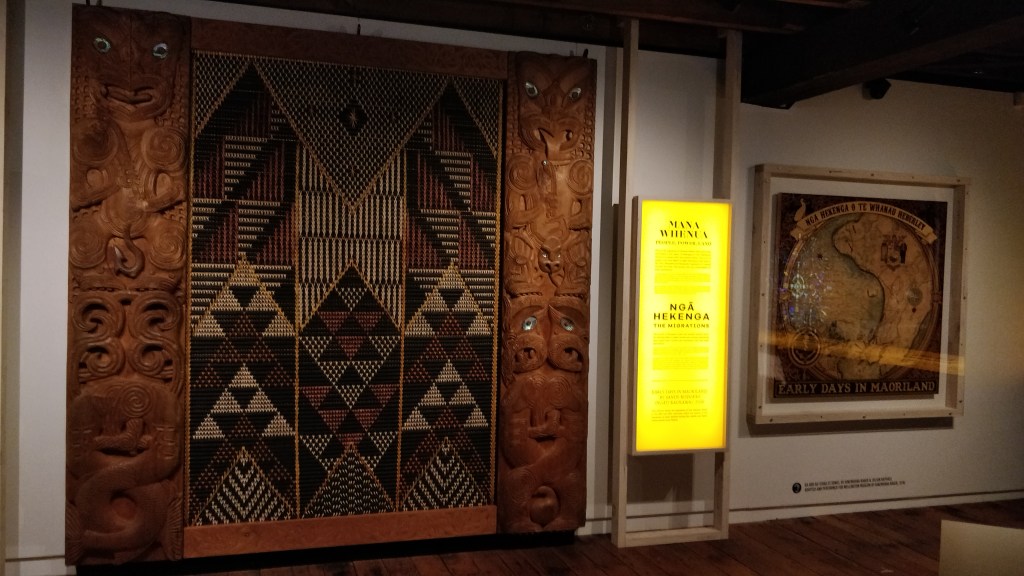
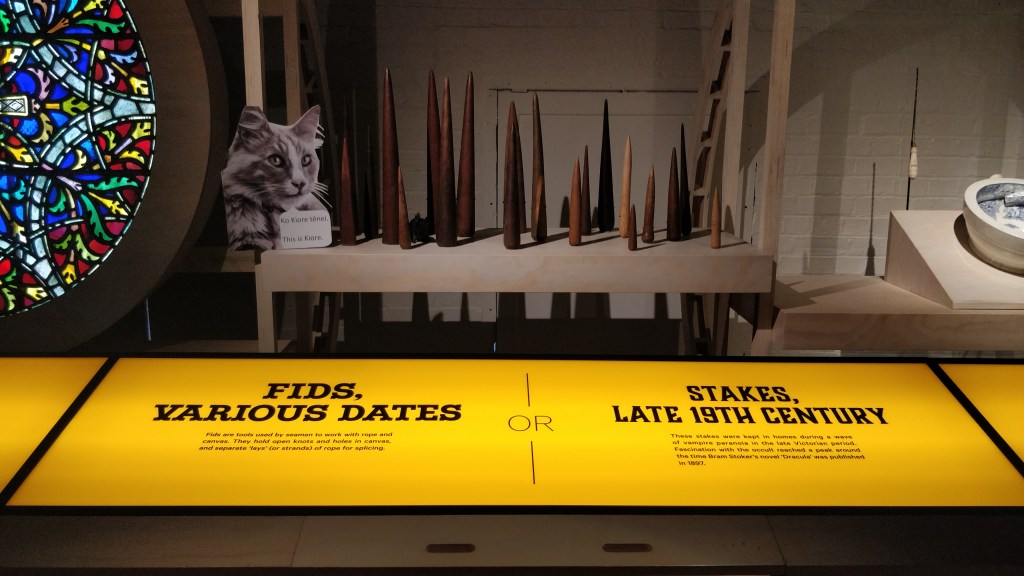
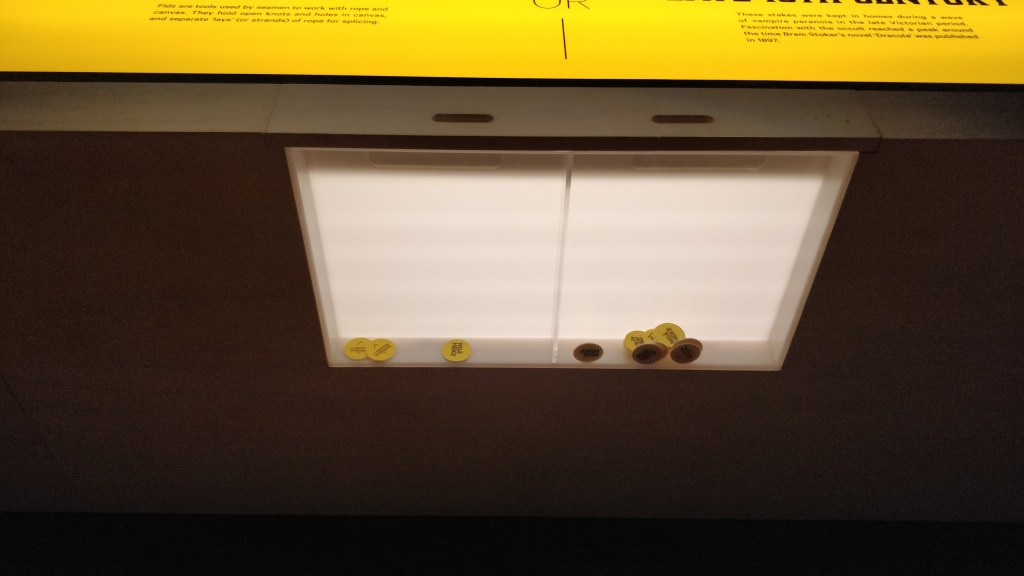
The Ngā Heke floor houses a beautiful work of Māori art, Te Whanganui a Tara, and other works of contemporary Māori artists, and it also presents objects with imaginary histories “as a way to think about what history is and whose voice tells it.” Visitors can take tokens to choose which story they prefer for the objects.

Don’t mind the cat there; he had his own exhibit and appeared throughout the museum. More on him later.
Choose your own history with the tokens.

There was a Māori stories exhibit on this floor that was closed for a booked group when I was there, so I look forward to returning to see that.

Instead of making this just crazy long, I am going to Tiny Tour the Attic, which definitely has its own vibe, as well as the temporary exhibit on Mittens, noted Wellington cat. In the meantime, you can find the Wellington Museum on the city’s waterfront, being generally awesome from 10am to 5pm, seven days a week. Entry is free, so hit that amazing gift shop on the way out.