Tiny Tour: The Sydney Opera House

Let’s do a teeny tiny tour!

Meet Sydney landmark and worldwide architectural icon, the Sydney Opera House.
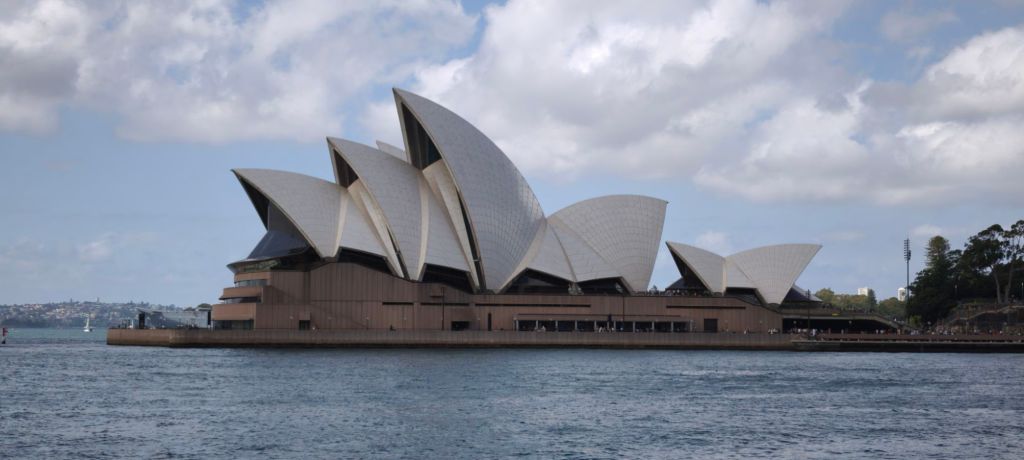
It looks weirder and weirder the longer you stare at it.

The story of the Opera House begins with Bennelong Point’s history as a place of gathering and abundance for the Gadigal people for generations upon generations, who called it Tubowgule. Yes of course the English are about to show up and do something awful. Its current name comes from a Wangal man who was kidnapped in 1789 to facilitate communication between the locals and the English, because that’s what passed for diplomatic relations when Europeans hit a coastline that was rather inconveniently occupied already. You can read more about Bennelong’s life here. And further reading on the colonial impact on the people of the region is here. It’s, you know….yeah.

Colonial Bummers, Vol 1

The Point has been a cow pasture, a lime processing site, a fort. Finally, in 1955 it was designated as the future location of a dedicated performing arts venue. Advocates of the idea felt Sydney, basking in a post-war boom and influx of immigration, needed a place for the public to enjoy fine music. Thus, an international competition was launched, and in 1957, Danish architect Jørn Utzon was announced as the winner.
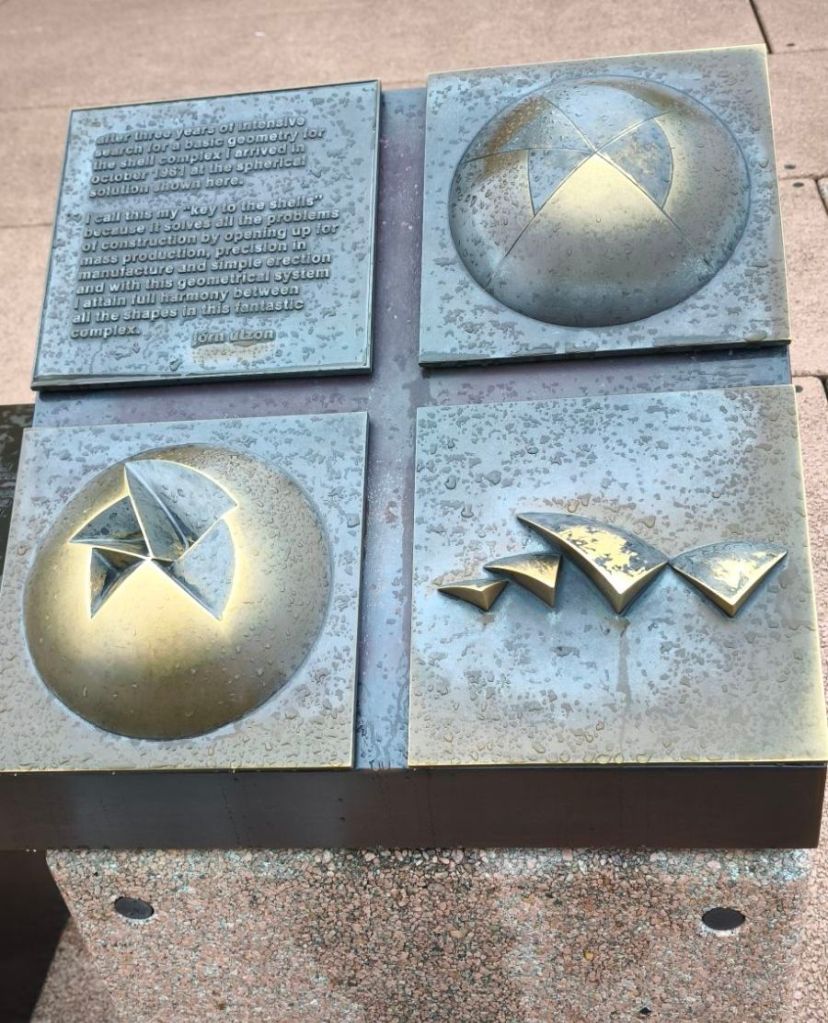
Architecture seems to require a spatial intelligence that I, an absolute doofus, lack entirely.

The widely traveled Utzon brought many influences into the concept and prioritized the site’s landscape. The design was sculptural, unique and harmonious with its setting. Like all innovative undertakings, everything went smoothly.

Hahahahaha.
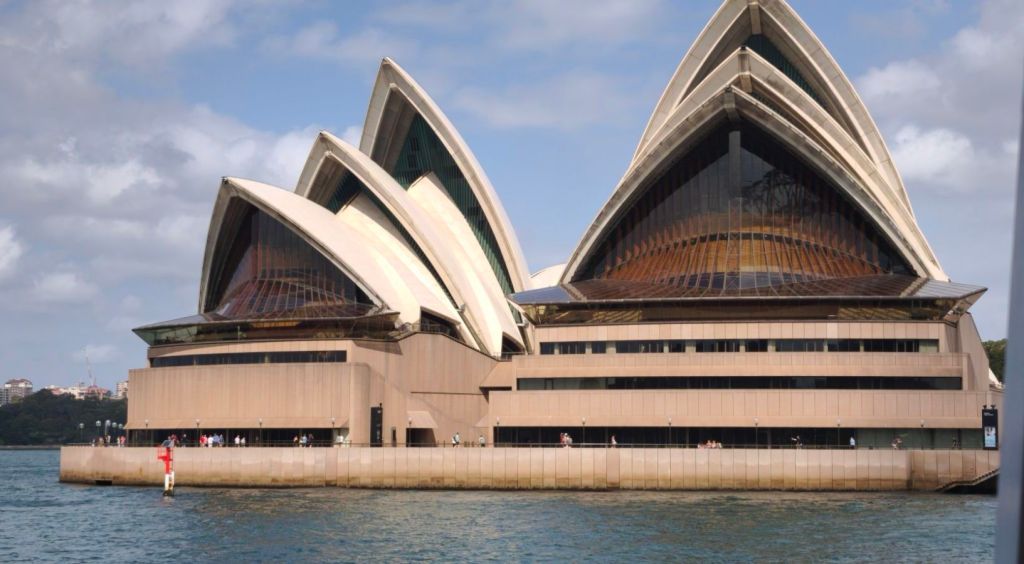
“So from one side it’s gonna look like a three-lidded, triangle-eyed crab surfacing from the depths.”

Now, I don’t know anything about architecture or architectural design competitions, but between the Opera House history plaques and Grand Designs, it seems to me that architects will just sketch out whatever and leave details such as feasibility in God’s hands. Just my impression. Anyway, the problems started with an inaccurate assumption about the Point’s geology, and they did not end there. Premier Joseph Cahill, who had expended considerable time and energy defending Utzon’s design, was not inclined to iron out the kinks in things like structural integrity. He (probably rightly, to be fair) feared the project would die of bureaucracy, and he moved ahead with starting construction, because nothing maintains long-term momentum like the sunk cost fallacy.
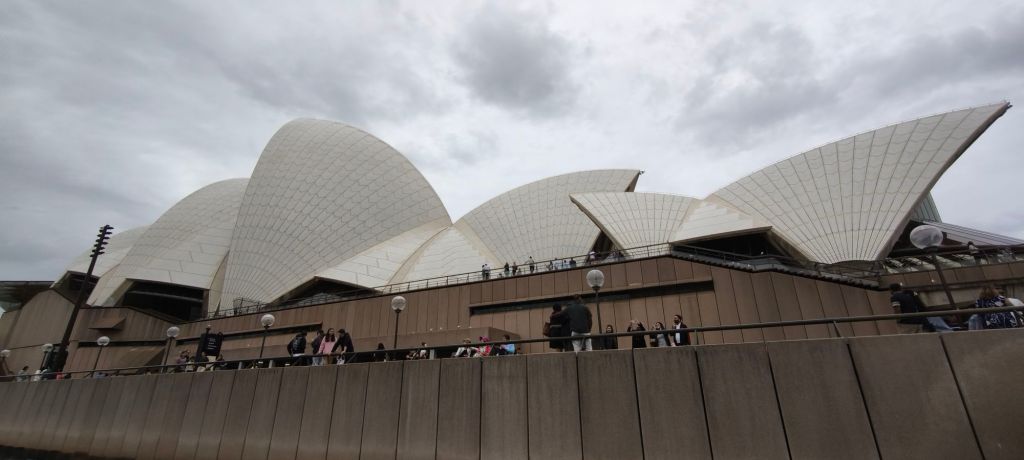
I’m no expert but “Let go and let God” doesn’t seem like a sound project management strategy.

Plans were altered, reformed and redesigned. Once again, if you’ve ever watched Grand Designs, you know what happens. Timeline milestones and budget limits go whizzing by and now everyone is tired, stressed, angry, and washing dishes in the bathtub. Except in this case the starting budget projection was 7 million AUS (the equivalent to about 135 million today) with a four year timeframe. It was completed after 14 years at a final cost of 102 million (1.8 billion today).
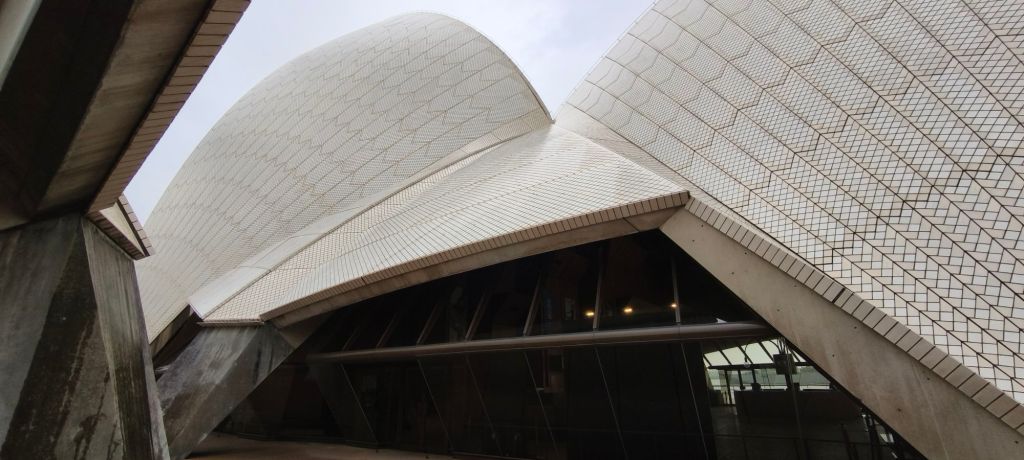
“And it’s gonna be scaly. Like a lizard.”

At the risk of yadda-yaddaing a tale of uncompromising artistic integrity meeting political opposition and the brutal realities of physics, Utzon left the project years before its completion, resulting in a lot of bad blood, wounded feelings and unrealized dreams.
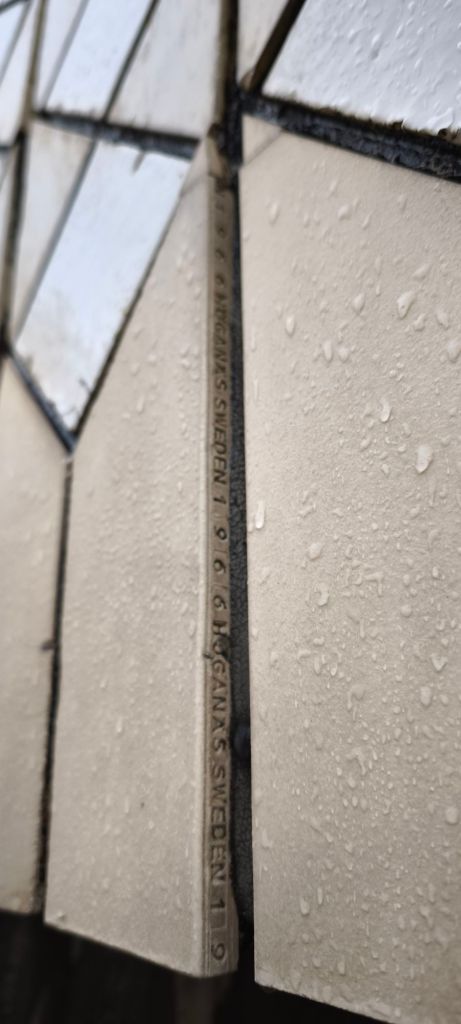
But not before he commissioned a Swedish firm to create the million+ self-cleaning tiles. The development alone took three years.

The Opera House was finally opened in 1973 (Utzon was neither present nor mentioned), and the rest is history. So let’s take a look at what you see on a tour of the Sydney Opera House.

There are seven performance spaces, two of which are on the (at least, on mine) tour itinerary. This is the Studio:
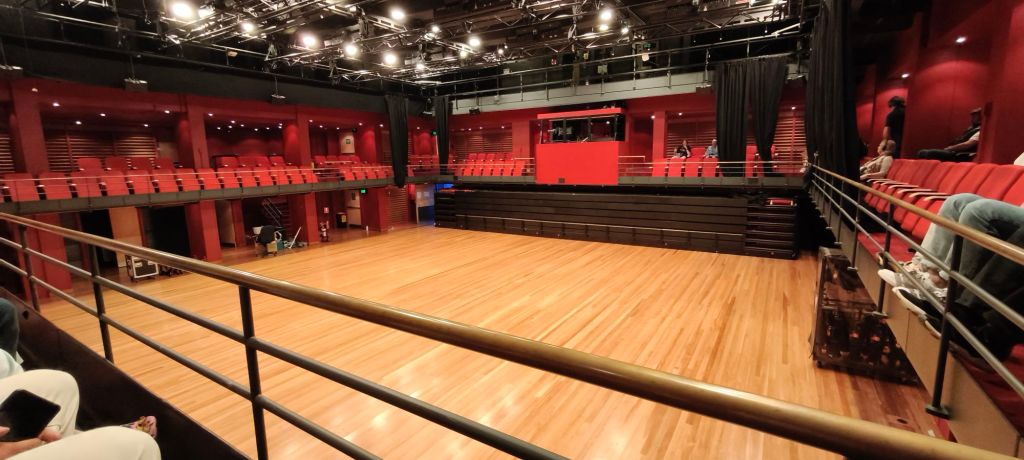
It is a flexible space, with different seating configurations available depending on production needs.

On the way to the Concert Hall, we were able to admire the concrete ribs that form the skeletal structure of those iconic shells, a solution that took four years to develop. The Institute of Civil Engineering seems to tacitly suggest that engineering get the assist for the building, and I will gladly grant it.
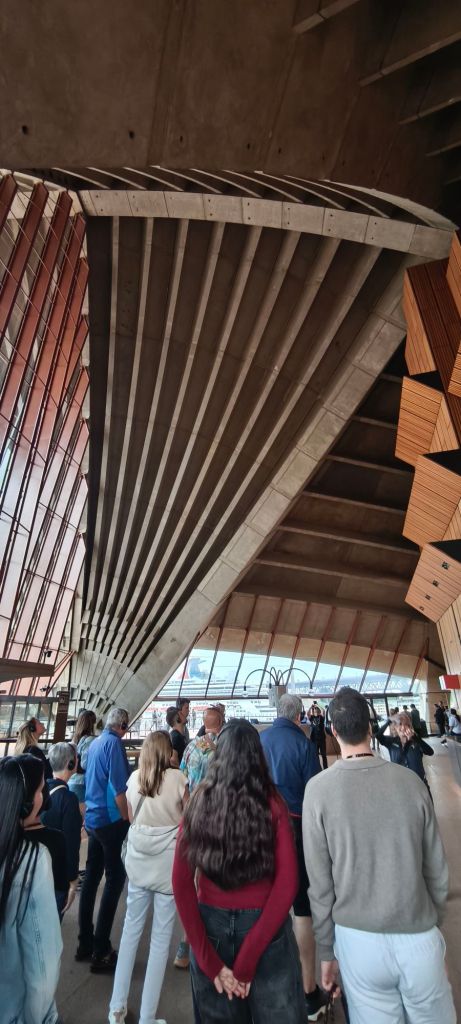
Can’t tickle these ribs.

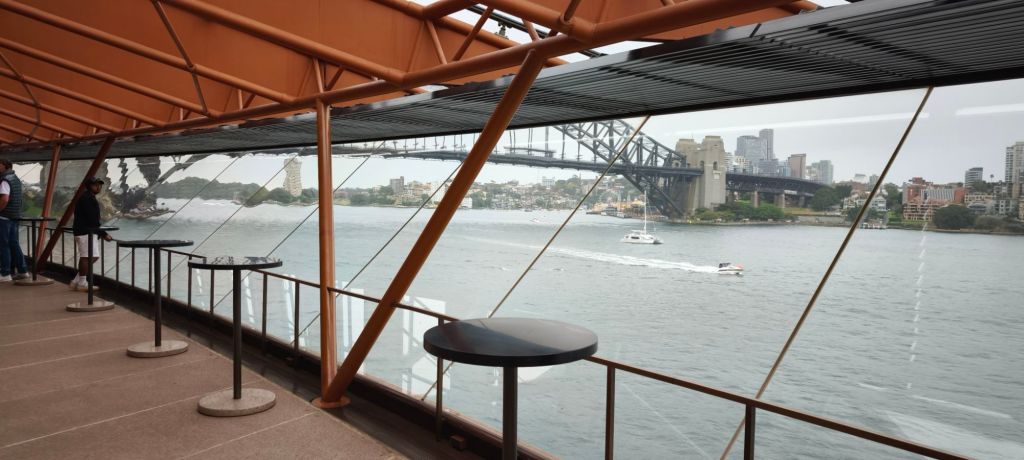
The views of the Harbour make intermissions enjoyable, with glass windows designed to be looked out of no matter the time of day.
If you’re on a tour, the guide does emphasize that the Opera House is not a museum but an operating performance venue, and therefore sometimes tours aren’t allowed in booked halls, or if they are, photography is forbidden by the performers for privacy and/or copyright purposes. I mention this here because The Pogues were playing the Concert Hall that night, and they forbade photography in the hall because their backdrop was already up. So here’s my sketchy memory of it:
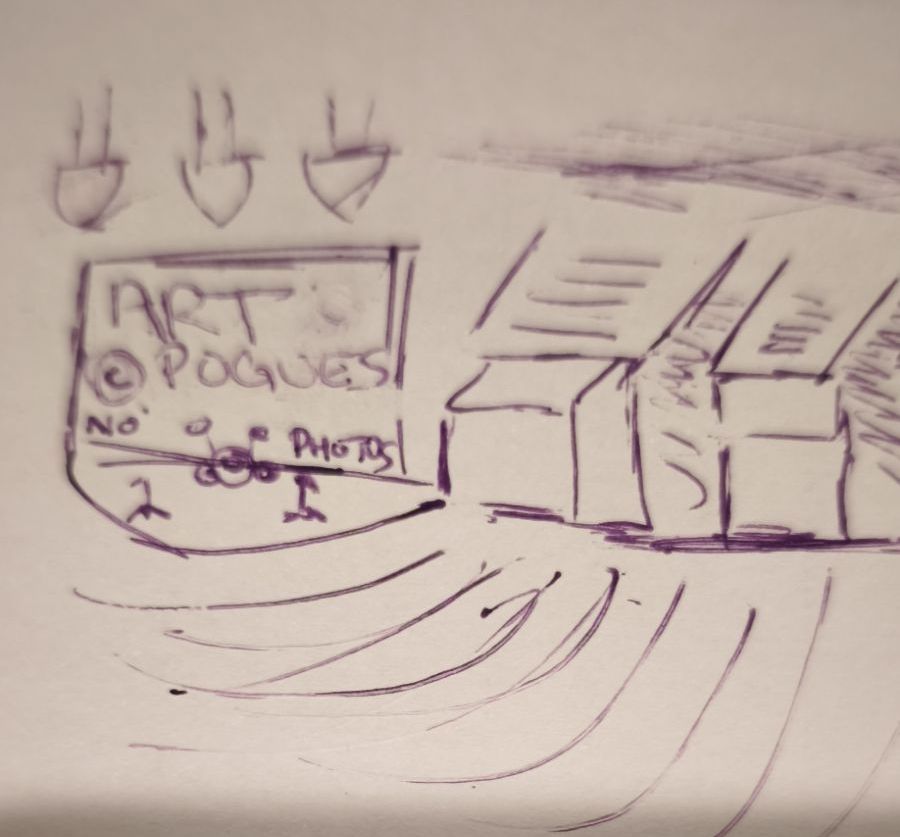
FINE, The Pogues. I guess obeying copyright law is the punkest thing of all.

You can read more about the design and interior details here, and The Pogues cannot stop you.
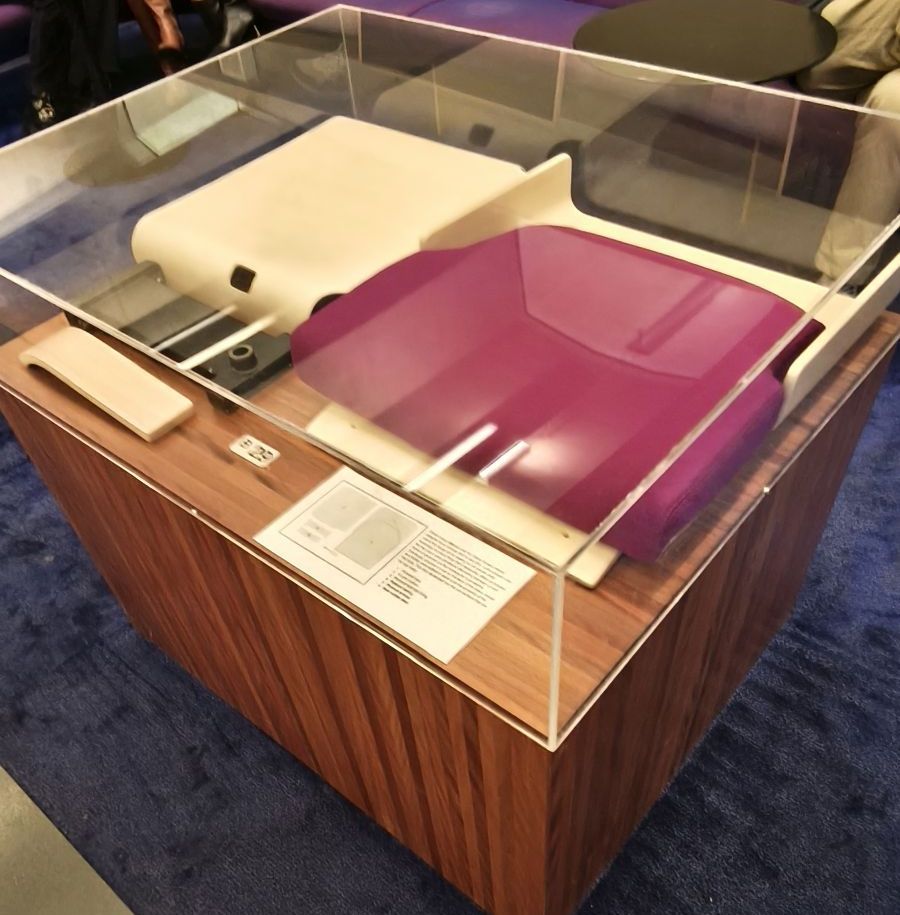
And here’s one of the seats displayed in the foyer.

This is pretty long for a tiny tour, so I’ll end by noting that Jørn Utzon never returned to see how his building was completed, although he was reconciled with the powers that be eventually and was still living when the Opera House was declared a World Heritage Site, only the second person to have his work recognized as such while alive. It’s the kind of vindication the rest of us can only dream of. So go ahead and blow that project budget to kingdom come; maybe you’ll end up with one of the most iconic structures in history.

Tours of the Sydney Opera House run daily, except Christmas Day and New Year’s Eve. If you’d rather wander around the public places and hit the gift shop, you can do that for free.
The Cemetery Series: Cementerio de la Recoleta

God, you know what sucks? Knowing that you’ve been to a place a gajillion times and you definitely took a bunch of photos, but this was years ago and somehow, you can’t find any of them.

And last time I was in Buenos Aires I had other priorities

So I’m going to cobble together a post with what I can scrounge up and some royalty-free photos taken by actual photographers. At least the lighting will be good.

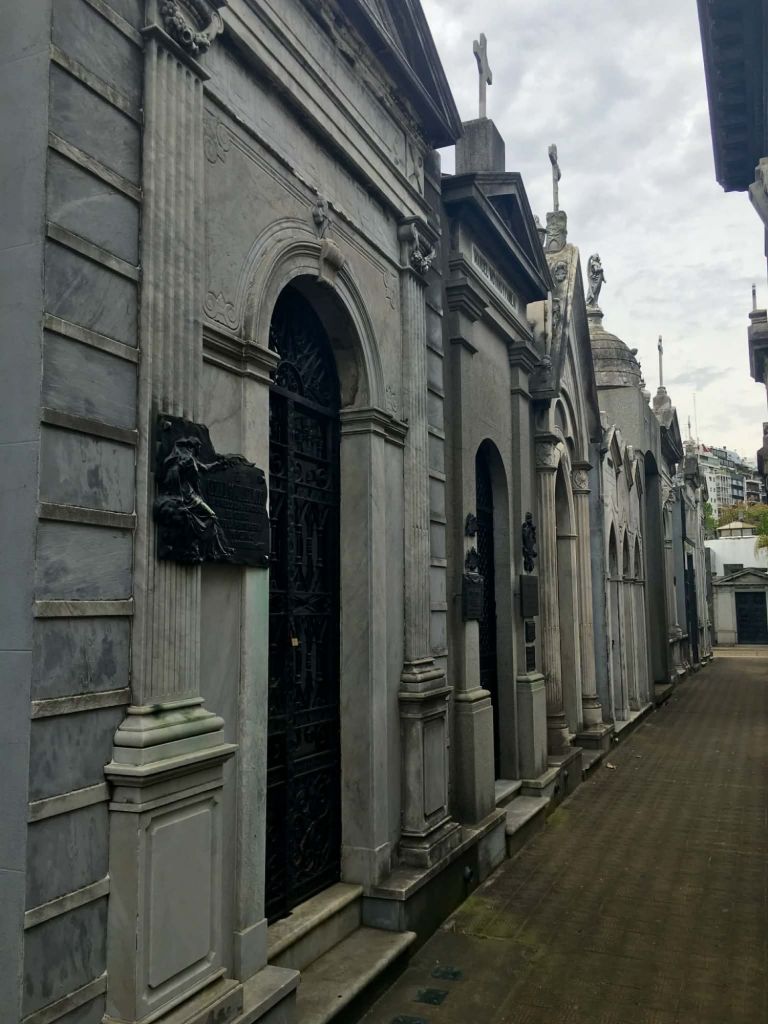
Recoleta Cemetery is renowned the world over, packed with mausoleums for Argentina’s wealthy and notable. It opened as the city’s first public cemetery in 1822, after the disbanding of the Franciscan order that settled there roughly 100 years before. Occupying 14 acres of some of the ritziest real estate in Buenos Aires, smack dab in the middle of the Recoleta neighborhood, the cemetery is a perennial stop for tourists and taphophiles alike–so much so that it is the first of three examples in the Wikipedia article on tombstone tourism (and yes, I have been to all three).

The side streets are quieter; you definitely don’t want to buy on the main drag.   (Photo by my amazing sister-in-law.)

There is no lack of tour guides available at the gates, so even if you turn up without one you can probably still hire one on the spot. Alternatively, there’s an app.

It is very brown, but also free.

At the time of this writing, the audio is only available in Spanish, but the text guide is in Spanish, French and English, sort of. You can choose a route that highlights authors, scientists, presidents, or “our selection,” which includes a few from the other routes plus other notable tombs.

But nevermind the Great and Good and Total Bastards–let’s talk about the ones I wanna talk about.

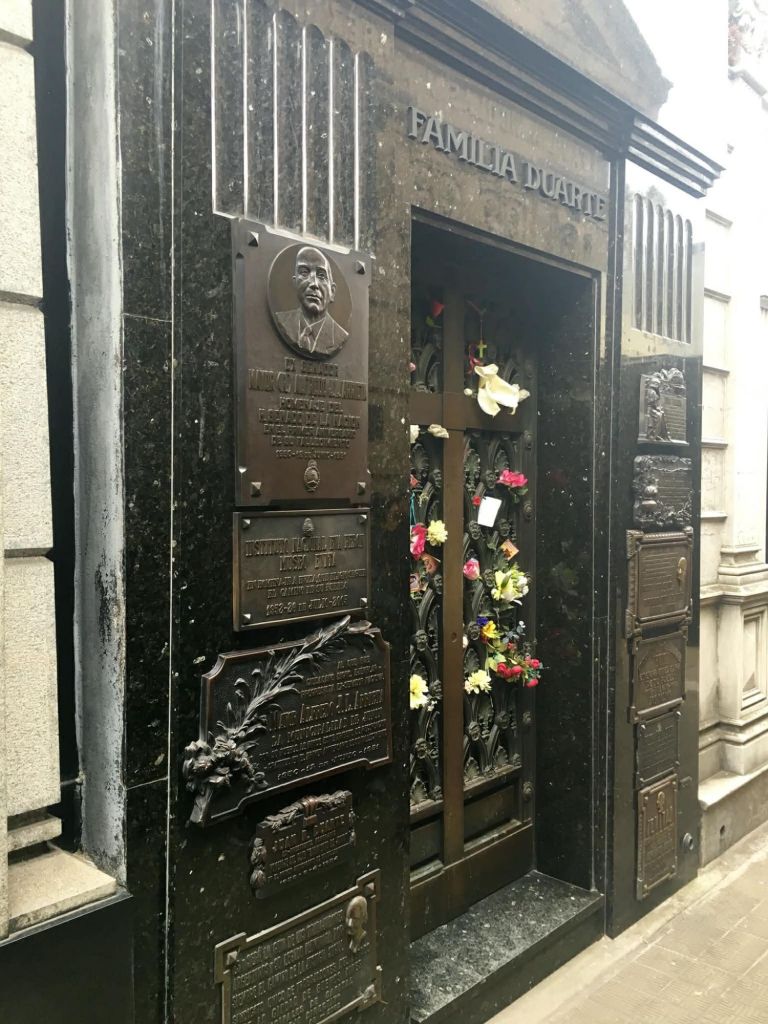
Yes Eva Perón is buried here in herfathersfamilycryptseemsweirdtomegivenher familyhistoryyestherearealwaysflowersandvisitorsandtourgroupsanywaymovingooooooon

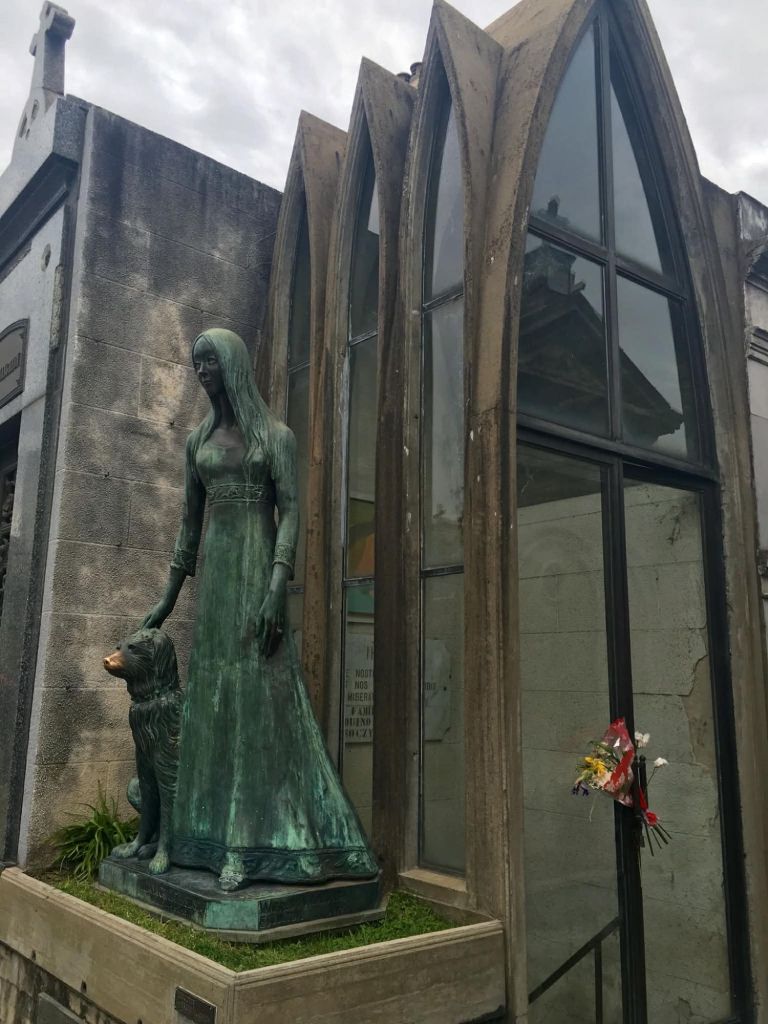
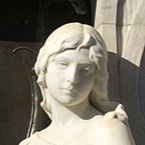
Liliana Crociati de Szaszak was killed in an avalanche in Europe while on honeymoon, aged 26. She’s depicted in her wedding dress outside her Neo-Gothic tomb.

After her dog, Sabú, died, his sculpture was made and placed next to her. Visitors rub his nose, hence the shine. (Photo by my excellent sister-in-law.)

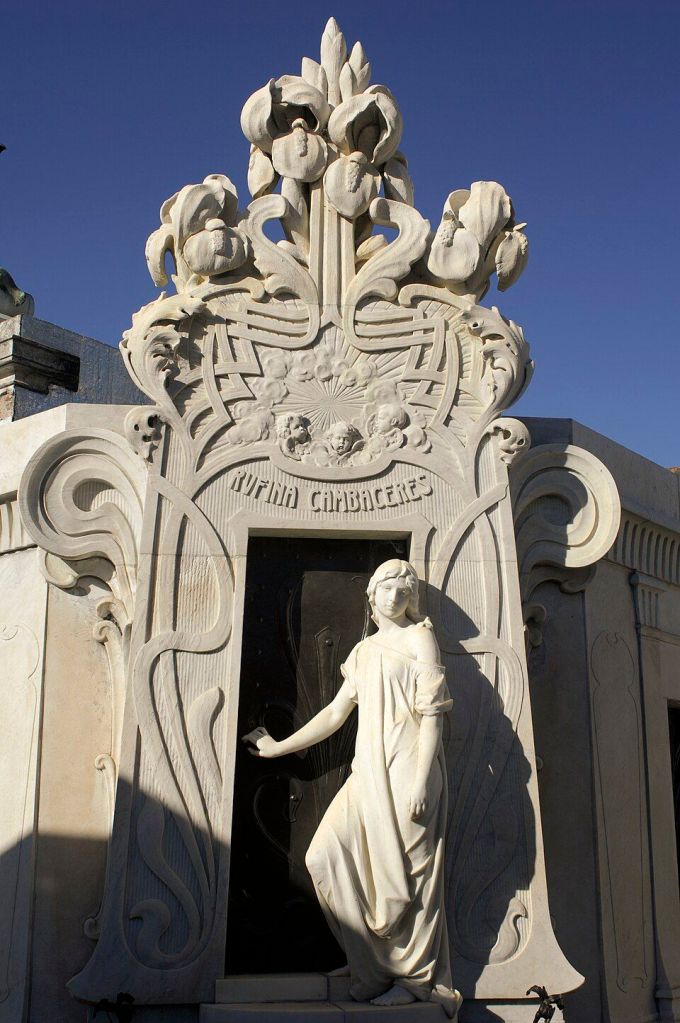
As we all know, young women make the best ghost stories and while I don’t know of any specifically linked to Liliana, 19-year-old Rufina Cambacérès is said to haunt the place.

And frankly, not without cause. 
(Photo by Andrew Shiva, who is not my sister-in-law but I’m sure is cool.)

The story goes that Rufina collapsed and was pronounced dead, only to–you guessed it–not actually be dead. After discovering the displaced coffin (or investigating after hearing noises the previous night, depends on the version you hear), she was found having died, for real this time, in a panic after frantically clawing at the coffin lid.

The face you make when your mom cannot just give it a minute before interring you.

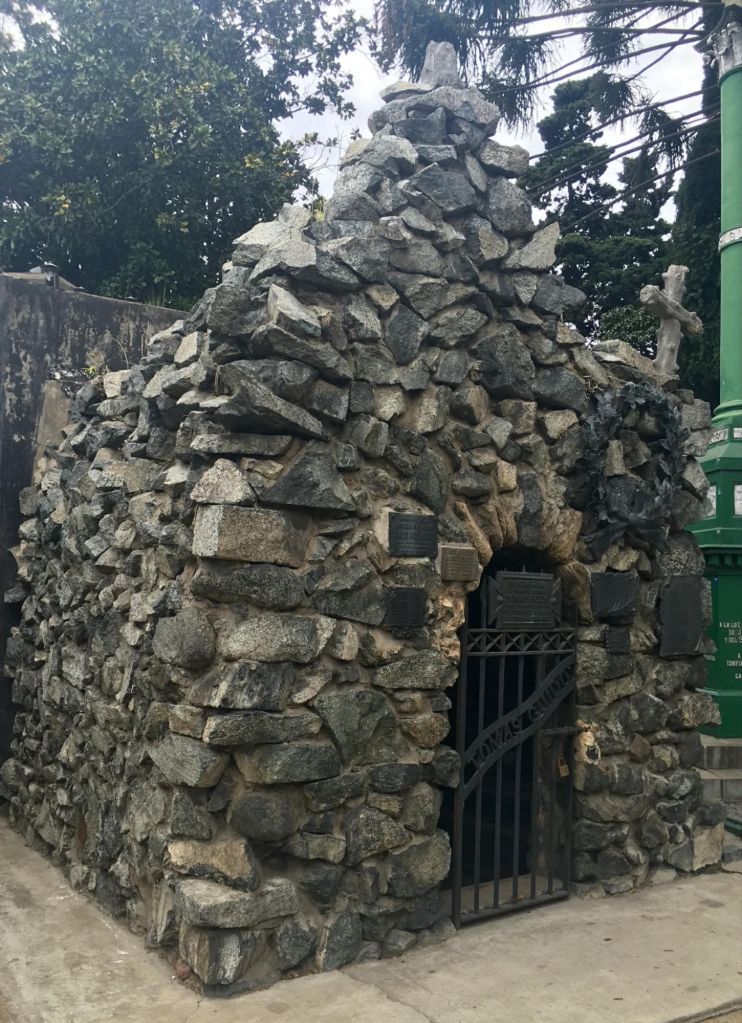
General Tomás Guido, national hero and bestie of José de San Martín, took part in San Martin’s grueling campaign, the Crossing of the Andes, during the wars of independence. He wanted to be buried under those mountains where so many had died, and in the great tradition of loopholes, his son had stones from the Andes brought to Buenos Aires and built the tomb himself.

“See you’re technically under the Andes, Dad.”

Annoying technicalities aside, it’s a unique tomb, sharply contrasting with its neighbors. Also, Guido is no longer there. But he still isn’t under the Andes! He was relocated to the Cathedral of Buenos Aires next to San Martín, because who doesn’t want to be buried with their boss.

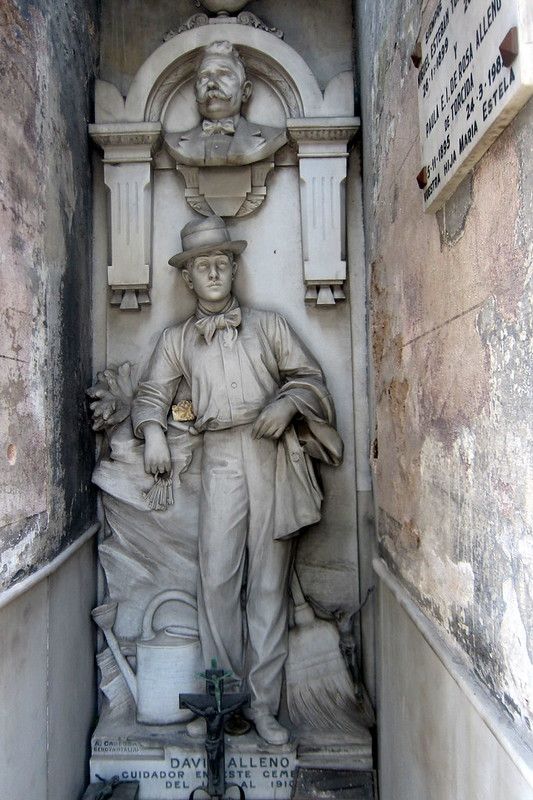
Speaking of work-adjacent entombment, cemetery caretaker David Alleno saved up for years for his own statue and burial. He supposedly killed himself upon the vault’s completion. His statue depicts him with his keys, duster, broom and watering can.

Sure, why not.  (Photo by Wally Gobetz.)

The story is tantalizingly incomplete. It seems like the purchaser of the crypt was his brother, Juan, and I don’t know why one brother would be wealthy enough to buy a family vault in the exclusive cemetery while the other is just a caretaker there. There’s a death certificate that cites “trauma and cerebral contusion” as the cause of death with apparently no follow up available. It’s said that his keys can be heard clinking at night or dawn, so perhaps David himself also feels his story is unresolved.

Maybe the Avelino Quijano vault just wants him to keep it down

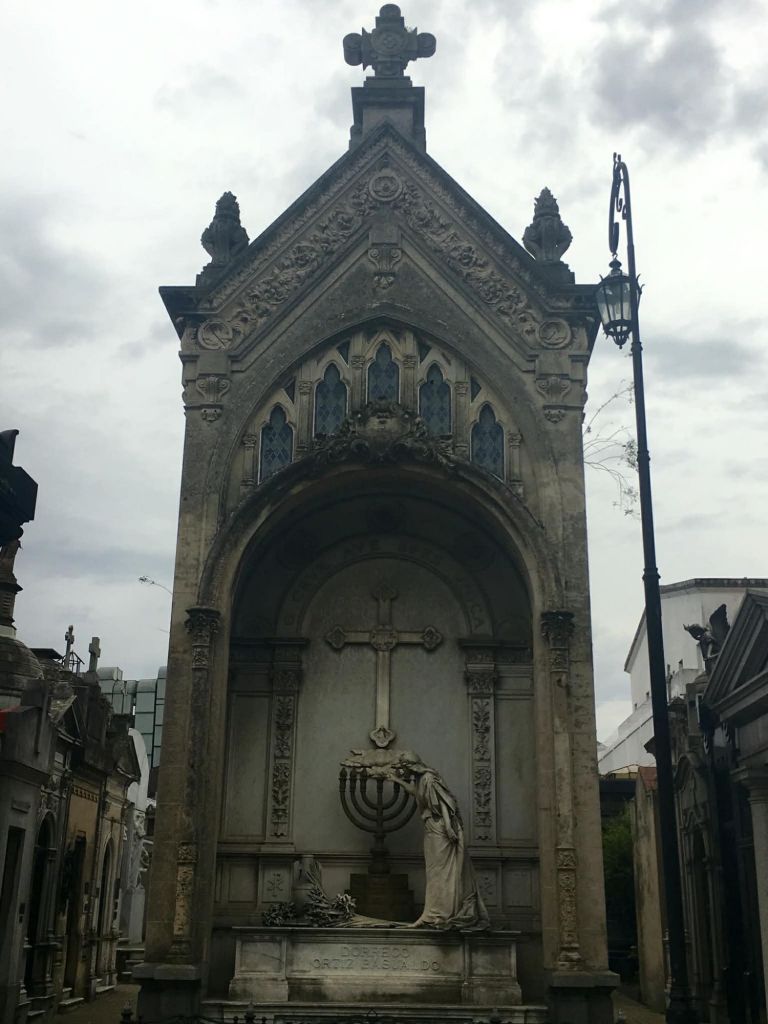
Of course, there are some massive family crypts, the kind you can commission when you own half of Argentina.

Probably not hyperbole.    (Fantastic sister-in-law strikes again.)

The Dorrego-Ortiz Basualdo family died as they lived: flexing on the rest of the neighborhood. One of the former family residences is the current French embassy.

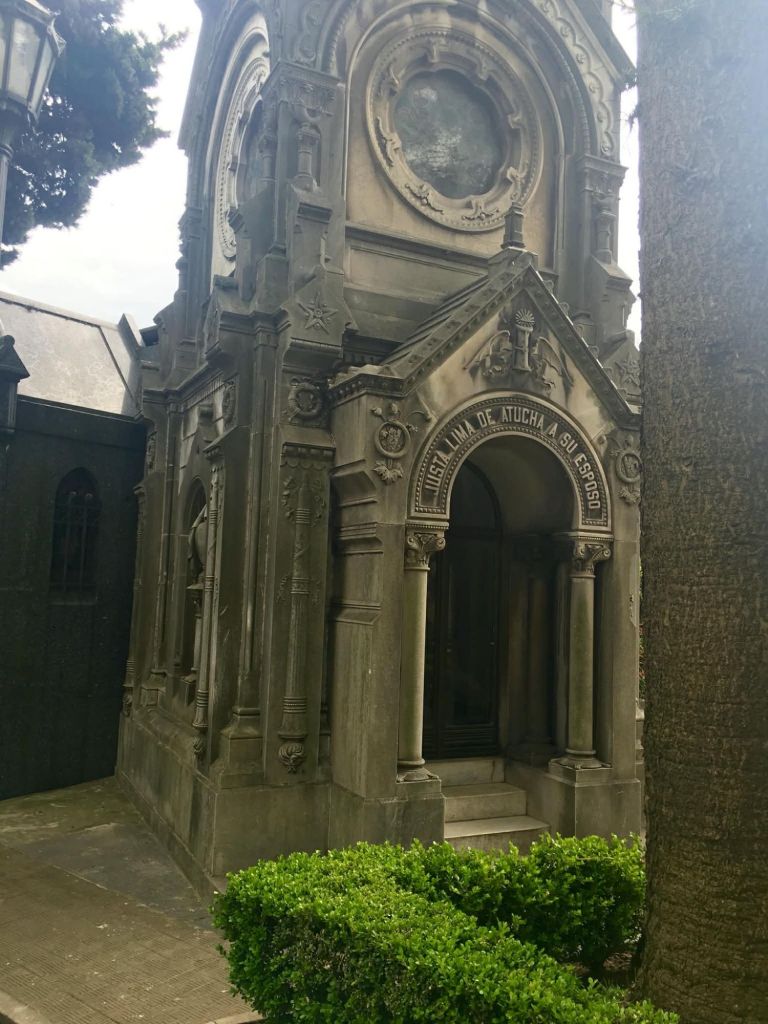
Then there is the mausoleum of Justa Lima de Atucha, who as far as I can tell had it built after her husband died and labeled it “Justa Lima de Atucha to her husband.”

(Sister-in-laaaaaaaaw.)

Despite the opulence of most of the vaults, there are many that are now neglected and broken, and in this way the cemetery mirrors the city itself. I have no photos of those, however, so you’ll have to go hunt them out yourself. Or Google it I guess.

Finally, there is another big draw at Recoleta, unmatched in dignity, presence, and grace.

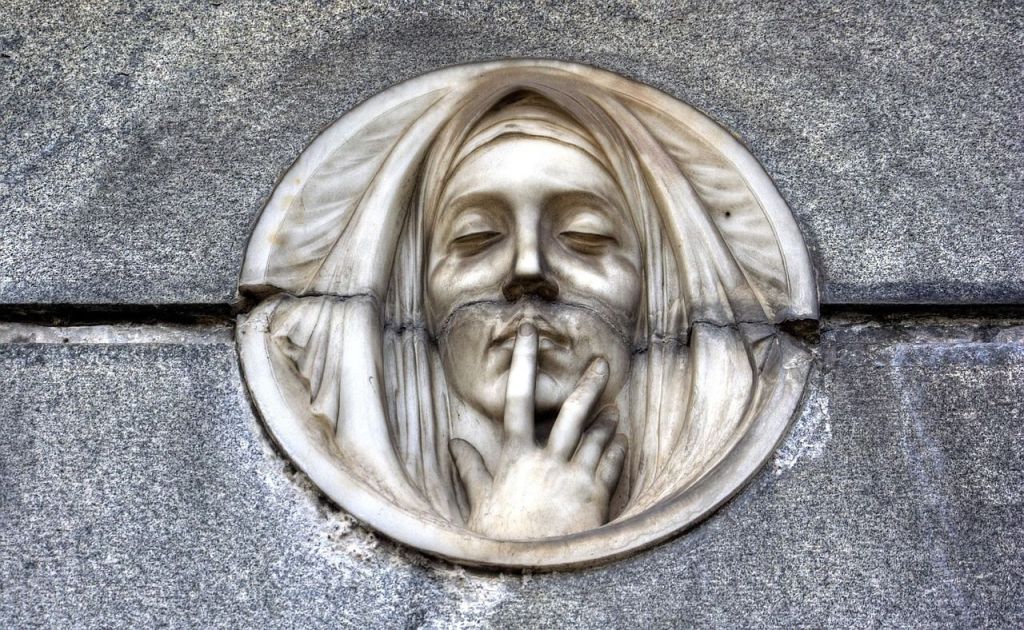
Do. Not. Touch.

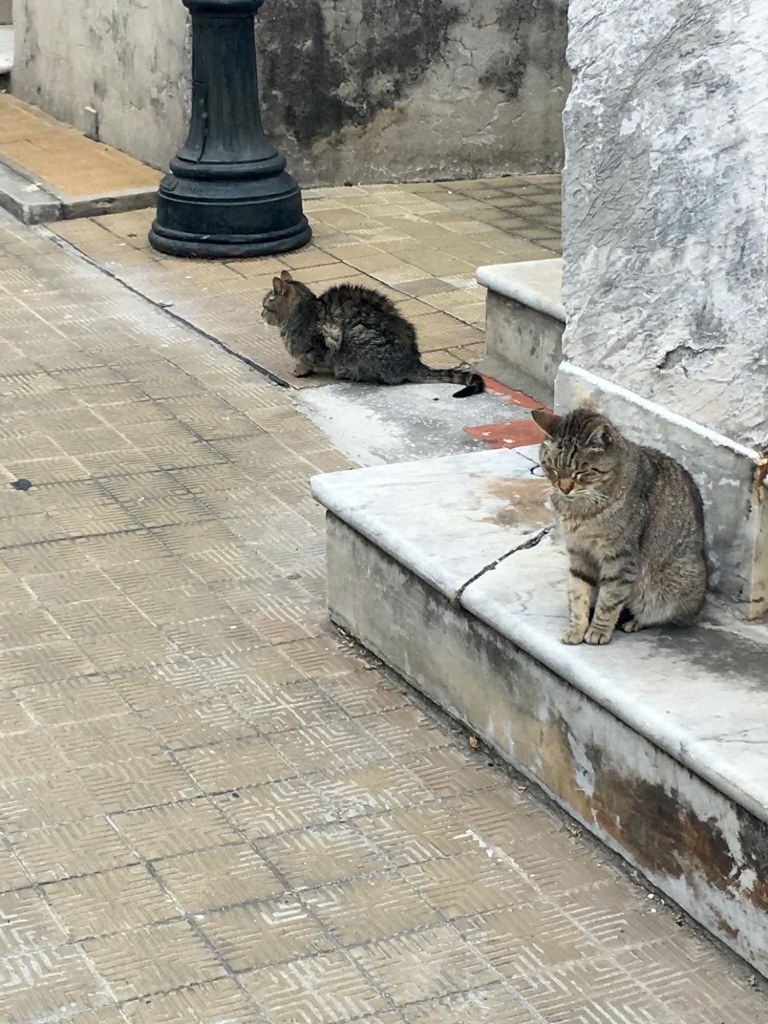
There are only six cats left in Recoleta Cemetery, and they are meant to be the last. If you happen to spot one during your visit, consider yourself fortunate. I don’t know how they’re going to keep the ghosts in line after that; presumably the final six felines will deign to haunt the place as well.

El Cementerio de la Recoleta is at Junín 1760 in, yes, the Recoleta neighborhood. It’s next to a mall, a large park that hosts a huge weekend feria, an absolute unit of a gomero tree, museums, hotels, that big flower sculpture and innumerable public transportation stops. It’s open daily from 9 to 5. You will not miss it unless you try.

Tinytour: Museo de Arquitectura y Diseño [Museum of Architecture and Design]

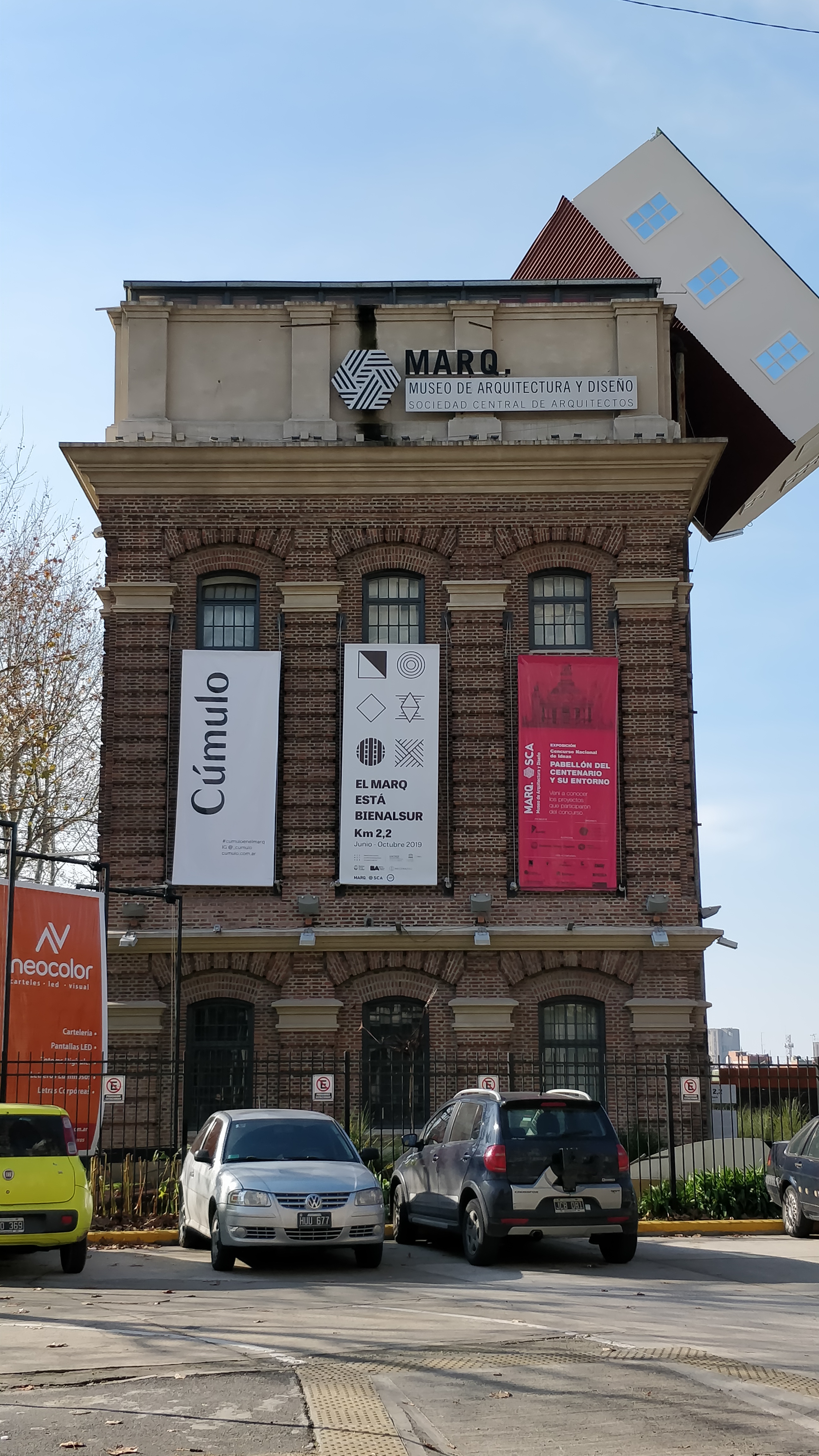
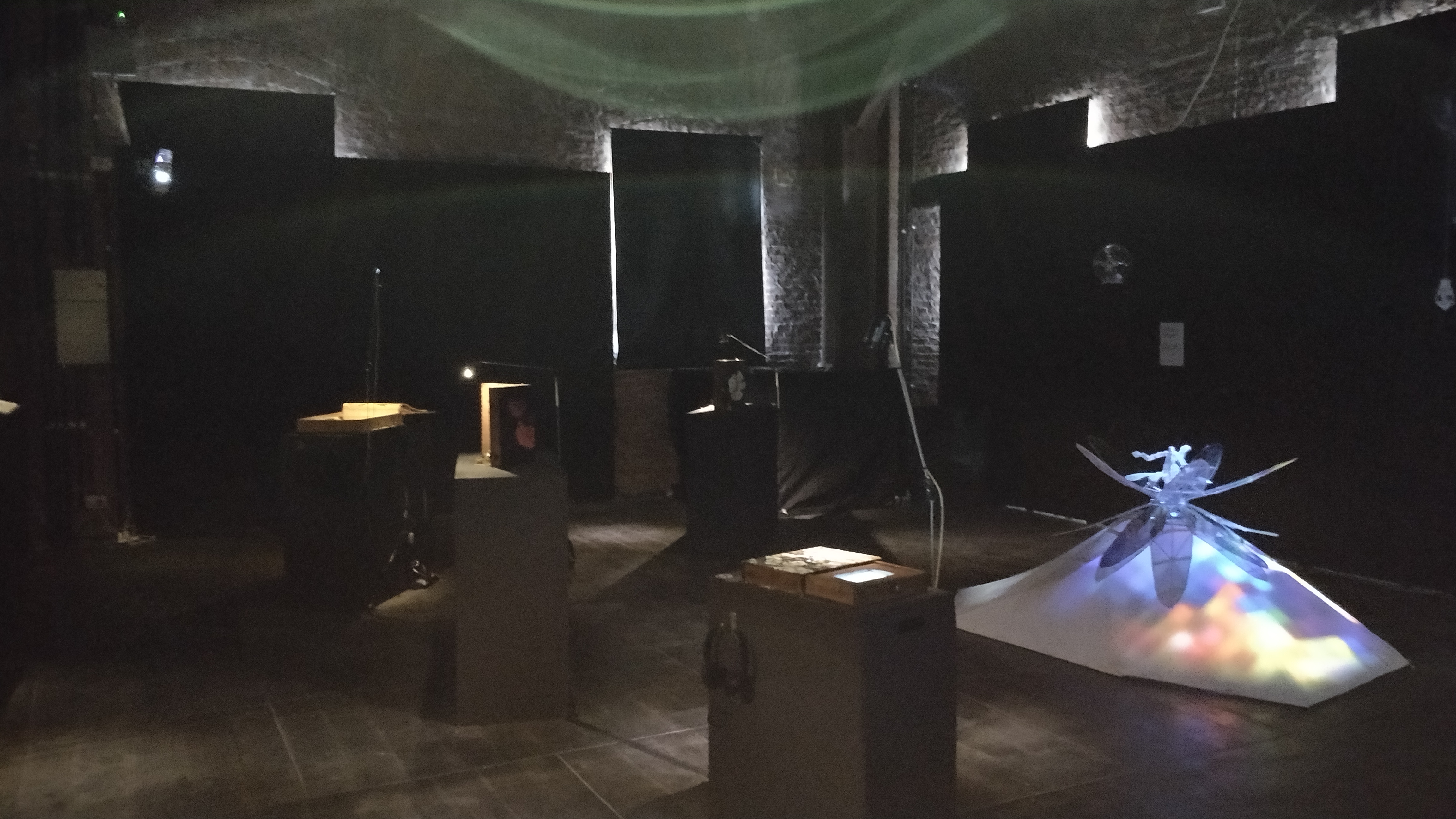
The MARQ is a small building that seems to be used primarily as temporary show space.  It’s the only architecture museum in the country.  The building dates from 1915 and used to be the water tower for the Retiro train station.  It is currently one of the sites of a BIENALSUR contemporary art installation called “House Attack.”

IMG_20190719_142437.jpg
The MARQ building, having a normal one.

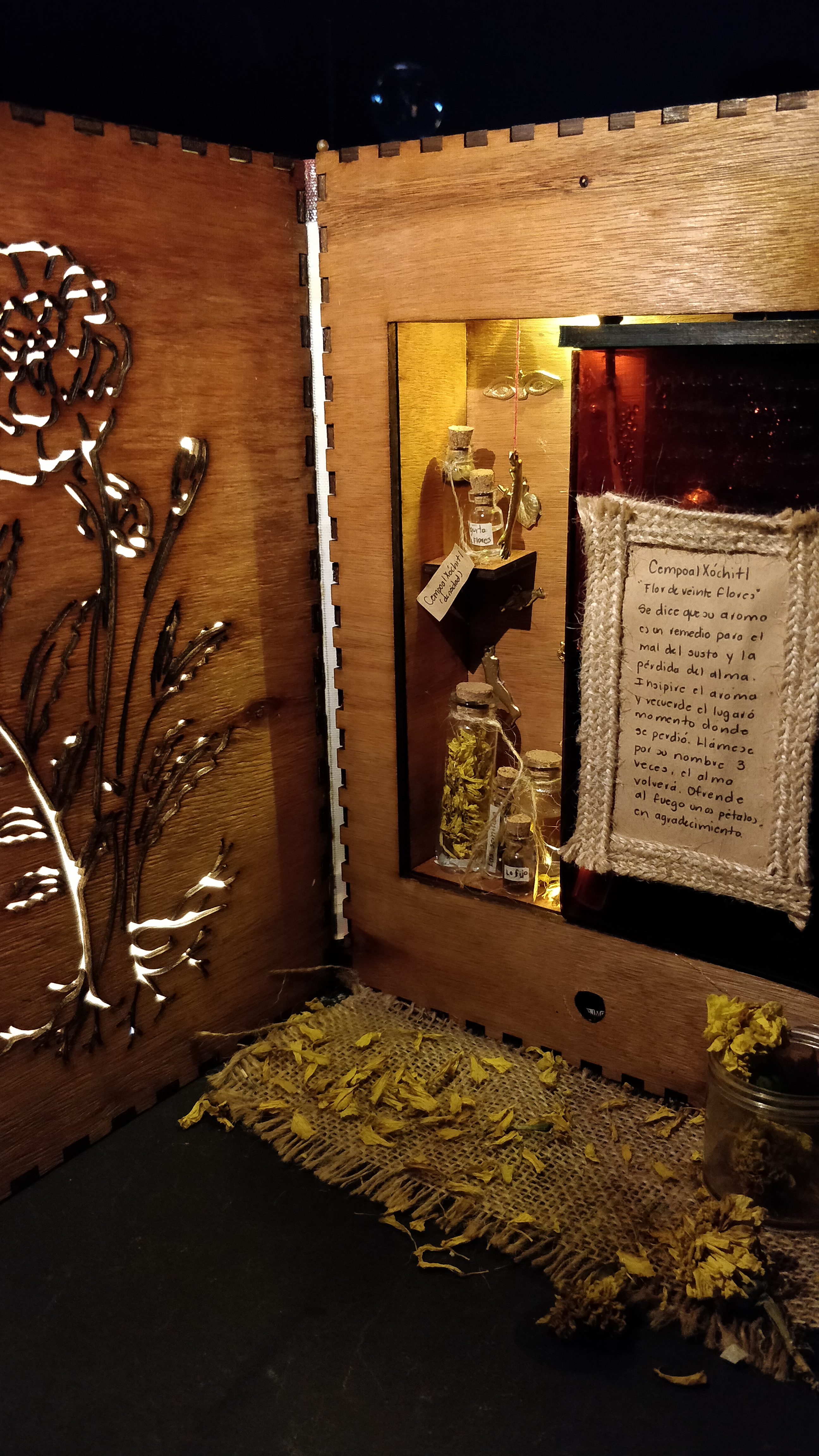
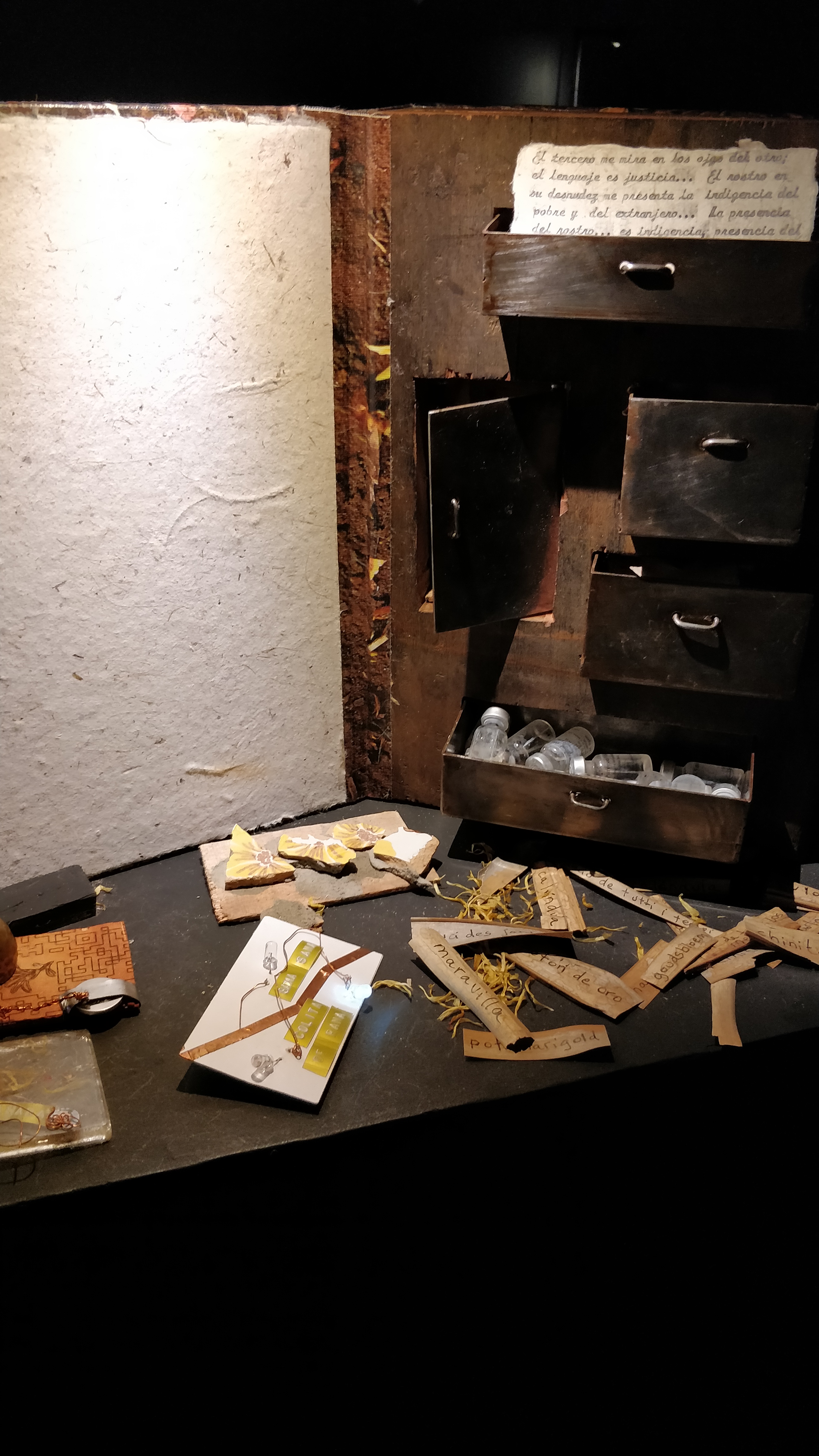
The exhibition, called Invading/Resisting, is also tied to BIENALSUR.  It’s a multimedia collaborative work on the interplay of the actions of humans and the natural world.

IMG_20190719_143101.jpg
ATMOSPHERE.

IMG_20190719_144203_01.jpg
    

IMG_20190719_144100.jpg
   

This is a Tinytour because it’s a wee space!  You’ll just have to see what’s showing when you’re looking to go.

The MARQ is open Tuesday through Sunday from 1pm to 8pm.  It’s located near Retiro train station.  Admission is free and they have a tiny swag store, and I honestly respect the hustle.