Let’s do a teeny tiny tour!
Meet Sydney landmark and worldwide architectural icon, the Sydney Opera House.
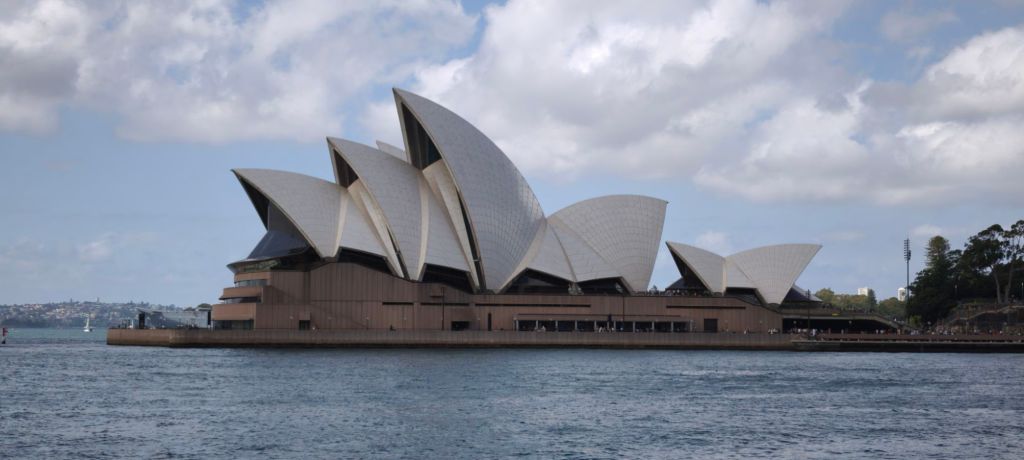
The story of the Opera House begins with Bennelong Point’s history as a place of gathering and abundance for the Gadigal people for generations upon generations, who called it Tubowgule. Yes of course the English are about to show up and do something awful. Its current name comes from a Wangal man who was kidnapped in 1789 to facilitate communication between the locals and the English, because that’s what passed for diplomatic relations when Europeans hit a coastline that was rather inconveniently occupied already. You can read more about Bennelong’s life here. And further reading on the colonial impact on the people of the region is here. It’s, you know….yeah.

The Point has been a cow pasture, a lime processing site, a fort. Finally, in 1955 it was designated as the future location of a dedicated performing arts venue. Advocates of the idea felt Sydney, basking in a post-war boom and influx of immigration, needed a place for the public to enjoy fine music. Thus, an international competition was launched, and in 1957, Danish architect Jørn Utzon was announced as the winner.
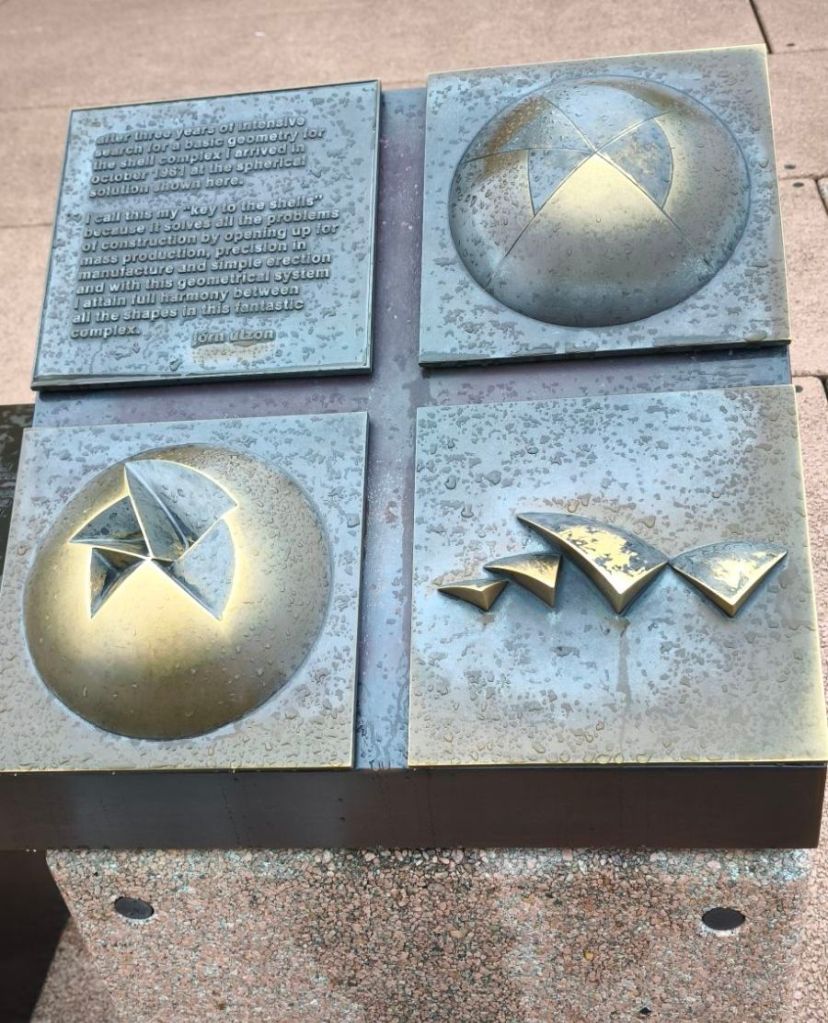
The widely traveled Utzon brought many influences into the concept and prioritized the site’s landscape. The design was sculptural, unique and harmonious with its setting. Like all innovative undertakings, everything went smoothly.
Hahahahaha.
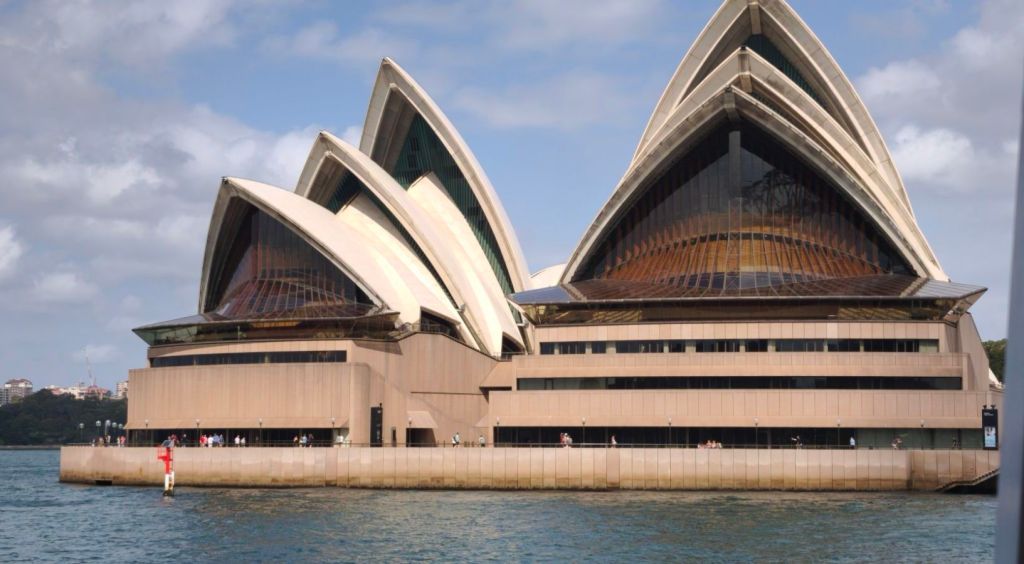
Now, I don’t know anything about architecture or architectural design competitions, but between the Opera House history plaques and Grand Designs, it seems to me that architects will just sketch out whatever and leave details such as feasibility in God’s hands. Just my impression. Anyway, the problems started with an inaccurate assumption about the Point’s geology, and they did not end there. Premier Joseph Cahill, who had expended considerable time and energy defending Utzon’s design, was not inclined to iron out the kinks in things like structural integrity. He (probably rightly, to be fair) feared the project would die of bureaucracy, and he moved ahead with starting construction, because nothing maintains long-term momentum like the sunk cost fallacy.
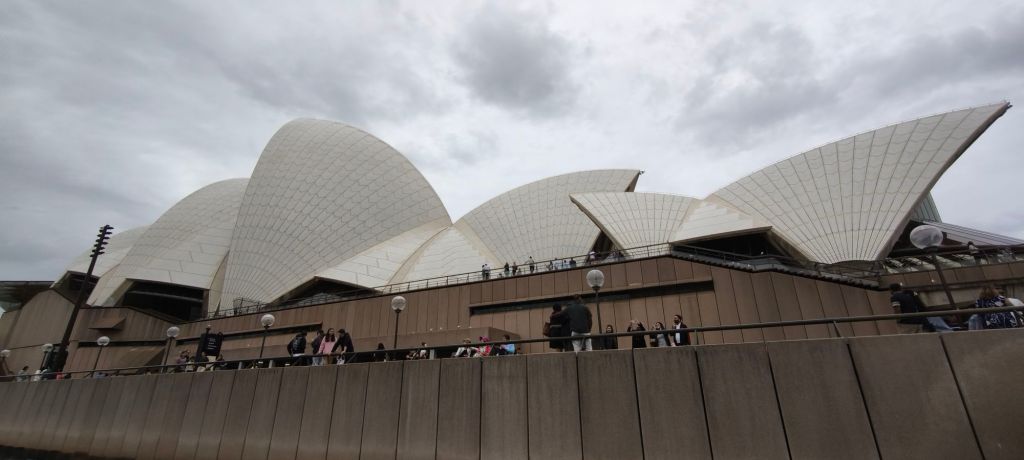
Plans were altered, reformed and redesigned. Once again, if you’ve ever watched Grand Designs, you know what happens. Timeline milestones and budget limits go whizzing by and now everyone is tired, stressed, angry, and washing dishes in the bathtub. Except in this case the starting budget projection was 7 million AUS (the equivalent to about 135 million today) with a four year timeframe. It was completed after 14 years at a final cost of 102 million (1.8 billion today).
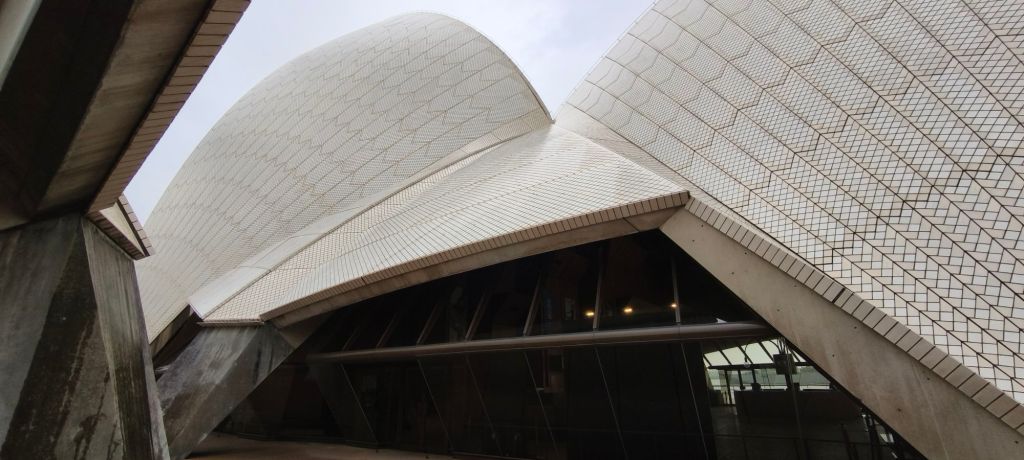
At the risk of yadda-yaddaing a tale of uncompromising artistic integrity meeting political opposition and the brutal realities of physics, Utzon left the project years before its completion, resulting in a lot of bad blood, wounded feelings and unrealized dreams.
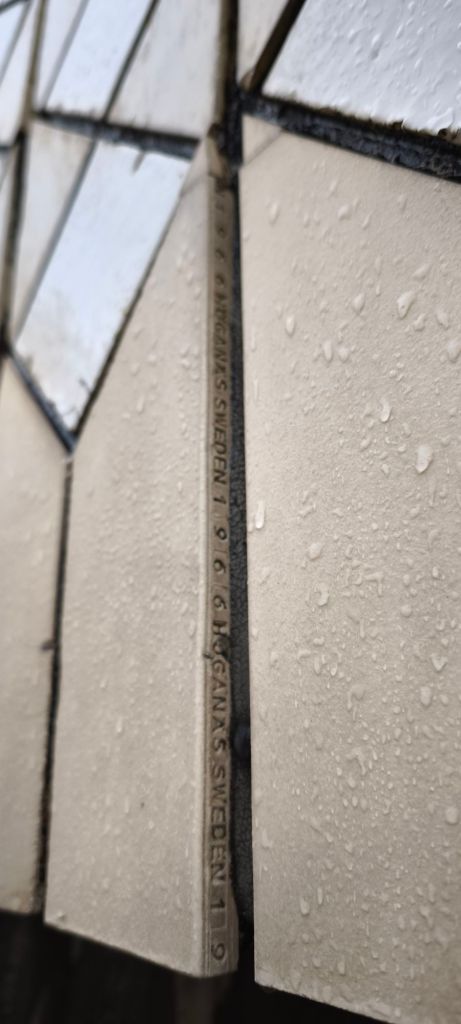
The Opera House was finally opened in 1973 (Utzon was neither present nor mentioned), and the rest is history. So let’s take a look at what you see on a tour of the Sydney Opera House.
There are seven performance spaces, two of which are on the (at least, on mine) tour itinerary. This is the Studio:
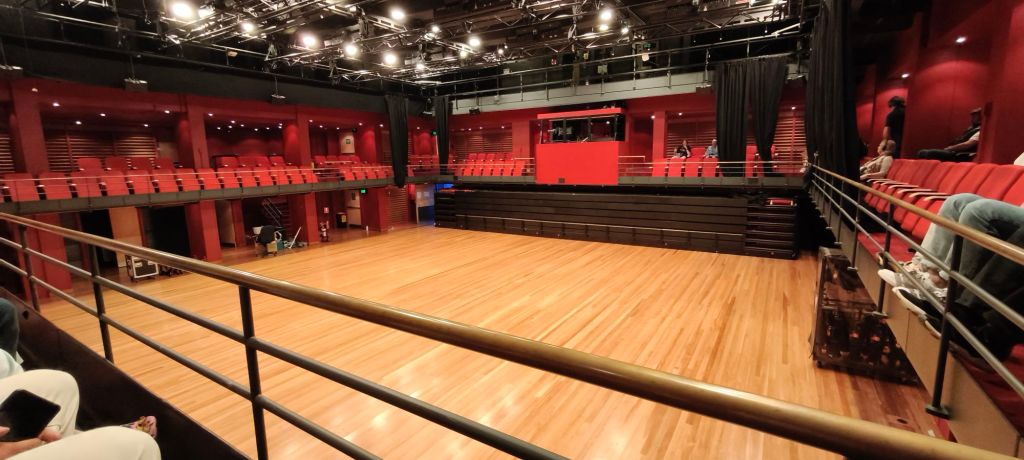
It is a flexible space, with different seating configurations available depending on production needs.
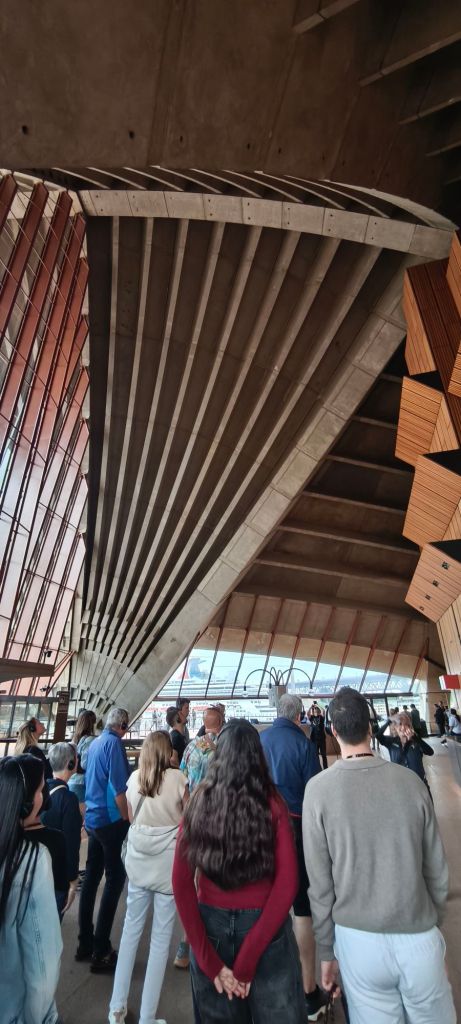
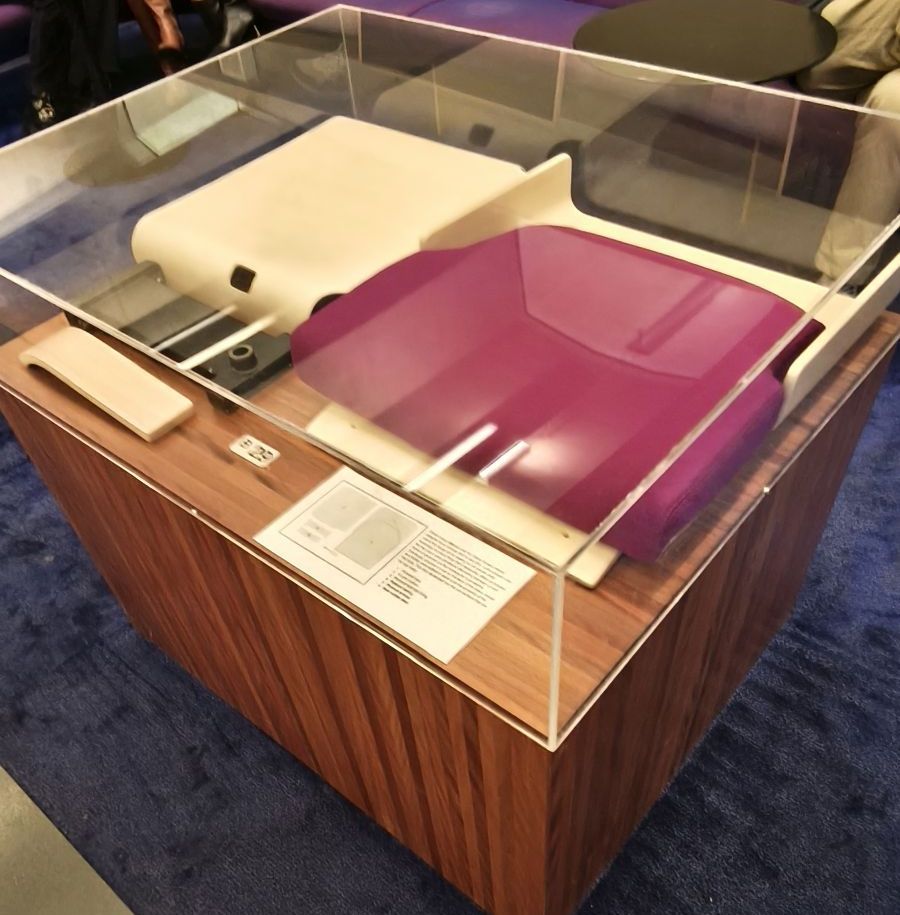
On the way to the Concert Hall, we were able to admire the concrete ribs that form the skeletal structure of those iconic shells, a solution that took four years to develop. The Institute of Civil Engineering seems to tacitly suggest that engineering get the assist for the building, and I will gladly grant it.
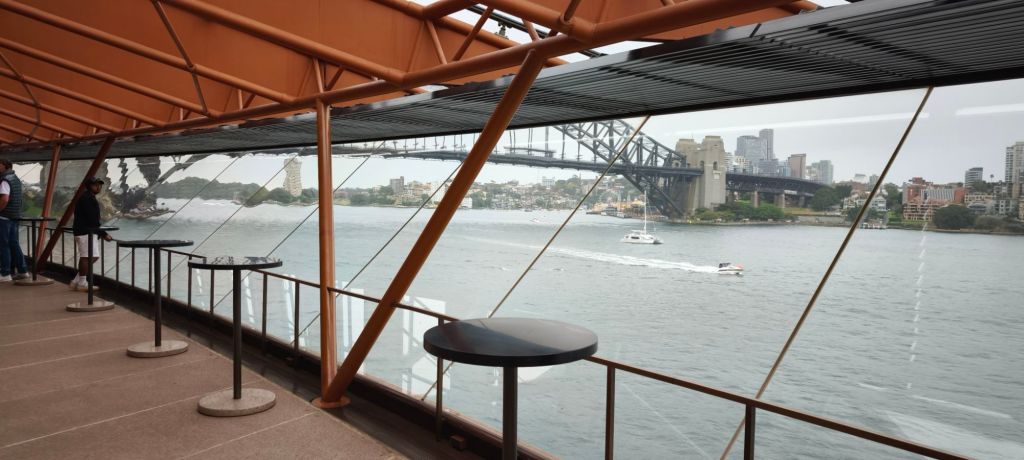
The views of the Harbour make intermissions enjoyable, with glass windows designed to be looked out of no matter the time of day.
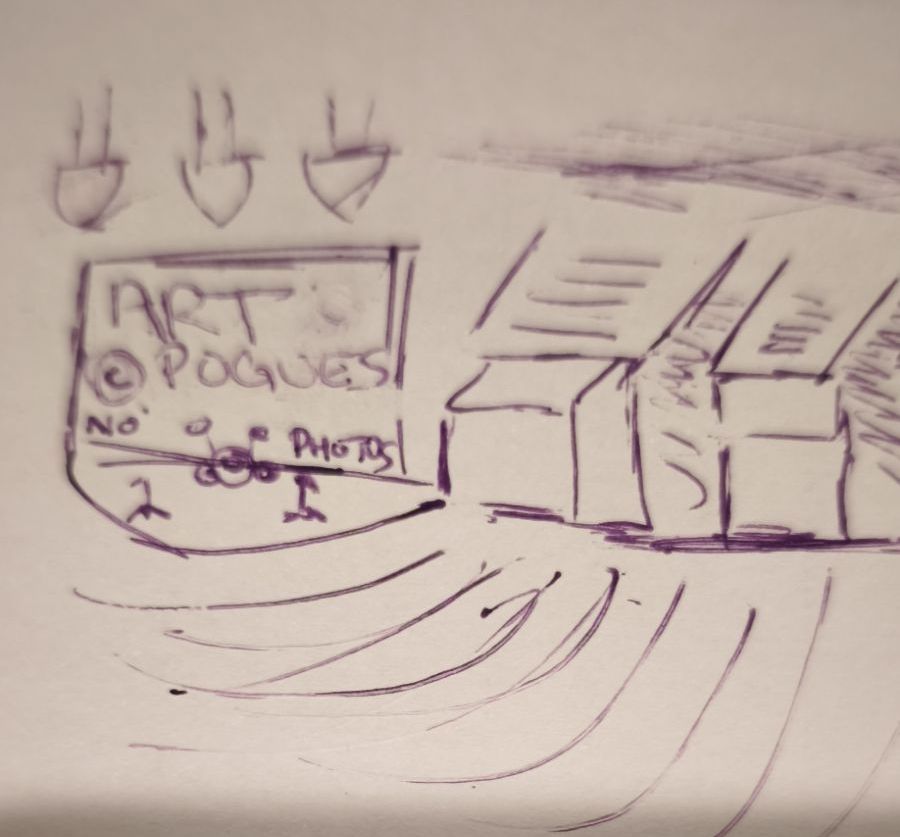
If you’re on a tour, the guide does emphasize that the Opera House is not a museum but an operating performance venue, and therefore sometimes tours aren’t allowed in booked halls, or if they are, photography is forbidden by the performers for privacy and/or copyright purposes. I mention this here because The Pogues were playing the Concert Hall that night, and they forbade photography in the hall because their backdrop was already up. So here’s my sketchy memory of it:
You can read more about the design and interior details here, and The Pogues cannot stop you.
This is pretty long for a tiny tour, so I’ll end by noting that Jørn Utzon never returned to see how his building was completed, although he was reconciled with the powers that be eventually and was still living when the Opera House was declared a World Heritage Site, only the second person to have his work recognized as such while alive. It’s the kind of vindication the rest of us can only dream of. So go ahead and blow that project budget to kingdom come; maybe you’ll end up with one of the most iconic structures in history.
Tours of the Sydney Opera House run daily, except Christmas Day and New Year’s Eve. If you’d rather wander around the public places and hit the gift shop, you can do that for free.