The Cemetery Series: Cementerio de la Recoleta

God, you know what sucks? Knowing that you’ve been to a place a gajillion times and you definitely took a bunch of photos, but this was years ago and somehow, you can’t find any of them.
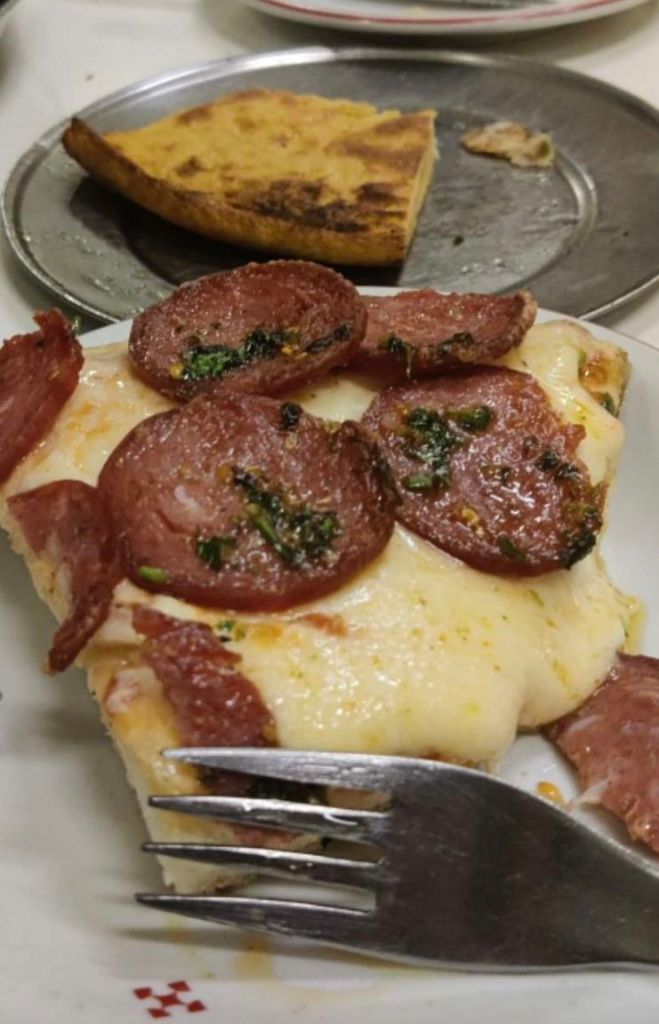
And last time I was in Buenos Aires I had other priorities

So I’m going to cobble together a post with what I can scrounge up and some royalty-free photos taken by actual photographers. At least the lighting will be good.

Recoleta Cemetery is renowned the world over, packed with mausoleums for Argentina’s wealthy and notable. It opened as the city’s first public cemetery in 1822, after the disbanding of the Franciscan order that settled there roughly 100 years before. Occupying 14 acres of some of the ritziest real estate in Buenos Aires, smack dab in the middle of the Recoleta neighborhood, the cemetery is a perennial stop for tourists and taphophiles alike–so much so that it is the first of three examples in the Wikipedia article on tombstone tourism (and yes, I have been to all three).
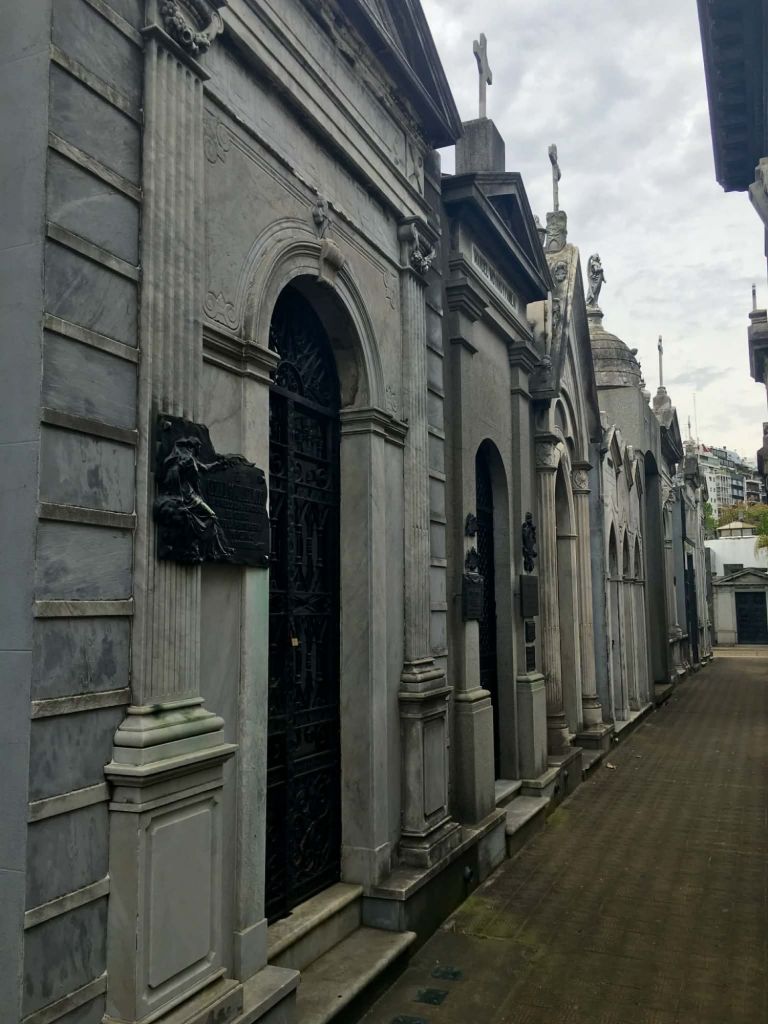
The side streets are quieter; you definitely don’t want to buy on the main drag.   (Photo by my amazing sister-in-law.)

There is no lack of tour guides available at the gates, so even if you turn up without one you can probably still hire one on the spot. Alternatively, there’s an app.
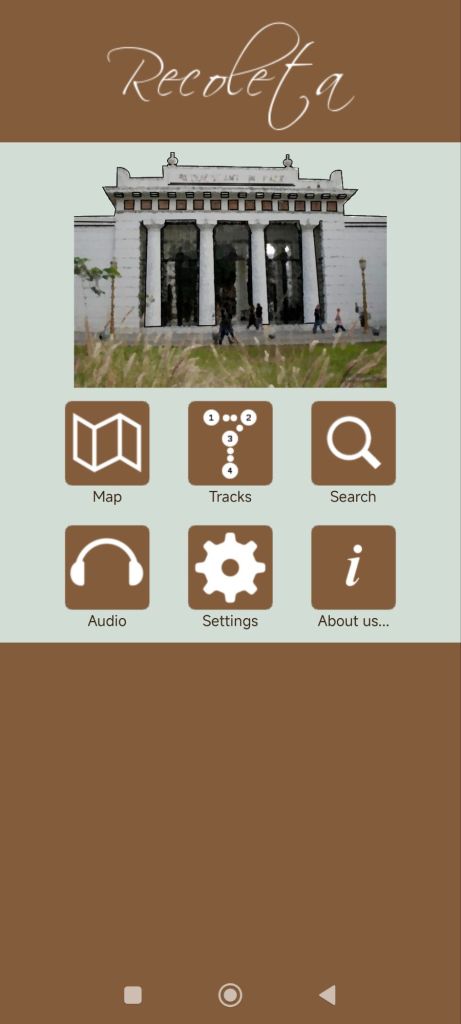
It is very brown, but also free.

At the time of this writing, the audio is only available in Spanish, but the text guide is in Spanish, French and English, sort of. You can choose a route that highlights authors, scientists, presidents, or “our selection,” which includes a few from the other routes plus other notable tombs.

But nevermind the Great and Good and Total Bastards–let’s talk about the ones I wanna talk about.
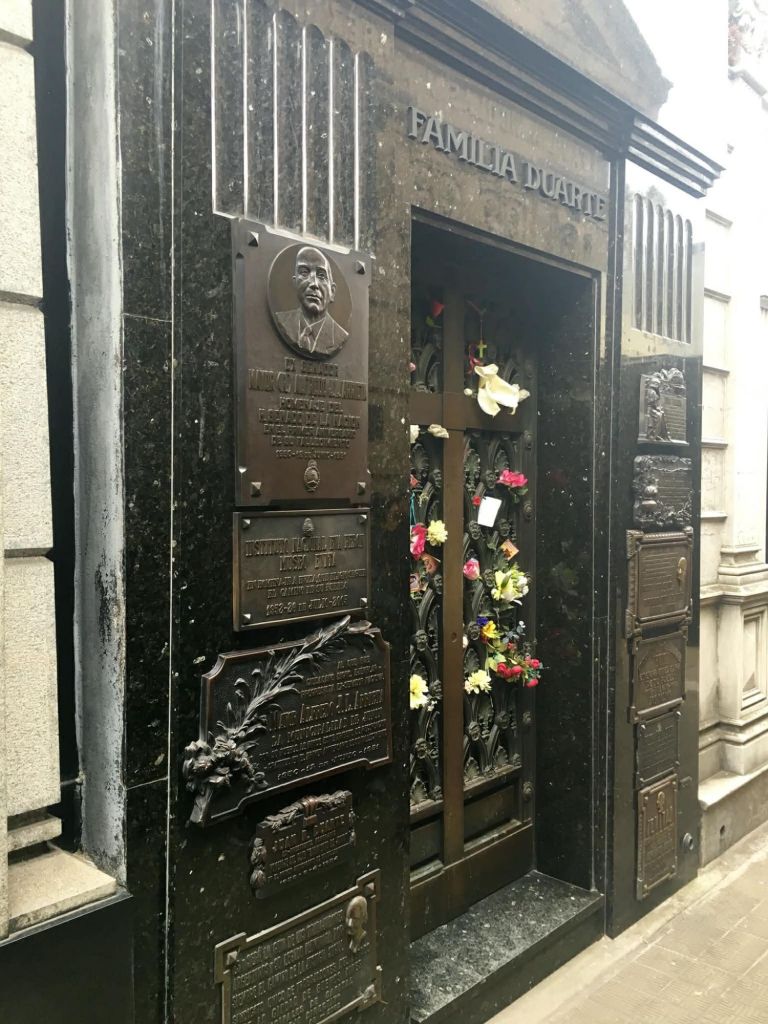
Yes Eva Perón is buried here in herfathersfamilycryptseemsweirdtomegivenherfamilyhistoryyestherearealwaysflowersandvisitorsandtourgroupsanywaymovingooooooon

Liliana Crociati de Szaszak was killed in an avalanche in Europe while on honeymoon, aged 26. She’s depicted in her wedding dress outside her Neo-Gothic tomb.
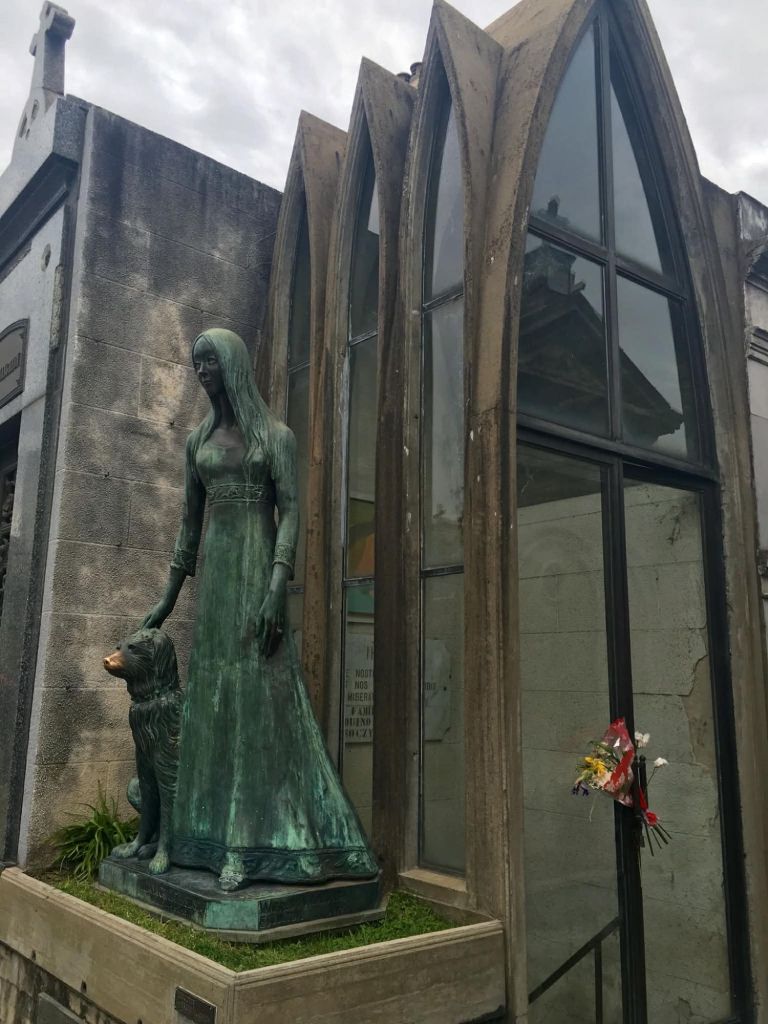
After her dog, Sabú, died, his sculpture was made and placed next to her. Visitors rub his nose, hence the shine. (Photo by my excellent sister-in-law.)

As we all know, young women make the best ghost stories and while I don’t know of any specifically linked to Liliana, 19-year-old Rufina Cambacérès is said to haunt the place.
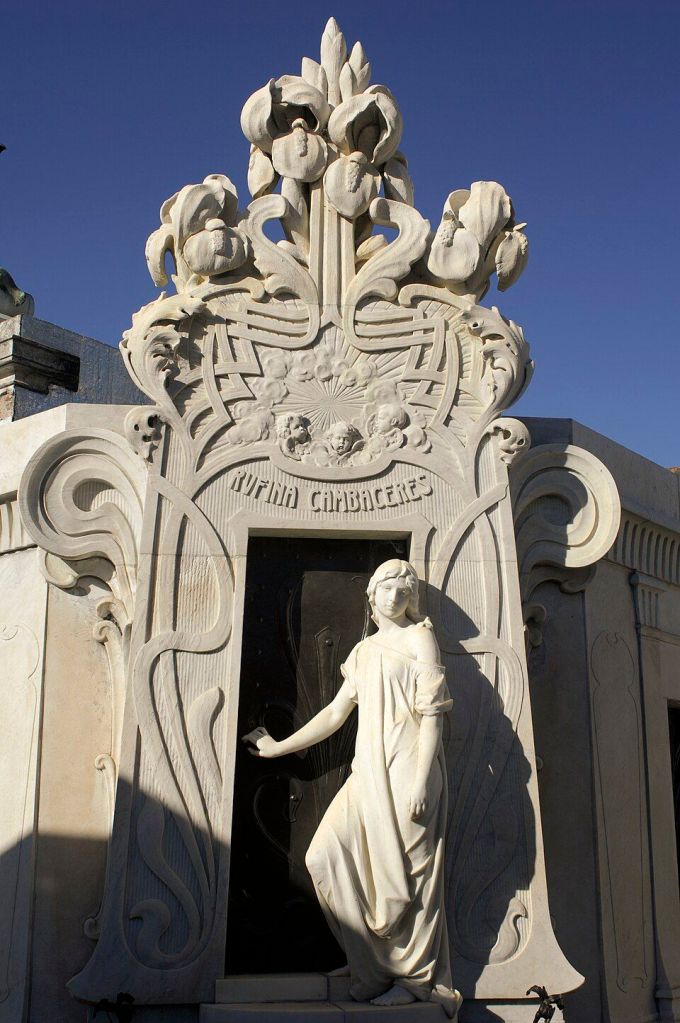
And frankly, not without cause. 
(Photo by Andrew Shiva, who is not my sister-in-law but I’m sure is cool.)

The story goes that Rufina collapsed and was pronounced dead, only to–you guessed it–not actually be dead. After discovering the displaced coffin (or investigating after hearing noises the previous night, depends on the version you hear), she was found having died, for real this time, in a panic after frantically clawing at the coffin lid.
The face you make when your mom cannot just give it a minute before interring you.

General Tomás Guido, national hero and bestie of José de San Martín, took part in San Martin’s grueling campaign, the Crossing of the Andes, during the wars of independence. He wanted to be buried under those mountains where so many had died, and in the great tradition of loopholes, his son had stones from the Andes brought to Buenos Aires and built the tomb himself.
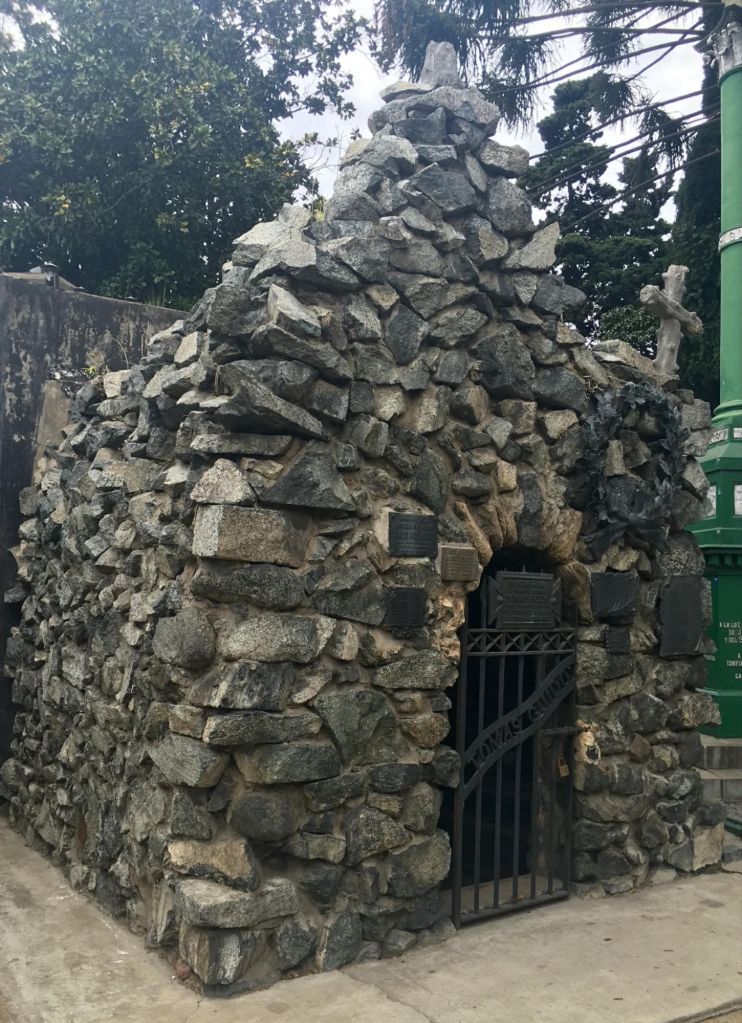
“See you’re technically under the Andes, Dad.”

Annoying technicalities aside, it’s a unique tomb, sharply contrasting with its neighbors. Also, Guido is no longer there. But he still isn’t under the Andes! He was relocated to the Cathedral of Buenos Aires next to San Martín, because who doesn’t want to be buried with their boss.

Speaking of work-adjacent entombment, cemetery caretaker David Alleno saved up for years for his own statue and burial. He supposedly killed himself upon the vault’s completion. His statue depicts him with his keys, duster, broom and watering can.
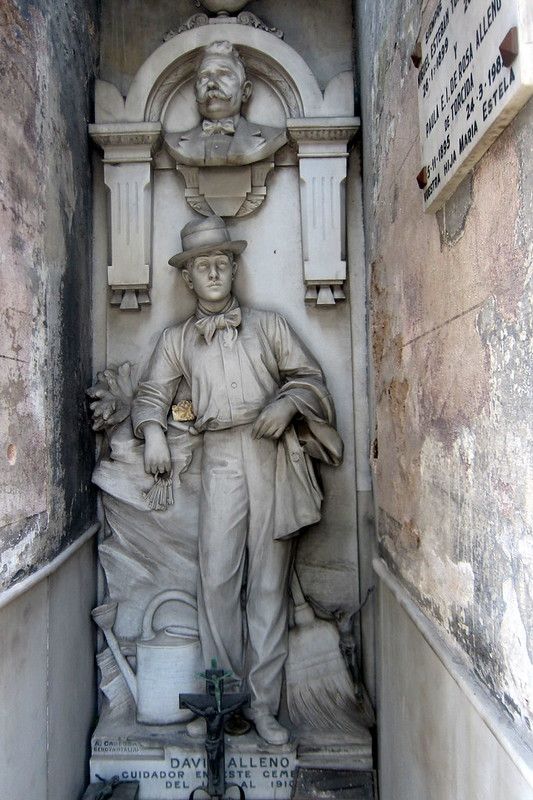
Sure, why not.  (Photo by Wally Gobetz.)

The story is tantalizingly incomplete. It seems like the purchaser of the crypt was his brother, Juan, and I don’t know why one brother would be wealthy enough to buy a family vault in the exclusive cemetery while the other is just a caretaker there. There’s a death certificate that cites “trauma and cerebral contusion” as the cause of death with apparently no follow up available. It’s said that his keys can be heard clinking at night or dawn, so perhaps David himself also feels his story is unresolved.
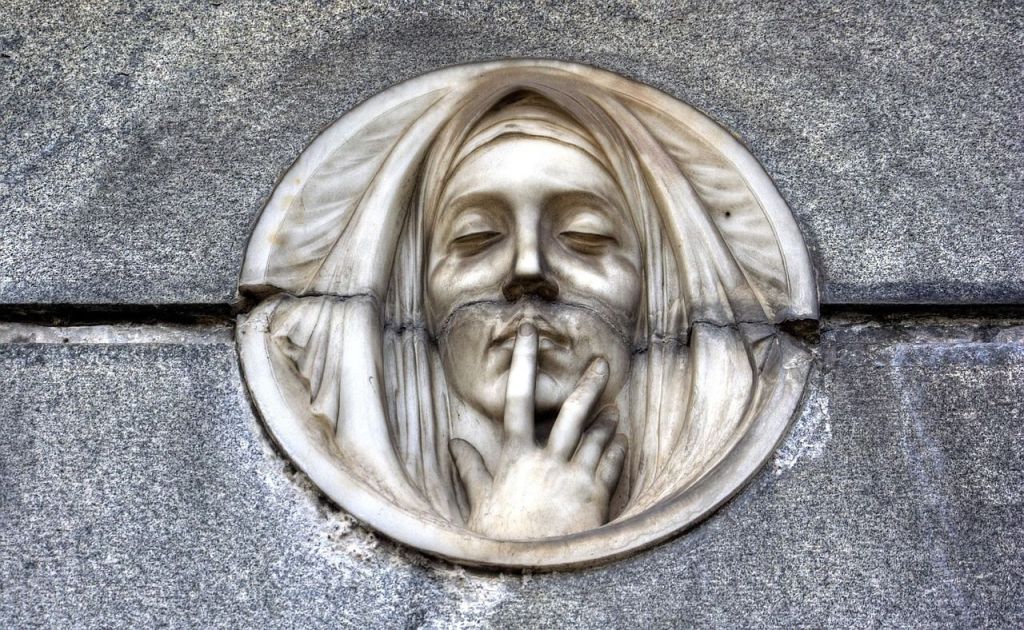
Maybe the Avelino Quijano vault just wants him to keep it down

Of course, there are some massive family crypts, the kind you can commission when you own half of Argentina.
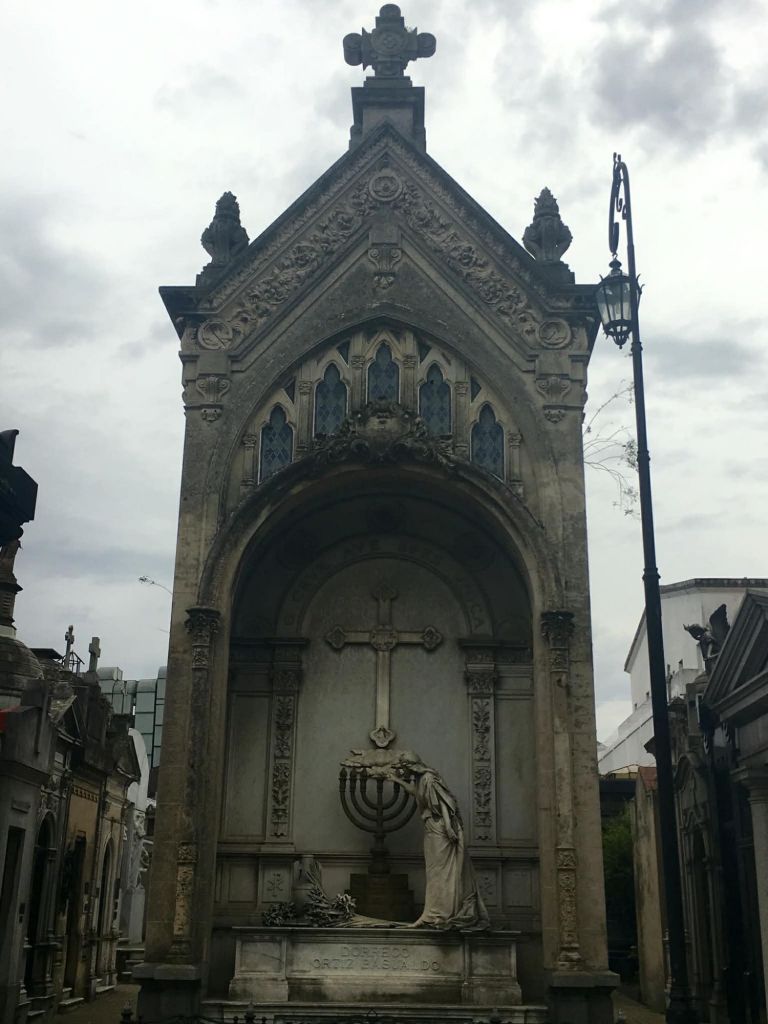
Probably not hyperbole.    (Fantastic sister-in-law strikes again.)

The Dorrego-Ortiz Basualdo family died as they lived: flexing on the rest of the neighborhood. One of the former family residences is the current French embassy.

Then there is the mausoleum of Justa Lima de Atucha, who as far as I can tell had it built after her husband died and labeled it “Justa Lima de Atucha to her husband.”
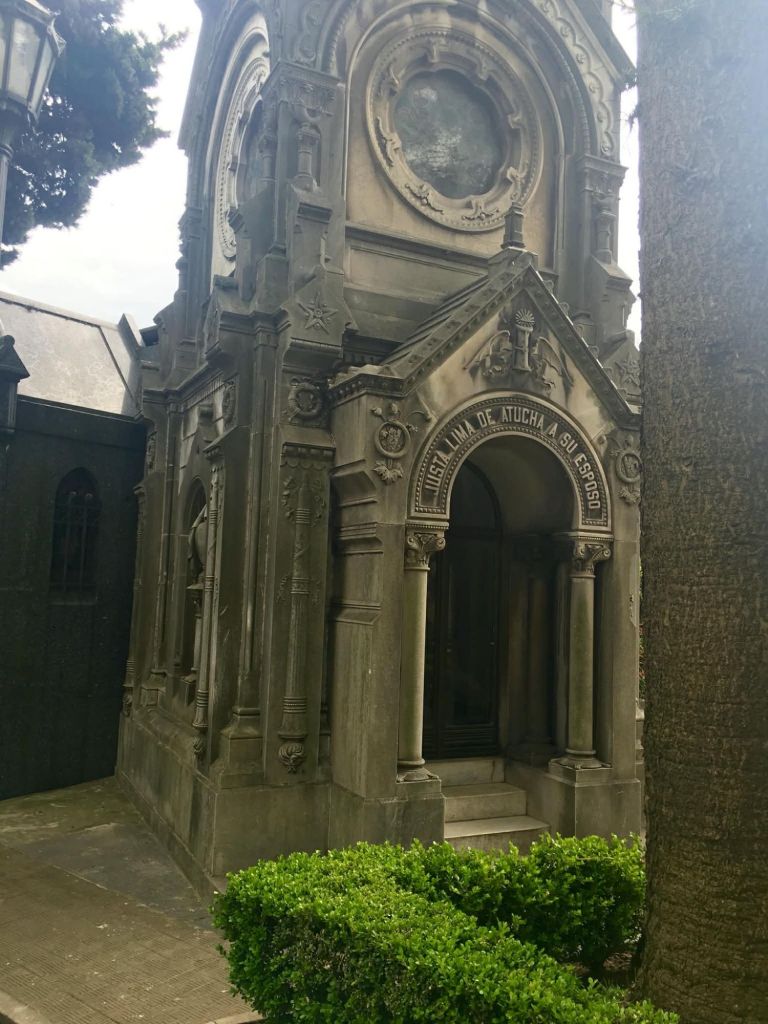
(Sister-in-laaaaaaaaw.)

Despite the opulence of most of the vaults, there are many that are now neglected and broken, and in this way the cemetery mirrors the city itself. I have no photos of those, however, so you’ll have to go hunt them out yourself. Or Google it I guess.

Finally, there is another big draw at Recoleta, unmatched in dignity, presence, and grace.
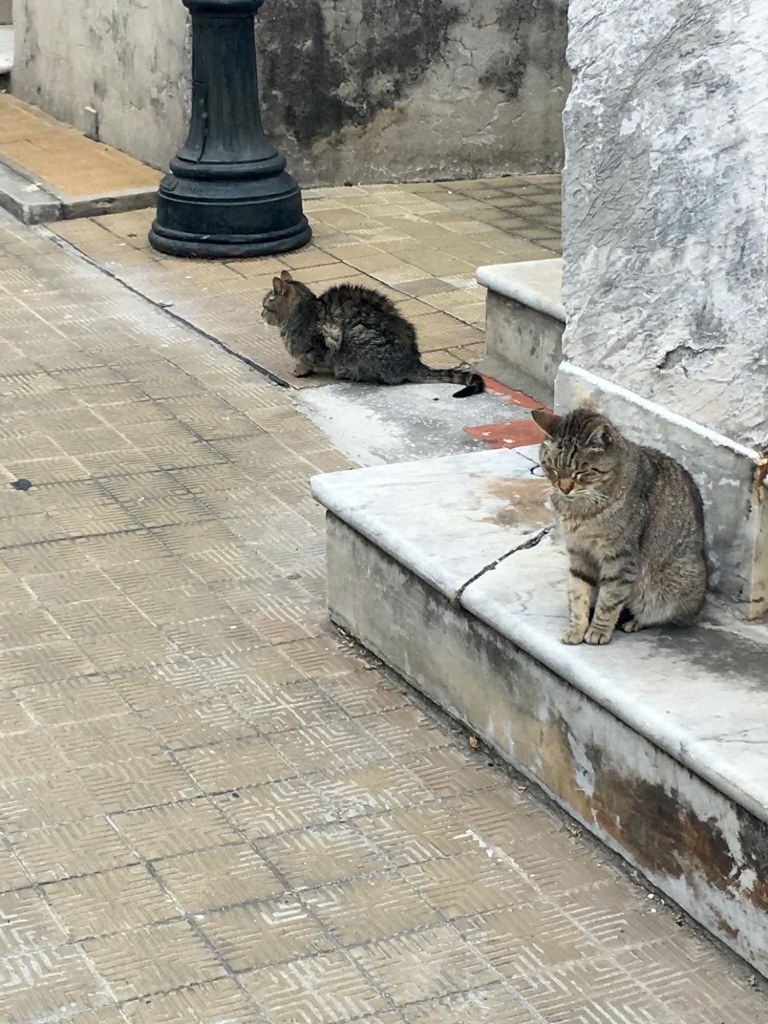
Do. Not. Touch.

There are only six cats left in Recoleta Cemetery, and they are meant to be the last. If you happen to spot one during your visit, consider yourself fortunate. I don’t know how they’re going to keep the ghosts in line after that; presumably the final six felines will deign to haunt the place as well.

El Cementerio de la Recoleta is at Junín 1760 in, yes, the Recoleta neighborhood. It’s next to a mall, a large park that hosts a huge weekend feria, an absolute unit of a gomero tree, museums, hotels, that big flower sculpture and innumerable public transportation stops. It’s open daily from 9 to 5. You will not miss it unless you try.
The Cemetery Series: Karori Cemetery (Wellington, NZ)

It’s the first Cemetery Series entry outside of Argentina!

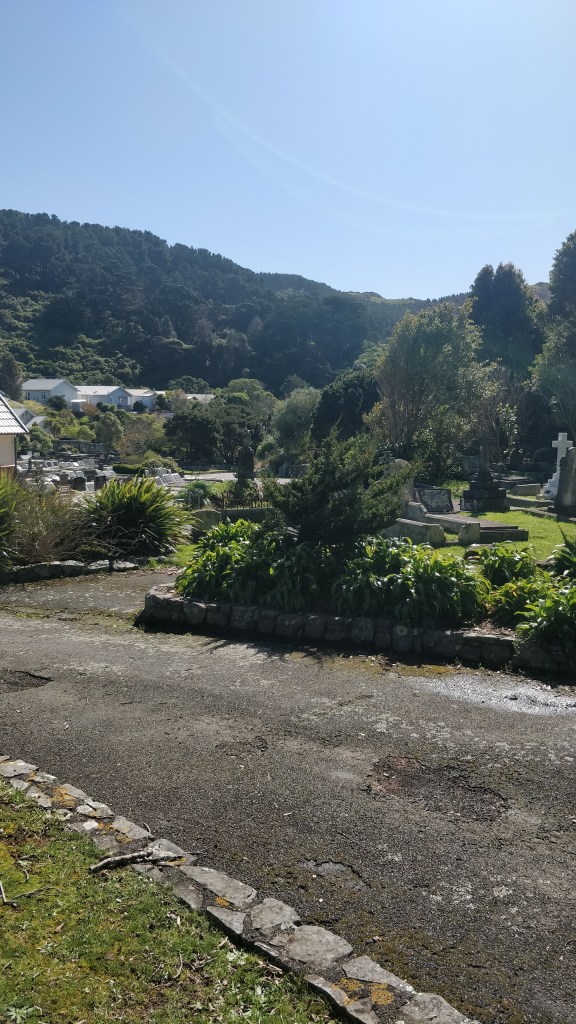
Like most of the Wellington area, it could be described as “frequently windswept”

I’d like to start by thanking the Friends of Karori Cemetery, who (in addition to researching its history) organize tours of cemetery, and led us around during our visit. That visit occurred on Suffrage Day, so the tour was focused on a few of the women who in life signed the 1893 women’s suffrage petition. You can read more about how New Zealand was the first self-governing nation to grant women the right to vote, if you want to get deep in your feels about the deficiency of your own home country, a depth I think many of us have some solid recent experience with. But I digress.

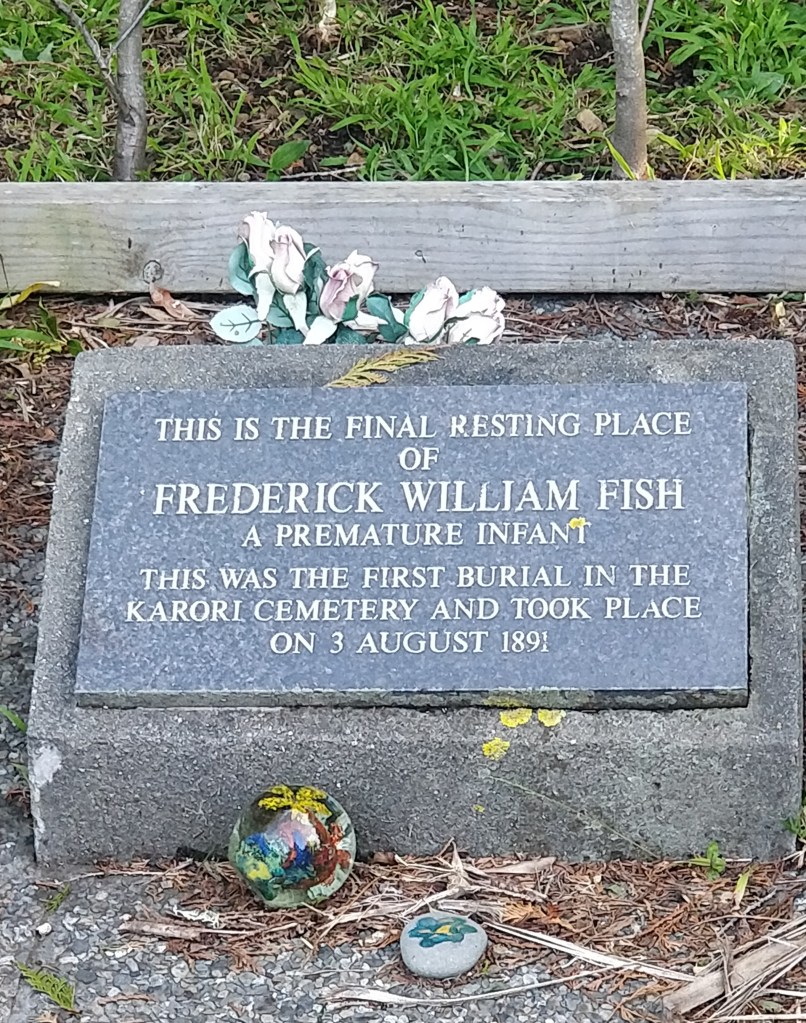
Karori Cemetery was opened in 1891, following the stuffing-to-the-seams of the cemeteries closer to the center of the town. Karori at the time was still rural, and so the first burial, that of premature infant Frederick Fish, remained alone on a windy, bare hill for six months, when the next burial took place.

Freddie didn’t have a marker until the Friends got him one, but he does have a lot of neighbors now.

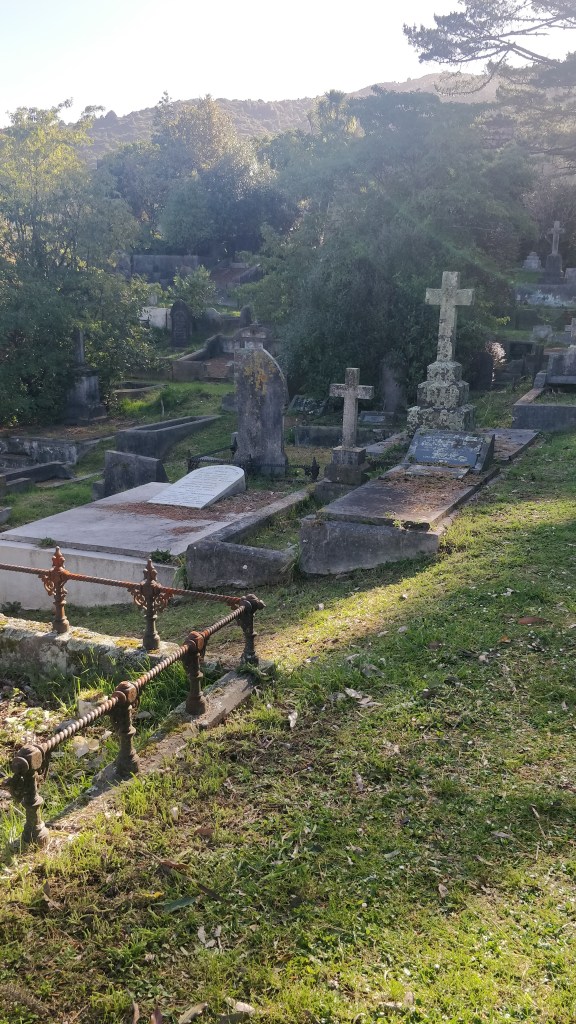
Karori Cemetery is the second largest in the country, and has about 83000 burials (and counting). Being so big, I didn’t see all, or even most, of it–but broadly, the big sections are the Catholic, Anglican, Jewish, and public sections.

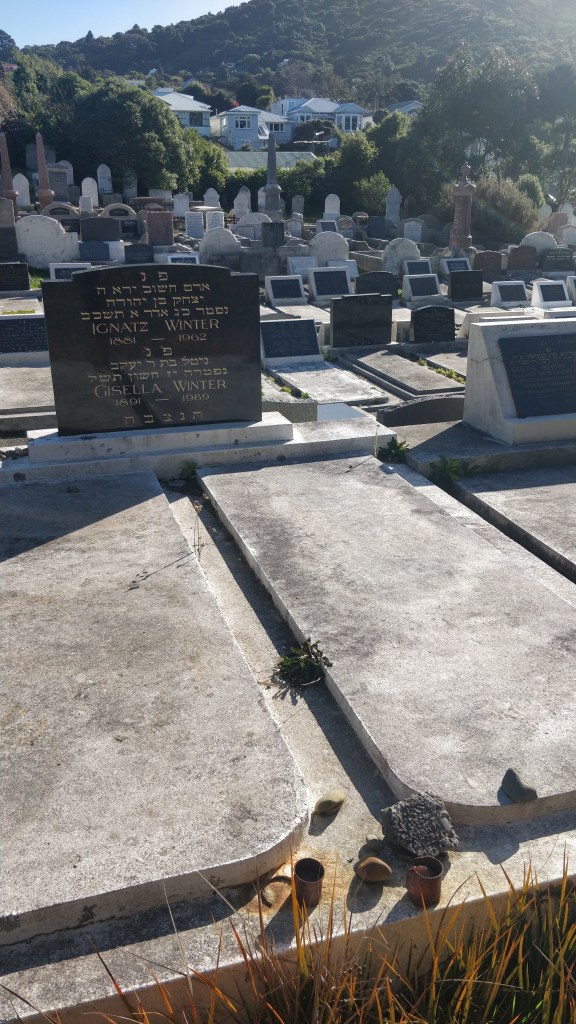
I happened to park near the Jewish section, near the cemetery shelter.

There is also a Servicemen’s cemetery (established in 1916 for obvious reasons), as well as a few dozen victims of the SS Penguin shipwreck. The dead of the 1918 Influenza pandemic are marked with white crosses. Boy, the 20th century sure was something!

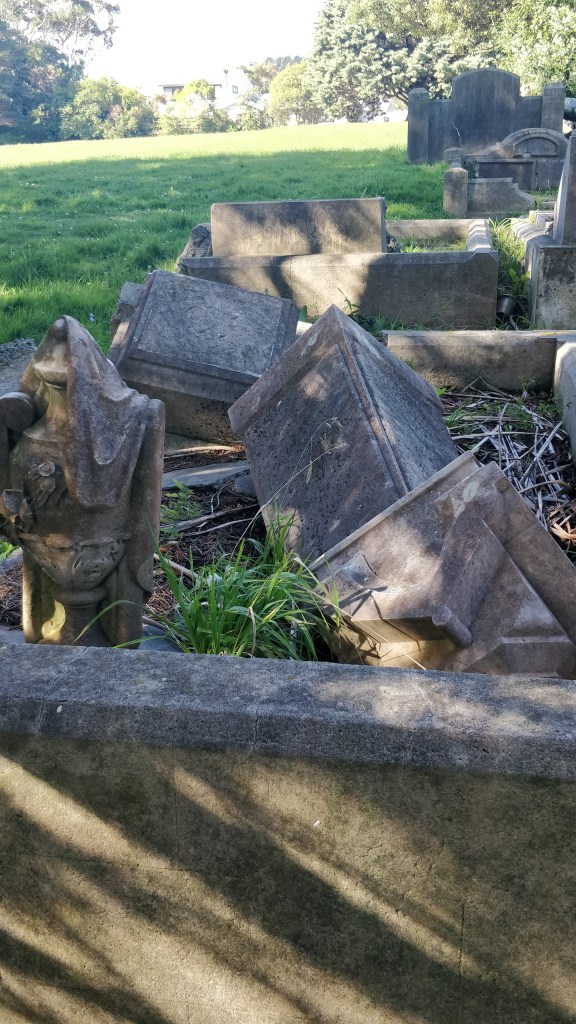
Also, earthquakes.

Naturally, as I took photos, I assumed that I would remember at least the basics of the people mentioned. I assume this every time I take photos on a tour, and I am wrong 100% of the time, but hope springs eternal, along with wildly unearned optimism.

Annie Liez was a widow who signed the petition and lived to 94.
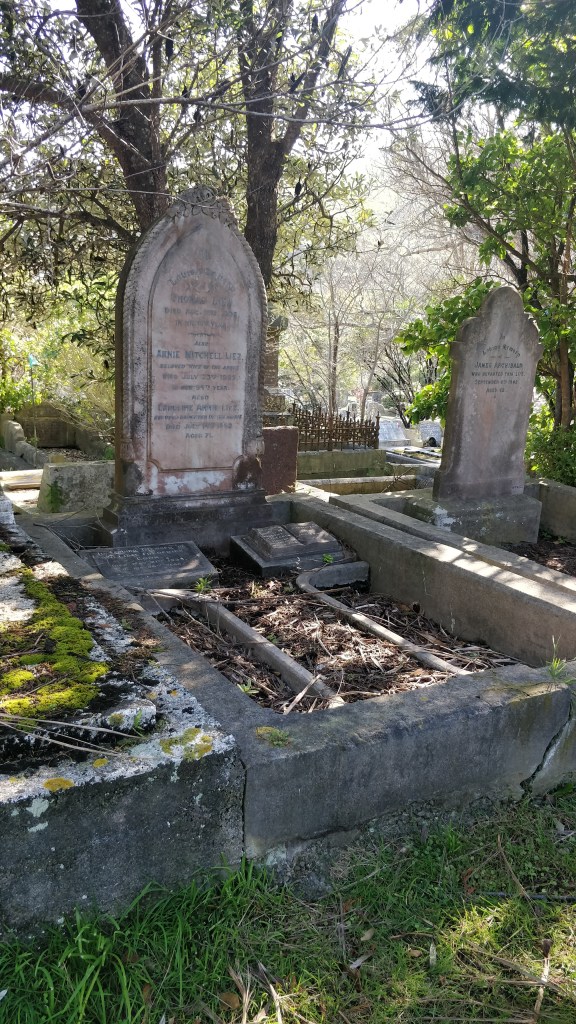
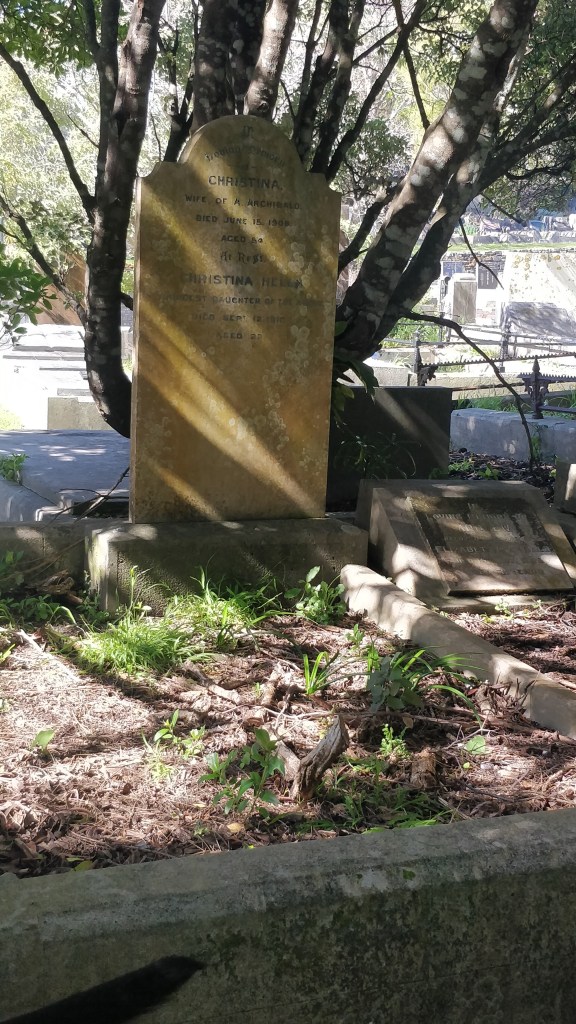
Christina Archibald was a signer, one of thousands of women who were asserting to the government what they already knew–a penis is not required.
Susan Hoar signed the petition, but did not live long enough to participate in an election.

Let’s take a look at some of the grave symbolism, a thing that modern graves are often woefully short on (although I did not upload any photos of stones inscribed with the disconcerting euphemism of “fell asleep on” such-and-such date).

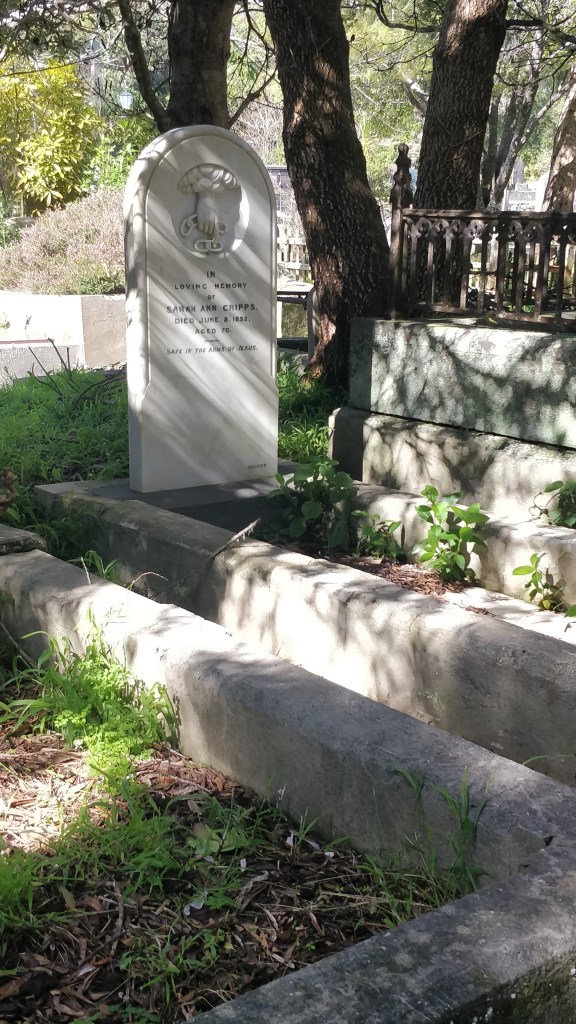
Broken chain, symbolizing the broken chain of life. This headstone has been professionally cleaned, which makes a crazy difference.
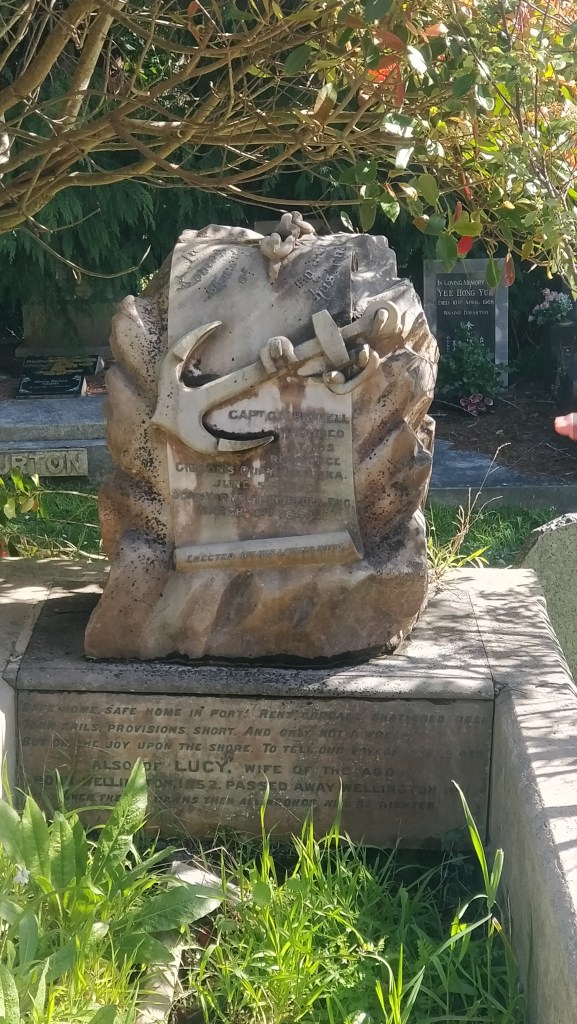
The anchor refers to the man’s profession.

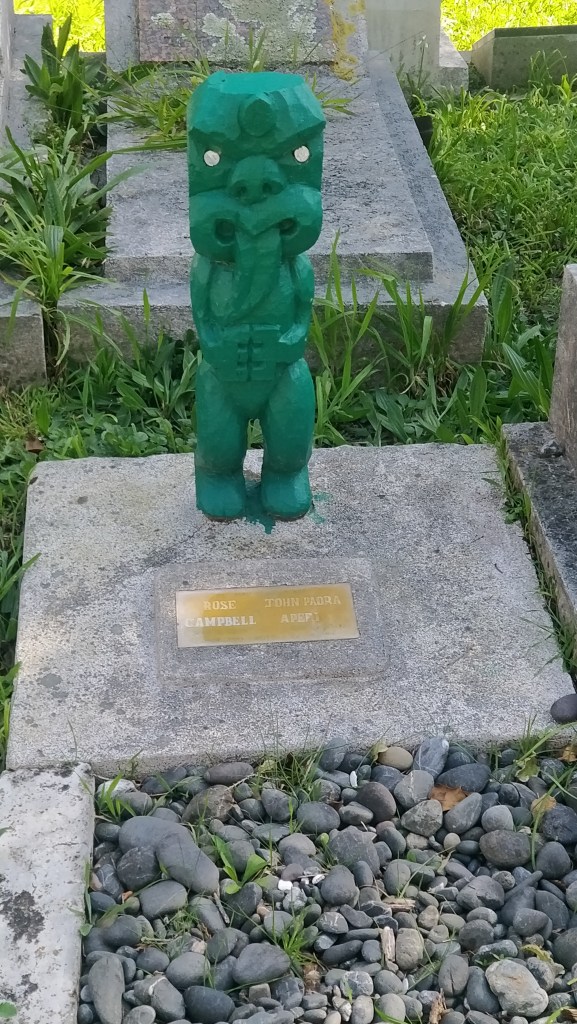
I haven’t been in New Zealand long enough to know much about Maori symbolism, but here’s a couple of graves I passed that include some.

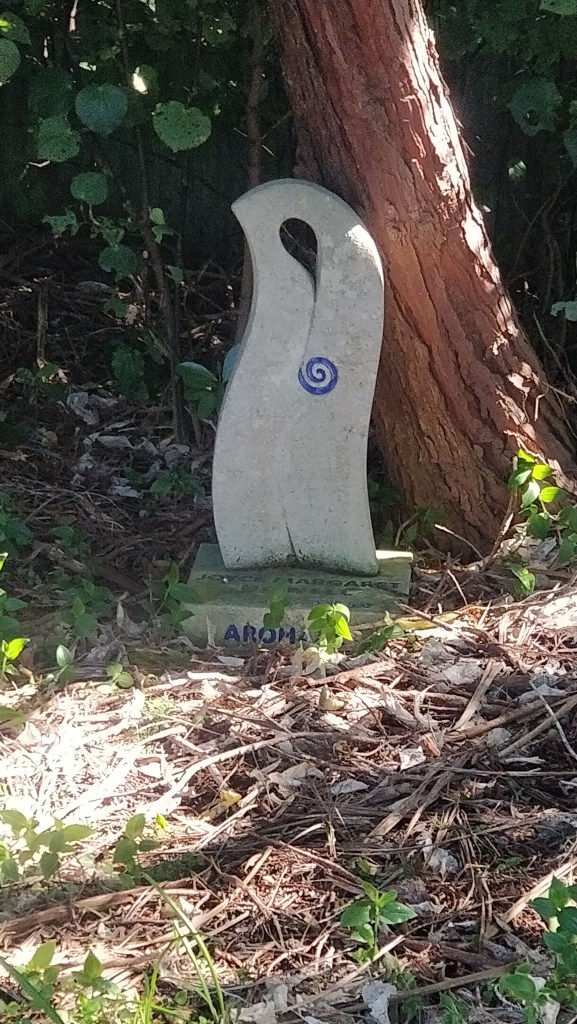
The koru symbolizes new beginnings, as in the Maori proverb, “As one fern frond dies – one is born to take it’s place.”

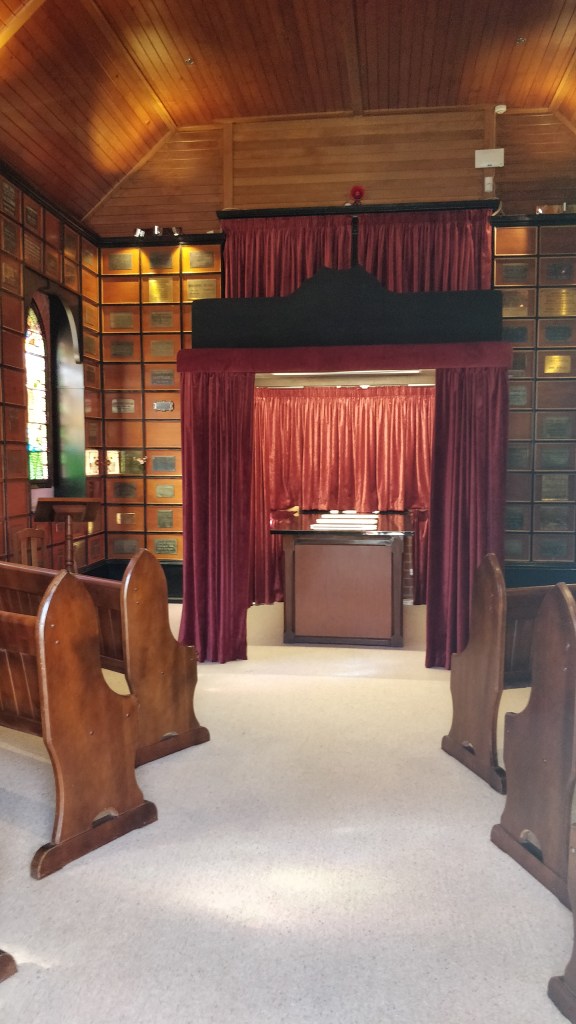
Let’s look at the inside of the chapel and crematorium, since I did not get a photo of the outside for some reason. It was built in 1909, which you know because that’s the large number chiseled on the wall.

The walls are lined with…I dunno the term. Ash cubbies?

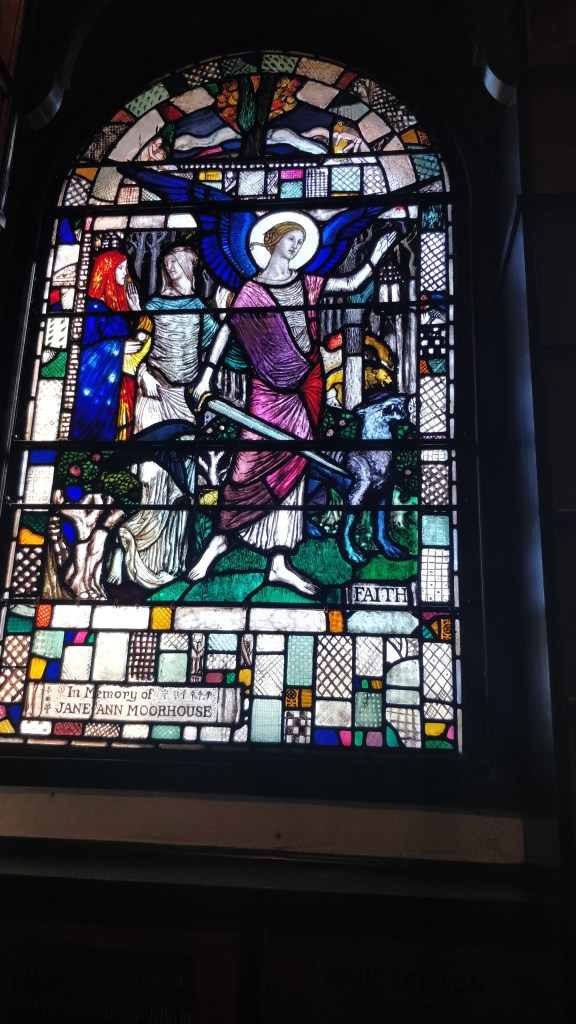
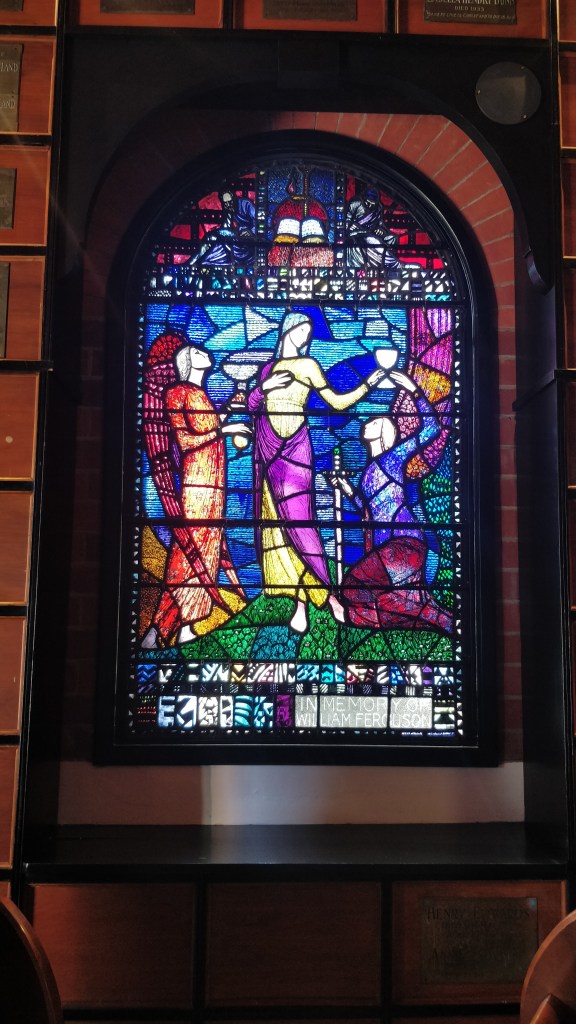
The glass windows were commissioned to memorialize members of William Ferguson’s family, including 8-year-old daughter Louisa (I know, but you can’t talk about cemeteries without mentioning some real raging bummers). They came from the Irish workshop An Túr Gloine, world renowned glass artists. “Faith,” shown below, is one of two created by Wilhemina Geddes, noted glass bad-ass.

This is “Wisdom” by Michael Healy, commemorating William Ferguson himself.

The windows held to be real gems of stained glass art by those who are into that sort of thing, and having done a tiny bit of stained glass work in my teens, I can vouch for its hardcoreness, in terms of blood shed.

Before wrapping this entry up, let’s have a peek at a couple more gravey vistas.

Memory garden near the entrance. I’ll be honest; this was a drive-by photographing and I do not have any deets on this one.

The Karori Cemetery is open every day, and I believe you may go in even at night, although the road gates are closed at dusk. There are a couple of self-guided tours (linked above, for soldiers and the SS Penguin victims), and the Friends offer themed tours on the reg, so consult their page for information.

The Cemetery Series: El Cementerio La Cumbrecita

Welcome to the first entry in the Cemetery Series!  Things will be slightly different in this series–for one thing, I will be including cemeteries that I have visited not-super-recently, which I don’t do for museums because exhibits change, etc.  Cemeteries tend to be a bit more consistent.

I did visit this one, recently, however: El Cementerio La Cumbrecita.  La Cumbrecita is a small pedestrian village in Cordoba, Argentina, that relies entirely on tourism.  It was founded in 1934 by German immigrants who missed the scenery of the old country.  It was rocky, treeless hillscape at first, and there were no roads, but slowly it was transformed into an Alpine-style town surrounded by the pine and spruce trees they planted.  The town went from German-immigrant-summer-home village to a tourist spot, where visitors can now have the slightly dissonant experience of a European village widely populated by green parakeets.

The cemetery is not very easy to get to.

IMG_20190307_154111.jpg

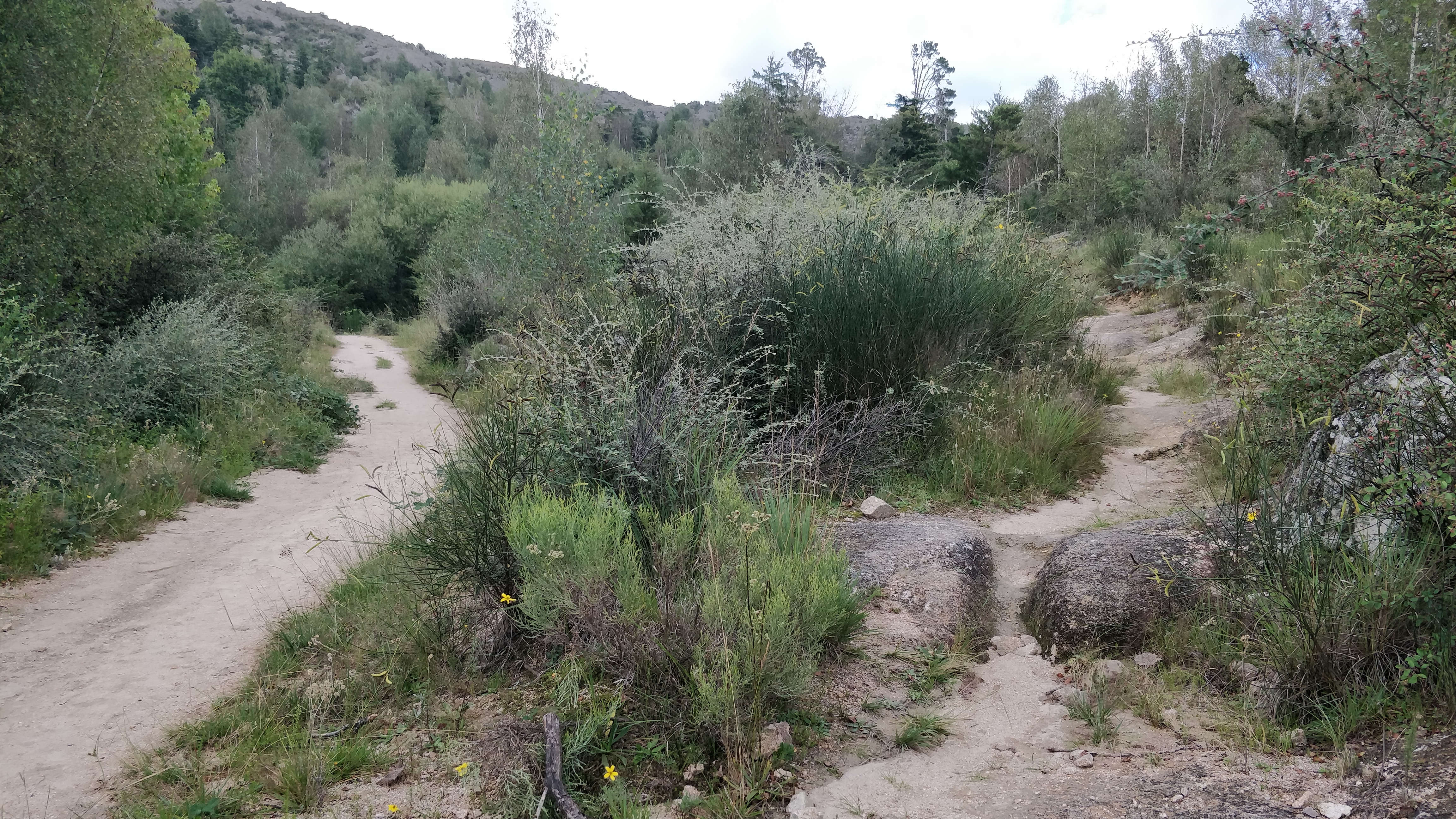
While I found it on Google Maps quickly enough, it is at the top of hill, necessitating a long, occasionally steep walk.  As I discovered later, the cemetery path off the main road is no longer marked.  That’s it on the right there.  I continued left.

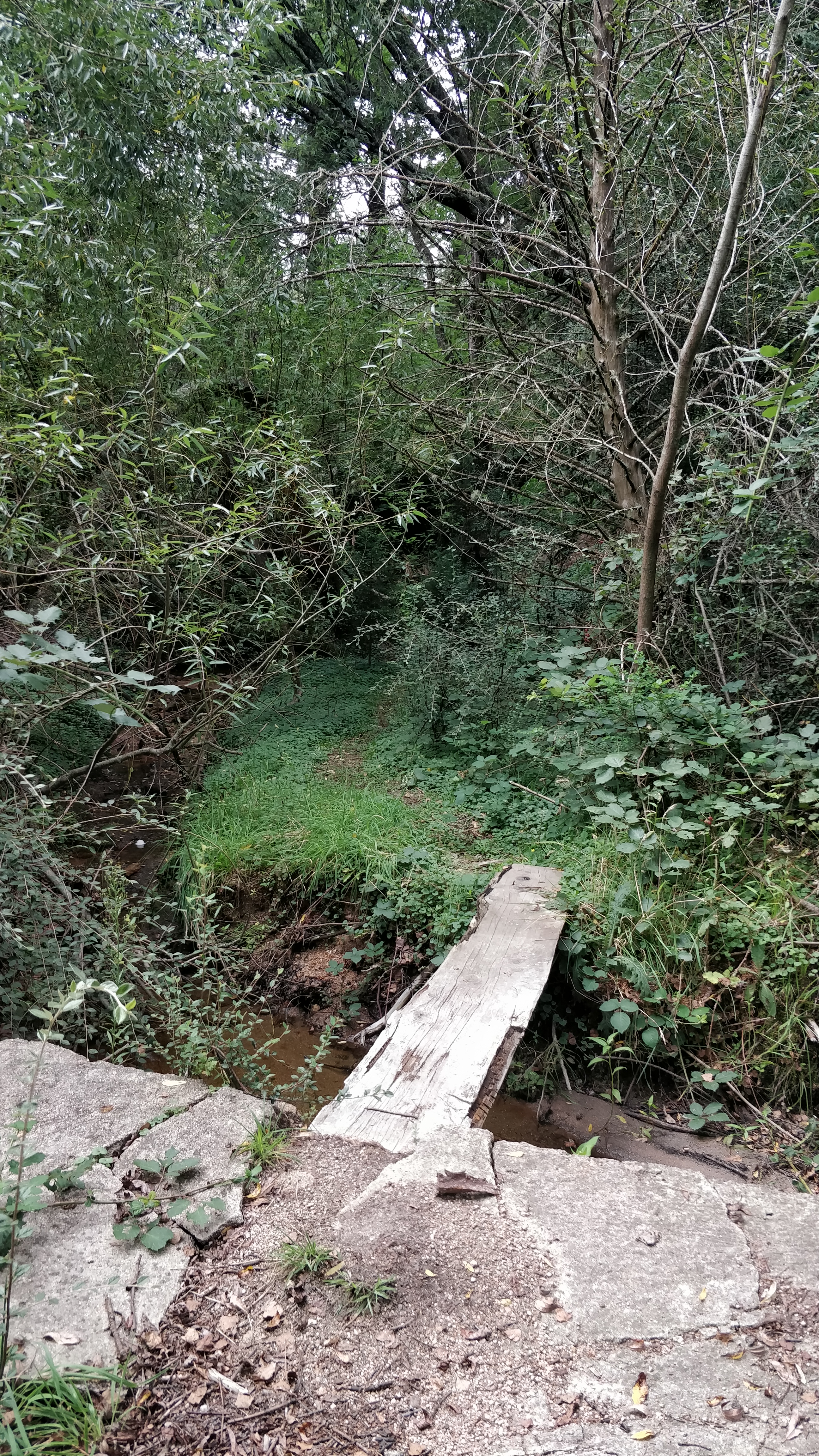
Eventually, I ran out of road.  But it was a very long walk, and I wasn’t in the mood to give up.  Looking around, I saw a plank.  Must be a reason for it, right?

IMG_20190307_152838.jpg
All cemeteries should have moats.

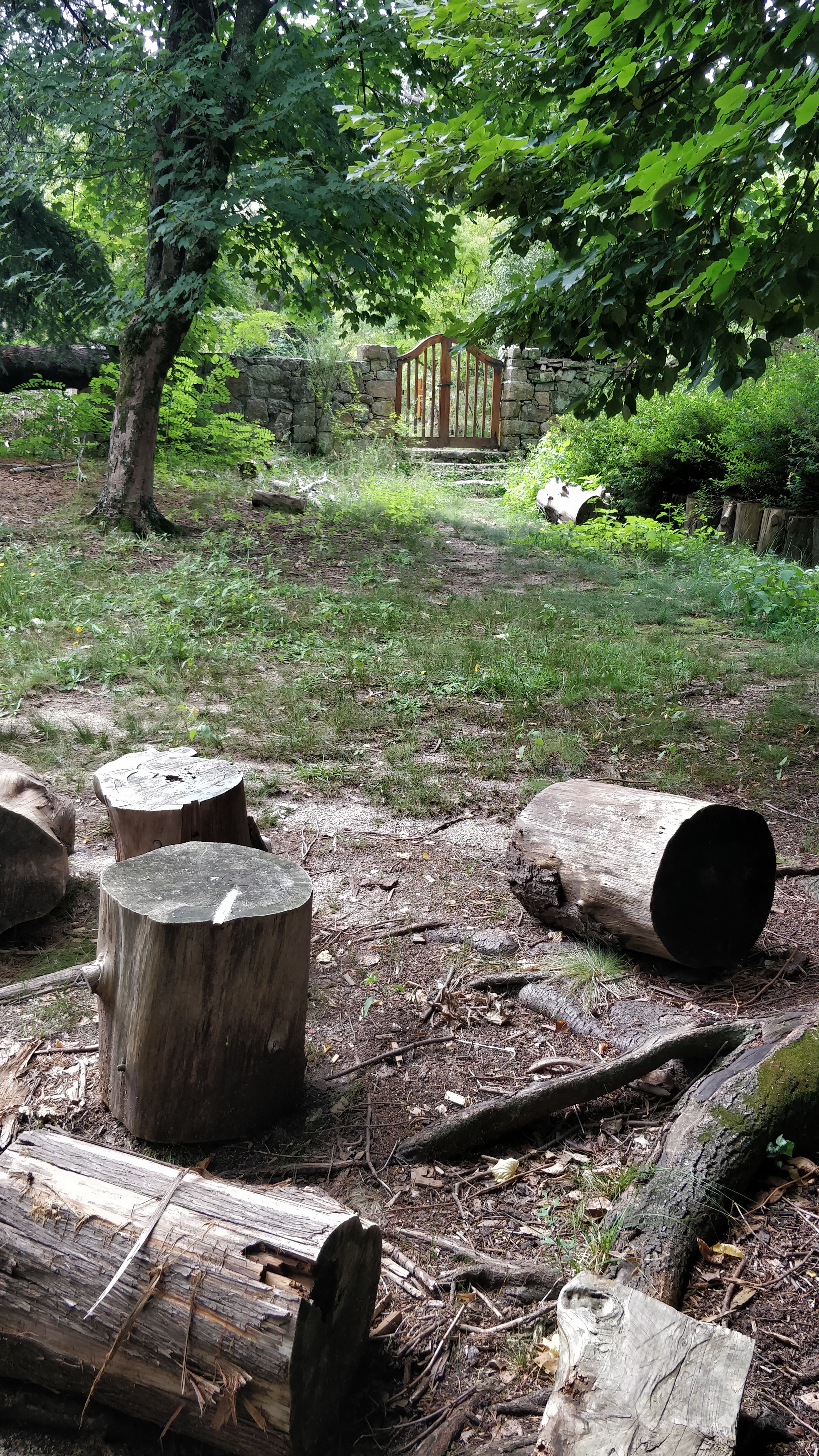
I walked carefully across it.  It was readily apparent that there was no path on the other side of the plank, so I hugged the hillside on the right for a couple minutes and then ran out of place to walk.  But, there was a gate, beyond a lame-ass fence up the incline on the right.

IMG_20190307_153220.jpg
Looks promising!

Seemed like an unorthodox way to get into a cemetery, but I didn’t see a more legit looking entrance, so I climbed up the hillside and wiggled under the fence, as you do.  Maybe it was the back gate?

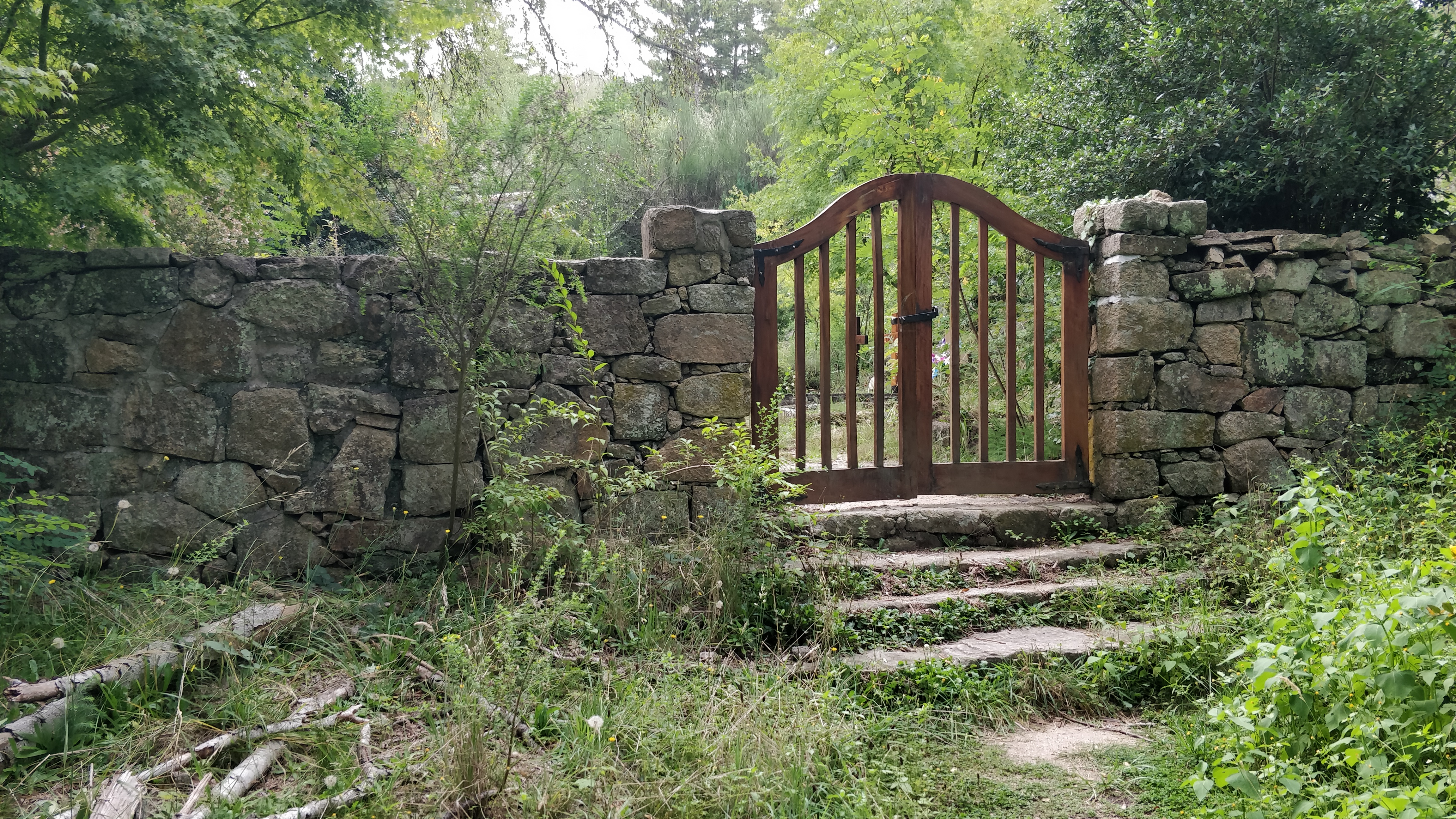
It was in fact the front, and only, gate.

IMG_20190307_153242.jpg
It was unlocked! I wouldn’t have scaled the wall if it had been. Probably.

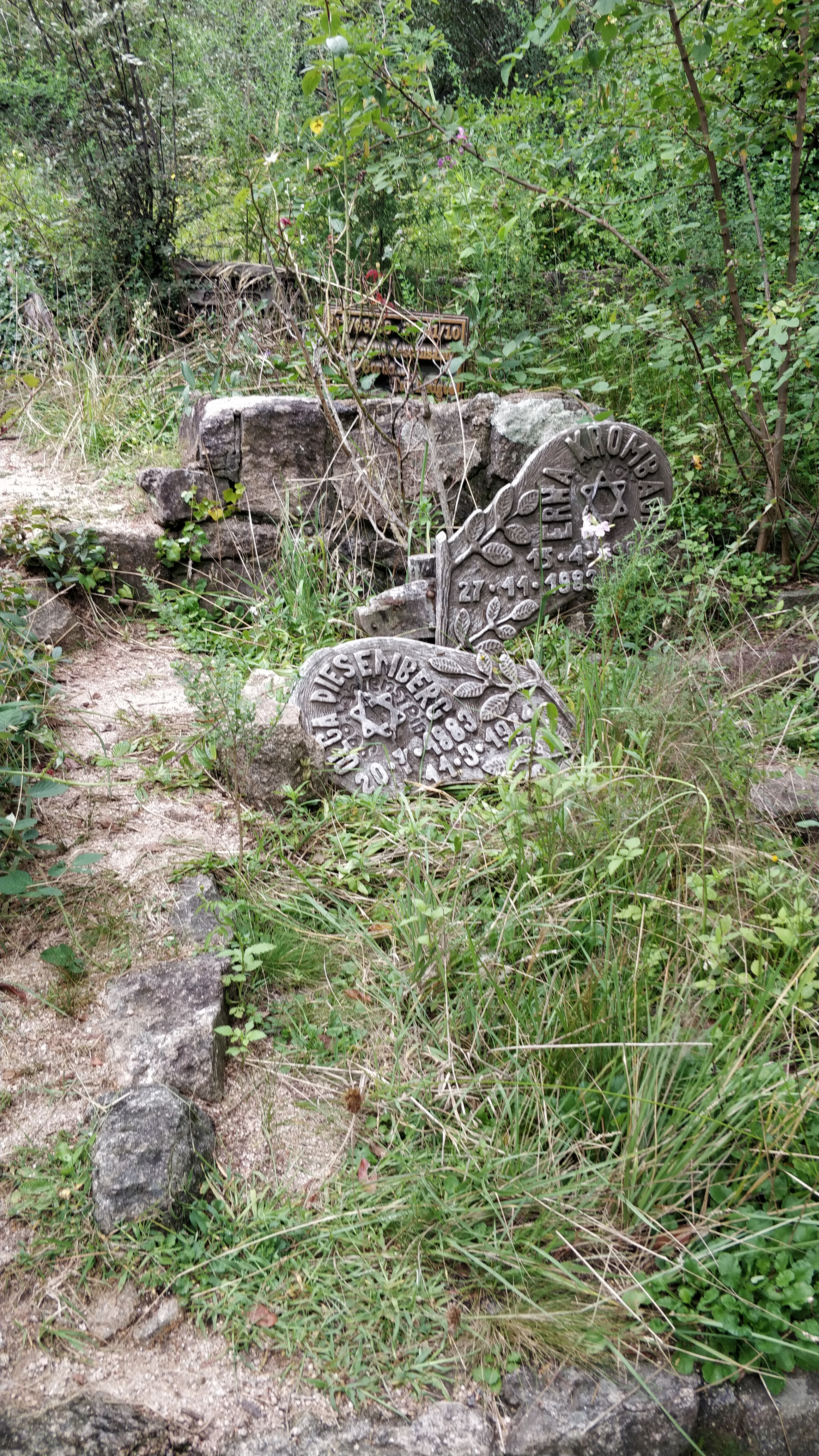
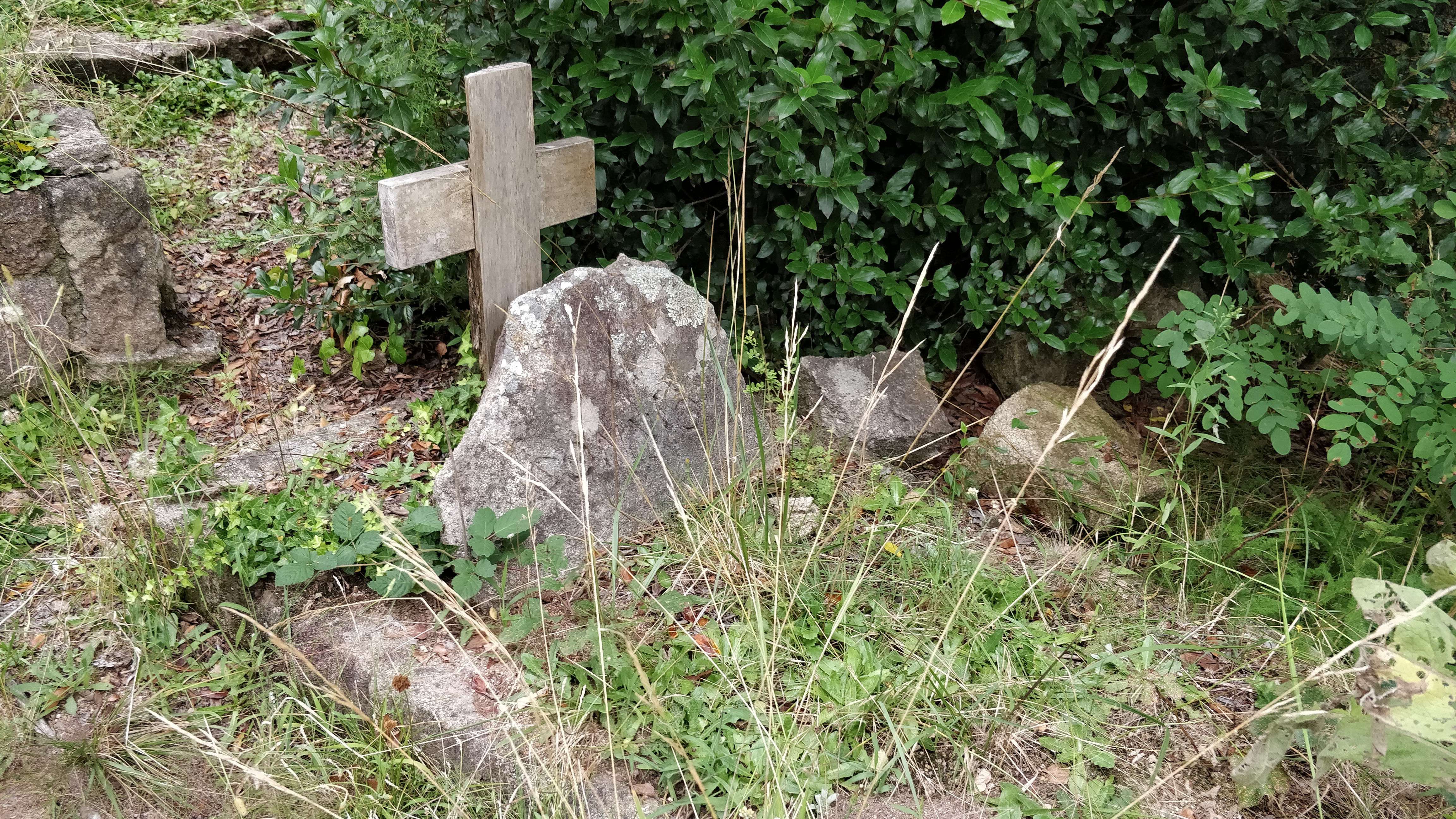
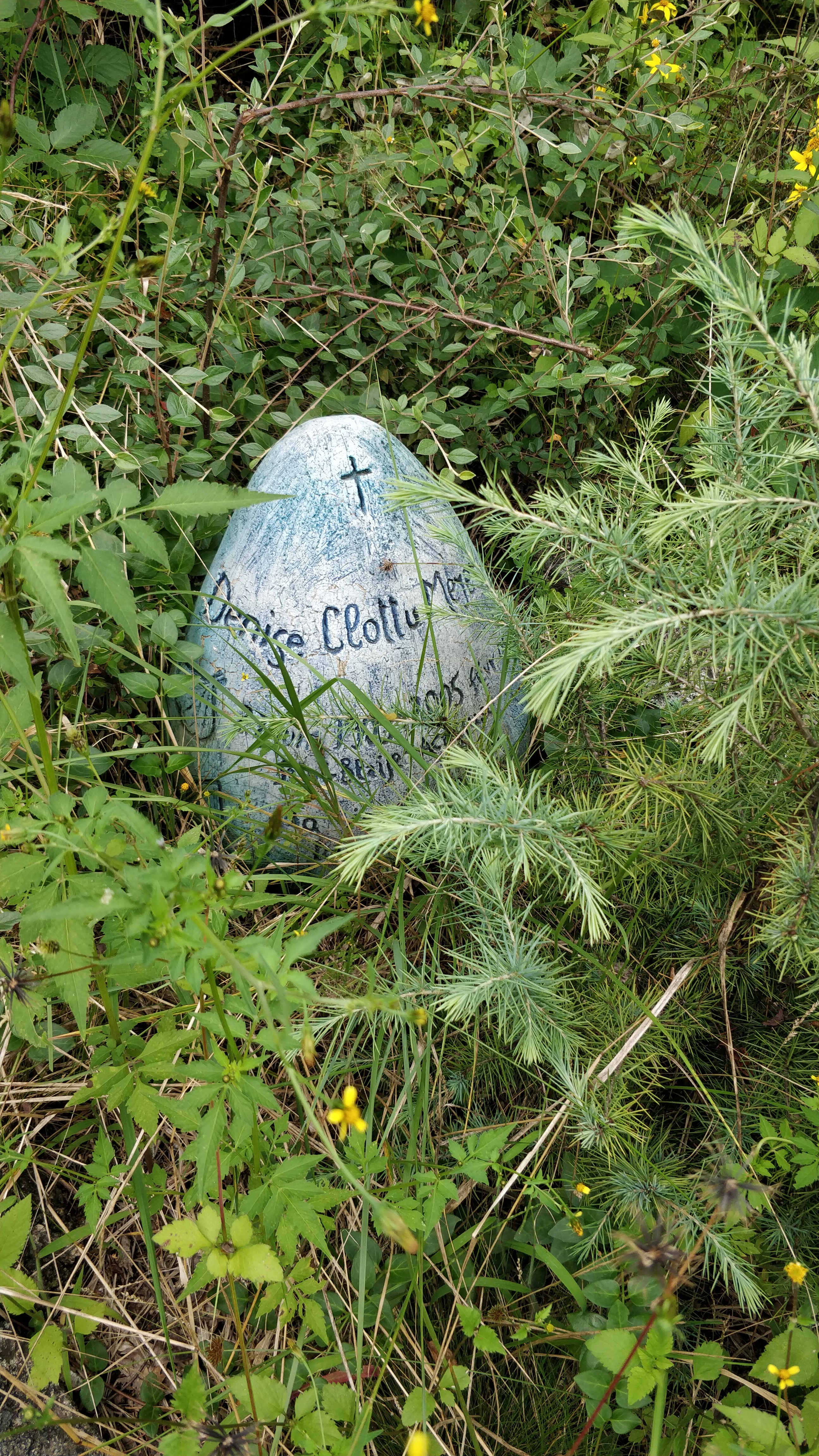
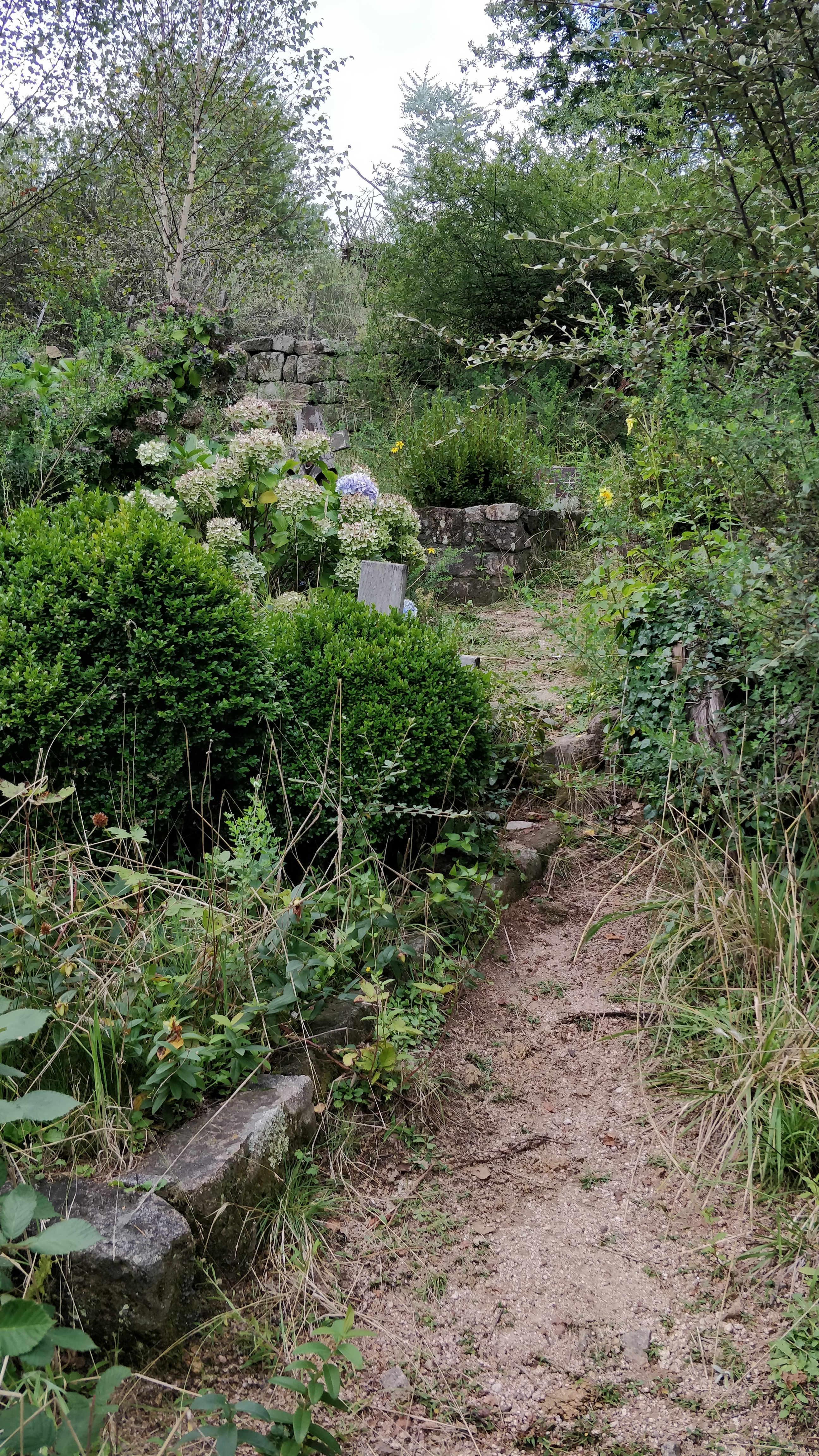
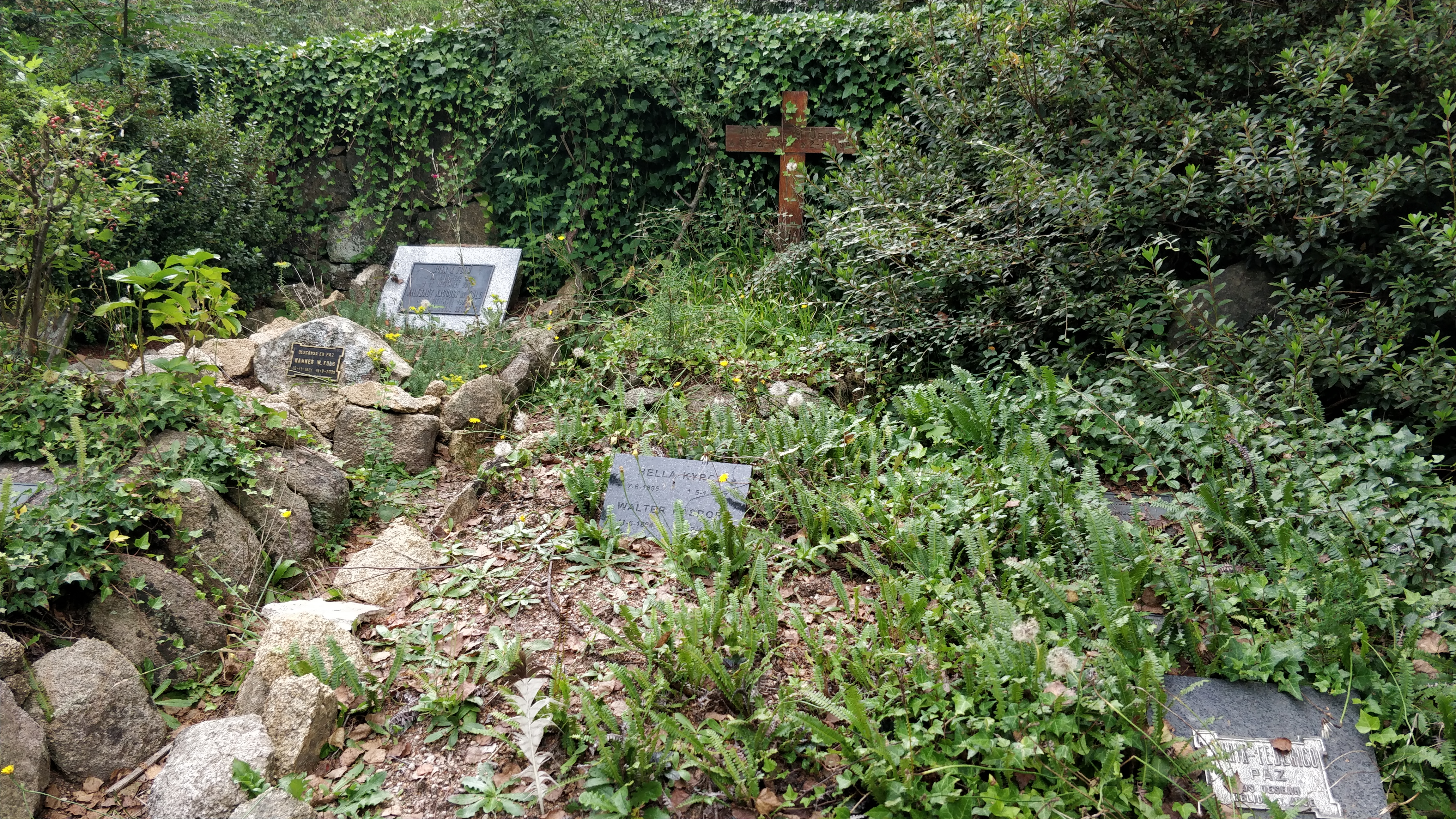
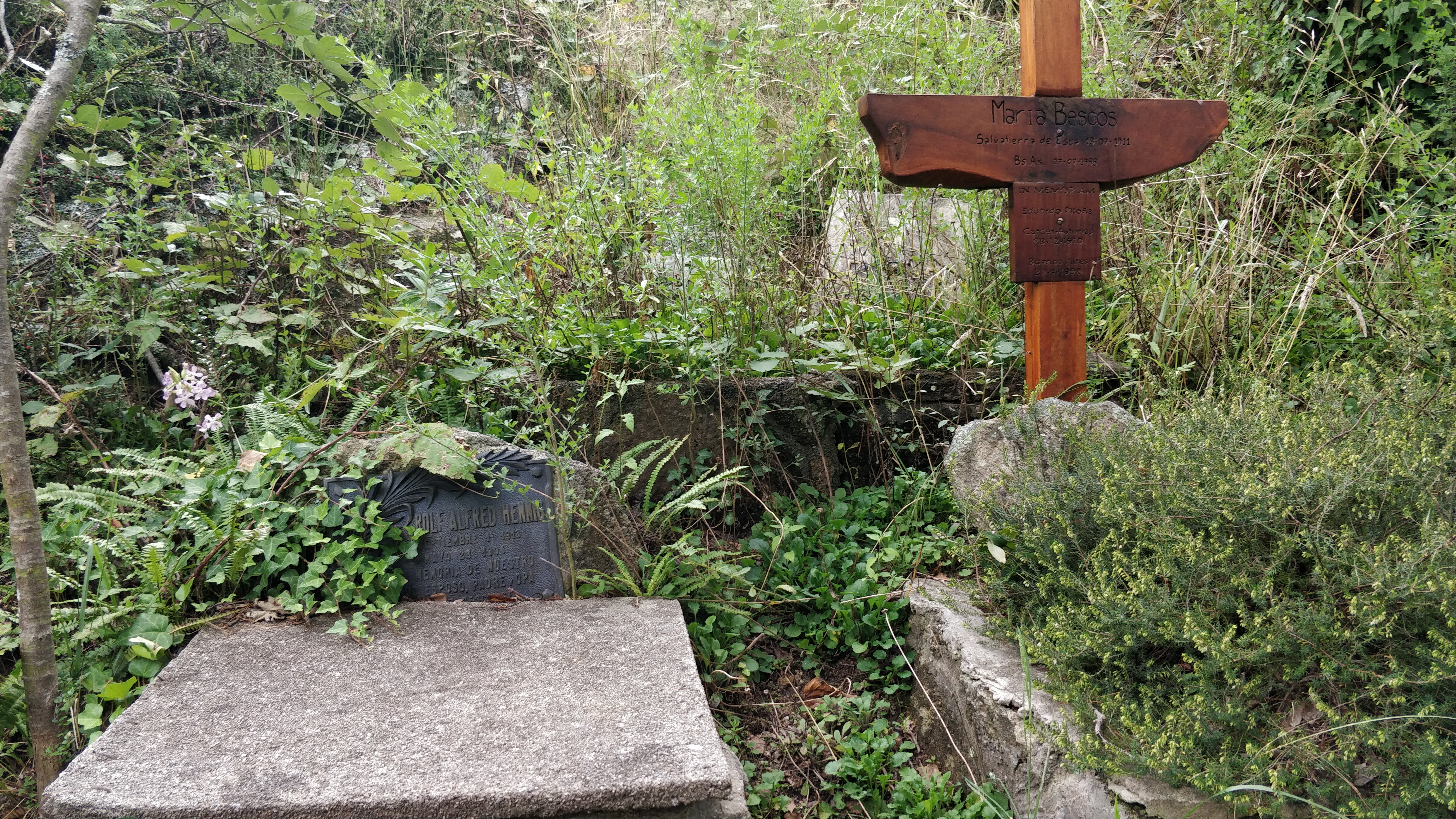
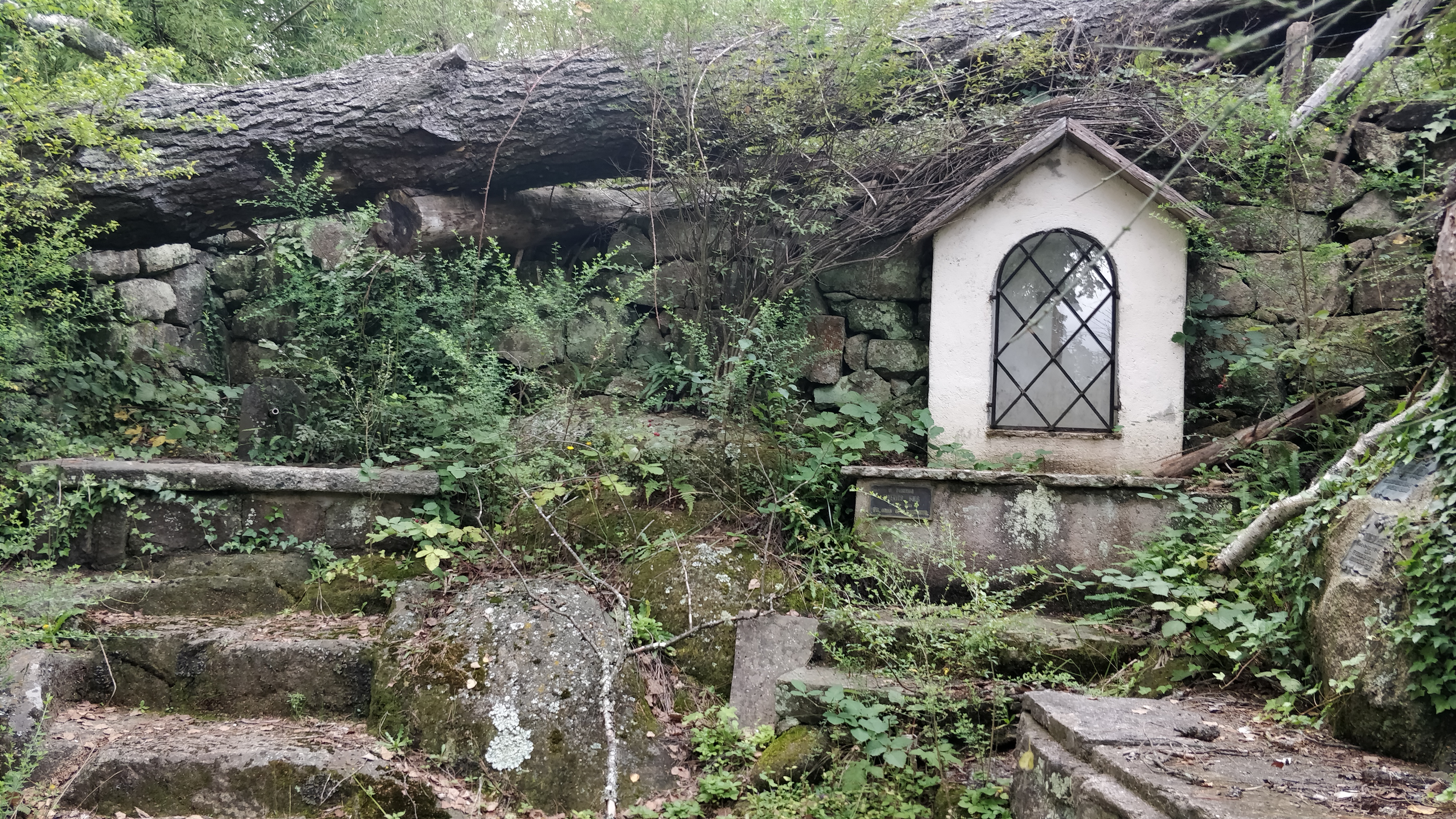
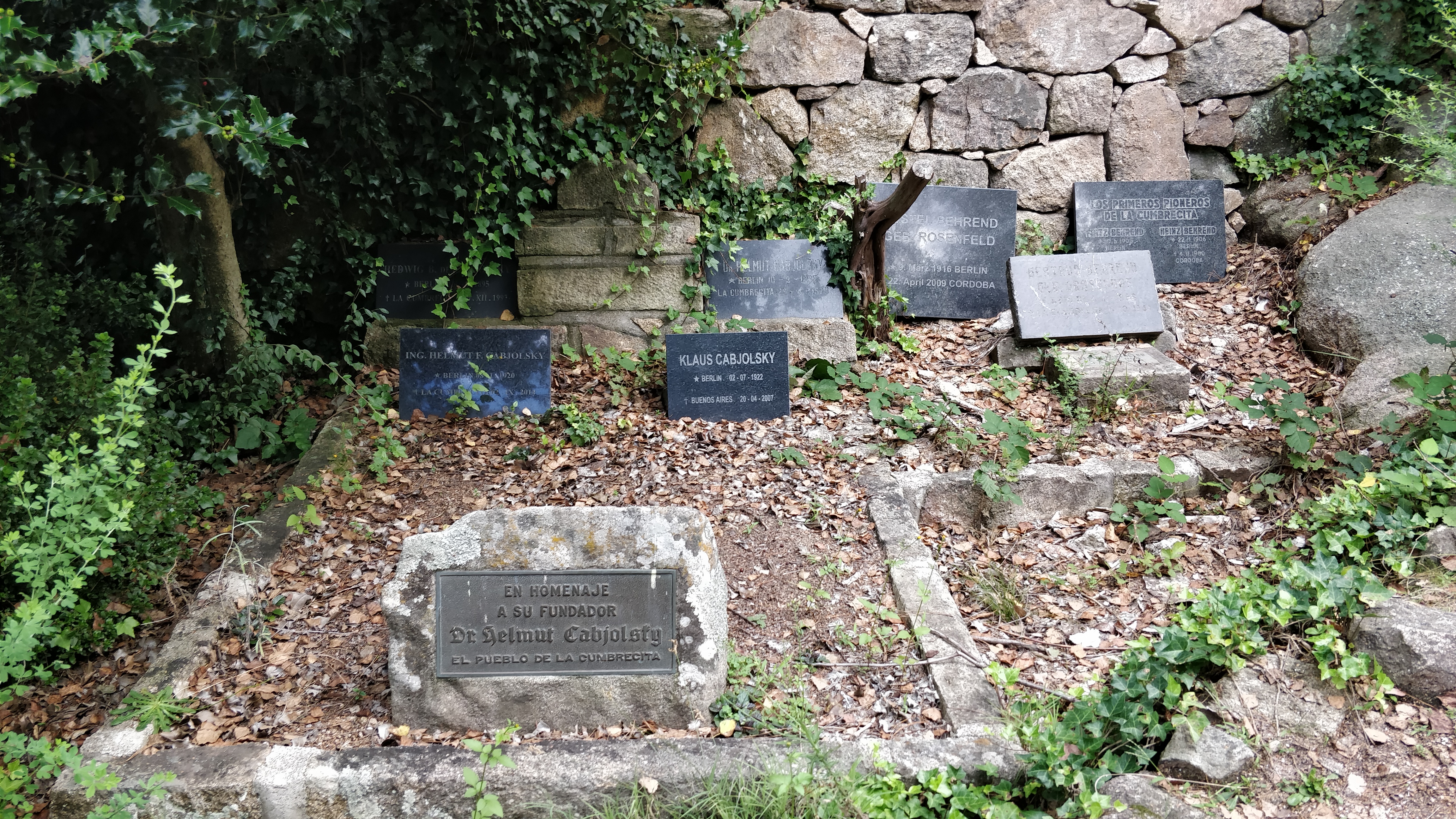
The cemetery yard is a very small place, laid out on the hillside.  I have to think that most of the graves are for ashes (or are only memorial plaques), because they’re rather teeny.  It’s a peaceful, overgrown spot, full of wildflowers and buzzing insects.

IMG_20190307_153338.jpgIMG_20190307_153346.jpgIMG_20190307_153458.jpgIMG_20190307_153357.jpgIMG_20190307_153746.jpgIMG_20190307_153555.jpgIMG_20190307_153639.jpgIMG_20190307_153636.jpg

It only takes a few minutes to walk though the whole place, which you might or might not find gratifying after the long hike up, depending on how into quiet, hidden graveyards you are.  I discovered on the way out that there was a path that did not require wiggling under a fence that led to the main road.  So that was nice.

You can find more information on La Cumbrecita here; it’s a lovely little place to relax and hike and dip your feet in the river.