National Museum, New Delhi (India)

*sheepishly peeks around the website*

…hello?

So. Been a hot minute.

But hey let’s pretend like it hasn’t been! Let’s just jump right into talking about big ol’ collections of neat stuff.

About a year and a half ago, I found myself in India, as you do. I’d never been there before. I have been in a few very large cities, and Delhi makes Buenos Aires feel like Megacity Easy Mode.

The population of Delhi is about 30 million, and they are all on the same block as you.
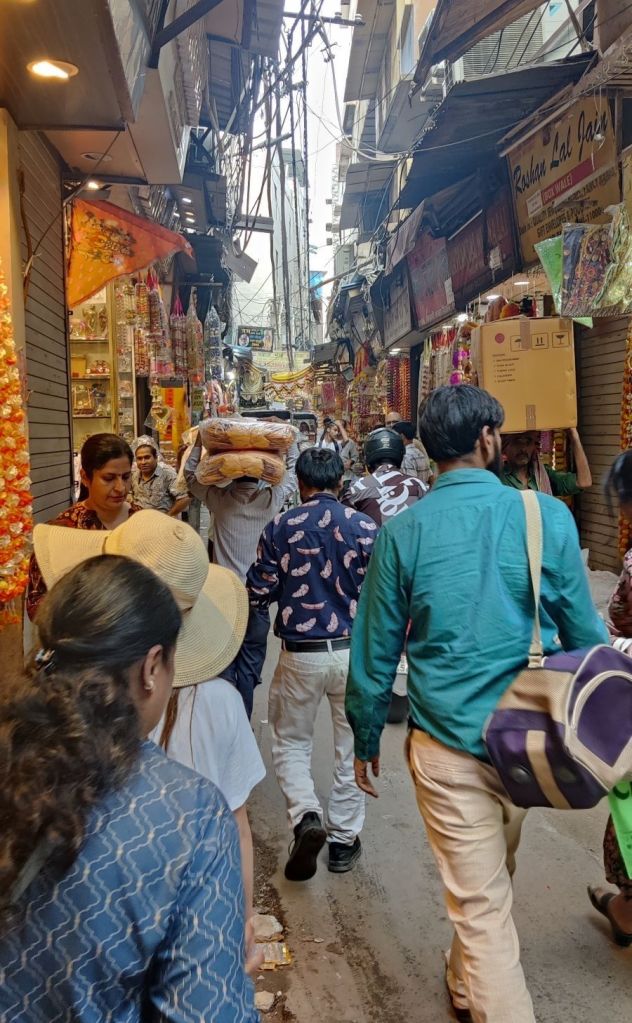
As a pedestrian, if you are waiting for someone to let you through/across/around, you are waiting forever. You live on that spot now. You are either an active entity of self-determination or a passive obstacle.

To travel in a vehicle in India is to experience existence as a drop of ocean water.

As far as I could tell, there are only two traffic laws in India: fortune favors the brave, and it doesn’t matter what color the traffic light is as long as it’s green in your heart.
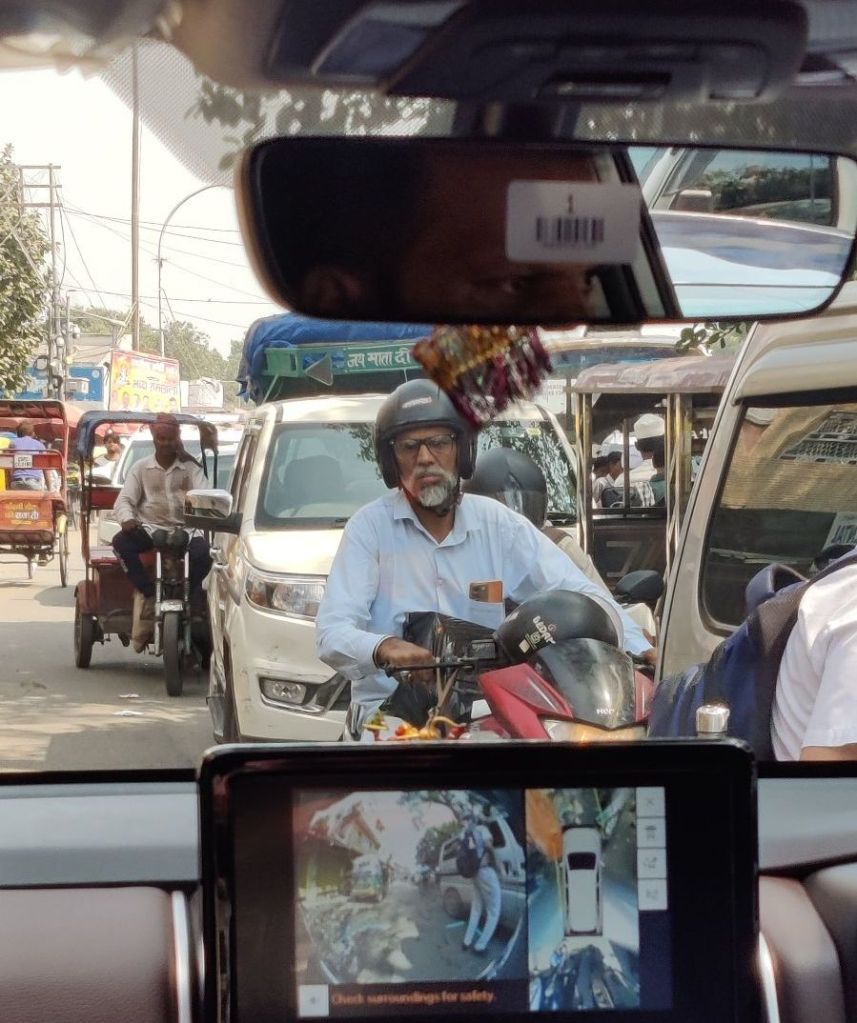
…which way are we supposed to be facing

There is clearly a logic and rhythm to the flow of traffic; otherwise there would just be piles of bodies and tuktuks everywhere all the time. But as an outsider, you do not understand it. It is language you cannot speak, and you can only consign yourself to the expertise of your translator/driver or if on foot, make tenuous, lamb-like attempts at the basic grammar of crossing the street. Traffic density is lessened outside of the cities, but your driver is going to book it regardless of the slower road obstacles, so buckle up and sit tight while he plays cow slalom.
Ganesh is my copilot.

But back to the big city. Despite offering all the personal space of a platelet in a blood stream, Delhi is an amazing experience that should be visited if at all possible. It’s been a city for a couple thousand years, and a capital for hundreds of those years. It is rich with culture, history and art. Among its many museums is the National Museum, which holds artifacts that span 5,000 years.
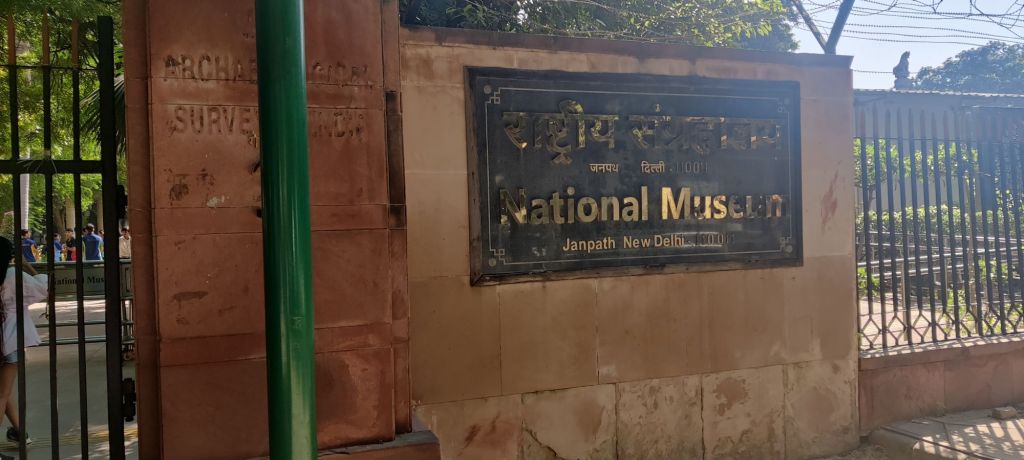
The first thing to remember is that when you are in line in India, you are either pushing up against the person in front of you or you are not, in fact, in line. I was without a guide on that day and while purchasing the tickets, I found myself not so much in line as standing near the ticket counter as others filed past me. A teenage girl immediately clocked my problem and attempted to convey how to line up effectively, and after some moments and, likely, pity on the part of some of my fellow line mates, I managed to pay.

After pausing in the entry hall for a group selfie with some teens on a school trip (embrace being in strangers’ photos), I set about exploring in no particular pattern, which will be reflected in my random-ass pictures.
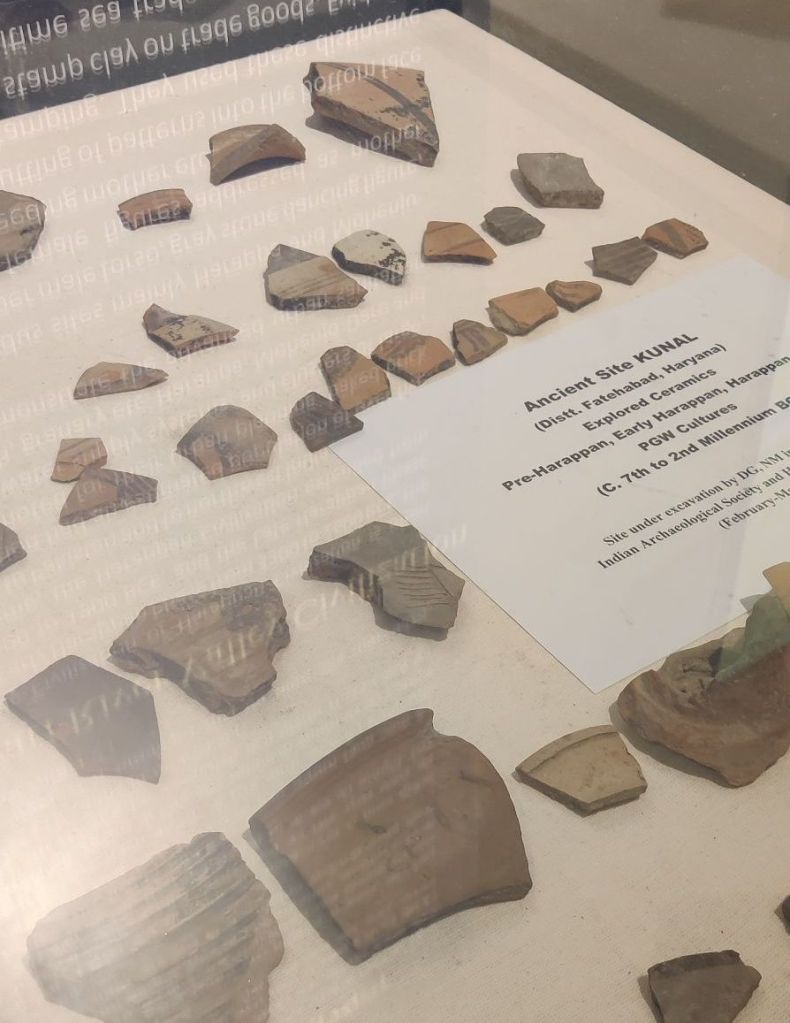
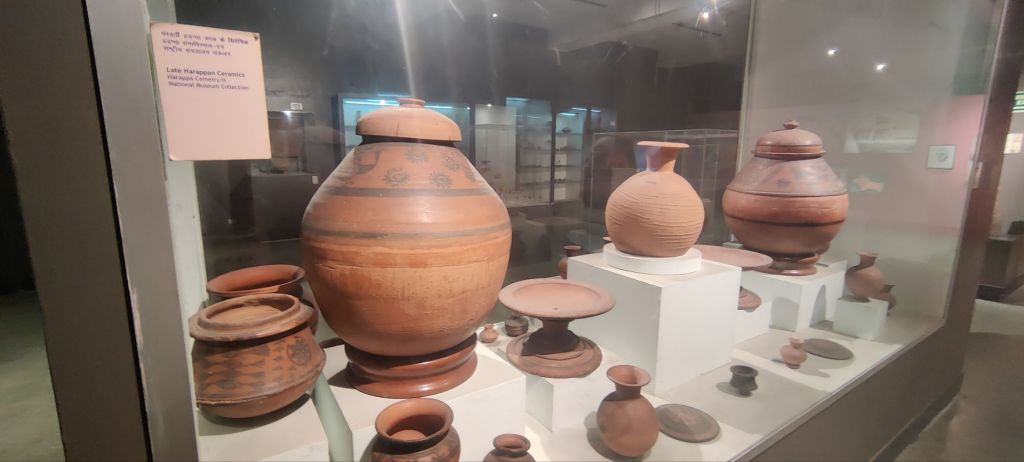
Some of this pottery is Nine. Thousand. Years. Old.

The museum holds a huge collection of artifacts from the Harappan era, the Indus Valley civilization of the Bronze Age, and earlier.
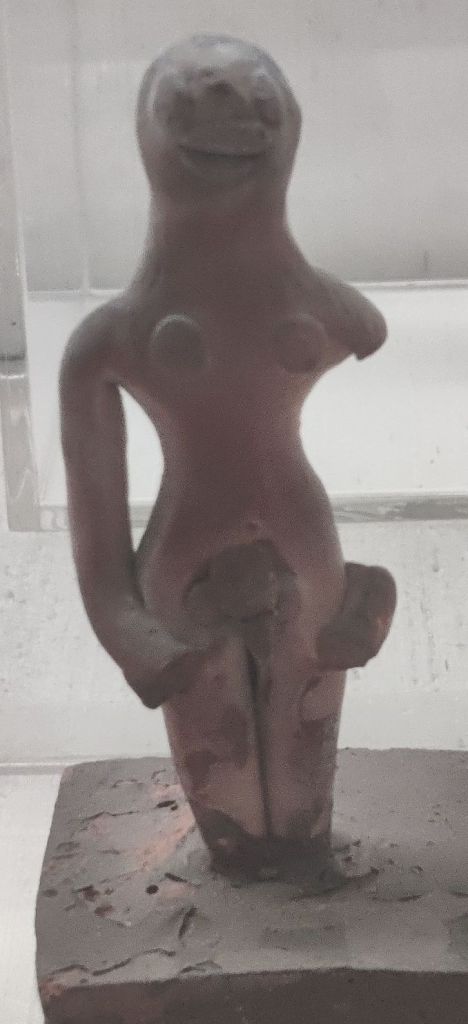
With apologies to the Harappan sculpture for taking a craptastic photo and slapping it on the Internet four thousand years later.
Late Harappan ceramics, flexing the kind of durability Pyrex can only dream of.

Excuse me while I shamelessly skip centuries of treasures and move to the Kushana Gallery, which includes this sandstone pillar from a Buddhist stupa, carved in the second century. The figure is a tree spirit motif rooted in a pre-Buddhism fertility rite, here incorporated into a stupa’s pillar to bless the site it was built on.
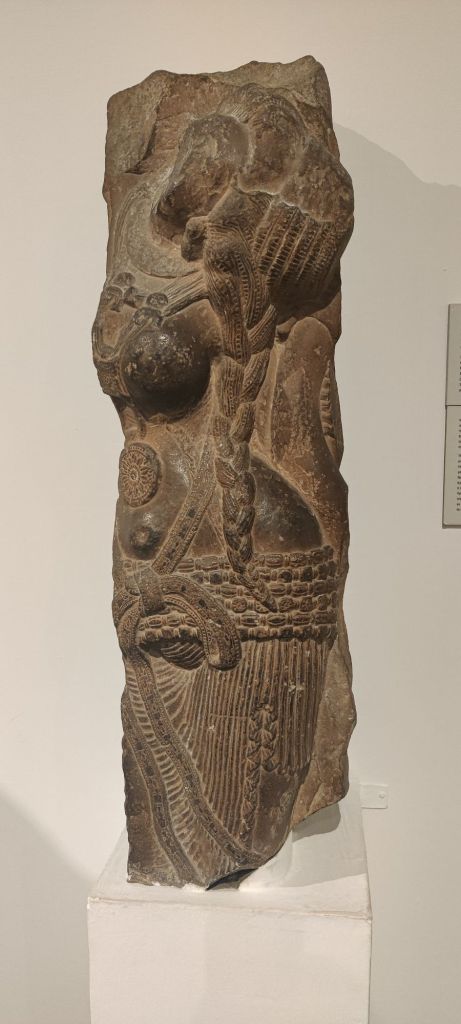
I am a noted tree enthusiast and so she makes the blog cut.

From the same time period is this Standing Buddha from the Gandhara School, which was heavily influenced by Greek art. The standing Buddhas of this era mark the start of depicting Buddha in human form.
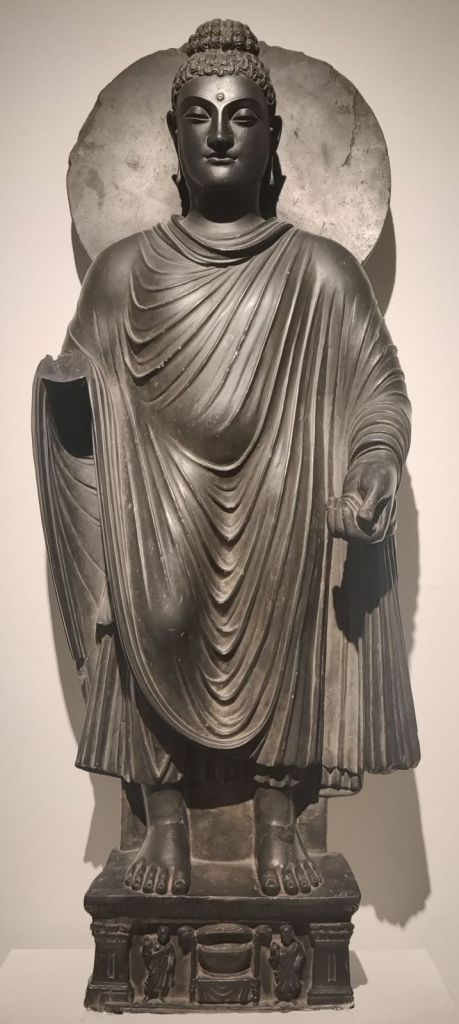
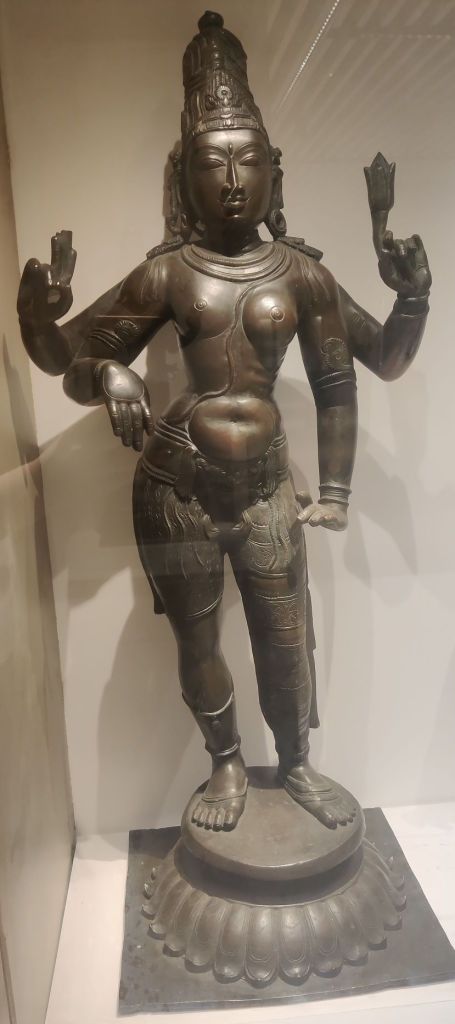
And one more statue before we go stampeding to the Decorative Arts galleries; that of a bronze Ardhanarishvara–a god form of Shiva and Parvati combined–from the 15th century.
Now, let’s get ornamental in the Decorative Arts galleries!

The two galleries are divided by material rather than time period, and between them cover pre-history to the present day.
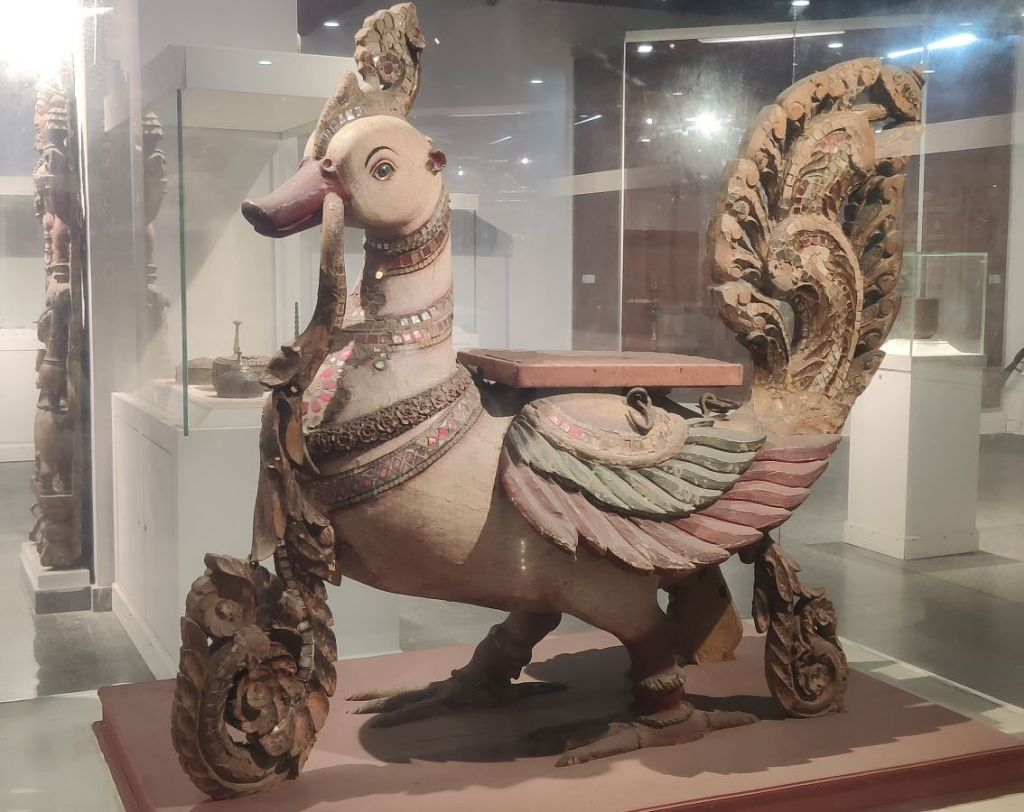
Speaking of stampeding

This is a wood and glass peacock, the mount of war god Karttikeya, from the 1800s.

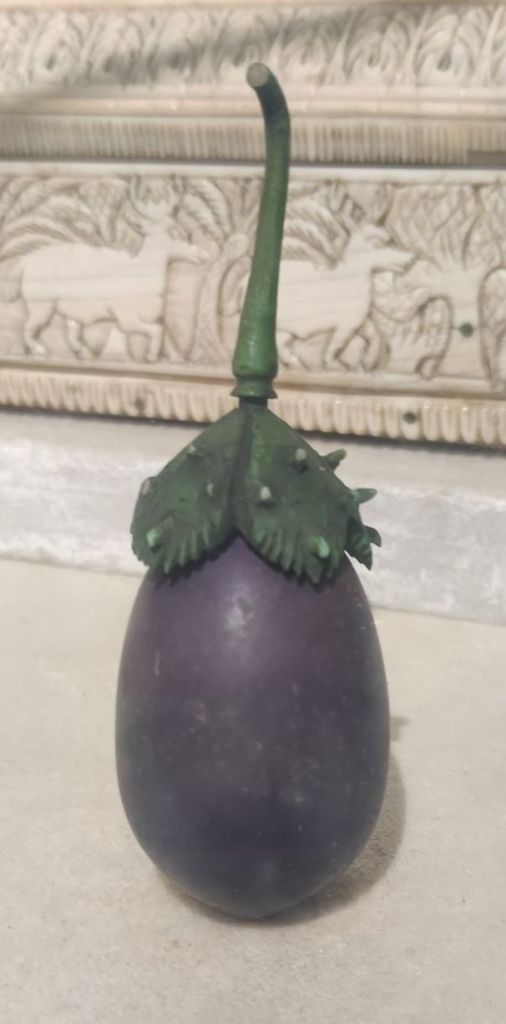
And I passed over photographing many magnificent objects in favor of this 20th century ivory eggplant-shaped perfume container, solely because it amused me:
🍆

And in metalworking, gold amulets from the first century:
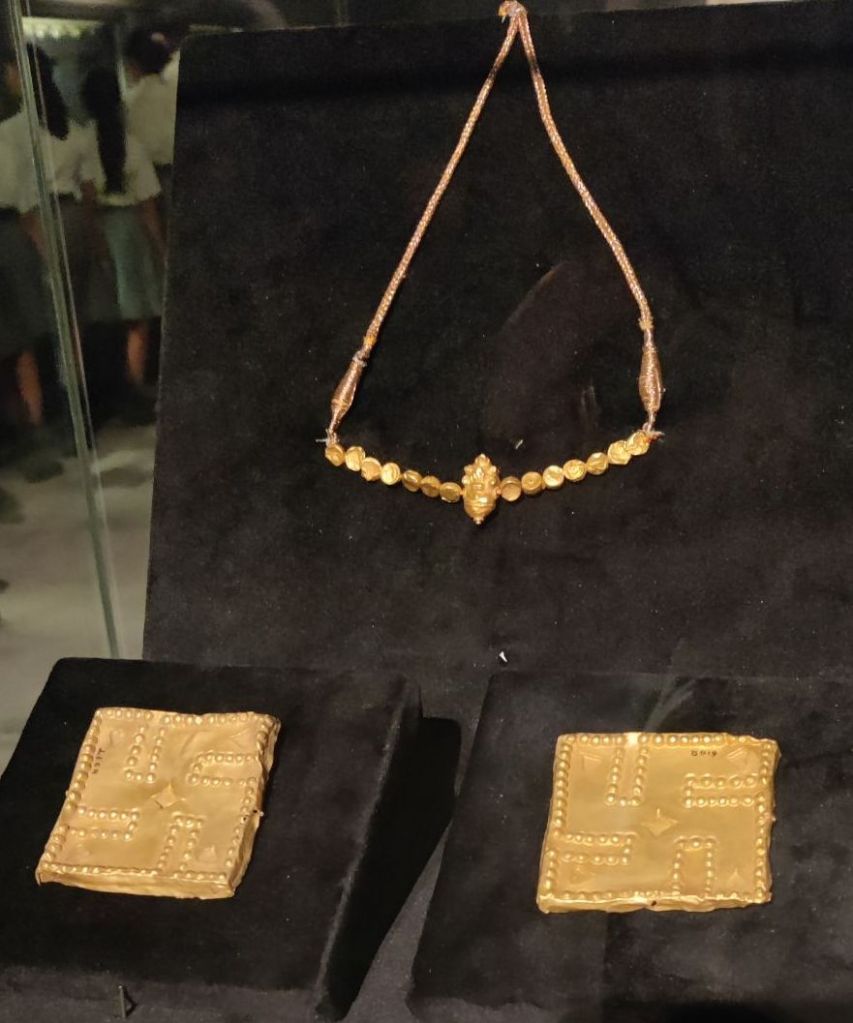
Photos at a weird angle brought to you by my eternal struggle with glare

Here’s one quick example from the Miniature Paintings gallery, Mughal division. The plaque says “The Nativity” but the writing on the painting says “Birth of Virgin Mary.” From 1720ish.
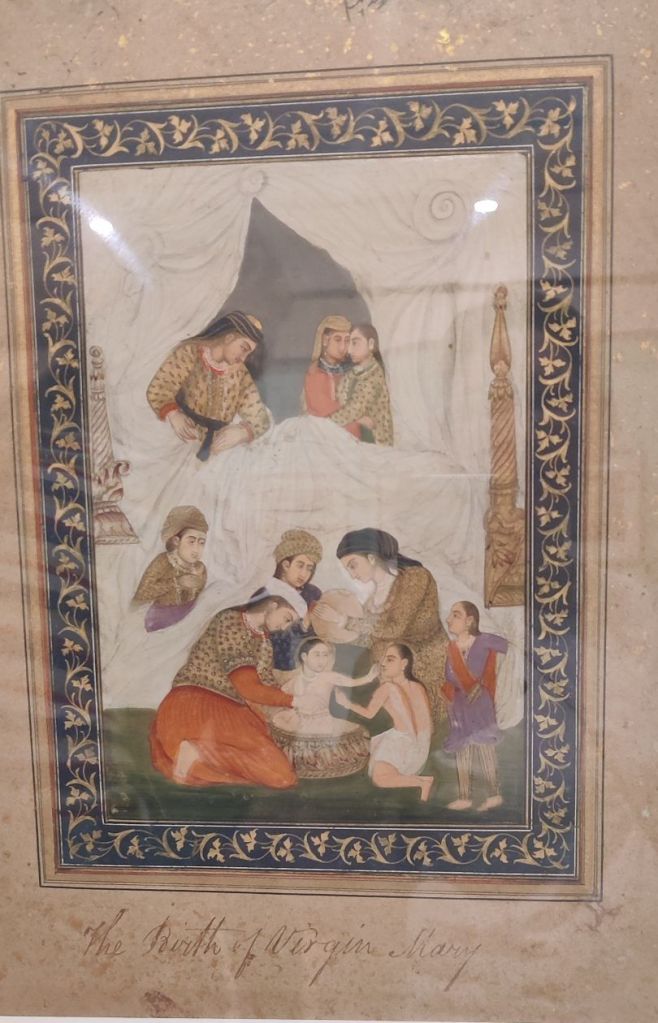
In the Holy Adult-Baby tradition

There’s a Coins gallery for all your numismatic needs and desires, and if you’re wondering if the National Museum also has some unsettling mannequin type things, the Coins section has an answer for you.
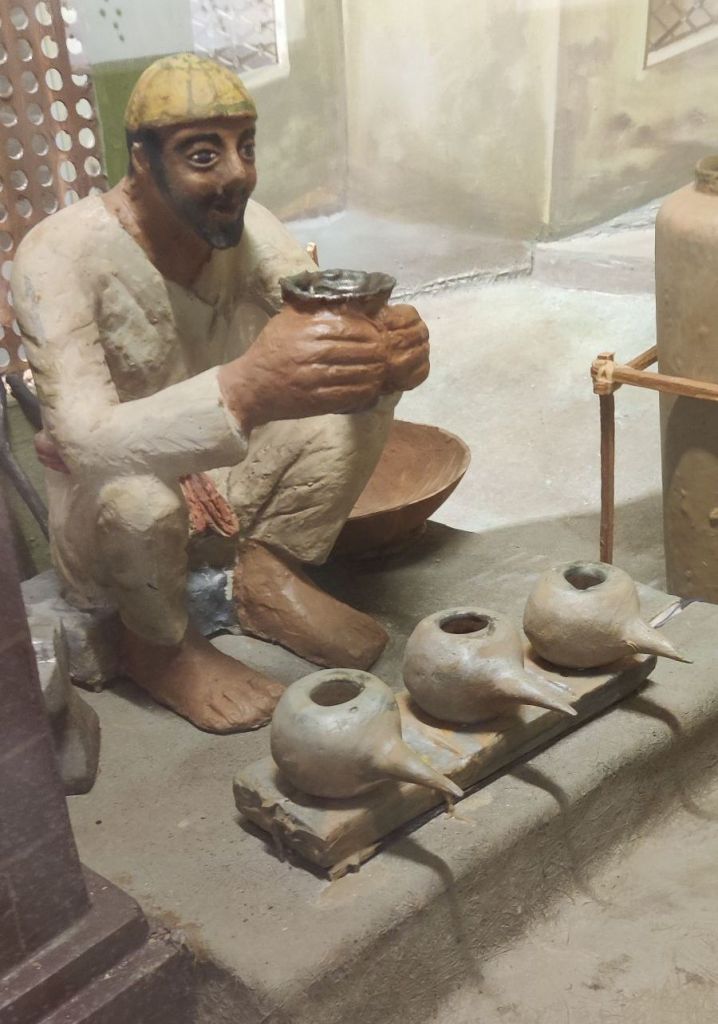
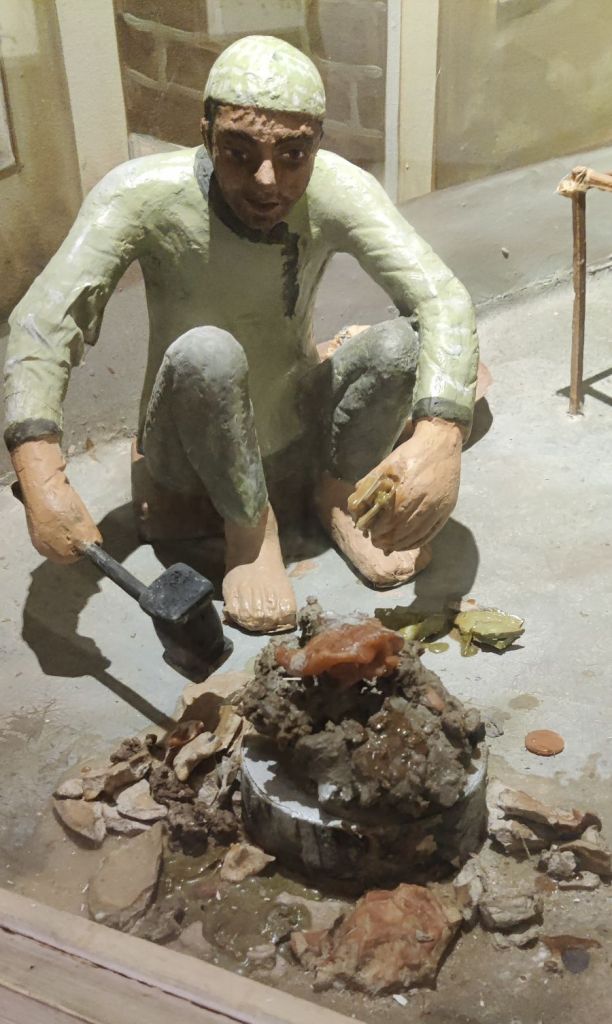
Coin minting has never looked so gooey.

From the Central Asian collection, there are murals from the Mogao Caves  (Thousand Buddha Grottoes) in China, which were an important site along the Silk Road. The caves hold a thousand years of Buddhist sculpture and painting, making them a UNESCO World Heritage site. The Library Cave was discovered in 1990 with tens of thousands of manuscripts; most of the silk paintings in this room are from there.
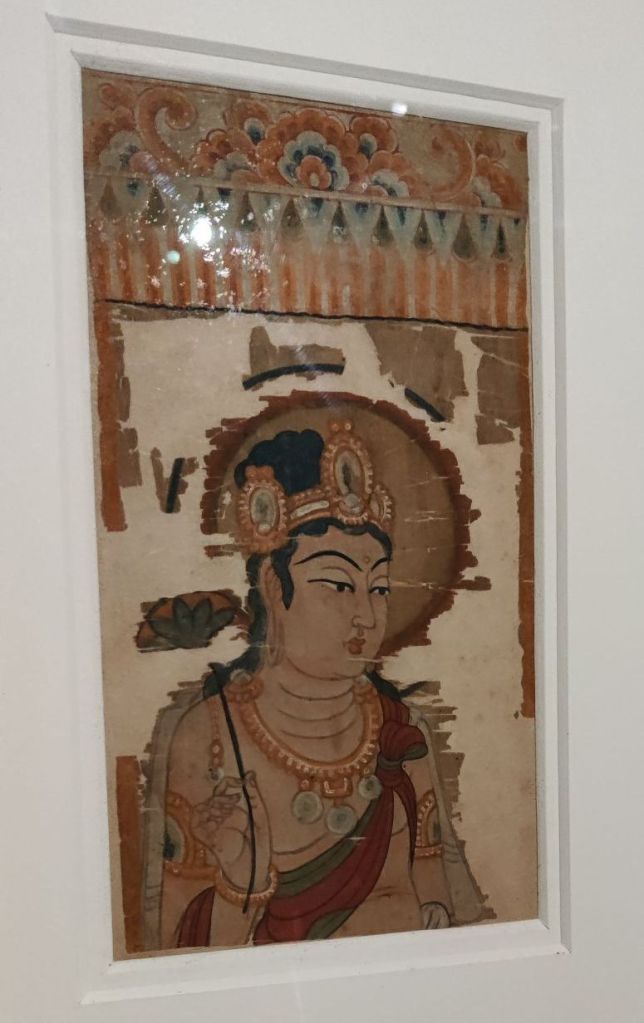
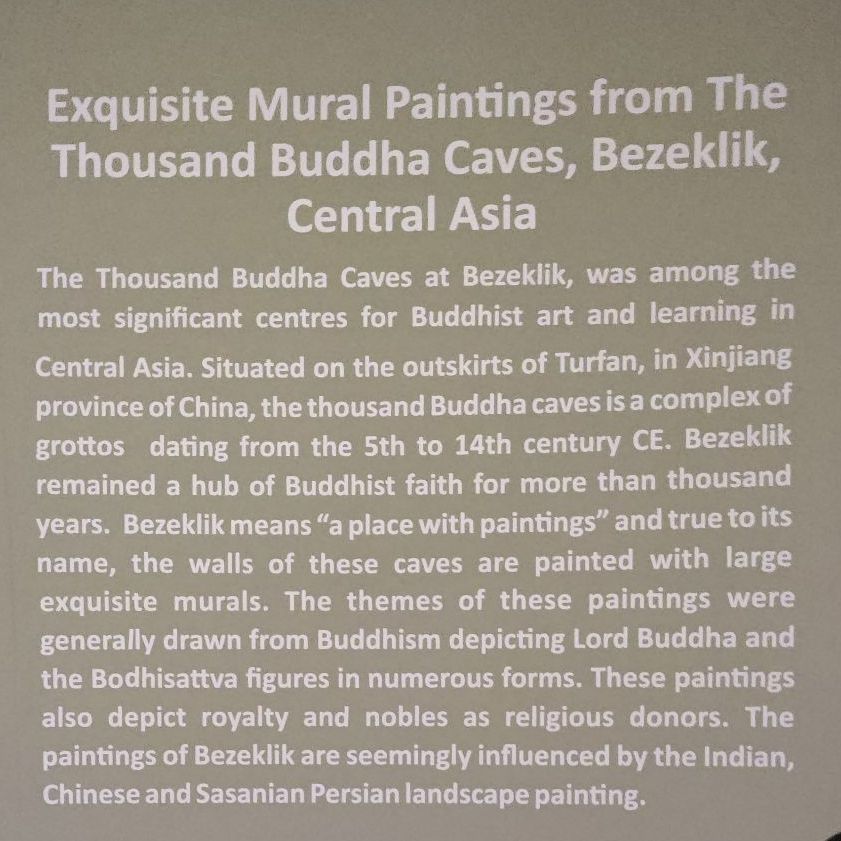
There are also some works from the Bezeklik Thousand Buddha Caves, also a site on the Silk Road in China.
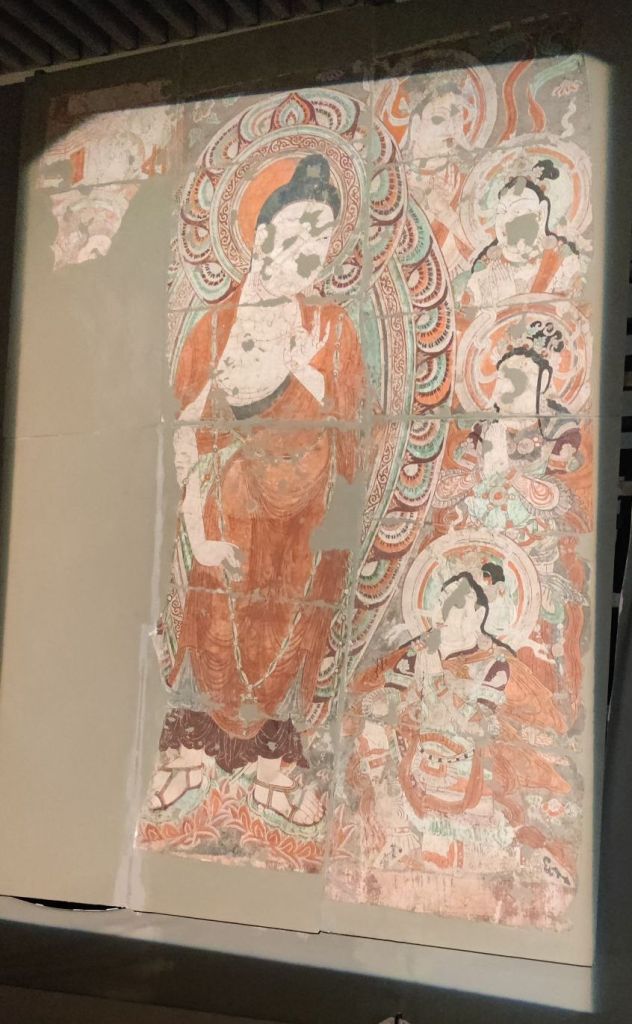
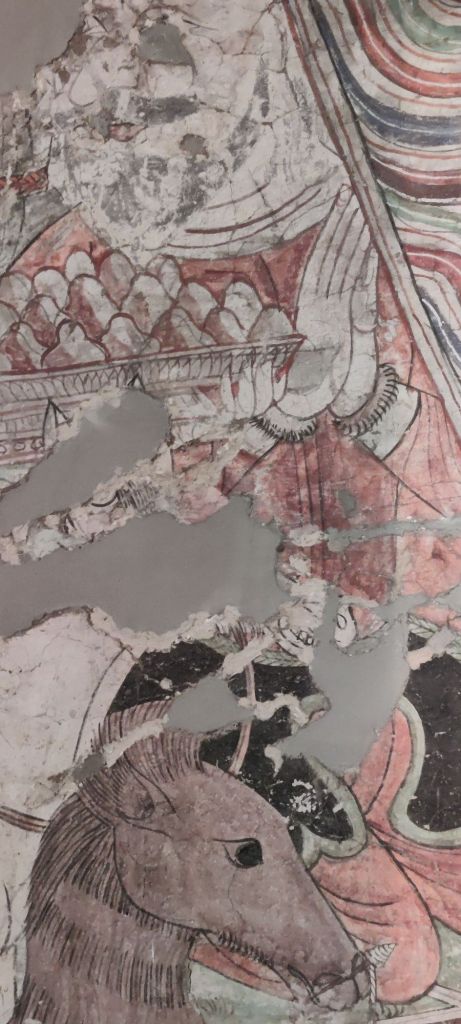
One Buddha….two Buddhas…
…982 Buddhas…
Ctrl C, Ctrl V

Absolutely stunning stuff.

There is a huge collection of Buddhist objects in the museum, and some of the most important and exemplary are housed in the Buddha pavilion. This exhibit has objects from all over Asia, in varying materials and from many time periods. The centerpiece is a reliquary holding bone fragments excavated from Piprehwa and believed to be those of the Buddha.
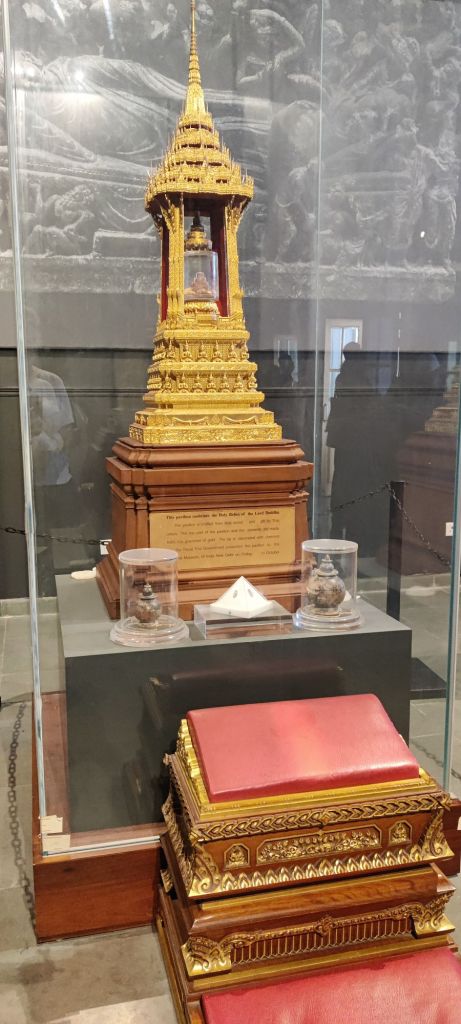
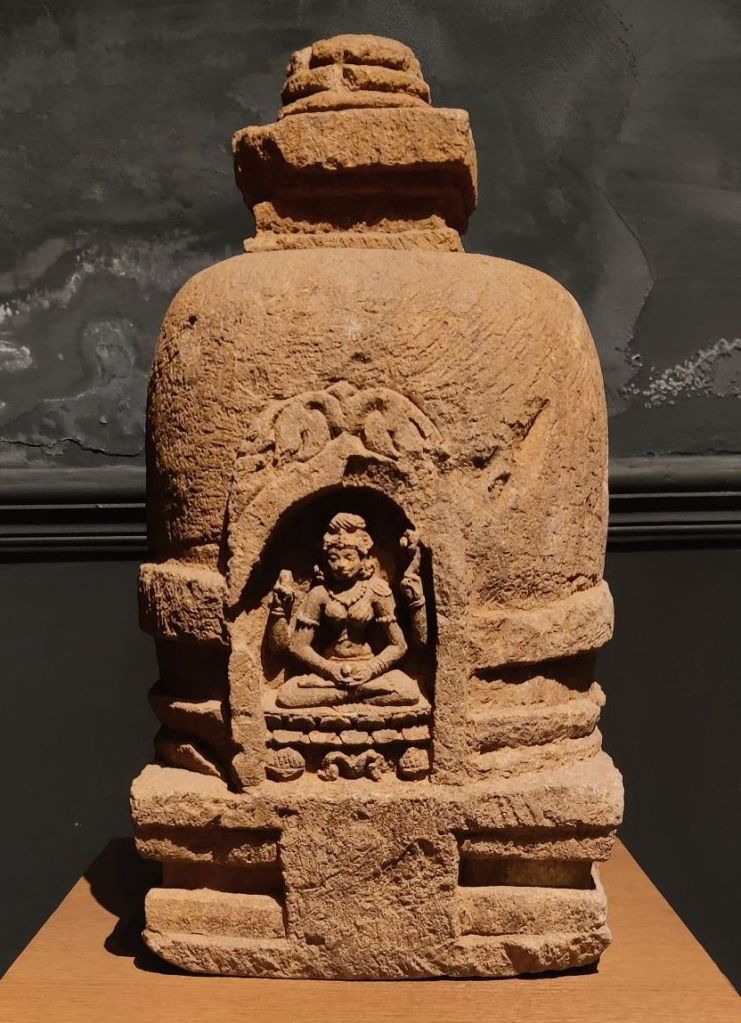
There is a guard with an automatic rifle in the room and he’s pretty chill, but it does distract just a teensy bit.
Chunda with four arms, a goddess of some Buddhist traditions, on a votive stupa from the 700s
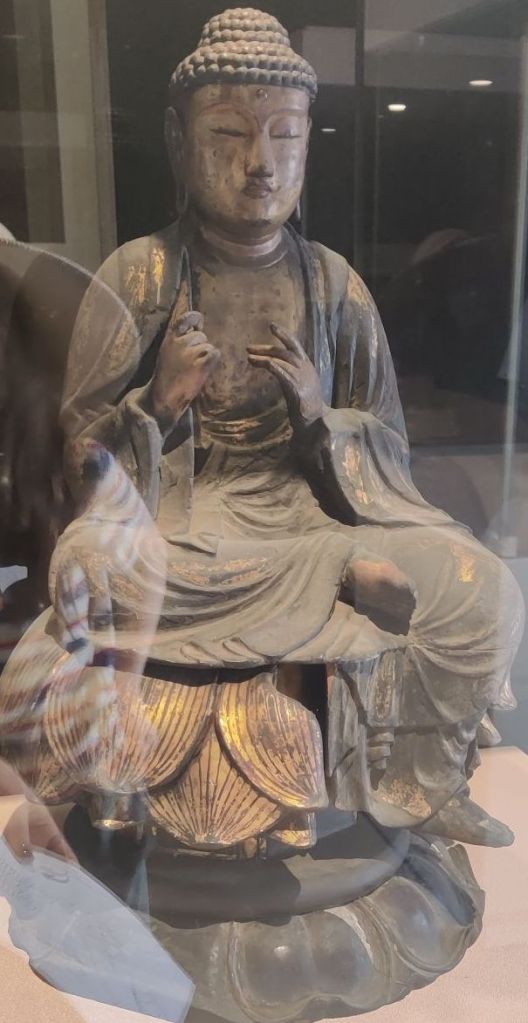
A 15th century wooden Buddha from Japan, and reflections of tourists reflecting on him
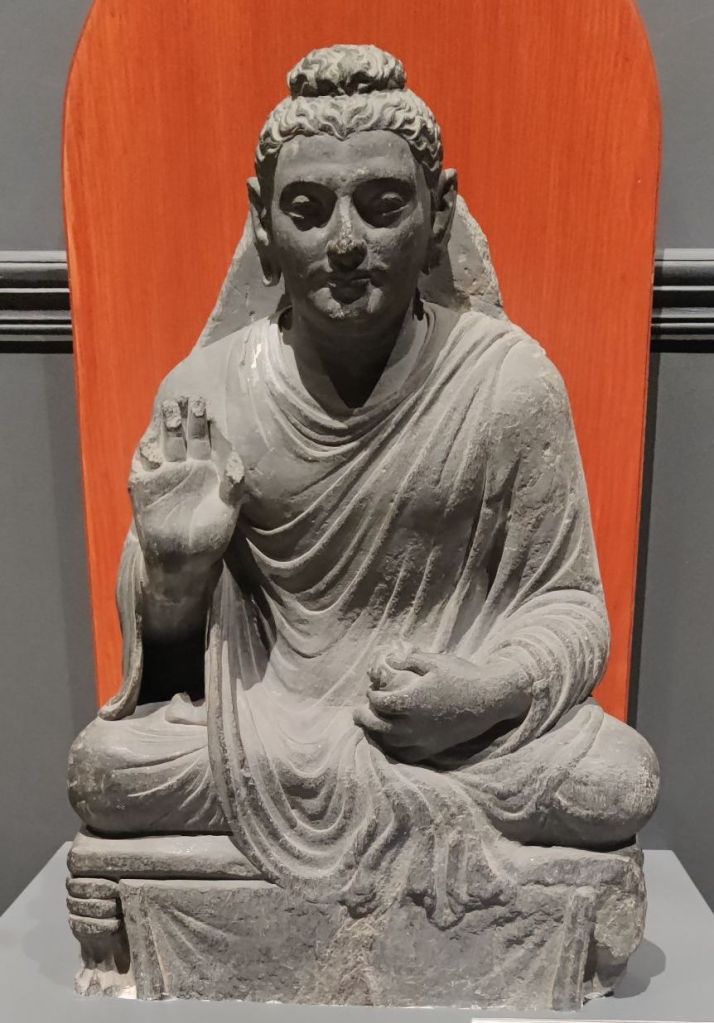
A second century stone Buddha from Gandhara, and my personal favorite thing in the museum.

There is. So. Much. More. The history of Indian writing, textiles, bronzes, manuscripts, maritime history, whatever was in all those crates being stored in the corridors–artifacts, relics and art for days. There is a small store with very inexpensive books available, so don’t miss that. The National Museum is open 10-6, Tuesday through Friday and 10-8 Saturday and Sunday. You can get there by hiring a driver and telling him that’s where you want to go.
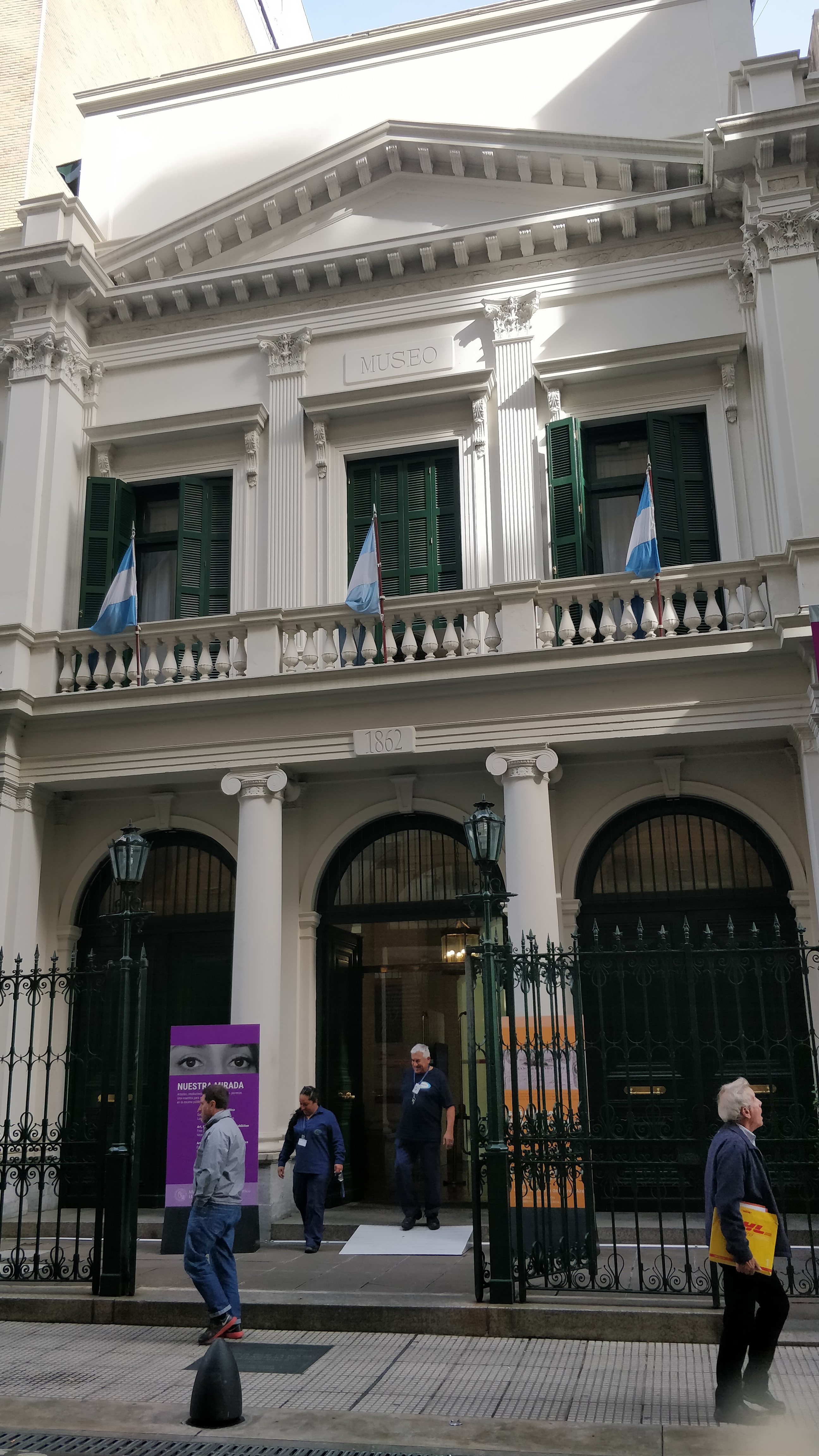
Museo al Banco Central de la Republica Argentina [Argentina Central Bank Museum]

You might recall I have visited a bank museum before, that of the Banco Ciudad.  It was a very interesting look at the bank’s founding and role in society, and I was slow to add any other bank museums to my list when I found another one.  I assumed it would be similar.

BUT IT WASN’T.

IMG_20190502_112031.jpg
The new entrance is a bigger version of this one.

Banco Central is the national bank of Argentina, and its history is of course tied to the economic history of the country, which is, to put it generously, bonkers.  The museum, officially known as the Museo Histórico y Numismático Héctor Carlos Janson, takes an entirely different course than that of Banco Ciudad and focuses on the history and development of currency.  That history is also bonkers.

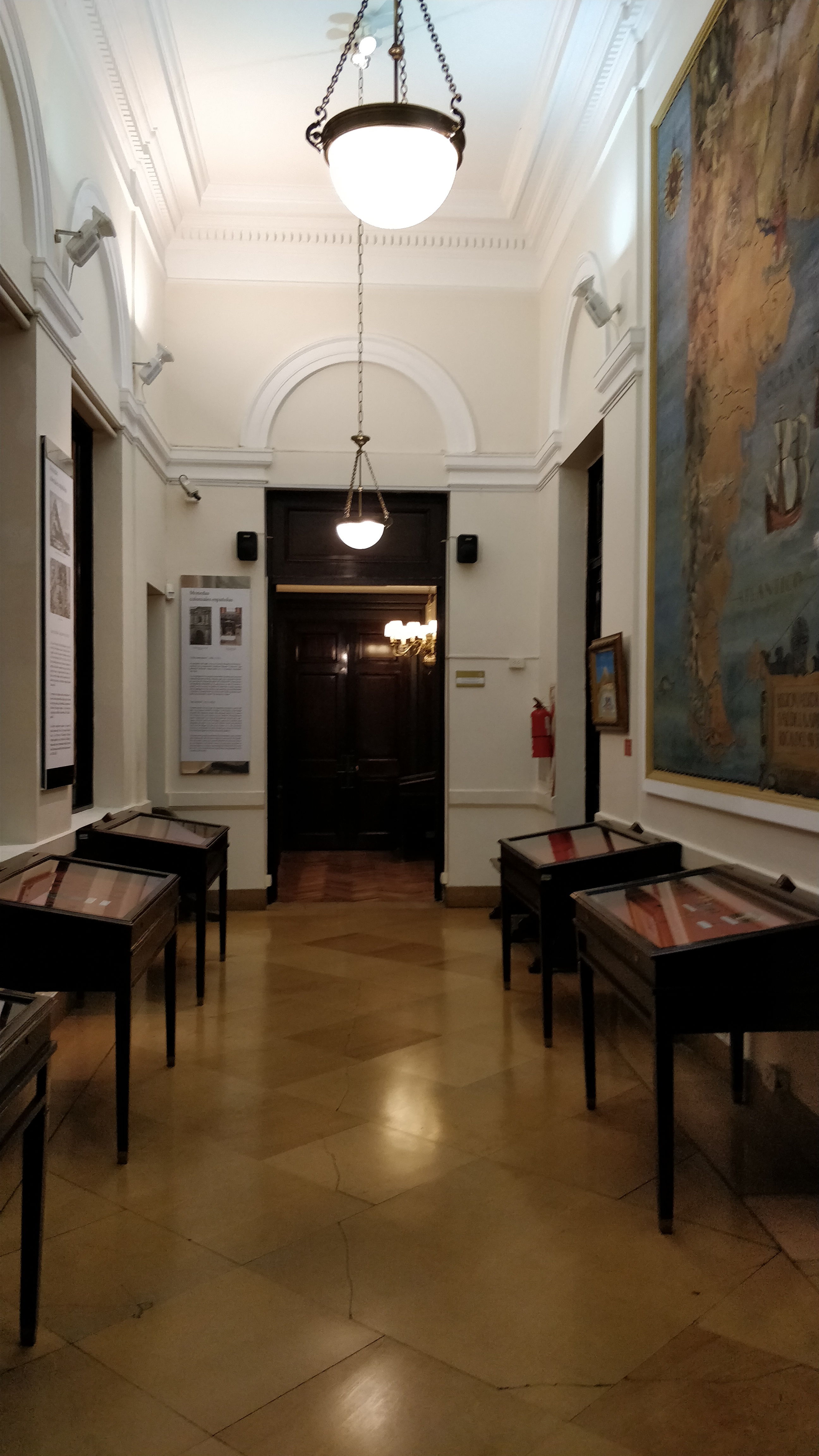
The first room of the museum looks briefly at the history of currency in South America.

IMG_20190416_113555.jpg
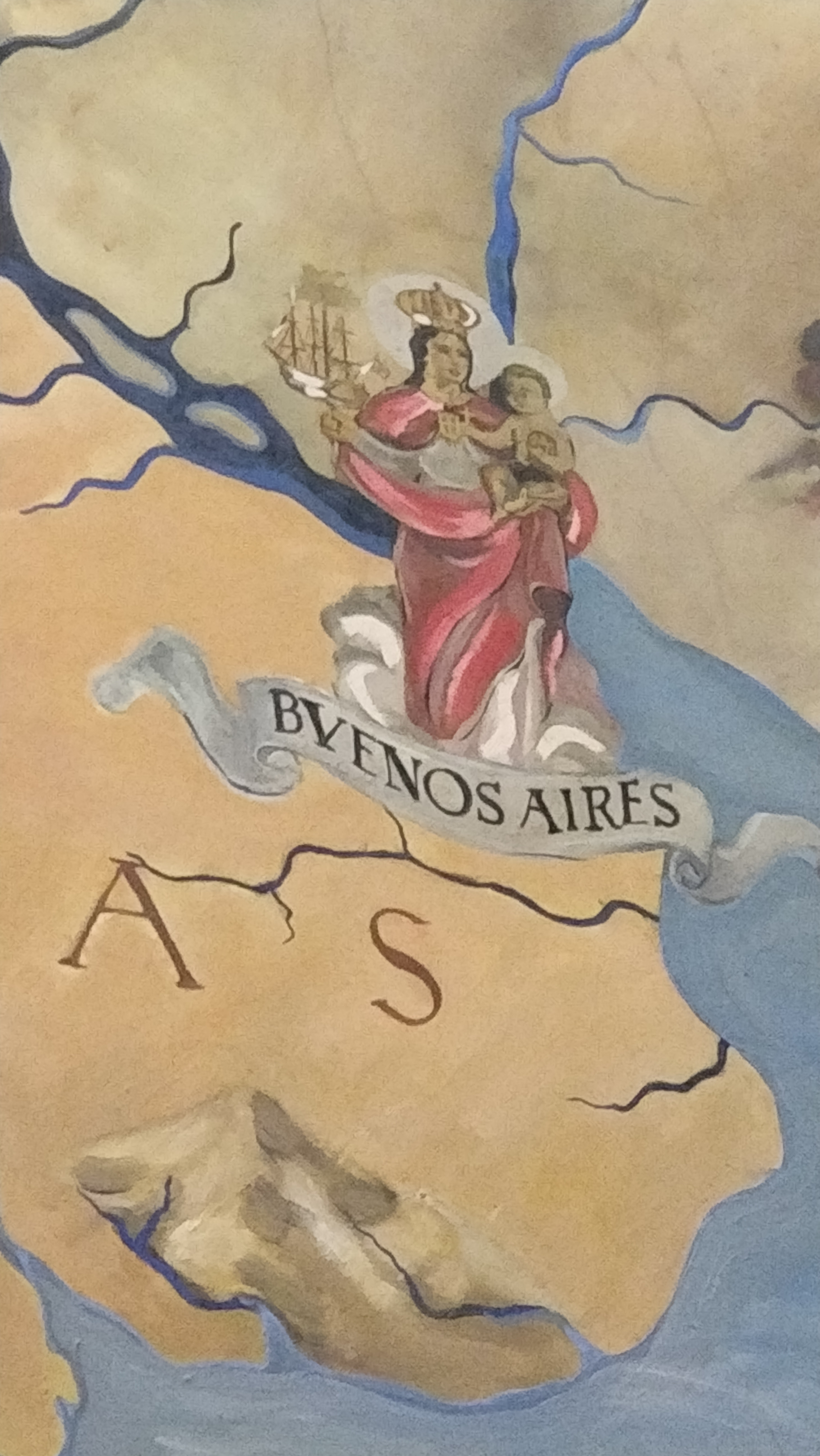
Oh, hey, is that a painting the recreates elements of a 17th century map? Probably pretty charming!

IMG_20190416_114738.jpg
Is…is Buenos Aires Mary? Or Jesus? You know what, nevermind.

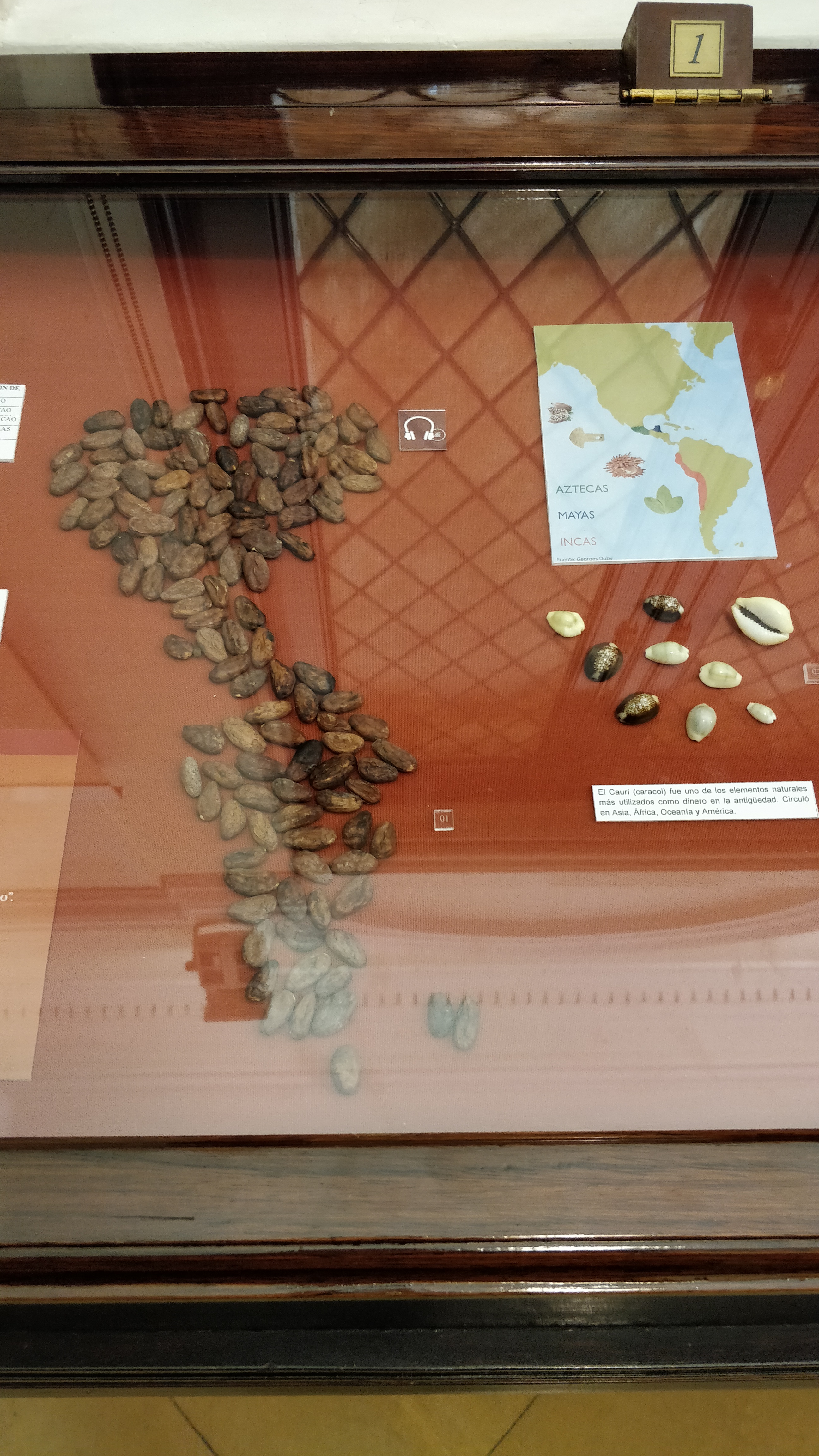
Anyway, back before Europeans arrived for their extended pillage-murder spree, frequently used currency items included cocoa beans, leaves, small metal pieces, and cowrie shells.

IMG_20190416_113809.jpg
Only nobles had access to cocoa trees and the bean store houses. Yes, there were also counterfeit beans.

Next up are examples of colonial-era currency.

img_20190416_114209.jpg
Obviously everything in this museum was in a glass case, so it’s a whole post of just super shitty photography.

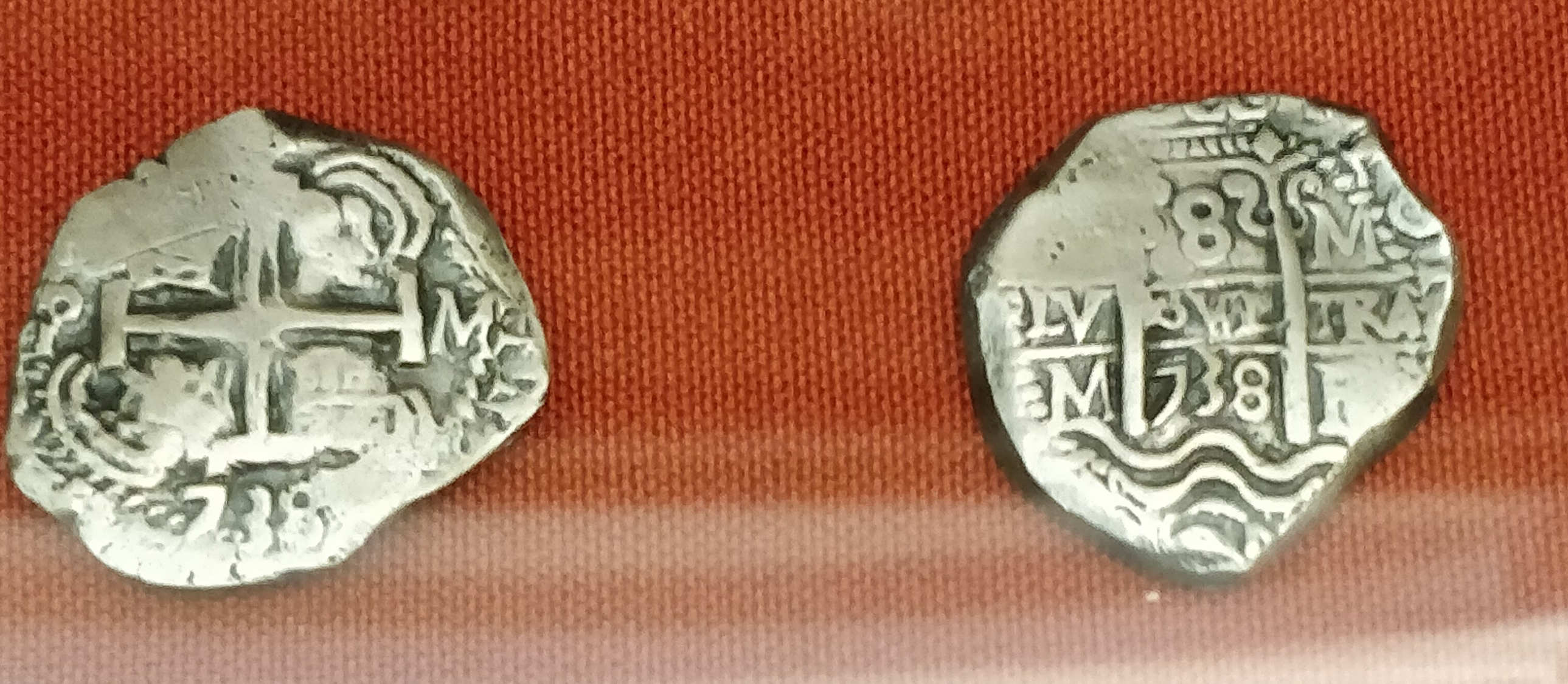
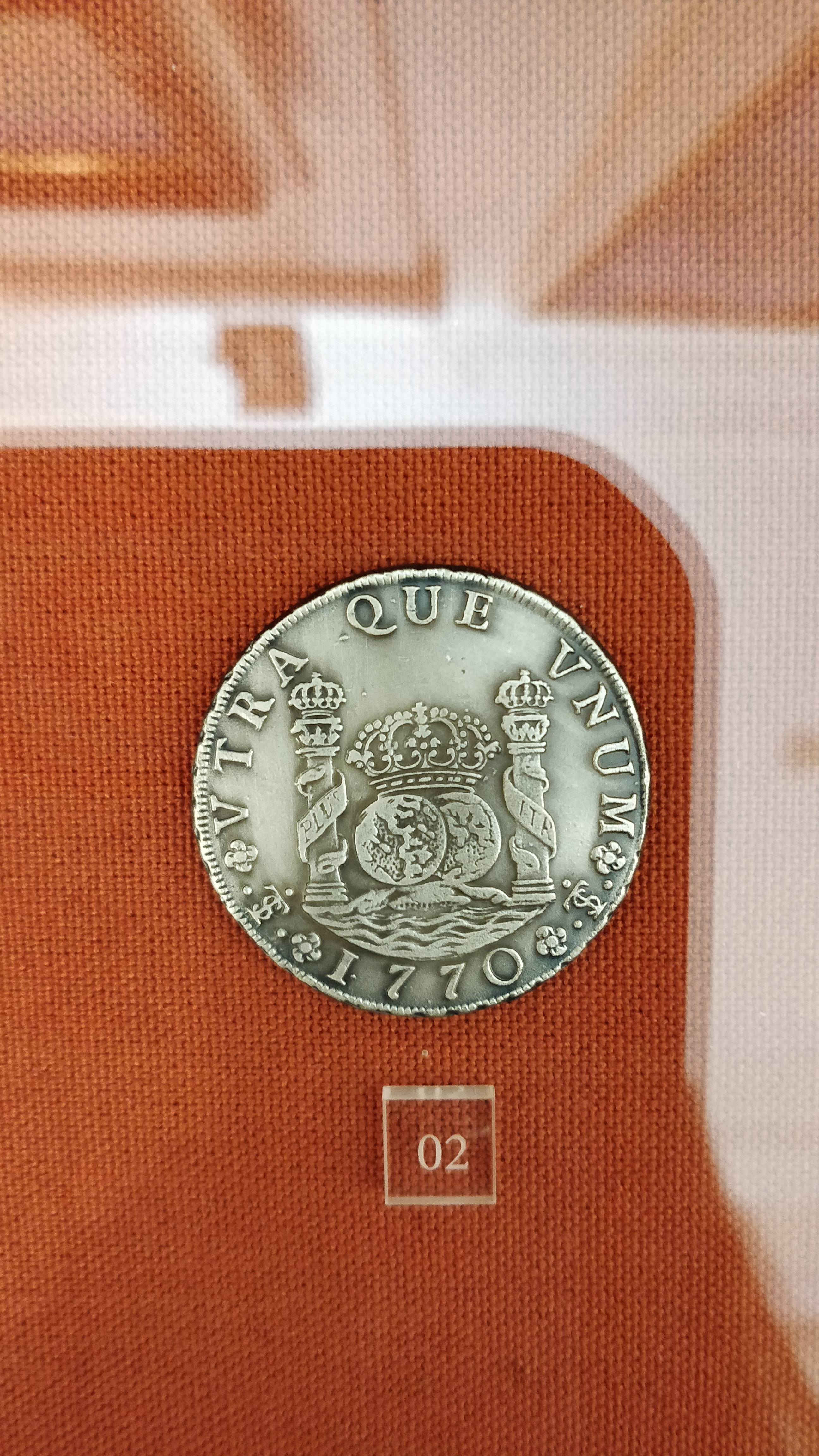
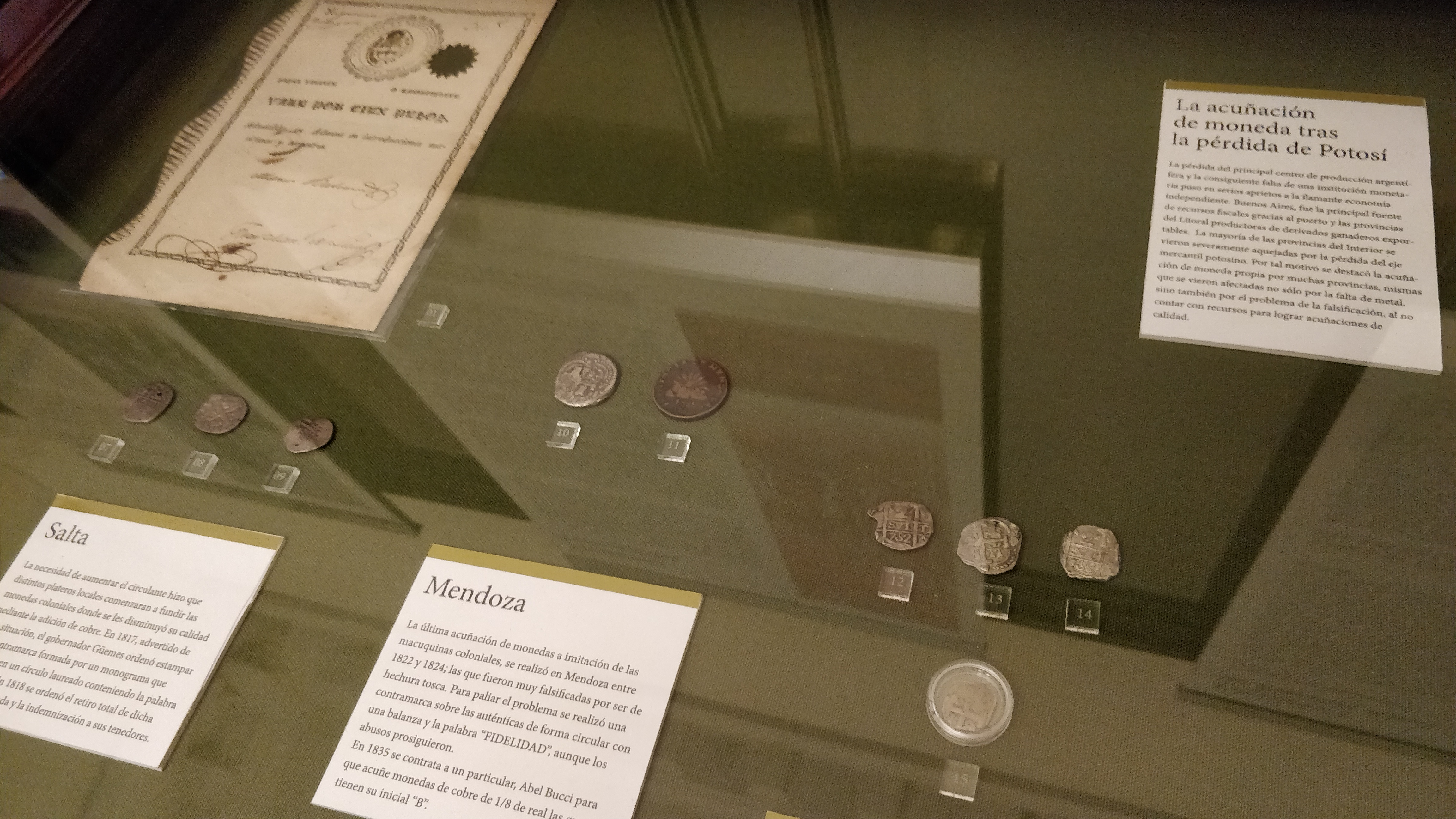
The colonial coins were minted in Potosí, in Bolivia, close to Cerro Rico, a huge silver mine that Spain spent years plundering.  A stunning number of miners have died there over time, earning the place the name “the mountain that eats men,” because nothing in colonial history isn’t horrifically grim (mining the mountain continues to be horrifically grim).

IMG_20190416_114403.jpg
VTRAQUE VNUM: “Both Are One” (Spain and the colonies), LOL.

Next up, the first currency minted following independence:

IMG_20190416_114958.jpg

IMG_20190416_115514.jpg

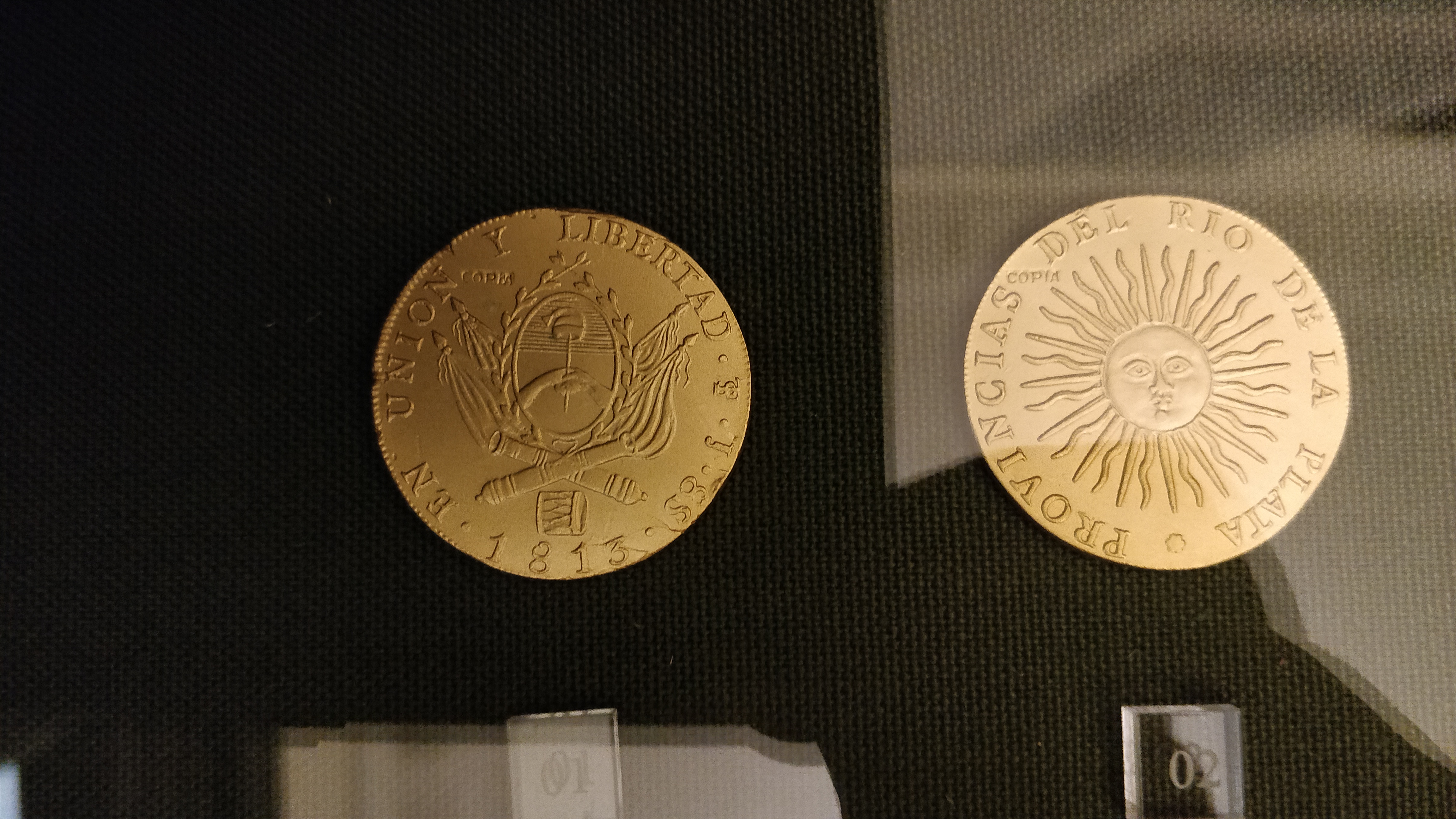
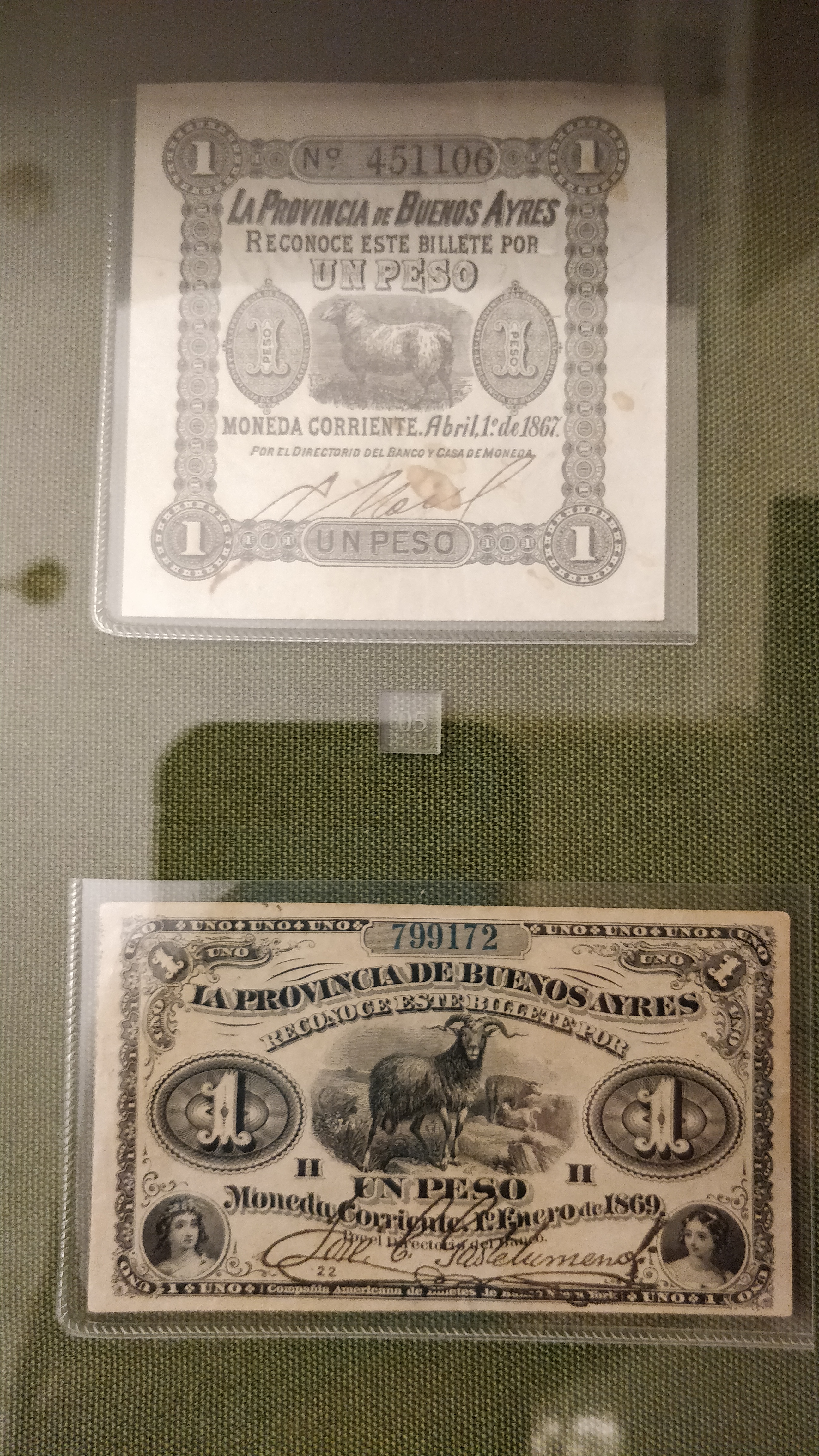
Money was minted by the provincial governments, which is why the gold coin above says “Provinces of the Rio de la Plata.”  The Banco de las Provincias Unidas del Río de la Plata was created with the aim of unifying the nation’s printed currency, but the other provinces were not cool with this so it did not happen (had a lot to do with economic troubles from the war with Brazil).  So, money from all over continued.

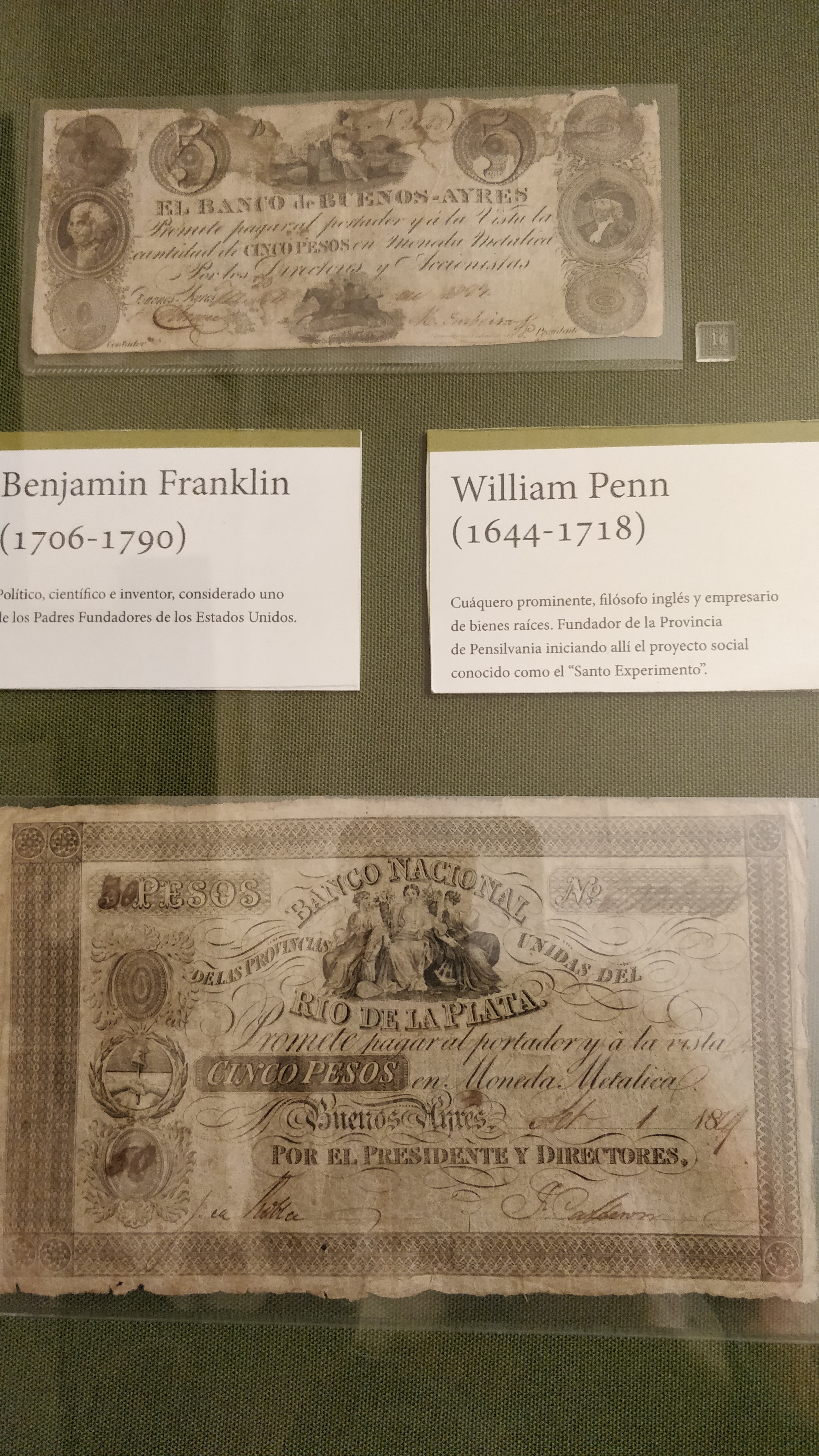
Notes were printed abroad, and included portraits of important figures of independence in the New World, such as Simón Bolivar, George Washington, Ben Franklin, and William Penn.

IMG_20190416_115609.jpg

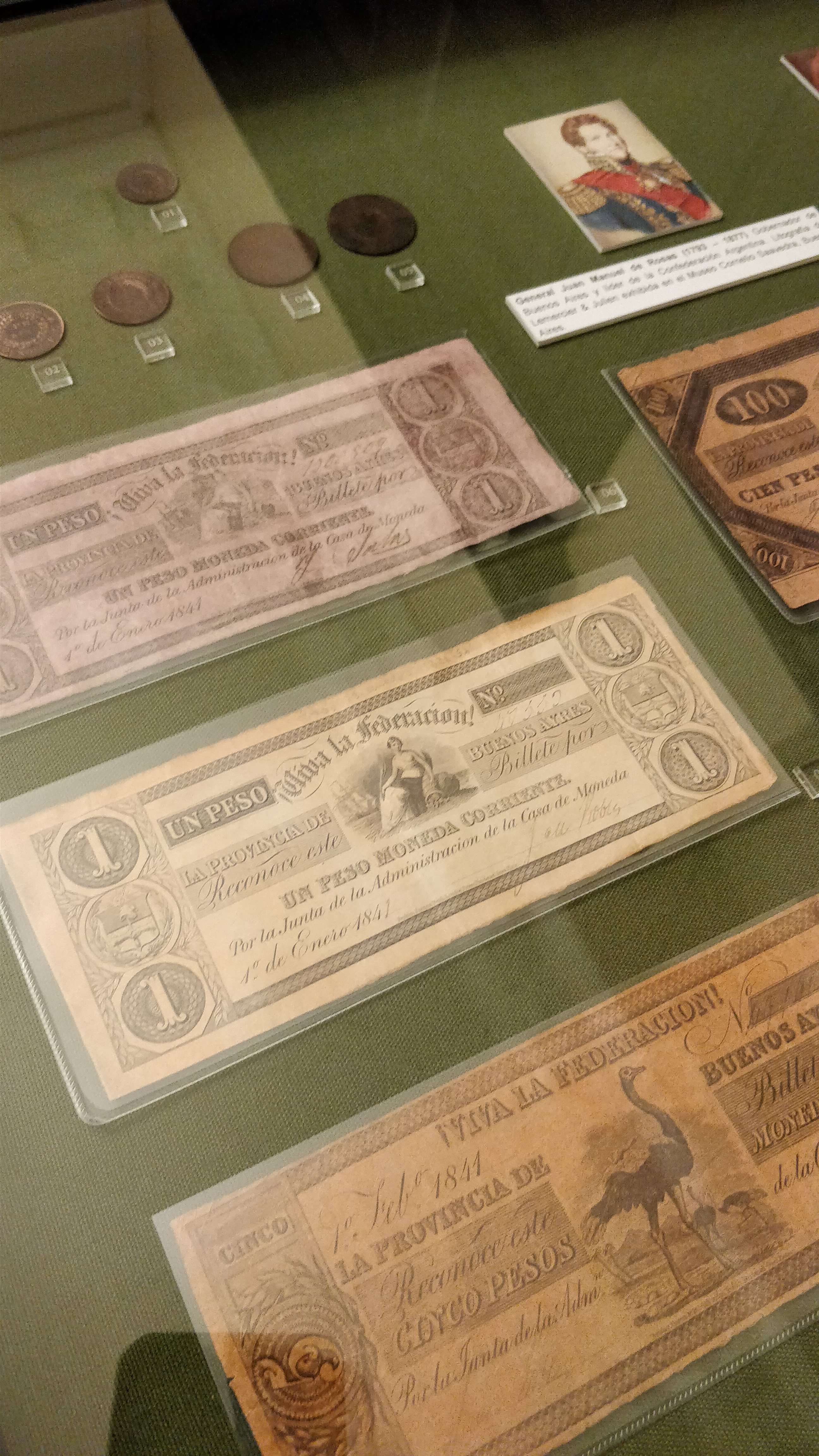
Things got weird, as things tend to do, during the civil war.  General de Rosas, blurrily pictured below, dissolved the national bank and created an administration to issue paper money and coins.  These were monedas corrientes.  I am not nearly as well-versed in Argentine history as the museum’s informational panels assume, so I can’t much fill you in beyond that.

IMG_20190416_115651.jpg

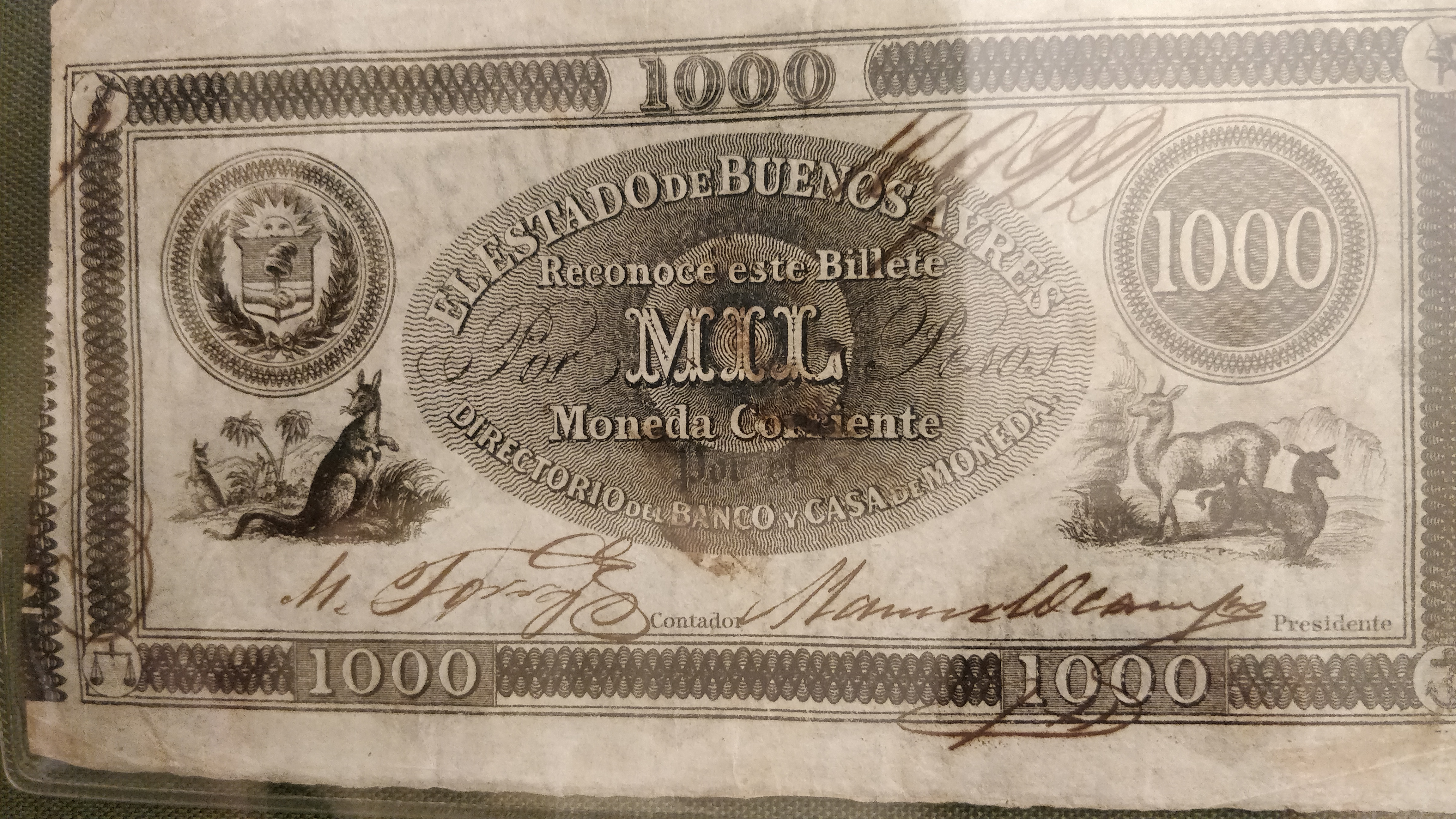
You will note, possibly, two things about the following bill: One, its domination is 1000, which means it was rapidly devaluating, generally not at all a good thing; and two, it’s got palm trees and kangaroos on it.

IMG_20190416_115845.jpg
Unexpected!

The money was at the time printed in Buenos Aires, but the plates were engraved in London.  The museum notes that printing houses at the time worked for several countries and contends that’s why the kangaroo and llama appear together on an Argentine banknote, but frankly I still have a lot of questions.

I also find the next phase of currency a wee bit confusing, something that can likely be attributed once again to my lack of knowledge of the nation’s history, but next you get “pesos fuertes” and “pesos corrientes.”

IMG_20190416_120256.jpg
If there is any unifying lesson to this museum, it’s that the Argentine economy has never been all that stable.

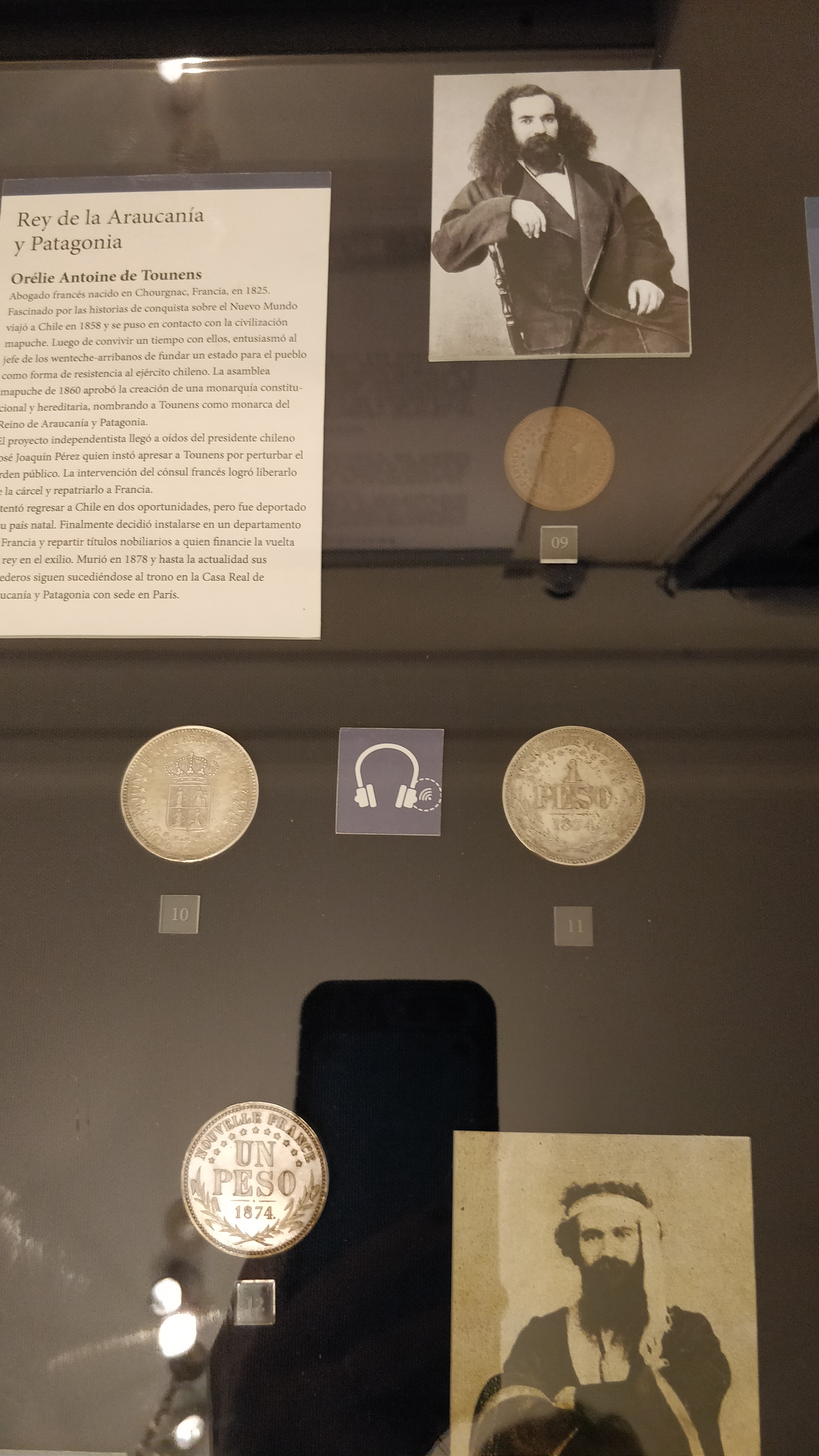
Here we take a small detour into a historical oddity.  A French lawyer showed up in the west of the country and in 1860 declared himself “King of the Araucania and Patagonia.”  He then created a constitution, a flag, and a national anthem, and started minting money.

IMG_20190416_120659.jpg
Orélie-Antoine de Tounens, looking a lot like a dude that would just go do something like that.

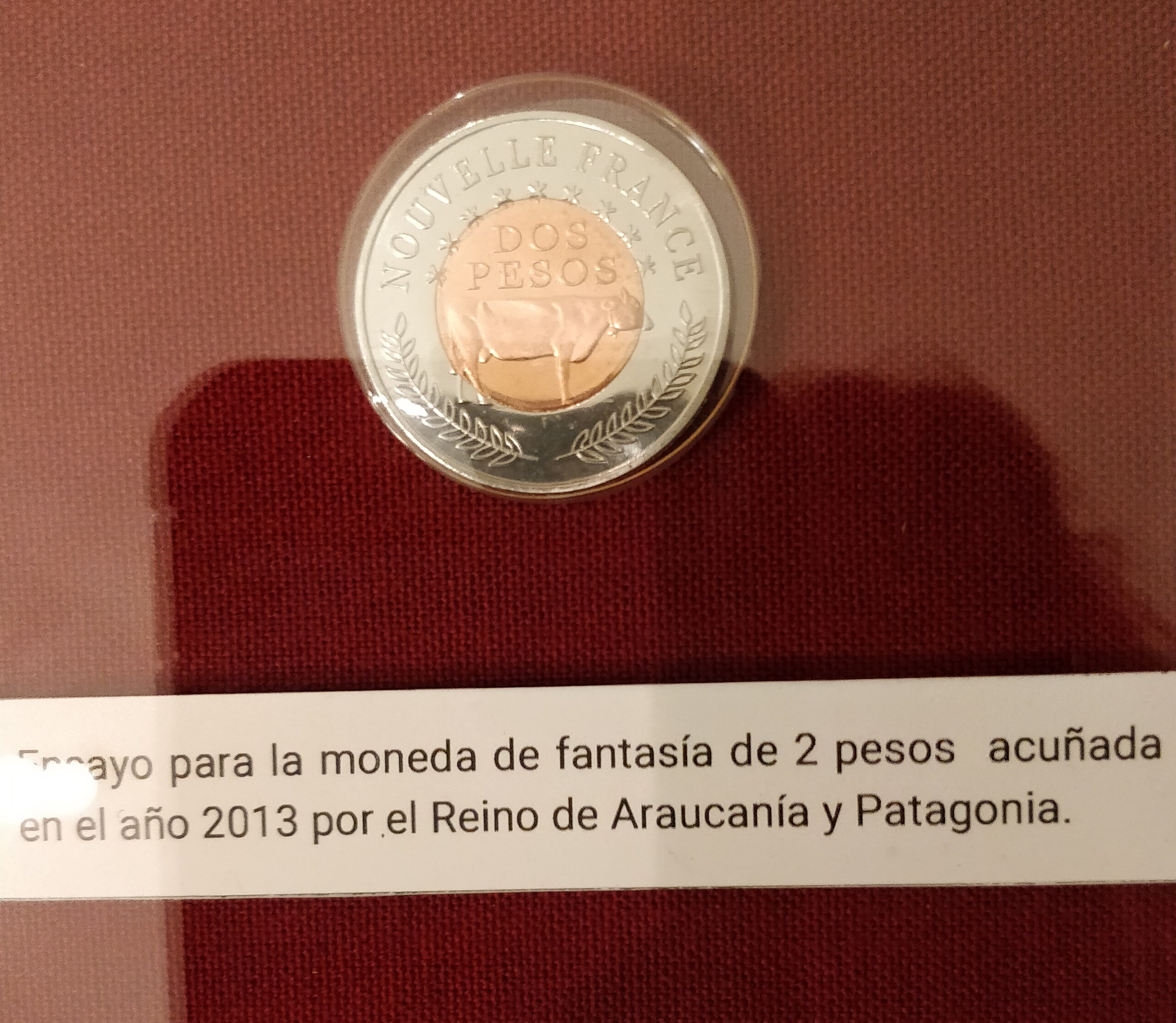
He was arrested, declared insane, and deported, but he apparently took his claim very seriously and tried, for the rest of his life and without success, to really make it stick.  He died childless, but people have claimed to be his heirs for awhile now, and they actually still mint (technically worthless) coins, I guess for the sole purpose of having them displayed at the Central Bank museum.

img_20190416_122753.jpg
Cool?

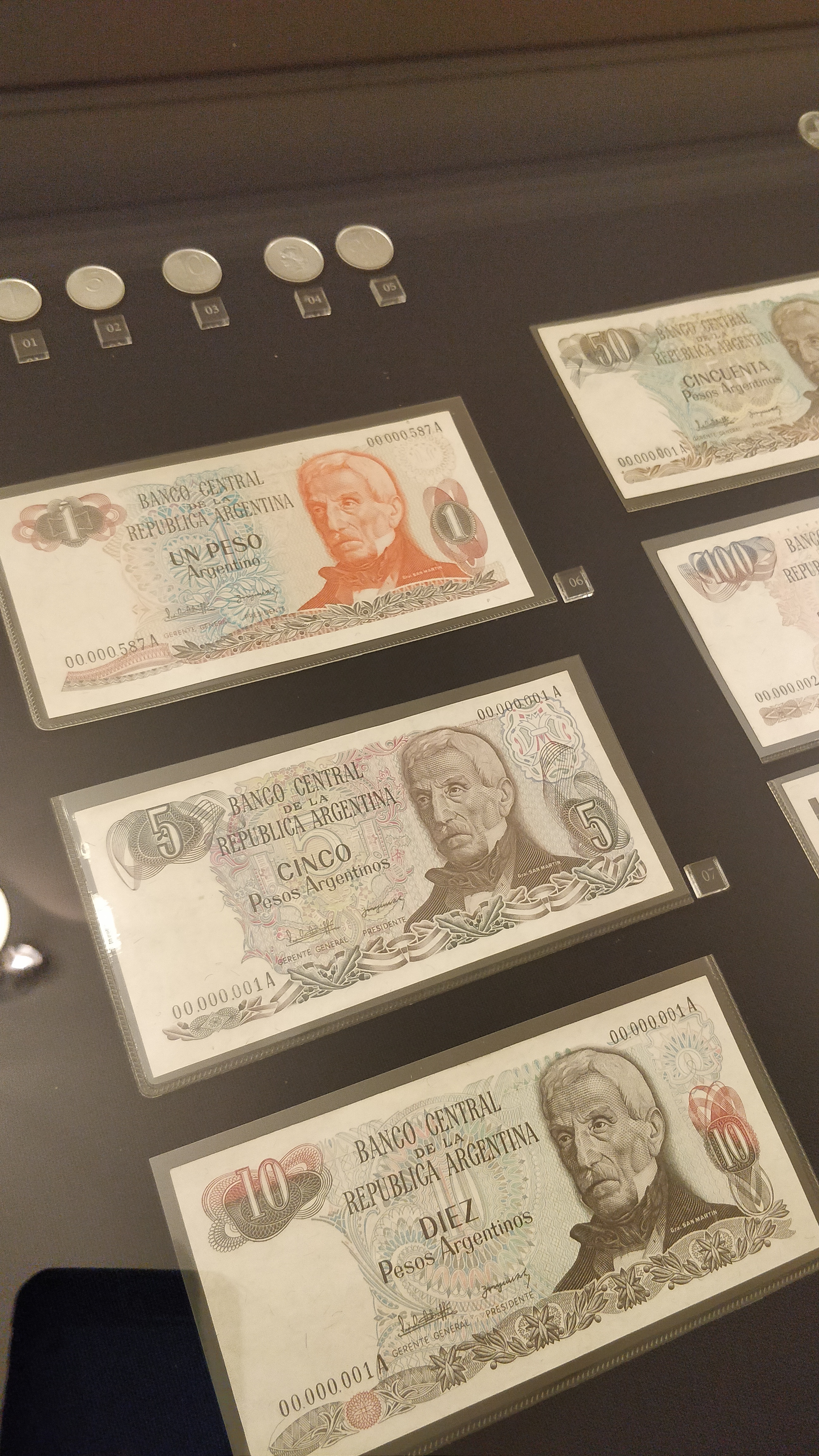
Now, I’m going to hop forward about 100 years, skipping a major financial crisis, to get to the financial crises of recent history.  There was a substantial devaluation during the military dictatorship, which attempted to stabilize things, but, spoiler alert, did not.

IMG_20190416_121736.jpg
These are from the last couple years of the dictatorship, the early 80s.

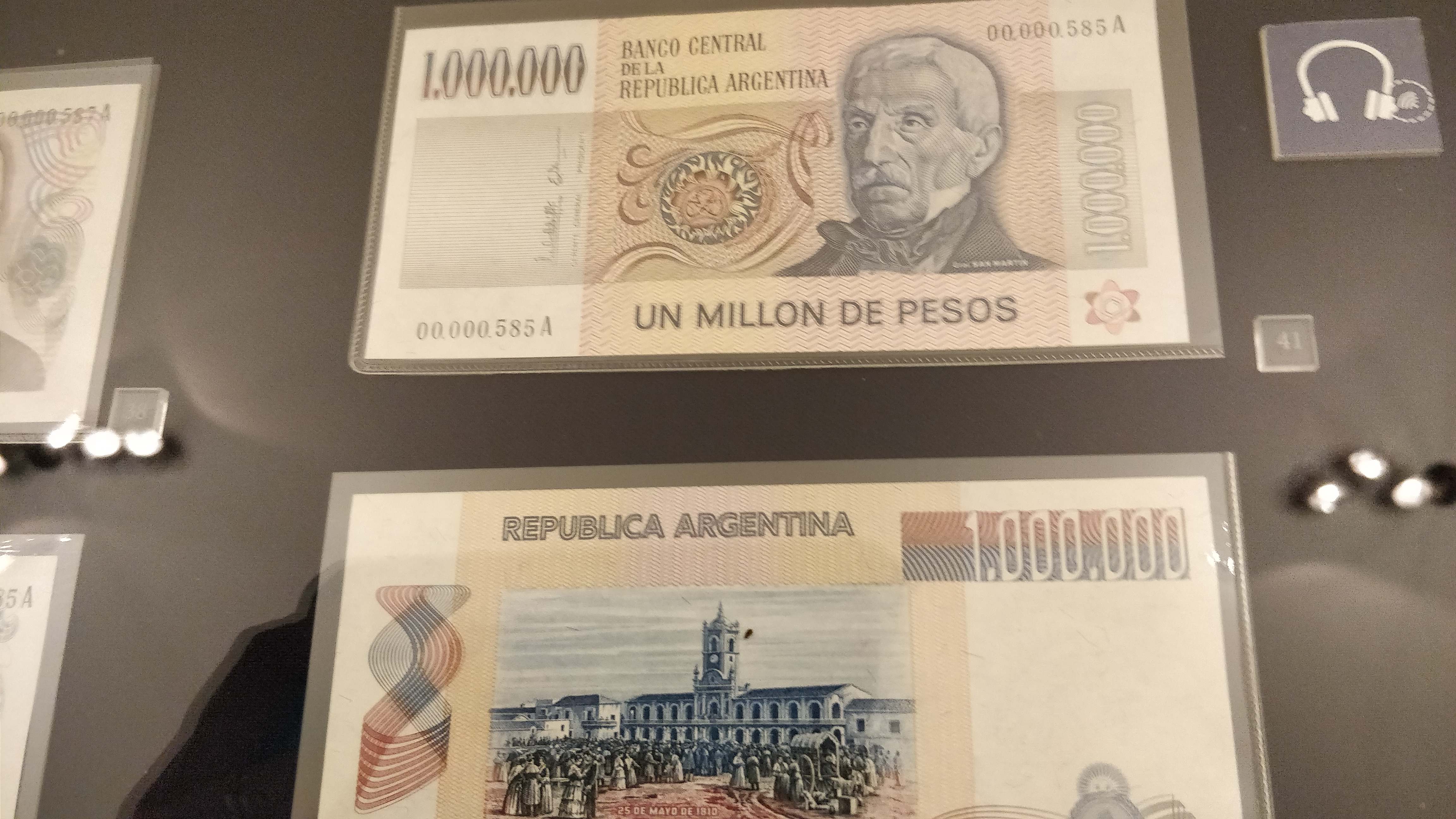
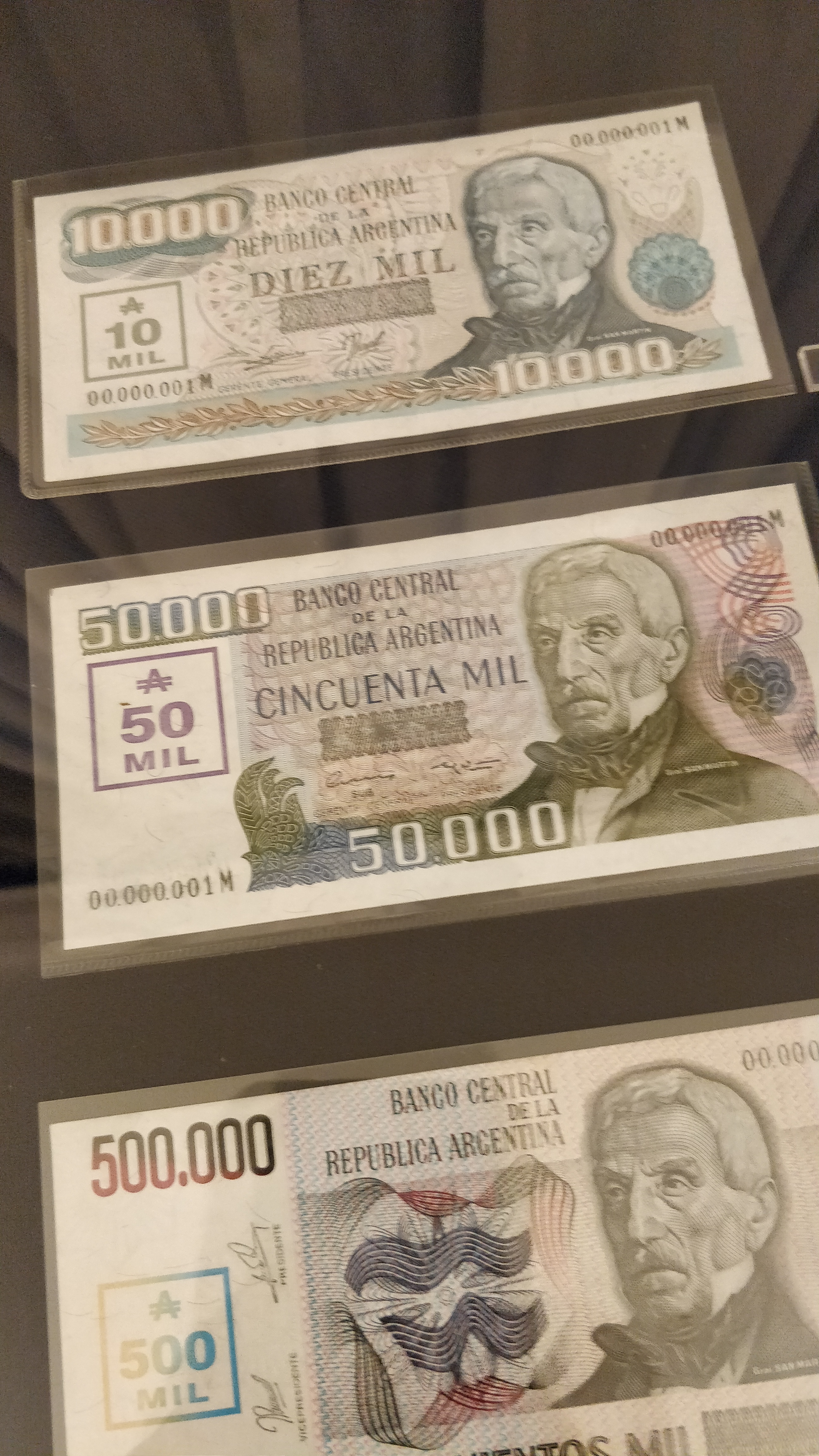
The military dictatorship fell and democracy was restored in 1983, but there was still a huuuuge problem in the form of a massive external debt, currency devaluation, and serious inflation.  The new government started whacking off zeroes, so that 10000 old pesos would equal one new peso.

IMG_20190416_121809.jpg

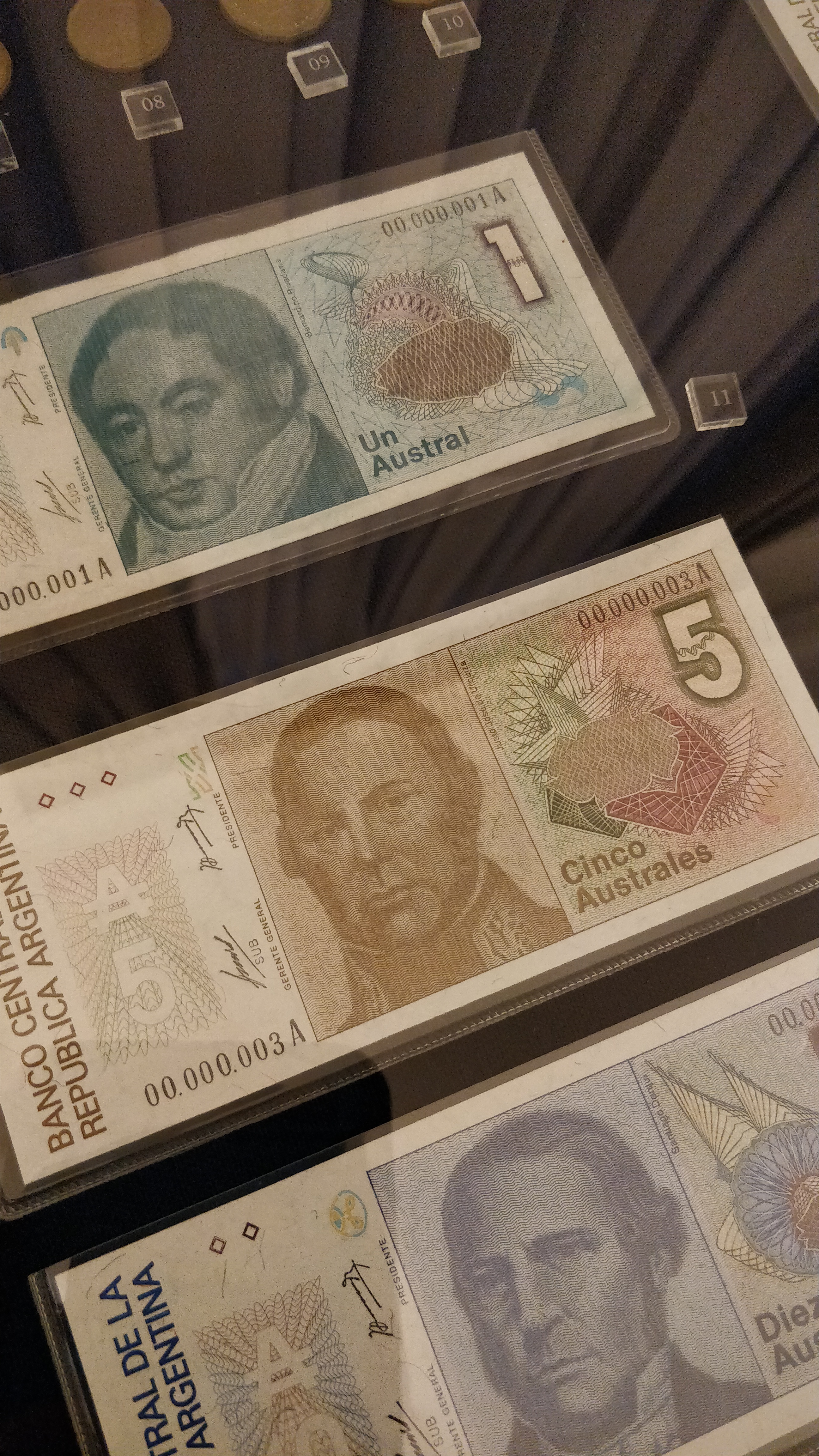
It did not work.  These were printed in 1983; by 1985, 10000 peso notes were back in circulation.  That year, the president decided what the country really needed was to start from scratch.  The peso was old and busted.  The Austral was the new hotness.

IMG_20190416_121932.jpg

Alas:

IMG_20190416_121951.jpg

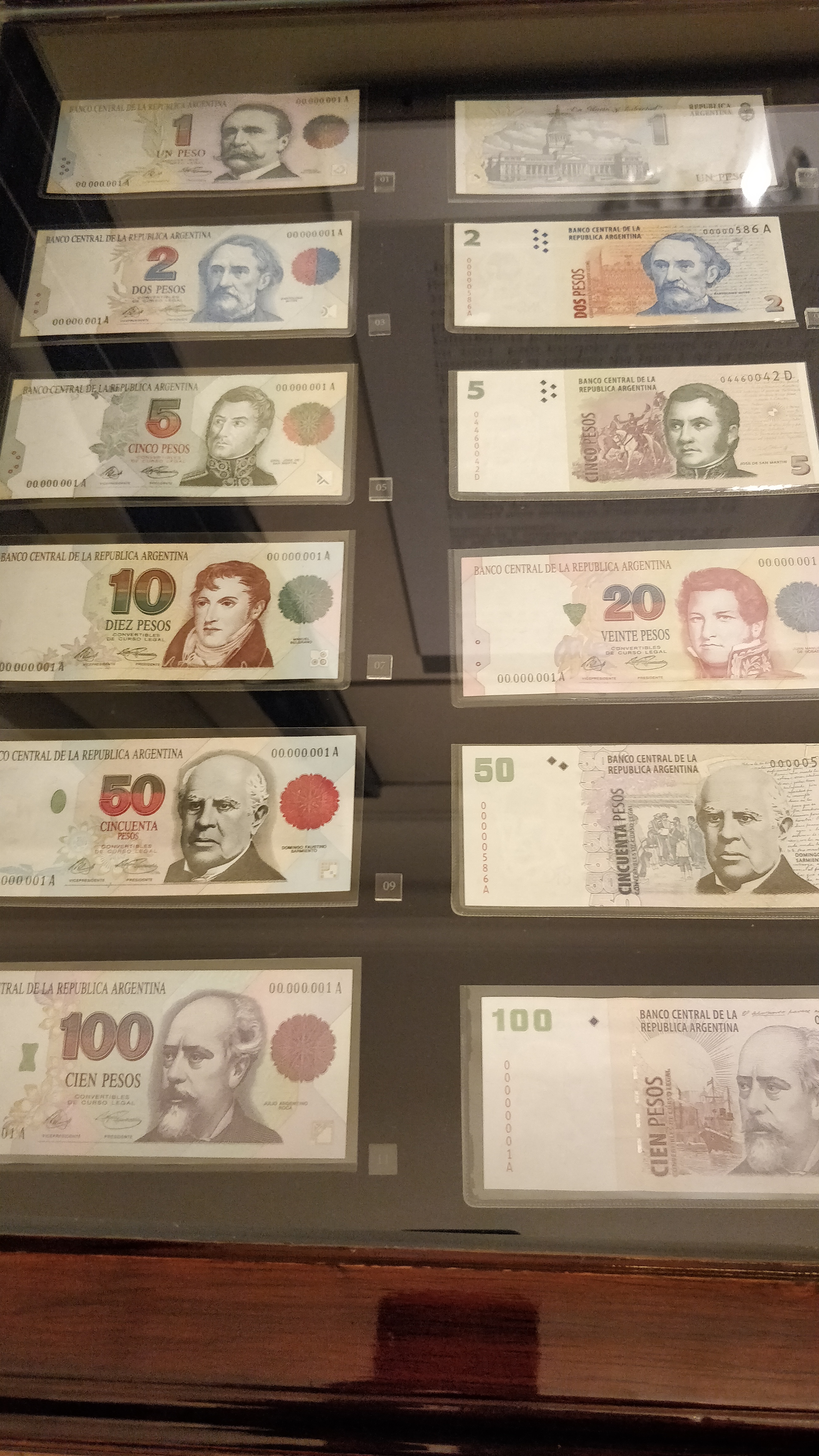
The name “peso” made its return with the “pesos convertibles” in the 90s, when the peso was pegged to the US dollar at a 1 to 1 rate.  This also didn’t work and led to the financial crisis of 2001, which many Argentines can tell you absolutely wild stories about.  The president famously fled the Pink House by helicopter.  Some of the bills from this period are still in circulation; I could dig some out of my wallet right now.

IMG_20190416_122127.jpg

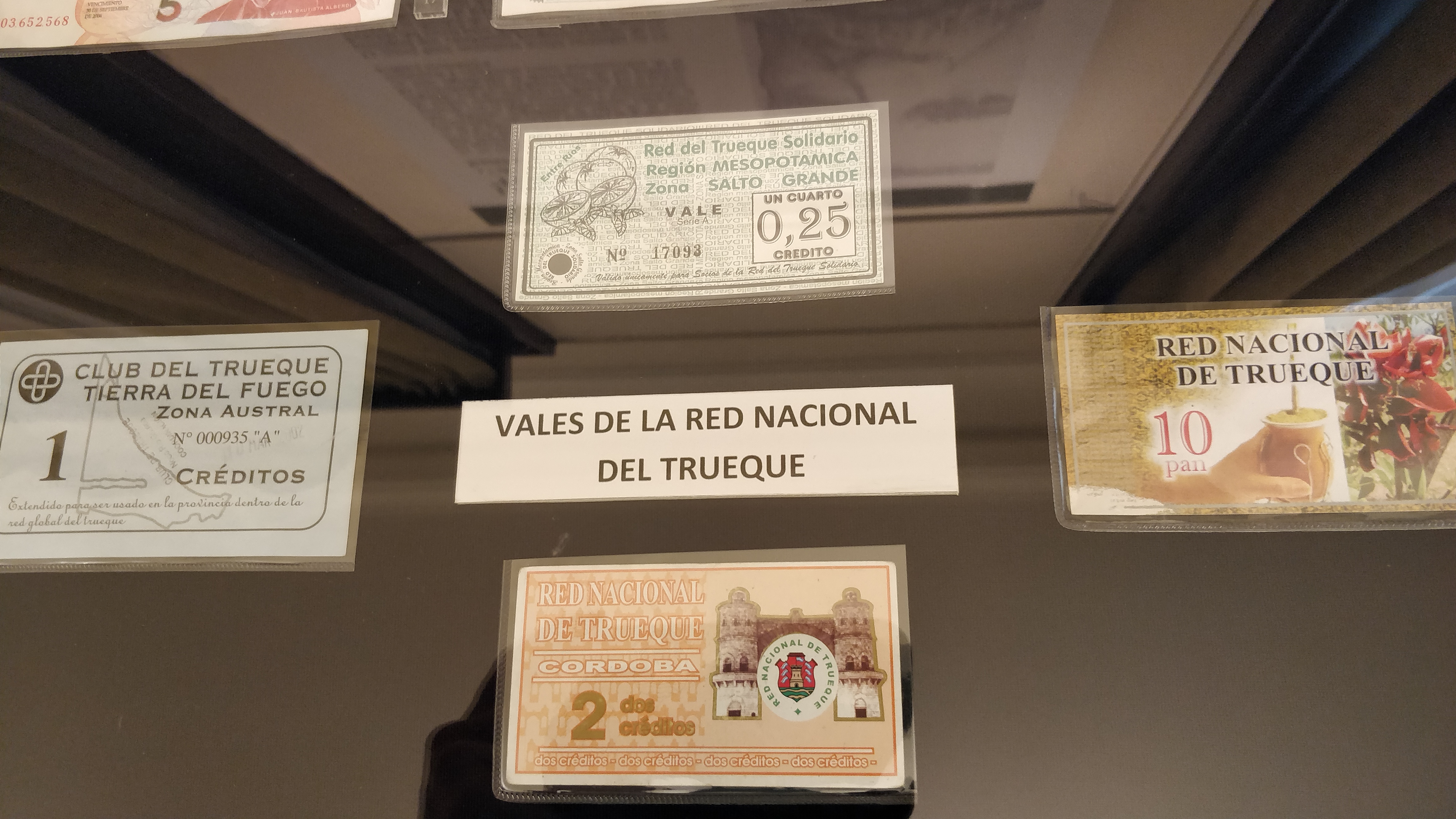
This time of utter economic collapse led to a widespread return to a barter economy, leading to the use of these barter network vouchers.

IMG_20190416_122204.jpg

Things got…okay after that.  And then less okay.  That’s kind of how it goes here.

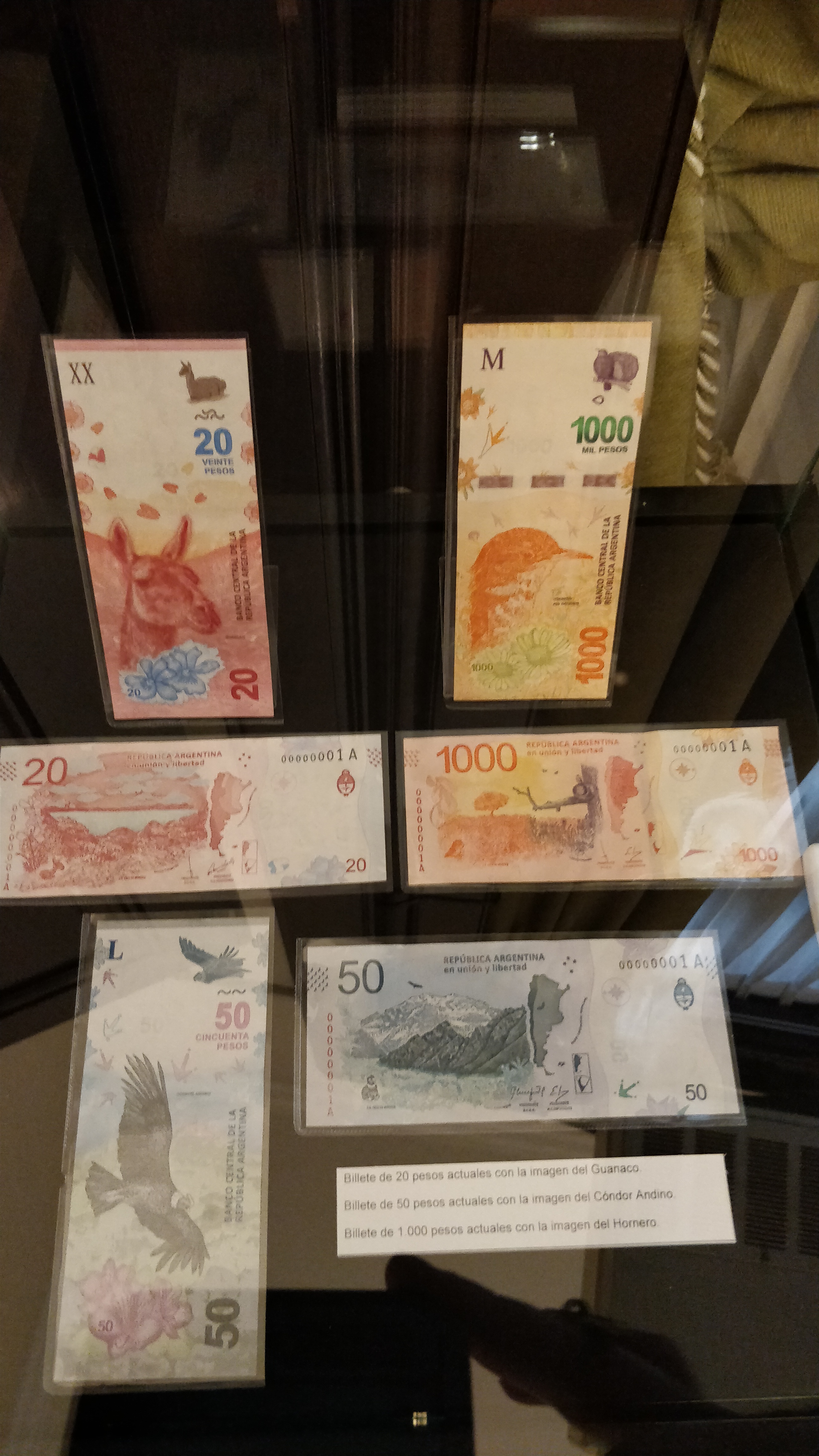
The current government, for political reasons I’m not going to get into, decided that the money needed a makeover, so now it’s all about the nature.

IMG_20190416_122348.jpg
Oh, hey…we’re back up to 1000 pesos notes.  Huh.

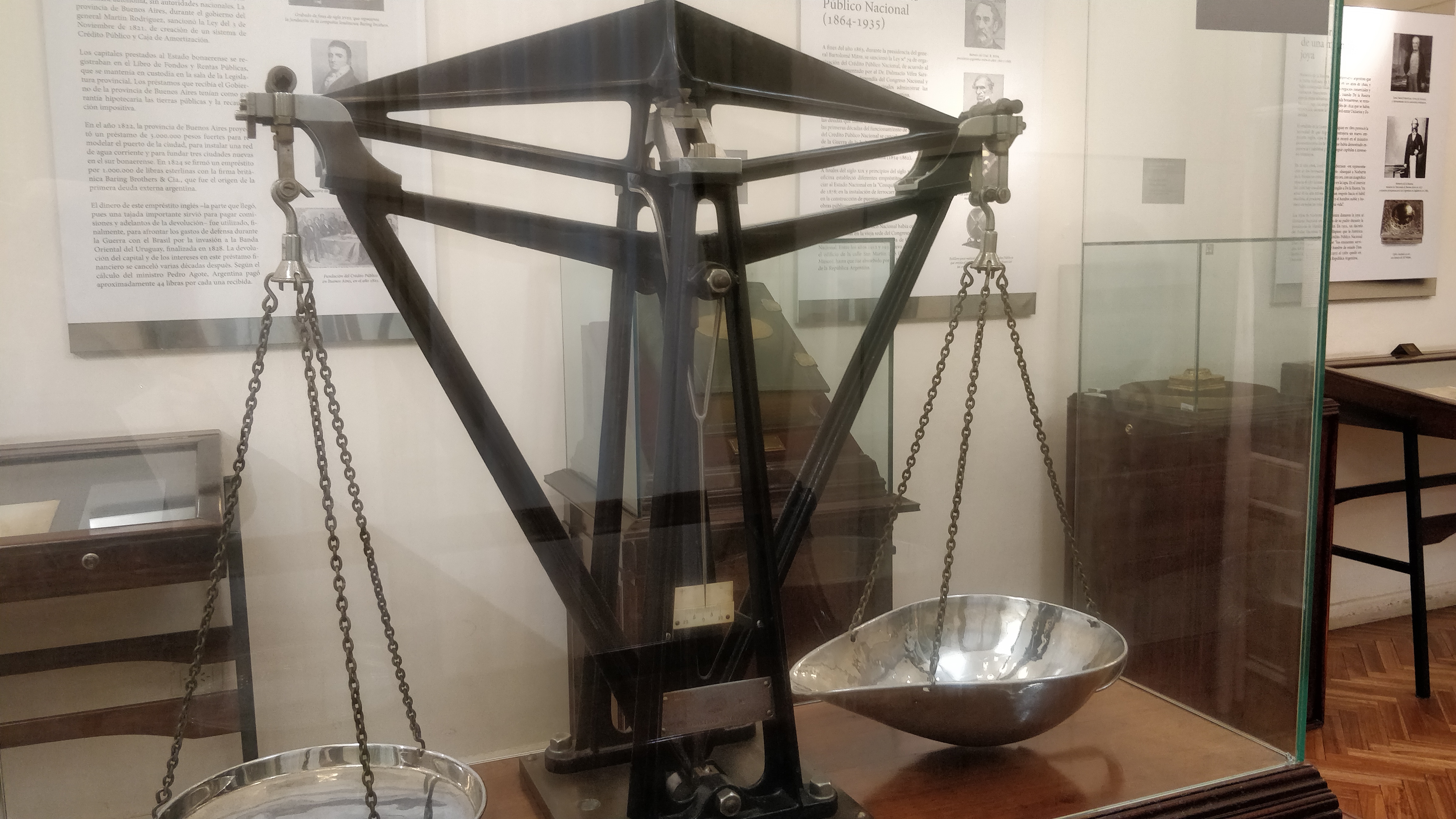
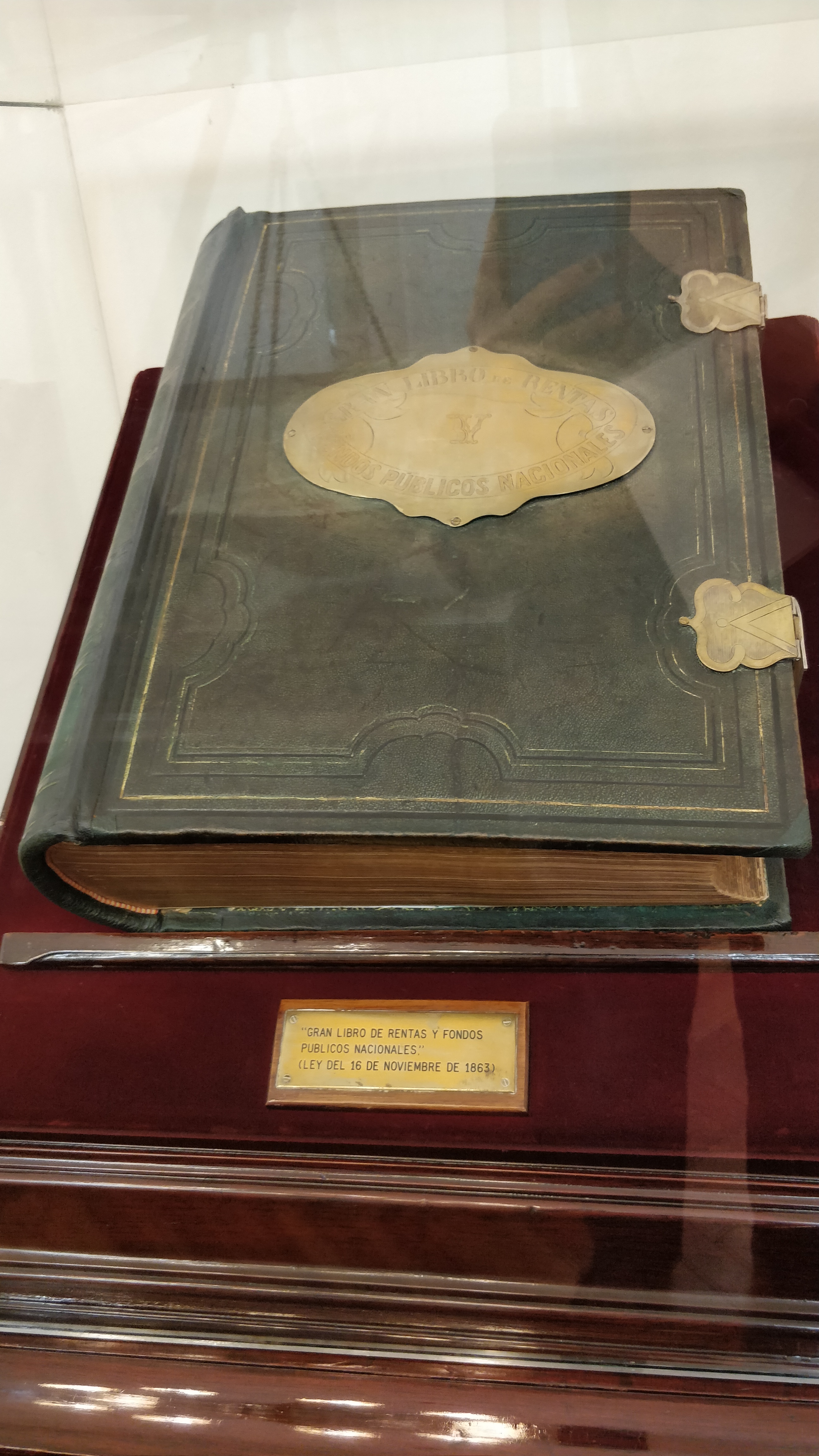
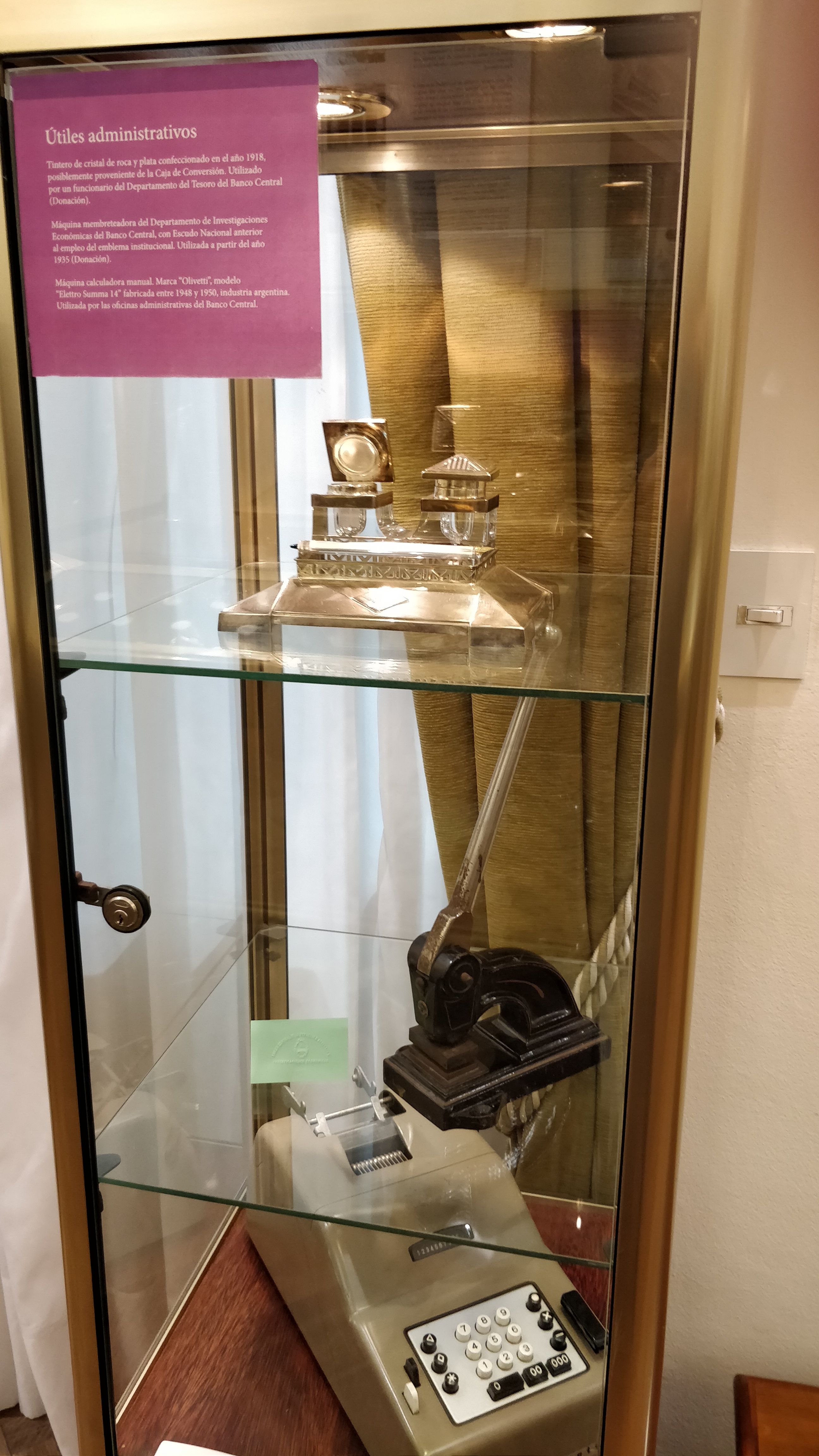
After the rooms of currency, the museum has some historical artifacts related to the history of banking in Argentina, including French scales used to weigh coins.

IMG_20190416_123050.jpgIMG_20190416_123116.jpgIMG_20190416_124311.jpg

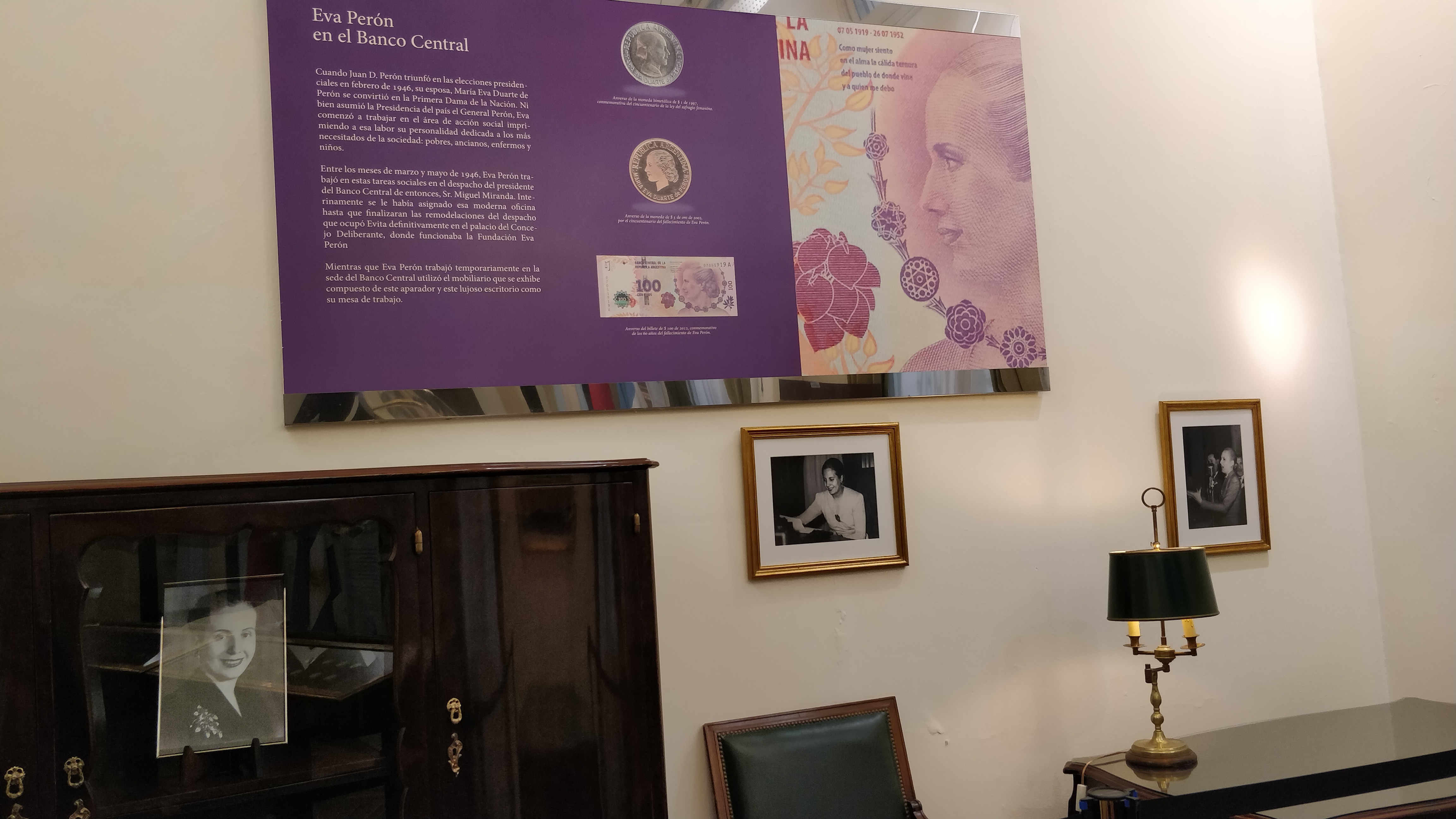
Eva Perón spent a few months working out of the Central Bank, and they have her office furniture.

IMG_20190416_124155.jpg
I think I’ve mentioned before that it’s hard to overstate Evita’s importance here.

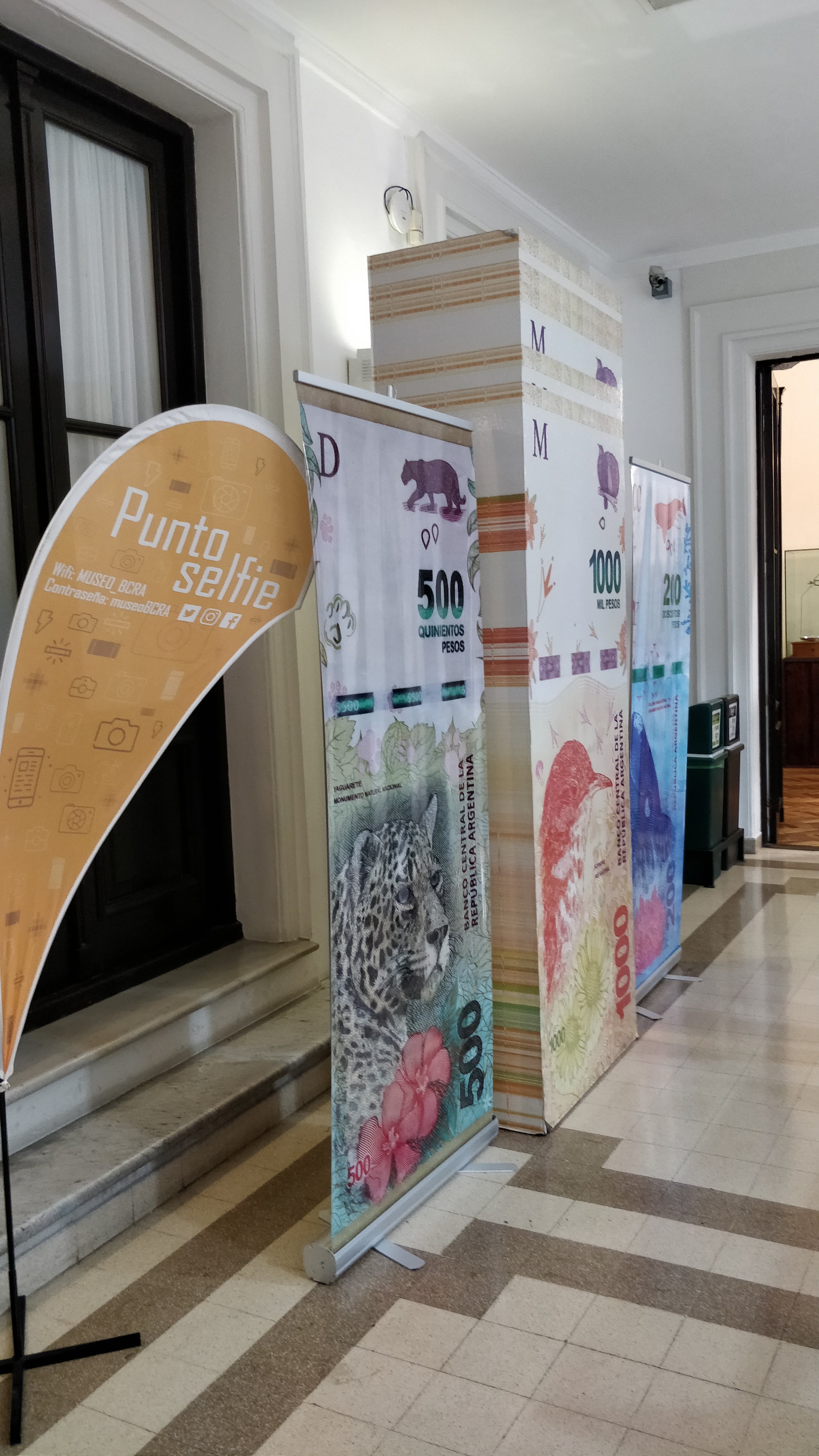
I’m going to wrap this us with the museum’s most endearing feature, a selfie point.

IMG_20190416_123343.jpg
These denominations should be good for a few months, at least.

The Banco Central Museum is located in the financial district of Buenos Aires, blocks from the Plaza de Mayo, at San Martín 216.  It is open Monday through Friday, 10am to 4pm, and is free.  There are some information cards in English for each room, although several were missing when I visited, and they are not particularly complete.  The main signage is solely in Spanish.  As it is located in the city’s heart, you can get to the museum in a million, billion ways.