National Museum, New Delhi (India)

*sheepishly peeks around the website*

…hello?

So. Been a hot minute.

But hey let’s pretend like it hasn’t been! Let’s just jump right into talking about big ol’ collections of neat stuff.

About a year and a half ago, I found myself in India, as you do. I’d never been there before. I have been in a few very large cities, and Delhi makes Buenos Aires feel like Megacity Easy Mode.

The population of Delhi is about 30 million, and they are all on the same block as you.
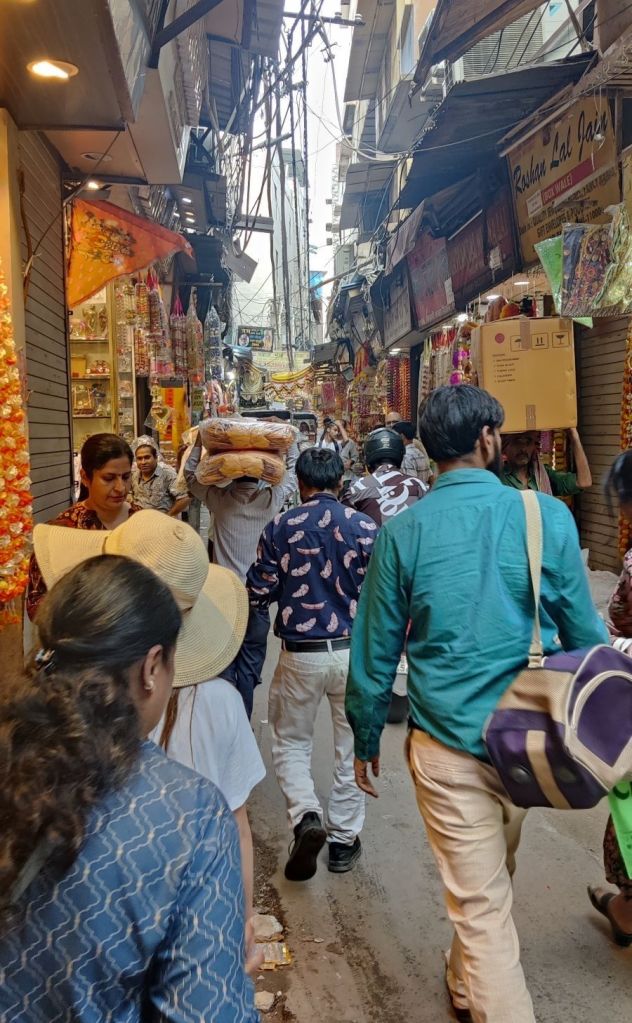
As a pedestrian, if you are waiting for someone to let you through/across/around, you are waiting forever. You live on that spot now. You are either an active entity of self-determination or a passive obstacle.

To travel in a vehicle in India is to experience existence as a drop of ocean water.

As far as I could tell, there are only two traffic laws in India: fortune favors the brave, and it doesn’t matter what color the traffic light is as long as it’s green in your heart.
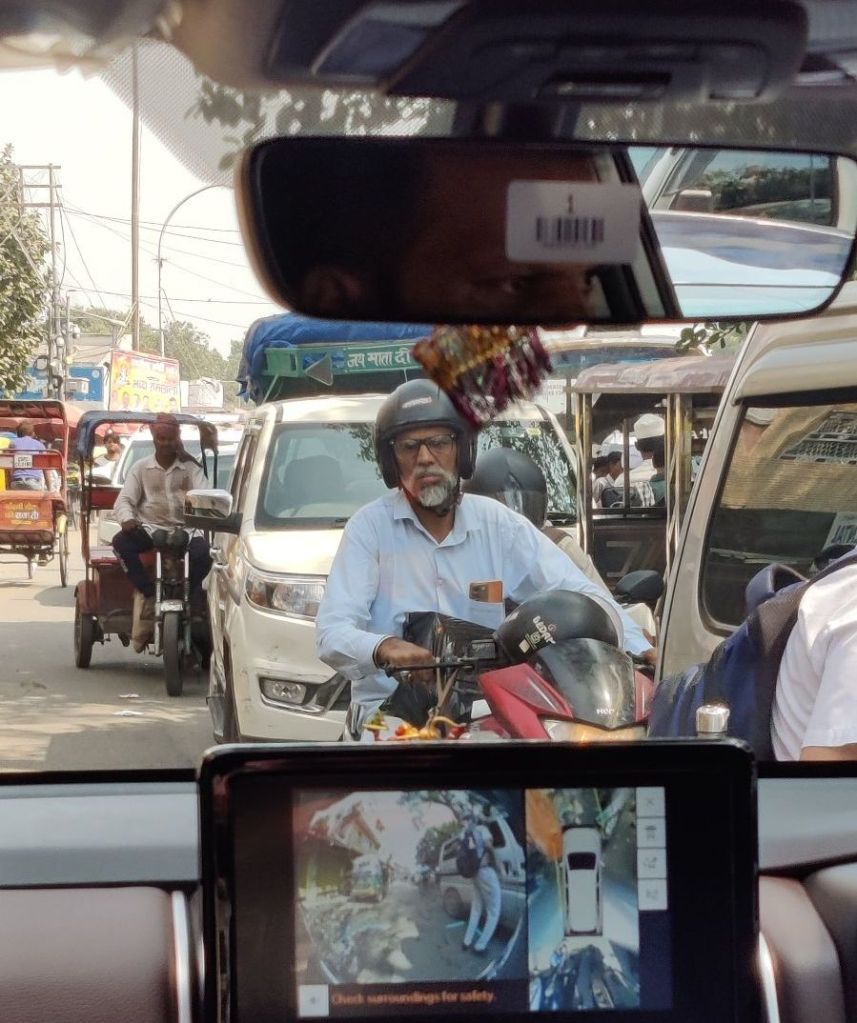
…which way are we supposed to be facing

There is clearly a logic and rhythm to the flow of traffic; otherwise there would just be piles of bodies and tuktuks everywhere all the time. But as an outsider, you do not understand it. It is language you cannot speak, and you can only consign yourself to the expertise of your translator/driver or if on foot, make tenuous, lamb-like attempts at the basic grammar of crossing the street. Traffic density is lessened outside of the cities, but your driver is going to book it regardless of the slower road obstacles, so buckle up and sit tight while he plays cow slalom.
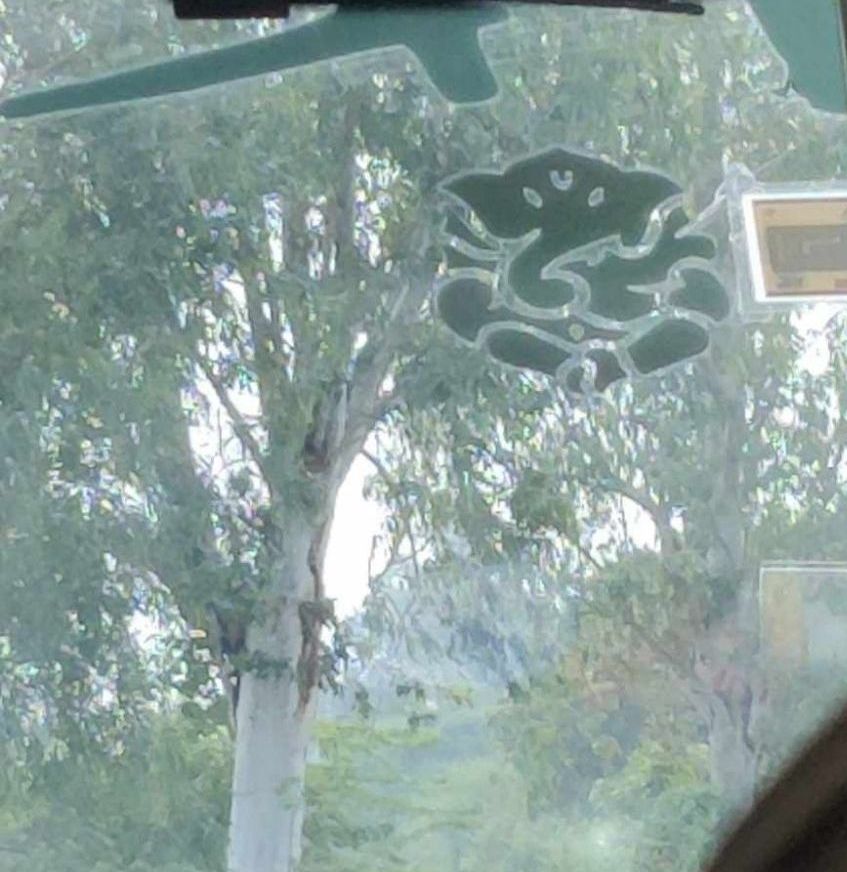
Ganesh is my copilot.

But back to the big city. Despite offering all the personal space of a platelet in a blood stream, Delhi is an amazing experience that should be visited if at all possible. It’s been a city for a couple thousand years, and a capital for hundreds of those years. It is rich with culture, history and art. Among its many museums is the National Museum, which holds artifacts that span 5,000 years.
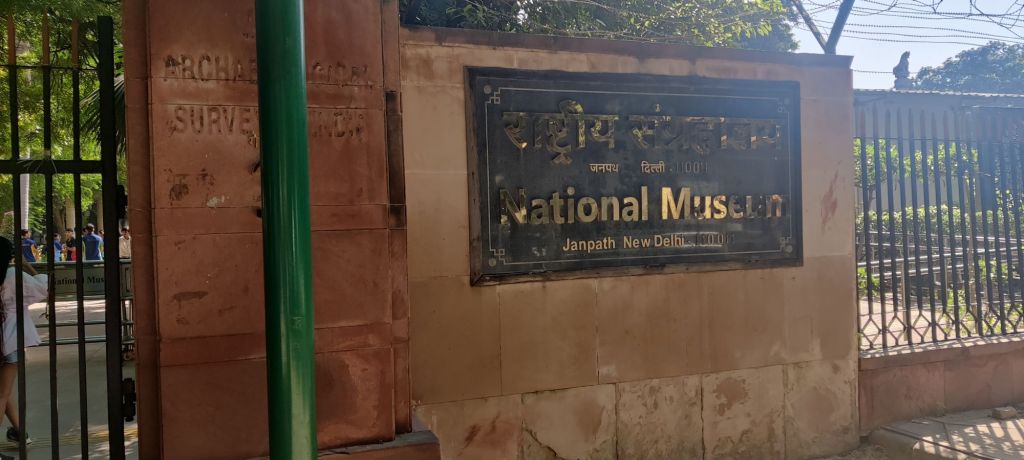
The first thing to remember is that when you are in line in India, you are either pushing up against the person in front of you or you are not, in fact, in line. I was without a guide on that day and while purchasing the tickets, I found myself not so much in line as standing near the ticket counter as others filed past me. A teenage girl immediately clocked my problem and attempted to convey how to line up effectively, and after some moments and, likely, pity on the part of some of my fellow line mates, I managed to pay.

After pausing in the entry hall for a group selfie with some teens on a school trip (embrace being in strangers’ photos), I set about exploring in no particular pattern, which will be reflected in my random-ass pictures.
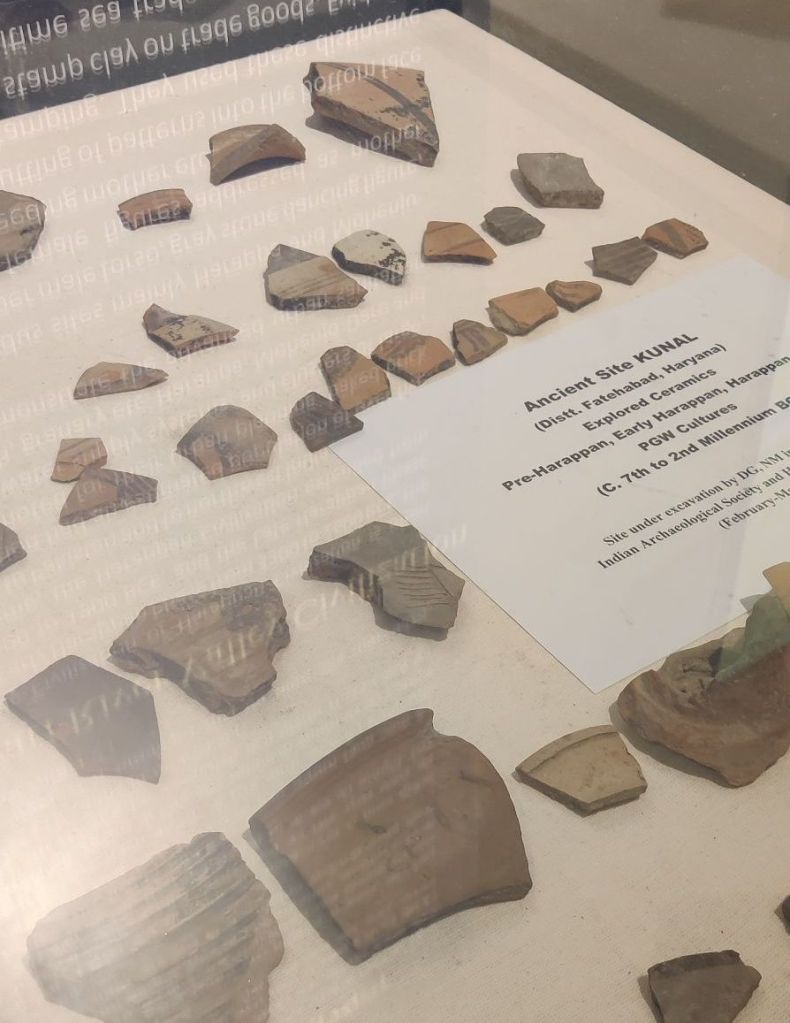
Some of this pottery is Nine. Thousand. Years. Old.

The museum holds a huge collection of artifacts from the Harappan era, the Indus Valley civilization of the Bronze Age, and earlier.
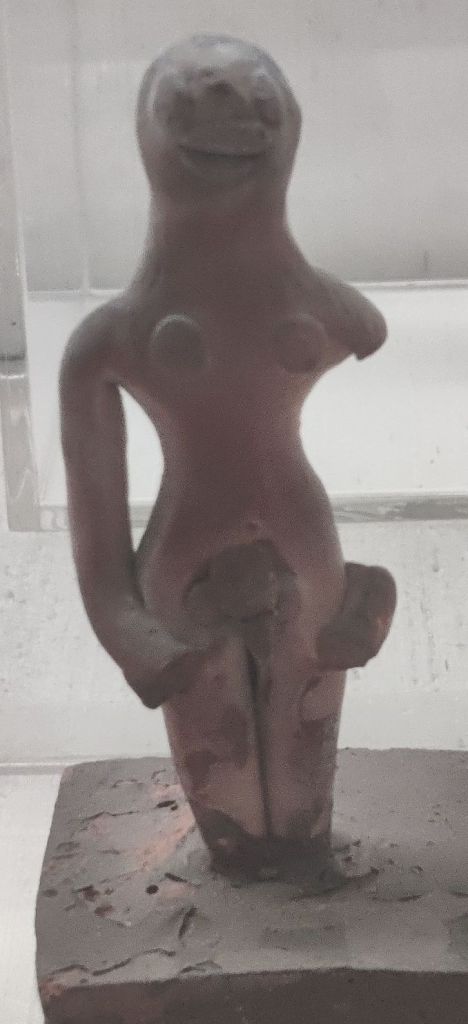
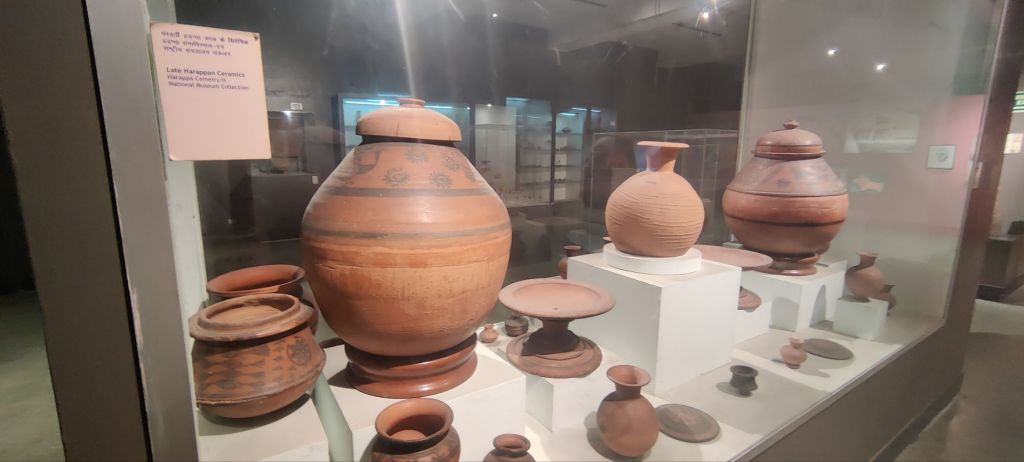
With apologies to the Harappan sculpture for taking a craptastic photo and slapping it on the Internet four thousand years later.
Late Harappan ceramics, flexing the kind of durability Pyrex can only dream of.

Excuse me while I shamelessly skip centuries of treasures and move to the Kushana Gallery, which includes this sandstone pillar from a Buddhist stupa, carved in the second century. The figure is a tree spirit motif rooted in a pre-Buddhism fertility rite, here incorporated into a stupa’s pillar to bless the site it was built on.
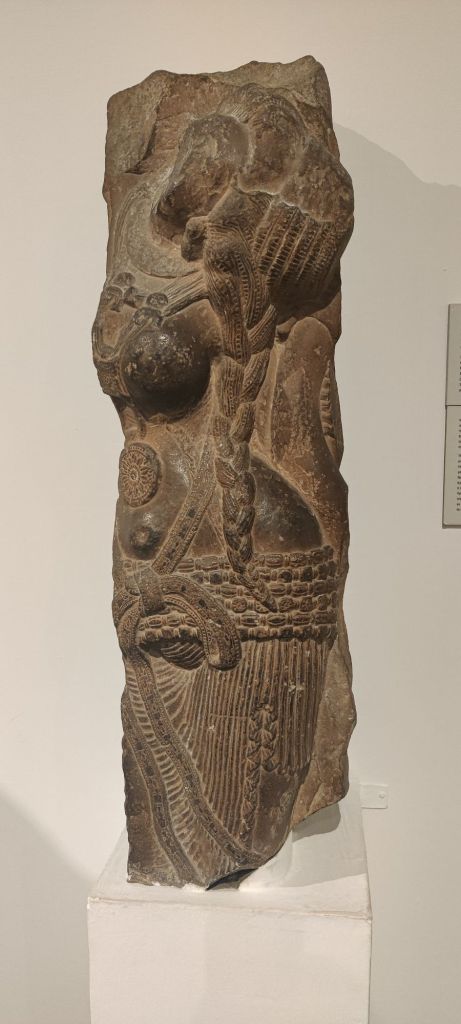
I am a noted tree enthusiast and so she makes the blog cut.

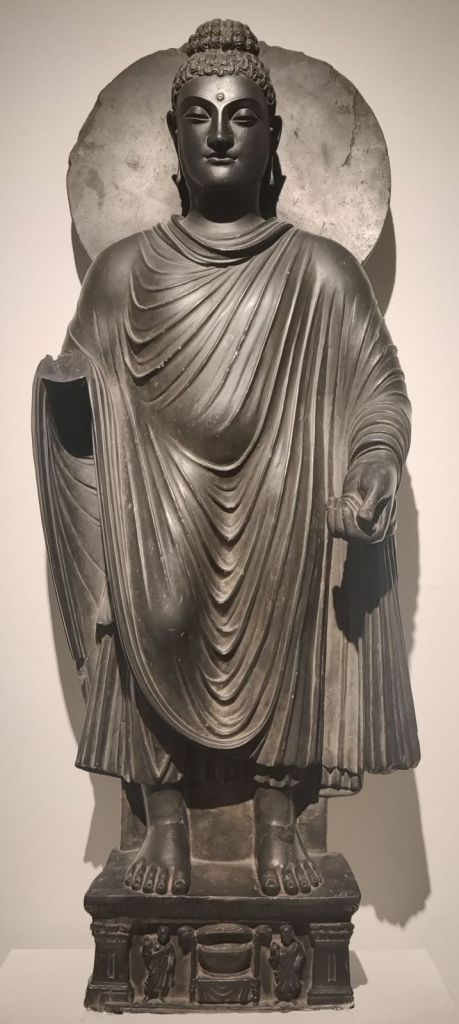
From the same time period is this Standing Buddha from the Gandhara School, which was heavily influenced by Greek art. The standing Buddhas of this era mark the start of depicting Buddha in human form.
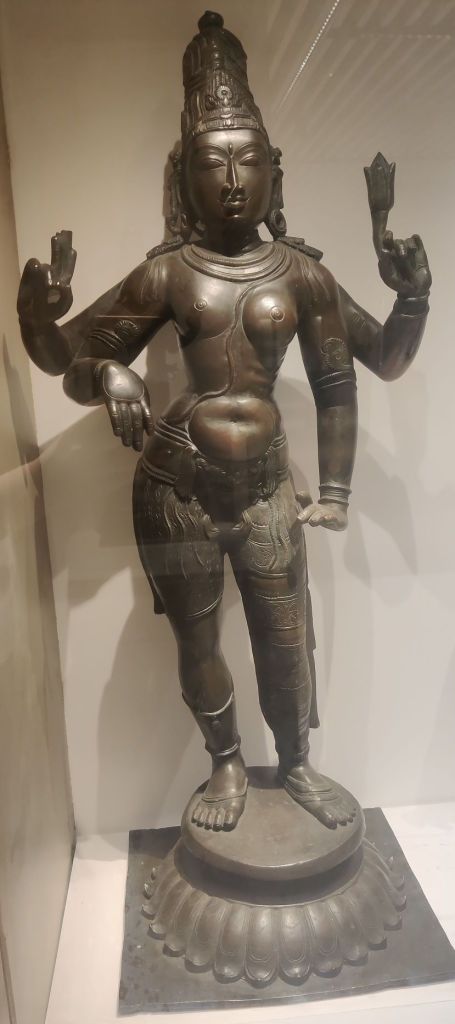
And one more statue before we go stampeding to the Decorative Arts galleries; that of a bronze Ardhanarishvara–a god form of Shiva and Parvati combined–from the 15th century.
Now, let’s get ornamental in the Decorative Arts galleries!

The two galleries are divided by material rather than time period, and between them cover pre-history to the present day.
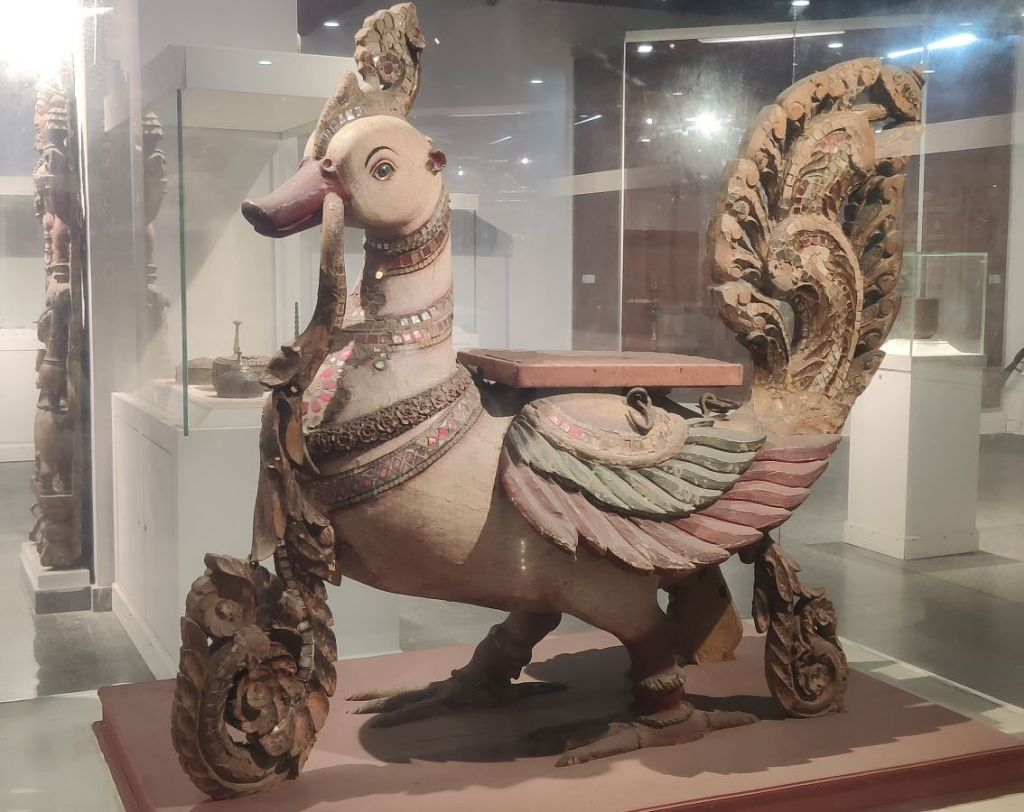
Speaking of stampeding

This is a wood and glass peacock, the mount of war god Karttikeya, from the 1800s.

And I passed over photographing many magnificent objects in favor of this 20th century ivory eggplant-shaped perfume container, solely because it amused me:
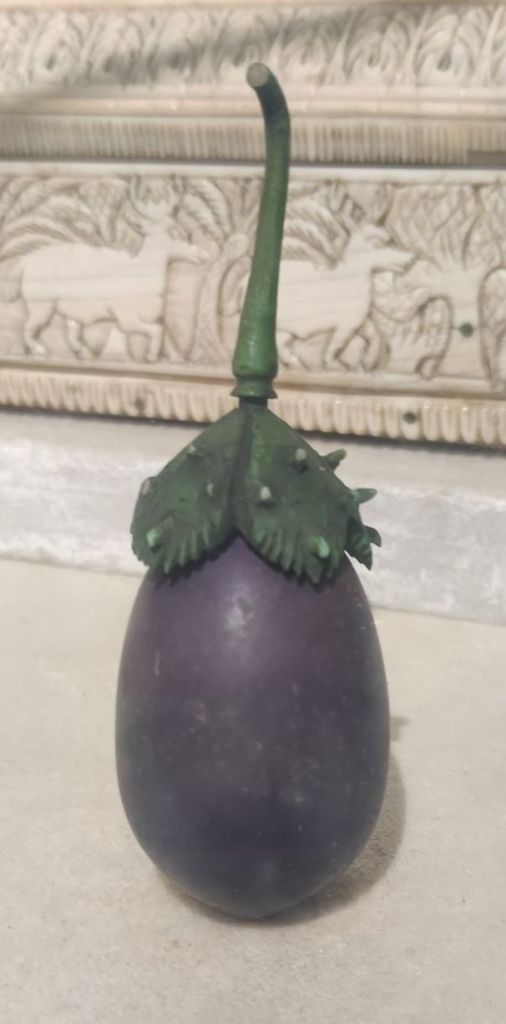
🍆

And in metalworking, gold amulets from the first century:
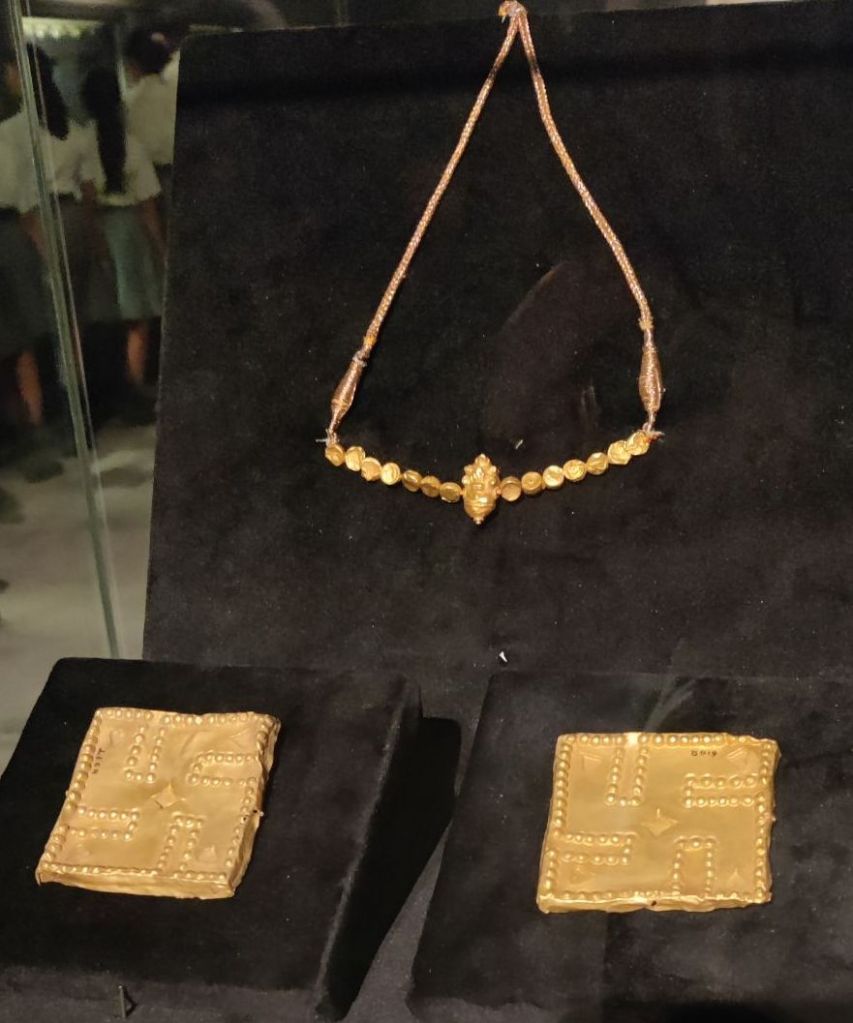
Photos at a weird angle brought to you by my eternal struggle with glare

Here’s one quick example from the Miniature Paintings gallery, Mughal division. The plaque says “The Nativity” but the writing on the painting says “Birth of Virgin Mary.” From 1720ish.
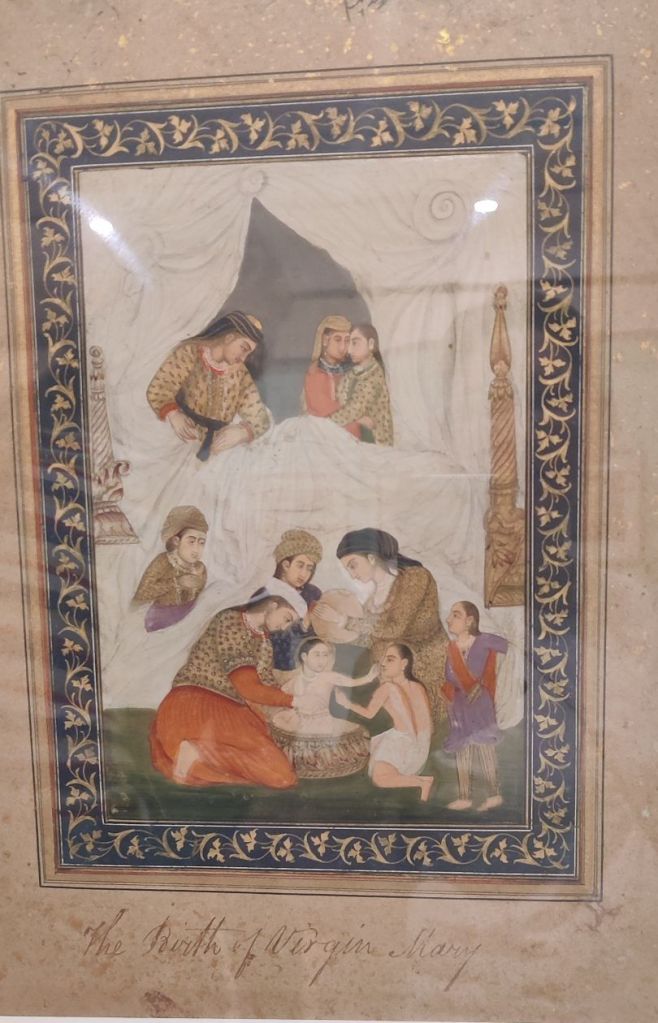
In the Holy Adult-Baby tradition

There’s a Coins gallery for all your numismatic needs and desires, and if you’re wondering if the National Museum also has some unsettling mannequin type things, the Coins section has an answer for you.
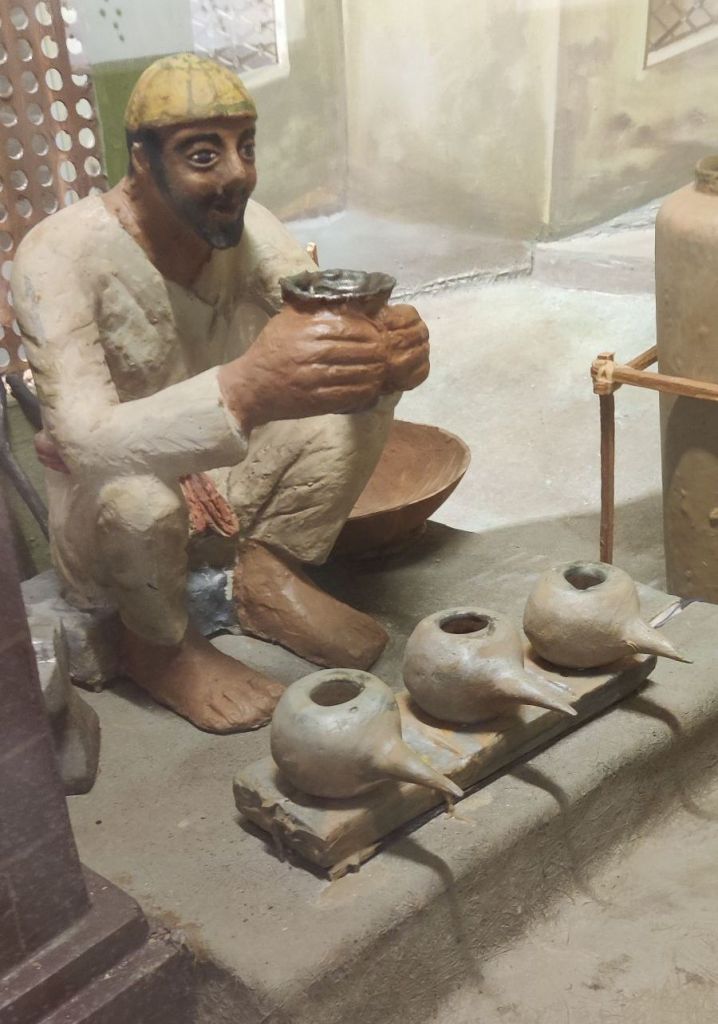
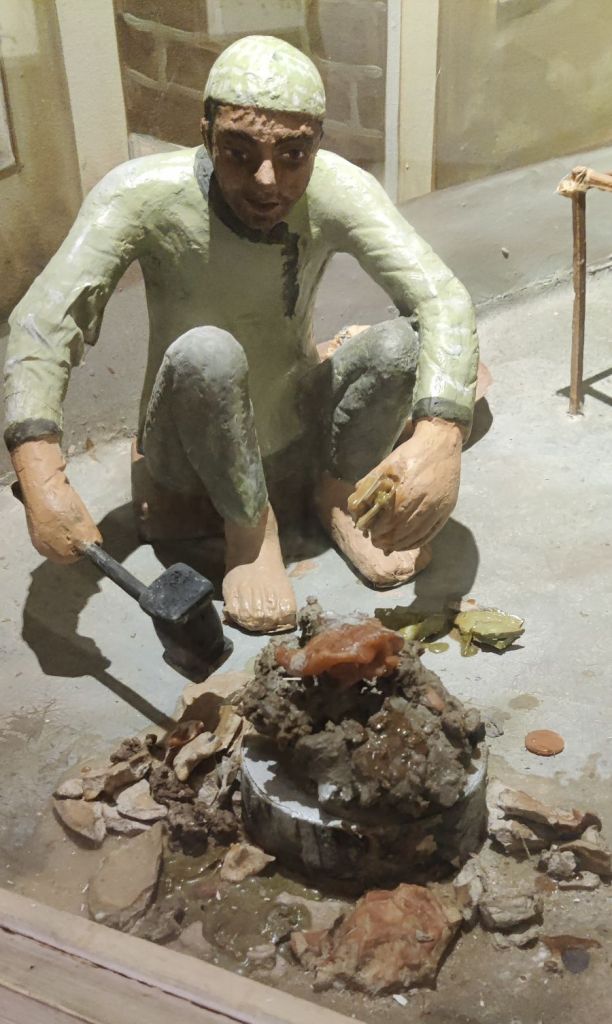
Coin minting has never looked so gooey.

From the Central Asian collection, there are murals from the Mogao Caves  (Thousand Buddha Grottoes) in China, which were an important site along the Silk Road. The caves hold a thousand years of Buddhist sculpture and painting, making them a UNESCO World Heritage site. The Library Cave was discovered in 1990 with tens of thousands of manuscripts; most of the silk paintings in this room are from there.
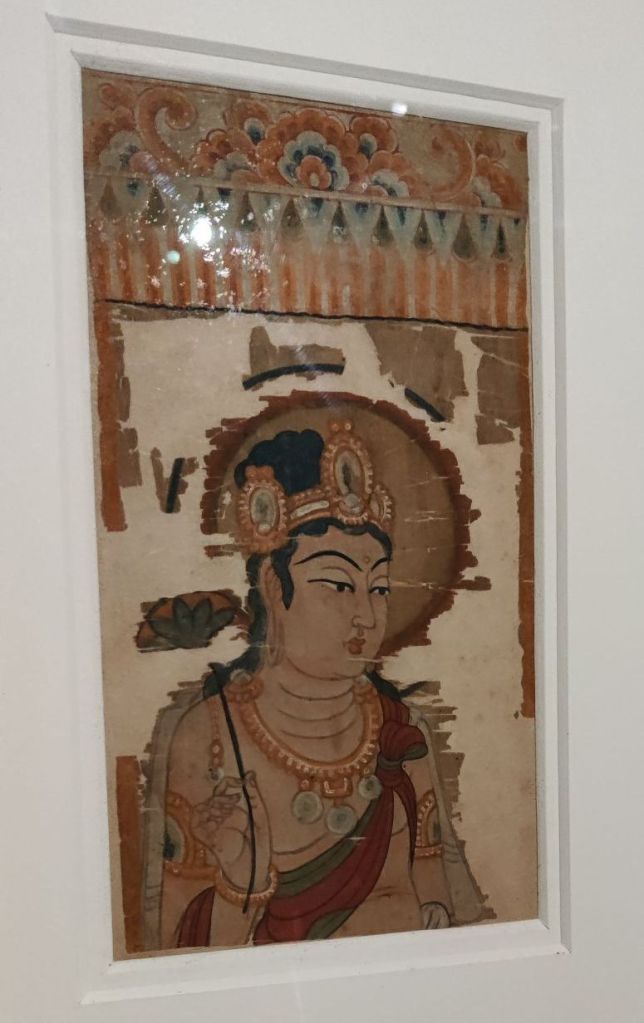
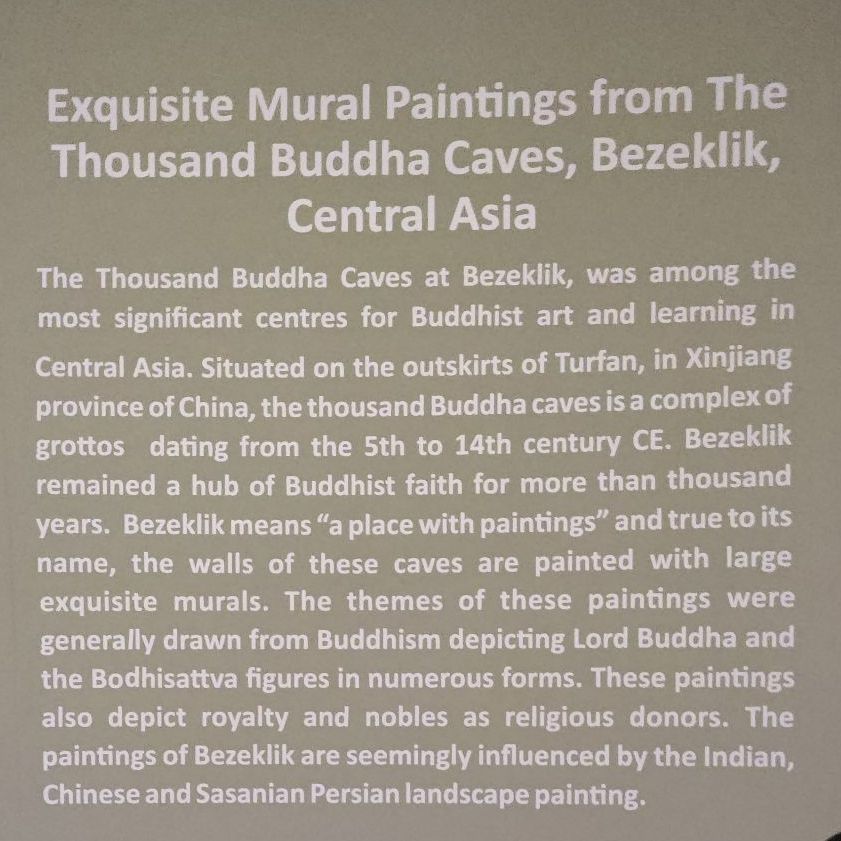
There are also some works from the Bezeklik Thousand Buddha Caves, also a site on the Silk Road in China.
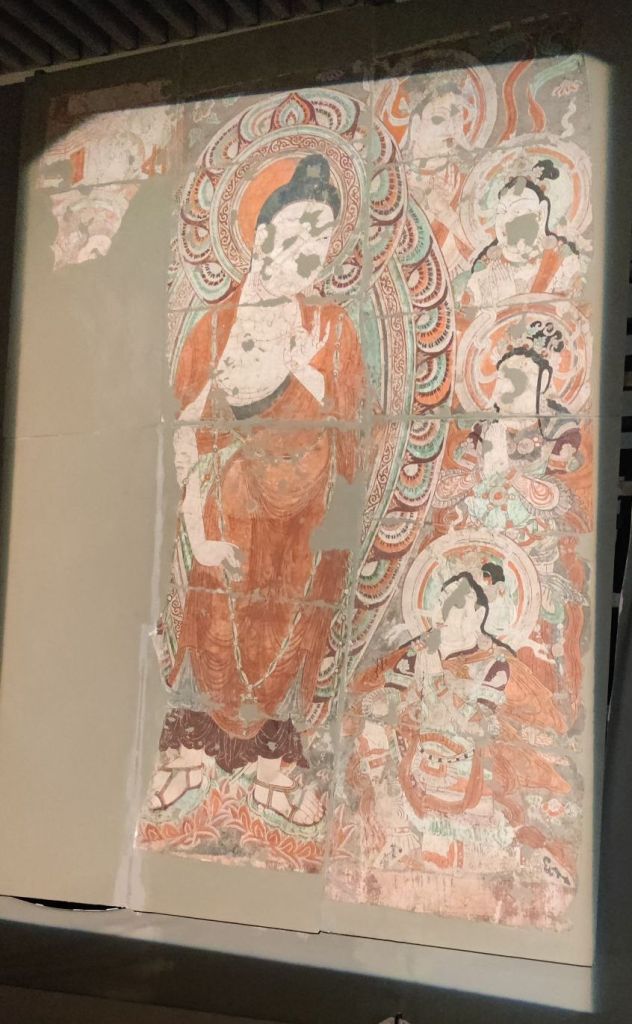
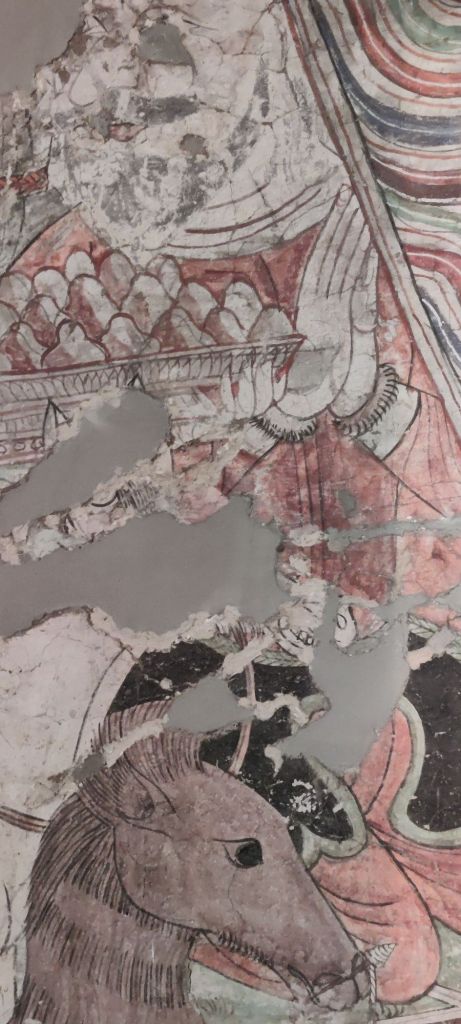
One Buddha….two Buddhas…
…982 Buddhas…
Ctrl C, Ctrl V

Absolutely stunning stuff.

There is a huge collection of Buddhist objects in the museum, and some of the most important and exemplary are housed in the Buddha pavilion. This exhibit has objects from all over Asia, in varying materials and from many time periods. The centerpiece is a reliquary holding bone fragments excavated from Piprehwa and believed to be those of the Buddha.
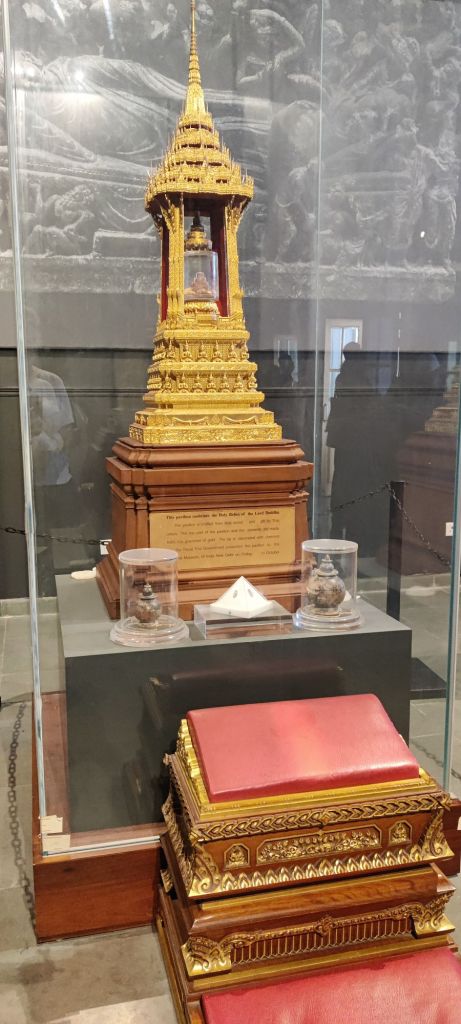
There is a guard with an automatic rifle in the room and he’s pretty chill, but it does distract just a teensy bit.
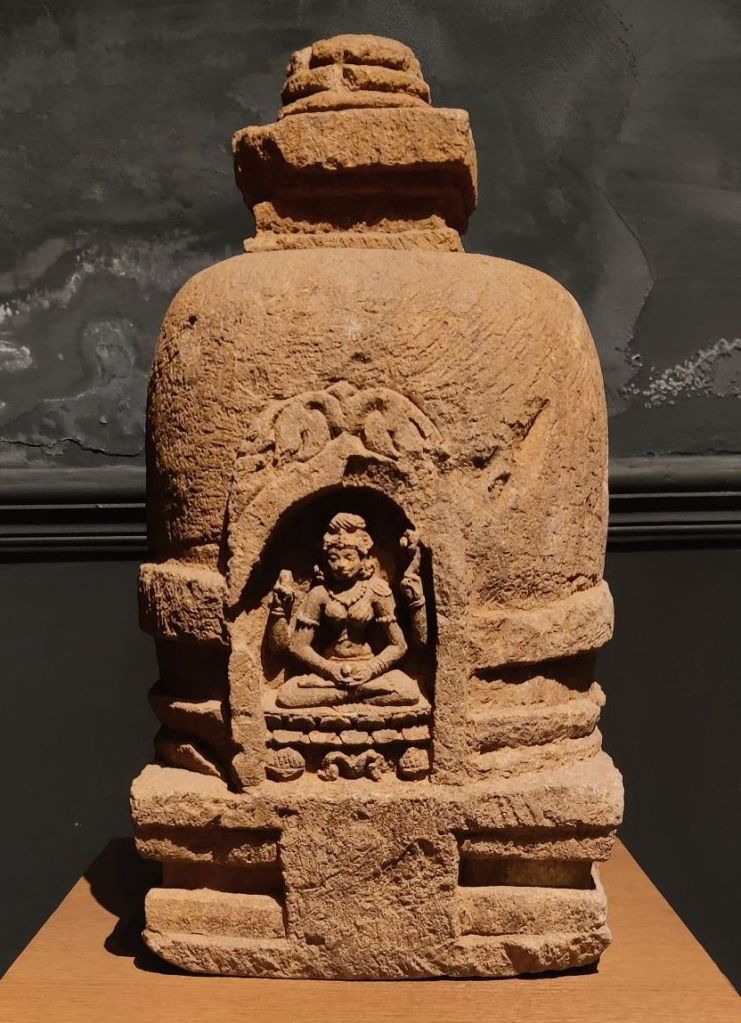
Chunda with four arms, a goddess of some Buddhist traditions, on a votive stupa from the 700s
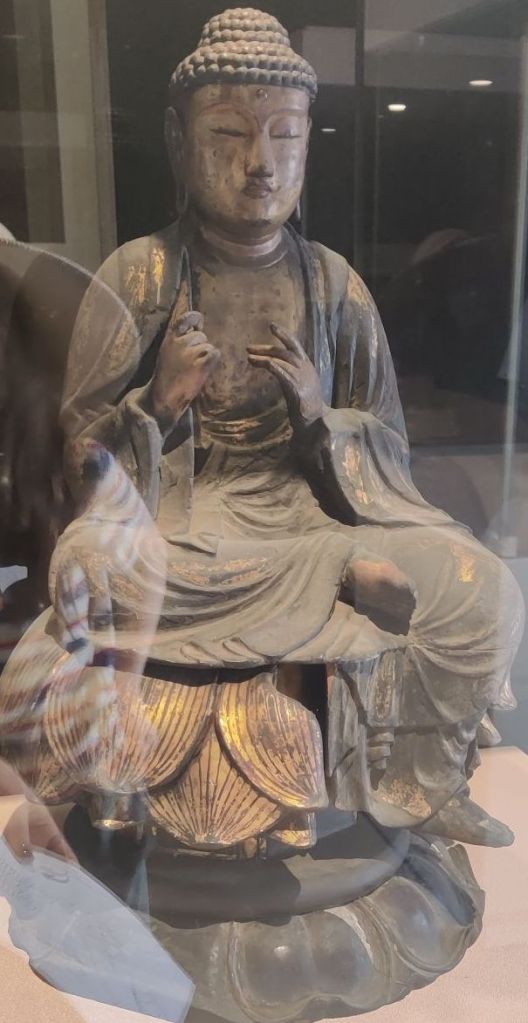
A 15th century wooden Buddha from Japan, and reflections of tourists reflecting on him
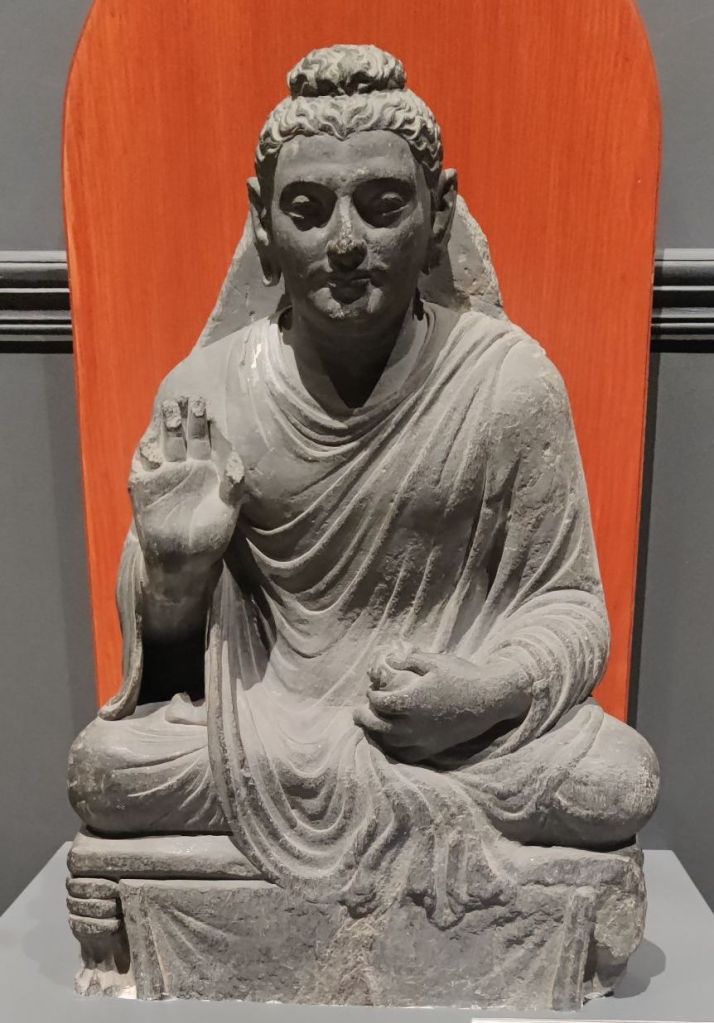
A second century stone Buddha from Gandhara, and my personal favorite thing in the museum.

There is. So. Much. More. The history of Indian writing, textiles, bronzes, manuscripts, maritime history, whatever was in all those crates being stored in the corridors–artifacts, relics and art for days. There is a small store with very inexpensive books available, so don’t miss that. The National Museum is open 10-6, Tuesday through Friday and 10-8 Saturday and Sunday. You can get there by hiring a driver and telling him that’s where you want to go.
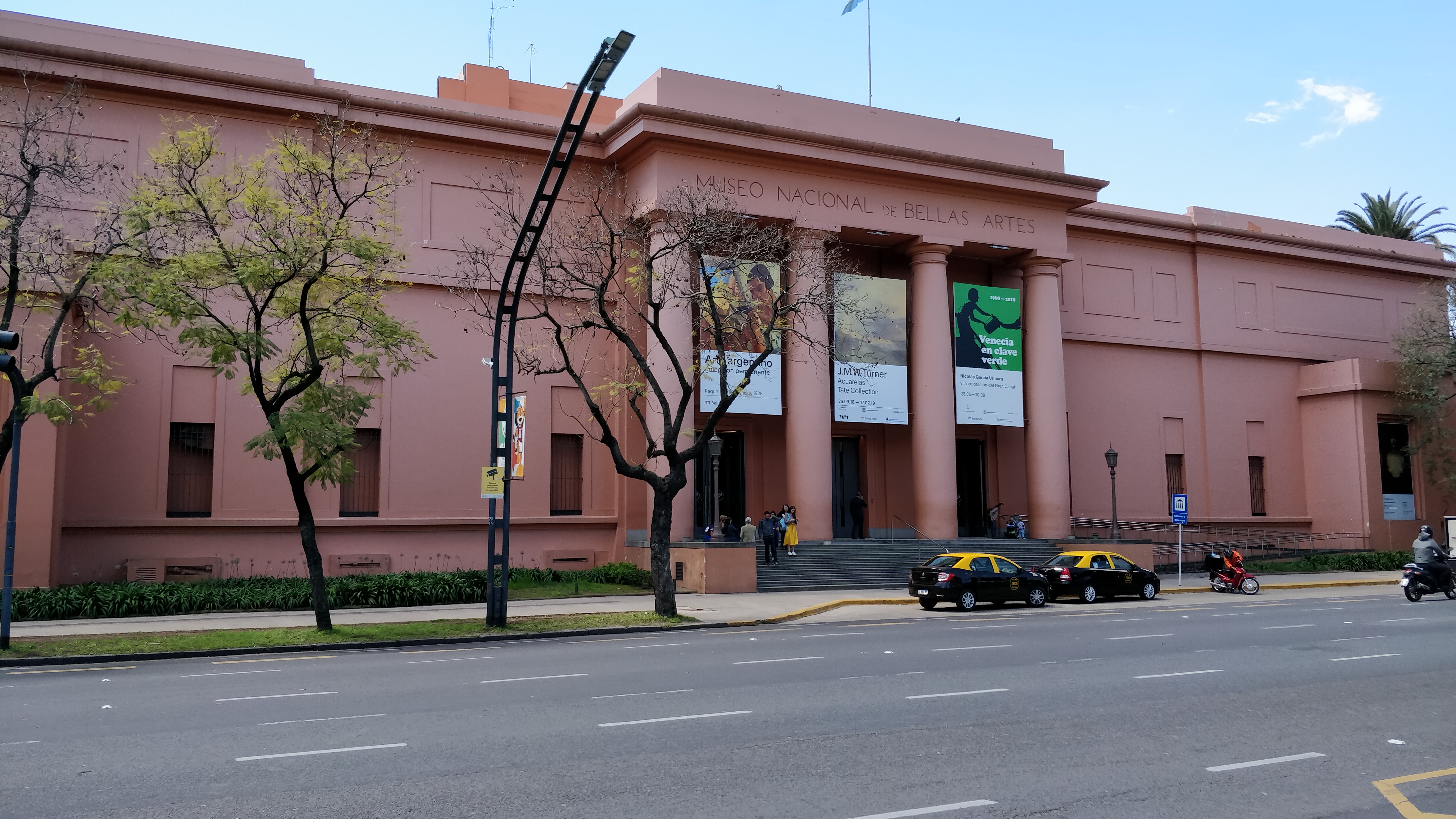
Museo Nacional de Bellas Artes [National Museum of Fine Arts]

Bellas Artes is one of the big dogs, obviously.

IMG_20181003_133728.jpg
It contains not one but two gift shops.

As such, it has a very fine collection, and since this is a blog post, I will not be providing a thorough overview.   For one thing, the museum has a very nice website partially available in English (and a guide app only in Spanish).  So I’m just going to do a light overview!  There’s just so much art!

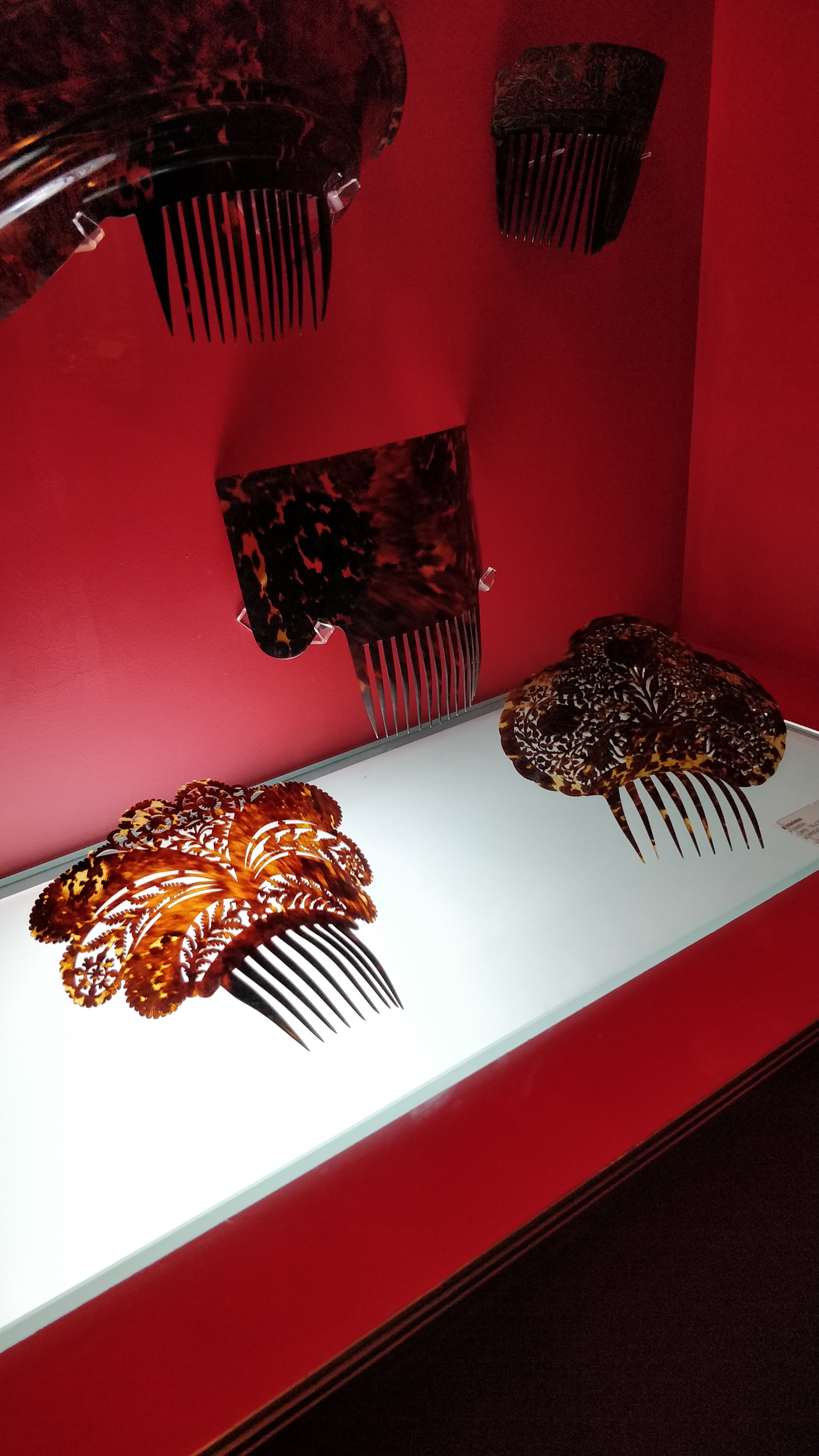
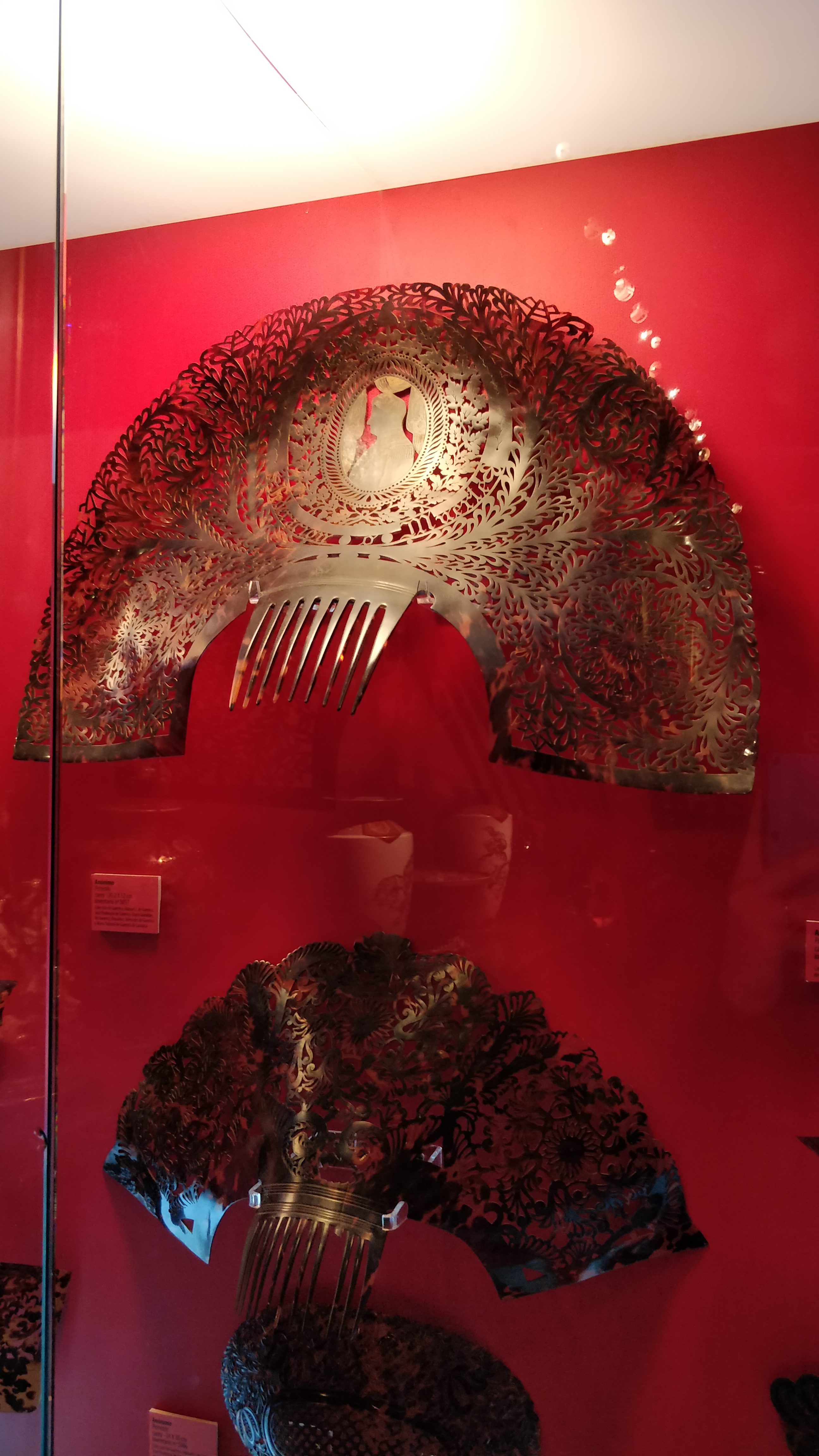
Obviously, as a national fine arts museum, Bellas Artes has a strong collection of Argentine and Latin American art.  The international collection trends noticeably to European art.  Let’s have a peek, starting with these things, because I am a big fan of hair decoration:

IMG_20181003_143348.jpg
Who has this much hair

IMG_20181003_143436.jpg
How do these not cause headaches

These are peinetónes, very large versions of the Spanish peineta that were distinct to the fashion of the Rio de la Plata region in the 1830s, until shitty men took to criticizing the elaborate and expensive combs in the most sexist way possible (“terrible women neglect their families and whore themselves out in pursuit of this extravagance!”), and their use declined.  You can find several contemporary illustrations mocking the peinetón.  Certainly, there are reasonable criticisms to be made of fashions that are uncomfortable, inconvenient, and costly, but “look at these shallow immoral bimbos” is just the worst.

On to the older European stuff!

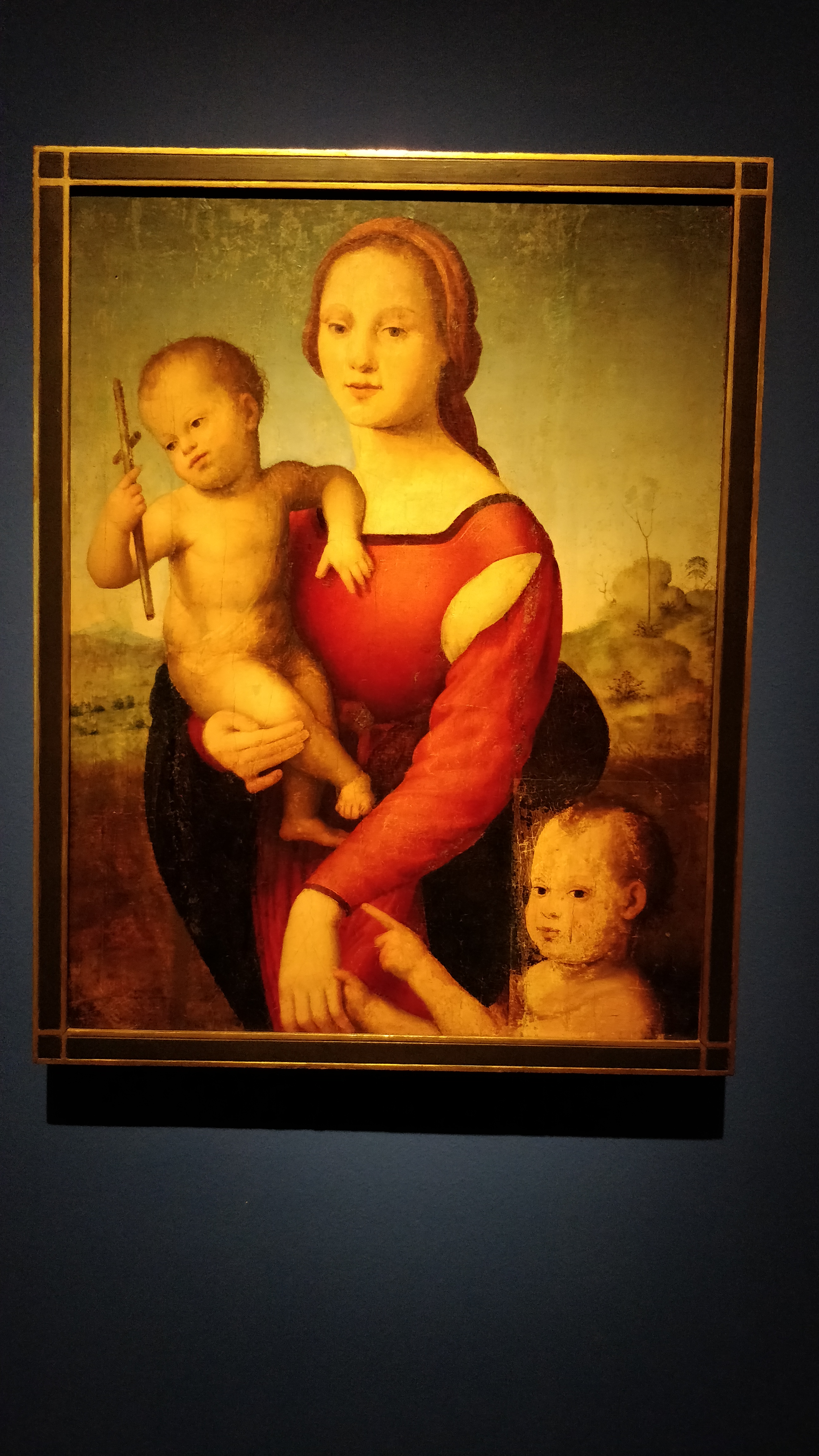
IMG_20181003_150908.jpg
St John here giving you a big hint as to who the principal subject here is, or else trying to draw attention to the incredibly inappropriate baby toy.

Early 1500s Virgin and Child with St John from Florence.

IMG_20181003_150438.jpg
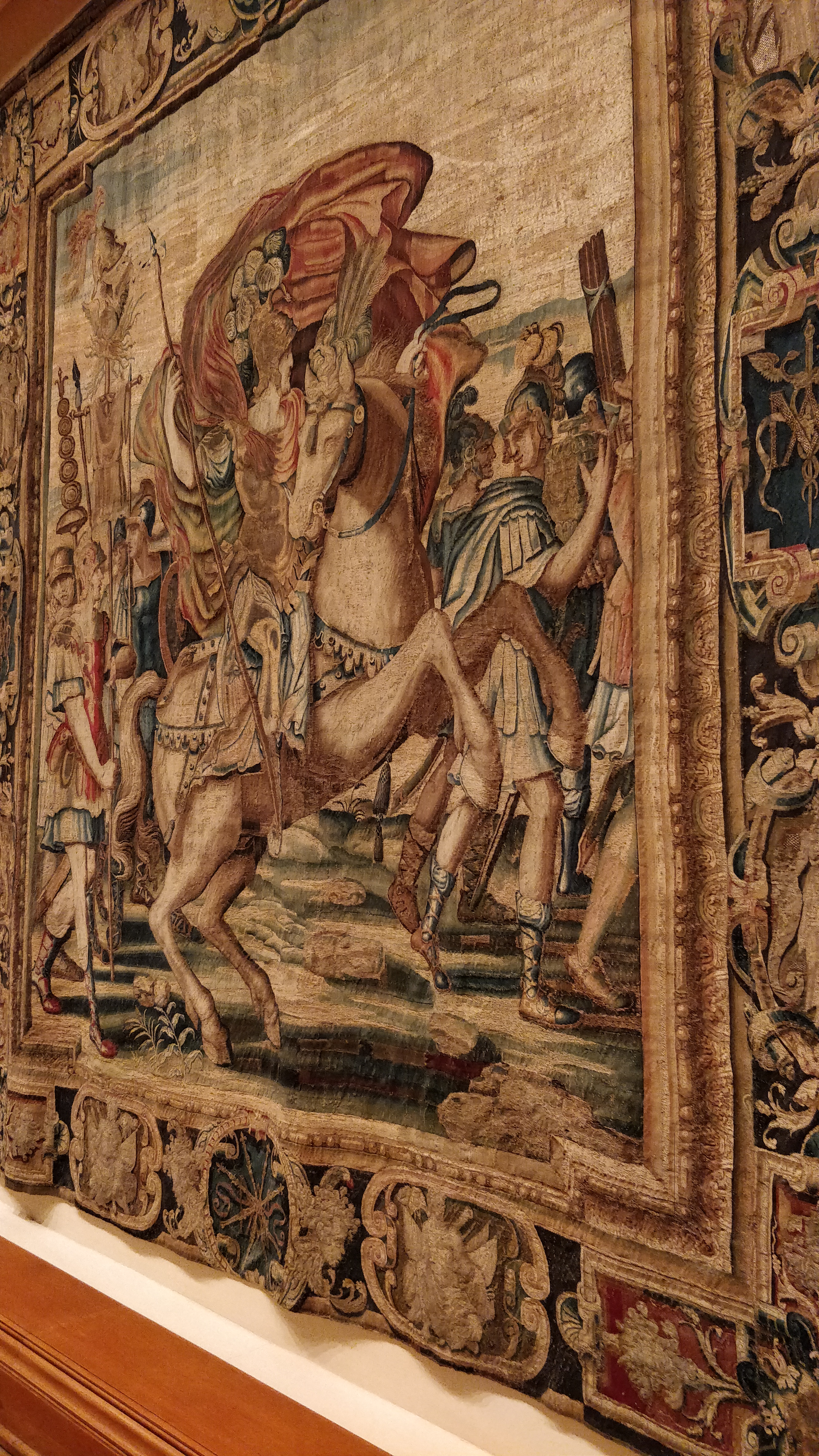
If I ever have a castle, Imma get so many tapestries

This is a Belgian-made tapestry from the early 1600s.  As someone who can barely sit still long enough to embroider a simple outline figure on a handkerchief, I am always deeply impressed by tapestries.

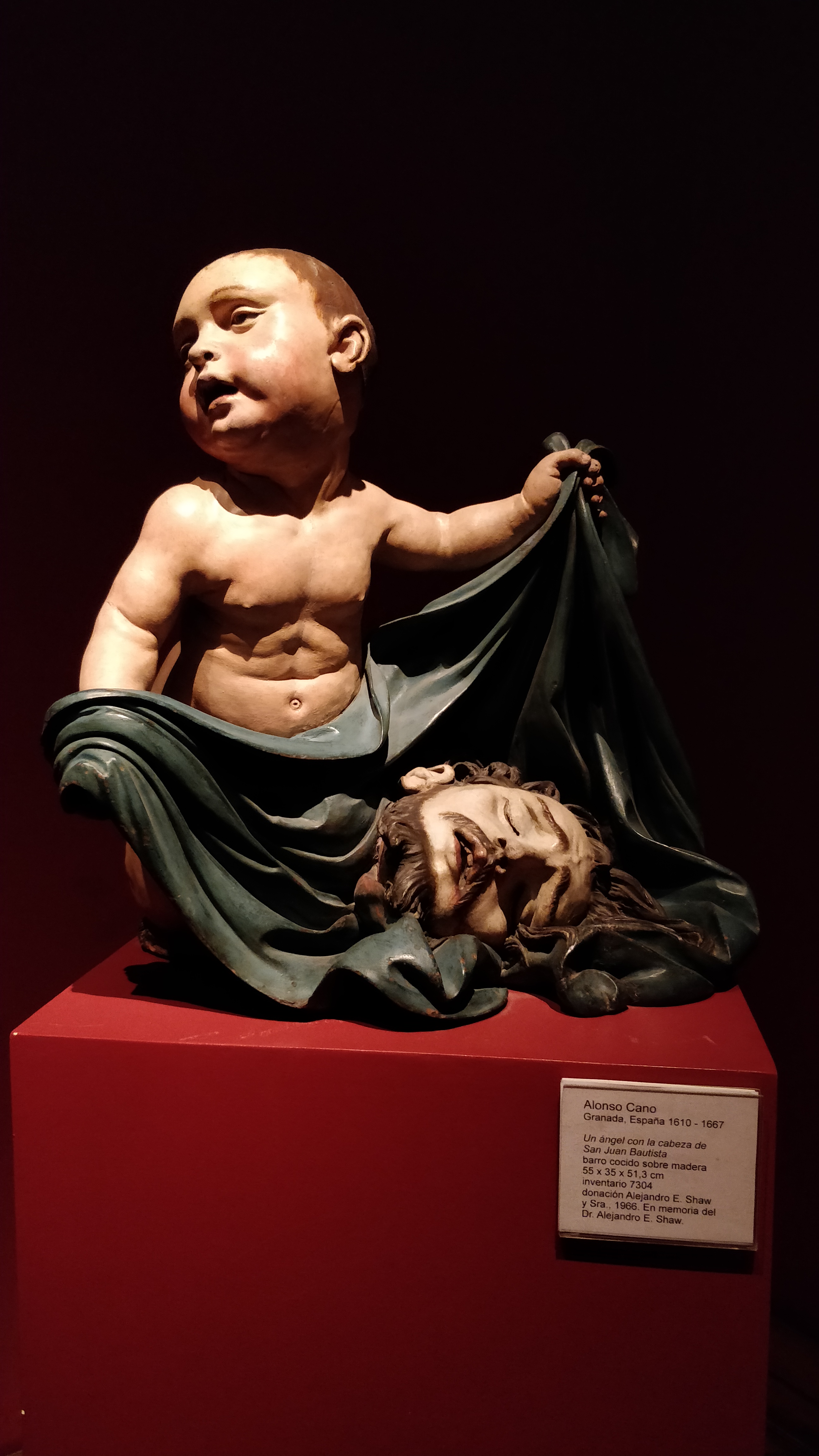
IMG_20181003_150154.jpg
If you leave severed heads laying around, the baby is totally going to get into them.

This is a 17th century wood sculpture, “An angel with the head of St John the Baptist.”  This stuff is all pretty typical of the time and region.

Moving forward, time-wise, the collection includes examples from a lot of the big dudes, El Greco, Rubens, Rembrant, Degas, van Gogh, Monet, Kandinsky, Pollock, Rothko, and so on.

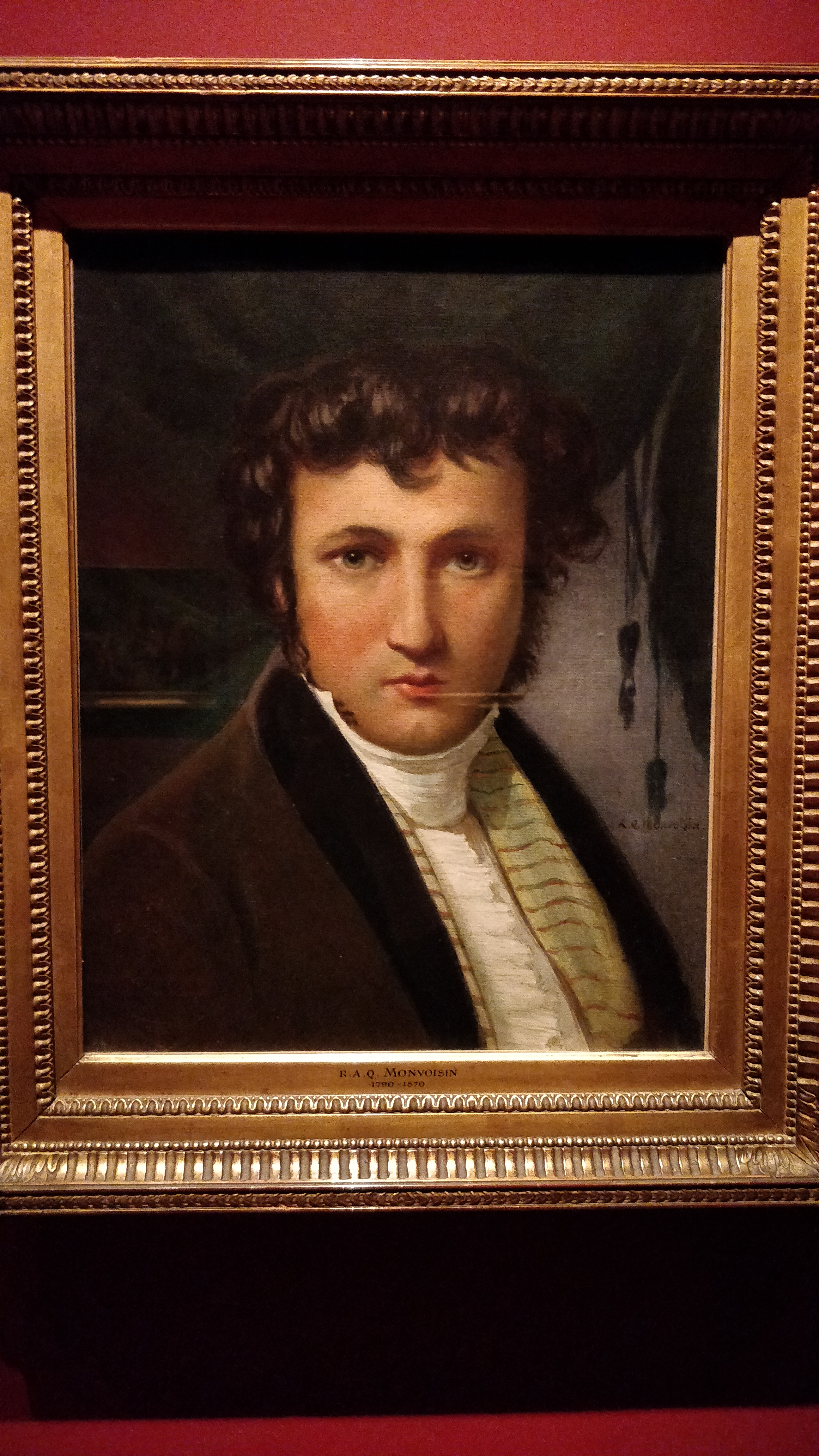
IMG_20181003_144719.jpg
Raymond Monvoision, “self portrait,” early 1800s France.

IMG_20181003_145959.jpg
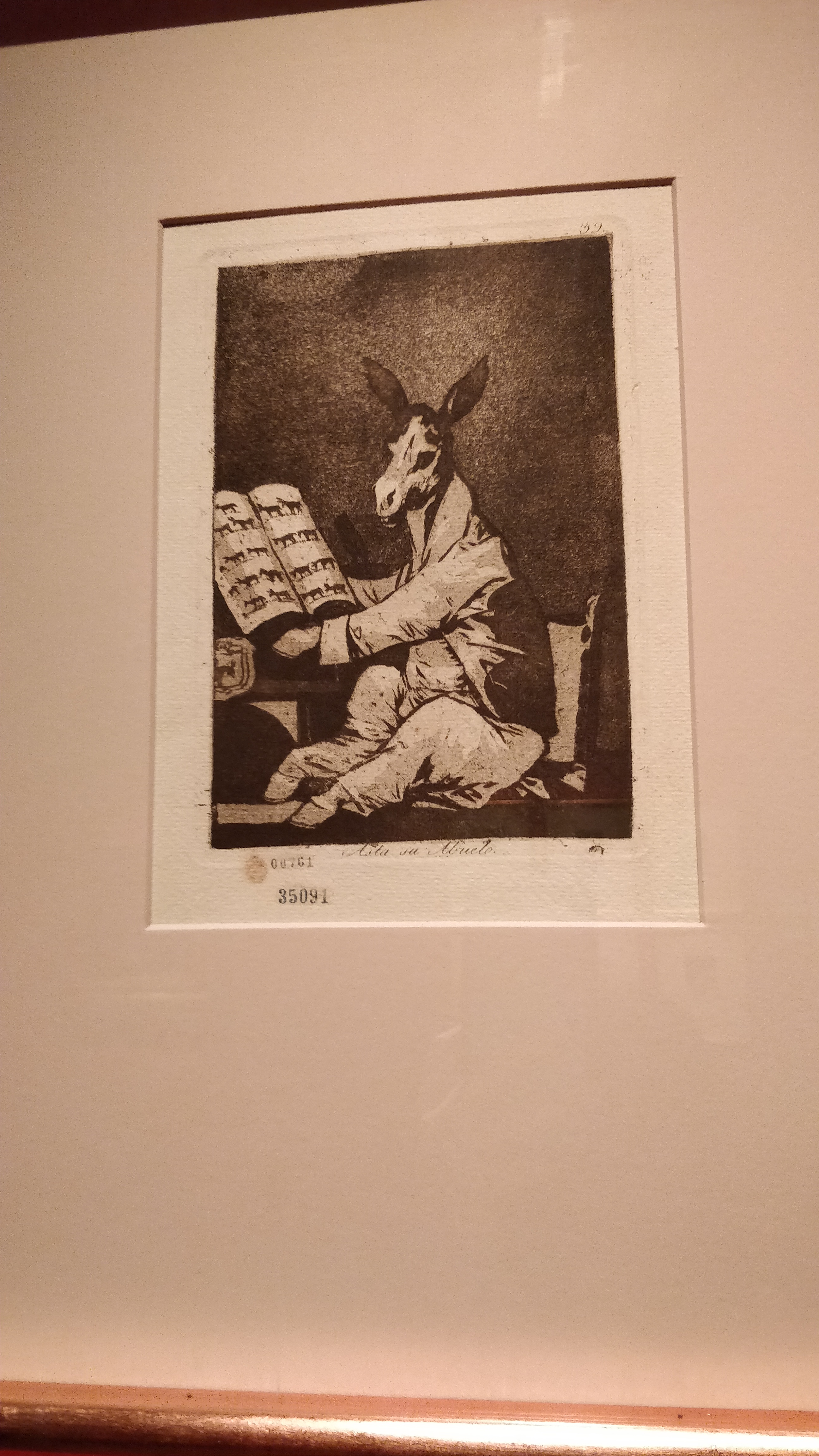
Goya, doing Goya things.

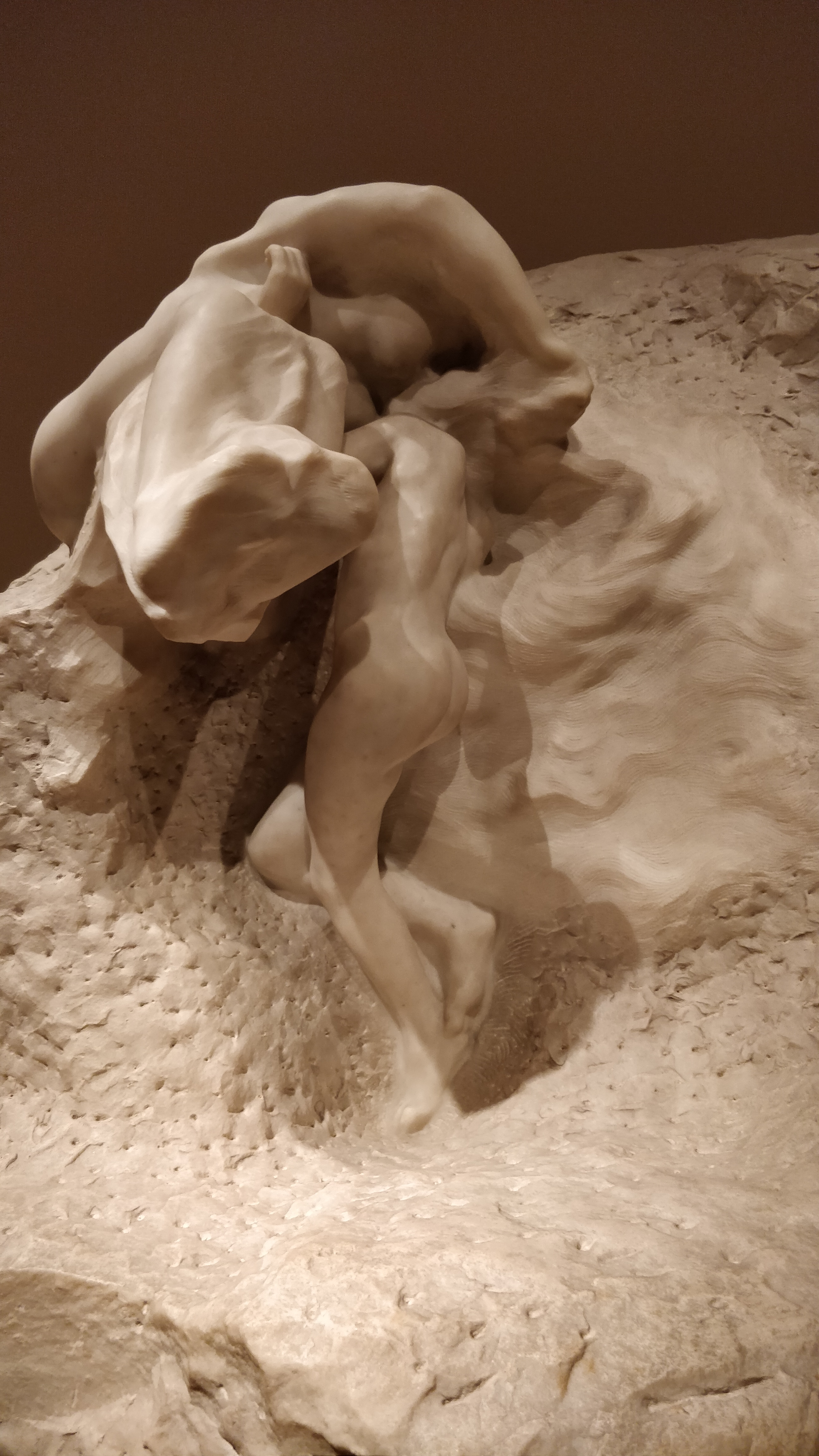
There’s a lot of Rodin, owing to the museum’s first director’s admiration of him.

IMG_20181003_145632.jpg
“The Earth and the Moon,” 1898, because how many times do you really want to look at “The Kiss”

IMG_20181003_151707.jpg
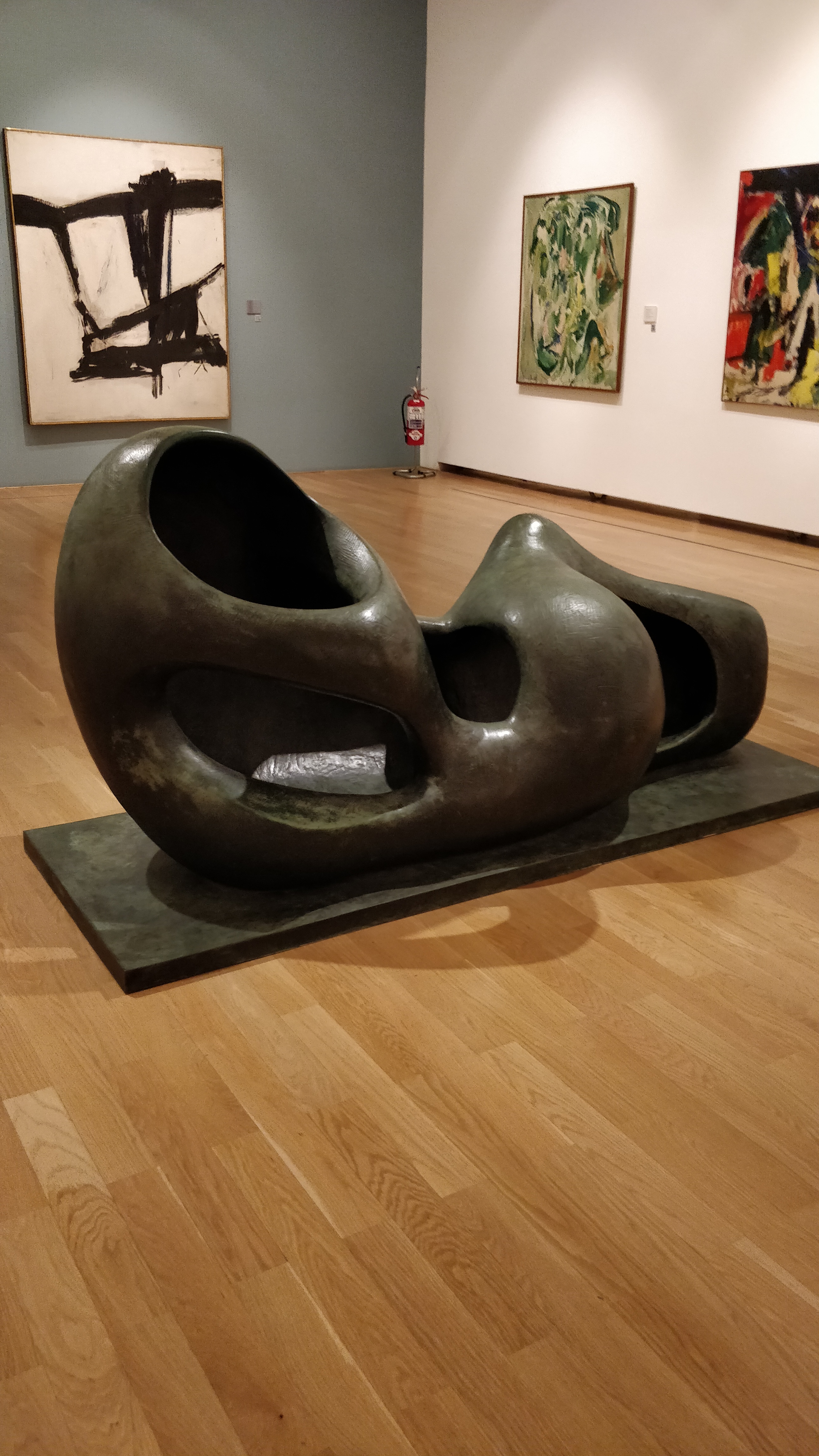
Henry Moore, “Reclining Figure, External Forms

But let’s turn our attention to the Argentine artists, my very favorite feature of Bellas Artes.

IMG_20181003_144602.jpg
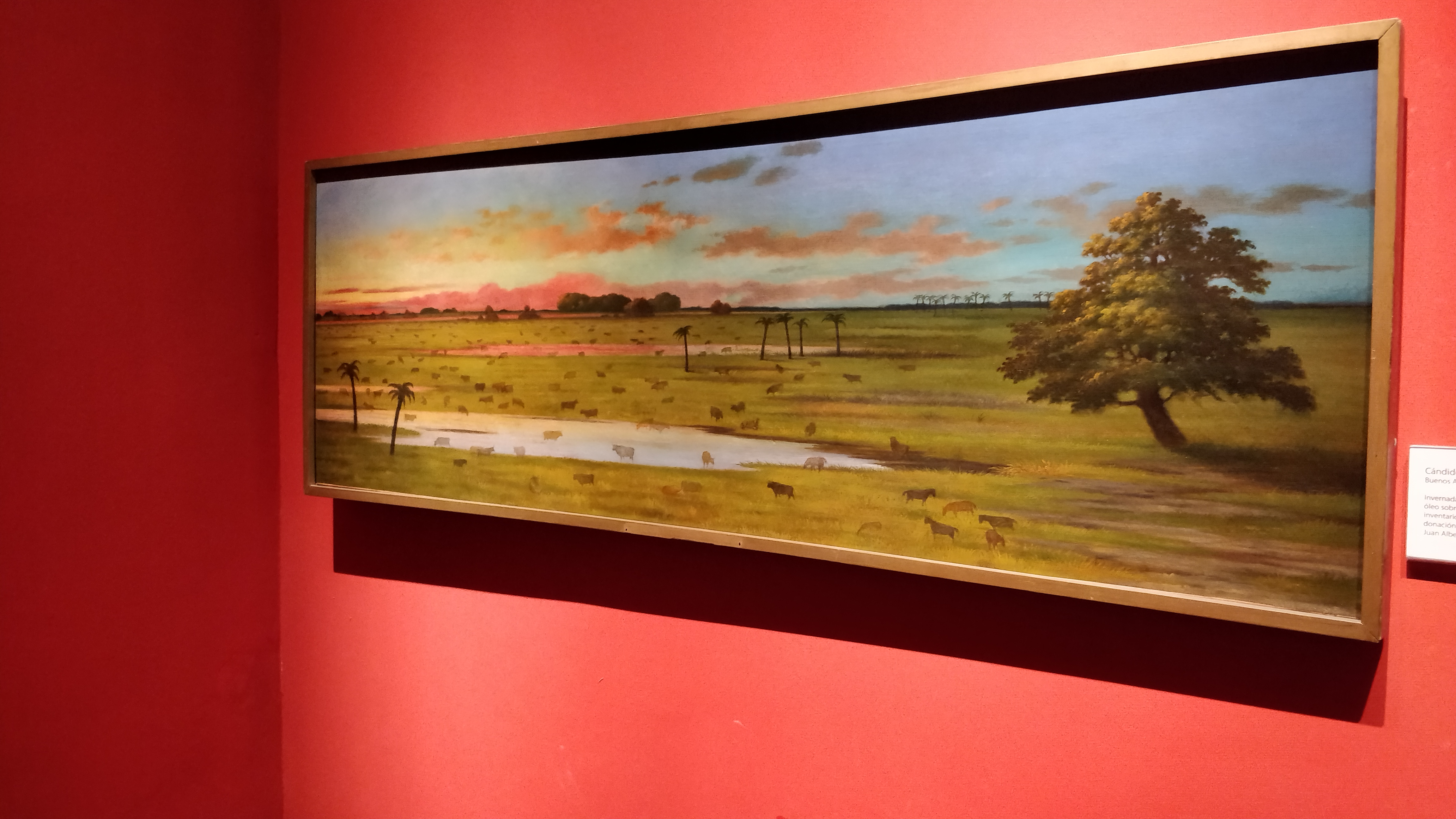
Cándido López’s “Wintering Eastern Army,” more beautiful in person than any photo I’ve seen.

IMG_20181003_152708.jpg
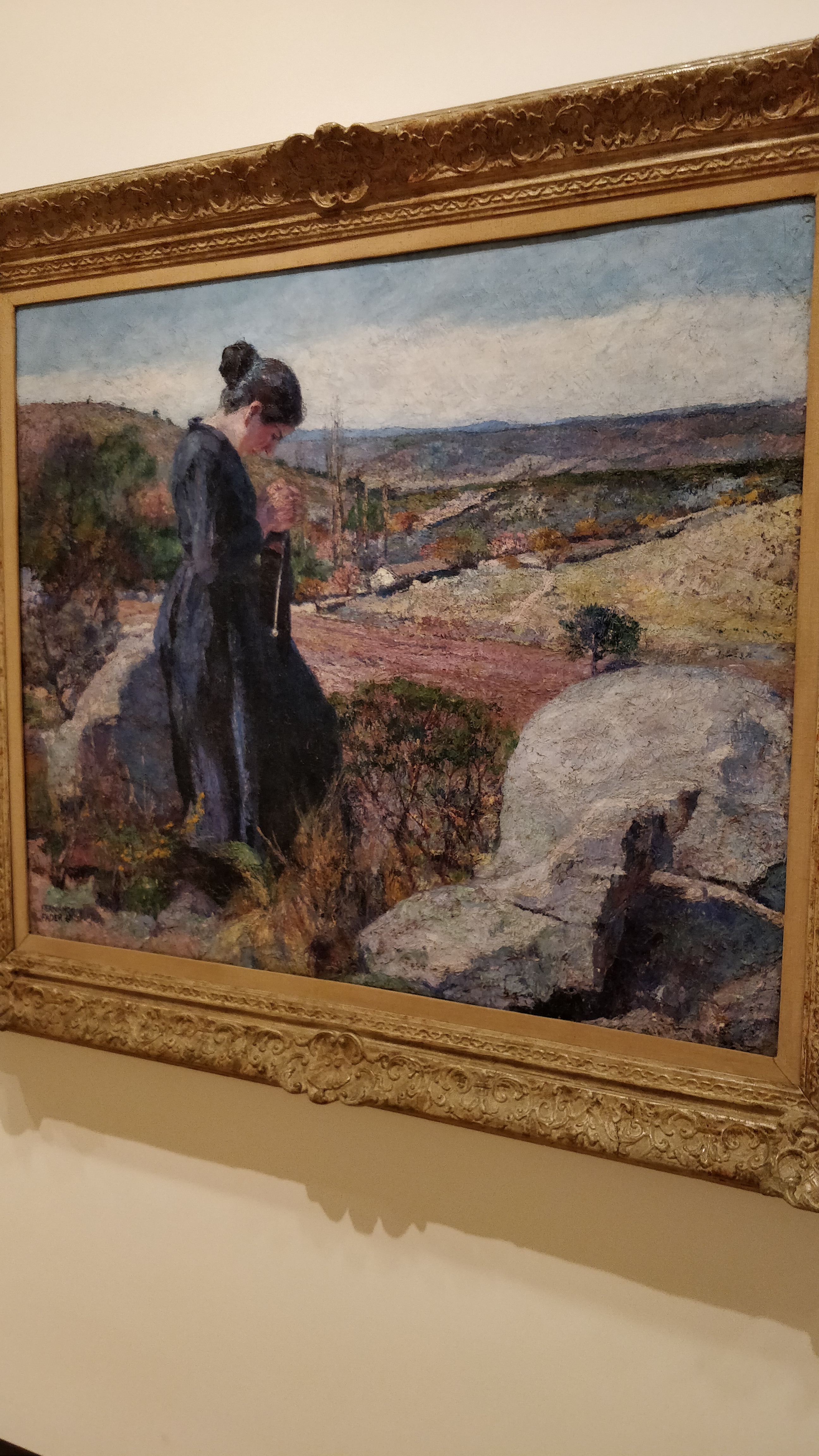
“To the Sunshine” by Fernando Fader, 1922, included here because she’s knitting.

IMG_20181003_151317.jpg
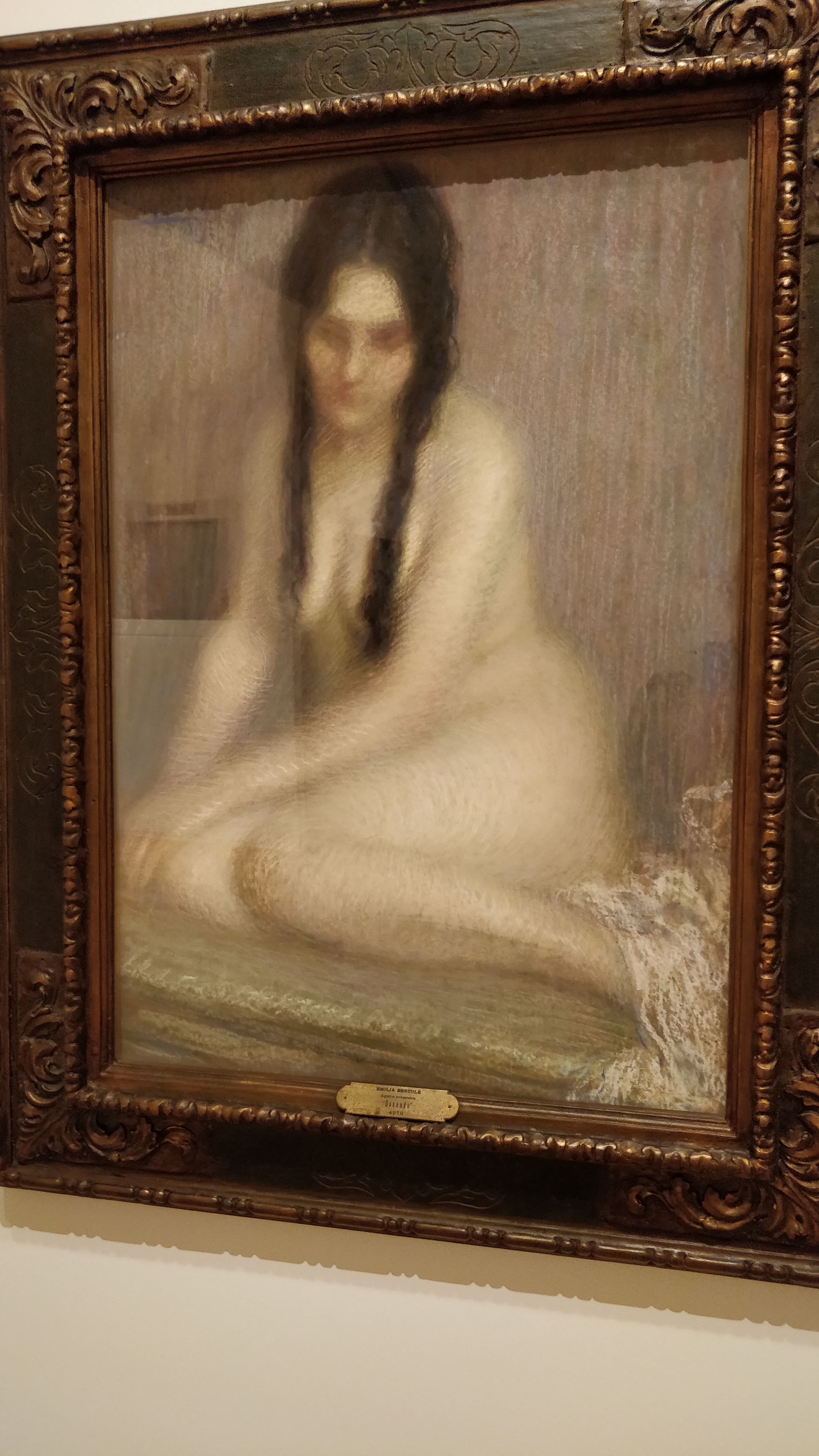
“Nude” by Emilia Bertolé, 1919

And into more modern styles:

IMG_20181003_153226.jpg
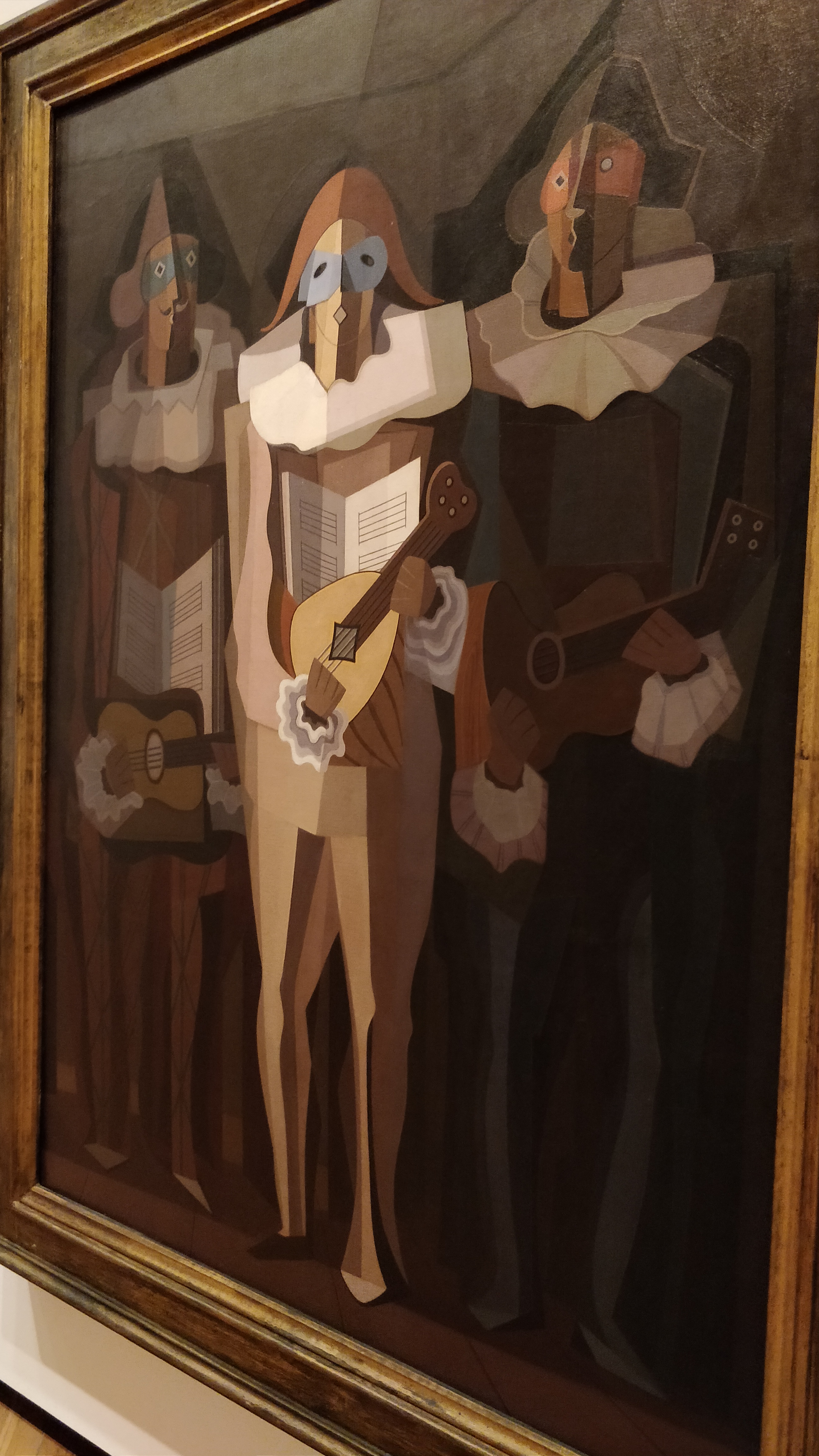
“The Improviser,” Emilio Pettoruti, 1937

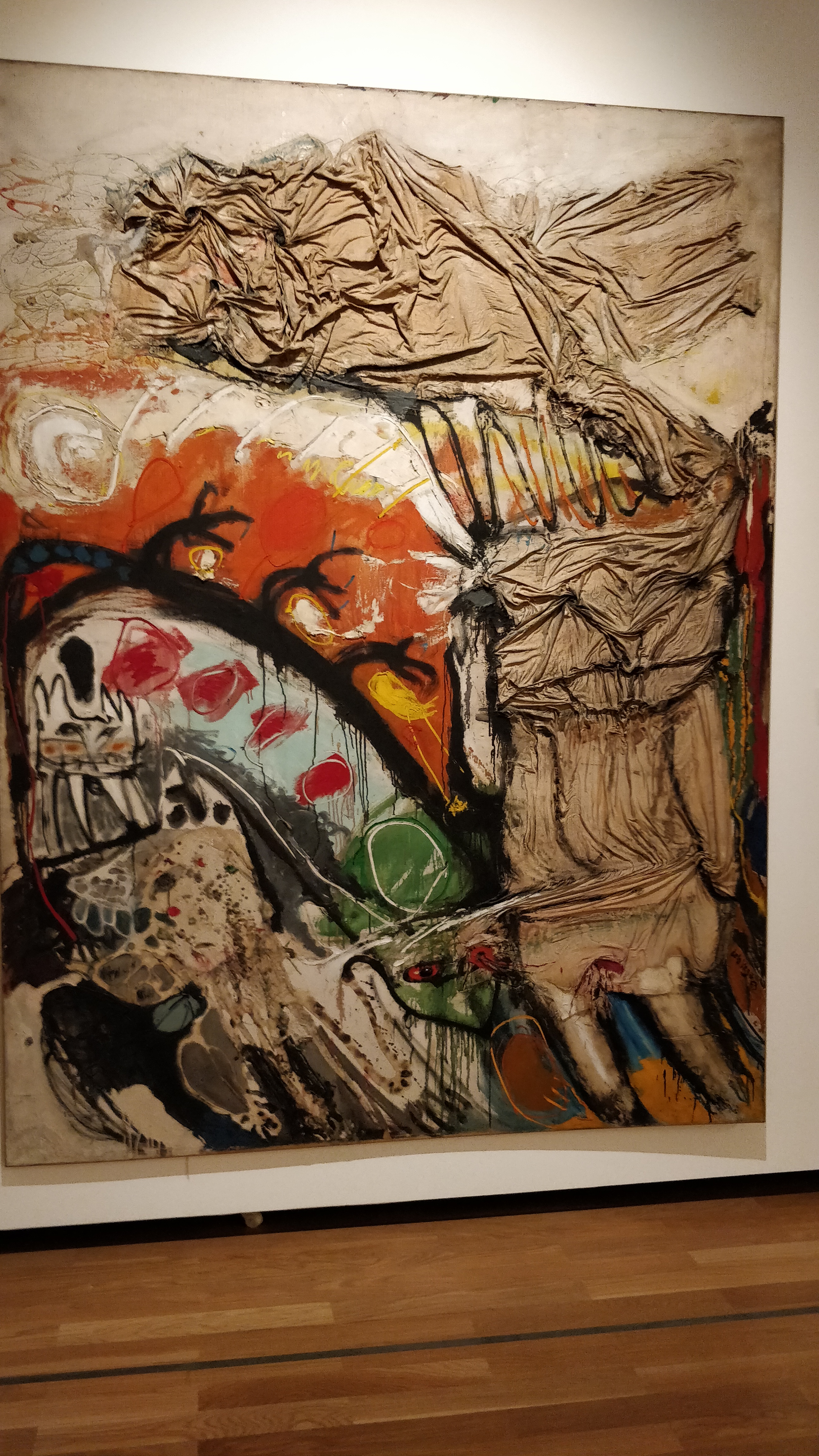
And mixed media works, such as Jorge de la Vega’s “A Timid Person’s Intimacy” (1963):

IMG_20181003_152507.jpg

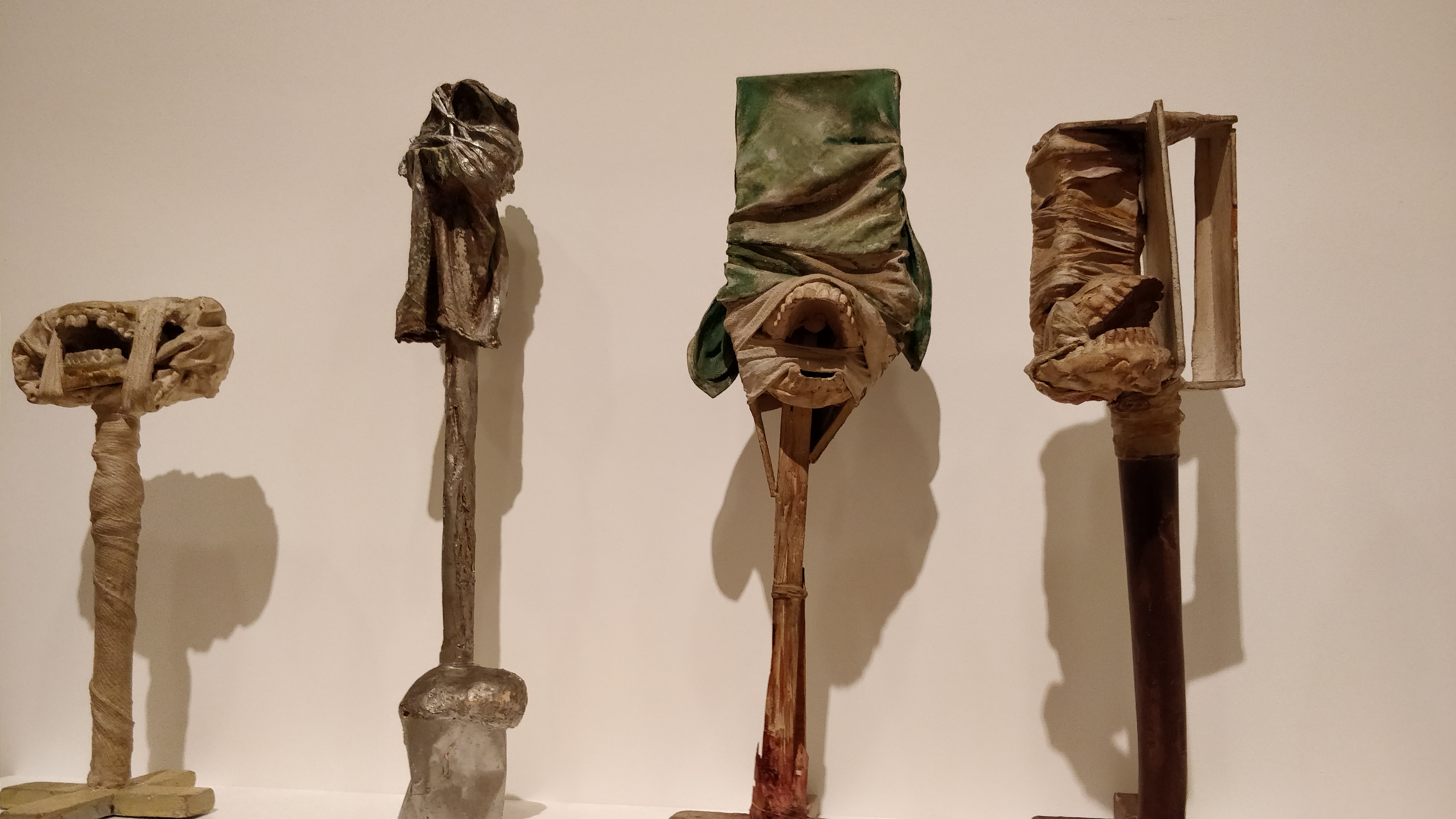
There are also, of course, Argentine sculptors represented, such as Alberto Heredia, who worked with discarded items to create his censorship allegory “The Gagged” in the early 1970s.

IMG_20181003_152243.jpg
JEEEEEZUS WHAT THE HELL MAN

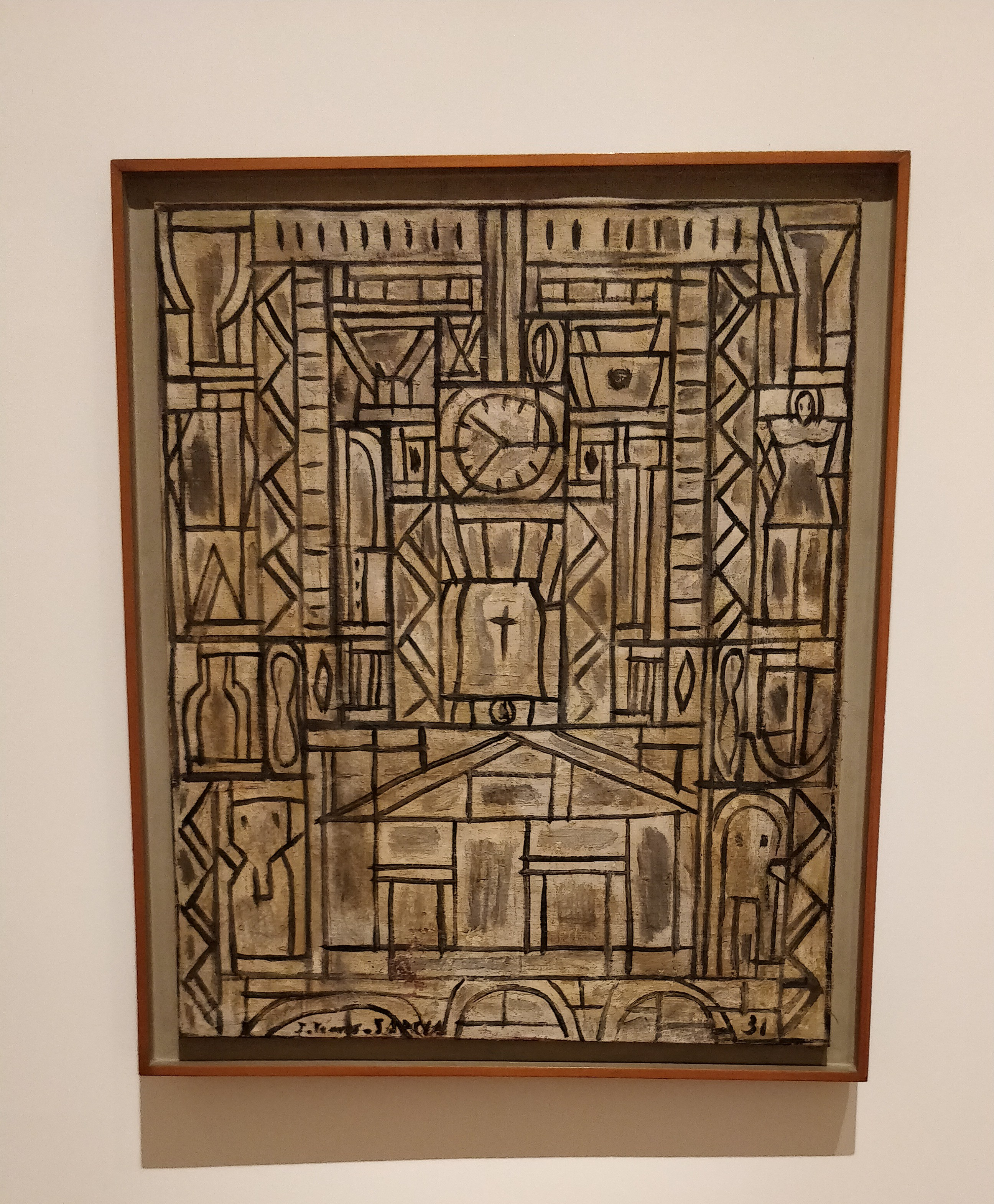
I’m also tacking on Joaquín Torres Garcia, who wasn’t Argentine but Uruguayan, because I really love his stuff so much.

IMG_20181003_153310.jpg
“Contrast,” 1931

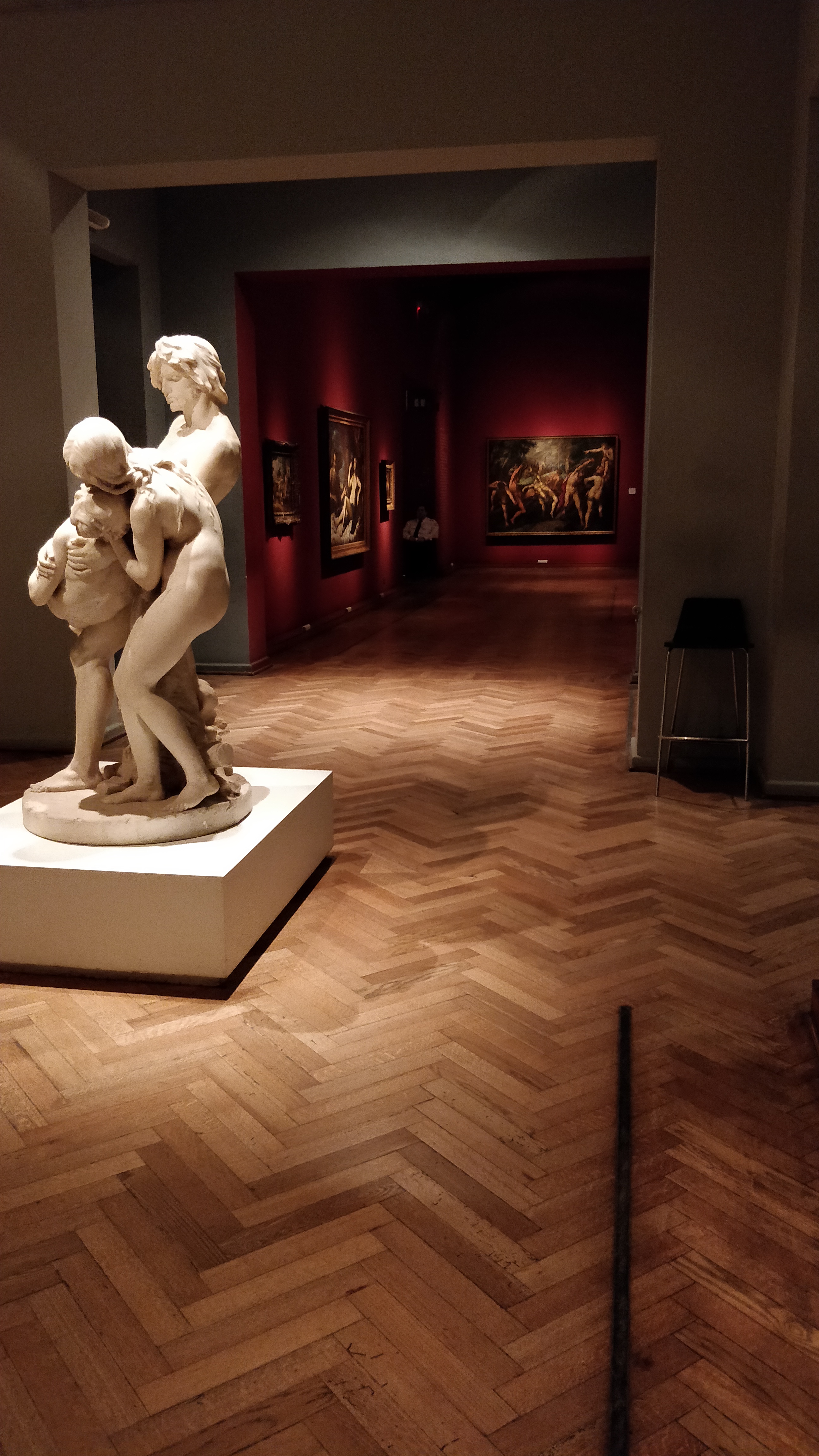
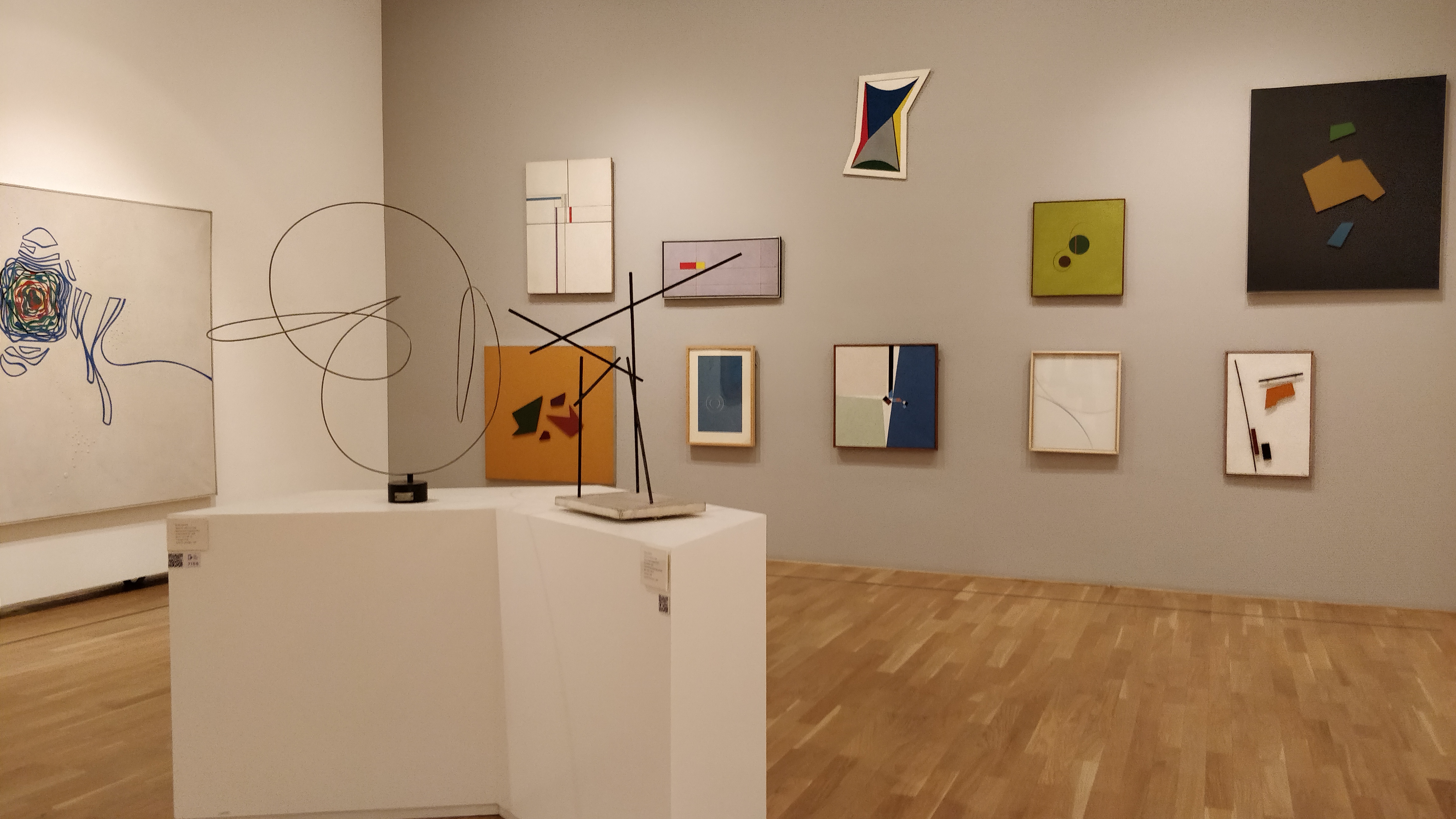
Finally, here’s views of a couple of galleries, to give you a feel for the place, and the difference between the classical art galleries and the modern ones.

IMG_20181003_150035-1.jpgIMG_20181003_151823.jpg

The Museo Nacional de Bellas Artes is big and pink and hard to miss at Av. de Libertador 1473 in Recoleta.  You can get there on a lot of bus lines and the H line of the subway.  It’s open 11am to 8pm Tuesdays through Fridays and 10am to 8pm Saturdays and Sundays.  It’s free for Argentina residents and 100 pesos (currenetly about 3 bucks US) for non-residents, although it is free on Tuesdays and 645pm-8pm Wednesdays through Sundays.  There’s a free English tour at 230pm on Wednesdays and Fridays.  Most of the signage is also in English.

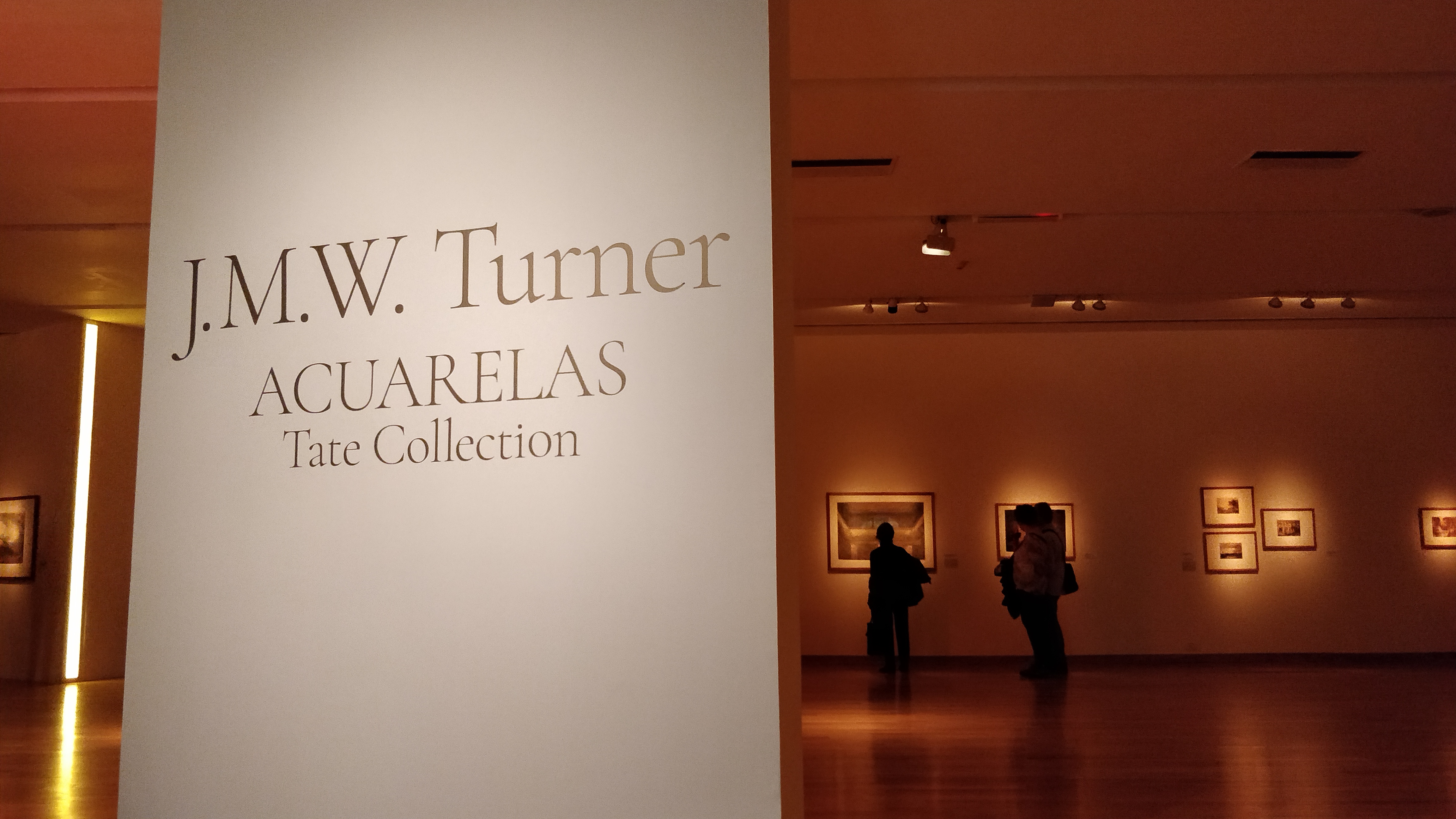
J. M. W. Turner. Acuarelas de la Tate Collection [J. M. W. Turner. Watercolours from the Tate Collection]: Special Exhibition of the Museo Nacional de Bellas Artes

The Museo Nacional de Bellas Artes is, obviously, the big cheese of Argentine art museums.  Naturally, I’m a fan.

IMG_20181003_133728.jpg
Absolute unit of a museum

As you’d expect, it hosts some pretty impressive temporary shows.  Currently, there’s one I was not going to miss.

From my scant education in art history, I picked up a couple of things about J. M. W. Turner:  I love him, and he used very, very long titles.  Also that he was very prolific.  Ok, so three things.

IMG_20181003_143021.jpg
Curators need something snappy, however

Eighty-five watercolors from the span of Turner’s career make up the show.  They do not disappoint.

IMG_20181003_135327.jpg
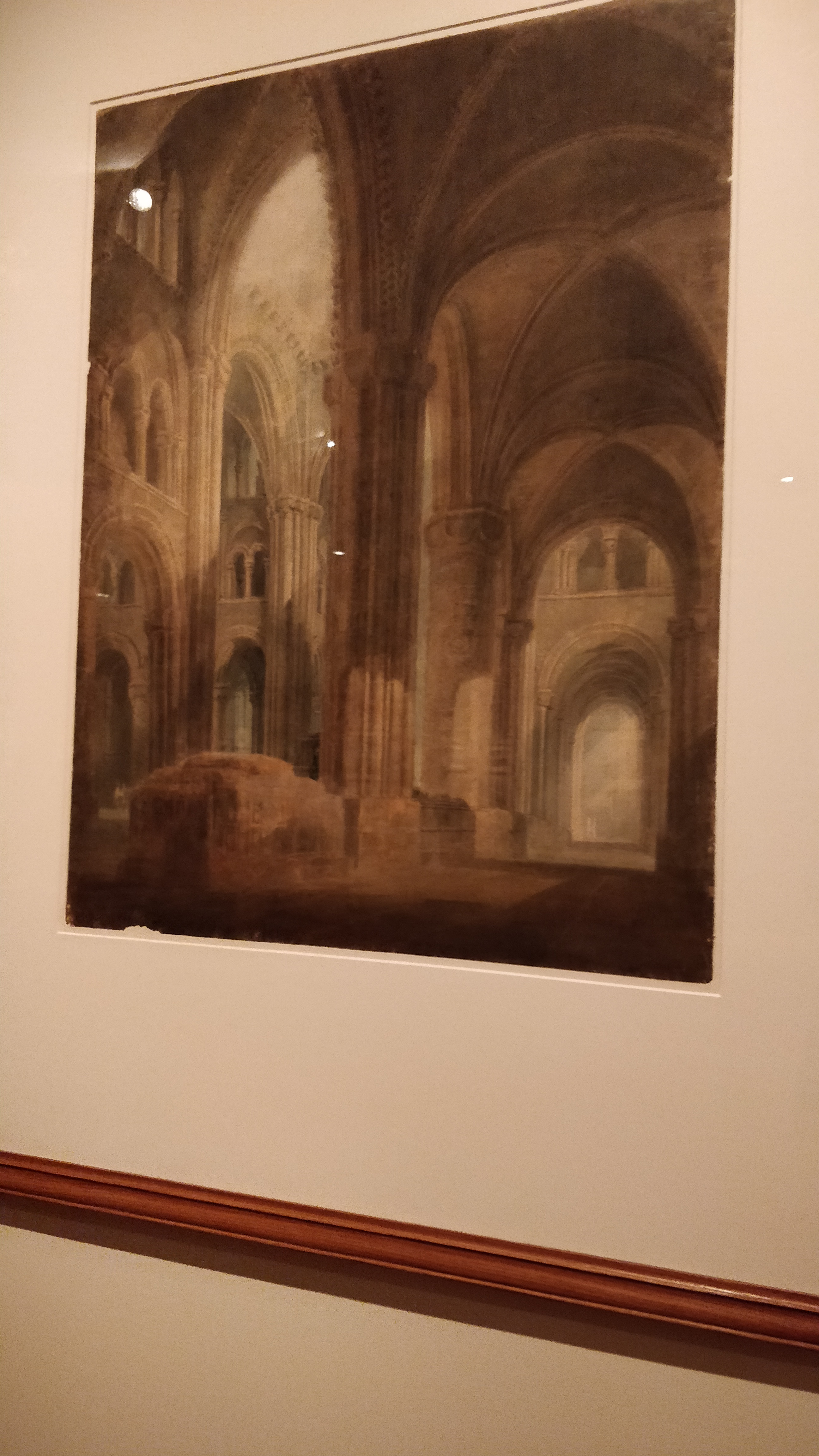
Durham Cathedral: The Interior, Looking East along the South Aisle, 1797-8

IMG_20181003_135553.jpg
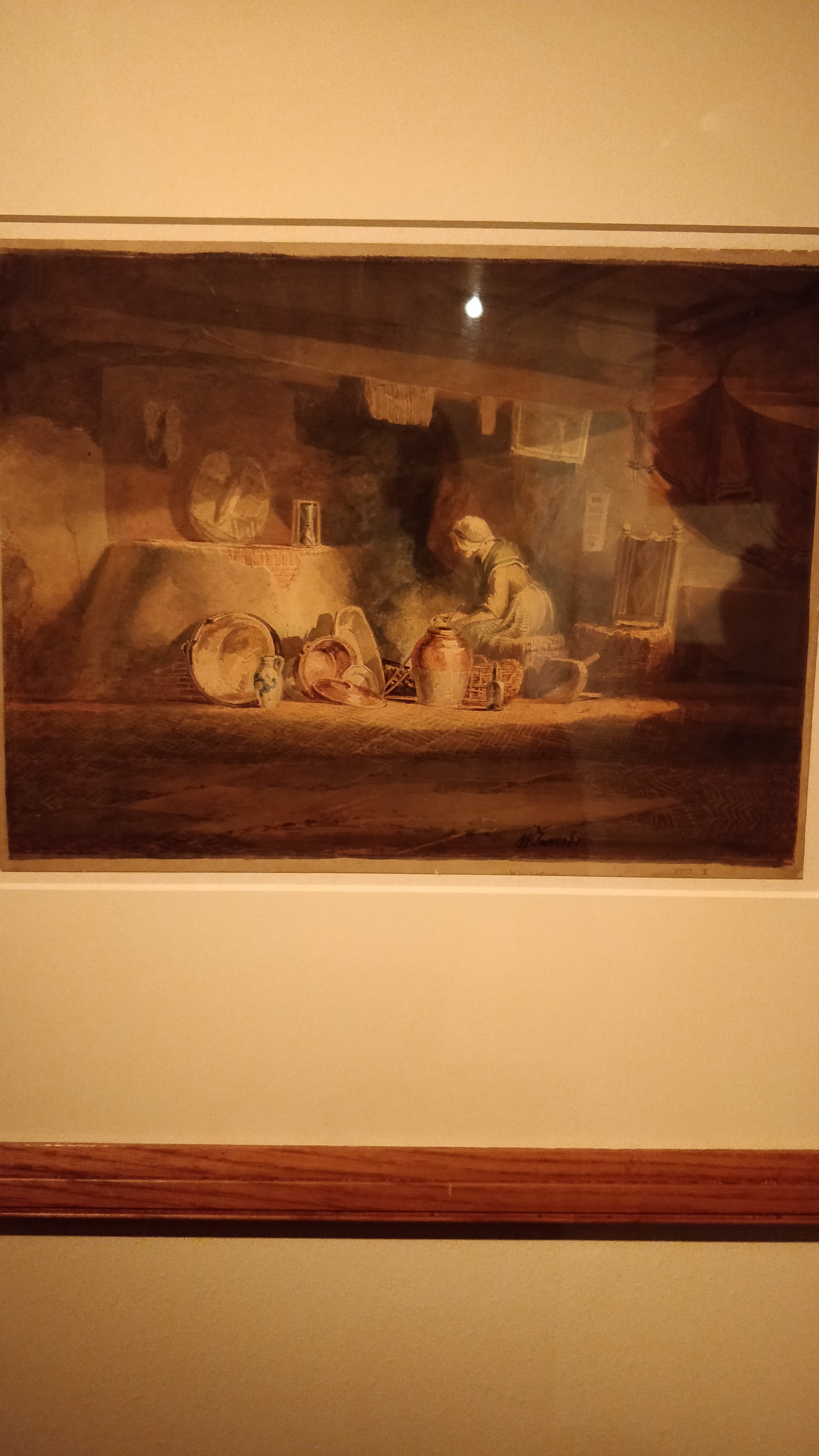
An Old Woman in a Cottage Kitchen (“Internal of a Cottage, a Study at Ely”), 1795-6  see I was not even kidding about the titles

These two are from earlier on in his life, and you can read details about the paintings written by people more knowledgeable than I at the links, which go to the Tate’s website.

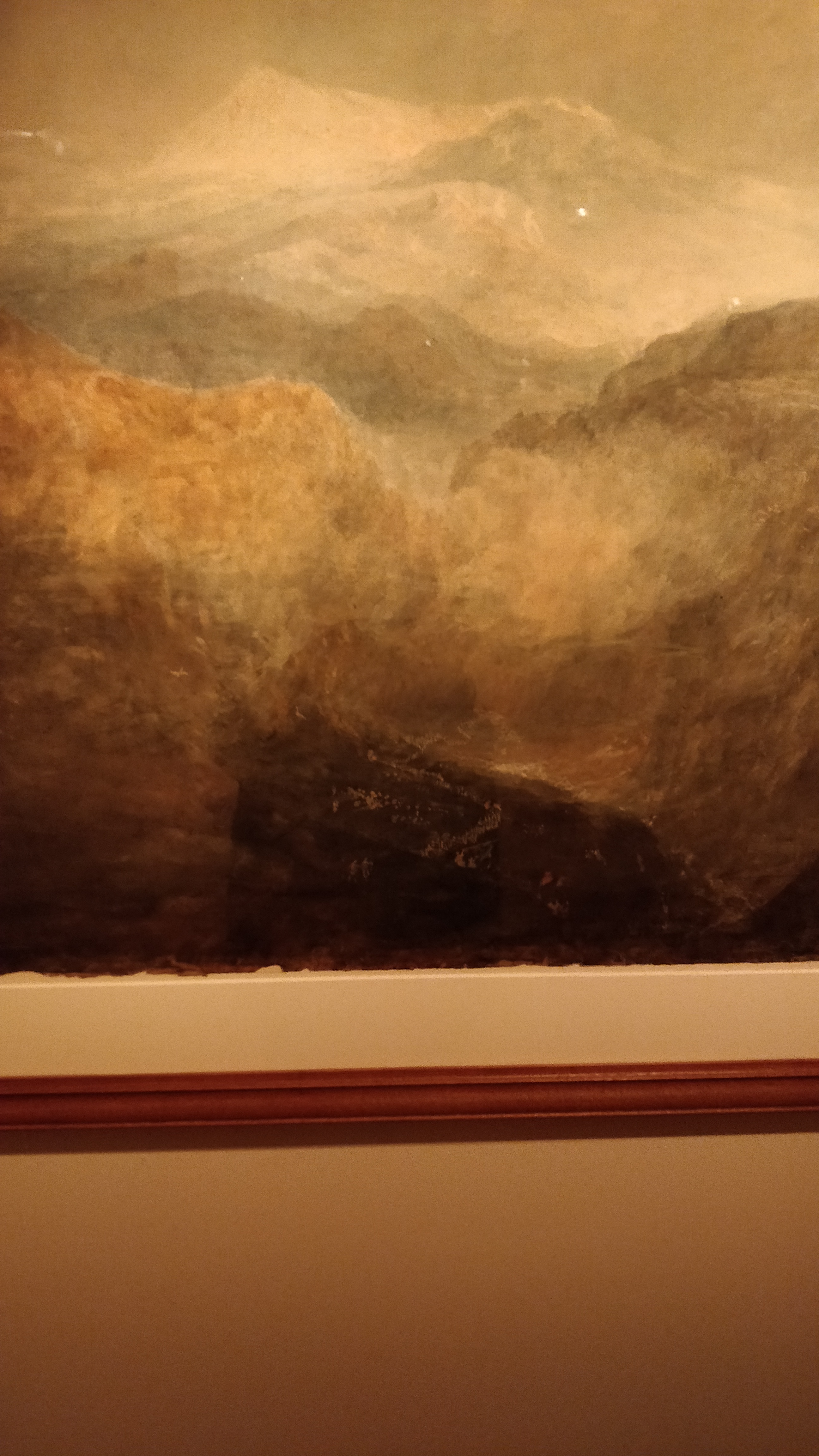
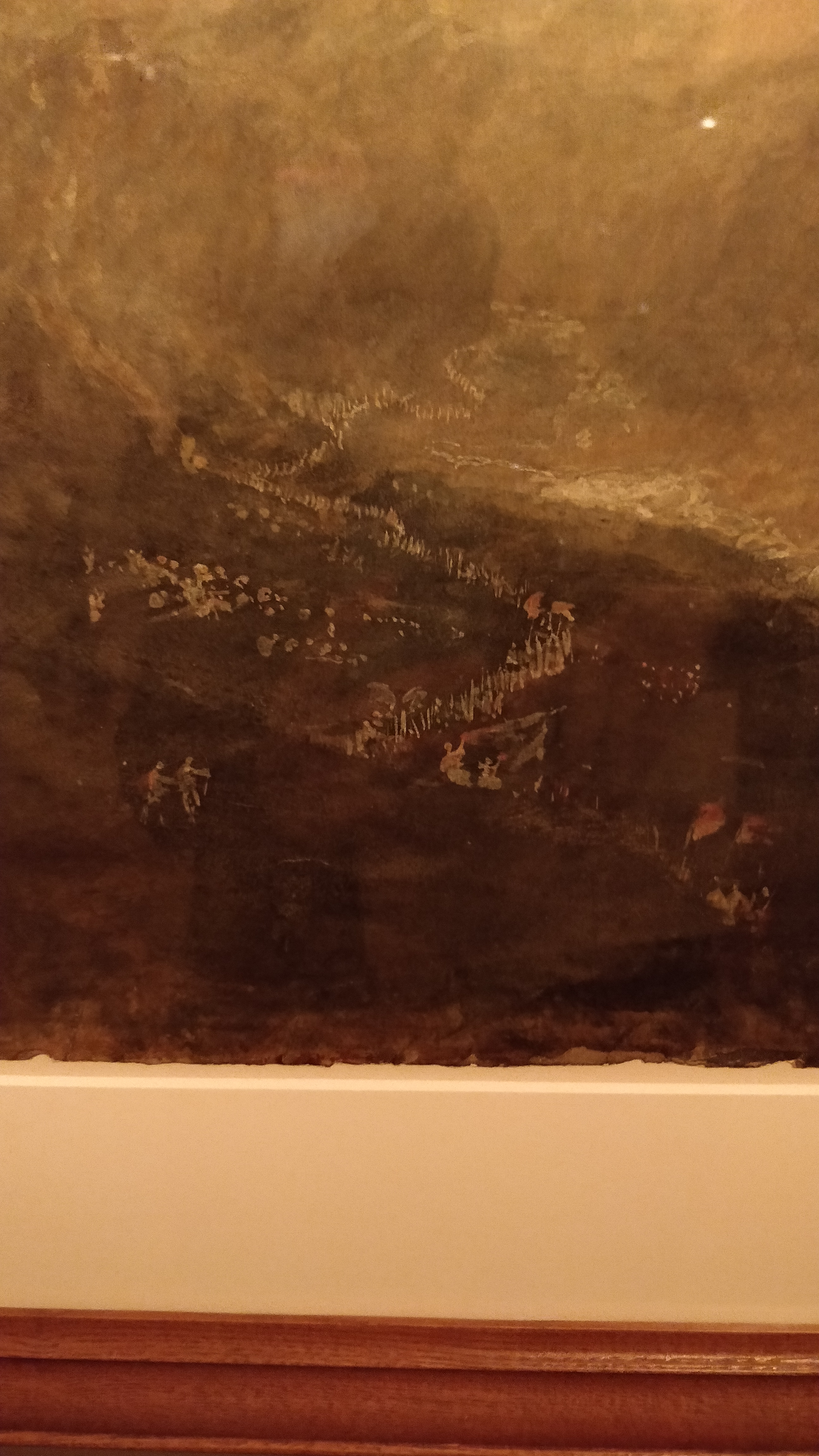
For my part, I enjoy looking at Turners from different distances.  Here is The Destruction of the Bards by Edward I (c. 1799-1800).  It’s a wild, beautiful landscape.  Maybe you’re wondering where the slaughter of the bards is going on though.

IMG_20181003_141645.jpg
Squint

IMG_20181003_141651.jpg
Wait, is that a wall or sheep or what

IMG_20181003_141657.jpg
Oh there’s the mass execution.

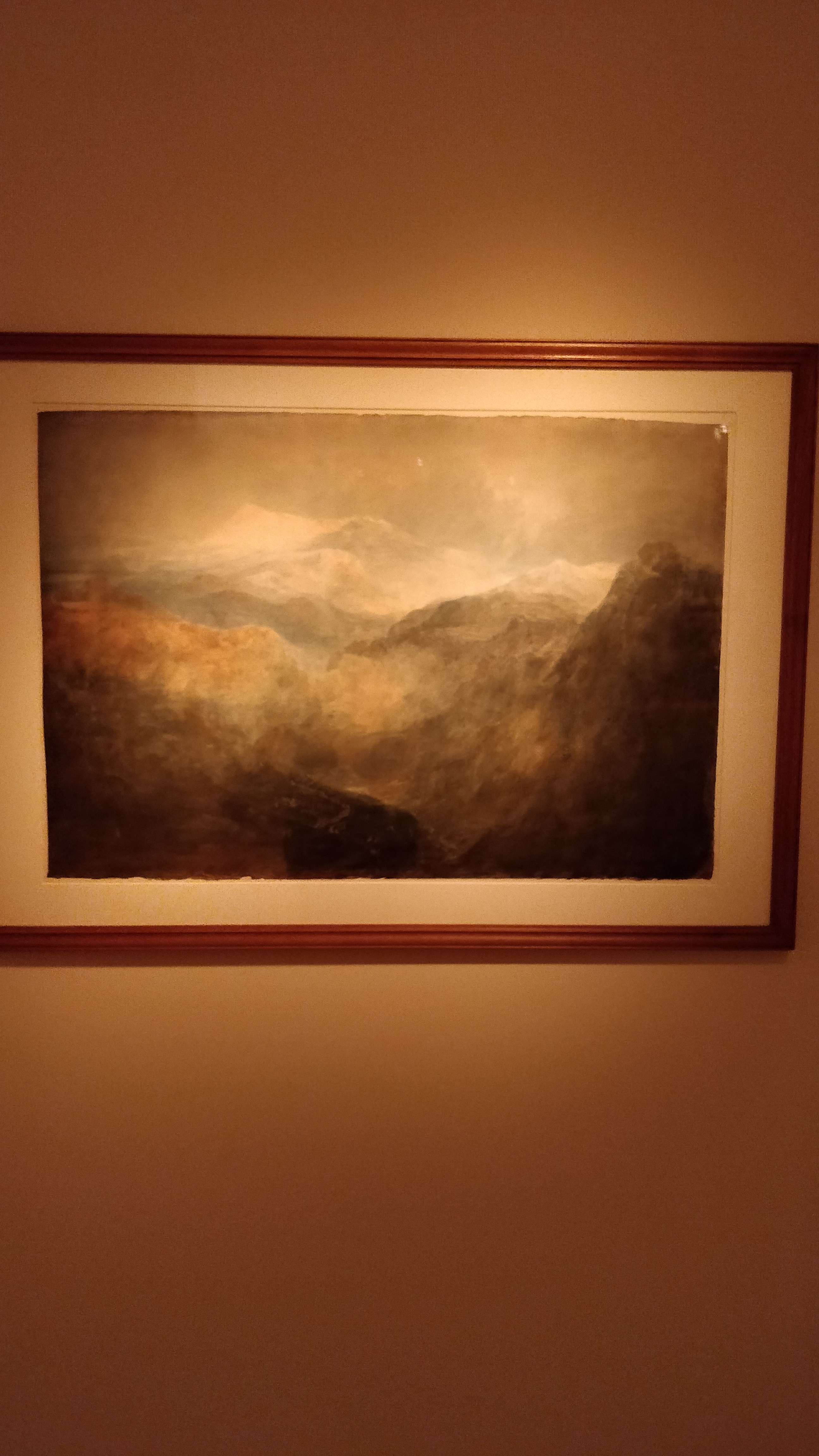
The landscapes (and seascapes) are my favorites, with the expressive colors and elusive atmosphere.  I feel like I’m clearly looking at a scene, without being able to pinpoint what I’m looking at.  Does that make sense?  I feel like it doesn’t, but it’s the best I can do.

IMG_20181003_141126.jpg
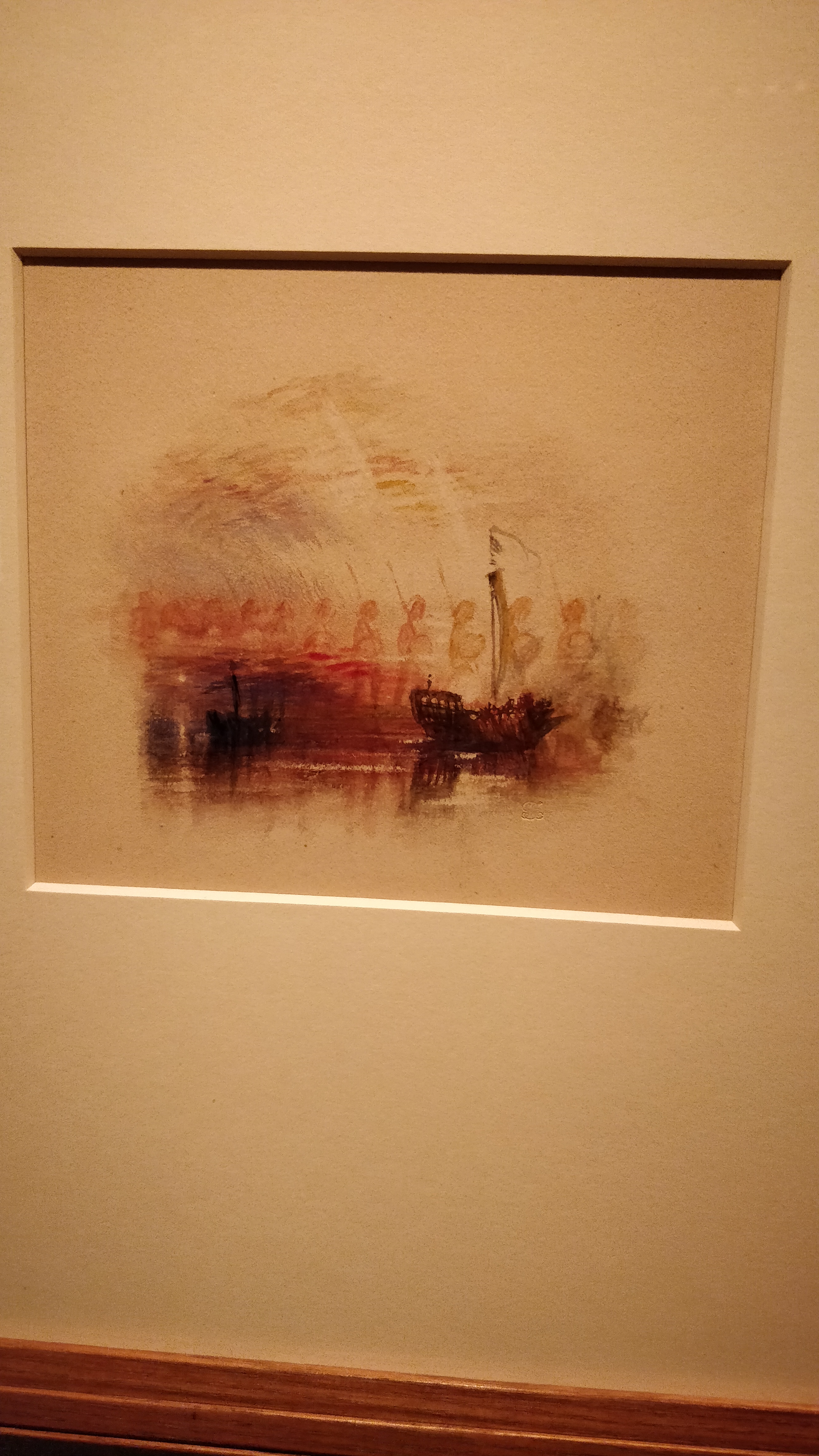
The Vision of Columbus, for Rogers’s ‘Poems’“, c. 1830-2

IMG_20181003_141423.jpg
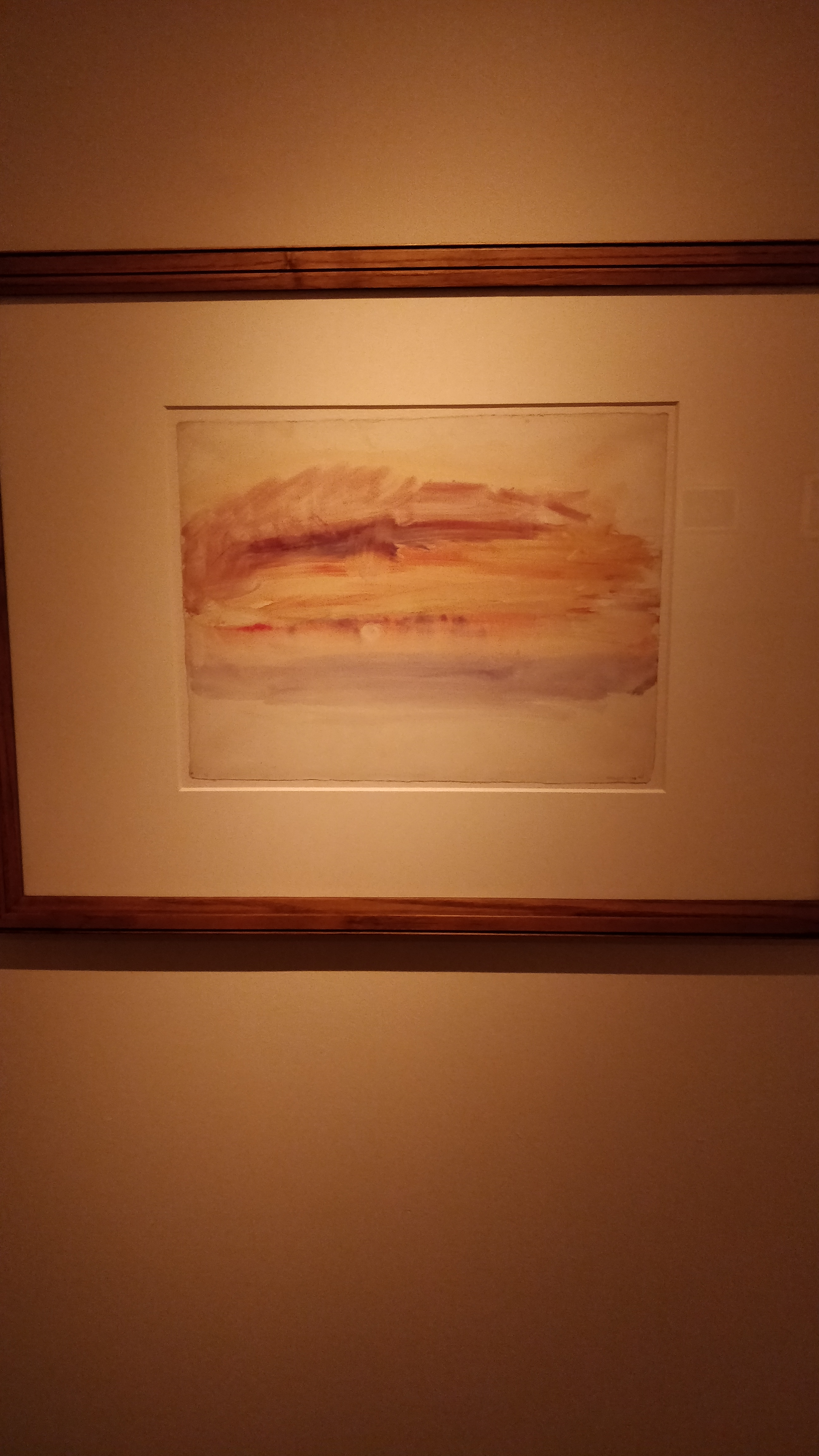
“Sea and Sky” c. 1845, one of many many many many “Sea and Sky”s from his late period, when his style took on a light touch, fluidity of color, and lack of detail, and he couldn’t be fussed with titles anymore.

Moving through his career and life in the form of his watercolors is a fine way to spend an afternoon.  The explanatory signage is in both Spanish and English.  The ticket into the show is AR$100, but it is free on Tuesdays and the rest of the week after 645pm (the museum is closed Mondays).  The temporary exhibition pavilion is rather tucked away, so hold on to your ticket and follow your map, as the path isn’t obvious.  As a major museum, swag is of course available, although Turner-specific swag has just two images to choose from.  The exhibition closes February 17, 2019.

The Museo Nacional de Bellas Artes is easy to reach via the Facultad de Derecho station of the D line of the subway and sits between three major avenues in Recoleta.  Can’t miss it.