National Museum, New Delhi (India)

*sheepishly peeks around the website*

…hello?

So. Been a hot minute.

But hey let’s pretend like it hasn’t been! Let’s just jump right into talking about big ol’ collections of neat stuff.

About a year and a half ago, I found myself in India, as you do. I’d never been there before. I have been in a few very large cities, and Delhi makes Buenos Aires feel like Megacity Easy Mode.

The population of Delhi is about 30 million, and they are all on the same block as you.
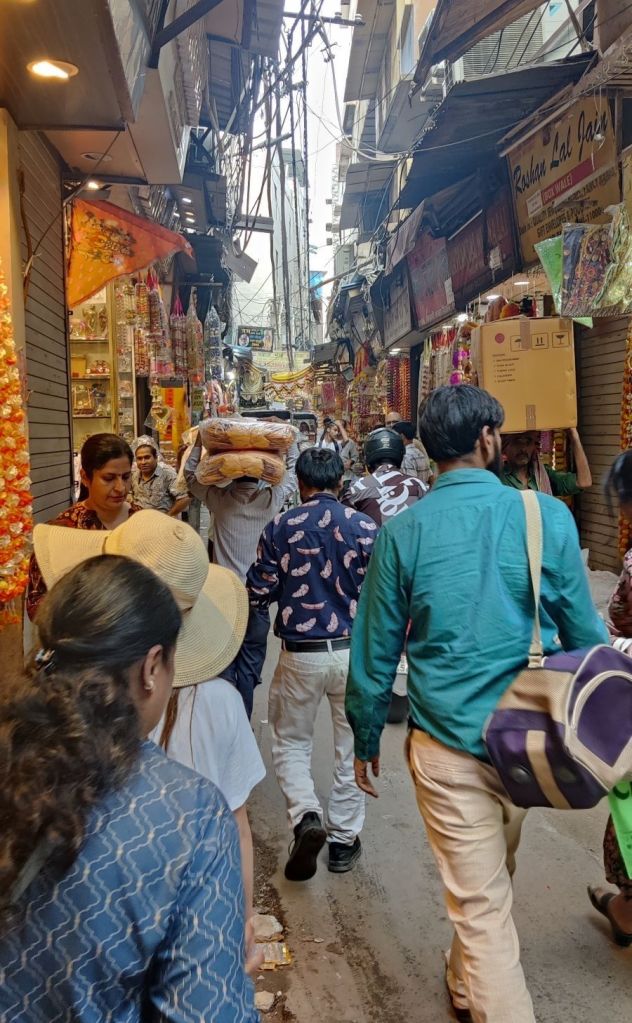
As a pedestrian, if you are waiting for someone to let you through/across/around, you are waiting forever. You live on that spot now. You are either an active entity of self-determination or a passive obstacle.

To travel in a vehicle in India is to experience existence as a drop of ocean water.

As far as I could tell, there are only two traffic laws in India: fortune favors the brave, and it doesn’t matter what color the traffic light is as long as it’s green in your heart.

…which way are we supposed to be facing

There is clearly a logic and rhythm to the flow of traffic; otherwise there would just be piles of bodies and tuktuks everywhere all the time. But as an outsider, you do not understand it. It is language you cannot speak, and you can only consign yourself to the expertise of your translator/driver or if on foot, make tenuous, lamb-like attempts at the basic grammar of crossing the street. Traffic density is lessened outside of the cities, but your driver is going to book it regardless of the slower road obstacles, so buckle up and sit tight while he plays cow slalom.
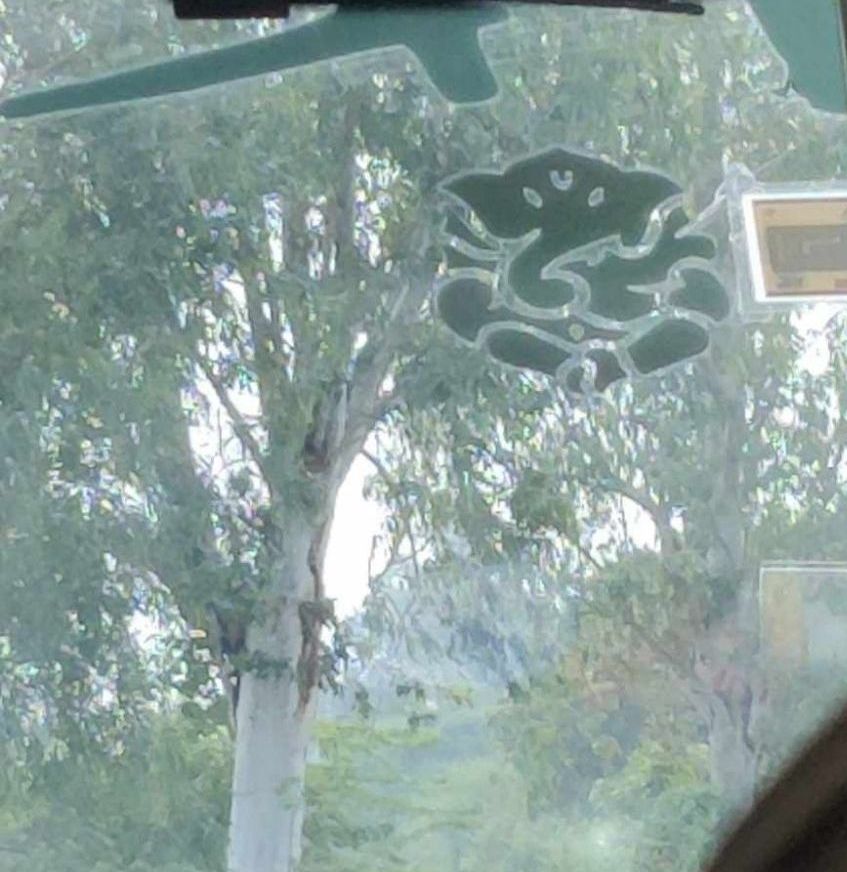
Ganesh is my copilot.

But back to the big city. Despite offering all the personal space of a platelet in a blood stream, Delhi is an amazing experience that should be visited if at all possible. It’s been a city for a couple thousand years, and a capital for hundreds of those years. It is rich with culture, history and art. Among its many museums is the National Museum, which holds artifacts that span 5,000 years.
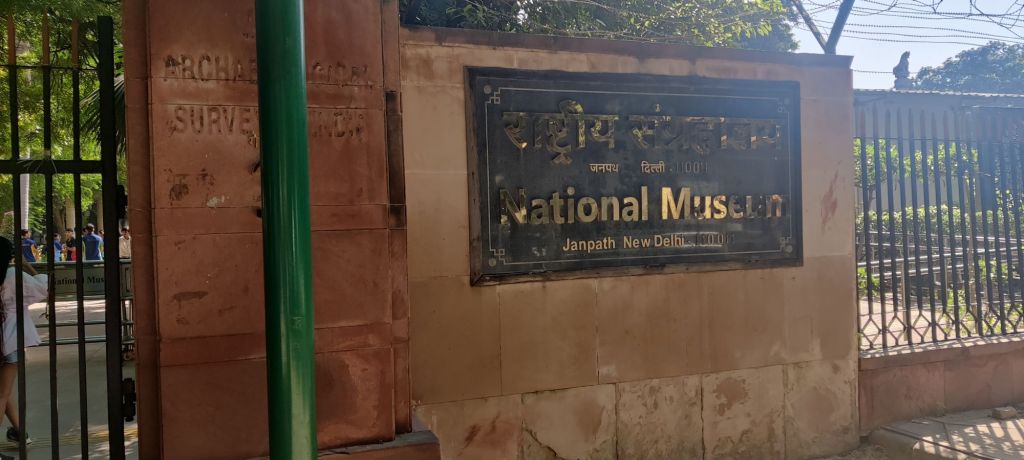
The first thing to remember is that when you are in line in India, you are either pushing up against the person in front of you or you are not, in fact, in line. I was without a guide on that day and while purchasing the tickets, I found myself not so much in line as standing near the ticket counter as others filed past me. A teenage girl immediately clocked my problem and attempted to convey how to line up effectively, and after some moments and, likely, pity on the part of some of my fellow line mates, I managed to pay.

After pausing in the entry hall for a group selfie with some teens on a school trip (embrace being in strangers’ photos), I set about exploring in no particular pattern, which will be reflected in my random-ass pictures.
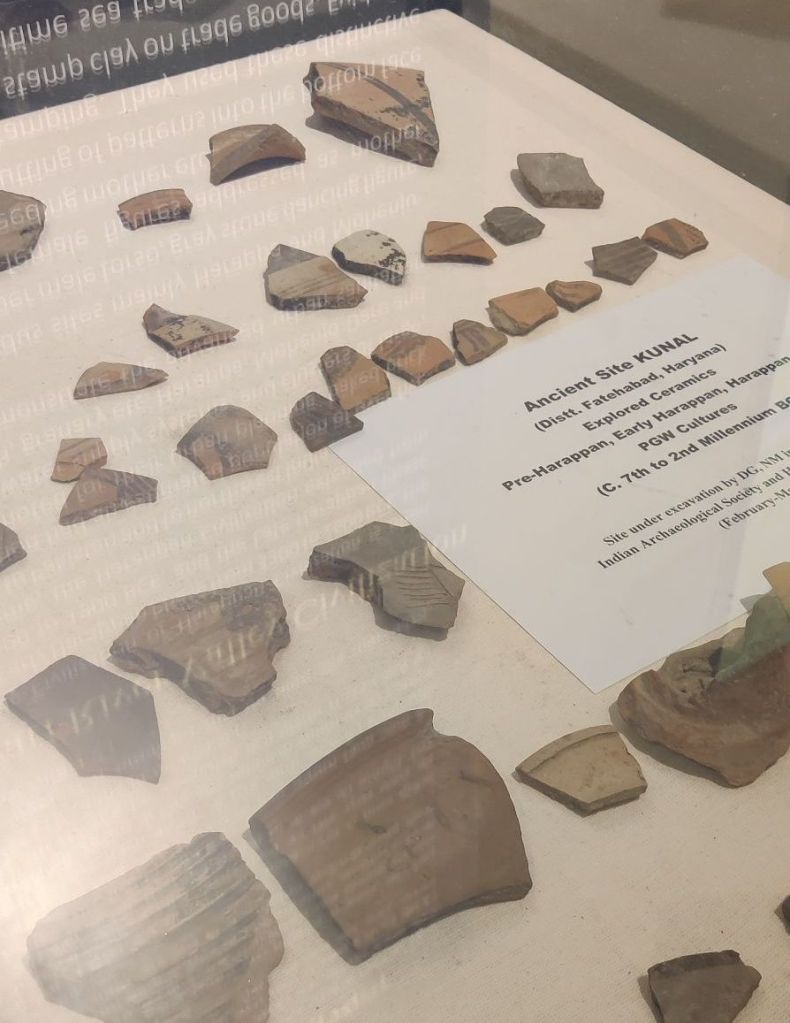
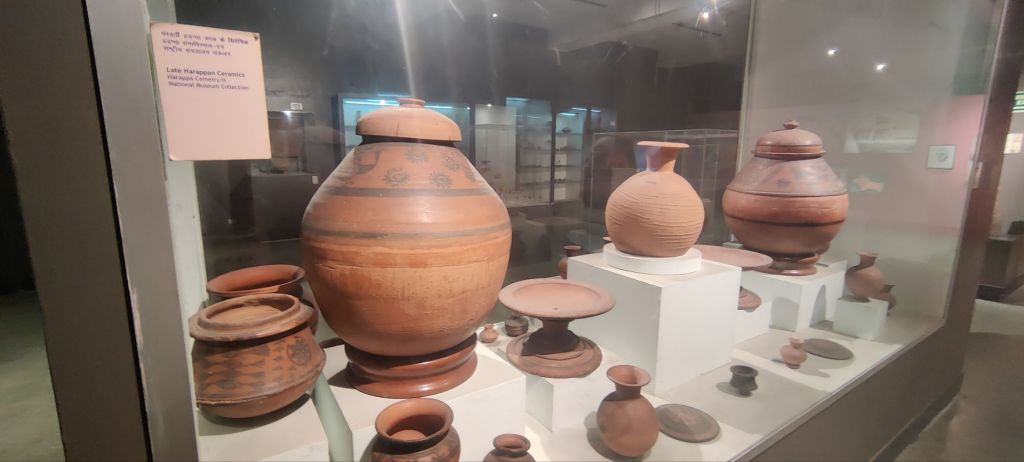
Some of this pottery is Nine. Thousand. Years. Old.

The museum holds a huge collection of artifacts from the Harappan era, the Indus Valley civilization of the Bronze Age, and earlier.
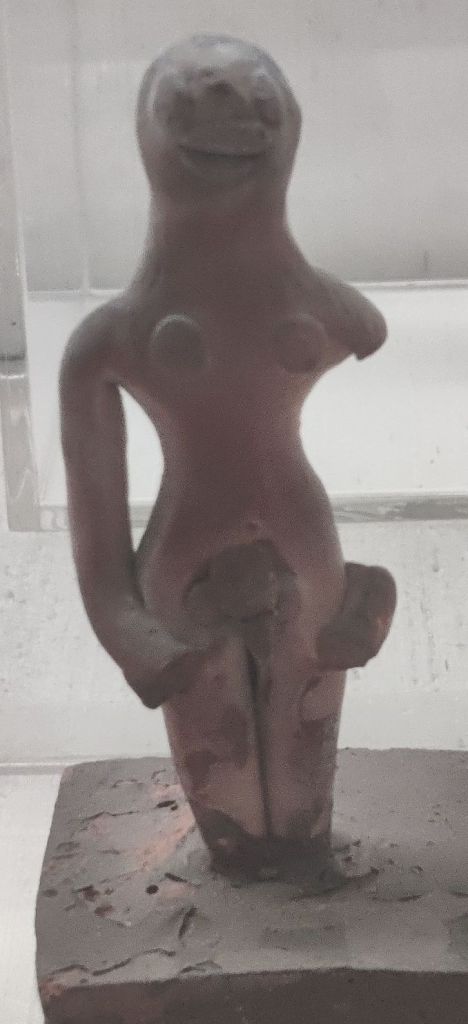
With apologies to the Harappan sculpture for taking a craptastic photo and slapping it on the Internet four thousand years later.
Late Harappan ceramics, flexing the kind of durability Pyrex can only dream of.

Excuse me while I shamelessly skip centuries of treasures and move to the Kushana Gallery, which includes this sandstone pillar from a Buddhist stupa, carved in the second century. The figure is a tree spirit motif rooted in a pre-Buddhism fertility rite, here incorporated into a stupa’s pillar to bless the site it was built on.
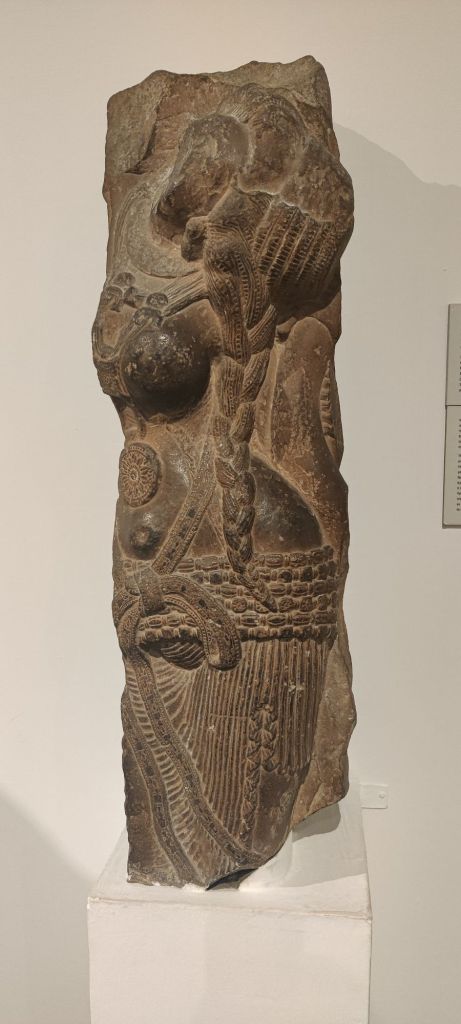
I am a noted tree enthusiast and so she makes the blog cut.

From the same time period is this Standing Buddha from the Gandhara School, which was heavily influenced by Greek art. The standing Buddhas of this era mark the start of depicting Buddha in human form.
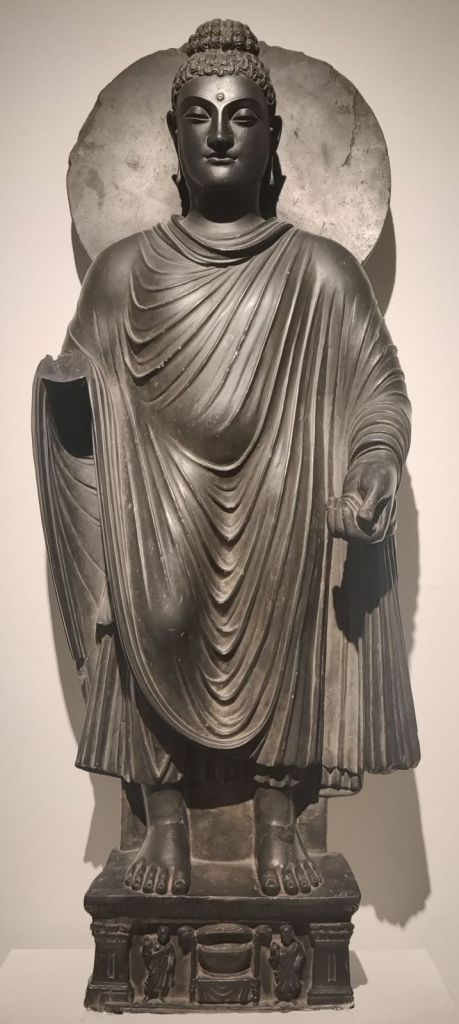
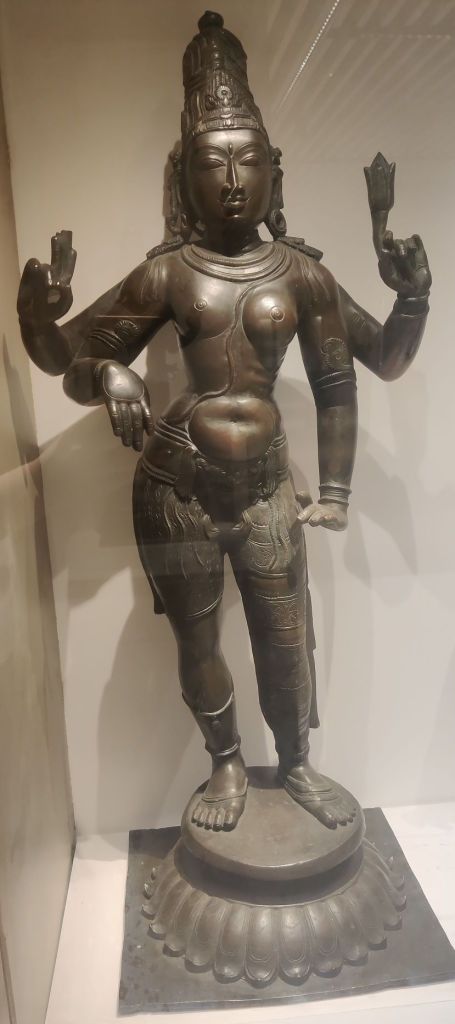
And one more statue before we go stampeding to the Decorative Arts galleries; that of a bronze Ardhanarishvara–a god form of Shiva and Parvati combined–from the 15th century.
Now, let’s get ornamental in the Decorative Arts galleries!

The two galleries are divided by material rather than time period, and between them cover pre-history to the present day.
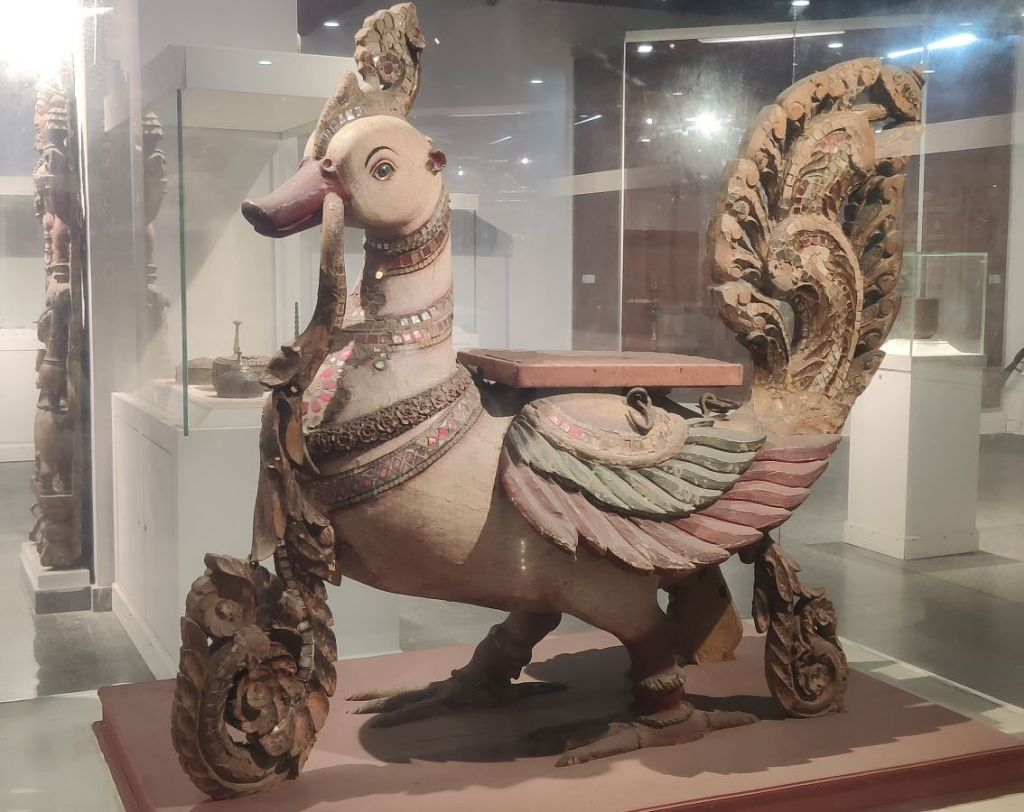
Speaking of stampeding

This is a wood and glass peacock, the mount of war god Karttikeya, from the 1800s.

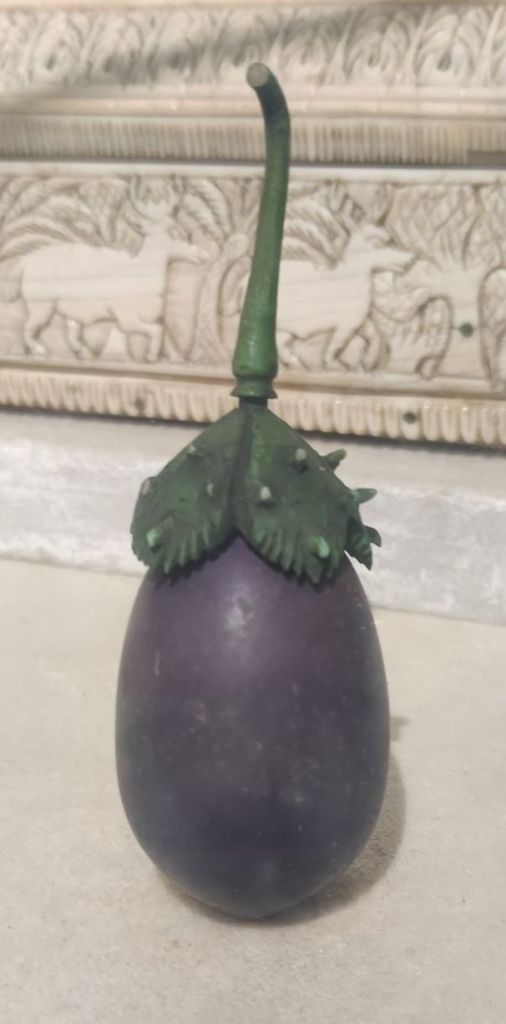
And I passed over photographing many magnificent objects in favor of this 20th century ivory eggplant-shaped perfume container, solely because it amused me:
🍆

And in metalworking, gold amulets from the first century:
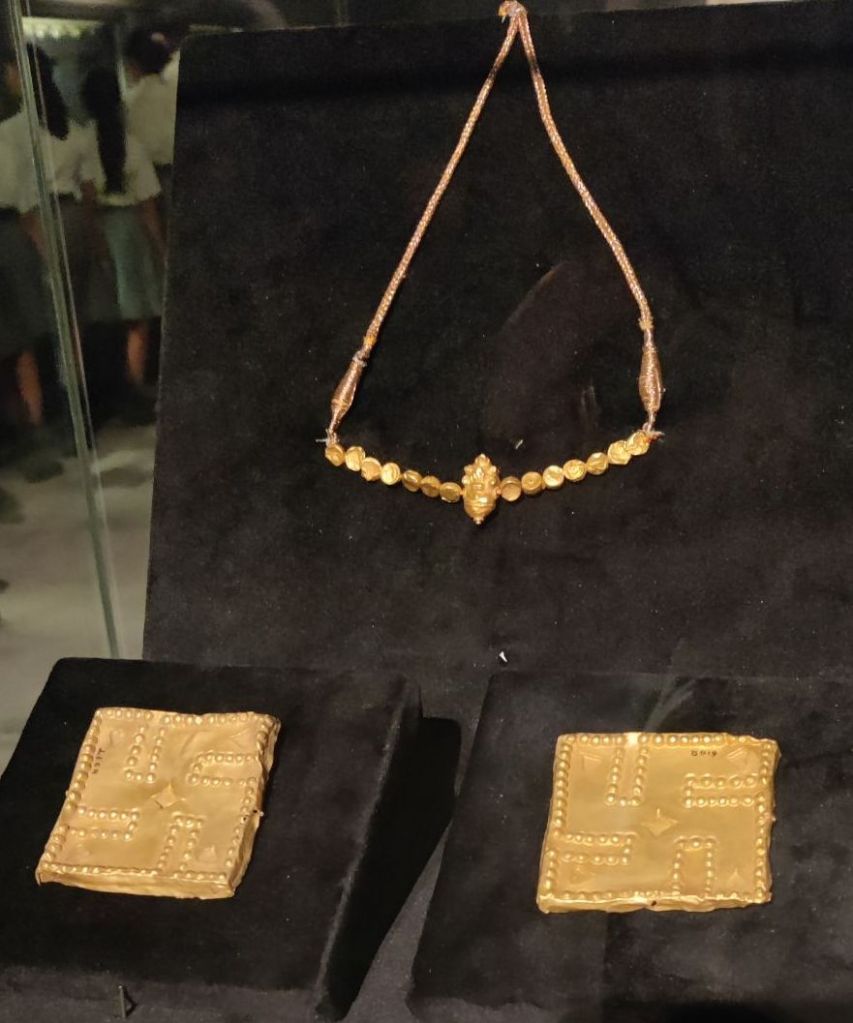
Photos at a weird angle brought to you by my eternal struggle with glare

Here’s one quick example from the Miniature Paintings gallery, Mughal division. The plaque says “The Nativity” but the writing on the painting says “Birth of Virgin Mary.” From 1720ish.
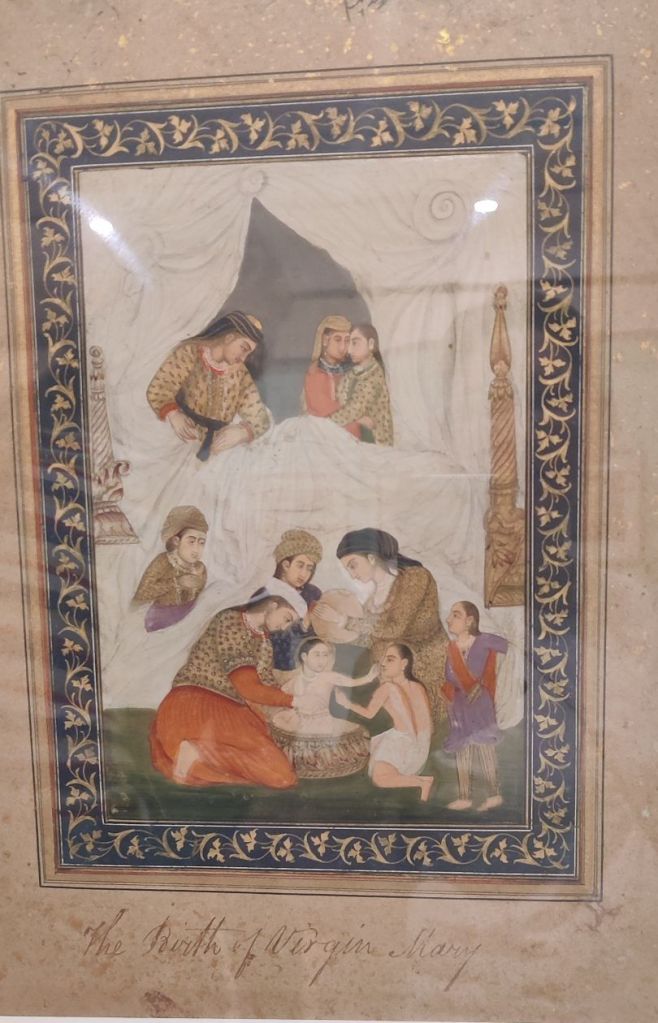
In the Holy Adult-Baby tradition

There’s a Coins gallery for all your numismatic needs and desires, and if you’re wondering if the National Museum also has some unsettling mannequin type things, the Coins section has an answer for you.
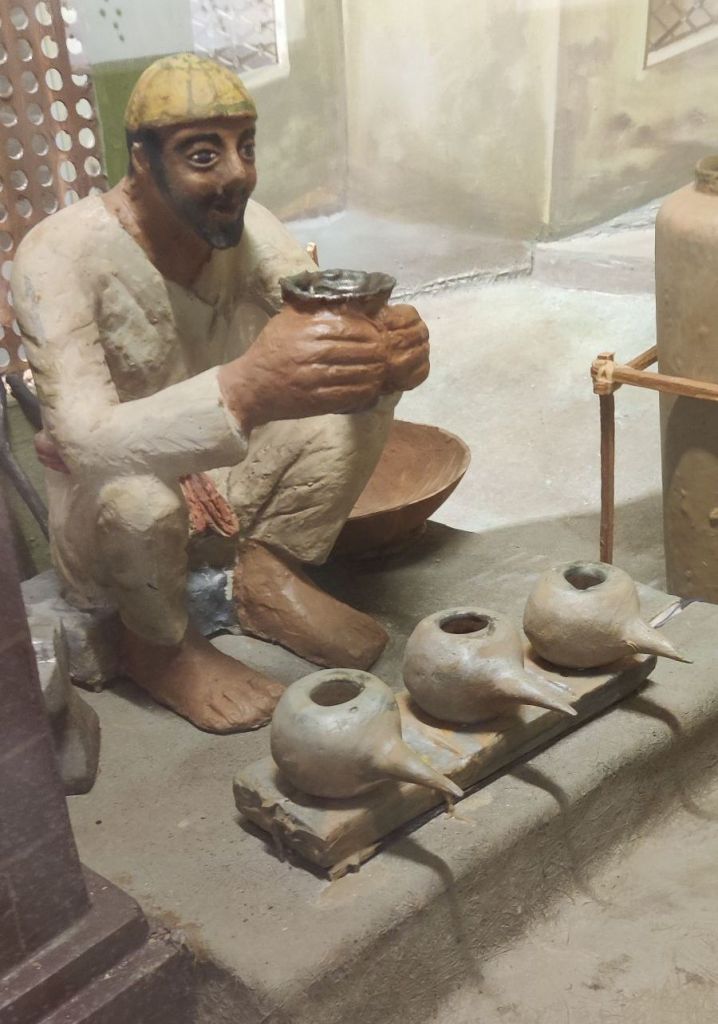
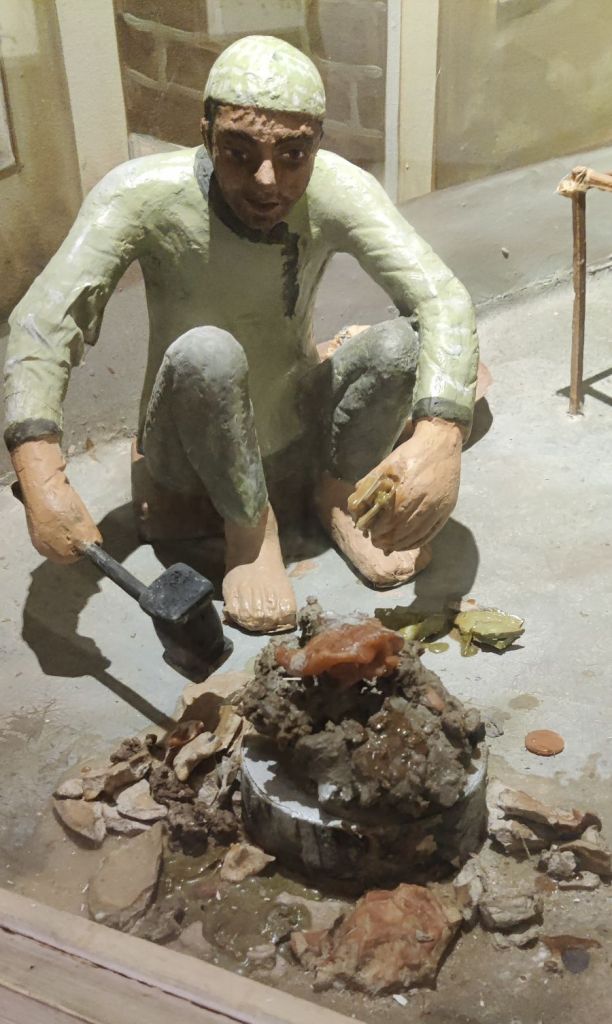
Coin minting has never looked so gooey.

From the Central Asian collection, there are murals from the Mogao Caves  (Thousand Buddha Grottoes) in China, which were an important site along the Silk Road. The caves hold a thousand years of Buddhist sculpture and painting, making them a UNESCO World Heritage site. The Library Cave was discovered in 1990 with tens of thousands of manuscripts; most of the silk paintings in this room are from there.
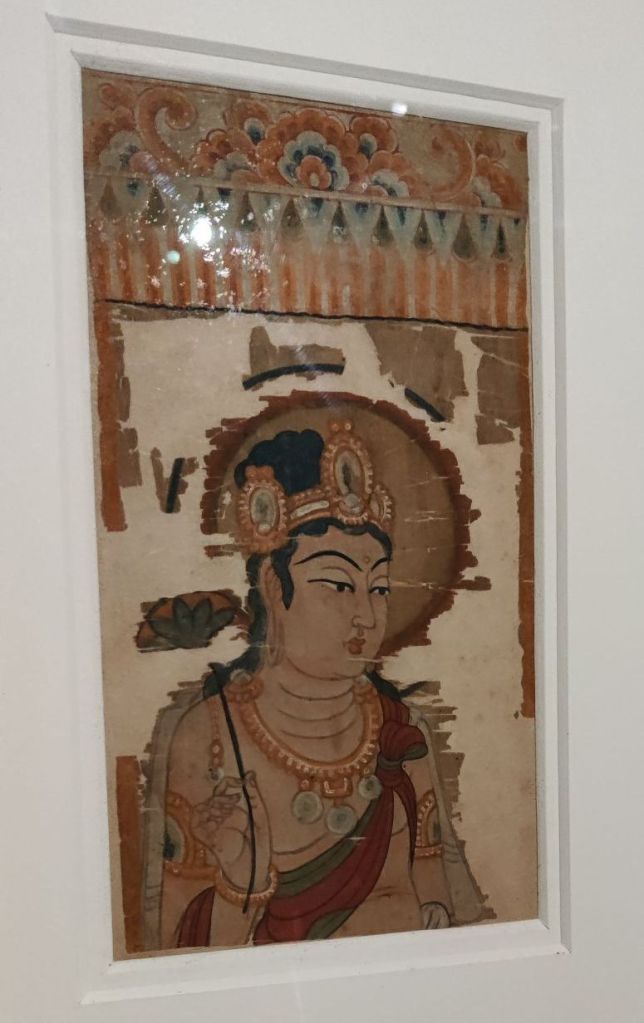
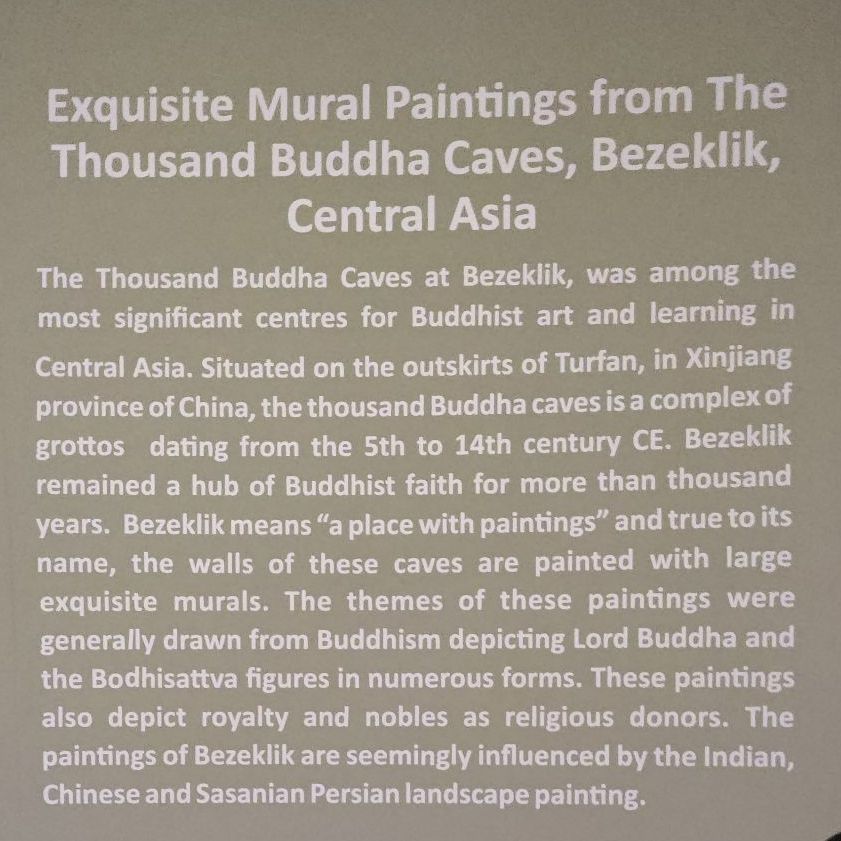
There are also some works from the Bezeklik Thousand Buddha Caves, also a site on the Silk Road in China.
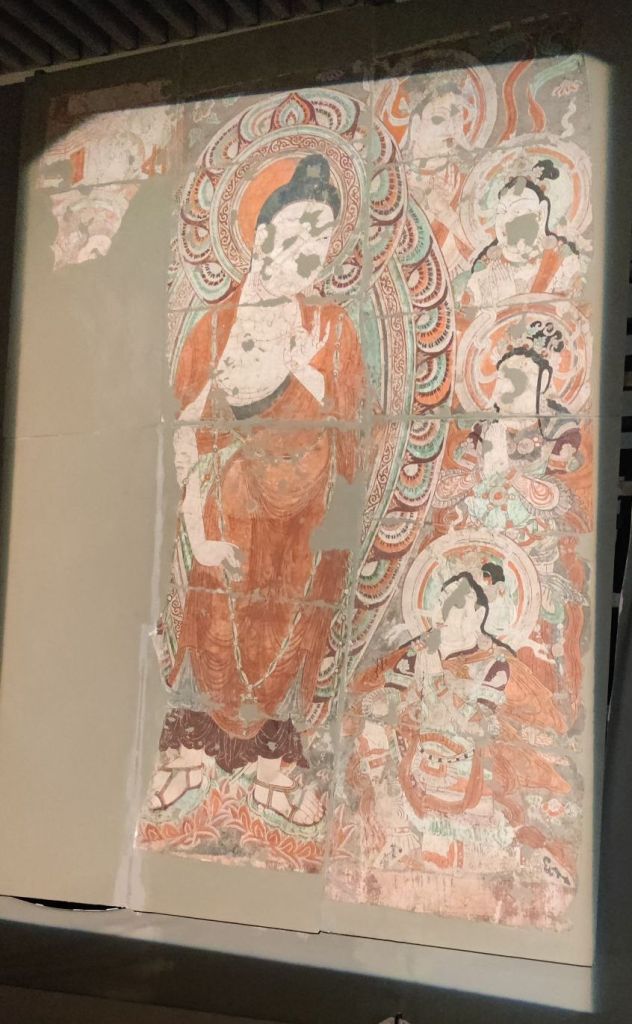
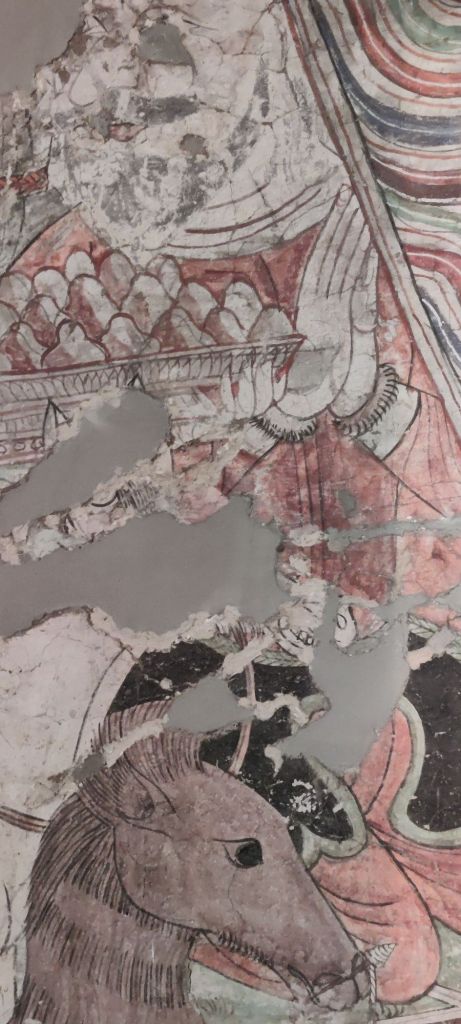
One Buddha….two Buddhas…
…982 Buddhas…
Ctrl C, Ctrl V

Absolutely stunning stuff.

There is a huge collection of Buddhist objects in the museum, and some of the most important and exemplary are housed in the Buddha pavilion. This exhibit has objects from all over Asia, in varying materials and from many time periods. The centerpiece is a reliquary holding bone fragments excavated from Piprehwa and believed to be those of the Buddha.
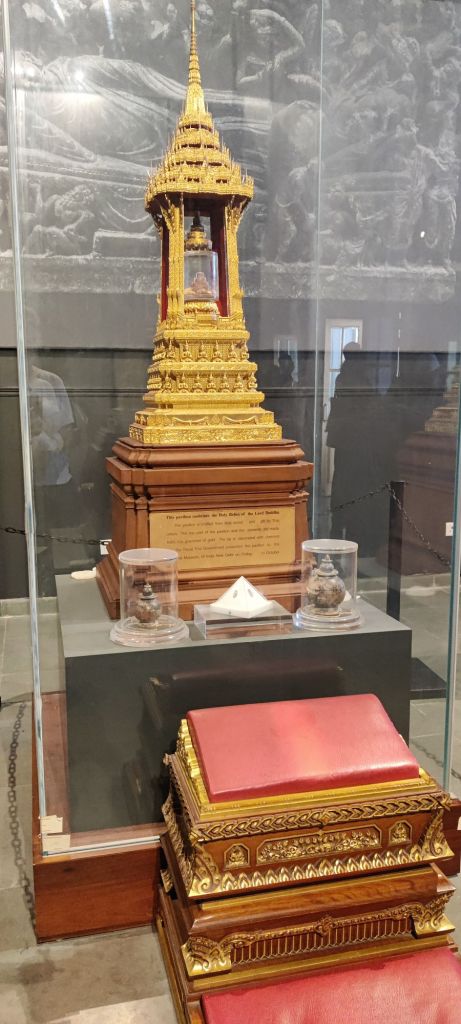
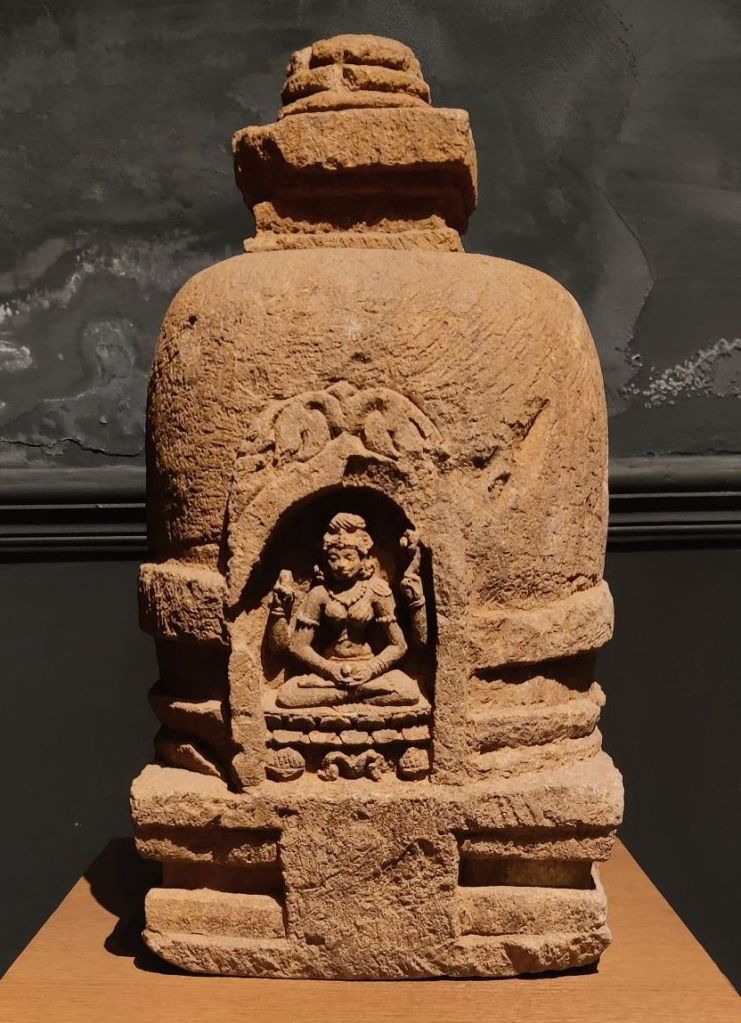
There is a guard with an automatic rifle in the room and he’s pretty chill, but it does distract just a teensy bit.
Chunda with four arms, a goddess of some Buddhist traditions, on a votive stupa from the 700s
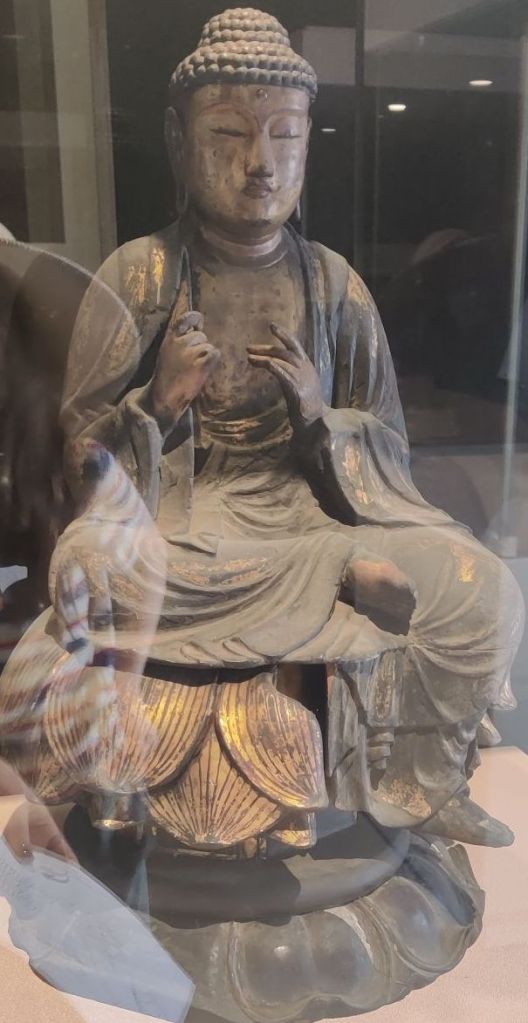
A 15th century wooden Buddha from Japan, and reflections of tourists reflecting on him
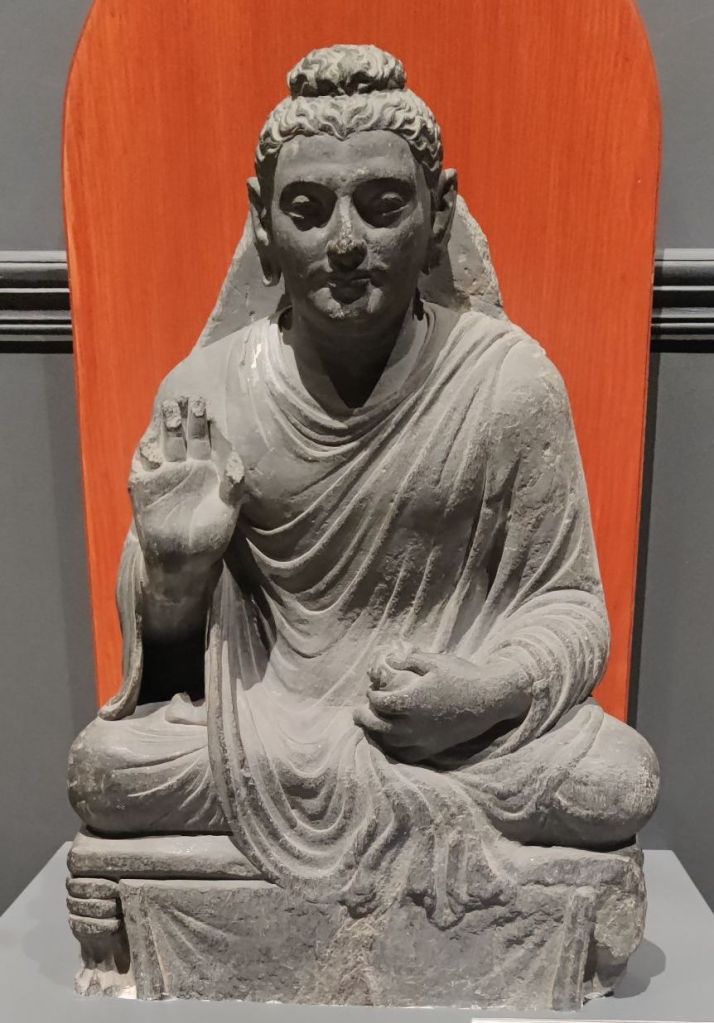
A second century stone Buddha from Gandhara, and my personal favorite thing in the museum.

There is. So. Much. More. The history of Indian writing, textiles, bronzes, manuscripts, maritime history, whatever was in all those crates being stored in the corridors–artifacts, relics and art for days. There is a small store with very inexpensive books available, so don’t miss that. The National Museum is open 10-6, Tuesday through Friday and 10-8 Saturday and Sunday. You can get there by hiring a driver and telling him that’s where you want to go.

Te Ara – Cook Islands Museum of Cultural Enterprise (Rarotonga, Cook Islands)

If you are lucky enough to find yourself on Rarotonga, the big island of the Cook Islands, you will find a pace of life altogether unfamiliar to anyone who was not brought up in Rarotonga, or similar locations. I personally was raised, lived, and vacationed in expansive places and had never been to anywhere as small and geographically isolated. It took me 45 minutes to drive the entire circumference of the island, and it only takes that long because the speed limit is 40 kph. So if you’re on this enchantingly beautiful rock in the middle of Absolutely Nowhere, Pacific Ocean, and you would like to visit Te Ara, you literally cannot miss it.

You actually can’t miss it. It’s on the one main road, Ara Tapu.

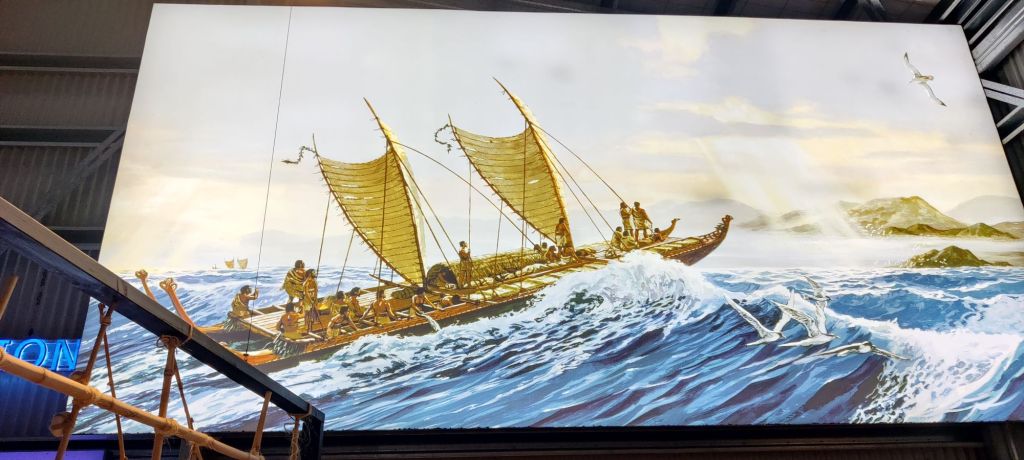
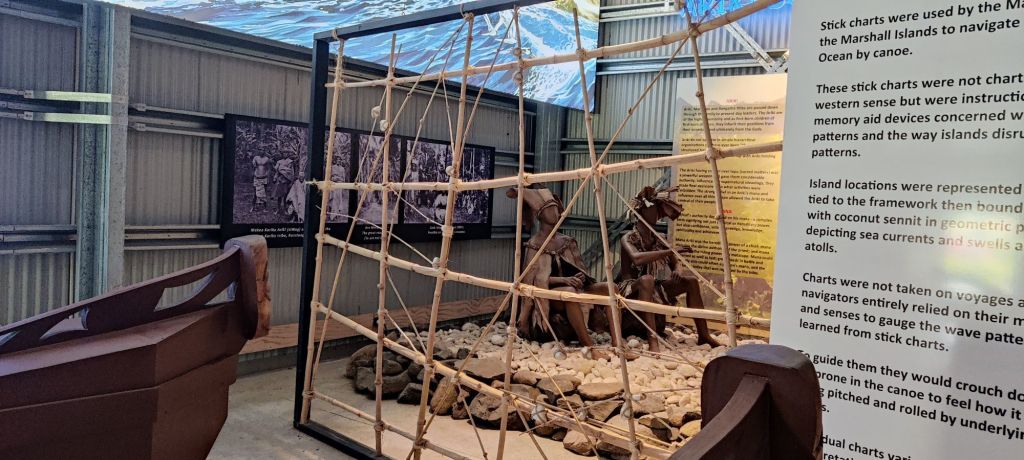
Te Ara serves multiple purposes for its community, one of which is a museum of Cook Islands history. And that history starts out roughly 3000 years ago, as Polynesian explorers working their way through, and I cannot stress this enough, an near-entirely empty Pacific Ocean found Rarotonga. Those navigators did that sort of thing with canoes and stick charts. I cannot get around a city I have lived in for four years without Google Maps.

Stick charts, used onshore (it was all memory and observation at sea) in the Marshall Islands, helped navigators recall swell patterns and island locations and were unique enough to be useful only to their creators.
Every ocean voyage exhibit I have ever been to reinforces my conviction that I am not cut out for sea travel.

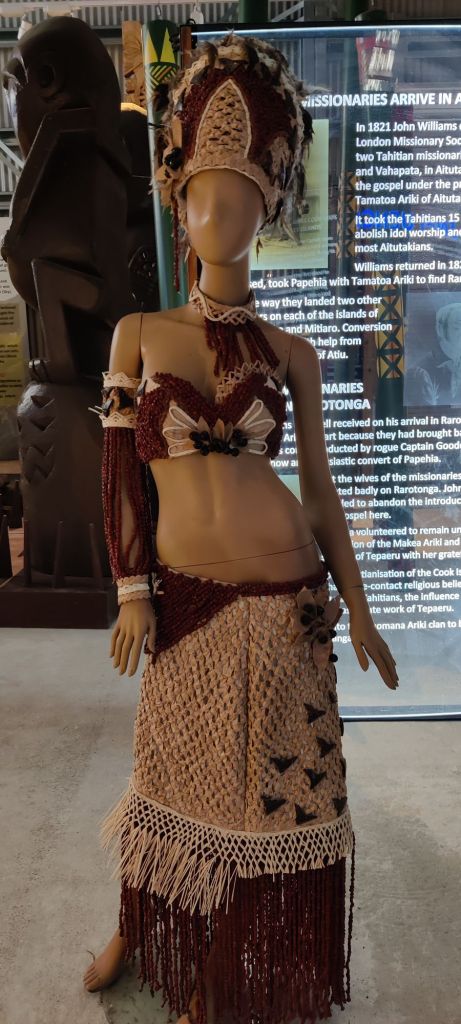
There are examples of traditional garments on display, and also this modern creation, worn by Alanna Smith, 2016 Miss Cook Islands, based on the warrior Aketairi, from the island of Atiu:

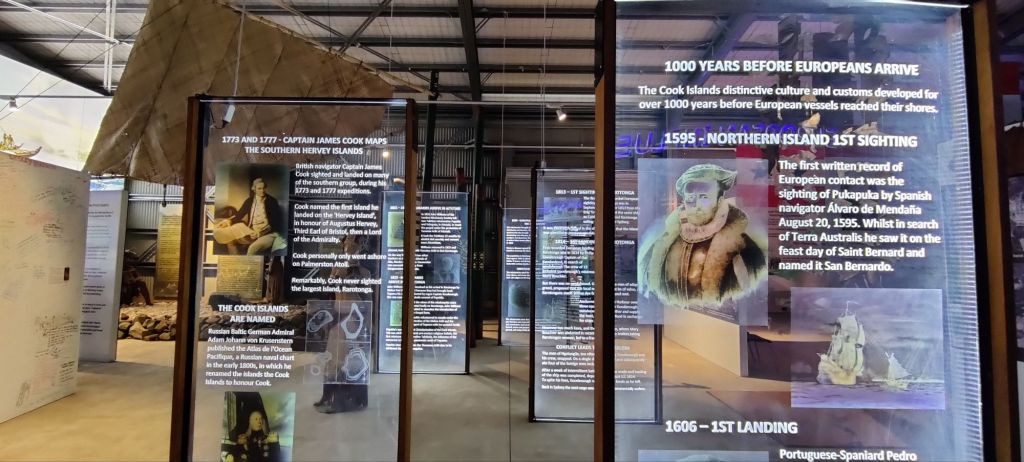
Beyond these exhibits you get to the post-European contact period, and we all know how that goes. It’s a pretty reading-intensive set up, but not overwhelmingly so.

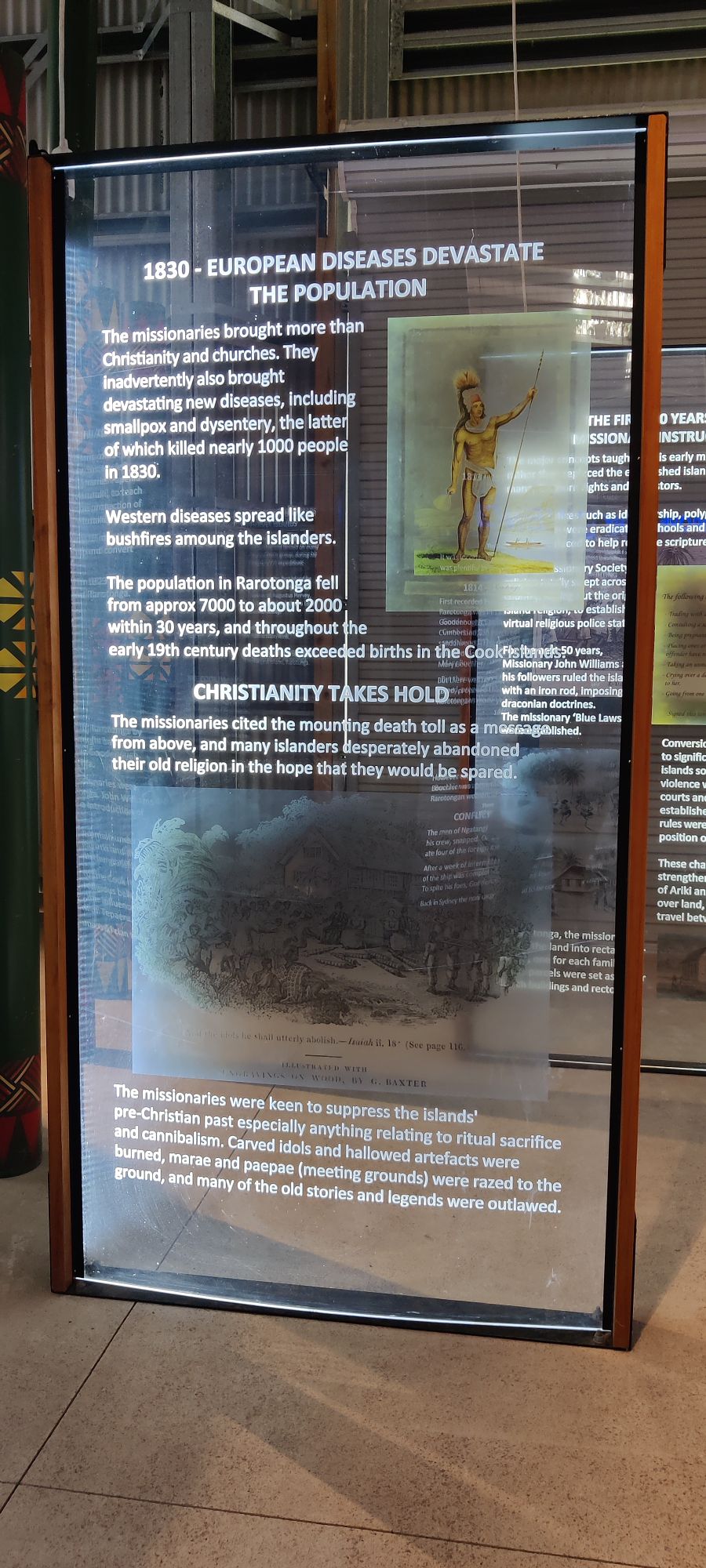
Here comes the disease, etc.

The arrival of missionaries and prolonged European contact in 1821 spurred a seismic upheaval in life. As it does. The diseases decimated the population, and the local practices and worldview were overwritten. The London Missionary Society had no chill.

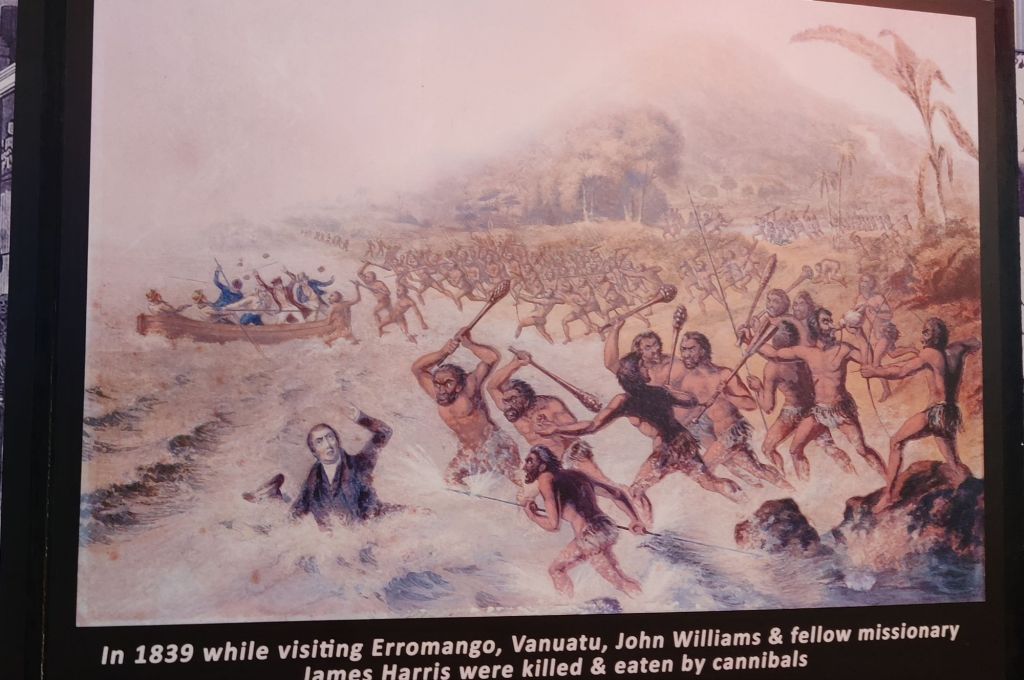
I vaguely recall (I was there some months ago now) that women’s lives were marginally improved under the new religion, although 19th century Christianity wasn’t great on that front in general, and everything else it brought was objectively terrible. This is the depressingly familiar pattern, but I mention it because the museum also has this illustration, whose blasé caption sort of off-handedly remarks on the end of missionary ruler John Williams’s adventures.

Happens.

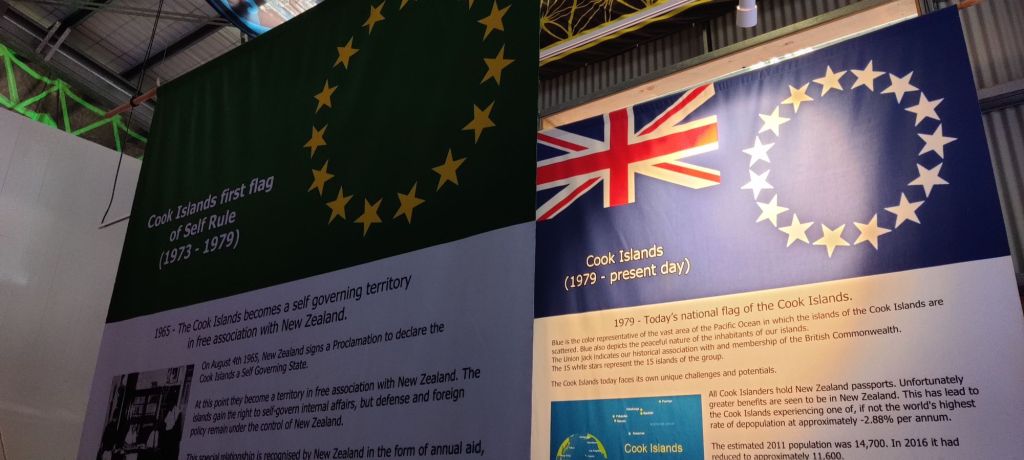
The exhibit continues through Cooks history up to contemporary times, as the political changes it’s undergone are marked in part via the changing of the flag through the years.

I rather like the older one.

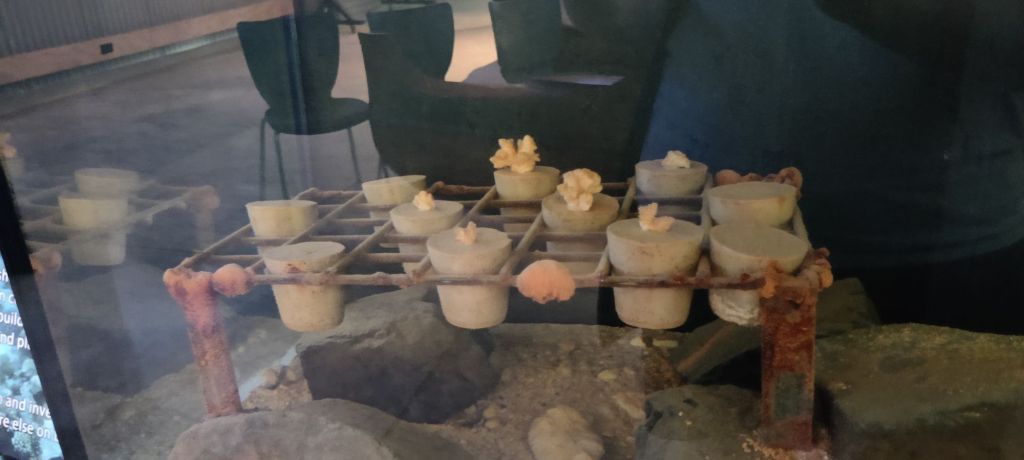
The Cooks are dependent on tourism, environmentally double-edged blade that it is, and are incredibly vulnerable to the effects of climate change. The country’s challenges, environmentally and economically, are manifold and complex. In that vein, Te Ara includes some displays on the local ecology and its protection, as seen here in this tank demonstrating reef regeneration, at the end of your walk through the building.

Hey, gotta start somewhere.

Te Ara is a fine way to spend a few of your non-snorkeling hours on Raro, and being open daily from 9am (10am on Sundays) to 3 pm makes it one of the most open places there is (when I say life moves different in the Cooks, I mean it). There’s also a small café and store with locally produced goods.

Gallipoli: The Scale of Our War: Te Papa Tongarewa exhibition (Wellington, NZ)

Given the state of the world at the time of this writing, I’d much rather be doing an exhibition of frayed knots or whatever. But on the other hand, I guess there’s no time like the present to remember that war is absolute bullshit. And anyway, this exhibit is pretty great and very well done.

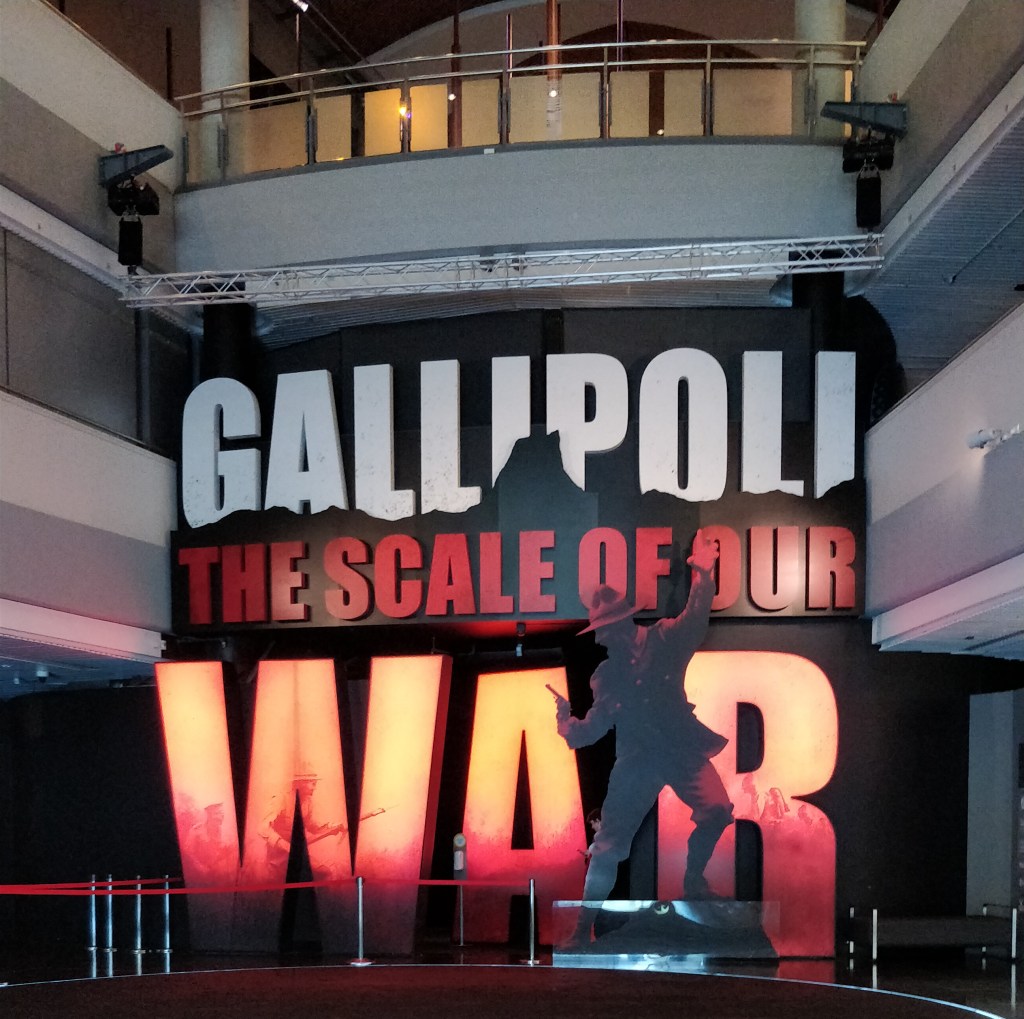
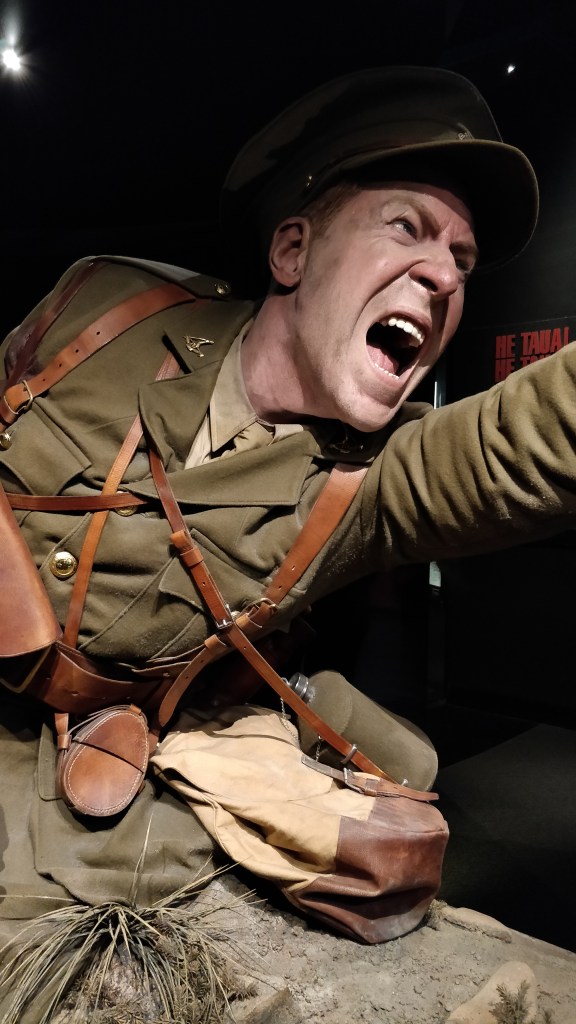
Te Papa, the national museum of New Zealand, will definitely get its own entry eventually. It’s very large and hosts pretty grand temporary exhibitions. The Scale of Our War is technically not permanent, but it is still a few years from the end of its run (2015 to 2025) and it is very grand. The figures that anchor each section are 2.4 times life size and were created by local prop maker Weta Workshop. Maybe you’ve heard of them.

You can’t wander in on accident.

The history of World War I is complicated and brutal and well worth reading about, especially if you’re looking to really trace how exactly a conflict that resulted in so much devastation and death could feel both entirely preventable and wholly inevitable. It was a blood-soaked baptism into the modern age. There are many horrific parts to the whole thing–Ypres, the Somme, the Argonne, etc etc etc–but for New Zealand and Australia, Gallipoli looms largest.

I won’t try to lay out the ebbs and flows of the campaign, because it was eight months of hell spent in service of trying to knock the Ottoman Empire out of the war, and it absolutely did not work. It started with a bad landing, continued with failed offensives, and ended in an evacuation when command decided there were better positions to die for in Europe. The Allies lost 44,000 lives. The Ottoman Empire lost 87,000. It made little difference to the wider war–but it helped shape the national identities of Australia, New Zealand, and Turkey.

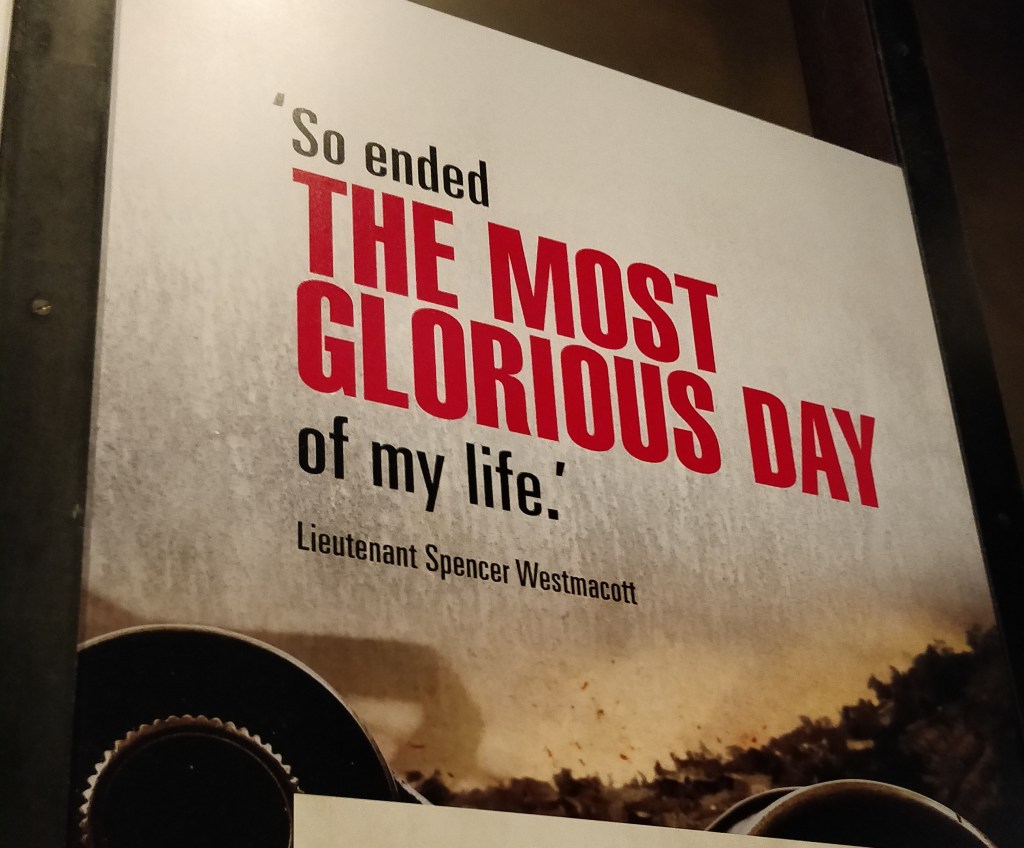
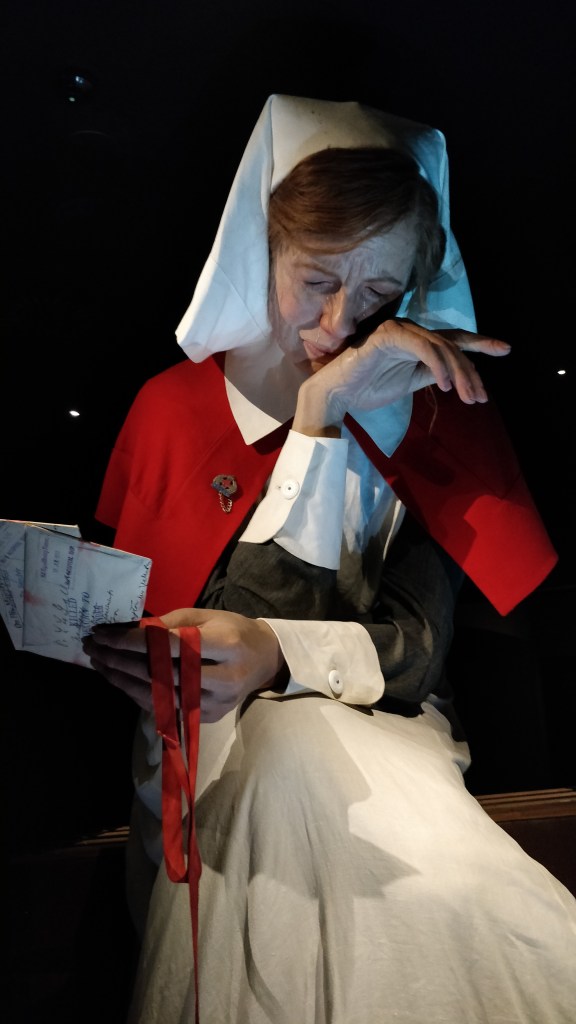
The exhibit includes overviews of the campaign as well as the stories of eight New Zealanders, who are depicted by those very large statues. It’s an effective way to hook the audience into a dense topic. You start with Lt. Spencer Westmacott.

Westmacott would land at Gallipoli on April 25, sustain wounds that would cost him his right arm, and be evacuated that night. His feelings about his experience there reminded me of the narrations in They Shall Not Grow Old, where many soldiers spoke fairly warmly of their time at the front.

Chrissy-Teigen-grimace.gif

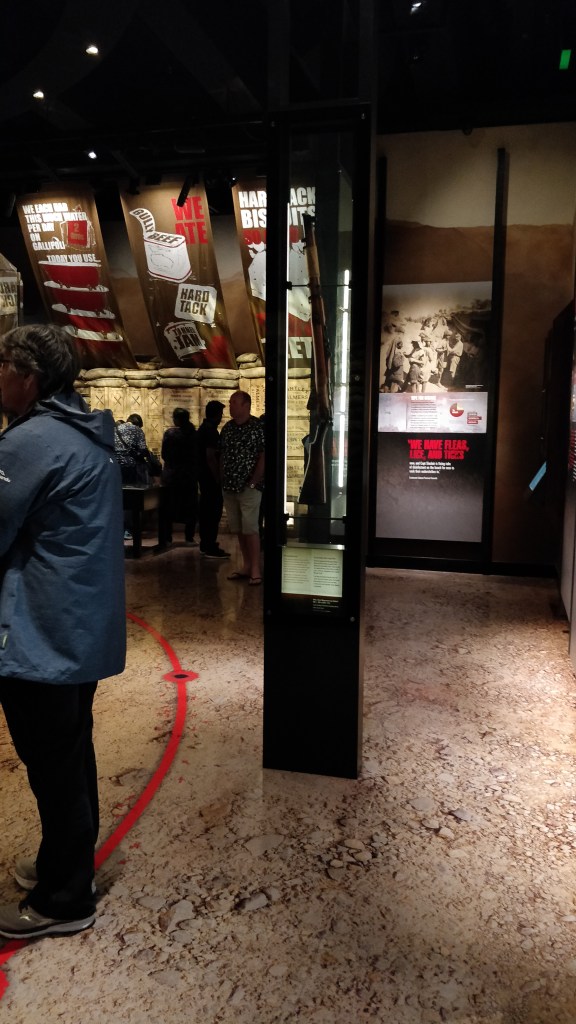
The space of the exhibit is laid out pretty well, in my opinion. You follow the line, which not only helps the flow of traffic but also guides you through with a sense of how time was passing during the campaign.

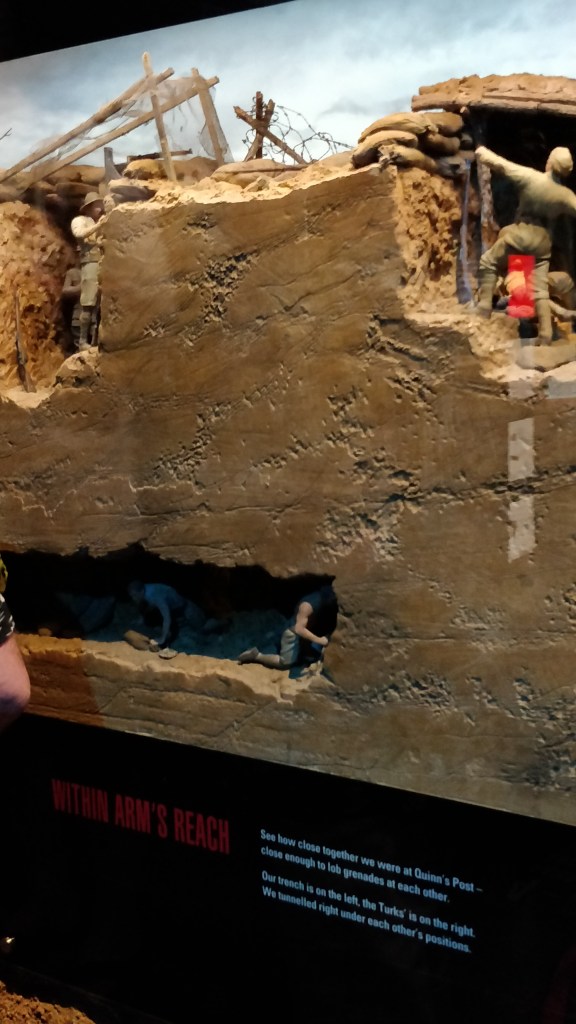
As I mentioned, I’m not going to go through the details of story here–for one thing, this post has been in drafts for some months and I currently have covid; for another, I’ve already linked to one good overview–but I have a lot of admiration for a history-based museum exhibition that does a solid job of engaging the patron. History can be tough for engagement, as it tends to be text-dense, rely on not-immediately-eye-catching artifacts, and generally has taken place somewhere else, leaving a museum-goer without even a bare spatial context within which to imagine the action. Gallipoli tries hard to give some of that context, with 3D maps, models, first-person accounts, footage and photos (some rendered in 3D) and interactive elements.

Artifacts are often positioned within the walking space, which I think helps them be noticeable among the flashier visual elements.

One of the most effective features is a screen that demonstrates the effect of various weapons on the human body. The viewer selects which one and the skeleton takes the hit.

I have no jokes for this

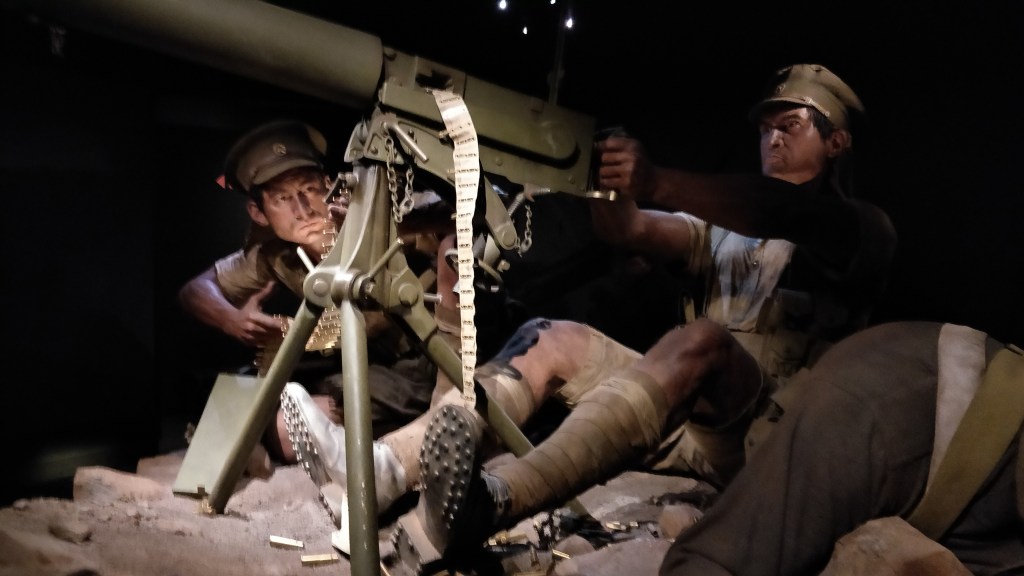
The interactive parts are very well done, and of course there isn’t much in the way of emotional relief throughout the space. While all of the various types of elements are represented throughout the viewer’s walk, the experience is anchored in the statues of the people whose stories make up the narrative of the exhibit, and really, those statues are extraordinary in their detail.

I had a lot of problems photographing the statues, and it’s now driving me crazy

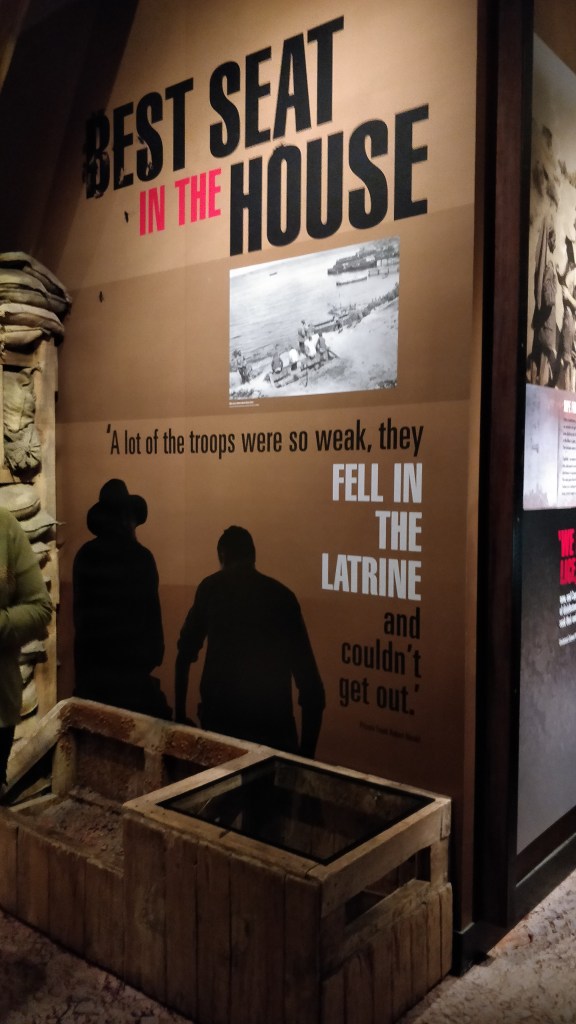
Conditions at Gallipoli were absolutely awful in just about every way. How awful? This awful:

No.

And finally, as you leave, there is one more figure–surrounded by paper poppies left by other visitors–that serves as a stark reminder that this campaign was early in the war and many other hells awaited.

Again, the subject matter of Gallipoli: The Scale of Our War cannot be uplifting. I have always had some trouble with writing up exhibits that document the worst of humanity (long-time visitors to this blog might have noticed that I never did write about the ESMA in Buenos Aires). Regardless, Gallipoli is remarkably well done. It is well worth the visit to Te Papa, which is itself a wonderful museum. The exhibition is free (as is entry into Te Papa), and open every day except Christmas.

The Edwin Fox Ship and Visitor Centre (Picton, NZ)

I think we can all agree that 2020-2021 have not been great years for museum-going motivation. Even here in the relatively normal New Zealand, I haven’t got much energy for museums or blogging. I do have a few to catch up with though, so I’m going to power through it. But one place you should not just power through is Picton, NZ, however strong the temptation might be to view it as big ol’ ferry lobby.

Picton is the South Island end of the Wellington-Picton ferry services across the Cook Straight, but you’d be missing something neat if you don’t build in a couple hours to visit the Edwin Fox before boarding your own hopefully far more seaworthy vessel.

Scale model. Do not attempt to board.

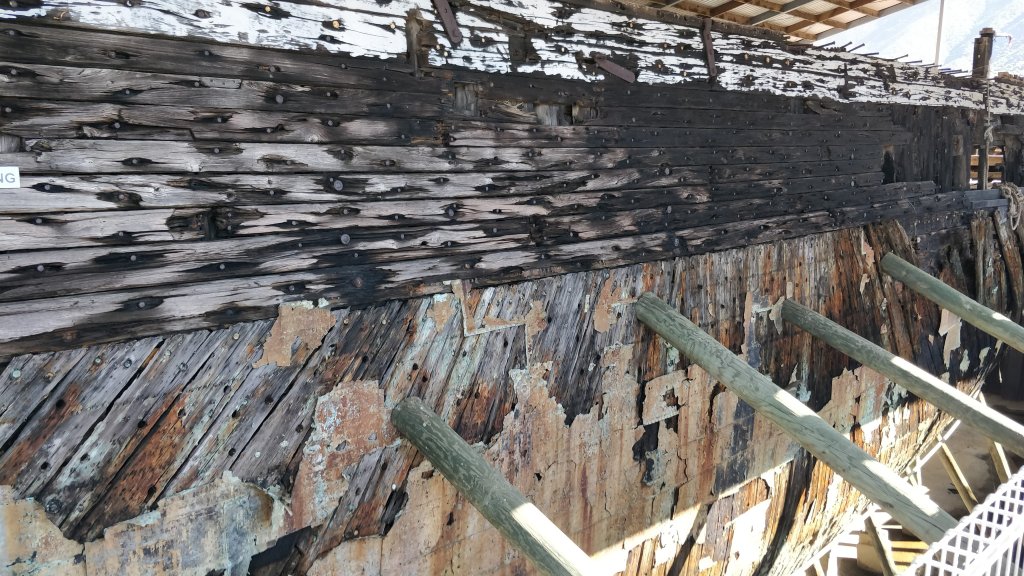
The Edwin Fox ship and Visitor Centre is the site of the remains of the Edwin Fox, built in 1853. According to the Centre’s website, the ship is the last surviving (it meets perhaps the most generous definition of “surviving” but as 168 years is a long time to hold anything together, I will grant it) wooden Crimean War troop transport and the last surviving Australian convict ship. It’s also the oldest merchant vessel and the oldest wooden NZ immigrant ship.

Let’s start with a look at ship life for the convicts being sent from Britain to Australia on the 1858 prison trip, starting with this sampling of offenders. Marvel at the consistency of sentencing in the 1850s. Ten years for stealing pants? Presumably they were awesome pants. Six years for stealing an ox? Damn those pants must have been frickin’ amazing.

I’m sure there’s a logical reason for a 17 year old to be sentenced to 14 years for sacrilege.

Prisoners spent most of their voyage below decks, which I’m sure was singularly unpleasant. The holding space could only be accessed through one very tiny door.

Duck

And in the great tradition of unsettling museum mannequins, here’s this guy’s tear- and/or sweat-streaked face.

Yikes

But the Edwin Fox had quite the life outside that one time it was a prison bus. In addition to the merchant activities, it was also the immigration bus:

It ended its functionality as a refrigeration and storage ship, having been stripped of the parts unnecessary for a floating cooler, until it was finally abandoned to the elements in 1950. Fifteen years later there was interest in preserving what was left of the Edwin Fox and it wound up in permanent dry dock in Picton. Artifacts found with the ship are on display in the visitor centre:

After strolling through the visitor centre, visitors then move to the outside-but-covered area that houses the ship itself. It’s kind of spooky!

I like to think of the beams as flying buttresses
Inside the hull

The fun parts of the ship itself are the set ups that show what life was like on board. If you could avoid travelling steerage, I would recommend dodging it.

Mealtime spaces seem fine until you think about how many people were using them:

Like a perpetually damp picnic

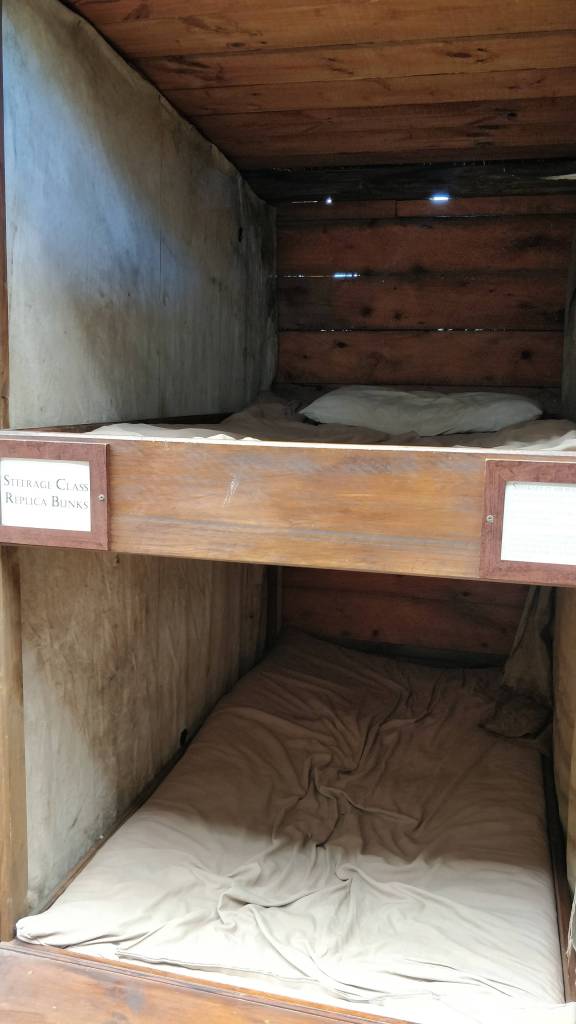
But it’s still preferable to the steerage “cabins,” which housed the whole family (up to six: two parents and four kids). The straw mattresses would be frequently dripped on from the deck above. It stunk, literally. The whole trip would take 12 to 14 weeks. And instead of running full tilt down the gangway and on to dry land to put the memory of your journey forever behind you, you actually dismantled the bunks and used the wood in your house.

Up to six people. Six. SIX.

Of course, the prisoner cells were just a bit worse.

Not shown: the actual barred doors.

Not all of the ship accommodation was so tight and gross. I can’t remember exactly but this might be the replica for the captain’s bunk (or maybe first class?):

Look at you with your fancy drawers, lah-dee-dah.

Finally, there’s a nice replica wheel and compass on deck, which look a little jarring next to the haunted, not-wholly-there deck itself.

Watch your step

Definitely check out the Edwin Fox and its visitor centre; it’s open every day but Christmas from 9 am. People 15 and up are $15 (the young are free). There’s a nice little swag shop, and they give little kids a free activity booklet.

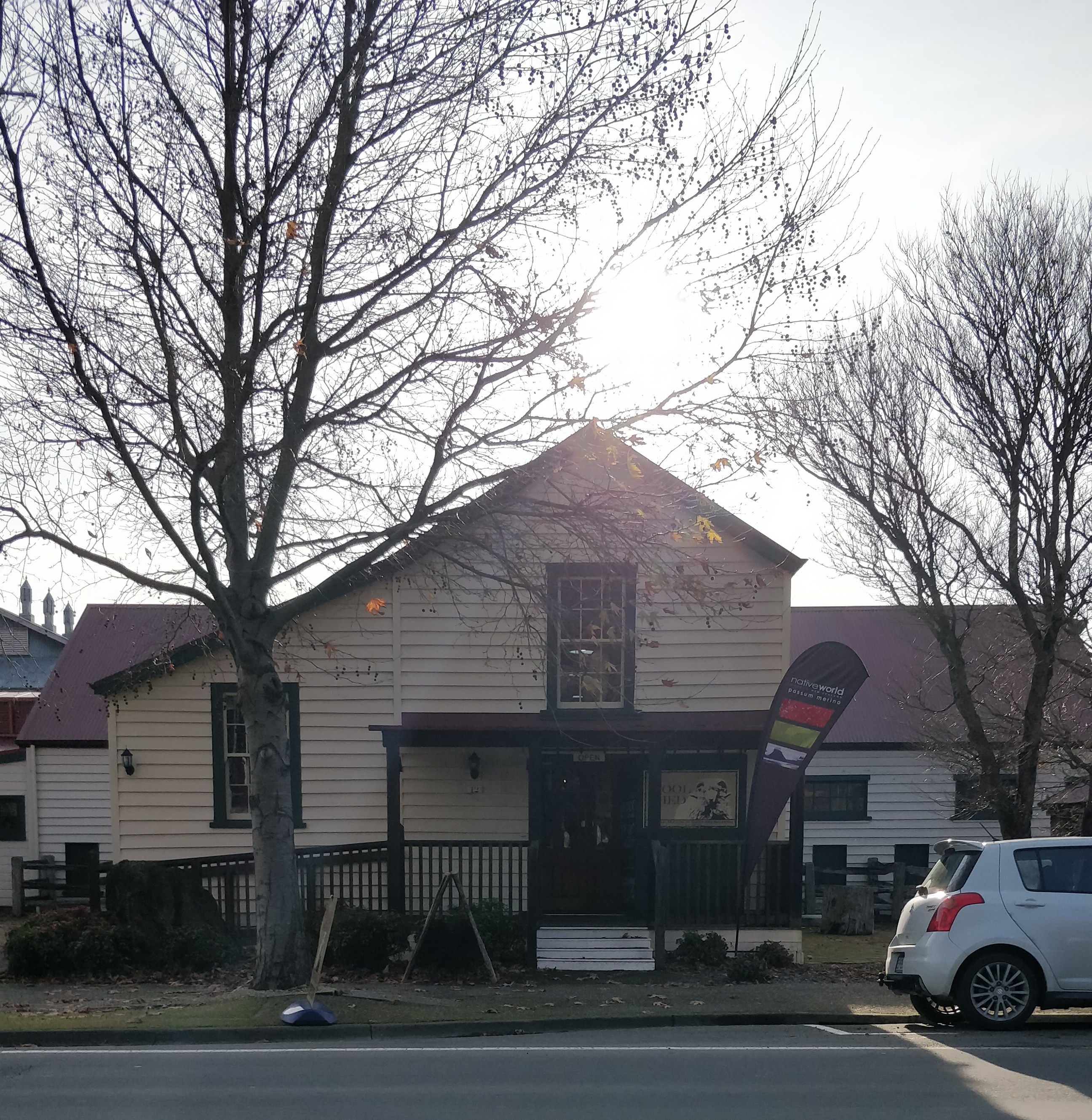
The Wool Shed: New Zealand’s Museum of Sheep and Shearing [Masterton]

WHAT’S UP MOFOOOOOOOOOOOOS

Ok, so, like probably everyone, I’ve been doomscrolling various social media feeds as a primary activity. It’s not great! But despite all the hot garbage everywhere, I managed to find a job, and now here I am, trying to find my blogging rhythm again. I don’t know how readable the post will be, but I’m opting to dig into a museum that was a very sweet visit for my little knitter’s heart.

IMG_20200704_145049.jpg
You know, I generally have a good time in little museums that look like houses.


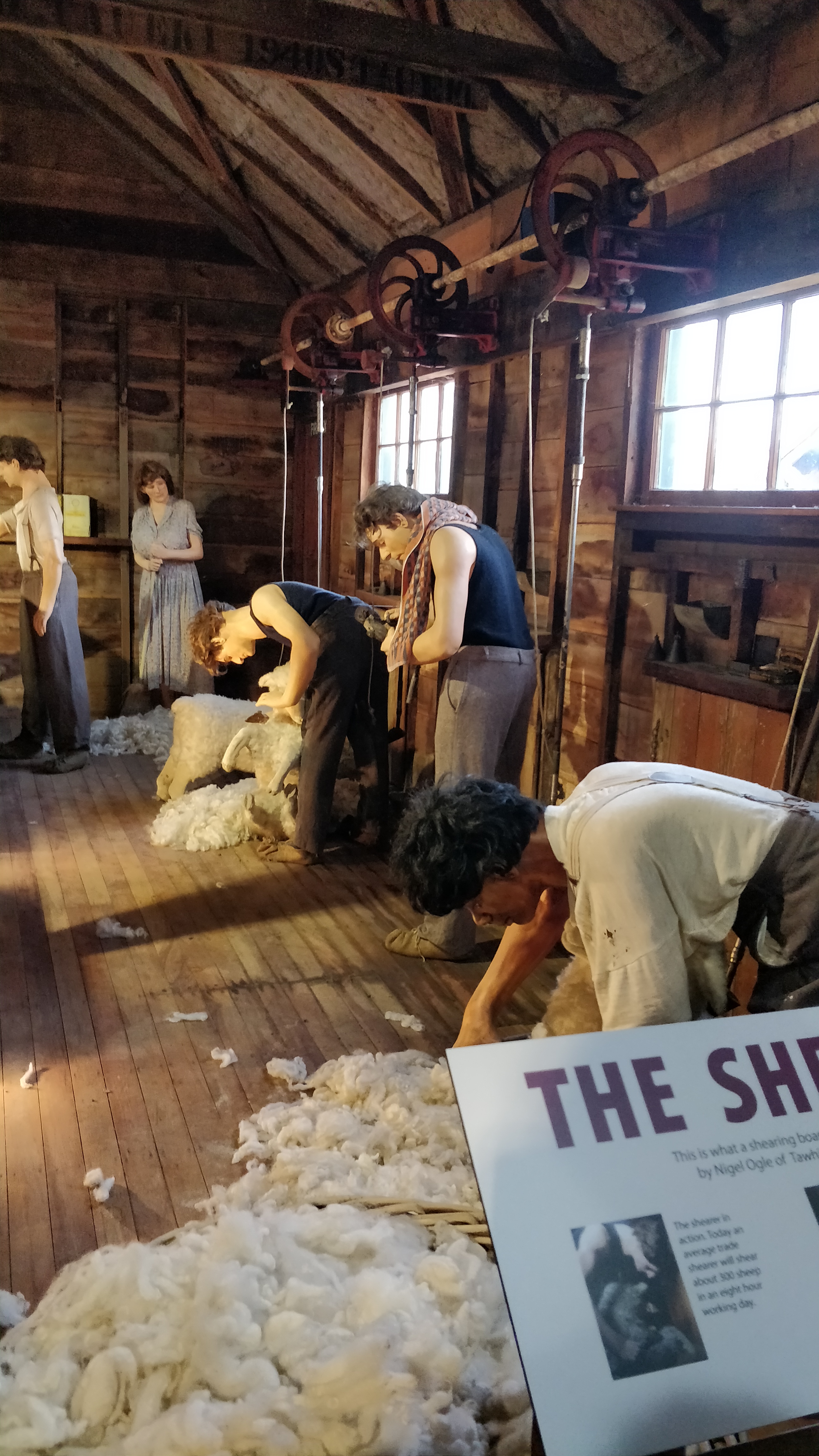
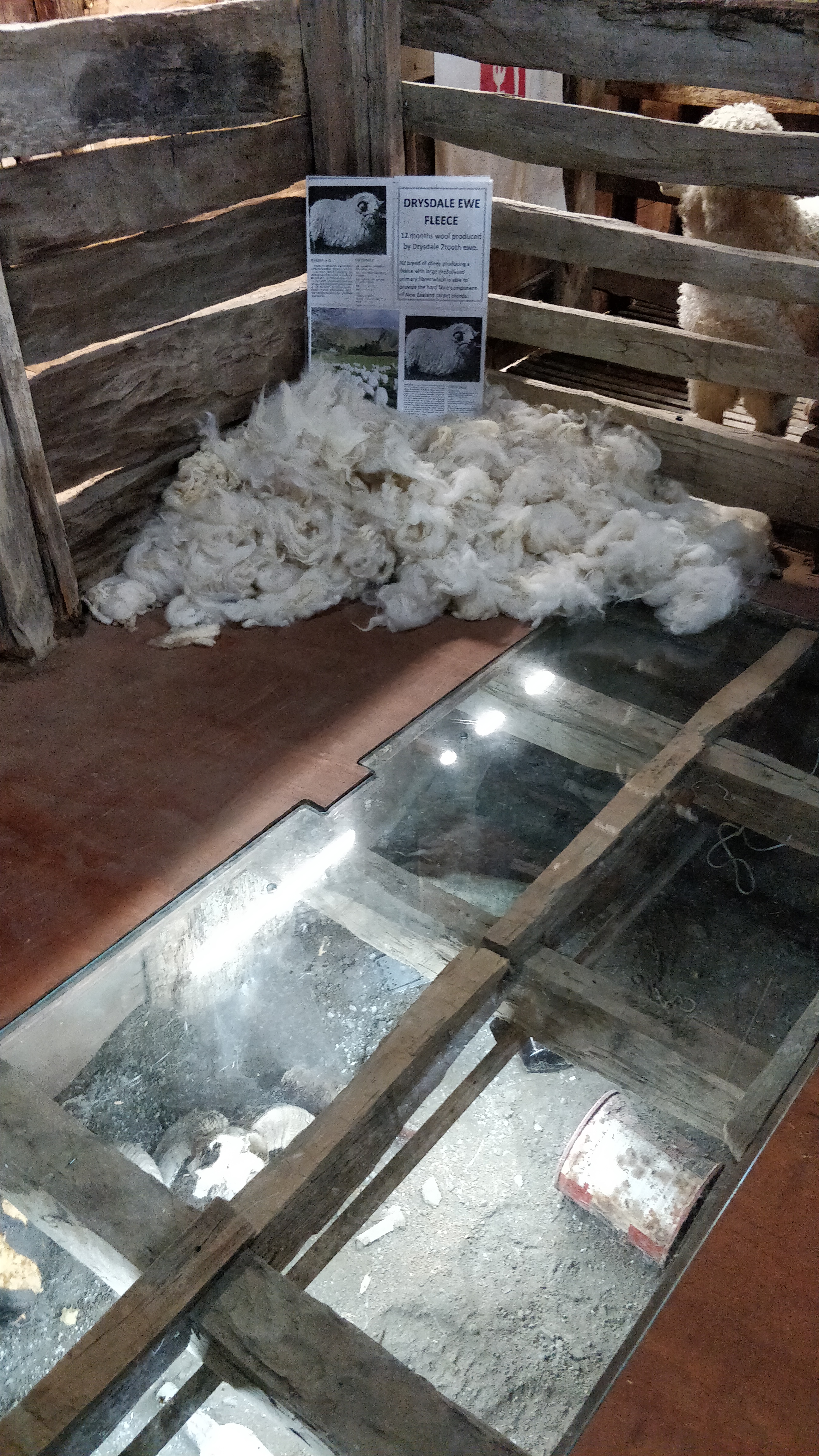
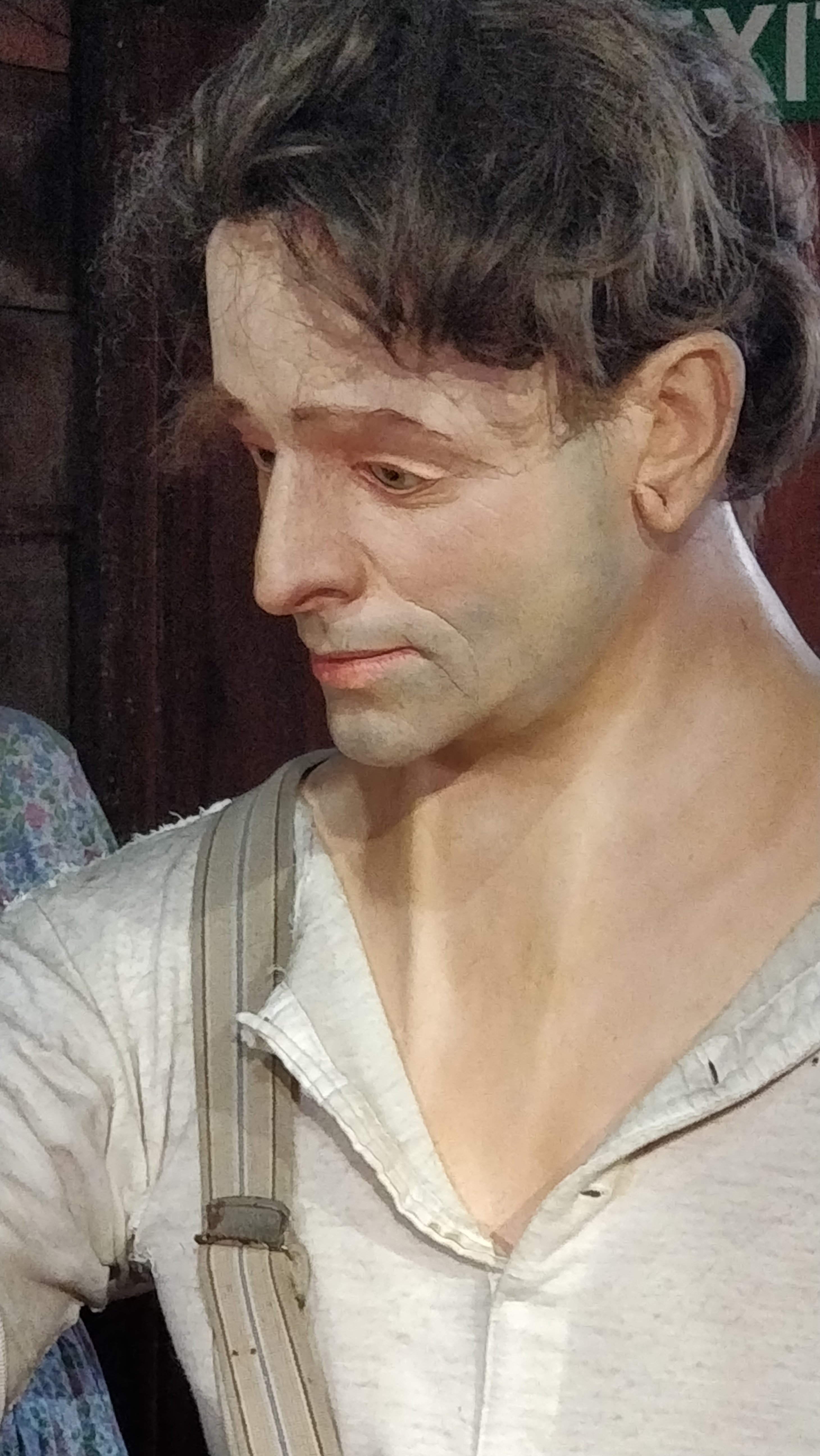
This is the Wool Shed, and here you will learn about the wool industry and its history in New Zealand. Two old, authentic wool sheds are packed with sheep- and wool-related artifacts, as well as vaguely unsettling mannequins, yet another museum feature that is near and dear to my heart.

IMG_20200704_153206.jpg

IMG_20200704_145529.jpg
Do not ever, ever change these mannequins.

Sheep and sheep products used to be a seriously critical aspect of the New Zealand economy, and even today, there are 27 million sheep here–almost 6 sheep for every person.

IMG_20200704_150013.jpg

The town of Masterton hosts The Golden Shears, an International Shearing and Wool Handling competition, which describes itself as “three days of non-stop action and entertainment,” a claim I have no reason to doubt. I had no idea it existed before I visited The Wool Shed, and it is now on my bucket list. Sure, you can see it on TV, but as the website says, “you can’t beat the excitement of being there to witness history being made and to soak up the lanolin infused atmosphere as the sweat drips off competitors brows.”

Footage of the competition is shown at the museum, and it is indeed a richly lanolin-infused atmosphere. I deeply regret not capturing on video the part where the announcer says a competitor is “having the shear of his life.”

I’m gonna go some day, mark my words.

But back to the museum!

IMG_20200704_145857.jpg
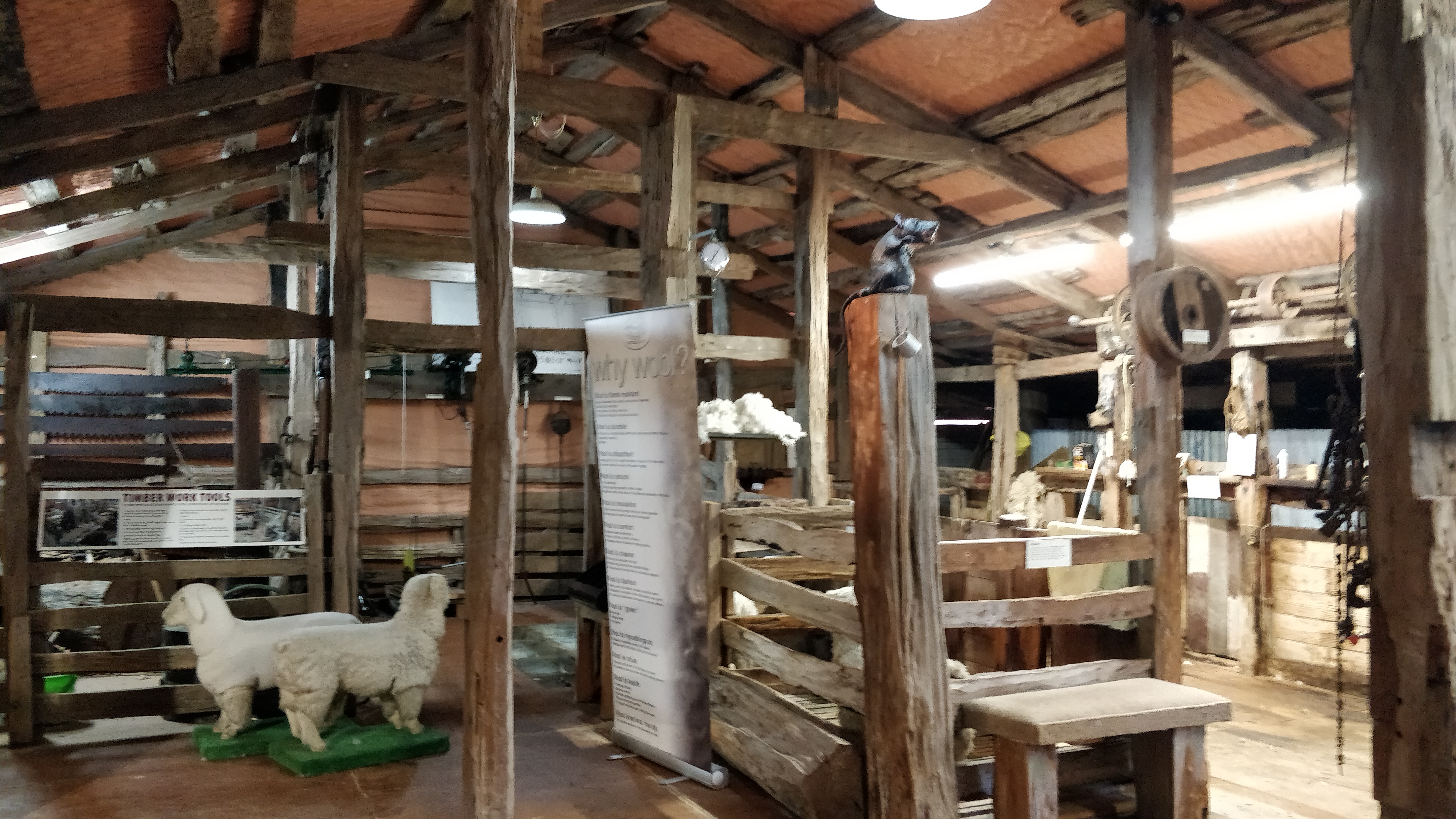
an old-timey wool shed, but probably smelling better these days

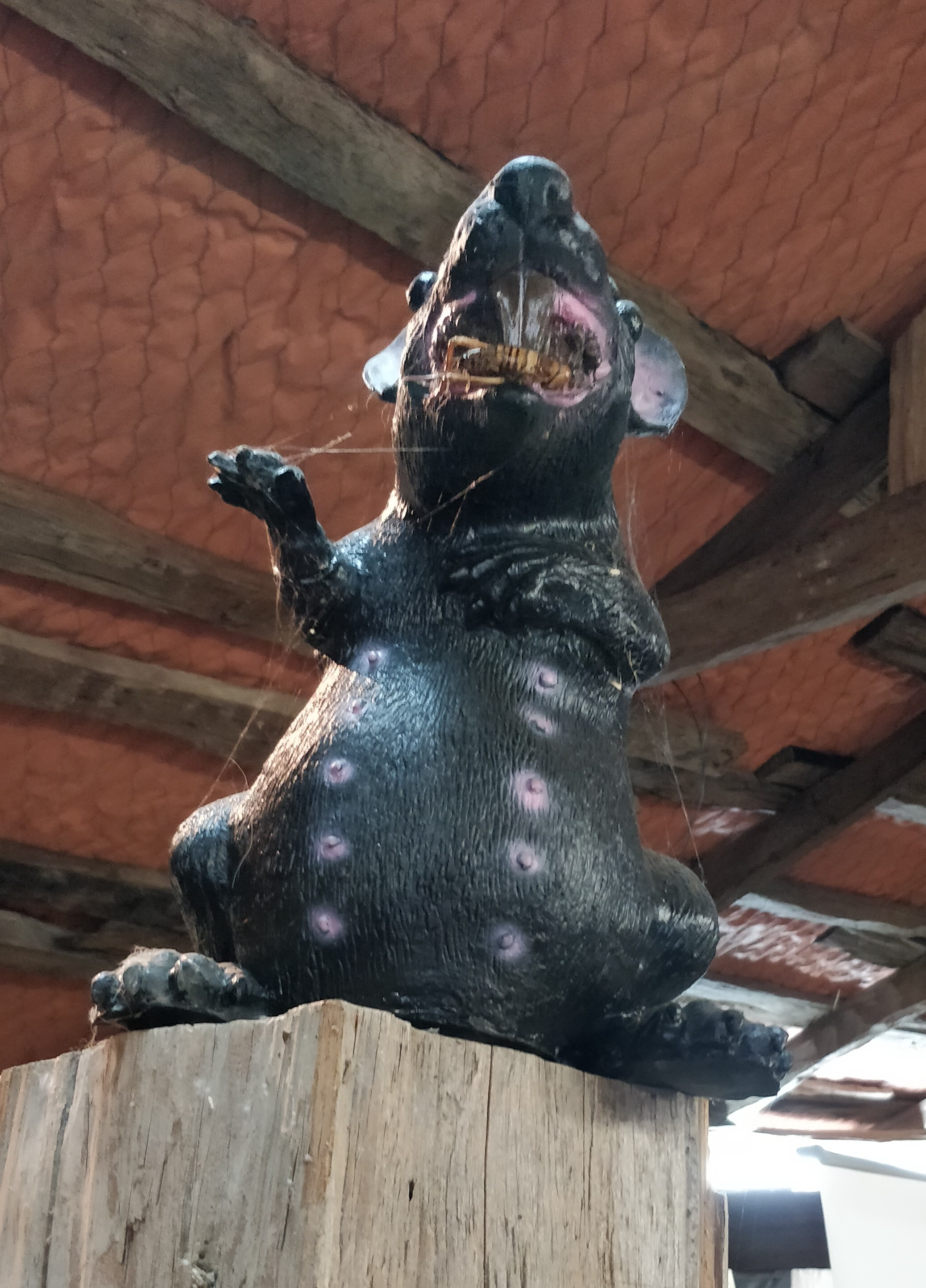
The displays in the wool sheds show how the sheep were penned and various tools of the wool trade. Also, yes, that is an insane rat up there on that post. Having apparently just had a litter and munching on a weta.

IMG_20200704_152516.jpg
but why

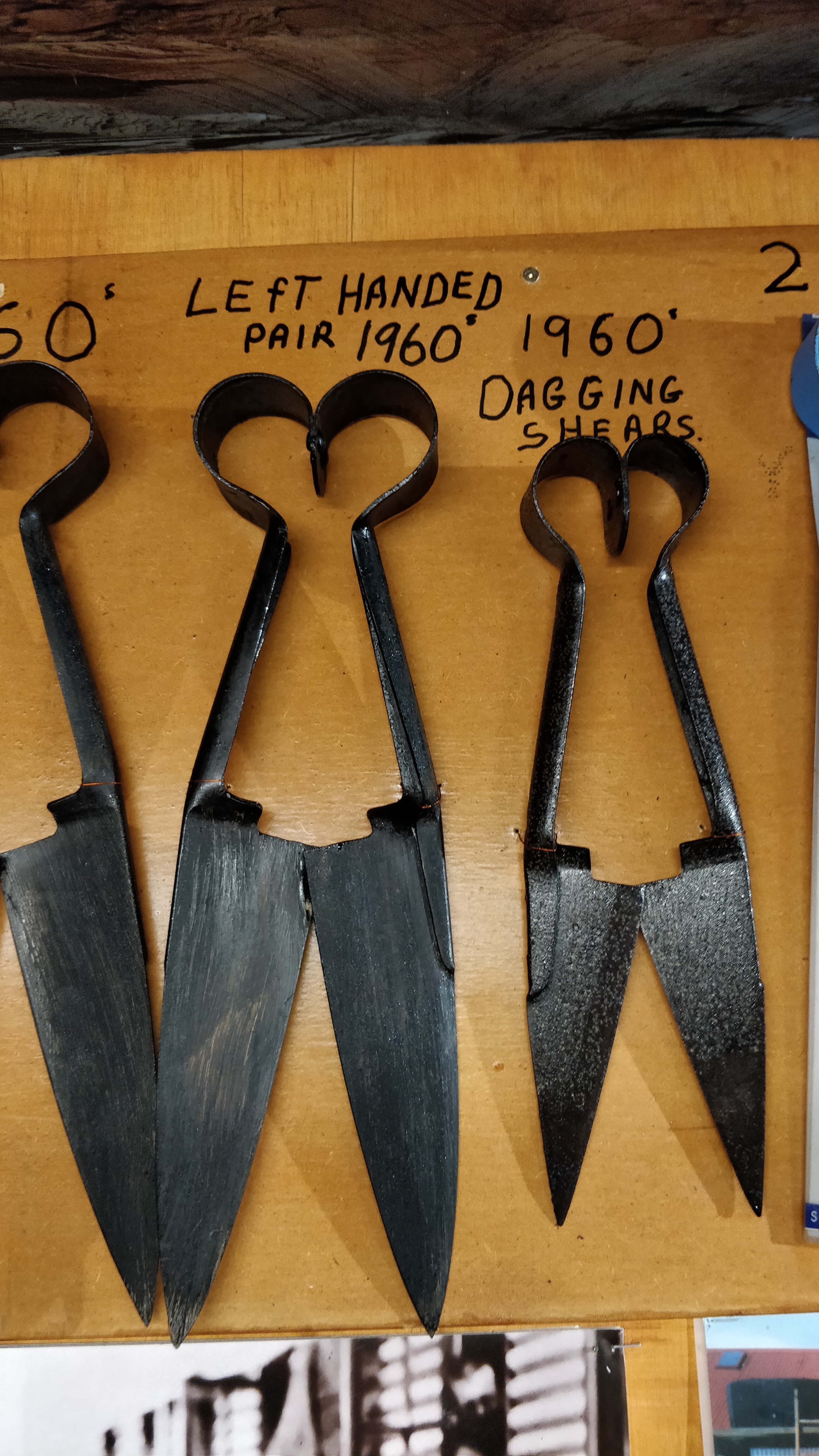
But nevermind that! There are historic shears! Including this pair of left-handed ones, which as a lefty, I very much appreciate.

IMG_20200704_150440.jpg

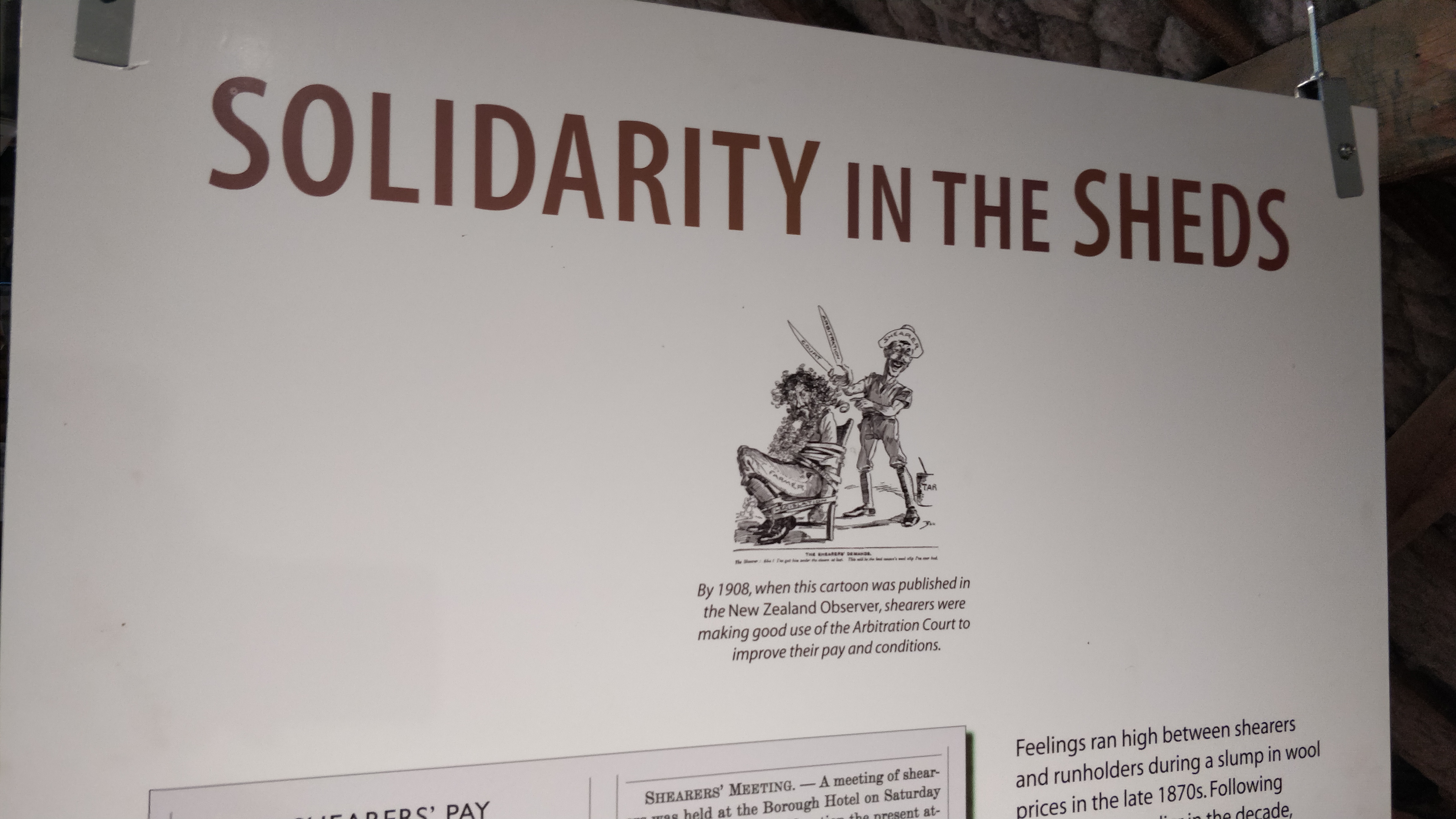
You’ll also read some history related to labor issues for shed workers:

IMG_20200704_150936.jpg

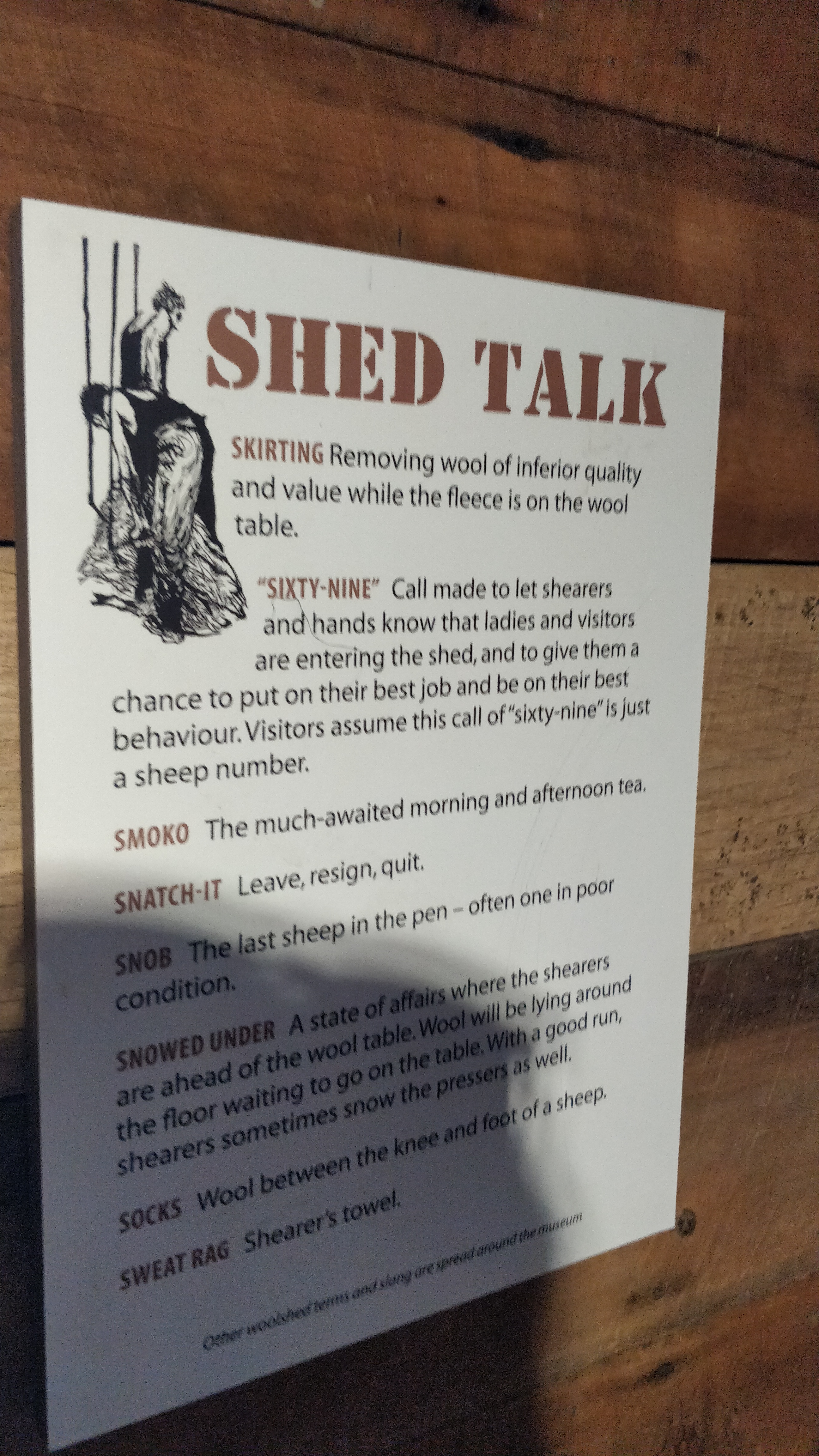
As well as many examples of shed vocabulary and terminology.

IMG_20200704_151129.jpg
Absolutely sure the code “69” had no in-joke connotation whatsoever and would never besmirch the honor of early 20th century shed workers by suggesting otherwise.

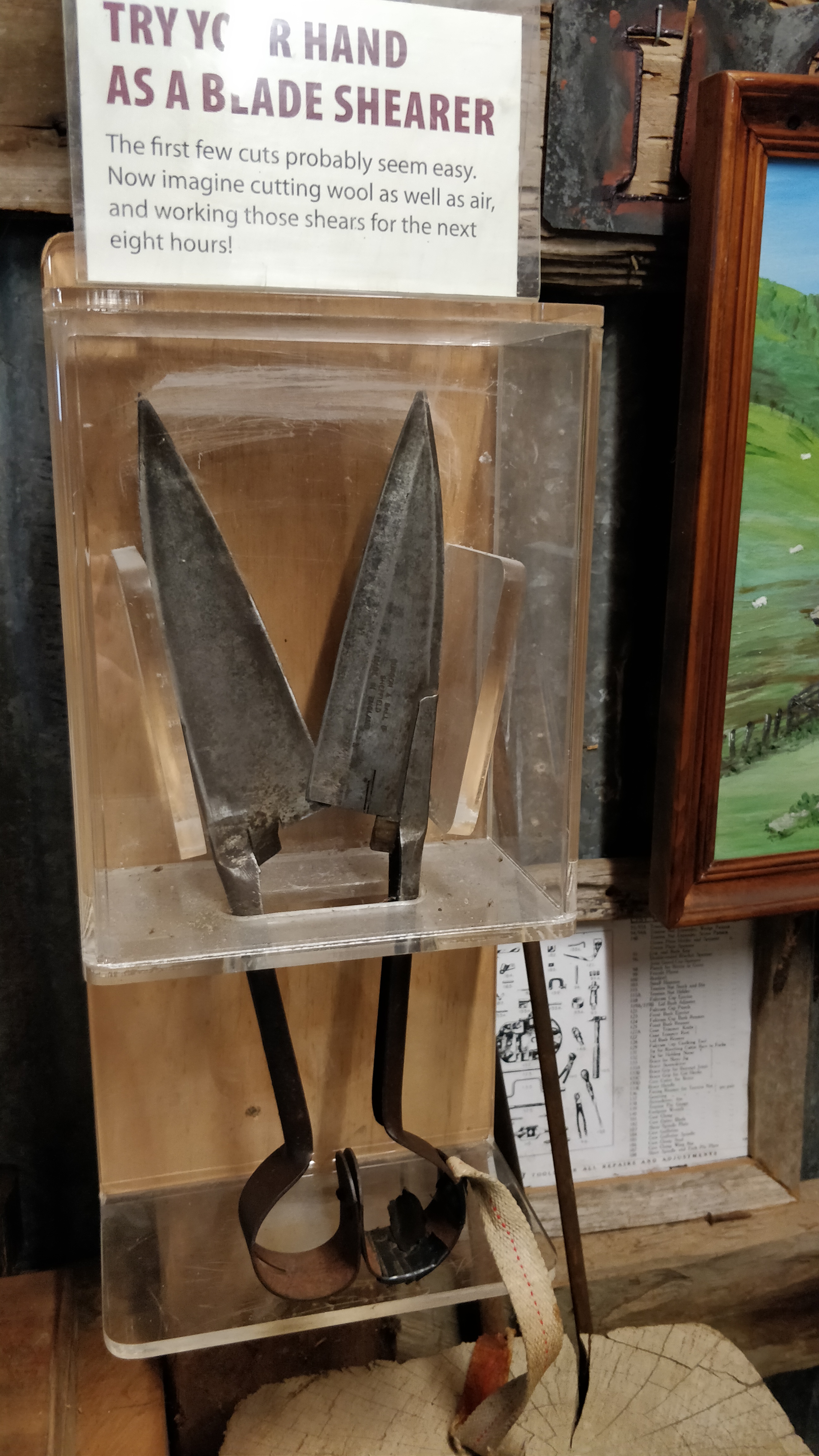
As regular readers know, I also approve of interactive displays in museums, so I was of course very pleased to see this:

IMG_20200704_151919.jpg
An excellent teaching resource, where just about every single person can learn that they do not want to be a sheep shearer prior to electric clippers.

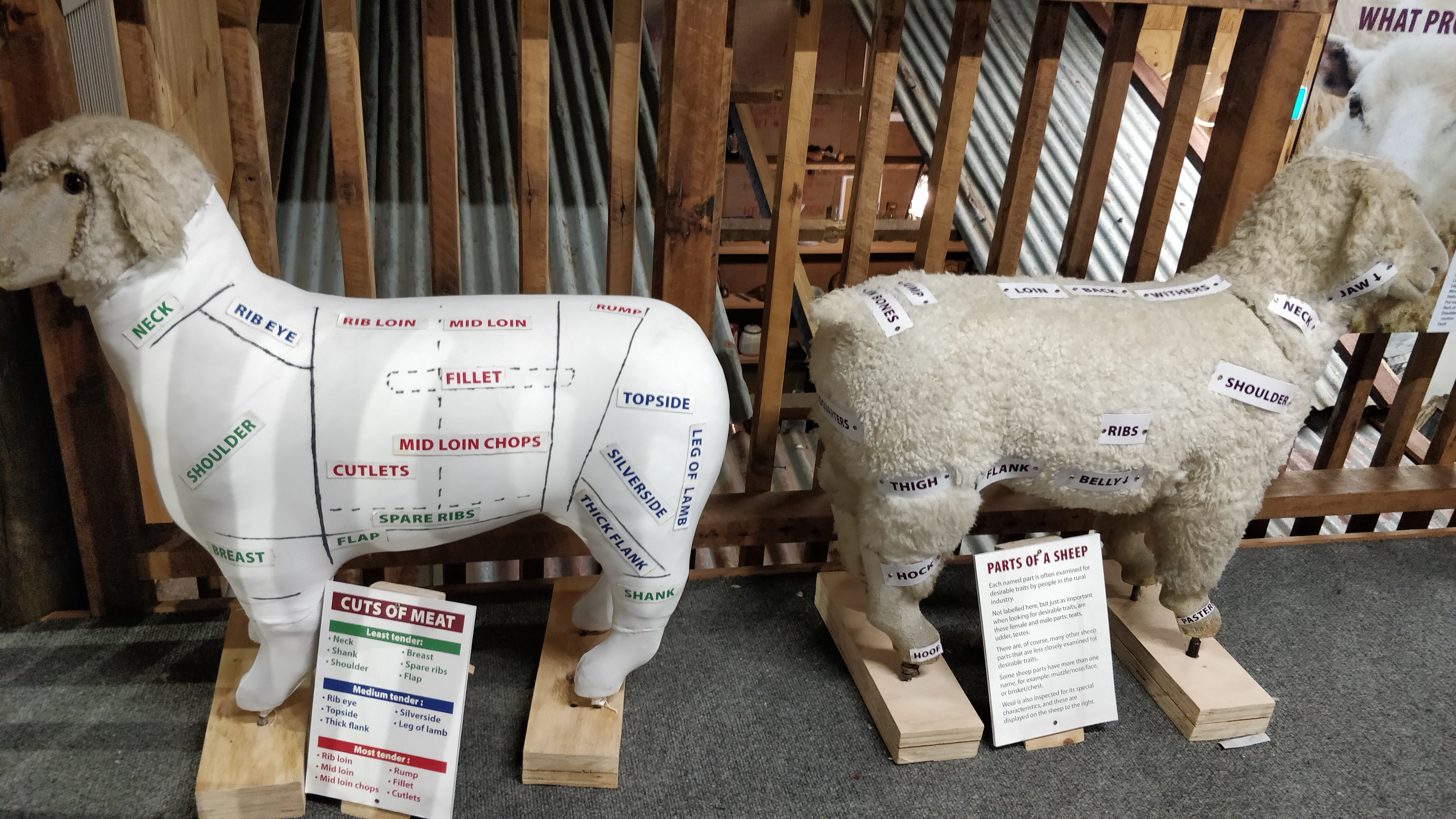
But maybe you’d rather familiarize yourself with some of the grimmer aspects of animal husbandry. No worries; the Wool Shed gotchu.

IMG_20200704_150141.jpg
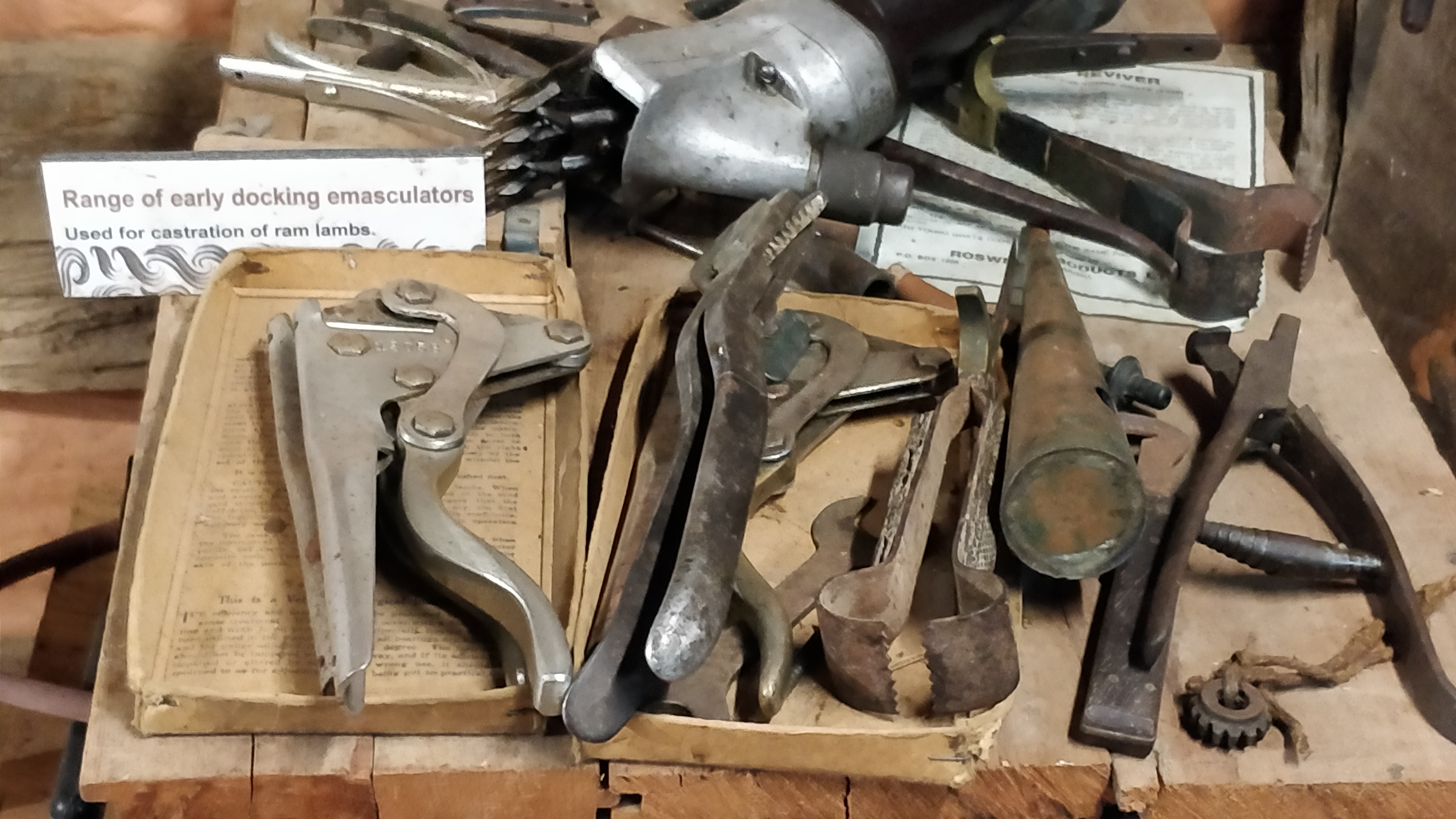
Well off the top of my head, can’t think of many more traumatic ways to lose testicles.

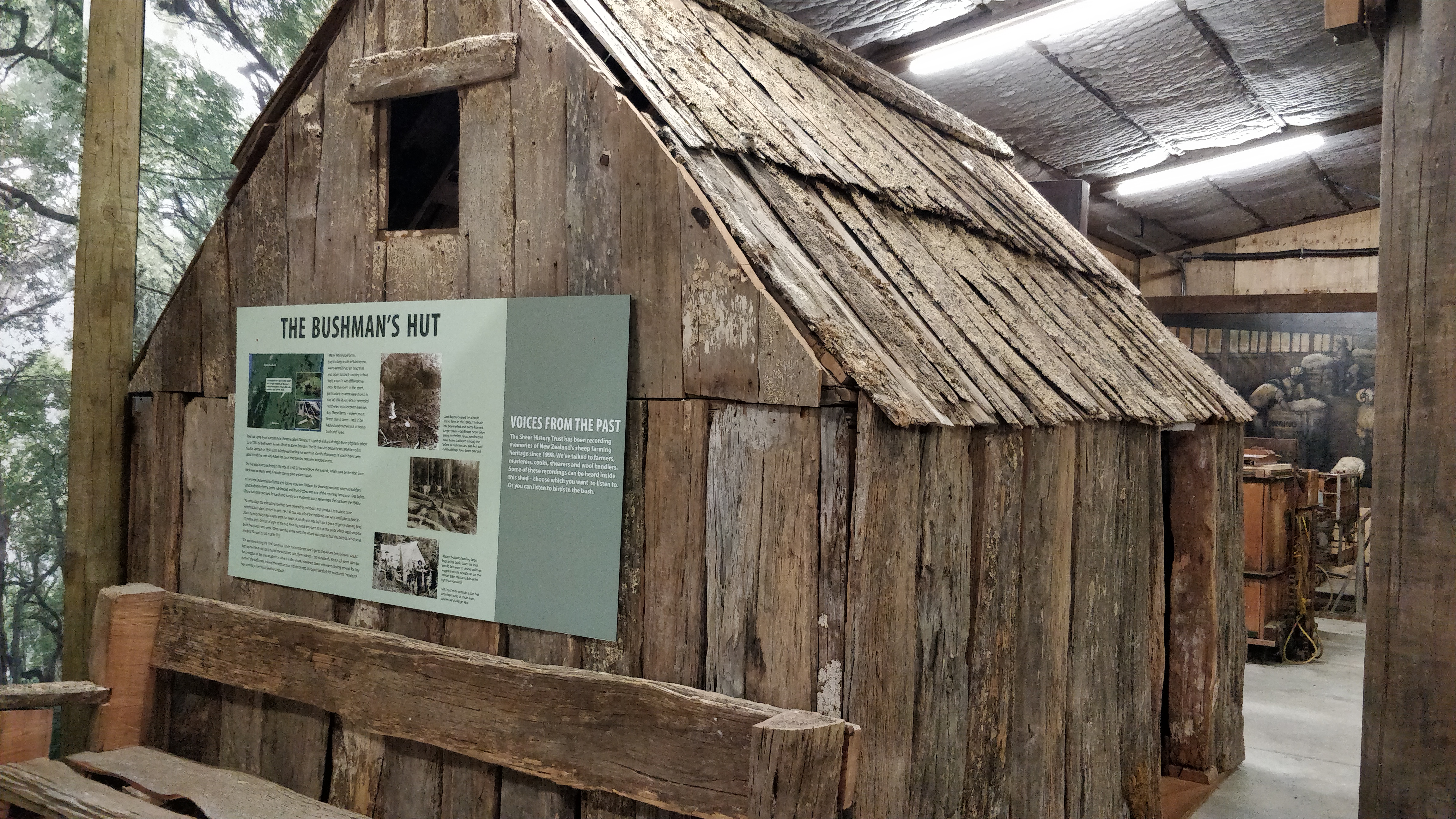
One room of the museum houses this old hut along with examples of historic machinery and old wool presses. In the hut, you can select the oral histories of several people involved in the wool trade…

IMG_20200704_151441.jpg

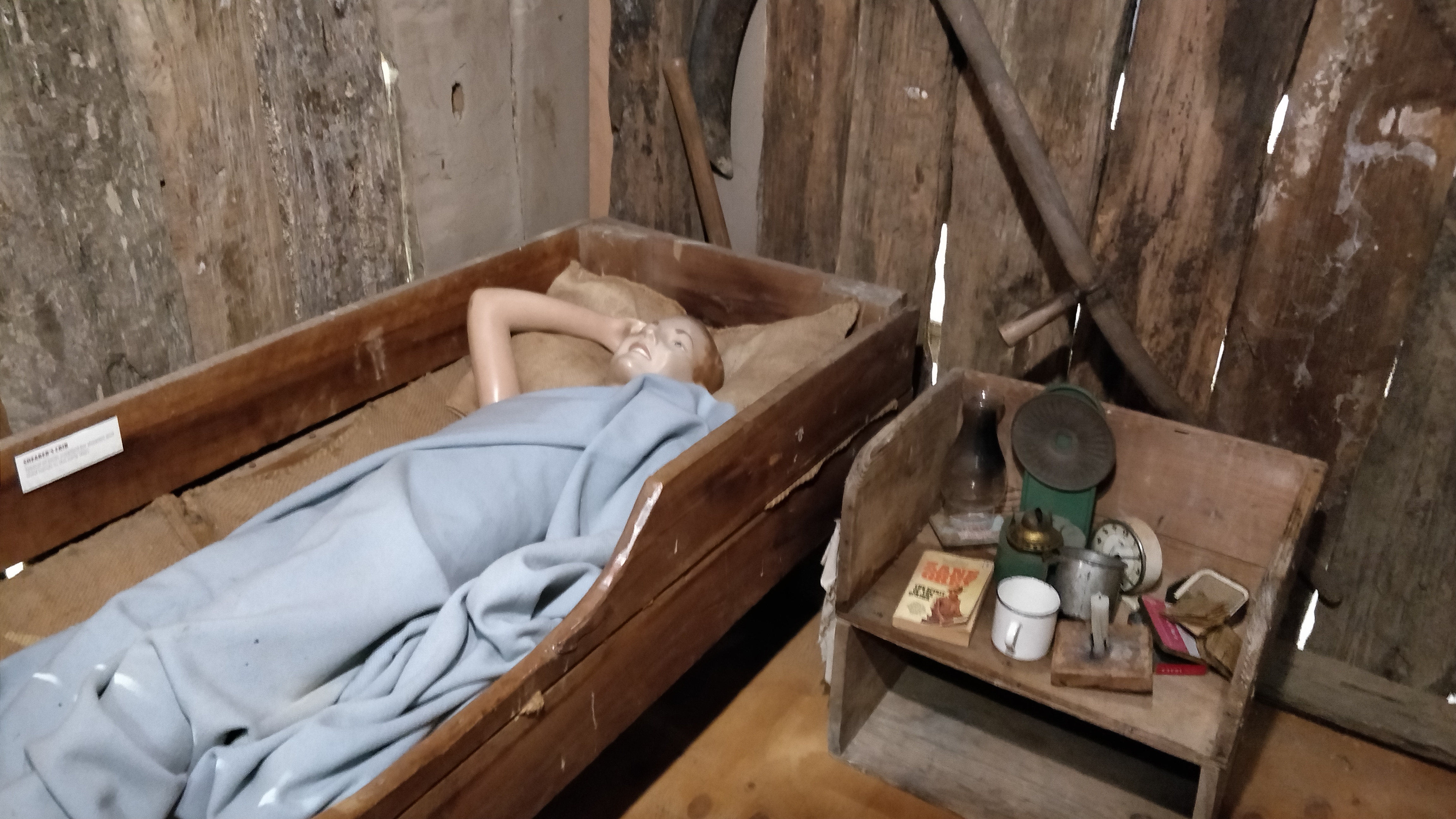
…while simultaneously viewing more unsettling mannequins.

IMG_20200704_151530.jpg

IMG_20200704_151605.jpg

HAHA OK THEN SO WHAT ELSE IS THERE

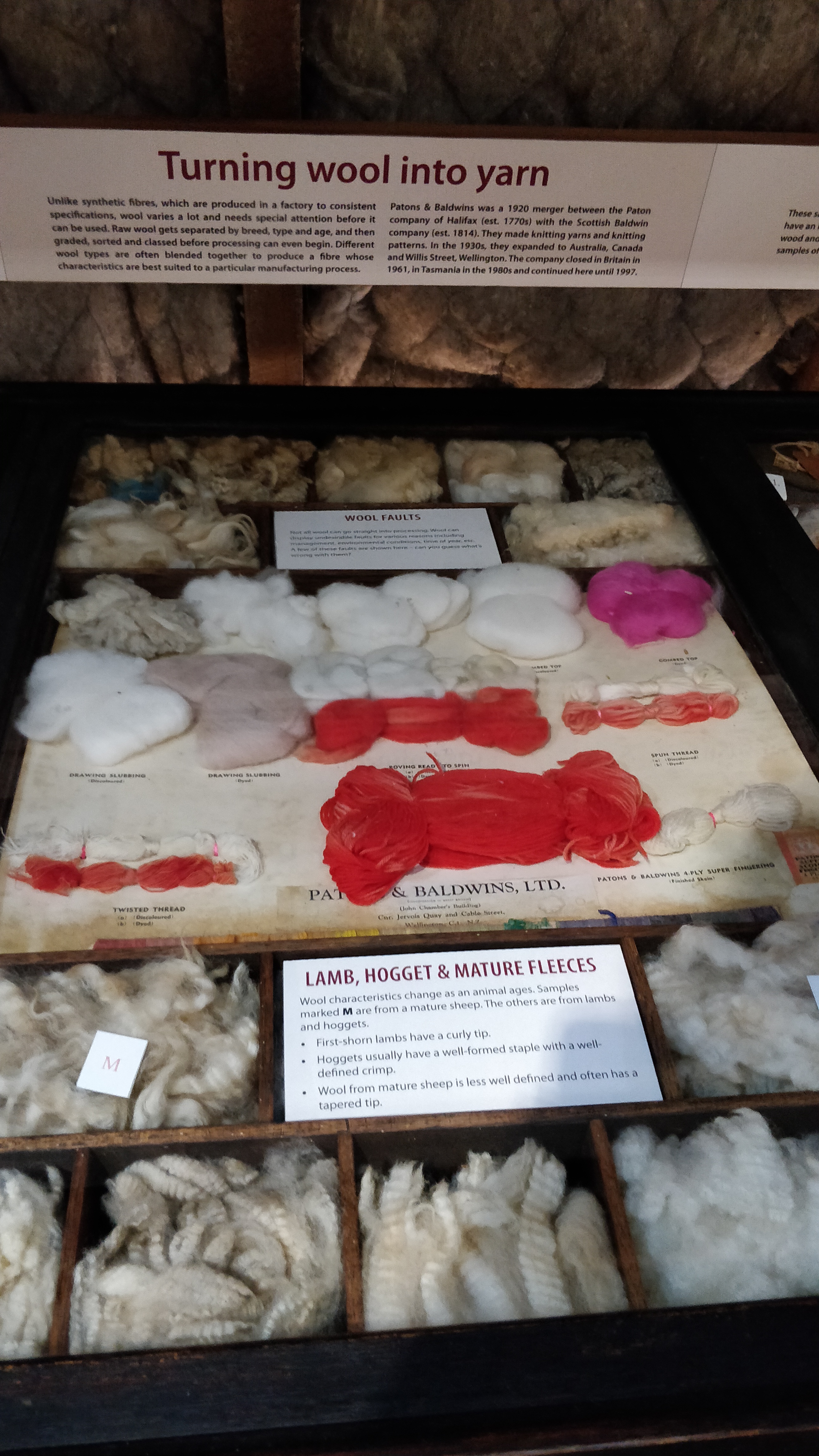
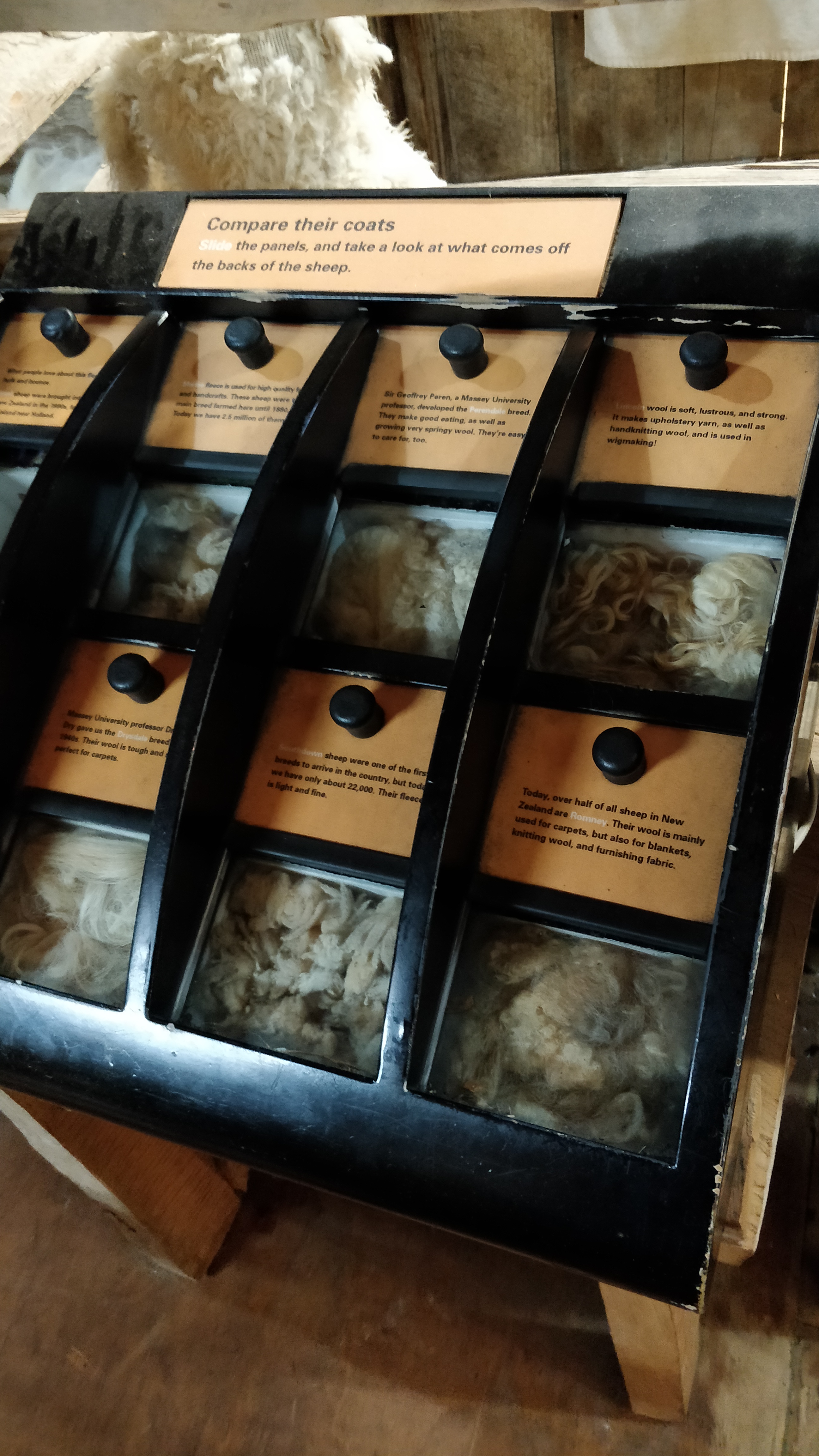
Well how about some fiber education!


IMG_20200704_151055.jpg

IMG_20200704_150047.jpg

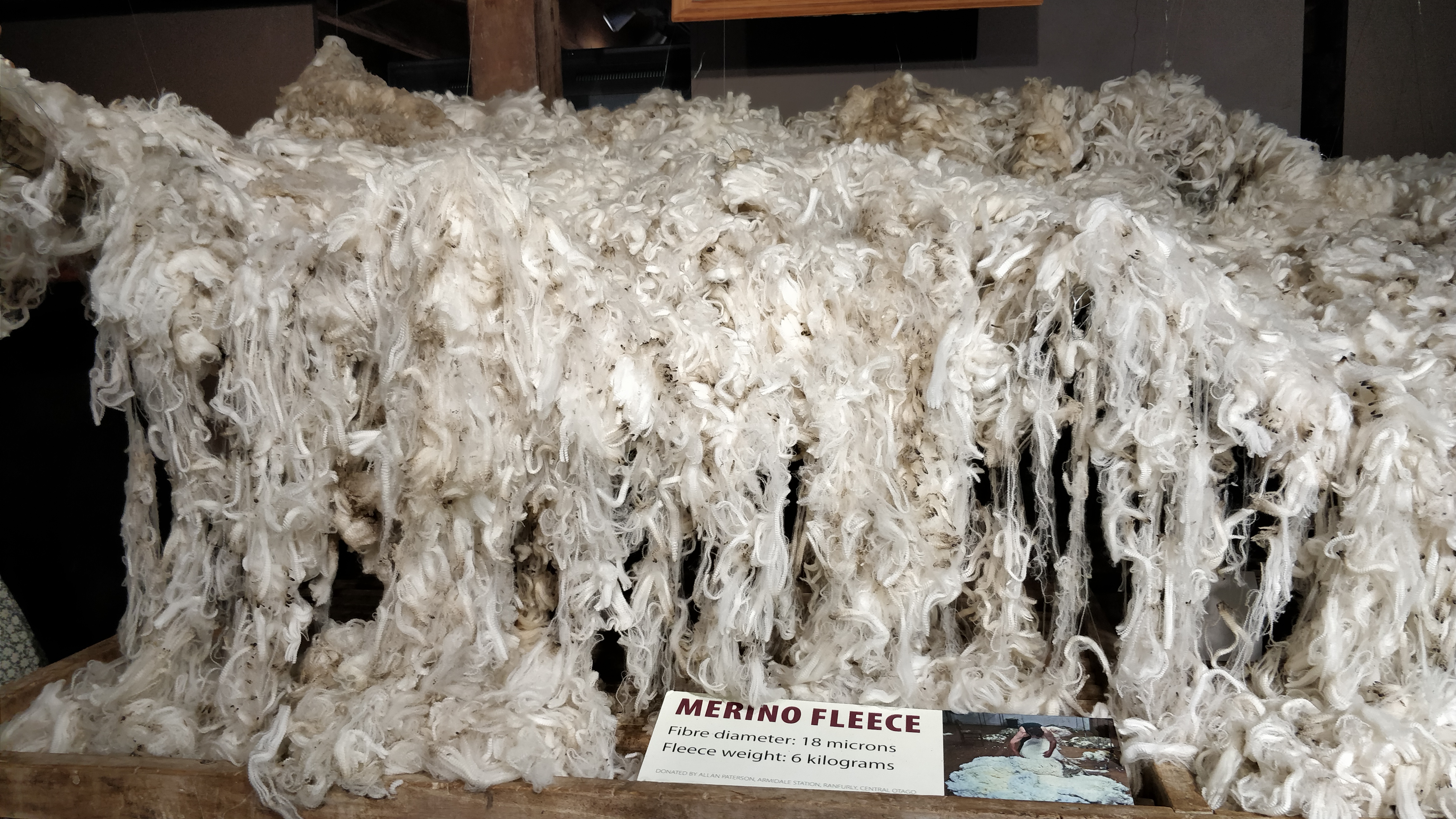
Any knitter will tell you, merino is some very nice stuff.

IMG_20200704_145630.jpg
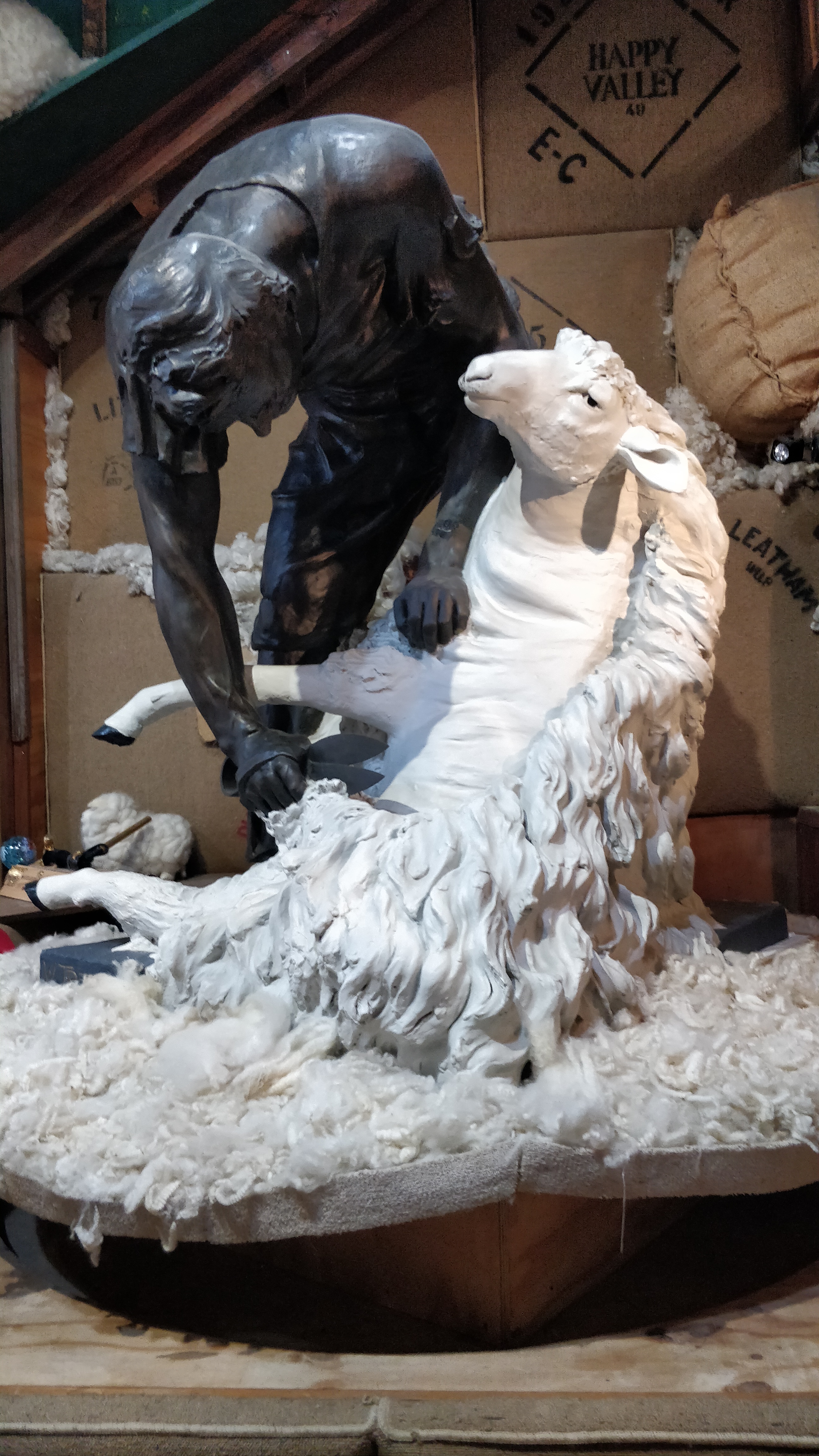
*wolf whistle*

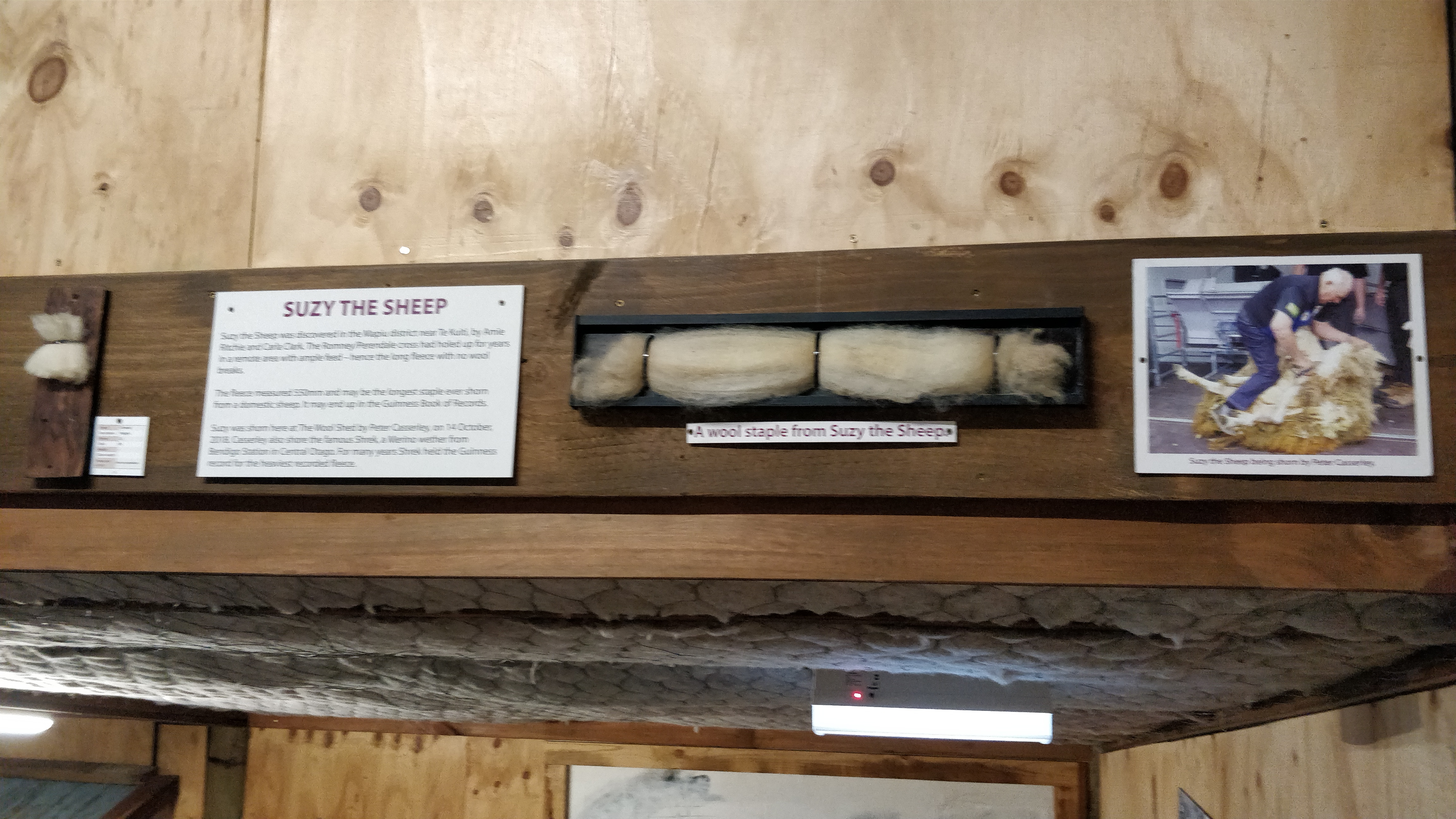
Suzy the feral sheep got her maiden shearing done at the museum by world record shearer Peter Casserly, losing about 15 kg of wool right before summer.

IMG_20200704_152126.jpg
the only mandatory summer weight loss

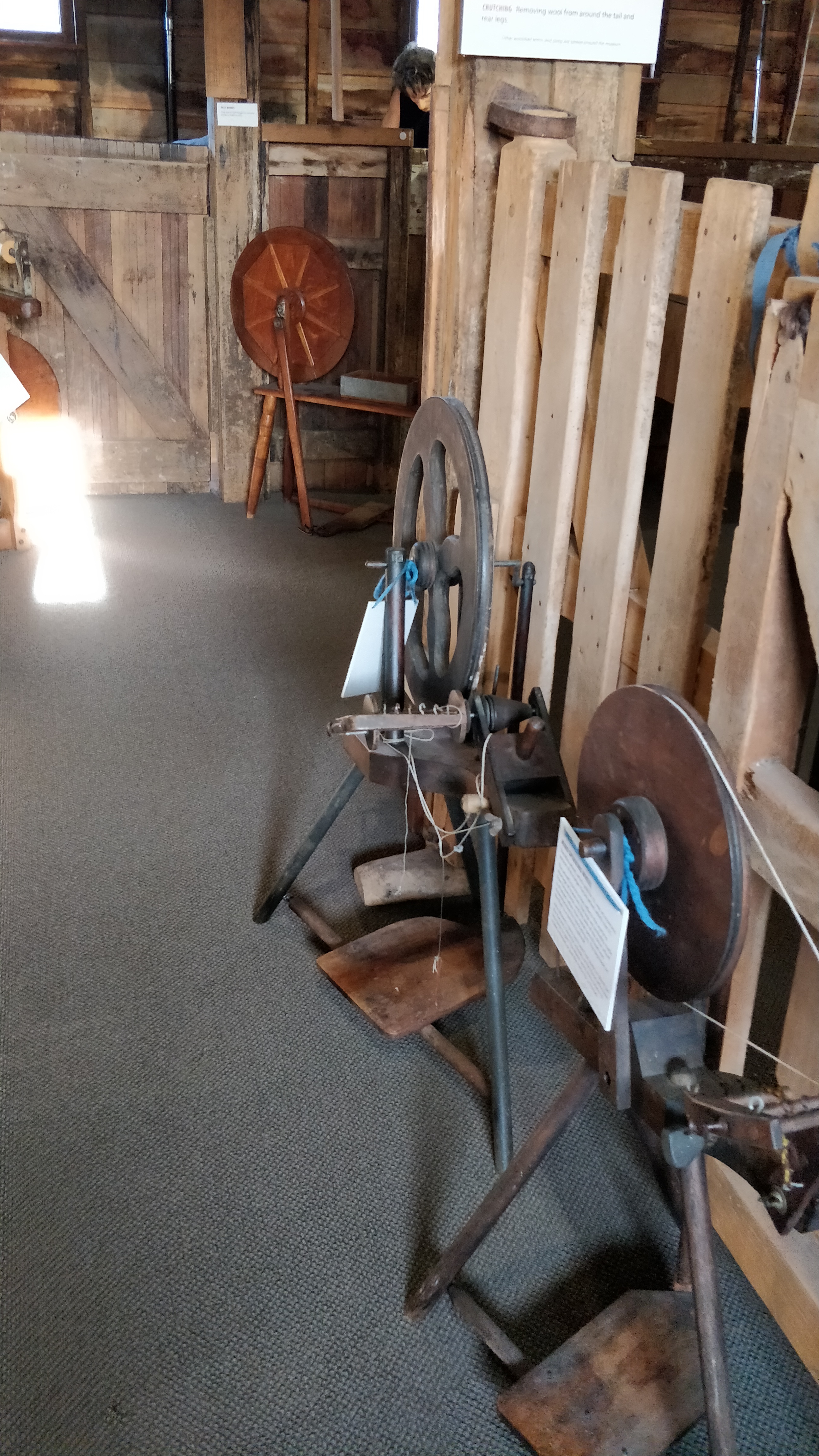
The museum also hosts spinning and weaving demonstrations and has a lovely collection of spinning wheels.

IMG_20200704_151237.jpg

But sheep are not only good for wool, of course.

IMG_20200704_152208.jpg

Finally, let’s have a look at some wool-related art, because this little place truly has it all.

IMG_20200704_145521.jpg

IMG_20200704_153105.jpg
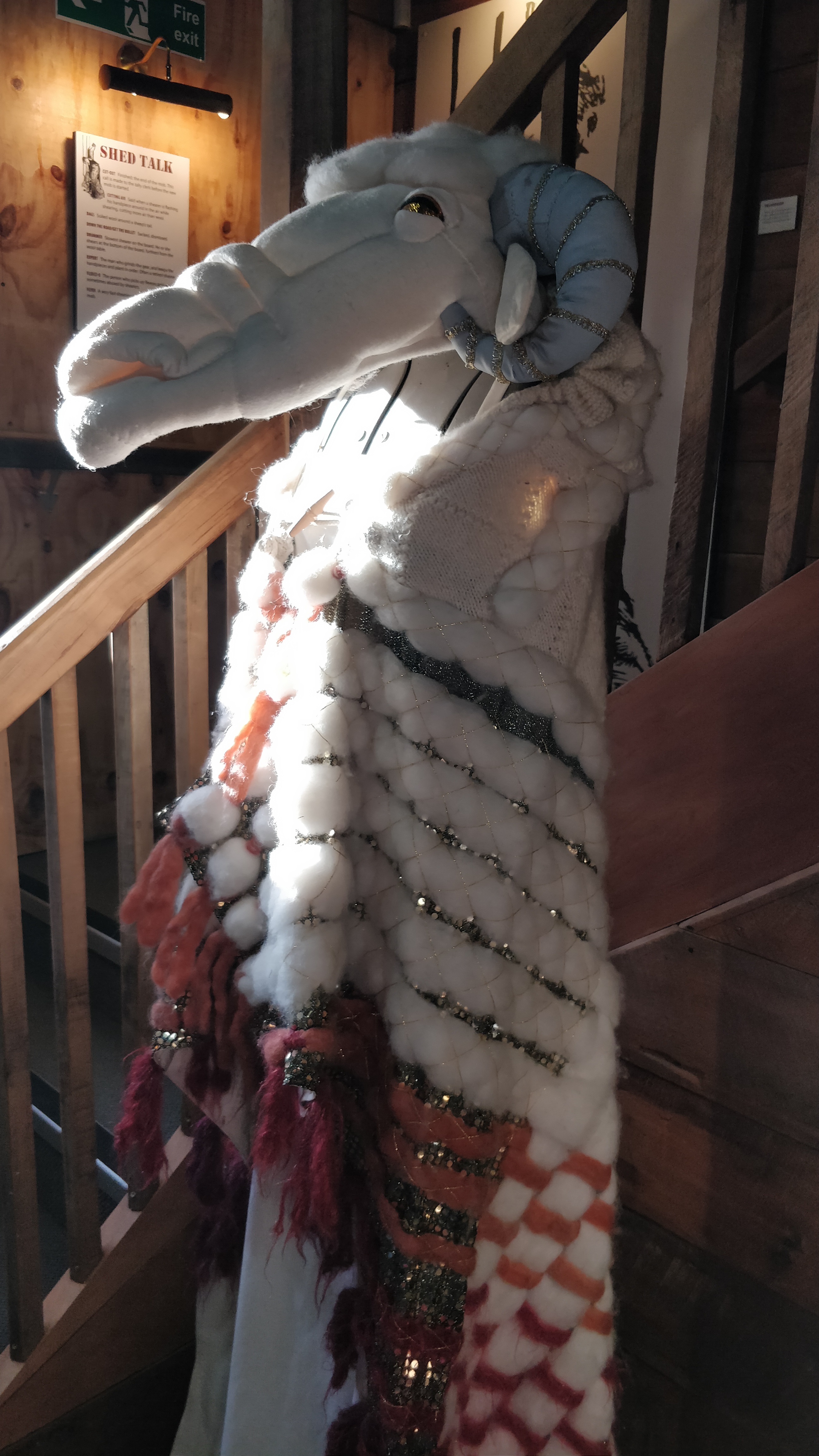
“The Golden Fleece” by Paul Jenson, 1994. Created for the World of Wearable Art event.

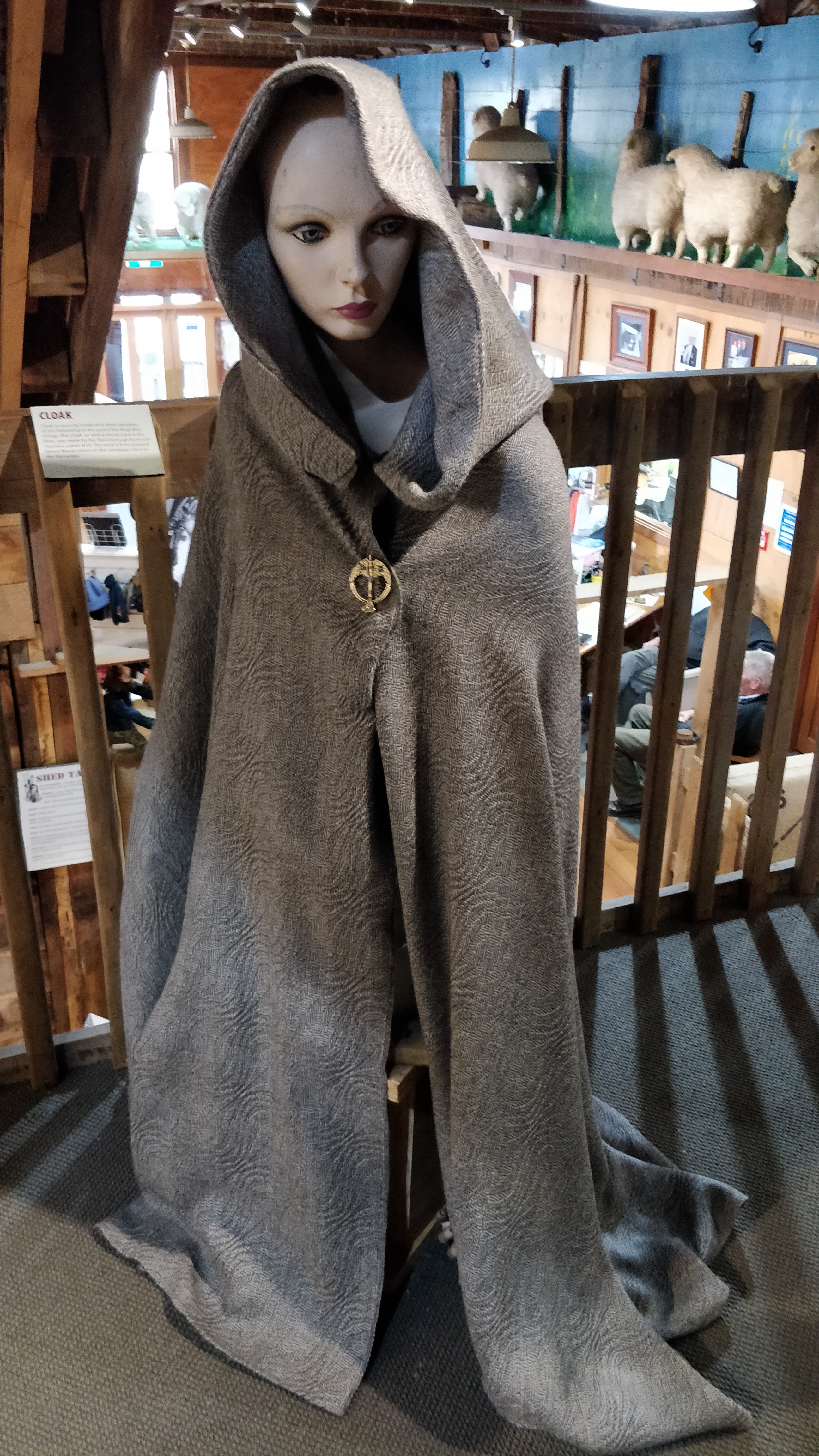
Obligatory Lord of the Rings entry:

IMG_20200704_150717.jpg
I mean, will I be going to the shop? Obviously.

So there you have it! Wonderful museum, chock-full of information and artifacts, good-sized shop full of wool swag. Open all week, 10am-4pm, $10 for adults, $3 for children under 15, $20 for families (two adults & four children). Children under 5 are free. Of course, if you just wanna shop or see the Golden Shears Wall of Fame, those areas are free.


Manaus, Brazil: Museu da Cidade – Paço da Liberdade [City Museum – Palace of Liberty]

Hoho, what do we have here?  A third country?!  YES!  It is time to visit some museums in an ENTIRELY. DIFFERENT. BIOME.

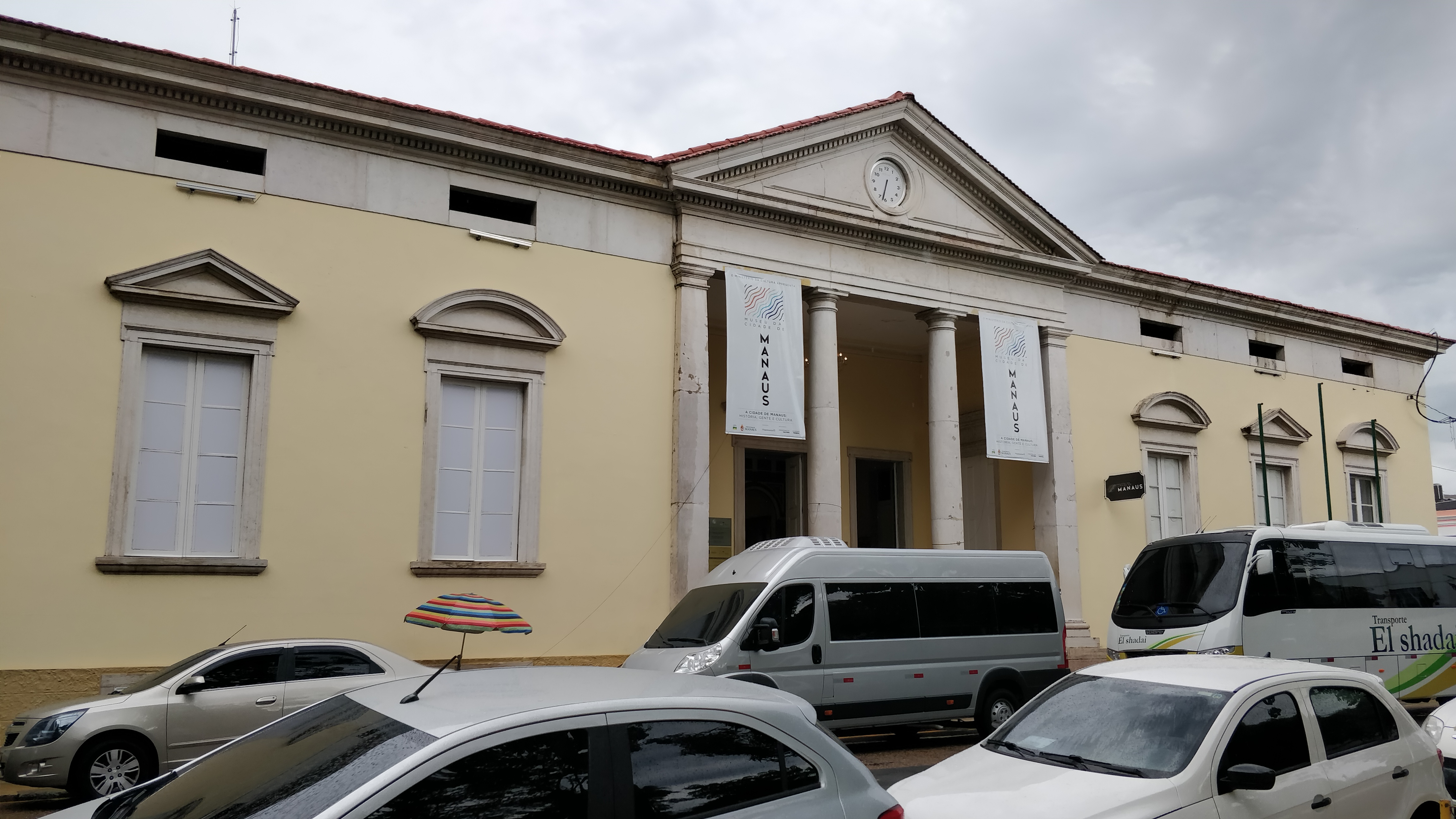
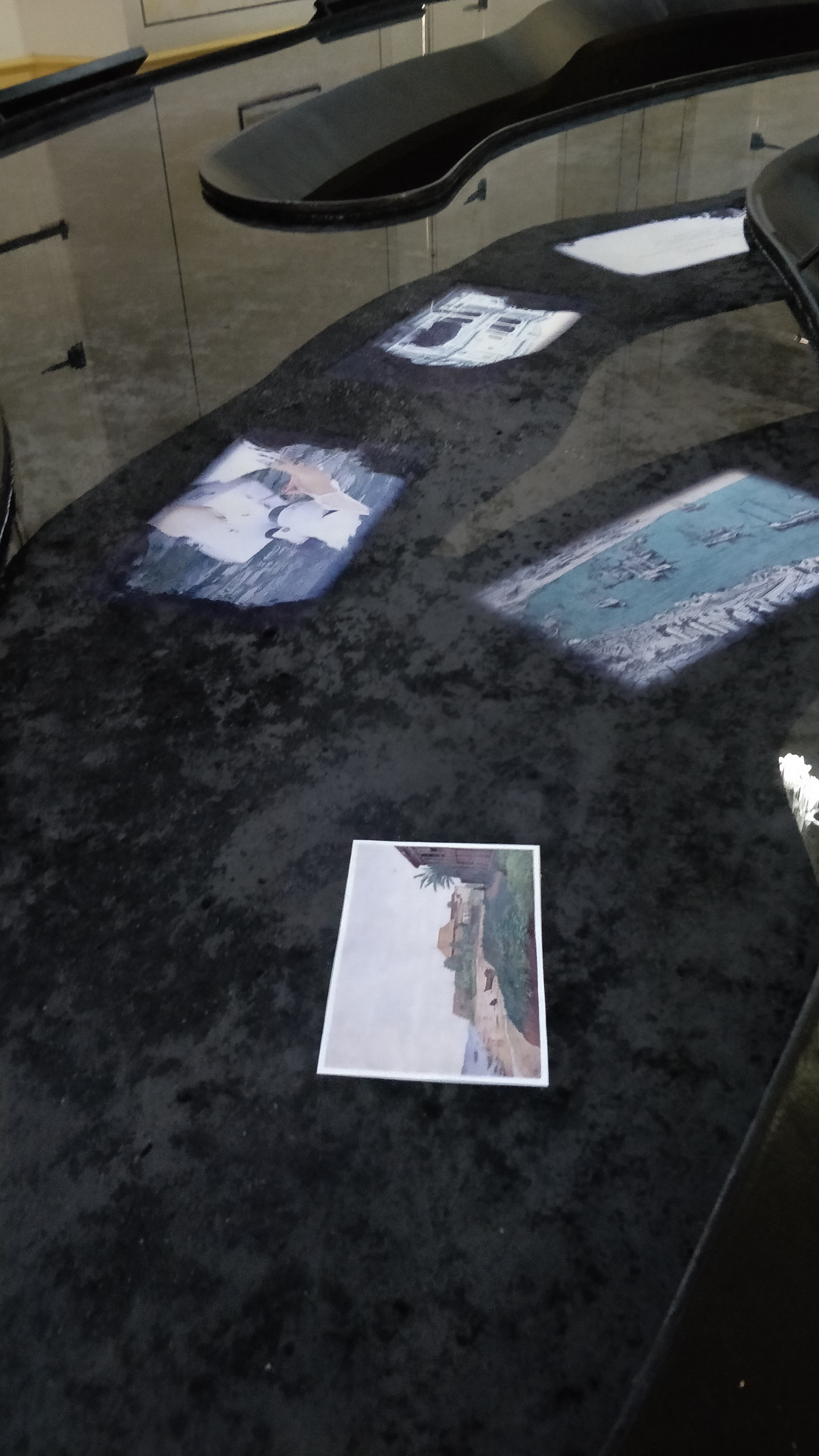
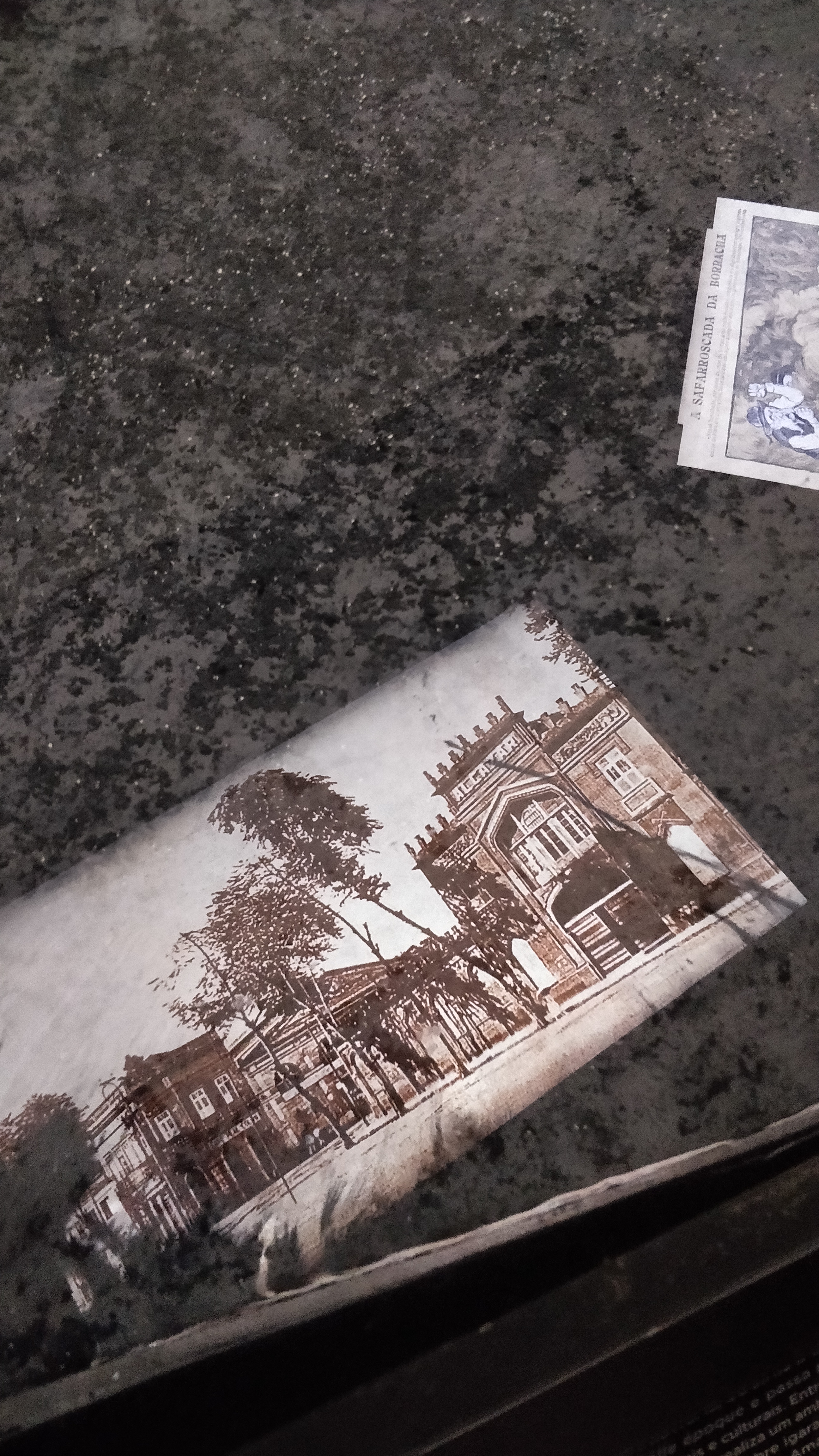
The city of Manaus, in northern Brazil, is called “The Gateway to the Amazon” because it is smack in the middle of the Amazon rainforest.  Its boom age was the late 19th/early 20th century, when it was at the center of the rubber industry.  The rubber barons brought a lot of European sensibilities to the city as well as opulent displays of insane wealth.  It feels a little weird, looking around Manaus, as it does sort of give the impression that several shiny European buildings were plopped in the middle of the jungle.  Which, fair, I guess.

IMG_20191004_104652.jpg
Neoclassical!

The City Museum is housed in the old city hall building, constructed in 1879.  And it’s frickin’ neat.  The museum is tech-heavy, at least tech-heavier than I’m used to in a history museum, and it’s done really well.  You don’t even have to take my word for it:  The museum has an app.  You can go download it now (it’s called Museu da Cidade de Manaus).  It’s got an English setting.

If you’re actually at the museum, you’re definitely going to want the app.  If you don’t have it in advance, the museum has free WiFi, in addition to museum-grade air conditioning (yaaasssssssssss).

IMG_20191004_105301.jpg
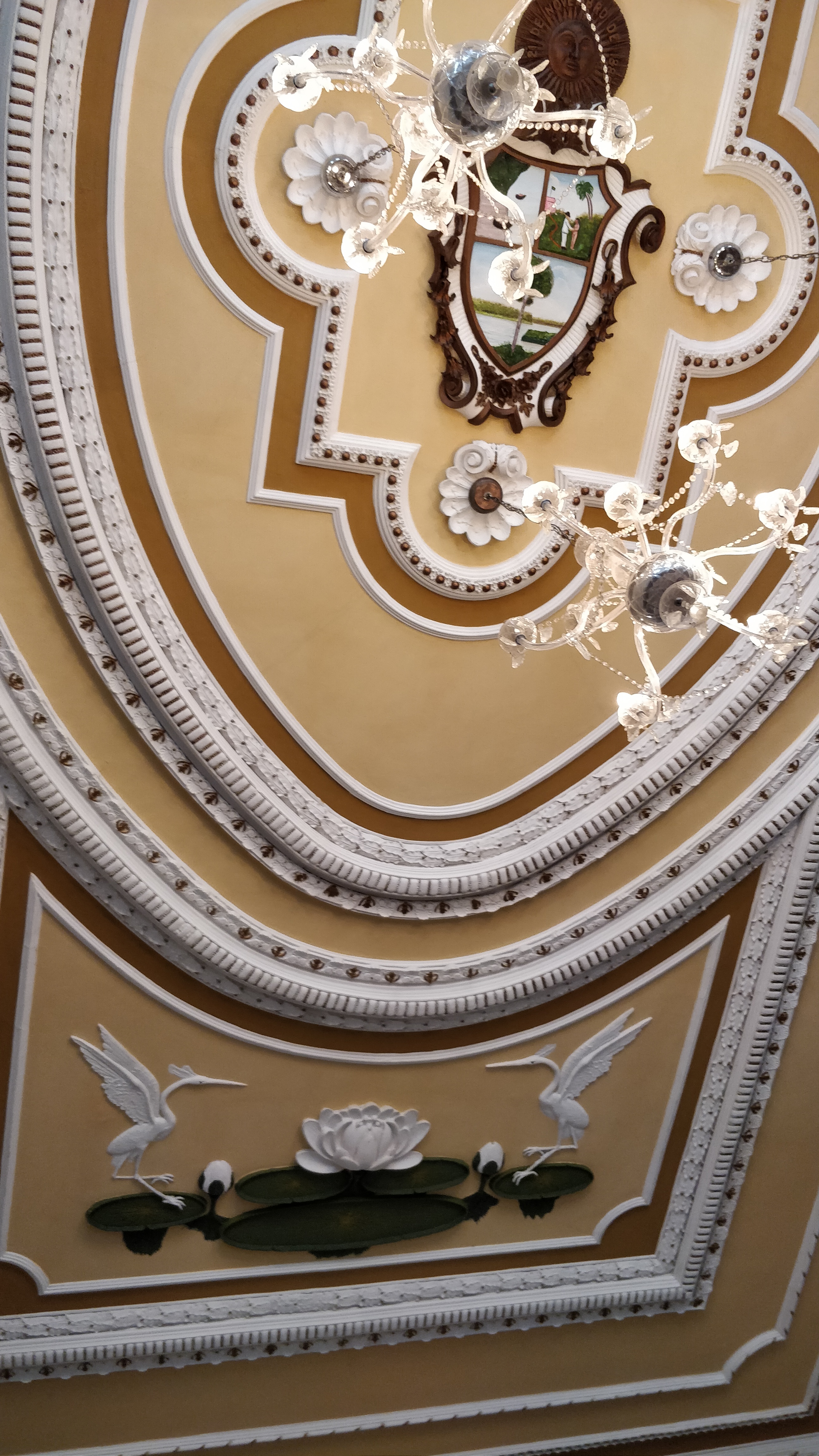
One thing you really notice in the rubber boom era architecture and decor is that it is all aggressively Euro-jungle.

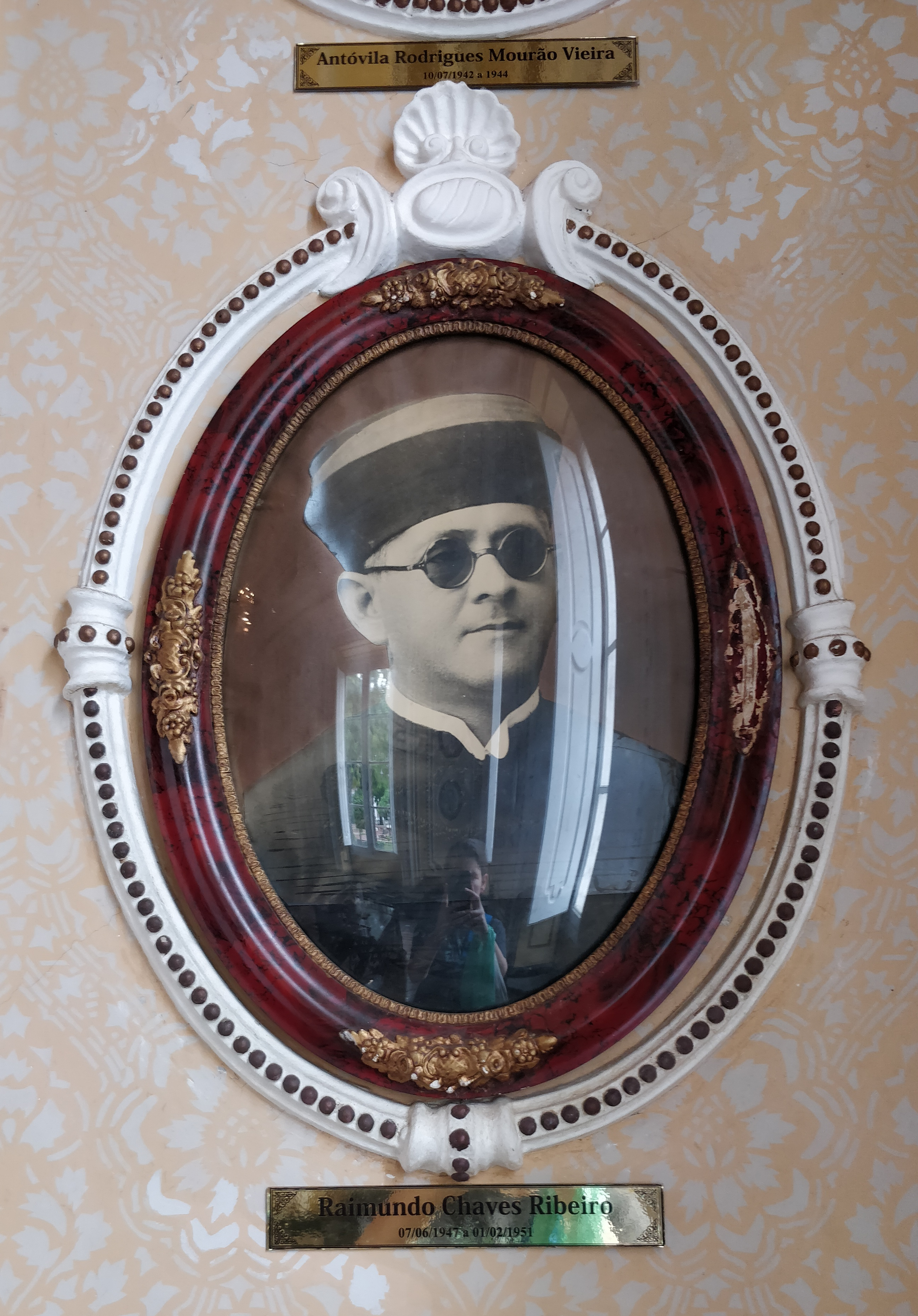
This is the ceiling of the Mayors Room, which displays the portraits of Manaus’s civic leaders through the years.  The app will have the biographical data on these guys, but it is sadly thin for this one:

IMG_20191004_105528.jpg
And entirely devoid of mention of his personal style.

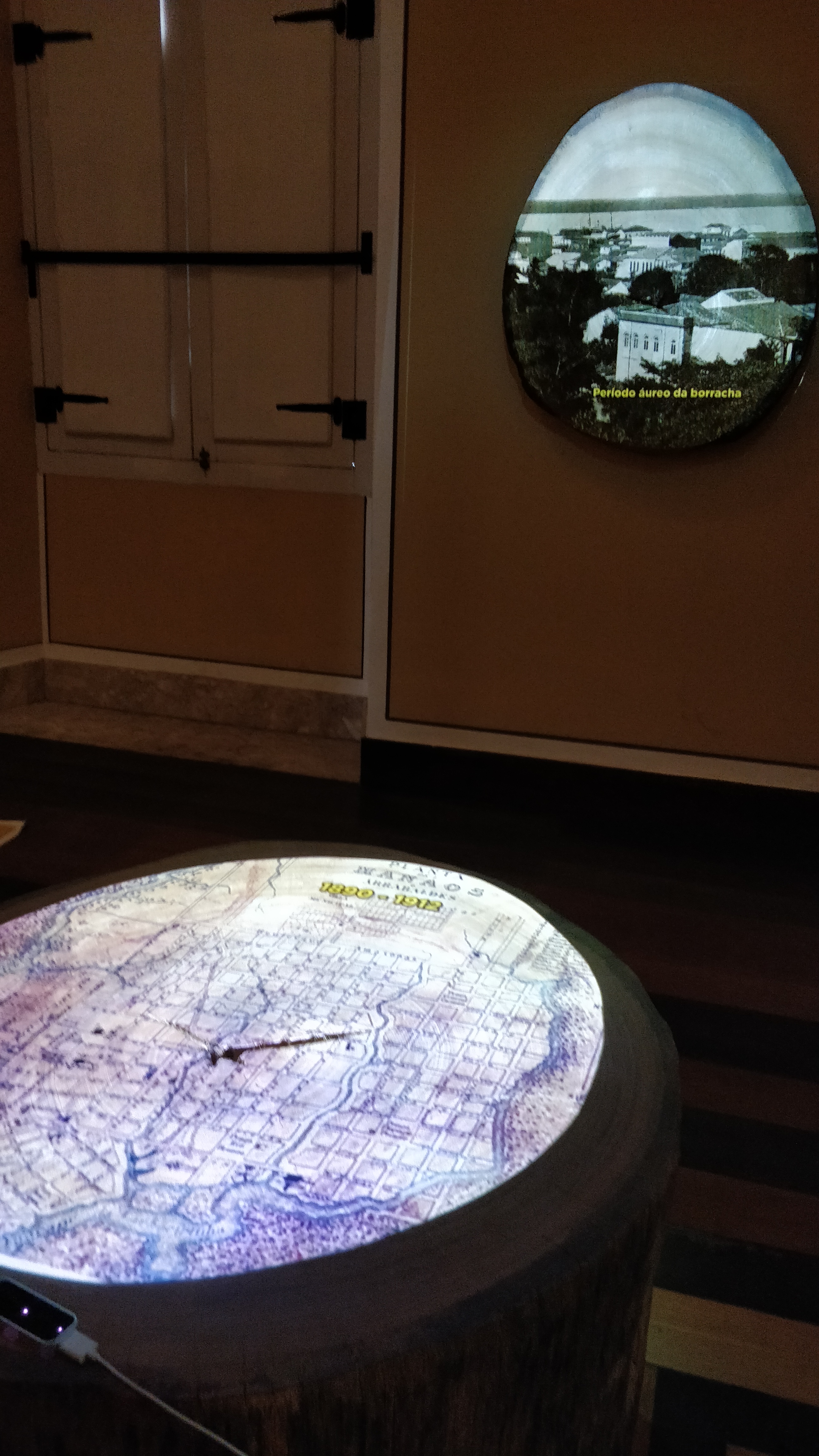
Next up, the room of Growth Rings!

IMG_20191004_105605.jpg
SYMBOLISM

This is an interactive display about the growth of the city of Manaus.  You can trigger the projection of the history images by moving your hand over the tree rings where the maps are projected.  You can see the relationship between the city’s growth and deforestation.  If this all sounds very informative and you are wishing you could read more about it and see the projections yourself, you totally can because the museum has them on Youtube and the app links right to it.

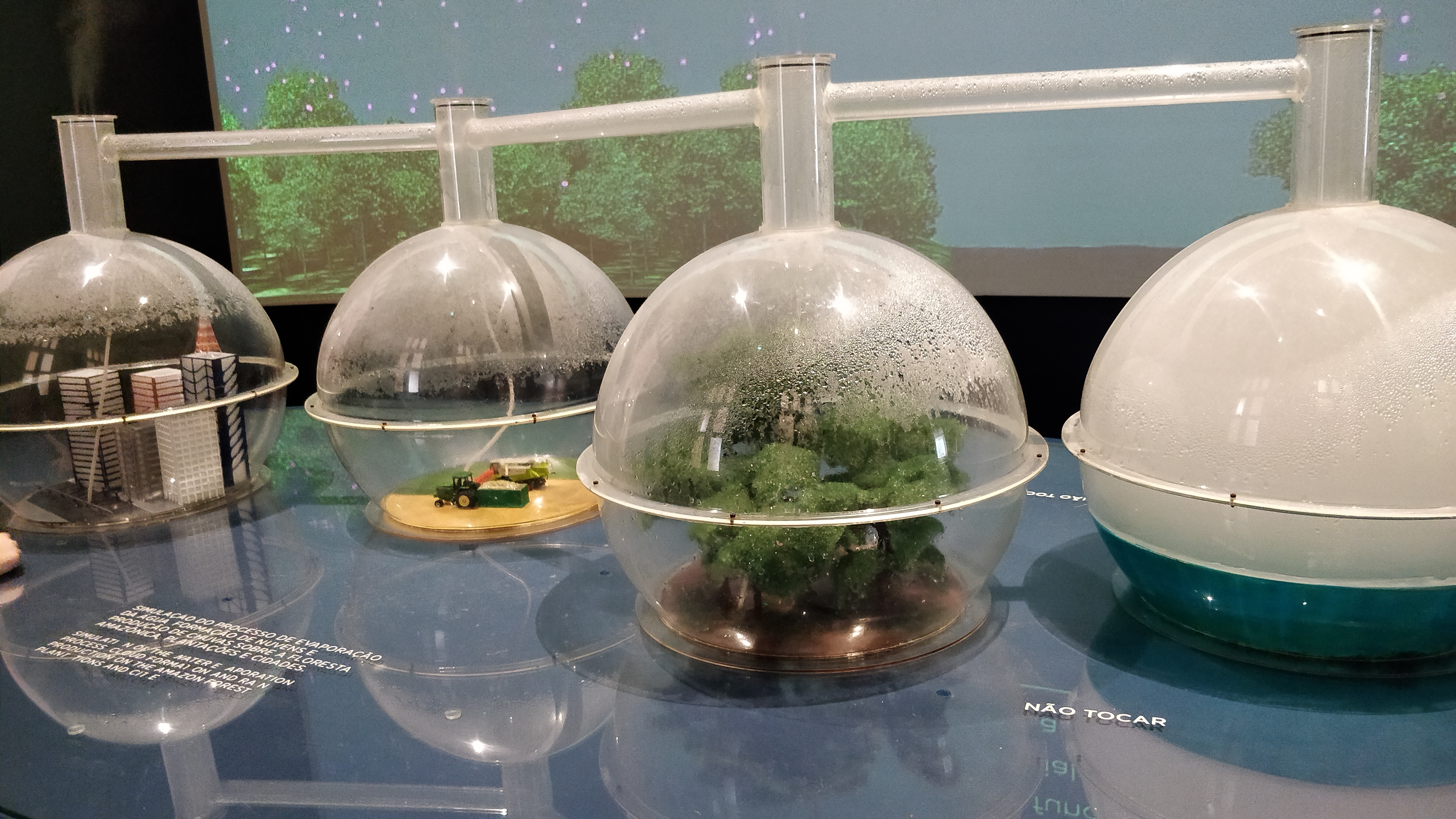
Next up is the room of Flying Rivers.  Yes, all the rooms sound like they’re in Hogwarts.

IMG_20191004_105855.jpg
SCIENCE

See how the Amazon rainforest fits into the water and carbon cycles (including the impact of Manaus’s pollution).  The forest’s role in water circulation is known as the “flying rivers,” according to the museum.  I do love it when some good poetic turn of phrase is applied to science stuff.  Again, the room’s video is linked in the app.

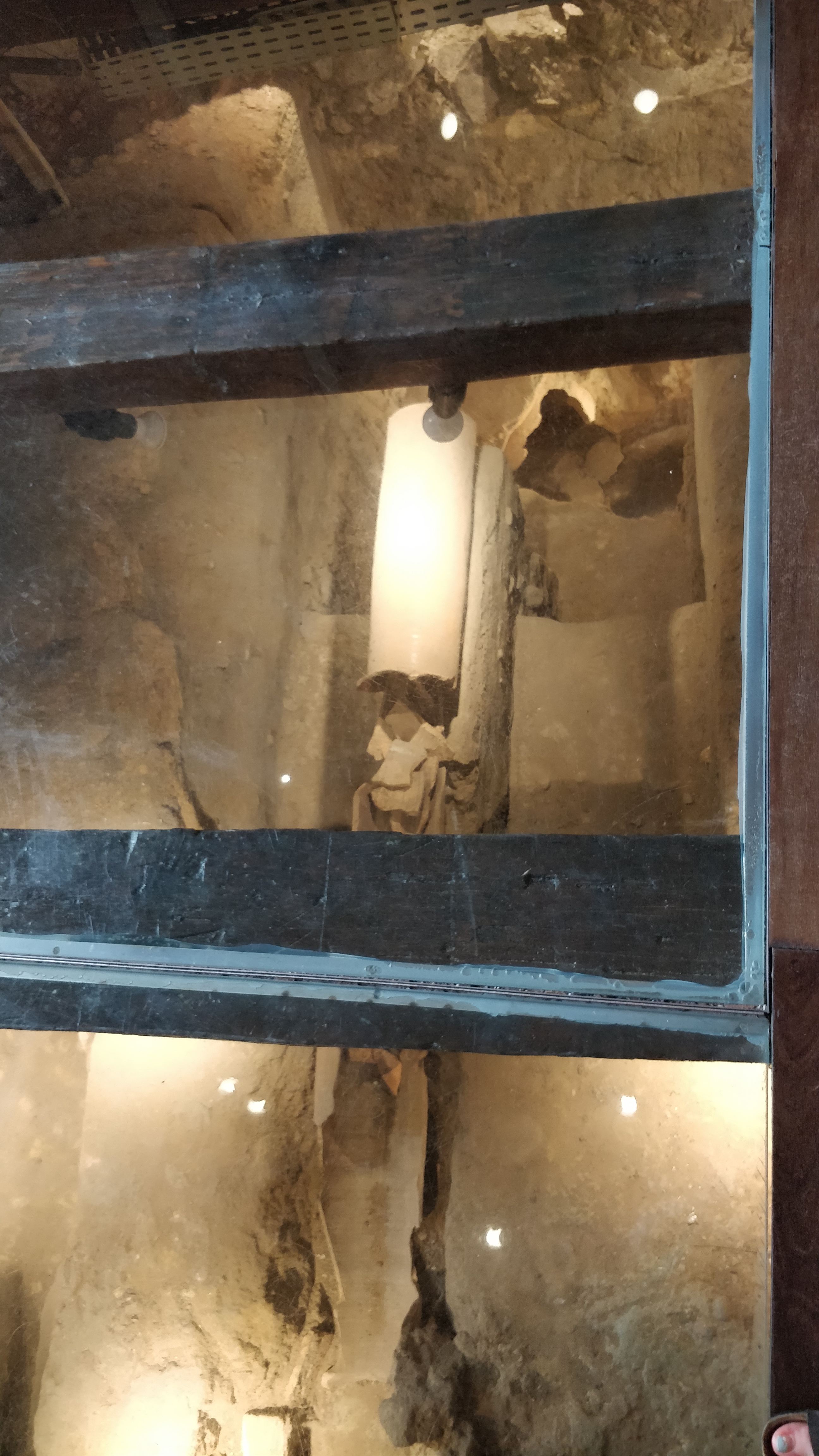
Time for archaeology!

IMG_20191004_110042.jpg
This is the floor of the room, exposing the dig site from 2003 that uncovered funeral urns from the 7th to 12th centuries.  And, uh, that’s my toe.

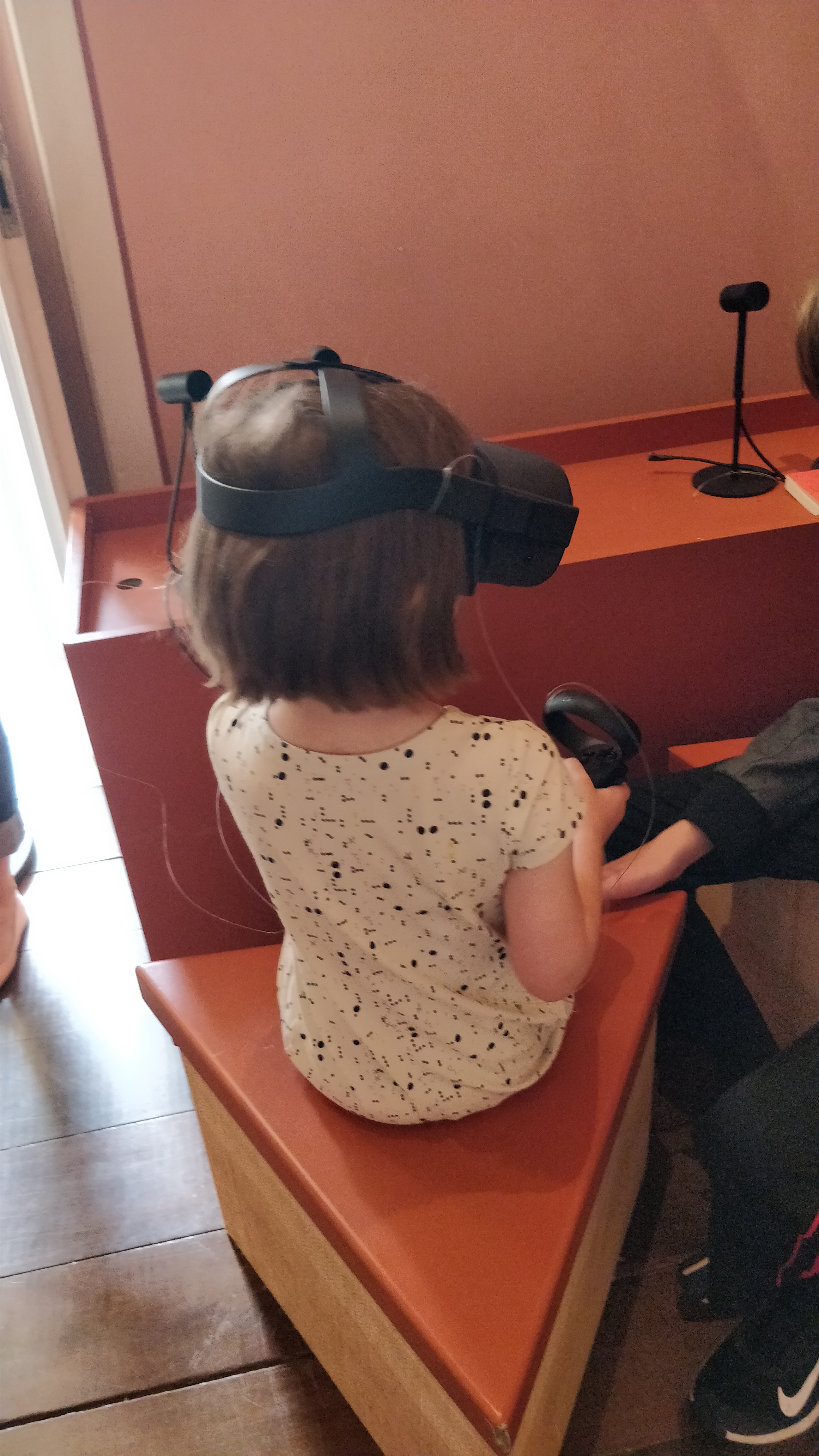
The area around Manaus has been occupied for at least 11,000 years.  There’s been a lot of research in the region, and this room lets you take a peek, not only through the glass floor but also through VR headsets.

IMG_20191004_110359.jpg
VR stands for VERY RAD

The video is introduced and narrated by a Brazilian university professor with a pretty good speaking voice, which is great for Spanish speakers as it makes him easier for them to understand.  For non-Portuguese or Spanish speakers, you’re a bit out of luck, as the VR has no translation.  But it is still a very rad (heh) look at the sites and artifacts.  You can see the introduction portion, with English subtitles, through the app.

There’s a room with an art exhibit in it related to Brazilian poet Thiago de Mello–art inspired by him–and I’m tossing it in here because I really like this one.

img_20191004_111857.jpg
WEEEEEEE

And now, my second favorite room: the market!

IMG_20191004_112315.jpg
Can’t really do better than the app’s description: “The marketplace is where the cultural identity of a community manifests itself best–full of life, flavors, aromas, words, and sounds.”

IMG_20191004_113017.jpg
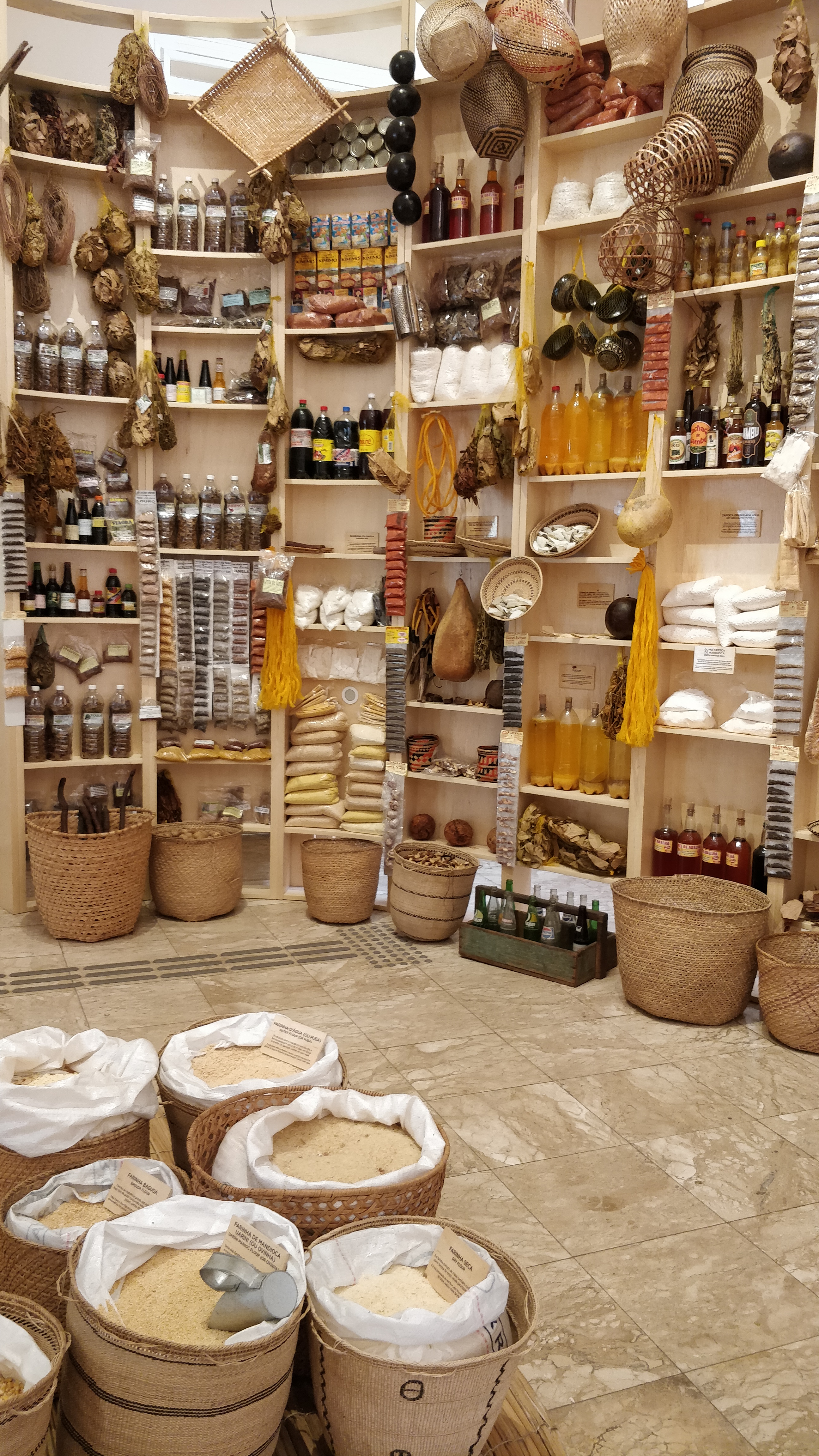
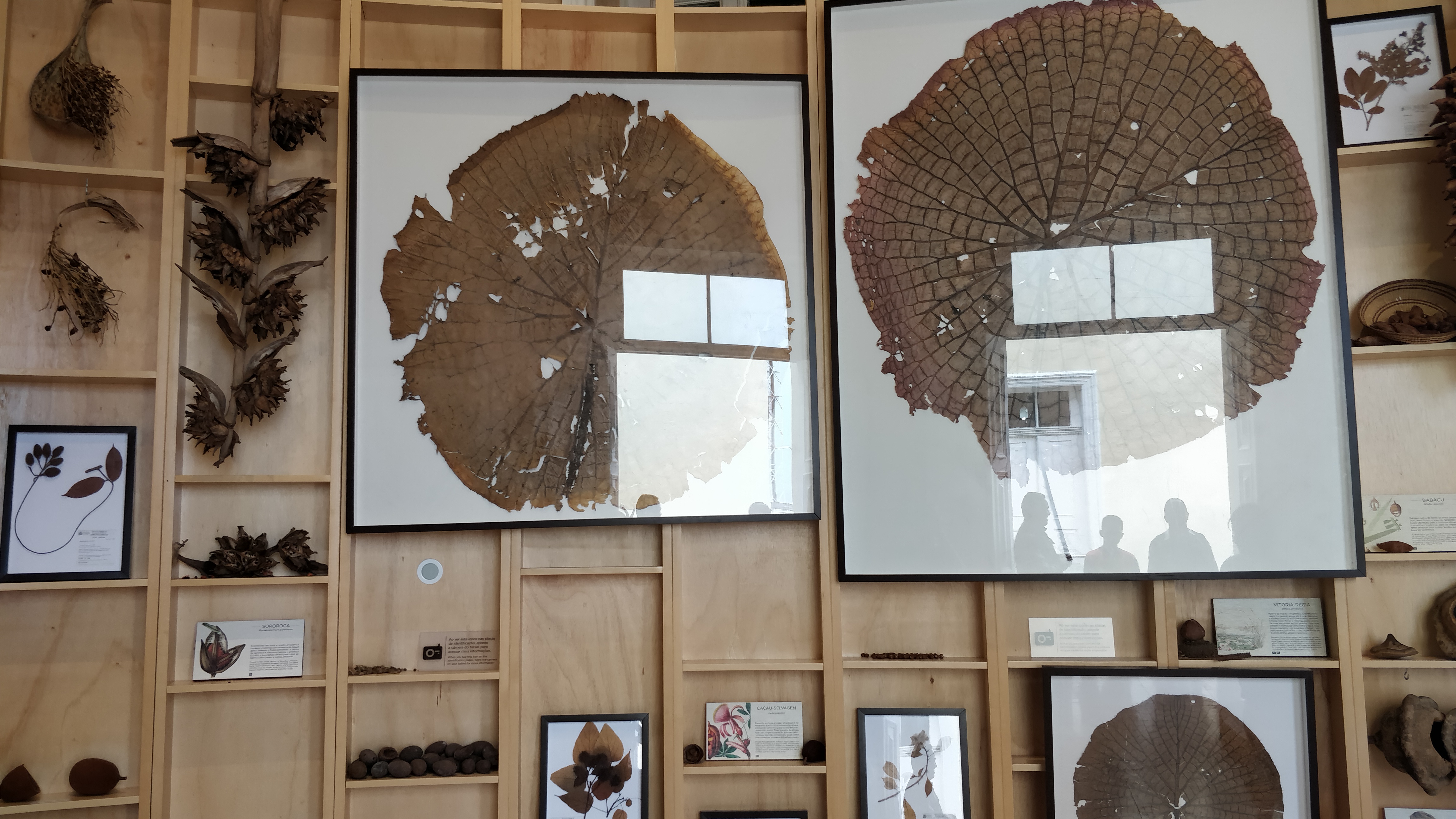
The herbarium, which is what I’m calling my spice rack from now on.

You can scan, with your phone, many of the plant labels for recipes and folk stories (also guess what ALL THERE IN THE APP YOU CAN DOWNLOAD RIGHT NOW), although the folk story animations also play in the bottom of this barrel:

Which sounds kind of weird but actually really works.

Wandering back over to the other side of museum there is my favorite room, Affluent Rivers.

IMG_20191004_113332.jpg
A representation of the rivers around Manaus, principally the Rio Negro and the Solimões (they join at the Meeting of the Waters to make the Amazon River).

IMG_20191004_113400.jpg

As you move along the water, the history of Manaus is projected onto the surface.  Once again, I can’t do better than the app:  “A timeline is like a river: flowing uninterruptedly, carrying different layers of time, which sometimes overlap, sometimes become separated and then reconnect.”

Again, the images are interactive, and can be triggered by the visitor’s hand movements.  It is such a clever and gorgeous concept, which makes it my favorite room.

Finally, I’m going to mention briefly the Bath of Origins room, which was too difficult to photograph, but you stand in the middle of several screens with projections of locals, who give their stories in turn.  They are all standing at the river’s edge, and after they talk, they dive in, and then you see them swimming on the floor you’re standing on.  The affect is cool, but there are no English subtitles.  HOWEVER, you can see the videos with English subtitles through the power of your imagination.  Just kidding, you can totally see them through the app, too.

The City Museum is amazingly well done.  The interactive elements are creative and well designed.  I can’t speak highly enough of the museum’s app–it’s the best museum app I have ever seen.  The museum has clearly been heavily invested in, and I hope it continues to be.  If the shop had been open, I would have bought a lot of swag because the museum frickin’ earned it.

The City Museum is free (FREE!), open from 9am to 430pm Monday through Friday, 9am to 1230pm on Saturday, and the second Sunday of every month from 5pm to 9pm.


Museo Casa de Yrurtia [Yrurtia House Museum]

HELLO HI

I AM BACK

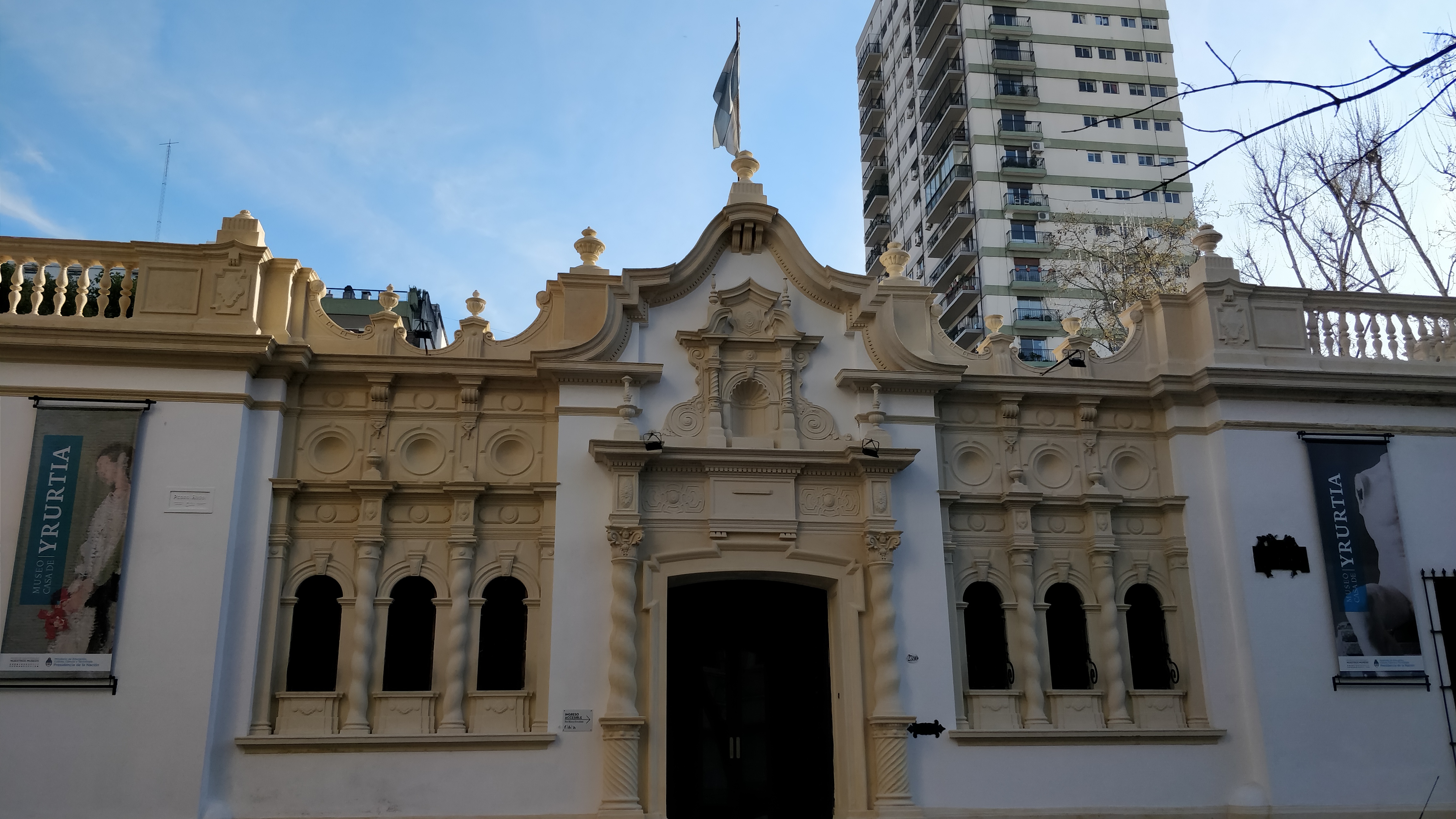
And for today I have the long-closed-for-renovations-but-now-open Casa de Yrurtia!  And it is looking pretty nice after years of closure.

IMG_20190913_164343.jpg
Quaint!

Rogelio Yrurtia was an important Argentine sculptor in the early 20th century.  As a talented young man in 1899, he was awarded a scholarship, on which he traveled to Paris.  He would spend his career moving between Paris and Buenos Aires, where he would be known for his large scale, public works.

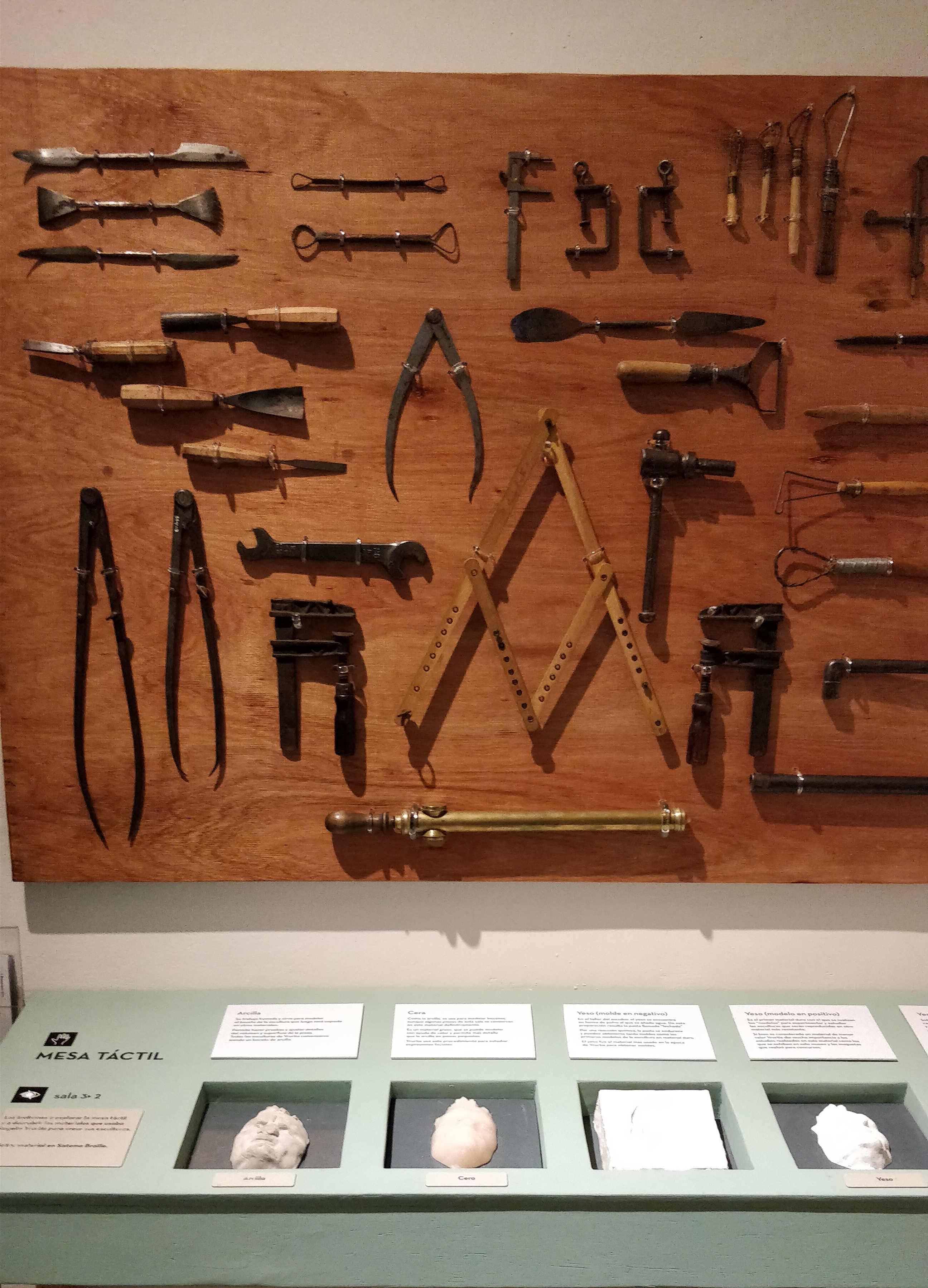
IMG_20190913_162856.jpg
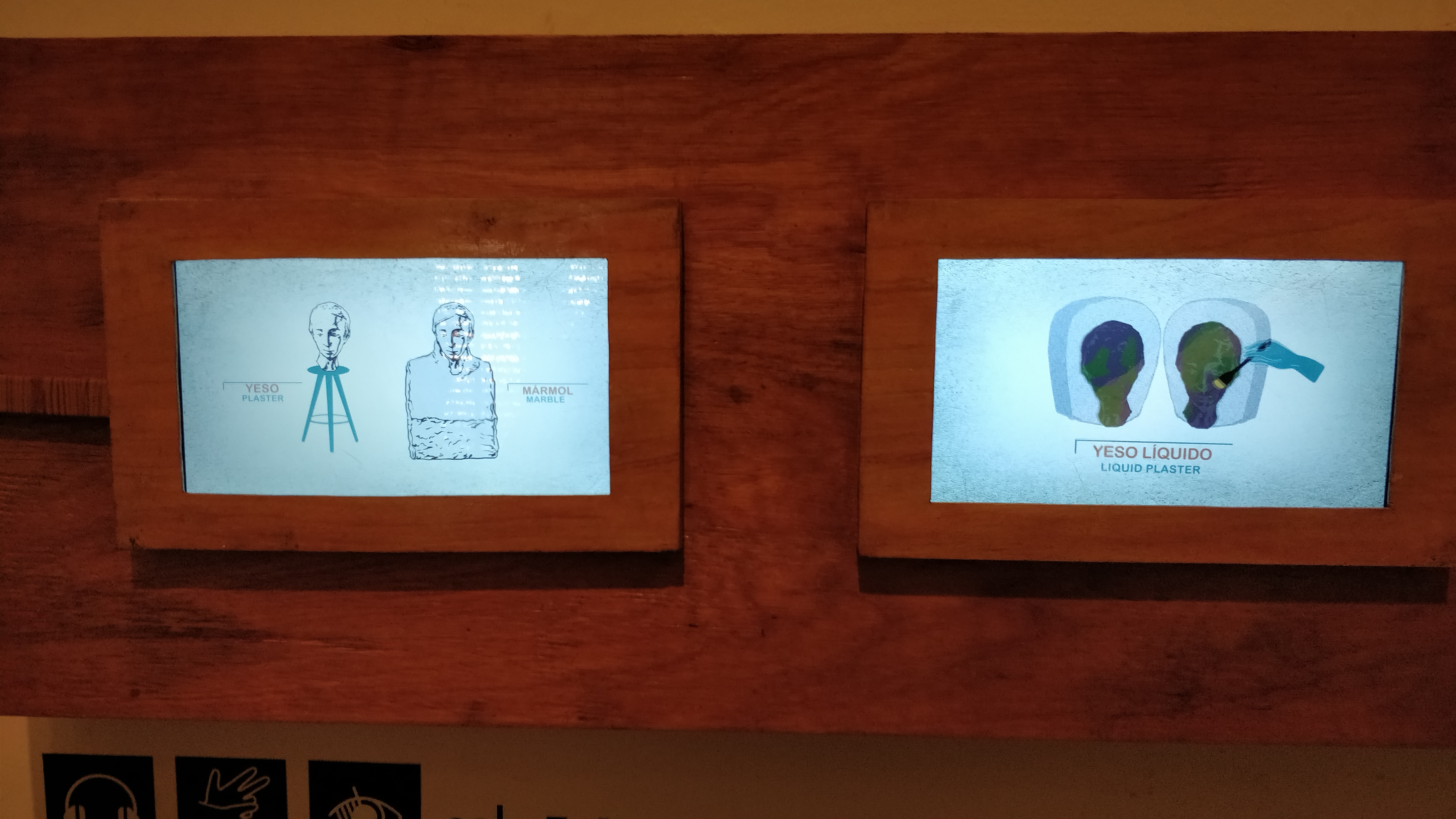
The man’s own tools, and a really nifty table about the sculpting process that visitors can put their grubby fingers all over.

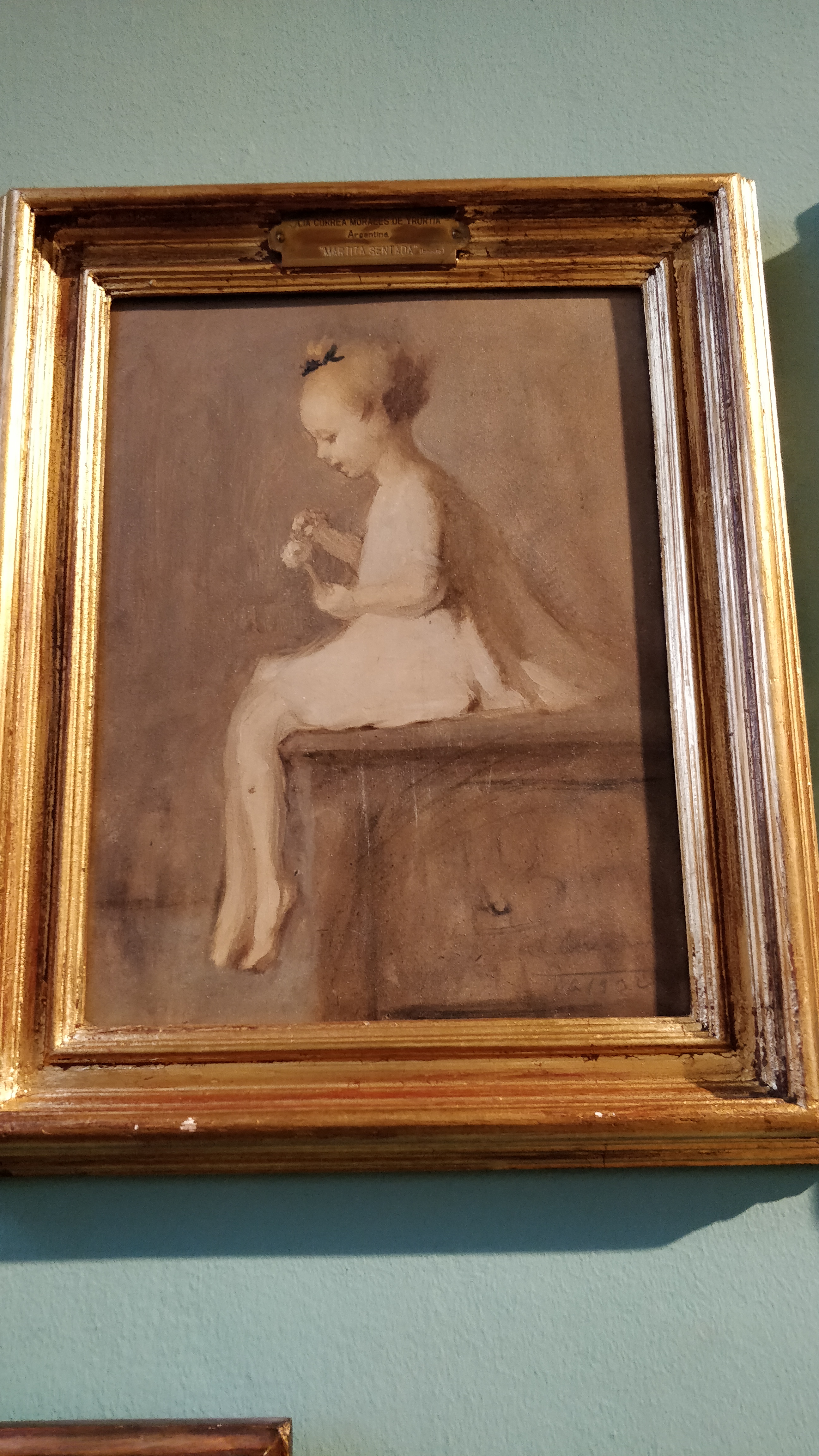
The museum is in the home of Yrurtia and his wife, the also very important artist Lía Correa Morales.  The couple donated the house to the country to establish as a museum.  It opened to the public in 1949; Yrurtia died the following year. Lía Correa Morales then served as the museum’s director.


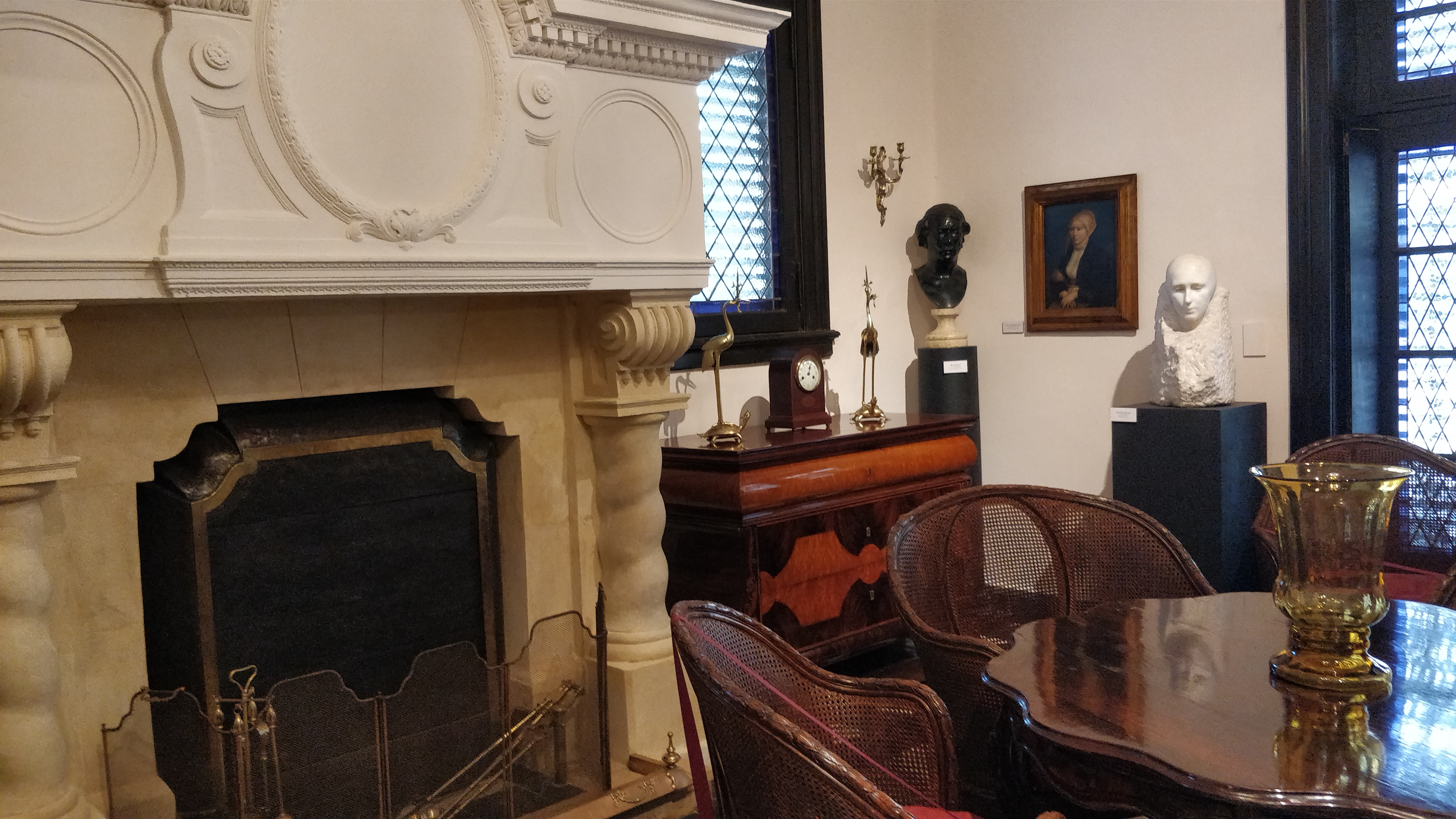
IMG_20190913_160116.jpg
The house side. 

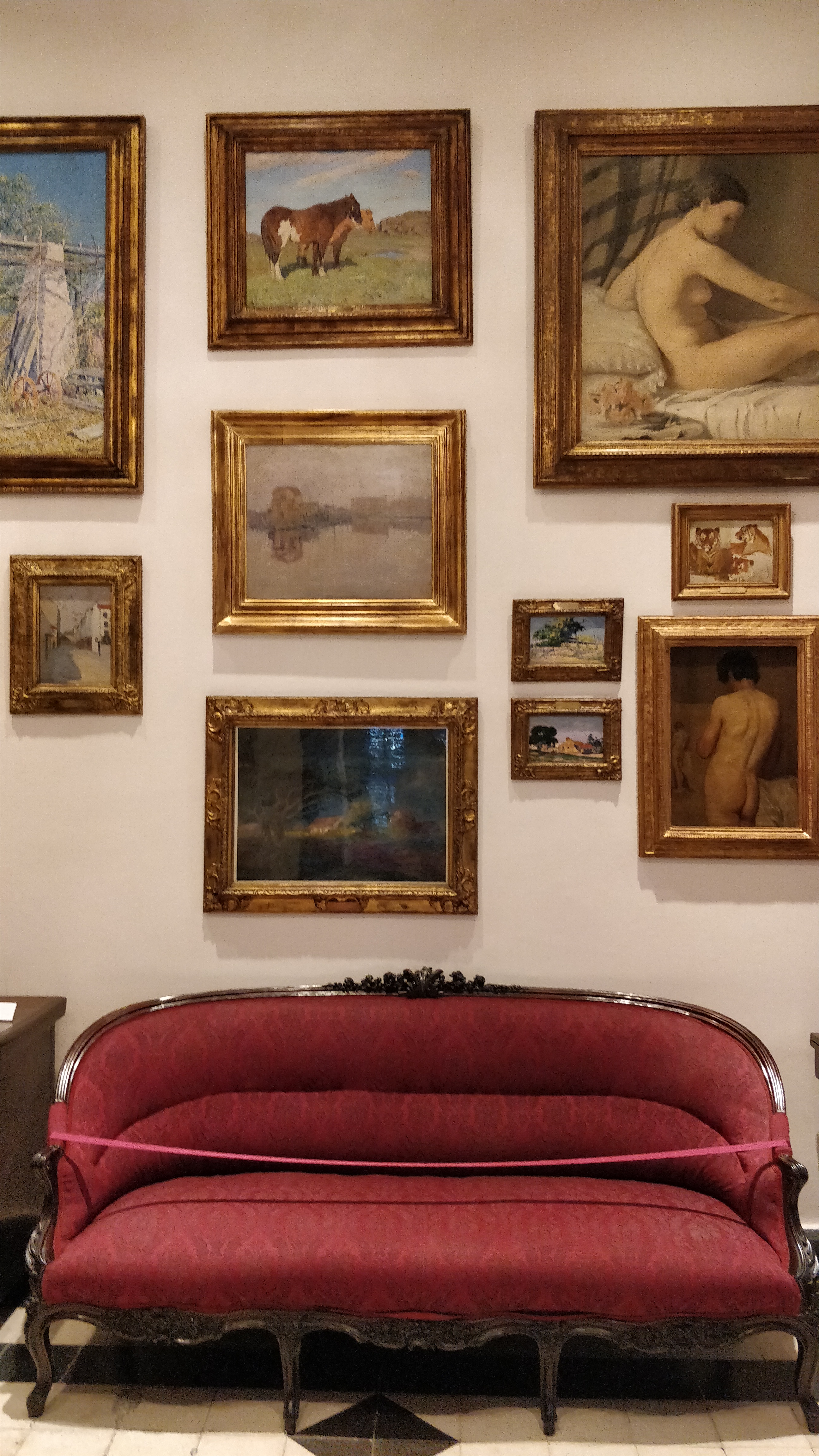
The house rooms include the some of the couple’s own art collection, which I guess is a big plus to having a lot of artist friends.

IMG_20190913_160254.jpg
Yeah well *I* have a bunch of pretty cool postcards.

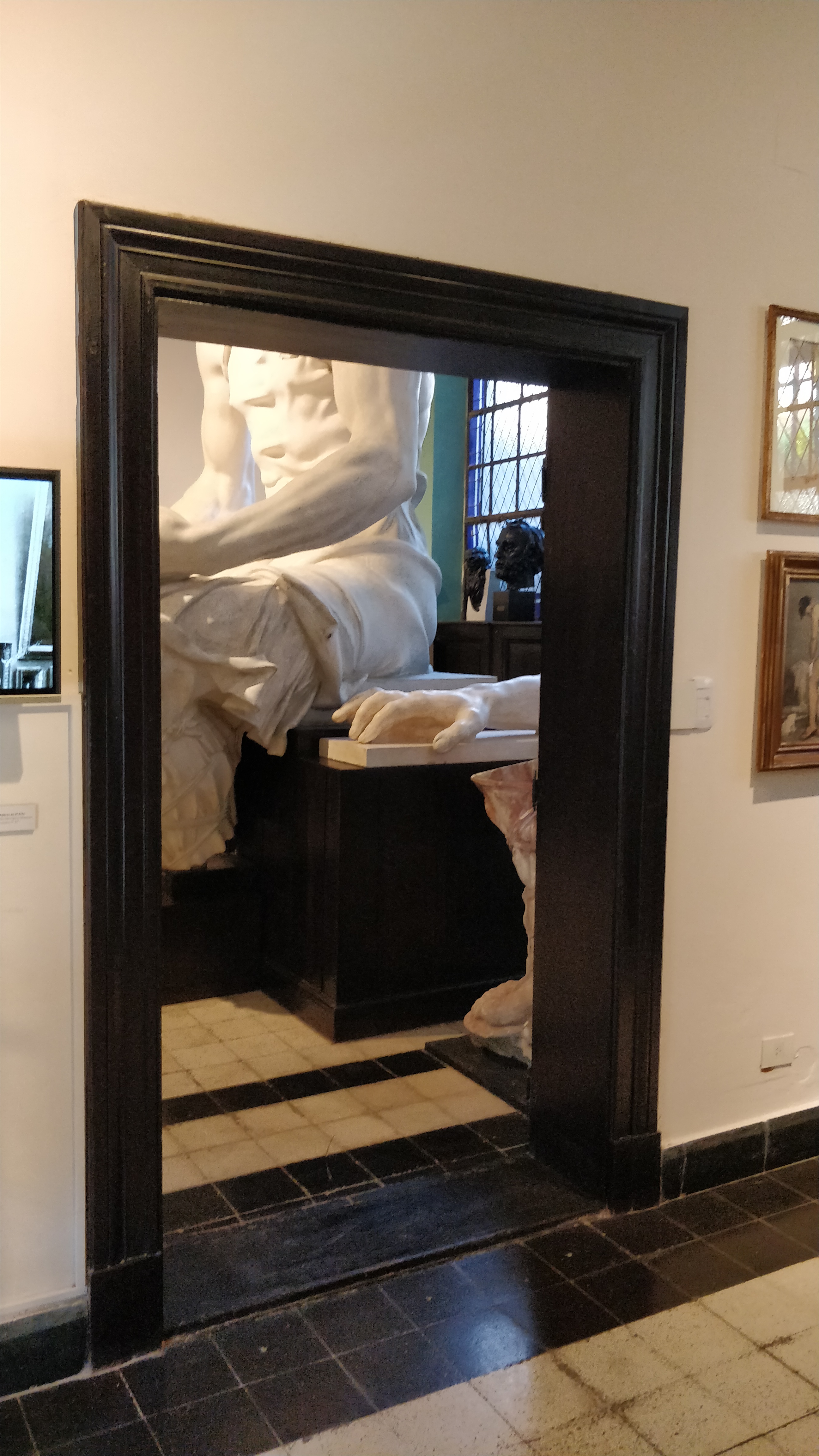
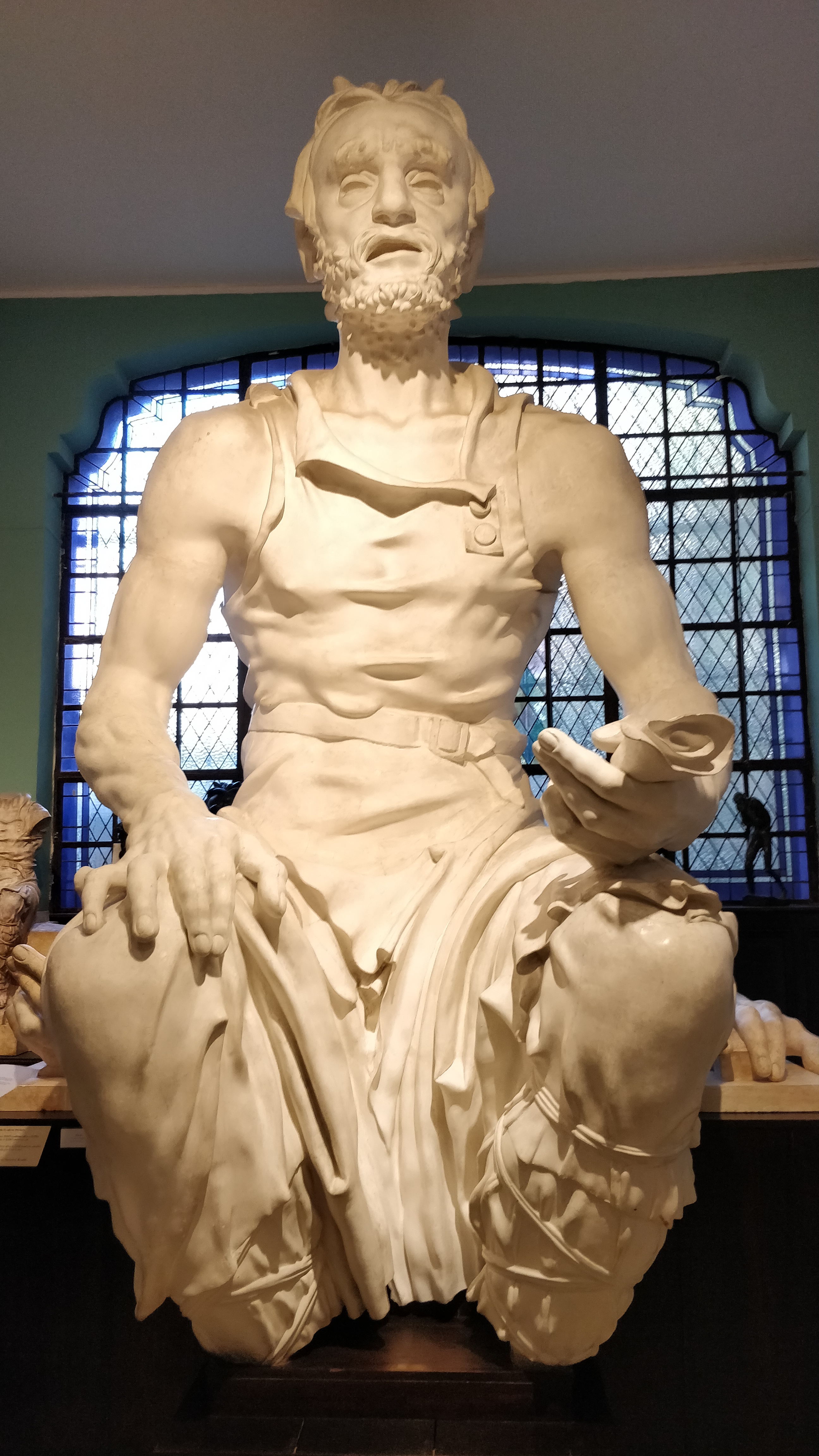
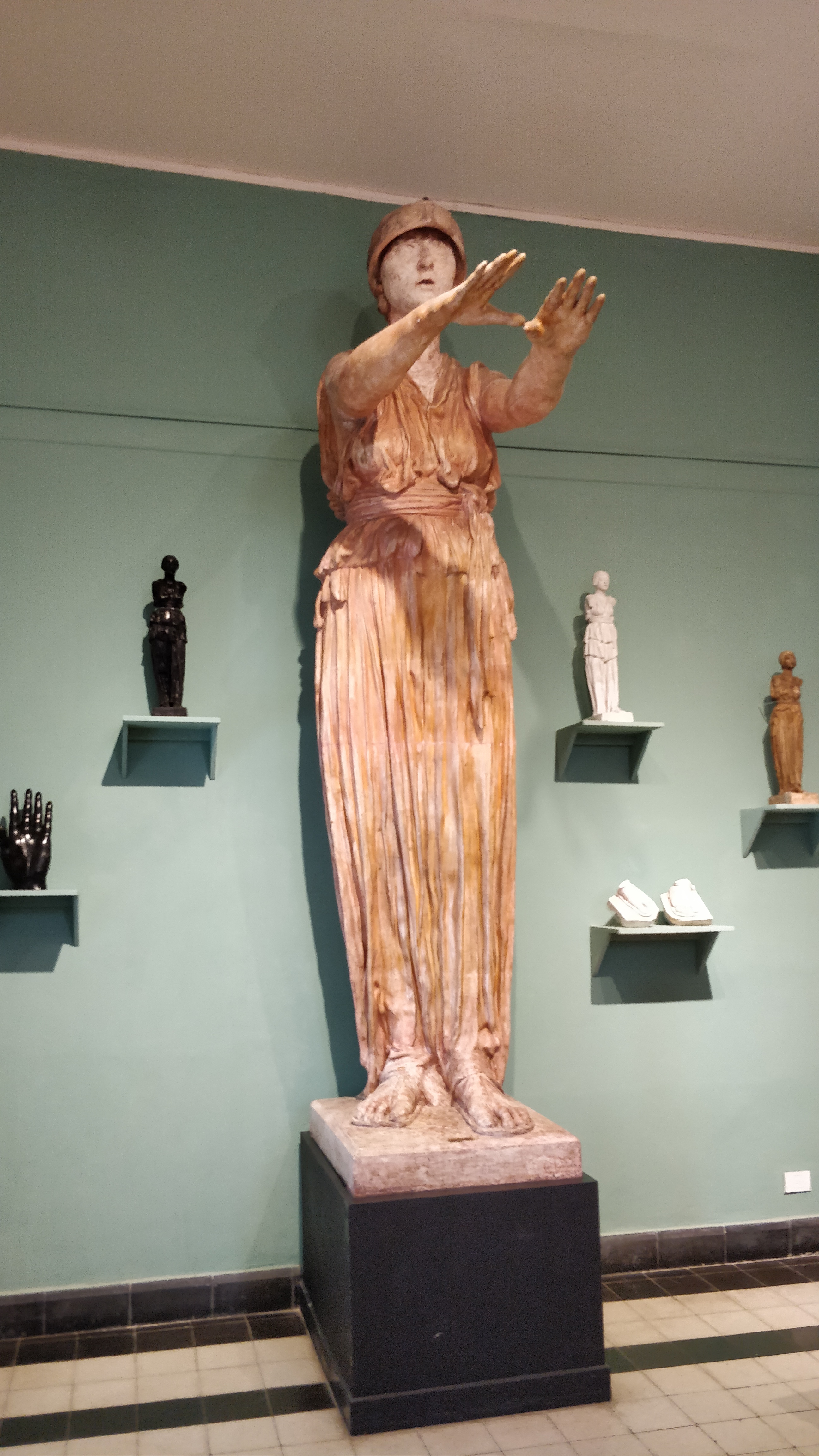
The collection on display isn’t really extensive, but it is really interesting and frequently huge.  Stands to reason; Yrurtia was a big deal in public and monument art.  Maybe you think it’s kind of a juvenile assessment, being stuck on the size, but that’s probably because you haven’t been in the same small room as stuff that was designed to be viewed from far away.

IMG_20190913_162044.jpg
That is a normal-sized doorway.

At a certain point, the size is kind of an overwhelming feature.

IMG_20190913_162326.jpg
A study for a big Moses.

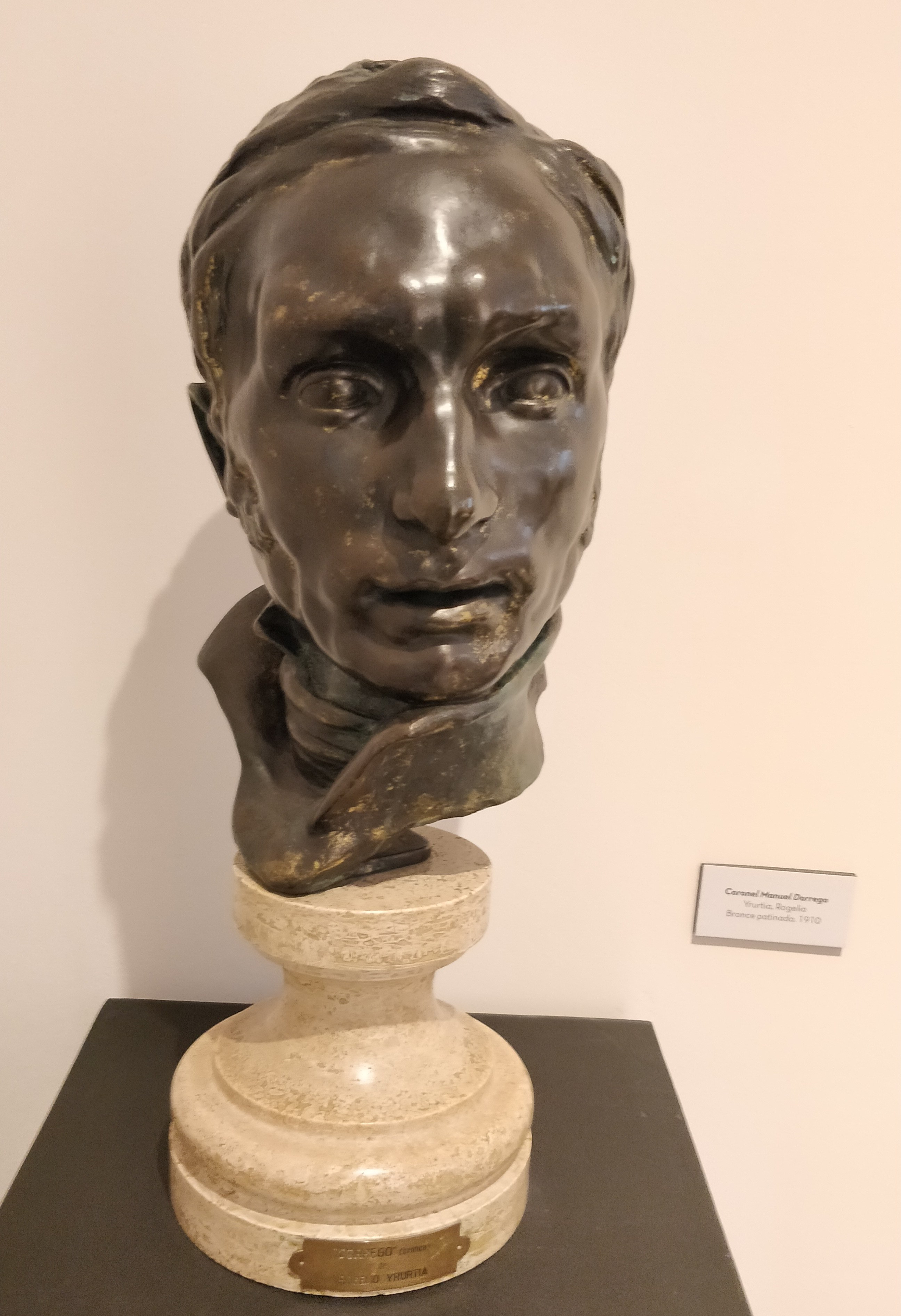
Yrurtia created a monument to Manuel Dorrego, who had (stay with me here, Argentine history is kind of dramatic) opposed the government of the first president, Bernardino Rivadavia, and was named governor of Buenos Aires province following Rivadavia’s resignation.  Dorrego himself was not long after overthrown and executed in 1828.

img_20190913_161723.jpg
He’s interred in Recoleta cemetery.  And so is the guy who executed him.  And Founding Father José de San Martín, who had been in Europe, took one look at the whole mess, declined to get involved and went back to Europe.

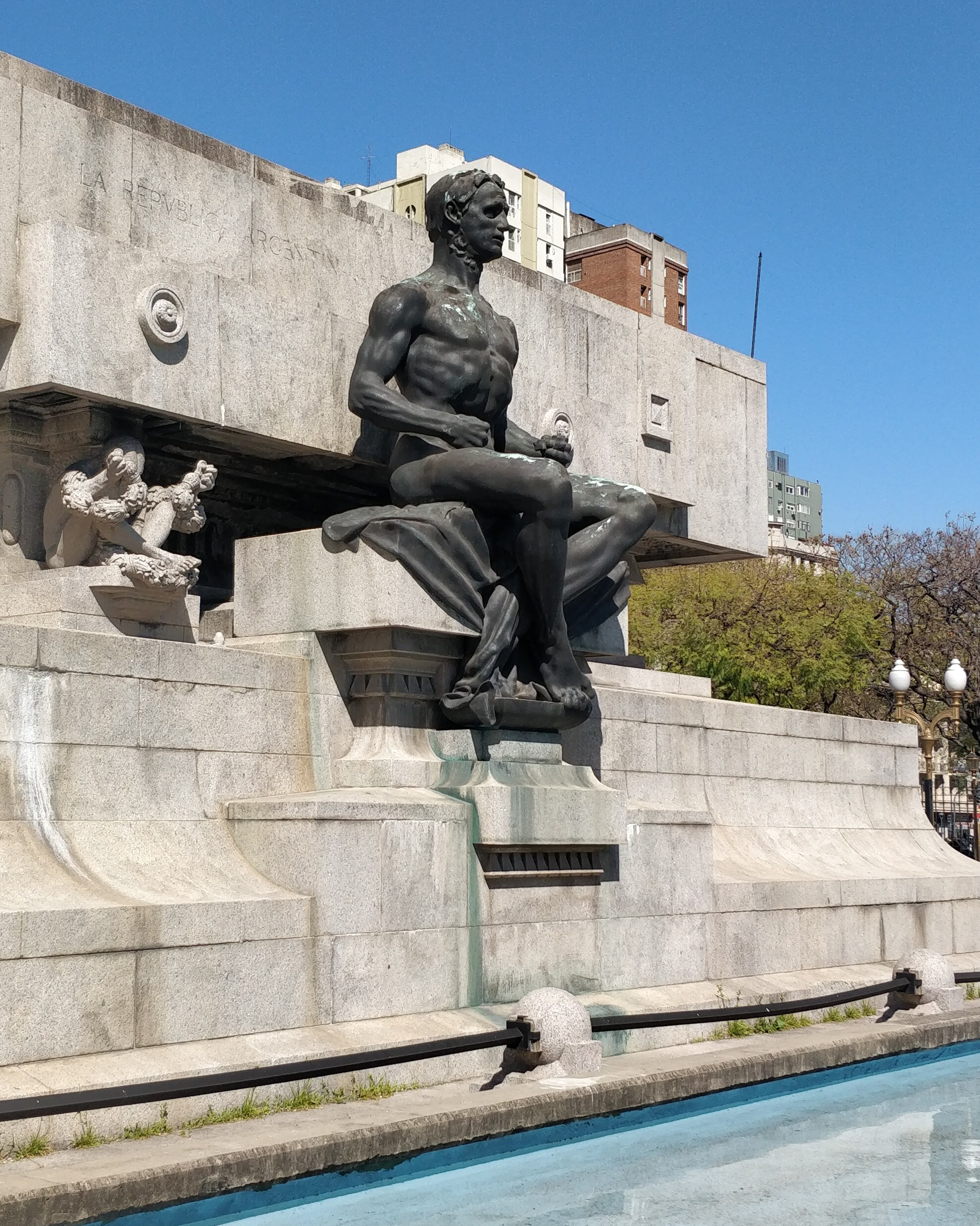
Incidentally, Yrurtia also sculpted the tomb of Bernardino Rivadavia, which is in Plaza Miserere.

img_20190918_110341.jpg
He specifically asked that his body not be returned to Buenos Aires after he died (in Spain), but alas.

And here is a Justice (commissioned by super rich guy Carlos Delcasse for his tomb and copied in bronze for the national Supreme Court), depicted non-traditionally, without scales or blindfold.

IMG_20190913_162348.jpg
But also kind of like she’s going to strangle you?

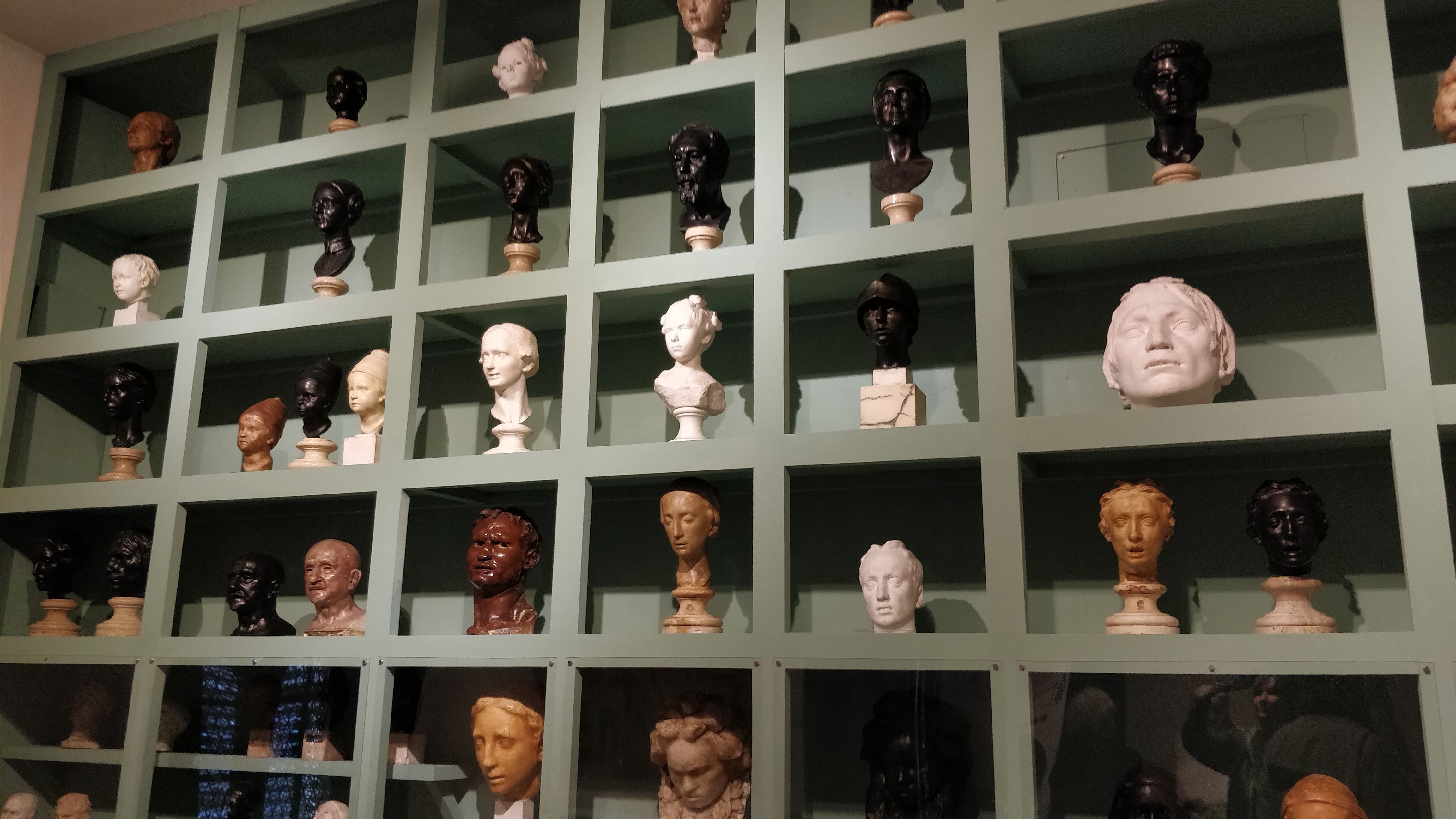
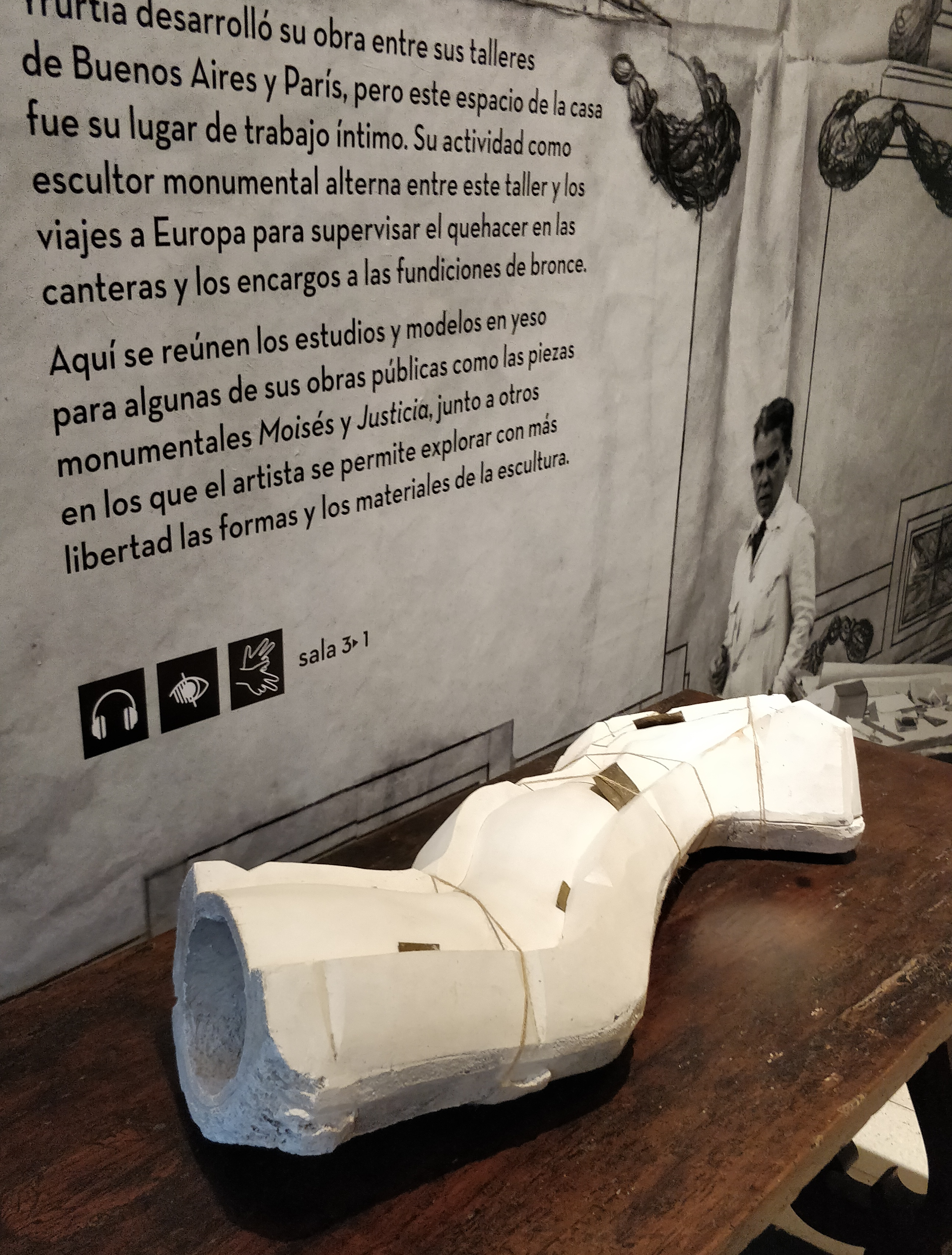
The museum also shows how the sausage is made, sculpture-ly speaking, which I recall reading somewhere was part of the point of the museum’s creation (as the house was also his workshop) but now I can’t find the source for that.

IMG_20190913_162818.jpg
How to get a “head” in sculpture lololol

IMG_20190913_162754.jpg
These are videos of the process.

img_20190913_162341.jpg

The museum does have a room about Lía Correa Morales, which it should, as she was also an important artist and doesn’t even get her name on the museum itself.

IMG_20190913_162006.jpg

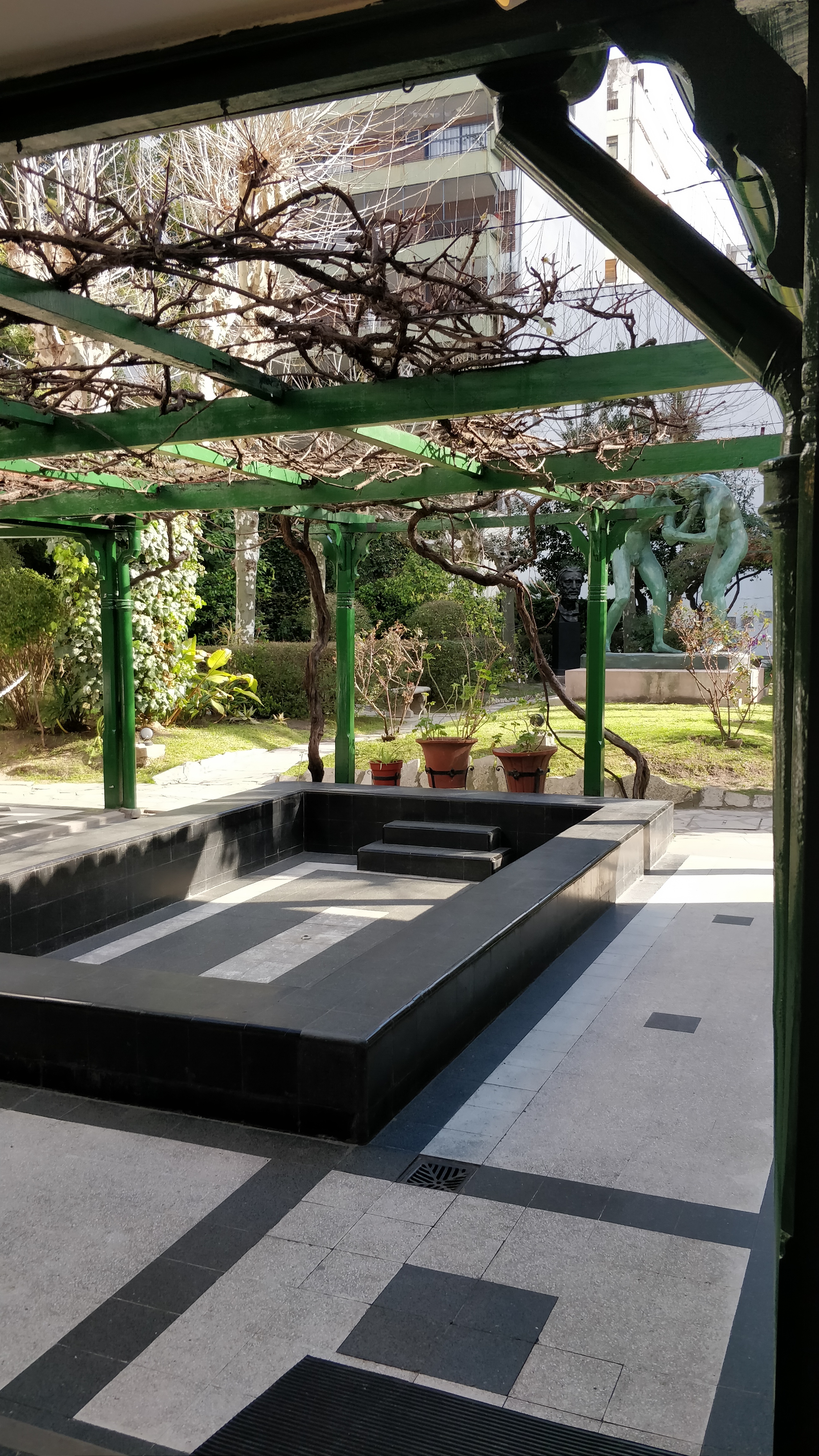
Finally, the house has a sweet garden, in which stands one of Yrurtia’s last works, The Boxers.

IMG_20190913_161039.jpg
Uh, it’s in the back there.

Like most (all?) of the small, state- or city-run museums, this one also hosts workshops and events.  The staff is very nice!  There wasn’t any English material on hand, so they printed out some translations for us.  The museum is in Belgrano, not terribly far from the D subway line, and open Wednesday through Friday from 10am to 6pm and Saturday and Sunday from 11am to 6pm.


El Museo Argentino de Ciencias Naturales Bernardino Rivadavia [The Bernardino Rivadavia Argentine Museum of Natural Sciences]

It’s been an eventful few weeks here in Argentina.  The presidential primaries happened, and also the value of the peso plummeted.  Good times!

But before all that happened, I went to one of my favorite buildings in Buenos Aires, which happens to house the Rivadavia Natural Sciences Museum.

img_20190801_125018.jpg
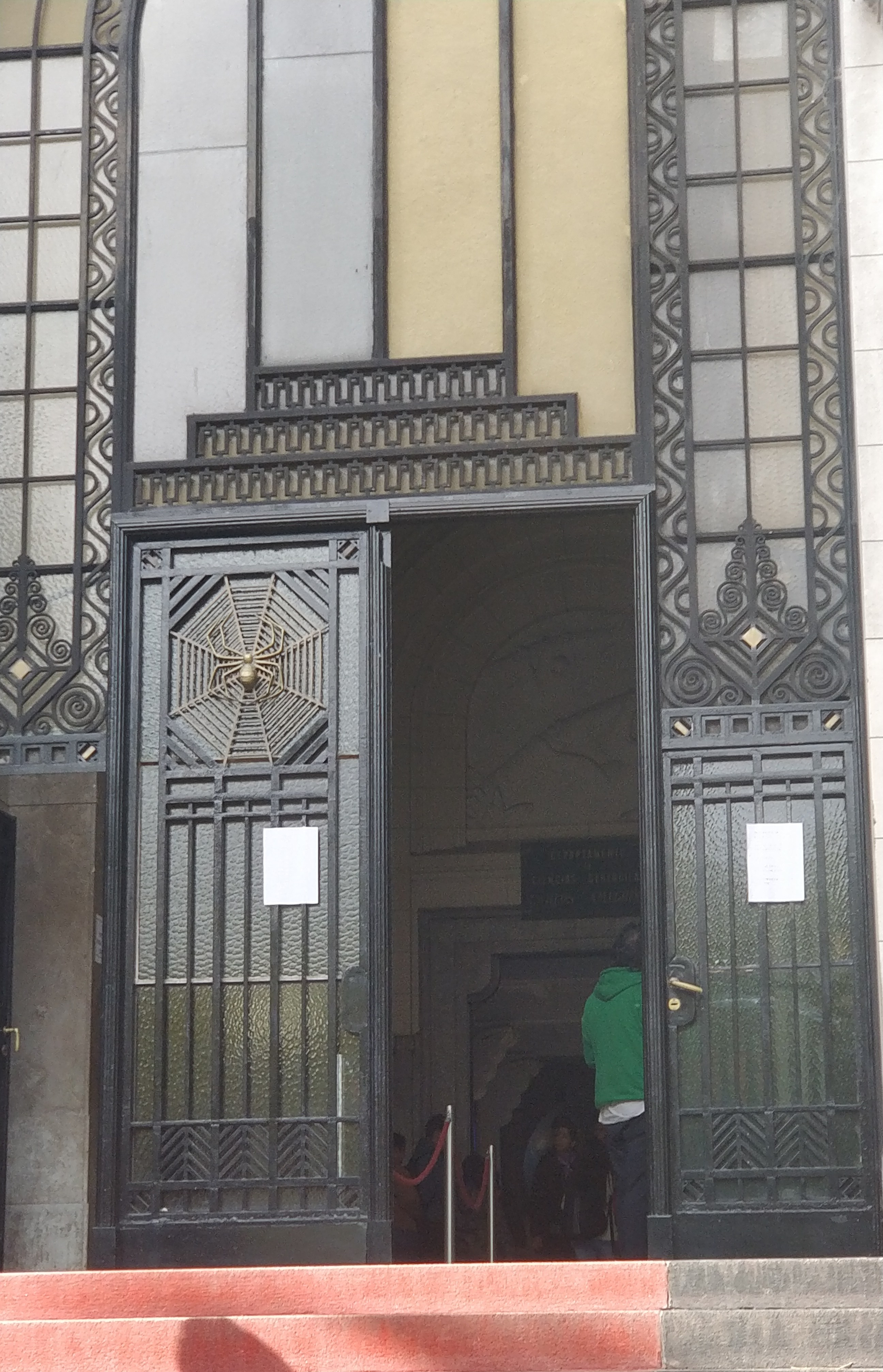
So, ya like spiders?

The museum opened in 1826, owing to the work and advocacy of Bernardino Rivadavia.  It was the first natural sciences museum in South America, and kind of a big deal.  The current building, in the slightly-out-of-the-way-for-tourists Caballito neighborhood, was inaugurated in 1937.  It’s got SO MANY ANIMALS.

img_20190801_125025.jpg
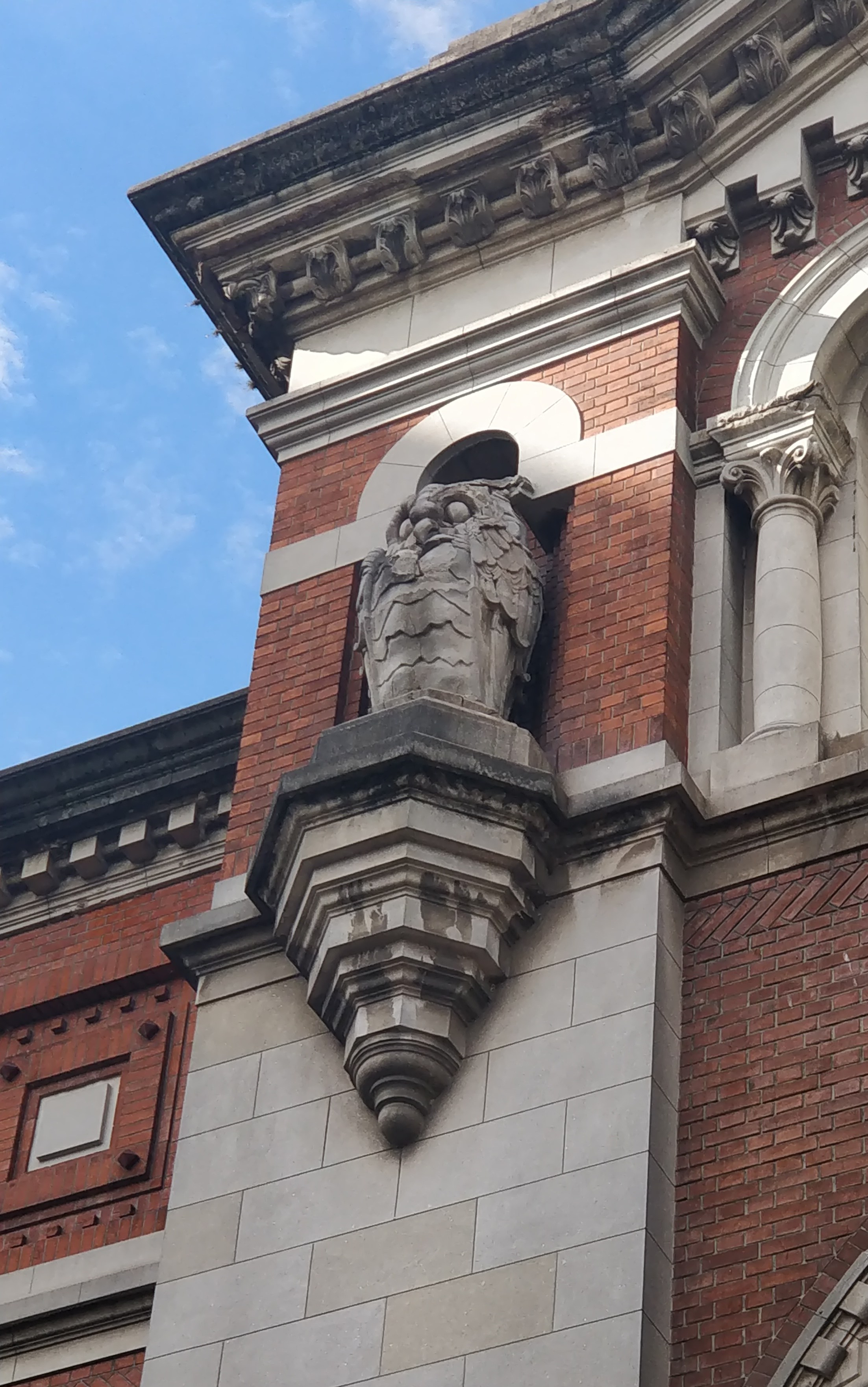
OWLGOYLE

img_20190801_150837.jpg
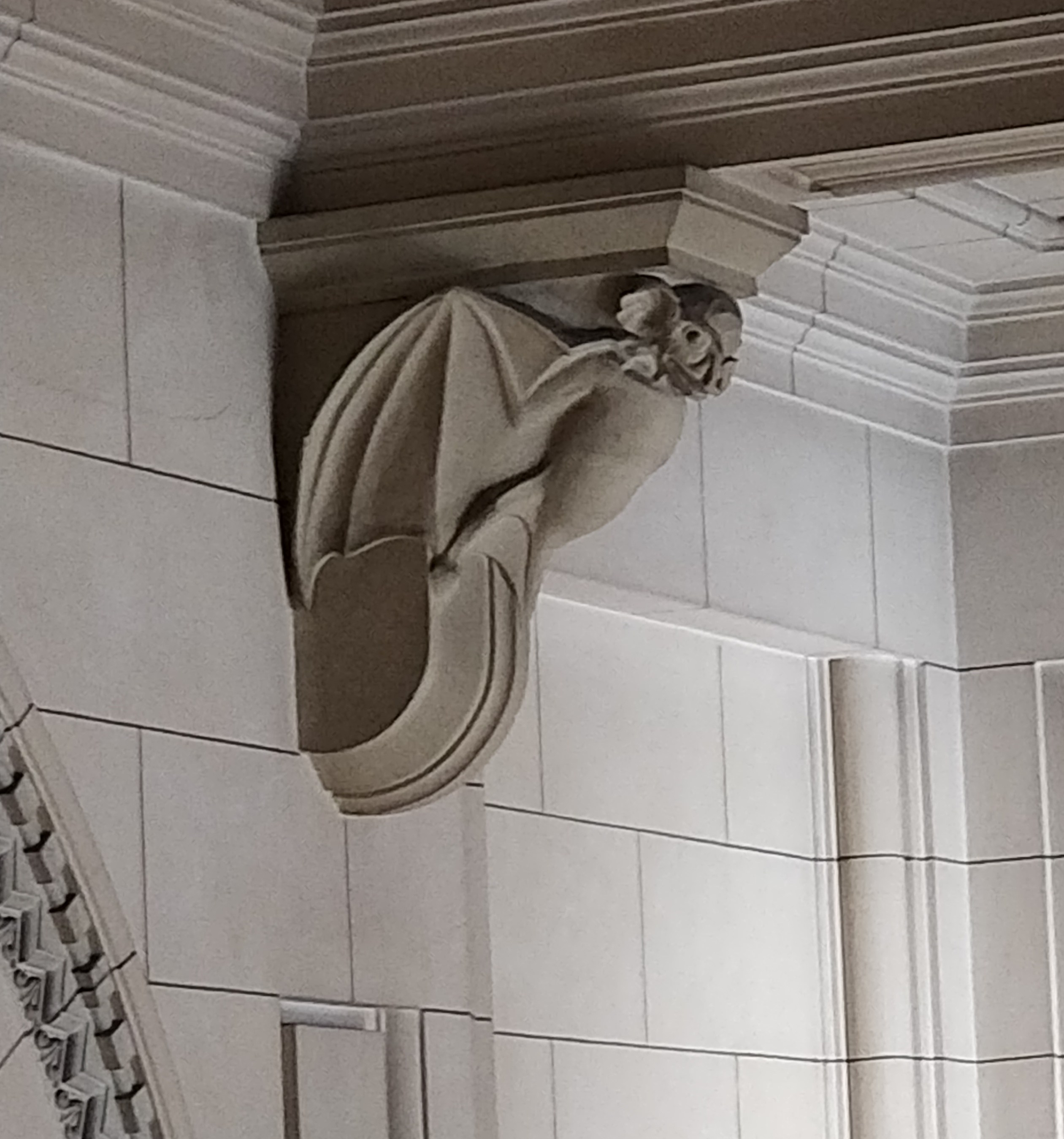
INTERIOR CEILING BAT

There’s more, and I recommend walking around the inside and outside of the museum squealing in delight when you spot them.

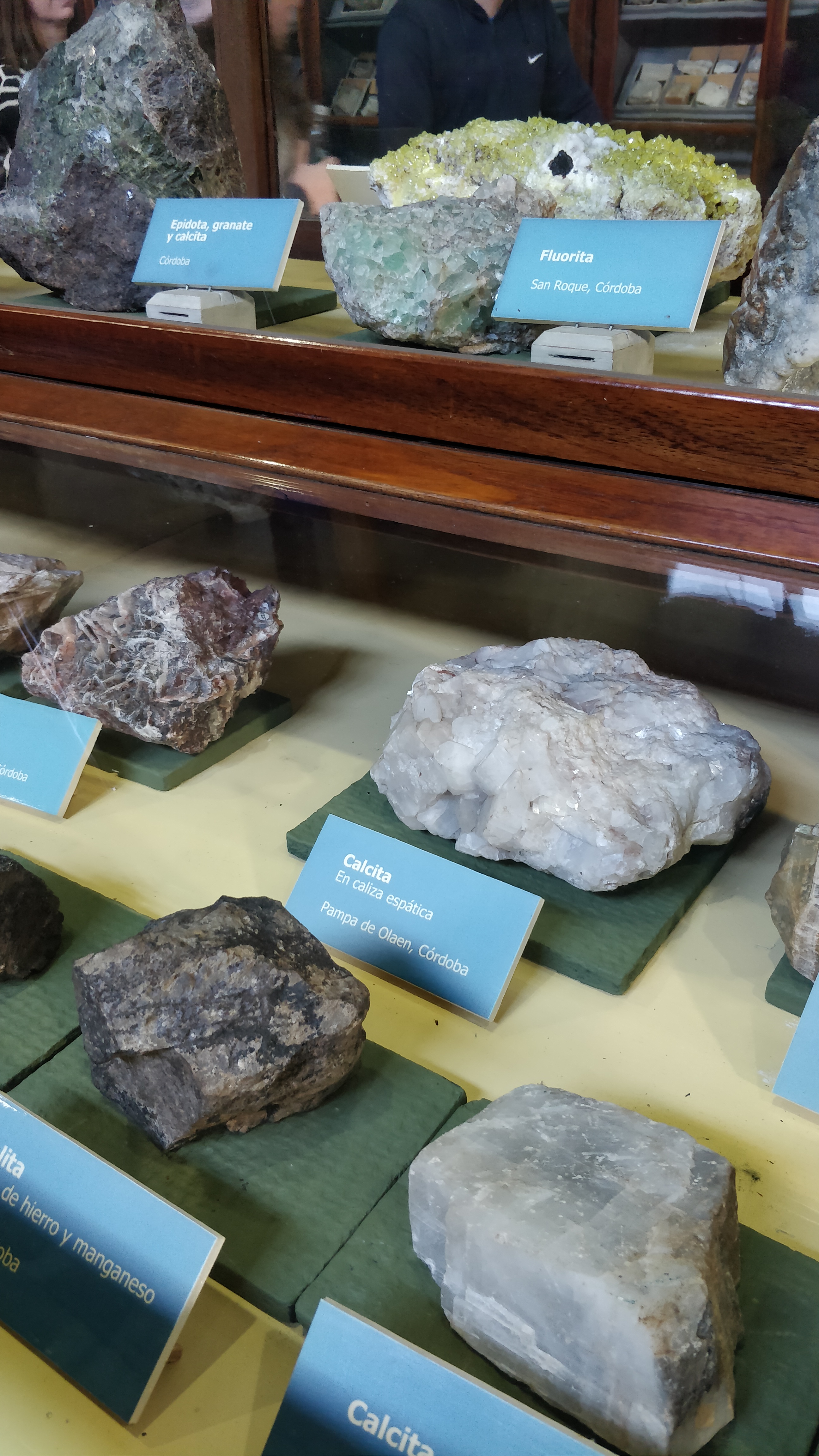
When I visited, it was the winter break for the local schools, and the place was full of excited, noisy children. There was a line out the door and around the gate to get in when I was leaving around lunchtime.  It was glorious.  The children were even exclaiming over the minerals.

IMG_20190801_152026.jpg
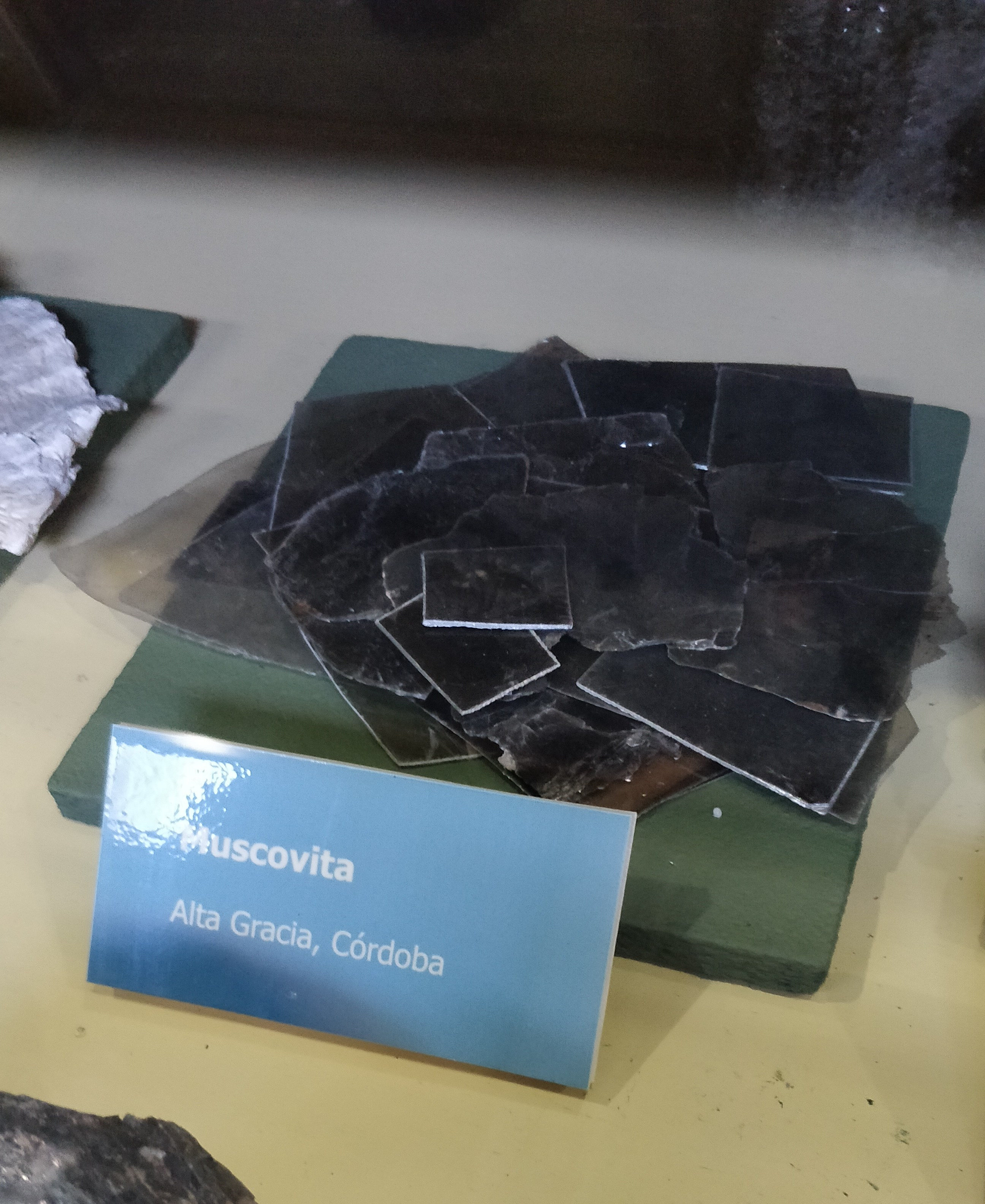
To be fair, there was some pretty great fluorite and stuff that grows in distinctive shapes.

img_20190801_152055.jpg

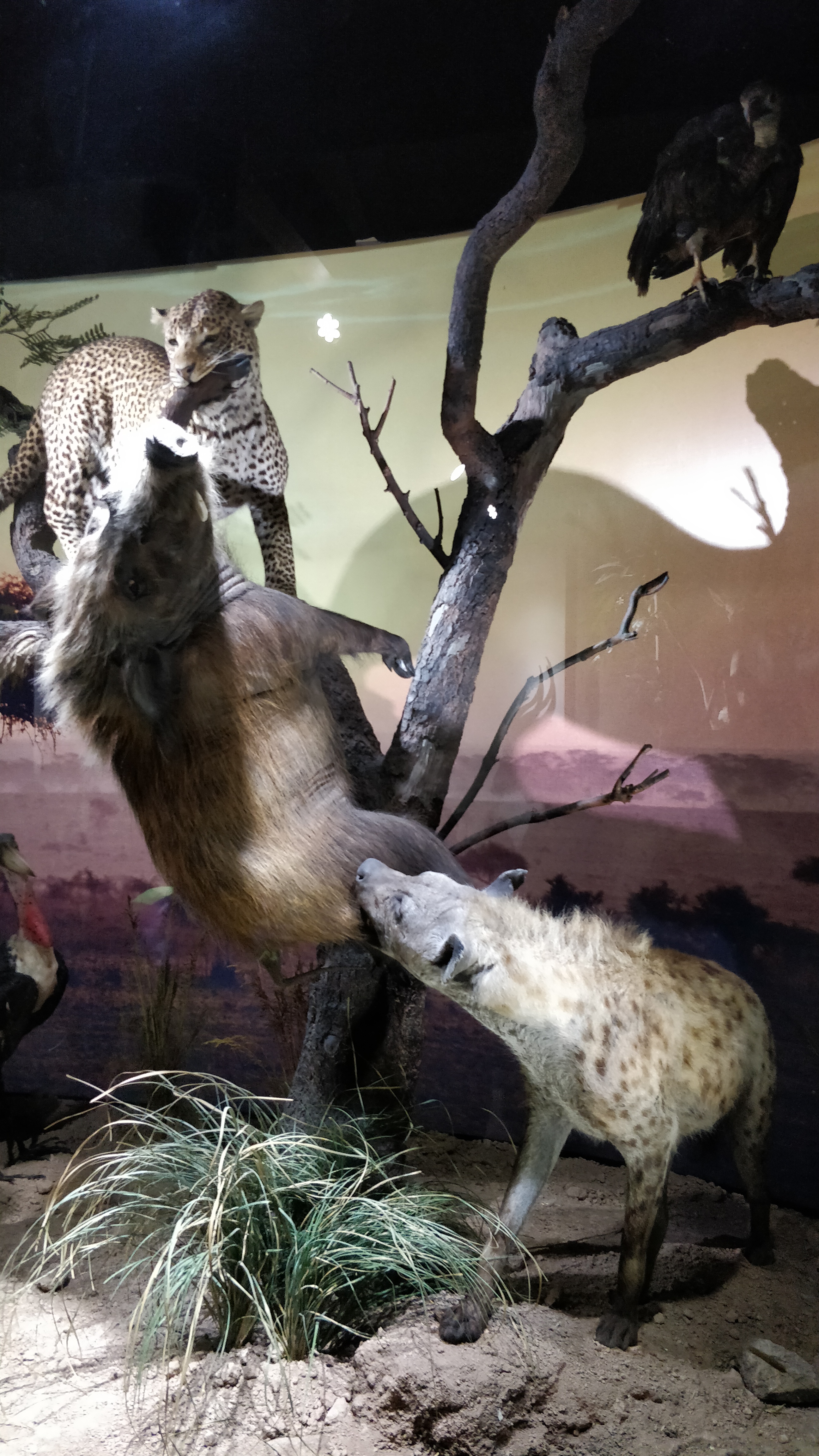
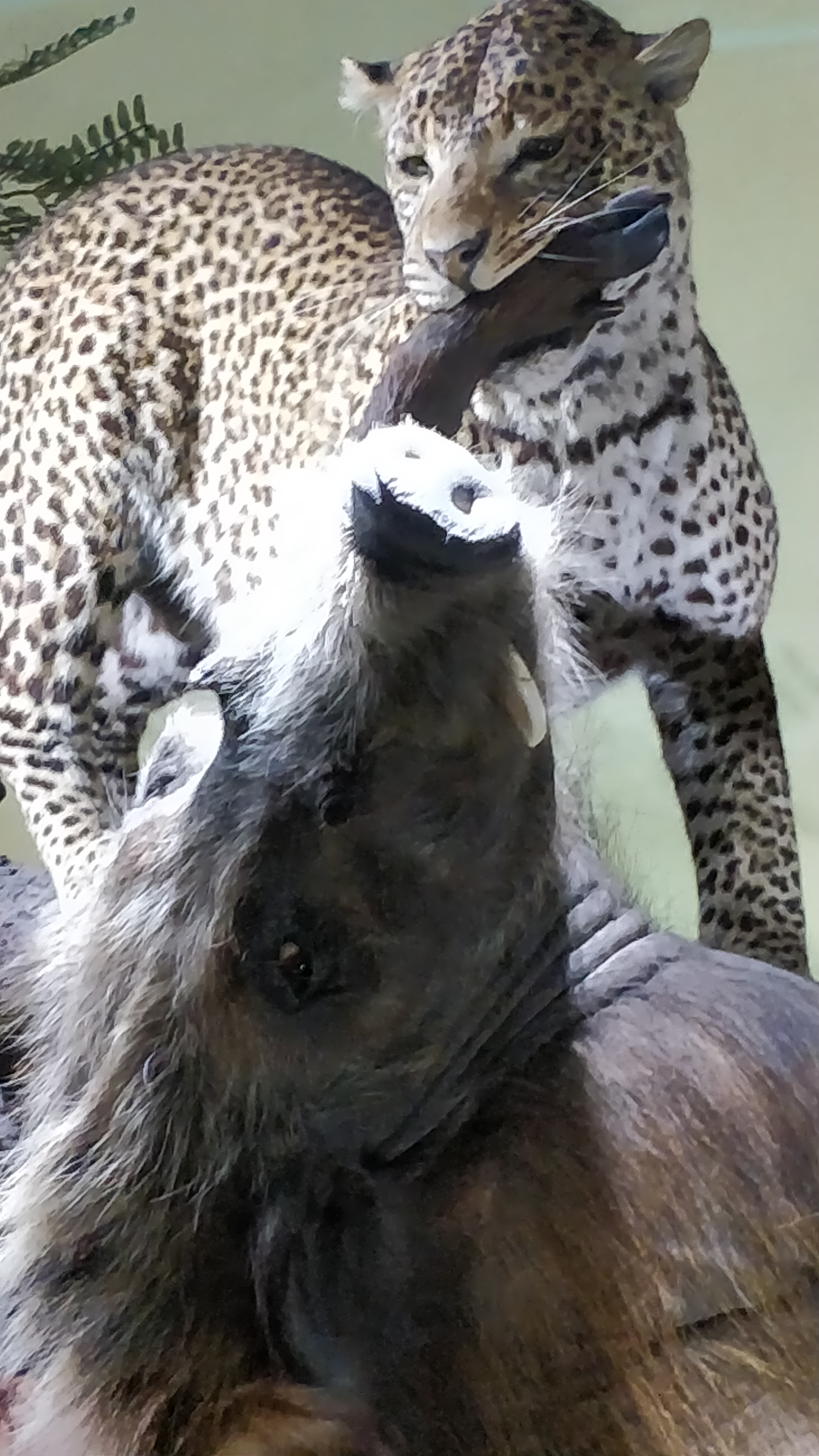
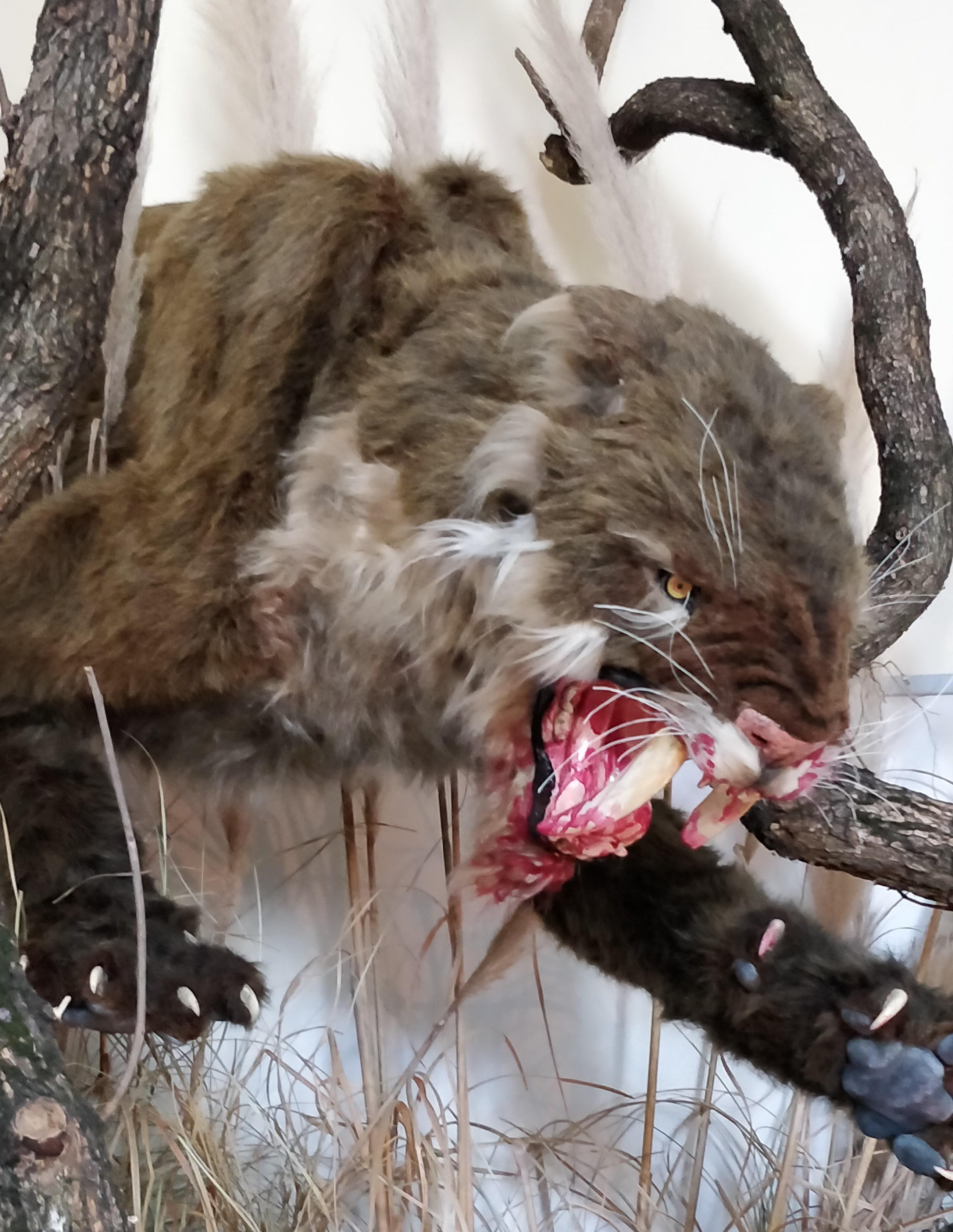
There is more than awesome rocks to see, of course.  The museum does boast a large collection of native specimens, but it’s not limited to them.  And who doesn’t love dioramas of successful hunts and dramatic battles for food and survival?

IMG_20190801_131559.jpg

IMG_20190801_131606.jpg
This warthog, I guess, is not all that thrilled with dioramas of successful hunts and dramatic battles for survival.

Giraffes aren’t the only ones who like to nibble trees.

IMG_20190801_131628.jpg
Gerenuks do too, and are actually also called “giraffe gazelles,” which I didn’t even notice until I looked it up just now.

Although you might know the species better as that “popcorn eating gazelle” meme.

This is a pretty photo-heavy entry, you guys, because I appreciate and value artistry.

img_20190801_131411.jpg
“NEEDS MORE BLOOD”

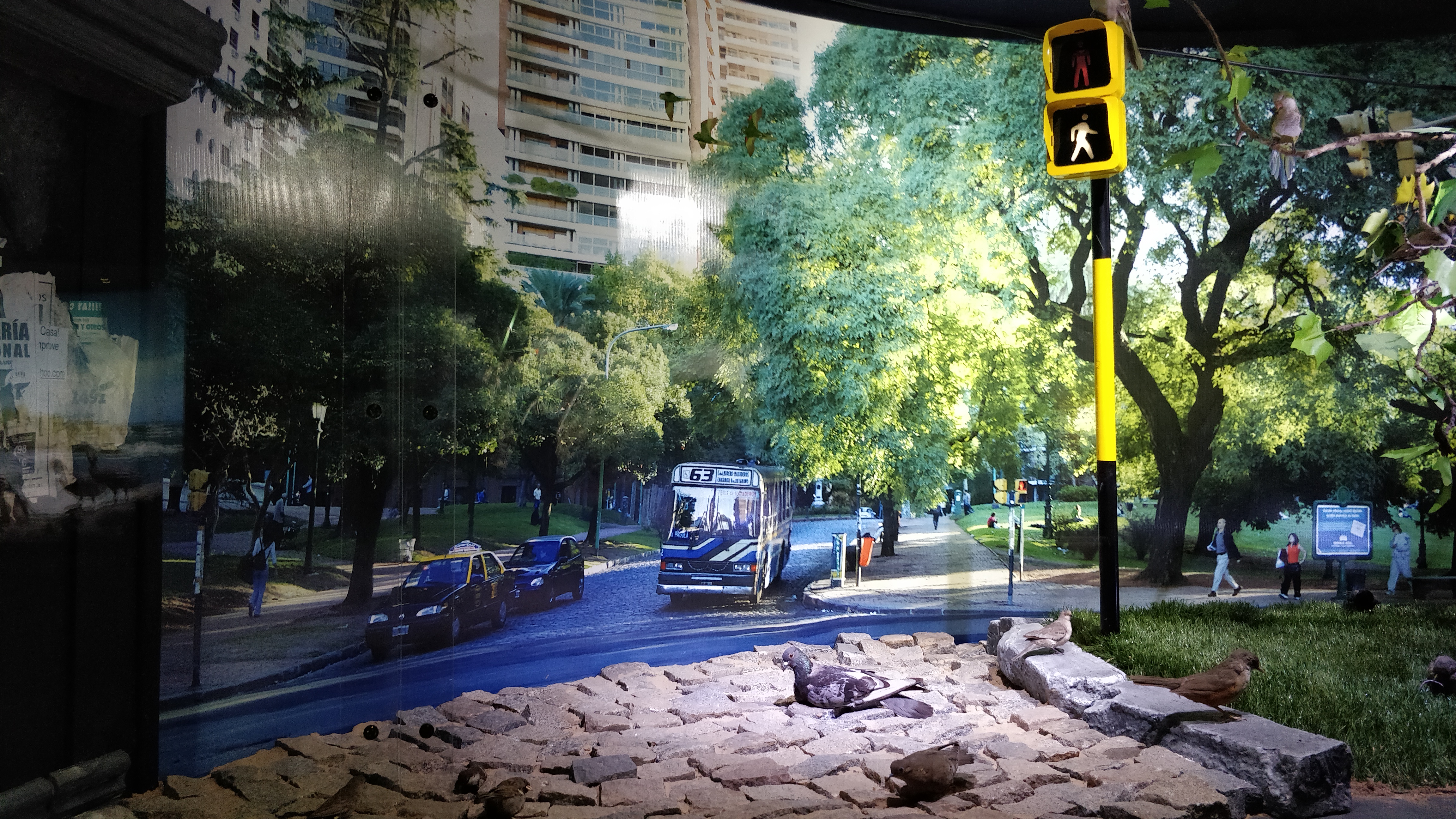
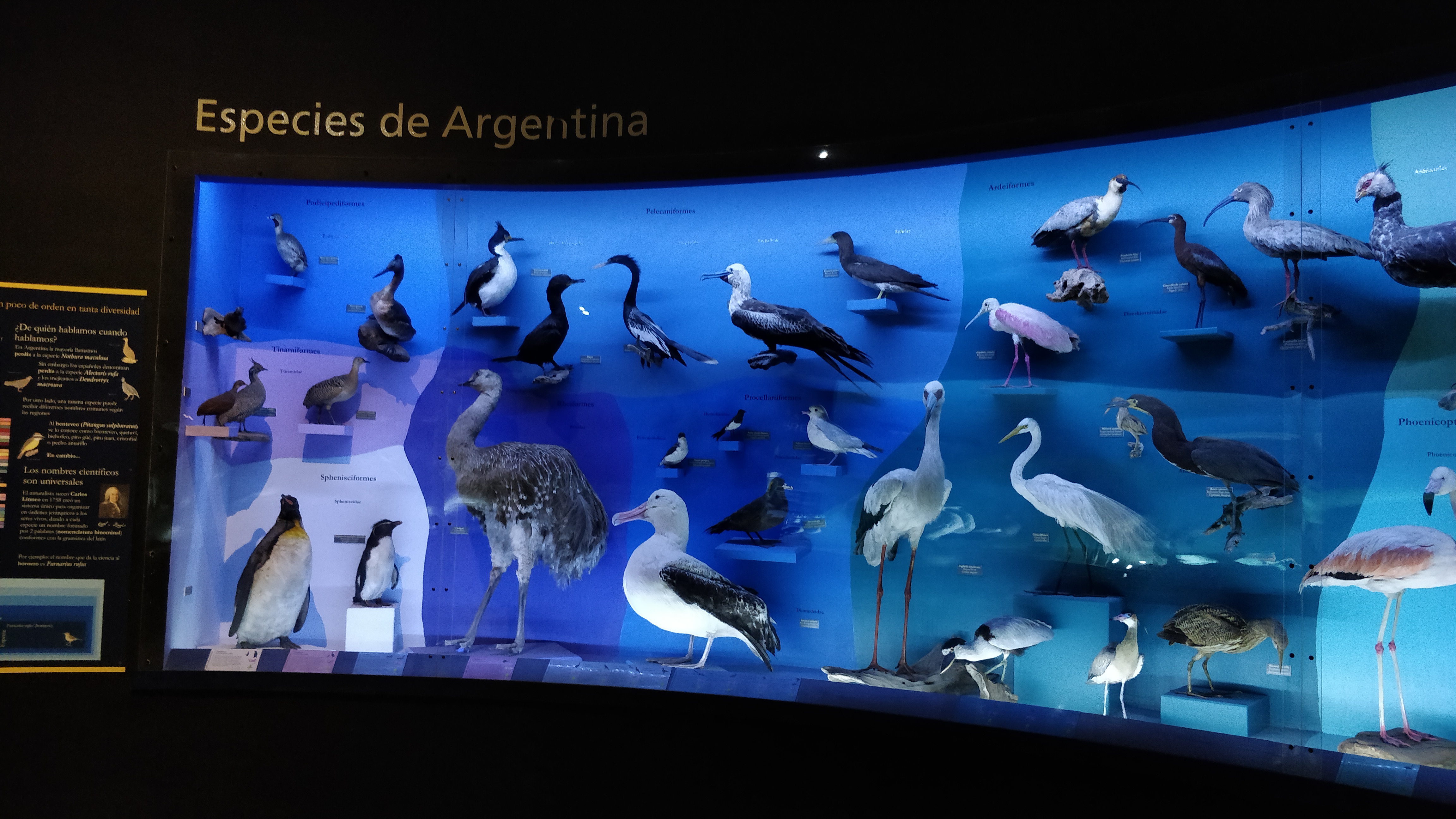
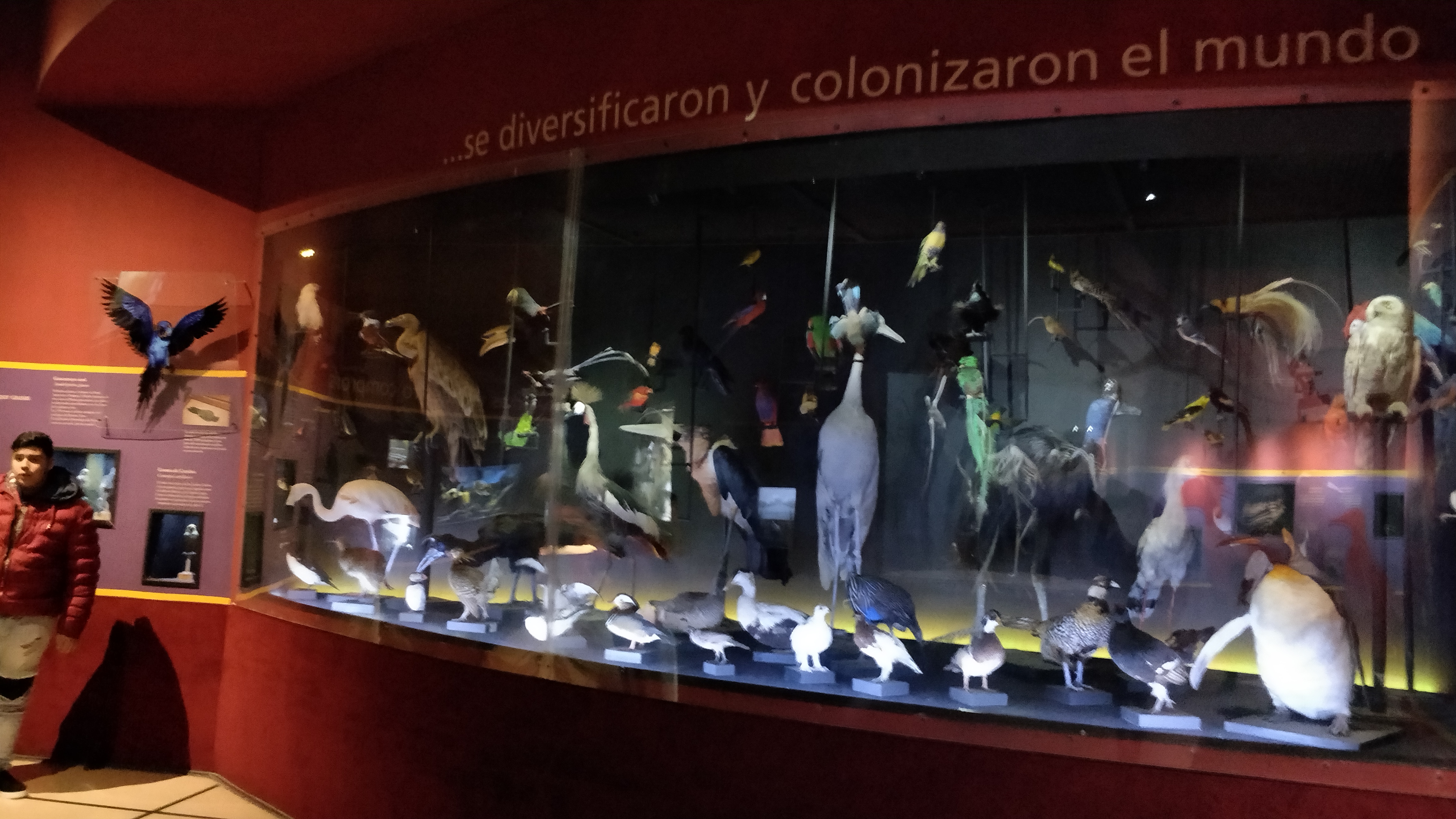
There is a very nice hall of bird specimens, including some in dioramas of Argentina’s environs.  This was my favorite one, because it happens to depict a park very near my house.

IMG_20190801_140257.jpg
A good place for birding and Pokemon Go.

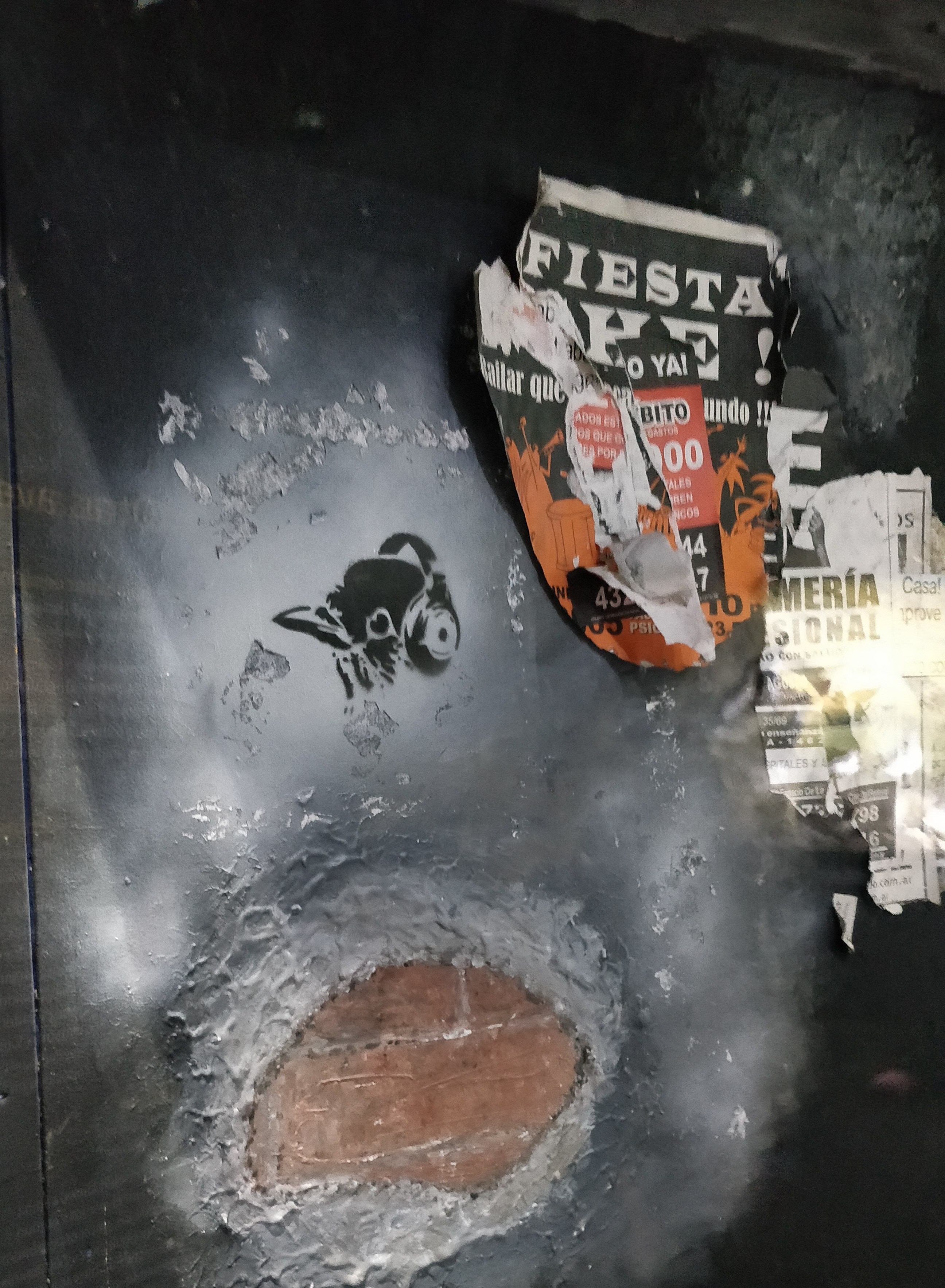
I especially loved the little riff on a fairly common stencil graffiti motif.

img_20190801_140317.jpg
Look I’m never gonna be good at taking photos but most importantly why doesn’t the MACN have this on a t-shirt

The bird wing (haha) is actually really good.

IMG_20190801_141855.jpg


IMG_20190801_132737.jpg


IMG_20190801_142357.jpg
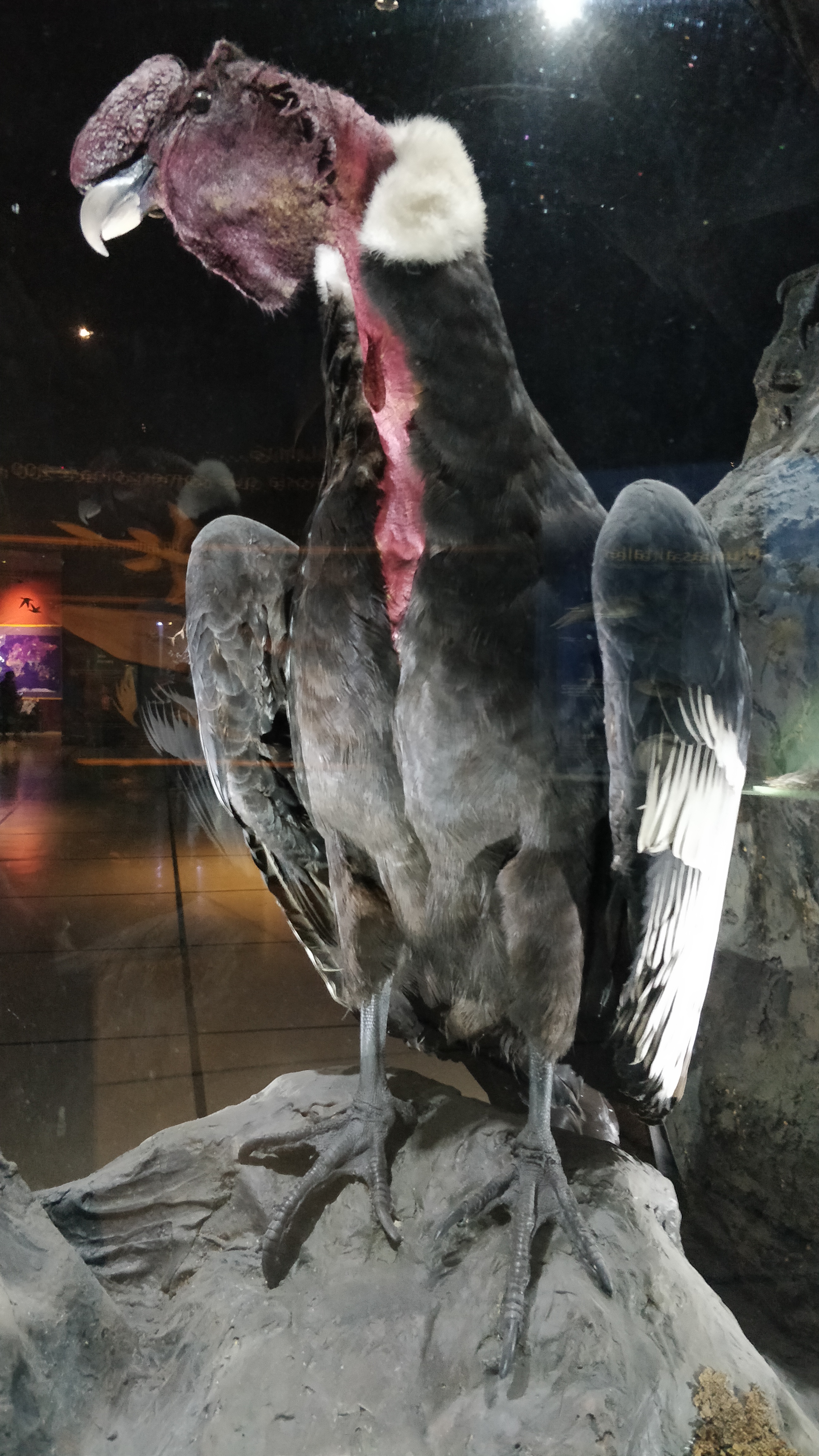
Andean condors have great personalities.

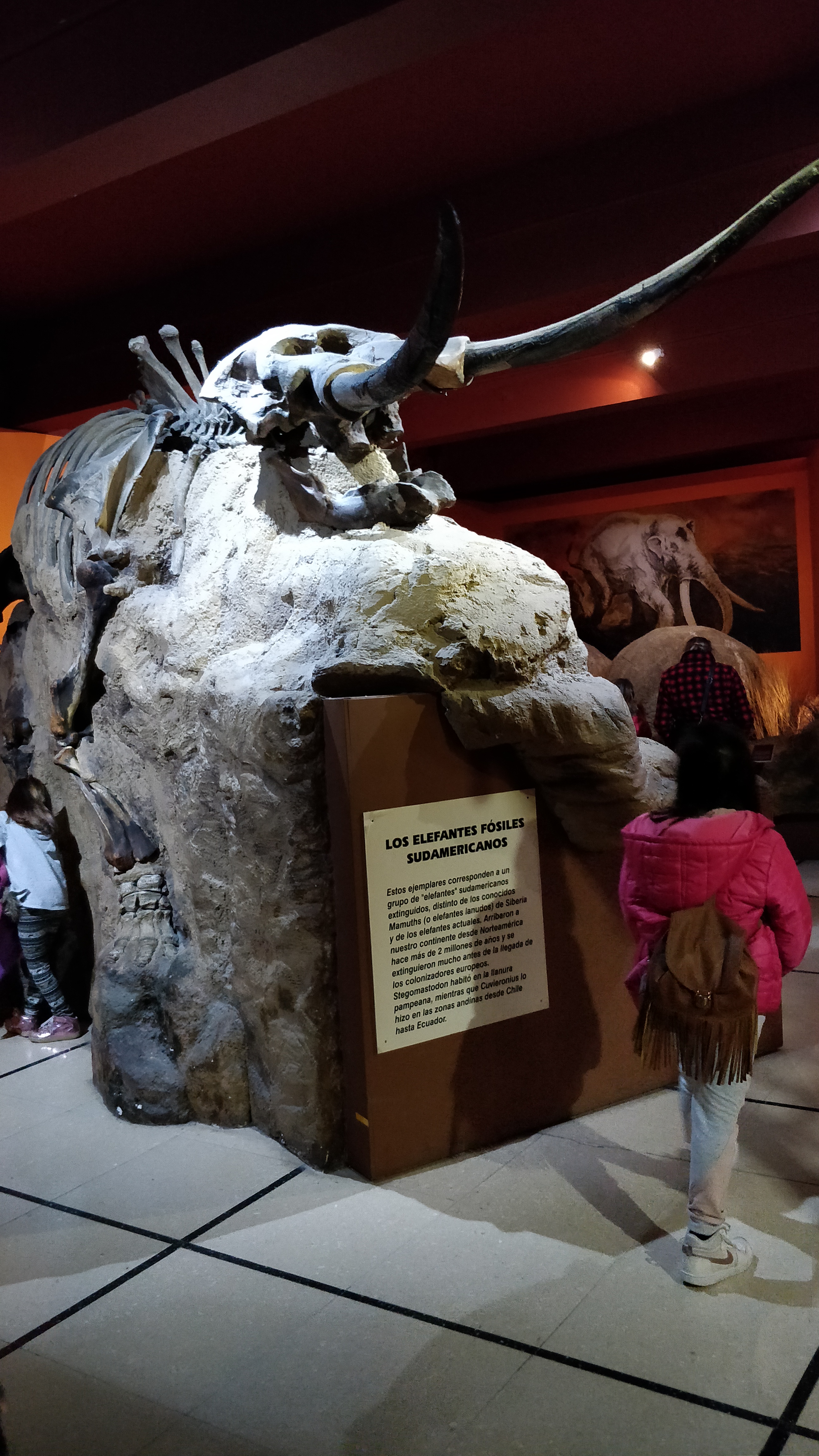
You might know, if you are into dinosaurs (you are, because everyone everywhere always is into dinosaurs), that Argentina is pretty rich in dinosaur fossils.

IMG_20190801_151247.jpg
TA DA

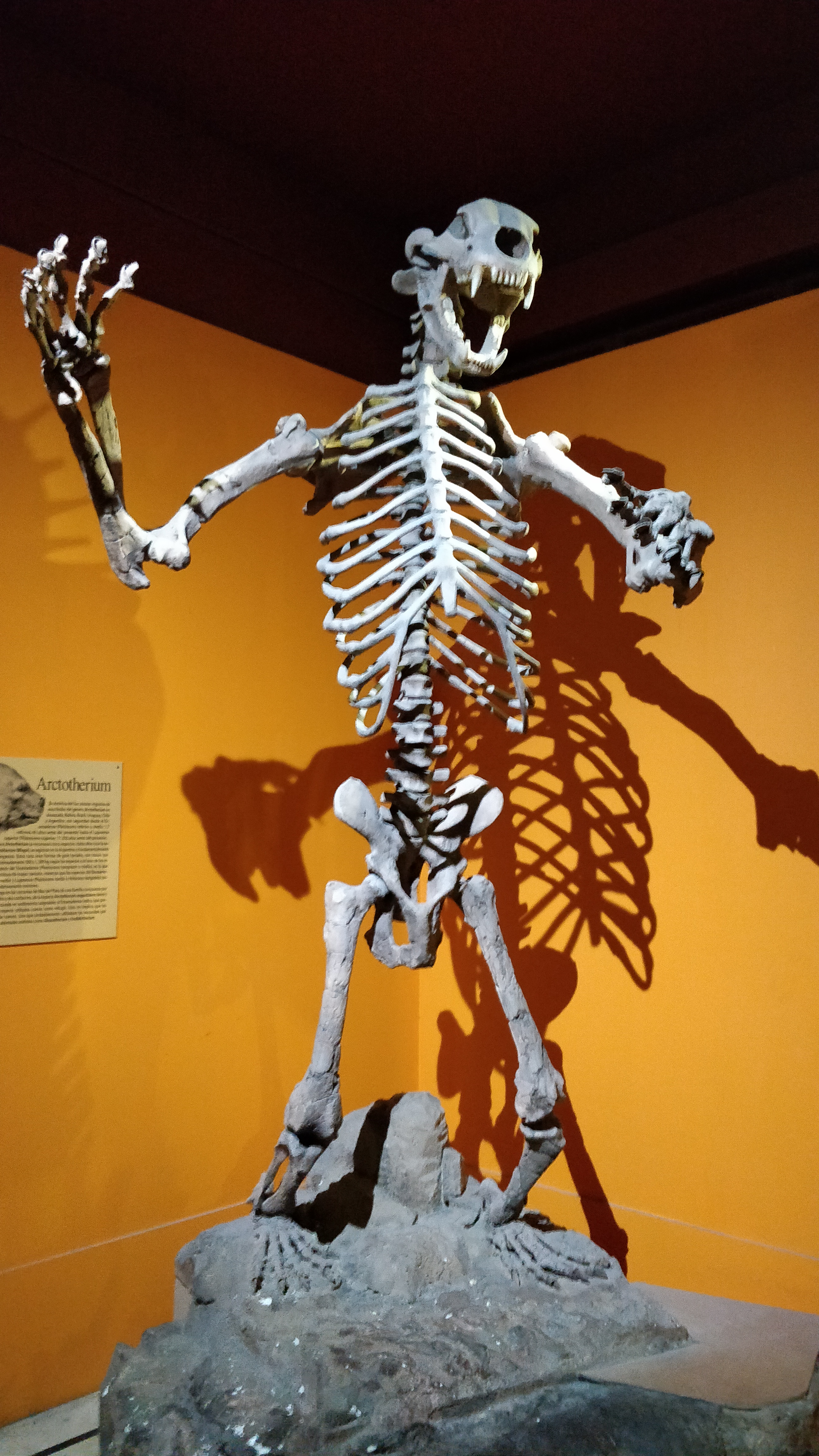
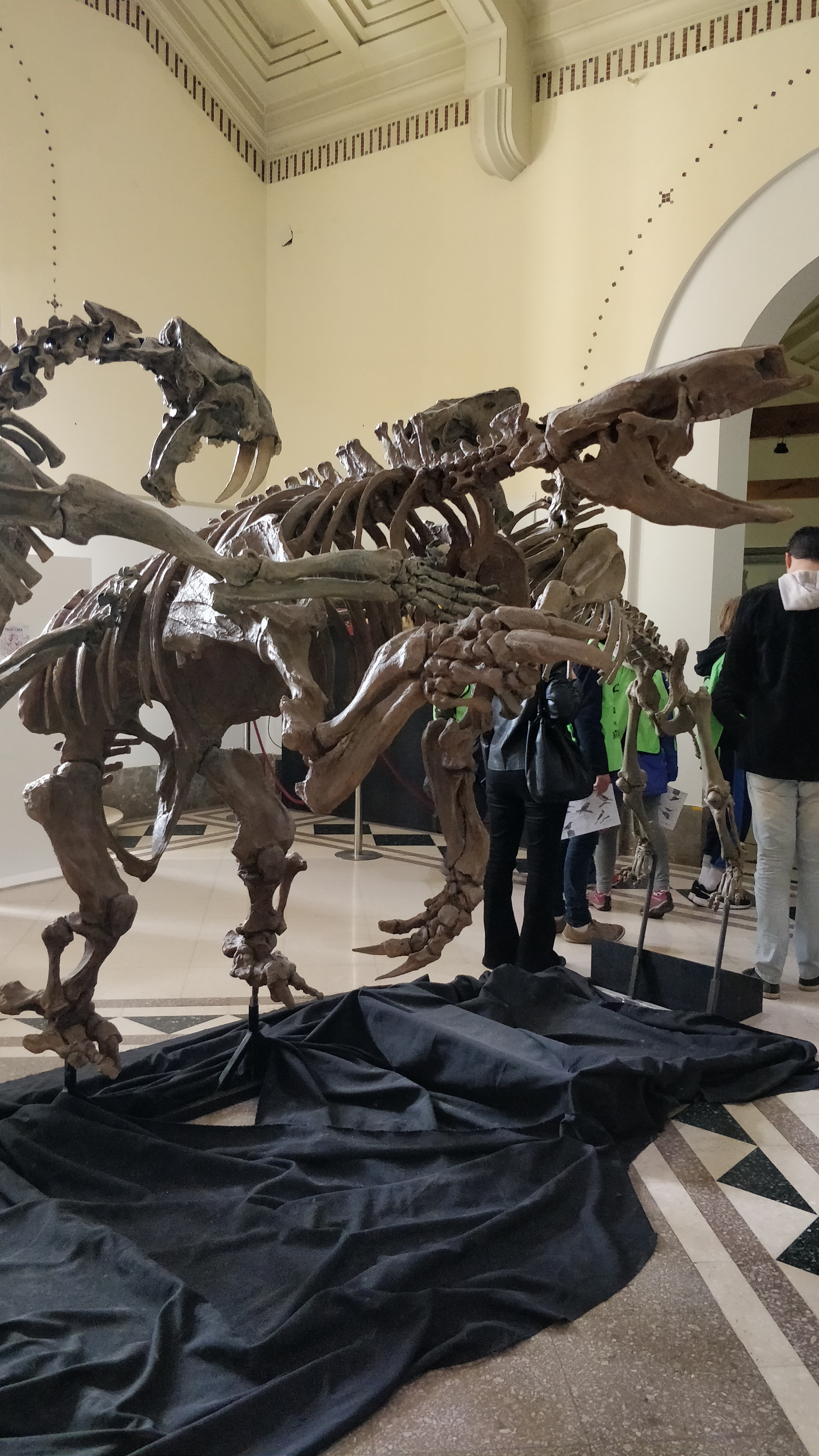
It’s no Sue, but it’s not at all shabby!  There’s plenty of other native megafauna, too, which is great because ancient megafauna are so frickin’ weird.

IMG_20190801_151034.jpg
HUG ME

IMG_20190801_131316.jpg
SKELETON DRAMA

IMG_20190801_151041.jpg

IMG_20190801_150944.jpg
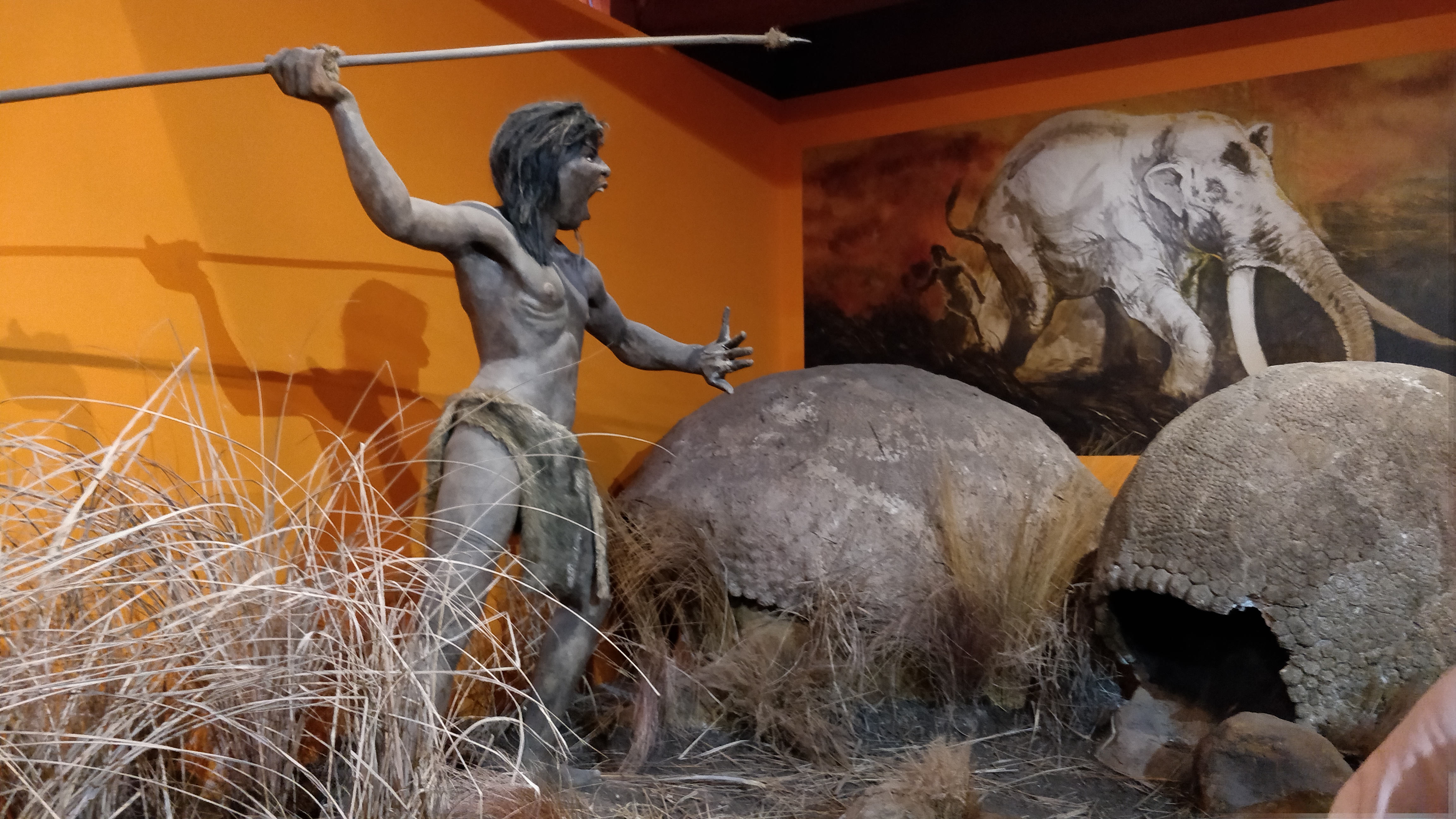
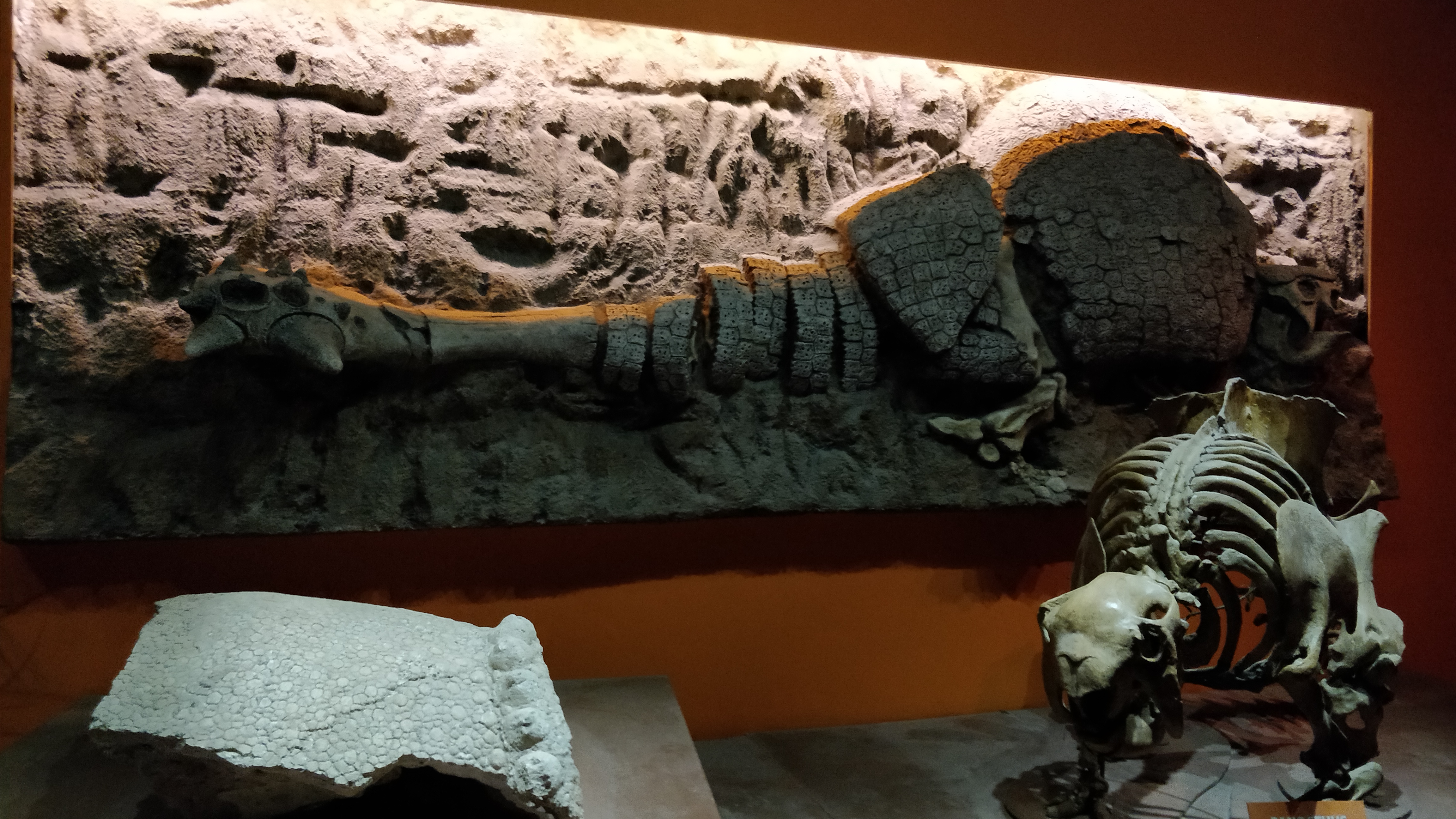
Not a boulder hunt; those are glyptodons.


IMG_20190801_151127.jpg
And some Glyptodon tails were BANANAS.

There’s also a section of the building that covers the museum’s history.

IMG_20190801_130756.jpg
I’m starting to feel real bad about the terrible photos. The MACN doesn’t deserve this.

IMG_20190801_150726.jpg
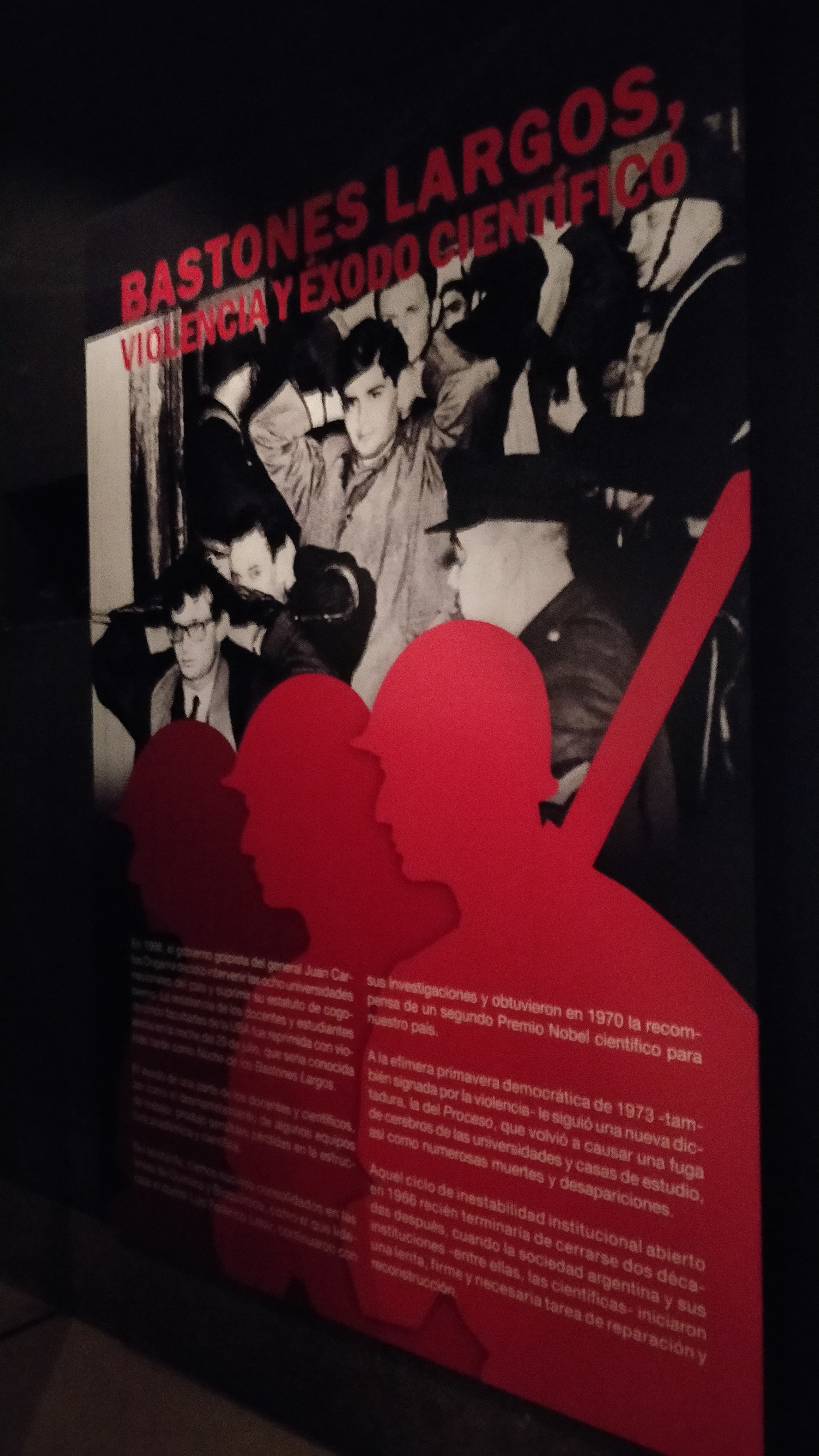
Guess what dictatorships aren’t fond of.

At the start of the military dictatorship (no not that one) of 1966, faculties of the University of Buenos Aires were occupied by students, professors, and graduates in protest of the military’s overthrowing of the government. The protesters were violently removed, beaten, and arrested during La Noche de los Bastones Largos. The military ended university autonomy, hundreds of professors left the country, and research was quashed.  It was an enormous setback for academia in Argentina.  This is your pointed reminder that there’s no such thing as “sticking to science” because everything is political and education is the enemy of oppressors.  So, study hard and fight evil.

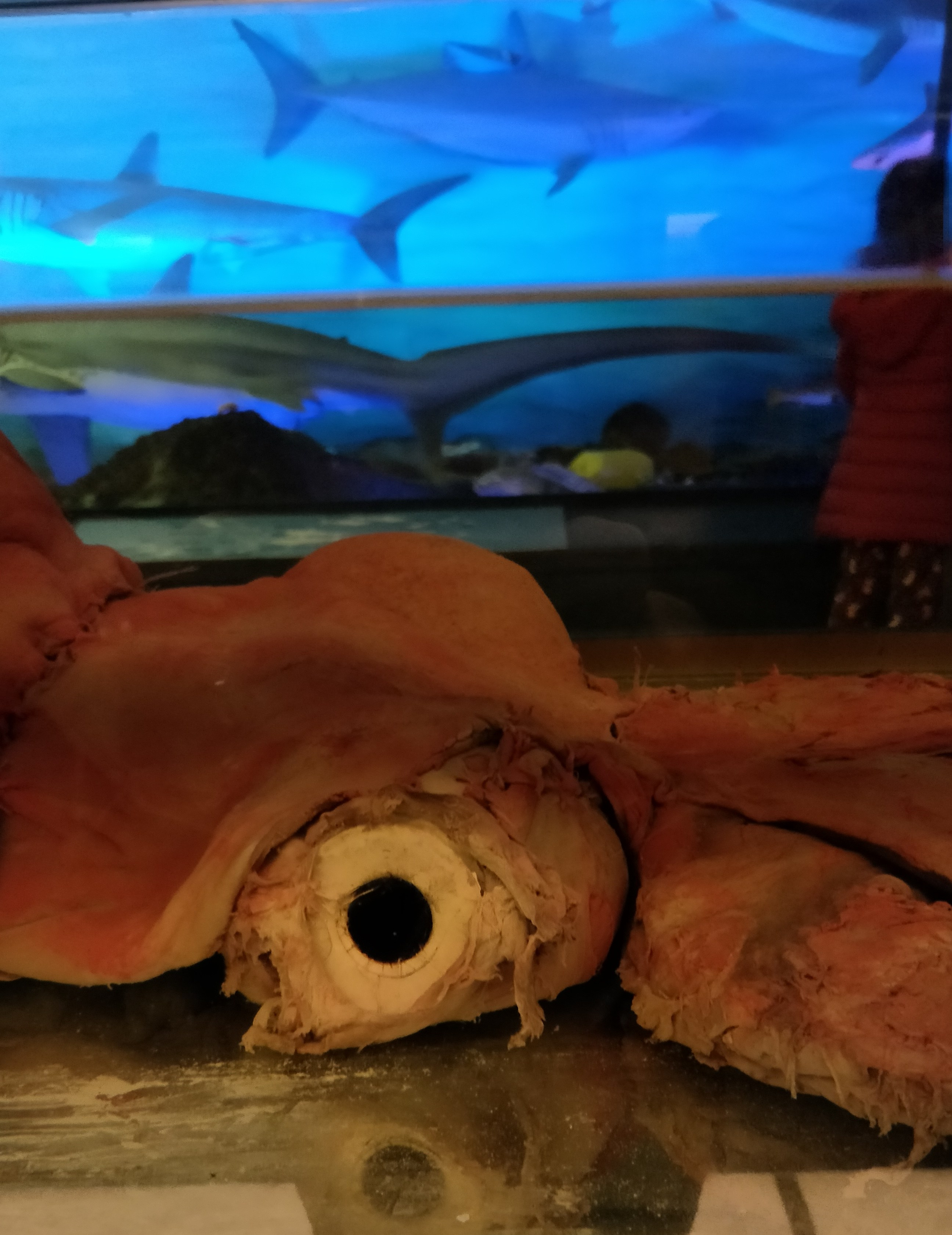
Anyway, that’s a pretty big bummer, so how about a preserved giant squid’s eye as a palate cleanser.

img_20190801_151633-1.jpg
The best part is the museum’s snack area is right around here too, so Squidward here can watch you eat.

The only objection I have to the Natural Sciences Museum is the aquarium hall (no photos were allowed).  It’s very small, which is fine, but the tanks all look like the worst aquarium store that would be allowed to legally operate.  The fish are in bare, small tanks with nearly no features aside from a layer of gravel.  The lone piranha, sad enough because they are a schooling fish, had only a small plastic plant to hide behind, which it was trying to do the whole time I was in the hall.  I really hope they improve the conditions for the fish soon.

The MACN is a really a lovely visit overall.  It’s set in the Parque Centenario, a huge park with a small lake.  Like all the bigger parks in the city, it’s a nice spot for bird watching (the tiny museum shop sells a guide to the park’s birds).  Entry to the museum is a very reasonable 100 pesos (about $2 US, and as always subject to change).  It’s open every day except holidays from 2pm to 7pm and easy to get to by bus and the B subway line.  Check the website for up to day admissions, closures, and guided tour info.

Tinytour: Museo de Arquitectura y Diseño [Museum of Architecture and Design]

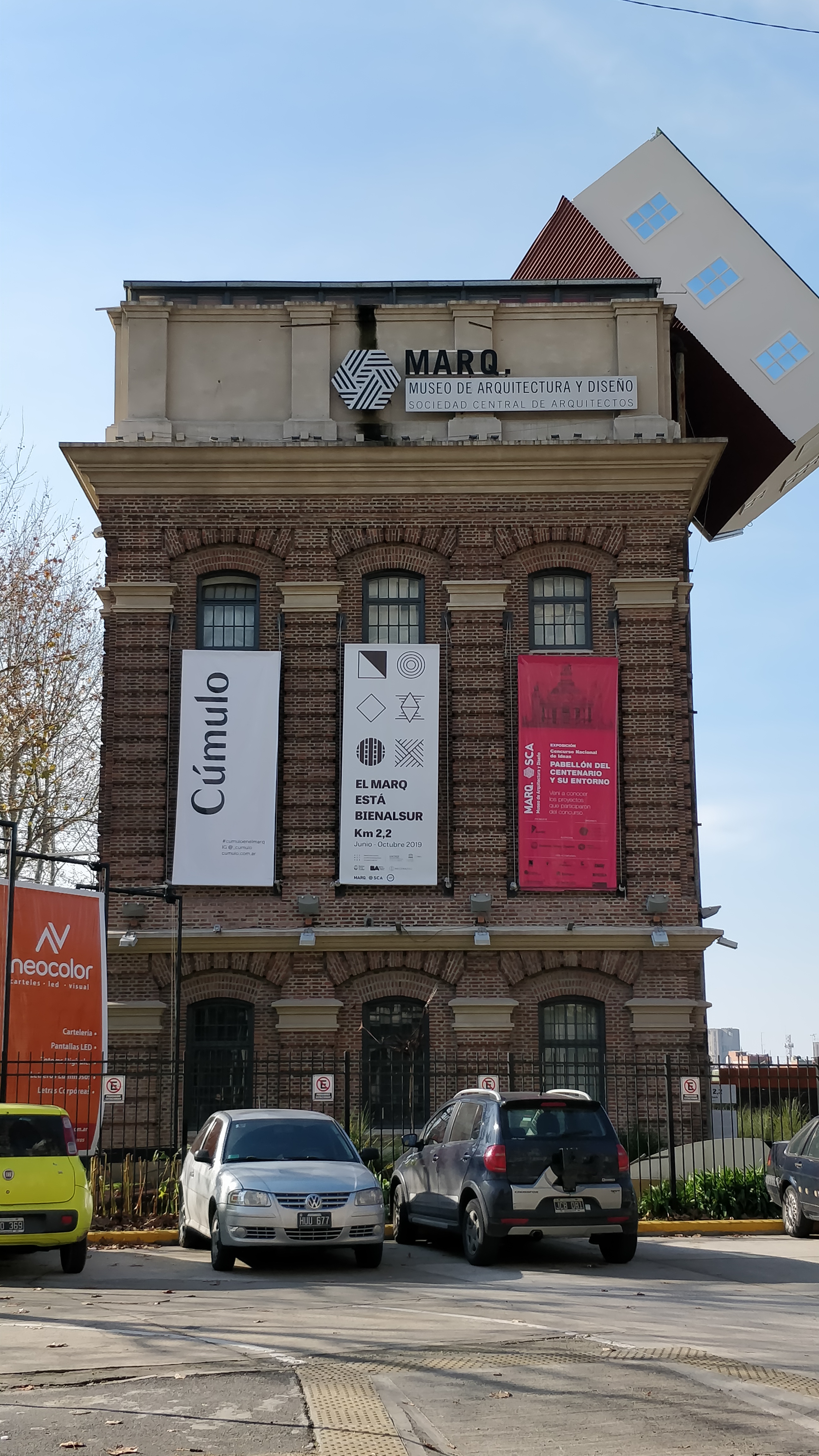
The MARQ is a small building that seems to be used primarily as temporary show space.  It’s the only architecture museum in the country.  The building dates from 1915 and used to be the water tower for the Retiro train station.  It is currently one of the sites of a BIENALSUR contemporary art installation called “House Attack.”

IMG_20190719_142437.jpg
The MARQ building, having a normal one.

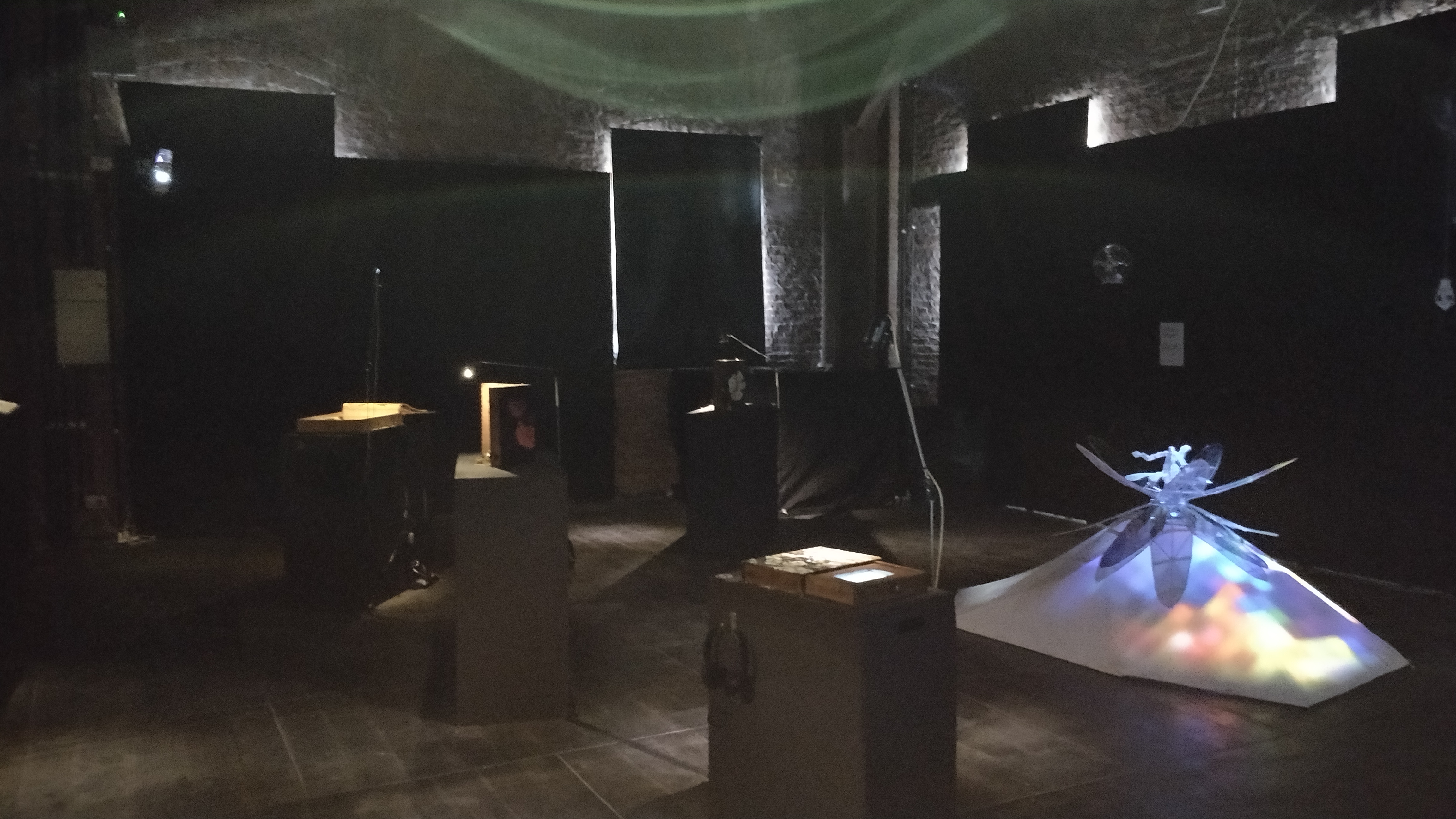
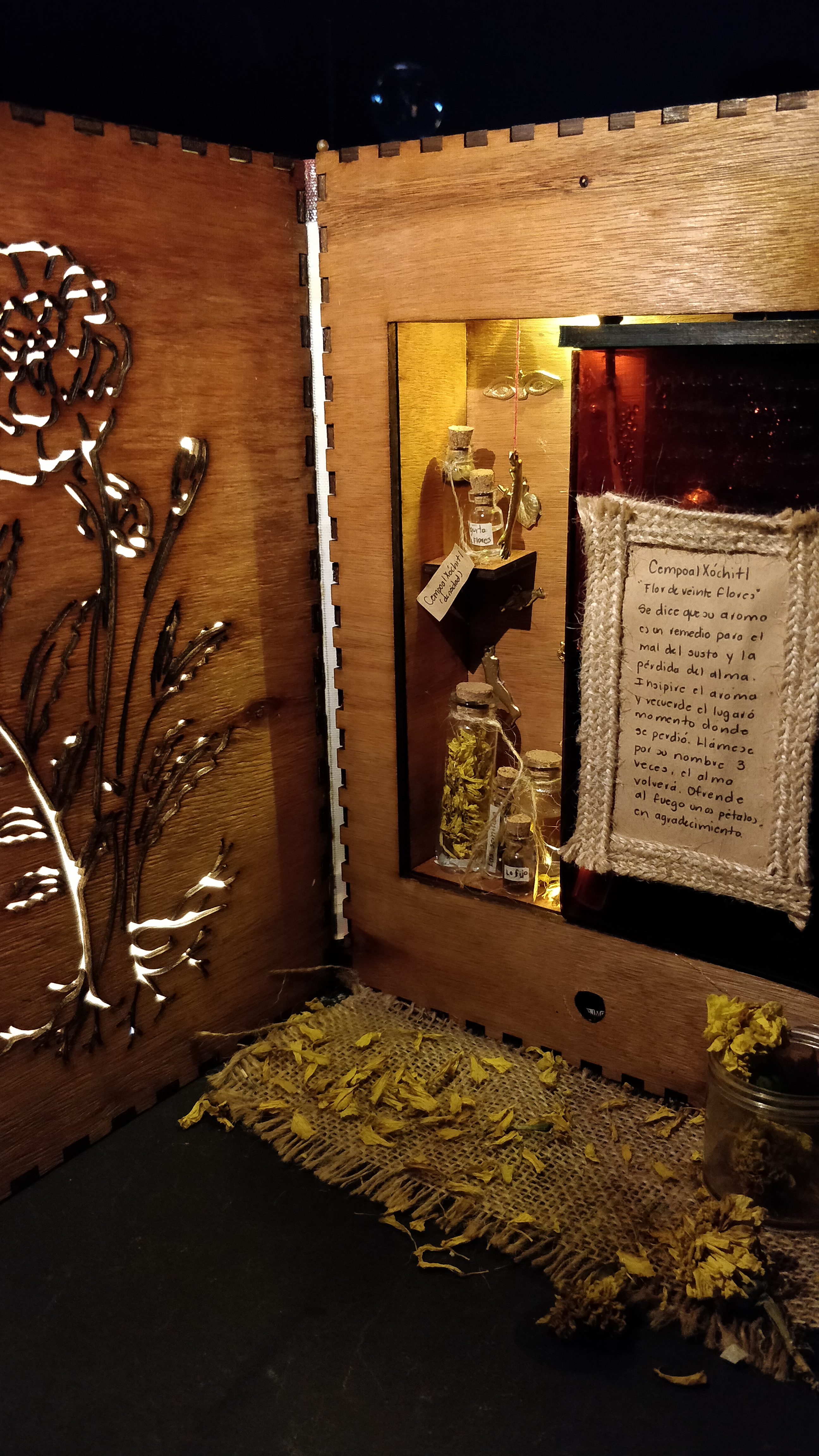
The exhibition, called Invading/Resisting, is also tied to BIENALSUR.  It’s a multimedia collaborative work on the interplay of the actions of humans and the natural world.

IMG_20190719_143101.jpg
ATMOSPHERE.

IMG_20190719_144203_01.jpg
    

IMG_20190719_144100.jpg
   

This is a Tinytour because it’s a wee space!  You’ll just have to see what’s showing when you’re looking to go.

The MARQ is open Tuesday through Sunday from 1pm to 8pm.  It’s located near Retiro train station.  Admission is free and they have a tiny swag store, and I honestly respect the hustle.

Museo River Plate [River Plate Museum]

It’s hard to explain football culture to people who weren’t raised in places so deeply entrenched in it.  I certainly don’t understand it fully myself.  So, before I jump in here, allow me to create a bit of context.

Club Atlético River Plate and Club Atlético Boca Juniors are the biggest teams in Argentina, with a long and storied rivalry.  For utterly bananas reasons you can read about here, the 2018 Copa Libertadores Final’s second leg between River and Boca was played not in Buenos Aires, but Spain.  River won that game and the Cup, and this was a restaurant I happened to be near at the time (I live in the area of the River stadium).

So.  River Plate and Boca Juniors are kind of a big deal.
The athletic clubs are entire ecosystems, with different sports and teams and members and fans–but the team that is synonymous with the club name is the senior men’s football team.  The stadium museums are focused on them.  Which leads me to:
IMG_20190710_135726.jpg

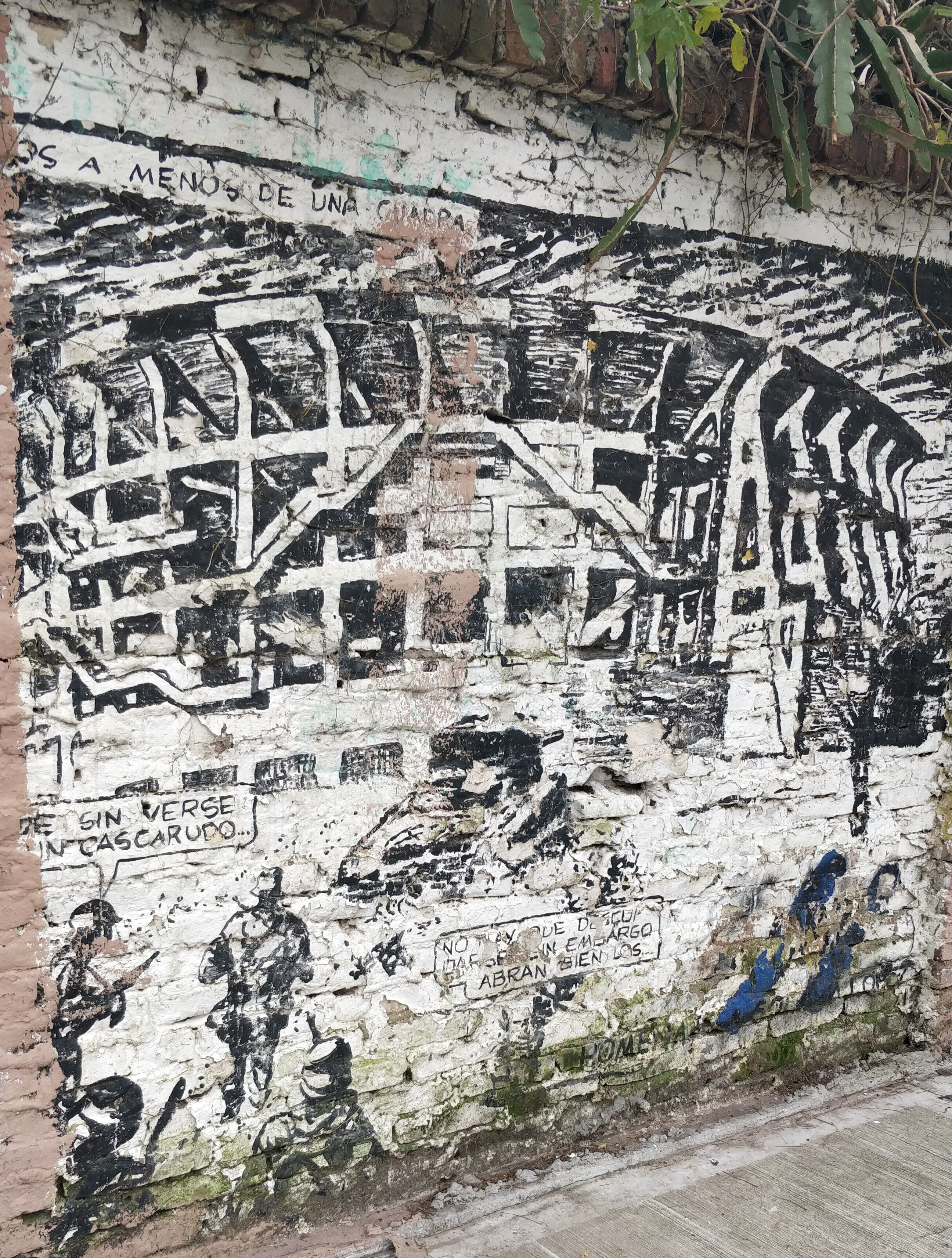
The Museo River Plate is at the stadium, which has one large, non-sports-related claim on my interest:  Estadio Monumental is a major setting in The Eternaut, a famous Argentine sci-fi comic.

img_20190710_140509-e1562896908762.jpg
As seen in a mural near The Monumental.

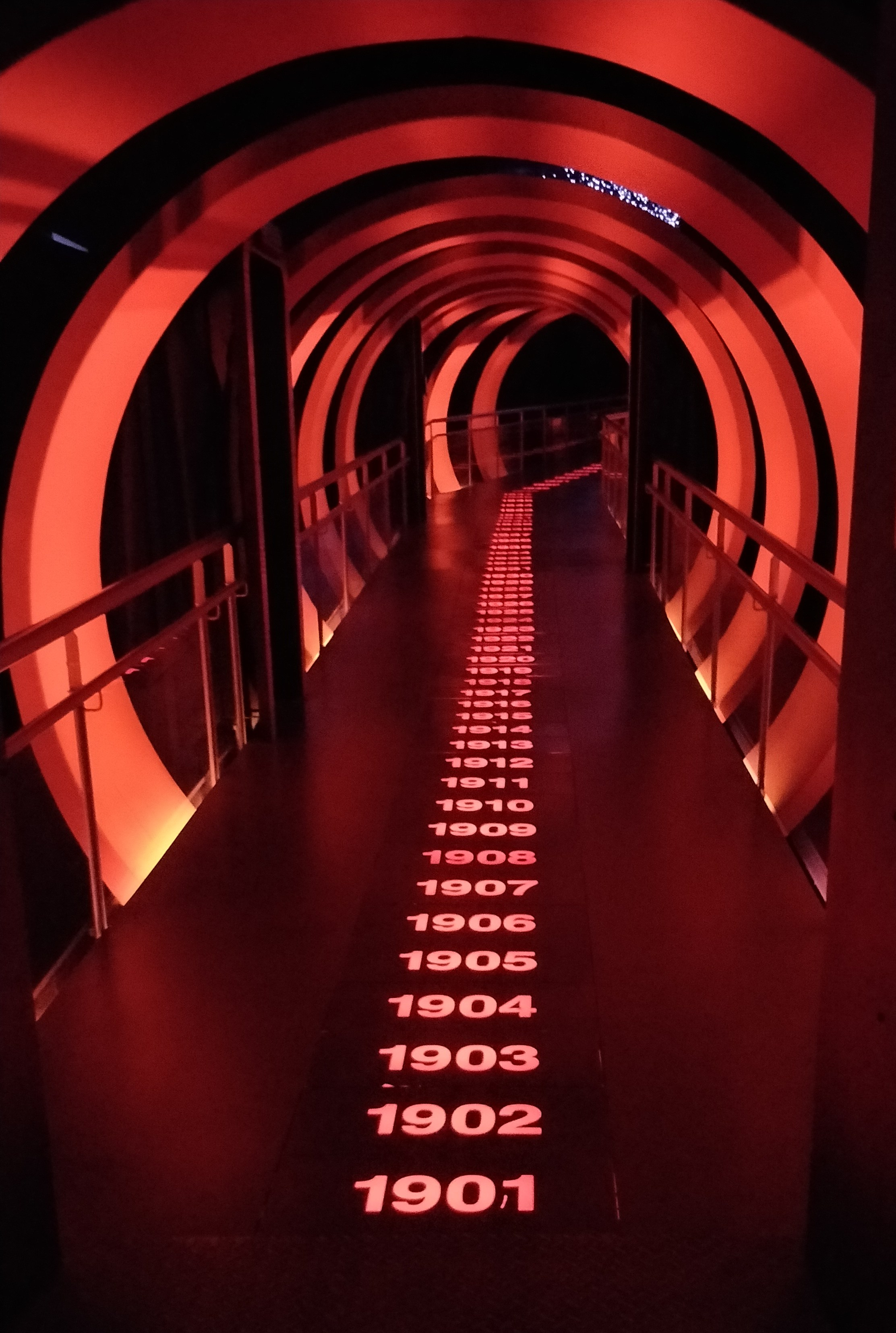
But on to the museum.  It begins with a futuristic look back at the team’s past.

img_20190710_131814.jpg

Those black tunnel-looking rooms to the sides give the team’s history and its wider context in that particular decade, and, given the dearth of artifacts, it does a creditable job of giving a physical sense to long history.

IMG_20190710_132255.jpg

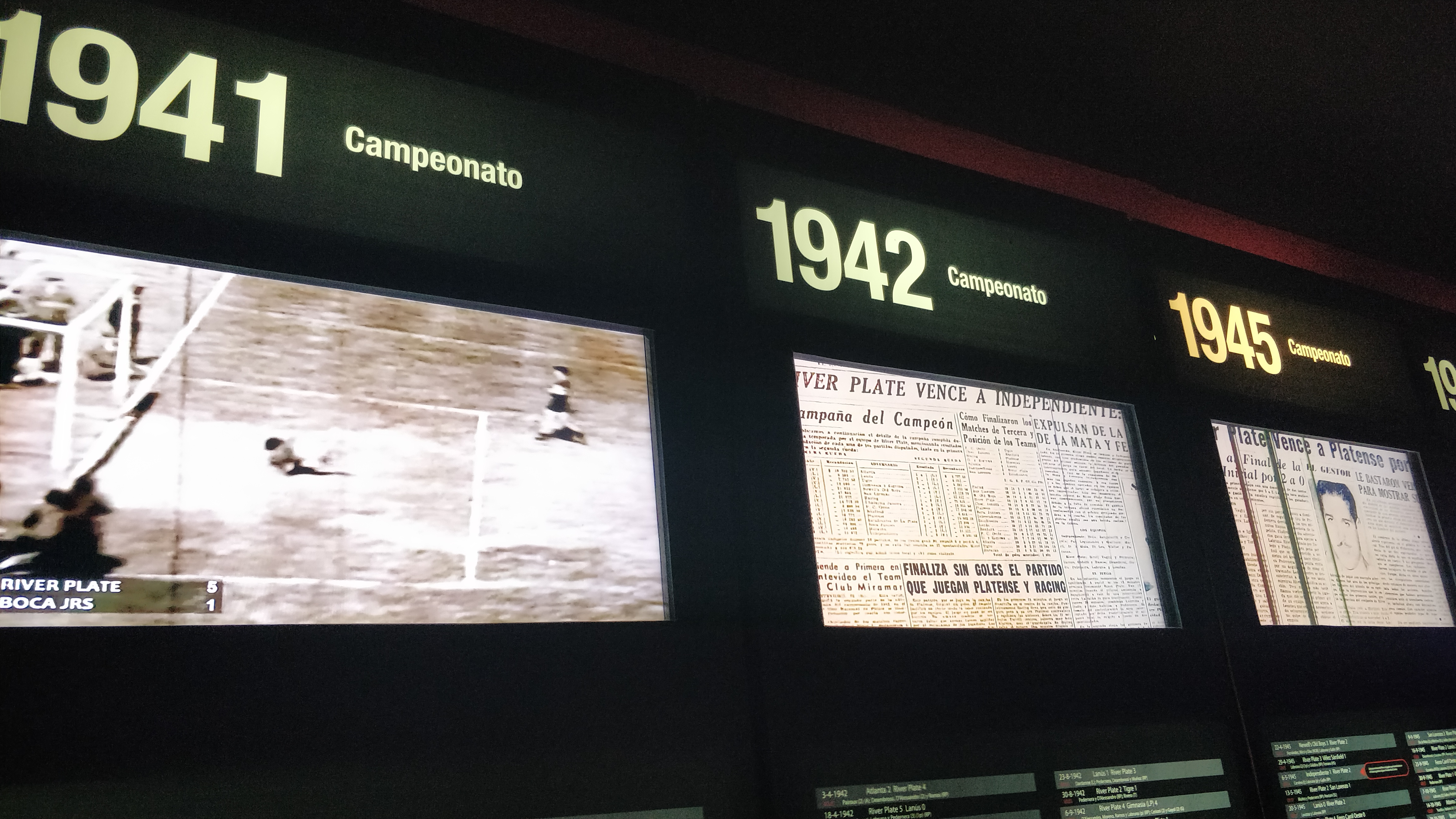
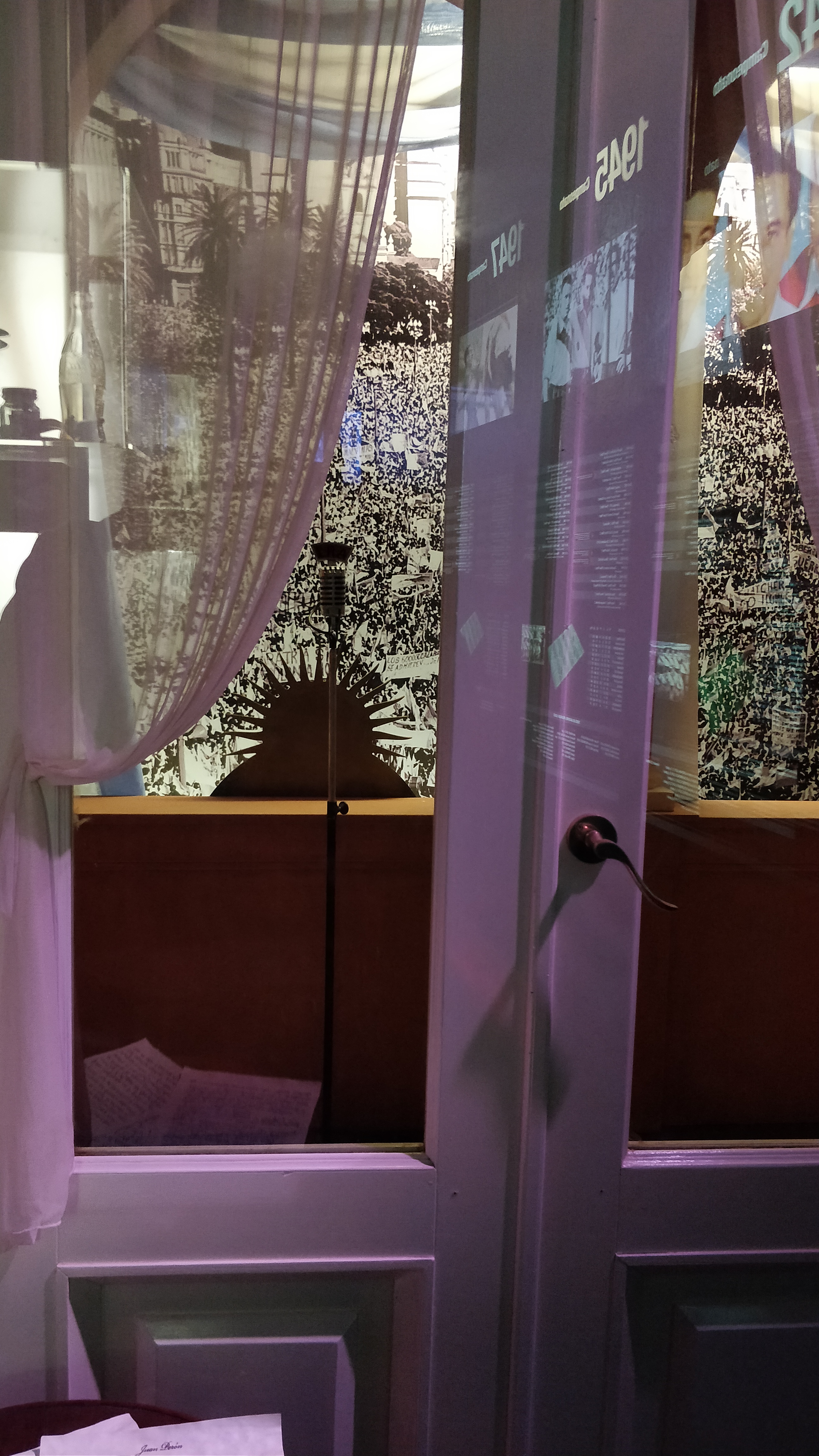
Each of the tunnel rooms has some information about the teams of the time, and also a diorama that shows a notable non-soccer scene of the era.  For instance, for the 40s, you have the above team stuff, and also a balcony set for a Perón speech.

IMG_20190710_132304.jpg
Glare, glare, everywhere.

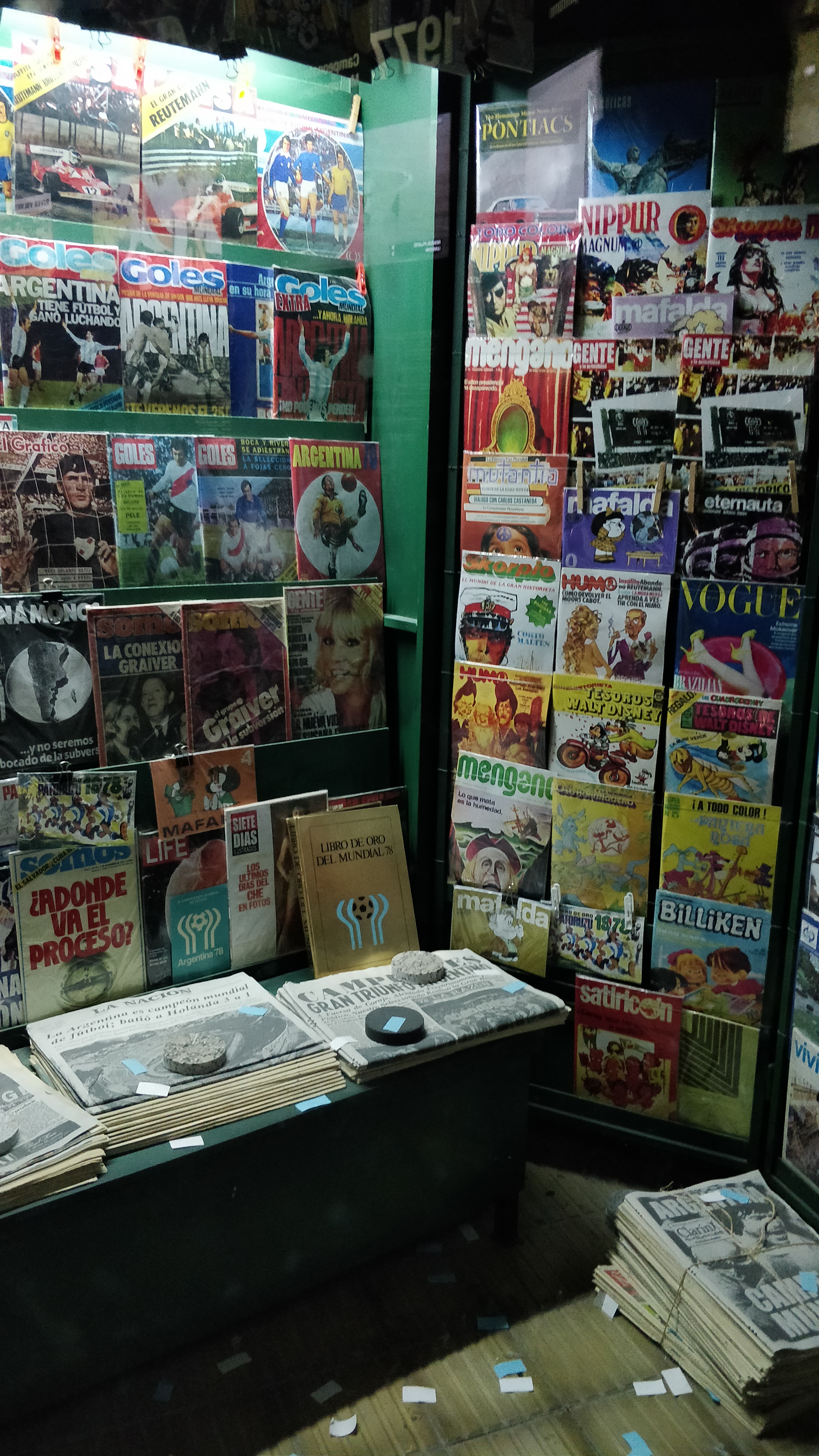
The stadium was also the site of Argentina’s win of the 1978 World Cup (the national team still plays its home games here).

IMG_20190710_132709.jpg
The 70s diorama is a newsstand (also haven’t really changed), and it includes a nod to “The Eternaut” (on the right, above the Vogue), which feels a bit poignant, as the author was disappeared and murdered by the military dictatorship in power at that time.

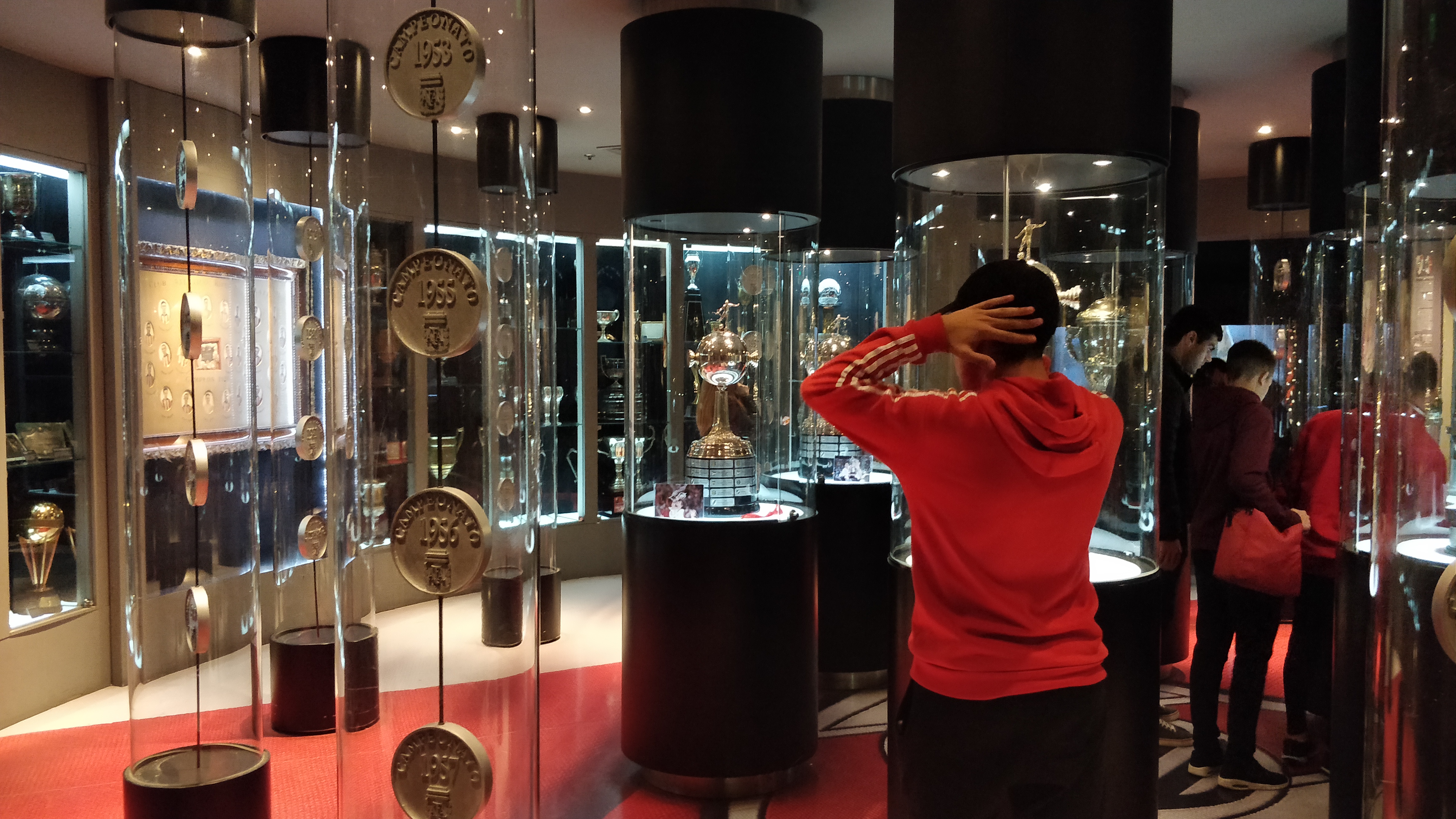
Eventually, the tunnel ends and you’re deposited among several years’ worth of team hardware.

IMG_20190710_133150.jpg

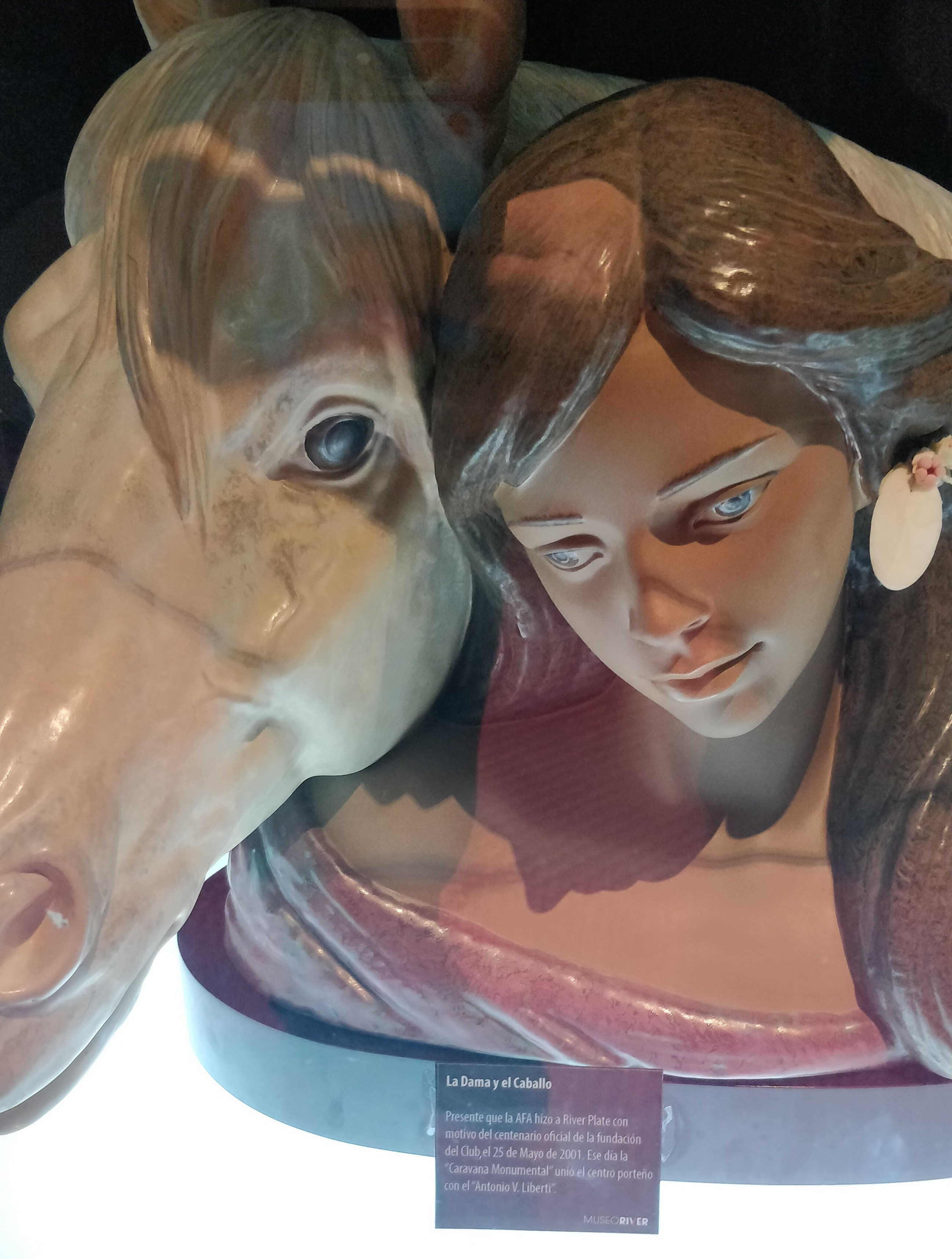
And this rather unique gift to the club from the national football association commemorating the club’s 100th birthday.

img_20190710_133227.jpg
…’kay.

There were a few other interesting things in that room, but with all the lights and glass, the photos rather prominently feature the back of my phone and hands, alas.

Famous players have their area, of course.

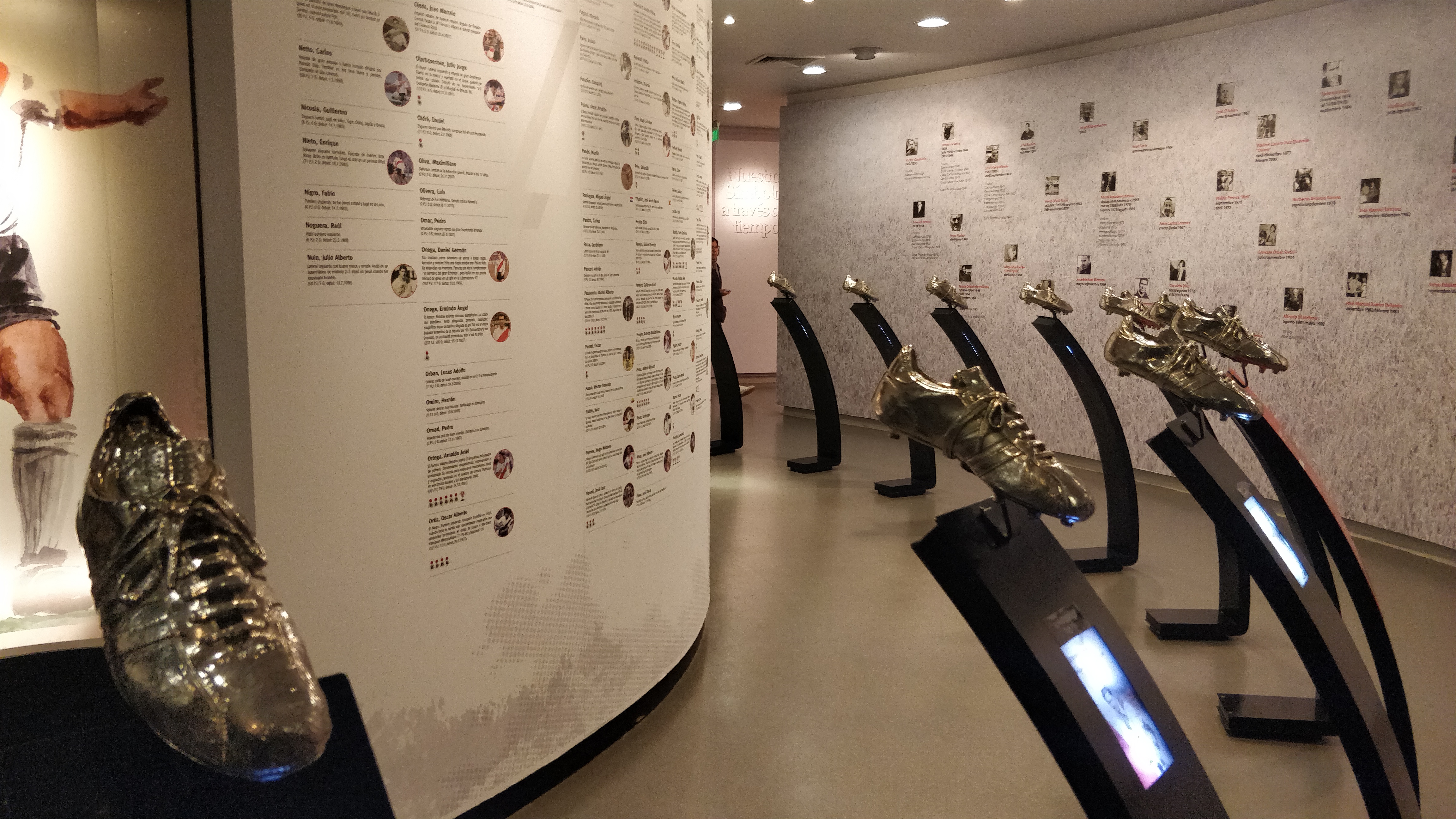
IMG_20190710_133657.jpg
I do not know a single one of them, which lessens the impact somewhat but the other visitors were pretty stoked.

Some of these pillars have QR codes that are supposed to show the player’s best goals, but I tried to download the app it required and watch them and could never make it work, which was a bit disappointing.

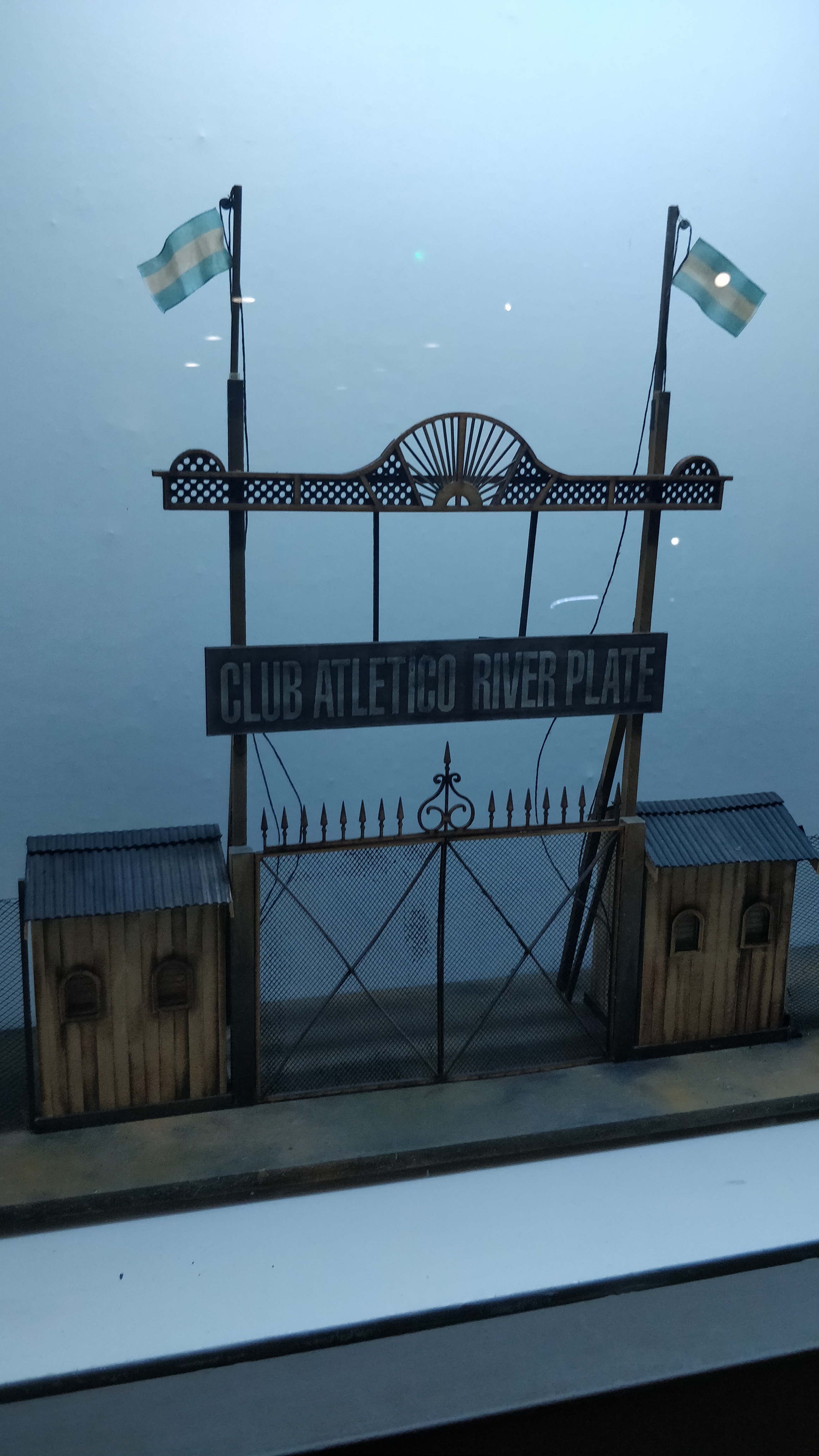
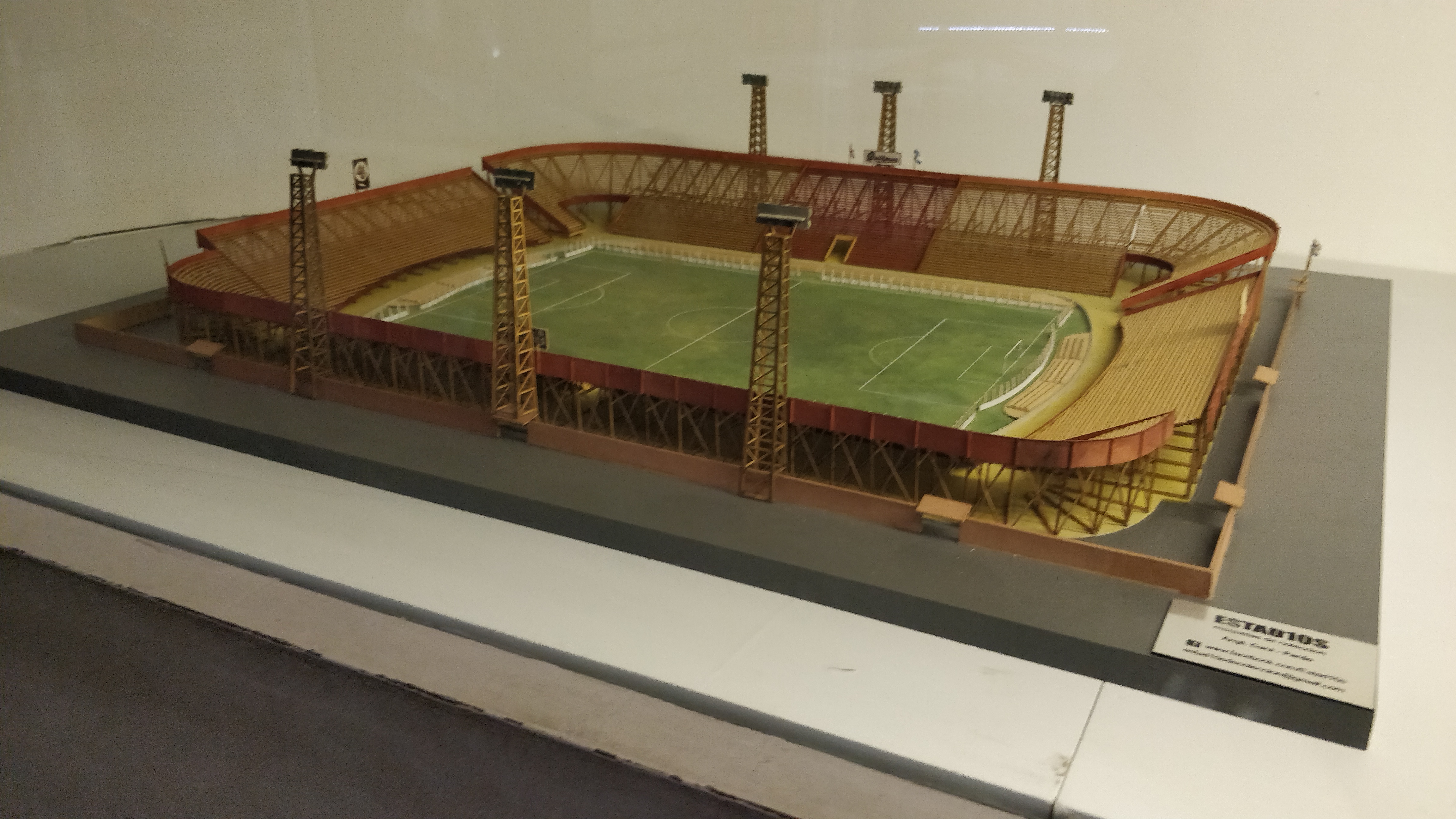
There’s some stadium history!  The current location dates back to the 30s.  There’s a pretty neat little model of the old gates and seating.

IMG_20190710_133526.jpgIMG_20190710_133544.jpg

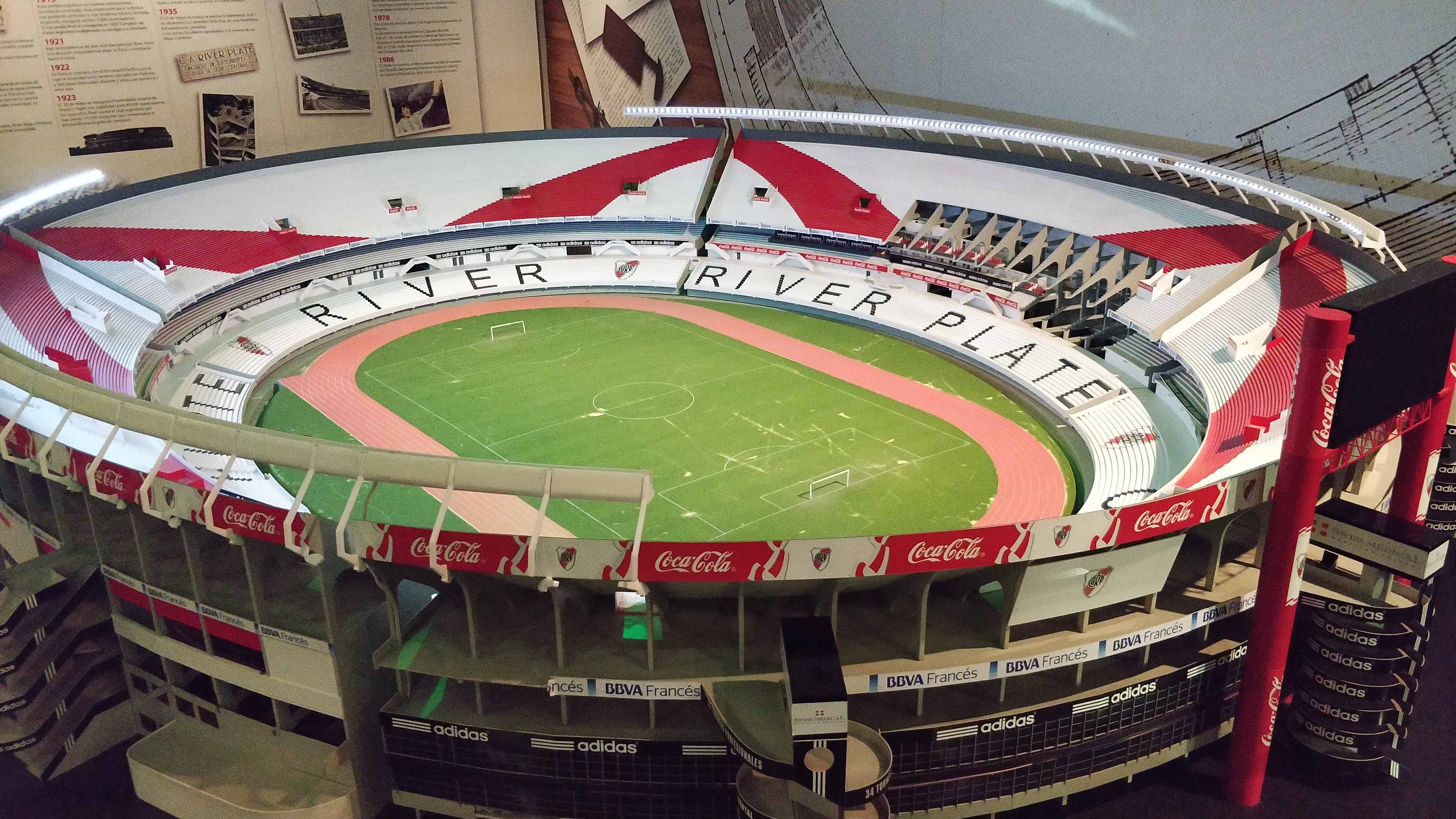
And the current look:

IMG_20190710_133501.jpg

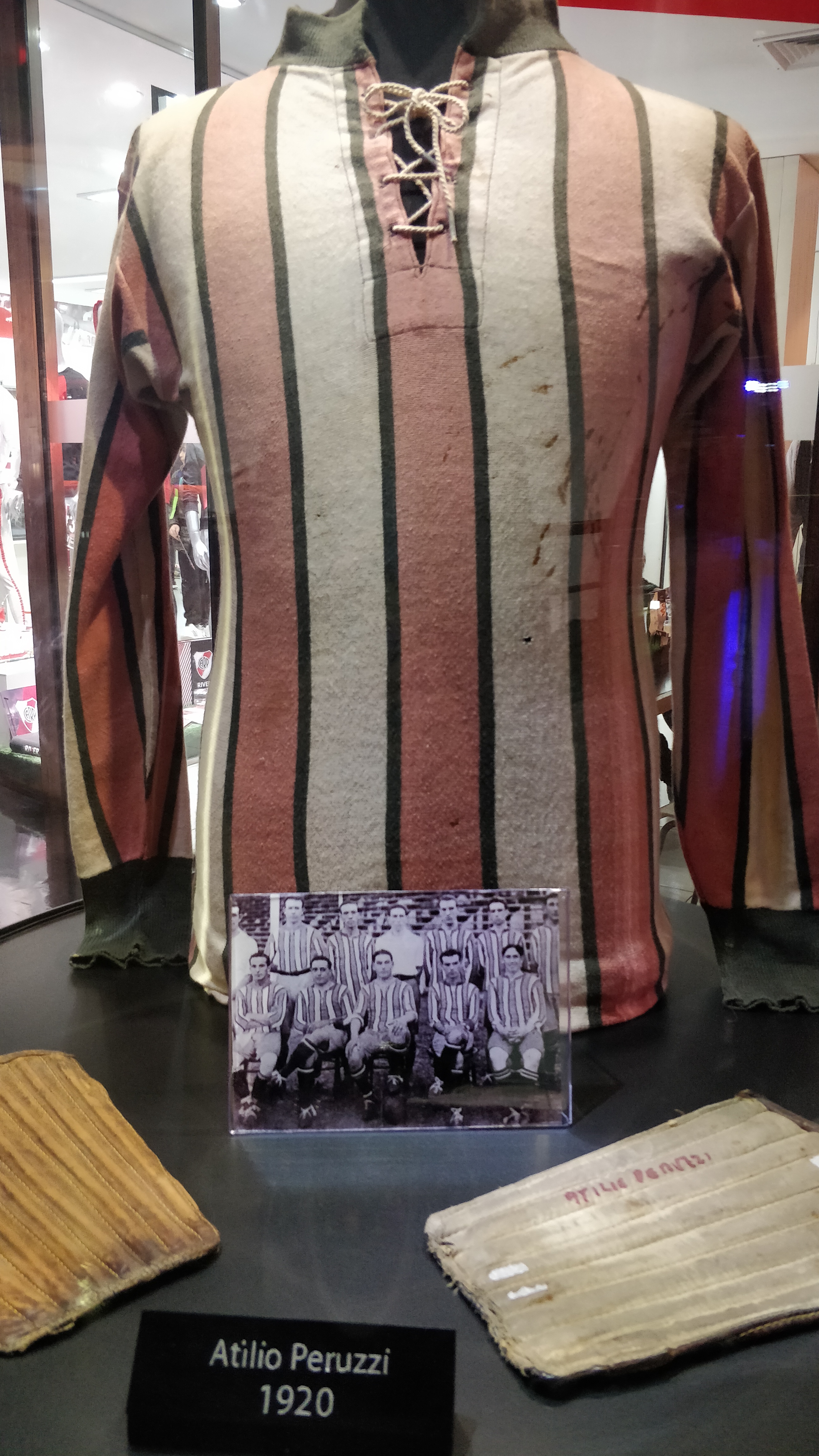
Textile nerds gonna textile nerd, so here’s an old jersey.  I bet that’s blood on it.

IMG_20190710_135232.jpg

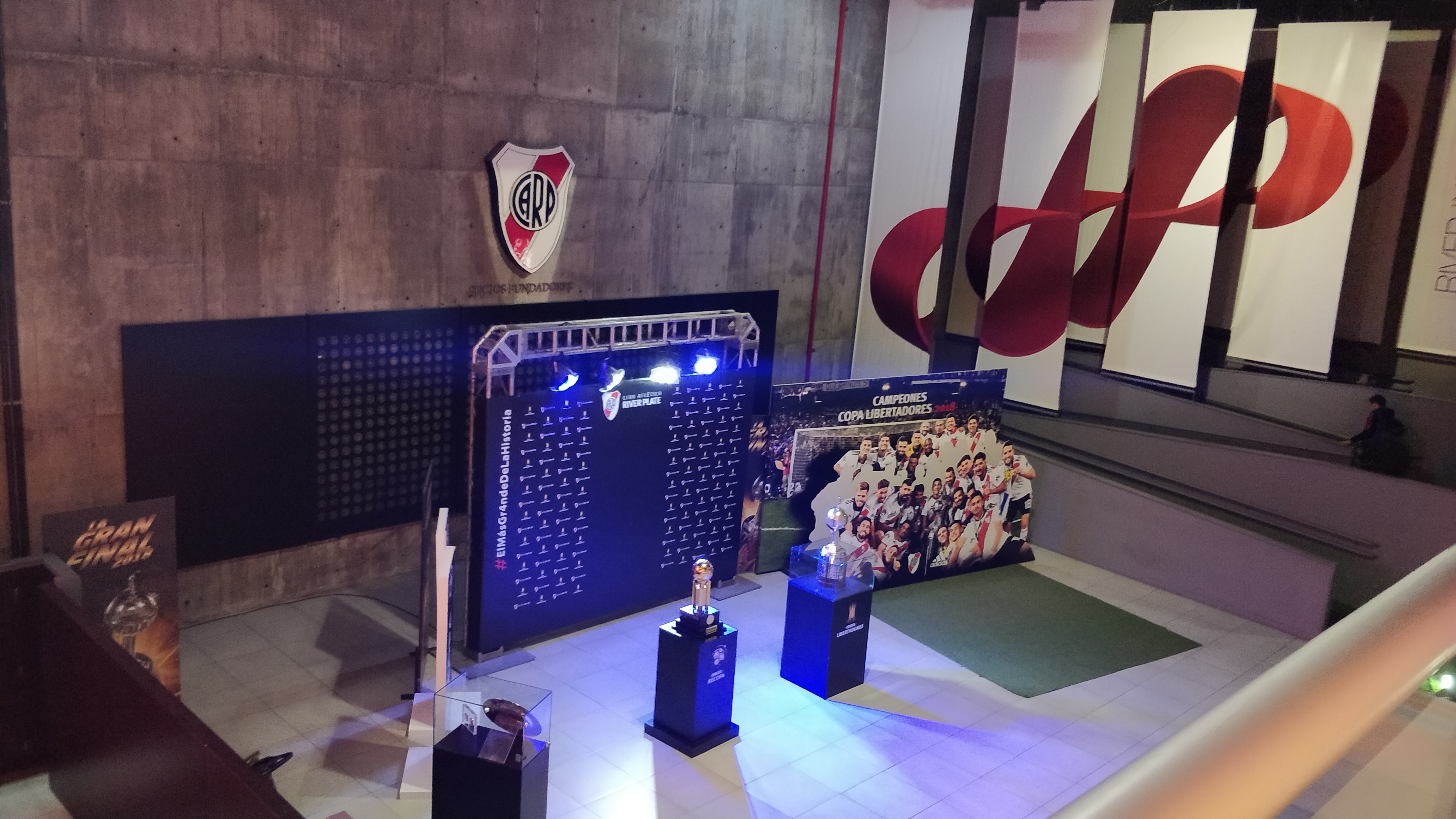
It’s a two-storey building, which accommodates a theater and an overhead view of the entrance, where the current team hardware is available for photo ops.

IMG_20190710_133805.jpg

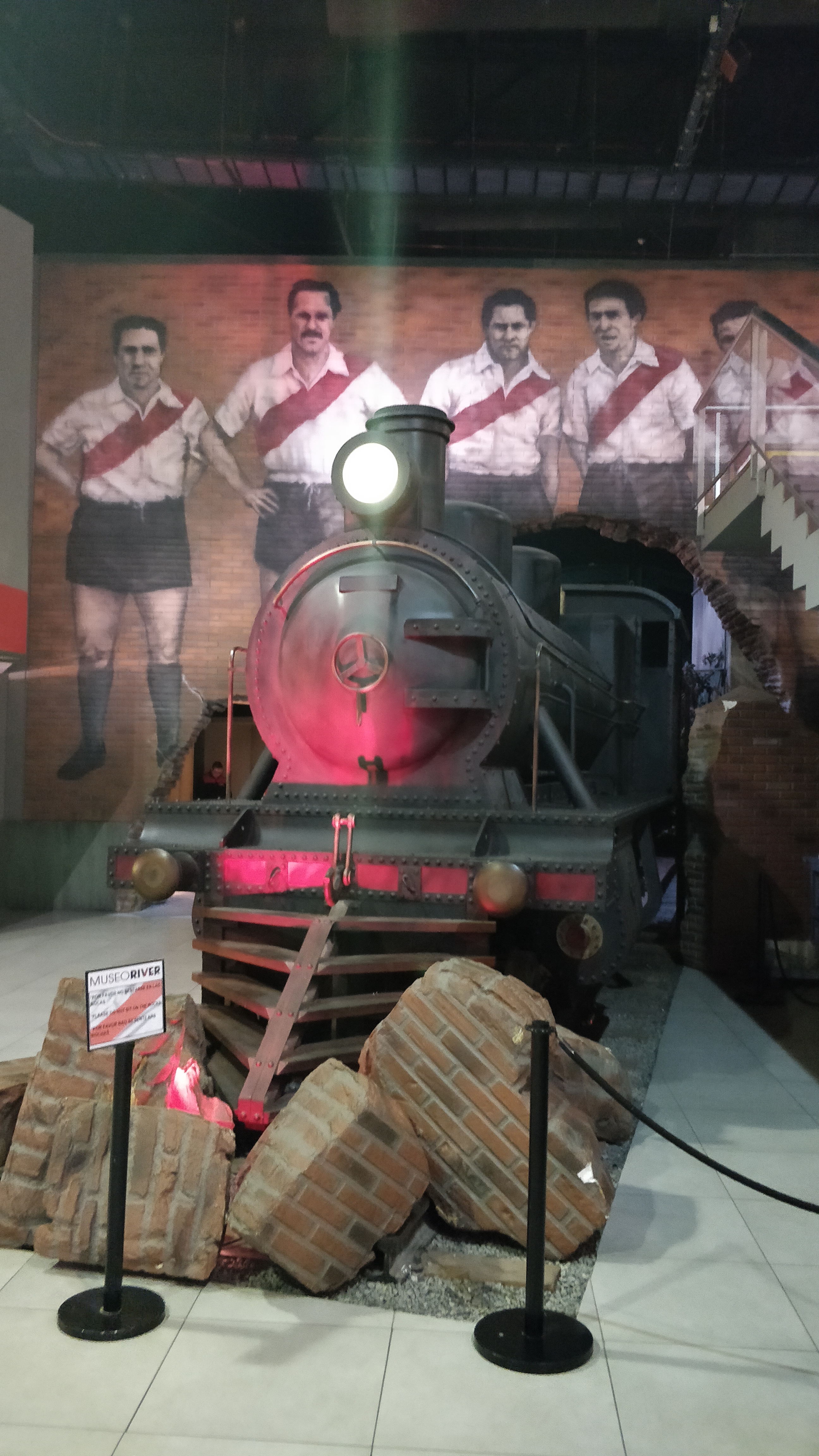
There’s also this, which must mean something but hell if I know what.

IMG_20190710_134451.jpg

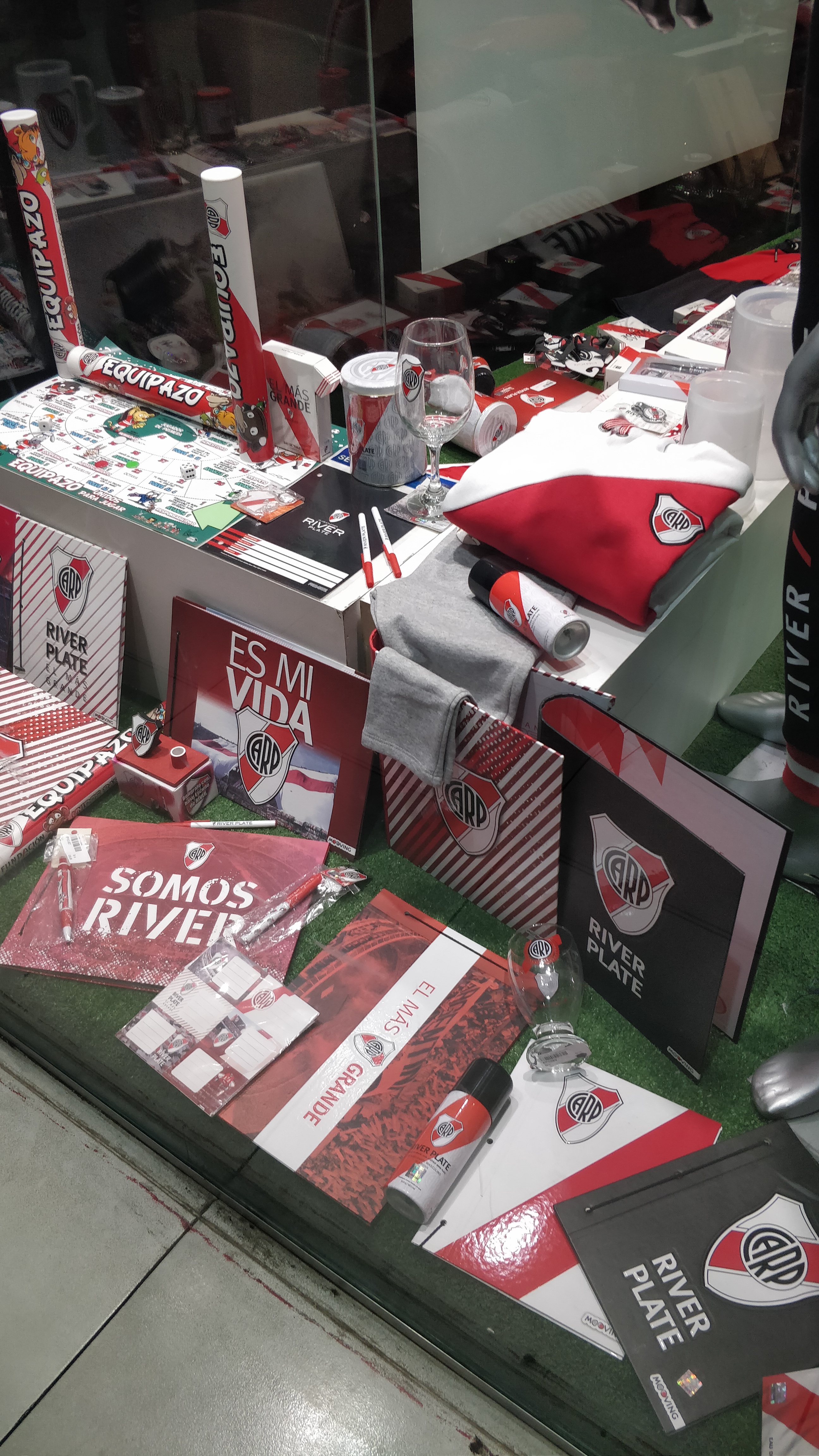
Now, Mr Exhibitist is a lifelong fan of a different football club, so I am forbidden by the articles of marriage from patronizing the museum swag shop.  But dear lord, the merch.

IMG_20190710_135516.jpg
The variety rivals that of Hello Kitty.

It’s an interesting visit for those into sport, and stadium tours are also available on the hour.  For what it’s worth, every local football team I’ve googled has their own museum, although I imagine the River and Boca ones are probably the biggest and best funded.

Museo River Plate is at Figueroa Alcorta 7509, part of the stadium complex (the stadium’s official name is Estadio Antonio Vespucio Liberti, but it’s only ever called The Monumental).  It’s open every day from 10am to 7pm, although I would guess not on game days.  I would not advise being anywhere near the stadium on game days, in any case.  The entry fee for the museum alone is 340 pesos, although I believe that’s the price for Argentines and local residents–foreigners pay a bit more.  The guided stadium tour is extra.