The Cemetery Series: Cementerio de la Recoleta

God, you know what sucks? Knowing that you’ve been to a place a gajillion times and you definitely took a bunch of photos, but this was years ago and somehow, you can’t find any of them.
And last time I was in Buenos Aires I had other priorities

So I’m going to cobble together a post with what I can scrounge up and some royalty-free photos taken by actual photographers. At least the lighting will be good.

Recoleta Cemetery is renowned the world over, packed with mausoleums for Argentina’s wealthy and notable. It opened as the city’s first public cemetery in 1822, after the disbanding of the Franciscan order that settled there roughly 100 years before. Occupying 14 acres of some of the ritziest real estate in Buenos Aires, smack dab in the middle of the Recoleta neighborhood, the cemetery is a perennial stop for tourists and taphophiles alike–so much so that it is the first of three examples in the Wikipedia article on tombstone tourism (and yes, I have been to all three).
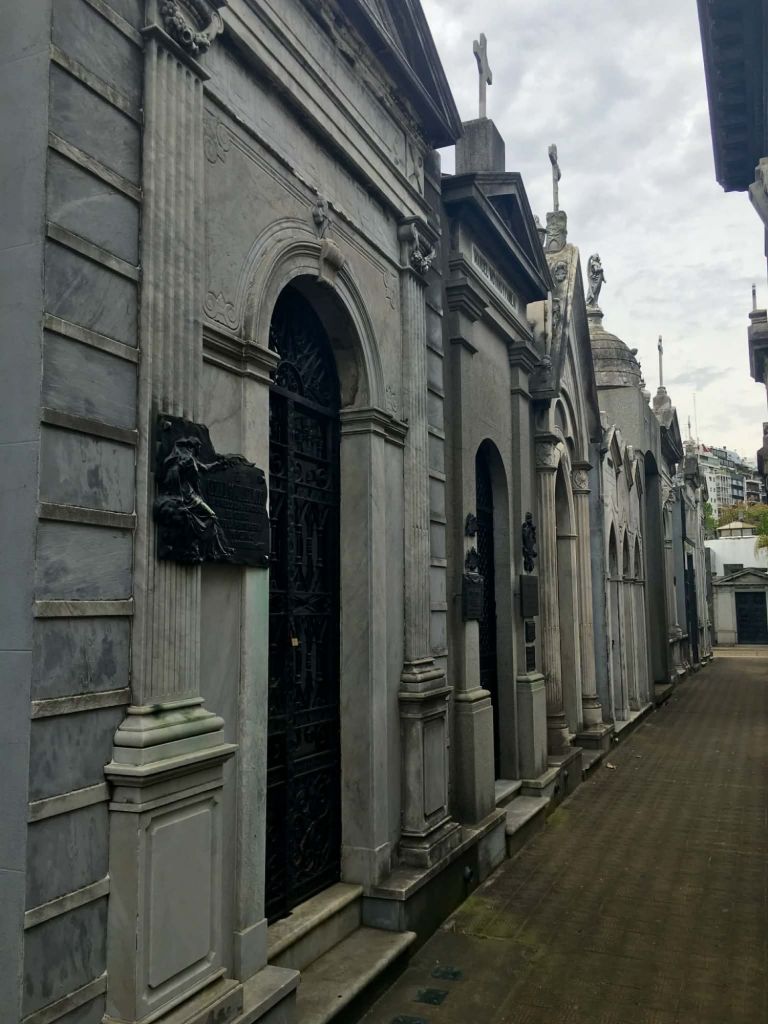
The side streets are quieter; you definitely don’t want to buy on the main drag.   (Photo by my amazing sister-in-law.)

There is no lack of tour guides available at the gates, so even if you turn up without one you can probably still hire one on the spot. Alternatively, there’s an app.
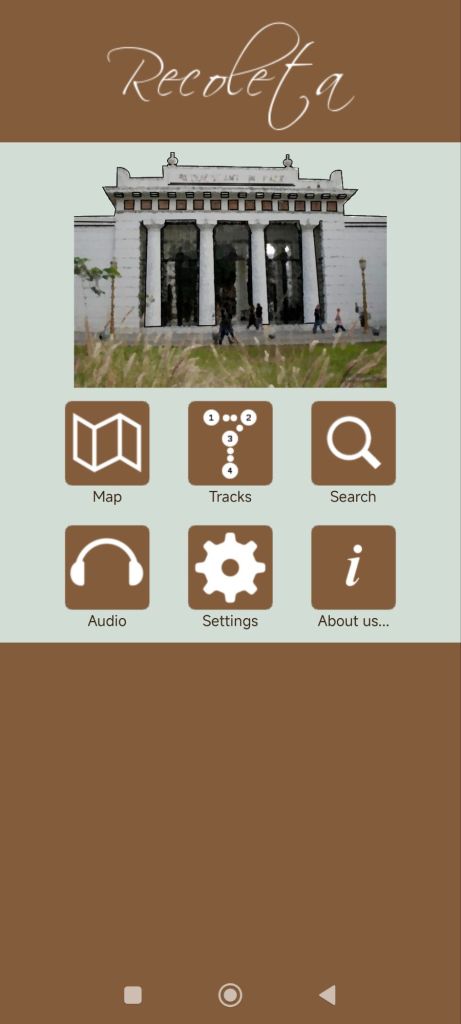
It is very brown, but also free.

At the time of this writing, the audio is only available in Spanish, but the text guide is in Spanish, French and English, sort of. You can choose a route that highlights authors, scientists, presidents, or “our selection,” which includes a few from the other routes plus other notable tombs.

But nevermind the Great and Good and Total Bastards–let’s talk about the ones I wanna talk about.
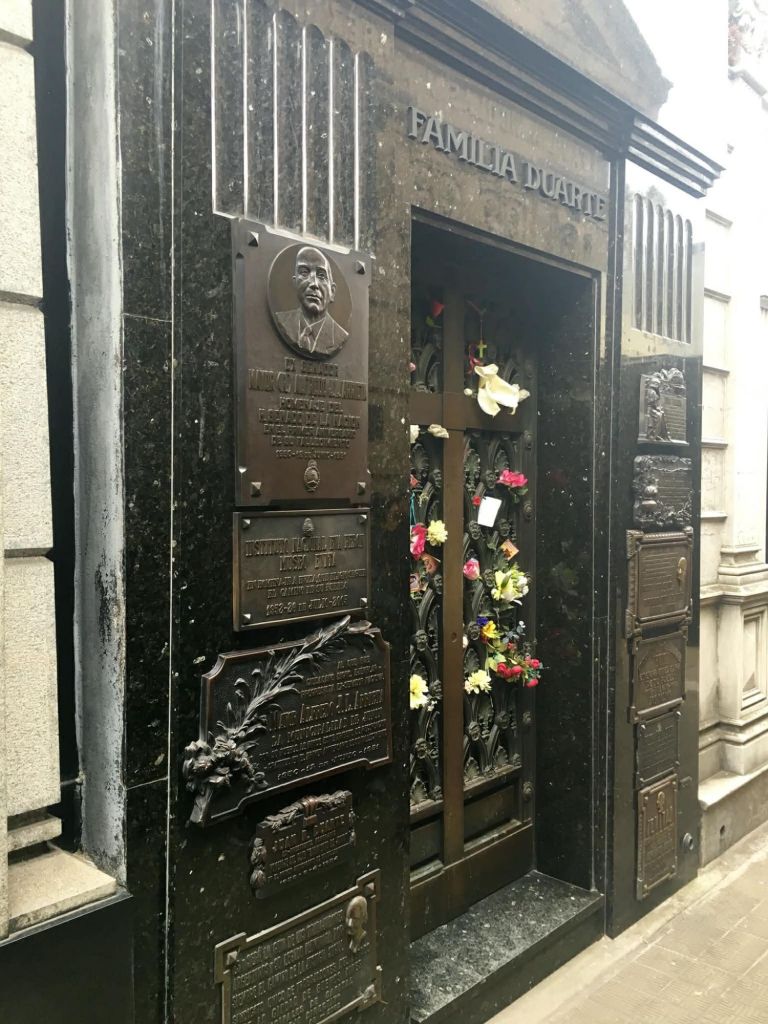
Yes Eva Perón is buried here in herfathersfamilycryptseemsweirdtomegivenherfamilyhistoryyestherearealwaysflowersandvisitorsandtourgroupsanywaymovingooooooon

Liliana Crociati de Szaszak was killed in an avalanche in Europe while on honeymoon, aged 26. She’s depicted in her wedding dress outside her Neo-Gothic tomb.
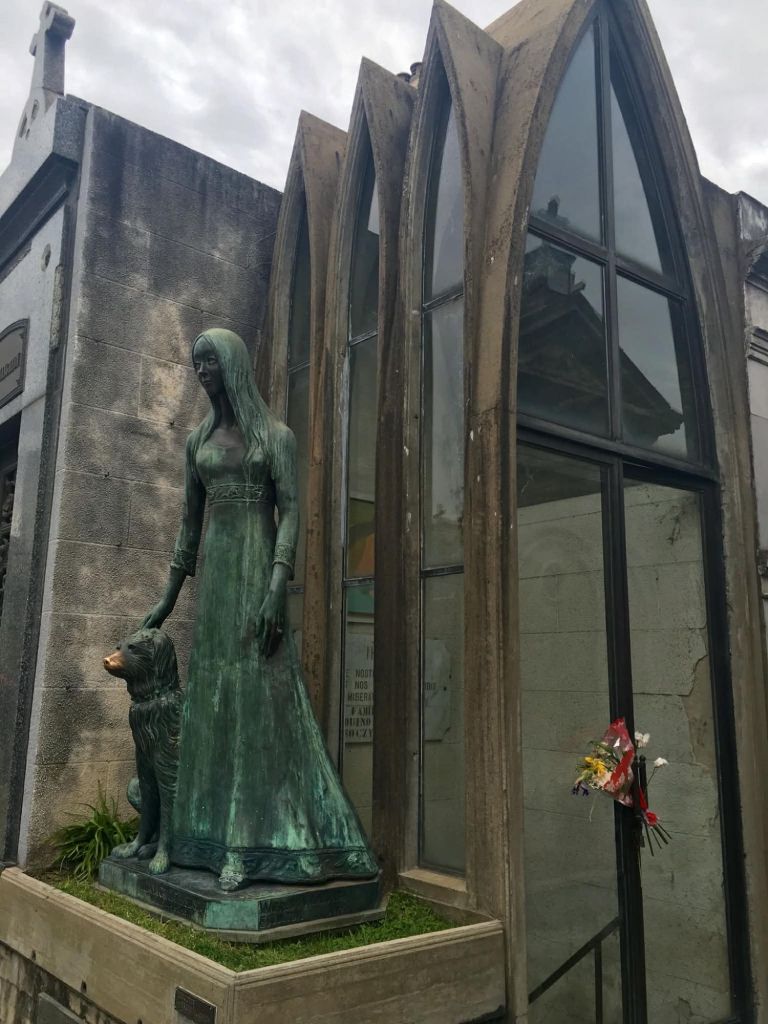
After her dog, Sabú, died, his sculpture was made and placed next to her. Visitors rub his nose, hence the shine. (Photo by my excellent sister-in-law.)

As we all know, young women make the best ghost stories and while I don’t know of any specifically linked to Liliana, 19-year-old Rufina Cambacérès is said to haunt the place.
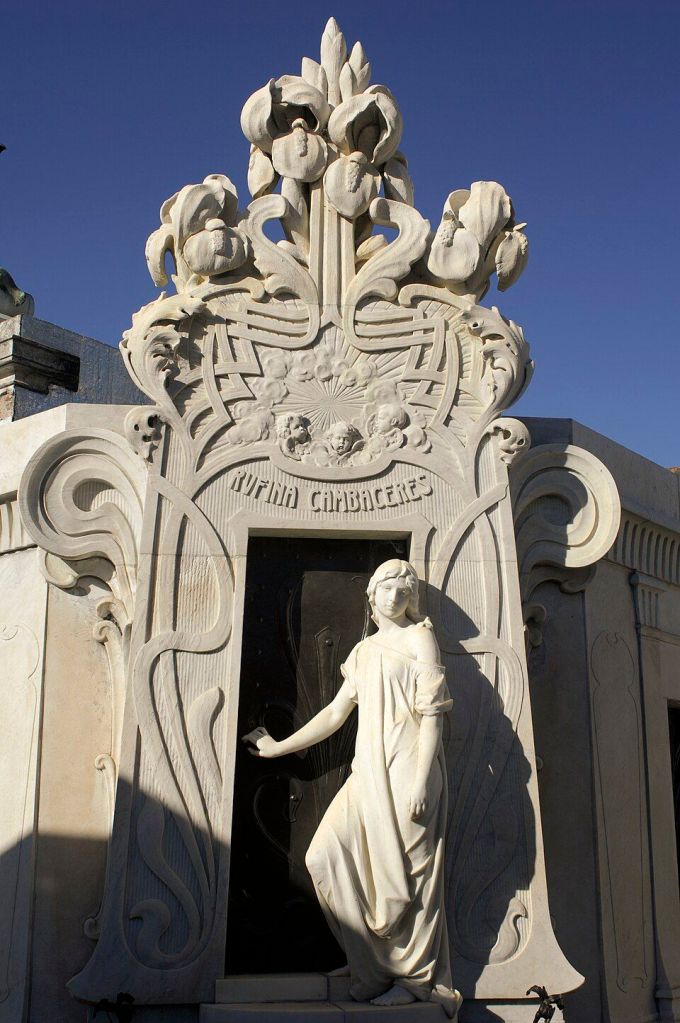
And frankly, not without cause. 
(Photo by Andrew Shiva, who is not my sister-in-law but I’m sure is cool.)

The story goes that Rufina collapsed and was pronounced dead, only to–you guessed it–not actually be dead. After discovering the displaced coffin (or investigating after hearing noises the previous night, depends on the version you hear), she was found having died, for real this time, in a panic after frantically clawing at the coffin lid.
The face you make when your mom cannot just give it a minute before interring you.

General Tomás Guido, national hero and bestie of José de San Martín, took part in San Martin’s grueling campaign, the Crossing of the Andes, during the wars of independence. He wanted to be buried under those mountains where so many had died, and in the great tradition of loopholes, his son had stones from the Andes brought to Buenos Aires and built the tomb himself.
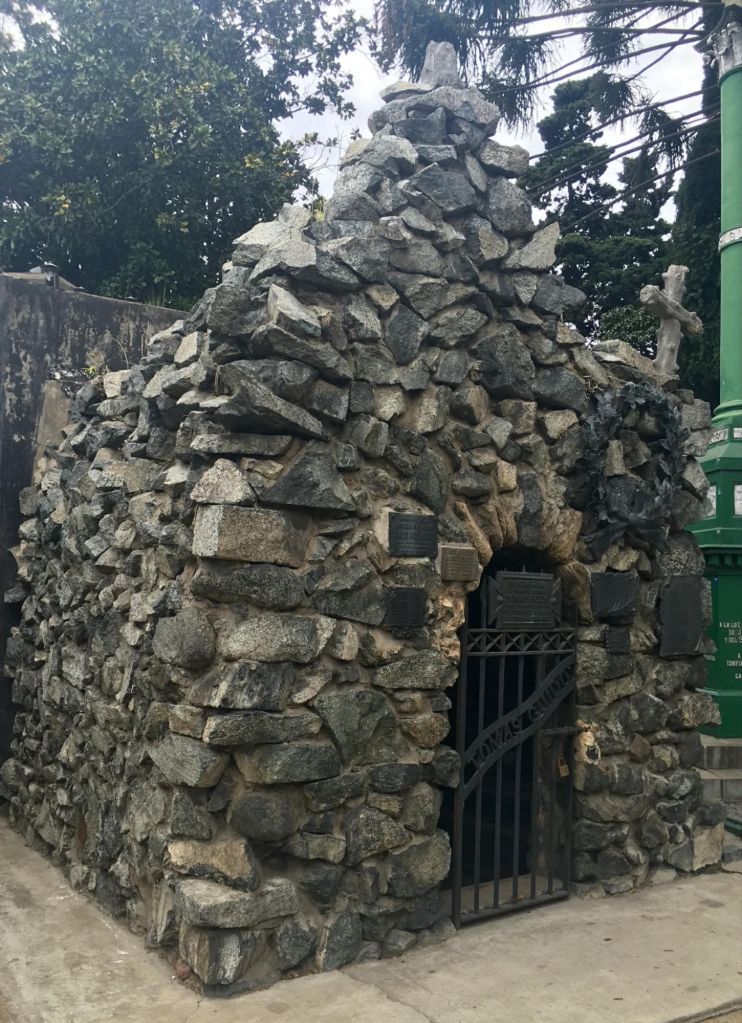
“See you’re technically under the Andes, Dad.”

Annoying technicalities aside, it’s a unique tomb, sharply contrasting with its neighbors. Also, Guido is no longer there. But he still isn’t under the Andes! He was relocated to the Cathedral of Buenos Aires next to San Martín, because who doesn’t want to be buried with their boss.

Speaking of work-adjacent entombment, cemetery caretaker David Alleno saved up for years for his own statue and burial. He supposedly killed himself upon the vault’s completion. His statue depicts him with his keys, duster, broom and watering can.
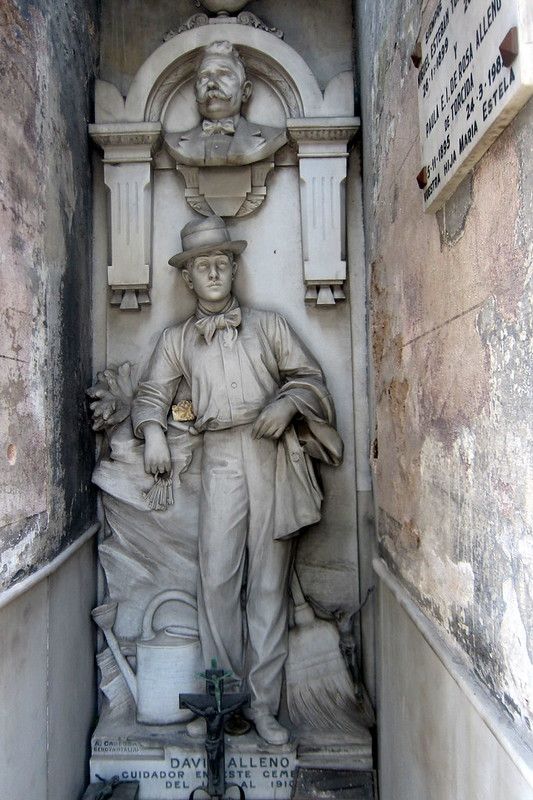
Sure, why not.  (Photo by Wally Gobetz.)

The story is tantalizingly incomplete. It seems like the purchaser of the crypt was his brother, Juan, and I don’t know why one brother would be wealthy enough to buy a family vault in the exclusive cemetery while the other is just a caretaker there. There’s a death certificate that cites “trauma and cerebral contusion” as the cause of death with apparently no follow up available. It’s said that his keys can be heard clinking at night or dawn, so perhaps David himself also feels his story is unresolved.
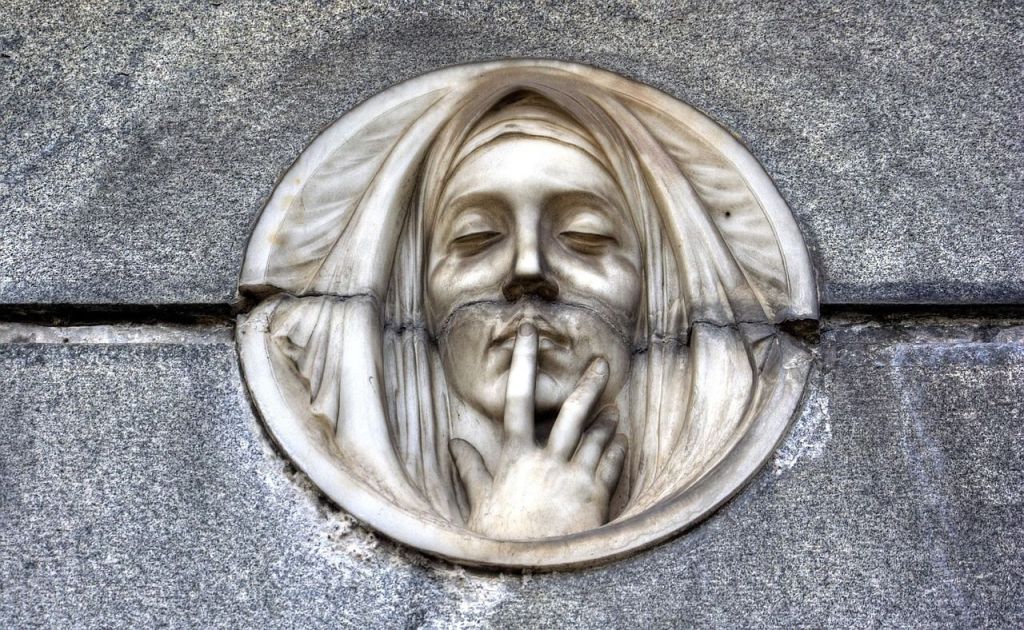
Maybe the Avelino Quijano vault just wants him to keep it down

Of course, there are some massive family crypts, the kind you can commission when you own half of Argentina.
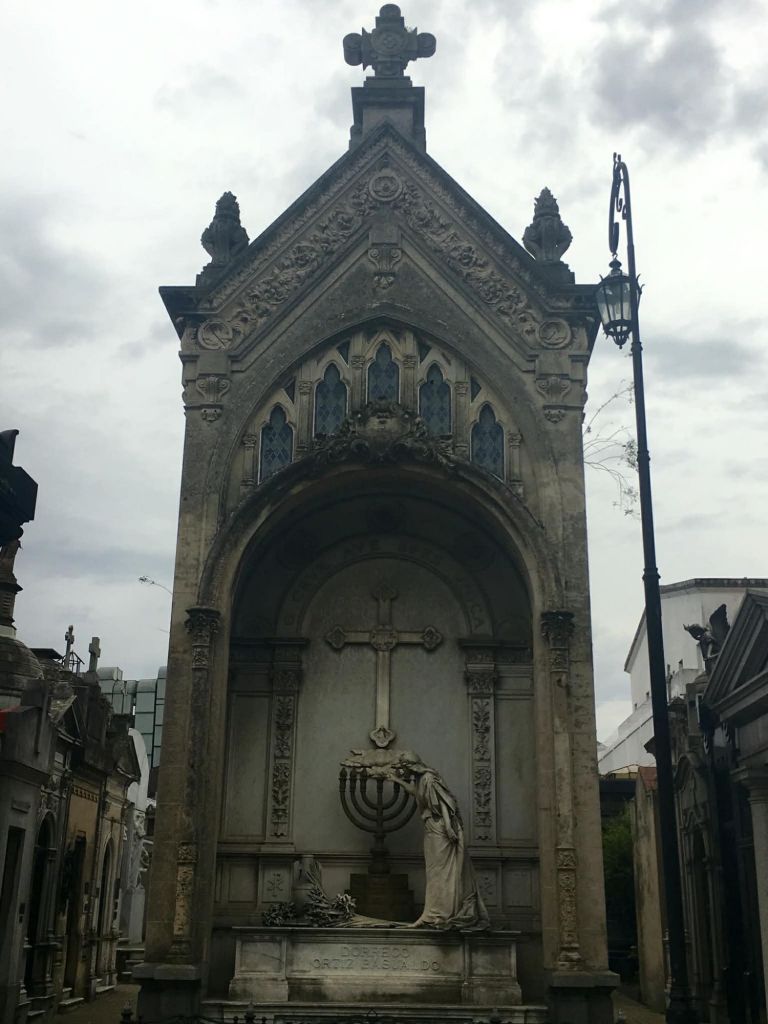
Probably not hyperbole.    (Fantastic sister-in-law strikes again.)

The Dorrego-Ortiz Basualdo family died as they lived: flexing on the rest of the neighborhood. One of the former family residences is the current French embassy.

Then there is the mausoleum of Justa Lima de Atucha, who as far as I can tell had it built after her husband died and labeled it “Justa Lima de Atucha to her husband.”
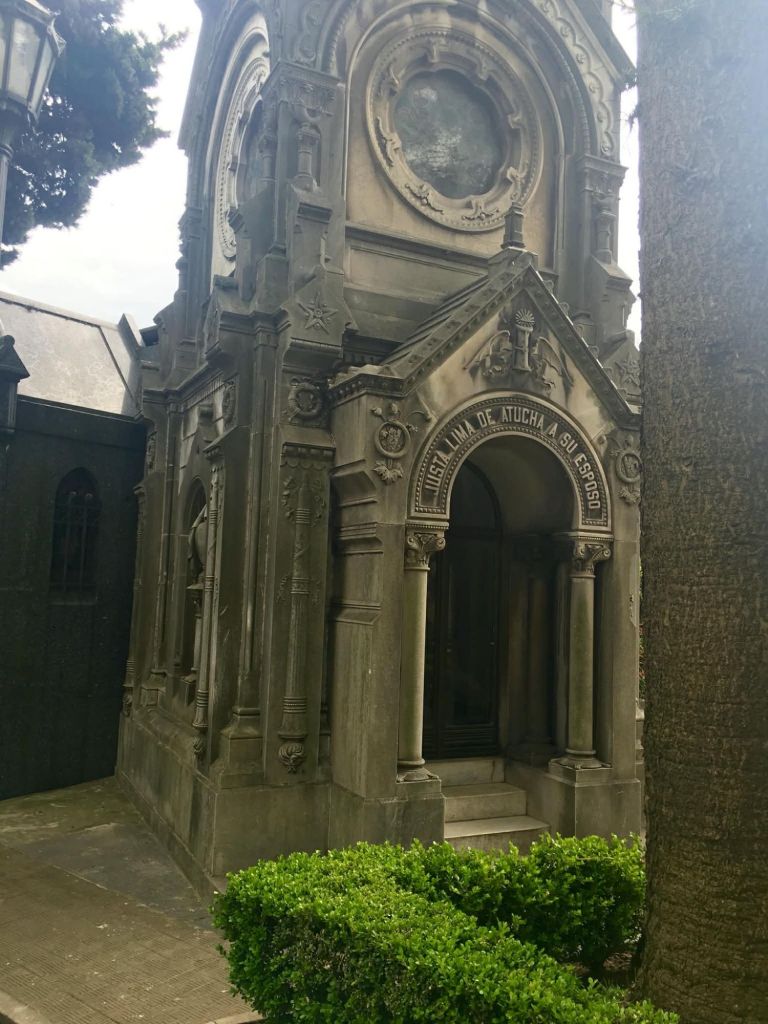
(Sister-in-laaaaaaaaw.)

Despite the opulence of most of the vaults, there are many that are now neglected and broken, and in this way the cemetery mirrors the city itself. I have no photos of those, however, so you’ll have to go hunt them out yourself. Or Google it I guess.

Finally, there is another big draw at Recoleta, unmatched in dignity, presence, and grace.
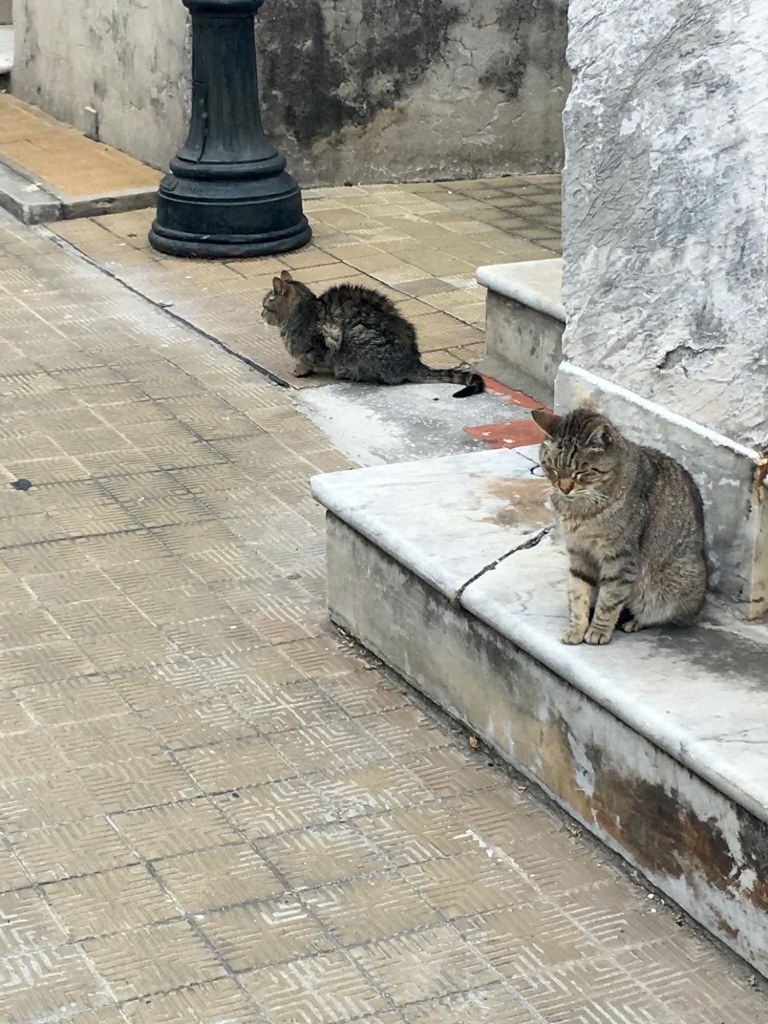
Do. Not. Touch.

There are only six cats left in Recoleta Cemetery, and they are meant to be the last. If you happen to spot one during your visit, consider yourself fortunate. I don’t know how they’re going to keep the ghosts in line after that; presumably the final six felines will deign to haunt the place as well.

El Cementerio de la Recoleta is at Junín 1760 in, yes, the Recoleta neighborhood. It’s next to a mall, a large park that hosts a huge weekend feria, an absolute unit of a gomero tree, museums, hotels, that big flower sculpture and innumerable public transportation stops. It’s open daily from 9 to 5. You will not miss it unless you try.
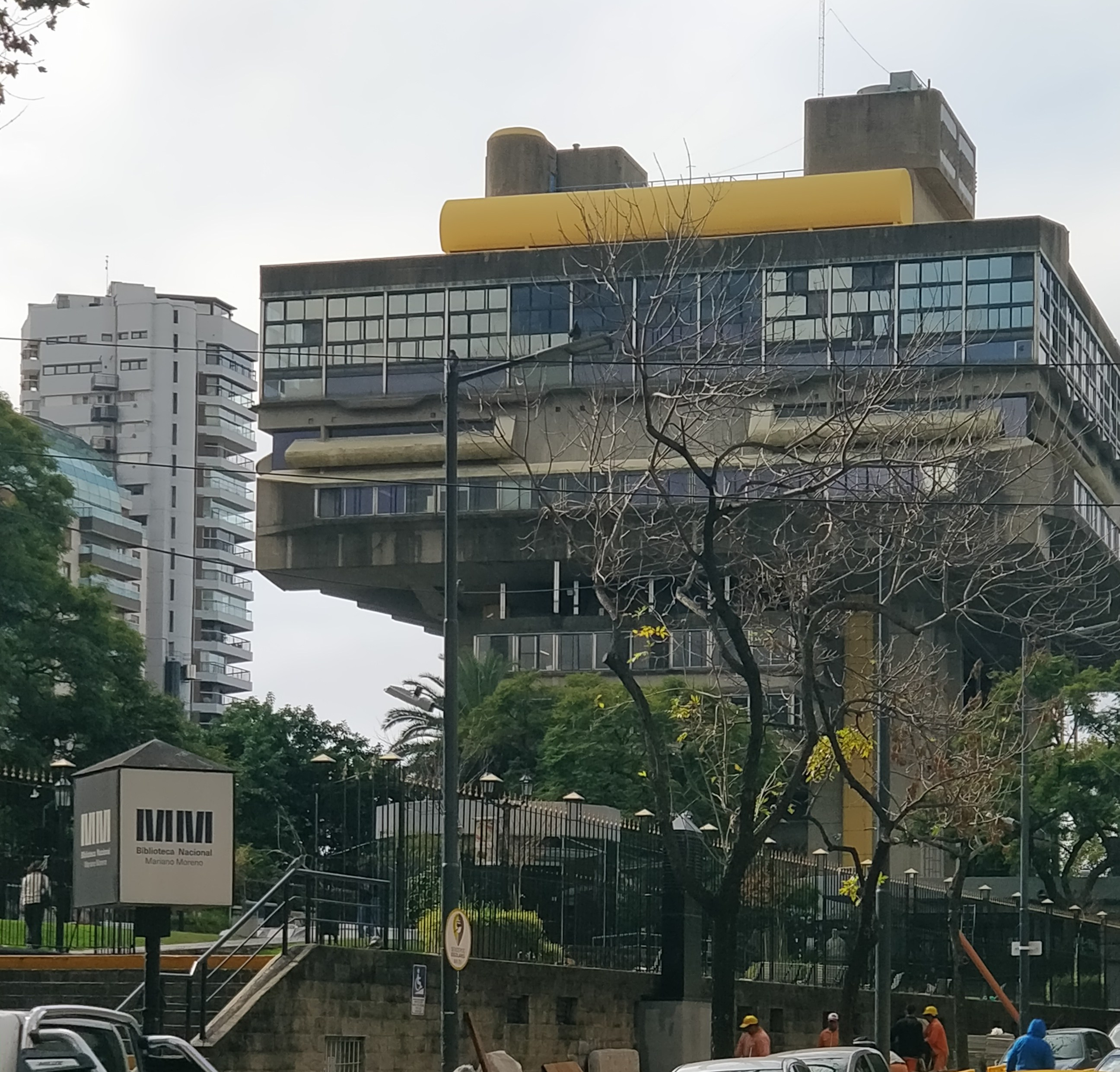
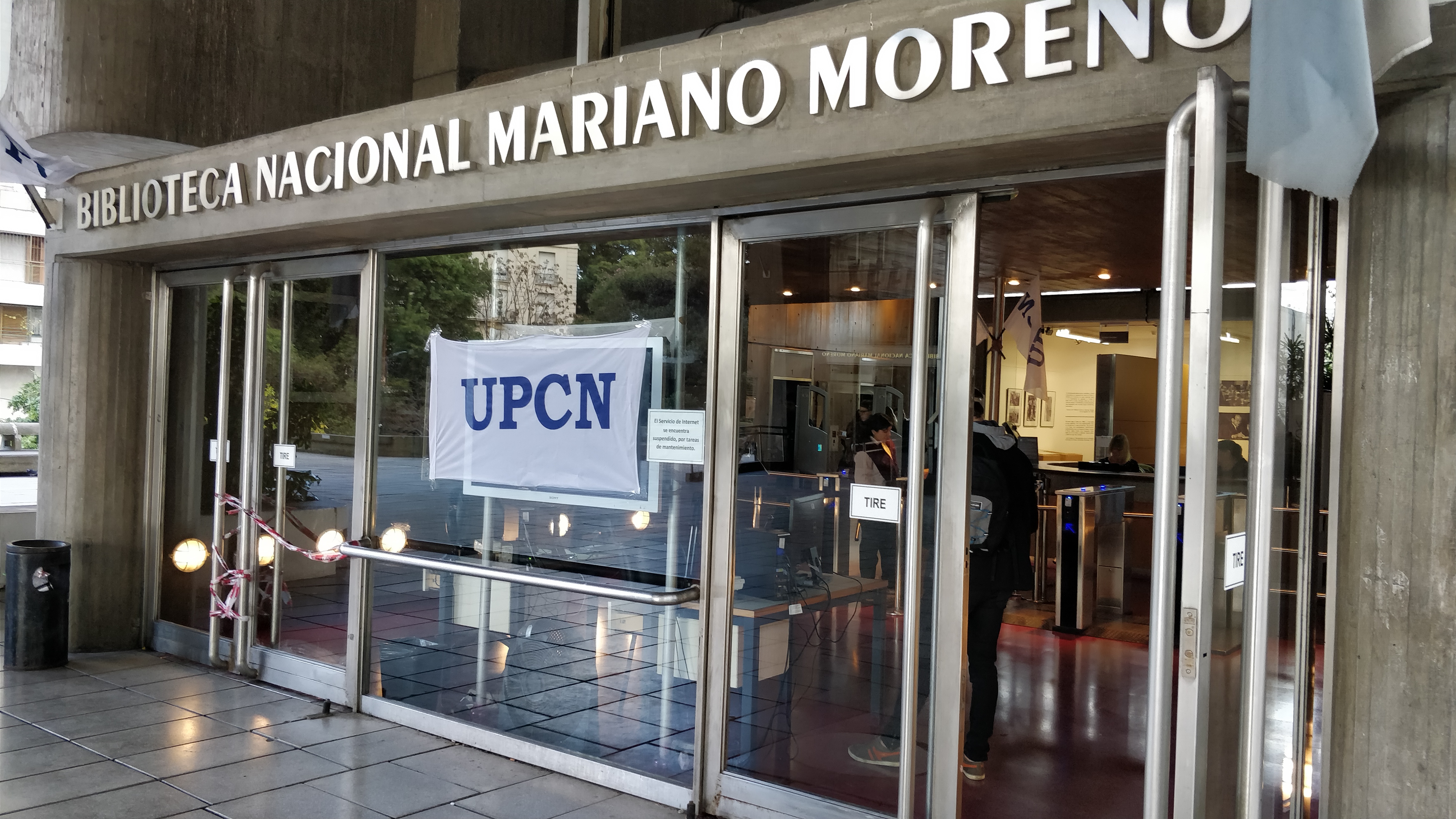
Biblioteca Nacional Mariano Moreno de la República Argentina [Mariano Moreno National Library of the Argentine Republic]

The National Library!

img_20190522_140835.jpg
Sometimes the beauty of a library is in the idea, and not the stupid brutalist architecture.

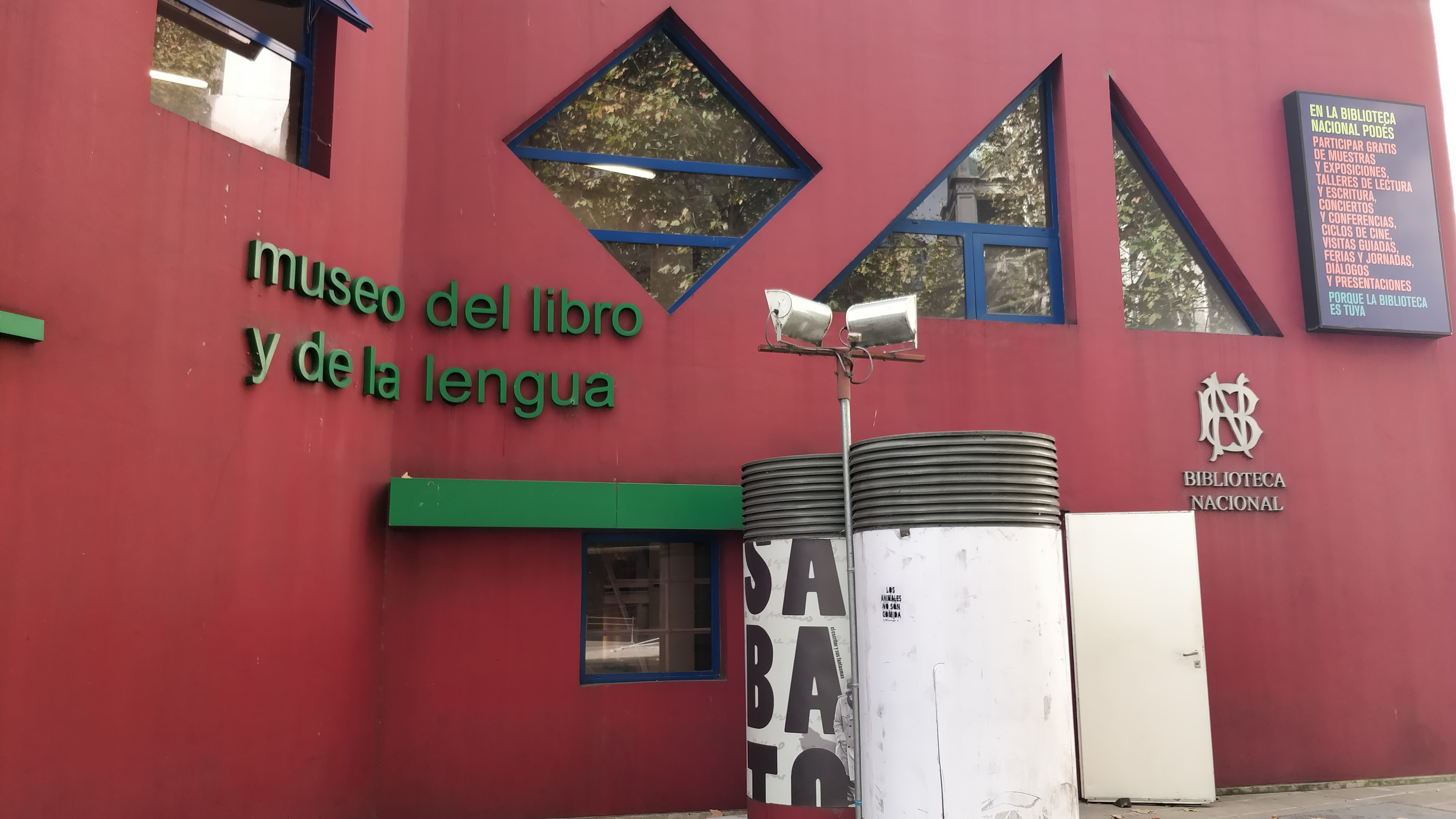
Established in 1810, the library inaugurated its current building in 1992, thirty years after it was first designed (because Argentina).  There are a few things associated with the National Library that I will be including here, such as the Museo del Libro y de la Lengua, which is actually more of a small space for temporary exhibitions and events–not quite enough to do a whole post on.

IMG_20190522_141104.jpg
“…because the library is yours.”  Hell. Yes.

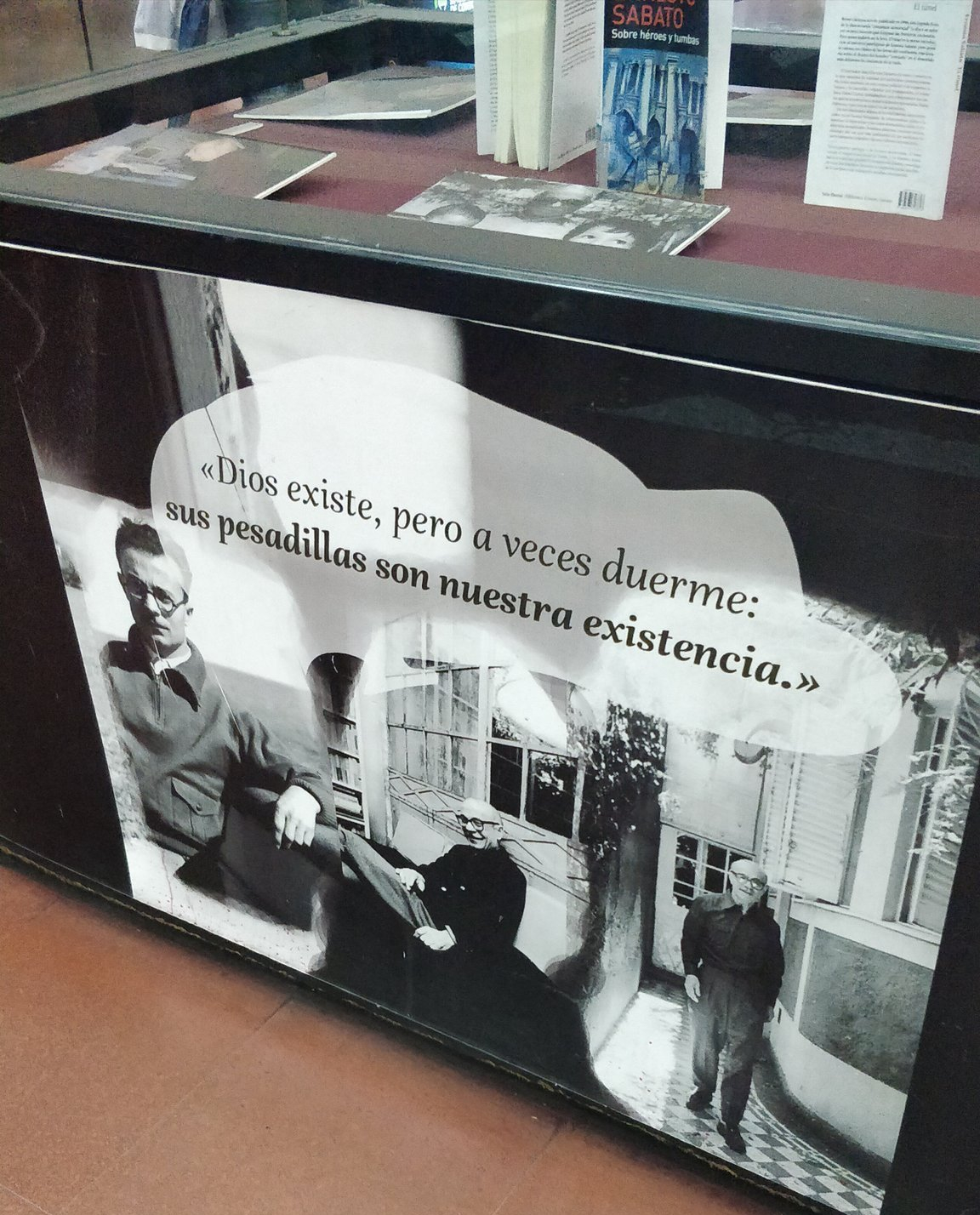
Currently, there’s a couple of exhibits up, one of which is on scientist, novelist, and impressive prizewinner Ernesto Sabato.  You might remember him from a really life-affirming subway display I found awhile back.

sabato-quote.jpg
“God exists, but sometimes dreams: his nightmares are our existence.”

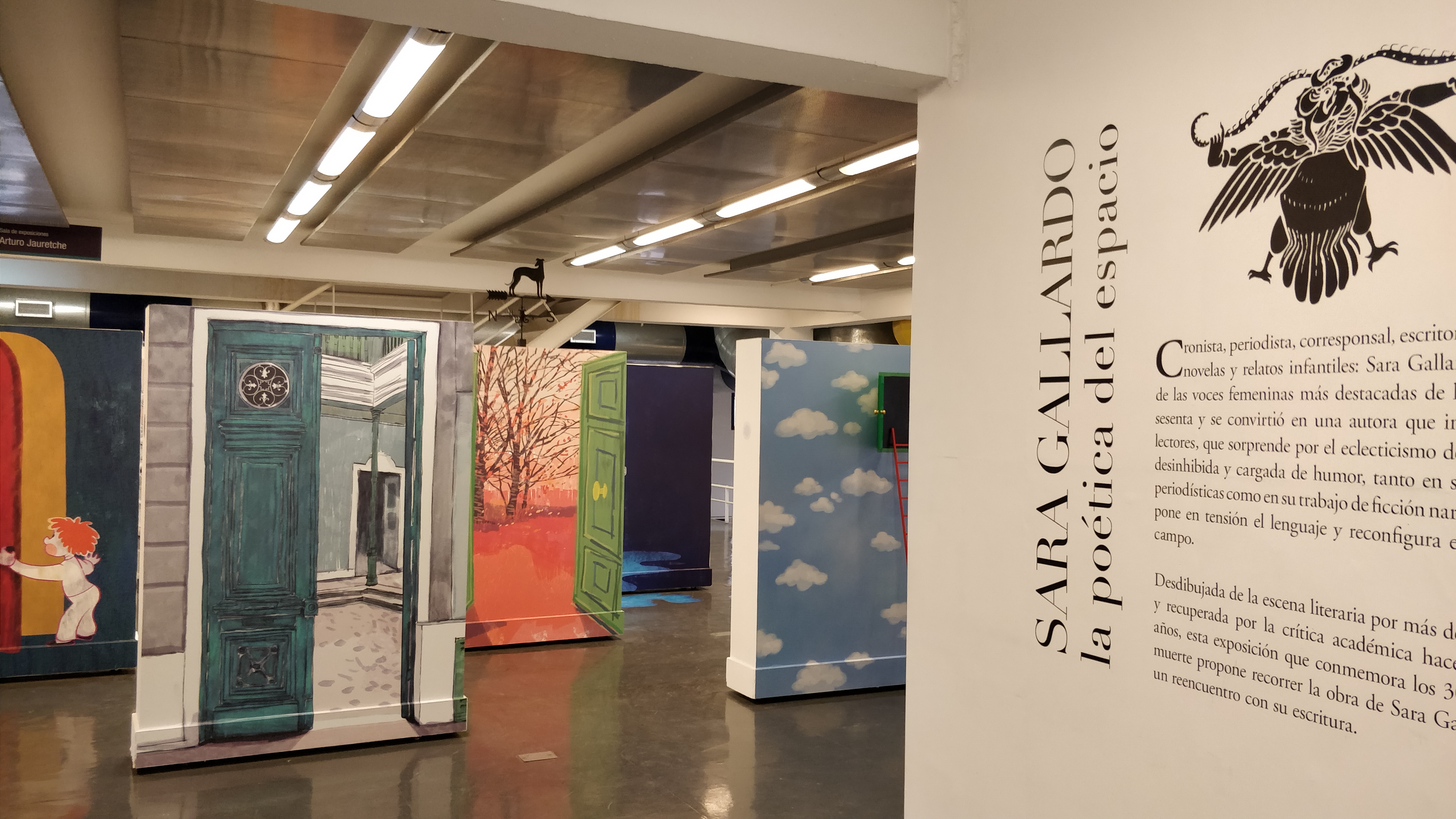
The upstairs currently houses a show on Sara Gallardo.

IMG_20190522_141837.jpg

Like I said, not a whole lot to the museum itself, but as it’s at the back of the library complex, it can easily included in a visit to the whole shebang.

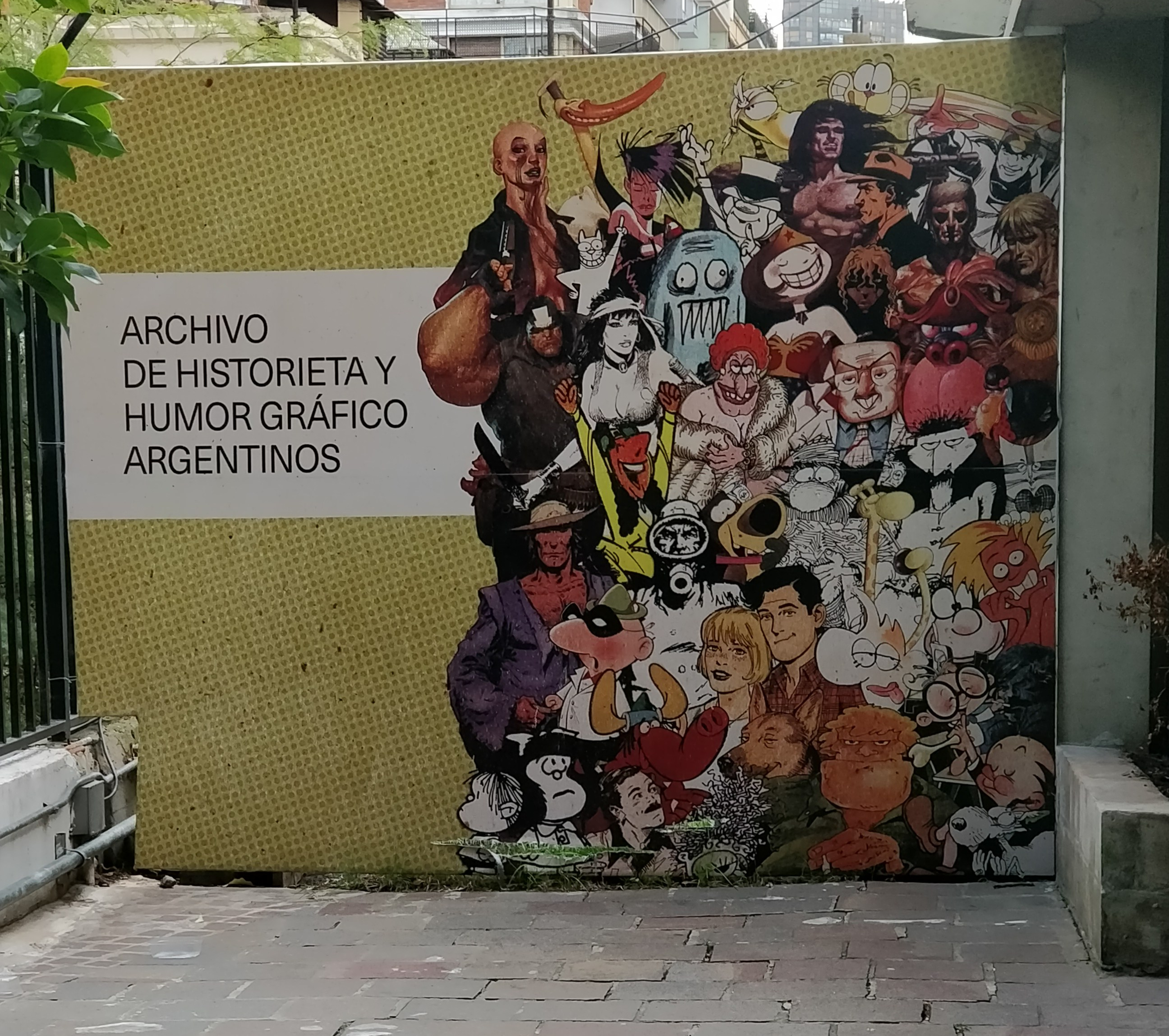
There’s some remodeling happening on the grounds of the library, but there is one small open building that houses the showroom of the Centro de Historieta y Humor Gráfico Argentinos (Argentine Comic and Graphic Humor Center).

img_20190522_143401.jpg

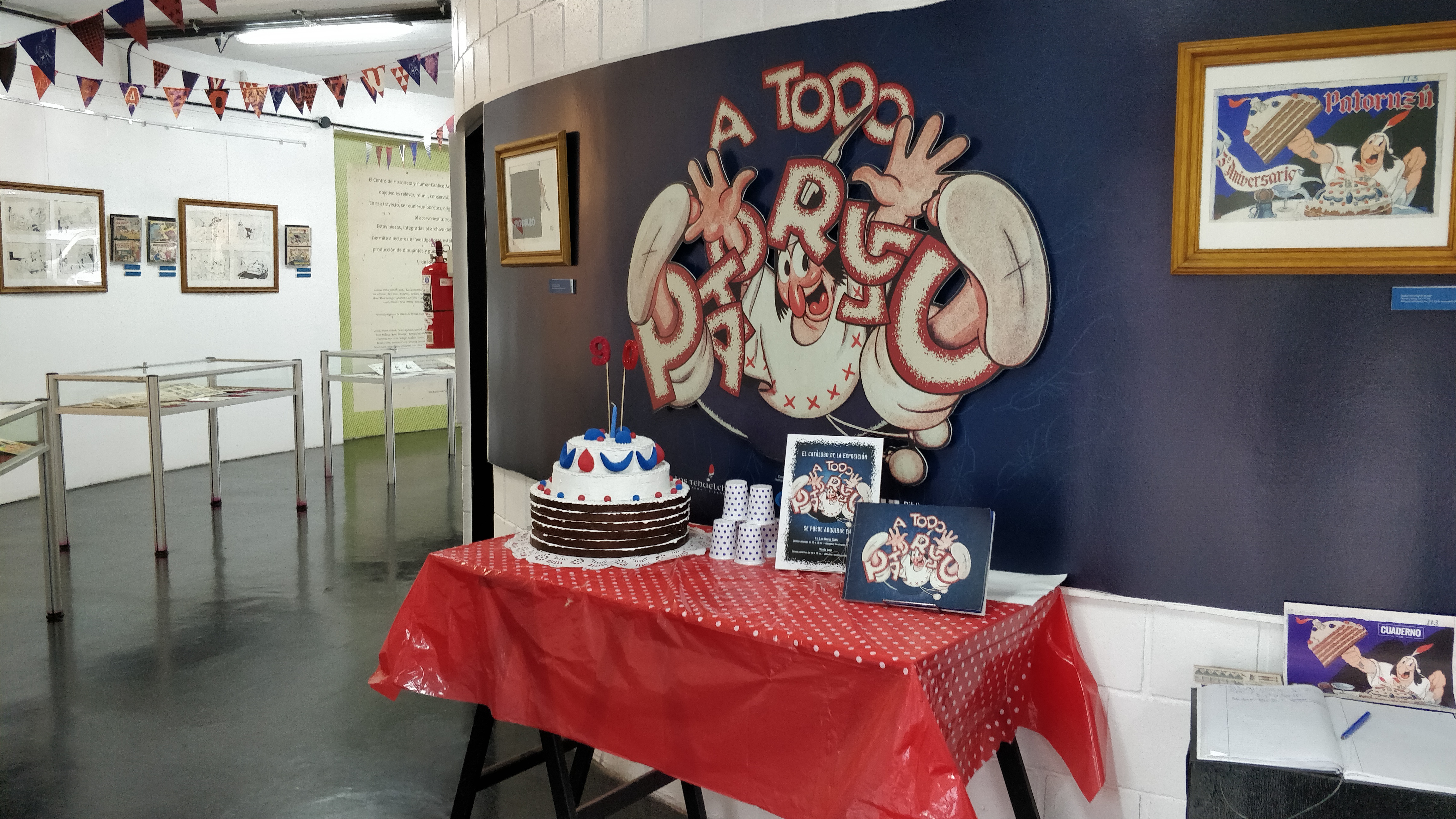
At the moment, the building is dedicated to the 90th anniversary of Patoruzú, who looks VERY QUESTIONABLE to me but is still an icon here, and widely considered Argentina’s first super hero (he’s got super strength and he’s also rich, which is Batman’s sole power, so Patoruzú already has one up on that guy).

IMG_20190522_143417.jpg

The main library building also has its own exhibit space.  You need an ID to go in, a fact that has stuck in my mind since the library played a small part in the story of a man who walked from Canada to Buenos Aires with the aim of visiting the library, only to be turned away because he didn’t have ID.

IMG_20190522_150725.jpg
Pictured: Most secure border in the Western hemisphere.

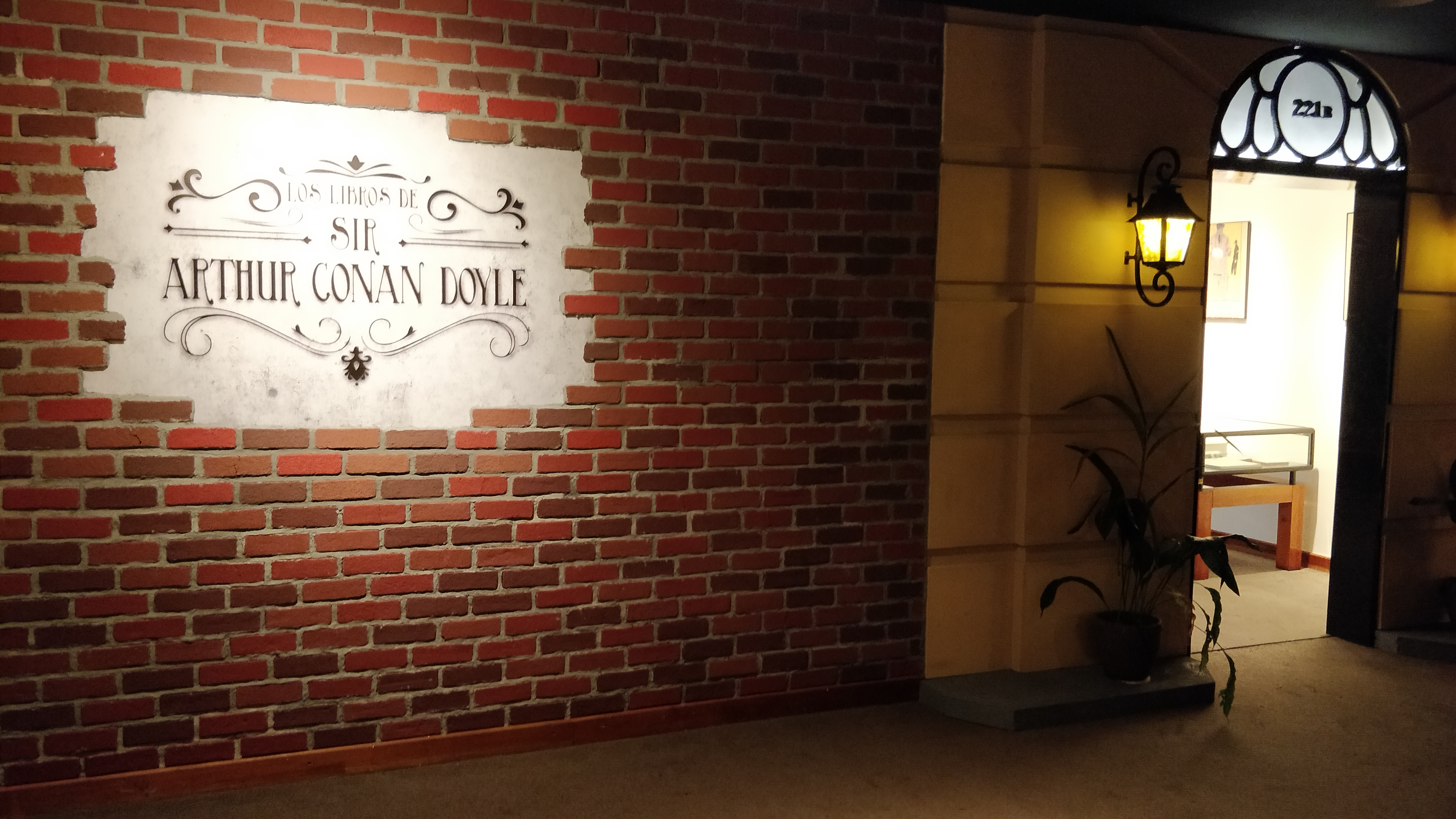
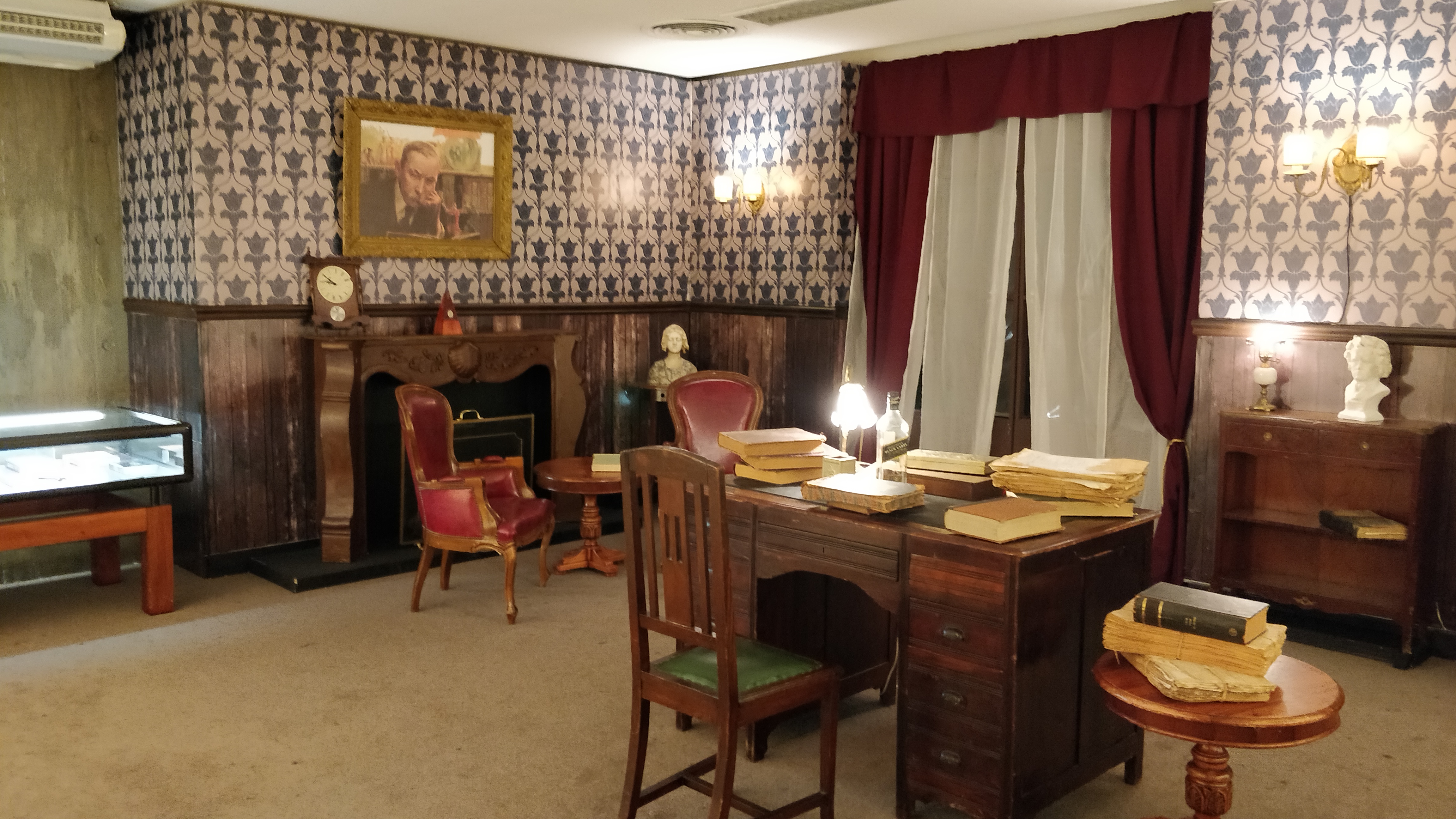
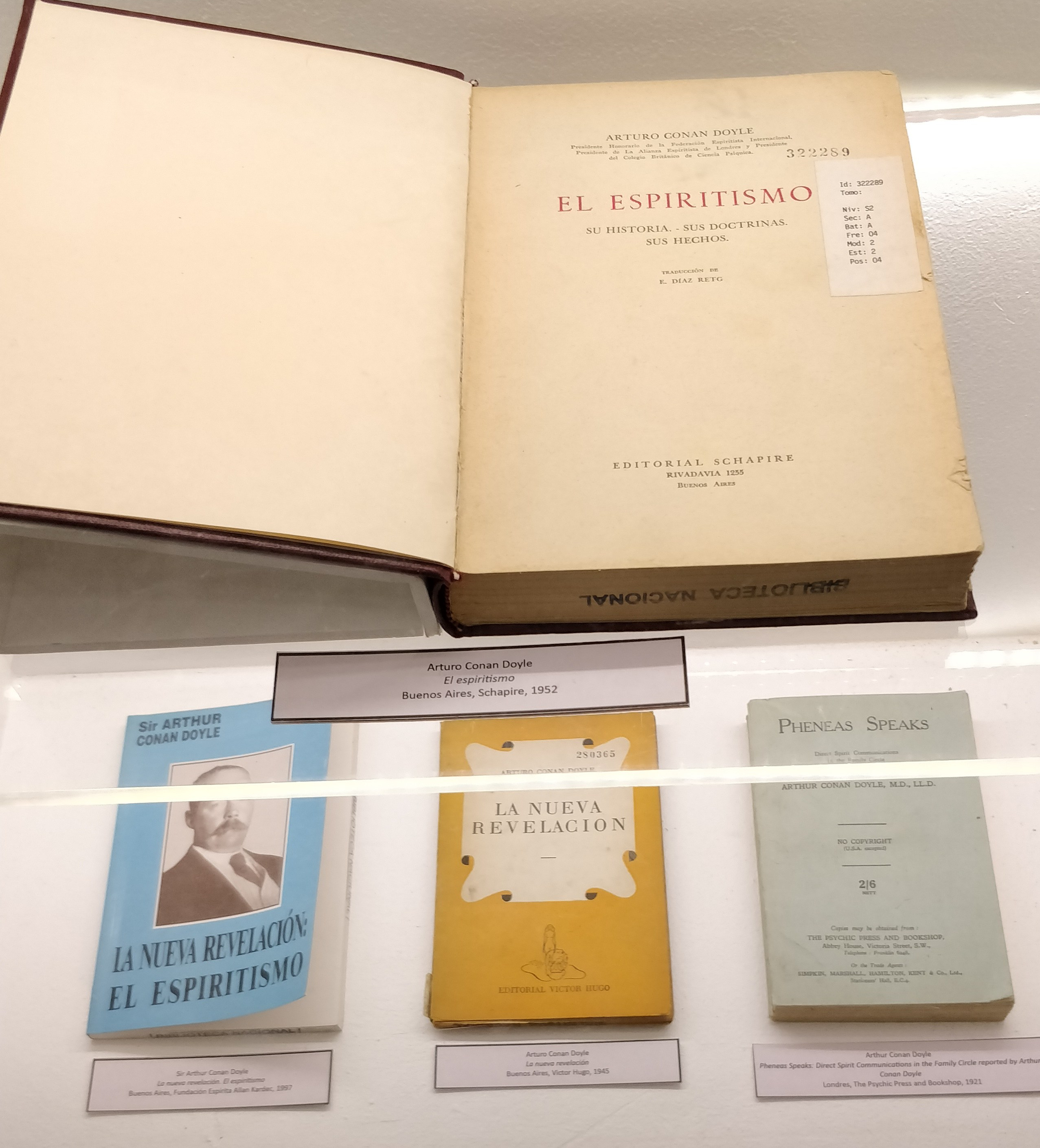
Right now, there’s an exhibit on the books of Arthur Conan Doyle.  It’s pretty fun.

IMG_20190522_145206.jpg

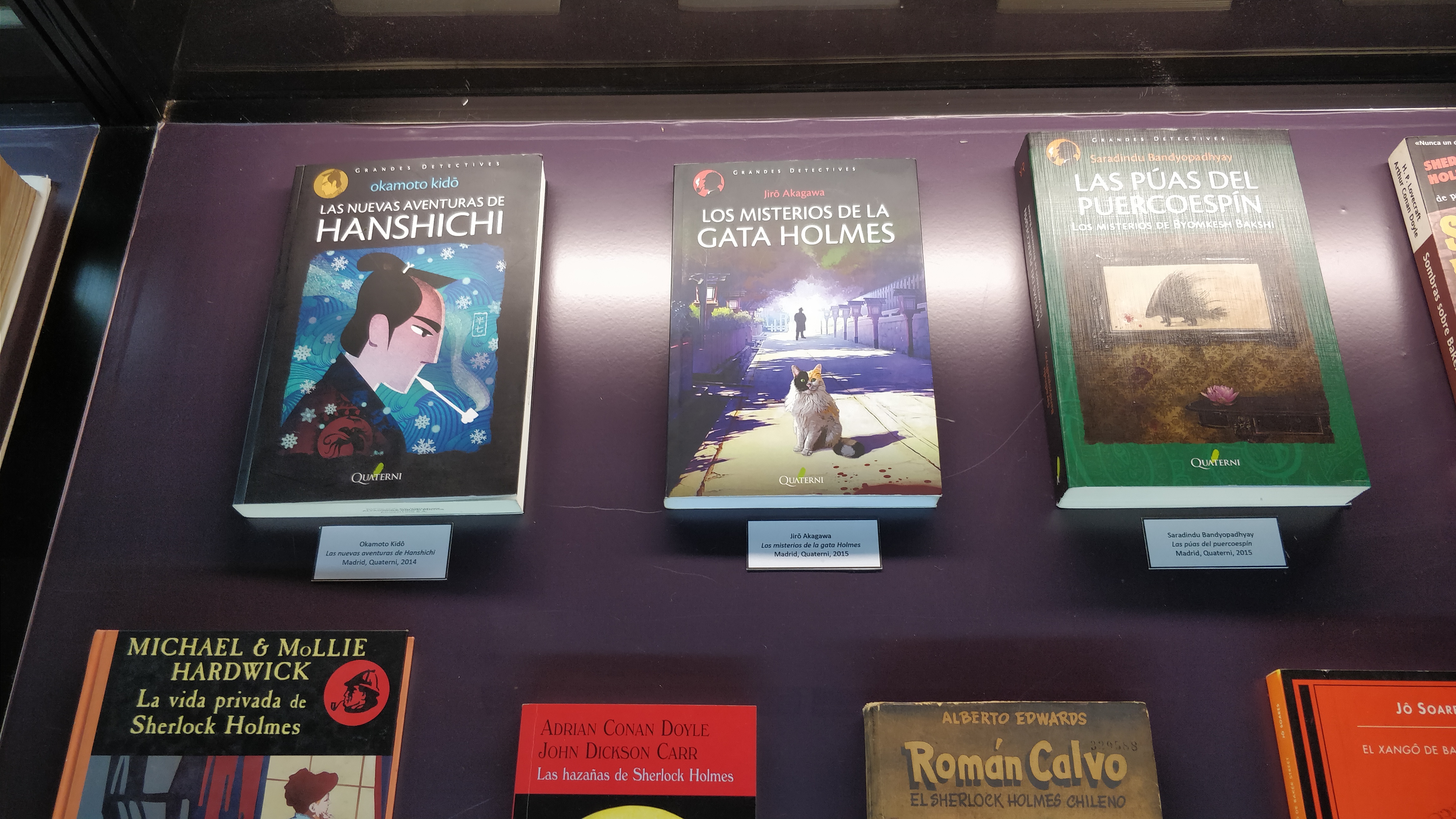
IMG_20190522_145415.jpg
Sherlock Holmes fan fic has been a hugely profitable genre in its own right, and I especially enjoyed the inclusion of “Cat Holmes.”

IMG_20190522_145520.jpg

IMG_20190522_145712.jpg
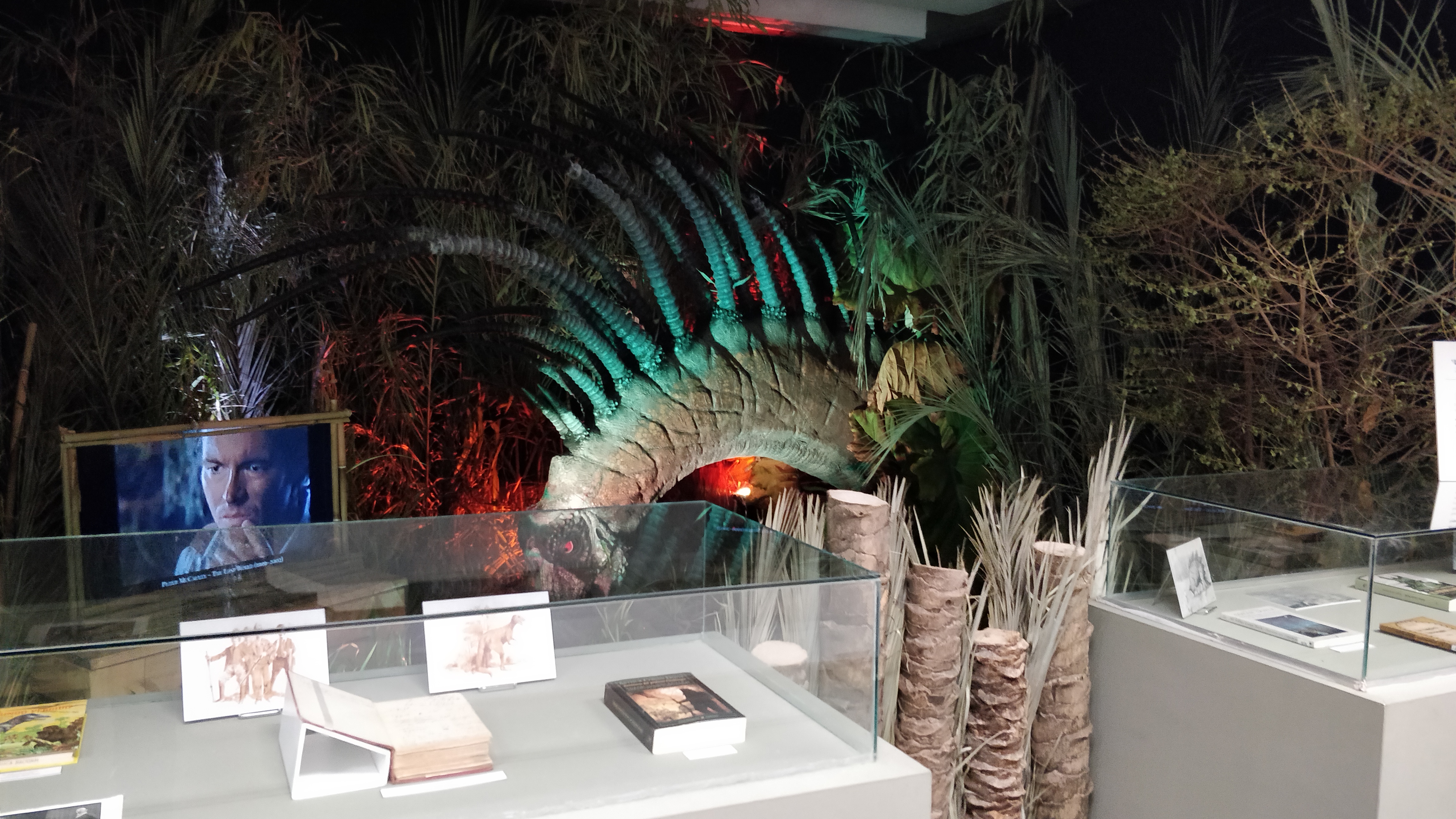
The Lost World room! Argentina is rich in dinosaur fossils, and that there is native son Bajadasaurus pronuspinax.

IMG_20190522_150208.jpg
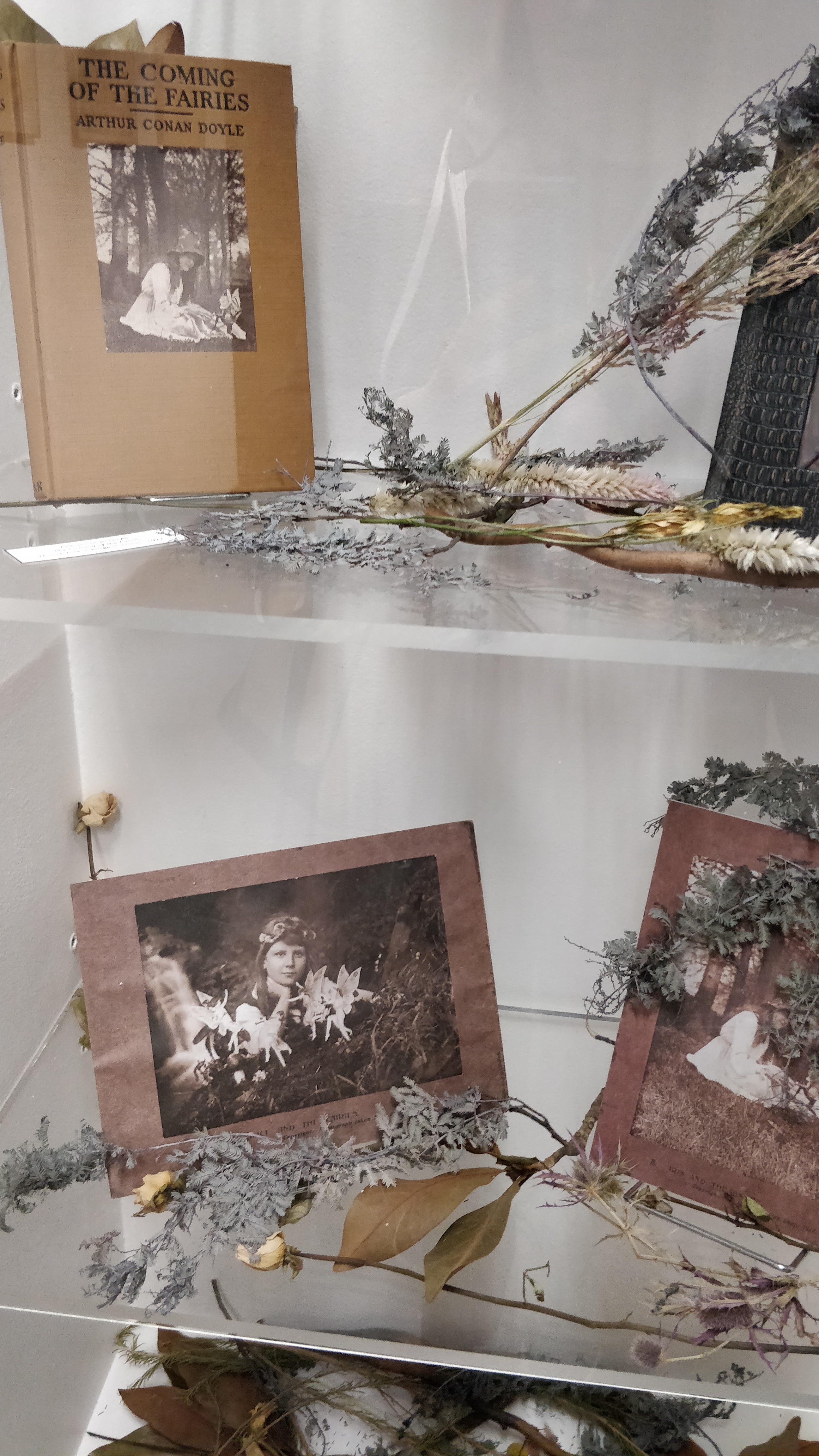
Yeah, they even got the fairy stuff.

IMG_20190522_145855.jpg
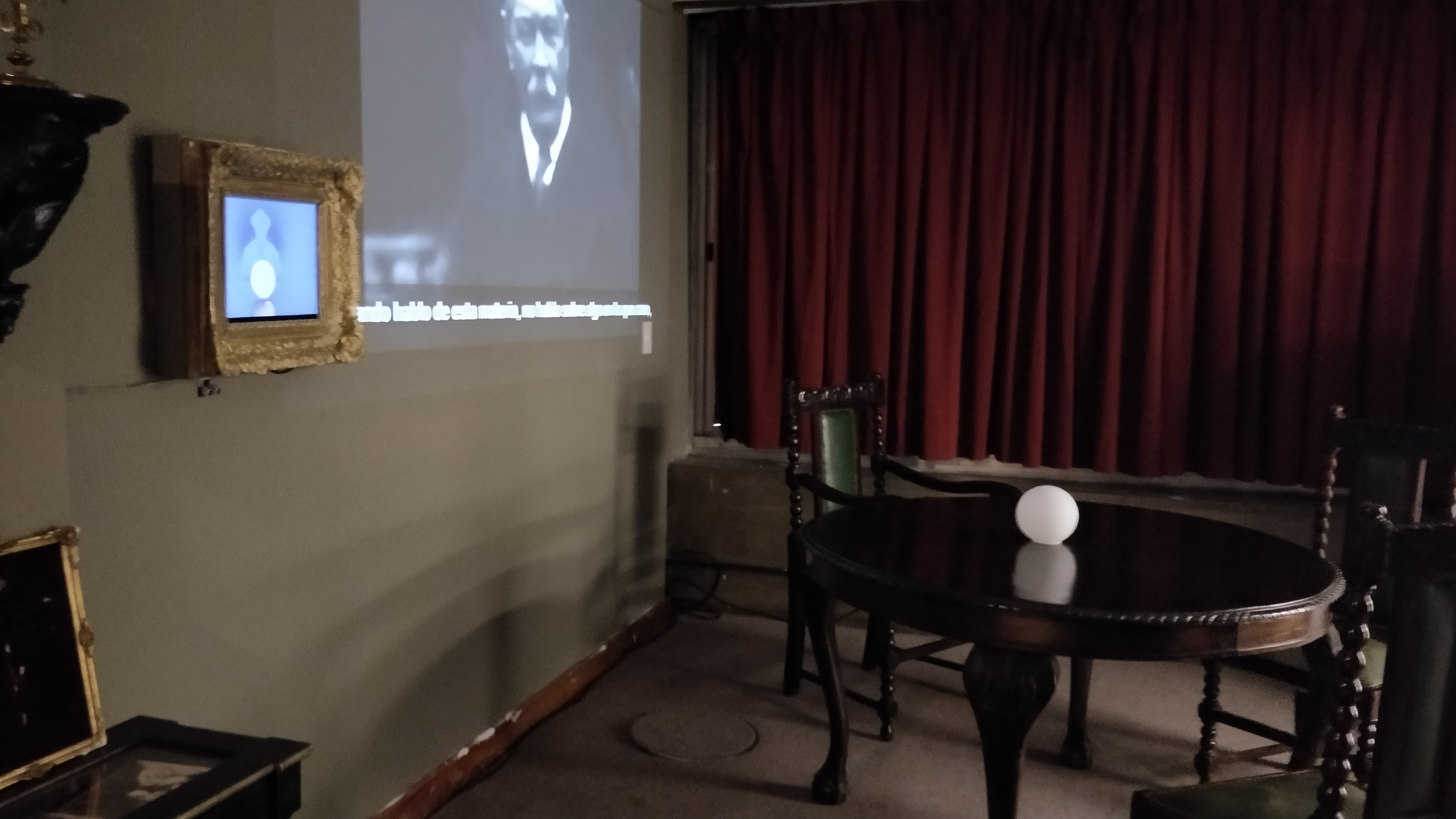
Interview with the man himself in the spiritualism room.

img_20190522_150150.jpg

I can absolutely feel the librarian’s giddy enthusiasm for being able to create this room.

If I don’t get a haunted mirror for Christmas this year, why do I even have a family.
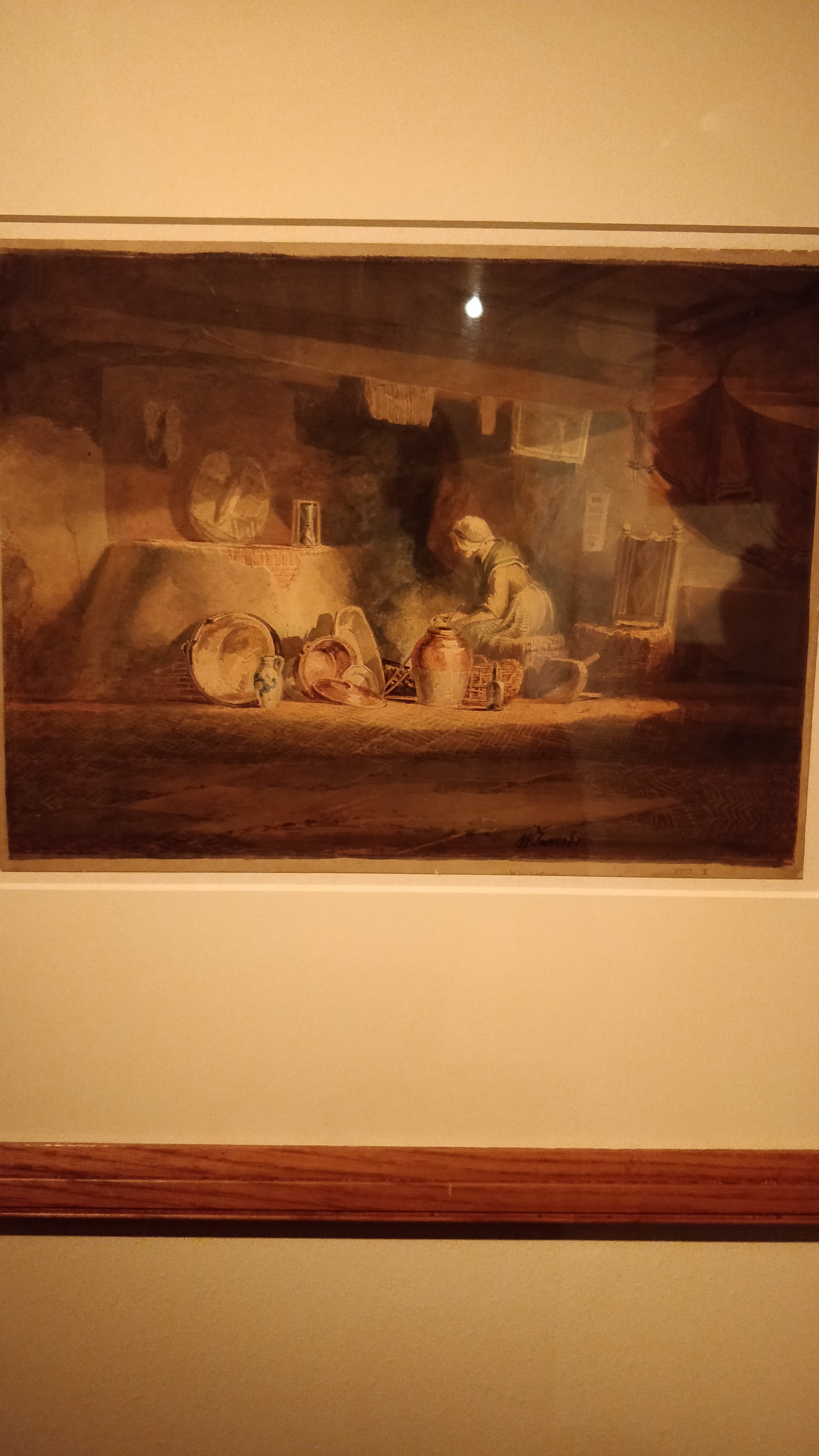
There were a few of these pictures that were activated when you walked close to them.  This whole thing was neat.
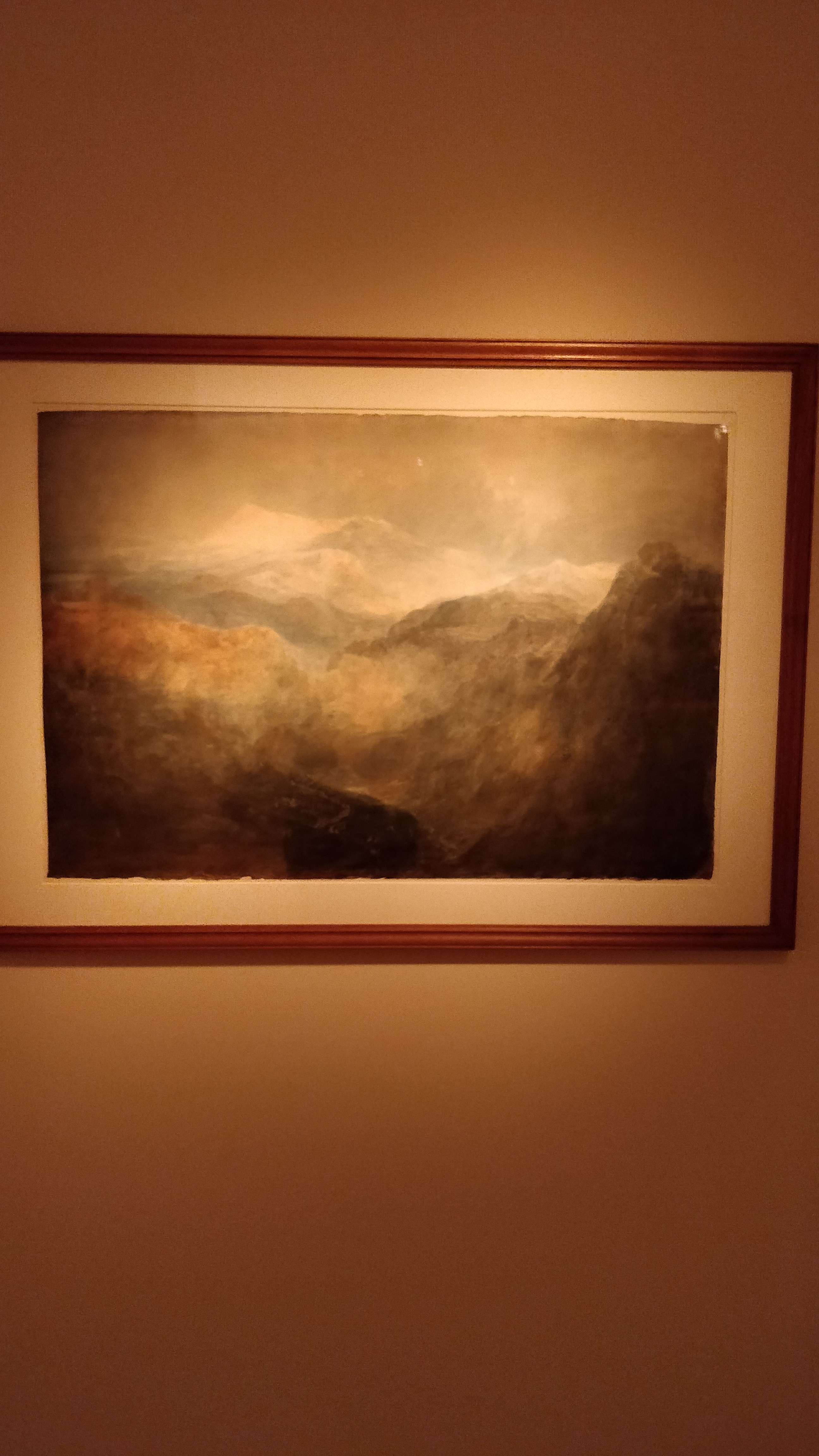
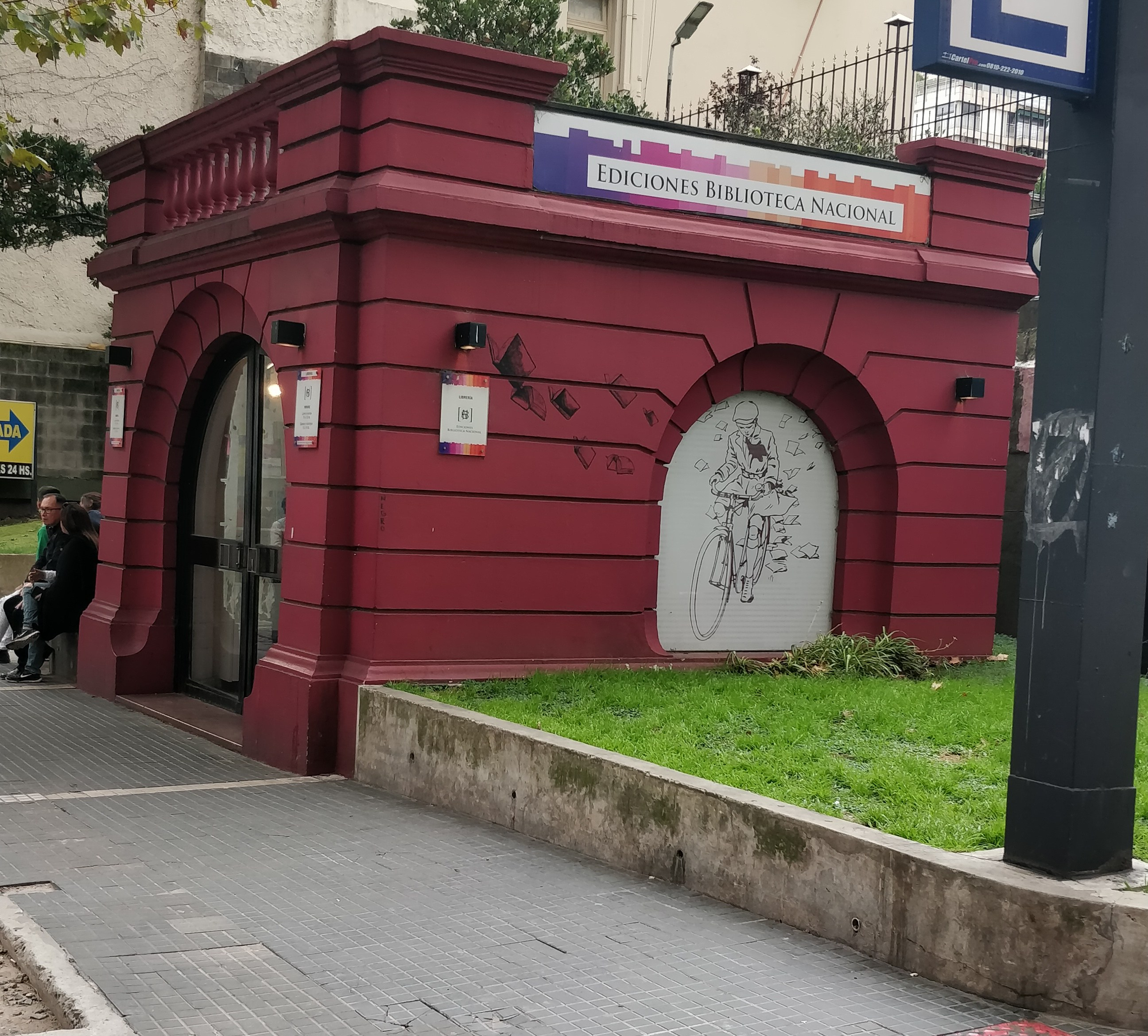
At the back of the library’s complex, near the Museo del Libro y de la Lengua, is an adorable little shop.

IMG_20190522_152401.jpg
ADORKABLE

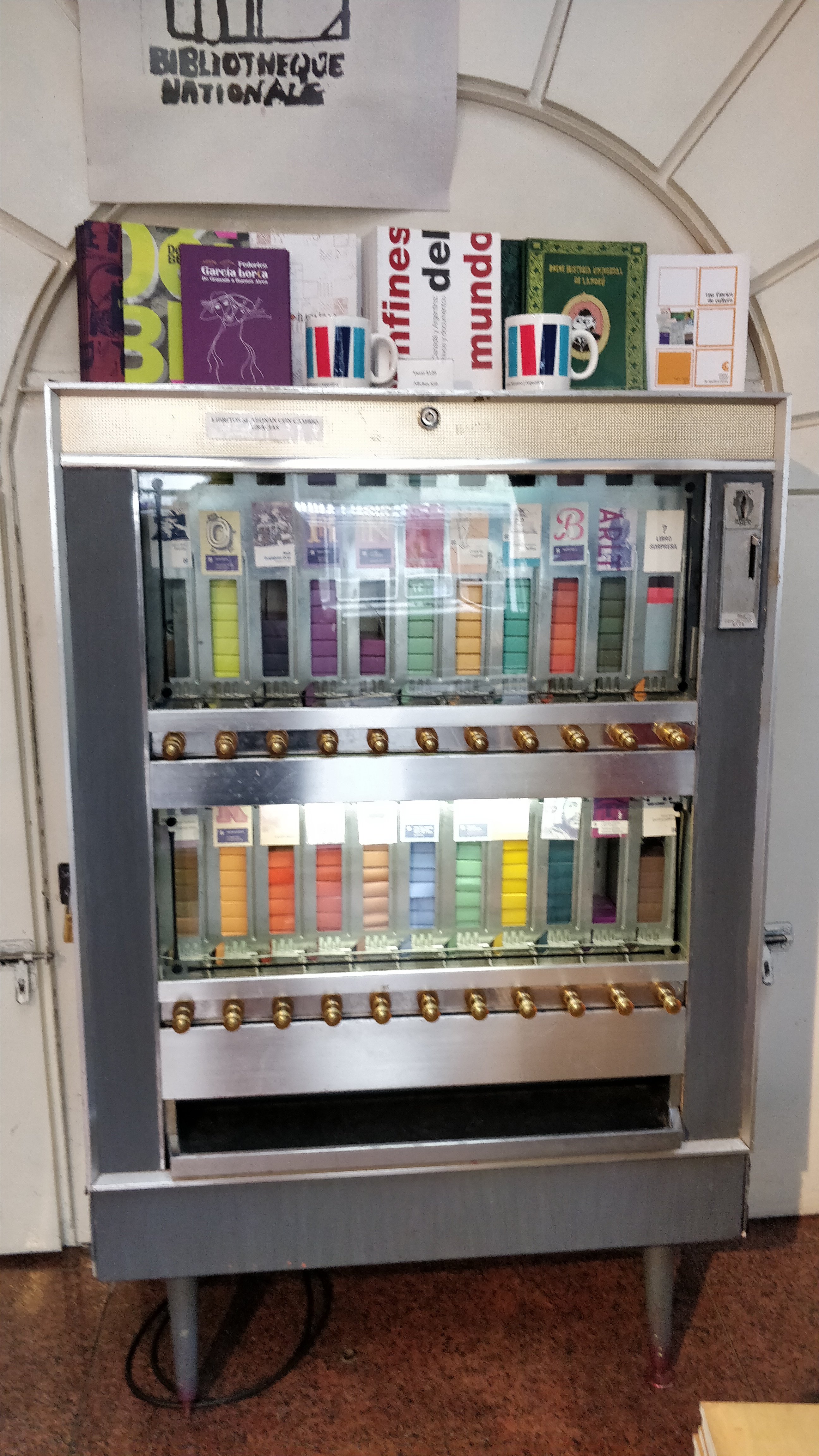
It’s the National Library’s bookstore for its publications, where you can also get sweet library merch, like a coffee mug or poster.  There’s also this TINY BOOK VENDING MACHINE SO BRING 20 PESOS IN COINS OK?

IMG_20190522_143121.jpg
Objects in photo less blurry than they appear

So if libraries are a thing for you (as they are for all quality people), you can roll a visit to the National Library into your Recoleta meanderings, as it’s a couple of blocks from the Recoleta Cemetery, the Museo Nacional de Bellas Artes, and the Las Heras subway stop on the H line.  There’s a cafe of the basic snack and coffee sort on the first floor of the main library building (second floor by US reckoning), but obviously plenty of other places are around.  Check the website for the hours of all the various elements mentioned here.

Museo Nacional de Bellas Artes [National Museum of Fine Arts]

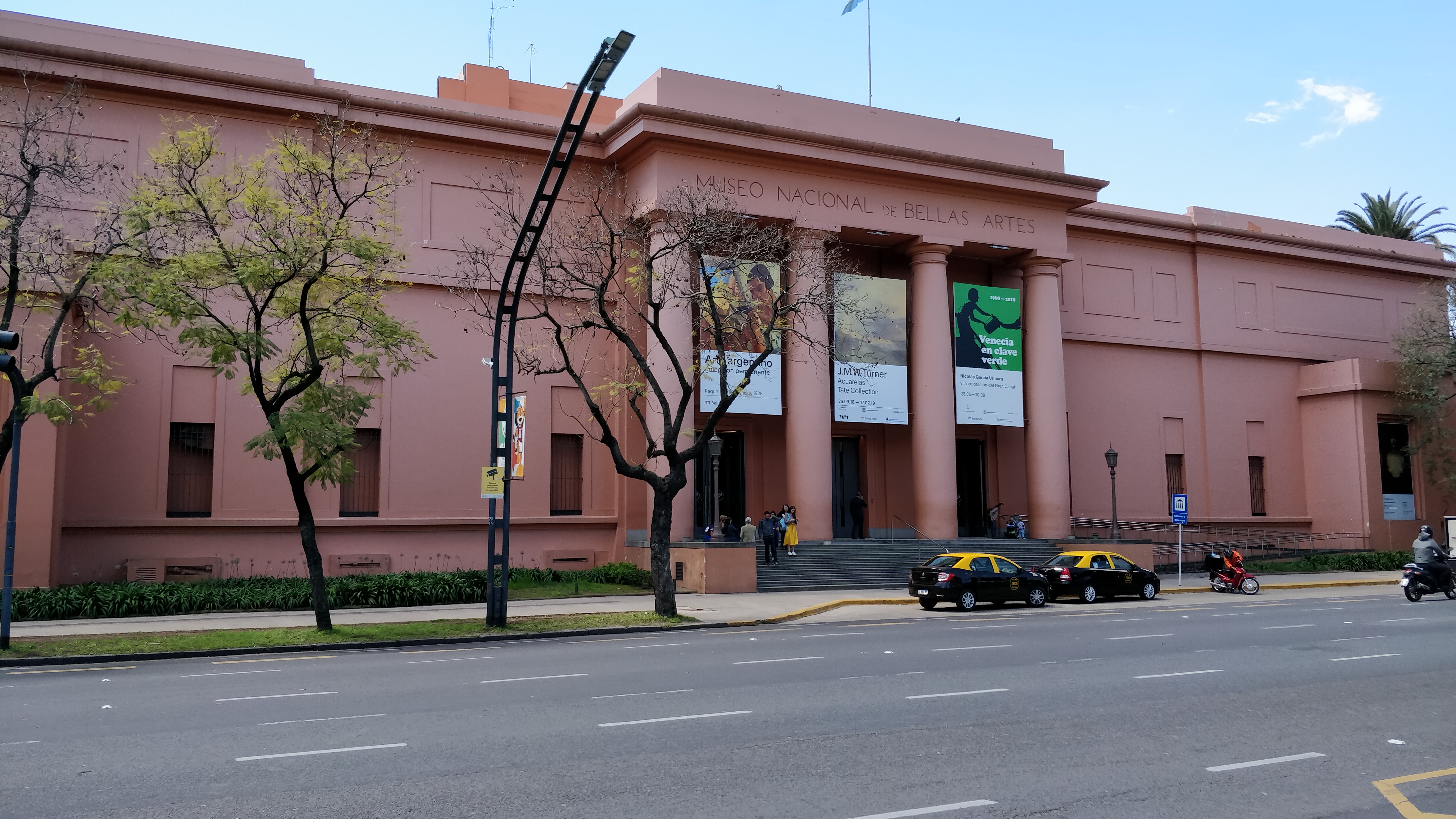
Bellas Artes is one of the big dogs, obviously.

IMG_20181003_133728.jpg
It contains not one but two gift shops.

As such, it has a very fine collection, and since this is a blog post, I will not be providing a thorough overview.   For one thing, the museum has a very nice website partially available in English (and a guide app only in Spanish).  So I’m just going to do a light overview!  There’s just so much art!

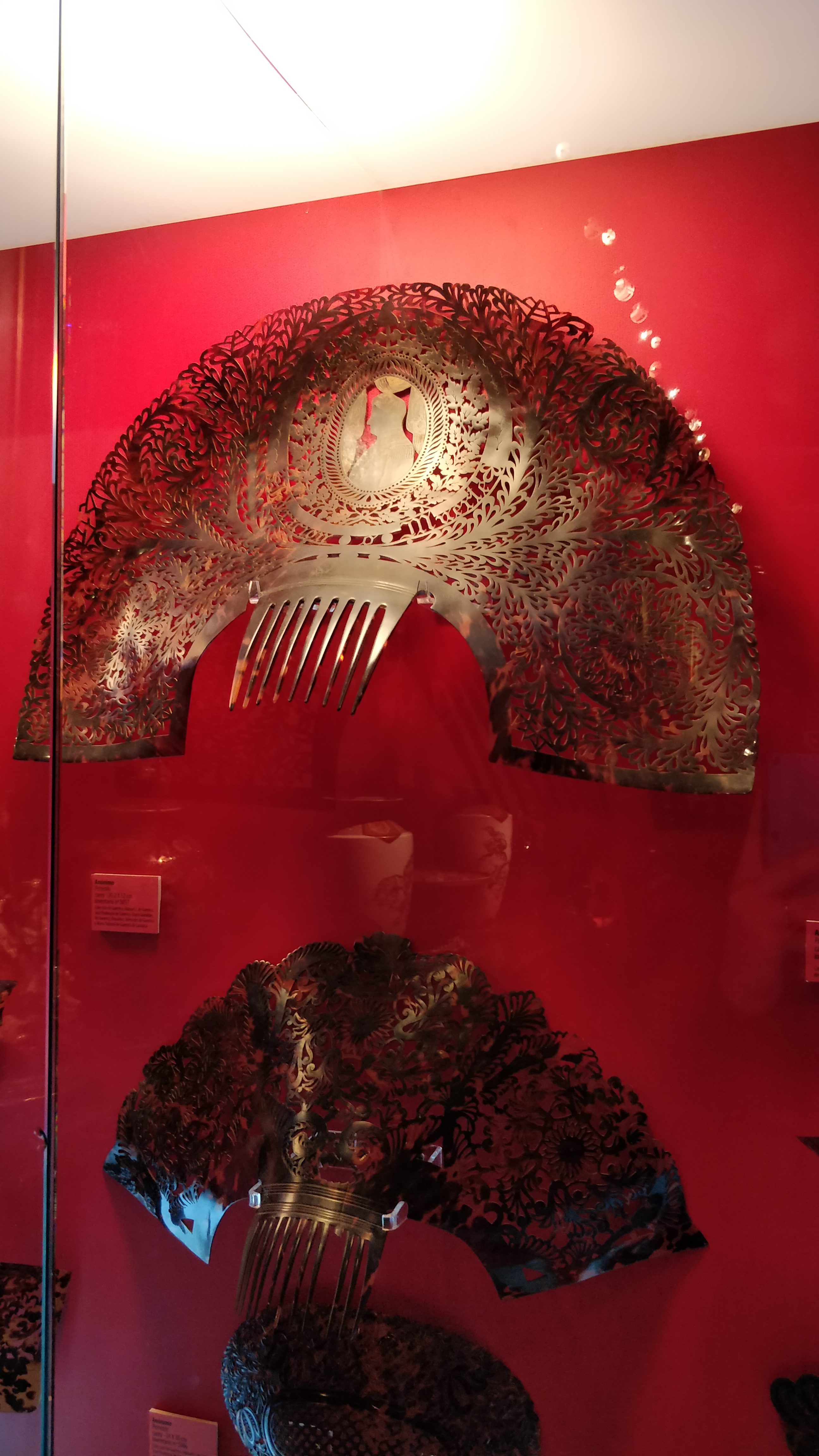
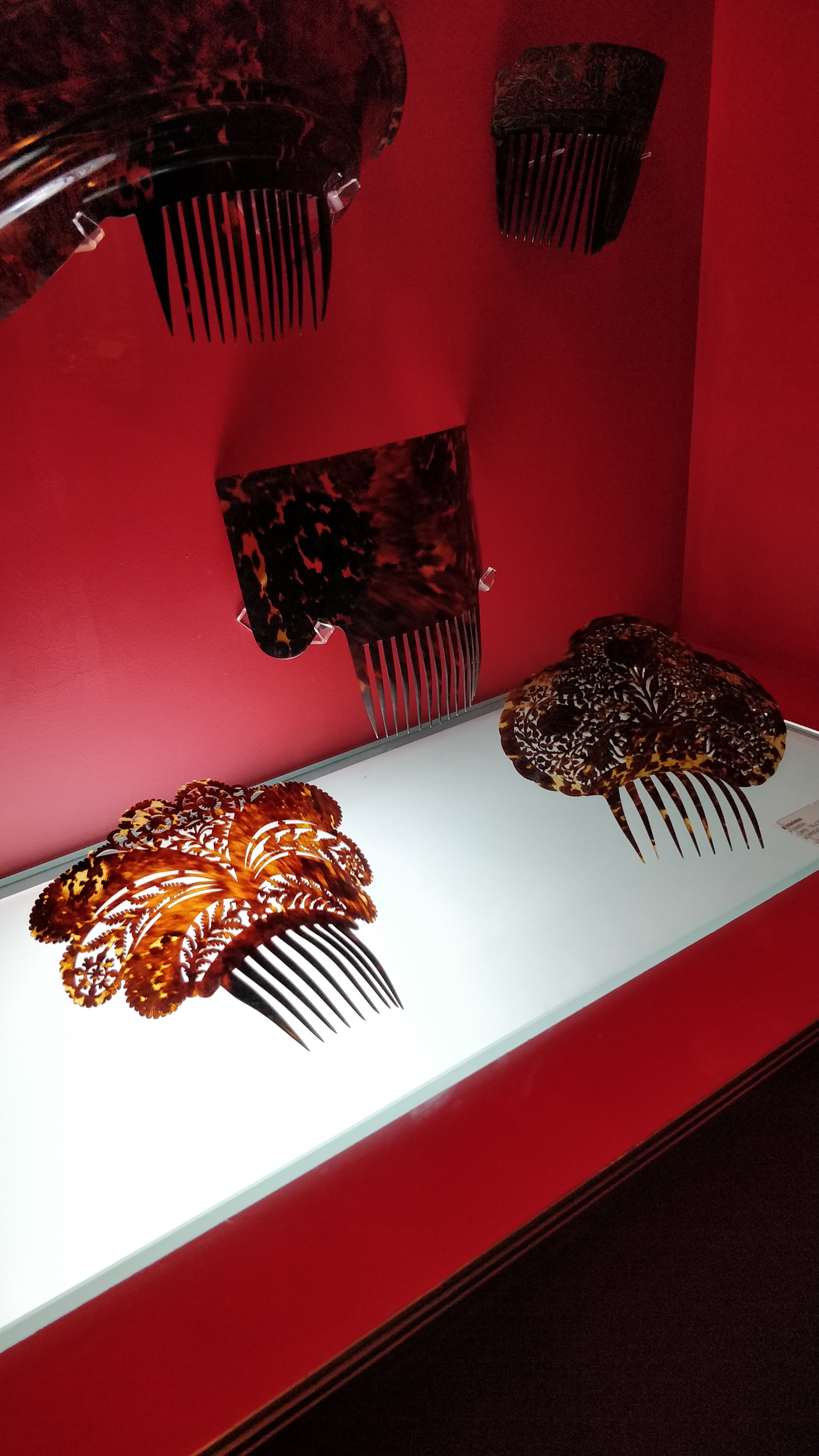
Obviously, as a national fine arts museum, Bellas Artes has a strong collection of Argentine and Latin American art.  The international collection trends noticeably to European art.  Let’s have a peek, starting with these things, because I am a big fan of hair decoration:

IMG_20181003_143348.jpg
Who has this much hair

IMG_20181003_143436.jpg
How do these not cause headaches

These are peinetónes, very large versions of the Spanish peineta that were distinct to the fashion of the Rio de la Plata region in the 1830s, until shitty men took to criticizing the elaborate and expensive combs in the most sexist way possible (“terrible women neglect their families and whore themselves out in pursuit of this extravagance!”), and their use declined.  You can find several contemporary illustrations mocking the peinetón.  Certainly, there are reasonable criticisms to be made of fashions that are uncomfortable, inconvenient, and costly, but “look at these shallow immoral bimbos” is just the worst.

On to the older European stuff!

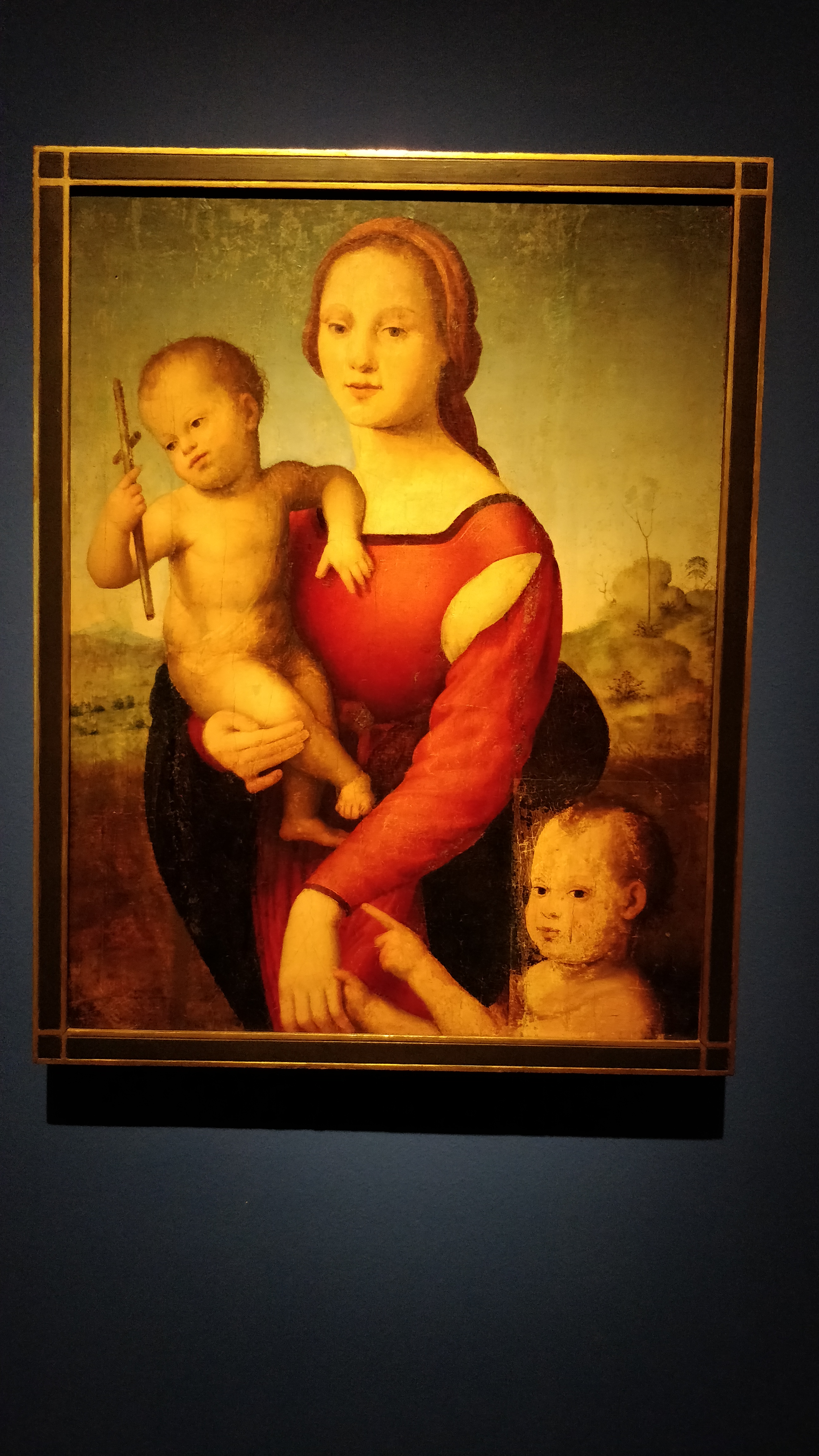
IMG_20181003_150908.jpg
St John here giving you a big hint as to who the principal subject here is, or else trying to draw attention to the incredibly inappropriate baby toy.

Early 1500s Virgin and Child with St John from Florence.

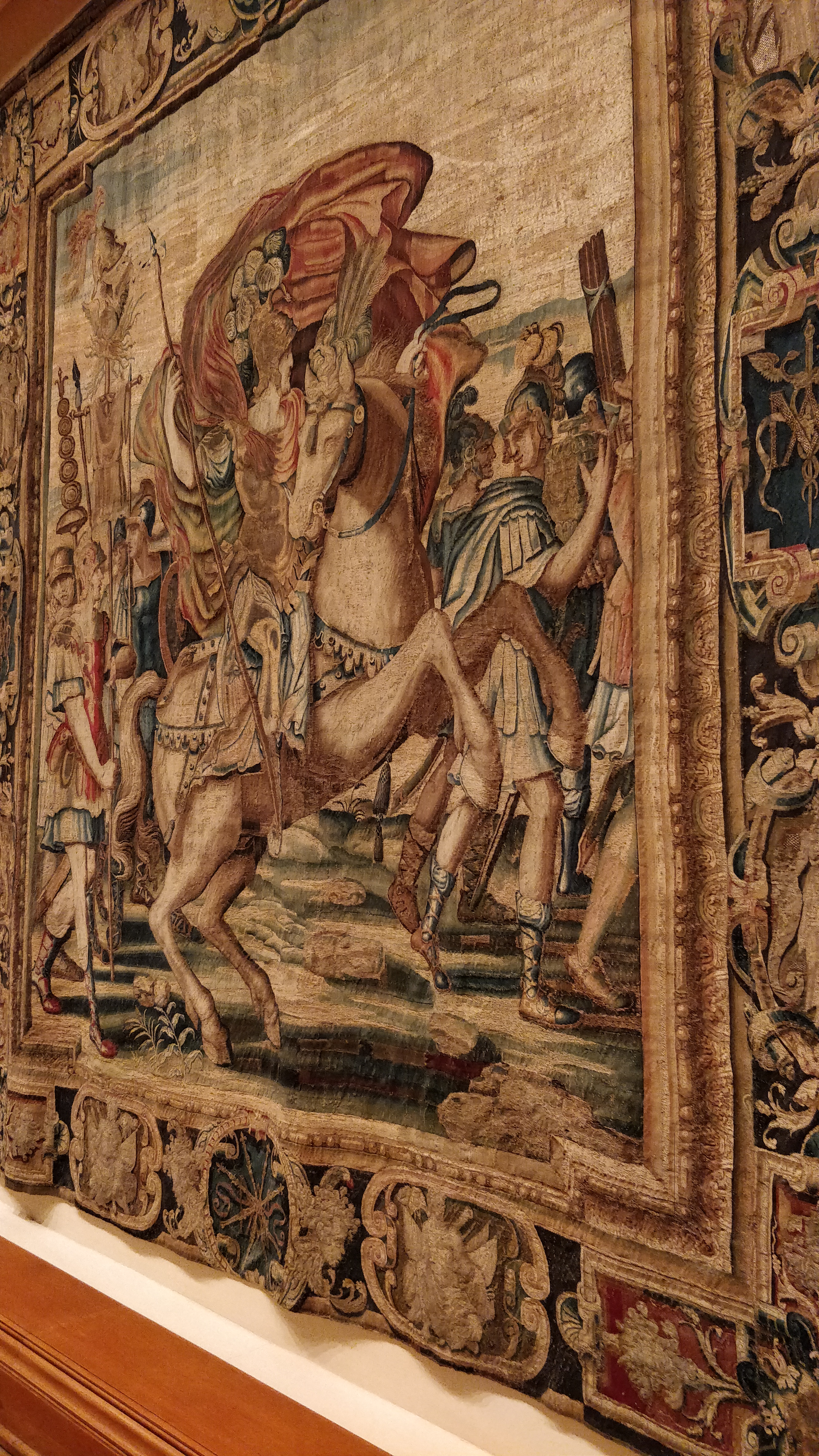
IMG_20181003_150438.jpg
If I ever have a castle, Imma get so many tapestries

This is a Belgian-made tapestry from the early 1600s.  As someone who can barely sit still long enough to embroider a simple outline figure on a handkerchief, I am always deeply impressed by tapestries.

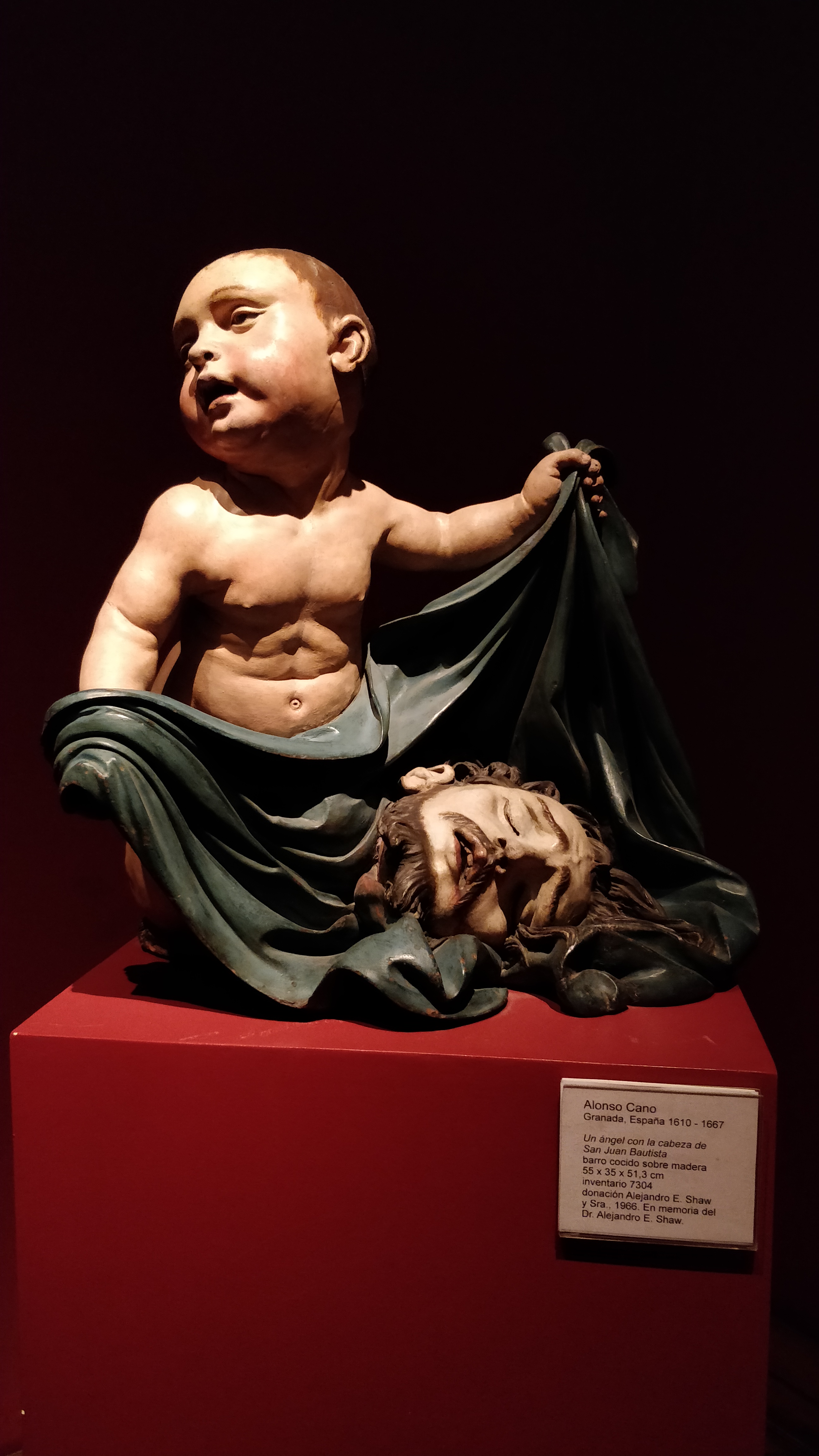
IMG_20181003_150154.jpg
If you leave severed heads laying around, the baby is totally going to get into them.

This is a 17th century wood sculpture, “An angel with the head of St John the Baptist.”  This stuff is all pretty typical of the time and region.

Moving forward, time-wise, the collection includes examples from a lot of the big dudes, El Greco, Rubens, Rembrant, Degas, van Gogh, Monet, Kandinsky, Pollock, Rothko, and so on.

IMG_20181003_144719.jpg
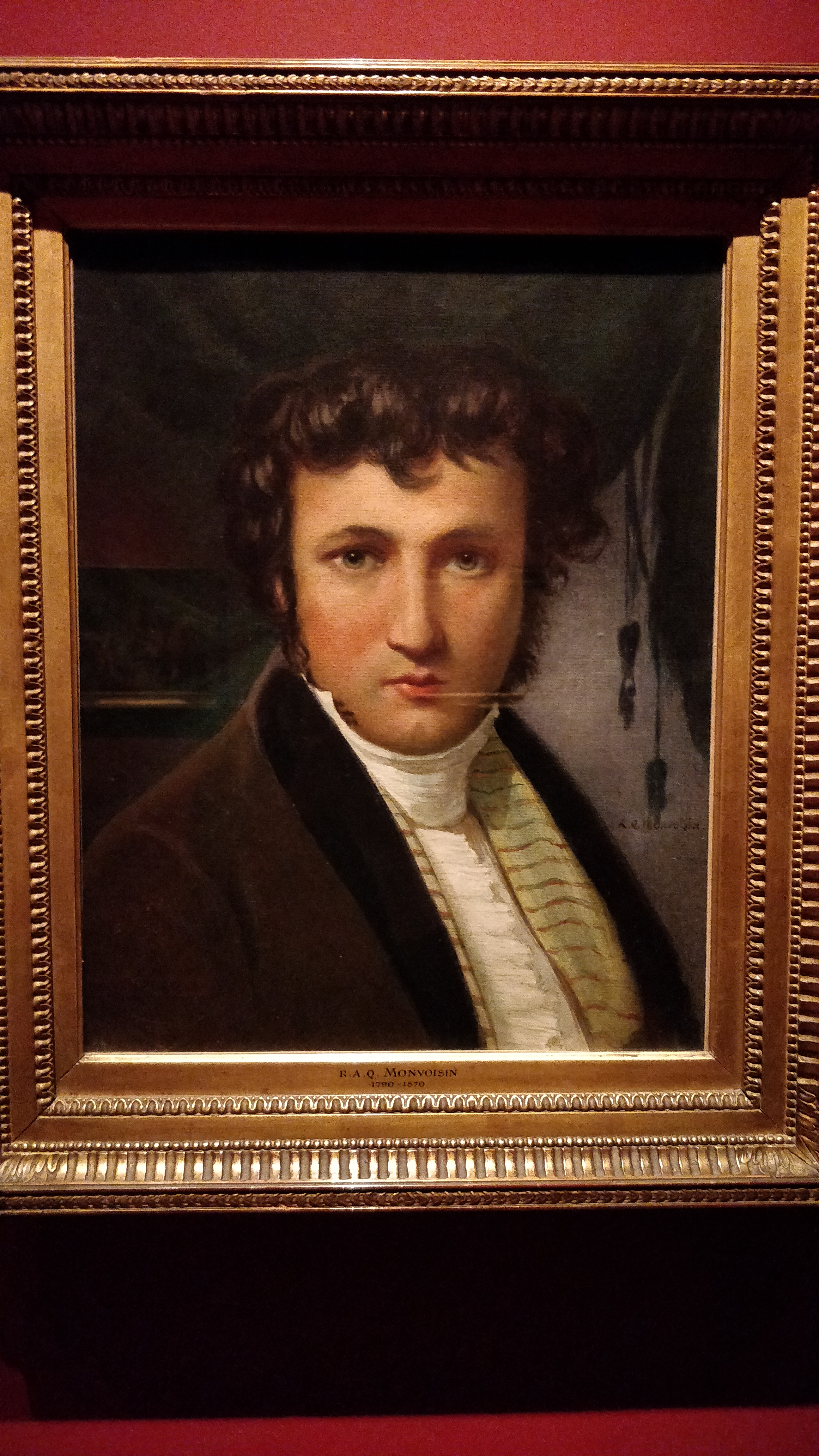
Raymond Monvoision, “self portrait,” early 1800s France.

IMG_20181003_145959.jpg
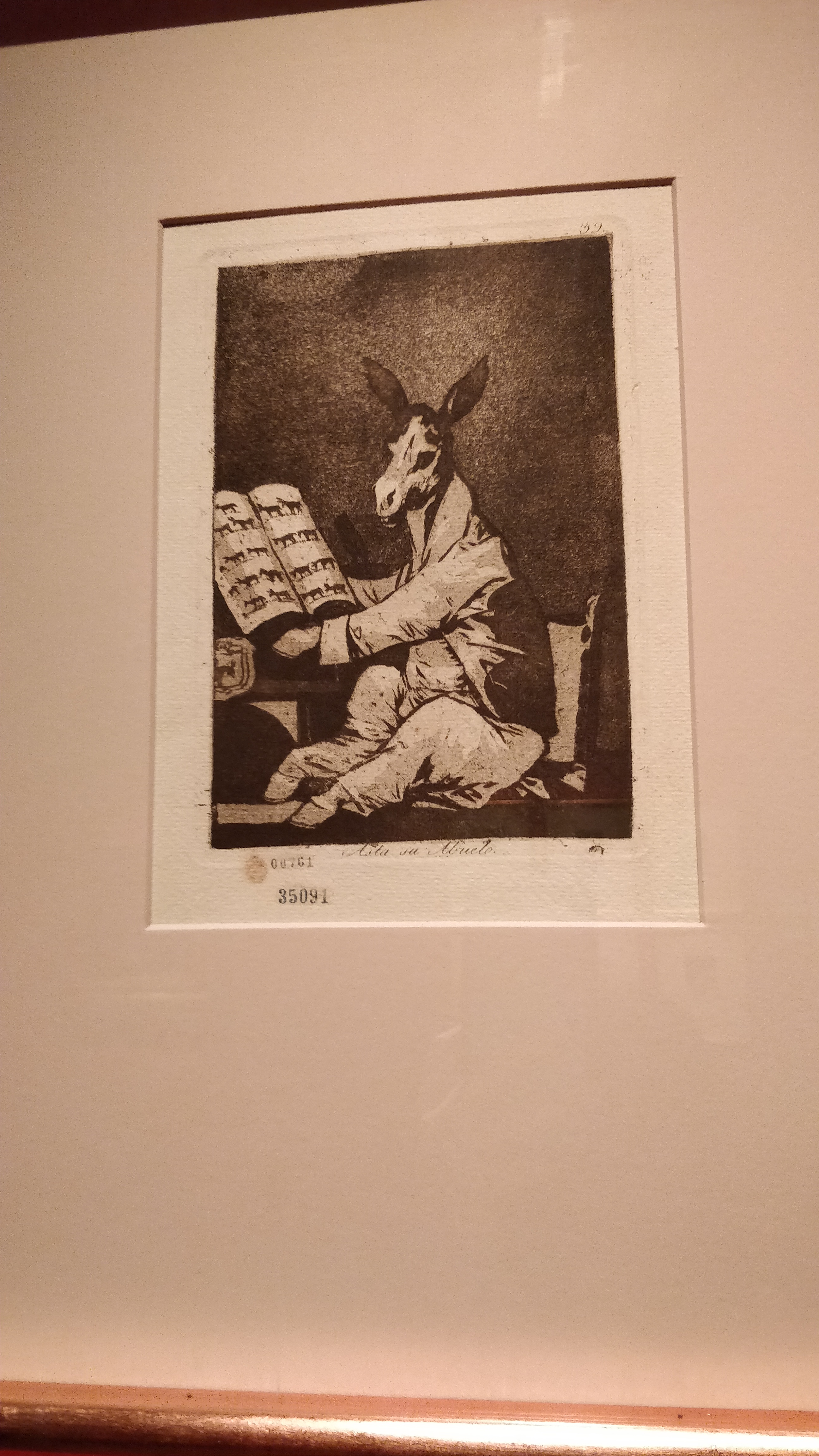
Goya, doing Goya things.

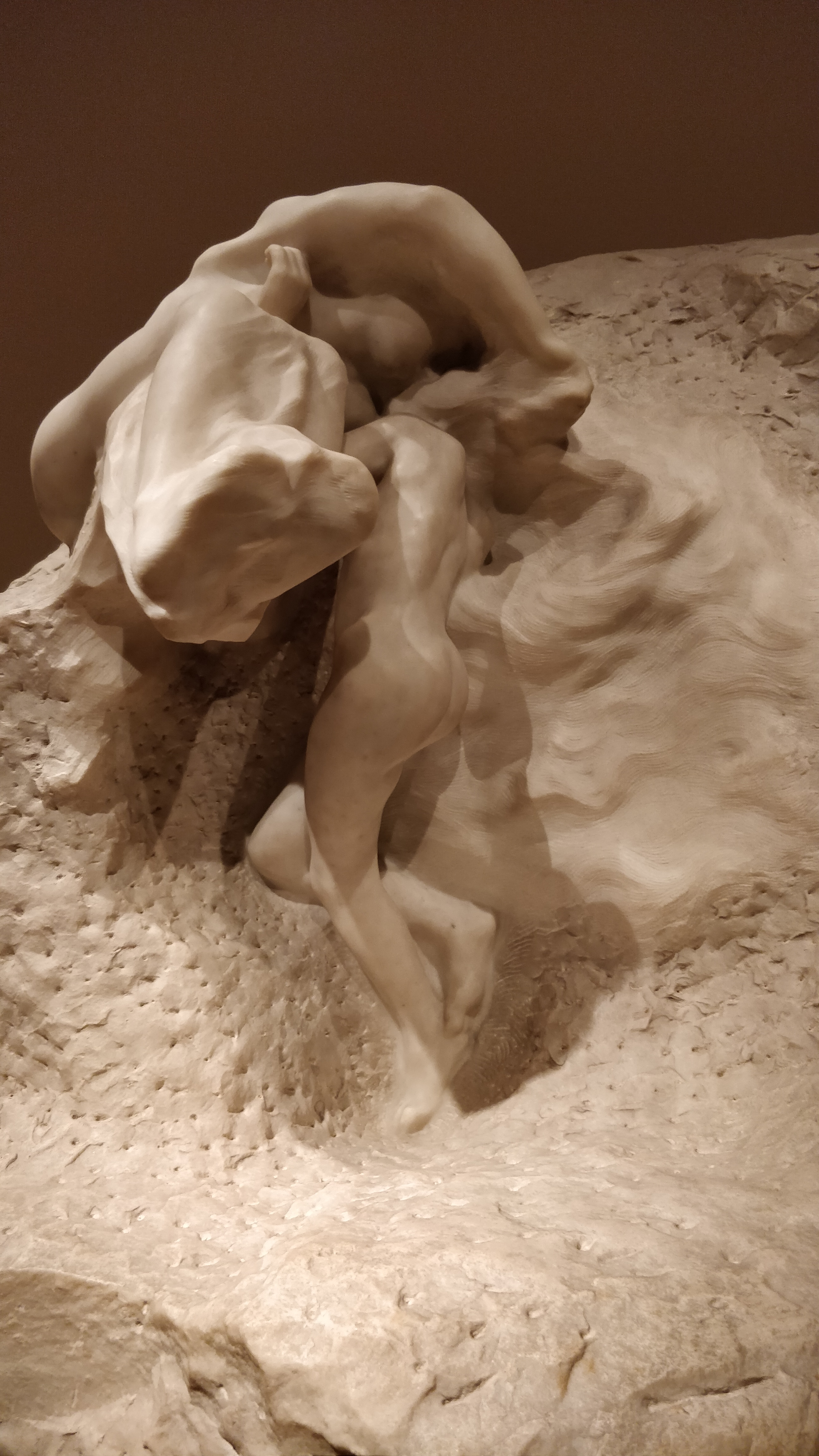
There’s a lot of Rodin, owing to the museum’s first director’s admiration of him.

IMG_20181003_145632.jpg
“The Earth and the Moon,” 1898, because how many times do you really want to look at “The Kiss”

IMG_20181003_151707.jpg
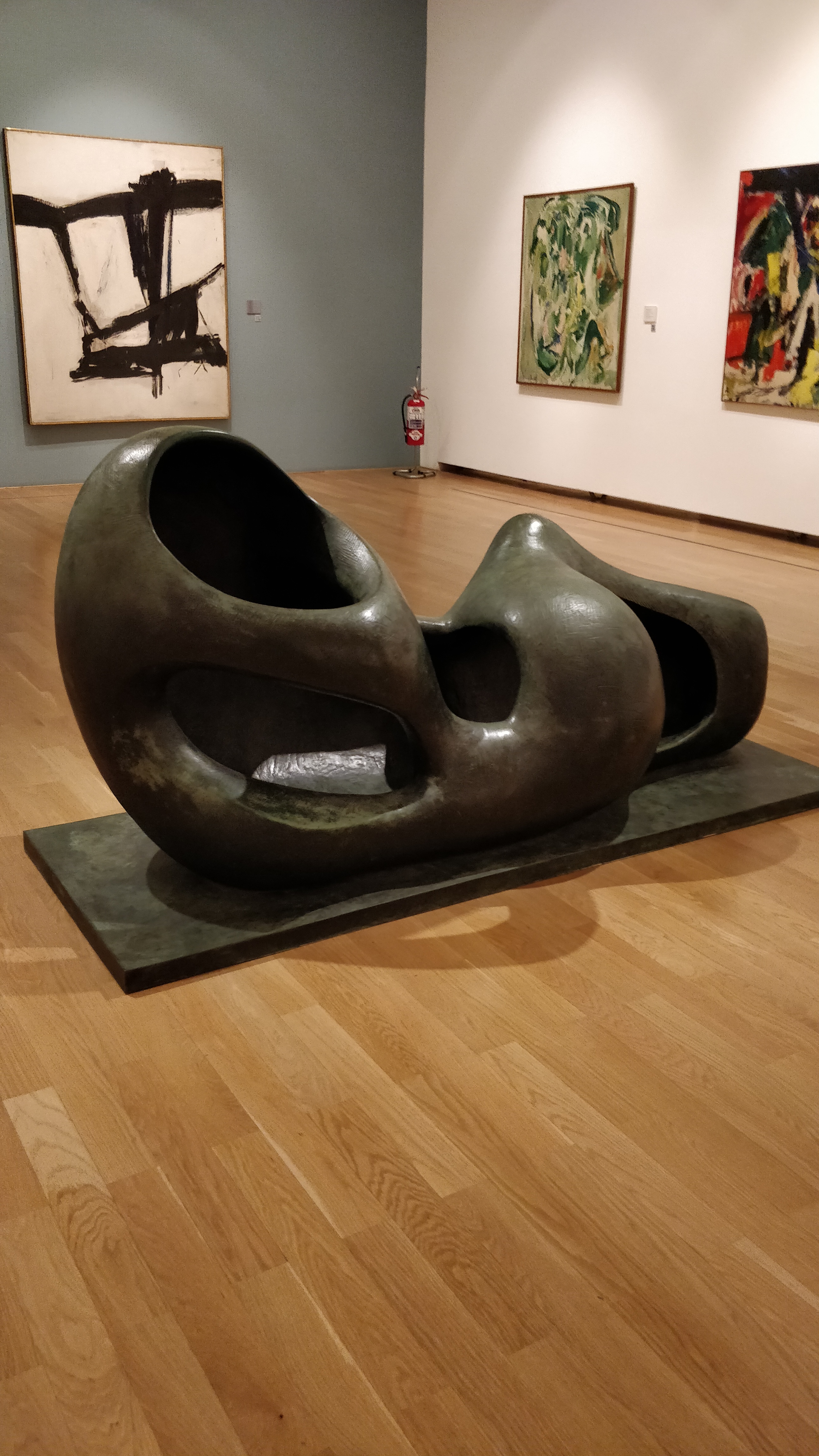
Henry Moore, “Reclining Figure, External Forms

But let’s turn our attention to the Argentine artists, my very favorite feature of Bellas Artes.

IMG_20181003_144602.jpg
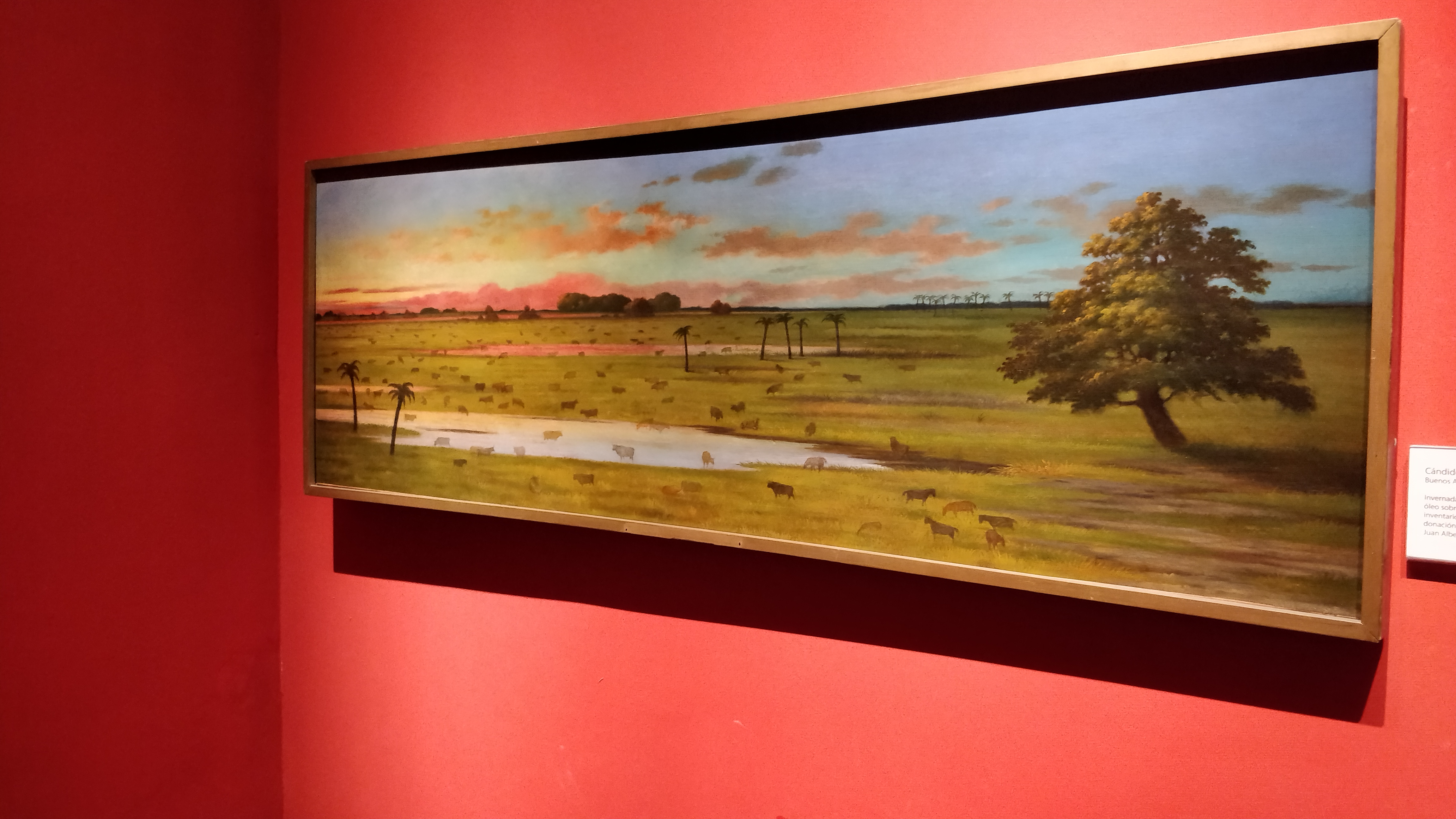
Cándido López’s “Wintering Eastern Army,” more beautiful in person than any photo I’ve seen.

IMG_20181003_152708.jpg
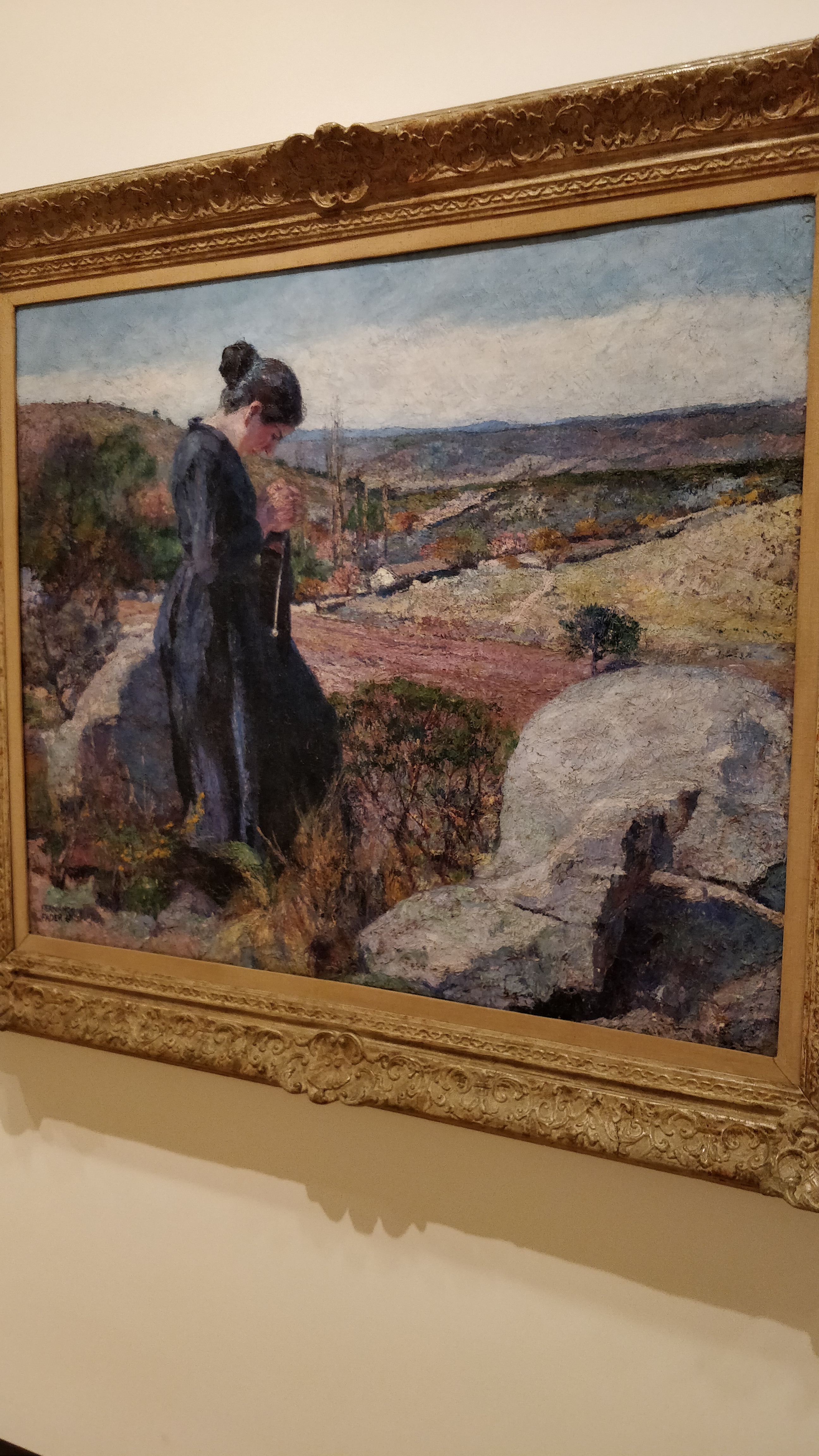
“To the Sunshine” by Fernando Fader, 1922, included here because she’s knitting.

IMG_20181003_151317.jpg
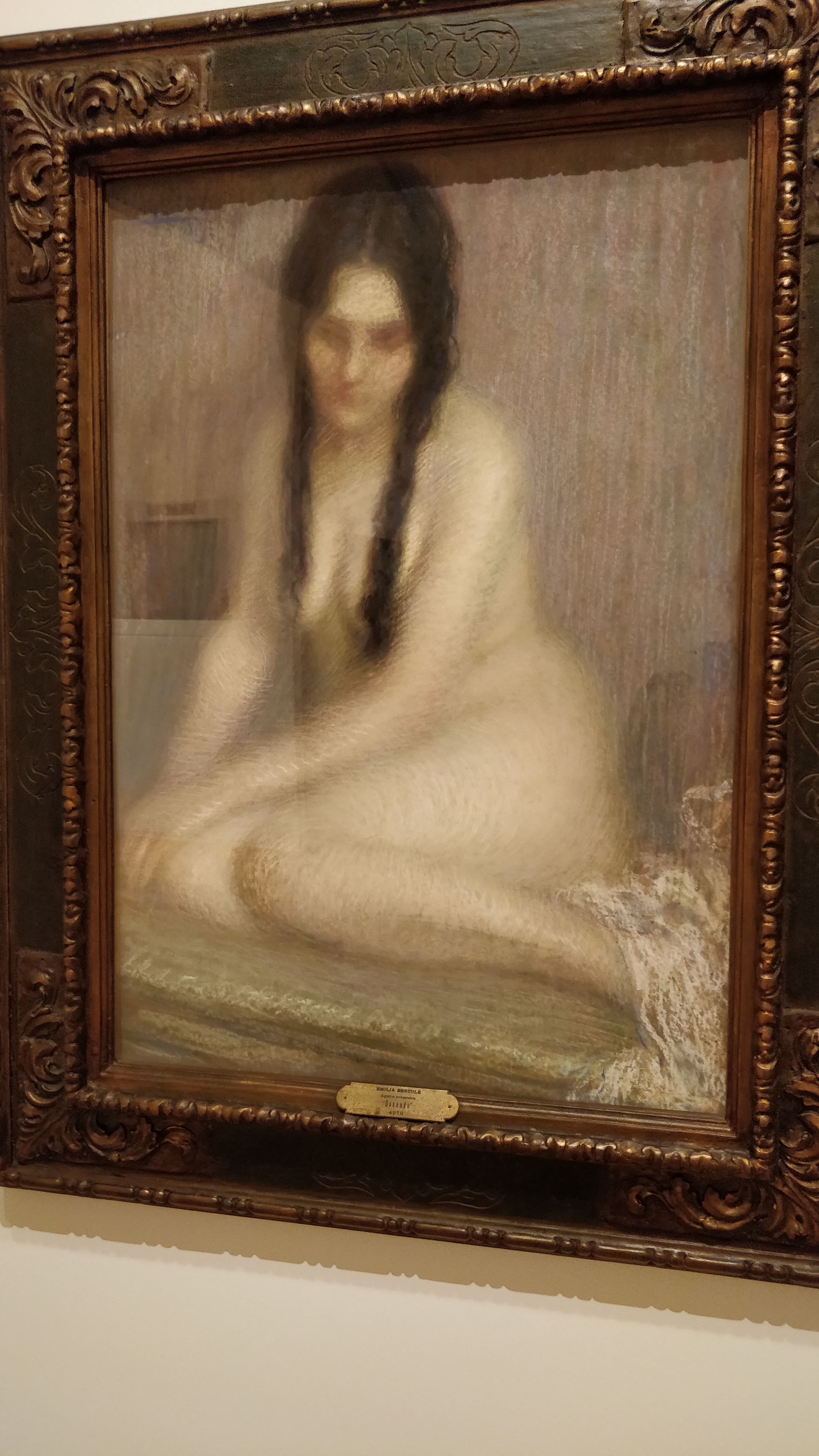
“Nude” by Emilia Bertolé, 1919

And into more modern styles:

IMG_20181003_153226.jpg
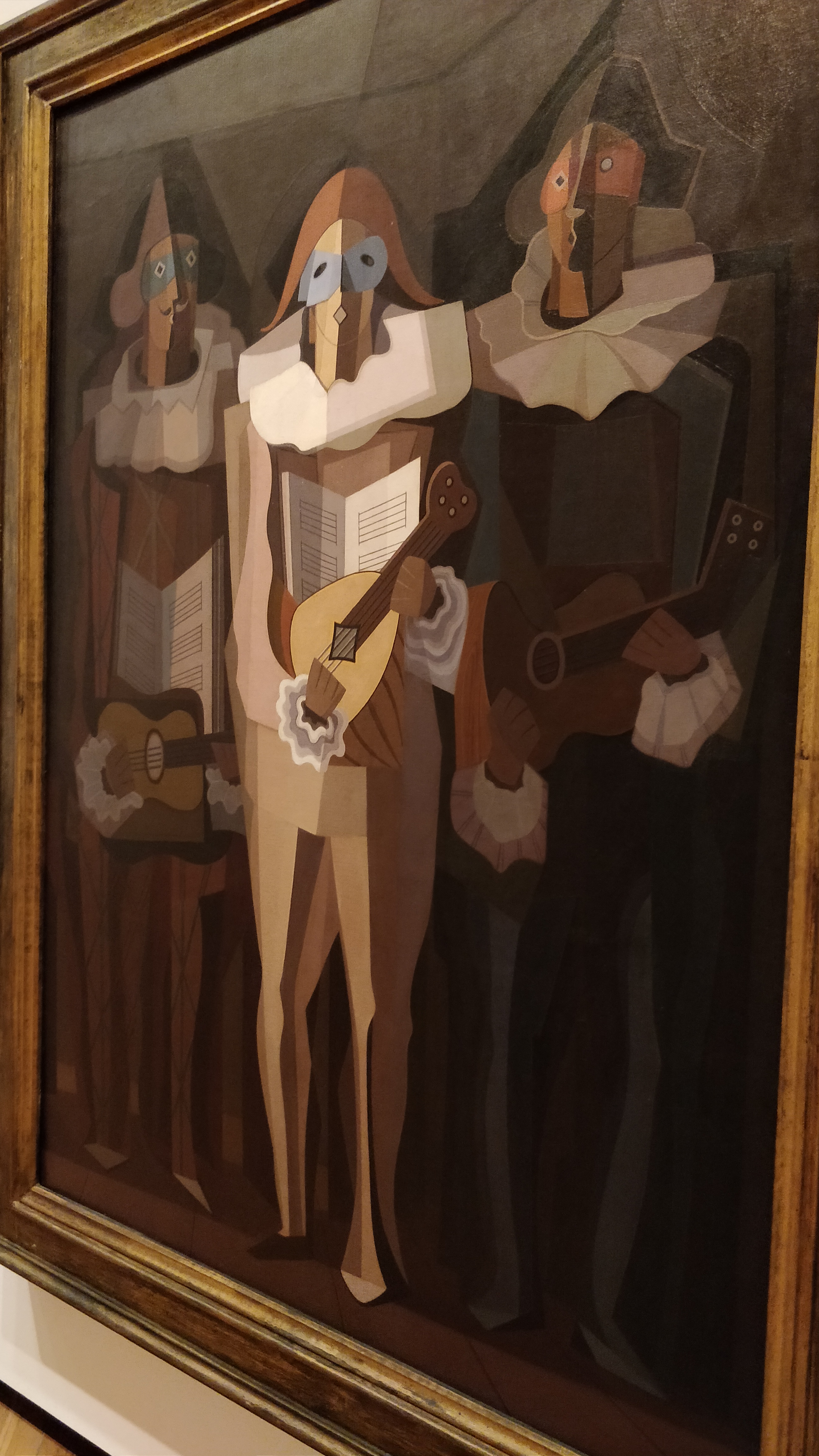
“The Improviser,” Emilio Pettoruti, 1937

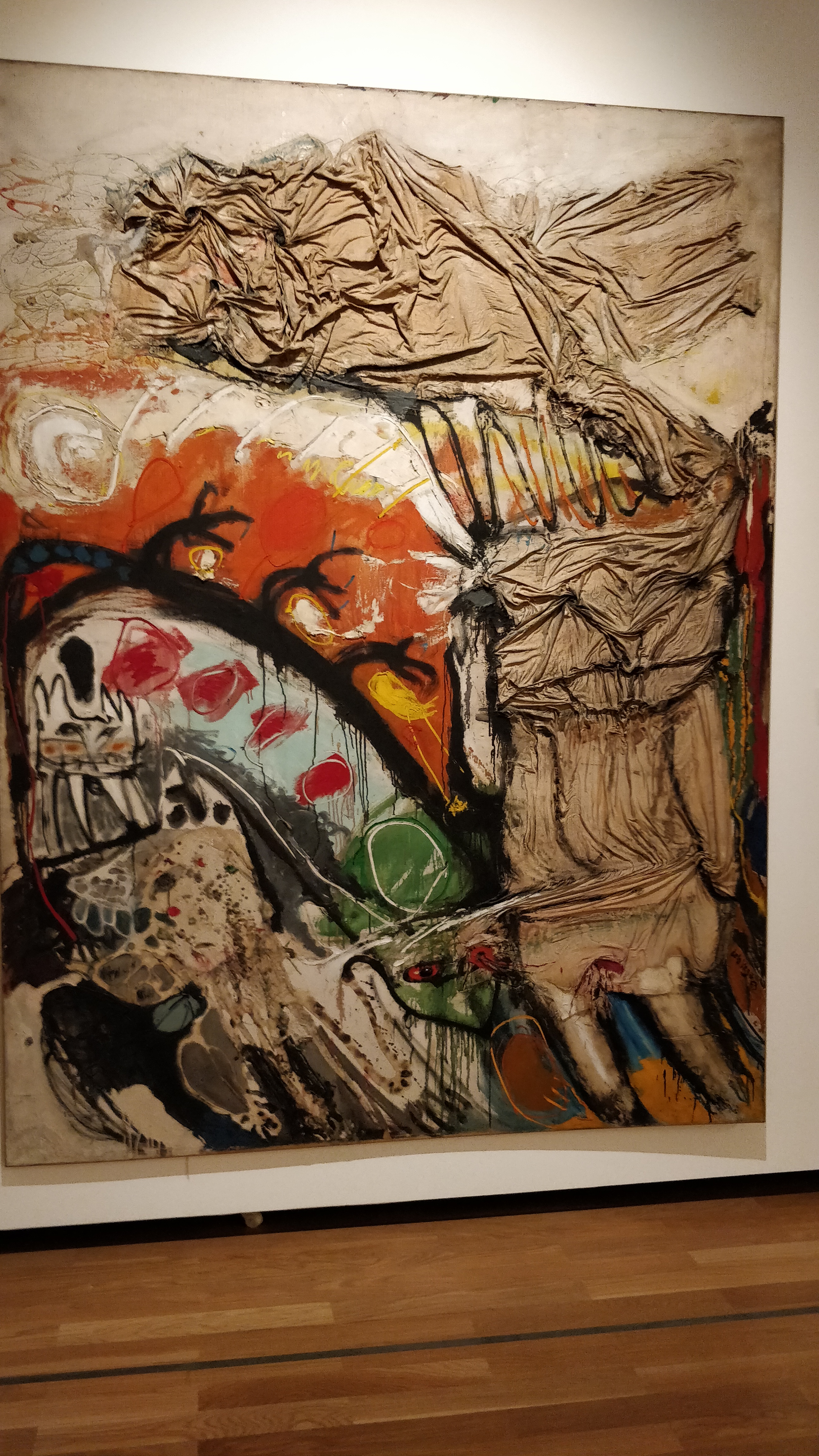
And mixed media works, such as Jorge de la Vega’s “A Timid Person’s Intimacy” (1963):

IMG_20181003_152507.jpg

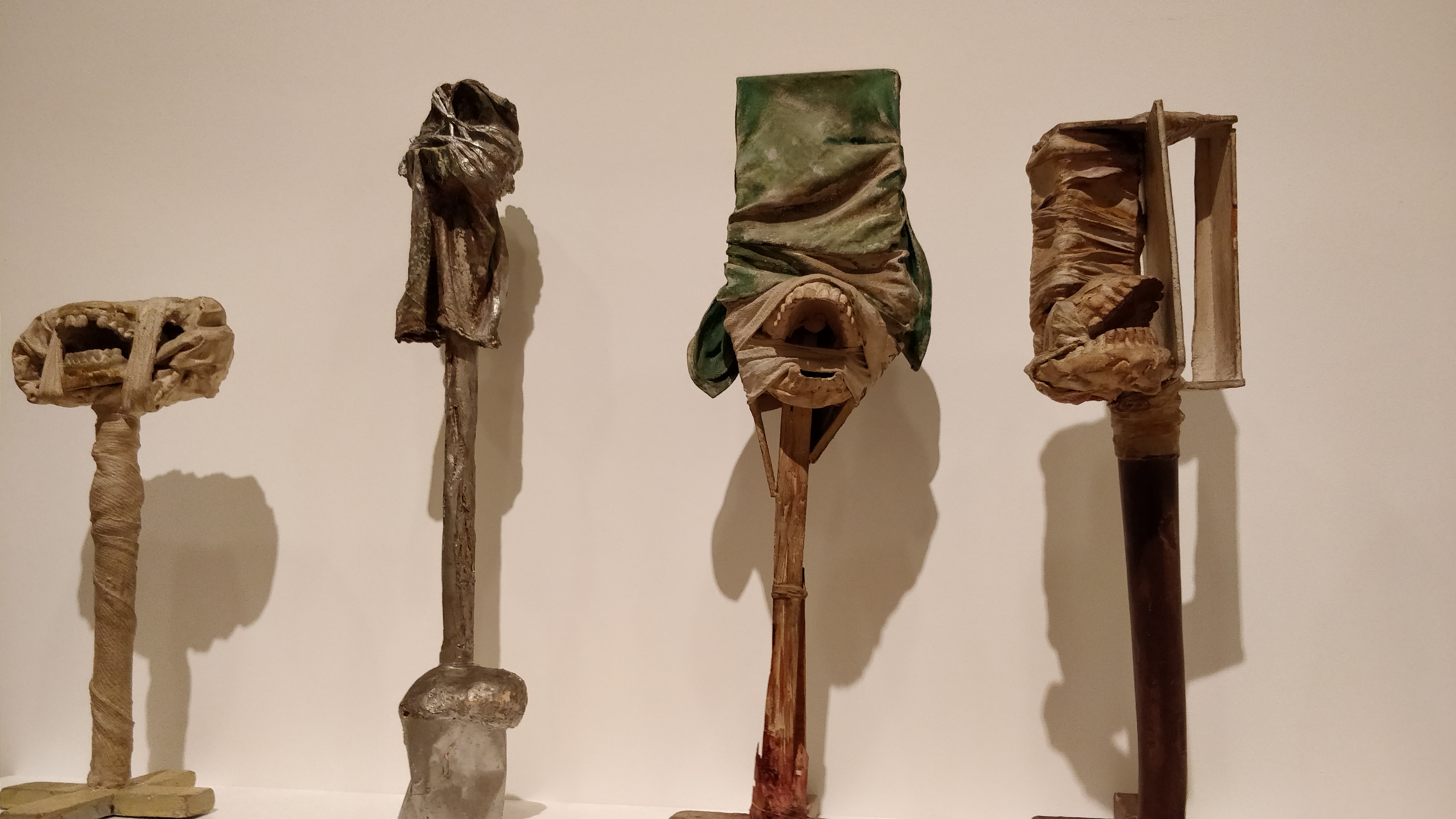
There are also, of course, Argentine sculptors represented, such as Alberto Heredia, who worked with discarded items to create his censorship allegory “The Gagged” in the early 1970s.

IMG_20181003_152243.jpg
JEEEEEZUS WHAT THE HELL MAN

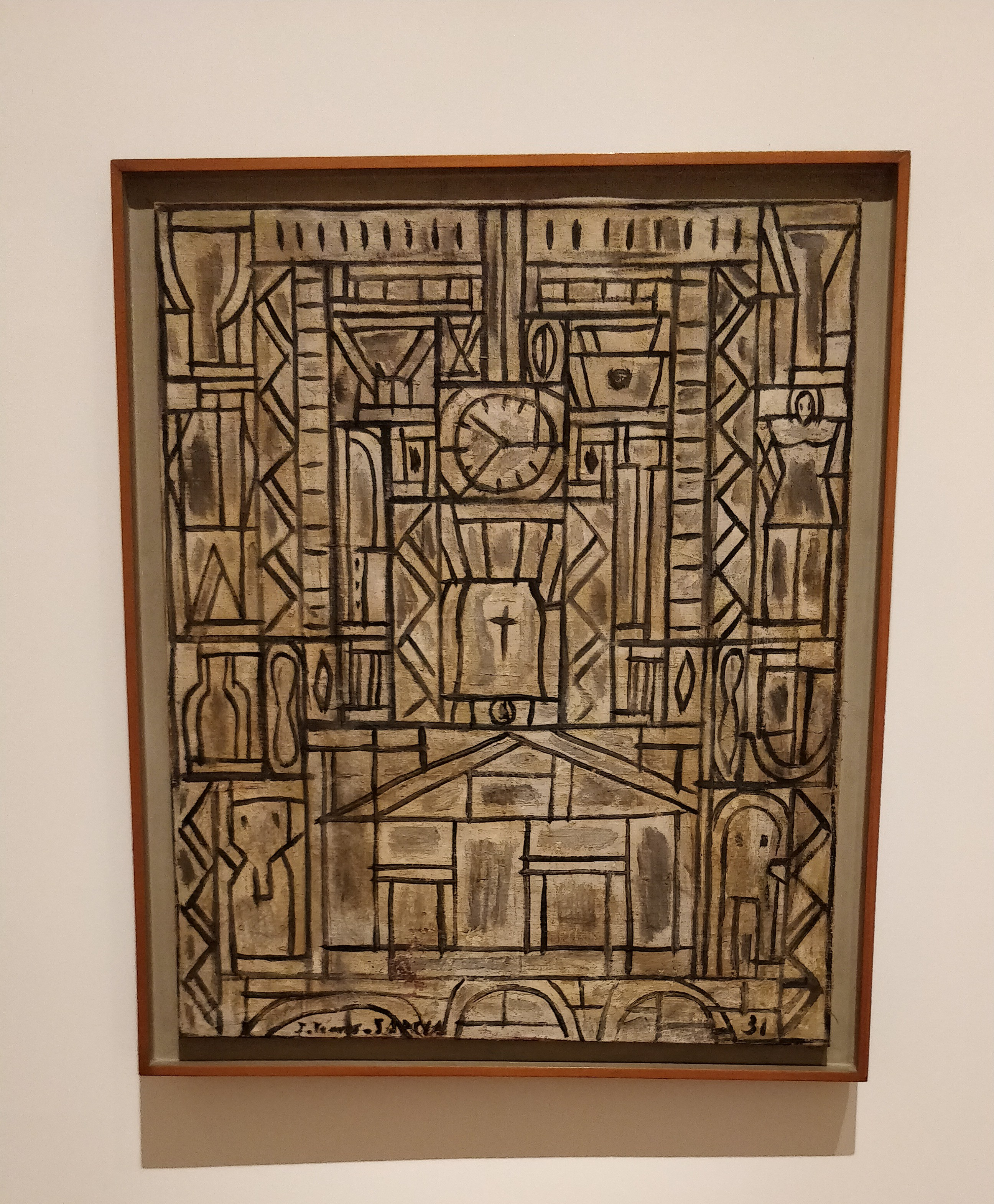
I’m also tacking on Joaquín Torres Garcia, who wasn’t Argentine but Uruguayan, because I really love his stuff so much.

IMG_20181003_153310.jpg
“Contrast,” 1931

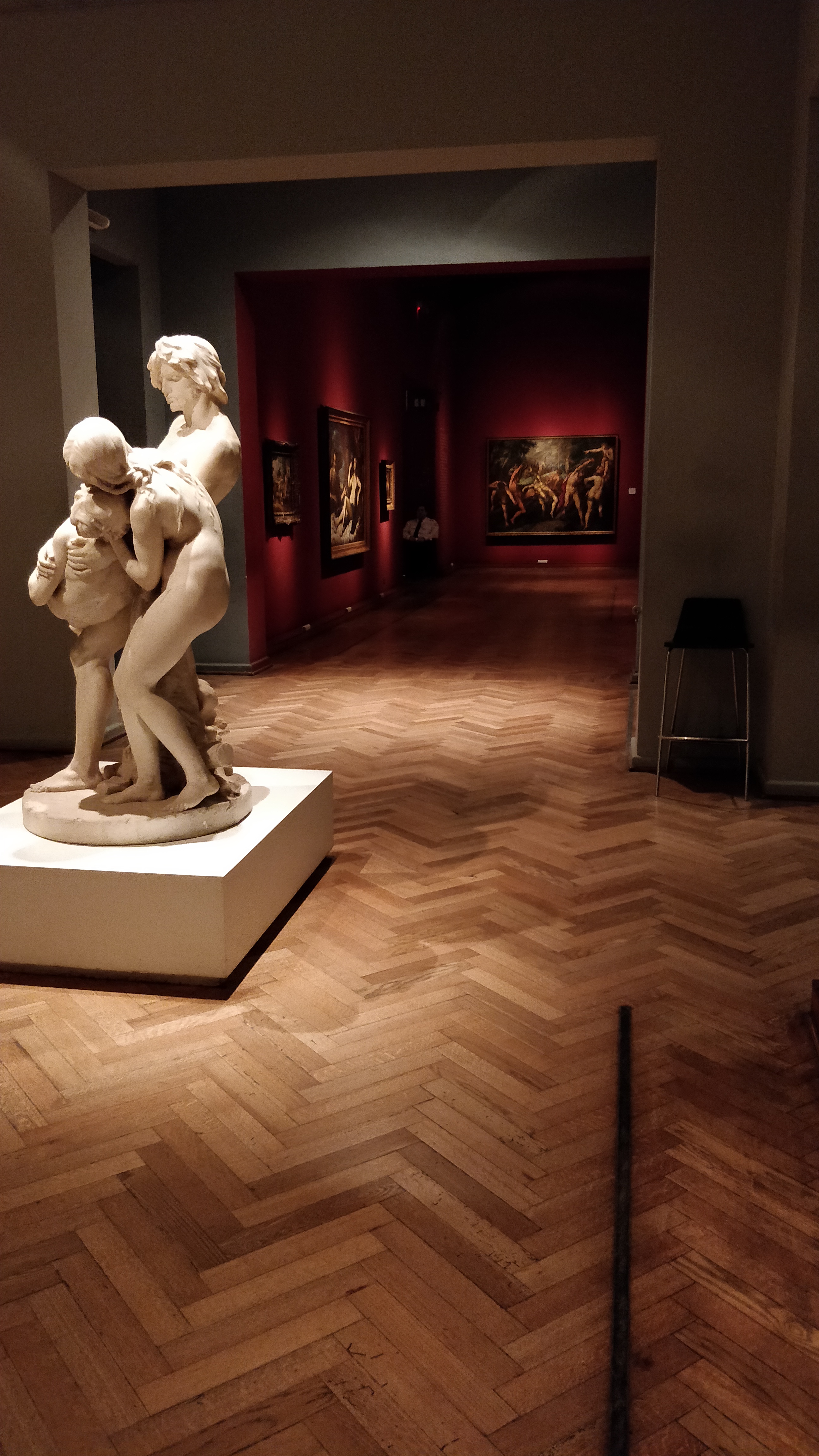
Finally, here’s views of a couple of galleries, to give you a feel for the place, and the difference between the classical art galleries and the modern ones.

IMG_20181003_150035-1.jpgIMG_20181003_151823.jpg

The Museo Nacional de Bellas Artes is big and pink and hard to miss at Av. de Libertador 1473 in Recoleta.  You can get there on a lot of bus lines and the H line of the subway.  It’s open 11am to 8pm Tuesdays through Fridays and 10am to 8pm Saturdays and Sundays.  It’s free for Argentina residents and 100 pesos (currenetly about 3 bucks US) for non-residents, although it is free on Tuesdays and 645pm-8pm Wednesdays through Sundays.  There’s a free English tour at 230pm on Wednesdays and Fridays.  Most of the signage is also in English.

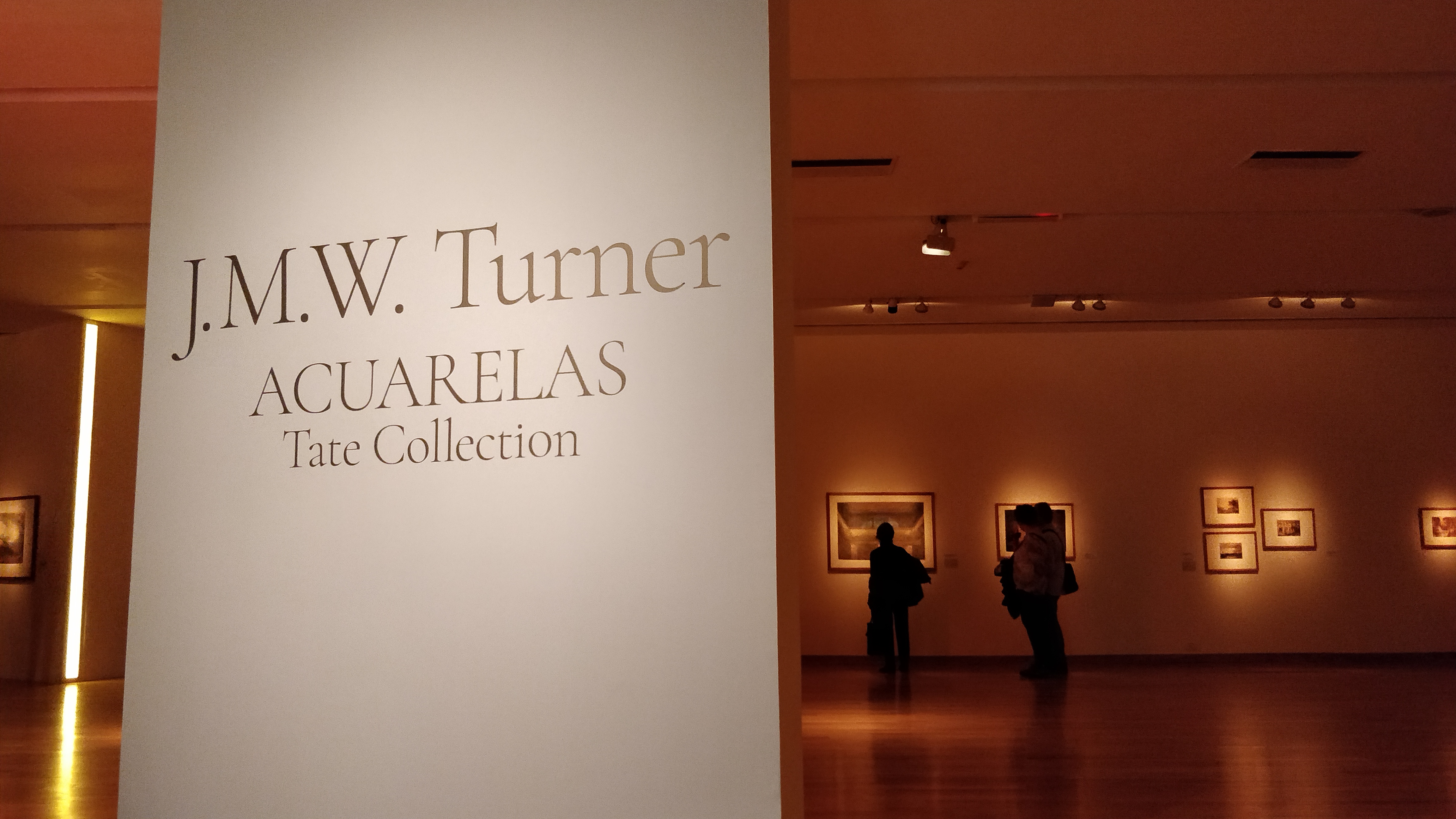
J. M. W. Turner. Acuarelas de la Tate Collection [J. M. W. Turner. Watercolours from the Tate Collection]: Special Exhibition of the Museo Nacional de Bellas Artes

The Museo Nacional de Bellas Artes is, obviously, the big cheese of Argentine art museums.  Naturally, I’m a fan.

IMG_20181003_133728.jpg
Absolute unit of a museum

As you’d expect, it hosts some pretty impressive temporary shows.  Currently, there’s one I was not going to miss.

From my scant education in art history, I picked up a couple of things about J. M. W. Turner:  I love him, and he used very, very long titles.  Also that he was very prolific.  Ok, so three things.

IMG_20181003_143021.jpg
Curators need something snappy, however

Eighty-five watercolors from the span of Turner’s career make up the show.  They do not disappoint.

IMG_20181003_135327.jpg
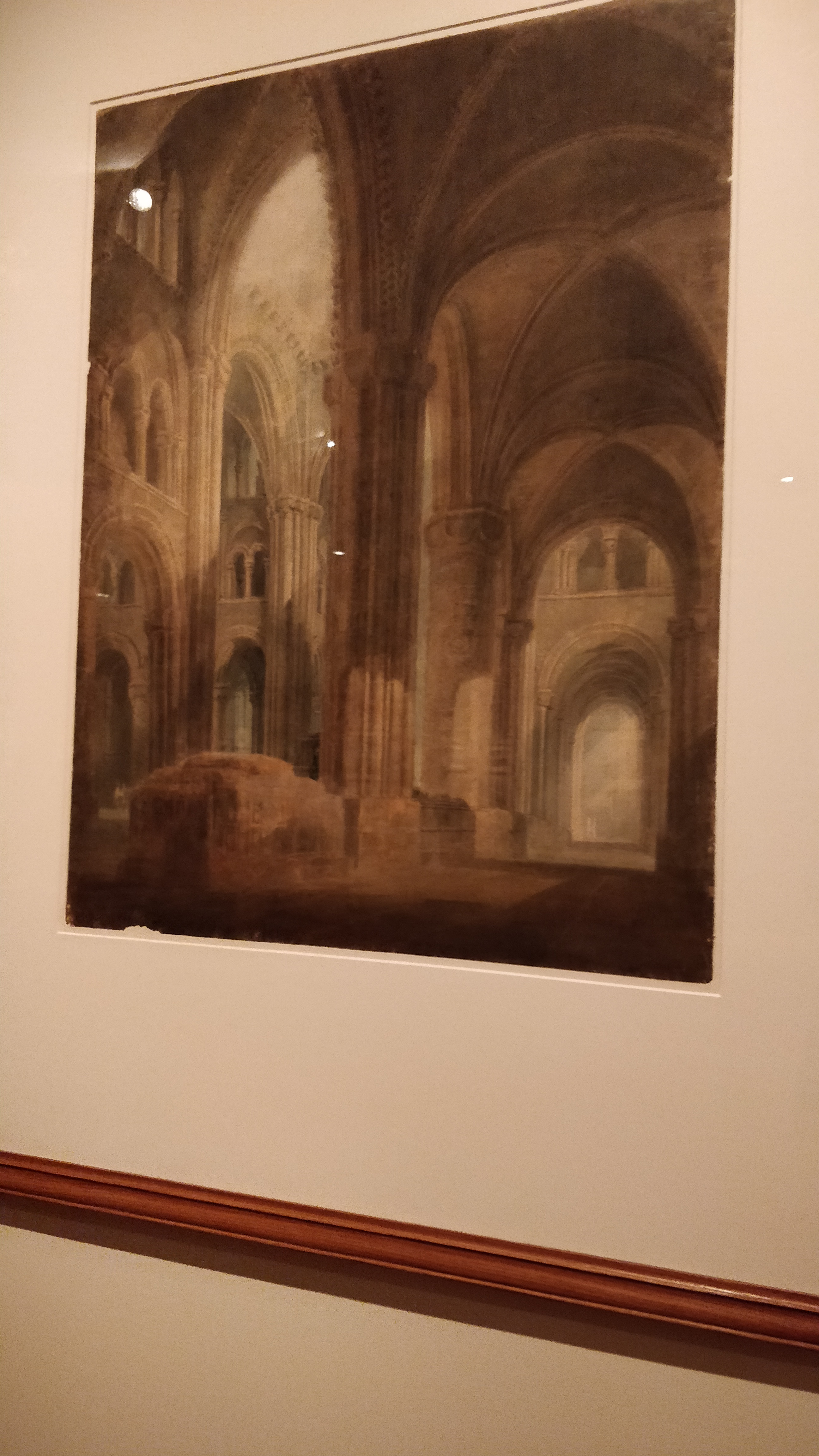
Durham Cathedral: The Interior, Looking East along the South Aisle, 1797-8

IMG_20181003_135553.jpg
An Old Woman in a Cottage Kitchen (“Internal of a Cottage, a Study at Ely”), 1795-6  see I was not even kidding about the titles

These two are from earlier on in his life, and you can read details about the paintings written by people more knowledgeable than I at the links, which go to the Tate’s website.

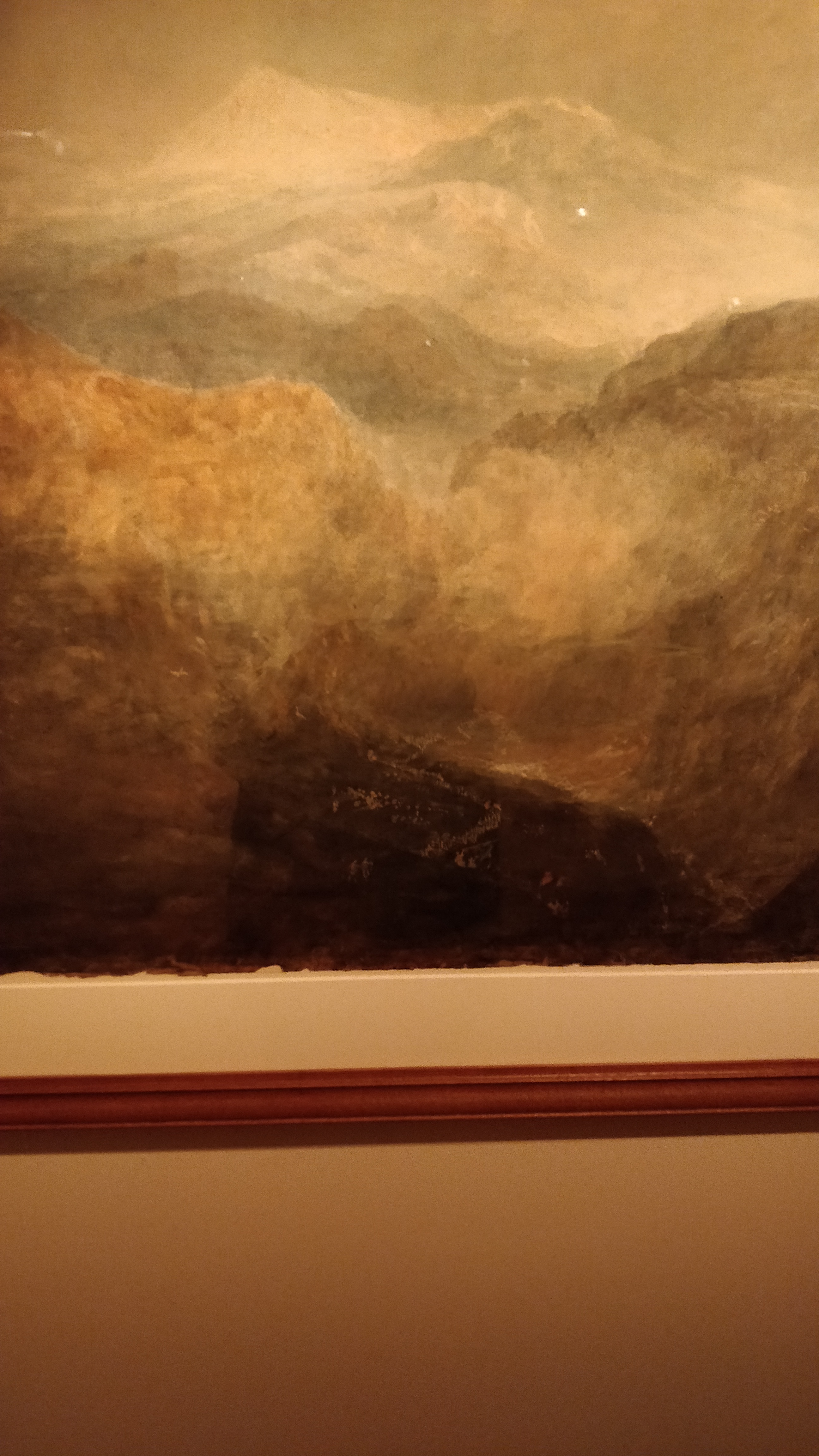
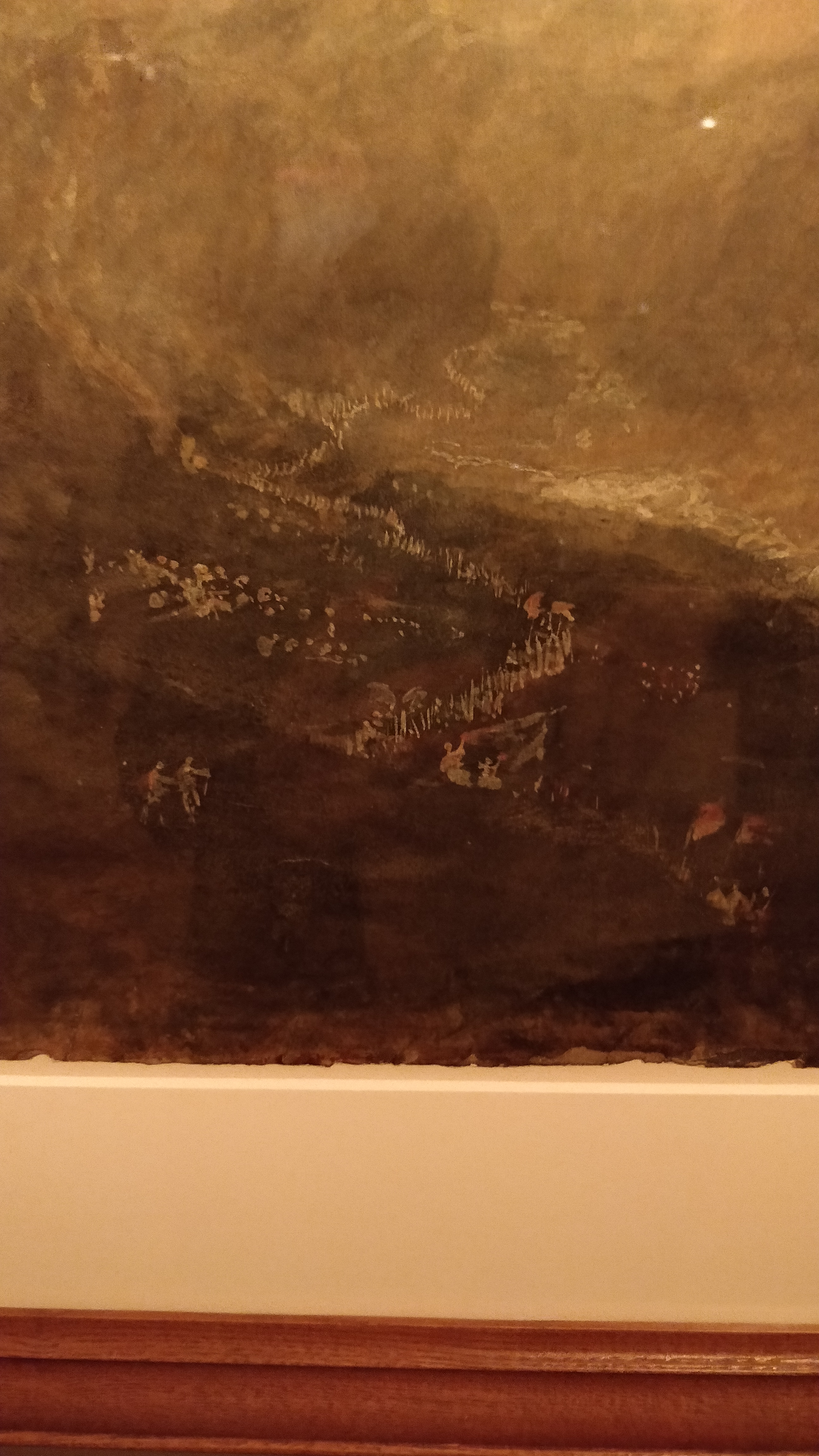
For my part, I enjoy looking at Turners from different distances.  Here is The Destruction of the Bards by Edward I (c. 1799-1800).  It’s a wild, beautiful landscape.  Maybe you’re wondering where the slaughter of the bards is going on though.

IMG_20181003_141645.jpg
Squint

IMG_20181003_141651.jpg
Wait, is that a wall or sheep or what

IMG_20181003_141657.jpg
Oh there’s the mass execution.

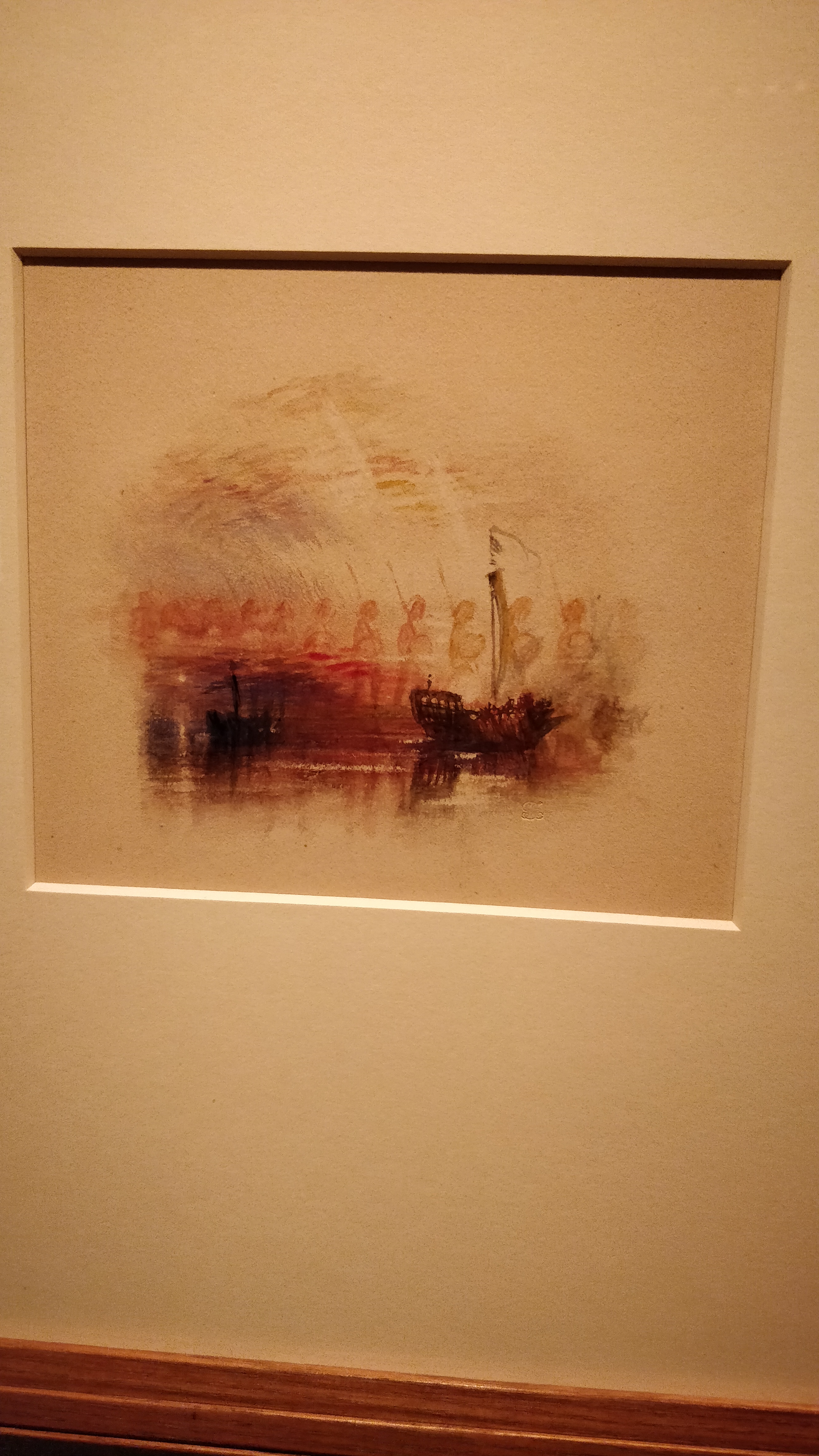
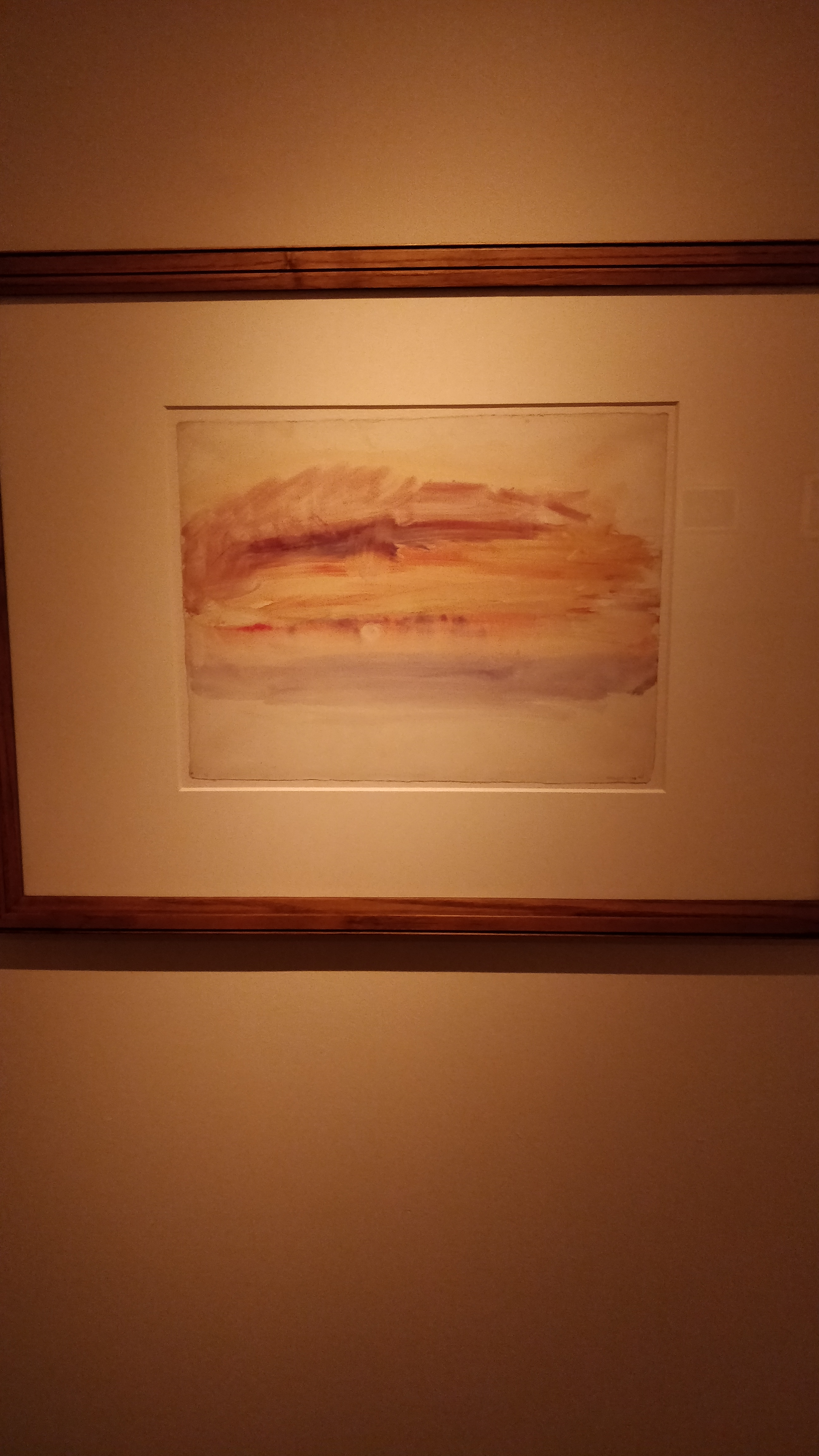
The landscapes (and seascapes) are my favorites, with the expressive colors and elusive atmosphere.  I feel like I’m clearly looking at a scene, without being able to pinpoint what I’m looking at.  Does that make sense?  I feel like it doesn’t, but it’s the best I can do.

IMG_20181003_141126.jpg
The Vision of Columbus, for Rogers’s ‘Poems’“, c. 1830-2

IMG_20181003_141423.jpg
“Sea and Sky” c. 1845, one of many many many many “Sea and Sky”s from his late period, when his style took on a light touch, fluidity of color, and lack of detail, and he couldn’t be fussed with titles anymore.

Moving through his career and life in the form of his watercolors is a fine way to spend an afternoon.  The explanatory signage is in both Spanish and English.  The ticket into the show is AR$100, but it is free on Tuesdays and the rest of the week after 645pm (the museum is closed Mondays).  The temporary exhibition pavilion is rather tucked away, so hold on to your ticket and follow your map, as the path isn’t obvious.  As a major museum, swag is of course available, although Turner-specific swag has just two images to choose from.  The exhibition closes February 17, 2019.

The Museo Nacional de Bellas Artes is easy to reach via the Facultad de Derecho station of the D line of the subway and sits between three major avenues in Recoleta.  Can’t miss it.