It’s the first Cemetery Series entry outside of Argentina!
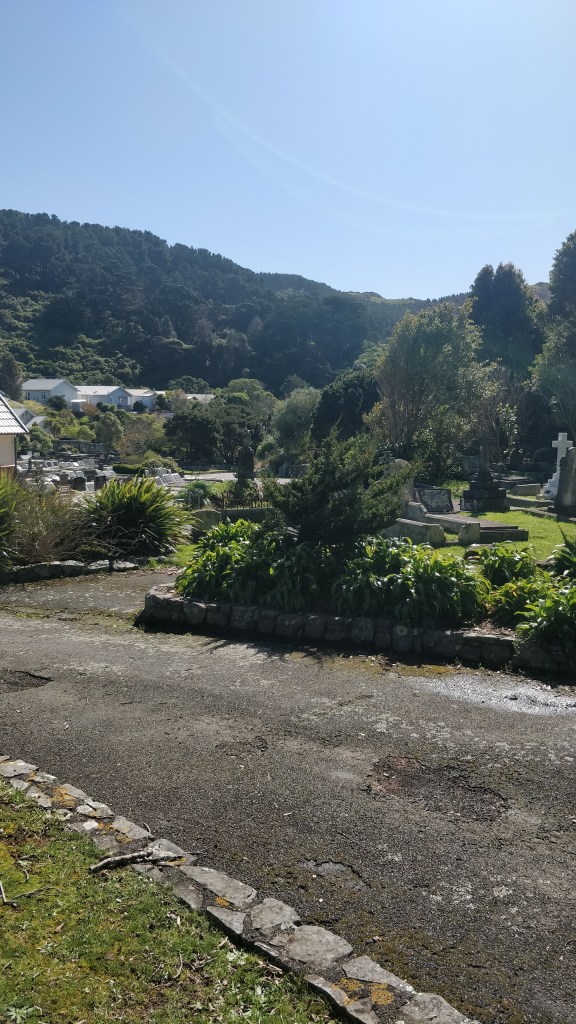
Like most of the Wellington area, it could be described as “frequently windswept”
I’d like to start by thanking the Friends of Karori Cemetery, who (in addition to researching its history) organize tours of cemetery, and led us around during our visit. That visit occurred on Suffrage Day, so the tour was focused on a few of the women who in life signed the 1893 women’s suffrage petition. You can read more about how New Zealand was the first self-governing nation to grant women the right to vote, if you want to get deep in your feels about the deficiency of your own home country, a depth I think many of us have some solid recent experience with. But I digress.
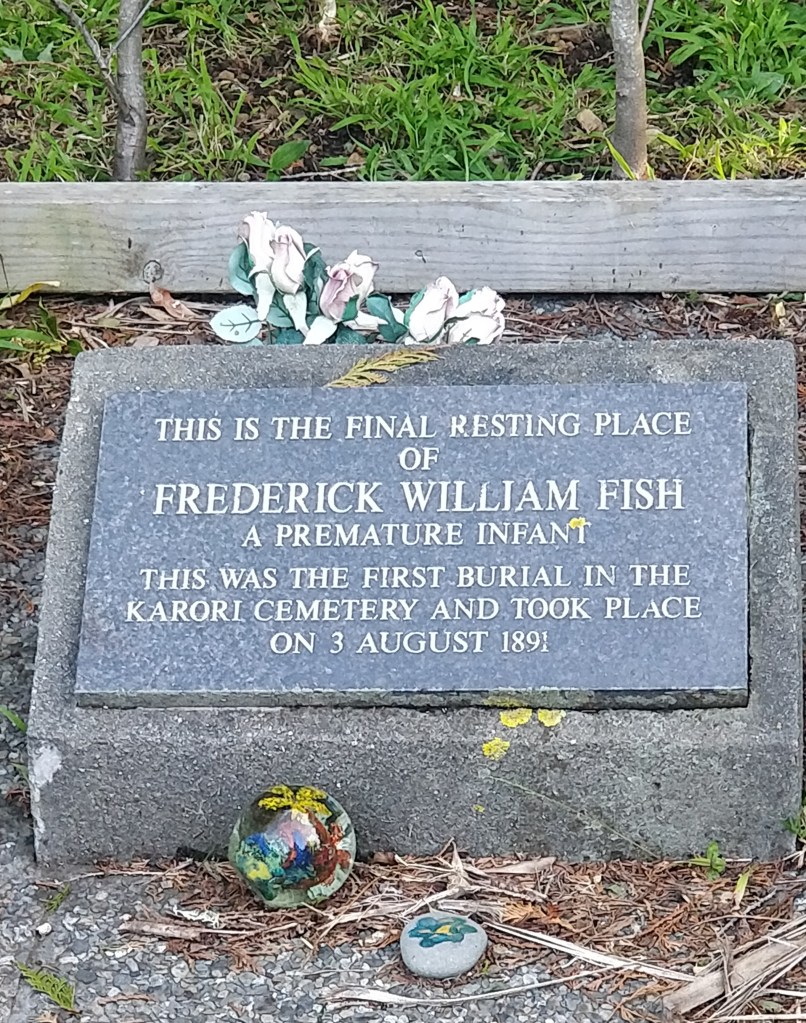
Karori Cemetery was opened in 1891, following the stuffing-to-the-seams of the cemeteries closer to the center of the town. Karori at the time was still rural, and so the first burial, that of premature infant Frederick Fish, remained alone on a windy, bare hill for six months, when the next burial took place.
Freddie didn’t have a marker until the Friends got him one, but he does have a lot of neighbors now.
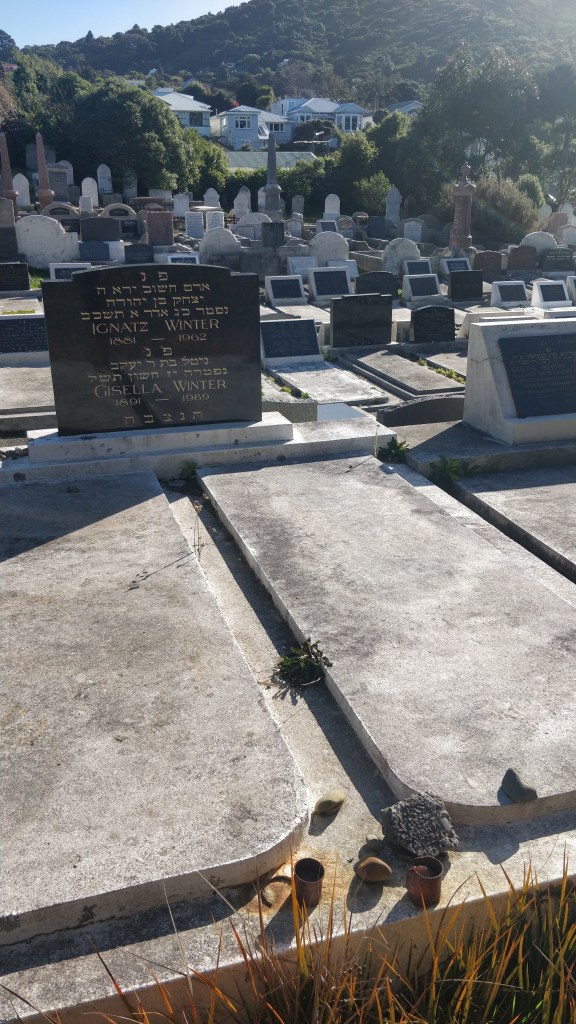
Karori Cemetery is the second largest in the country, and has about 83000 burials (and counting). Being so big, I didn’t see all, or even most, of it–but broadly, the big sections are the Catholic, Anglican, Jewish, and public sections.
I happened to park near the Jewish section, near the cemetery shelter.
Naturally, as I took photos, I assumed that I would remember at least the basics of the people mentioned. I assume this every time I take photos on a tour, and I am wrong 100% of the time, but hope springs eternal, along with wildly unearned optimism.
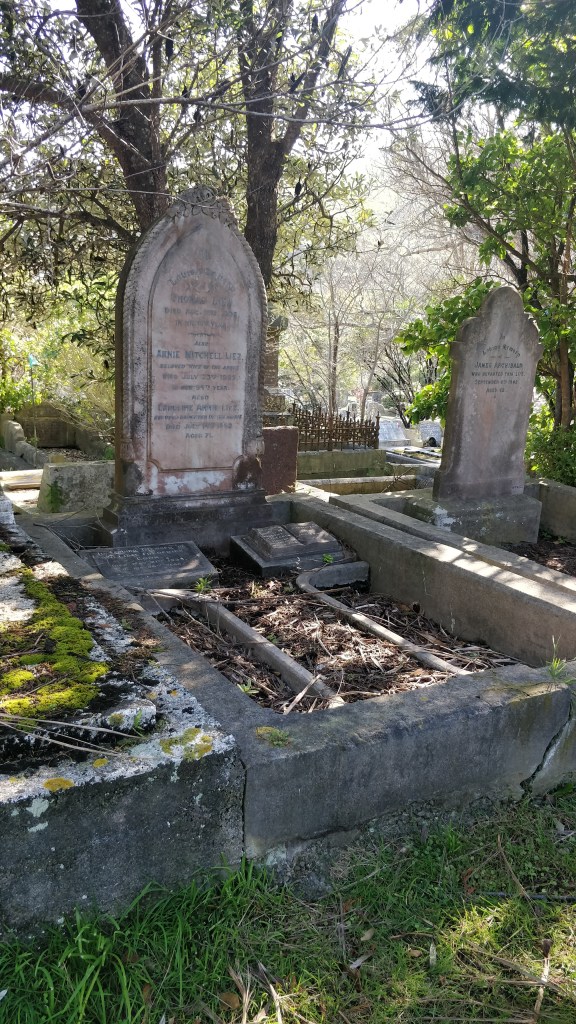
Annie Liez was a widow who signed the petition and lived to 94.
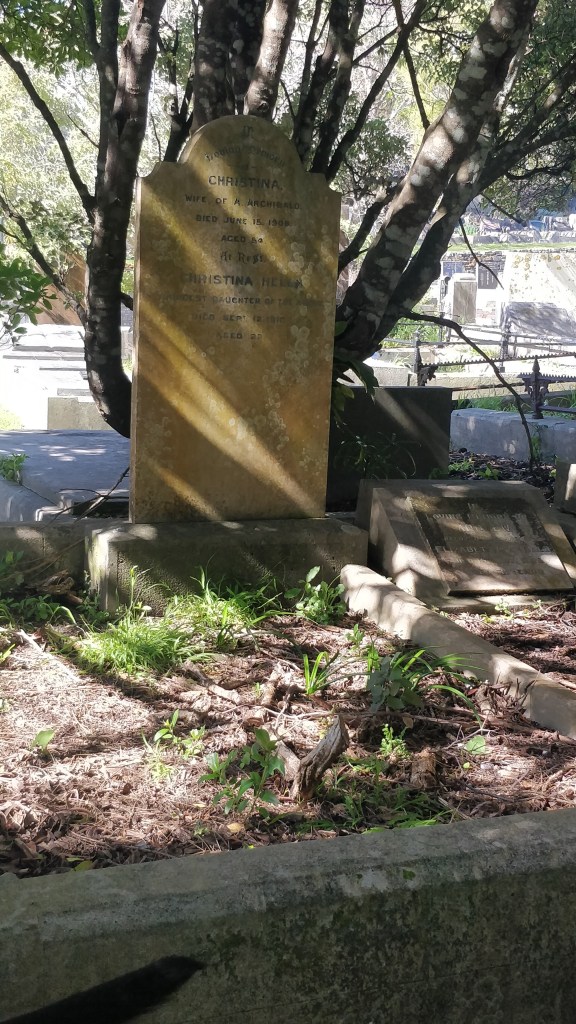
Christina Archibald was a signer, one of thousands of women who were asserting to the government what they already knew–a penis is not required.
Susan Hoar signed the petition, but did not live long enough to participate in an election.
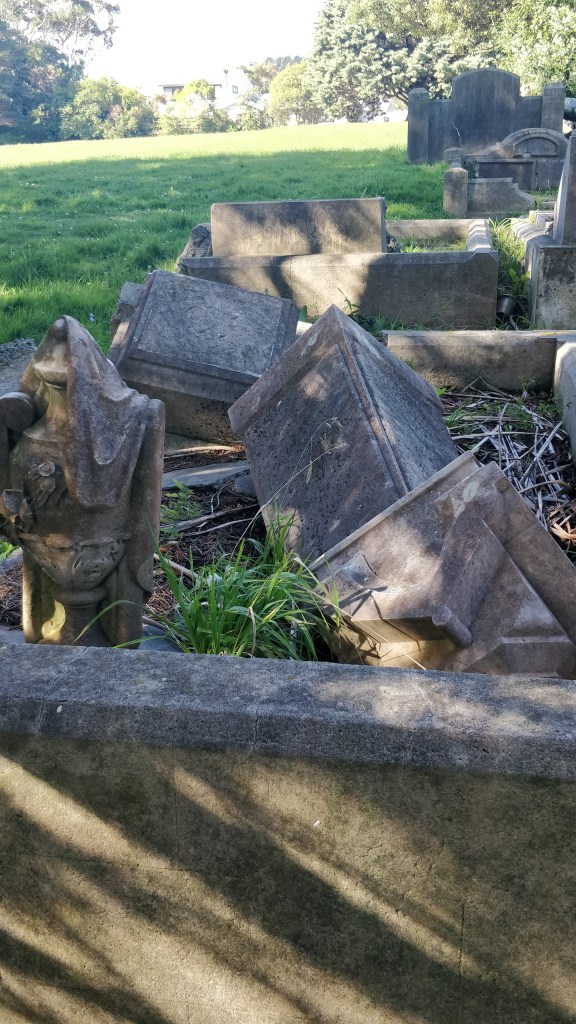
Let’s take a look at some of the grave symbolism, a thing that modern graves are often woefully short on (although I did not upload any photos of stones inscribed with the disconcerting euphemism of “fell asleep on” such-and-such date).
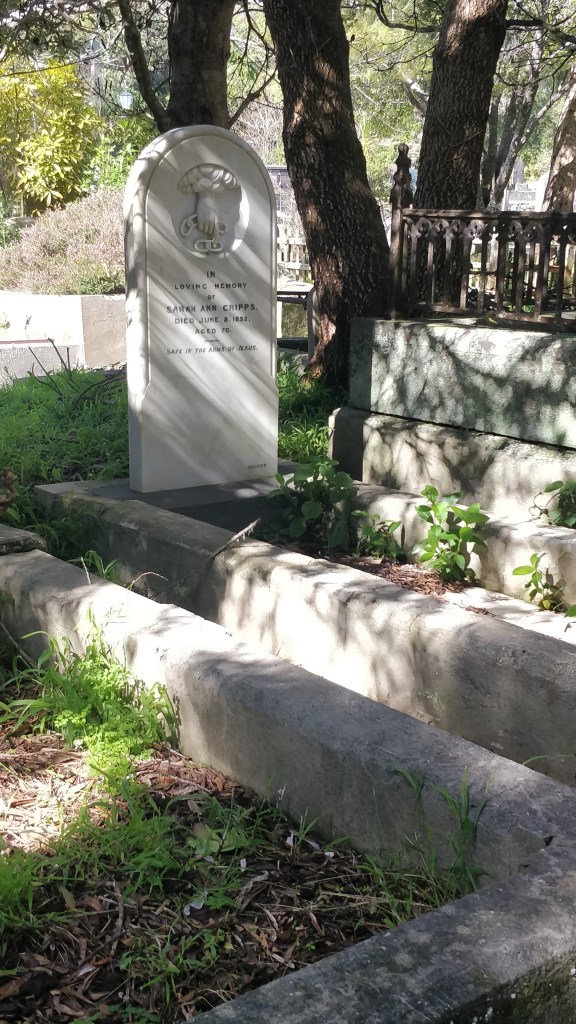
Broken chain, symbolizing the broken chain of life. This headstone has been professionally cleaned, which makes a crazy difference.
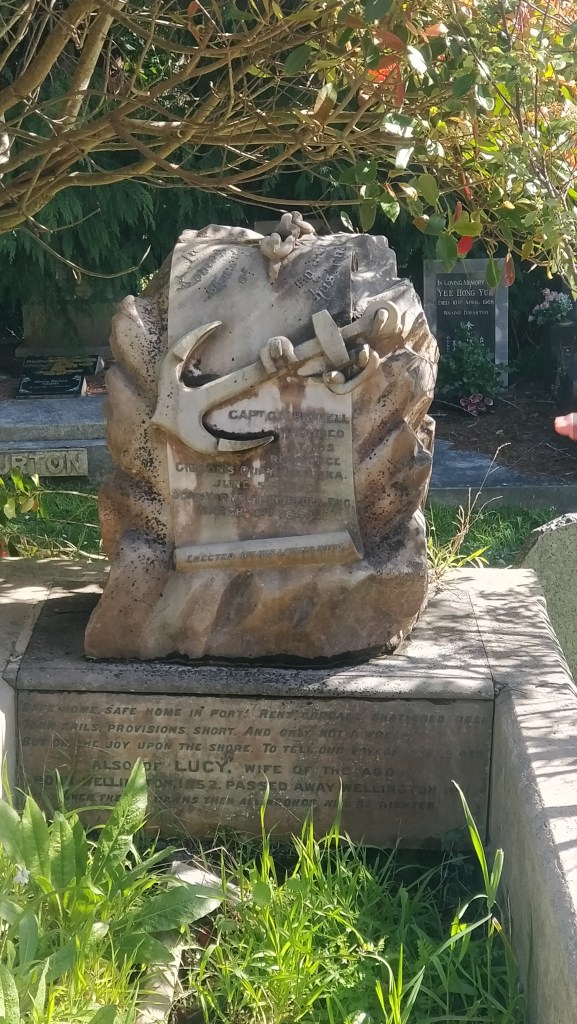
The anchor refers to the man’s profession.
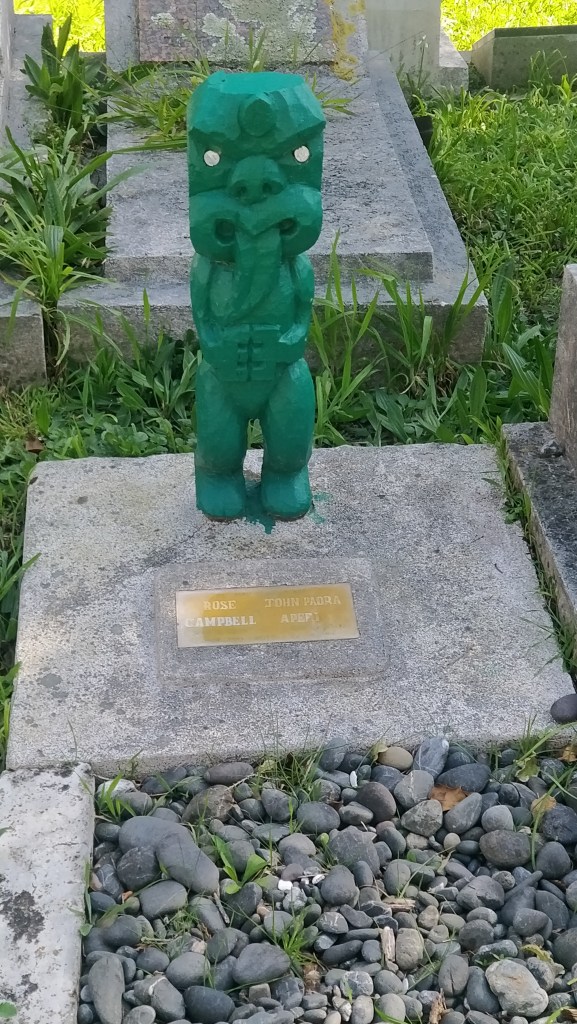
I haven’t been in New Zealand long enough to know much about Maori symbolism, but here’s a couple of graves I passed that include some.
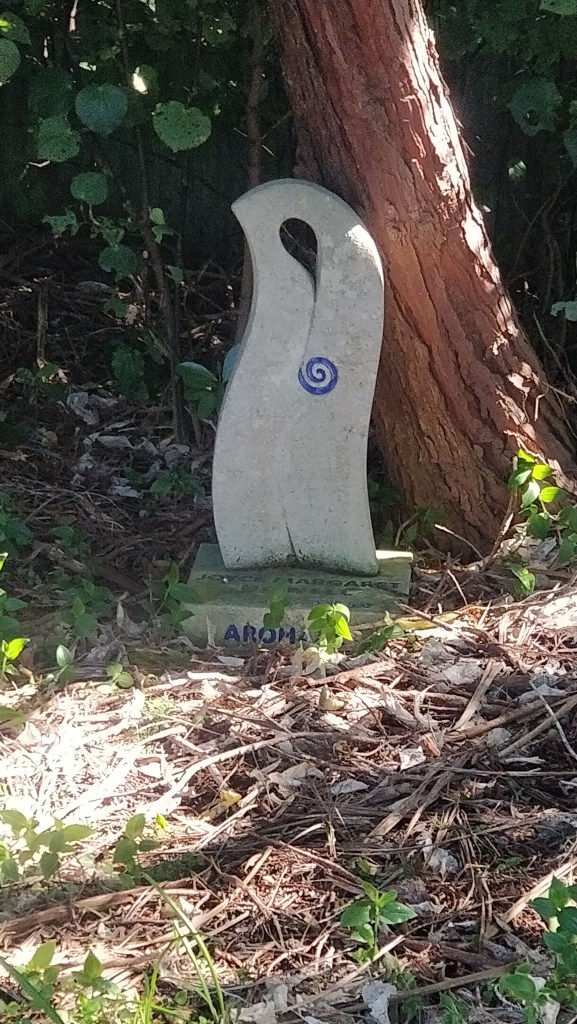
The koru symbolizes new beginnings, as in the Maori proverb, “As one fern frond dies – one is born to take it’s place.”
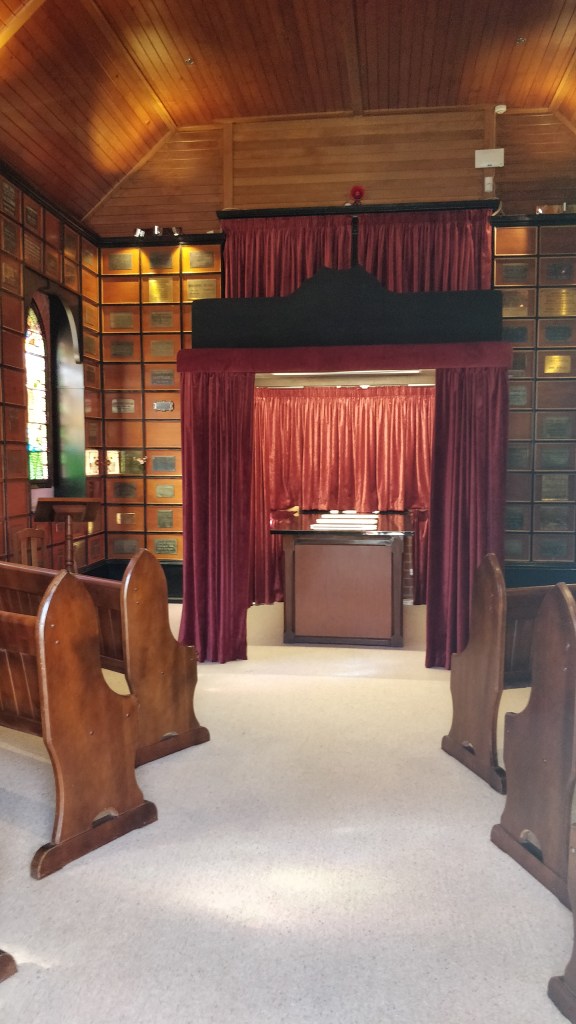
Let’s look at the inside of the chapel and crematorium, since I did not get a photo of the outside for some reason. It was built in 1909, which you know because that’s the large number chiseled on the wall.
The walls are lined with…I dunno the term. Ash cubbies?
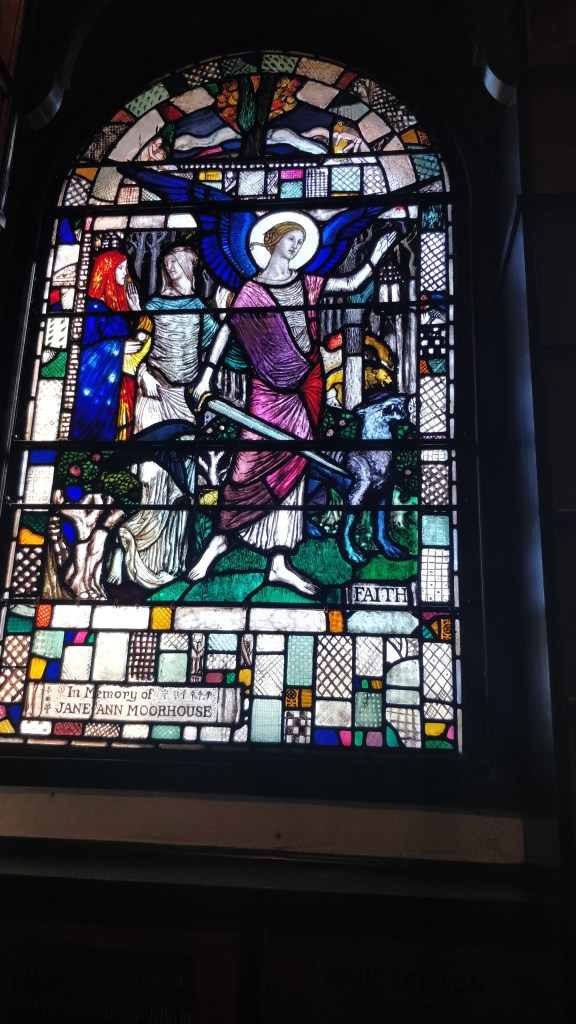
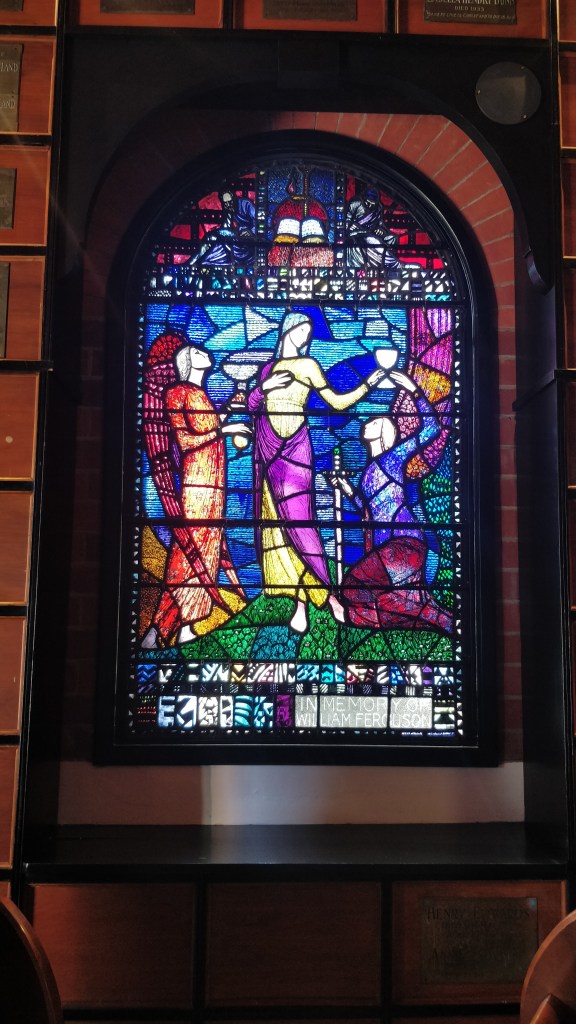
The glass windows were commissioned to memorialize members of William Ferguson’s family, including 8-year-old daughter Louisa (I know, but you can’t talk about cemeteries without mentioning some real raging bummers). They came from the Irish workshop An Túr Gloine, world renowned glass artists. “Faith,” shown below, is one of two created by Wilhemina Geddes, noted glass bad-ass.
This is “Wisdom” by Michael Healy, commemorating William Ferguson himself.
The windows held to be real gems of stained glass art by those who are into that sort of thing, and having done a tiny bit of stained glass work in my teens, I can vouch for its hardcoreness, in terms of blood shed.
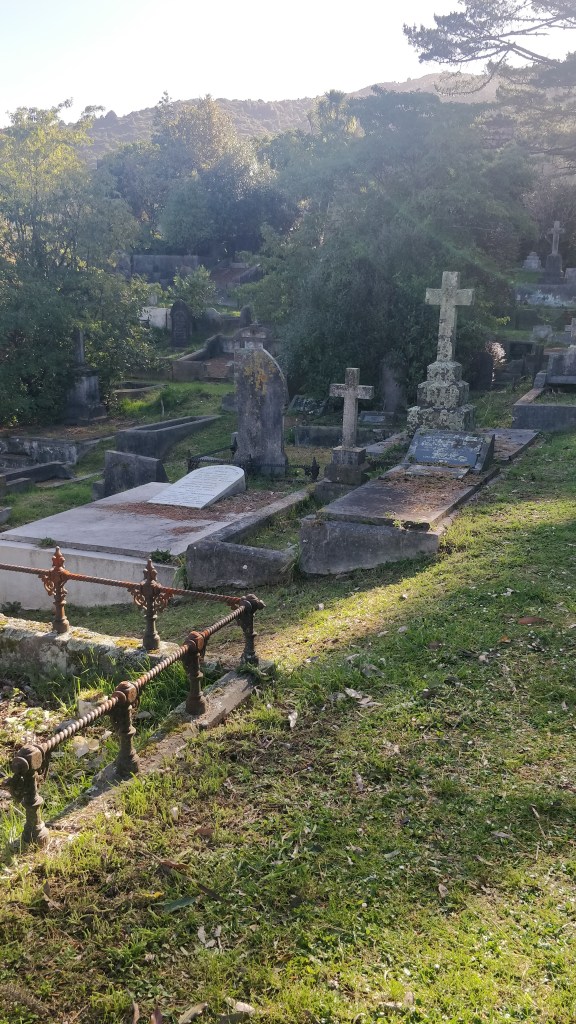
Before wrapping this entry up, let’s have a peek at a couple more gravey vistas.
Memory garden near the entrance. I’ll be honest; this was a drive-by photographing and I do not have any deets on this one.
The Karori Cemetery is open every day, and I believe you may go in even at night, although the road gates are closed at dusk. There are a couple of self-guided tours (linked above, for soldiers and the SS Penguin victims), and the Friends offer themed tours on the reg, so consult their page for information.
Ok, so, like probably everyone, I’ve been doomscrolling various social media feeds as a primary activity. It’s not great! But despite all the hot garbage everywhere, I managed to find a job, and now here I am, trying to find my blogging rhythm again. I don’t know how readable the post will be, but I’m opting to dig into a museum that was a very sweet visit for my little knitter’s heart.
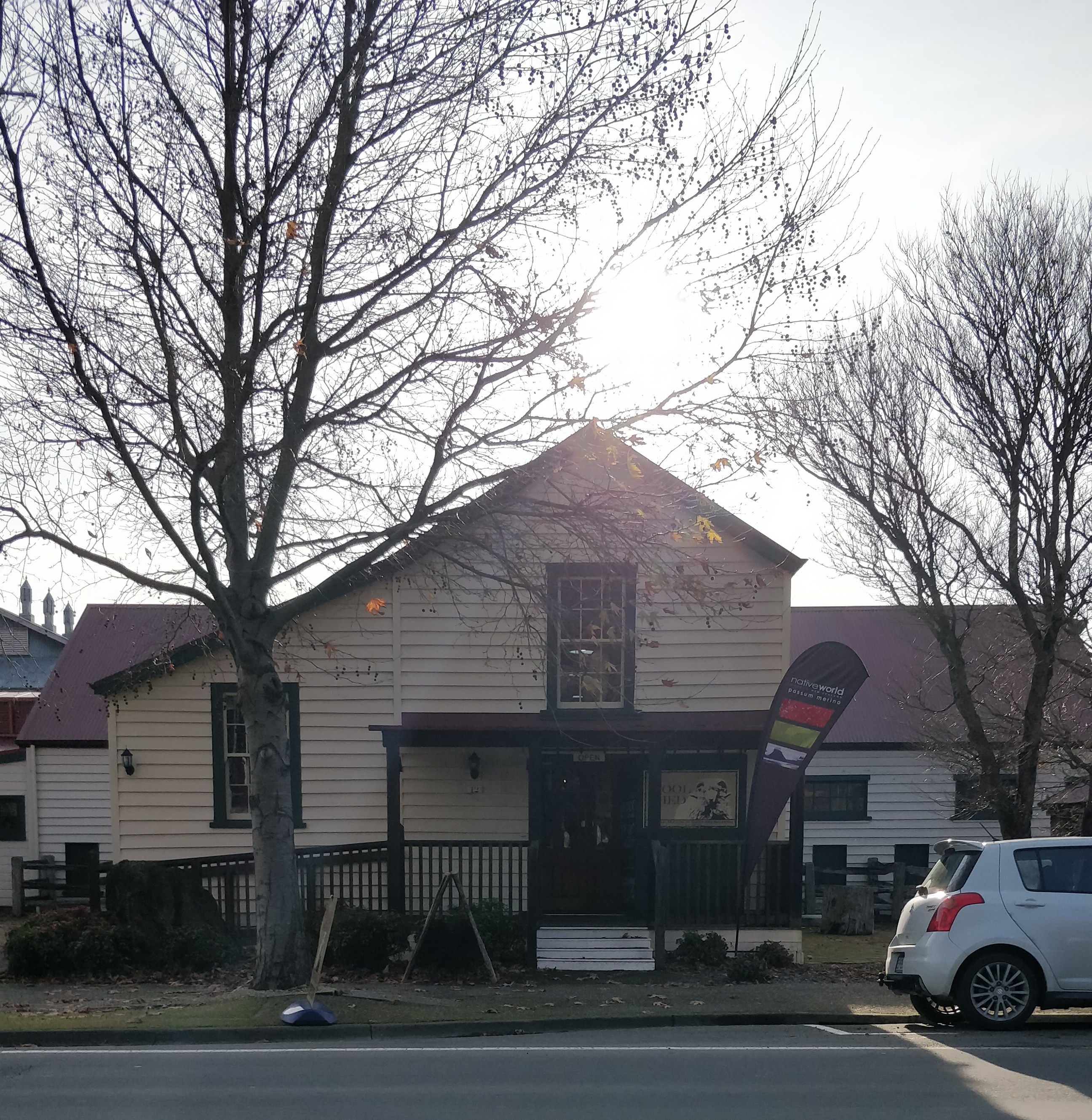
You know, I generally have a good time in little museums that look like houses.
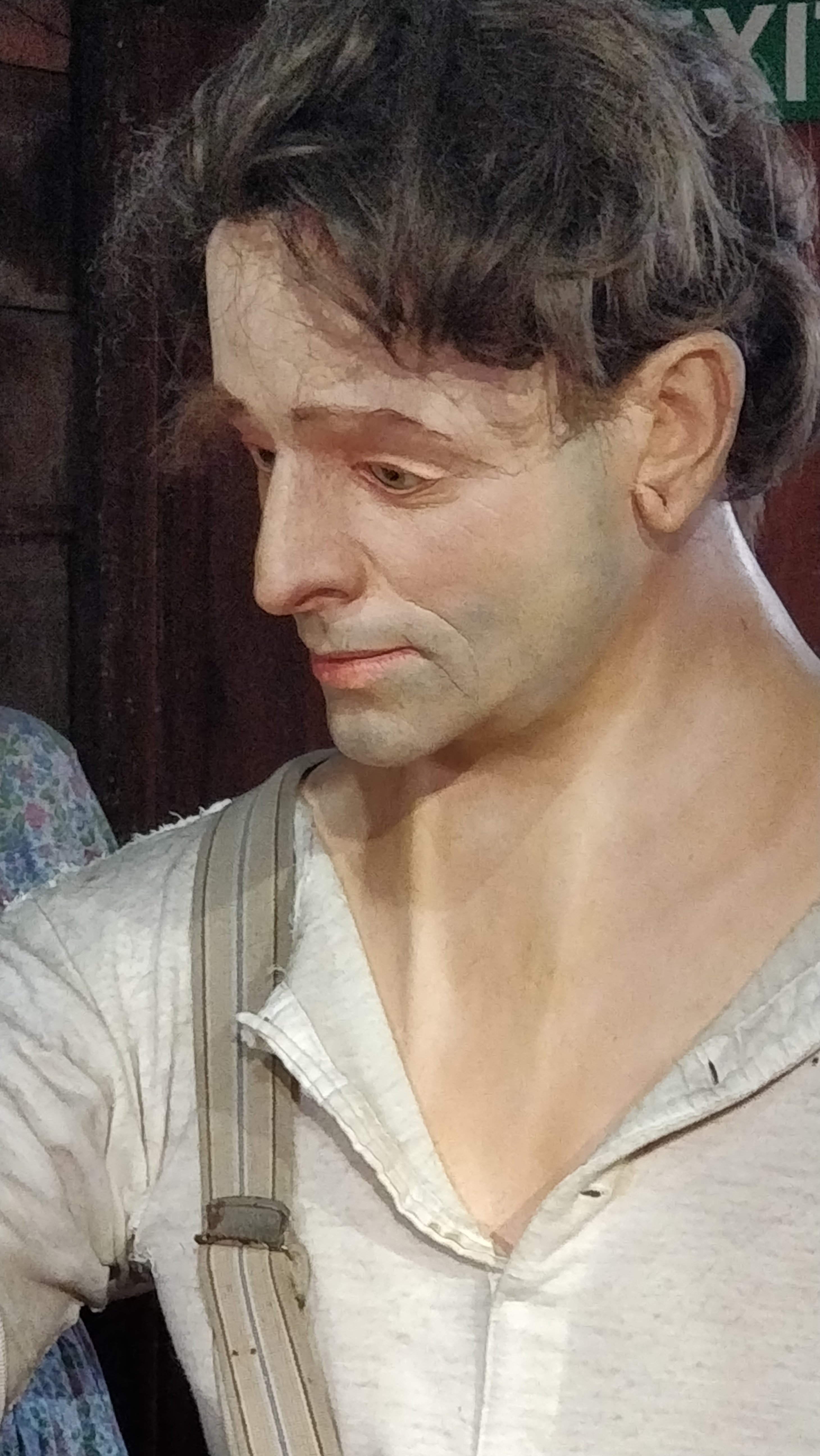
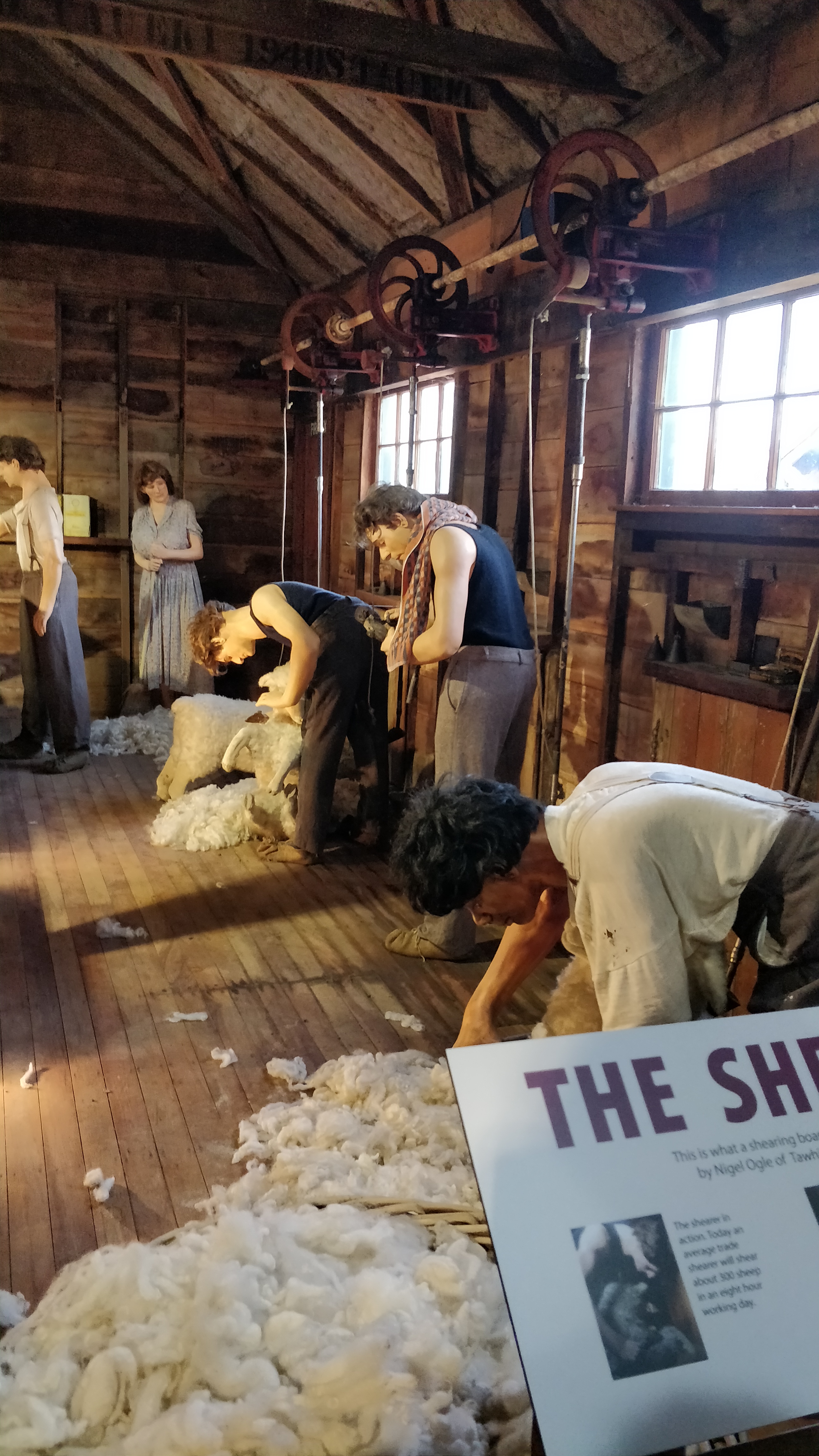
This is the Wool Shed, and here you will learn about the wool industry and its history in New Zealand. Two old, authentic wool sheds are packed with sheep- and wool-related artifacts, as well as vaguely unsettling mannequins, yet another museum feature that is near and dear to my heart.
Do not ever, ever change these mannequins.
Sheep and sheep products used to be a seriously critical aspect of the New Zealand economy, and even today, there are 27 million sheep here–almost 6 sheep for every person.
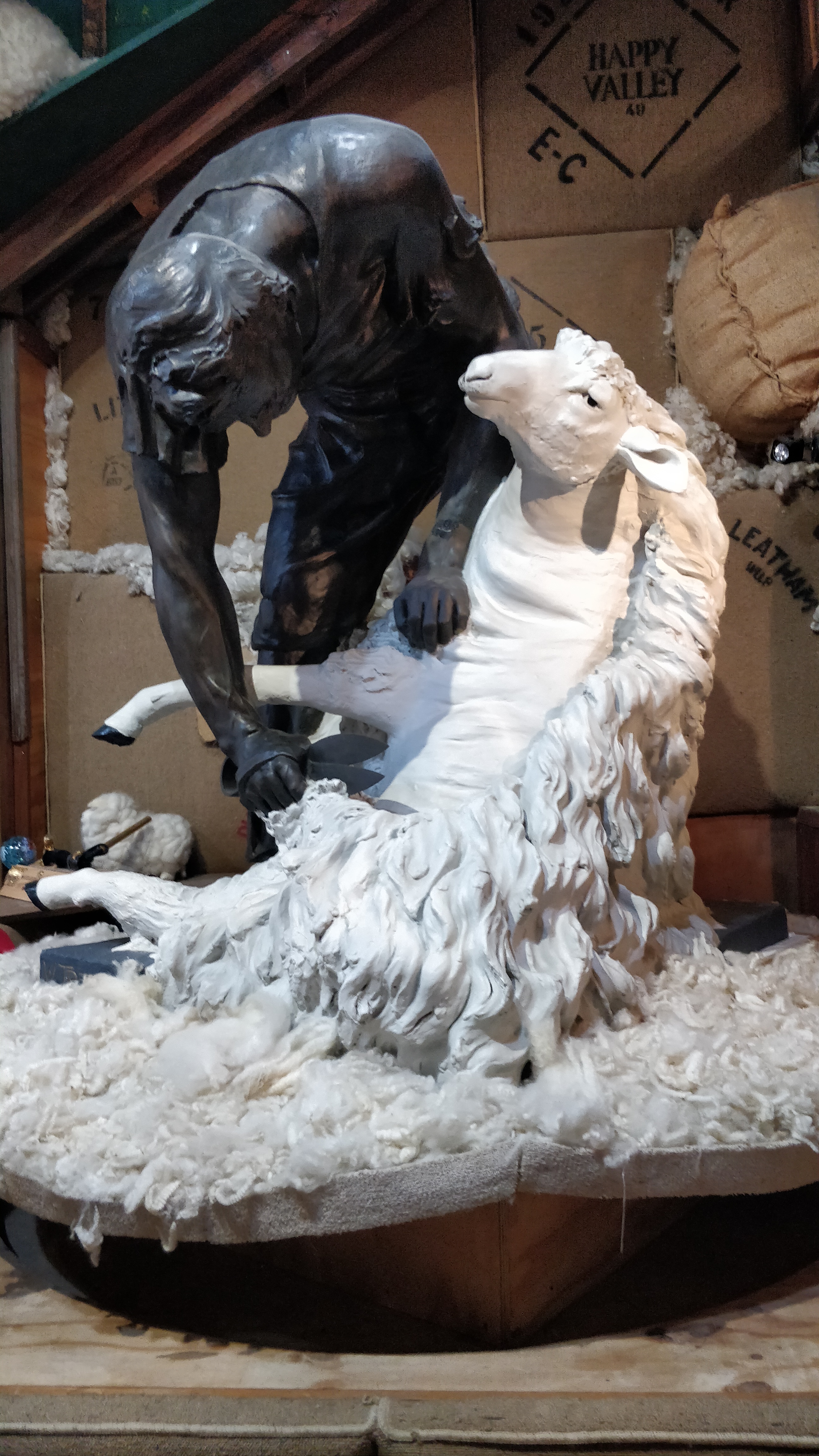
The town of Masterton hosts The Golden Shears, an International Shearing and Wool Handling competition, which describes itself as “three days of non-stop action and entertainment,” a claim I have no reason to doubt. I had no idea it existed before I visited The Wool Shed, and it is now on my bucket list. Sure, you can see it on TV, but as the website says, “you can’t beat the excitement of being there to witness history being made and to soak up the lanolin infused atmosphere as the sweat drips off competitors brows.”
Footage of the competition is shown at the museum, and it is indeed a richly lanolin-infused atmosphere. I deeply regret not capturing on video the part where the announcer says a competitor is “having the shear of his life.”
I’m gonna go some day, mark my words.
But back to the museum!
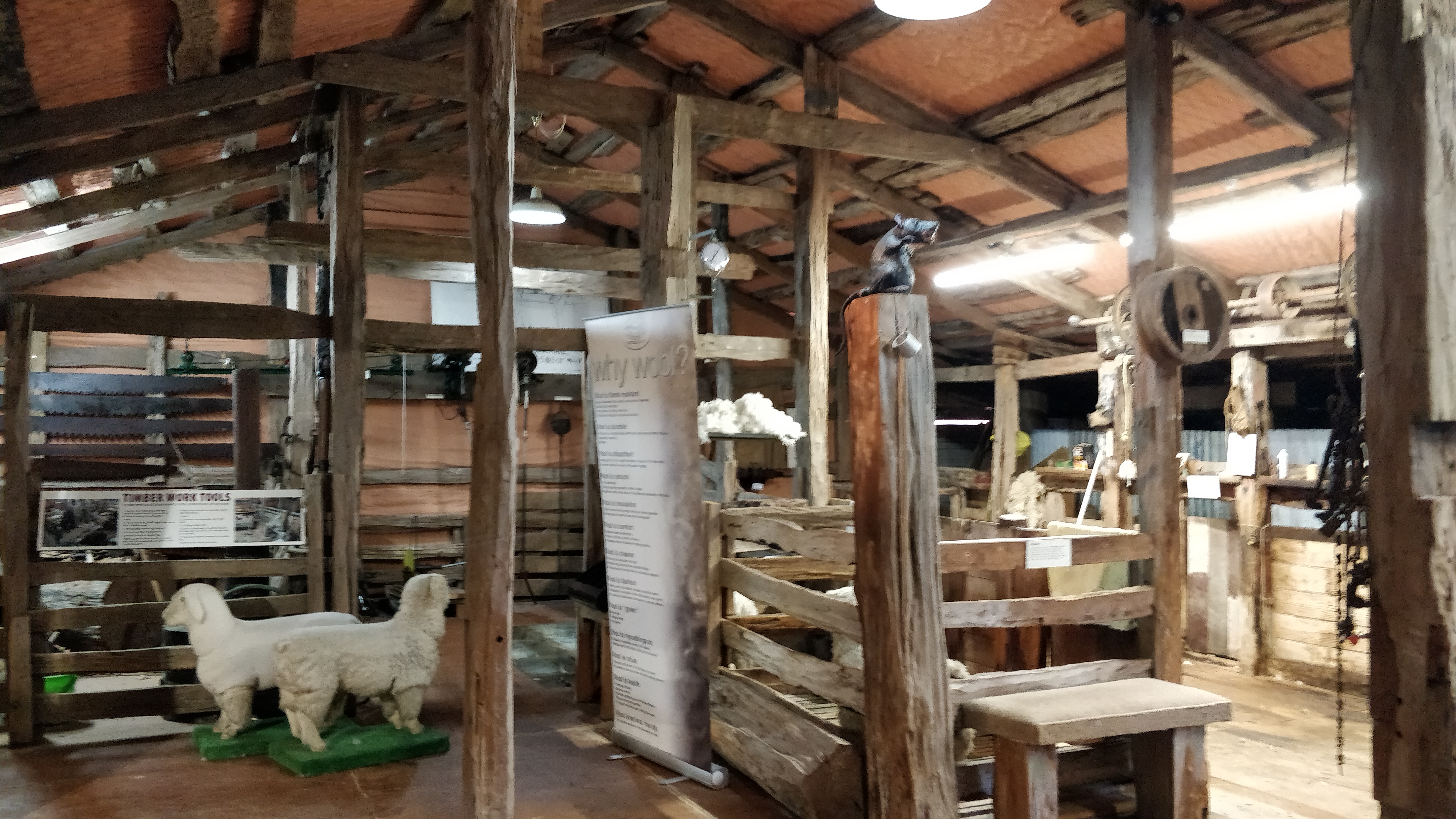
an old-timey wool shed, but probably smelling better these days
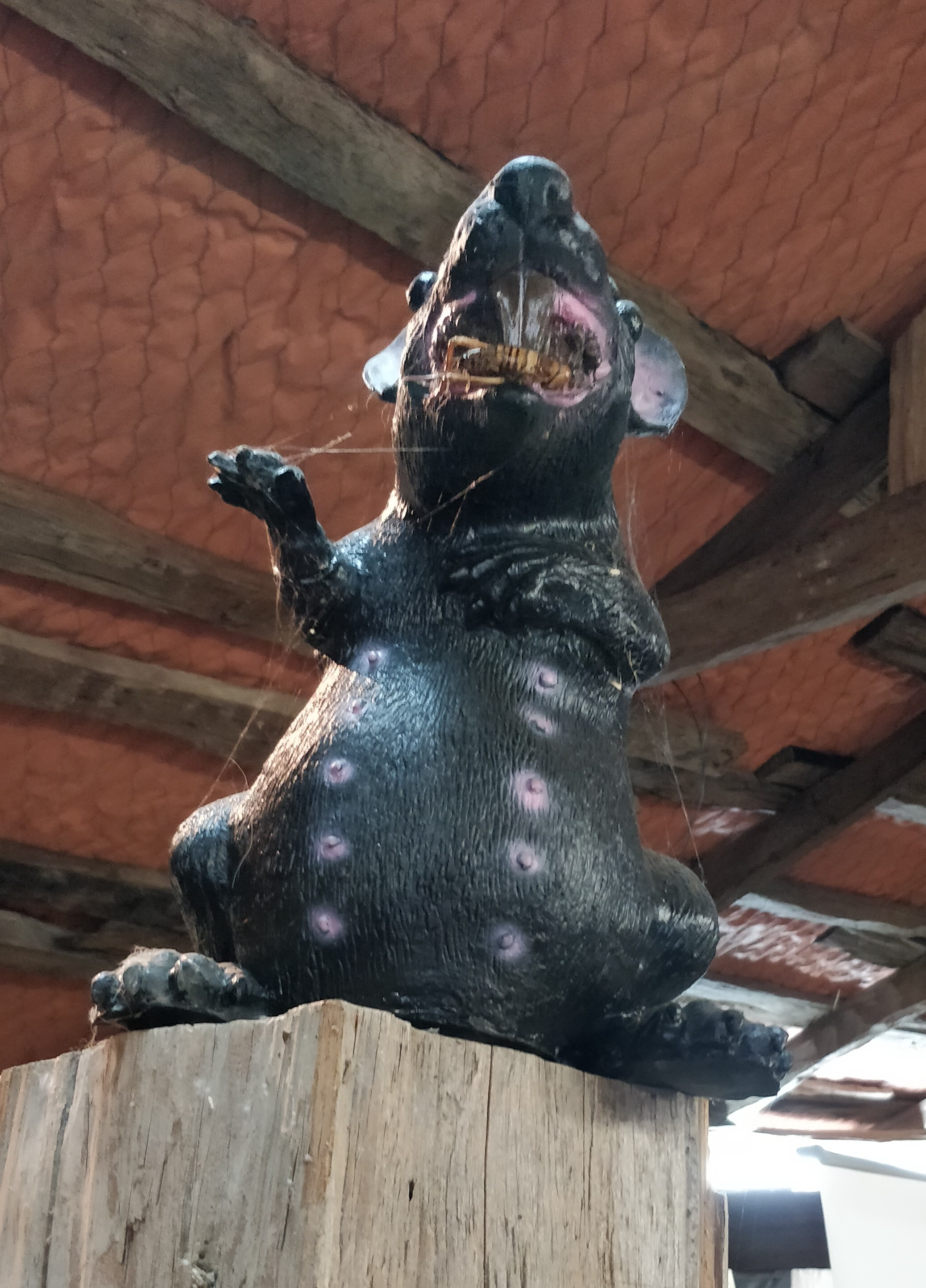
The displays in the wool sheds show how the sheep were penned and various tools of the wool trade. Also, yes, that is an insane rat up there on that post. Having apparently just had a litter and munching on a weta.
but why
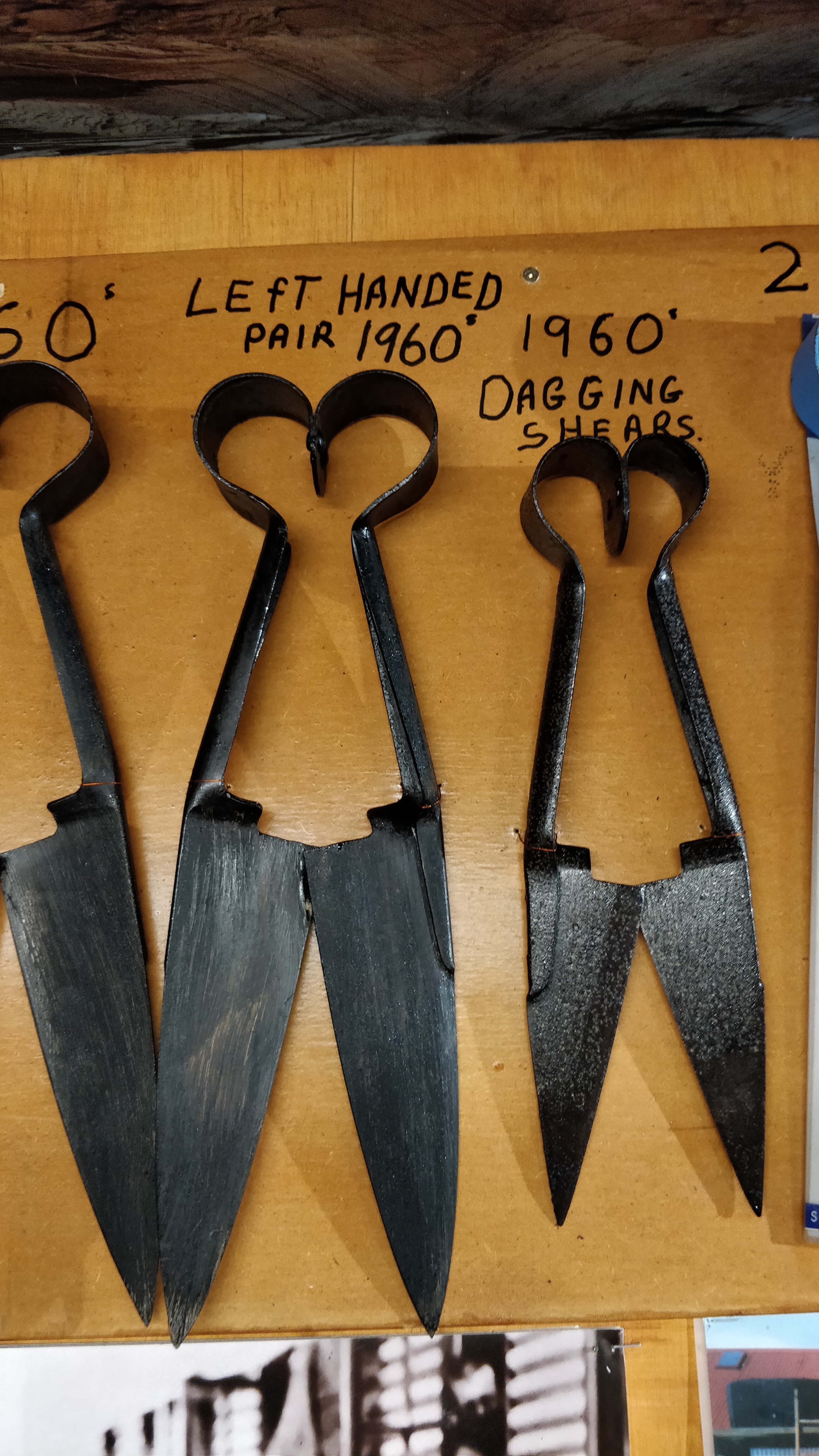
But nevermind that! There are historic shears! Including this pair of left-handed ones, which as a lefty, I very much appreciate.
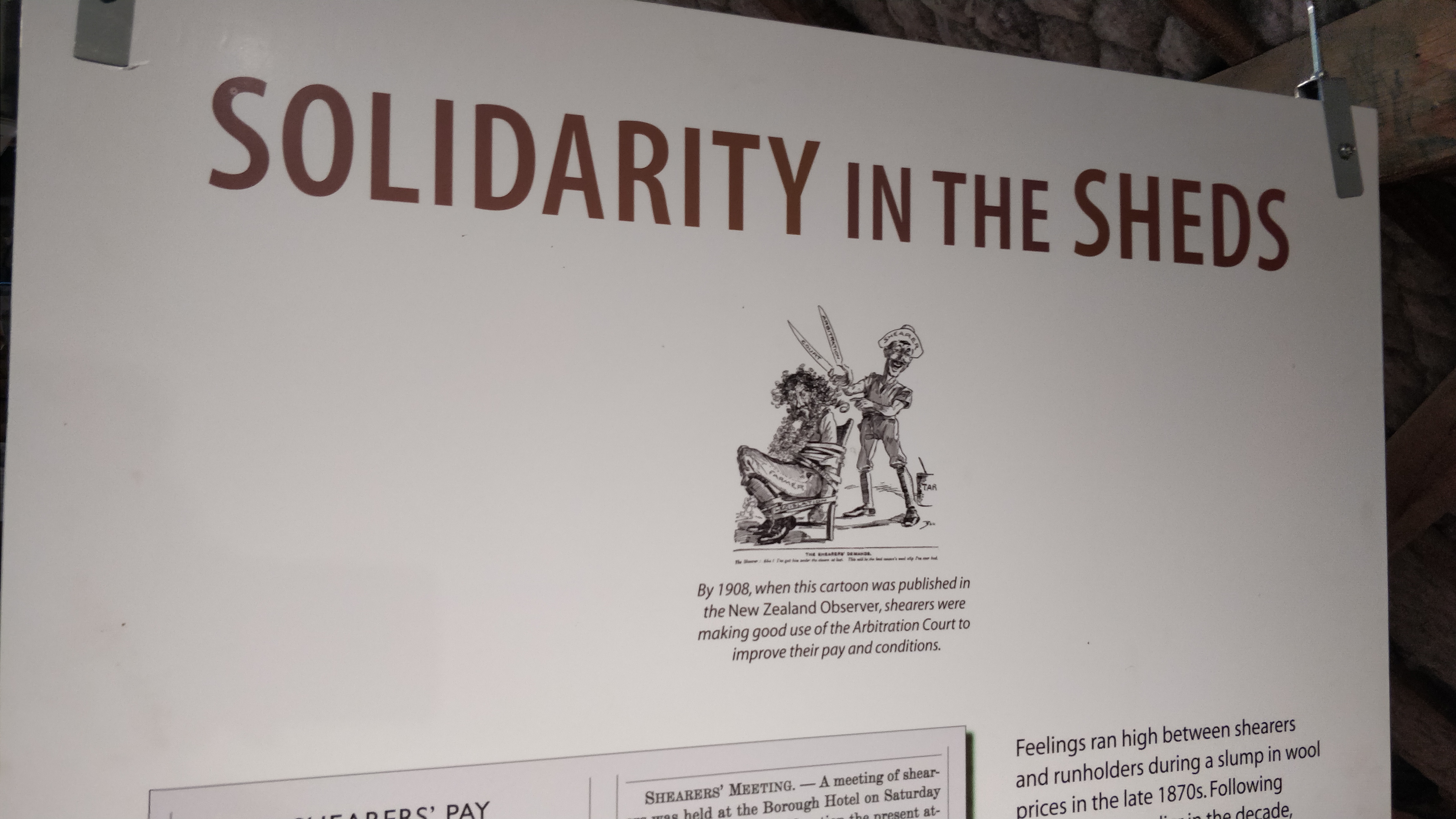
You’ll also read some history related to labor issues for shed workers:
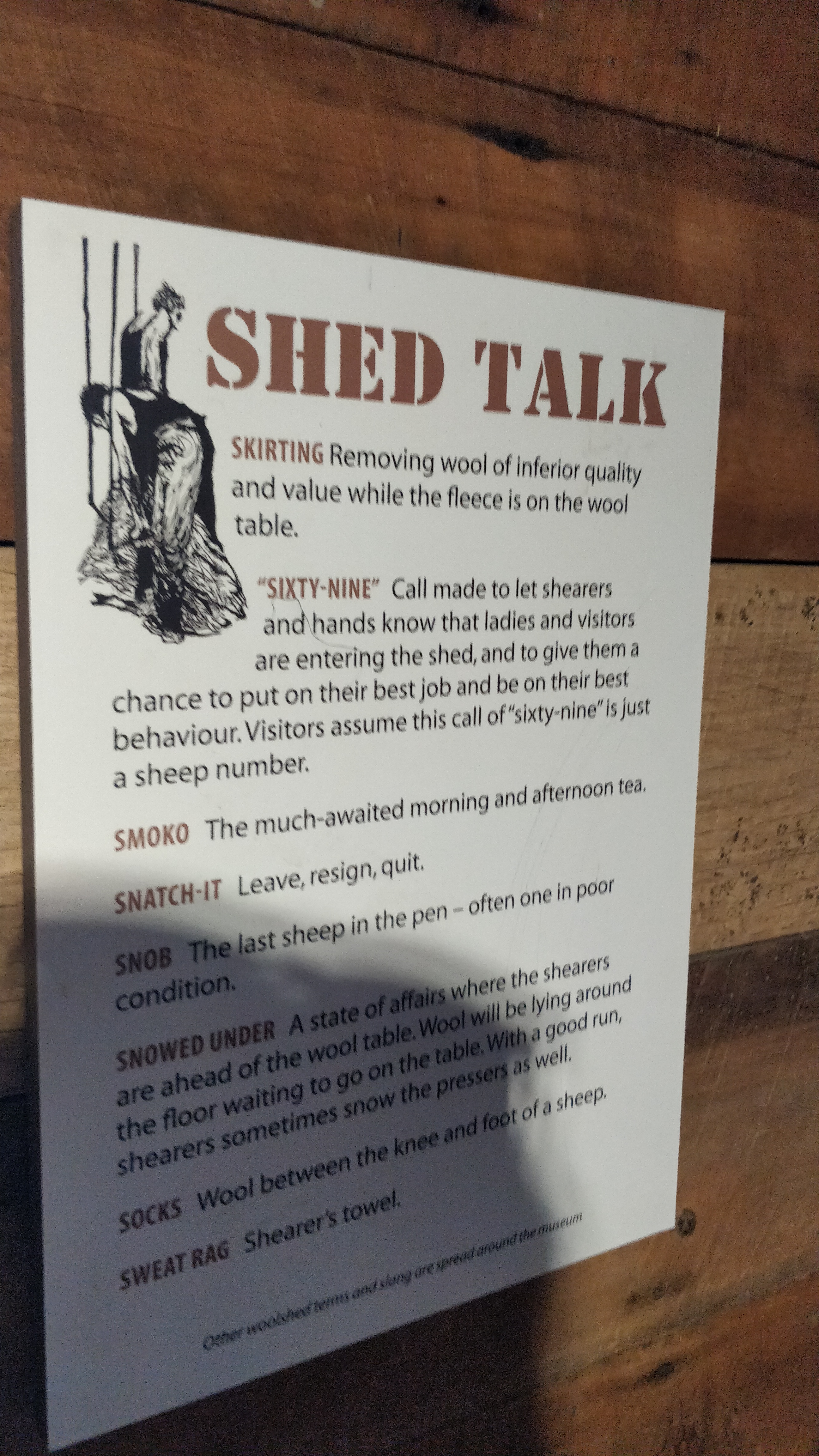
As well as many examples of shed vocabulary and terminology.
Absolutely sure the code “69” had no in-joke connotation whatsoever and would never besmirch the honor of early 20th century shed workers by suggesting otherwise.
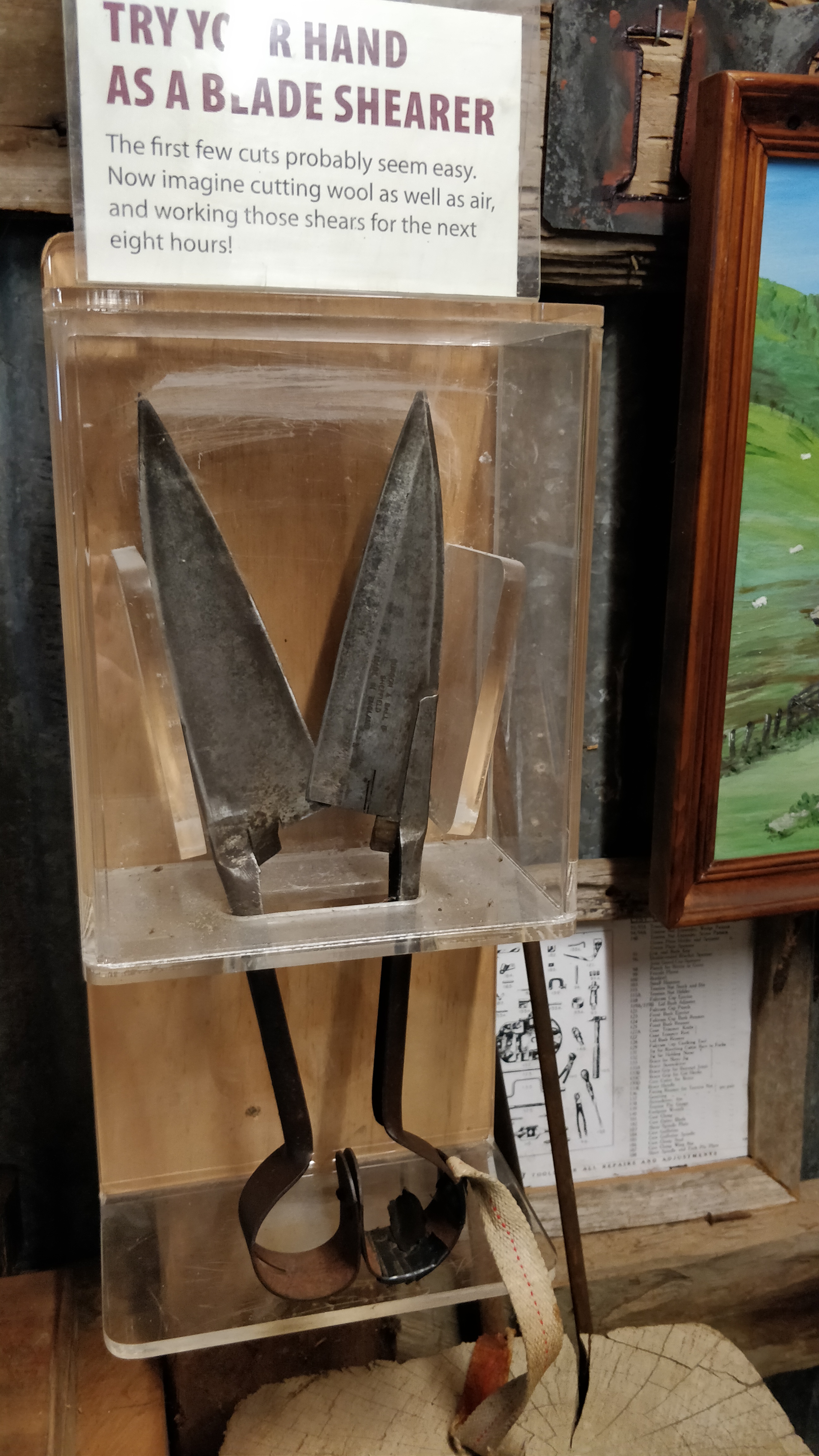
As regular readers know, I also approve of interactive displays in museums, so I was of course very pleased to see this:
An excellent teaching resource, where just about every single person can learn that they do not want to be a sheep shearer prior to electric clippers.
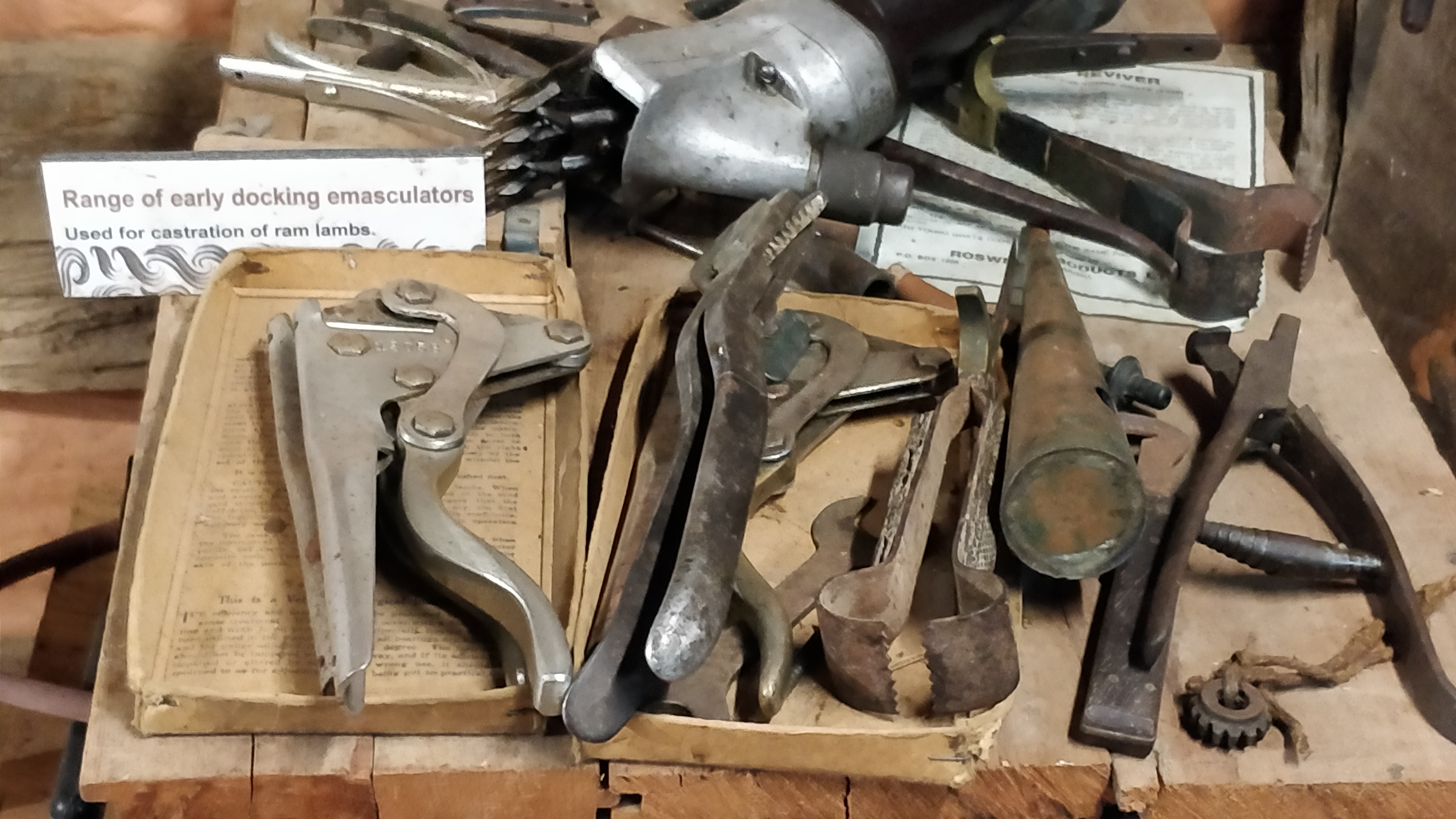
But maybe you’d rather familiarize yourself with some of the grimmer aspects of animal husbandry. No worries; the Wool Shed gotchu.
Well off the top of my head, can’t think of many more traumatic ways to lose testicles.
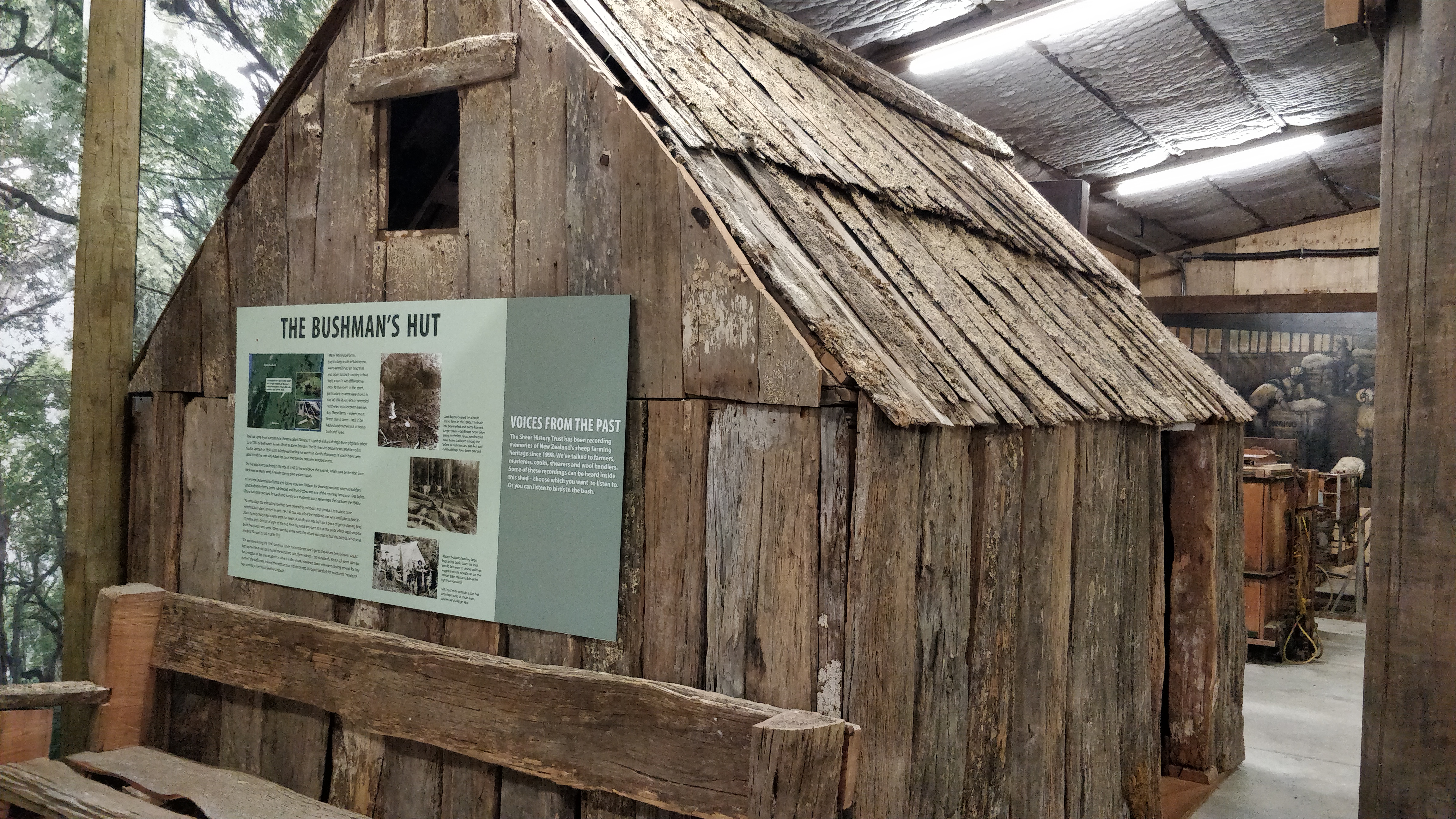
One room of the museum houses this old hut along with examples of historic machinery and old wool presses. In the hut, you can select the oral histories of several people involved in the wool trade…
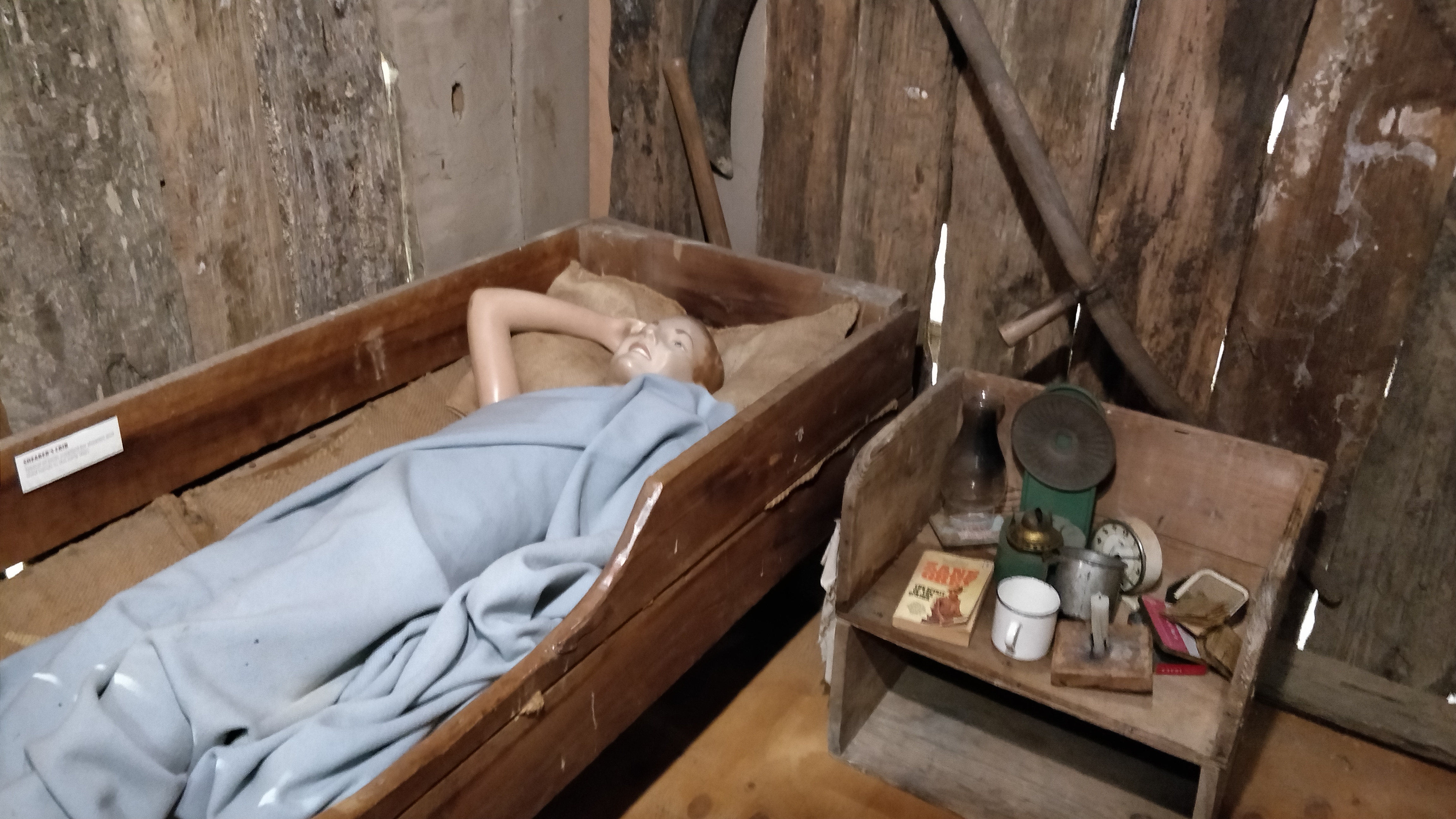
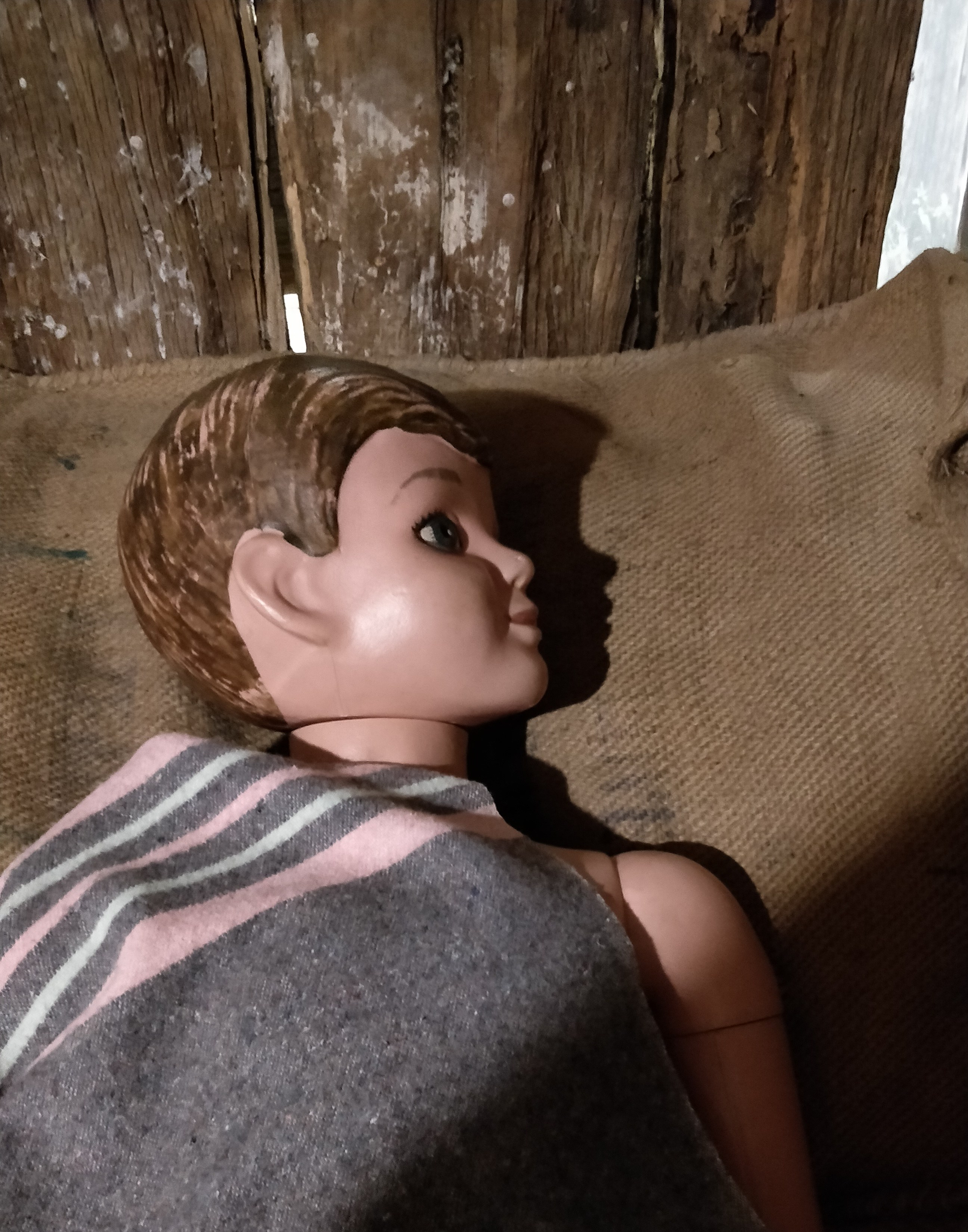
…while simultaneously viewing more unsettling mannequins.
HAHA OK THEN SO WHAT ELSE IS THERE
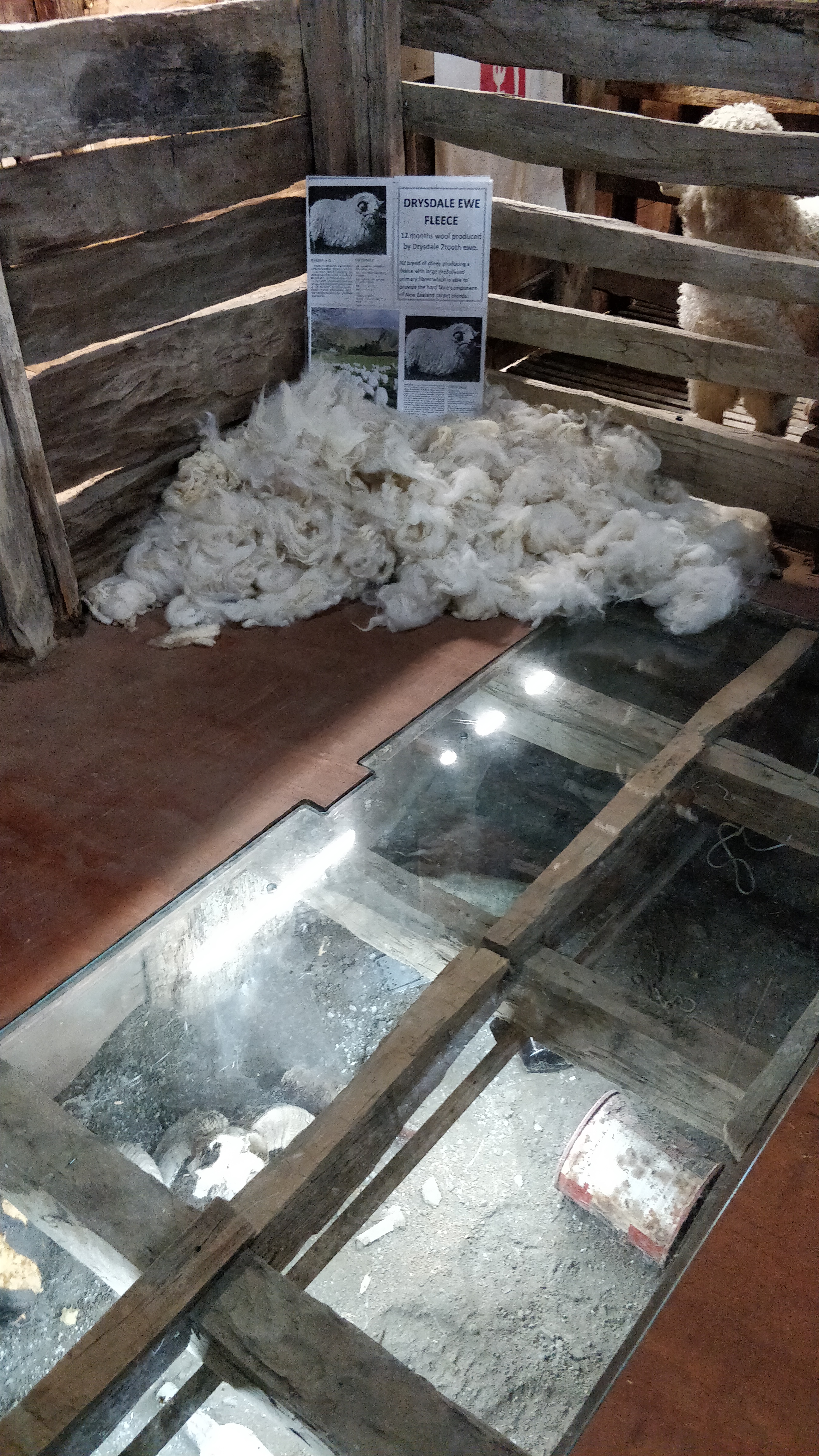
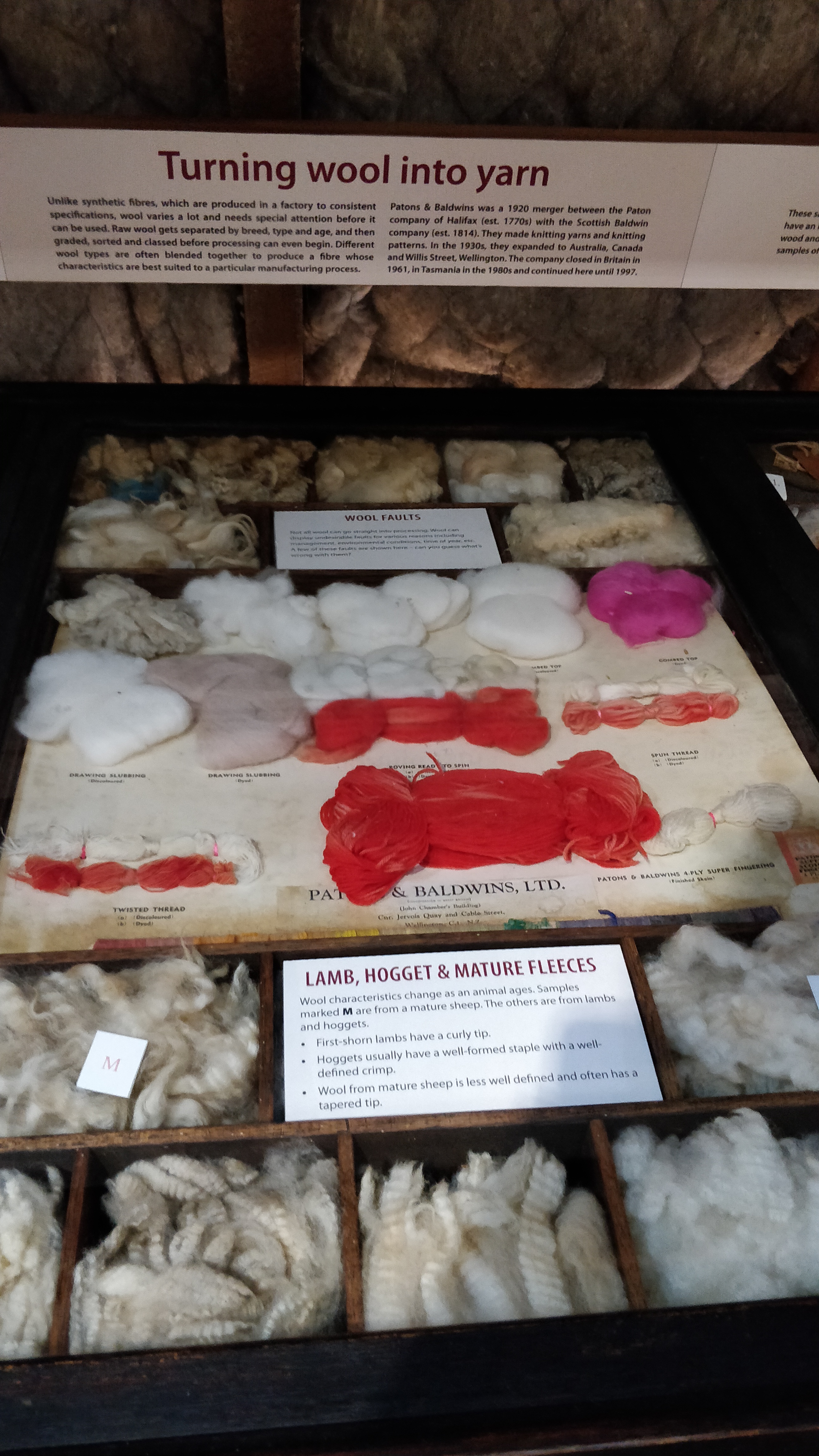
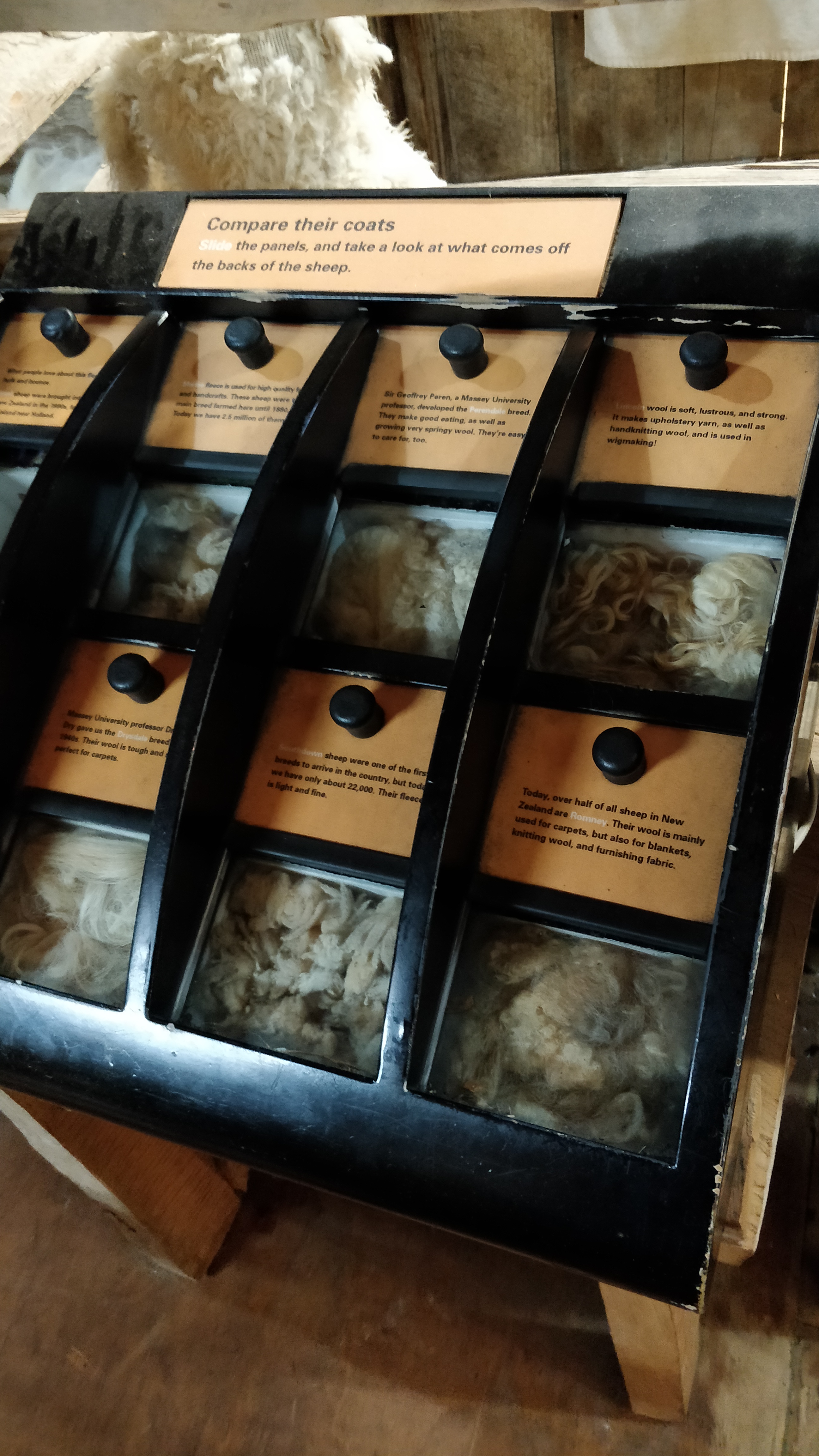
Well how about some fiber education!
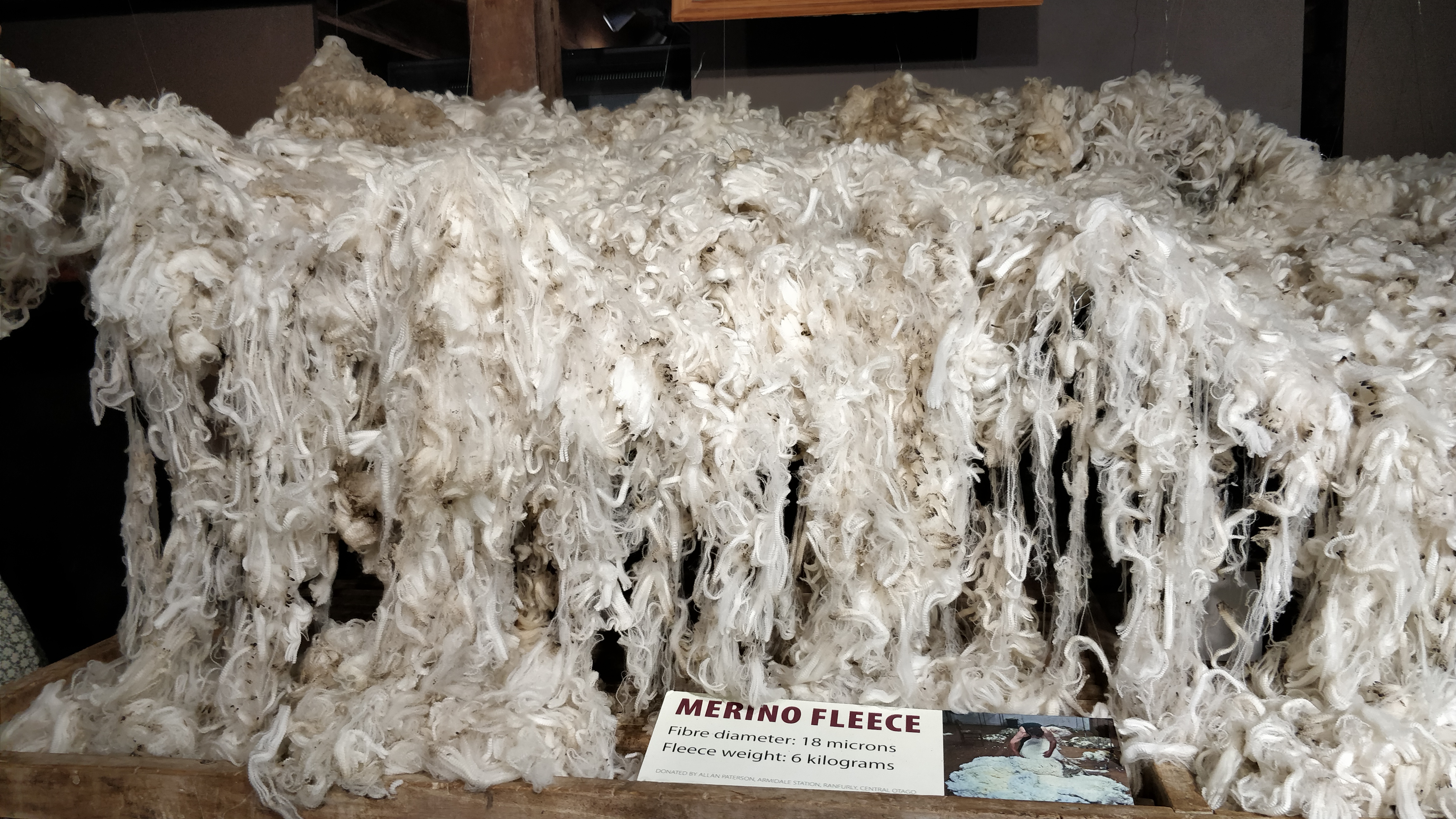
Any knitter will tell you, merino is some very nice stuff.
*wolf whistle*
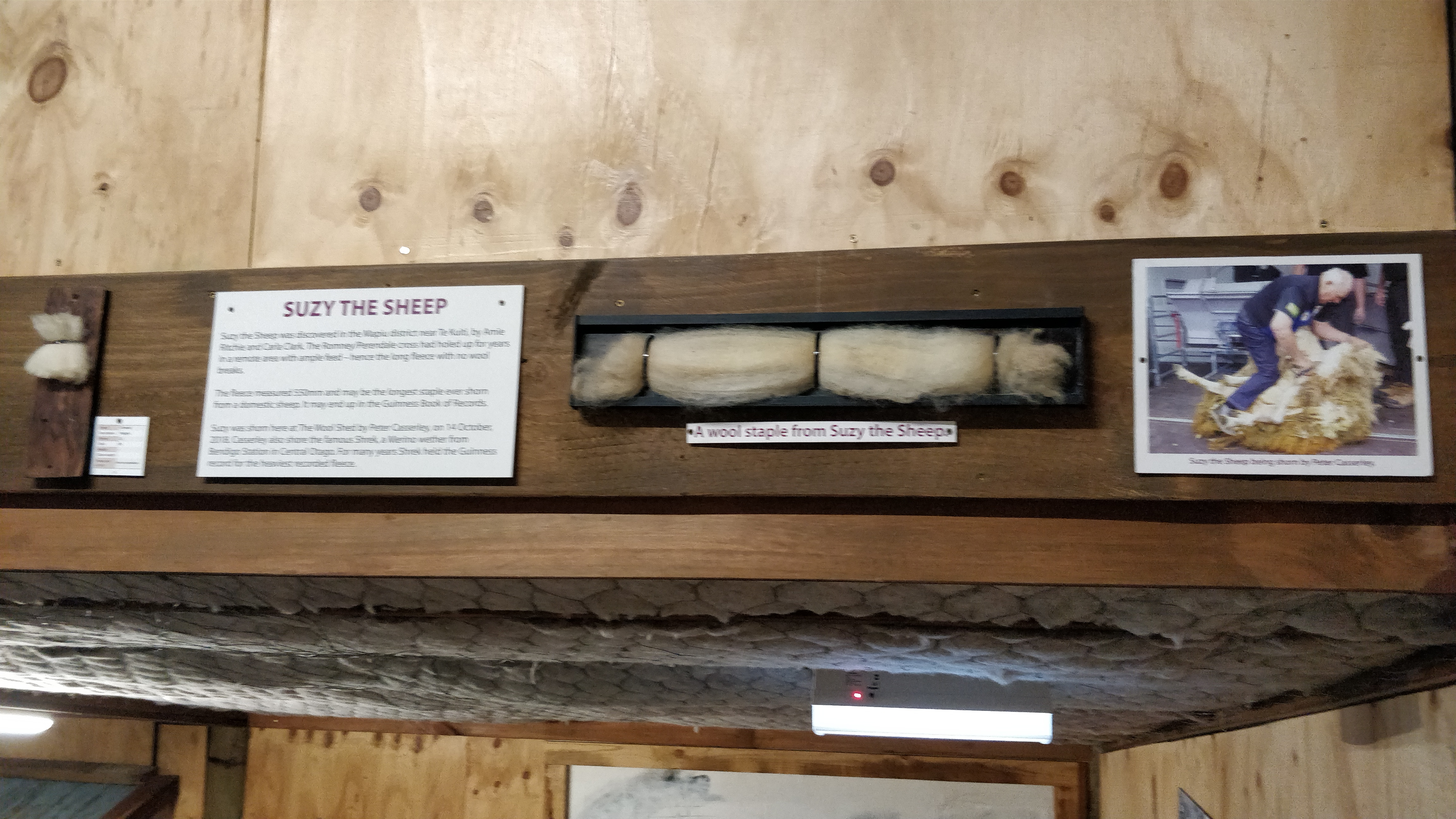
Suzy the feral sheep got her maiden shearing done at the museum by world record shearer Peter Casserly, losing about 15 kg of wool right before summer.
the only mandatory summer weight loss
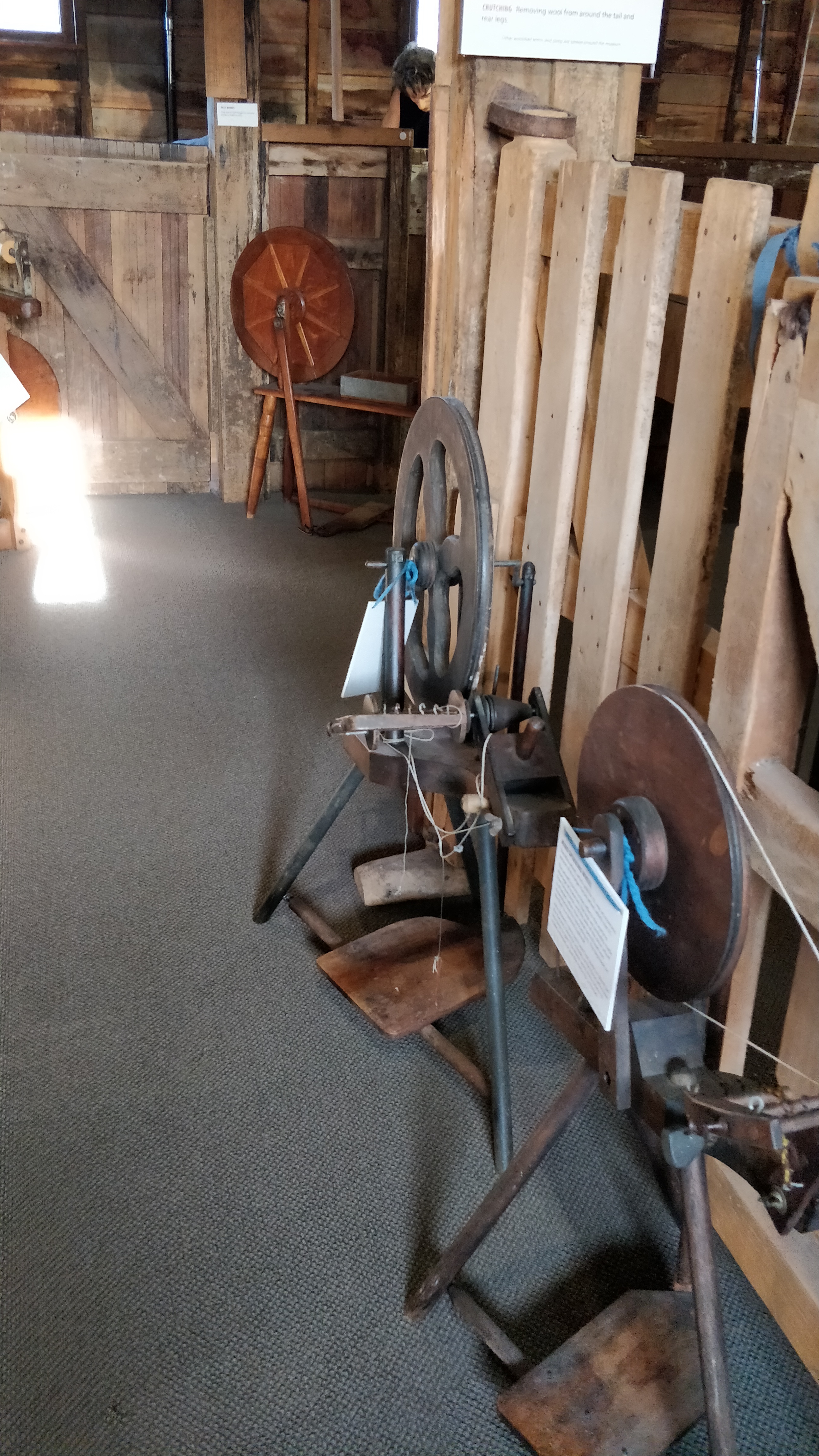
The museum also hosts spinning and weaving demonstrations and has a lovely collection of spinning wheels.
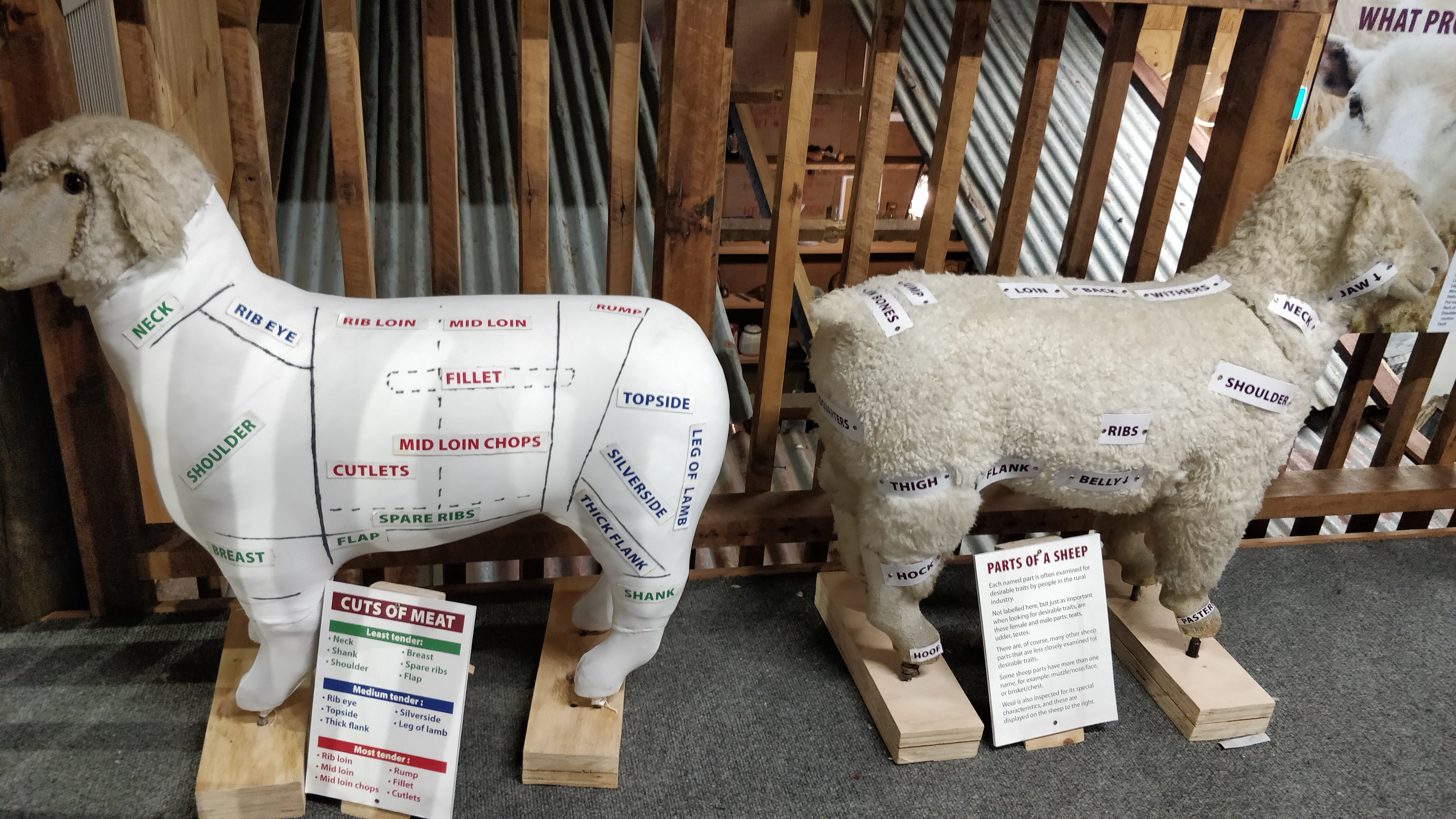
But sheep are not only good for wool, of course.
Finally, let’s have a look at some wool-related art, because this little place truly has it all.
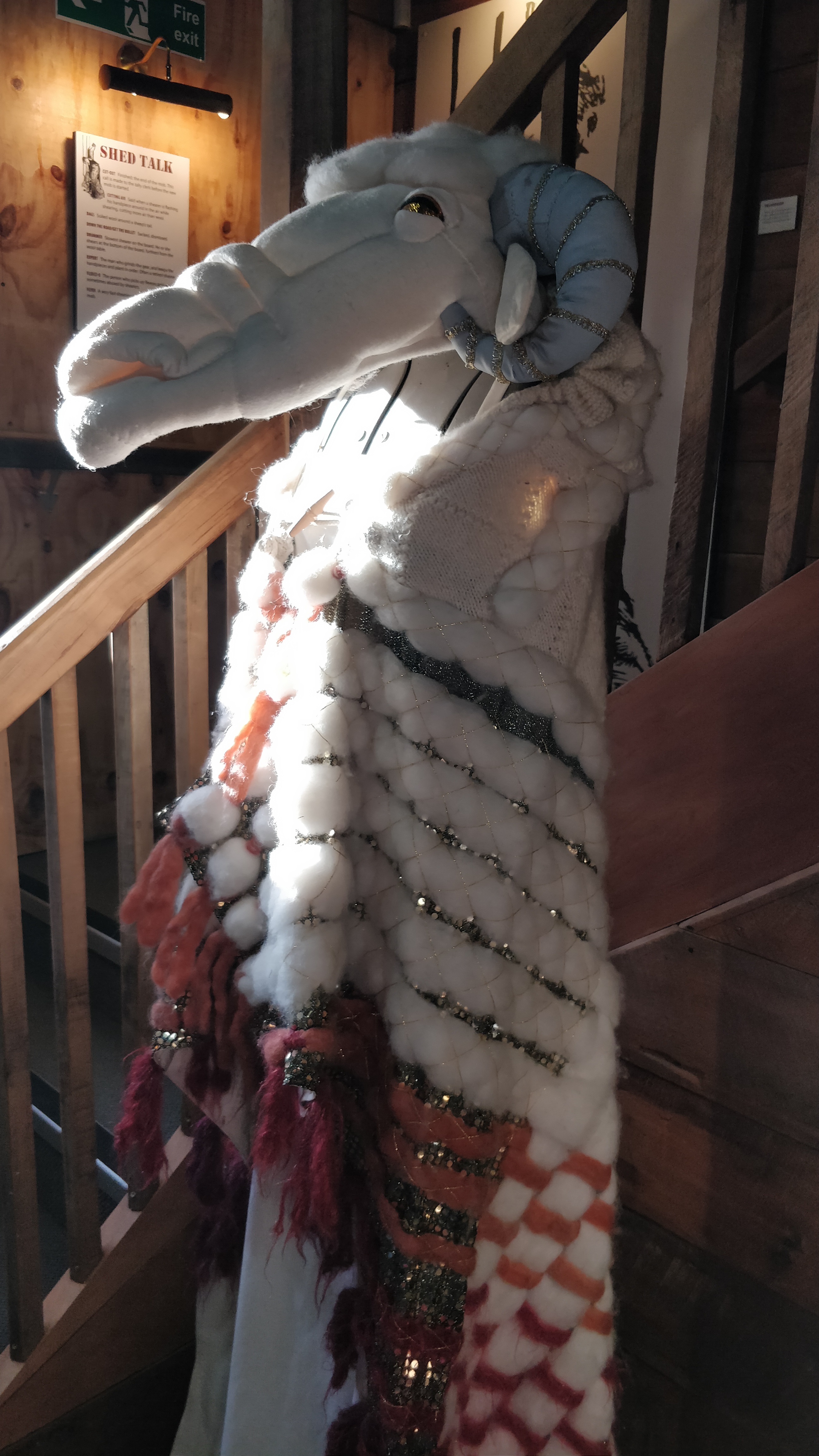
“The Golden Fleece” by Paul Jenson, 1994. Created for the World of Wearable Art event.
So there you have it! Wonderful museum, chock-full of information and artifacts, good-sized shop full of wool swag. Open all week, 10am-4pm, $10 for adults, $3 for children under 15, $20 for families (two adults & four children). Children under 5 are free. Of course, if you just wanna shop or see the Golden Shears Wall of Fame, those areas are free.
Hoho, what do we have here? A third country?! YES! It is time to visit some museums in an ENTIRELY. DIFFERENT. BIOME.
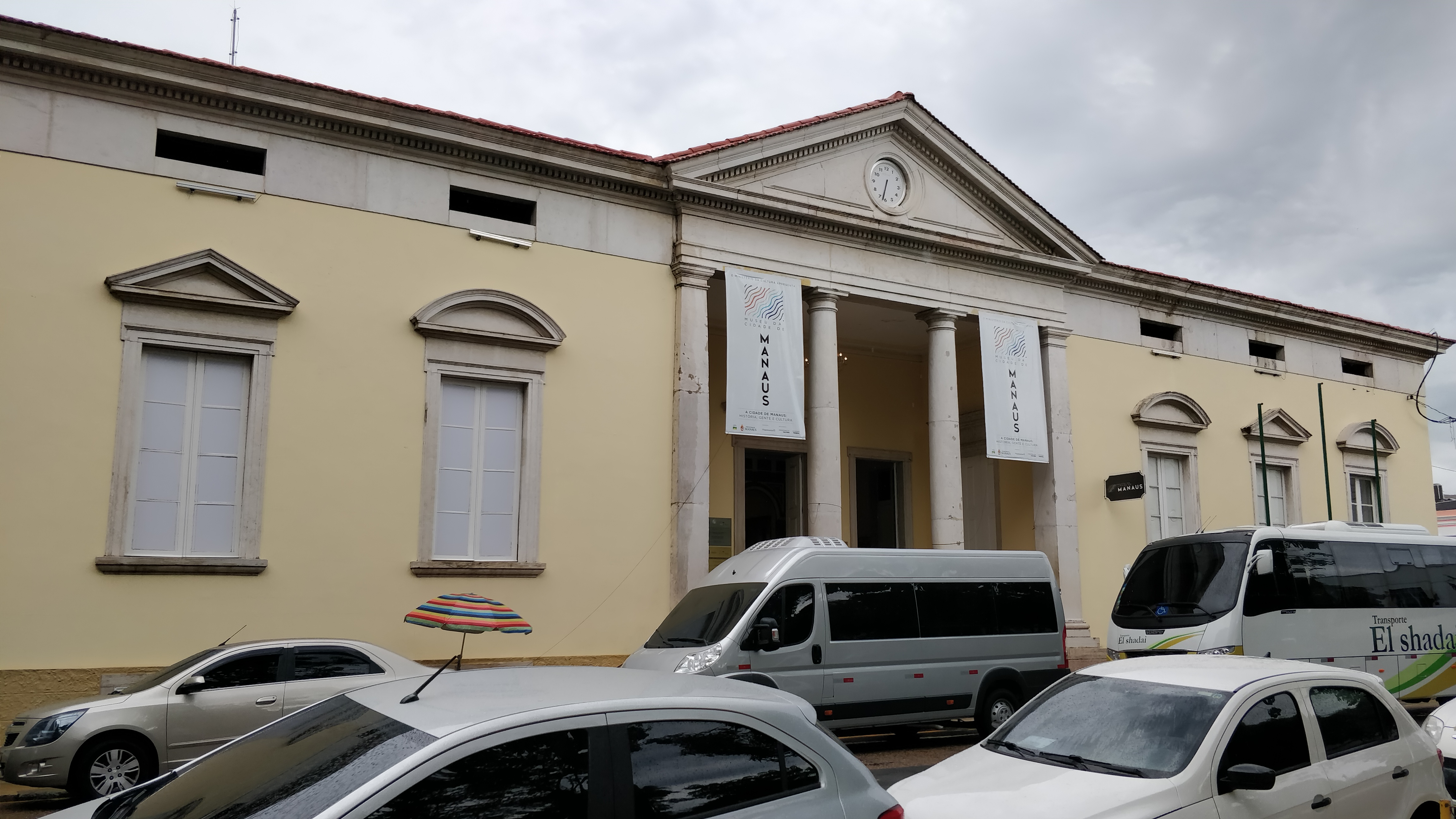
The city of Manaus, in northern Brazil, is called “The Gateway to the Amazon” because it is smack in the middle of the Amazon rainforest. Its boom age was the late 19th/early 20th century, when it was at the center of the rubber industry. The rubber barons brought a lot of European sensibilities to the city as well as opulent displays of insane wealth. It feels a little weird, looking around Manaus, as it does sort of give the impression that several shiny European buildings were plopped in the middle of the jungle. Which, fair, I guess.
Neoclassical!
The City Museum is housed in the old city hall building, constructed in 1879. And it’s frickin’ neat. The museum is tech-heavy, at least tech-heavier than I’m used to in a history museum, and it’s done really well. You don’t even have to take my word for it: The museum has an app. You can go download it now (it’s called Museu da Cidade de Manaus). It’s got an English setting.
If you’re actually at the museum, you’re definitely going to want the app. If you don’t have it in advance, the museum has free WiFi, in addition to museum-grade air conditioning (yaaasssssssssss).
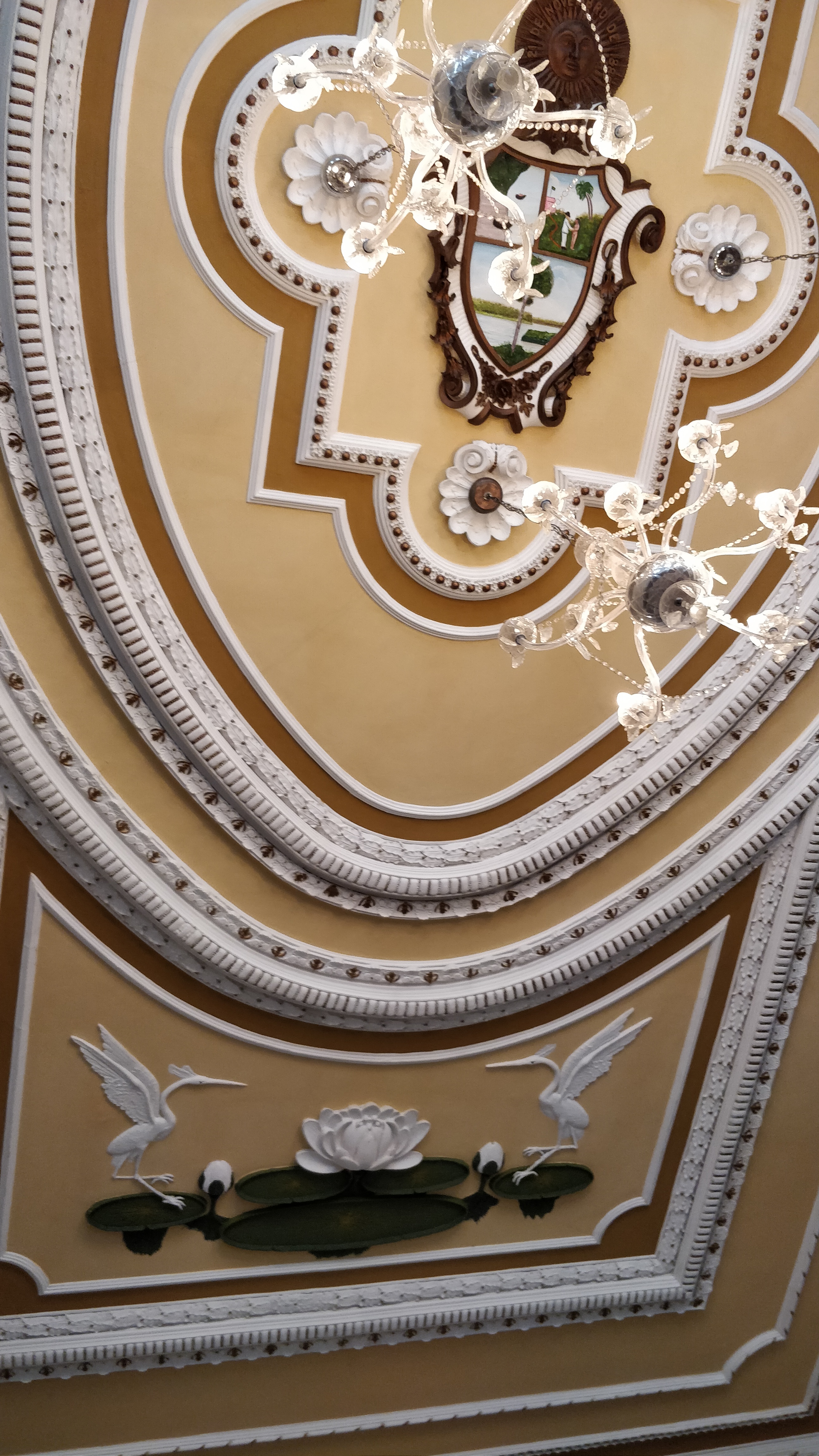
One thing you really notice in the rubber boom era architecture and decor is that it is all aggressively Euro-jungle.
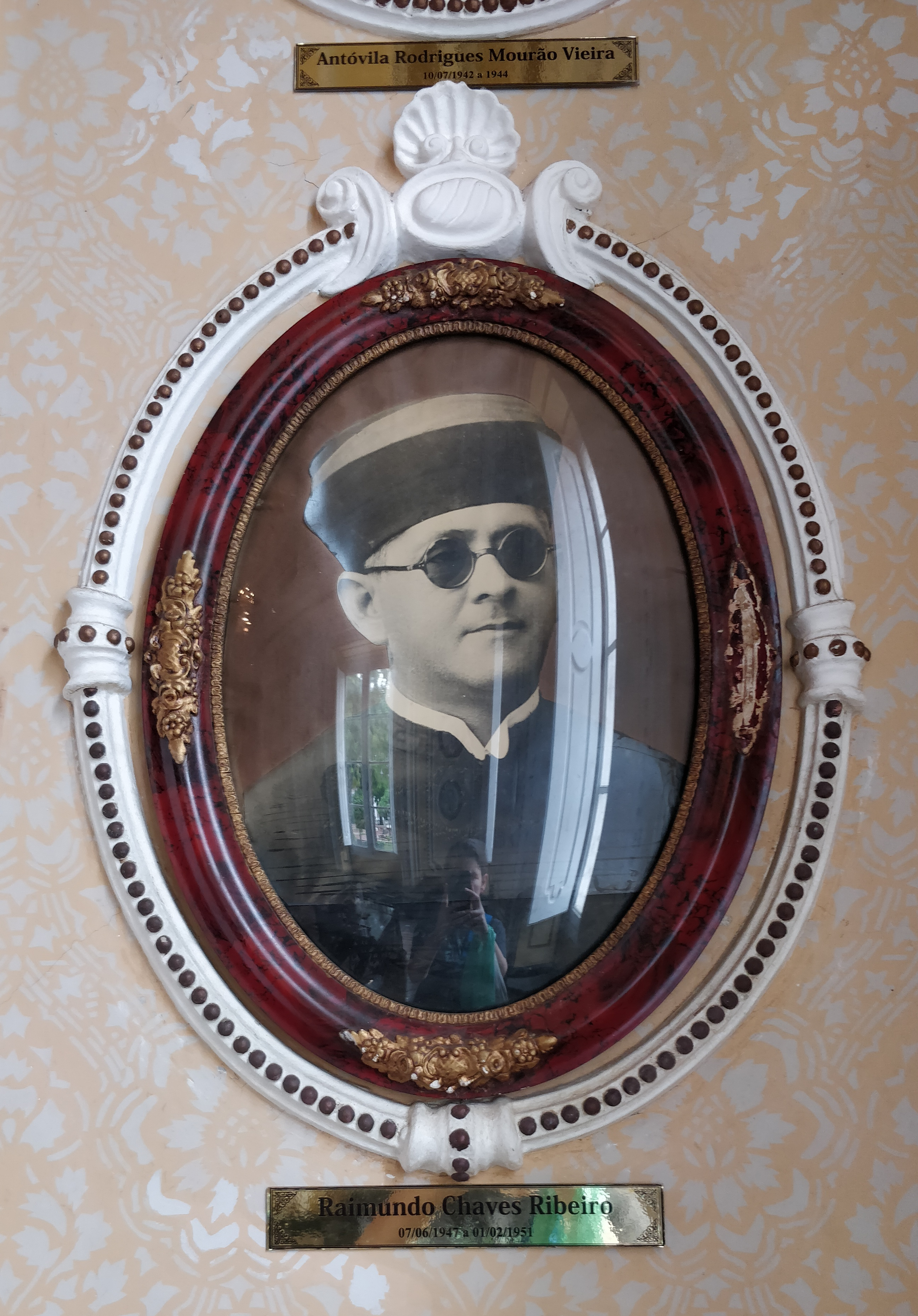
This is the ceiling of the Mayors Room, which displays the portraits of Manaus’s civic leaders through the years. The app will have the biographical data on these guys, but it is sadly thin for this one:
And entirely devoid of mention of his personal style.
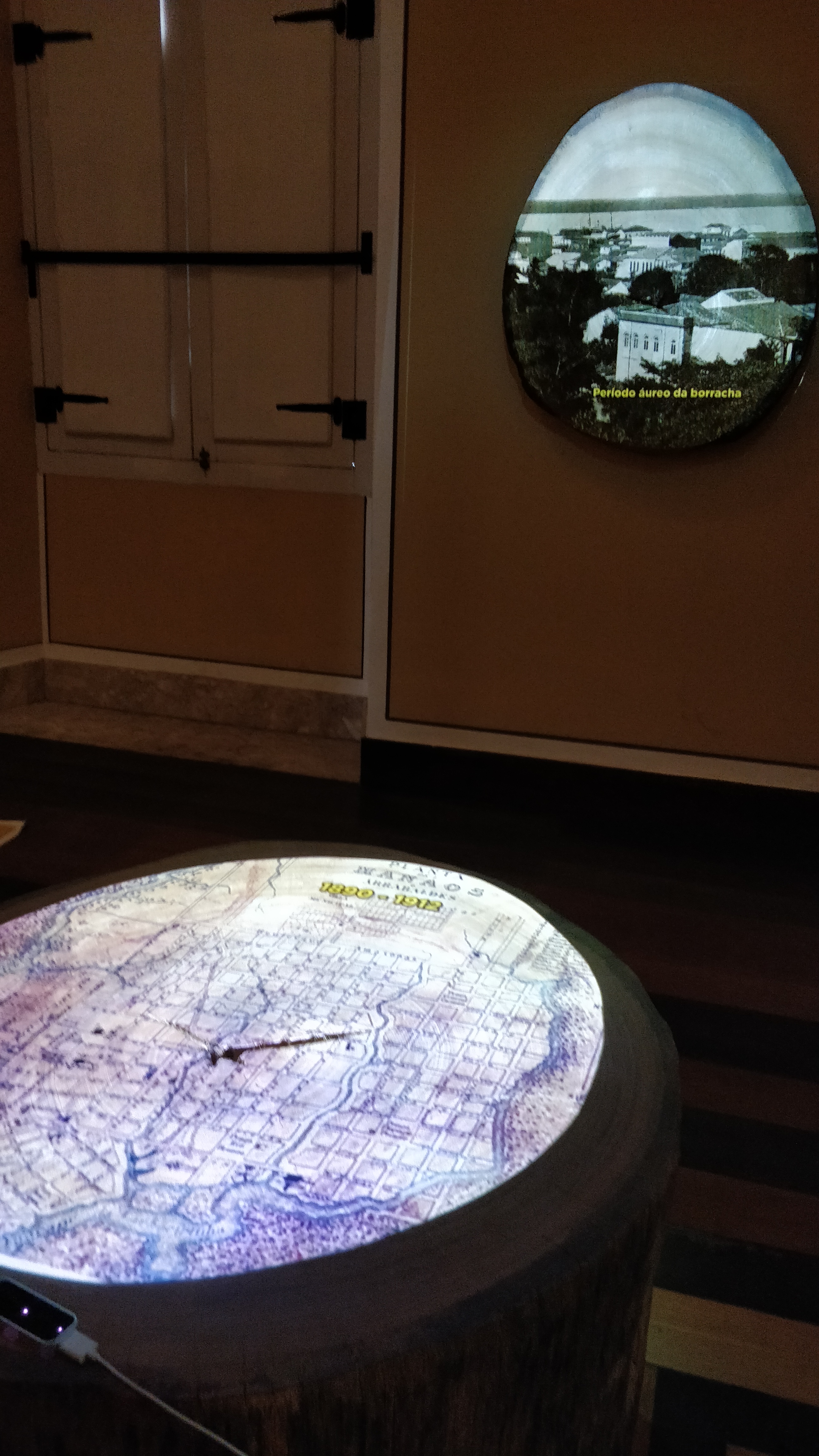
Next up, the room of Growth Rings!
SYMBOLISM
This is an interactive display about the growth of the city of Manaus. You can trigger the projection of the history images by moving your hand over the tree rings where the maps are projected. You can see the relationship between the city’s growth and deforestation. If this all sounds very informative and you are wishing you could read more about it and see the projections yourself, you totally can because the museum has them on Youtube and the app links right to it.
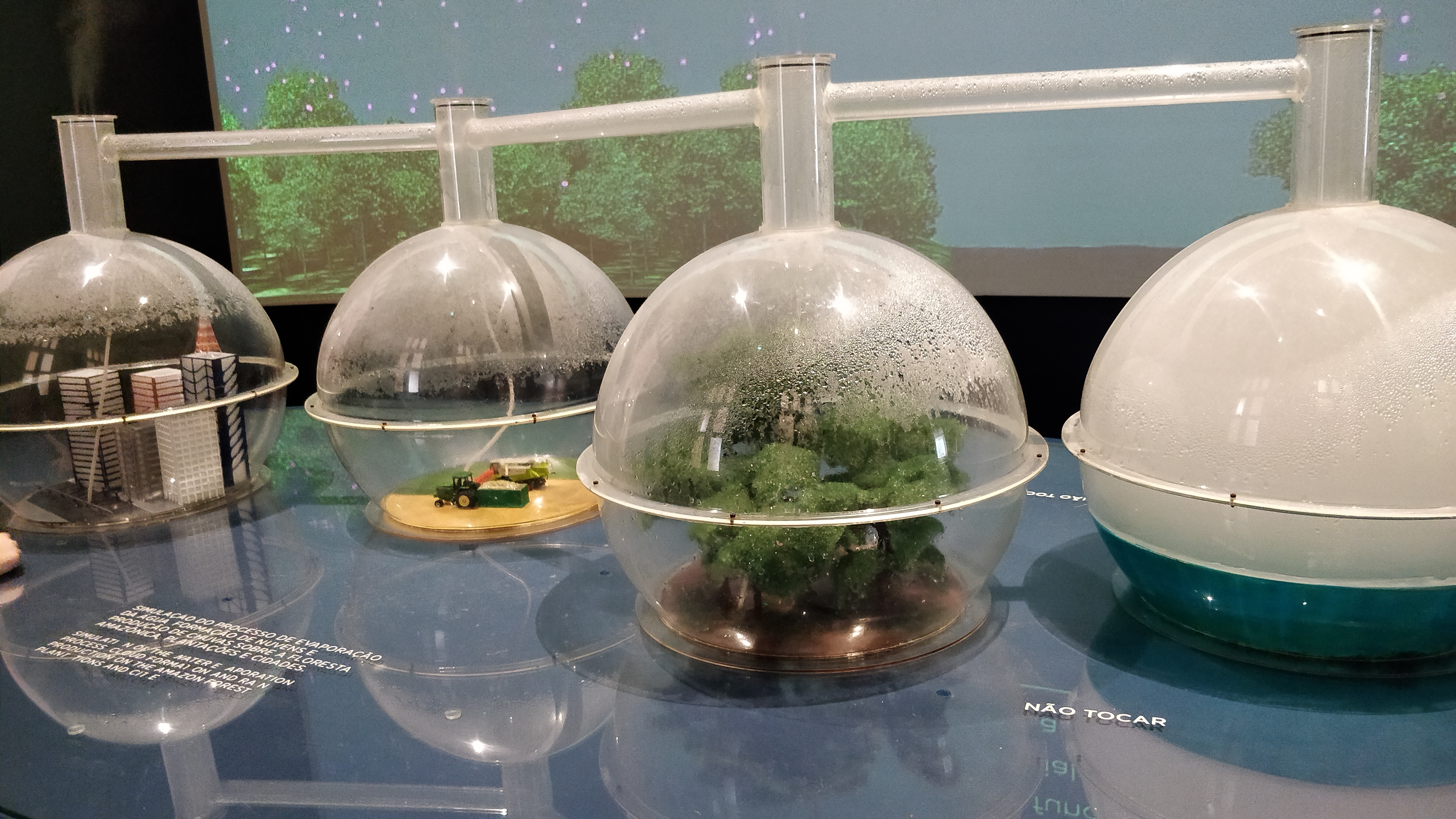
Next up is the room of Flying Rivers. Yes, all the rooms sound like they’re in Hogwarts.
SCIENCE
See how the Amazon rainforest fits into the water and carbon cycles (including the impact of Manaus’s pollution). The forest’s role in water circulation is known as the “flying rivers,” according to the museum. I do love it when some good poetic turn of phrase is applied to science stuff. Again, the room’s video is linked in the app.
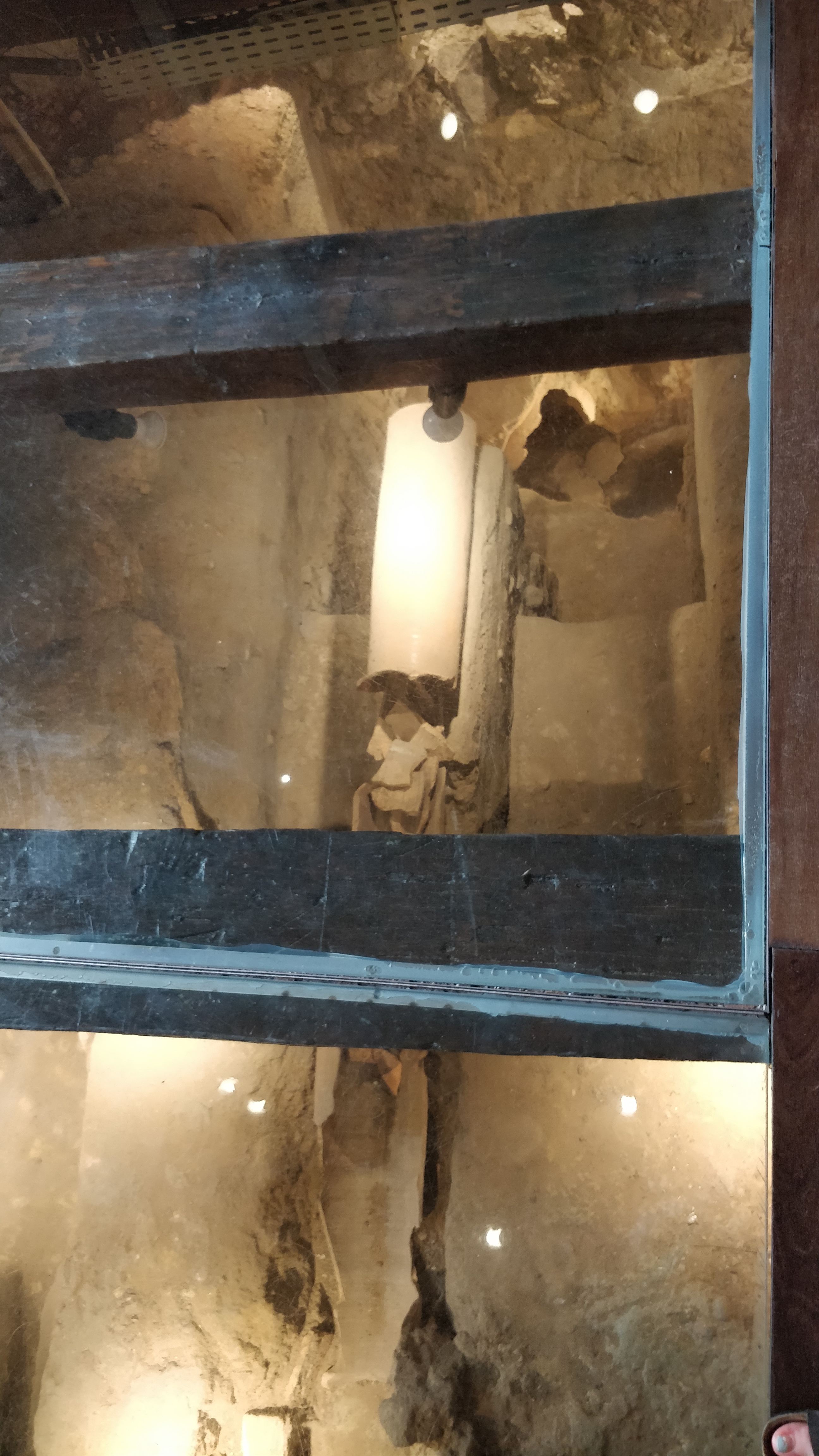
Time for archaeology!
This is the floor of the room, exposing the dig site from 2003 that uncovered funeral urns from the 7th to 12th centuries. And, uh, that’s my toe.
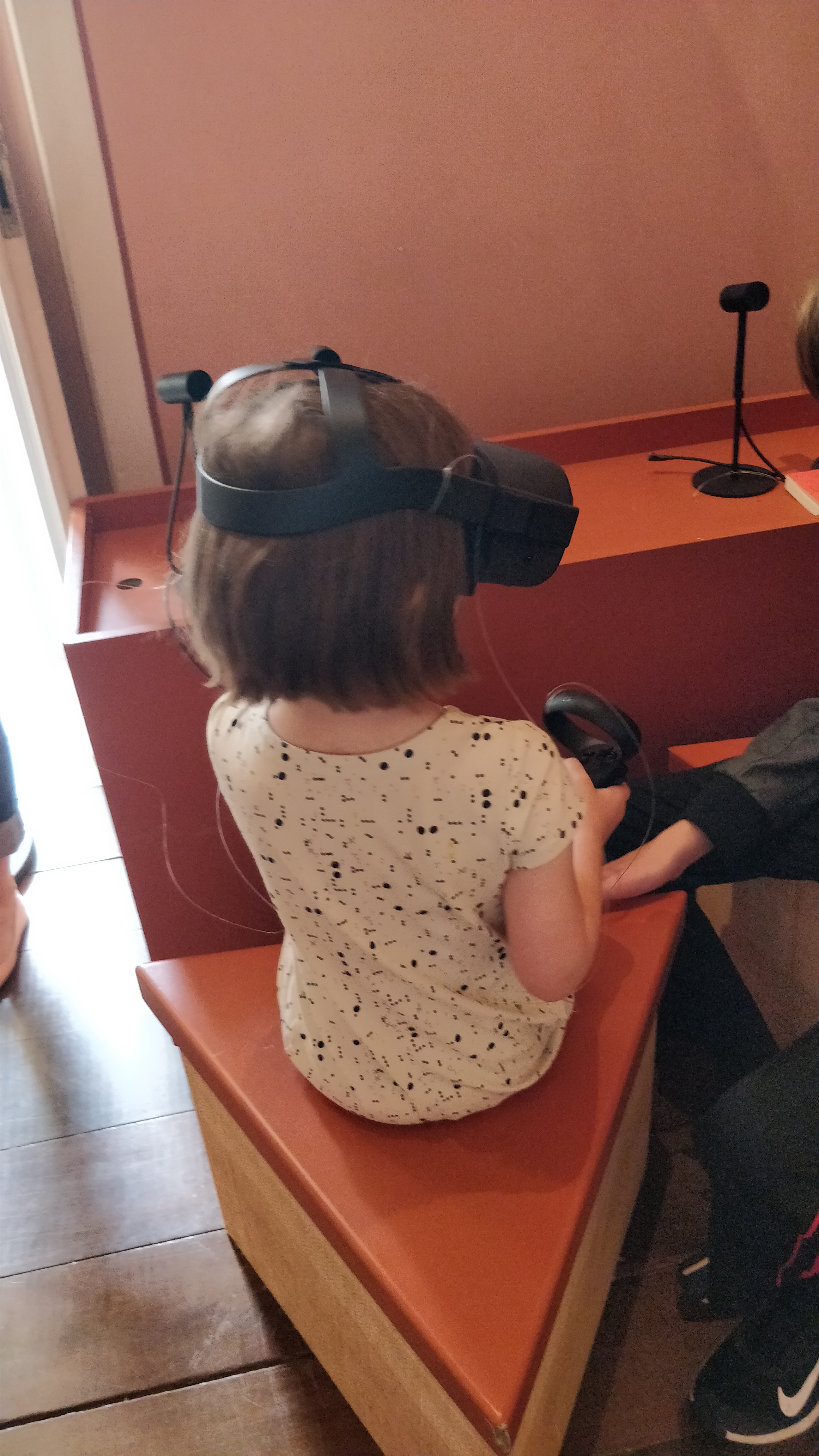
The area around Manaus has been occupied for at least 11,000 years. There’s been a lot of research in the region, and this room lets you take a peek, not only through the glass floor but also through VR headsets.
VR stands for VERY RAD
The video is introduced and narrated by a Brazilian university professor with a pretty good speaking voice, which is great for Spanish speakers as it makes him easier for them to understand. For non-Portuguese or Spanish speakers, you’re a bit out of luck, as the VR has no translation. But it is still a very rad (heh) look at the sites and artifacts. You can see the introduction portion, with English subtitles, through the app.
There’s a room with an art exhibit in it related to Brazilian poet Thiago de Mello–art inspired by him–and I’m tossing it in here because I really like this one.
WEEEEEEE
And now, my second favorite room: the market!
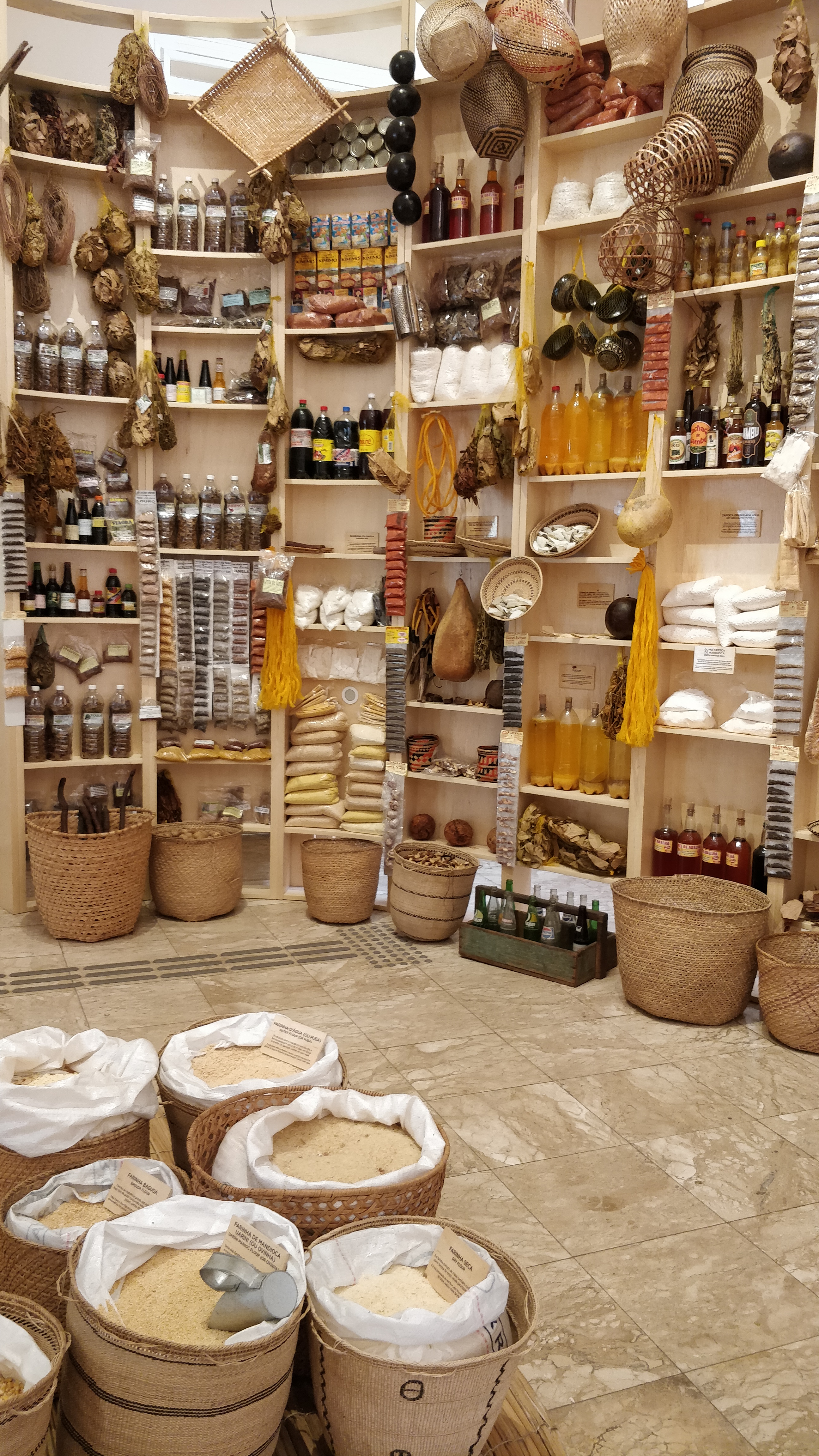
Can’t really do better than the app’s description: “The marketplace is where the cultural identity of a community manifests itself best–full of life, flavors, aromas, words, and sounds.”
The herbarium, which is what I’m calling my spice rack from now on.
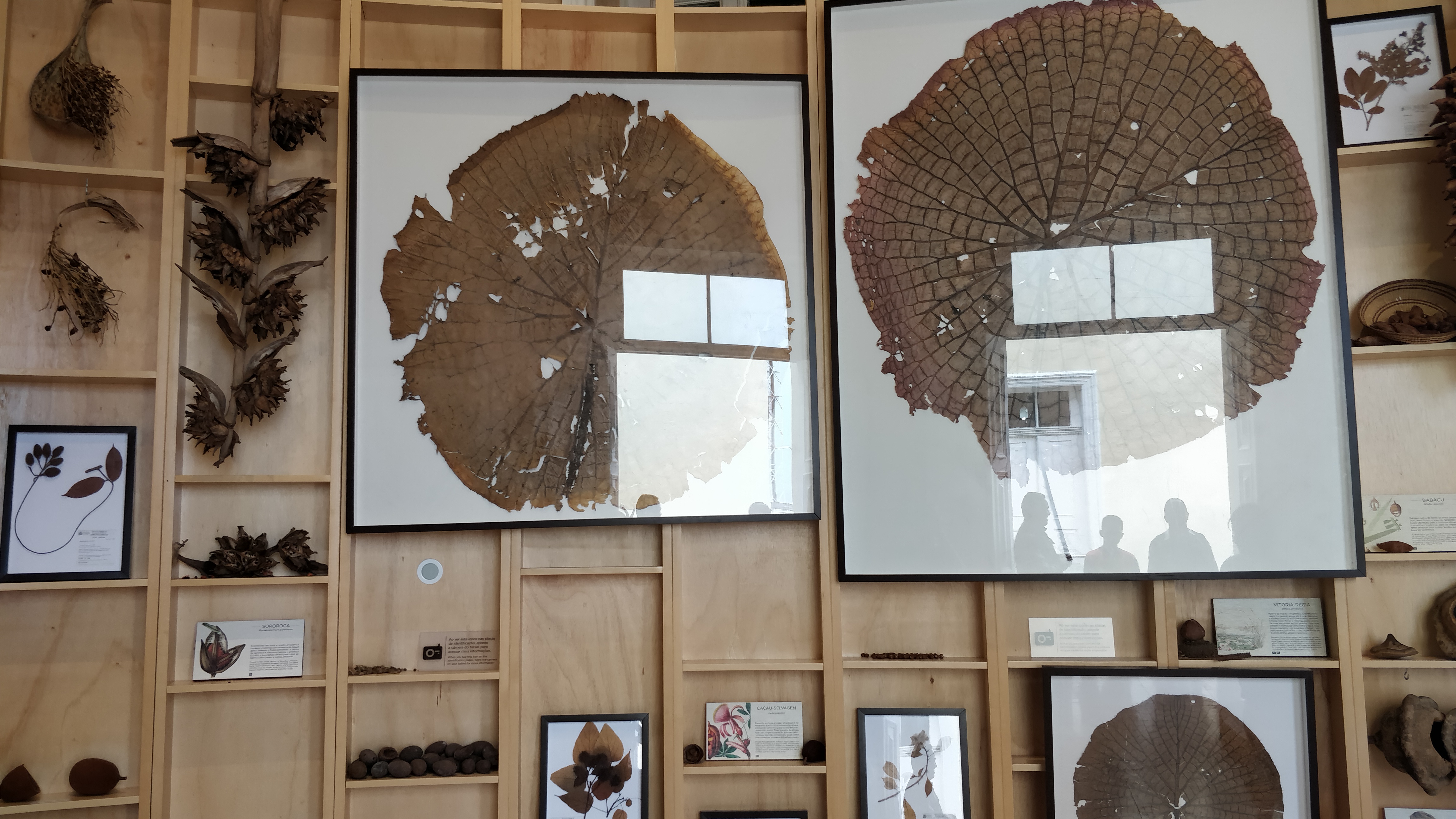
You can scan, with your phone, many of the plant labels for recipes and folk stories (also guess what ALL THERE IN THE APP YOU CAN DOWNLOAD RIGHT NOW), although the folk story animations also play in the bottom of this barrel:
Which sounds kind of weird but actually really works.
Wandering back over to the other side of museum there is my favorite room, Affluent Rivers.
A representation of the rivers around Manaus, principally the Rio Negro and the Solimões (they join at the Meeting of the Waters to make the Amazon River).
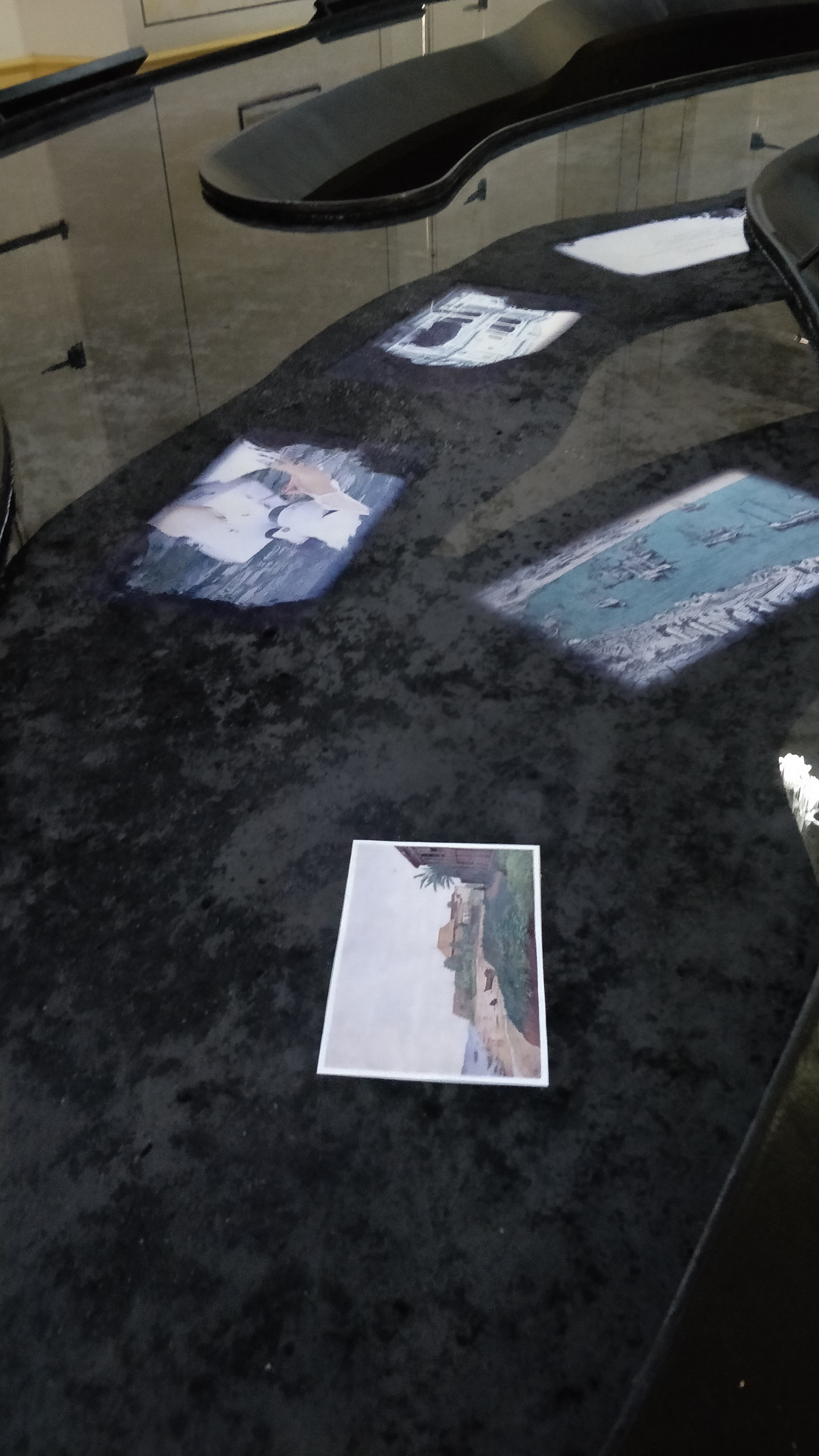
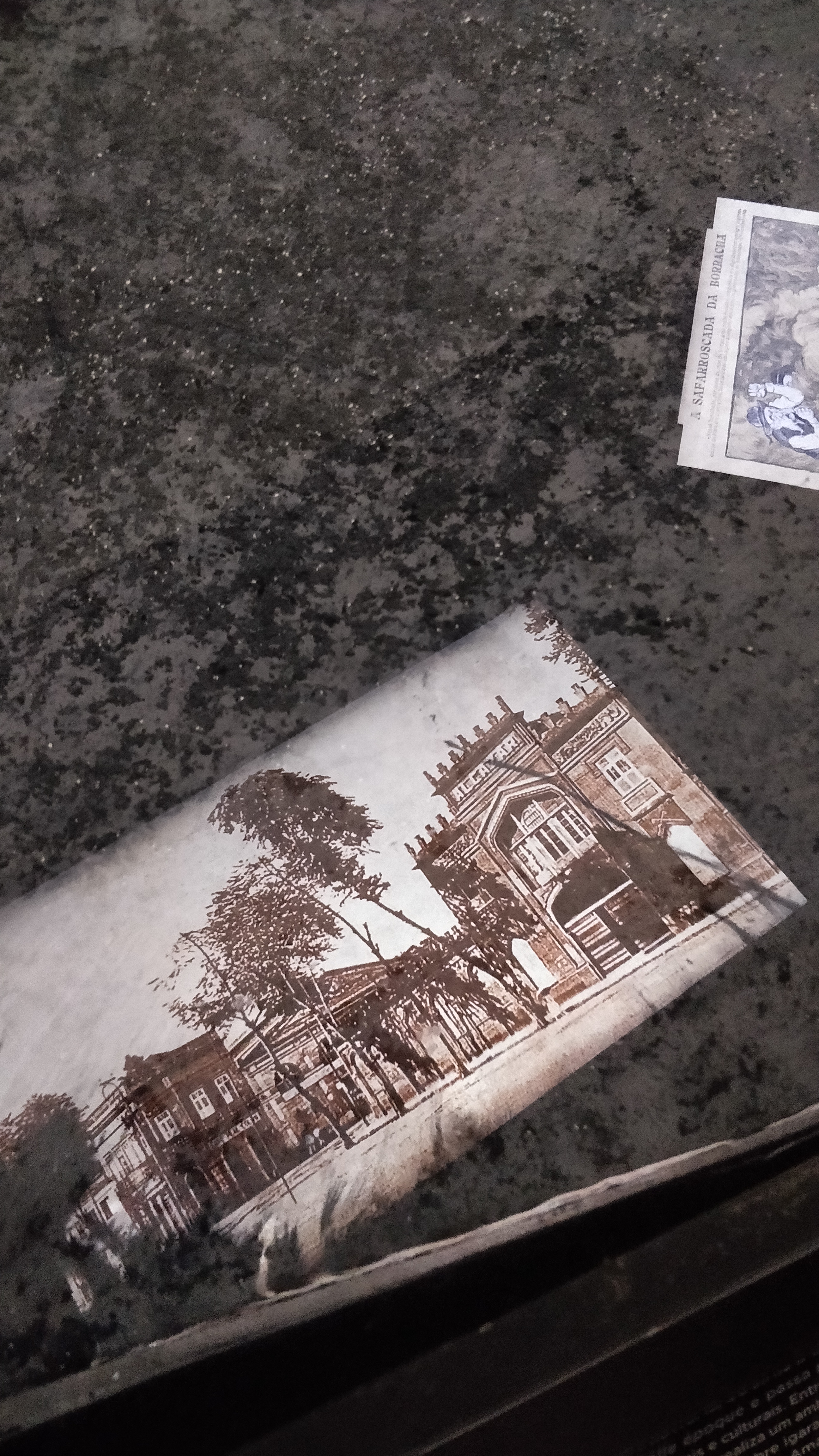
As you move along the water, the history of Manaus is projected onto the surface. Once again, I can’t do better than the app: “A timeline is like a river: flowing uninterruptedly, carrying different layers of time, which sometimes overlap, sometimes become separated and then reconnect.”
Again, the images are interactive, and can be triggered by the visitor’s hand movements. It is such a clever and gorgeous concept, which makes it my favorite room.
Finally, I’m going to mention briefly the Bath of Origins room, which was too difficult to photograph, but you stand in the middle of several screens with projections of locals, who give their stories in turn. They are all standing at the river’s edge, and after they talk, they dive in, and then you see them swimming on the floor you’re standing on. The affect is cool, but there are no English subtitles. HOWEVER, you can see the videos with English subtitles through the power of your imagination. Just kidding, you can totally see them through the app, too.
The City Museum is amazingly well done. The interactive elements are creative and well designed. I can’t speak highly enough of the museum’s app–it’s the best museum app I have ever seen. The museum has clearly been heavily invested in, and I hope it continues to be. If the shop had been open, I would have bought a lot of swag because the museum frickin’ earned it.
The City Museum is free (FREE!), open from 9am to 430pm Monday through Friday, 9am to 1230pm on Saturday, and the second Sunday of every month from 5pm to 9pm.
It’s been an eventful few weeks here in Argentina. The presidential primaries happened, and also the value of the peso plummeted. Good times!
But before all that happened, I went to one of my favorite buildings in Buenos Aires, which happens to house the Rivadavia Natural Sciences Museum.
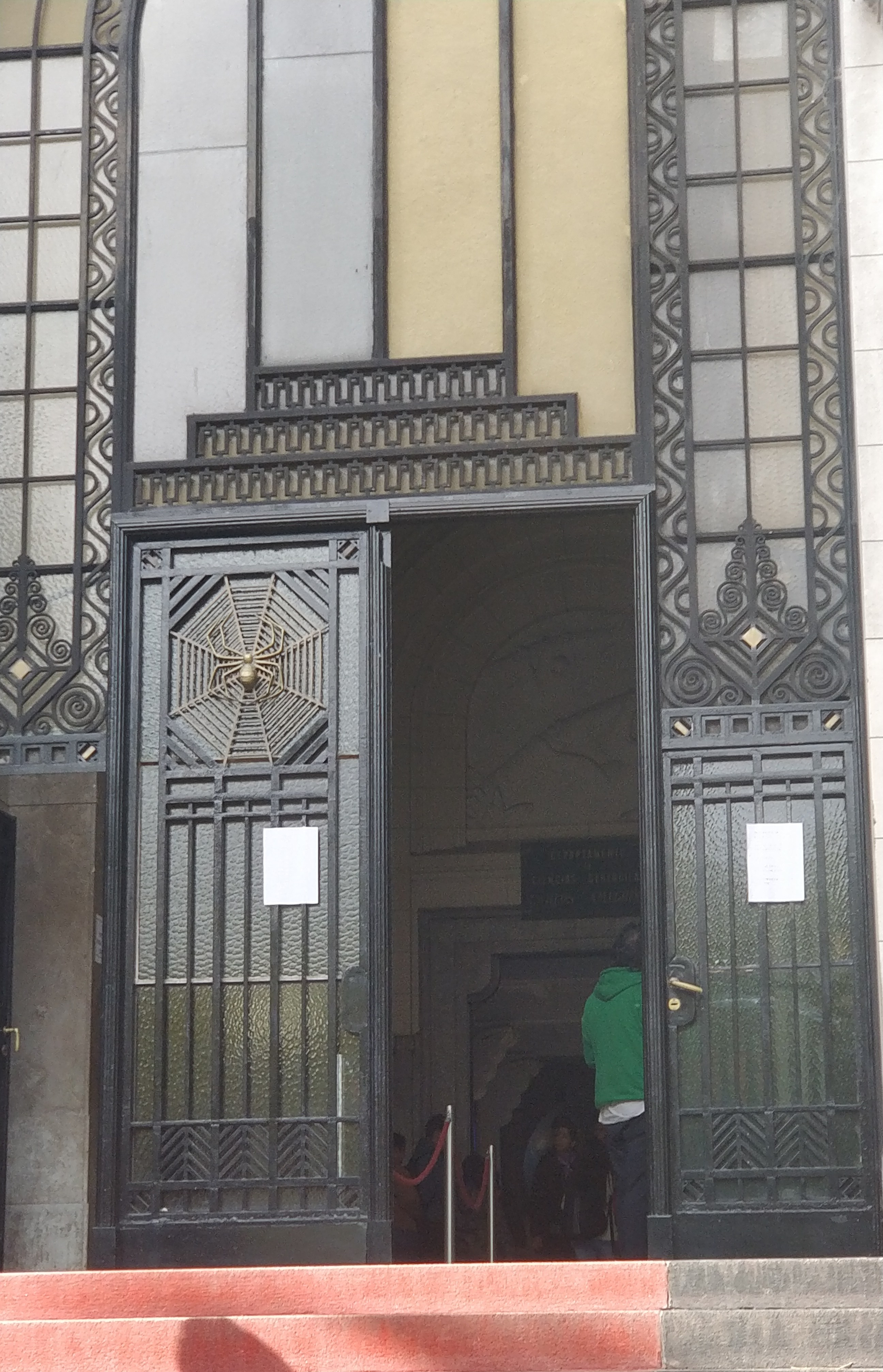
So, ya like spiders?
The museum opened in 1826, owing to the work and advocacy of Bernardino Rivadavia. It was the first natural sciences museum in South America, and kind of a big deal. The current building, in the slightly-out-of-the-way-for-tourists Caballito neighborhood, was inaugurated in 1937. It’s got SO MANY ANIMALS.
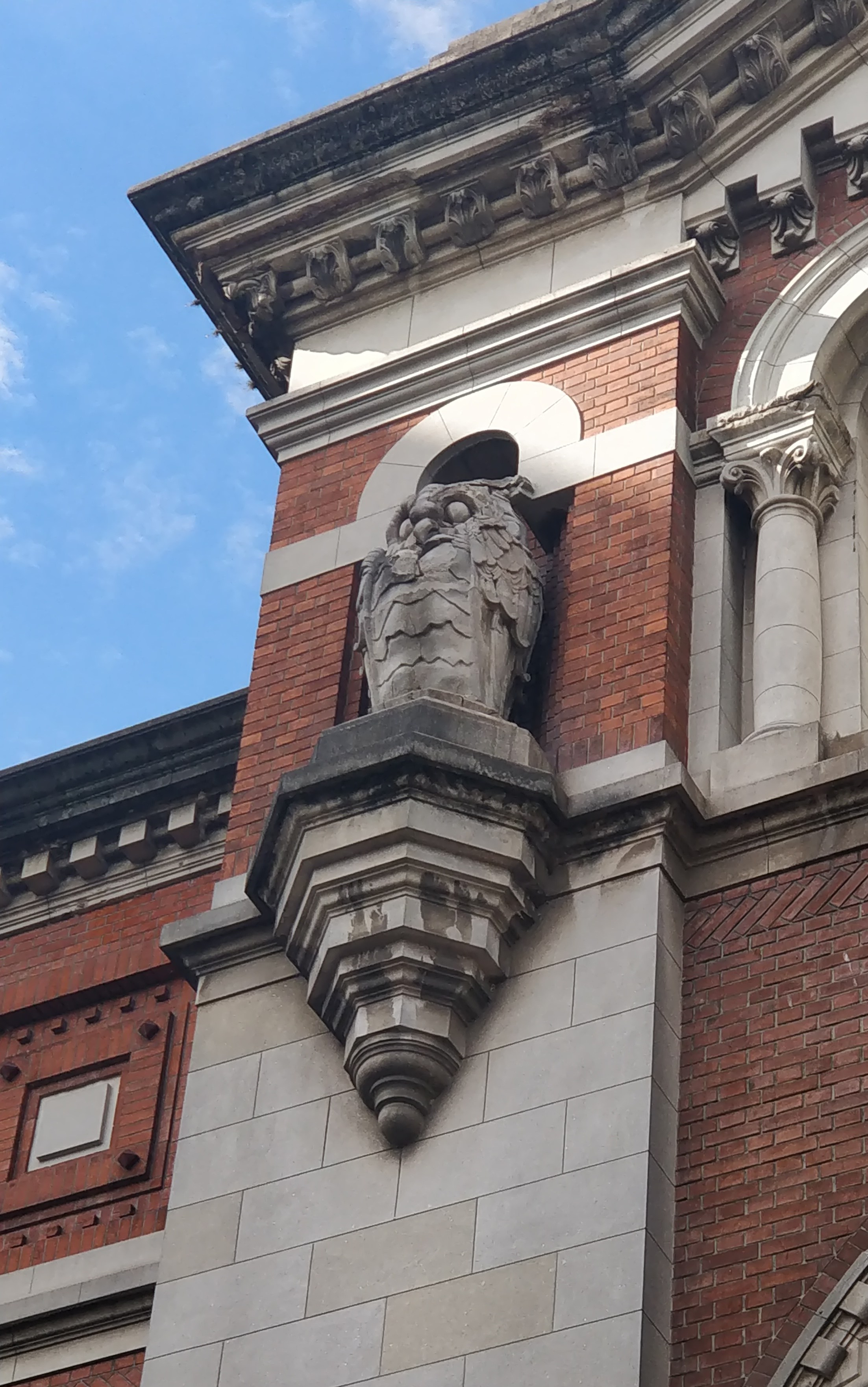
OWLGOYLE
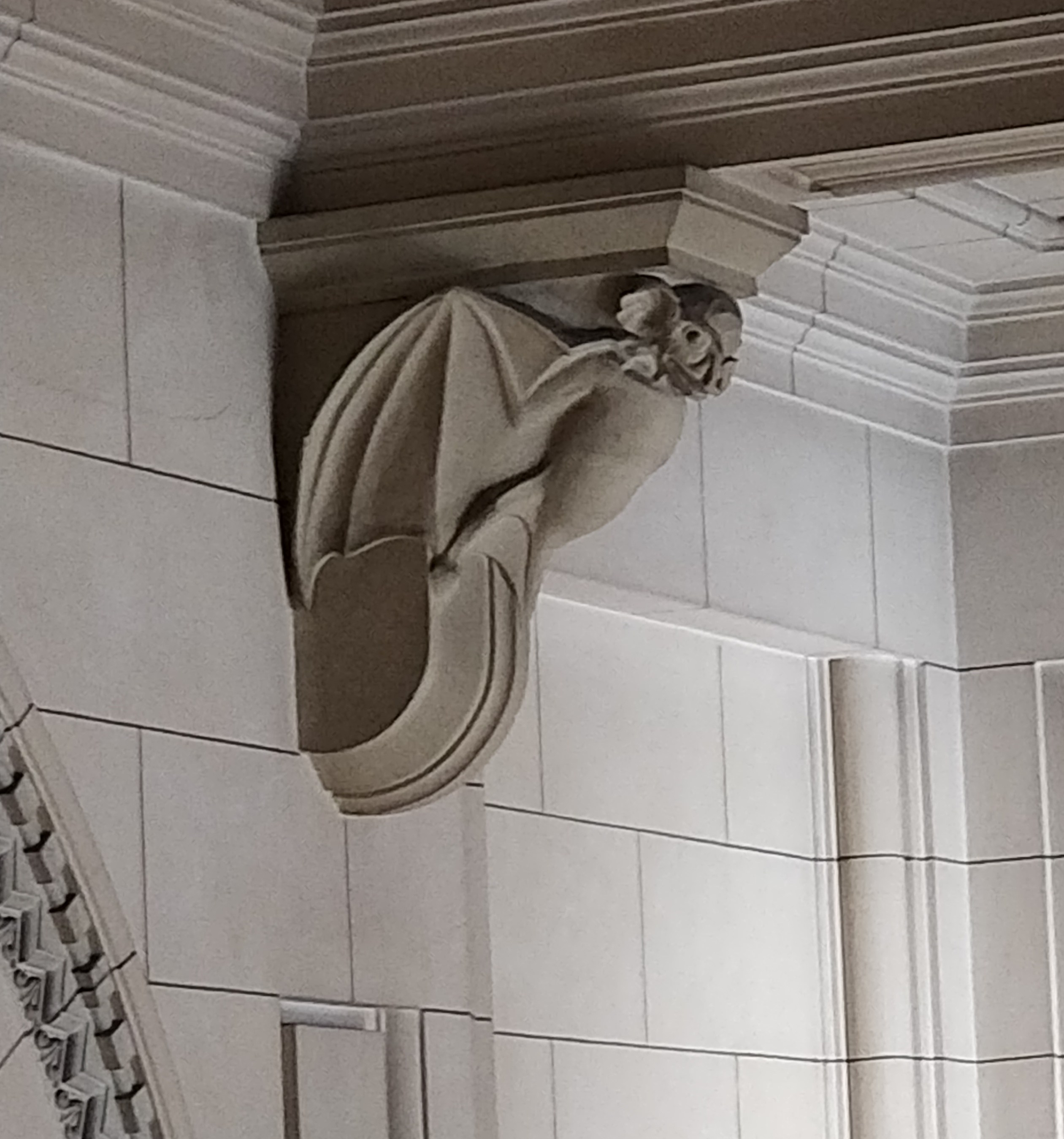
INTERIOR CEILING BAT
There’s more, and I recommend walking around the inside and outside of the museum squealing in delight when you spot them.
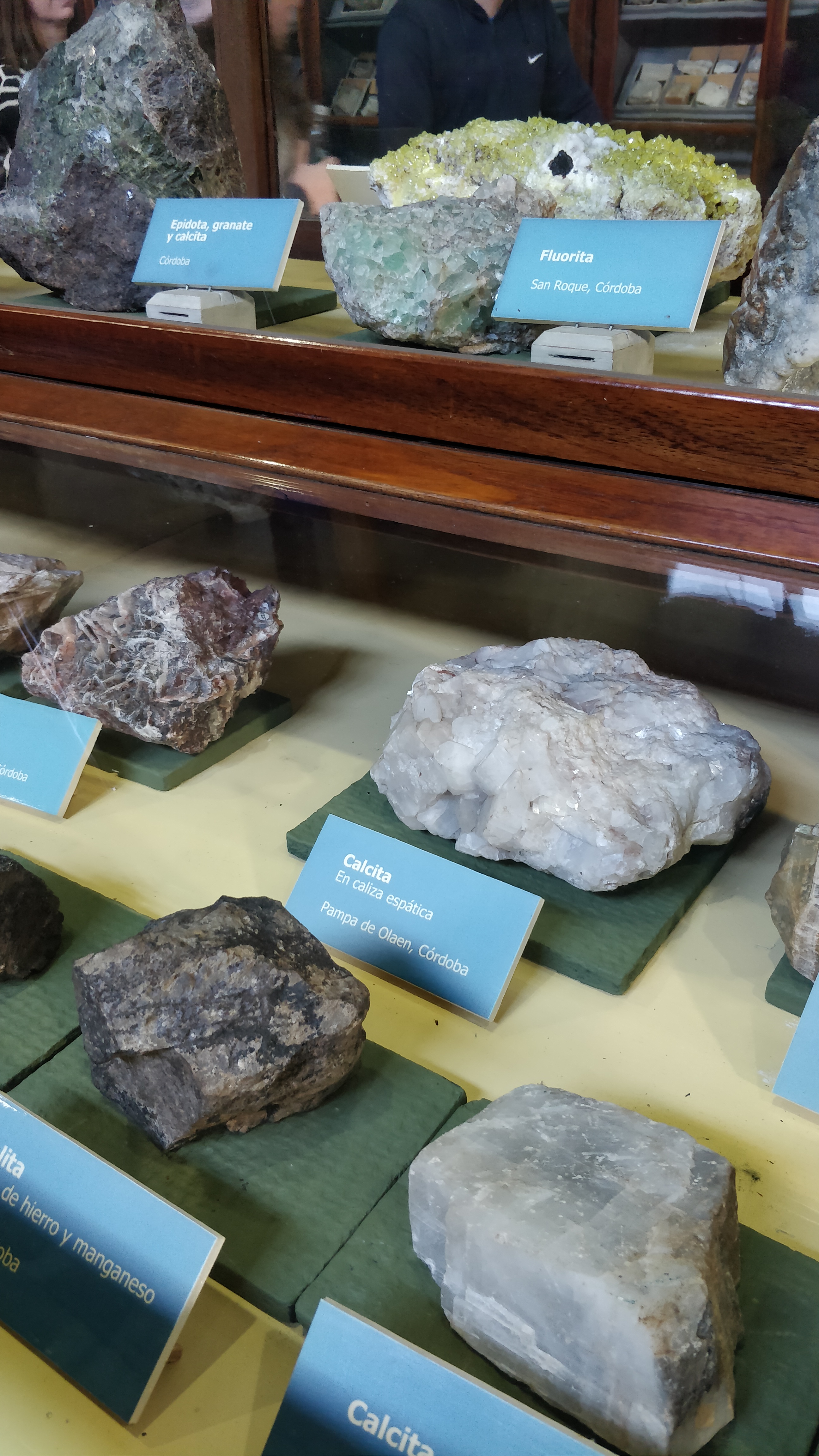
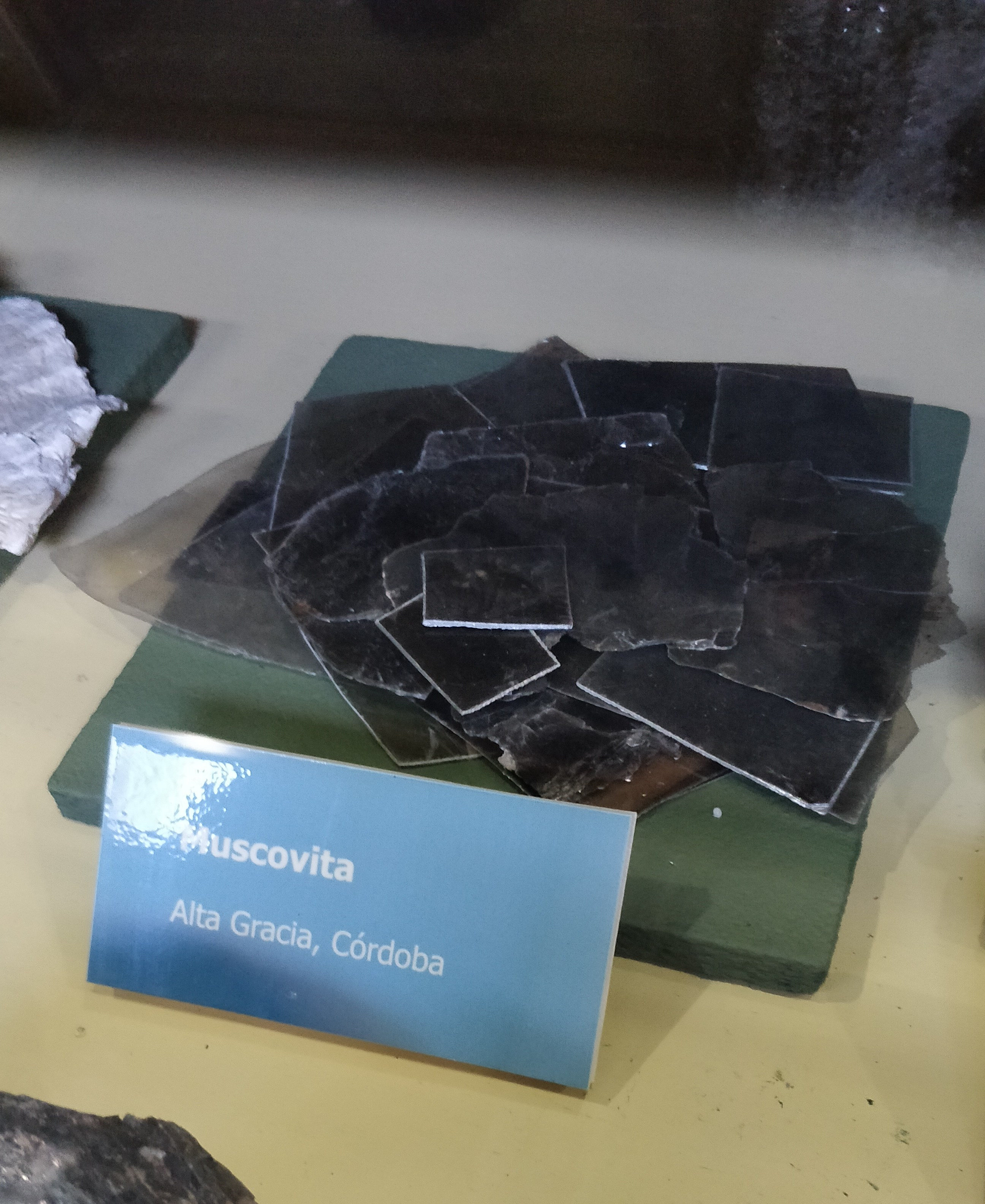
When I visited, it was the winter break for the local schools, and the place was full of excited, noisy children. There was a line out the door and around the gate to get in when I was leaving around lunchtime. It was glorious. The children were even exclaiming over the minerals.
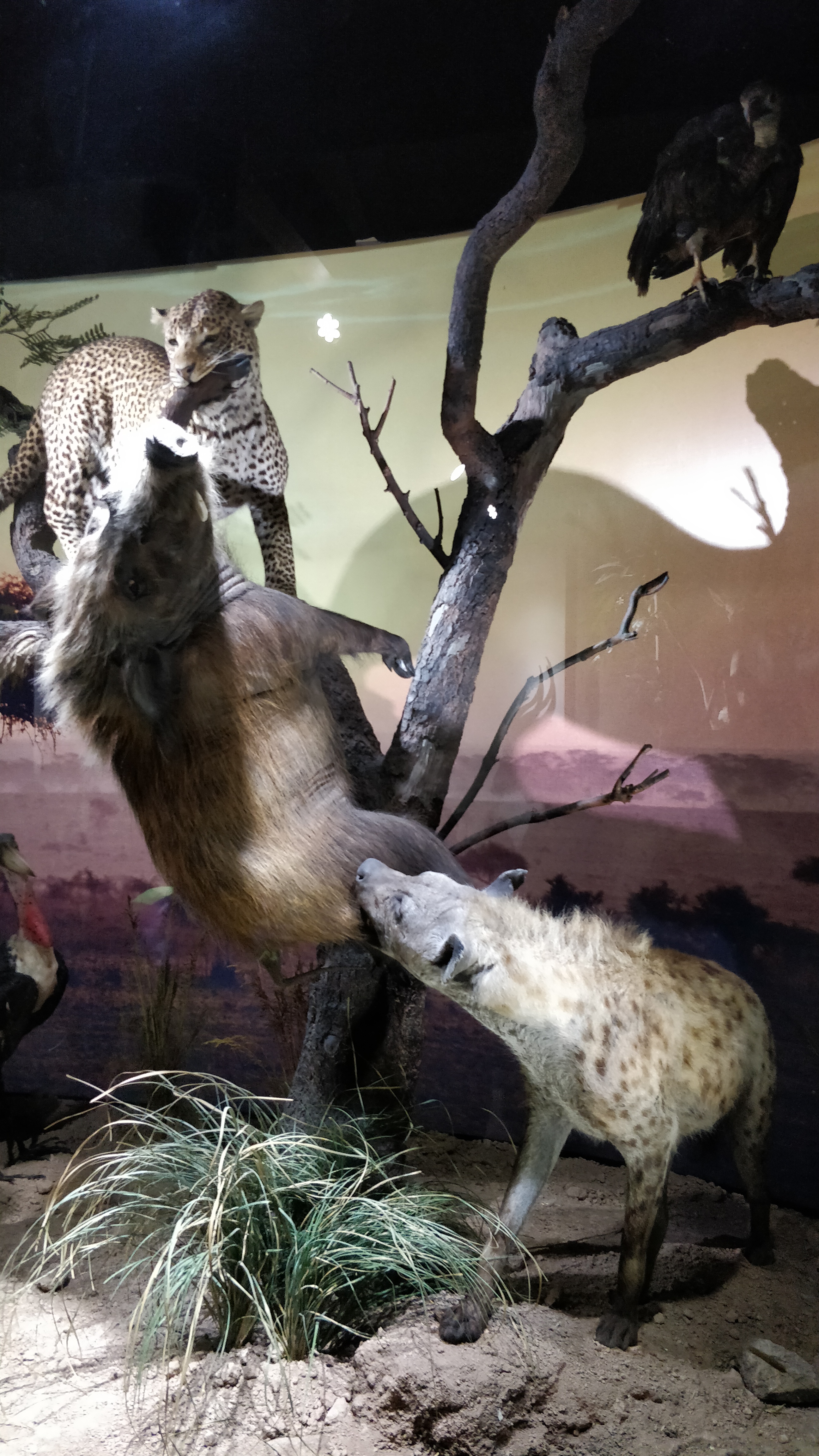
There is more than awesome rocks to see, of course. The museum does boast a large collection of native specimens, but it’s not limited to them. And who doesn’t love dioramas of successful hunts and dramatic battles for food and survival?
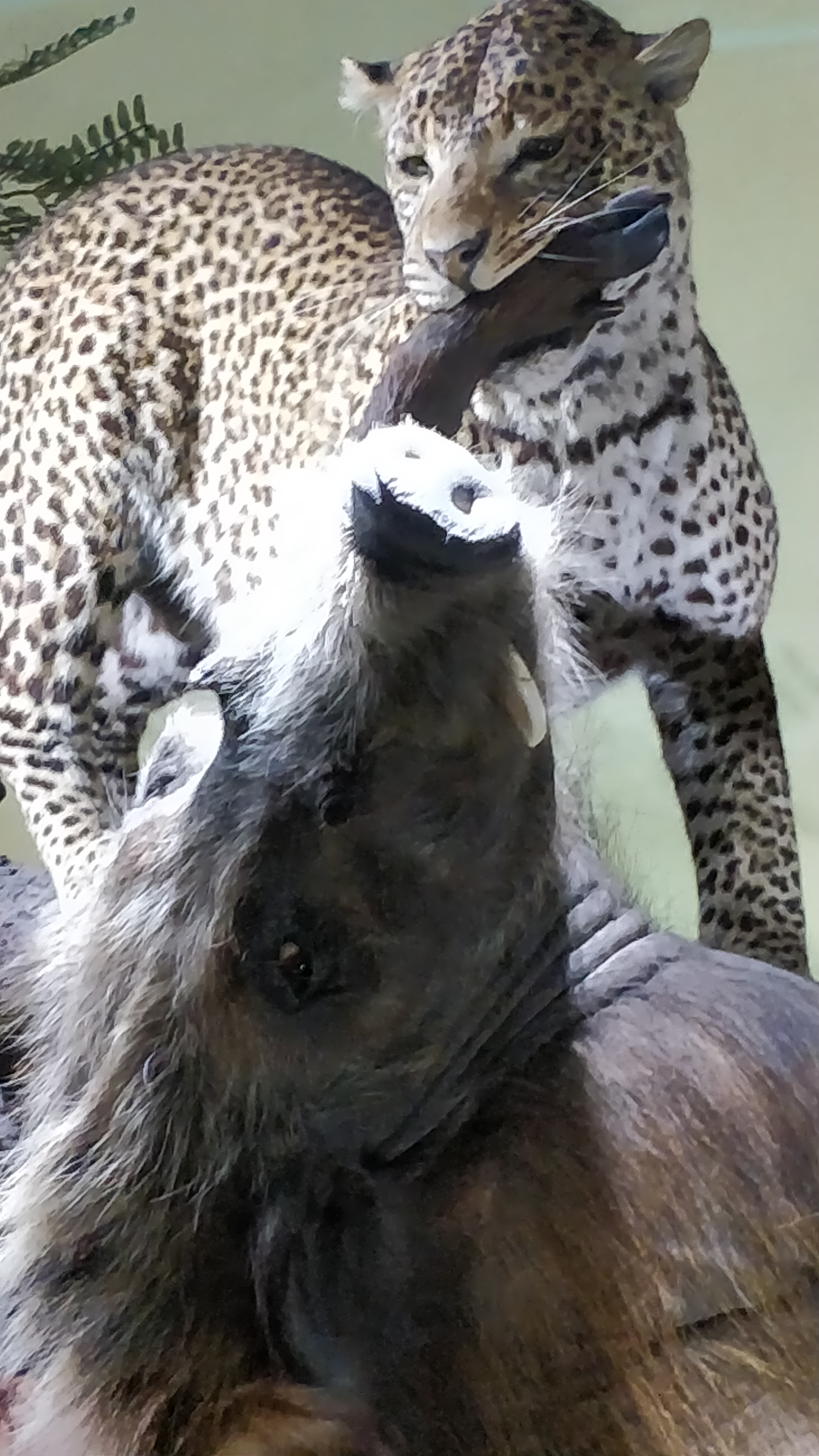
This warthog, I guess, is not all that thrilled with dioramas of successful hunts and dramatic battles for survival.
Giraffes aren’t the only ones who like to nibble trees.
Gerenuks do too, and are actually also called “giraffe gazelles,” which I didn’t even notice until I looked it up just now.
Although you might know the species better as that “popcorn eating gazelle” meme.
This is a pretty photo-heavy entry, you guys, because I appreciate and value artistry.
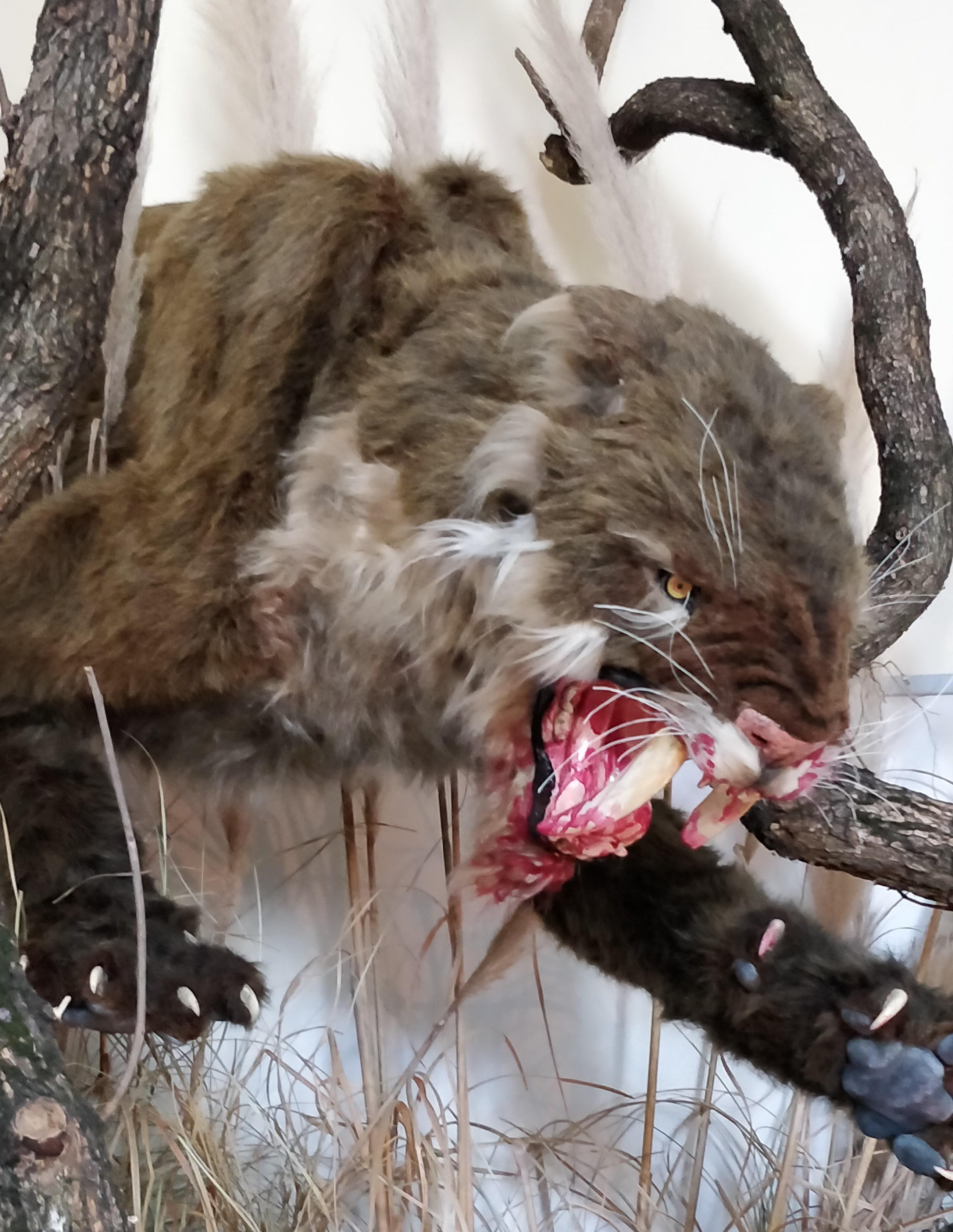
“NEEDS MORE BLOOD”
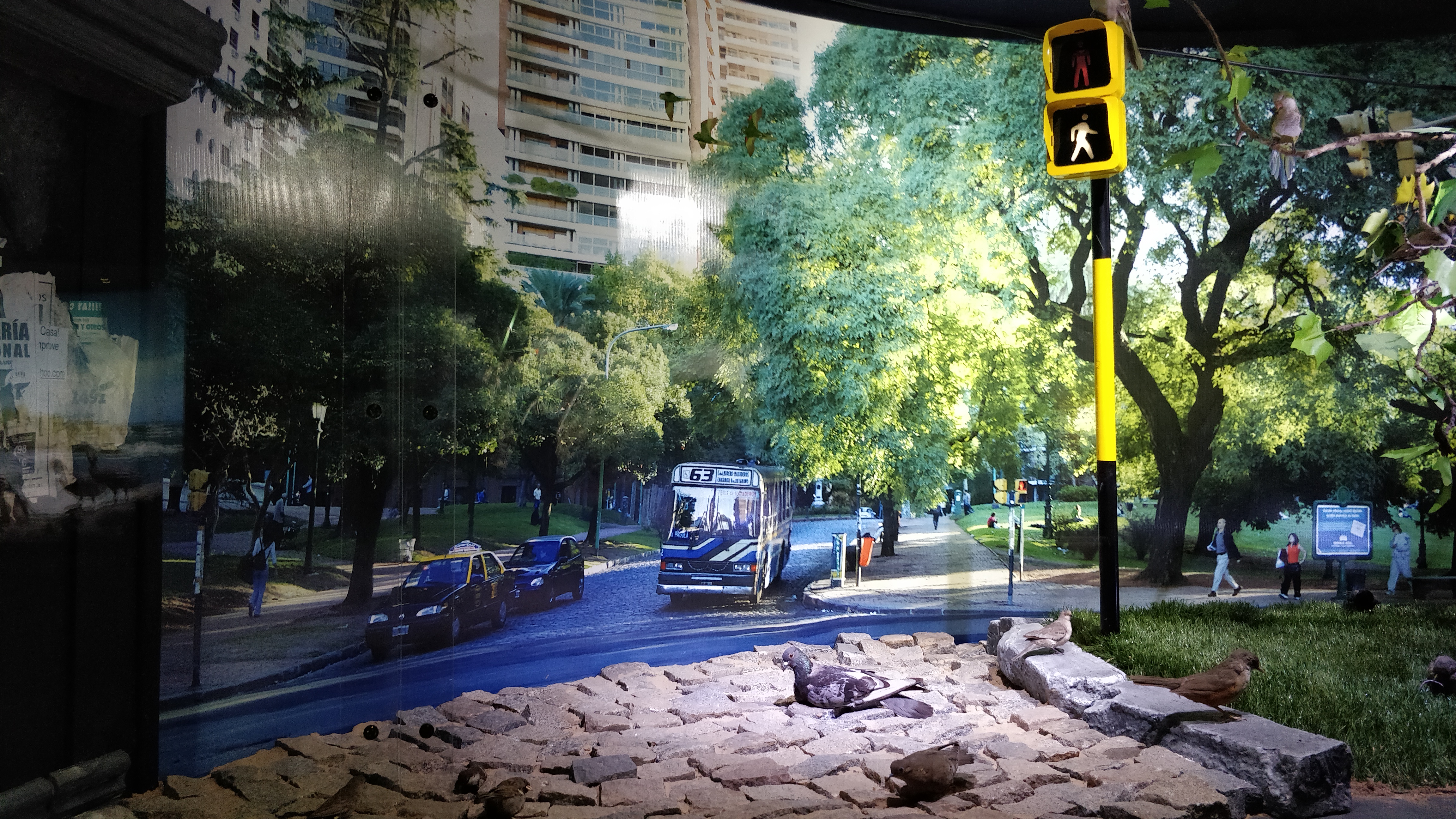
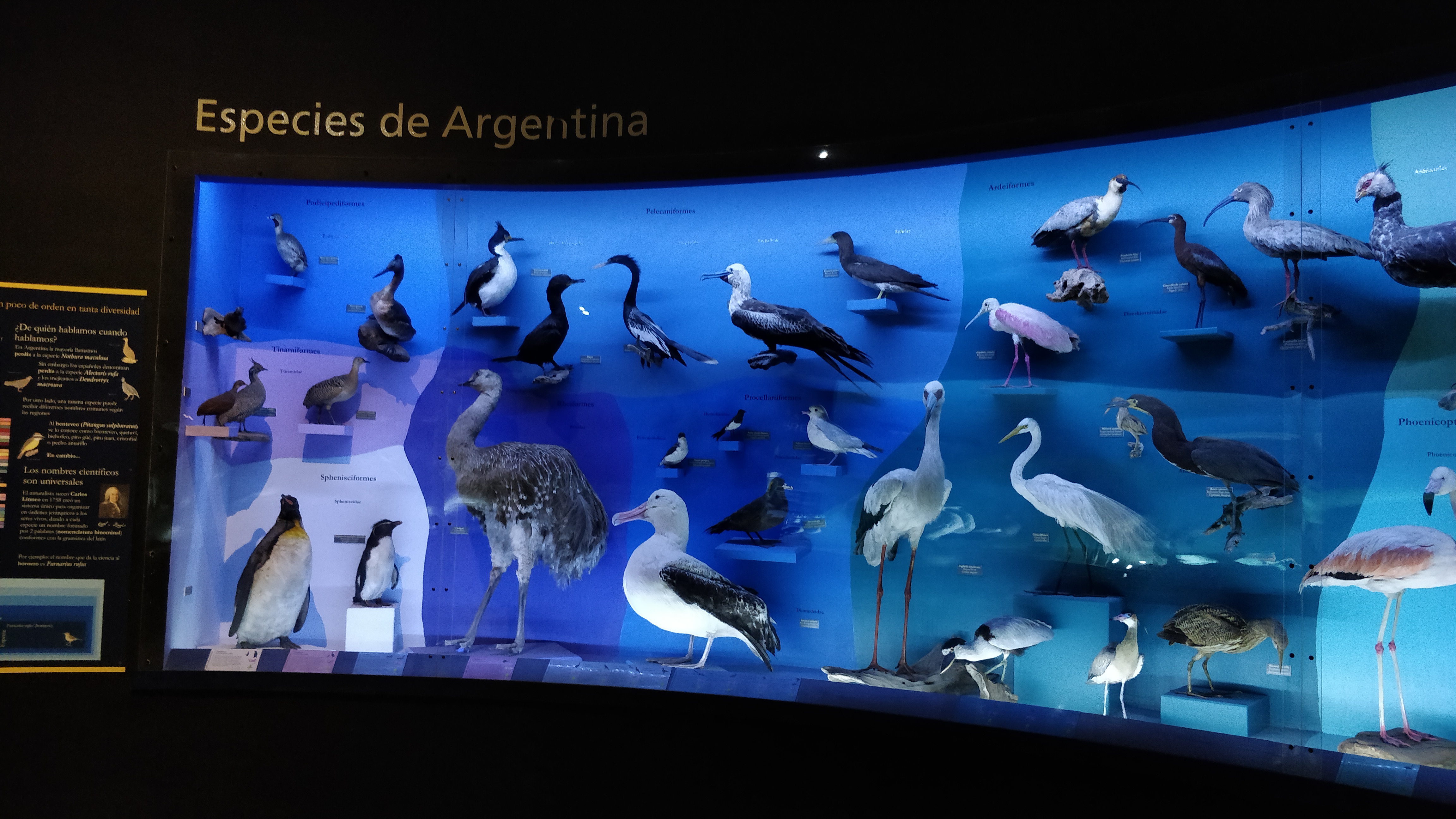
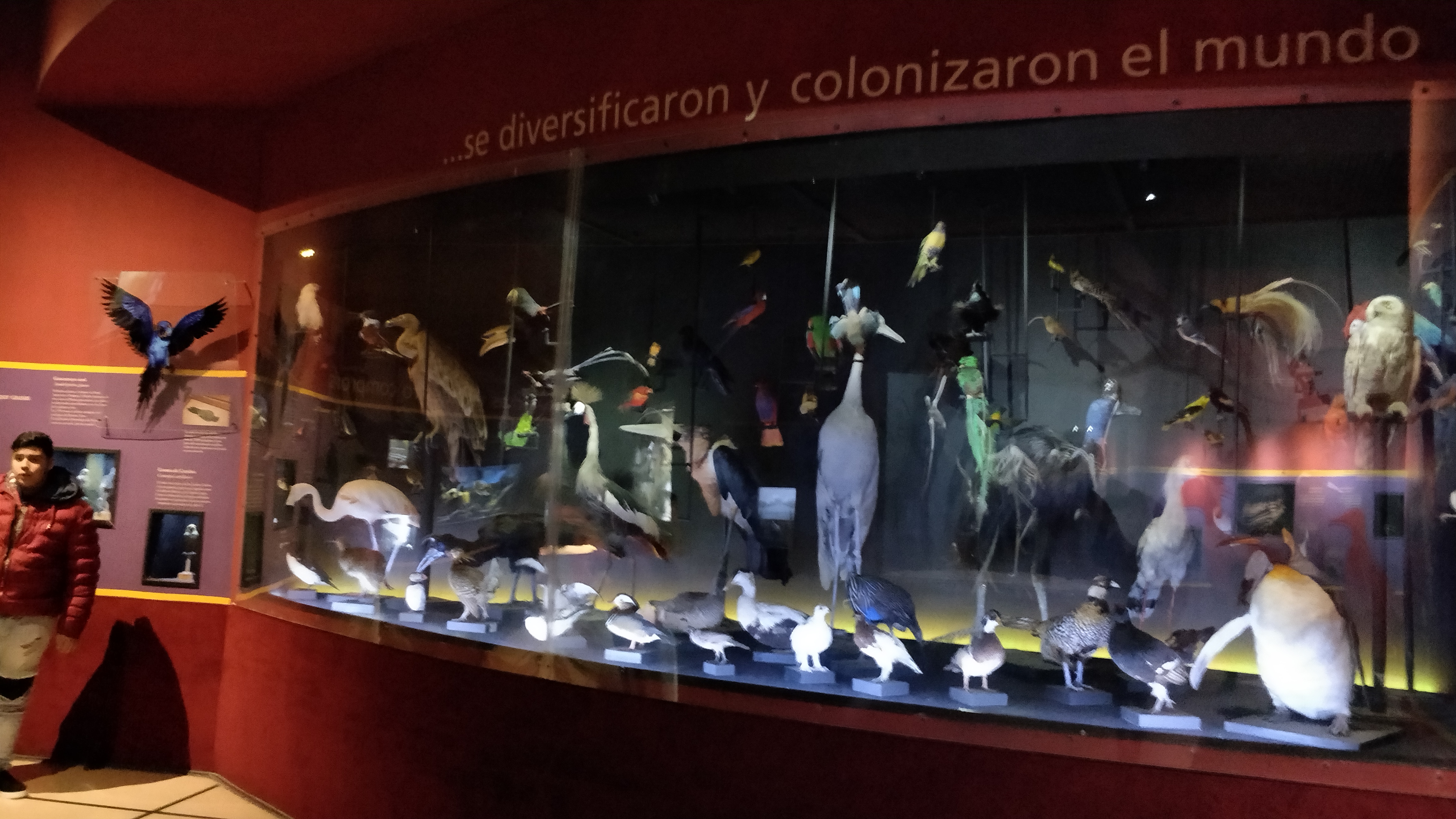
There is a very nice hall of bird specimens, including some in dioramas of Argentina’s environs. This was my favorite one, because it happens to depict a park very near my house.
A good place for birding and Pokemon Go.
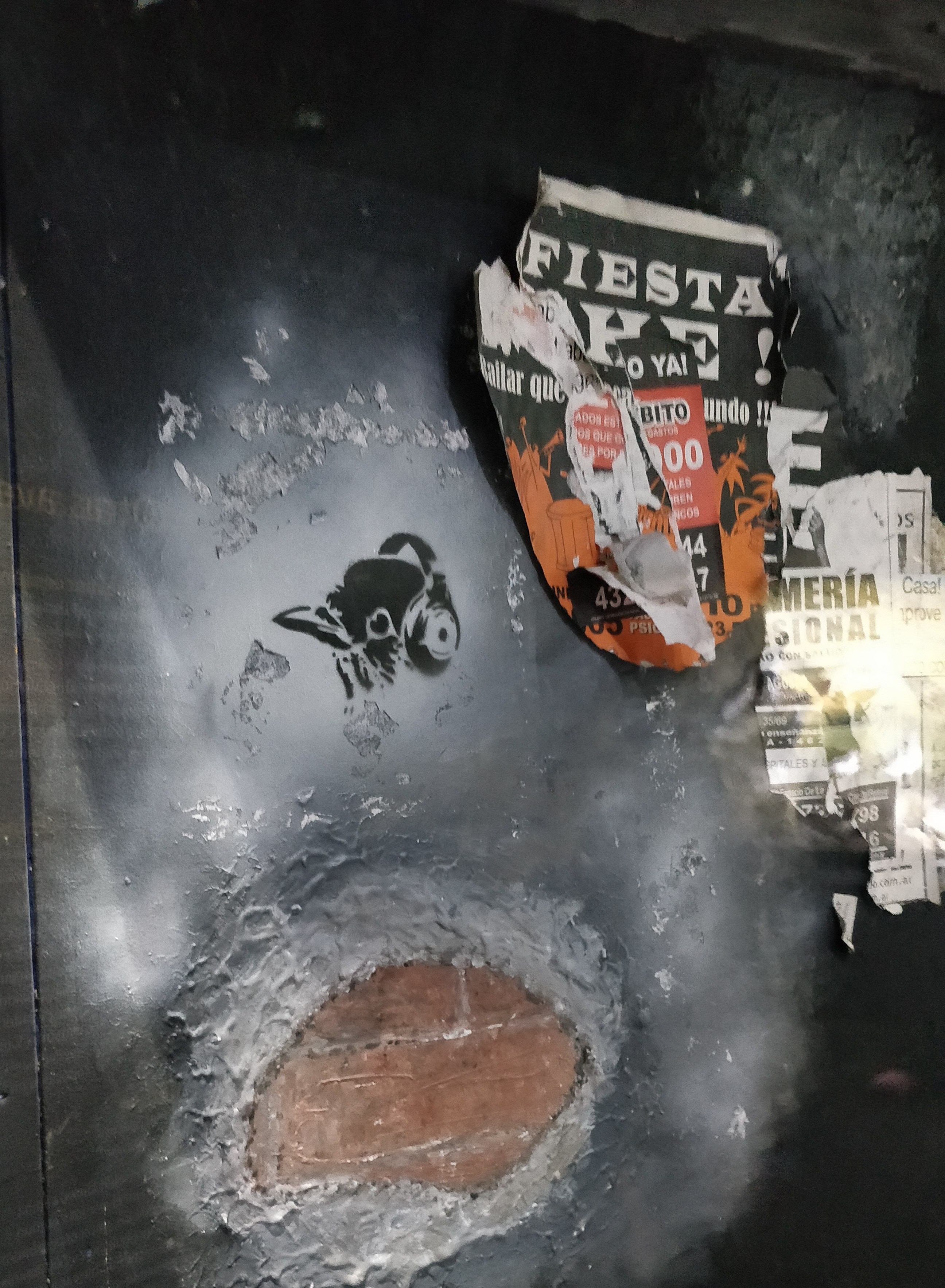
I especially loved the little riff on a fairly common stencil graffiti motif.
Look I’m never gonna be good at taking photos but most importantly why doesn’t the MACN have this on a t-shirt
The bird wing (haha) is actually really good.
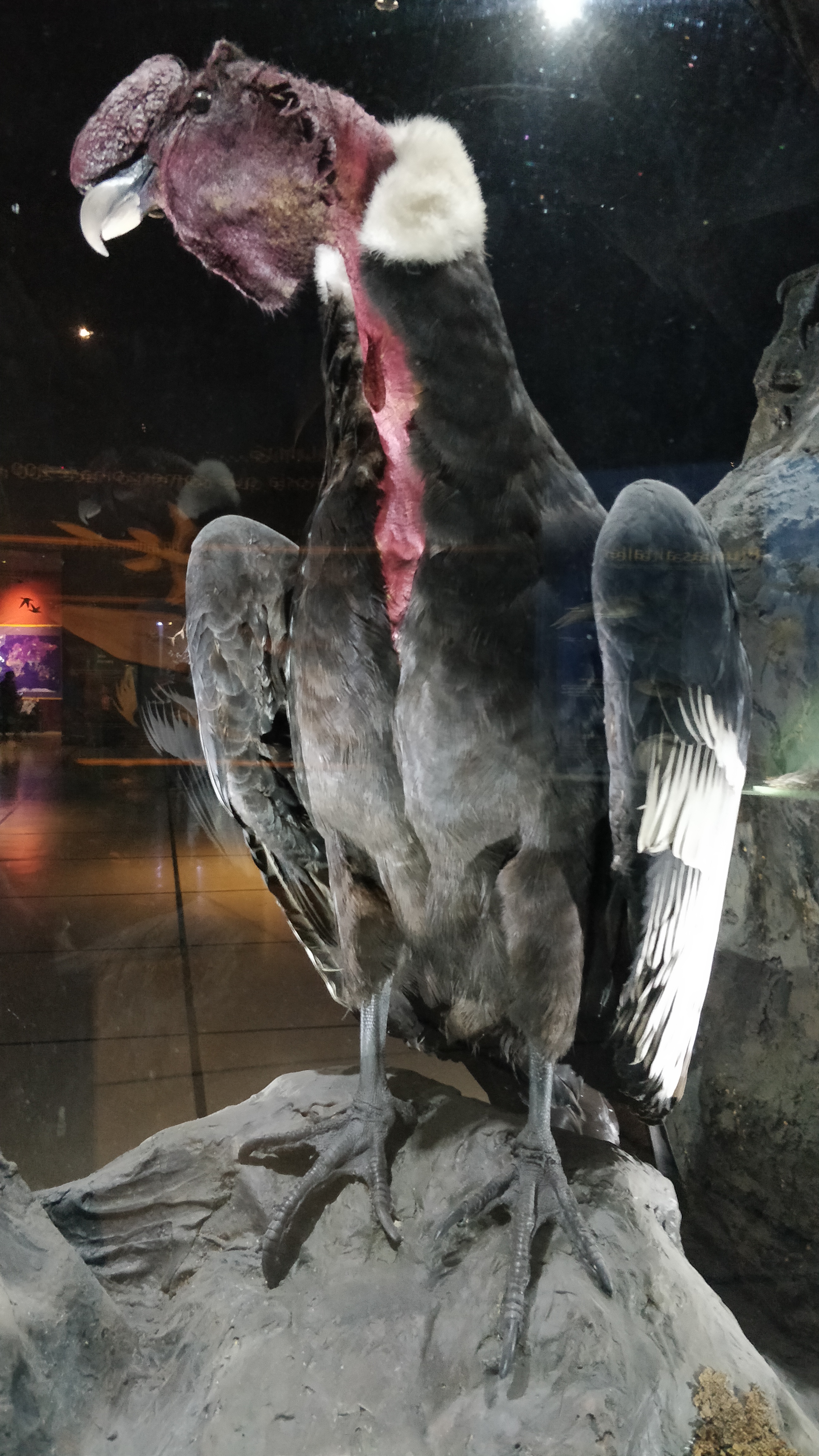
Andean condors have great personalities.
You might know, if you are into dinosaurs (you are, because everyone everywhere always is into dinosaurs), that Argentina is pretty rich in dinosaur fossils.
TA DA
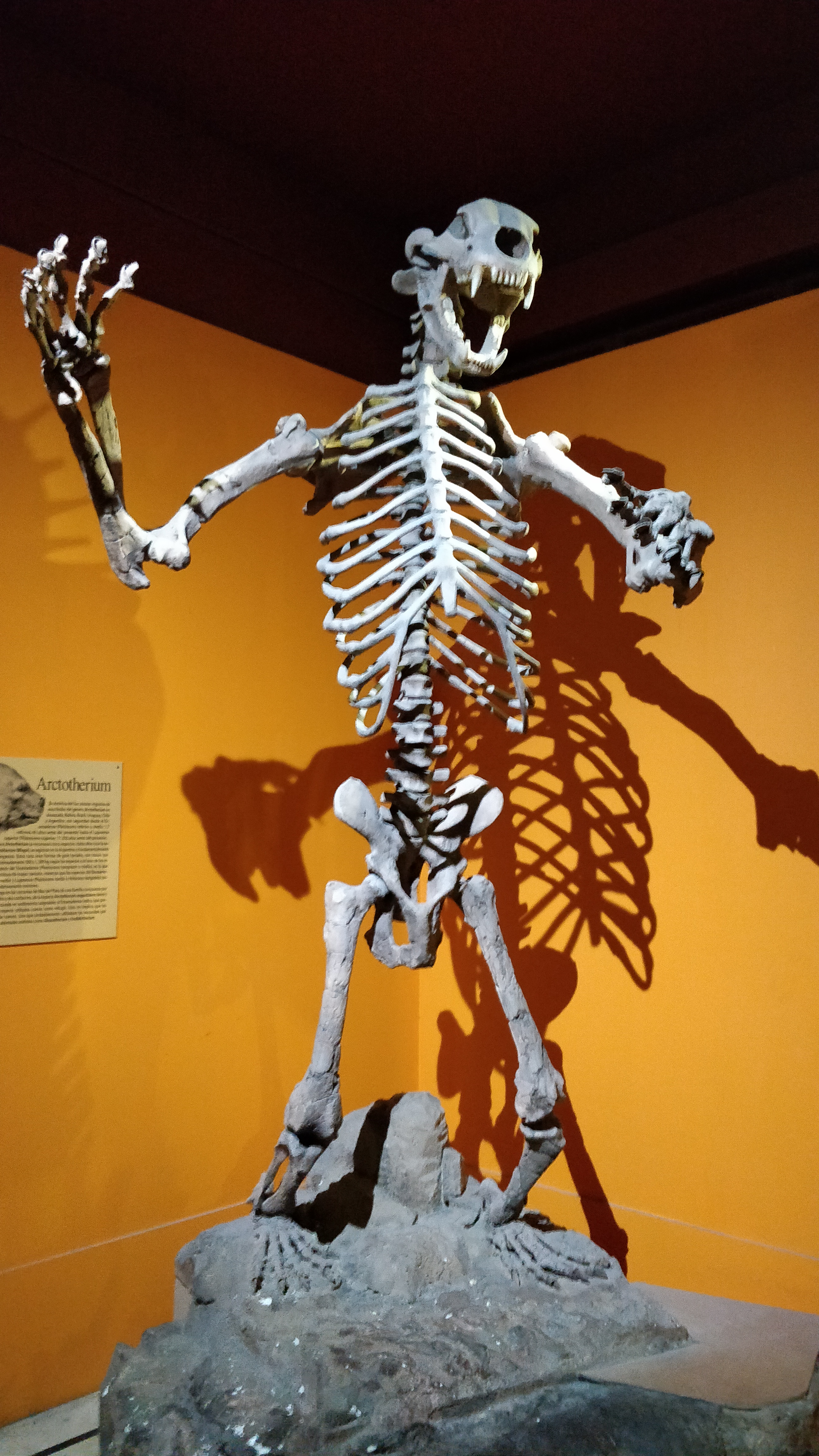
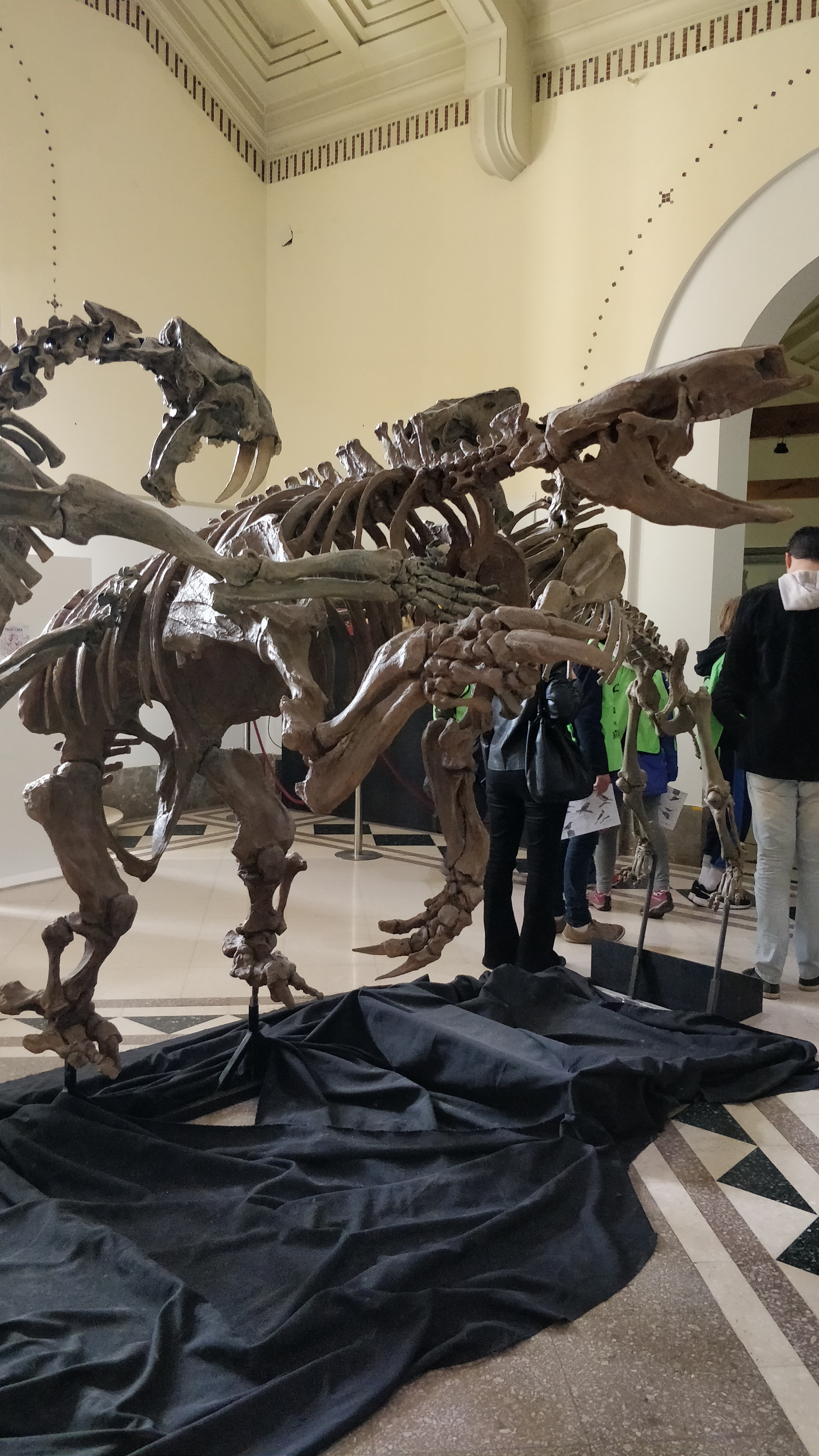
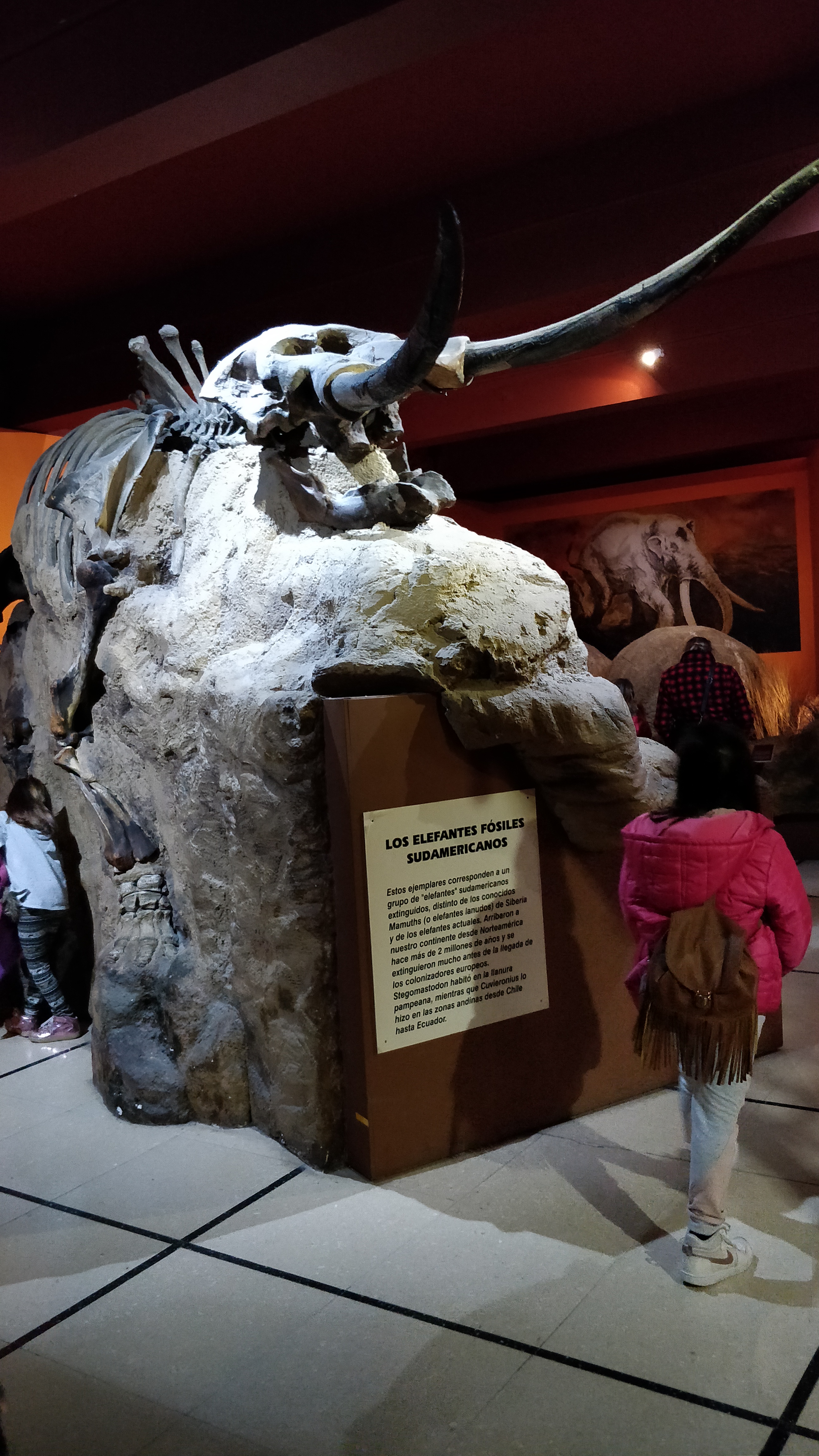
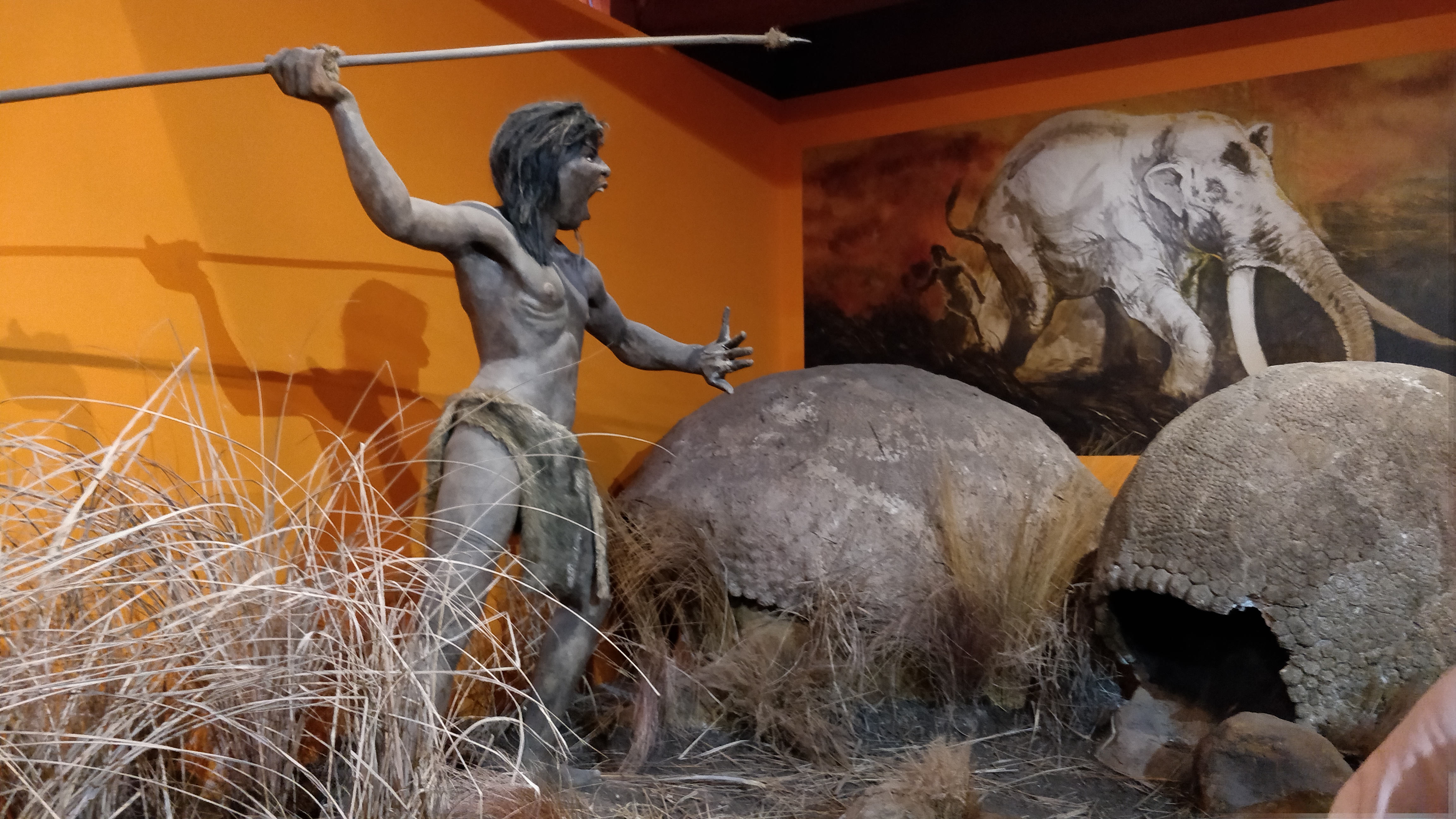
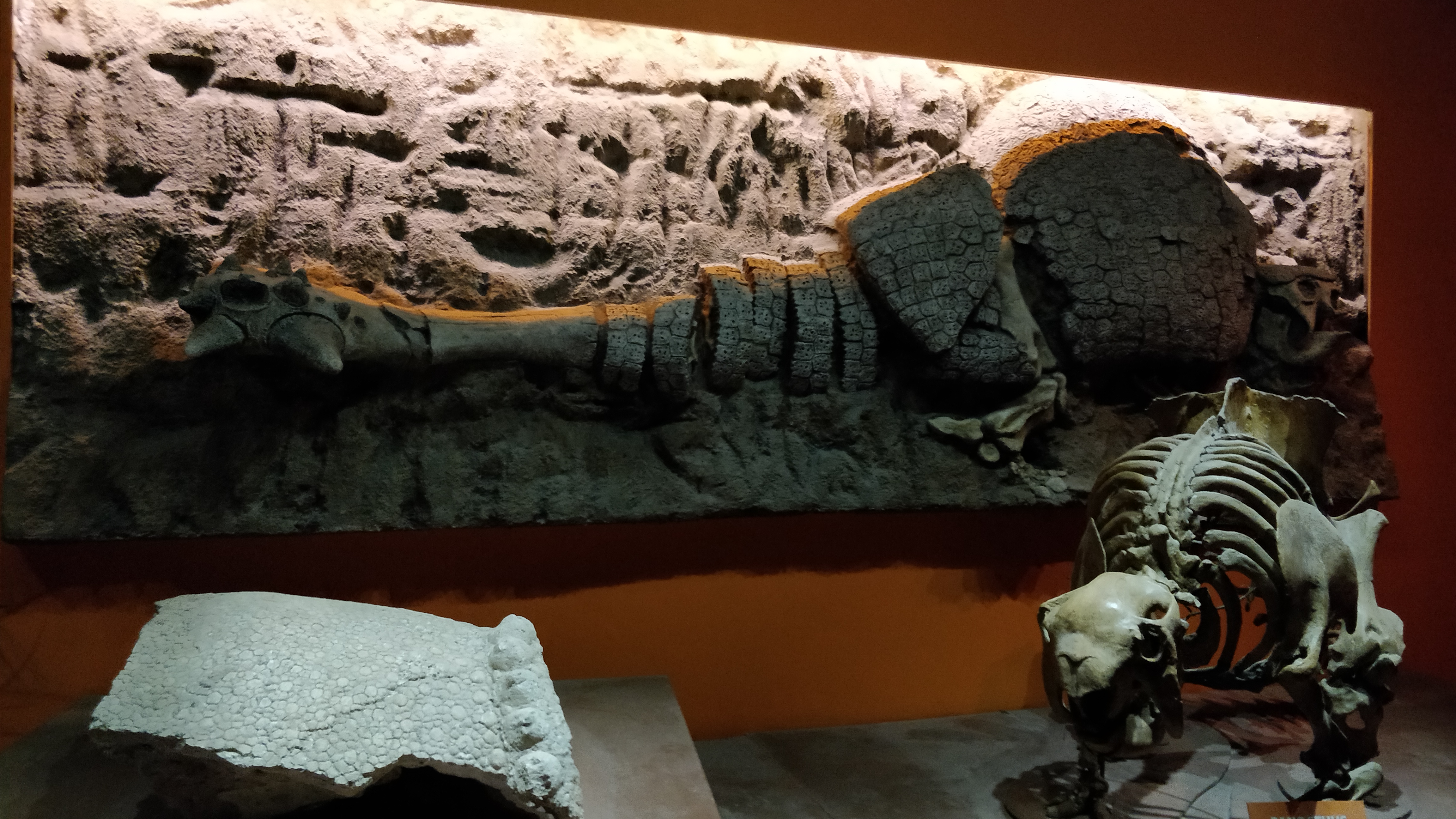
It’s no Sue, but it’s not at all shabby! There’s plenty of other native megafauna, too, which is great because ancient megafauna are so frickin’ weird.
There’s also a section of the building that covers the museum’s history.
I’m starting to feel real bad about the terrible photos. The MACN doesn’t deserve this.
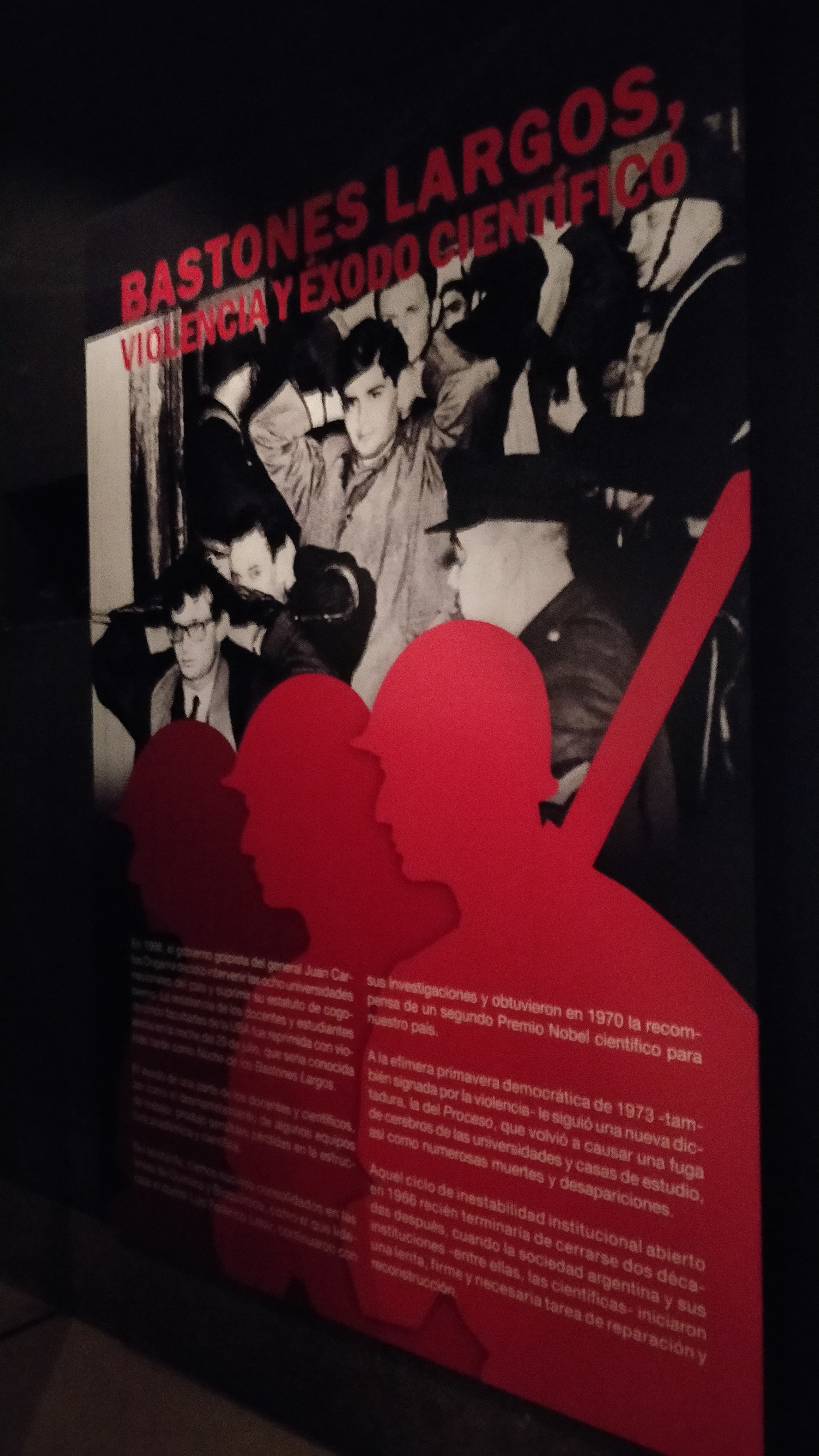
Guess what dictatorships aren’t fond of.
At the start of the military dictatorship (no not that one) of 1966, faculties of the University of Buenos Aires were occupied by students, professors, and graduates in protest of the military’s overthrowing of the government. The protesters were violently removed, beaten, and arrested during La Noche de los Bastones Largos. The military ended university autonomy, hundreds of professors left the country, and research was quashed. It was an enormous setback for academia in Argentina. This is your pointed reminder that there’s no such thing as “sticking to science” because everything is political and education is the enemy of oppressors. So, study hard and fight evil.
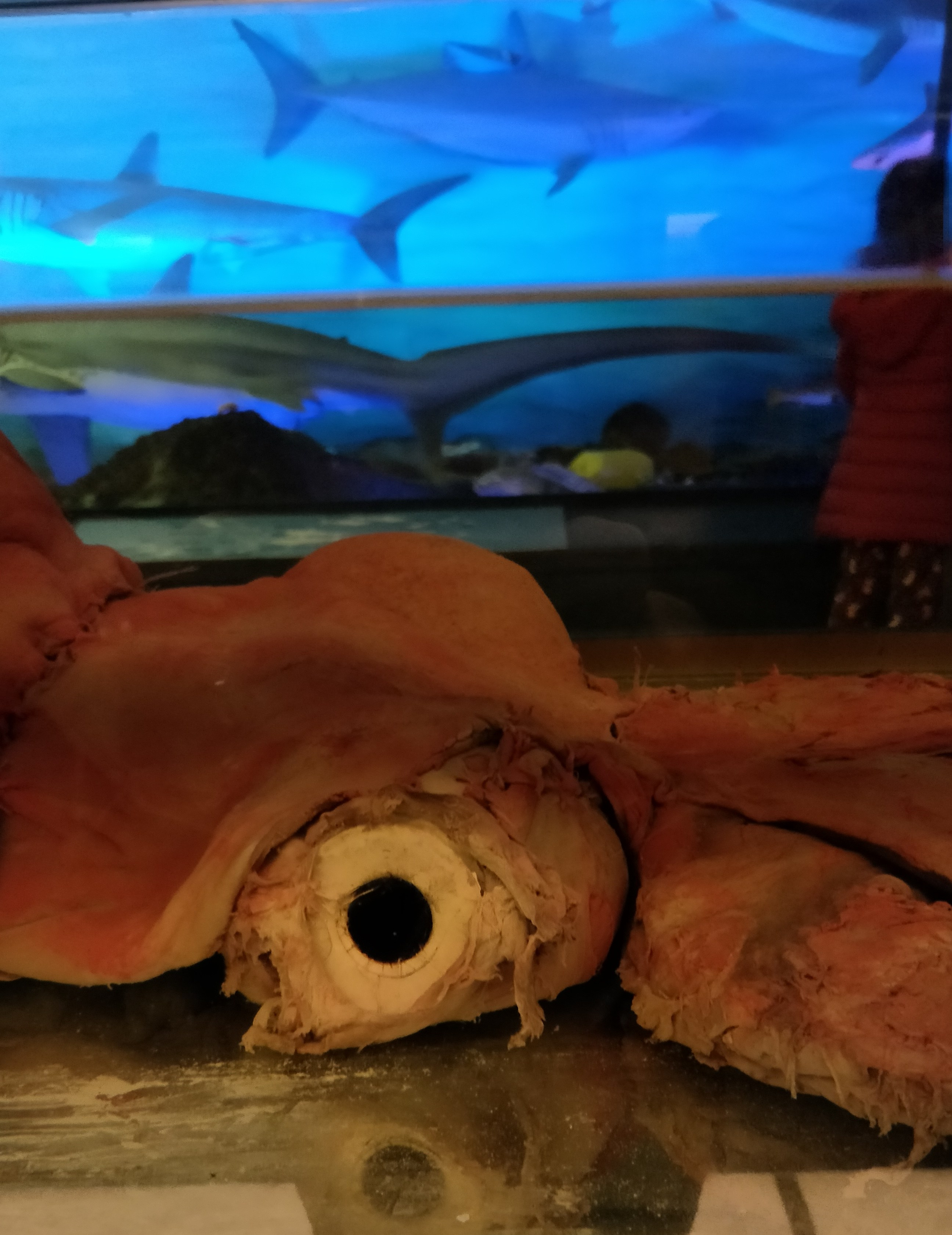
Anyway, that’s a pretty big bummer, so how about a preserved giant squid’s eye as a palate cleanser.
The best part is the museum’s snack area is right around here too, so Squidward here can watch you eat.
The only objection I have to the Natural Sciences Museum is the aquarium hall (no photos were allowed). It’s very small, which is fine, but the tanks all look like the worst aquarium store that would be allowed to legally operate. The fish are in bare, small tanks with nearly no features aside from a layer of gravel. The lone piranha, sad enough because they are a schooling fish, had only a small plastic plant to hide behind, which it was trying to do the whole time I was in the hall. I really hope they improve the conditions for the fish soon.
The MACN is a really a lovely visit overall. It’s set in the Parque Centenario, a huge park with a small lake. Like all the bigger parks in the city, it’s a nice spot for bird watching (the tiny museum shop sells a guide to the park’s birds). Entry to the museum is a very reasonable 100 pesos (about $2 US, and as always subject to change). It’s open every day except holidays from 2pm to 7pm and easy to get to by bus and the B subway line. Check the website for up to day admissions, closures, and guided tour info.
It’s hard to explain football culture to people who weren’t raised in places so deeply entrenched in it. I certainly don’t understand it fully myself. So, before I jump in here, allow me to create a bit of context.
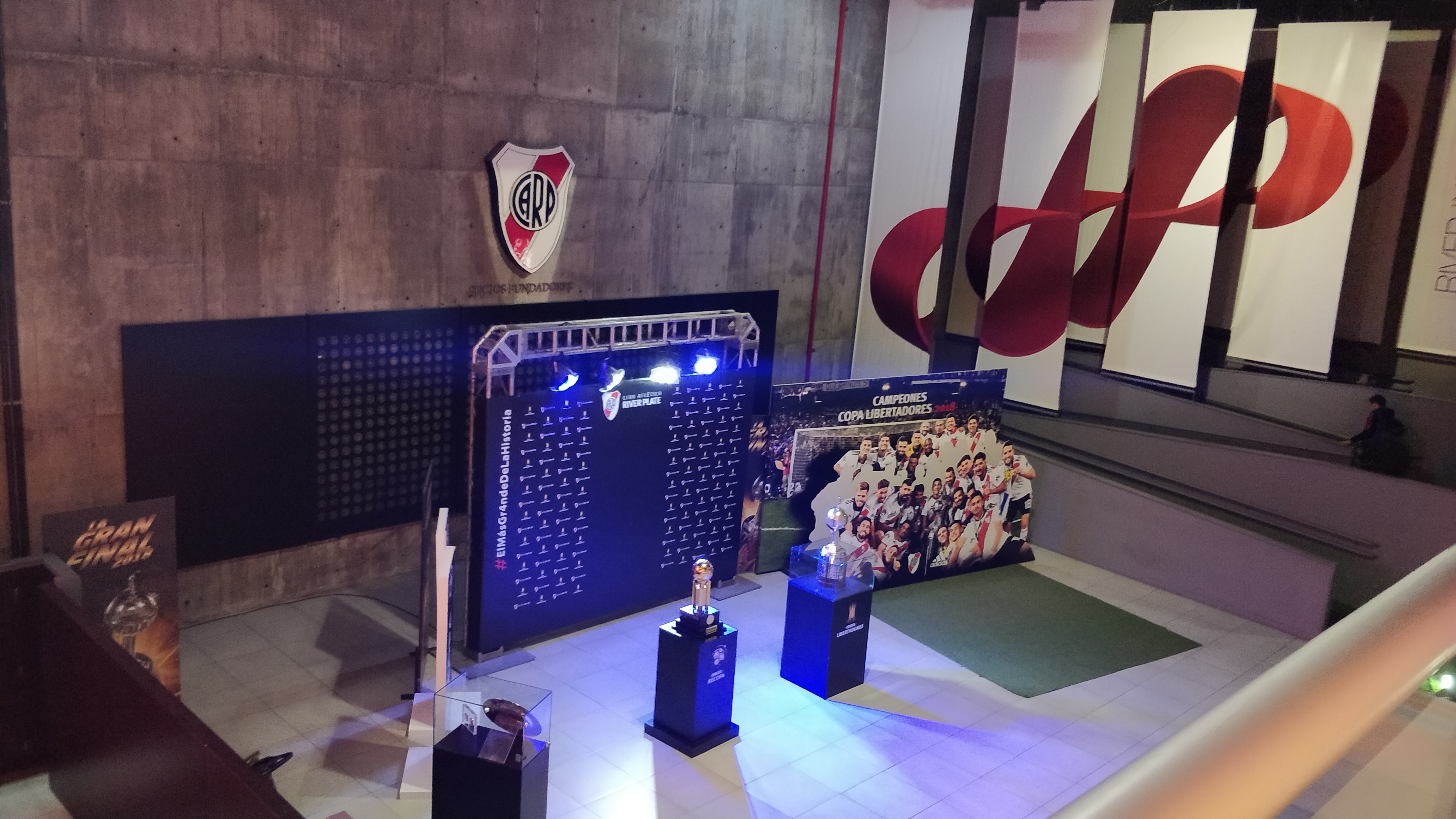
Club Atlético River Plate and Club Atlético Boca Juniors are the biggest teams in Argentina, with a long and storied rivalry. For utterly bananas reasons you can read about here, the 2018 Copa Libertadores Final’s second leg between River and Boca was played not in Buenos Aires, but Spain. River won that game and the Cup, and this was a restaurant I happened to be near at the time (I live in the area of the River stadium).
So. River Plate and Boca Juniors are kind of a big deal.
The athletic clubs are entire ecosystems, with different sports and teams and members and fans–but the team that is synonymous with the club name is the senior men’s football team. The stadium museums are focused on them. Which leads me to:
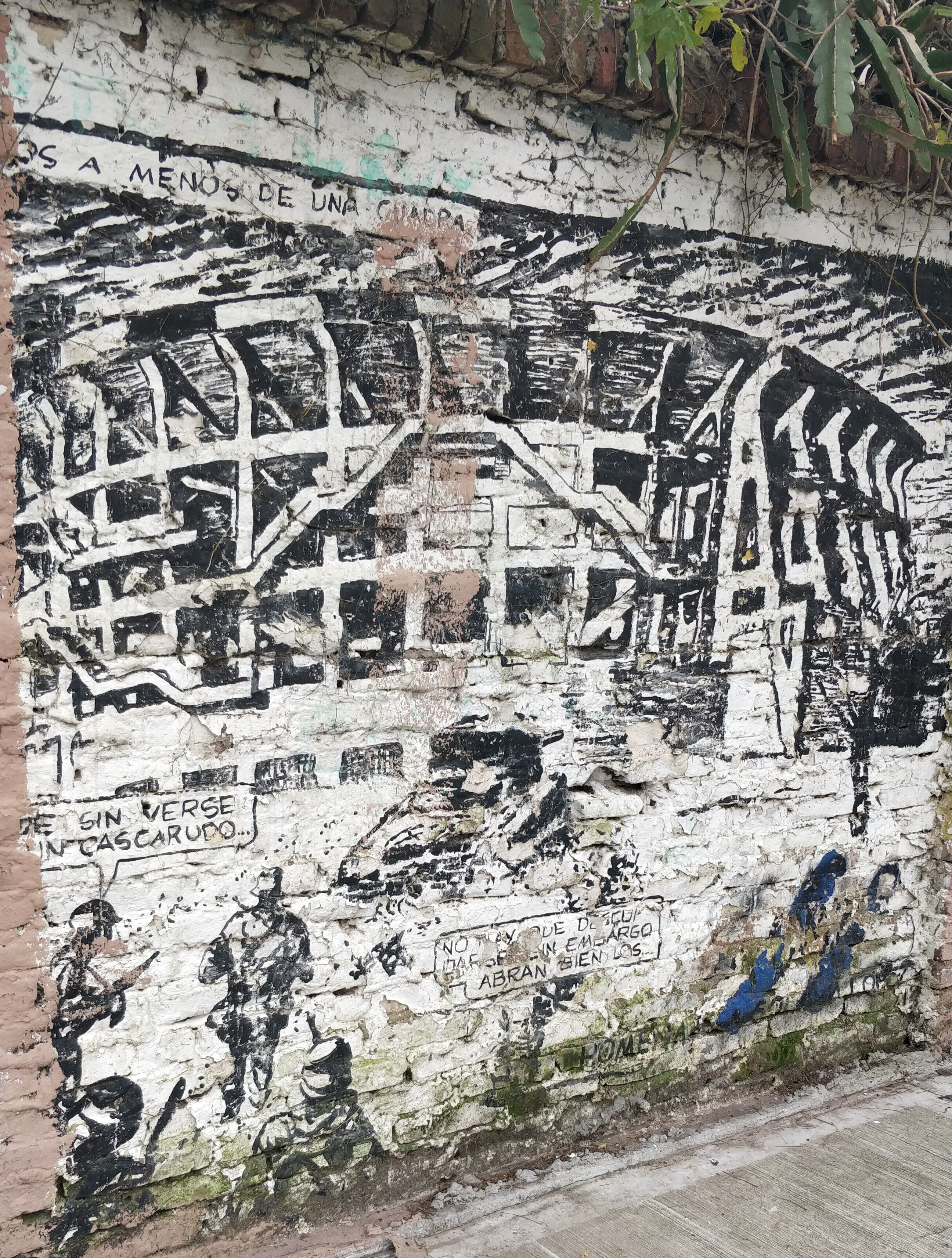
The Museo River Plate is at the stadium, which has one large, non-sports-related claim on my interest: Estadio Monumental is a major setting in The Eternaut, a famous Argentine sci-fi comic.
As seen in a mural near The Monumental.
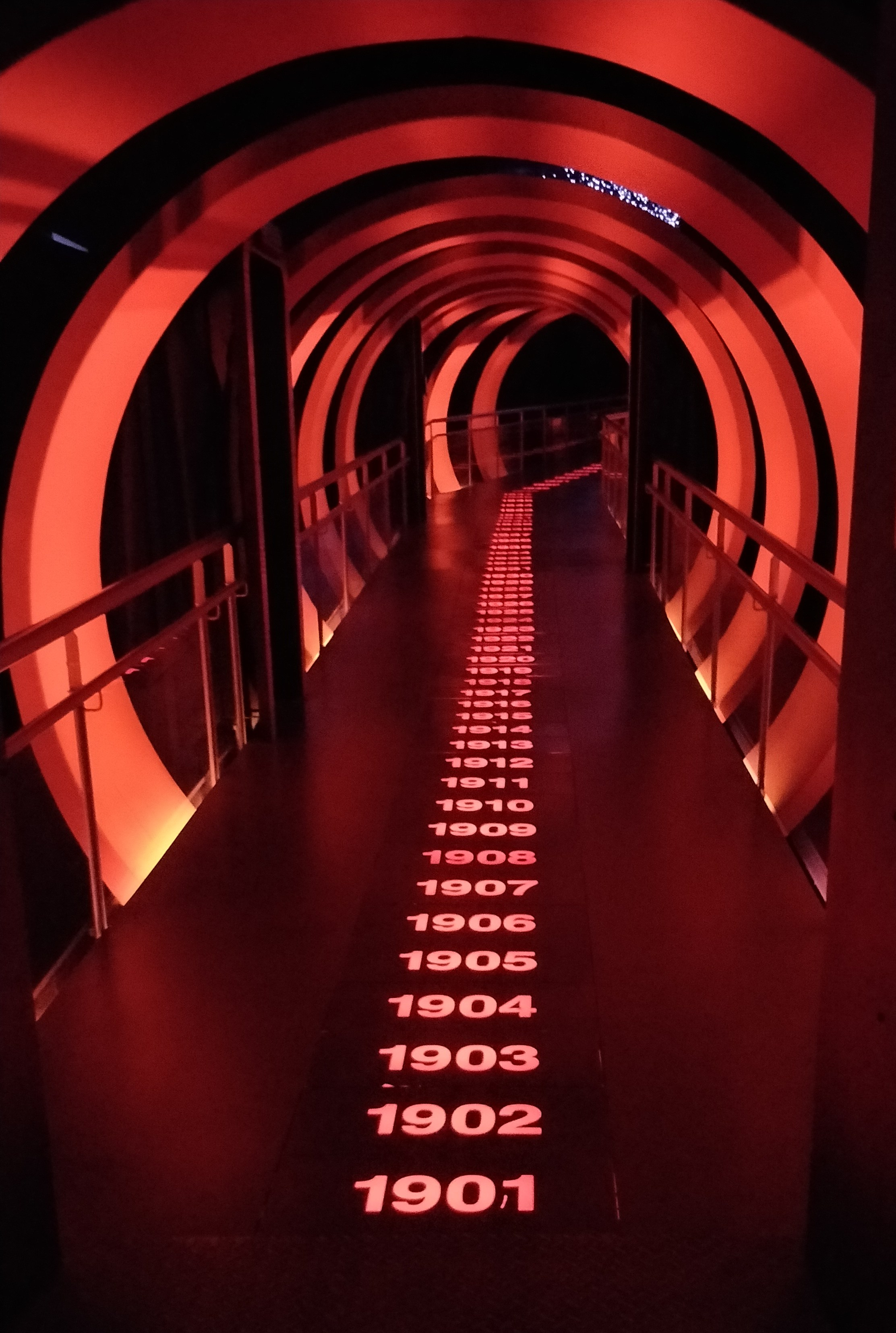
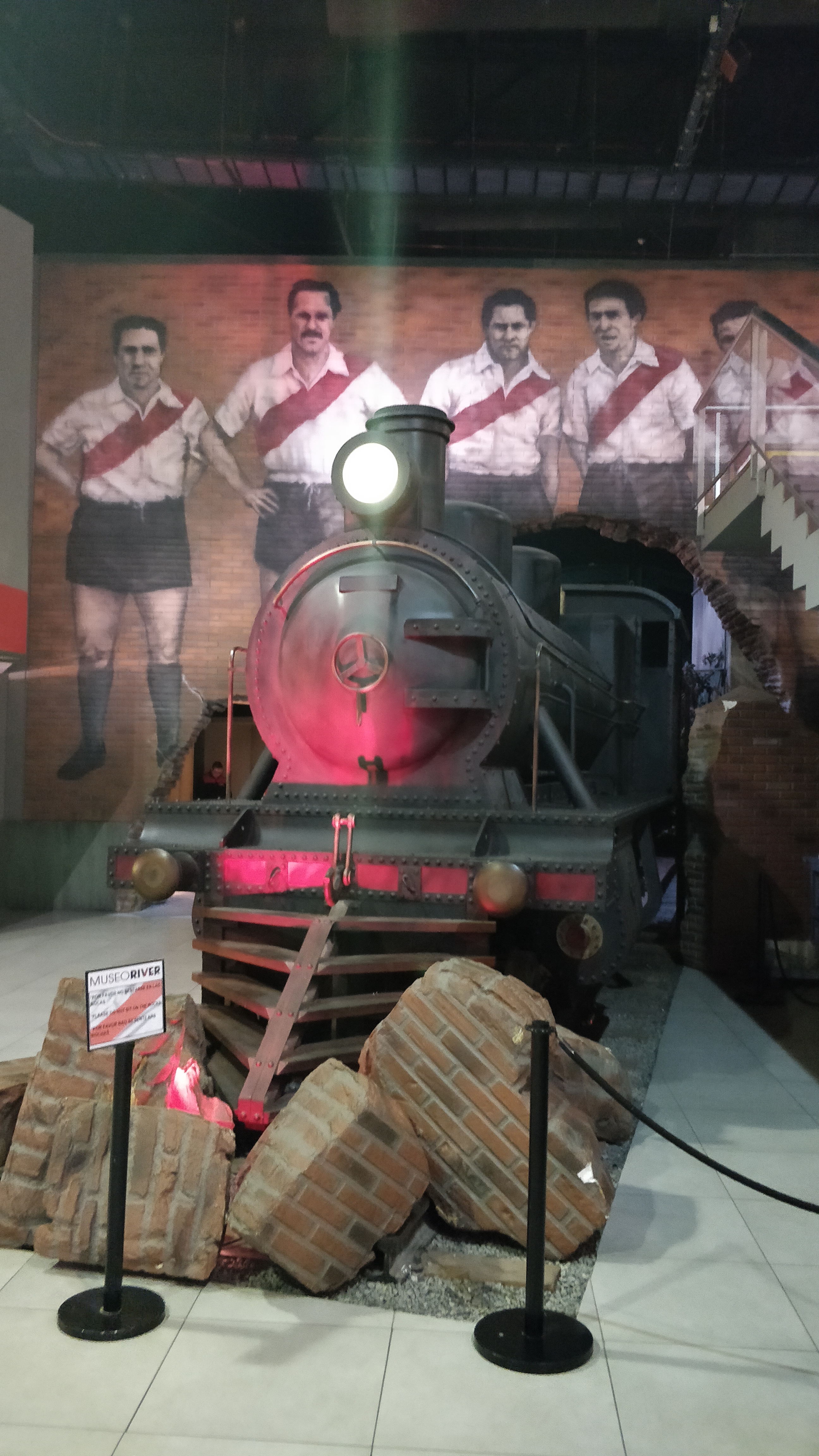
But on to the museum. It begins with a futuristic look back at the team’s past.
Those black tunnel-looking rooms to the sides give the team’s history and its wider context in that particular decade, and, given the dearth of artifacts, it does a creditable job of giving a physical sense to long history.
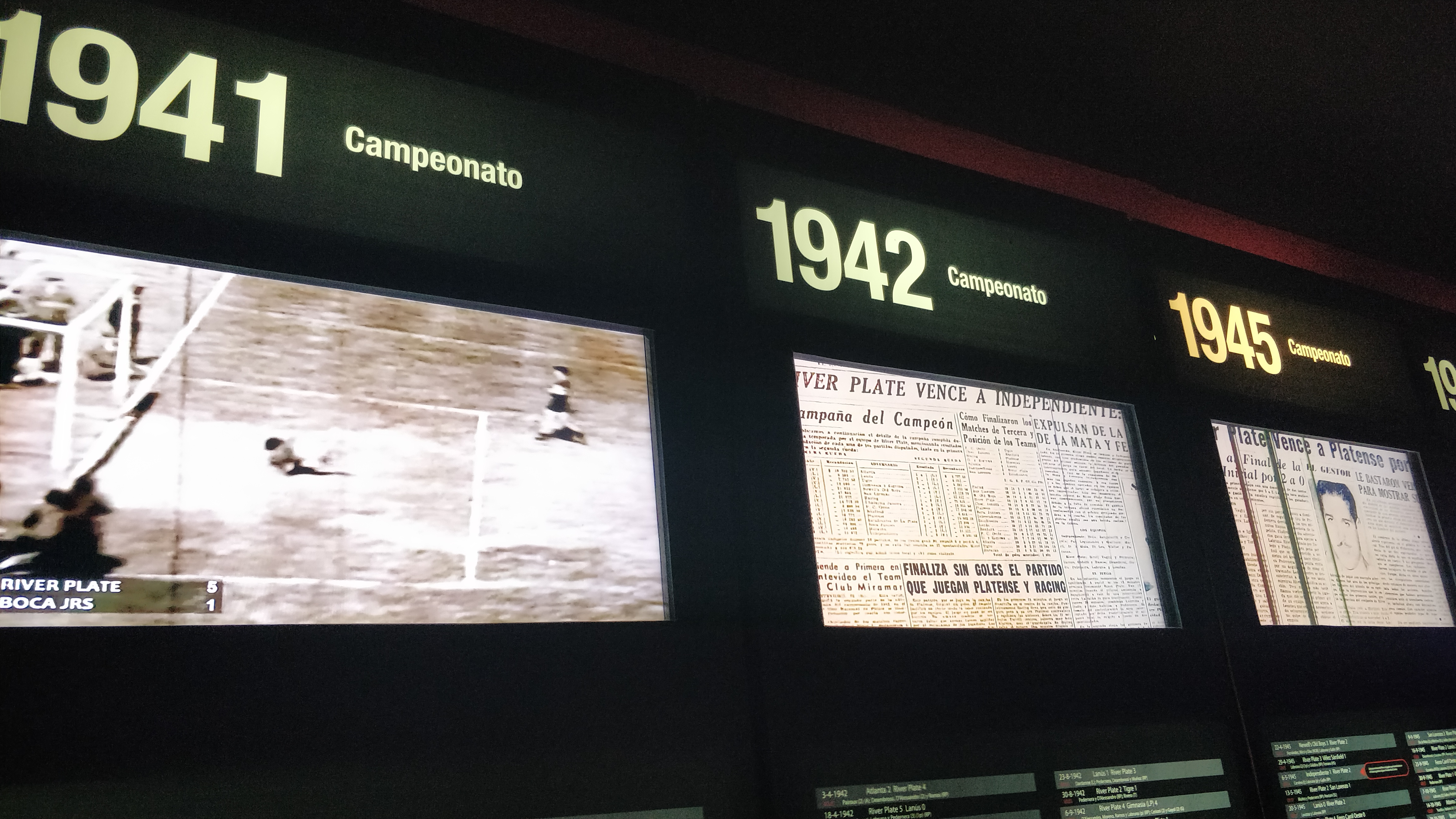
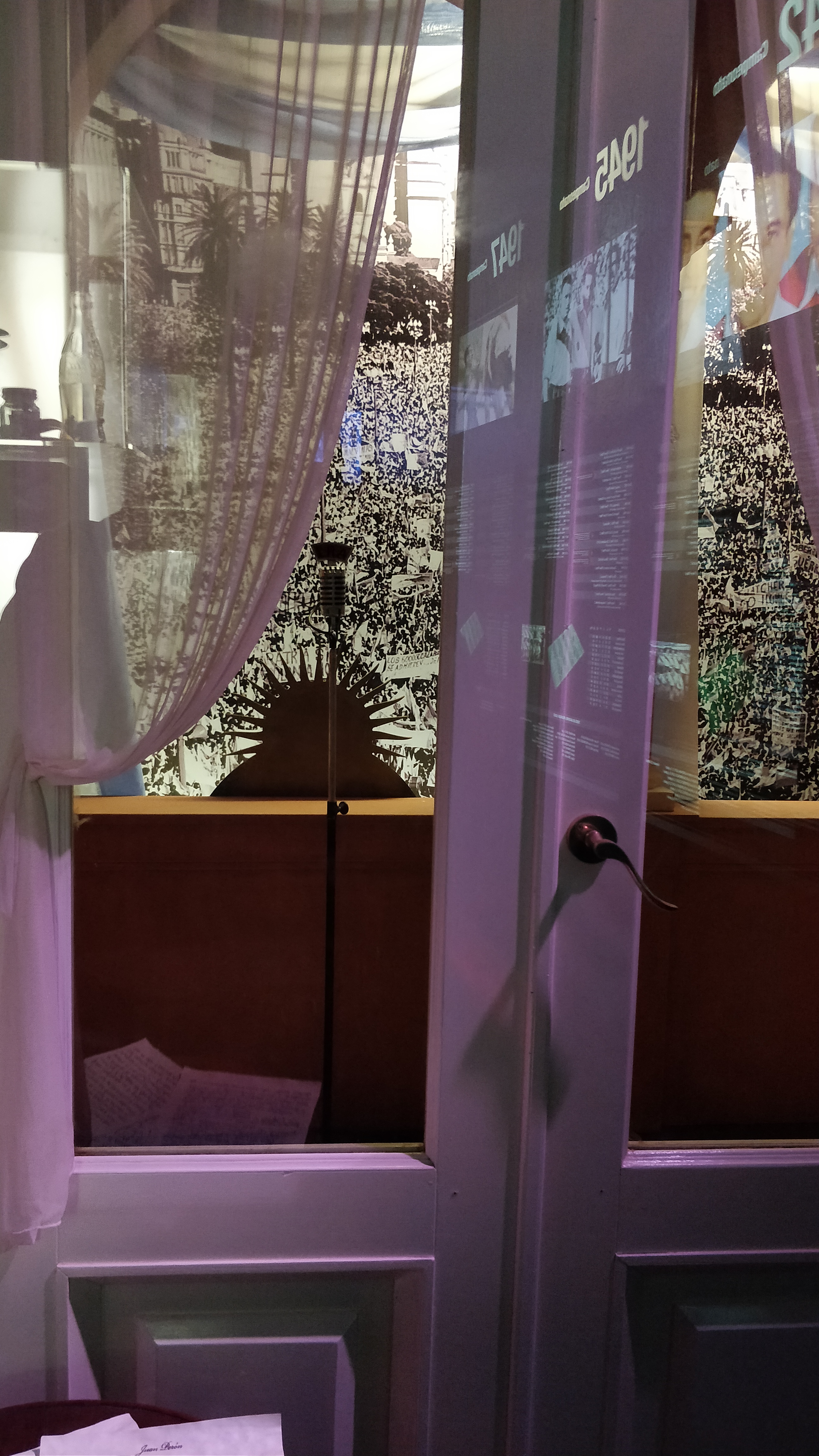
Each of the tunnel rooms has some information about the teams of the time, and also a diorama that shows a notable non-soccer scene of the era. For instance, for the 40s, you have the above team stuff, and also a balcony set for a Perón speech.
Glare, glare, everywhere.
The stadium was also the site of Argentina’s win of the 1978 World Cup (the national team still plays its home games here).
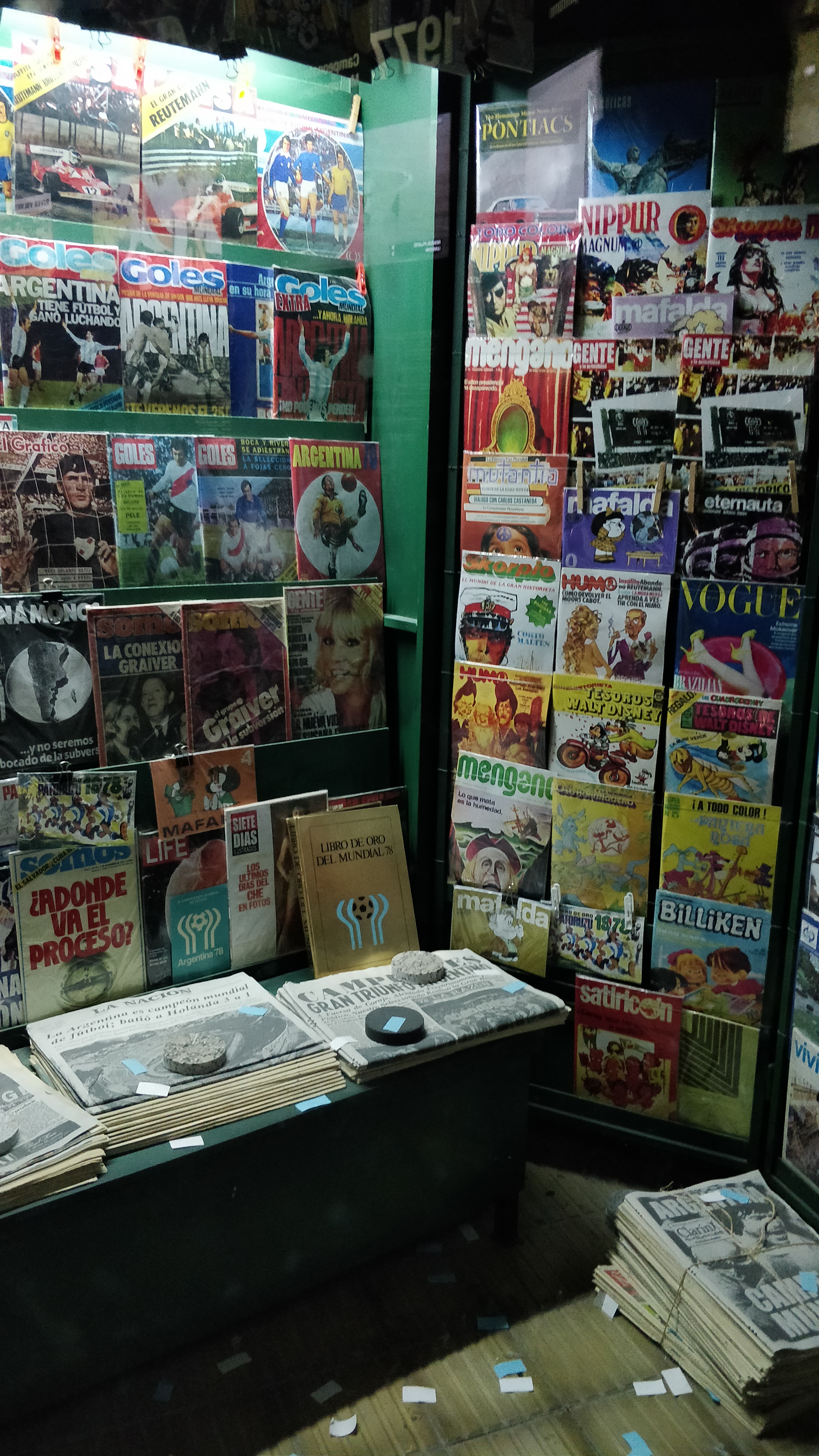
The 70s diorama is a newsstand (also haven’t really changed), and it includes a nod to “The Eternaut” (on the right, above the Vogue), which feels a bit poignant, as the author was disappeared and murdered by the military dictatorship in power at that time.
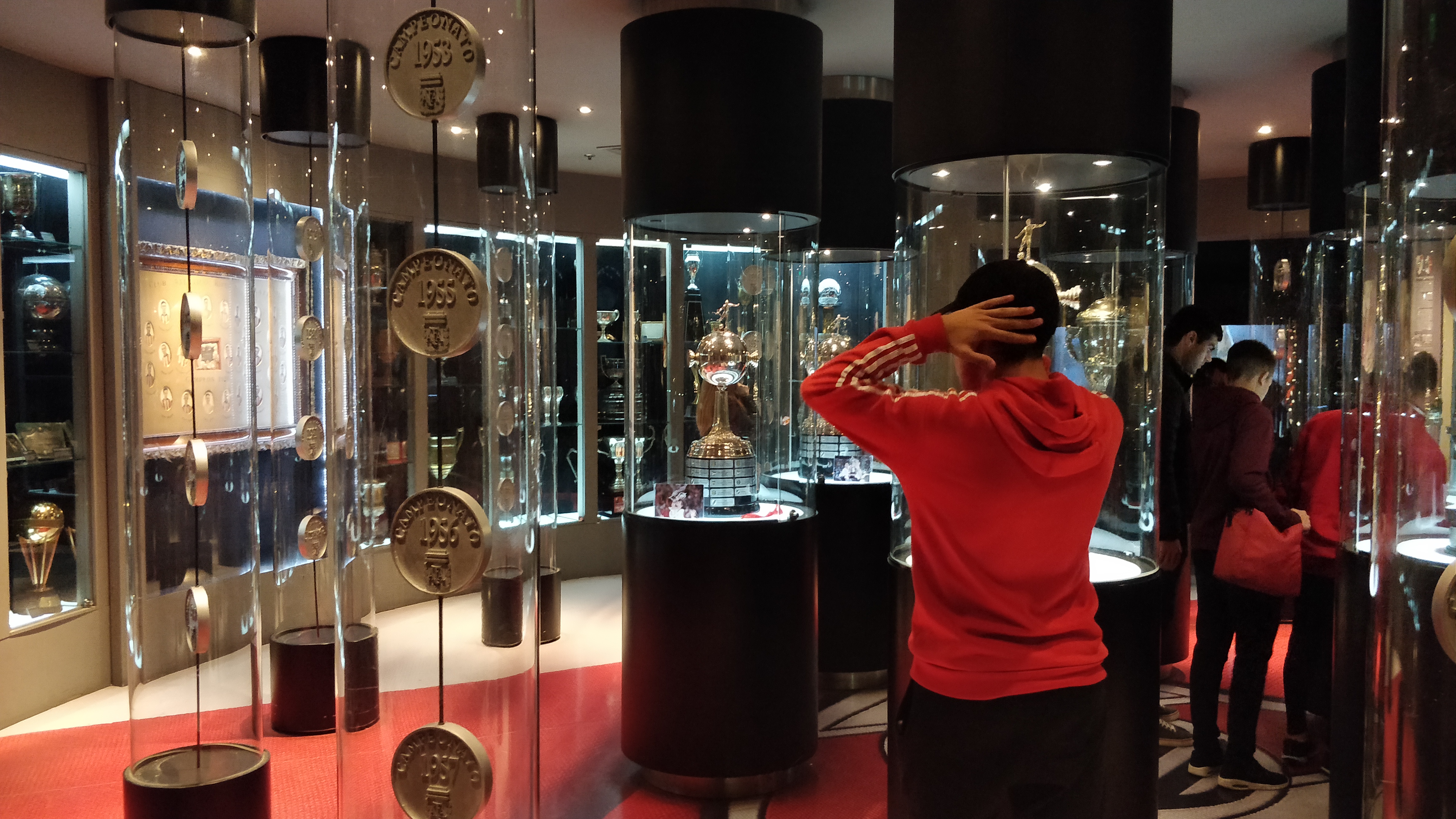
Eventually, the tunnel ends and you’re deposited among several years’ worth of team hardware.
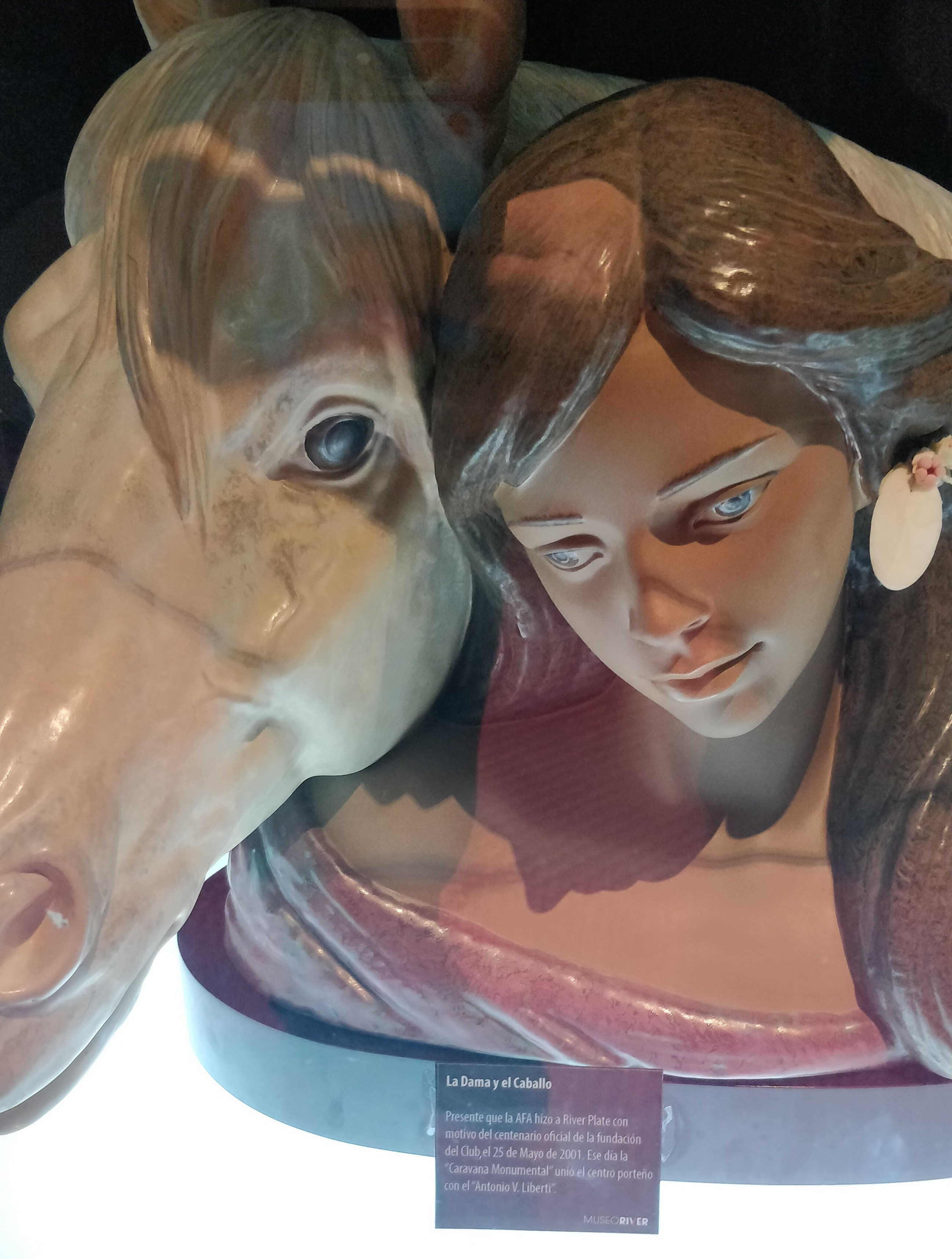
And this rather unique gift to the club from the national football association commemorating the club’s 100th birthday.
…’kay.
There were a few other interesting things in that room, but with all the lights and glass, the photos rather prominently feature the back of my phone and hands, alas.
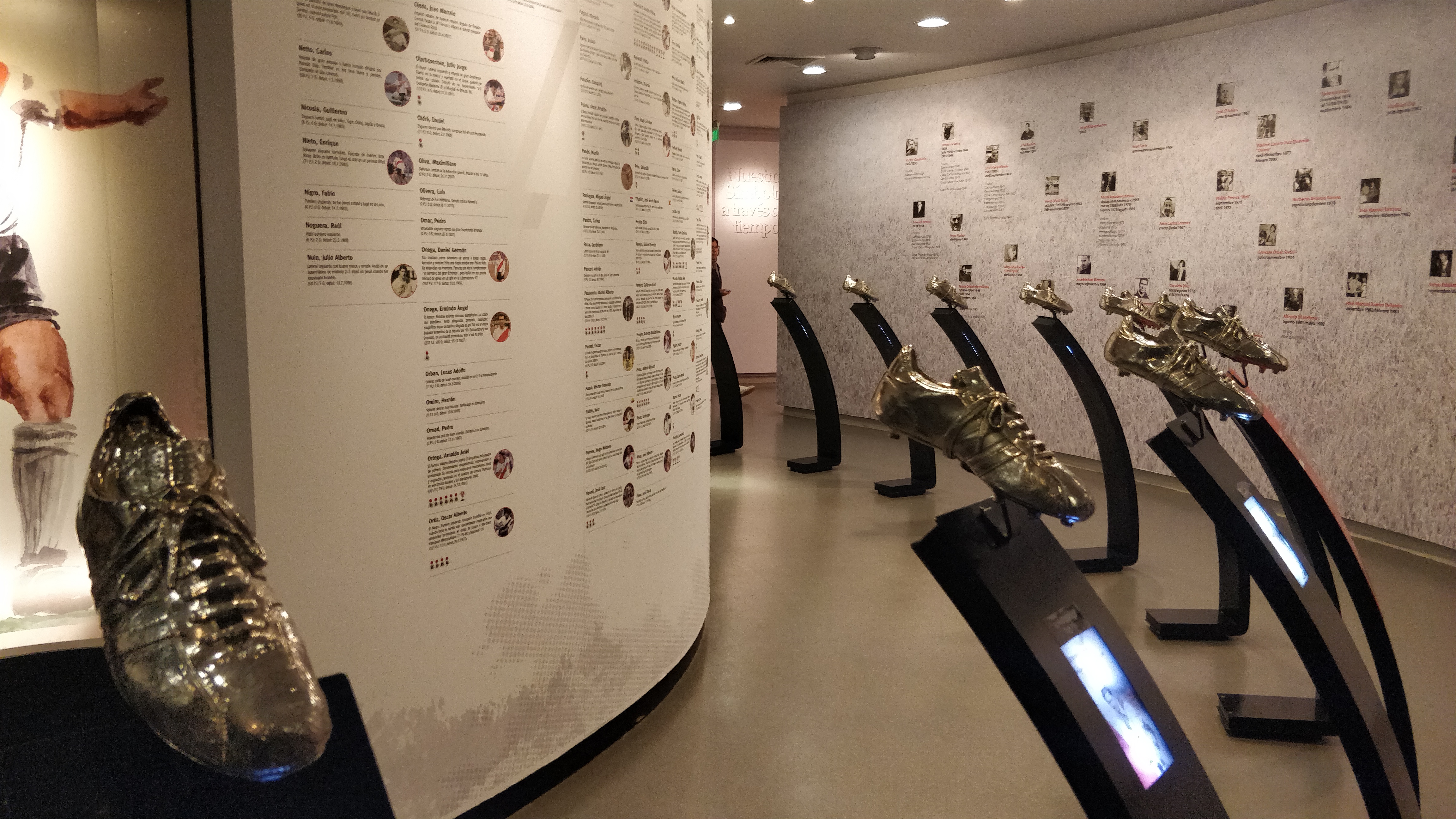
Famous players have their area, of course.
I do not know a single one of them, which lessens the impact somewhat but the other visitors were pretty stoked.
Some of these pillars have QR codes that are supposed to show the player’s best goals, but I tried to download the app it required and watch them and could never make it work, which was a bit disappointing.
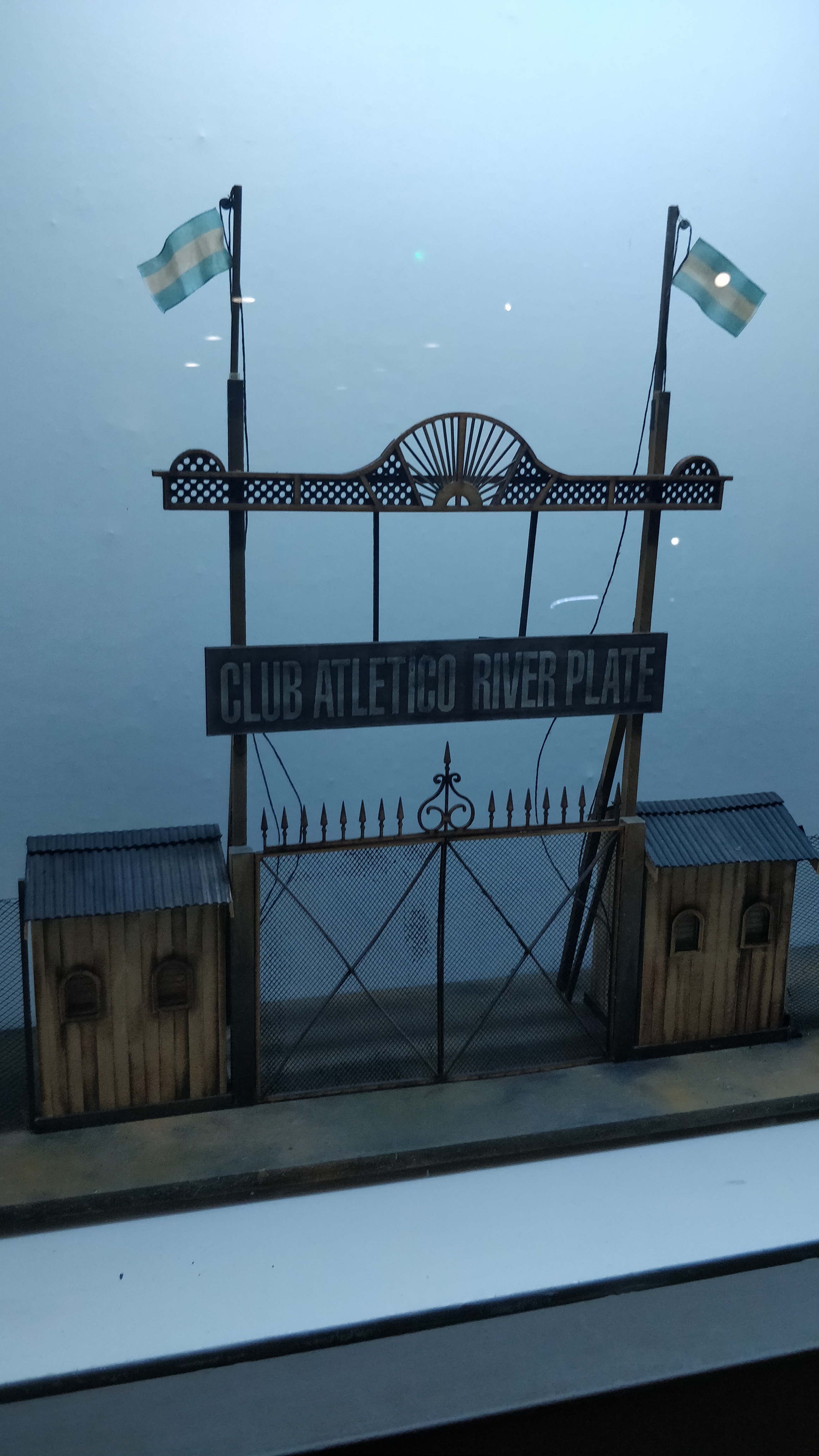
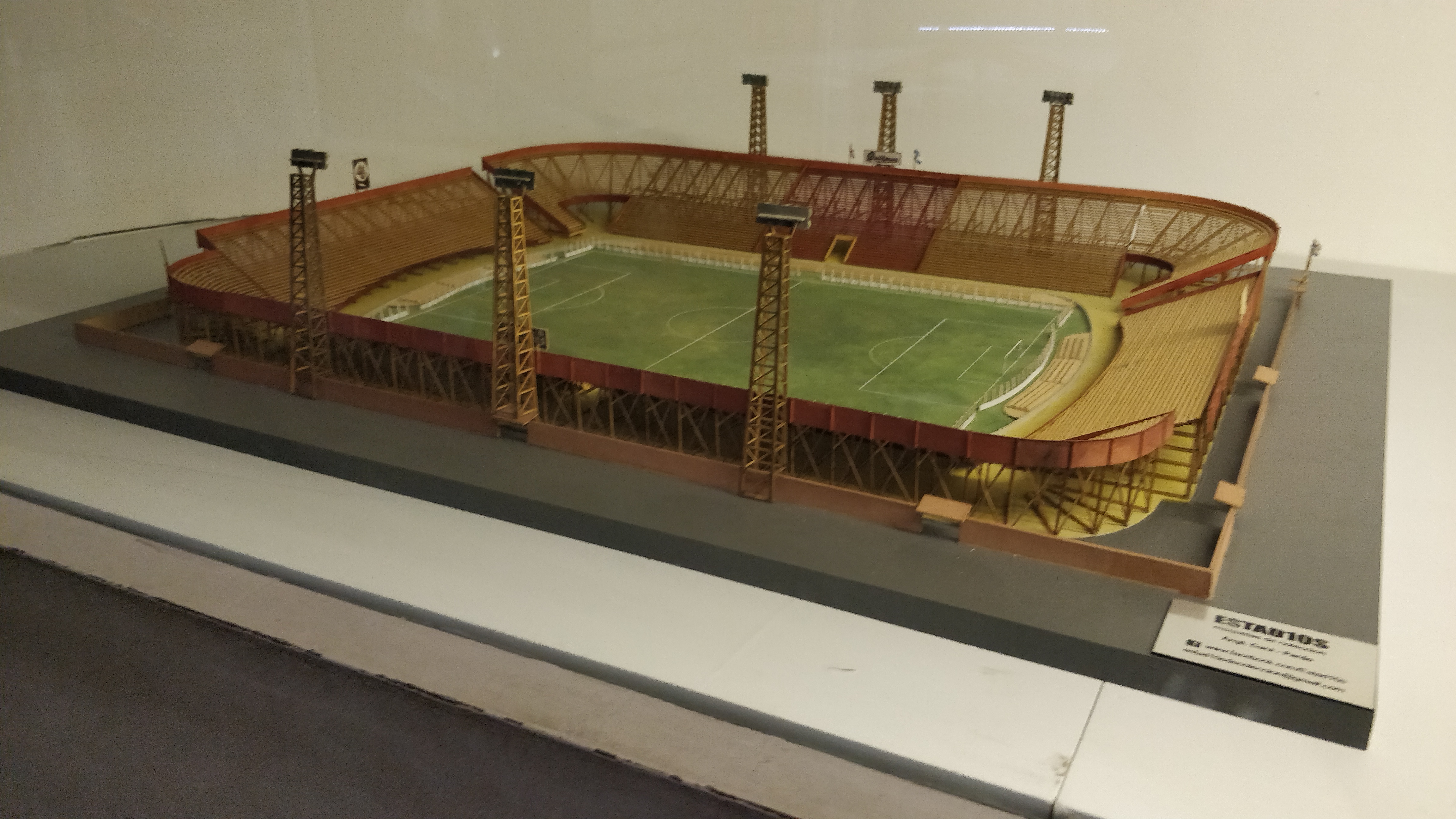
There’s some stadium history! The current location dates back to the 30s. There’s a pretty neat little model of the old gates and seating.
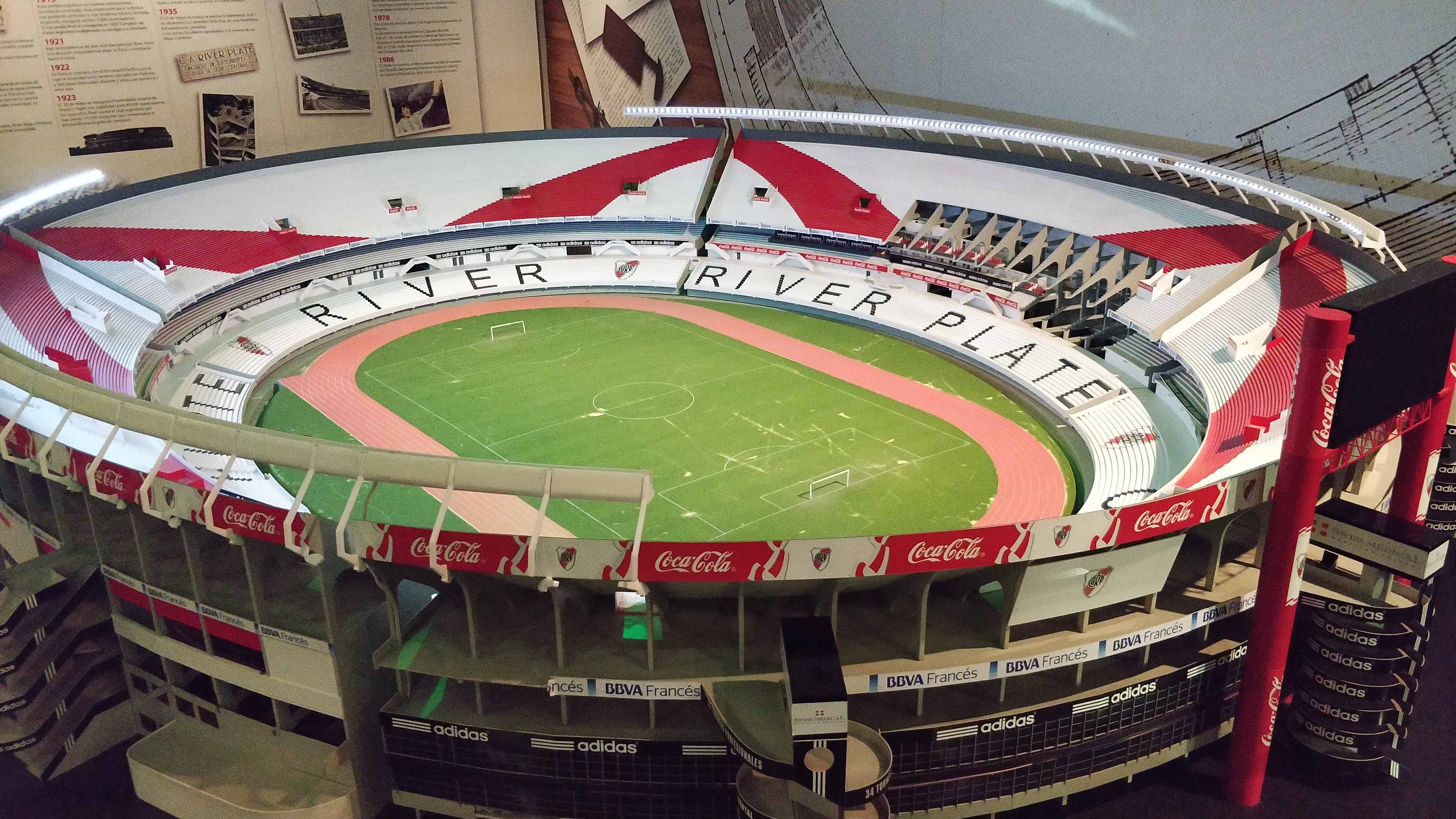
And the current look:
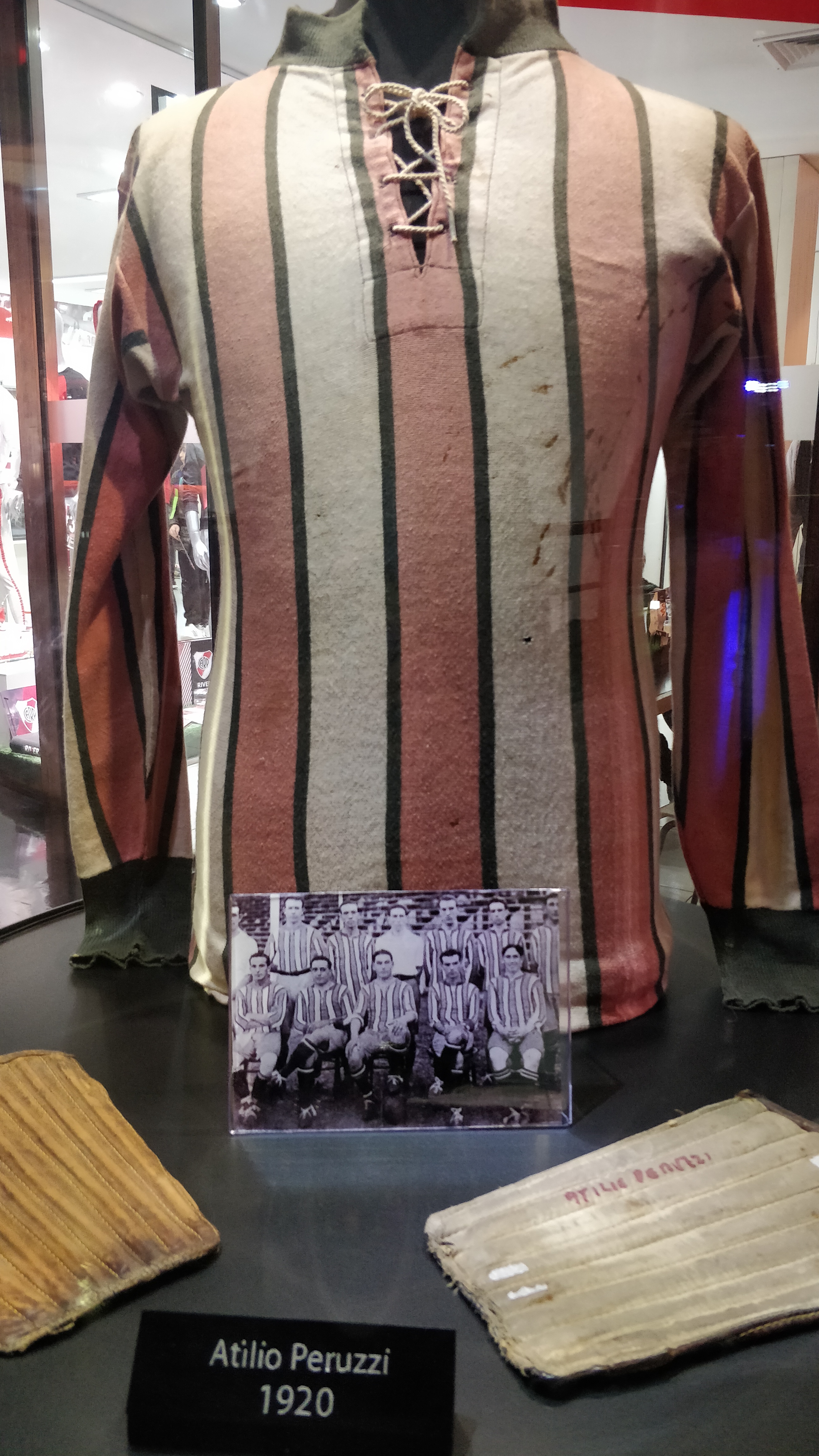
Textile nerds gonna textile nerd, so here’s an old jersey. I bet that’s blood on it.
It’s a two-storey building, which accommodates a theater and an overhead view of the entrance, where the current team hardware is available for photo ops.
There’s also this, which must mean something but hell if I know what.
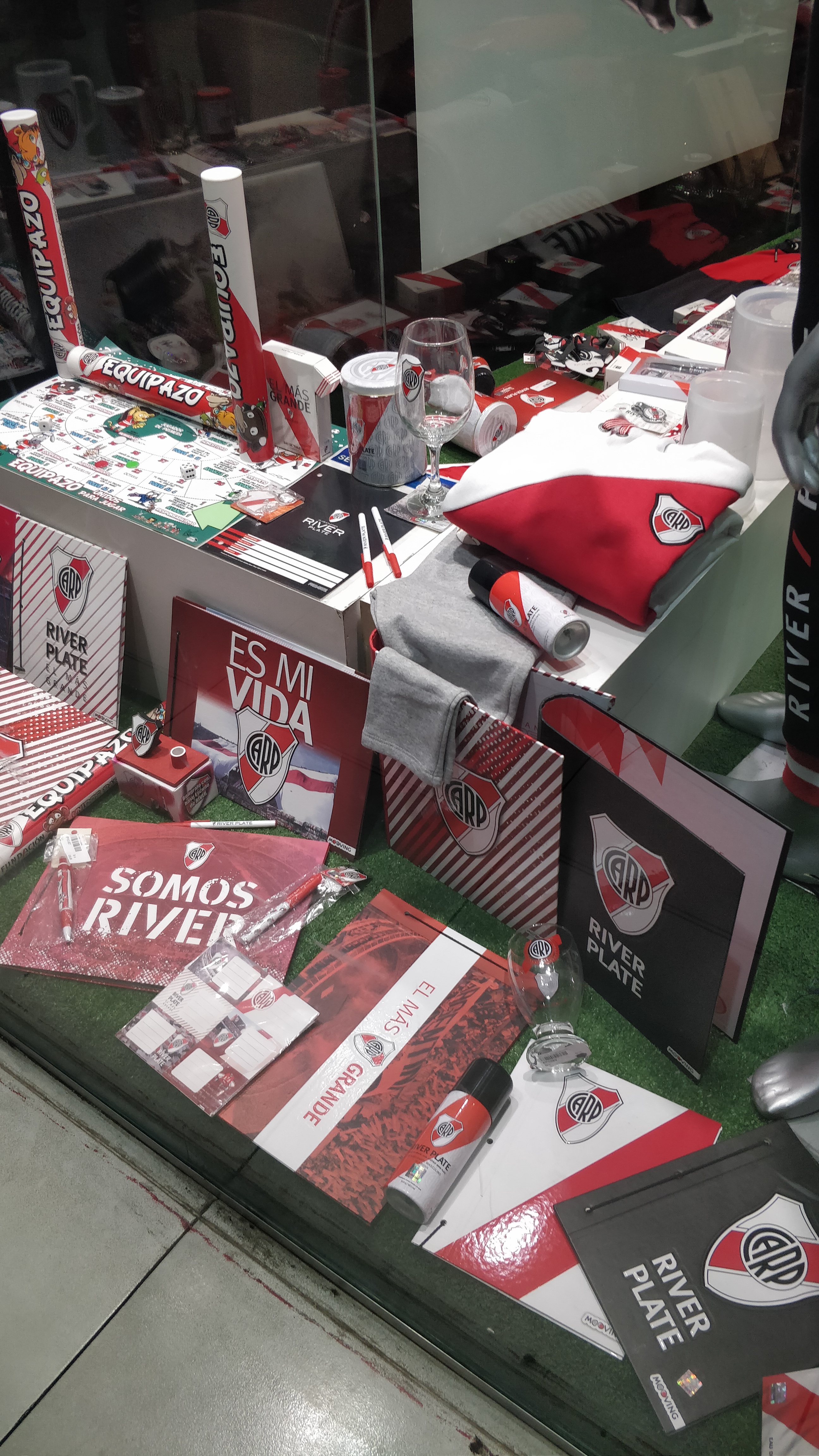
Now, Mr Exhibitist is a lifelong fan of a different football club, so I am forbidden by the articles of marriage from patronizing the museum swag shop. But dear lord, the merch.
The variety rivals that of Hello Kitty.
It’s an interesting visit for those into sport, and stadium tours are also available on the hour. For what it’s worth, every local football team I’ve googled has their own museum, although I imagine the River and Boca ones are probably the biggest and best funded.
Museo River Plate is at Figueroa Alcorta 7509, part of the stadium complex (the stadium’s official name is Estadio Antonio Vespucio Liberti, but it’s only ever called The Monumental). It’s open every day from 10am to 7pm, although I would guess not on game days. I would not advise being anywhere near the stadium on game days, in any case. The entry fee for the museum alone is 340 pesos, although I believe that’s the price for Argentines and local residents–foreigners pay a bit more. The guided stadium tour is extra.
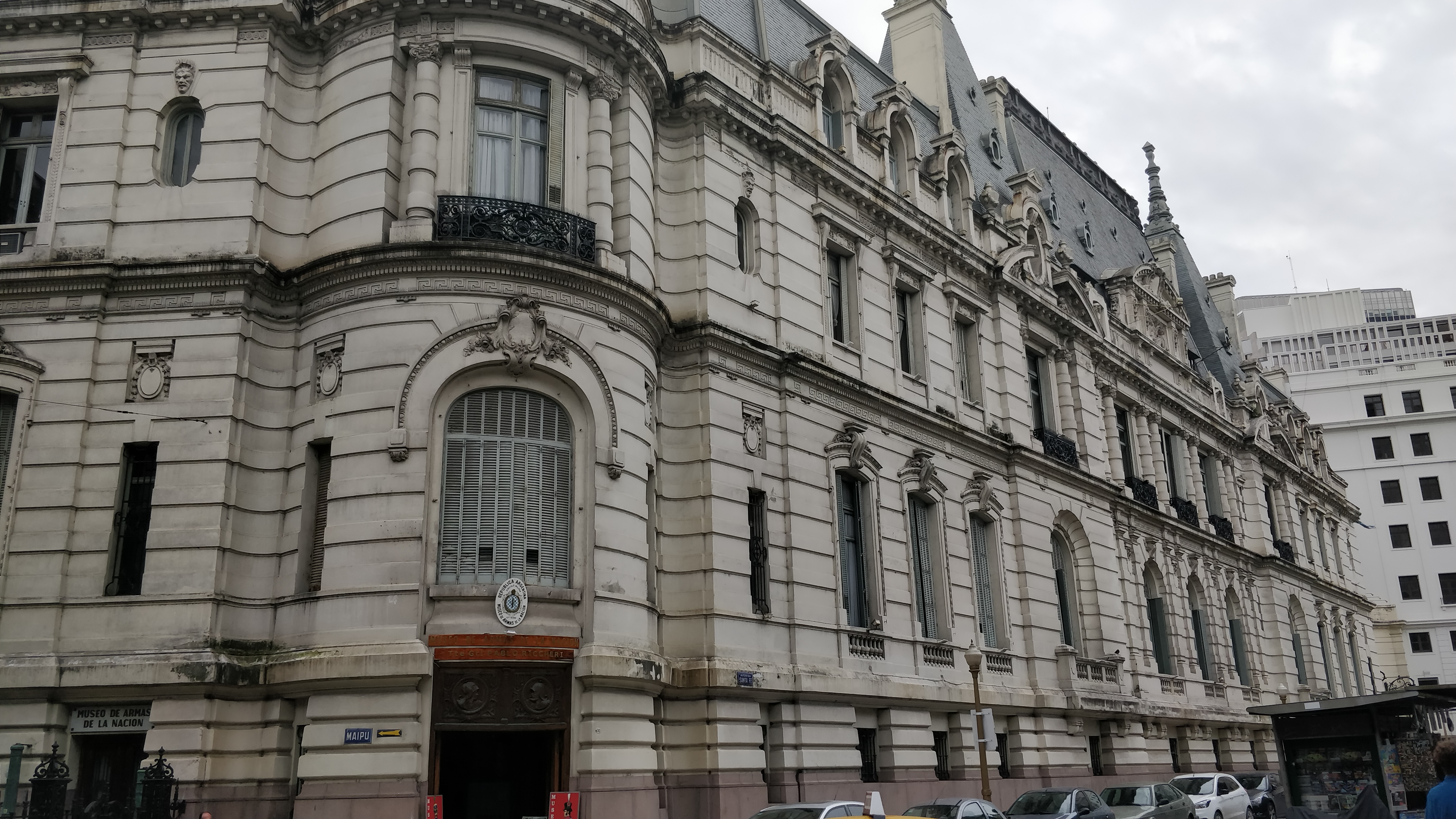
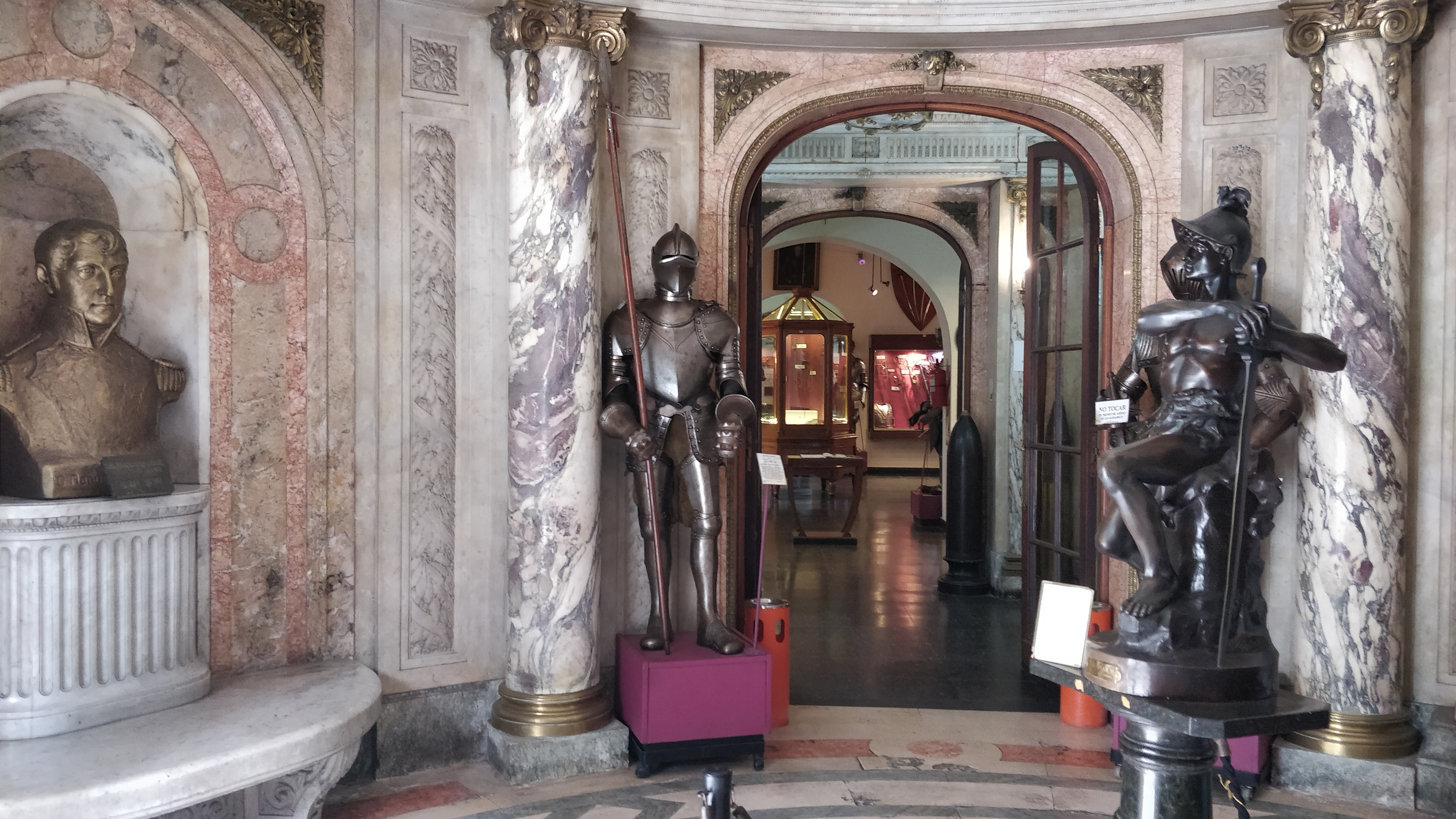
Across from the Plaza de General San Martín, which is a lovely, large plaza near the Retiro train station, in quite a stately building, is the Museo de Armas, originally founded in 1904.
Right there, below the official oval.
I’m not particularly interested in all the tools humans use to disassemble each other, but swords are neat, so I went to check it out.
Pretty stately on the inside, too.
The first displays are of medieval armor and weaponry, both replicas and originals. There was also some disconcertingly incongruous pop music playing in those rooms.
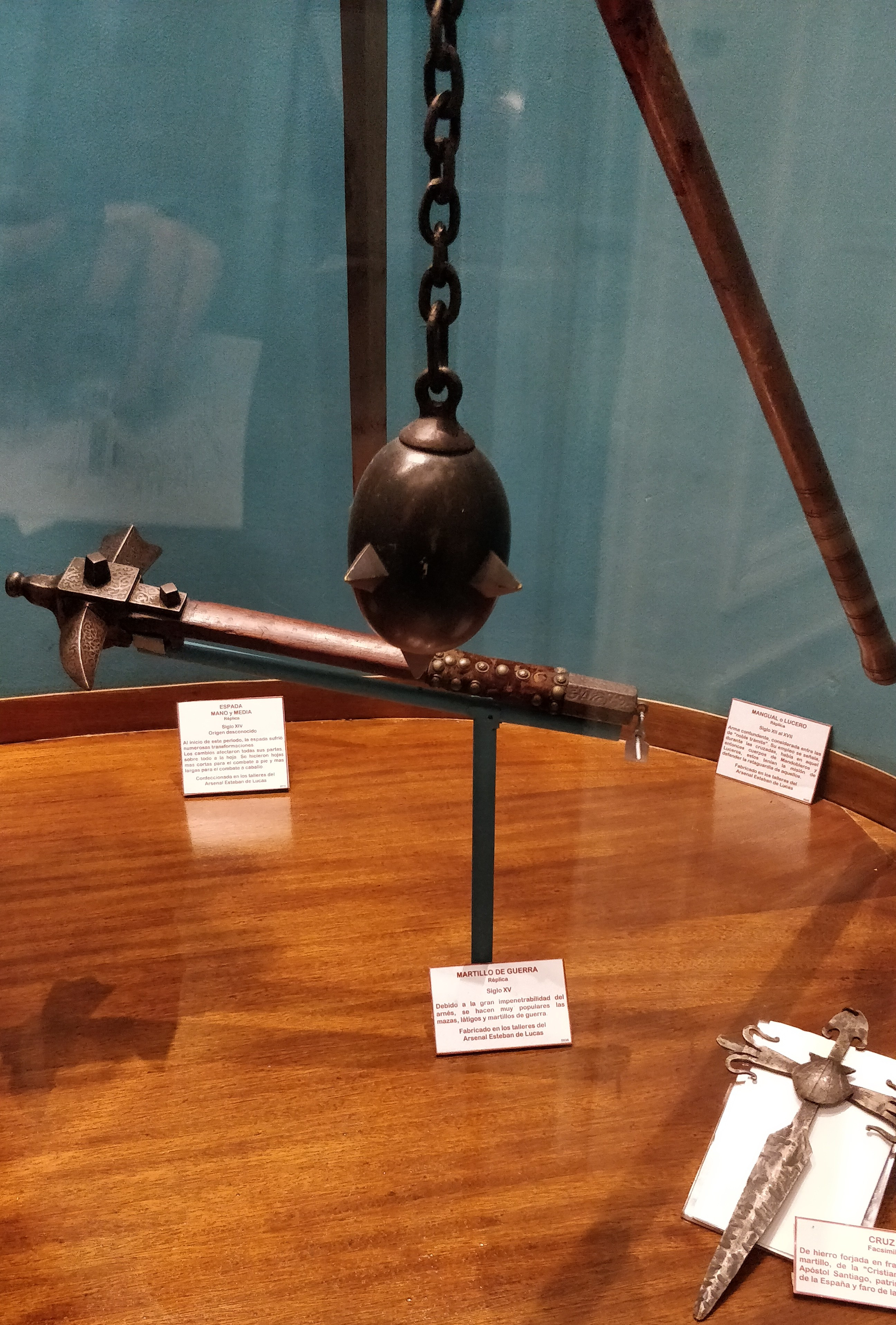
Replicas of a war hammer and a flail, my favorite medieval weapons.
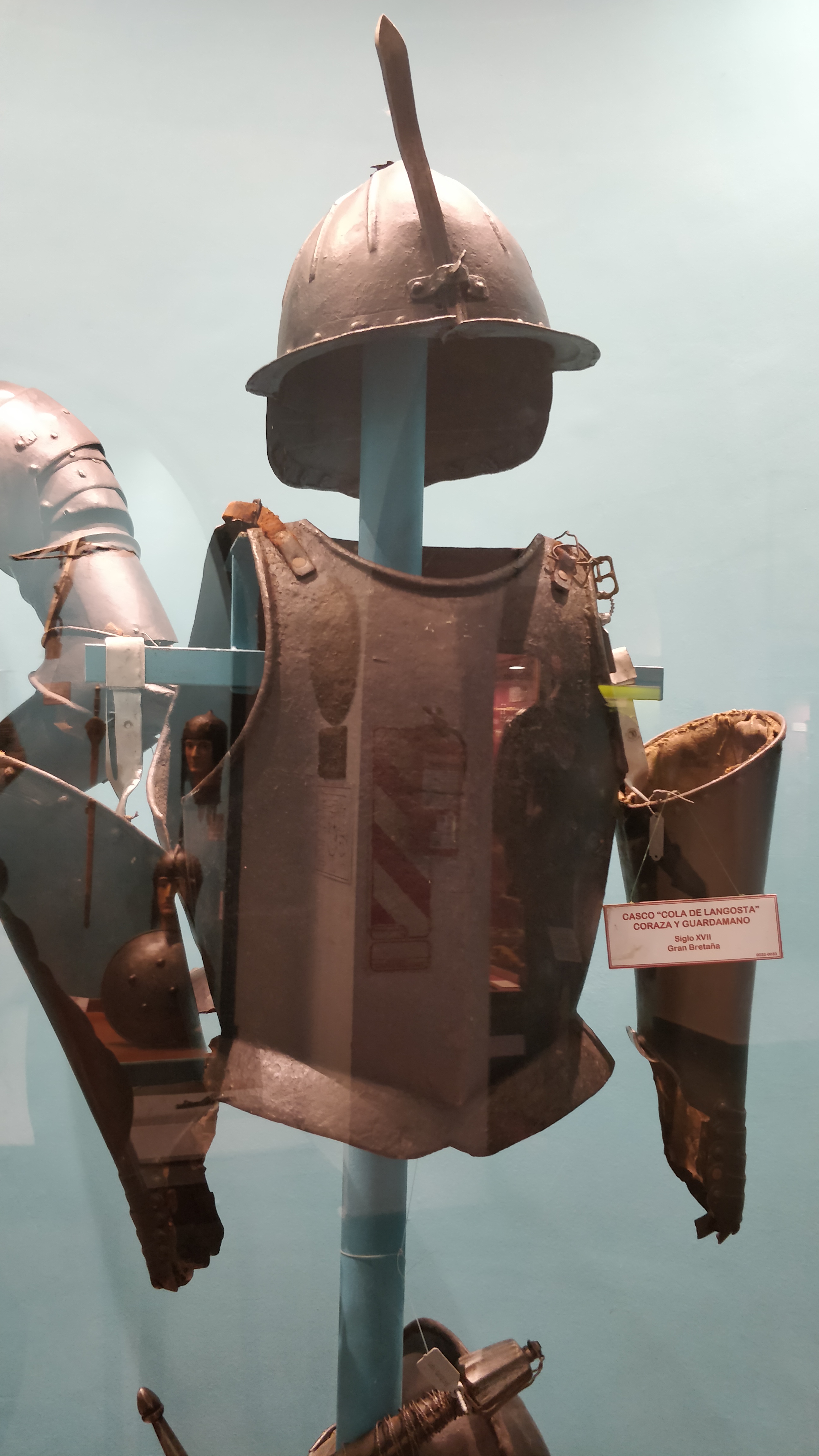
Lobster tail helmet from Great Britain, 1600s.
A great variety of pointy things is available for examination, though without much of anything in the way of information–just the sort of label you see above.
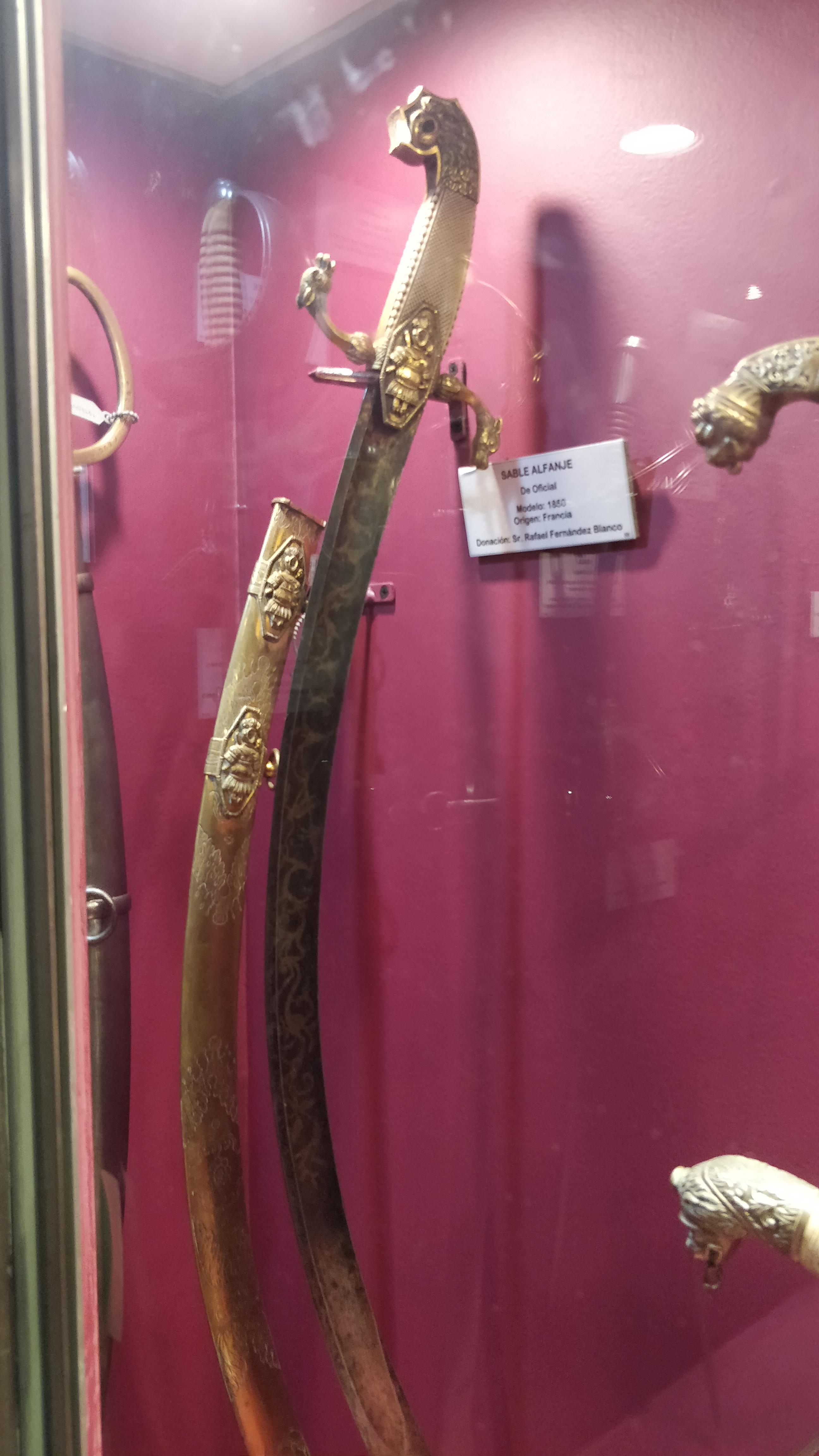
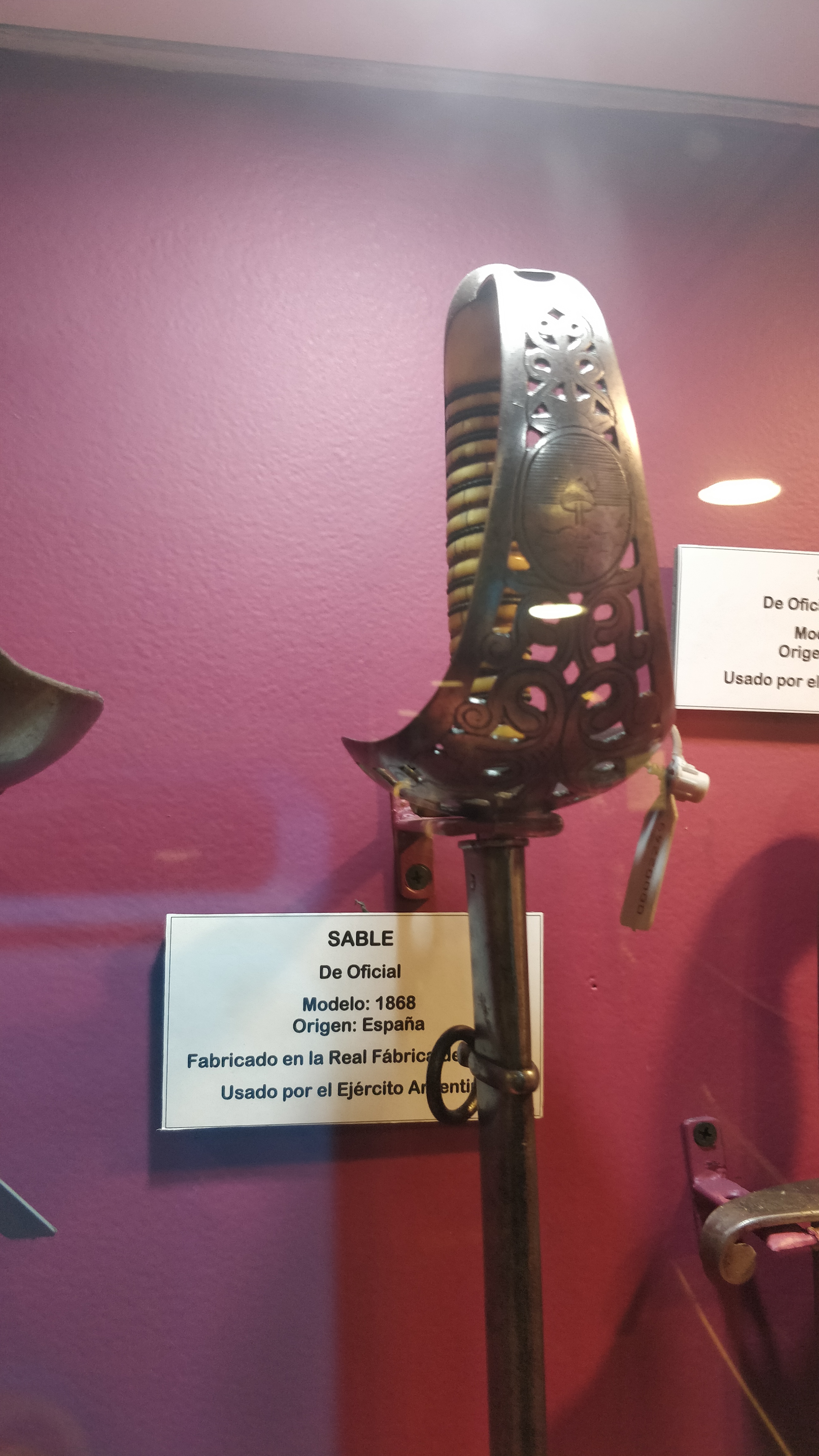
Fancy shmancy French saber.
Spanish-made saber for the Argentine Army.
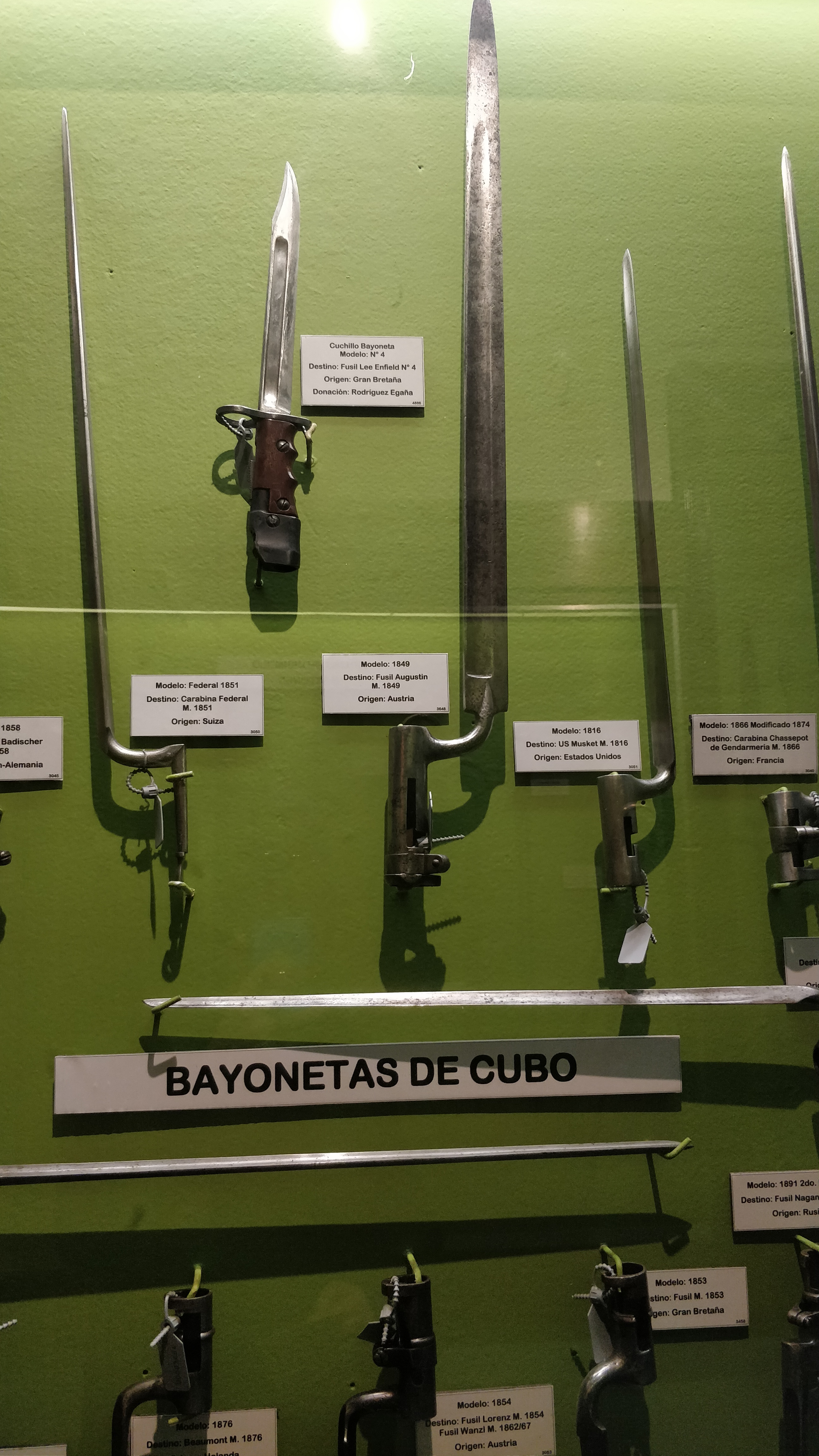
Firearms were of course already a thing by the time these swords were made, but the museum also has some artifacts from those more transitional times, when one might still find a rifle’s effectiveness reduced to that of a spear.
Bayonets have always creeped me out; something about the desperation that must attend having to use one.
Artistry wasn’t limited to swords in the 1800s; this is a hunting rifle that belonged to President Victorino de la Plaza.
Prettier and less bayonet-y, for sure.
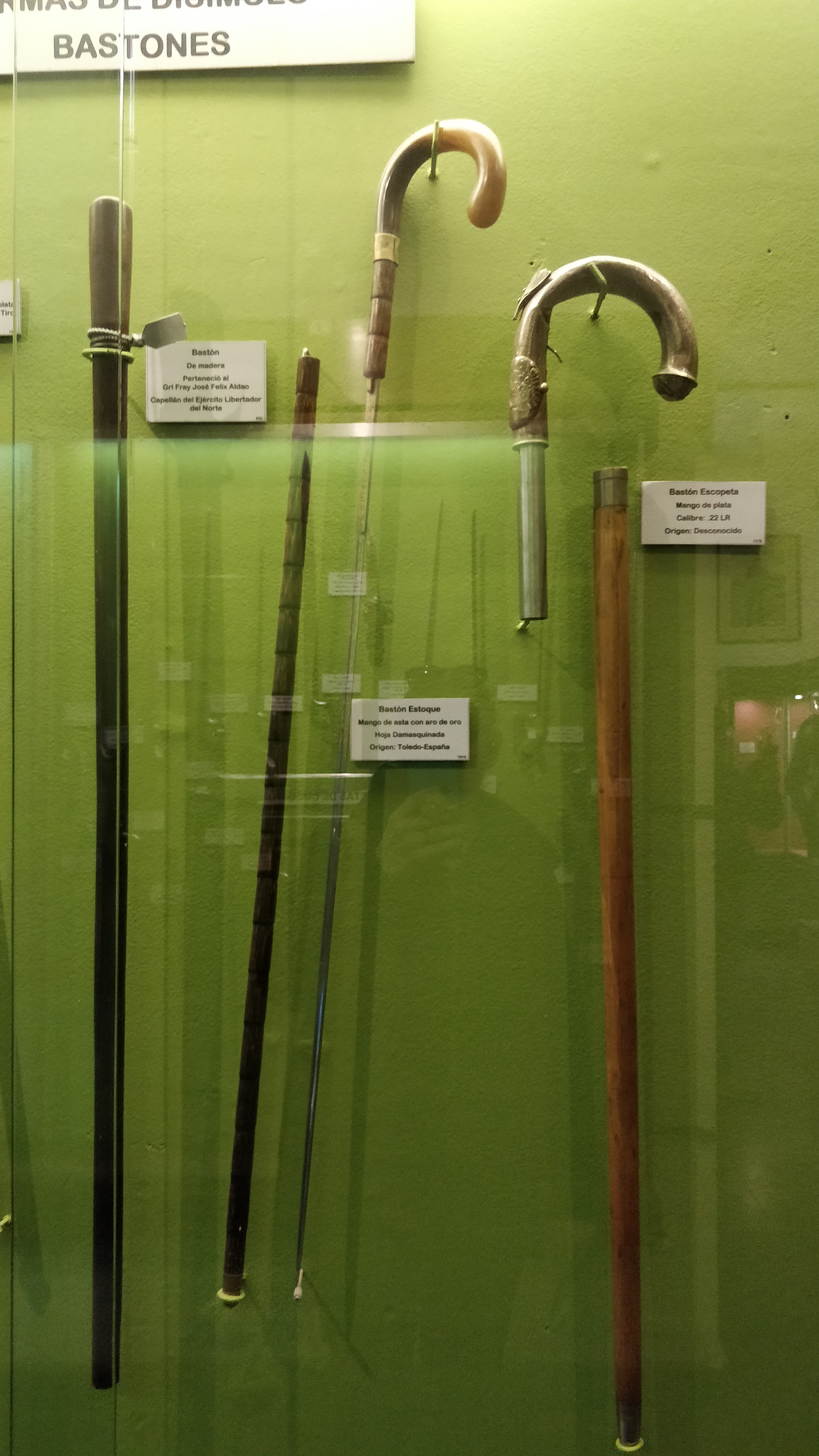
But you know what is even cooler than fancy sabers with official ovals and detailed German hunting rifles? Bonkers cane weapons.
Debonair, dashing, DANGEROUS
Cane swords AND cane pistols. Wonder if there’s a safety on that thing.
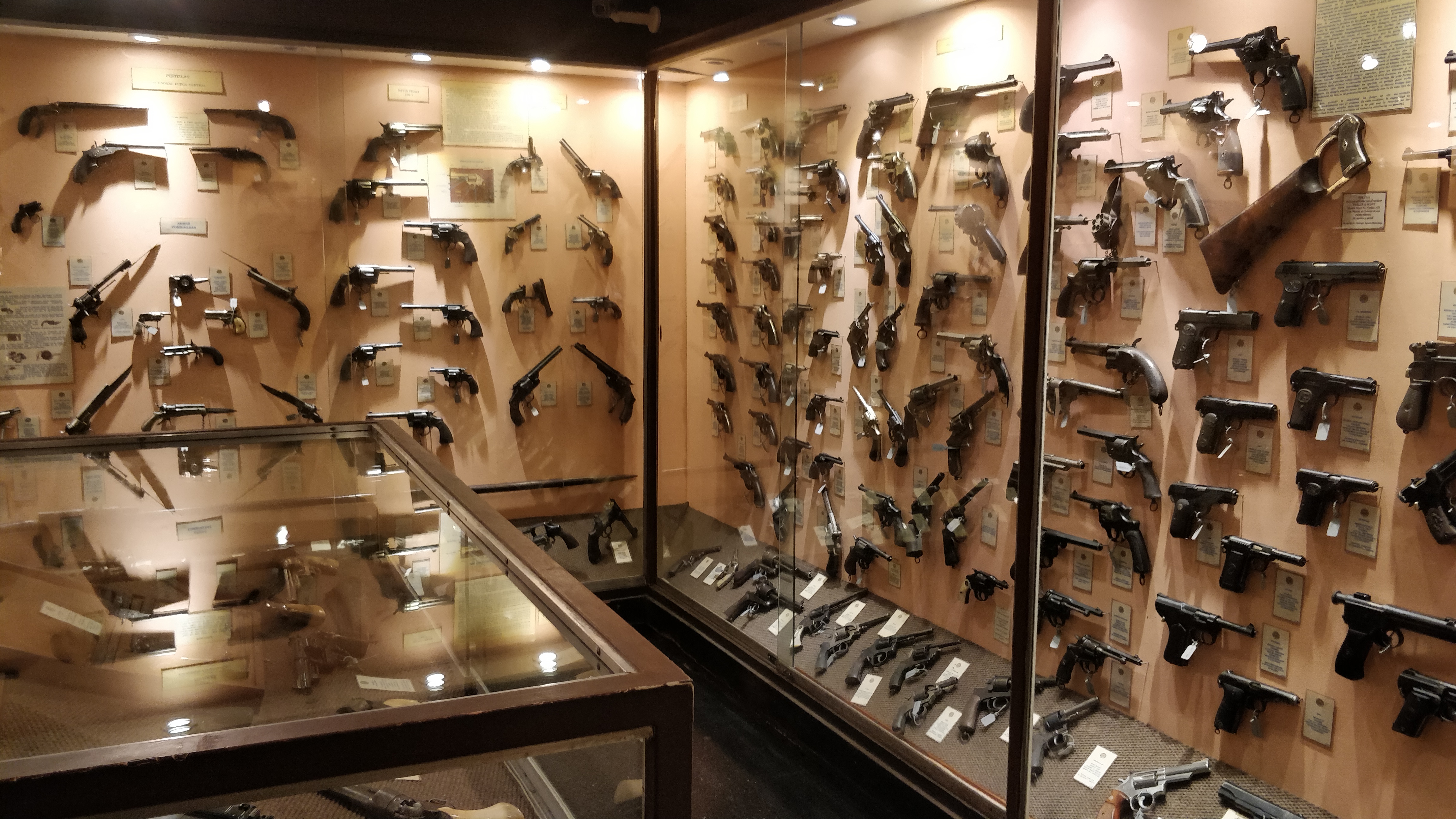
Of course, there’s plenty of more modern kill stuff.
*yawn*
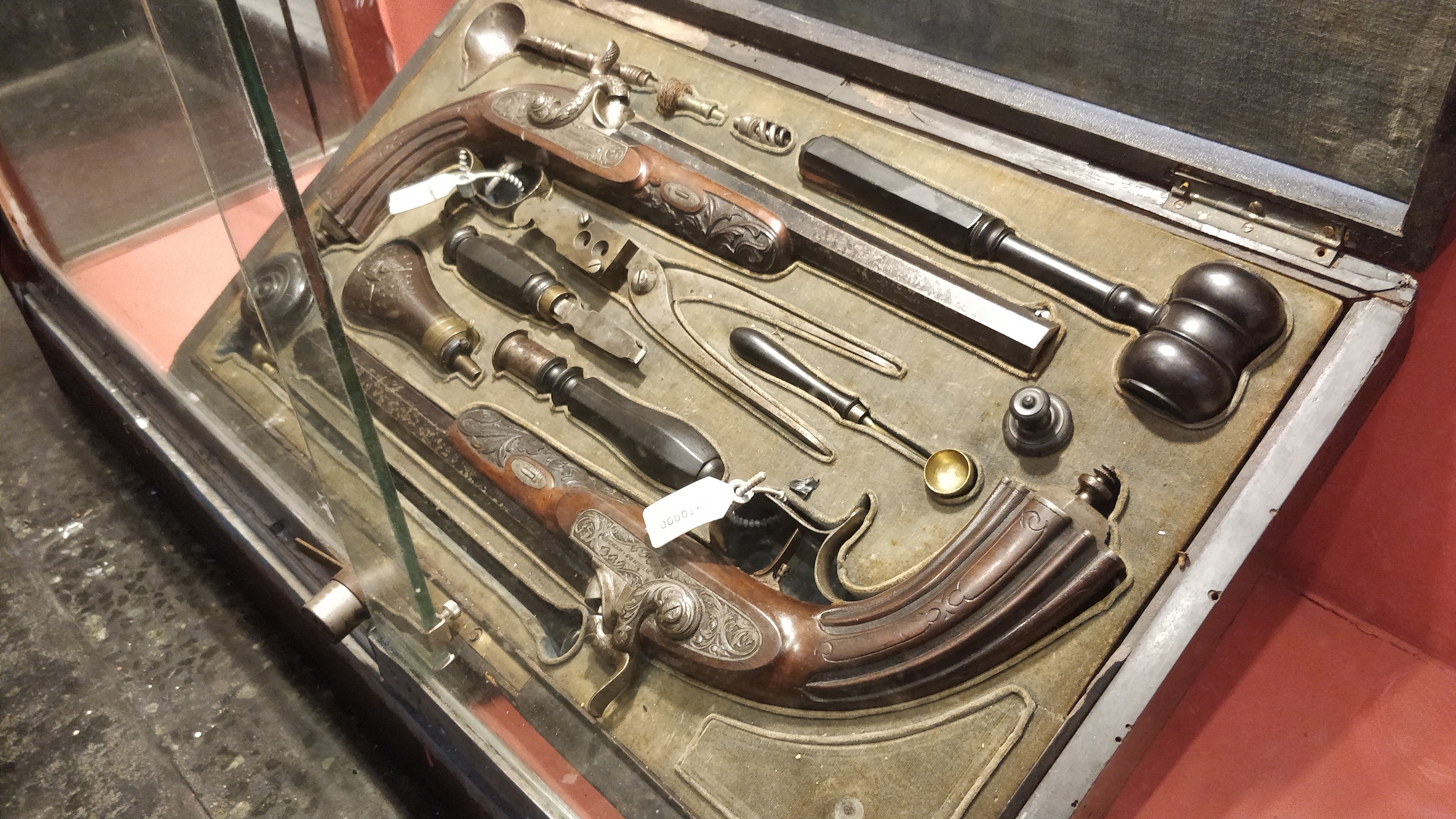
But there’s also a few box sets of dueling pistols–including this one, which says it was used in the duel between Pantaleón Gómez and Lucio Victorio Mansilla on Feb. 7, 1880. Both men were former soldiers, politicians, and journalists, but Gómez ended up the dead one in a story that the Wikipedia entry made sound kind of insane. Dudes gonna dude, I guess.
I can’t even.
As weaponry is always pretty closely tied to the military, the museum also has several minifigs that illustrate the history of the uniforms.
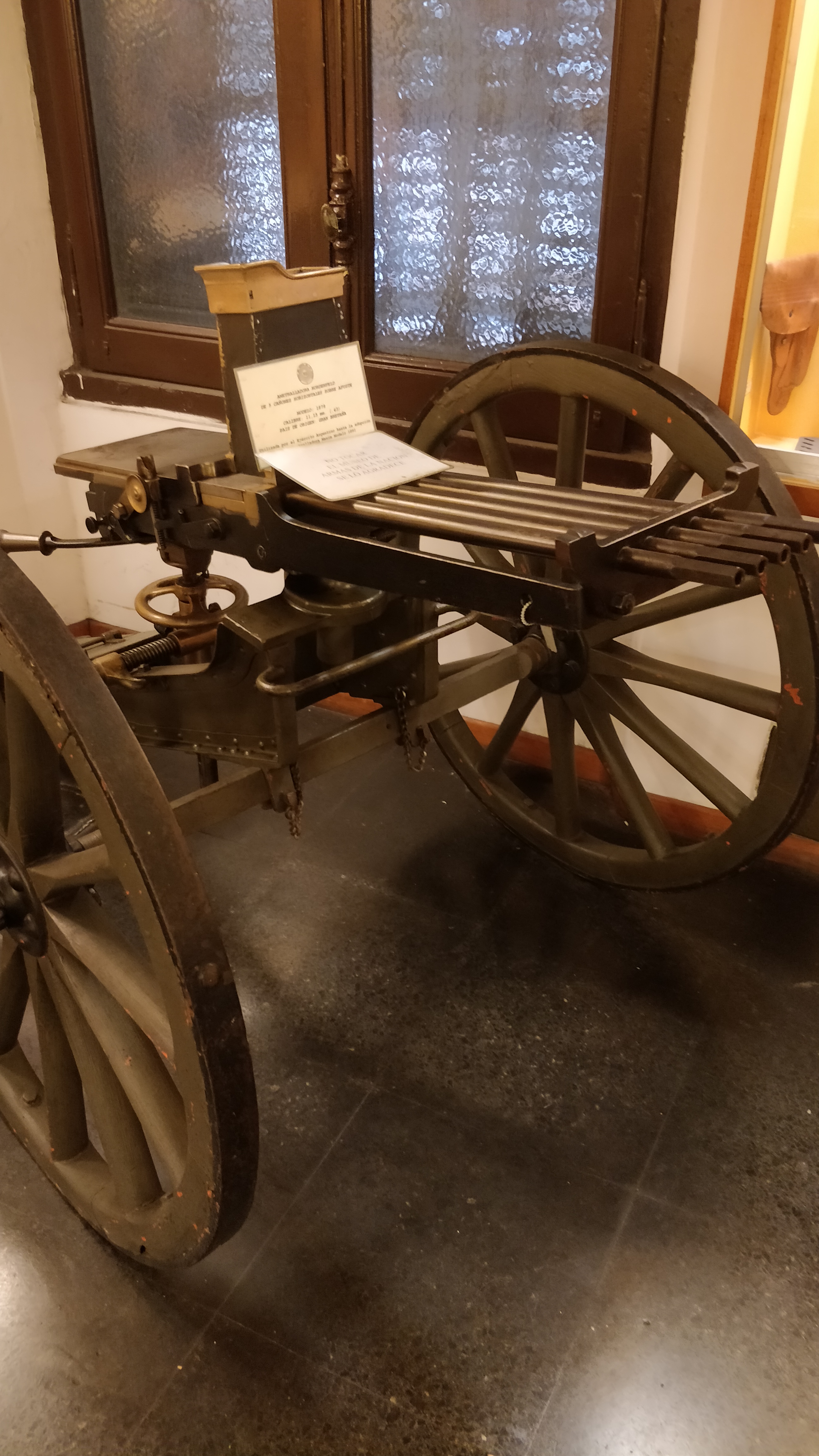
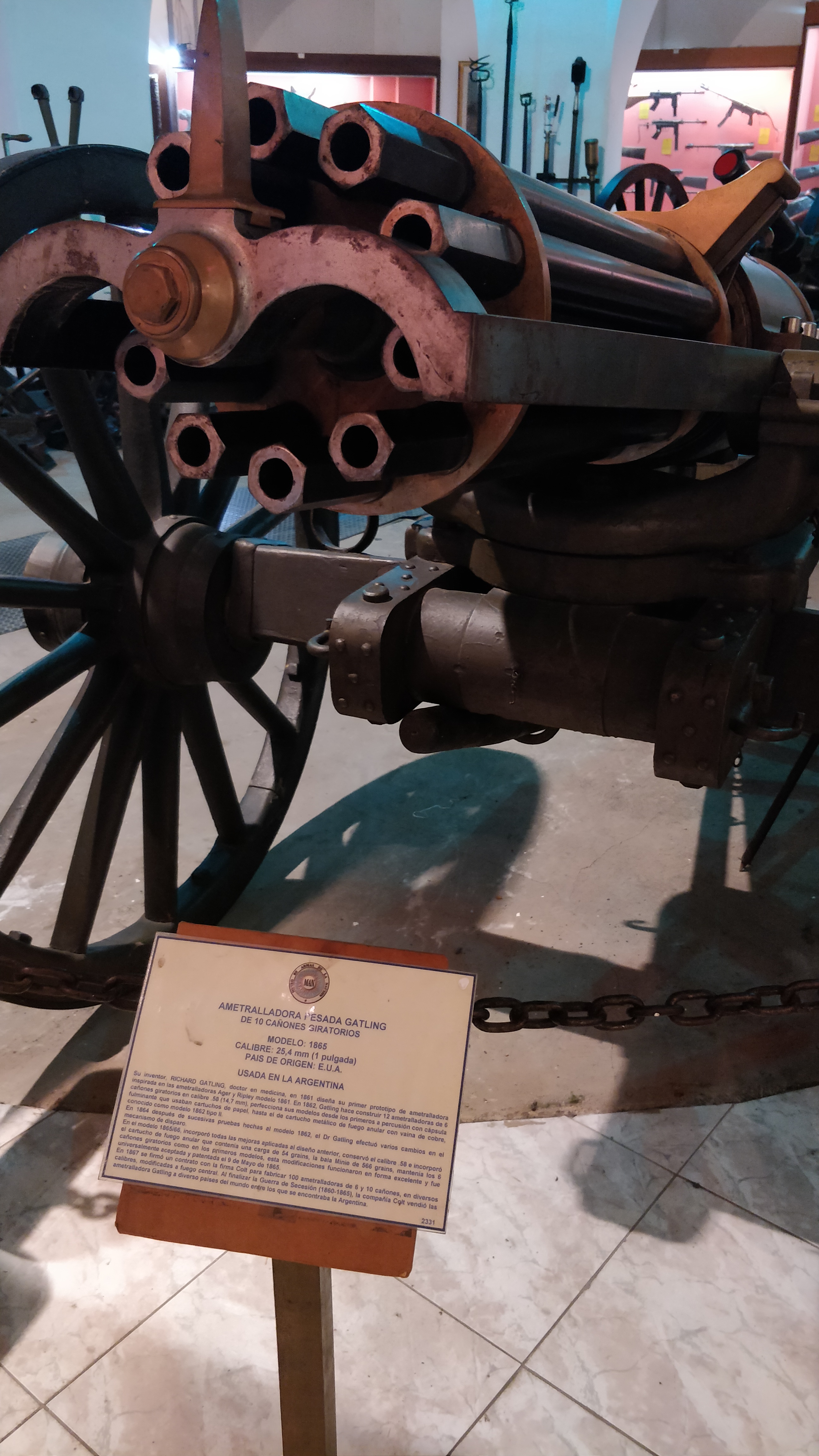
The items on display aren’t limited to melee combat and small caliber things, of course.
Both of these are mid-19th century, the bottom one being a Gatling design, Gatling having been a medical doctor who rather blew off that whole Hippocratic Oath thing.
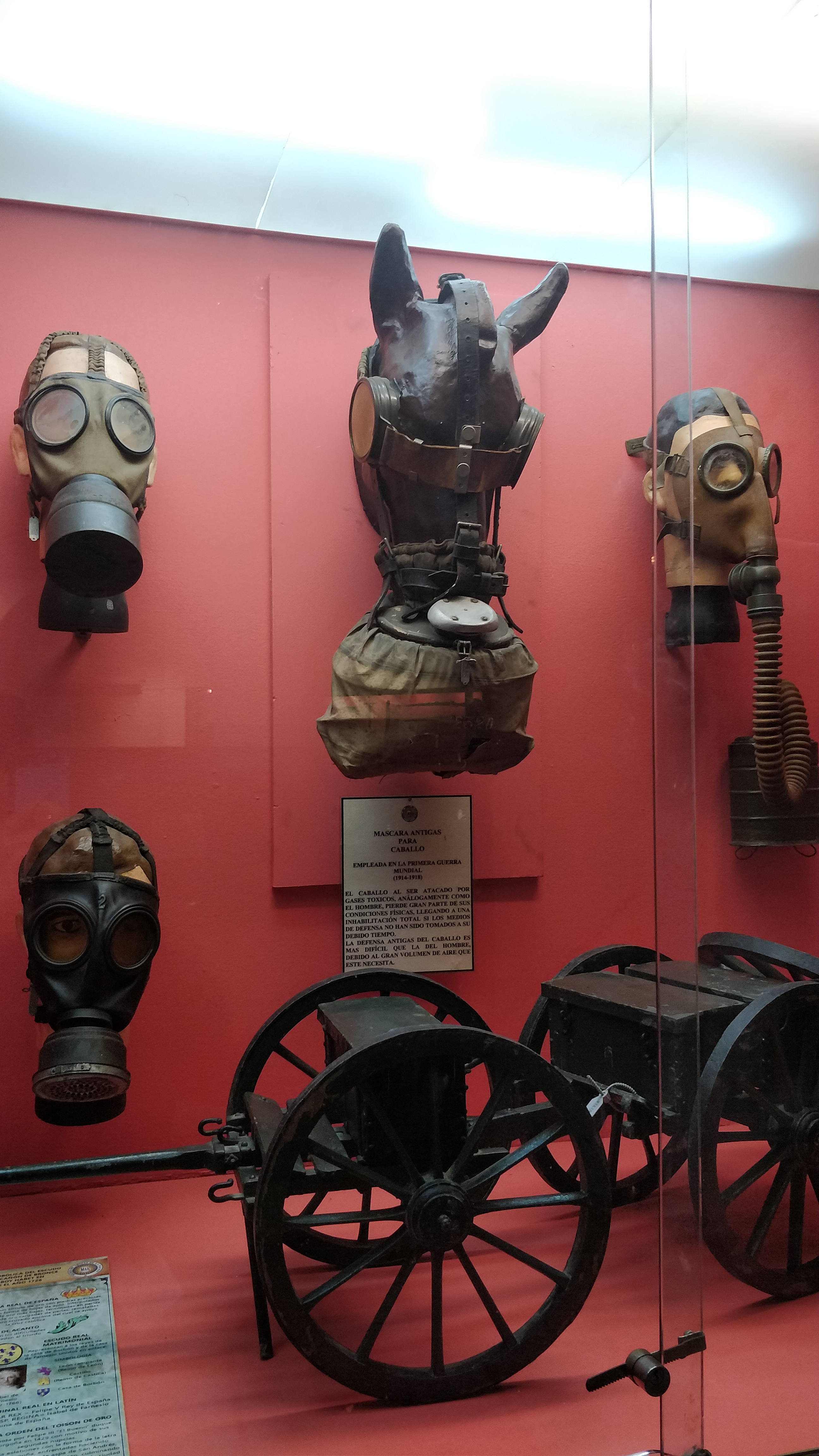
Remember what an absolute, unique horror show World War I was, with its meeting of traditional cavalry and horse-drawn supply wagons and mechanized death and chemical warfare?
Imagine putting a gas mask on a horse, or, hell, being a horse that had to wear a gas mask.
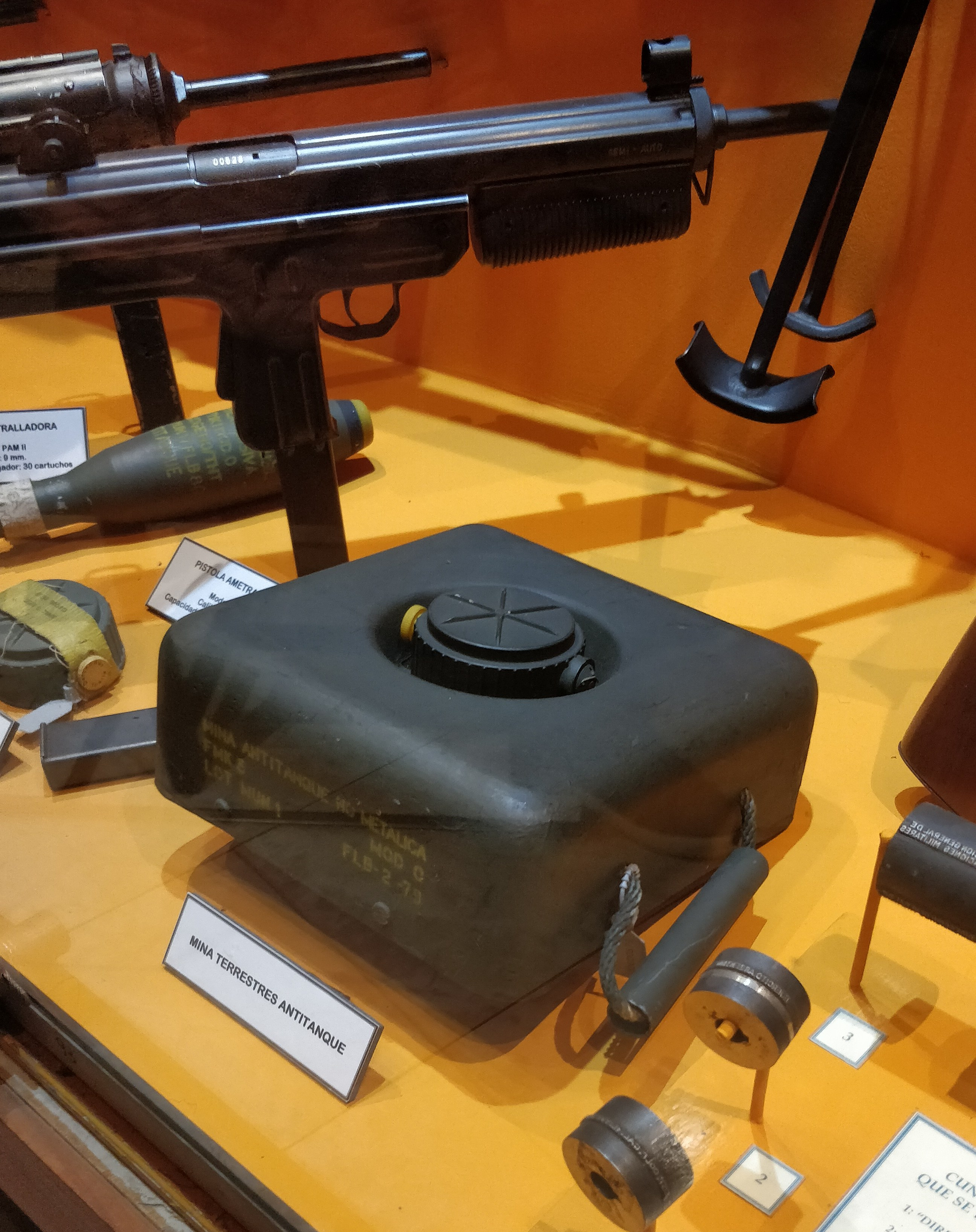
Look, an anti-tank mine. It’s smaller than my backpack.
That circle to its left is the size of my palm and designed to blow up a human being.
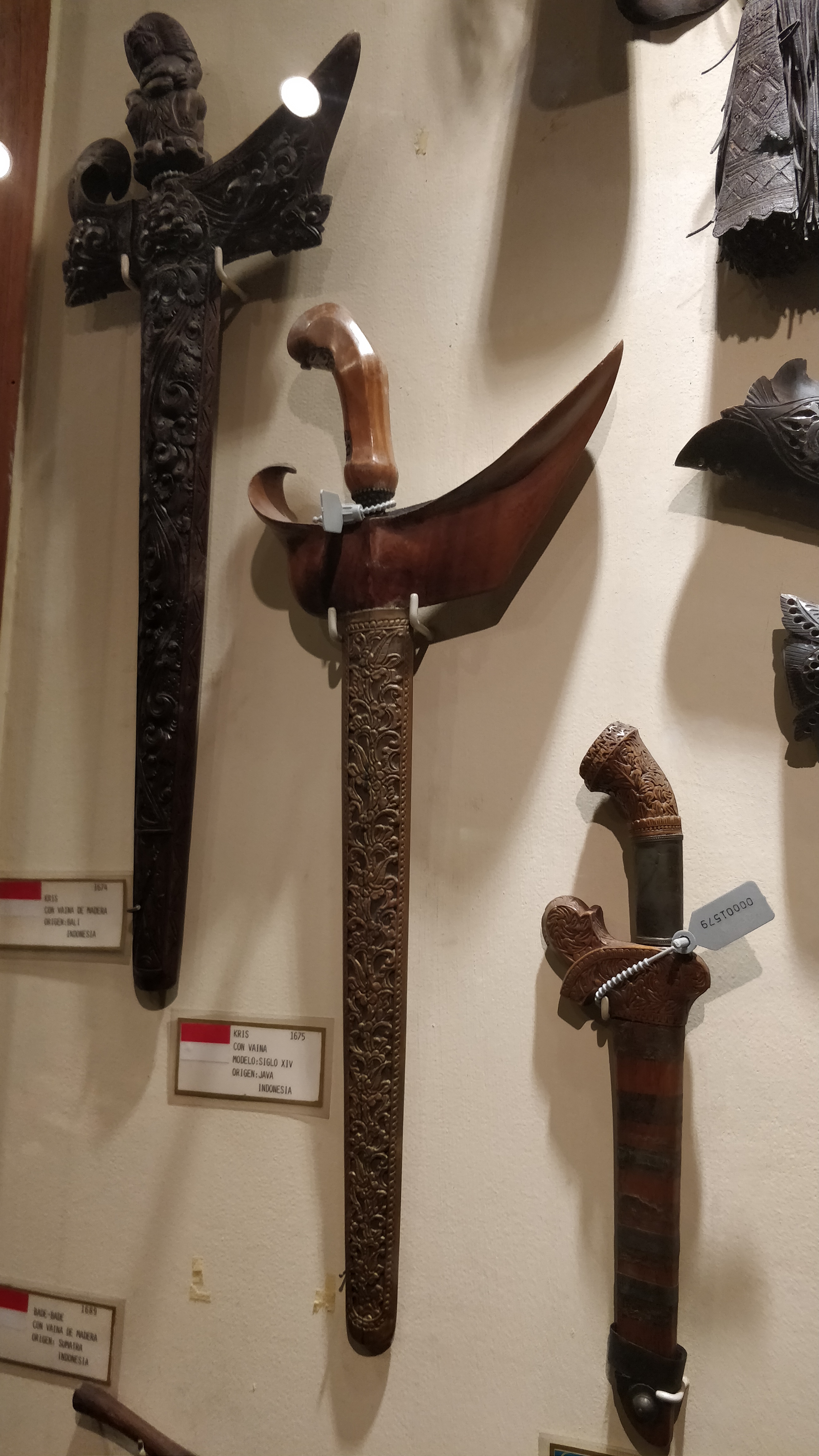
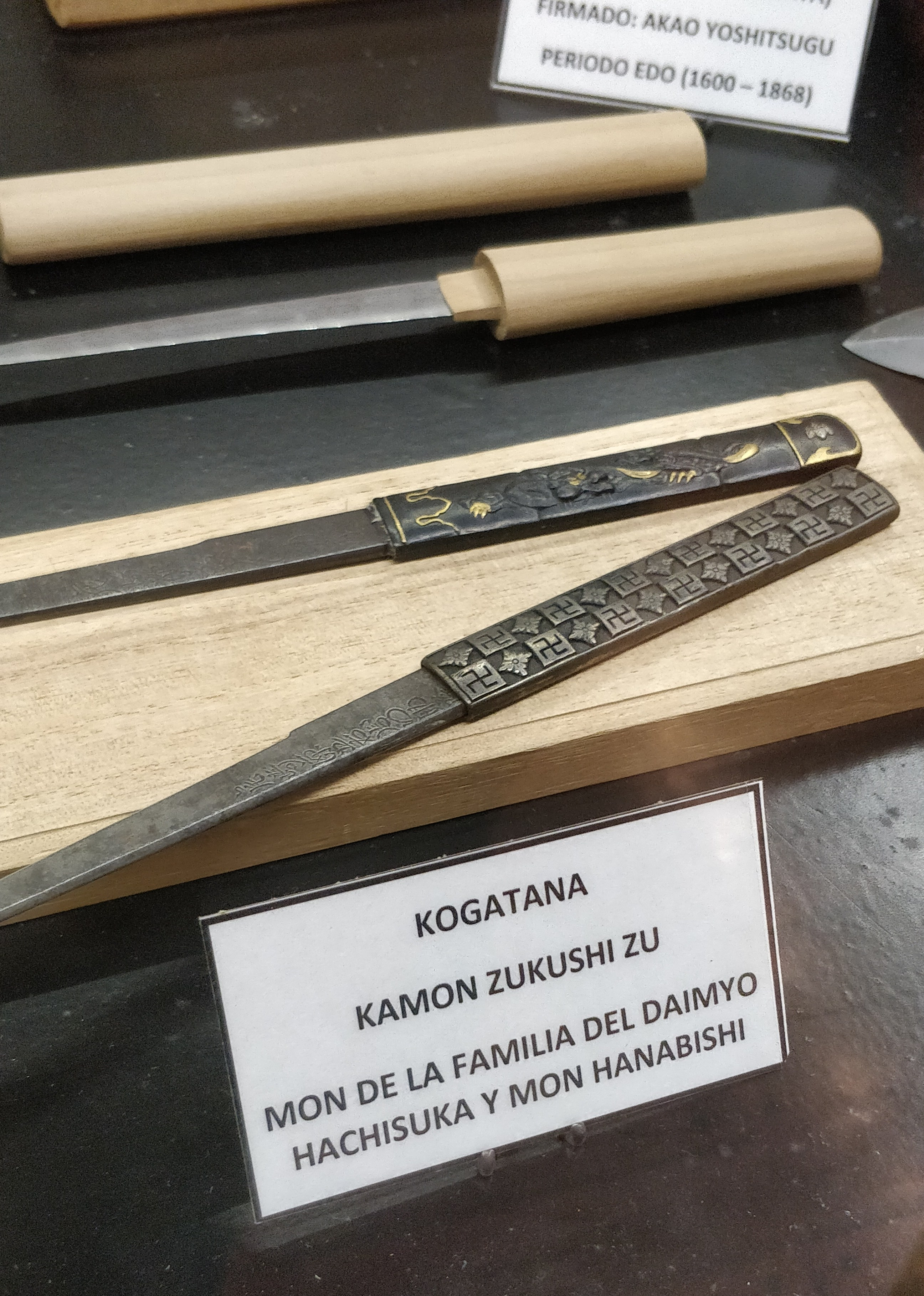
There’s also a room that’s full of weapons from all over Asia, which at least can restore the more comfortable feeling of looking at museum pieces with some artistry to them instead of just efficient kill boxes used within living memory.
So there you have it! Certainly a very interesting collection of early firearms, fancy swords and Argentine military history. Not much on the informational side of things, but certainly more interesting than I thought it would be for me. The Museo de Armas de la Nación is located in Retiro at Santa Fe 702, right across from the Plaza, and very near other sights, like the Kavanagh building and the Basílica Santísimo Sacramento. It’s easy to get to from the C and E subway lines and Retiro train station. As of this post, the entry fee is 100 pesos (about US$2).
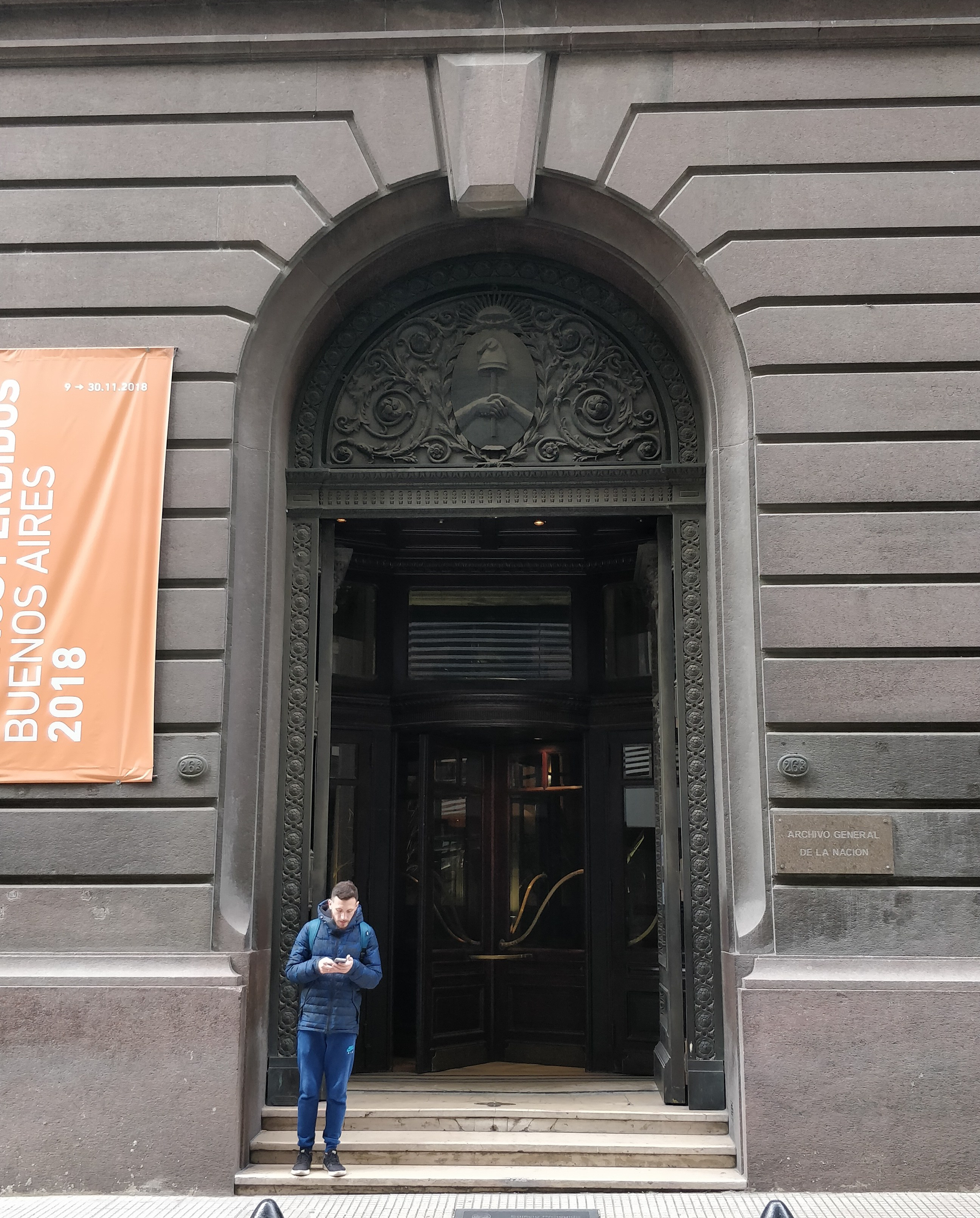
Popped into the National Archive for the small, temporary exhibit on women workers! Not super sure on the best translation. Let’s go with “Impressions of Working Women.”
That guy’s got nothing to do with anything; it’s just the best photo I got of the door.
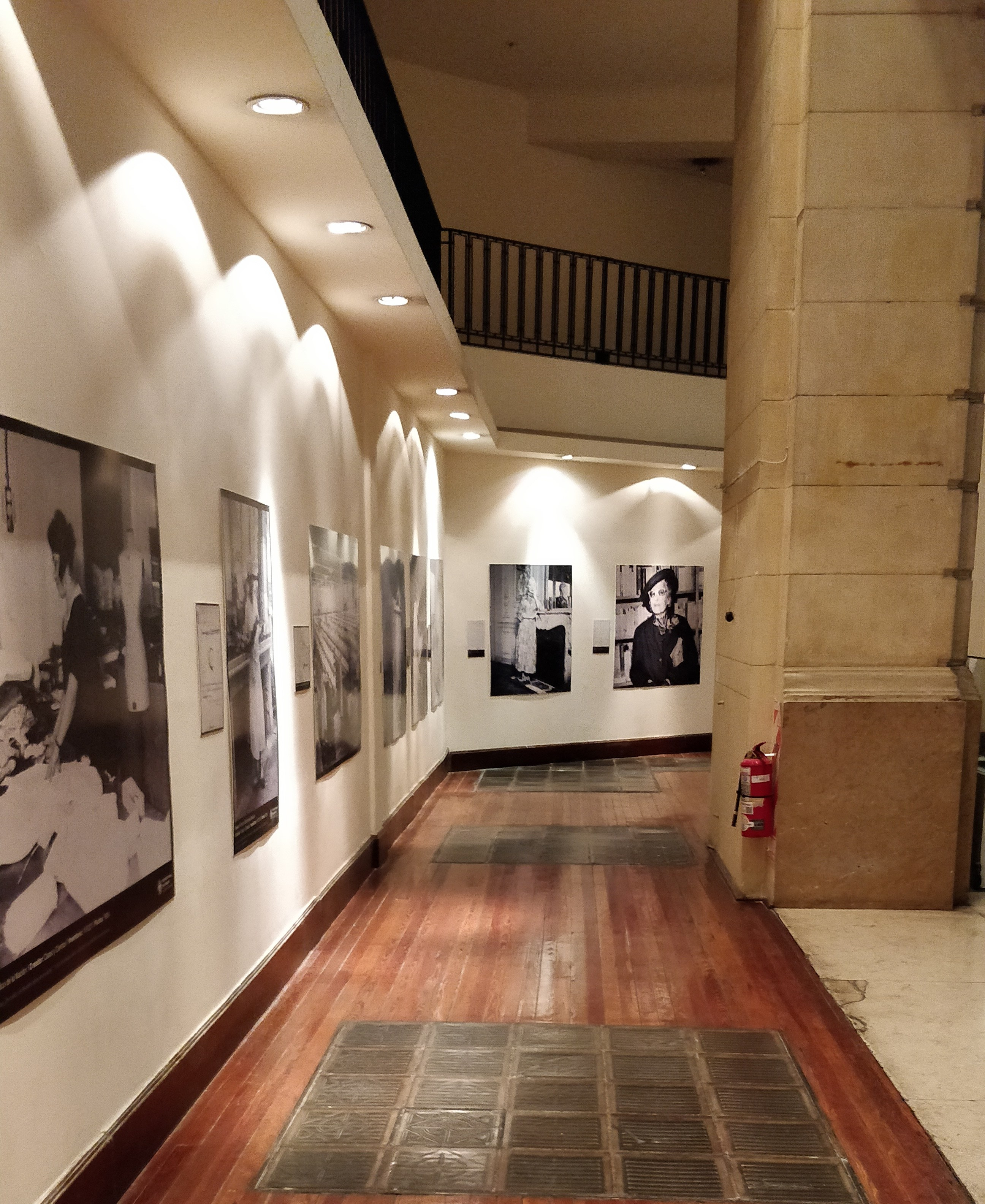
There’s an exhibit room just inside the Archive, where visitors don’t have to go through security. It’s pretty small, but a nice place for a curated show of documents.
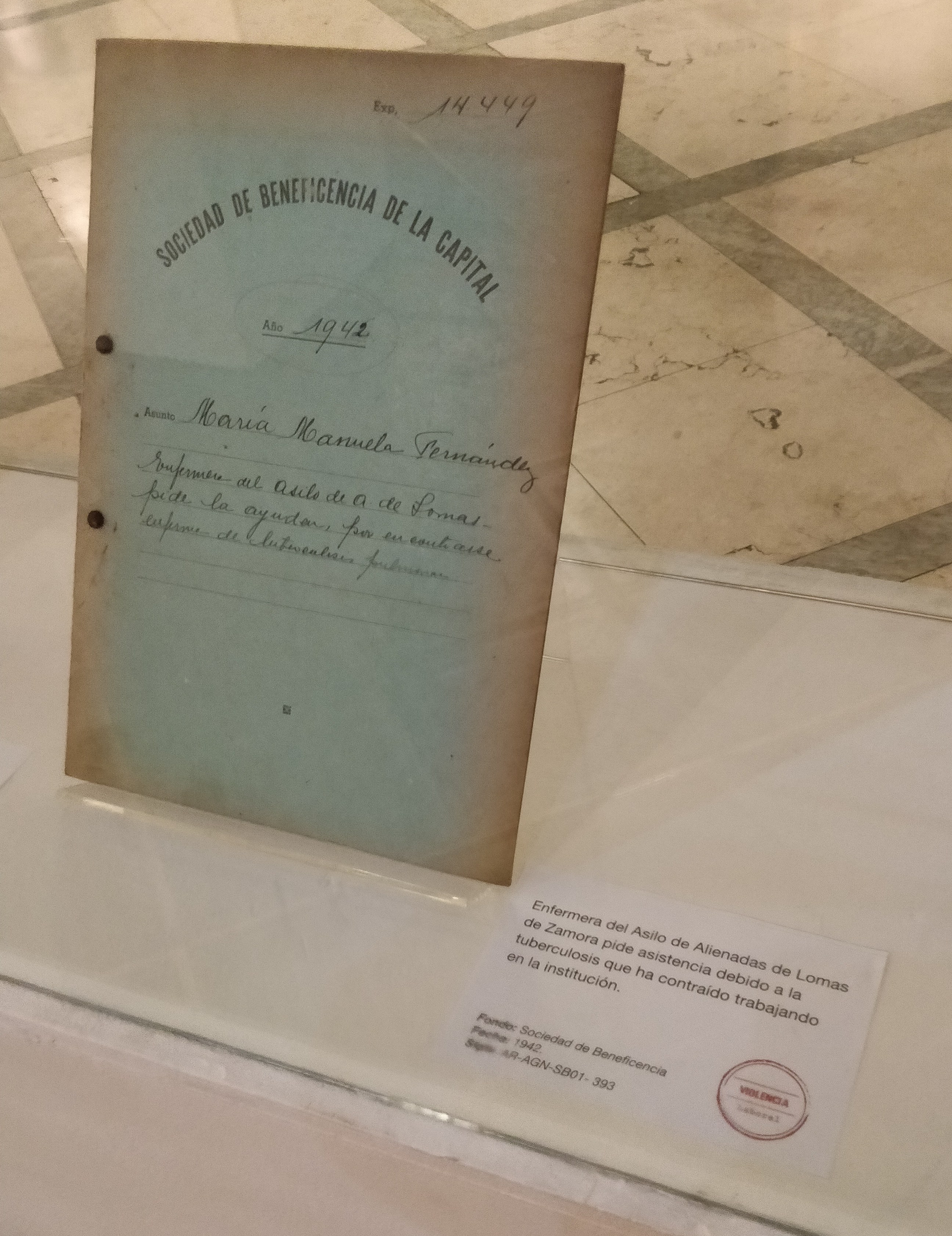
Including not happy documents, like this 1942 petition to a charity for assistance from a nurse who contracted tuberculosis in the course of her work.
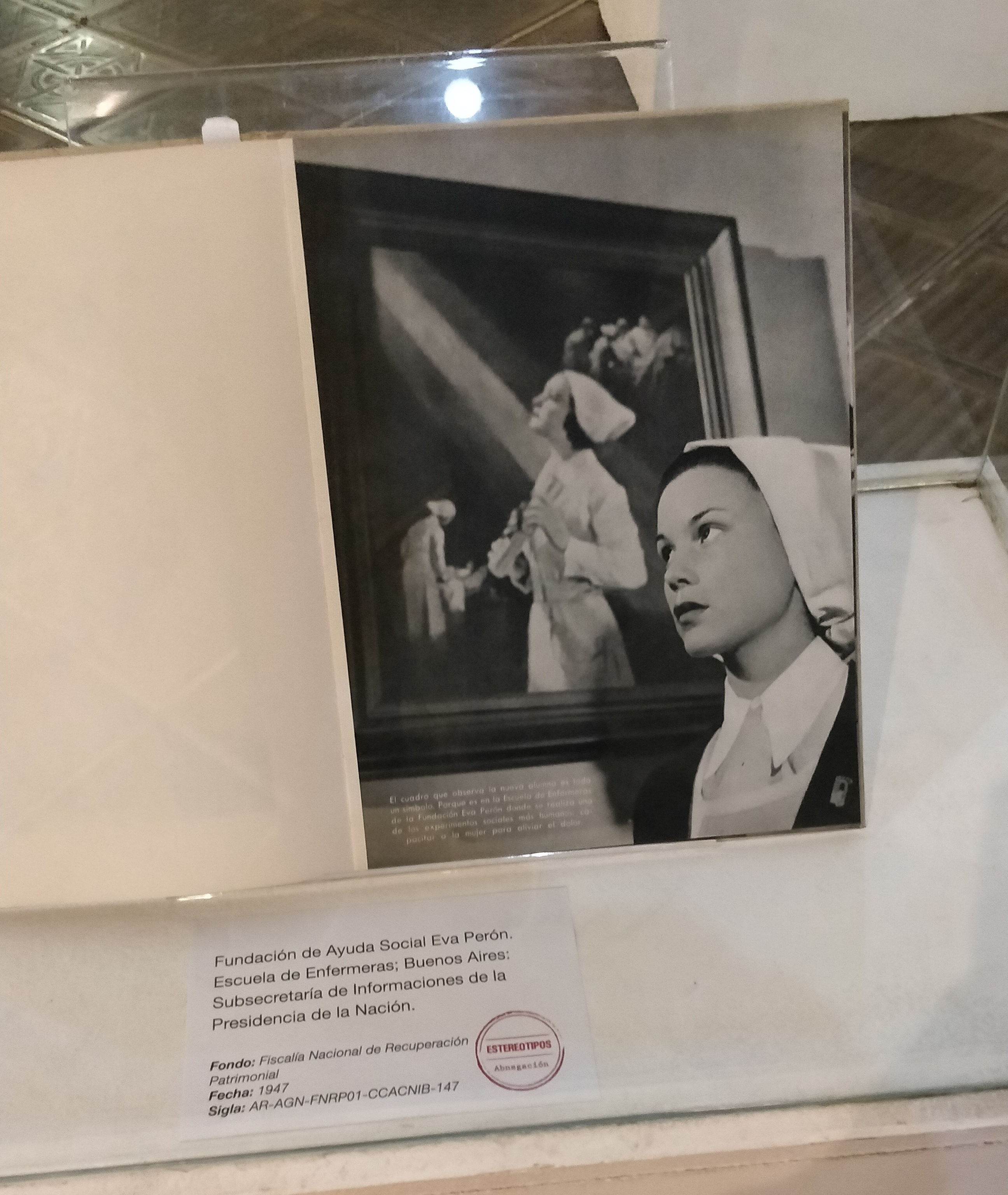
Plenty of great old photos, which, of course. It’s the Archive.
From the School of Nursing affiliated with the Eva Perón Social Help Foundation in 1947.
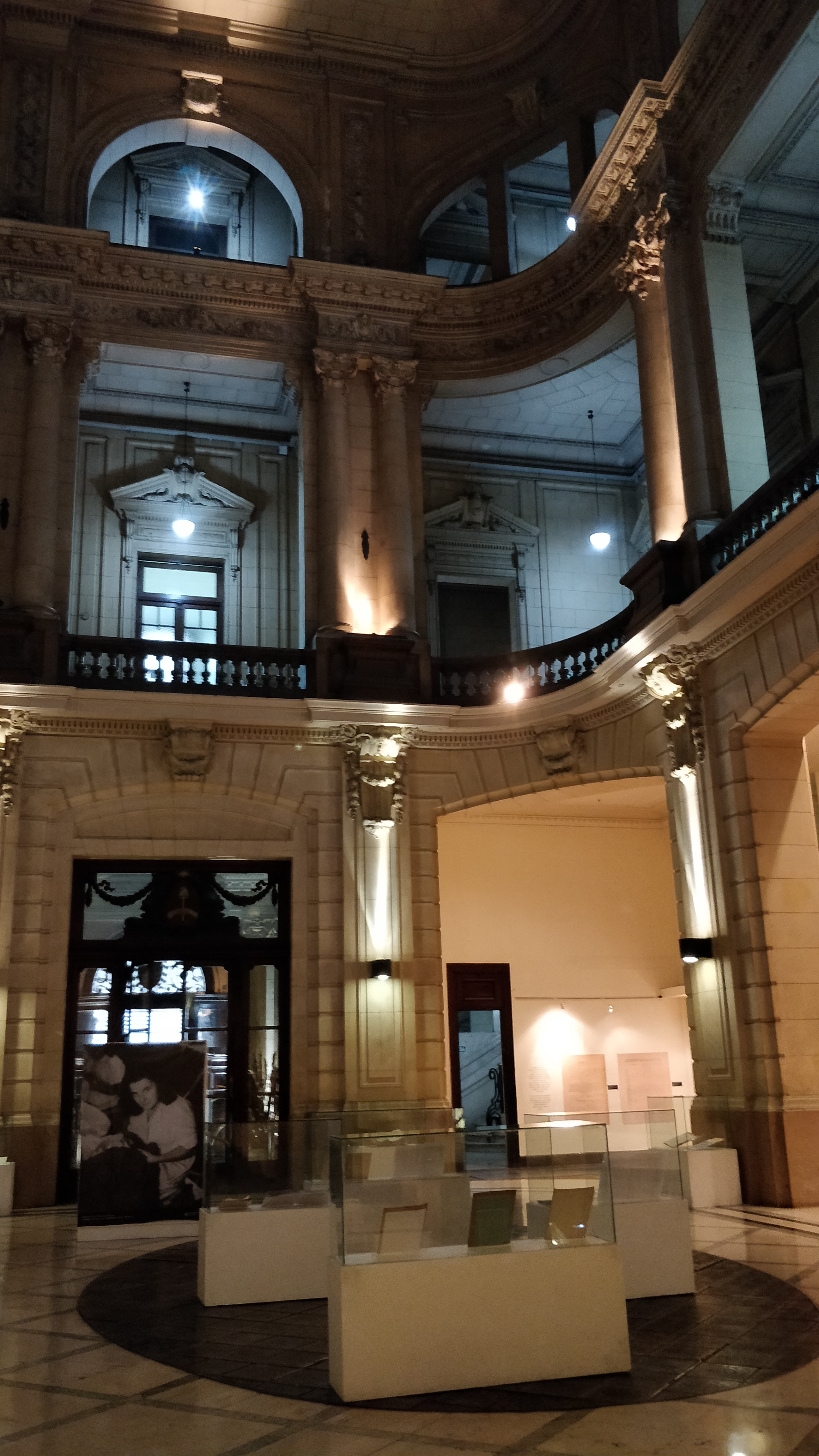
Actually, though, know what was most impressive? The freaking exhibit room.
That’s all for this minipost! If you’re in Microcentro taking in the government-affiliated tourist sights, you’ll be close to the Archivo General de la Nación. Pop in for a few minutes to see whatever historic documents they have out for eyeballing and the amazing exhibit room at 25 de mayo 263, weekdays from 10 to 5.
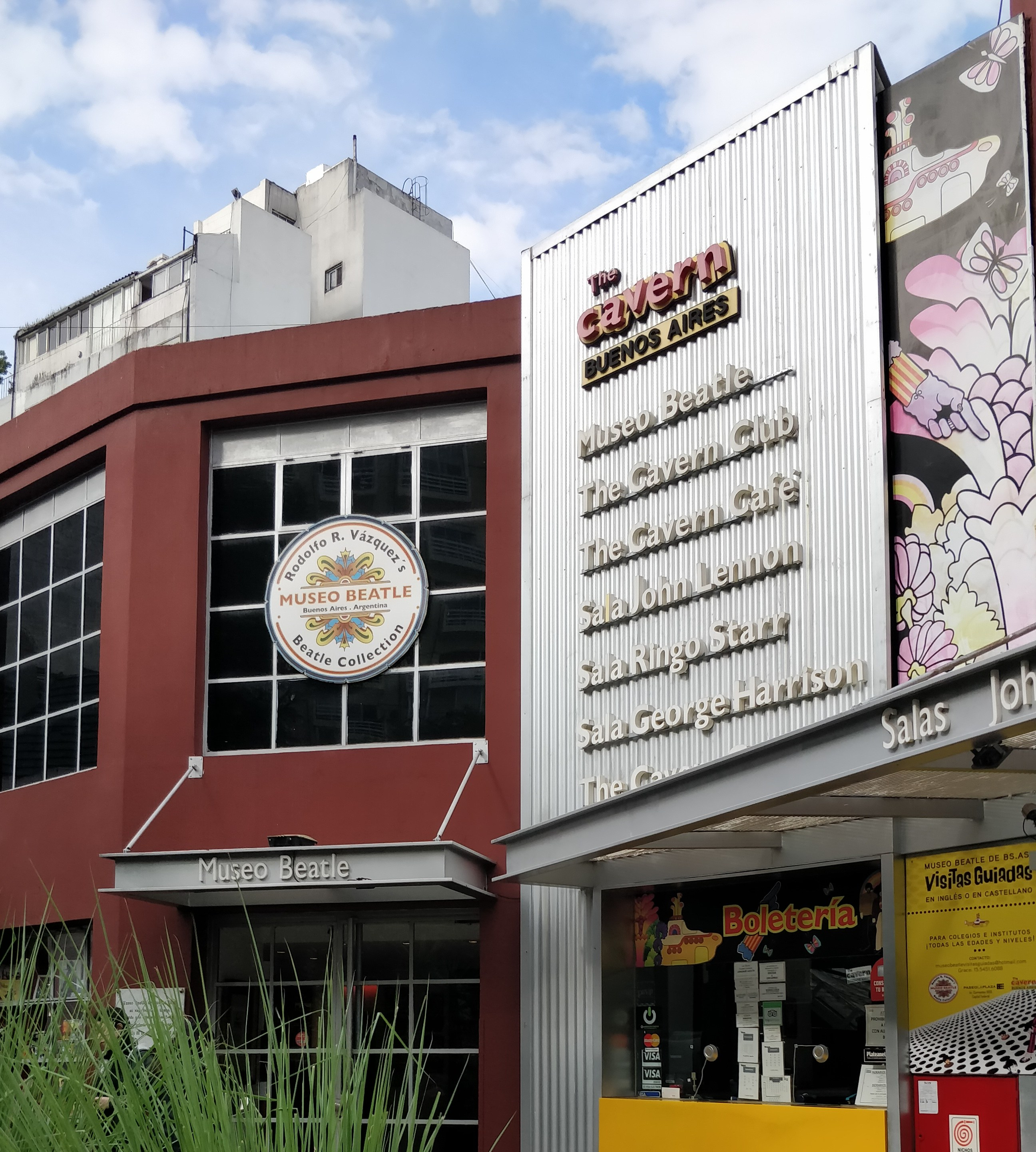
Tucked in the Paseo La Plaza on Corrientes Ave, the “street that never sleeps” and a center of theater and tango, is the Cavern.
Can’t buy me love, but can buy me a ticket to ride if by “ride” you mean “go into the museum”
Named for the Beatles’ frequent venue, it’s a Beatles-themed complex that includes a cafe, a club, a theater, performance spaces, and a museum.
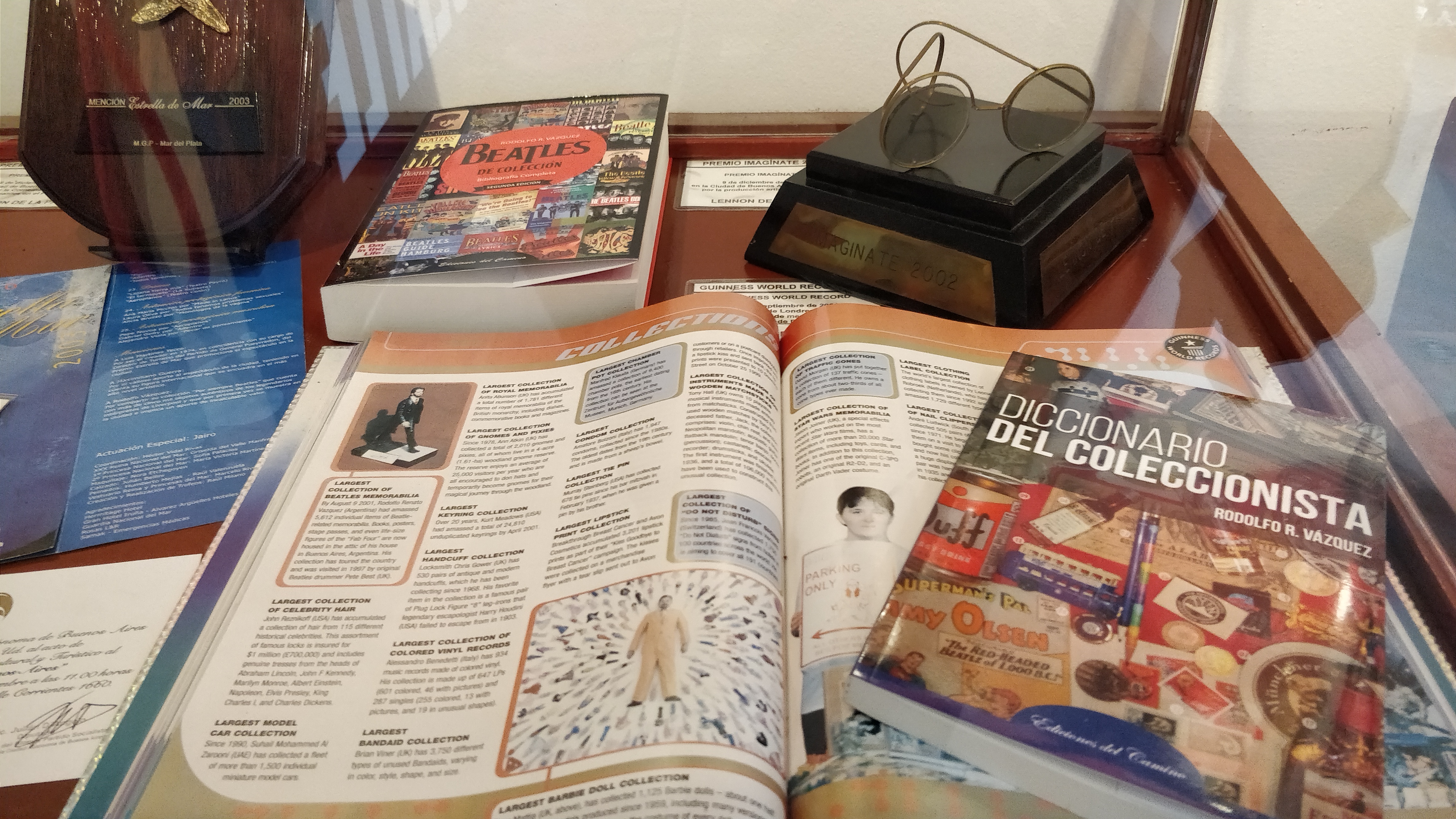
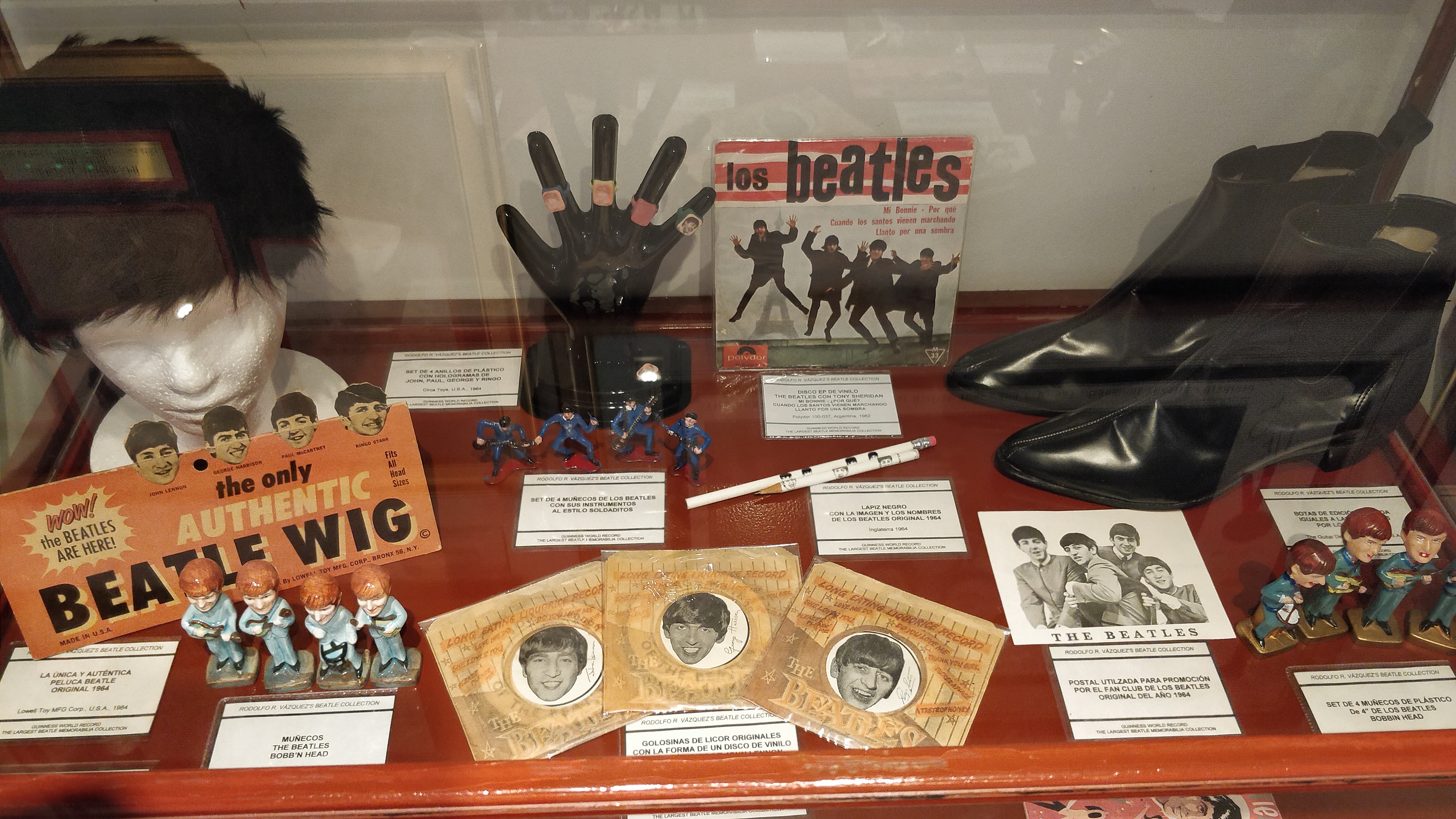
The Museo Beatle belongs to one of the most charming categories of museum, “personal collection that got way out of hand.” In this case, Rodolfo Vázquez began collecting Beatles stuff at the age of 10, and by 2001, he had the Guinness Book of World Records certified biggest damn Beatles collection (re-certified in 2011 by Guinness as having 7,700 items).
Can’t buy me love, but can buy me the catalog in the gift shop
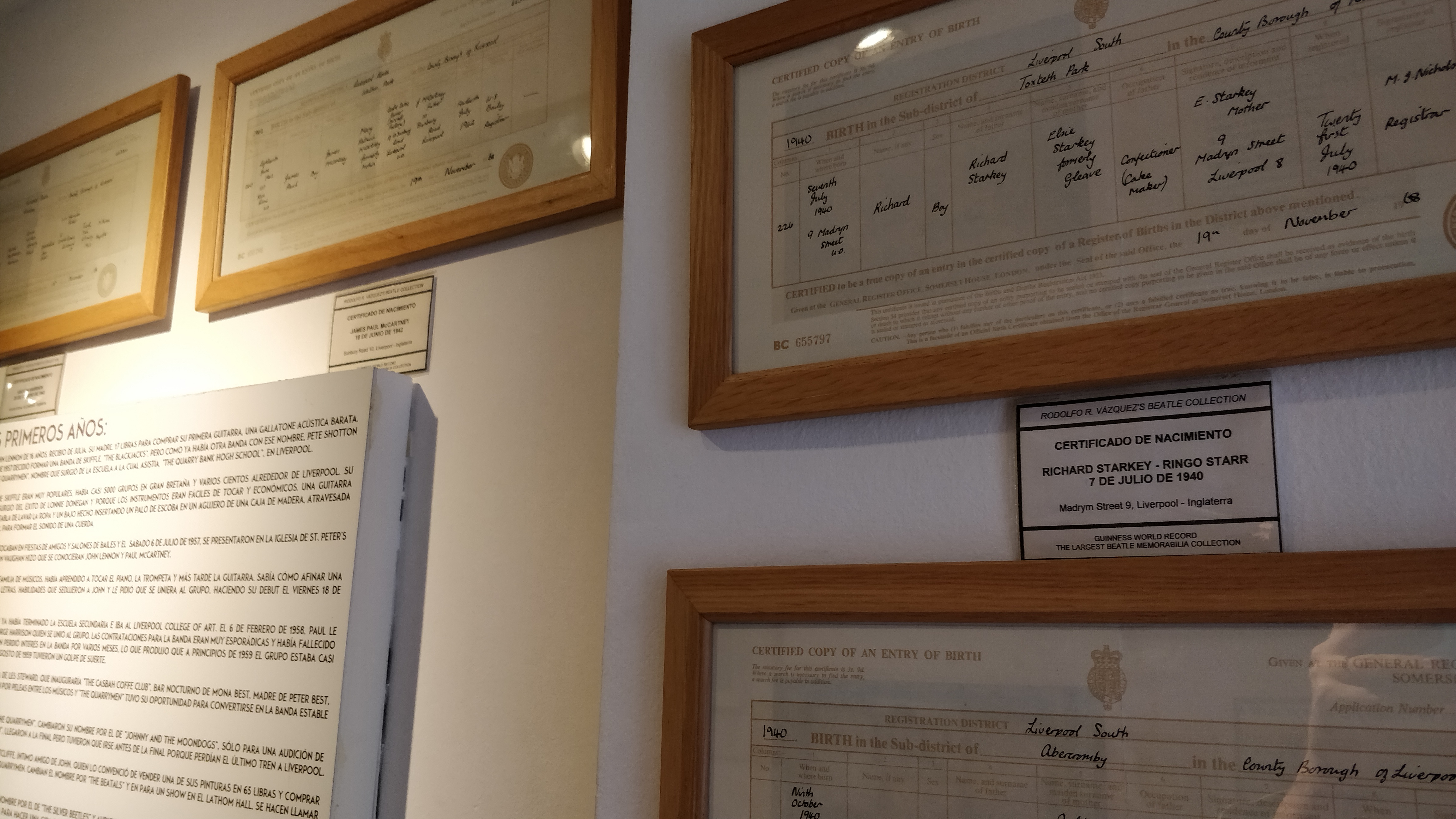
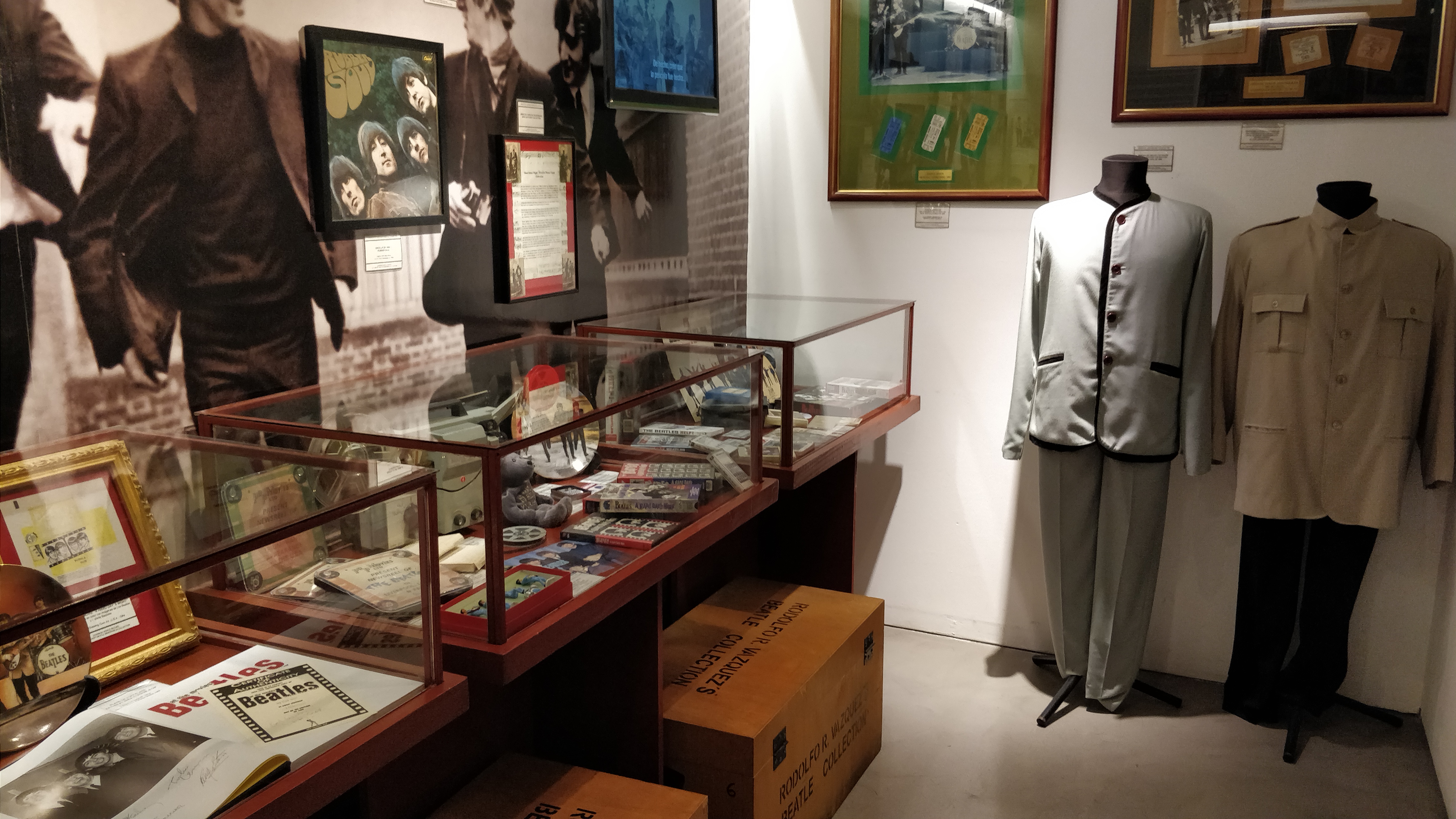
The museum is organized chronologically, and how else would you start, but with the Fab Four’s frickin’ births?
Original birth certificates, I was told
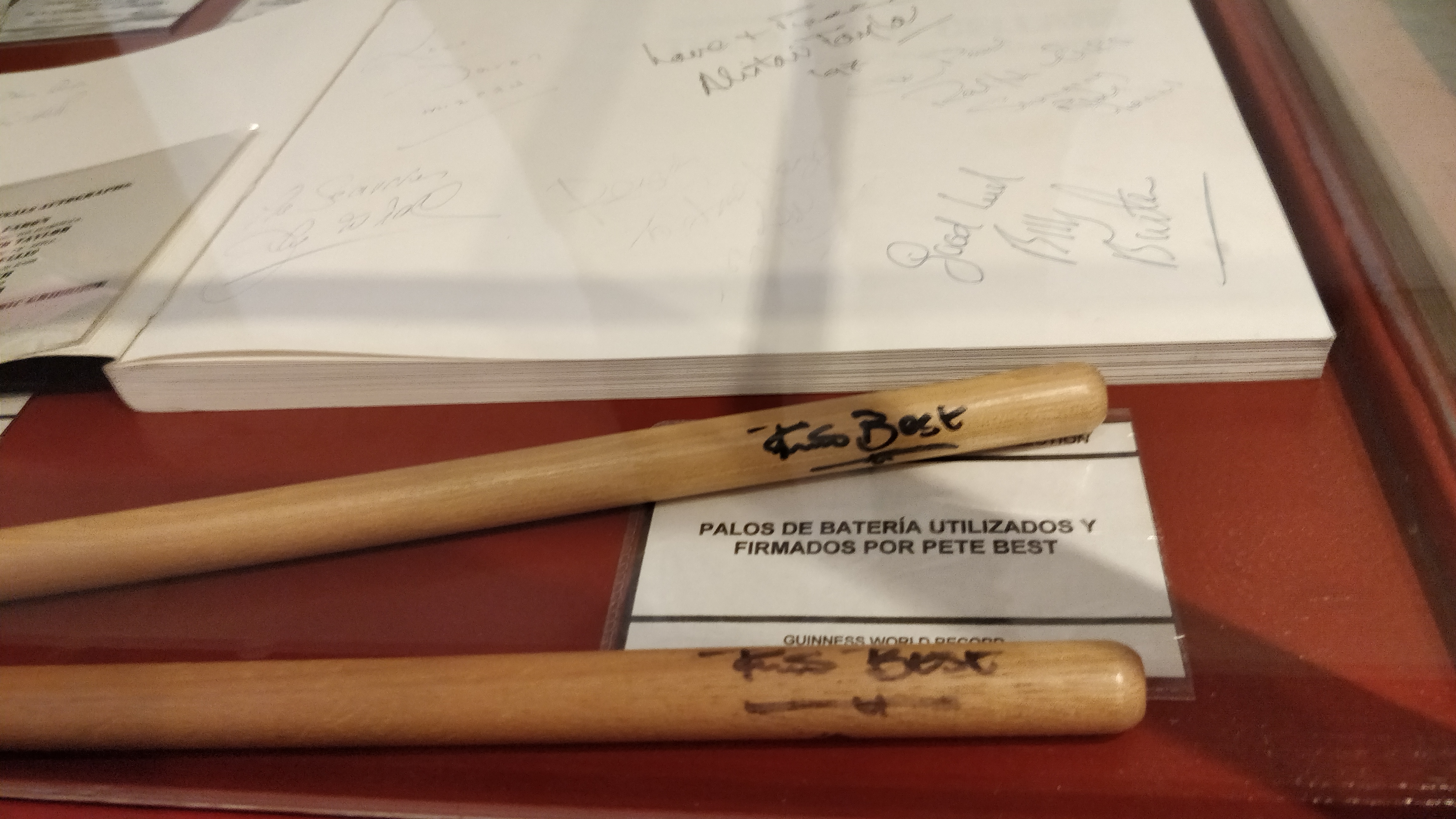
Don’t worry, Pete Best fans, the museum’s got you covered.
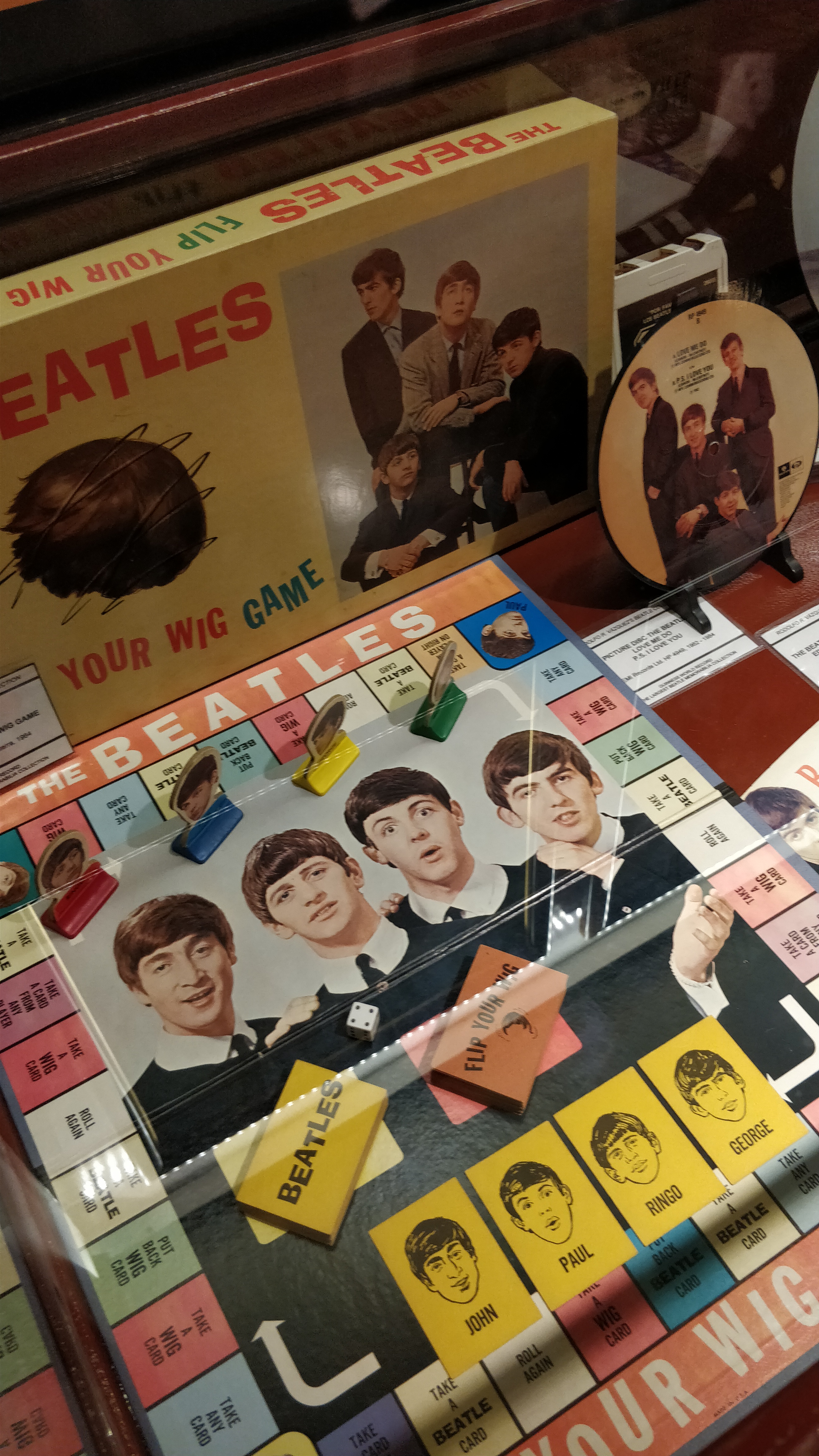
I’m not actually a big Beatles fan; I don’t know much about them. I was surprised by how meteoric their rise really was. They added Ringo and recorded their first album in 1962, released it in 1963, and by 1964, the merch production was insane.
Authentic Beatle wig, and those squares at the bottom are candy. Licorice candy.
Sure, sounds fun.
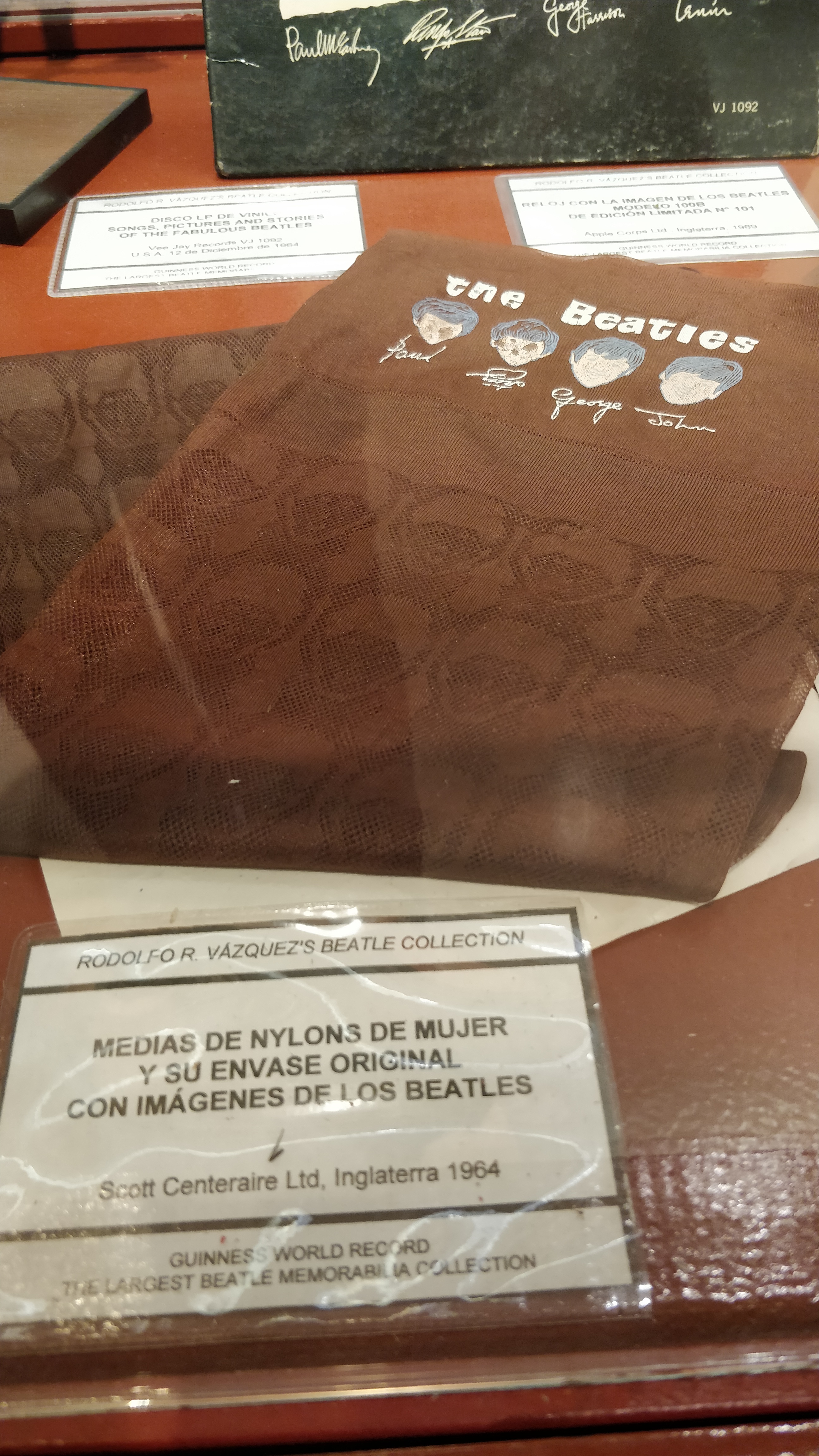
That is PANTYHOSE, with their FACES ON IT.
Continuing on through Beatlemania…
Several videos available throughout the timeline.
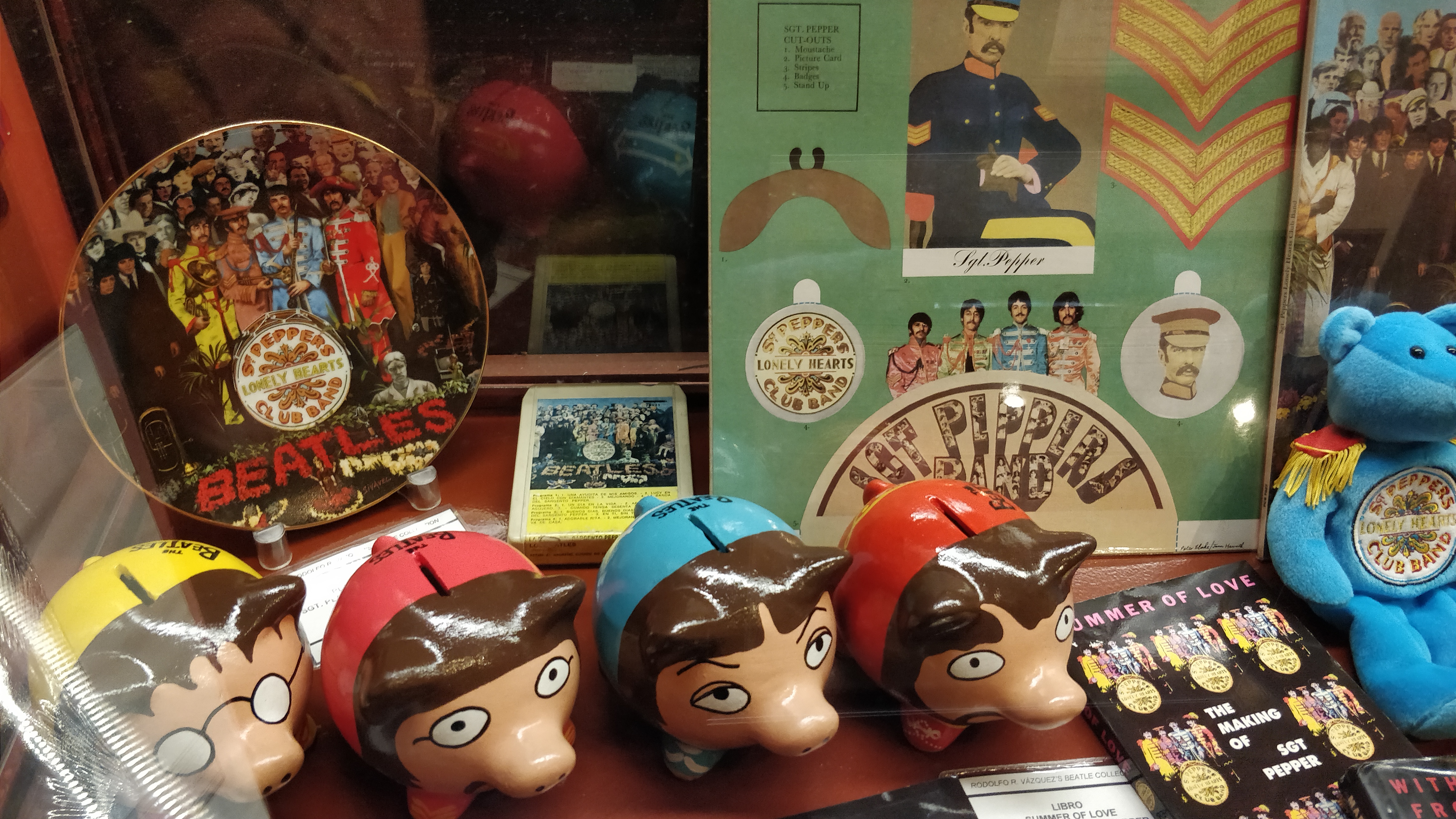
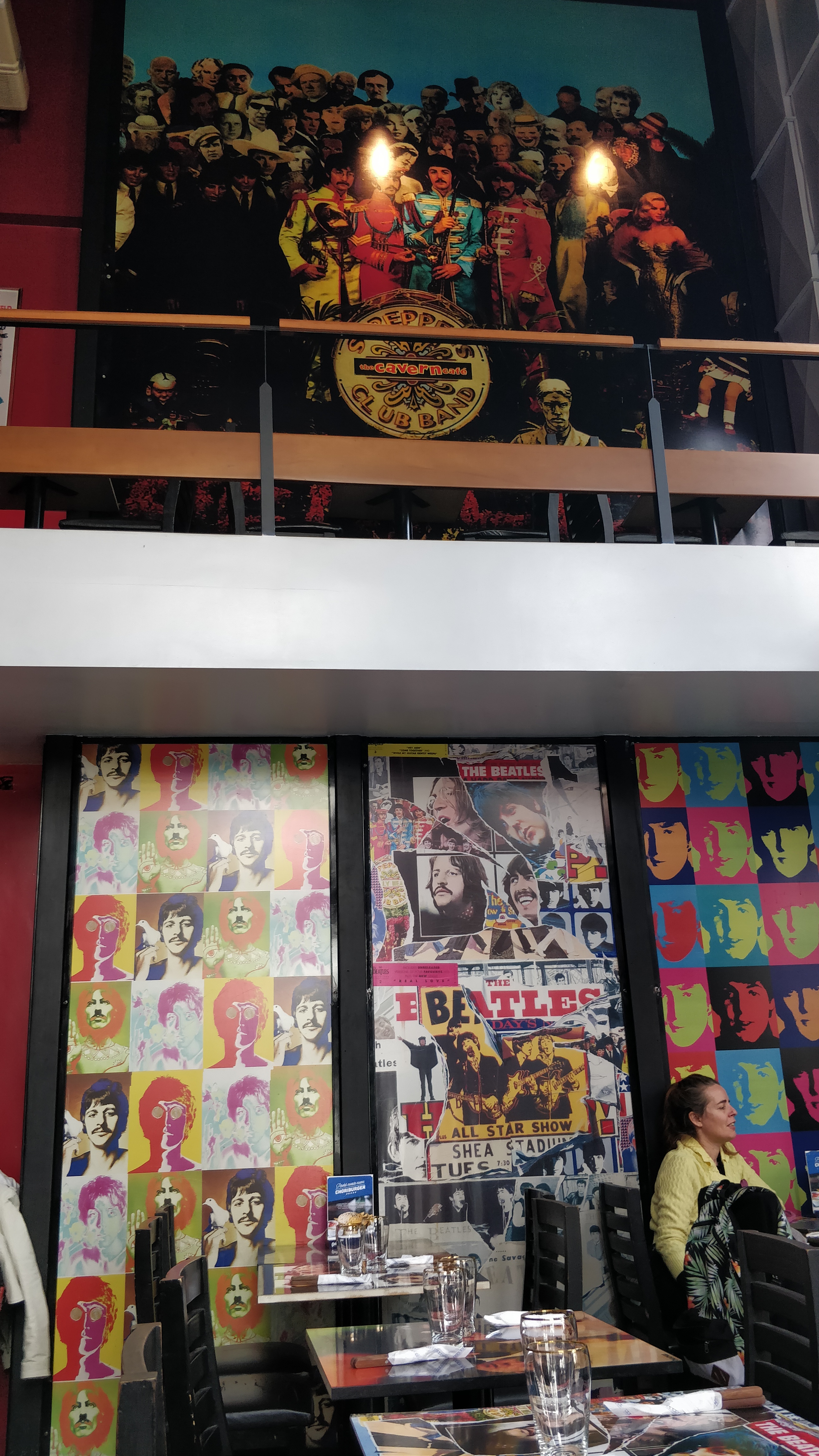
…and on to Sgt Pepper’s something something.
Pig Ringo’s eyeliner wings on point.
I understand Beatles memorabilia, not unlike their aesthetic, gets weirder from here.
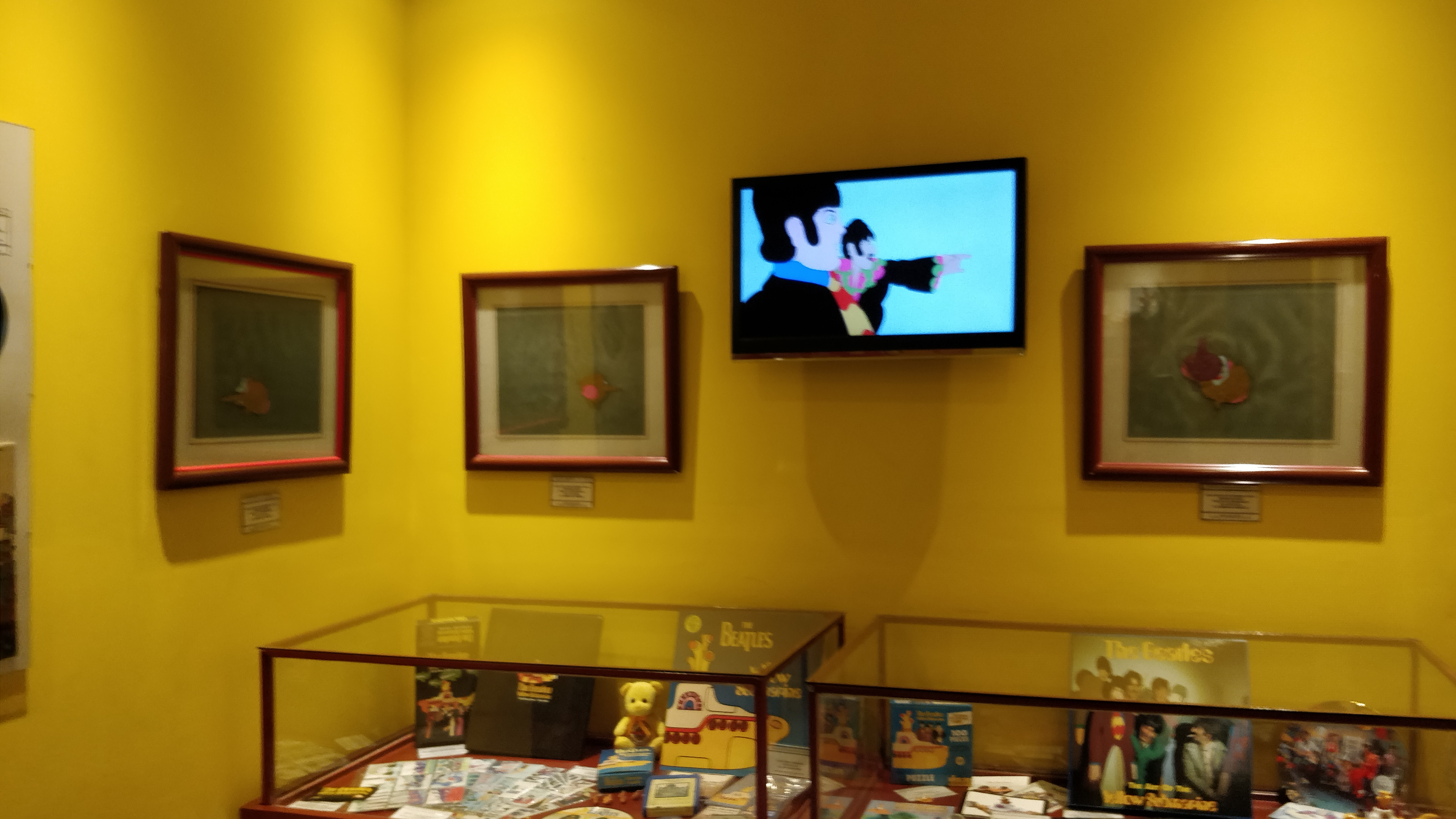
All of us cohabitate in a lemon-hued submersible.
And we are clean and sober as the day is long.
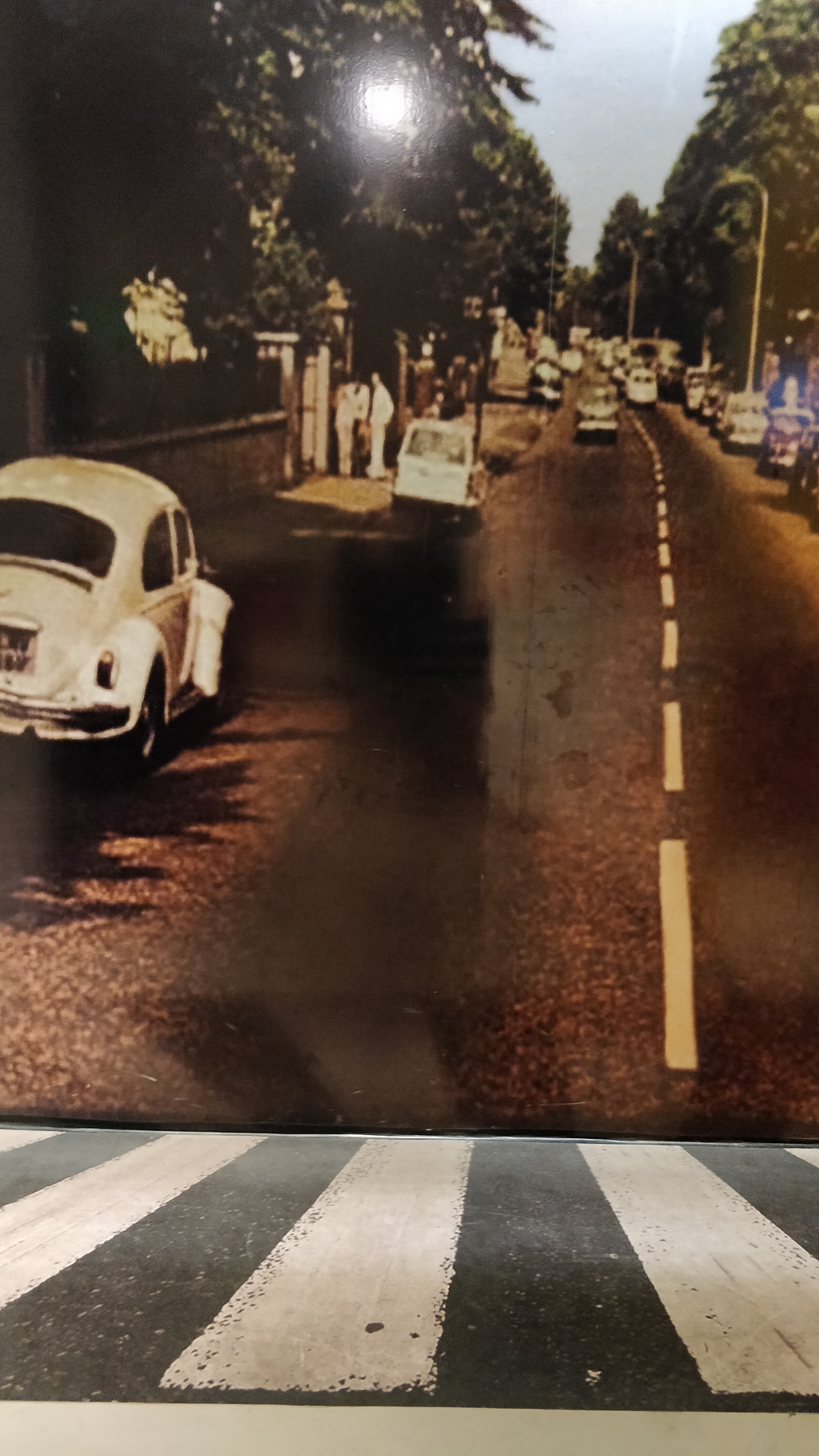
There are various records, advertisements, and autographs of anyone even tangentially related to the band throughout the museum. All that is well and good, but you want a photo op. Of course you do.
The only true Beatles photo op.
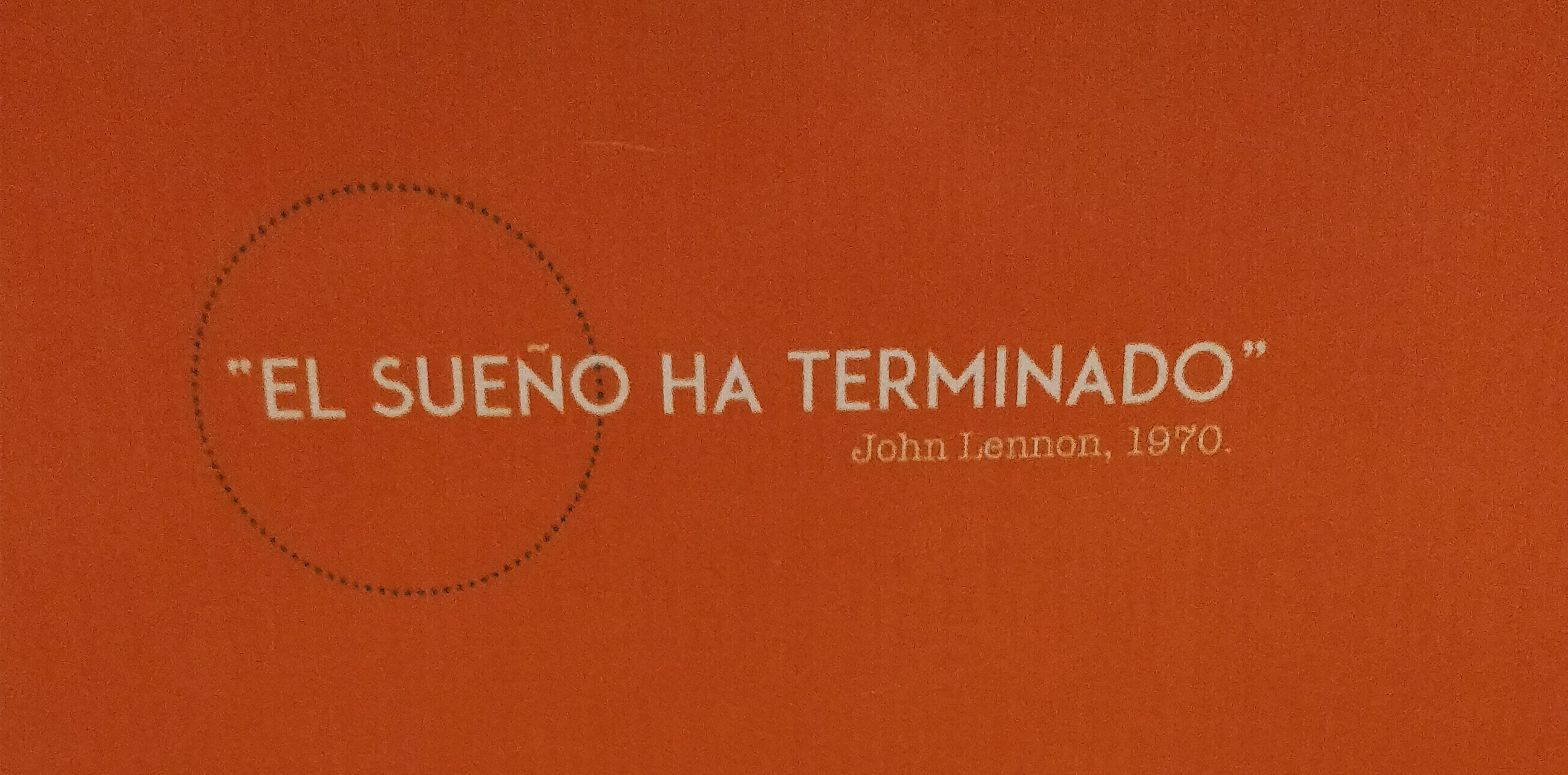
You do, eventually, come to that point on the timeline when things, as all good things do, come to an end.
Bummer.
But as I’m sure every other person on the planet knows, because I know this, the Beatles didn’t just vanish in 1970. They all had solo careers!
Visitors will find nooks dedicated to each man’s solo efforts and life decisions.
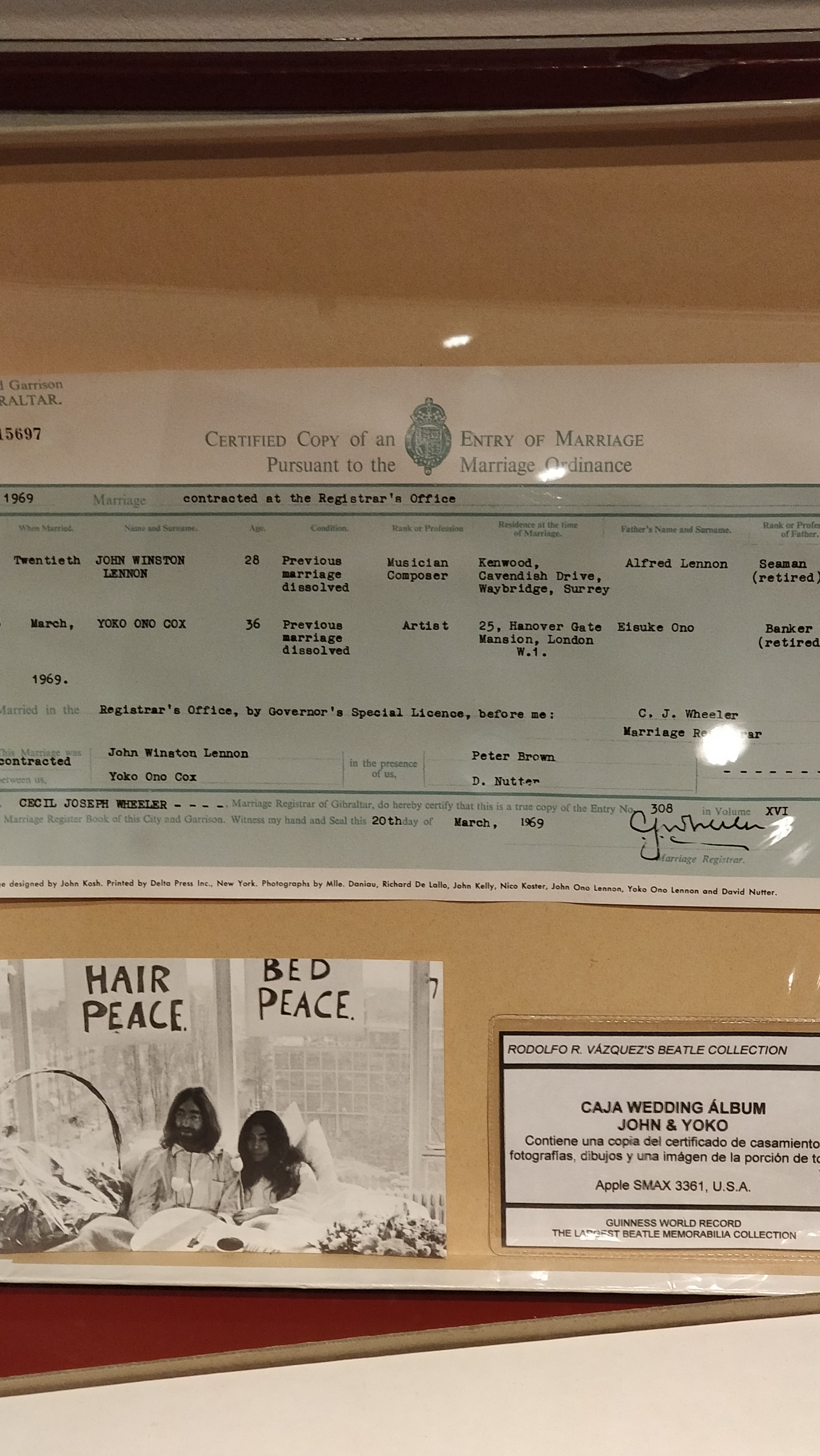
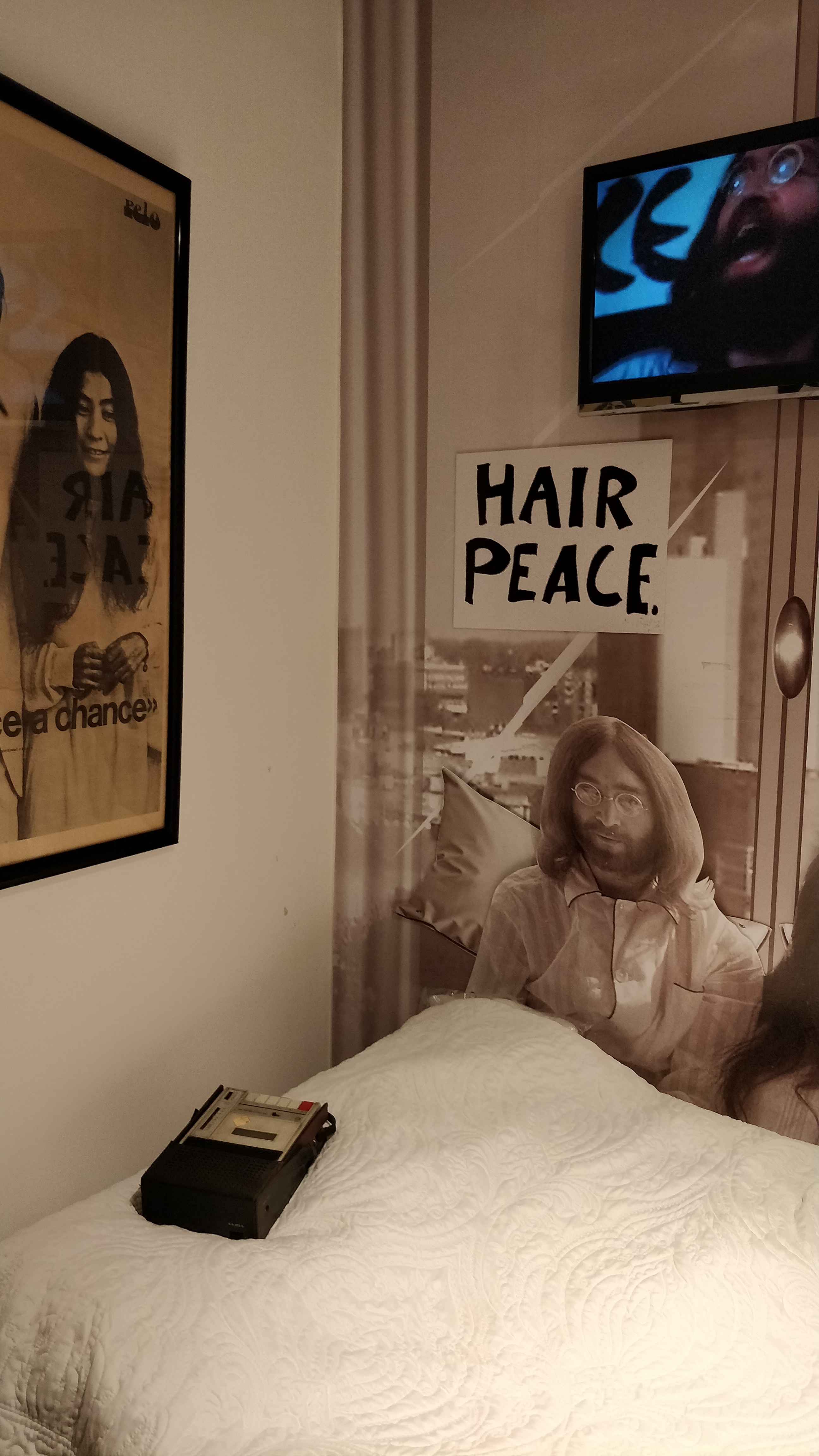
I heard John remarried.
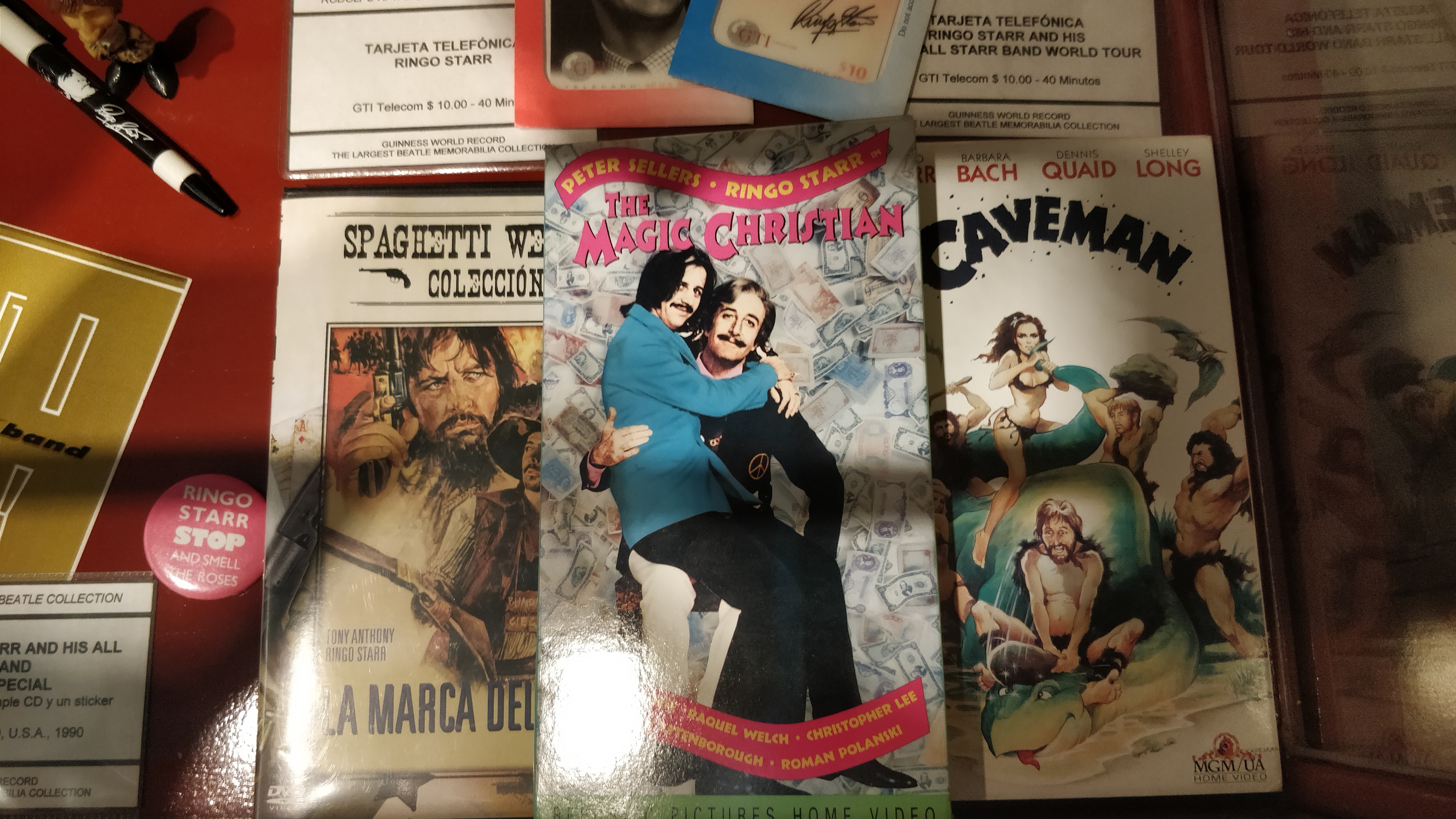
Ringo…well Ringo did some things I was entirely unaware of until five seconds before I took this photo.
After visiting the museum, you can walk across the courtyard to the cafe and have a typical and filling Argentine lunch for 250 pesos (about US$5.50).
If you’re a Beatles fan or just want to see a bunch of Beatles stuff, you’ll find The Cavern in the San Nicolás barrio at Av Corrientes 1660, inside the Paseo La Plaza, which is a actually a really lovely complex of shops, restaurants, performance spaces, and trees in the middle of a busy place. It’s close to the D line and B line of the subway, Congress, the Obelisk–a thousand ways to get there. The museum entries are 250 pesos (about US$5.50) for foreigners, 200 pesos for Argentines and residents, and free for kids 10 and under. Check the website for the hours.
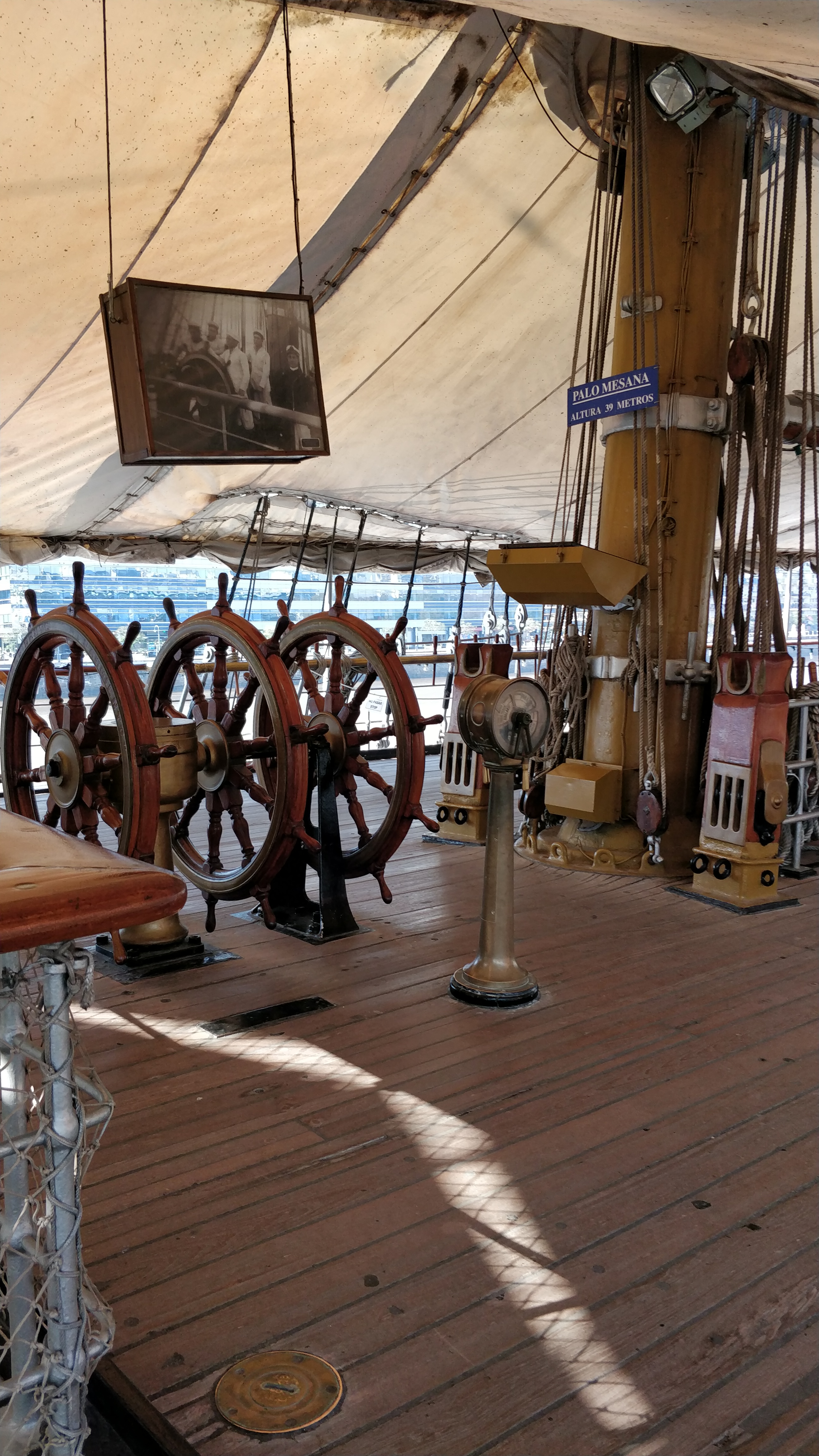
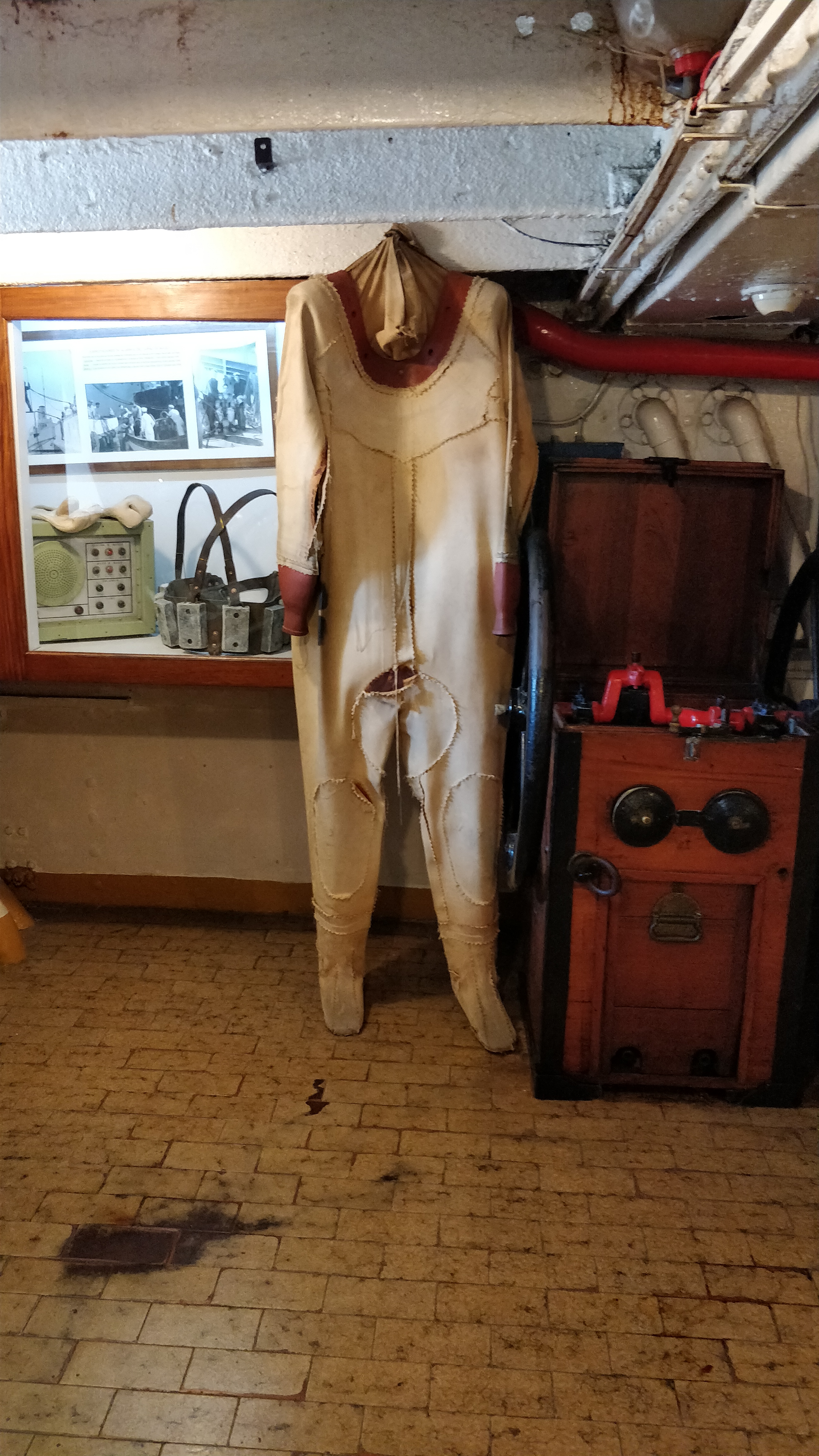
There are two museum ships in Puerto Madero: the ARA Uruguay and her more famous yet less interesting sister, the ARA Presidente Sarmiento. But just because she doesn’t have the very cool history of the Uruguay doesn’t mean the Presidente Sarmiento is boring.
I’d say that it might be unfair to compare them, but it’s impossible not to, as they are literally within sight of each other.
The Sarmiento was a training ship for the naval academy. It was English-built and launched in 1897. Retired in 1961, it’s been a museum since 1964.
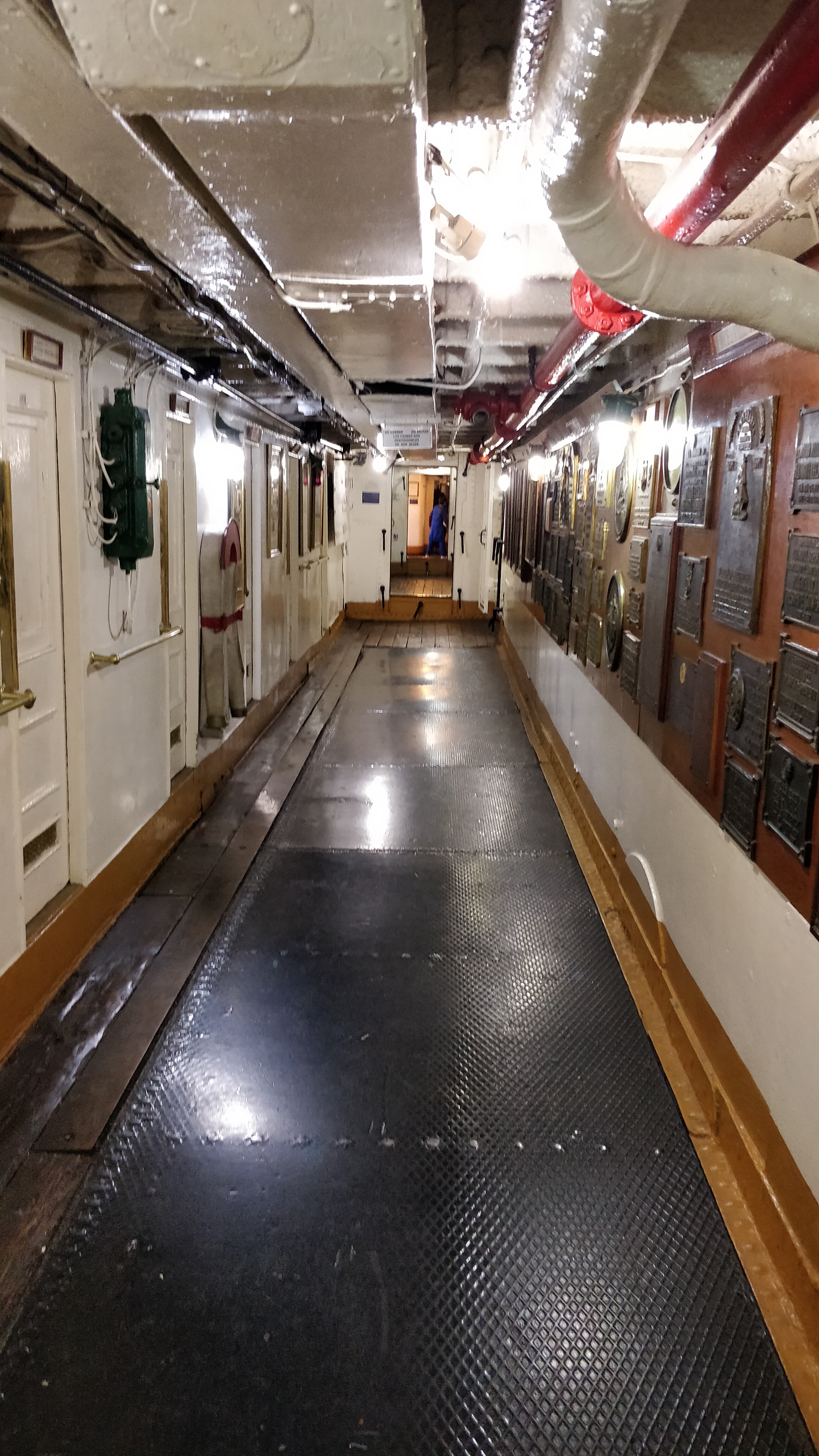
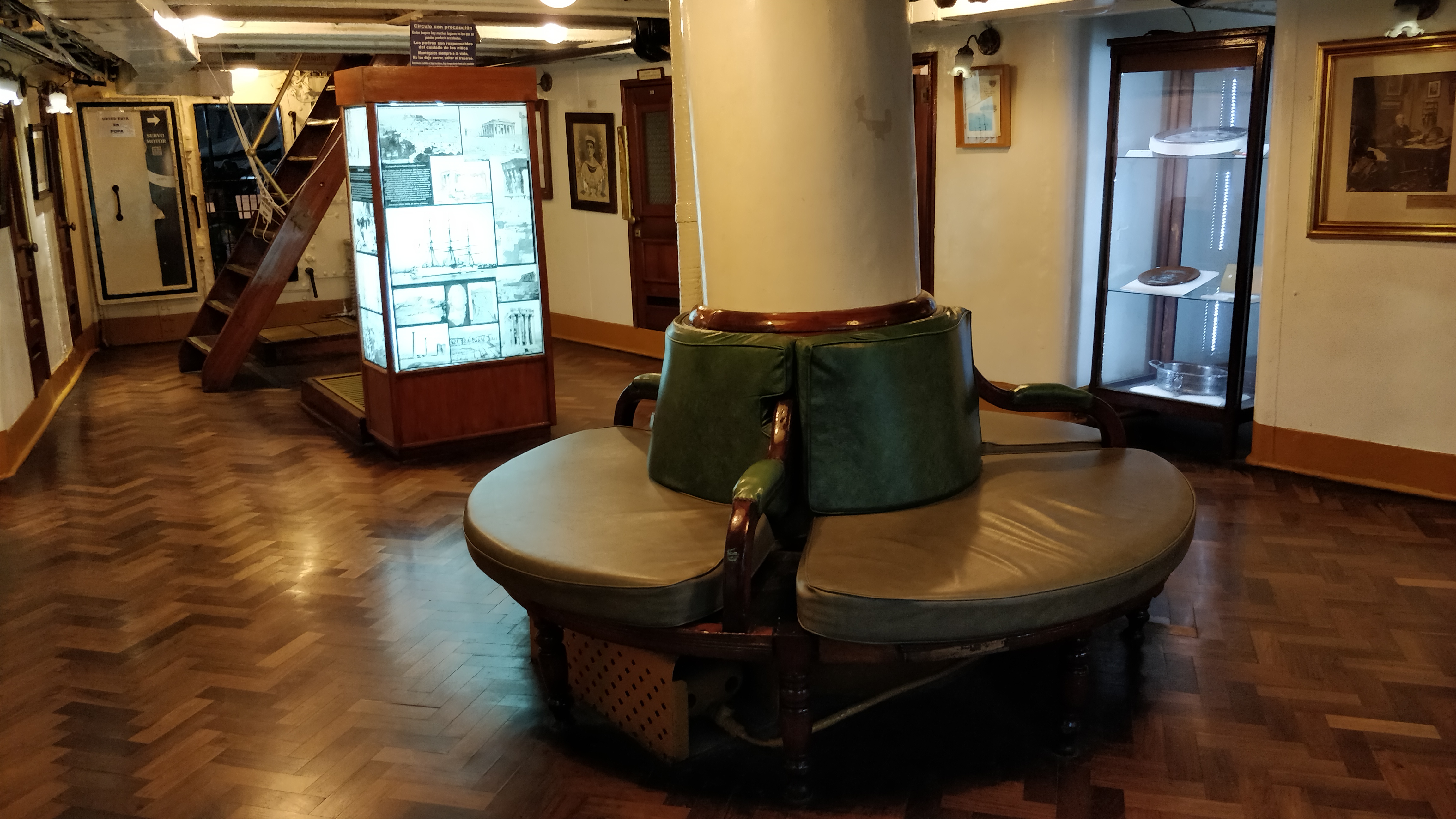
I love passageways on ships! This one has a lot of plaque bling.
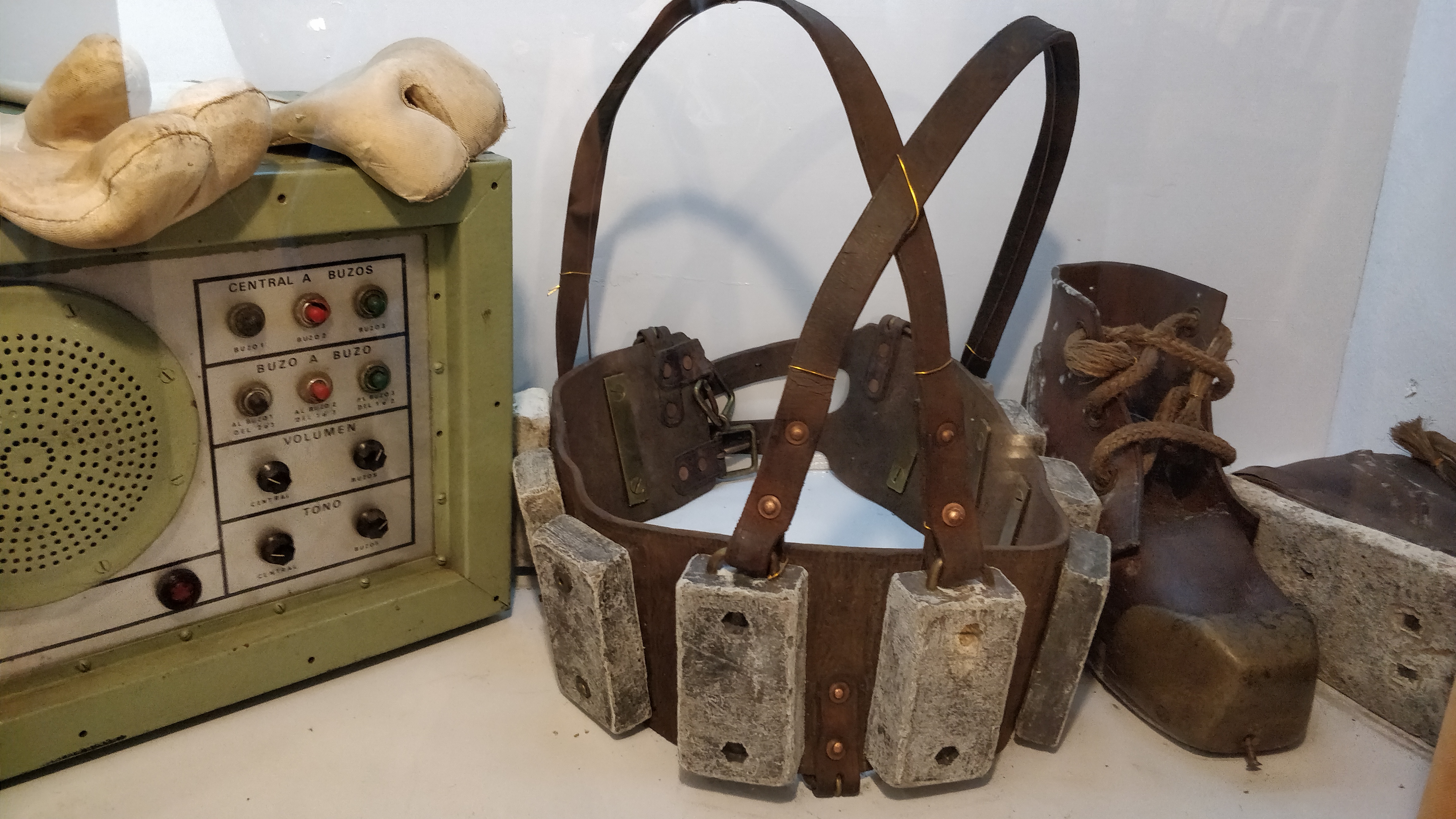
Lots of stuff to see from the glory days:
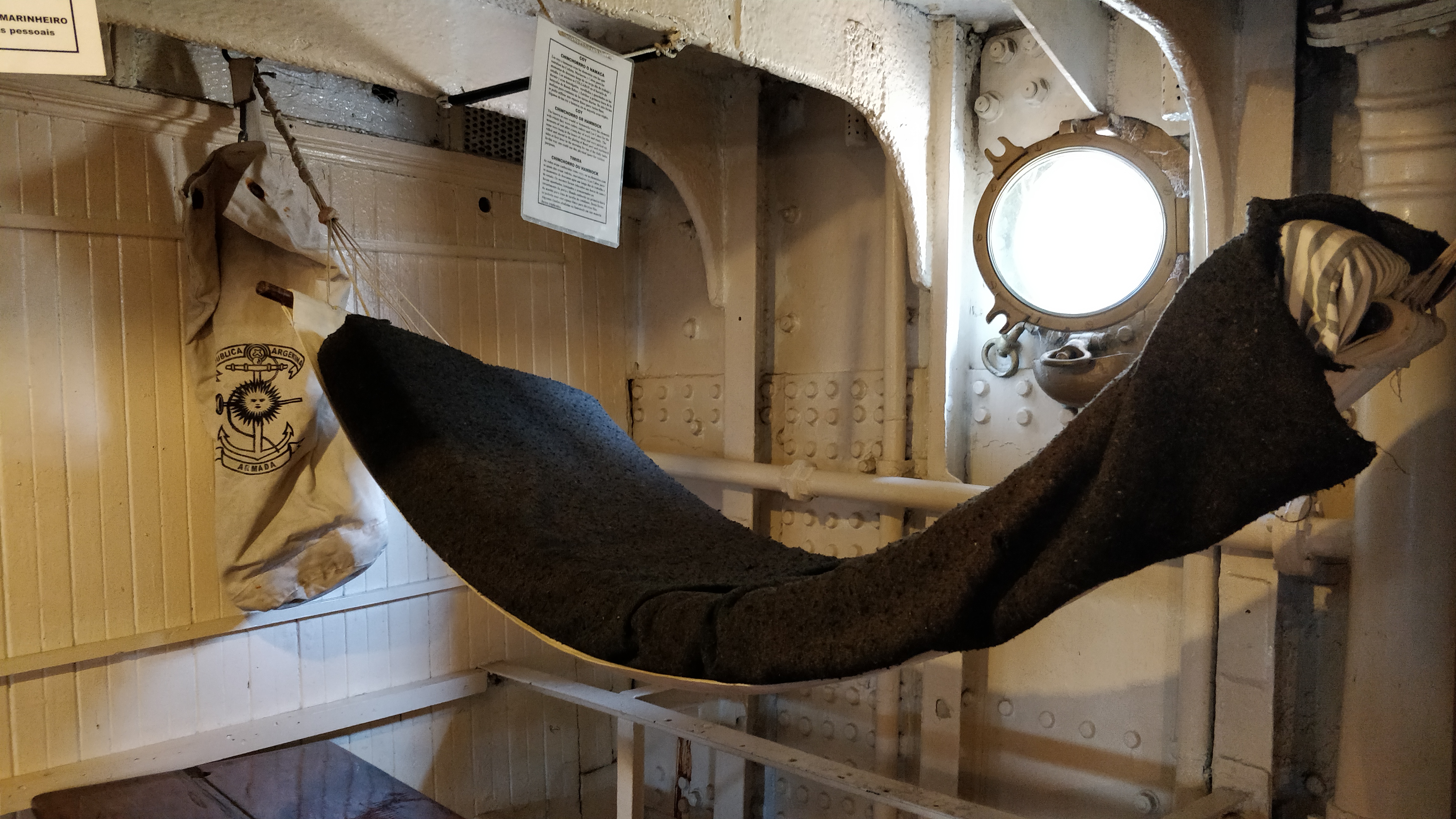
Training sailors got a mattress on their hammocks, so that’s cool.
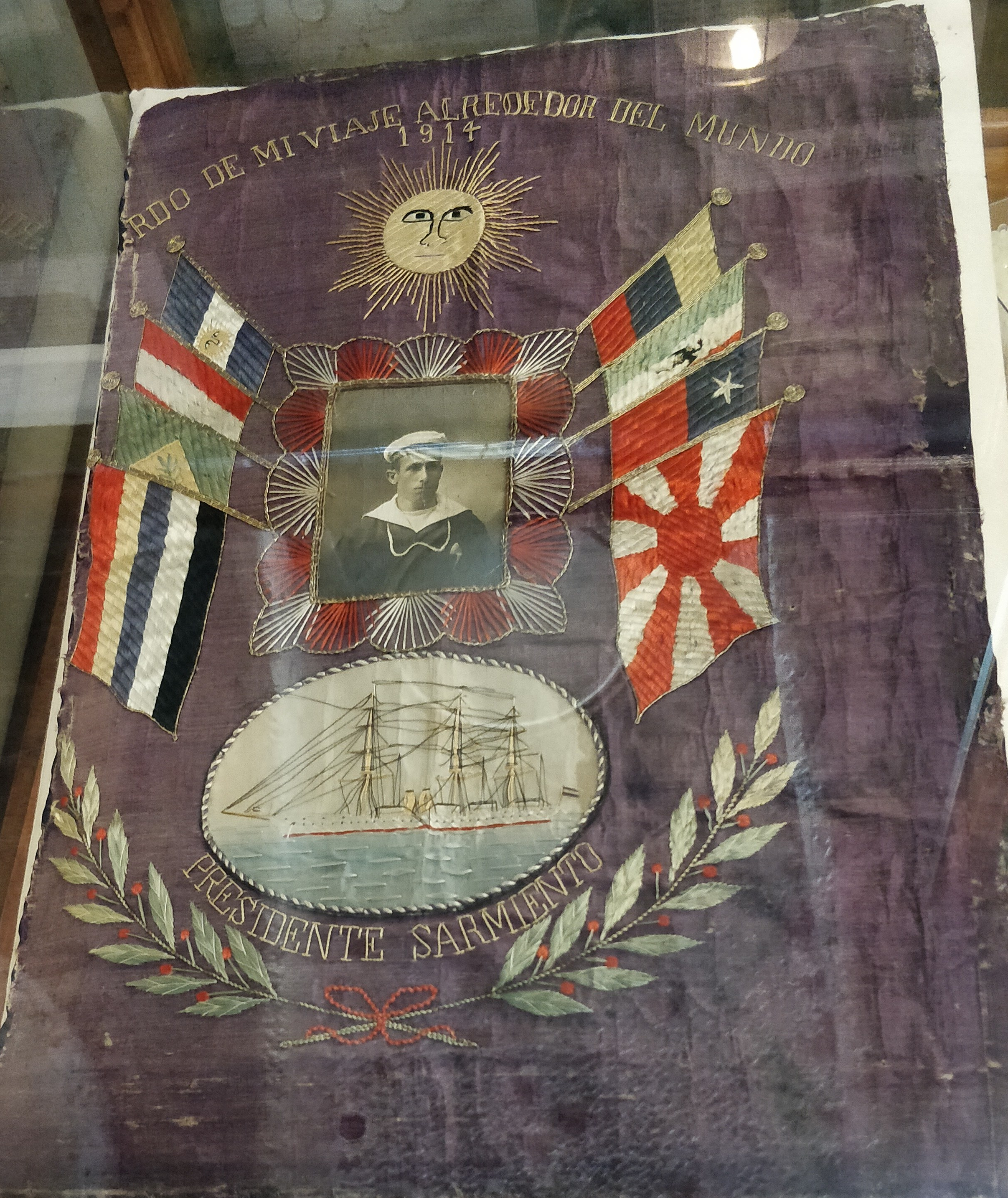
This guy had a really fancy pillow embroidered to commemorate his voyage around the world.
Arf.
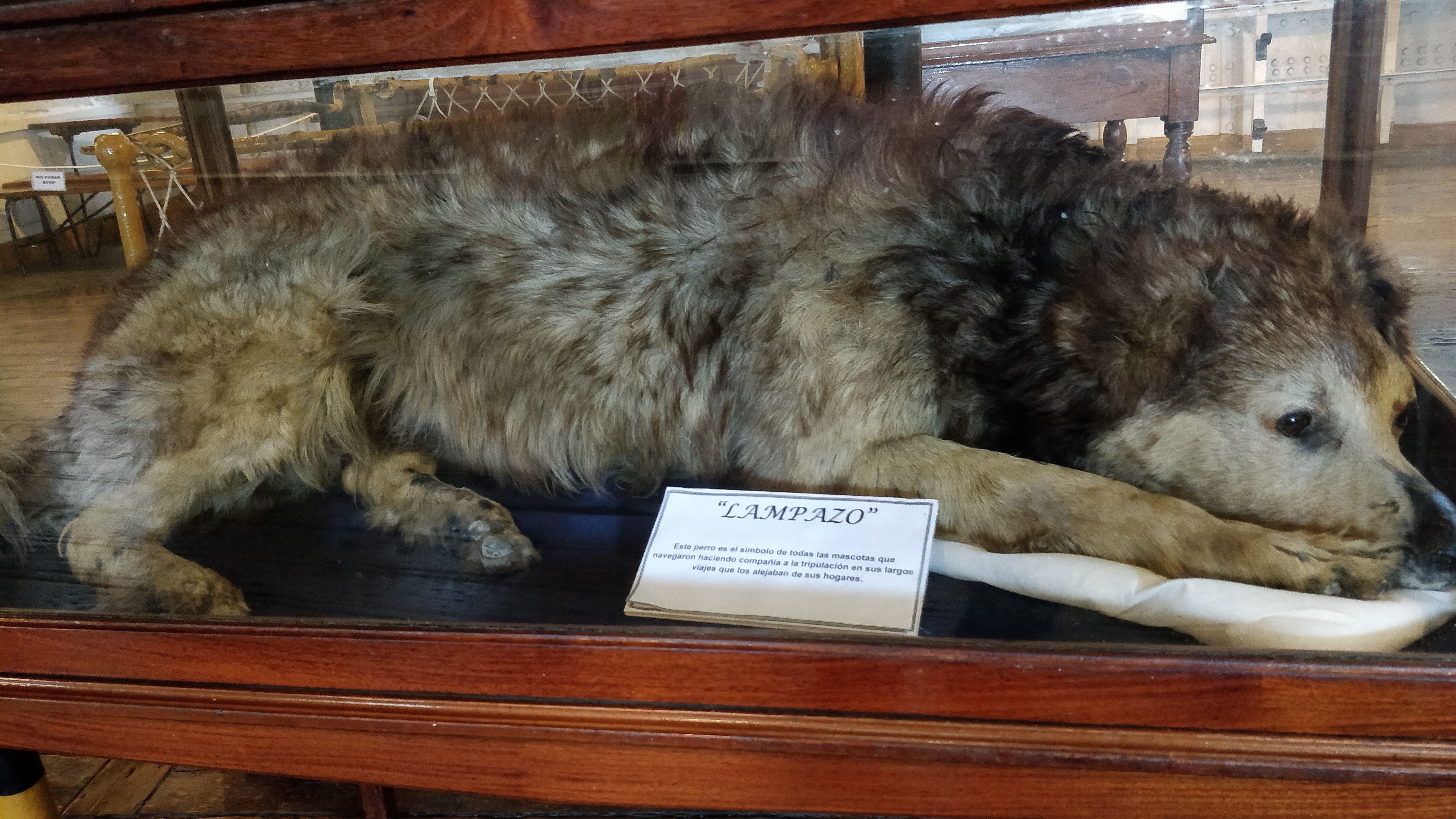
The sign wasn’t super clear on the origin of the taxidermied Lampazo here, but it seems like in 2014 they decided that he’s probably Buli, owned by Lt Calderon and ship’s pupper on the 37th voyage. I don’t know how he came to be taxidermied and under glass on the Sarmiento, and I didn’t see anything on board to shed light on that. Such pressing questions remain mysteries.
There’s no meal service.
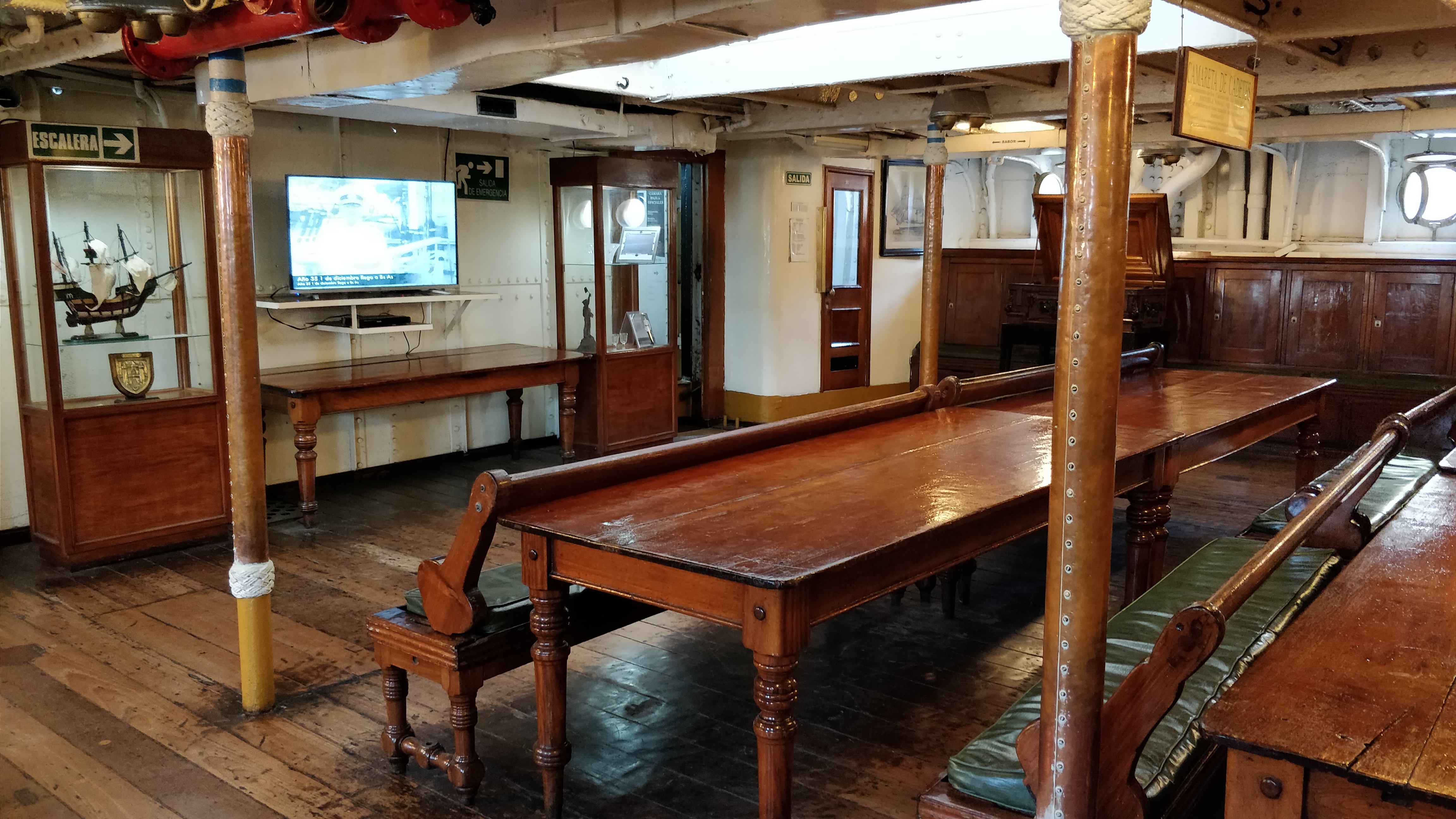
The crew dining room now has a video you can watch, and going on through it leads to the officers’ digs, which are nicer.
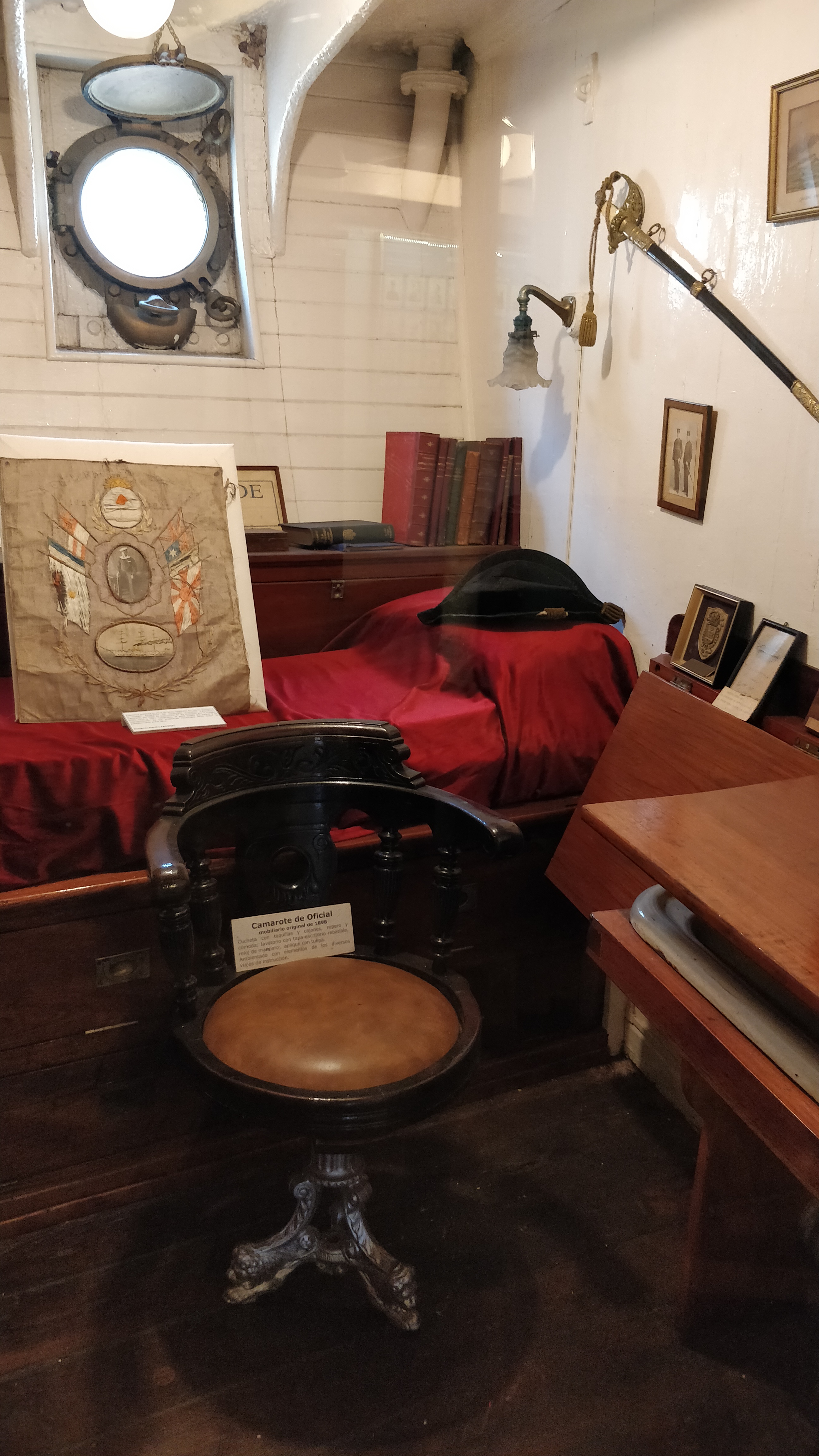
If you’re an officer, you mattress doesn’t swing.
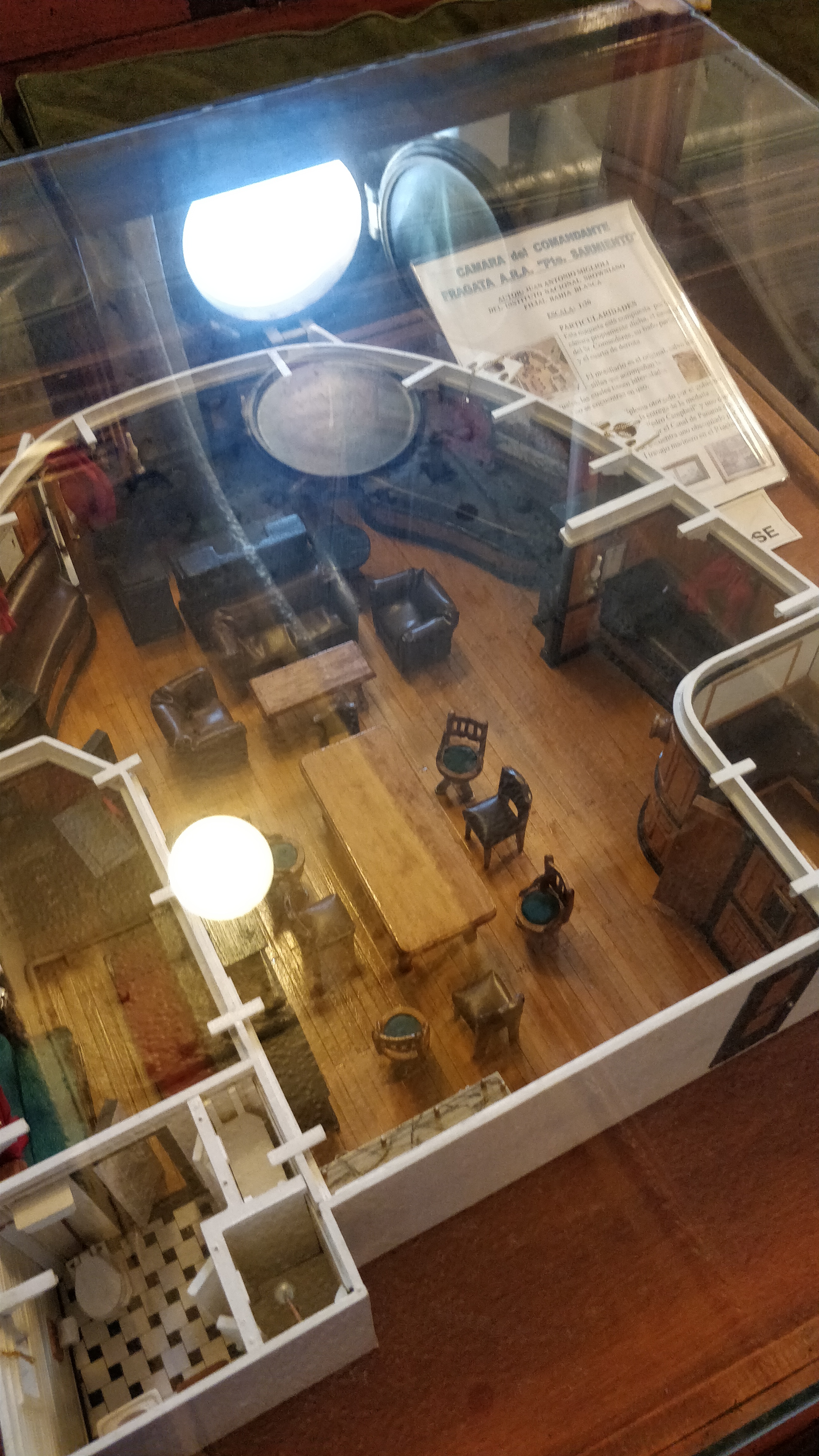
The Captain’s quarters are off-limits to visitors, presumably because the naval personnel currently assigned to the ship have taken over the best space for offices. But there’s a nice little model of it.
Command and comfort.
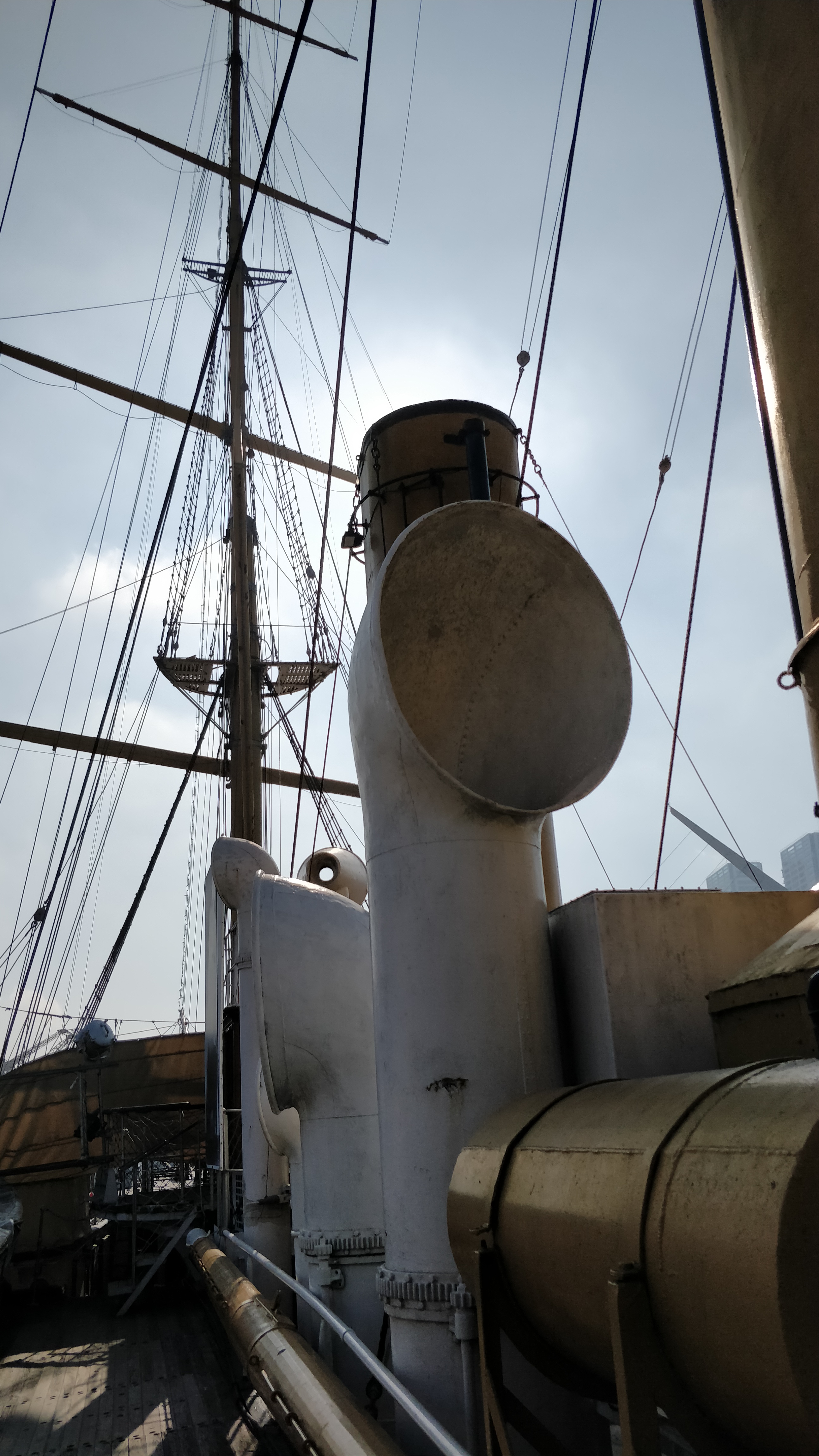
You can climb up on the decks, too, which afford a nice view of the Woman’s Bridge and other ship stuff.
I wasn’t entirely sure I was allowed up on this part, but two navy dudes saw me climbing down and didn’t yell at me, so I assume I was.
The Presidente Sarmiento is open seven days a week, 10 am to 7 pm. It’s 20 pesos to get on board (at the moment!) and located in Puerto Madero, kind of across the street and to the right from the Casa Rosada. It’s a very short walk along the river to the ARA Uruguay, so if you’re super into museum ships, you can hit them both.
You might recall I have visited a bank museum before, that of the Banco Ciudad. It was a very interesting look at the bank’s founding and role in society, and I was slow to add any other bank museums to my list when I found another one. I assumed it would be similar.
Banco Central is the national bank of Argentina, and its history is of course tied to the economic history of the country, which is, to put it generously, bonkers. The museum, officially known as the Museo Histórico y Numismático Héctor Carlos Janson, takes an entirely different course than that of Banco Ciudad and focuses on the history and development of currency. That history is also bonkers.
The first room of the museum looks briefly at the history of currency in South America.
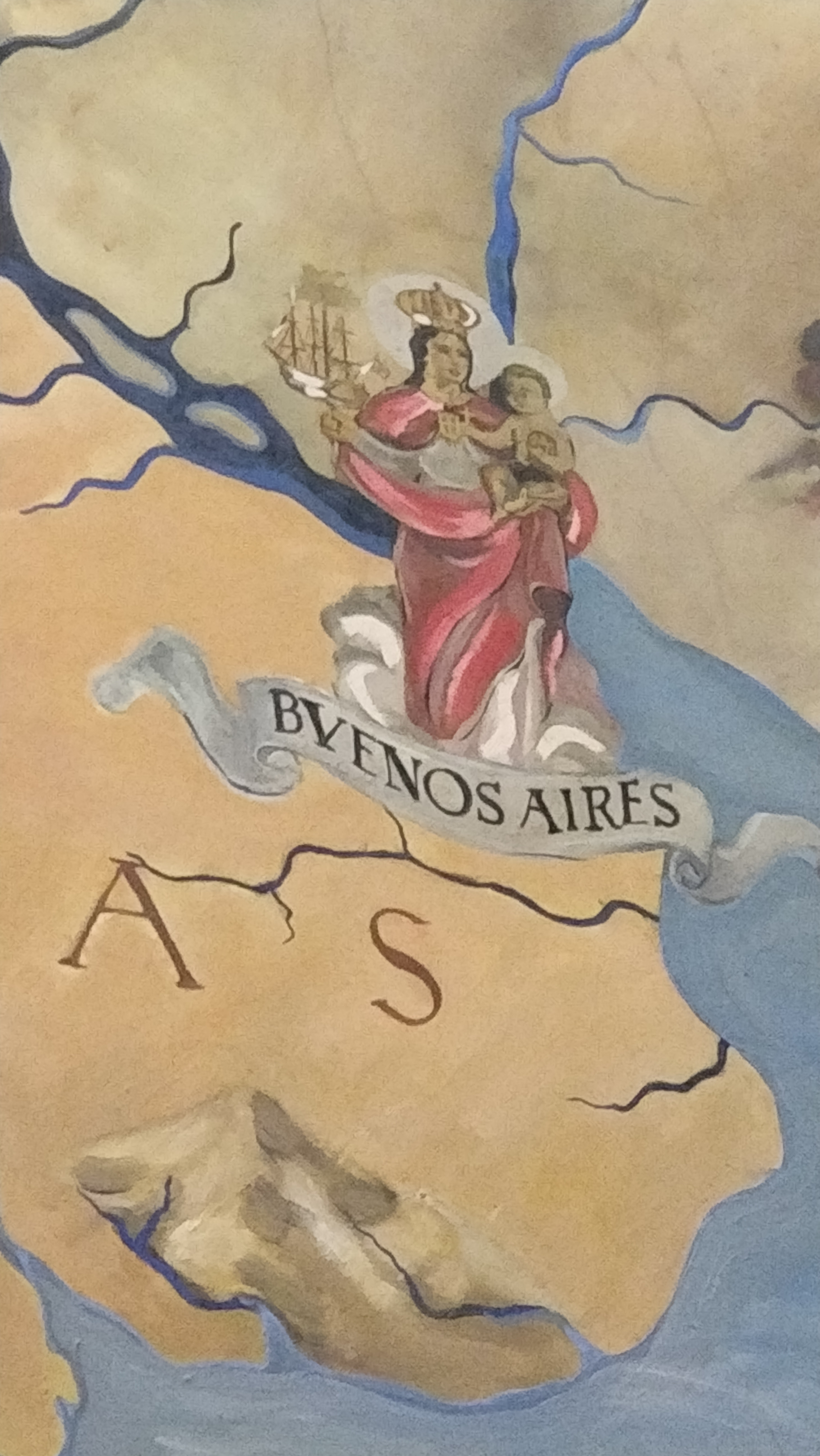
Oh, hey, is that a painting the recreates elements of a 17th century map? Probably pretty charming!
Is…is Buenos Aires Mary? Or Jesus? You know what, nevermind.
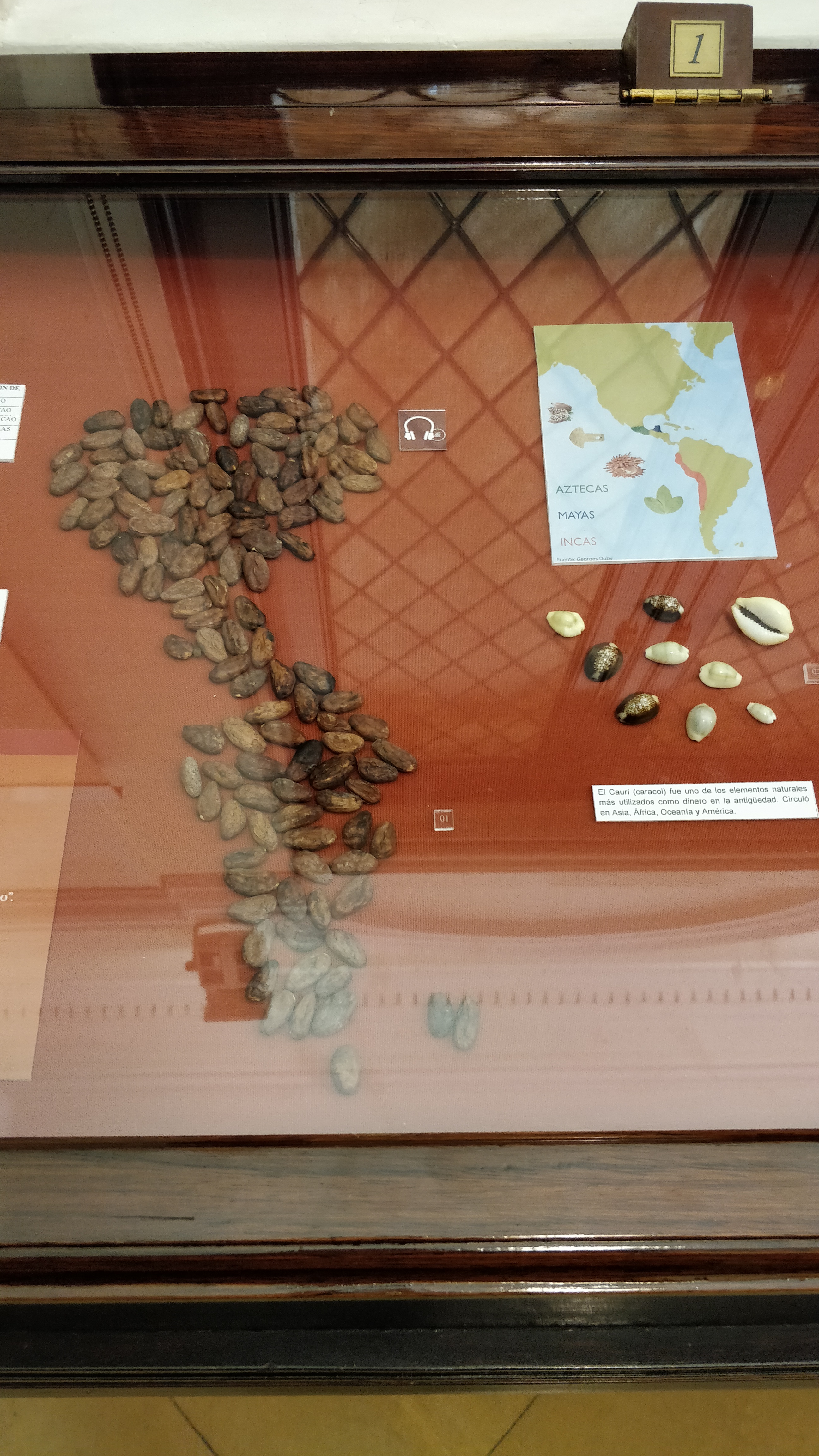
Anyway, back before Europeans arrived for their extended pillage-murder spree, frequently used currency items included cocoa beans, leaves, small metal pieces, and cowrie shells.
Only nobles had access to cocoa trees and the bean store houses. Yes, there were also counterfeit beans.
Next up are examples of colonial-era currency.
Obviously everything in this museum was in a glass case, so it’s a whole post of just super shitty photography.
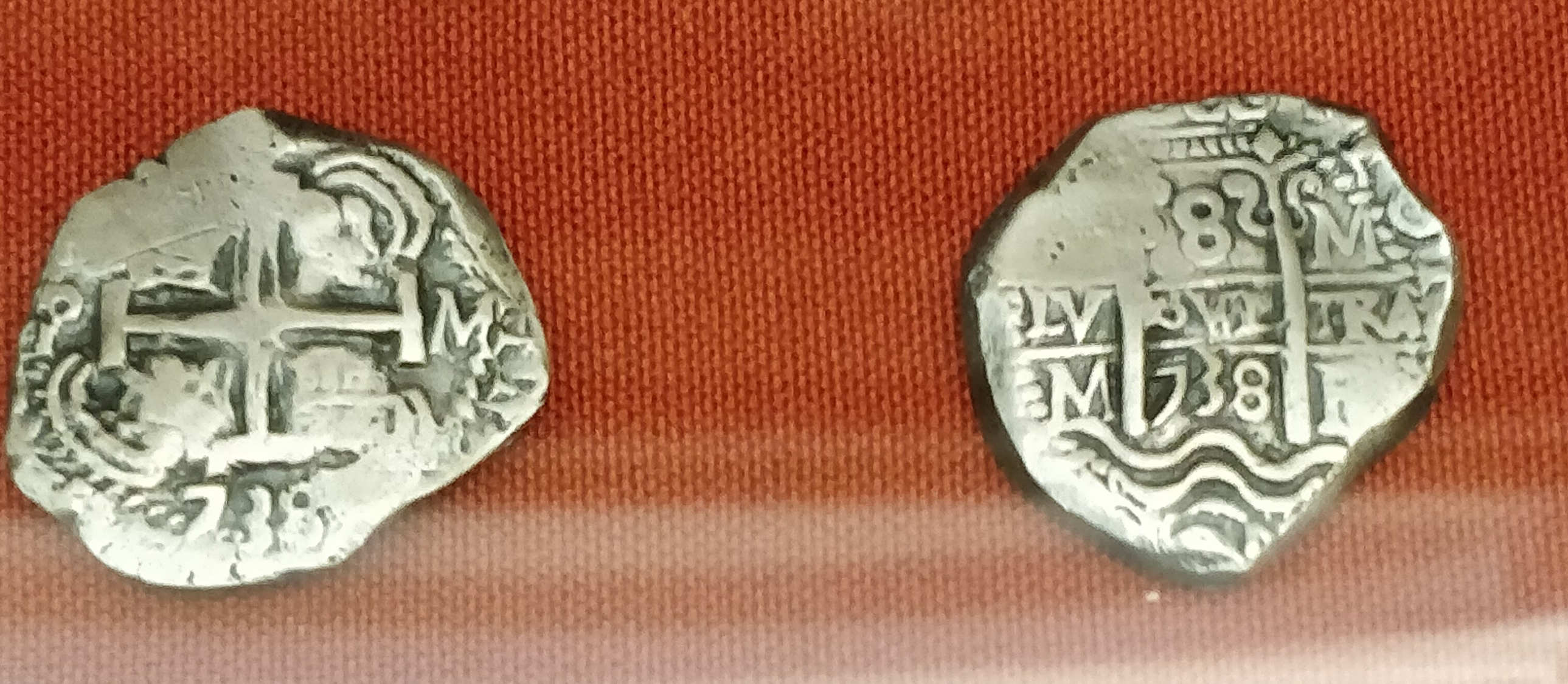
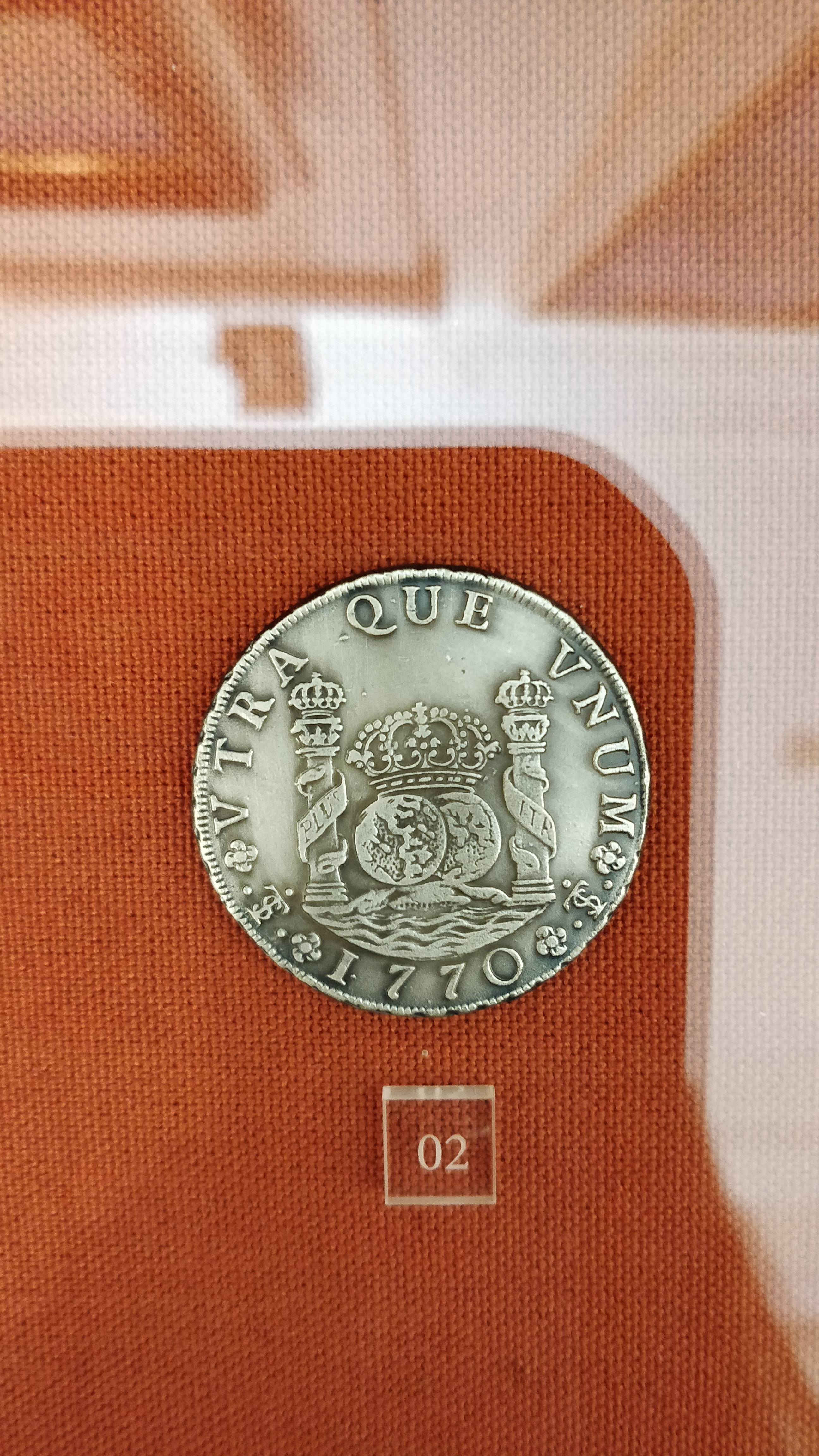
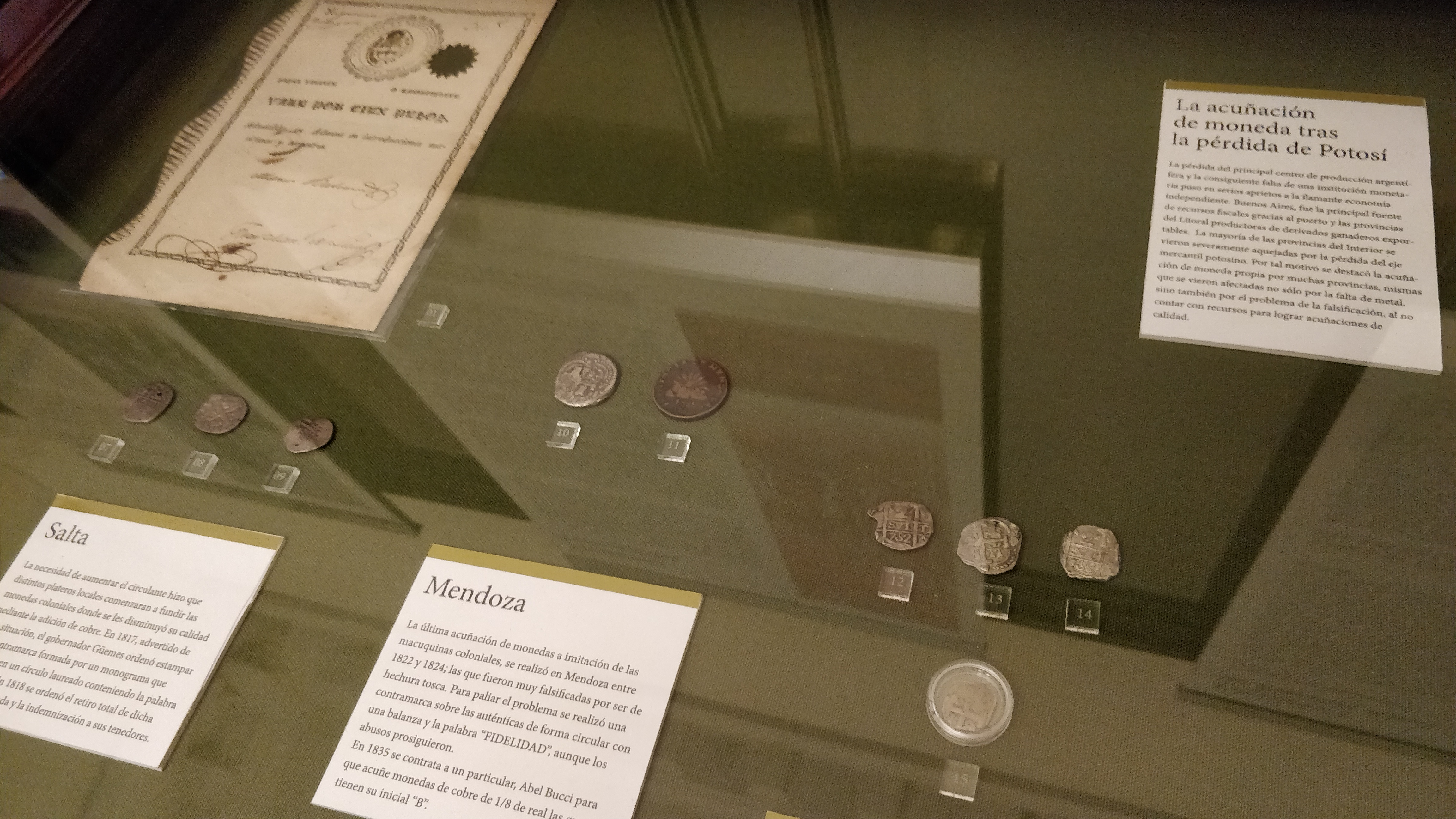
The colonial coins were minted in Potosí, in Bolivia, close to Cerro Rico, a huge silver mine that Spain spent years plundering. A stunning number of miners have died there over time, earning the place the name “the mountain that eats men,” because nothing in colonial history isn’t horrifically grim (mining the mountain continues to be horrifically grim).
VTRAQUE VNUM: “Both Are One” (Spain and the colonies), LOL.
Next up, the first currency minted following independence:
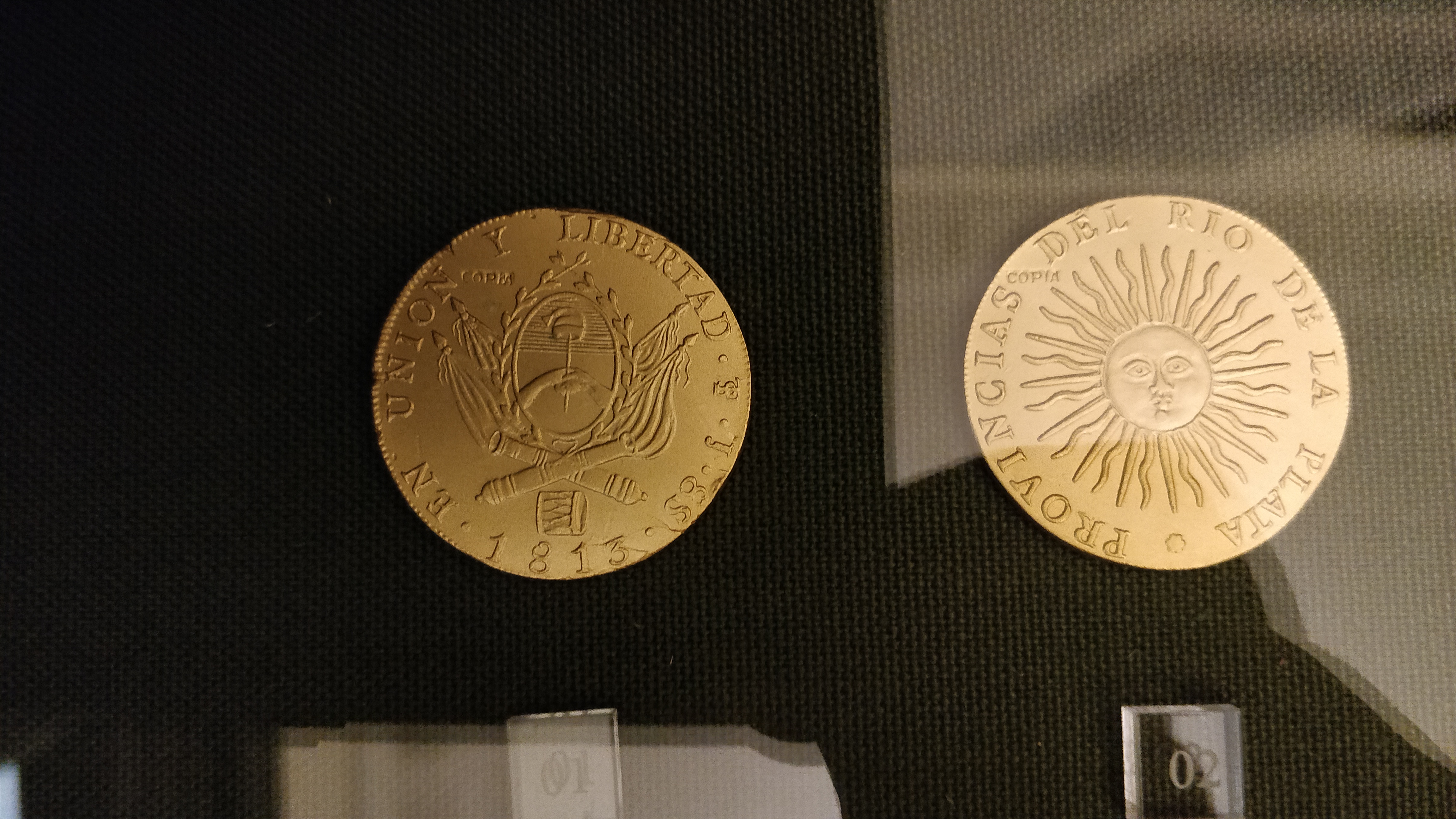
Money was minted by the provincial governments, which is why the gold coin above says “Provinces of the Rio de la Plata.” The Banco de las Provincias Unidas del Río de la Plata was created with the aim of unifying the nation’s printed currency, but the other provinces were not cool with this so it did not happen (had a lot to do with economic troubles from the war with Brazil). So, money from all over continued.
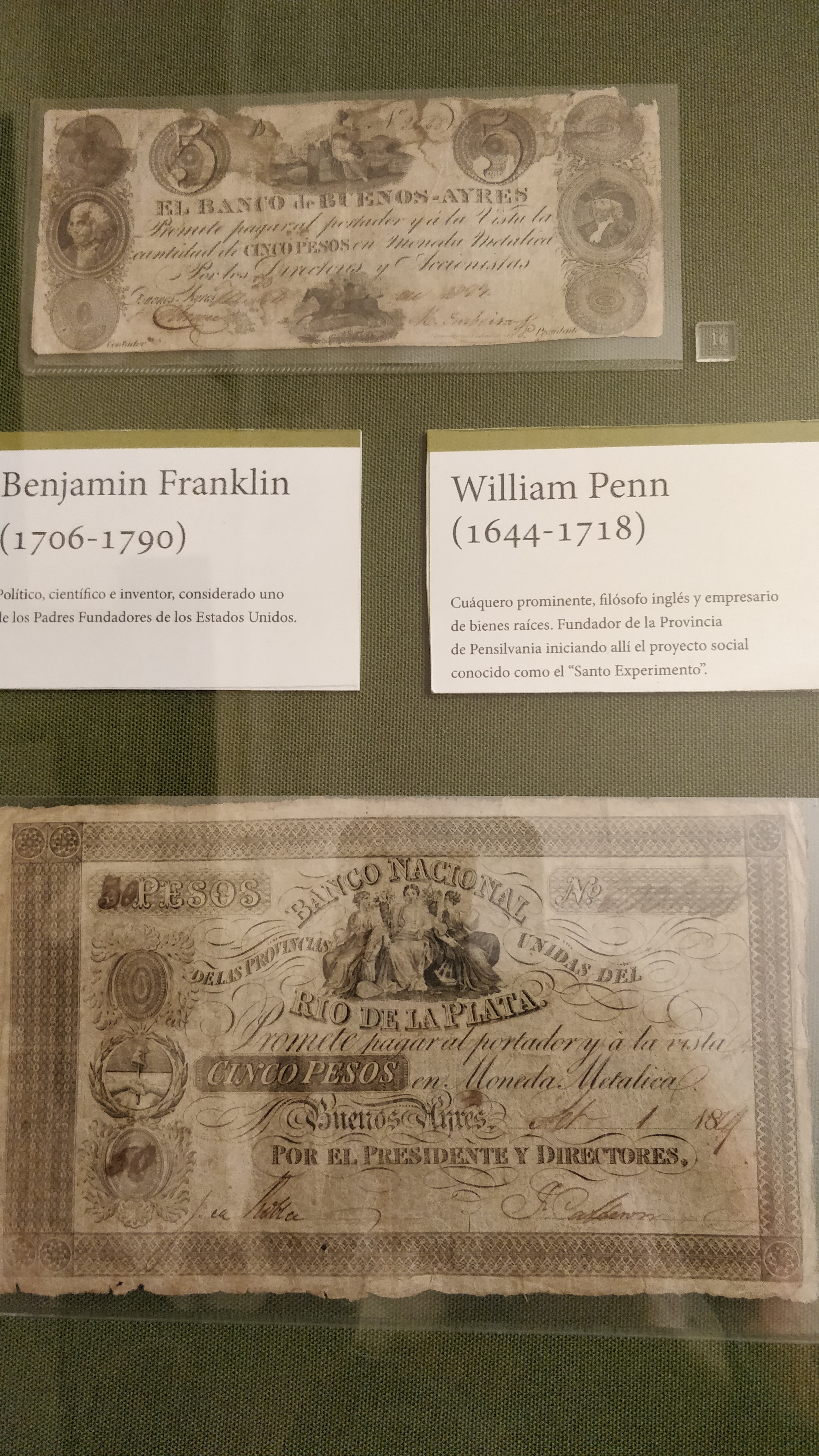
Notes were printed abroad, and included portraits of important figures of independence in the New World, such as Simón Bolivar, George Washington, Ben Franklin, and William Penn.
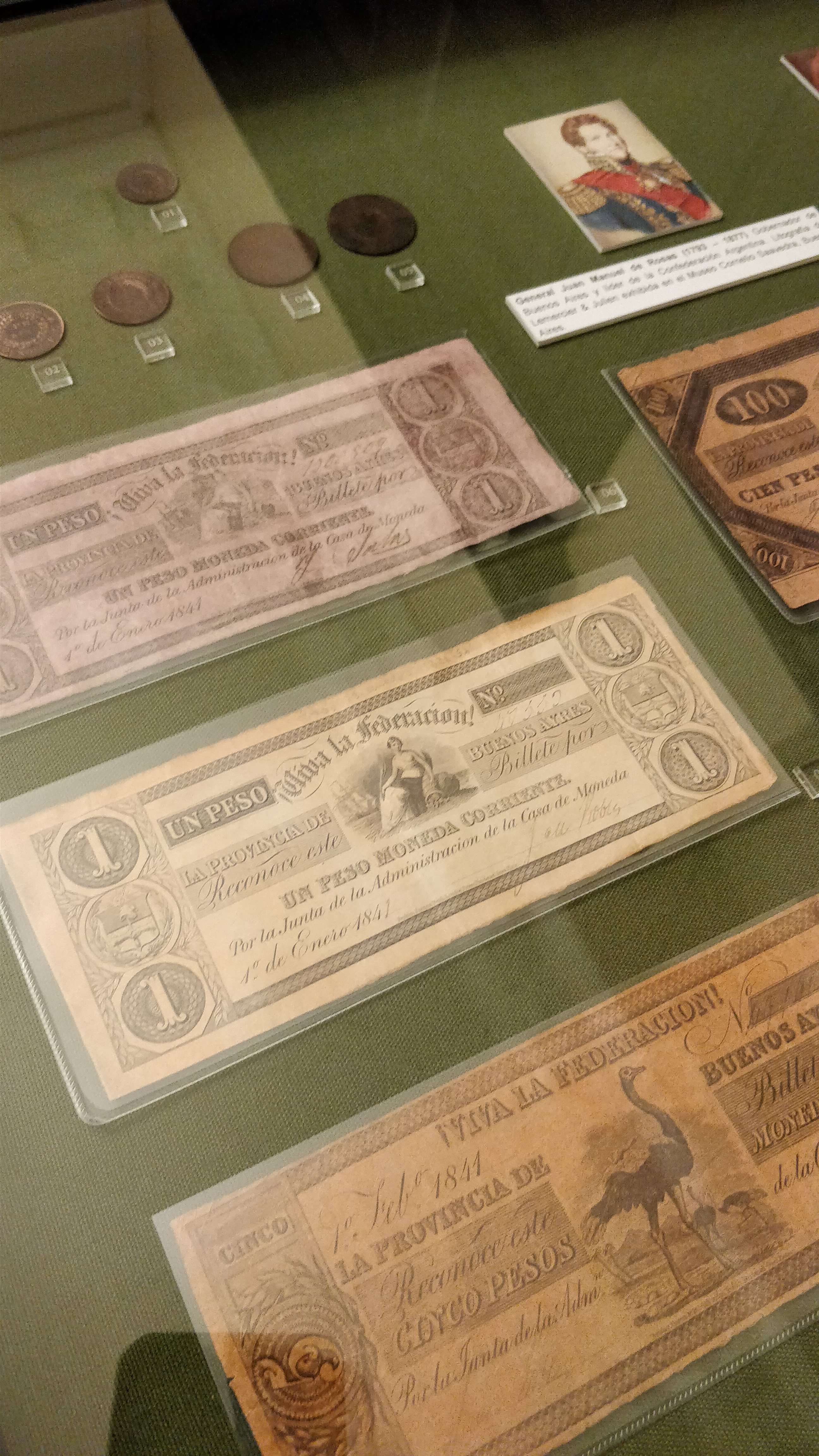
Things got weird, as things tend to do, during the civil war. General de Rosas, blurrily pictured below, dissolved the national bank and created an administration to issue paper money and coins. These were monedas corrientes. I am not nearly as well-versed in Argentine history as the museum’s informational panels assume, so I can’t much fill you in beyond that.
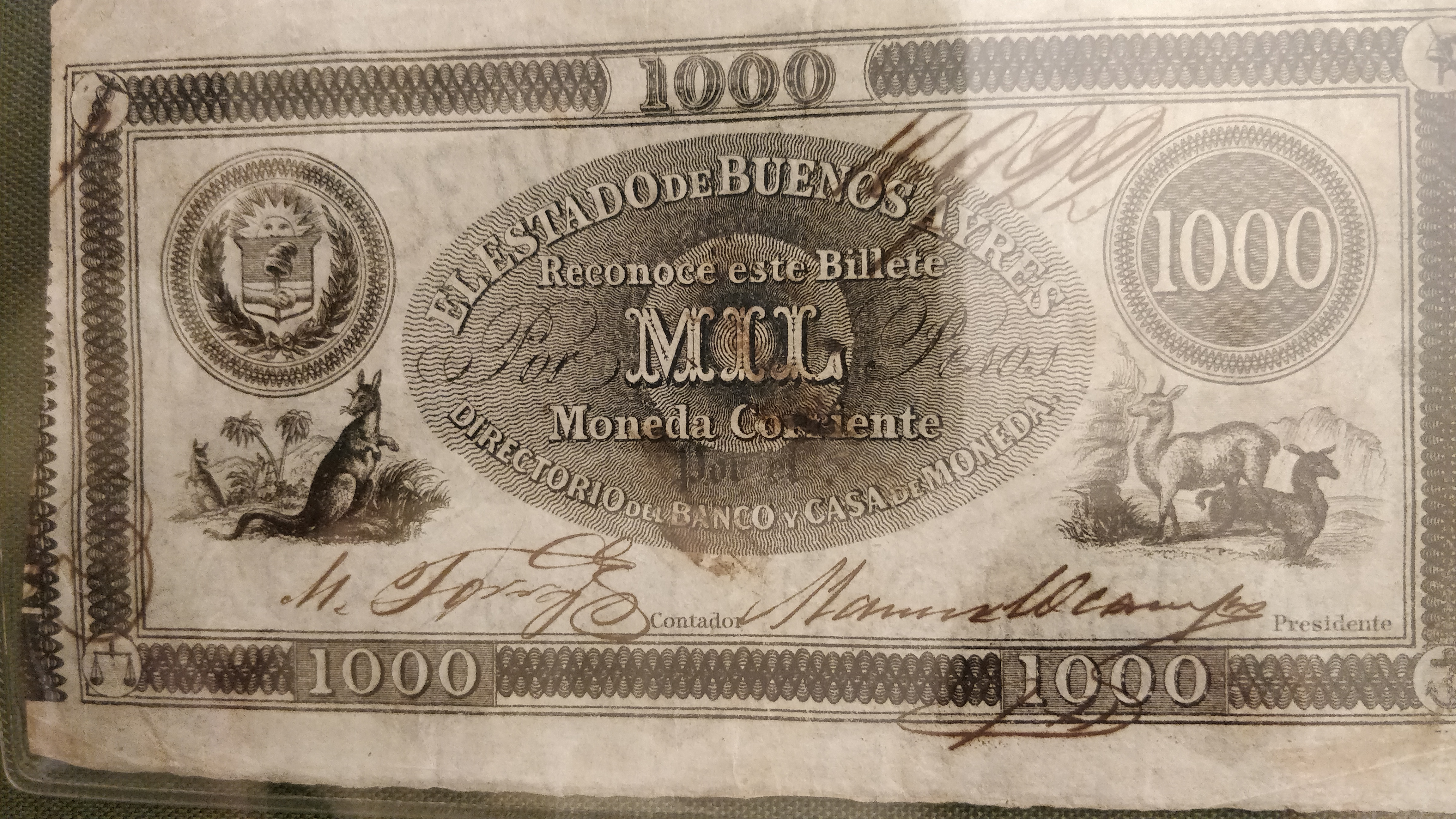
You will note, possibly, two things about the following bill: One, its domination is 1000, which means it was rapidly devaluating, generally not at all a good thing; and two, it’s got palm trees and kangaroos on it.
Unexpected!
The money was at the time printed in Buenos Aires, but the plates were engraved in London. The museum notes that printing houses at the time worked for several countries and contends that’s why the kangaroo and llama appear together on an Argentine banknote, but frankly I still have a lot of questions.
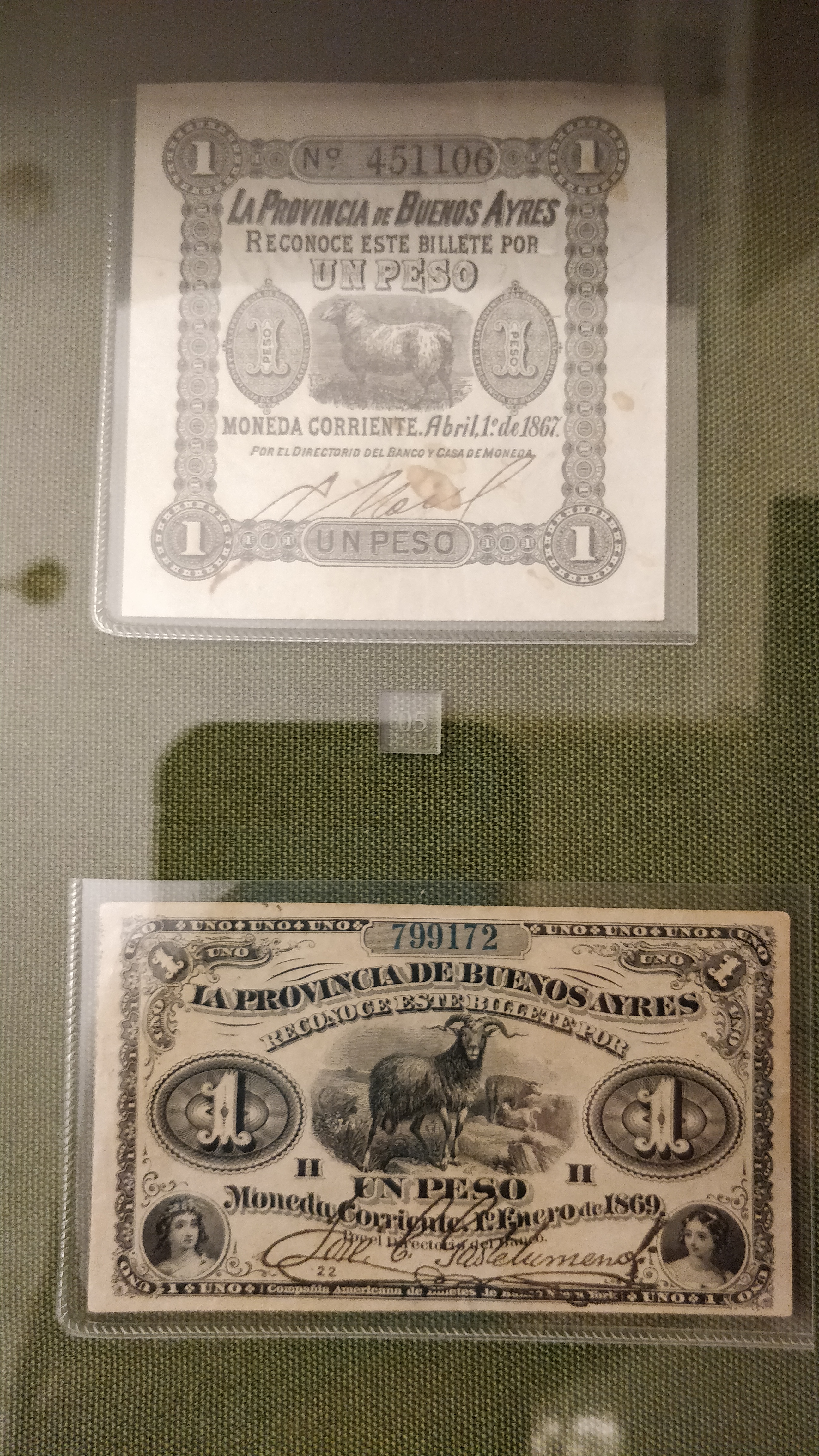
I also find the next phase of currency a wee bit confusing, something that can likely be attributed once again to my lack of knowledge of the nation’s history, but next you get “pesos fuertes” and “pesos corrientes.”
If there is any unifying lesson to this museum, it’s that the Argentine economy has never been all that stable.
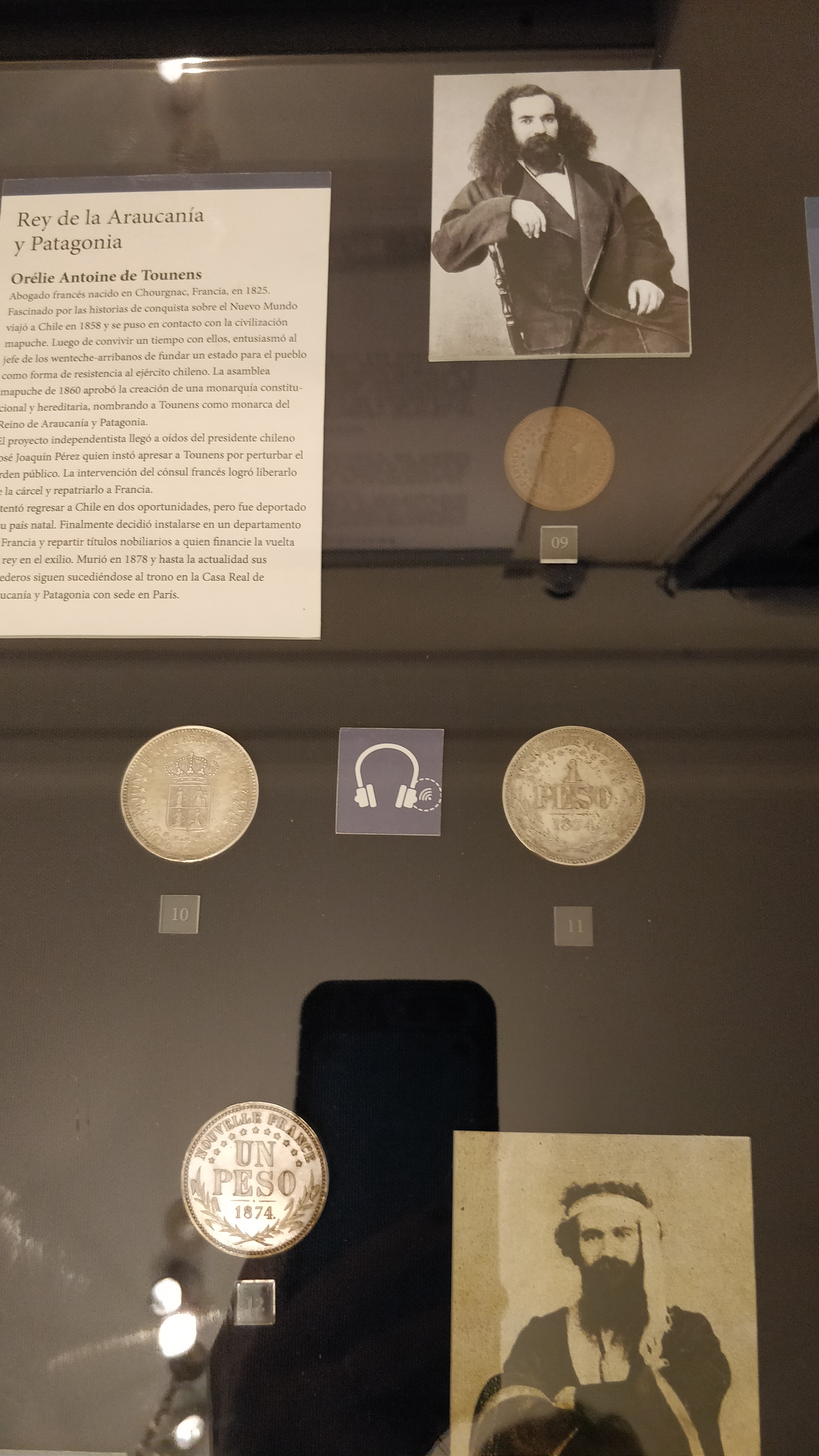
Here we take a small detour into a historical oddity. A French lawyer showed up in the west of the country and in 1860 declared himself “King of the Araucania and Patagonia.” He then created a constitution, a flag, and a national anthem, and started minting money.
Orélie-Antoine de Tounens, looking a lot like a dude that would just go do something like that.
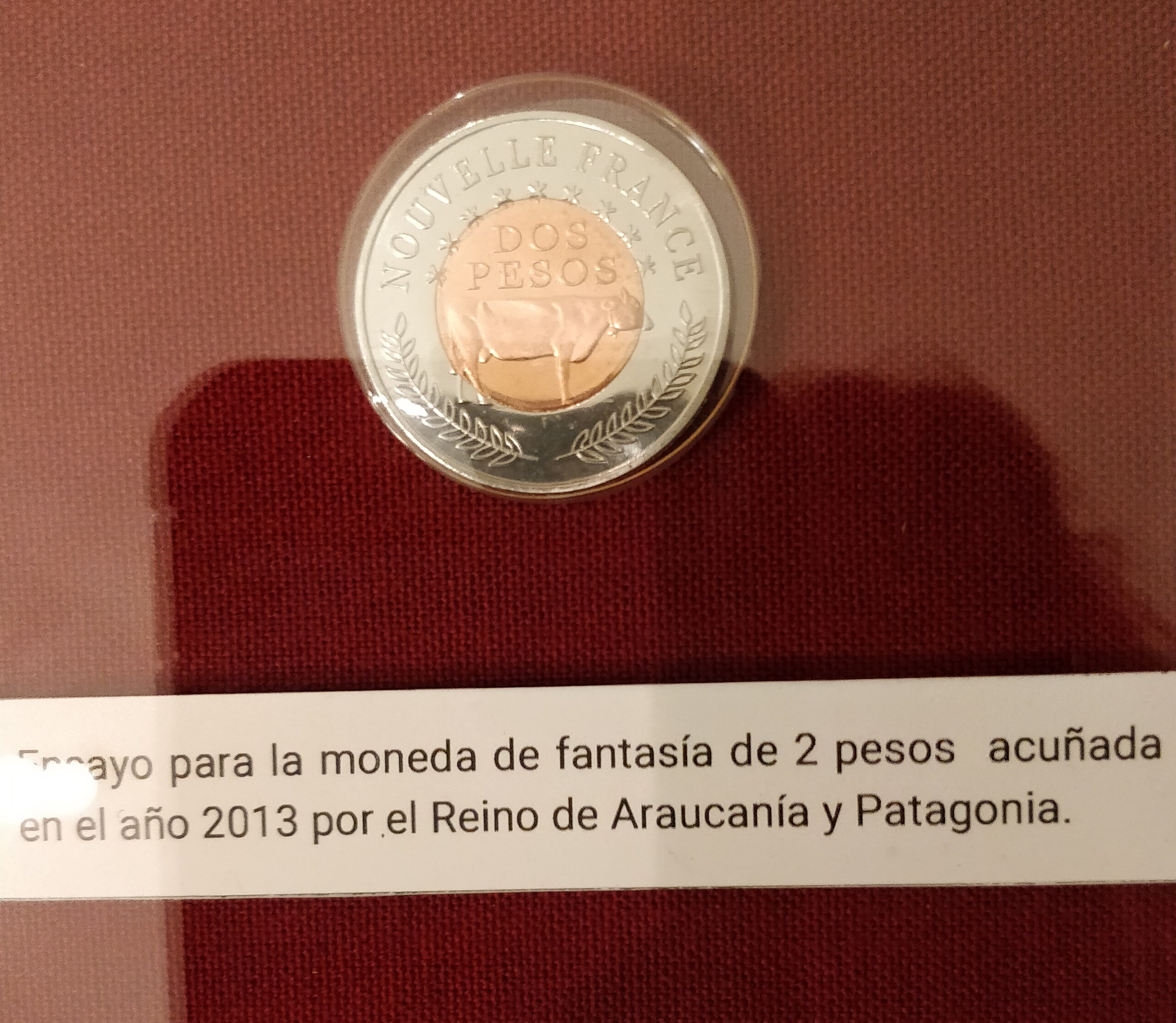
He was arrested, declared insane, and deported, but he apparently took his claim very seriously and tried, for the rest of his life and without success, to really make it stick. He died childless, but people have claimed to be his heirs for awhile now, and they actually still mint (technically worthless) coins, I guess for the sole purpose of having them displayed at the Central Bank museum.
Cool?
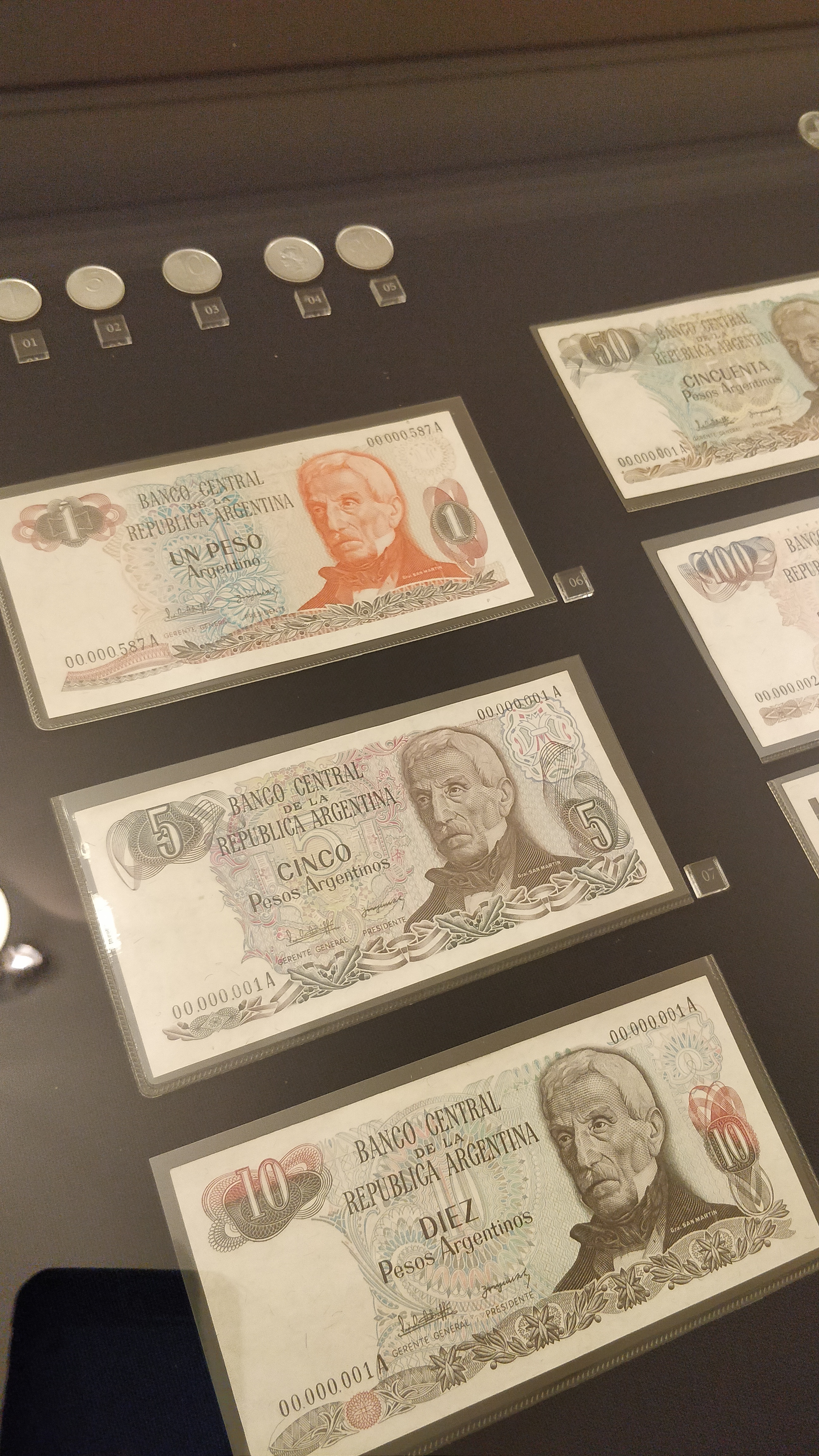
Now, I’m going to hop forward about 100 years, skipping a major financial crisis, to get to the financial crises of recent history. There was a substantial devaluation during the military dictatorship, which attempted to stabilize things, but, spoiler alert, did not.
These are from the last couple years of the dictatorship, the early 80s.
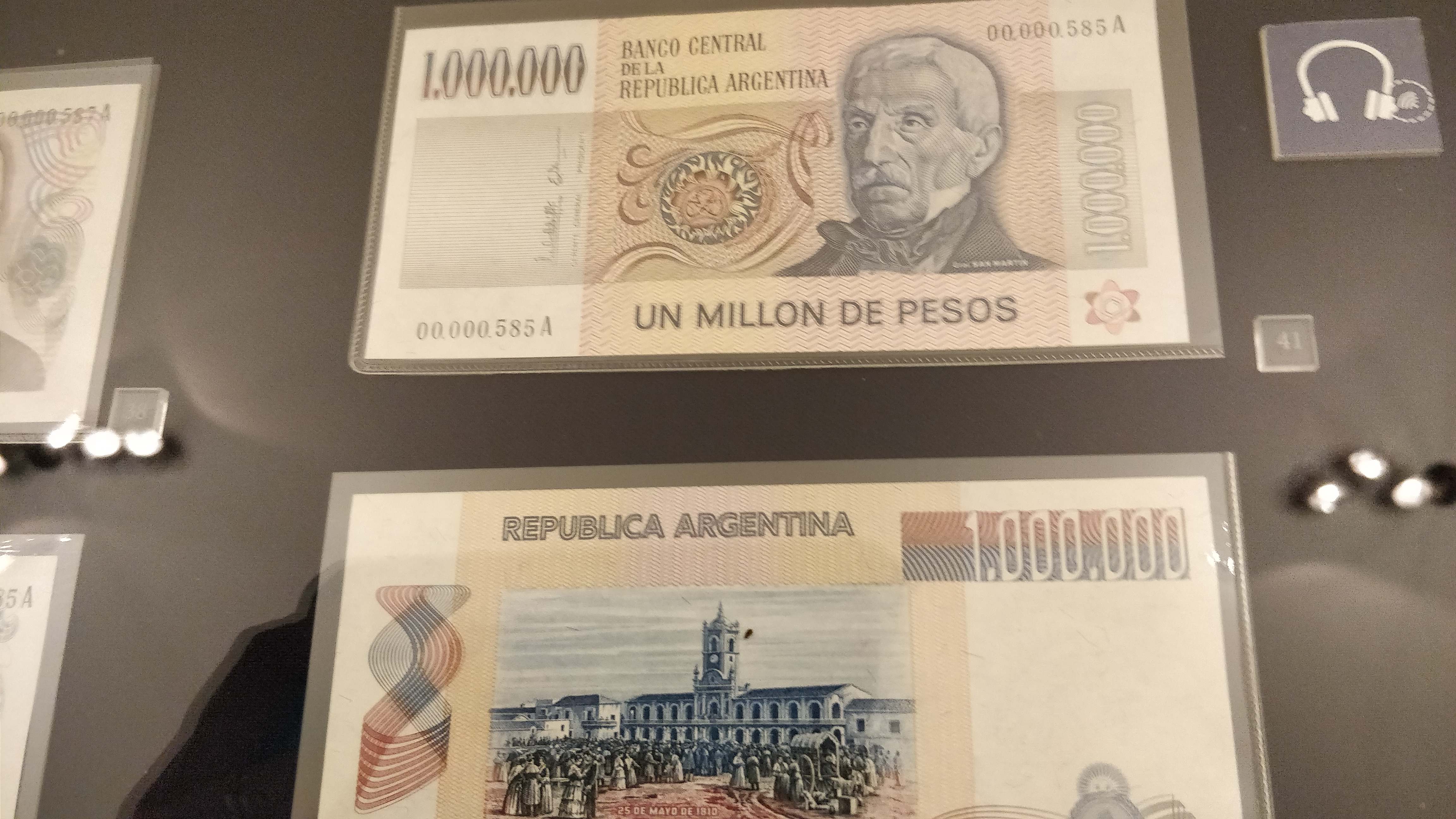
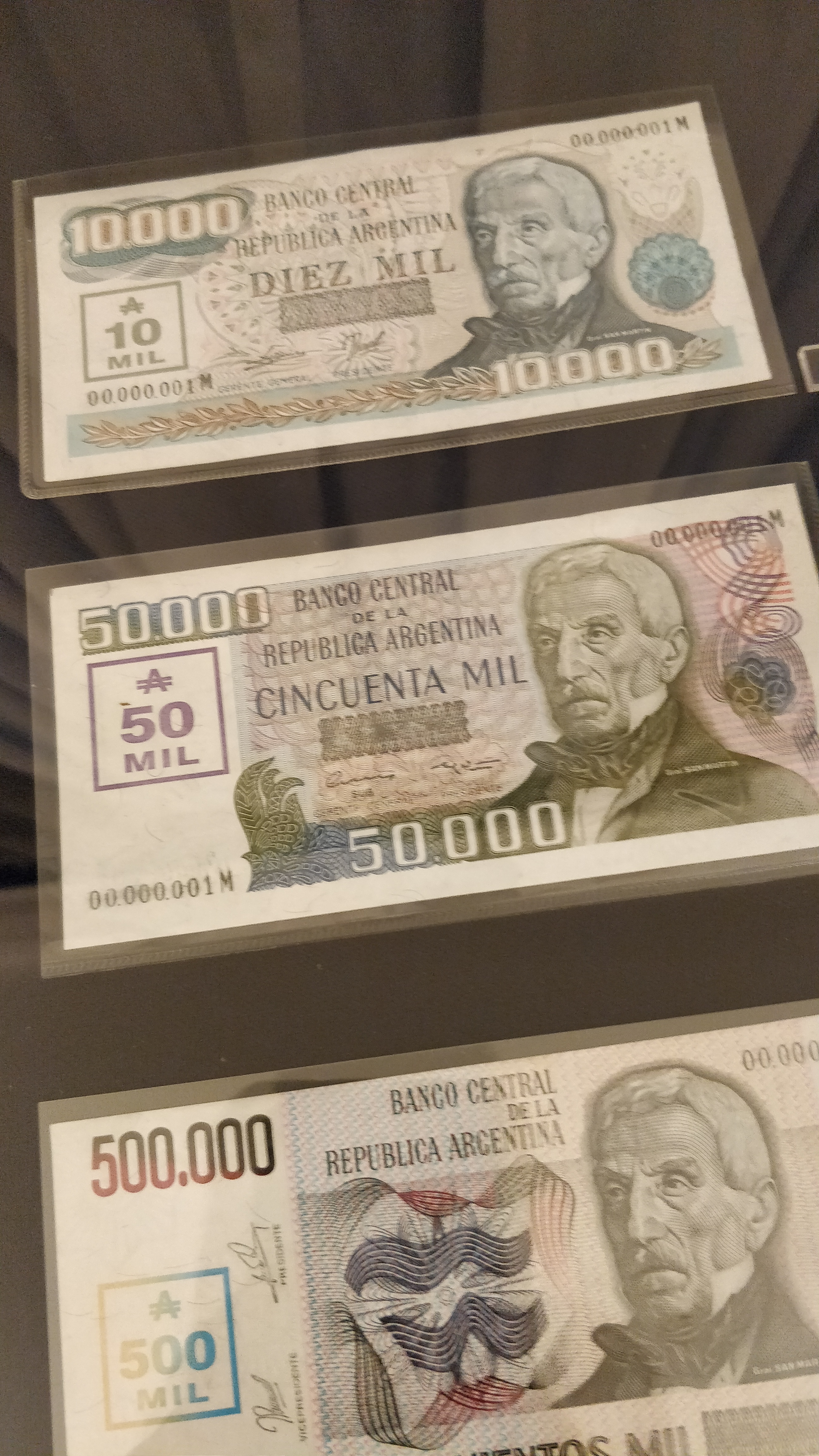
The military dictatorship fell and democracy was restored in 1983, but there was still a huuuuge problem in the form of a massive external debt, currency devaluation, and serious inflation. The new government started whacking off zeroes, so that 10000 old pesos would equal one new peso.
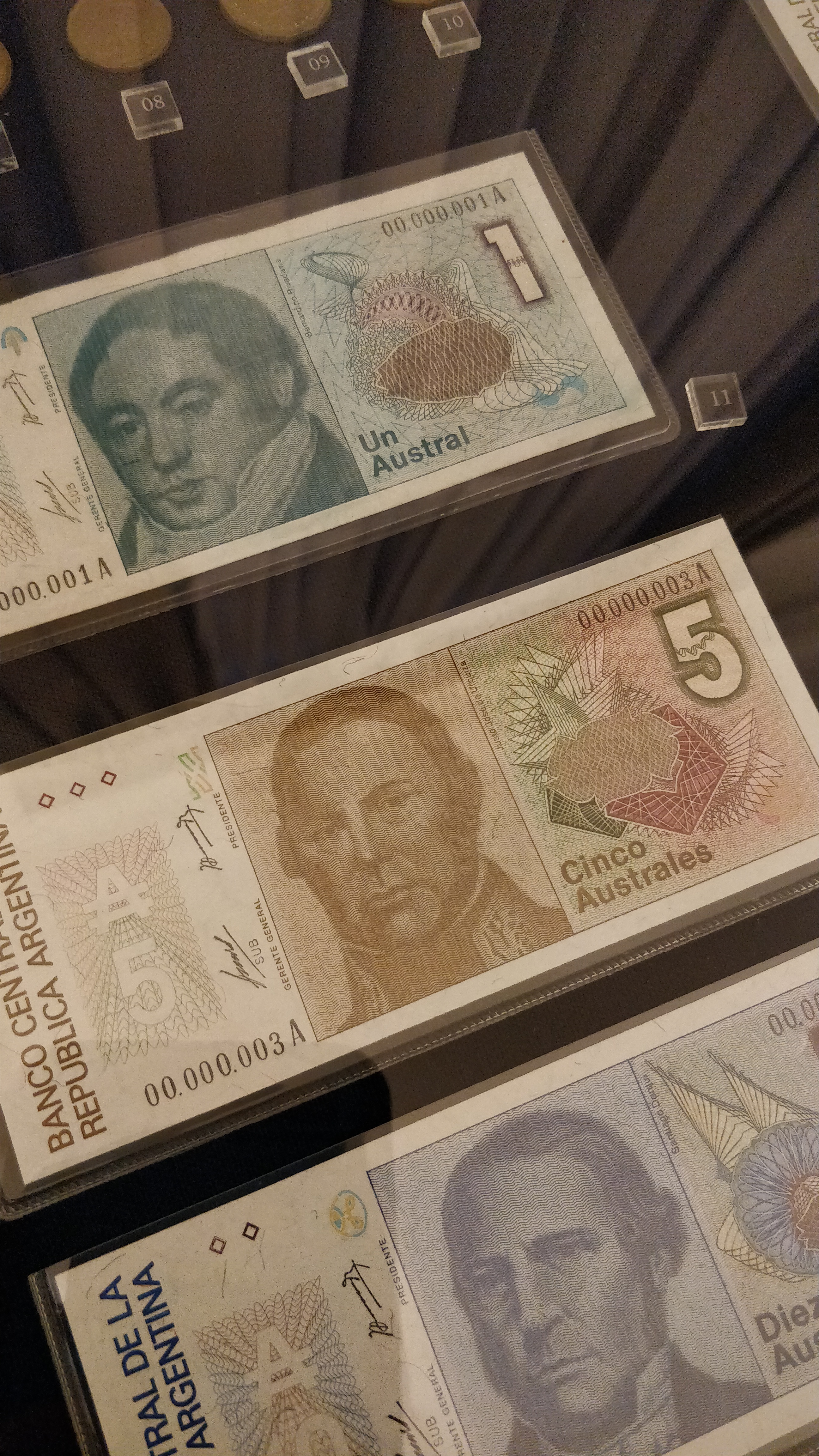
It did not work. These were printed in 1983; by 1985, 10000 peso notes were back in circulation. That year, the president decided what the country really needed was to start from scratch. The peso was old and busted. The Austral was the new hotness.
Alas:
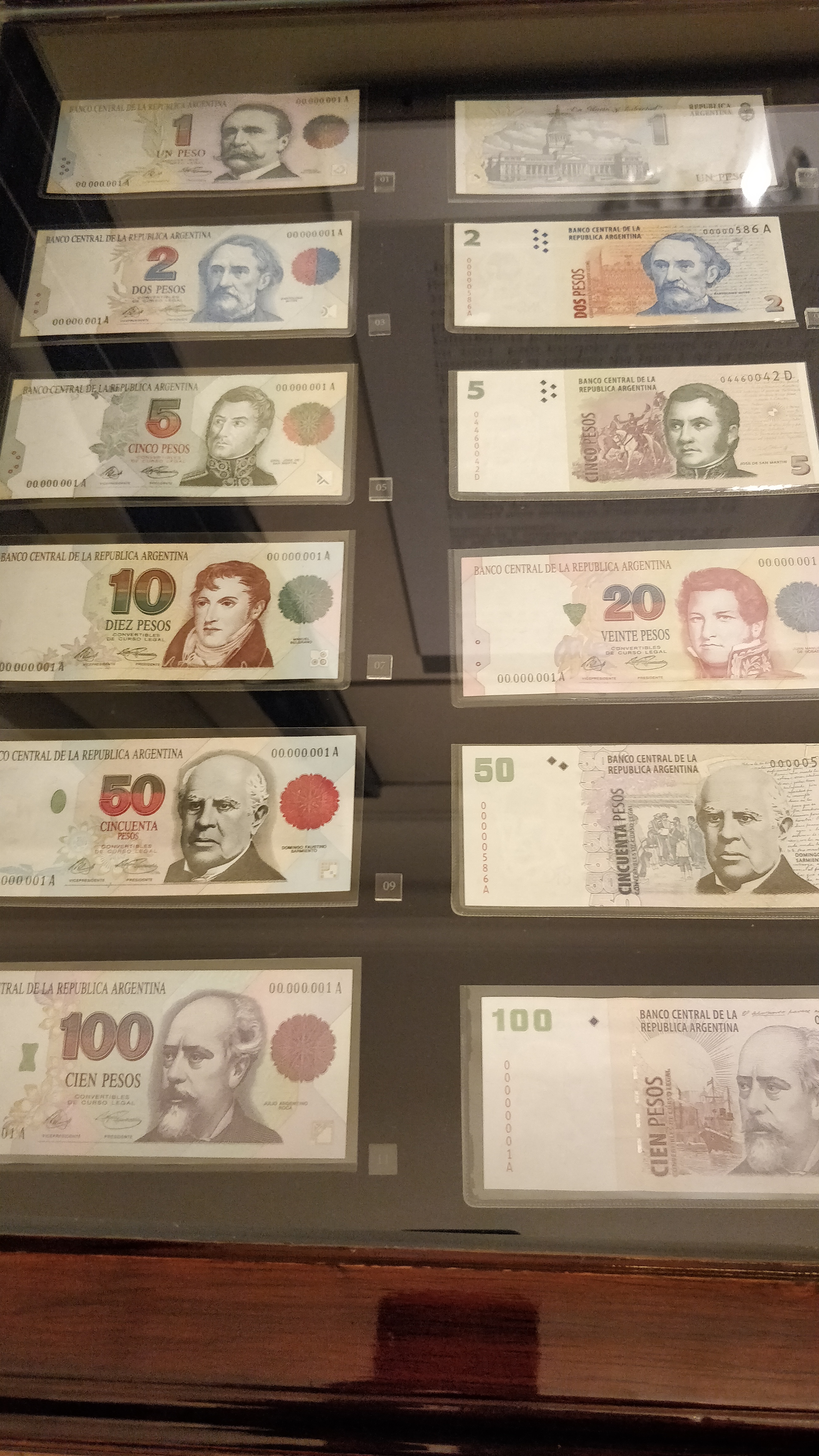
The name “peso” made its return with the “pesos convertibles” in the 90s, when the peso was pegged to the US dollar at a 1 to 1 rate. This also didn’t work and led to the financial crisis of 2001, which many Argentines can tell you absolutely wild stories about. The president famously fled the Pink House by helicopter. Some of the bills from this period are still in circulation; I could dig some out of my wallet right now.
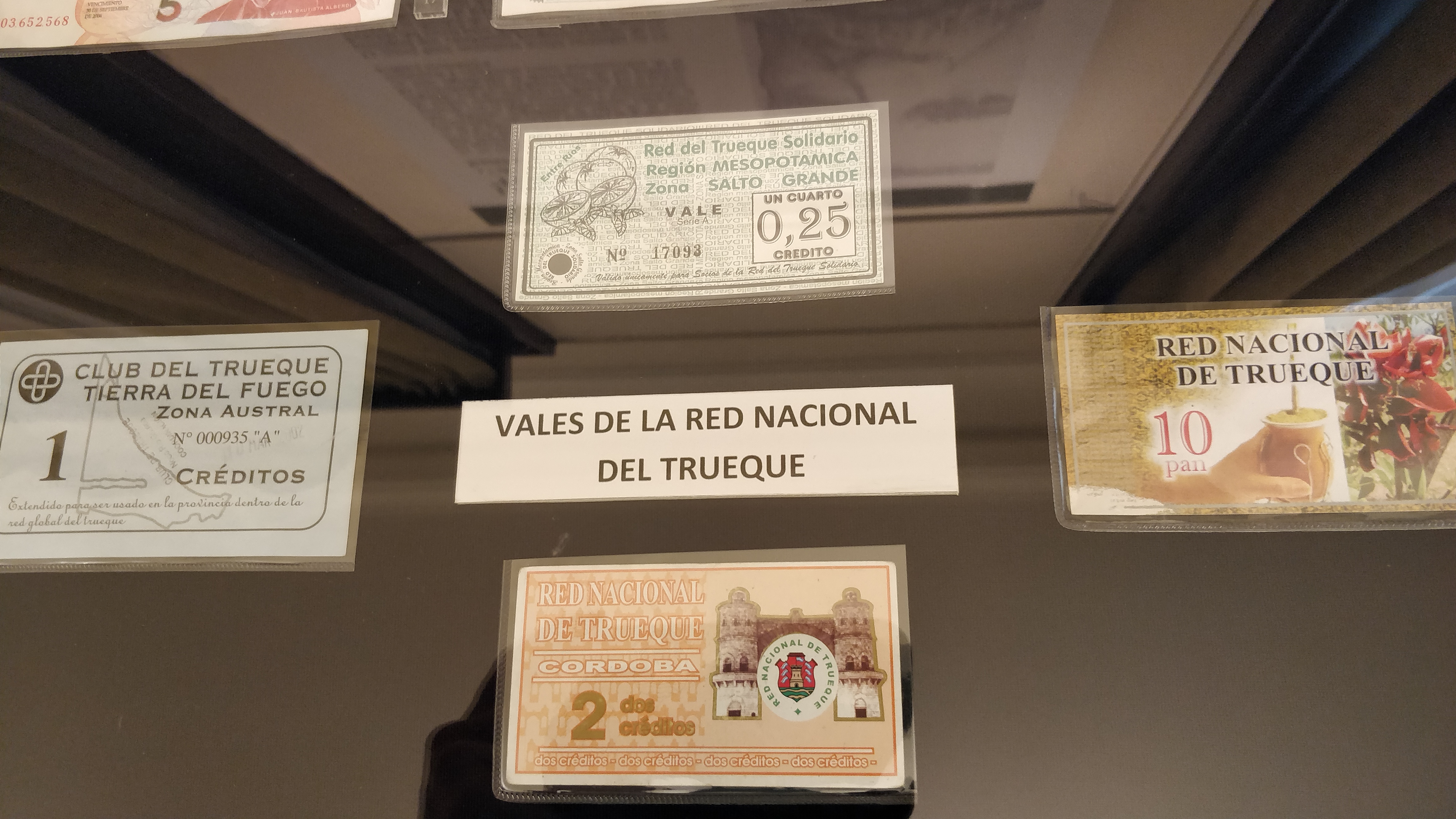
This time of utter economic collapse led to a widespread return to a barter economy, leading to the use of these barter network vouchers.
Things got…okay after that. And then less okay. That’s kind of how it goes here.
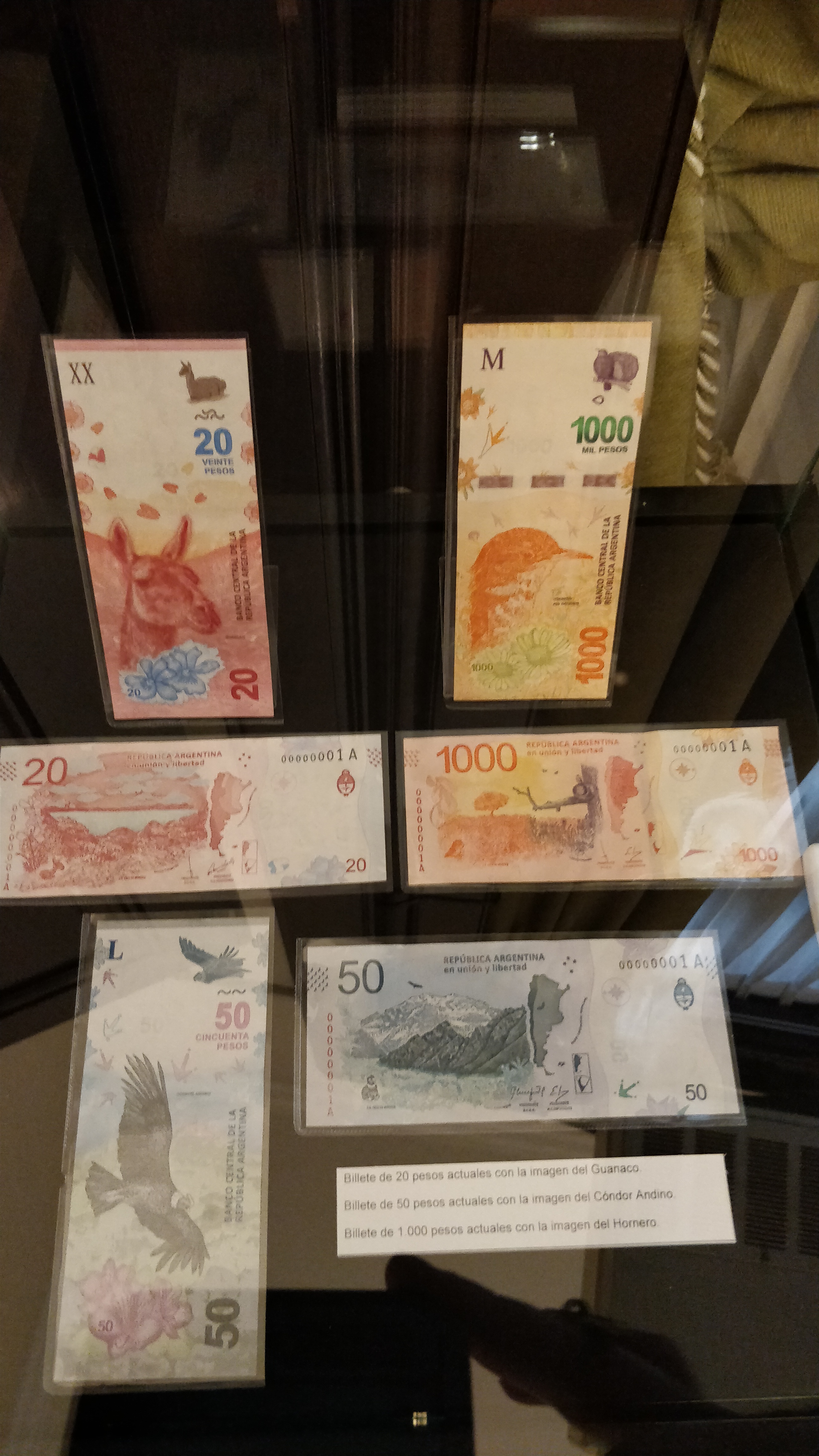
The current government, for political reasons I’m not going to get into, decided that the money needed a makeover, so now it’s all about the nature.
Oh, hey…we’re back up to 1000 pesos notes. Huh.
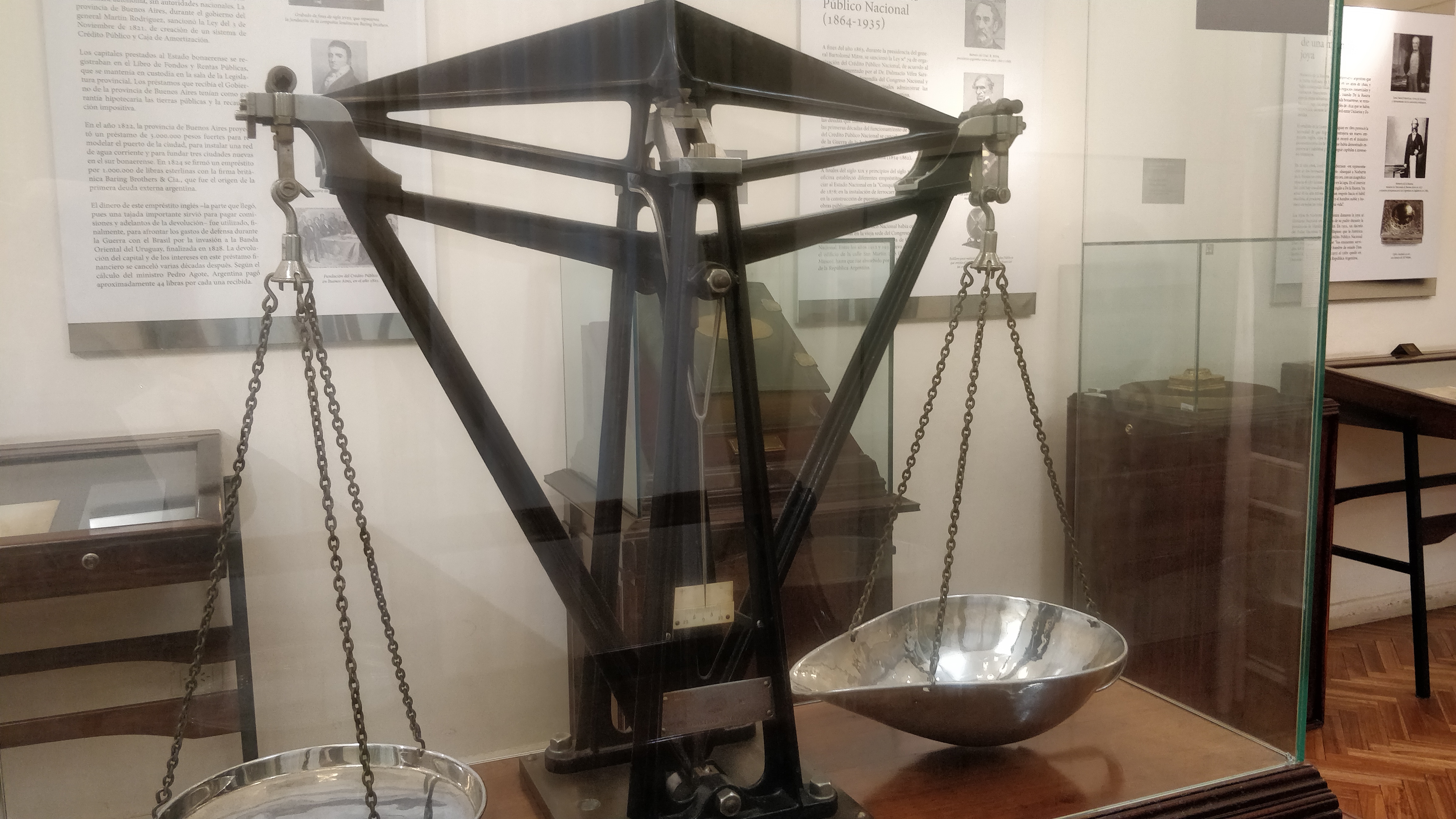
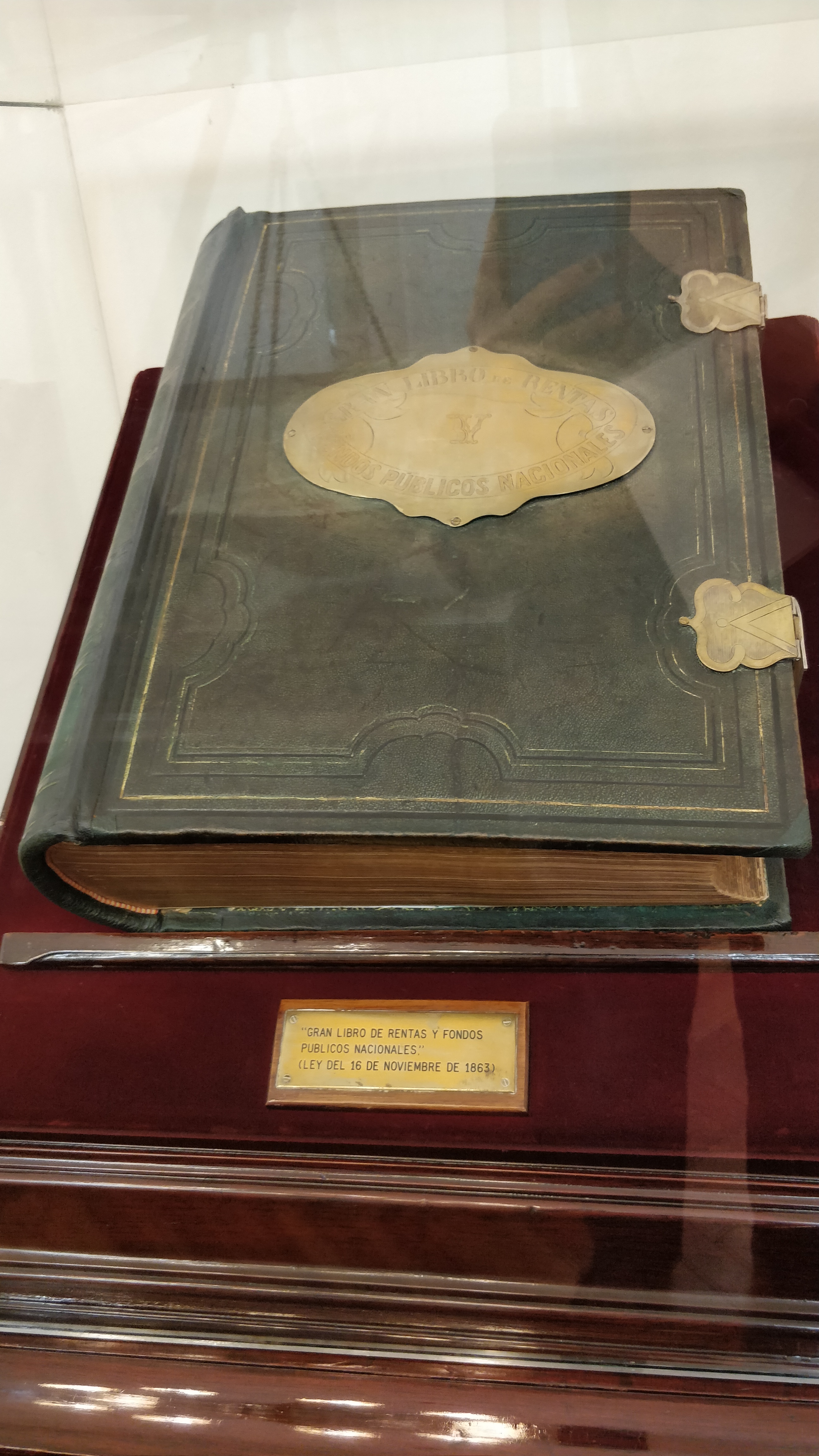
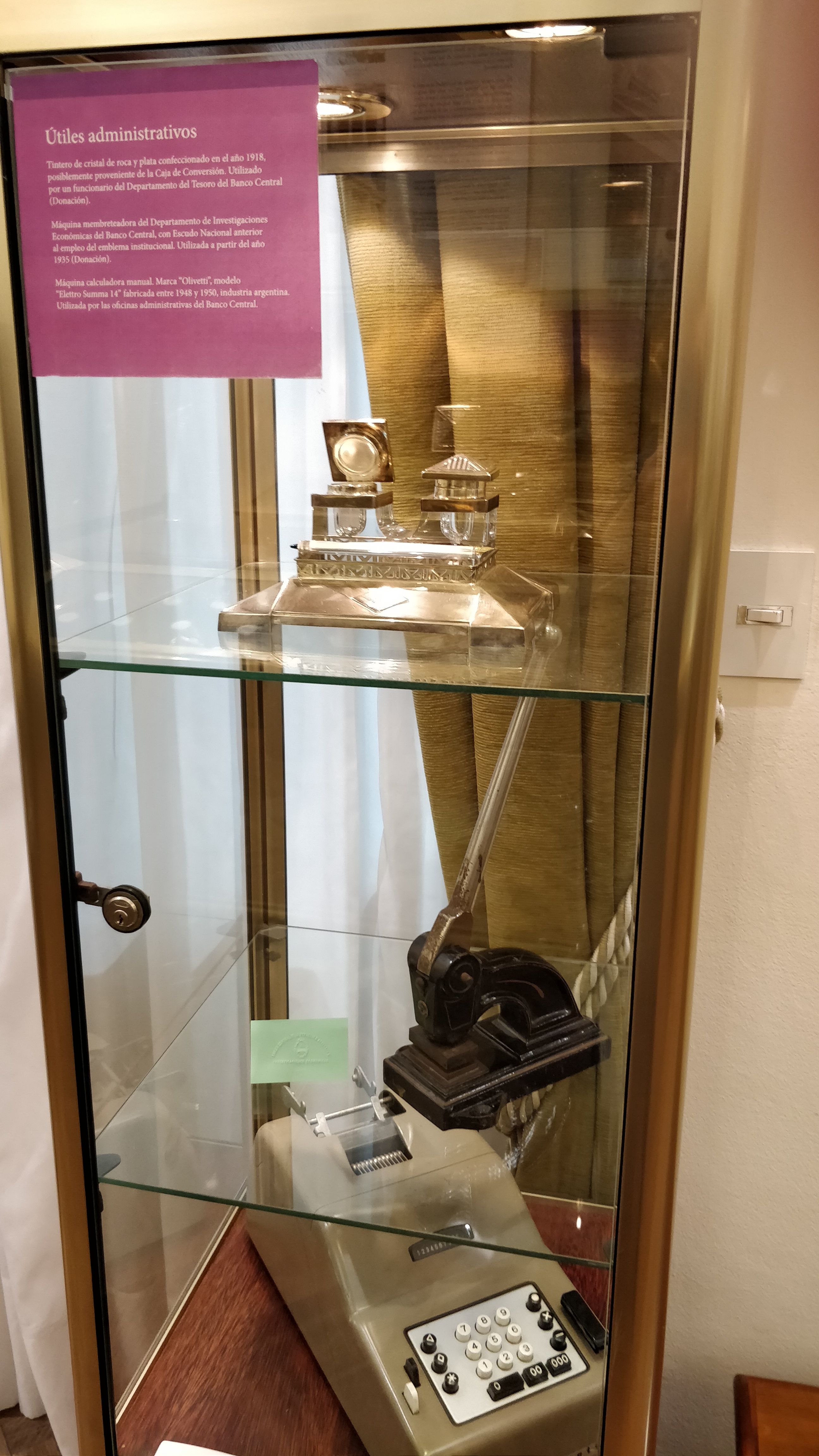
After the rooms of currency, the museum has some historical artifacts related to the history of banking in Argentina, including French scales used to weigh coins.
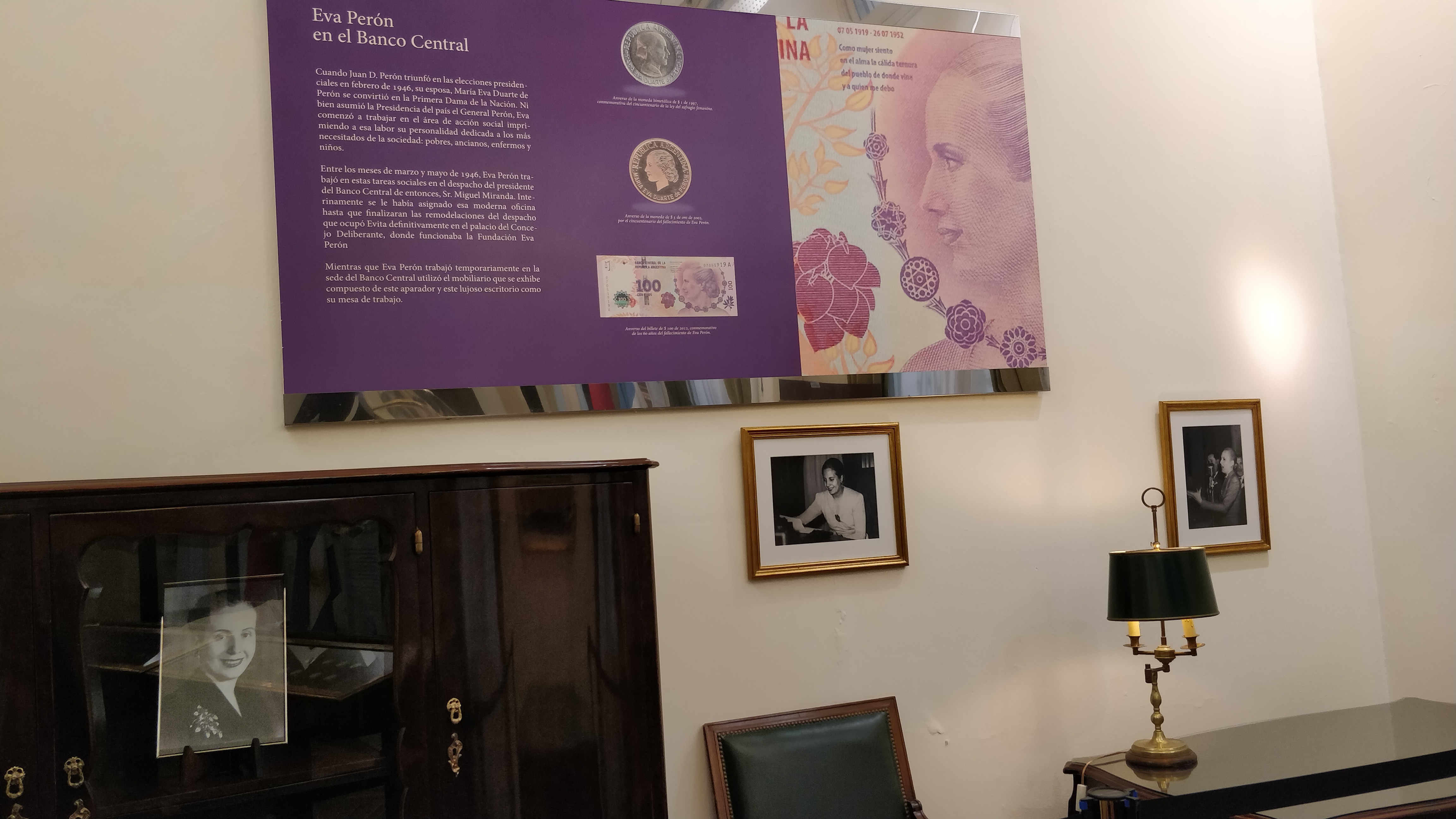
Eva Perón spent a few months working out of the Central Bank, and they have her office furniture.
I think I’ve mentioned before that it’s hard to overstate Evita’s importance here.
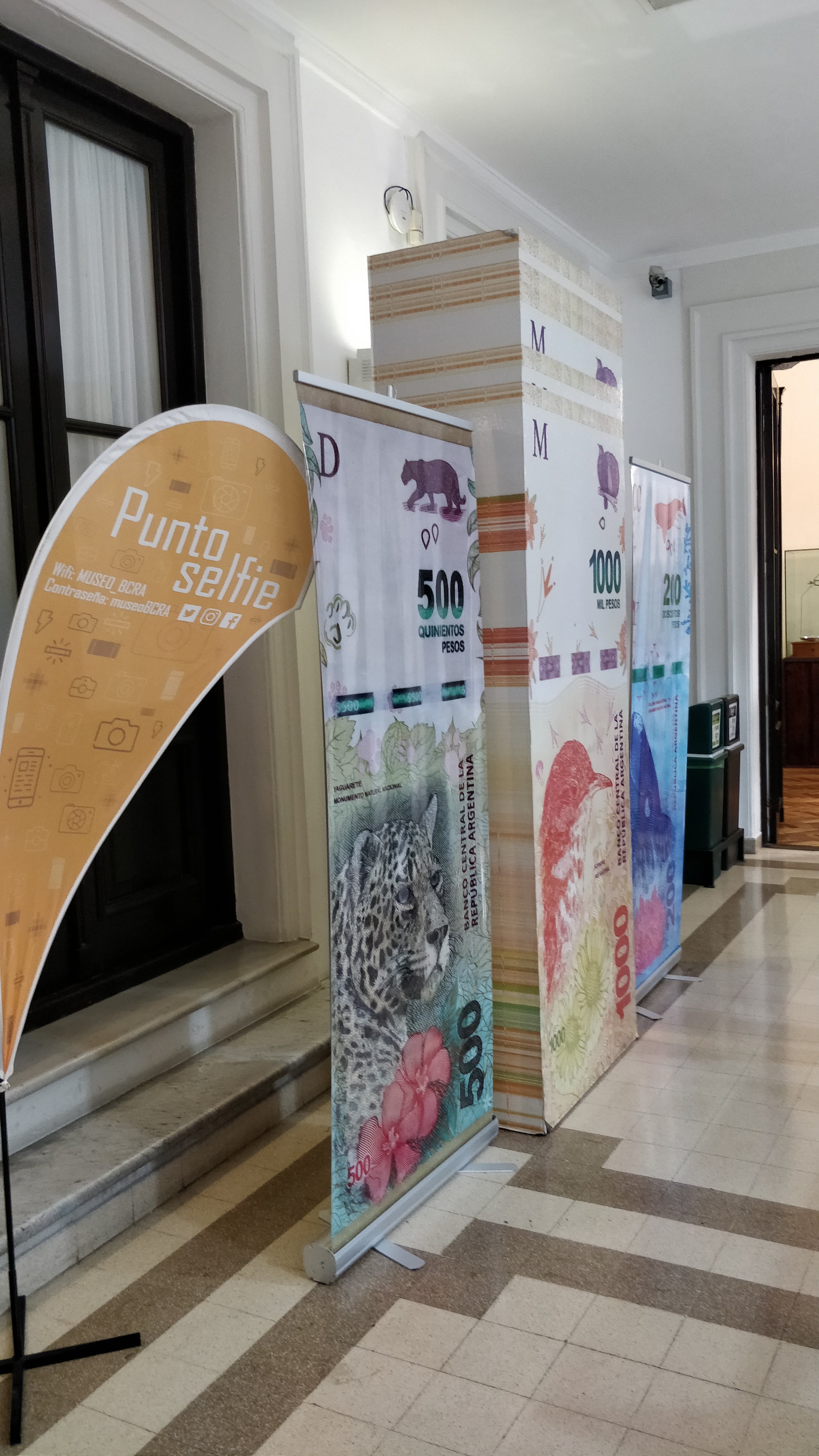
I’m going to wrap this us with the museum’s most endearing feature, a selfie point.
These denominations should be good for a few months, at least.
The Banco Central Museum is located in the financial district of Buenos Aires, blocks from the Plaza de Mayo, at San Martín 216. It is open Monday through Friday, 10am to 4pm, and is free. There are some information cards in English for each room, although several were missing when I visited, and they are not particularly complete. The main signage is solely in Spanish. As it is located in the city’s heart, you can get to the museum in a million, billion ways.
















 The Exhibitist