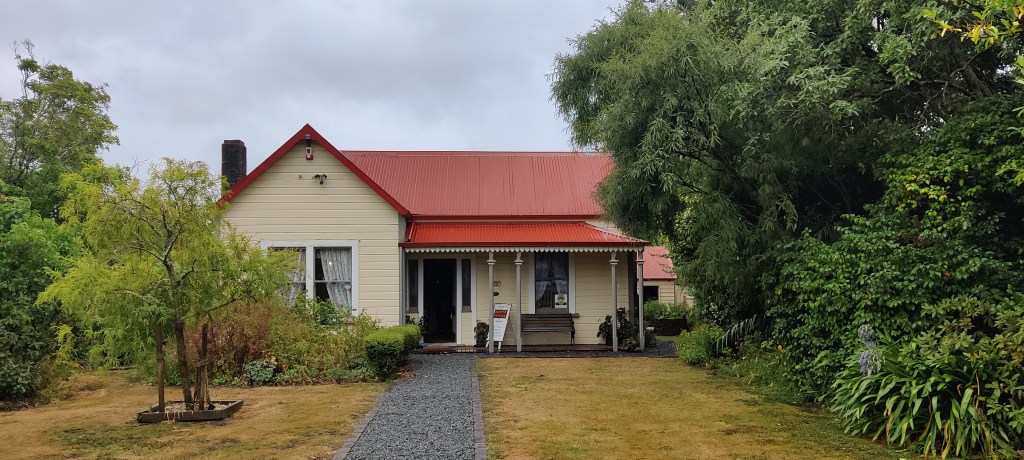
Happy 2022! Yes? February still ok for new year wishes? Has any of us emotionally marked time in any meaningful way in the last two years? Probably not. Have I been visiting museums? Still not like I used to. But having covered the country’s castle last year, let’s look at a slightly more modest historic home, built in 1876, five years after Larnach Castle.
Far more successful as a family home than Larnach, frankly
Golders Cottage was built by John Golder, the son of Scottish immigrants and a real DIY kind of guy. The house was occupied by the Golder family up until 1985. Several pieces of furniture and other items in the house were made by John and have spent their whole existence there, now keeping company with some other period displays donated by the community.
No Golder has ever needed an IKEA
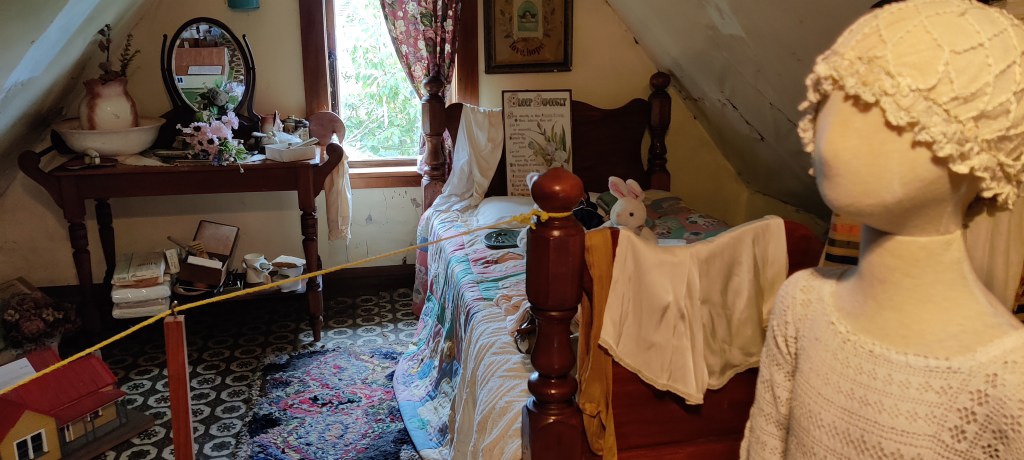
John married Jane Martin the year after the cottage was built; they added 12 children and a few more rooms to it before John was killed in an accident in 1902. On our visit the guide asked, “Can you imagine 12 children in this house?” but frankly I cannot imagine 12 children. How do you think of names for them all. The original cottage was a bedroom and living/dining room downstairs with two small bedrooms upstairs, and the additions started in the 1880s, as it presumably got hard to breathe in there pretty quickly.
The eldest two children were moved to the upstairs rooms in 1889 and used them until their deaths in 1968.
Now I feel bad about throwing out my dried wedding flowers before moving to New Zealand
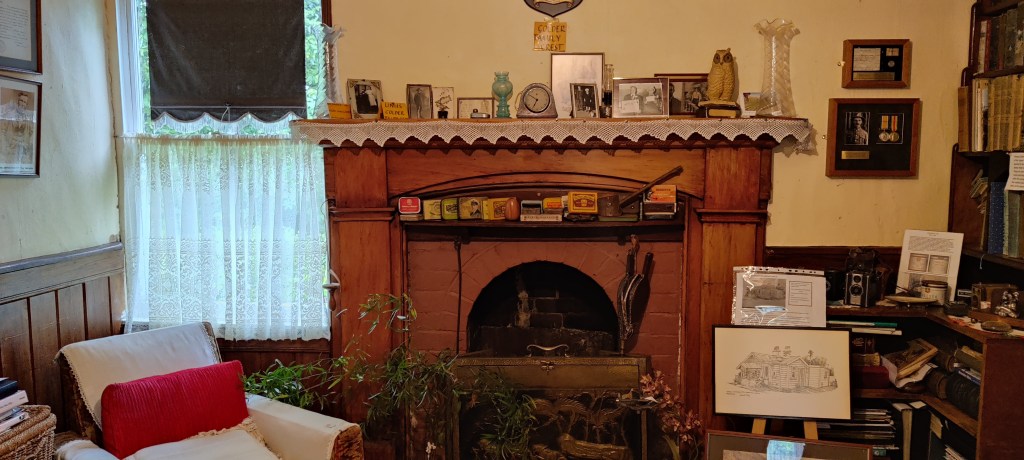
A kitchen and scullery were eventually added, but that was six kids in and Jane did the cooking over the fire in the living room up to then. John kept busy being a notable community person, but I can’t help thinking more about the monumental effort Jane had to make every day in a tiny space to keep the whole thing going, while being pregnant like, all the time.
Lots of stew.
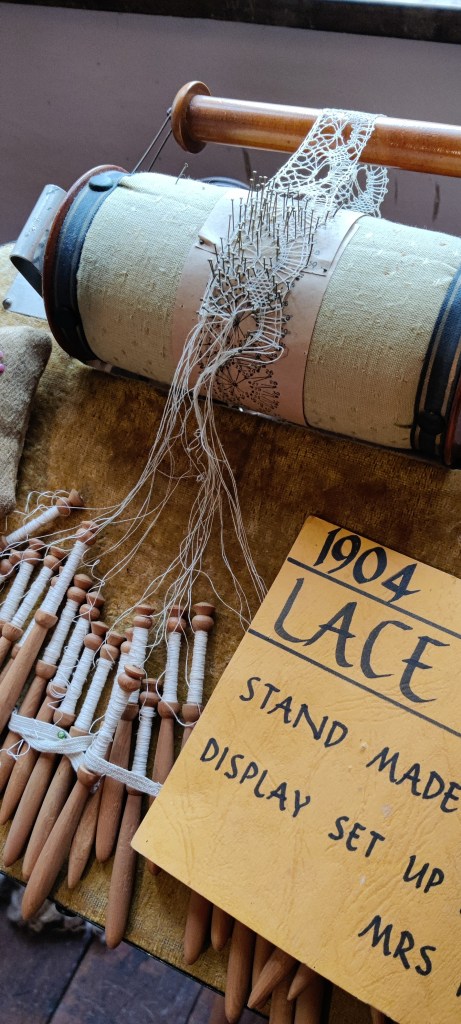
The cottage is full of objects (as noted, some original to the house) from the late 1800s and early 1900s, from textile-making stuff to cooking implements to clothing to toys to books. Perhaps you’ve never seen how lace is made by hand:
Short answer: witchcraft
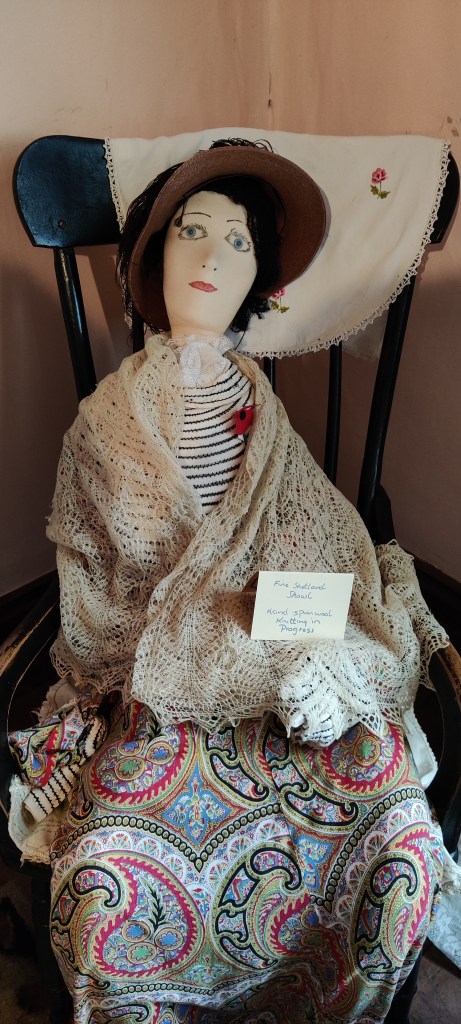
And I am, as always, pleased to report the presence of several unsettling human stand-ins, which I’ll never get tired of.
Knitted shawls please the guardians and keep them still
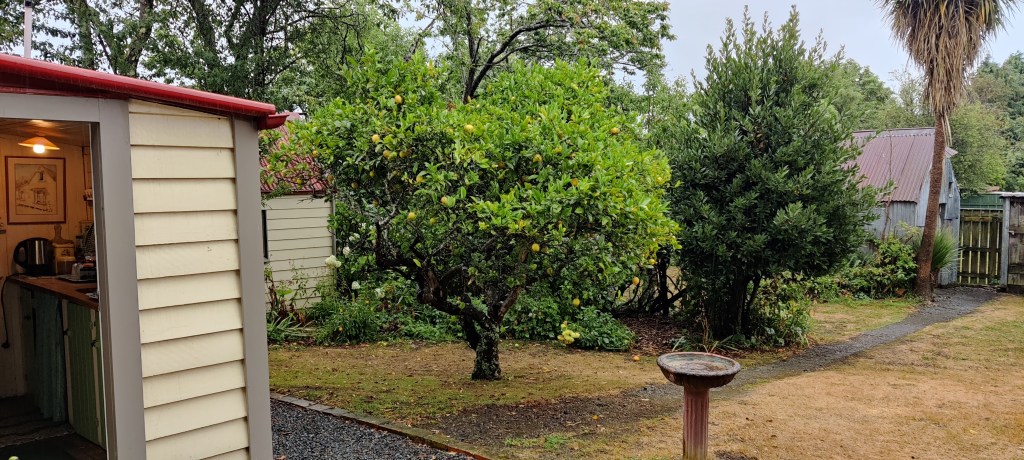
The garden of the cottage (which I definitely must put in a good word for because my own kid has started volunteering as a garden helper) still has a few very old specimens, such as this lemon tree, which is over 100 years old.
You will not age this well
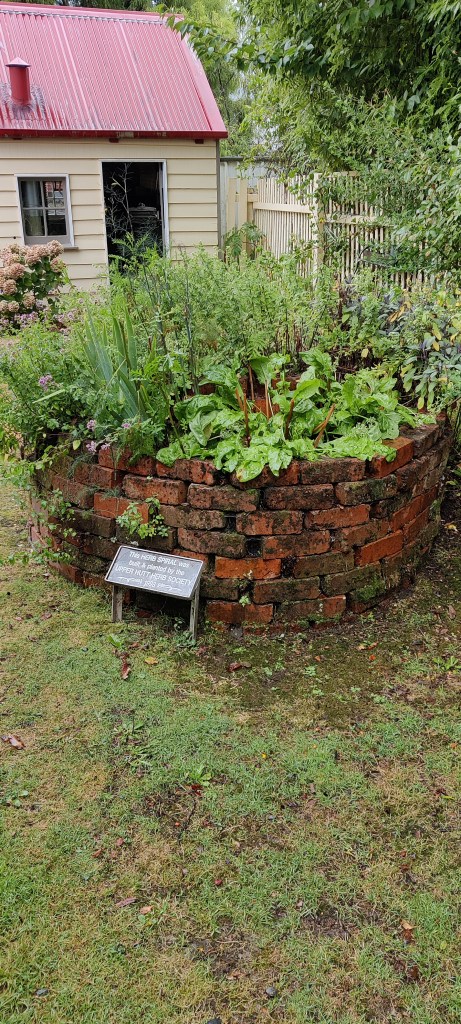
There’s also this really lovely herb spiral, put in in the 1990s, and I want one. It’s so cool.
FREAKIN’ COOL
Golders Cottage is a great example of a well and long lived-in period home and worth a visit. It’s open on Saturdays and public holidays from 1:30-4:00. I believe for adults the entry fee is $5 (bring cash or be ready to make a bank transfer). Check out their website for more information about the cottage and the Golder family.
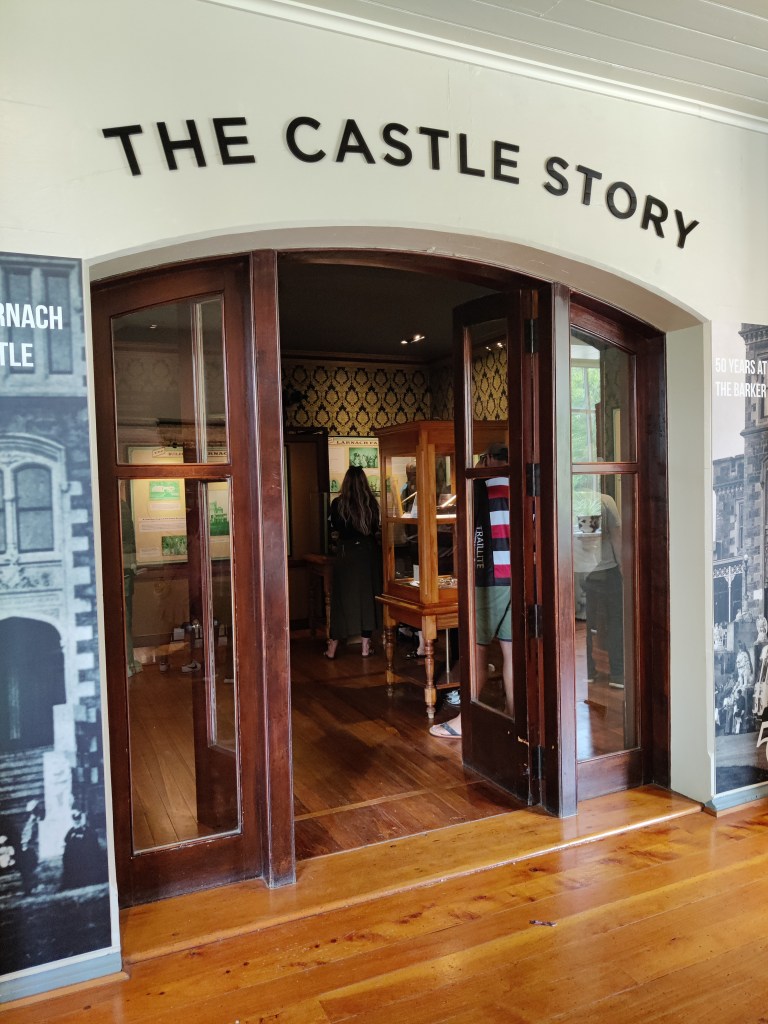
This is the story of New Zealand’s only castle, built in 1871 by William Larnach, a merchant and politician. Everyone in this story hated each other and also the castle.
Money can buy you a lot, including colossal family mess.
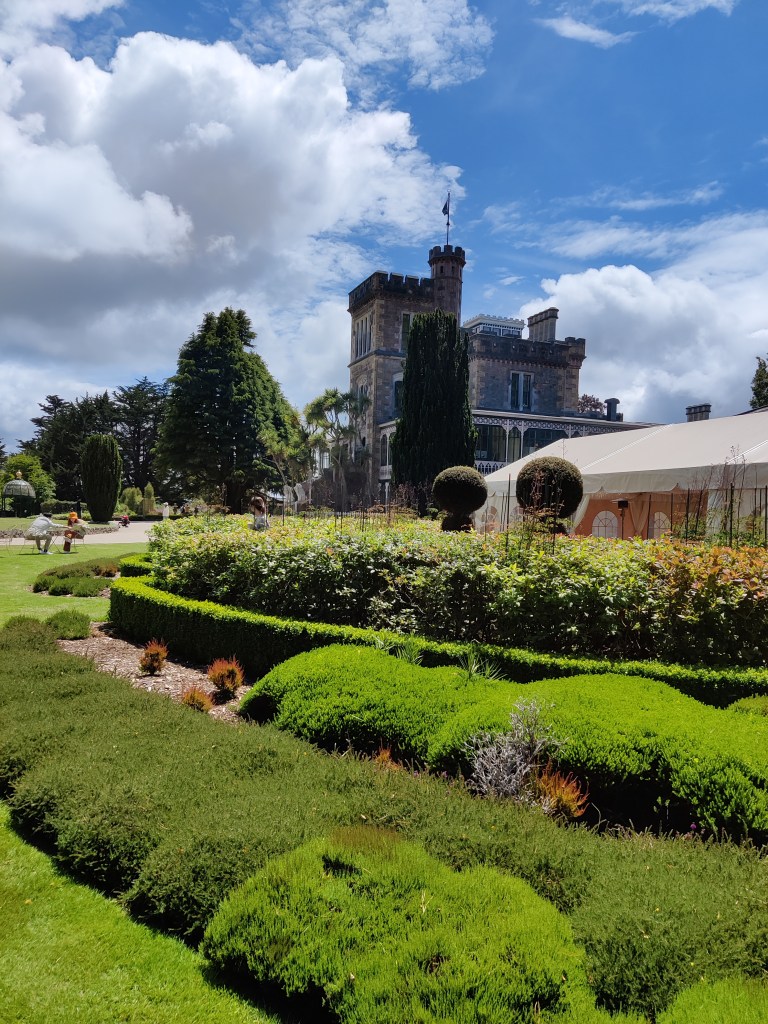
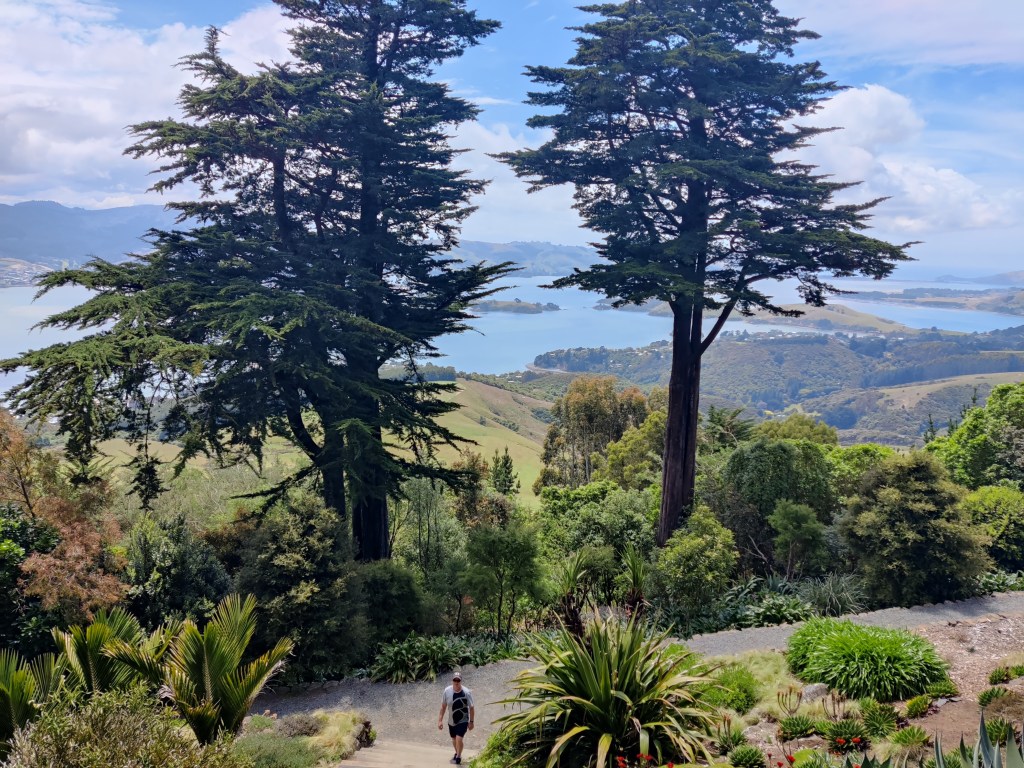
That’s a slight exaggeration, but very slight. The castle is some distance from the city of Dunedin and has some very impressive grounds and views. It was fairly remote in the 1870s-80s, which is why the family ladies didn’t really like living there to begin with. William Larnach himself was not home much, as far as I can tell, so its deficiency as a residence for people who depended on social calls to avoid going insane with boredom probably escaped him. He didn’t escape much else though!
Drama awaits.
Briefly, the story of the castle and the Larnach family goes like this: William built it for his first wife (whatever that means, exactly), sparing no expense. Of course, we now know what sort of harbinger that is because we’ve all seen “Jurassic Park.” William, unfortunately, pre-dated that morality tale.
That view tho.
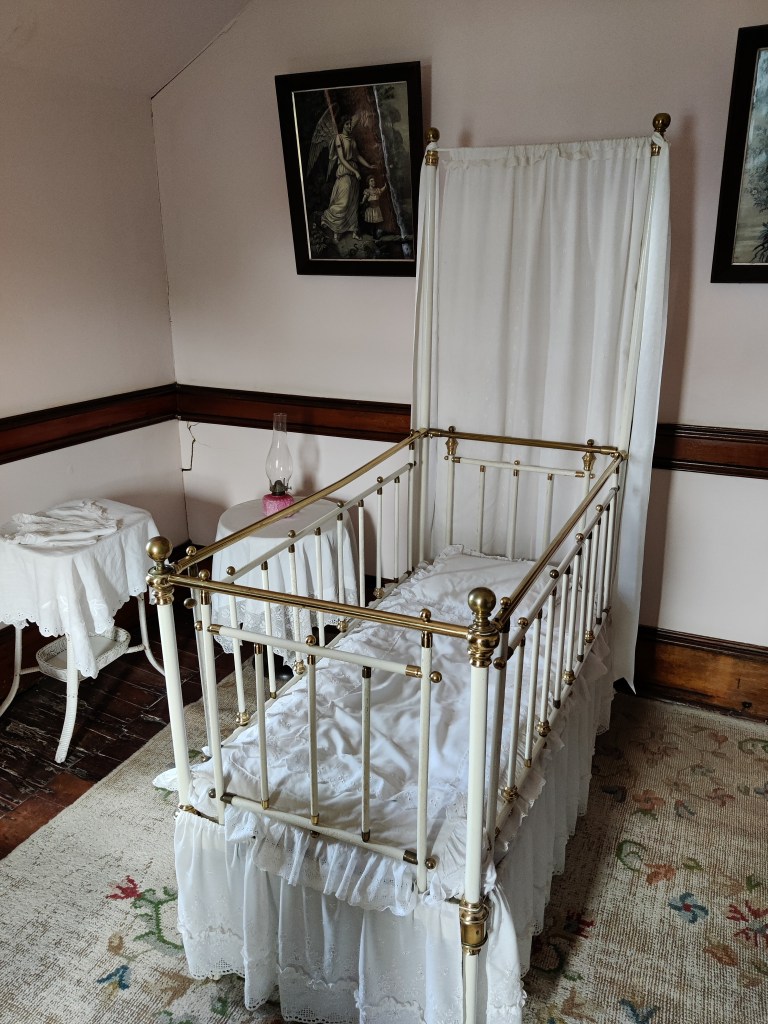
I always feel like old nurseries are made pre-haunted.
First wife Eliza had six children, but died at 38. William then married his wife’s sister, Mary, which the castle’s history room helpfully tells us was legal due to “The Deceased Wife’s Sister Marriage Act” of 1880. The fact that a whole-ass law had to be passed to make this sort of thing permissible also indicates that a lot of people thought it was gross. Some people who definitely thought it was gross were William’s children. There was some serious inheritance at stake. We’ve also all seen “Hamlet.”
The disapproving kids didn’t kill Mary or Polonius or anything like that, but they did also didn’t stick around. Neither did William, who was in Wellington for politician stuff for months on end. Mary was left with a big ol’ house and a drinking problem. She also died at 38, five years later.
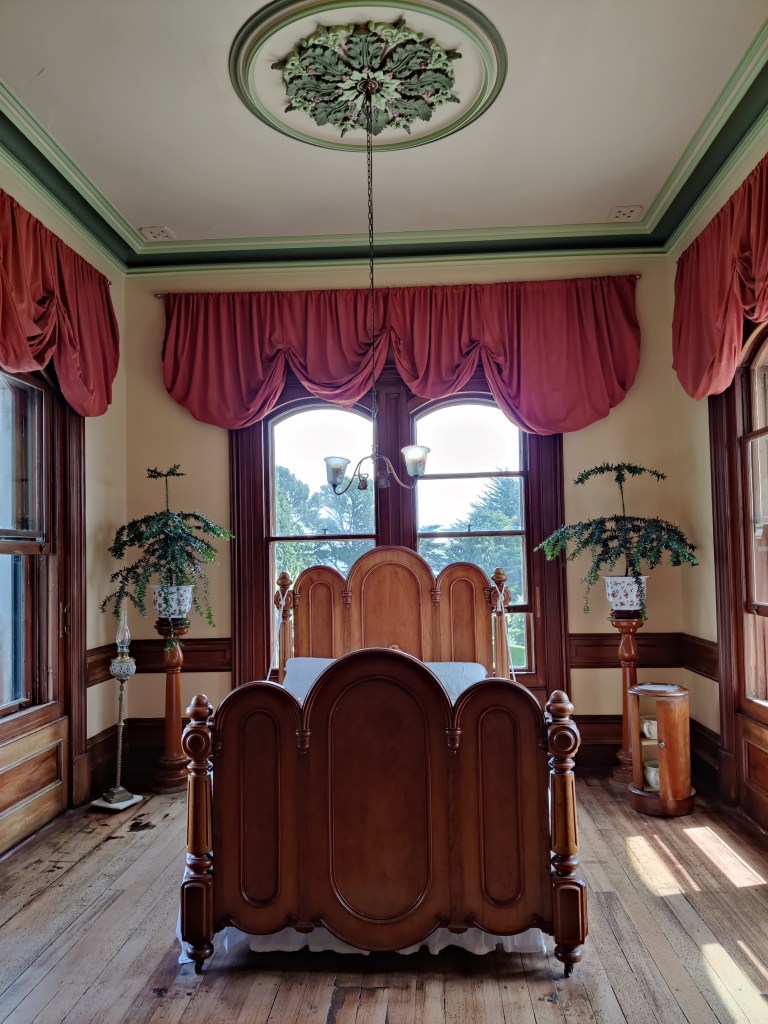
One of the bedrooms, just sitting there not being someone a desperately lonely woman could talk to.
Various properties and holdings had been put in Mary’s name because William’s business was going south, and Mary left the children everything, as she had agreed to. This was probably fine with them but it sure suddenly sounded like a terrible idea to William, who did not have control over his own assets anymore. What does a reasonable man do in this situation? He forces his adult children to sign some papers without letting them see what the papers say, naturally. These papers were an agreement to relinquish their newly-inherited stuff. Family dinners were probably really great.
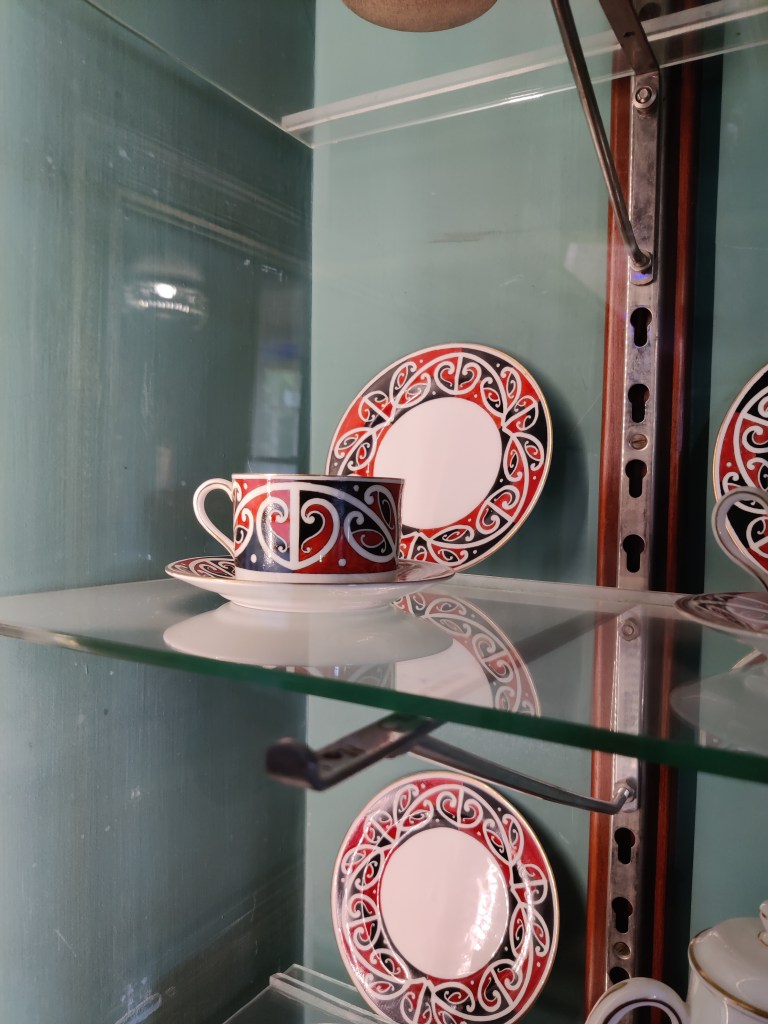
The castle was very European in design but had a lot of the native land in it (not unlike the mansions of Manaus in Brazil). This china features Māori design.
William married a much younger woman next, Constance (we see you, tired cliche). His business deals went wholly belly-up and there were rumors that Constance was sleeping with his youngest son. Ruined and humiliated, William killed himself in a Parliament building in 1898. The surviving family fractured itself further fighting over his will, illustrating that once again, family fortunes mainly get inherited by lawyers.
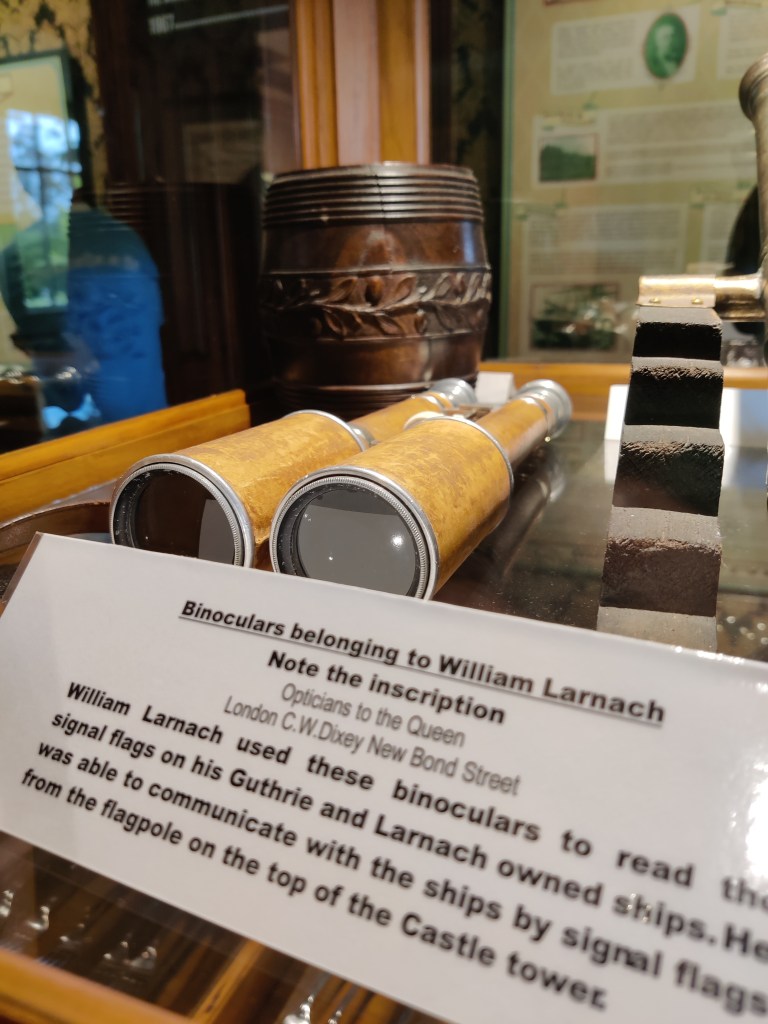
The castle does still retain some of William’s personal effects.
The castle fell into ruins and went through several owners before the current ones, who’ve spent years restoring the place. The castle now has guest quarters, a cafe, and gift and garden shops. It operates as a museum and hosts events and is a fine way to spend an afternoon.
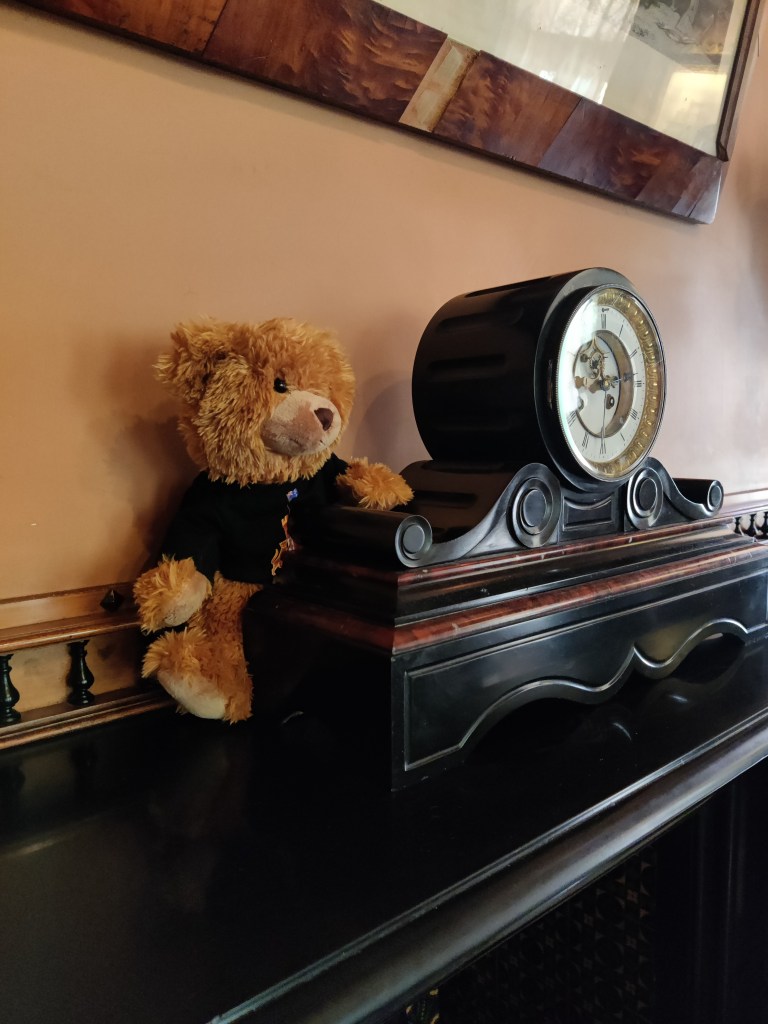
There was a children’s quiz and bears to spot when I visited, which is a fun way to keep little ones engaged throughout the self-guided tour. Should you find the bears too adorable to leave behind, they’re available in the gift shop.
Obviously.
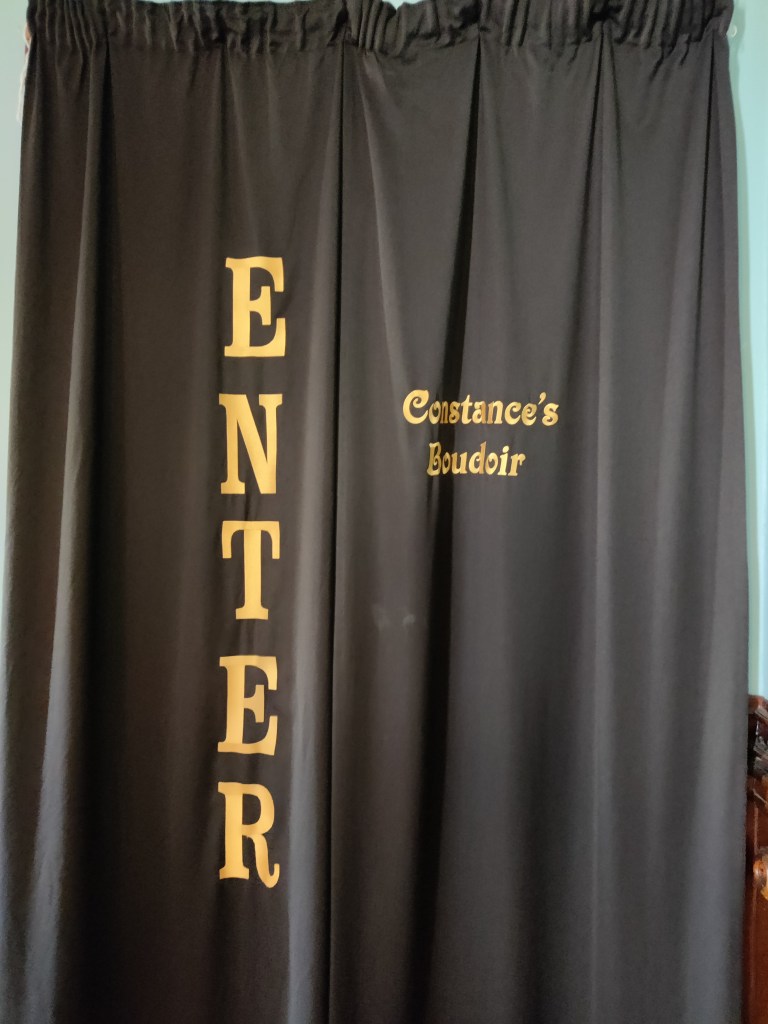
The whole thing is interesting enough and the grounds really are lovely. I was rather puzzled by one particular room’s presentation, though. All the other rooms were restored to something like how they would have been in their time of use, in line with the numerous other old houses and palaces I’ve been to. Except Constance’s.
I was not entirely sure what to expect when faced with this doorway.
Contance’s room–or boudoir, if we must–does contain a number of personal effects, such as clothing. But then some parasols are just floating around:
?
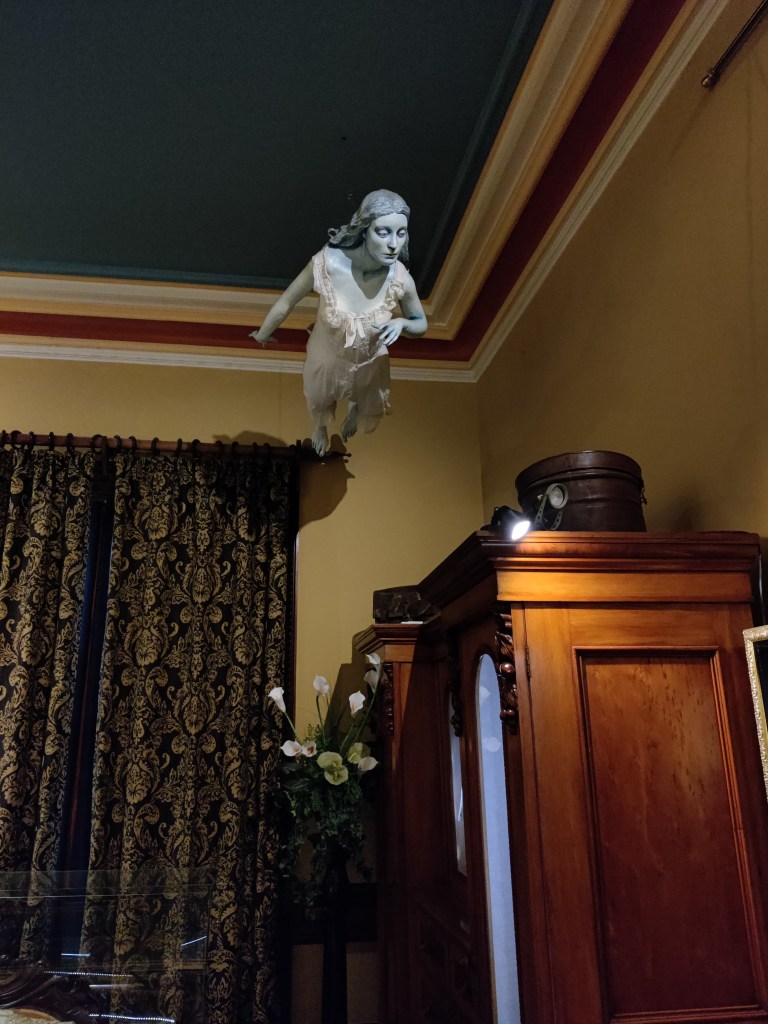
And also there’s a ghost?
…are you okay
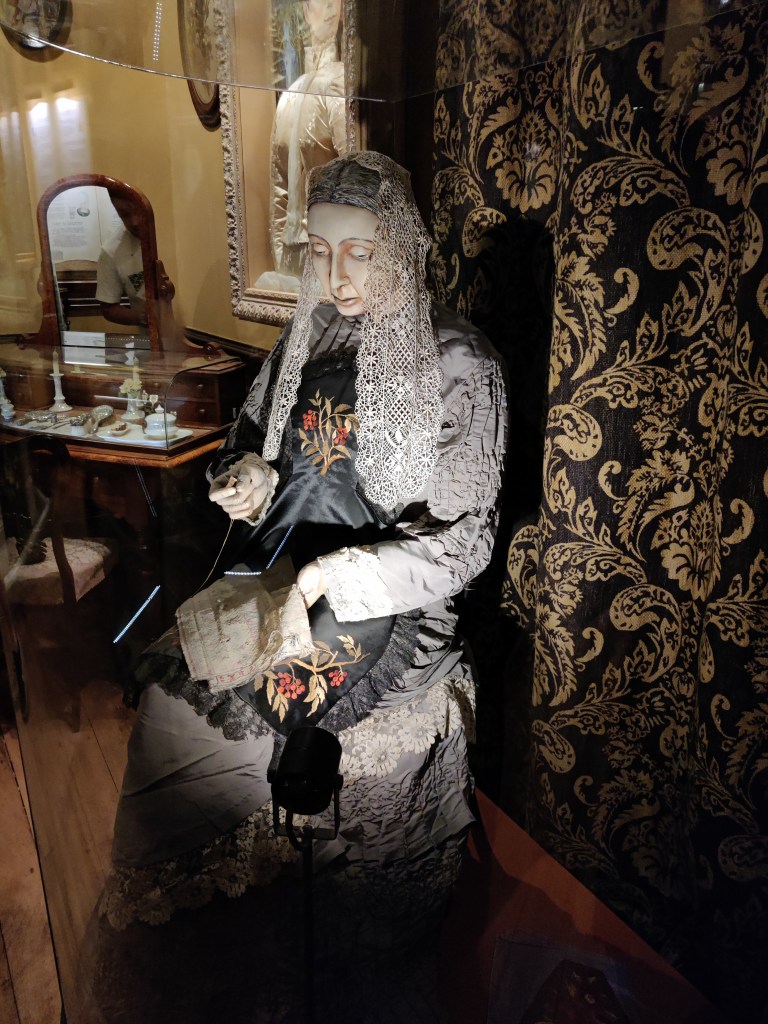
And an old lady?
Who the hell are you even supposed to be
As far as I know, Constance didn’t grow old in the castle–she was much younger than William and the family sold it in 1906. So what is happening here? If there was an explanation anywhere, I missed it. It’s just so tonally different from the rest of the house. It’s wild.
Anyway, you can have a pleasant walk around the gardens, and the food in the cafe was very good. The views really are something else, especially from the tower.
Finally, I have no idea which room this book was in but I really loved it.
First edition of the Spiderwick Chronicles
Larnach Castle is a nice place to visit and have lunch or tea (and presumably also stay overnight). It’s open 365 days a year and relatively pricey to go, so do take your time and get your money’s worth. Check the website for all sorts of availability, reservations, and pricing.
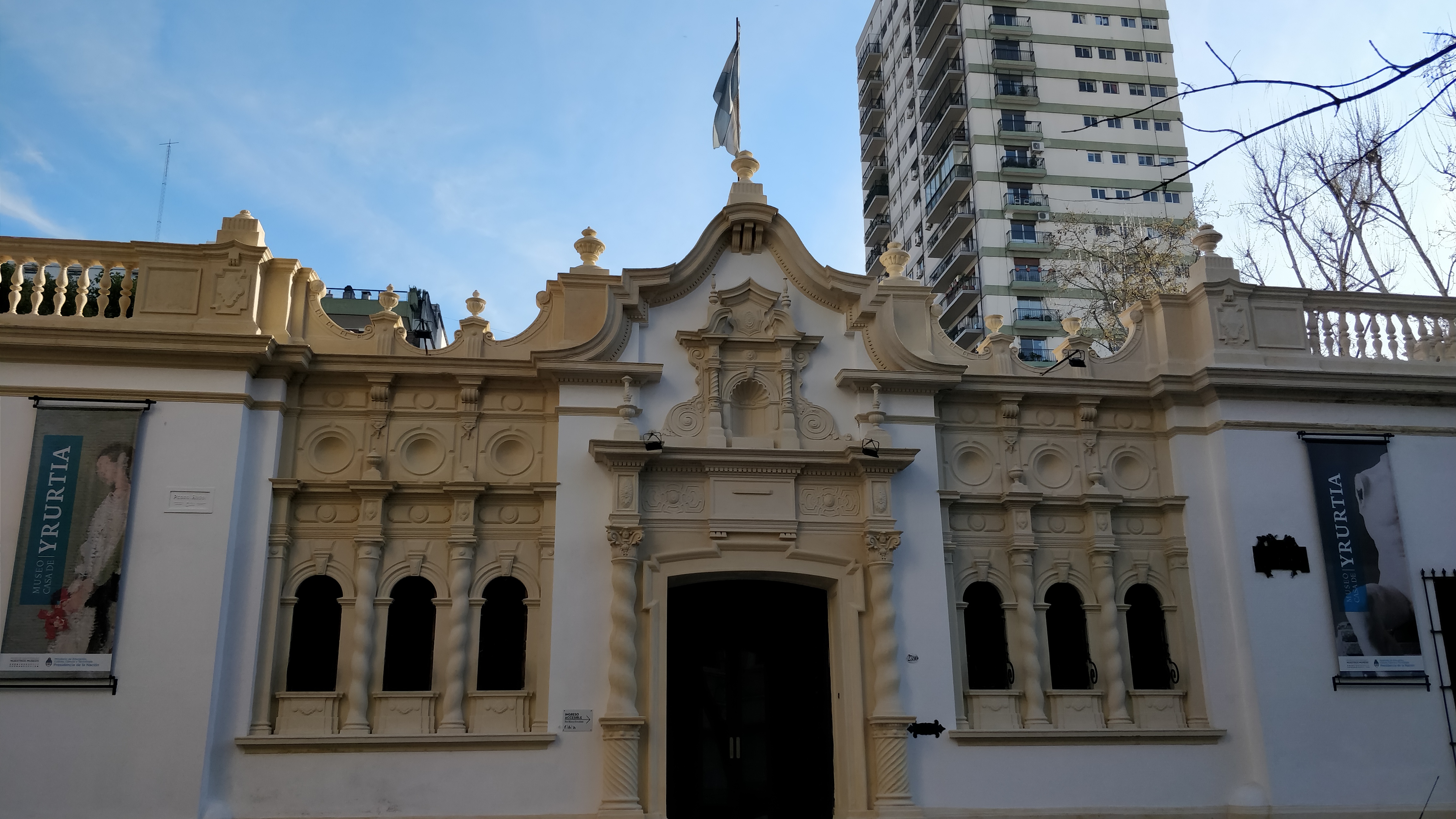
And for today I have the long-closed-for-renovations-but-now-open Casa de Yrurtia! And it is looking pretty nice after years of closure.
Quaint!
Rogelio Yrurtia was an important Argentine sculptor in the early 20th century. As a talented young man in 1899, he was awarded a scholarship, on which he traveled to Paris. He would spend his career moving between Paris and Buenos Aires, where he would be known for his large scale, public works.
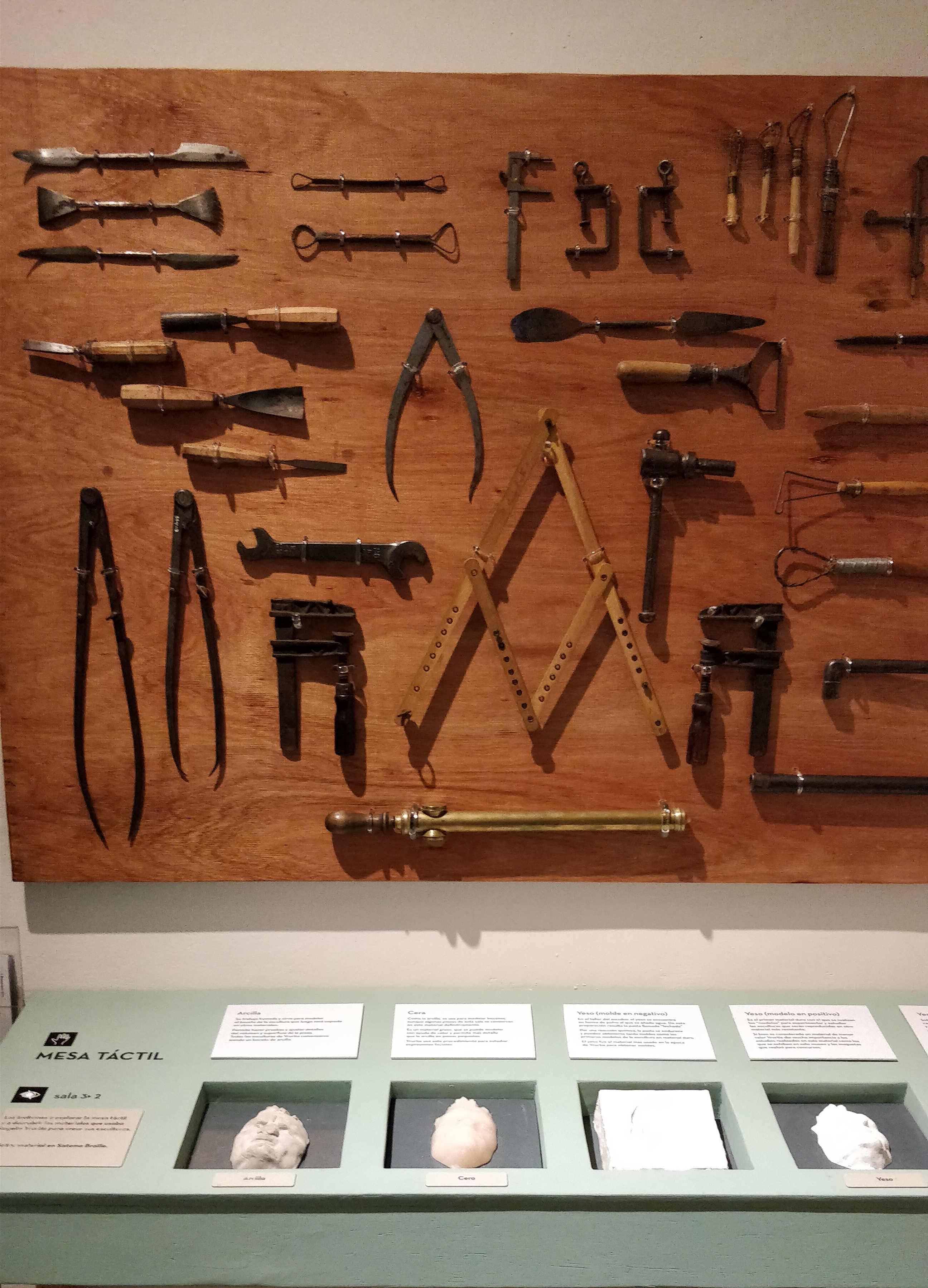
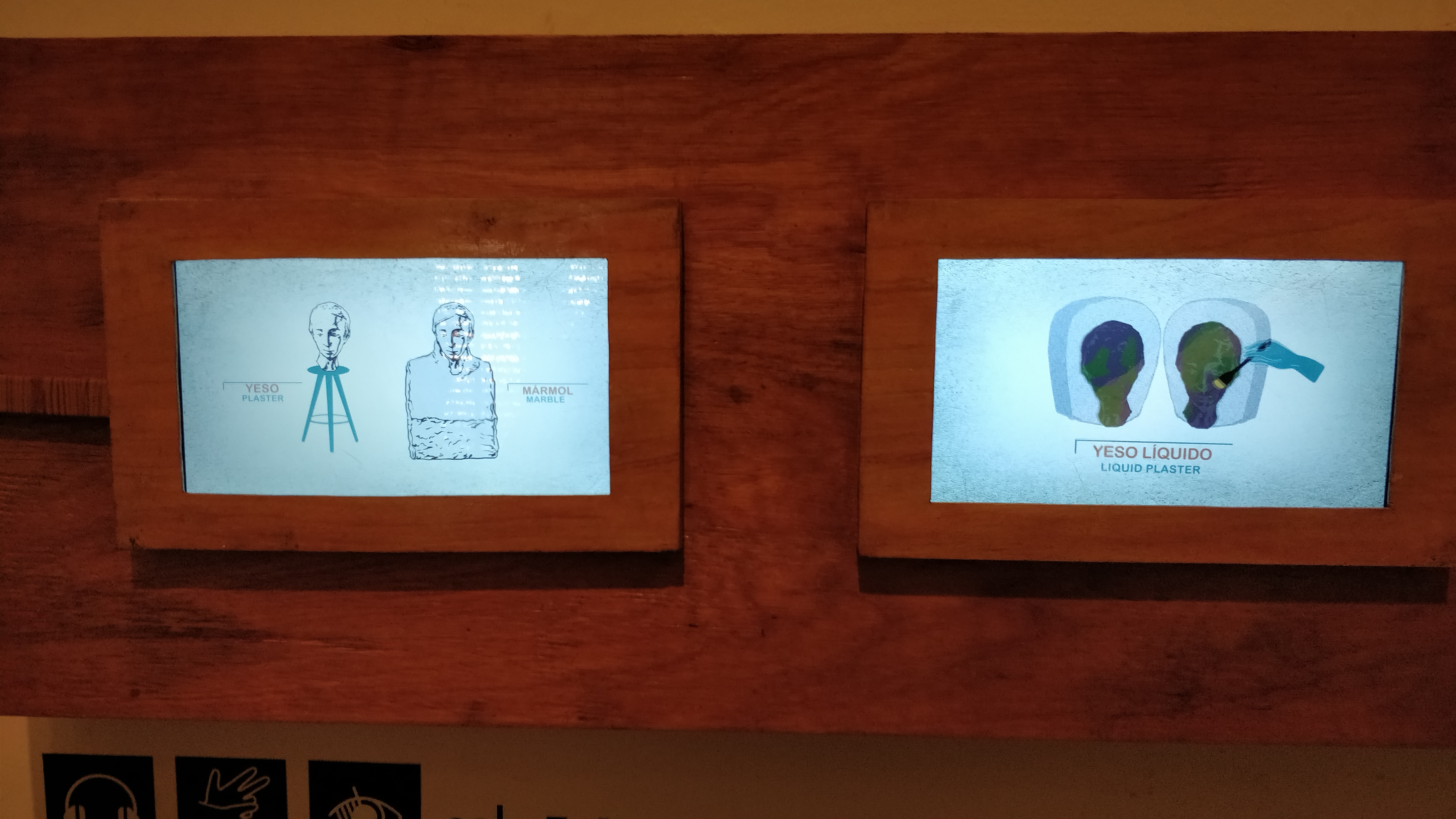
The man’s own tools, and a really nifty table about the sculpting process that visitors can put their grubby fingers all over.
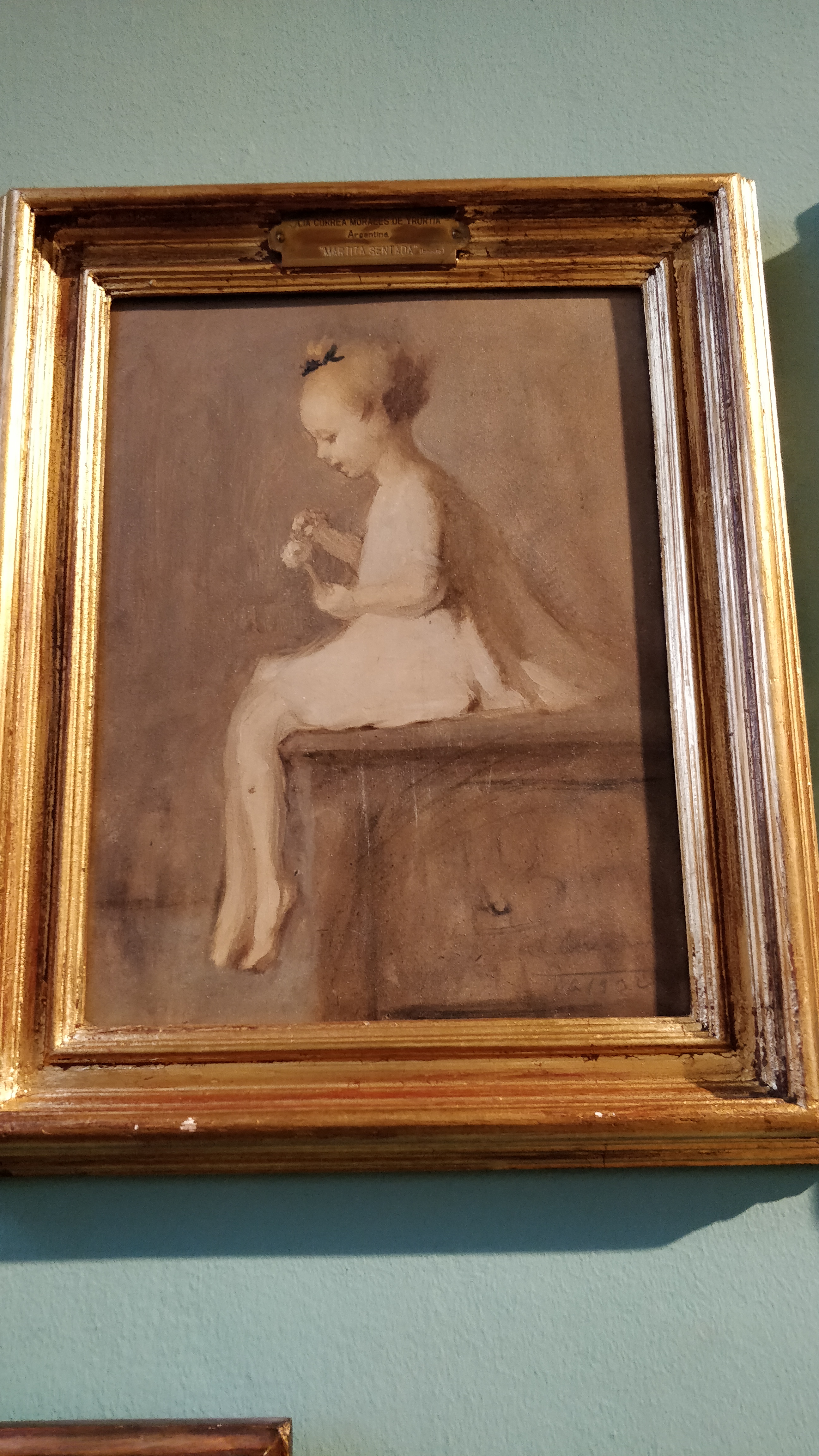
The museum is in the home of Yrurtia and his wife, the also very important artist Lía Correa Morales. The couple donated the house to the country to establish as a museum. It opened to the public in 1949; Yrurtia died the following year. Lía Correa Morales then served as the museum’s director.
The house side.
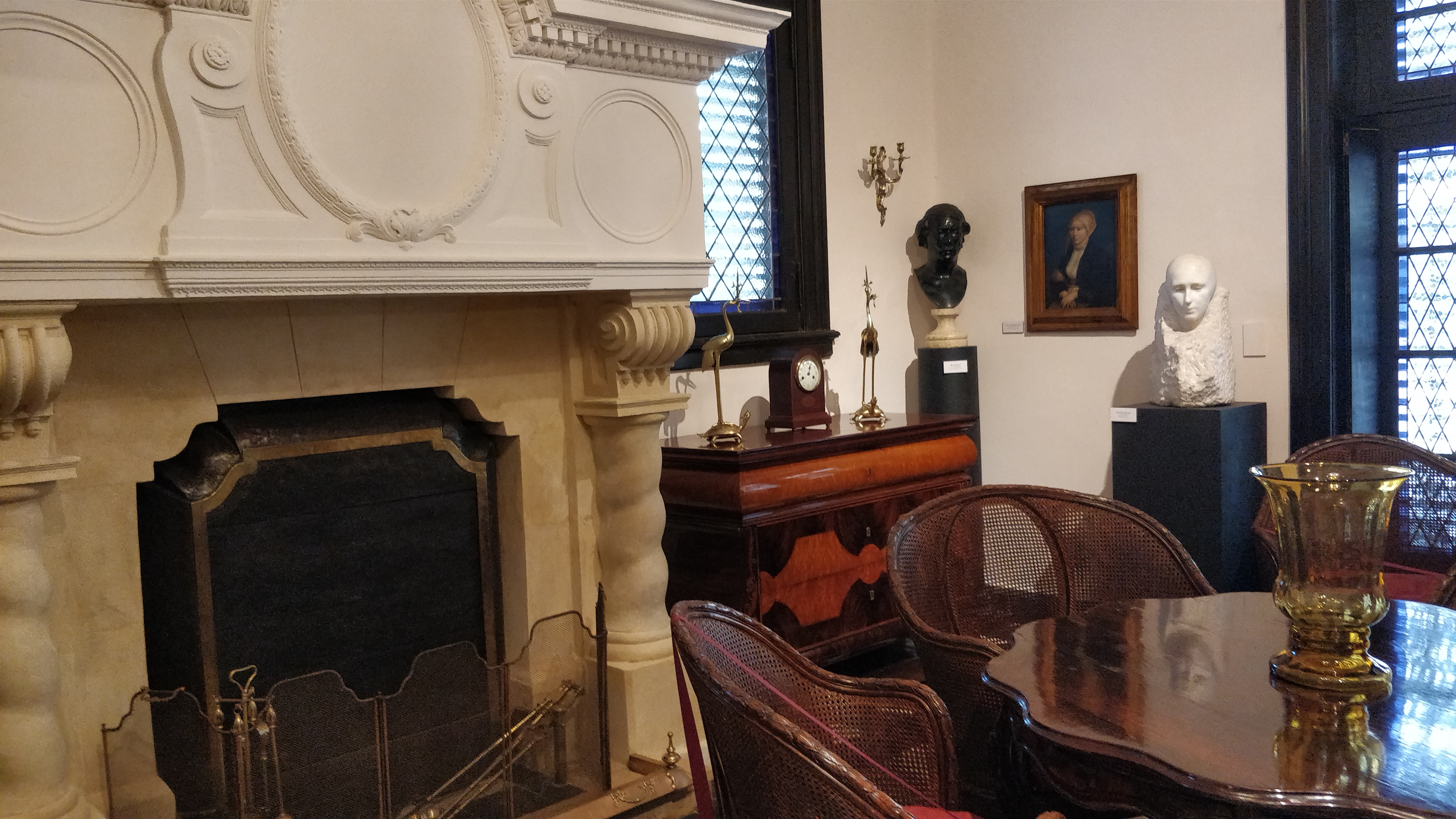
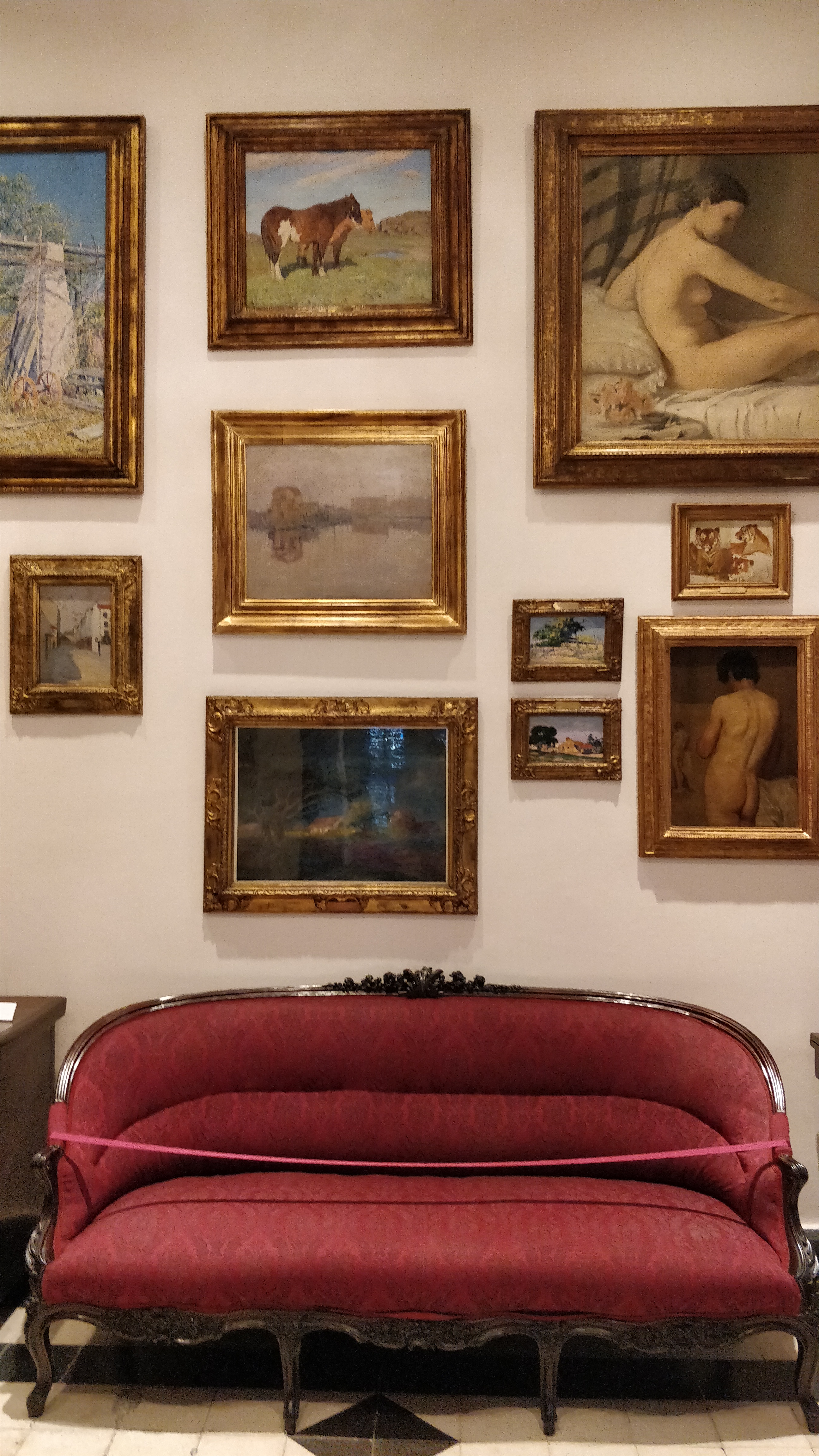
The house rooms include the some of the couple’s own art collection, which I guess is a big plus to having a lot of artist friends.
Yeah well *I* have a bunch of pretty cool postcards.
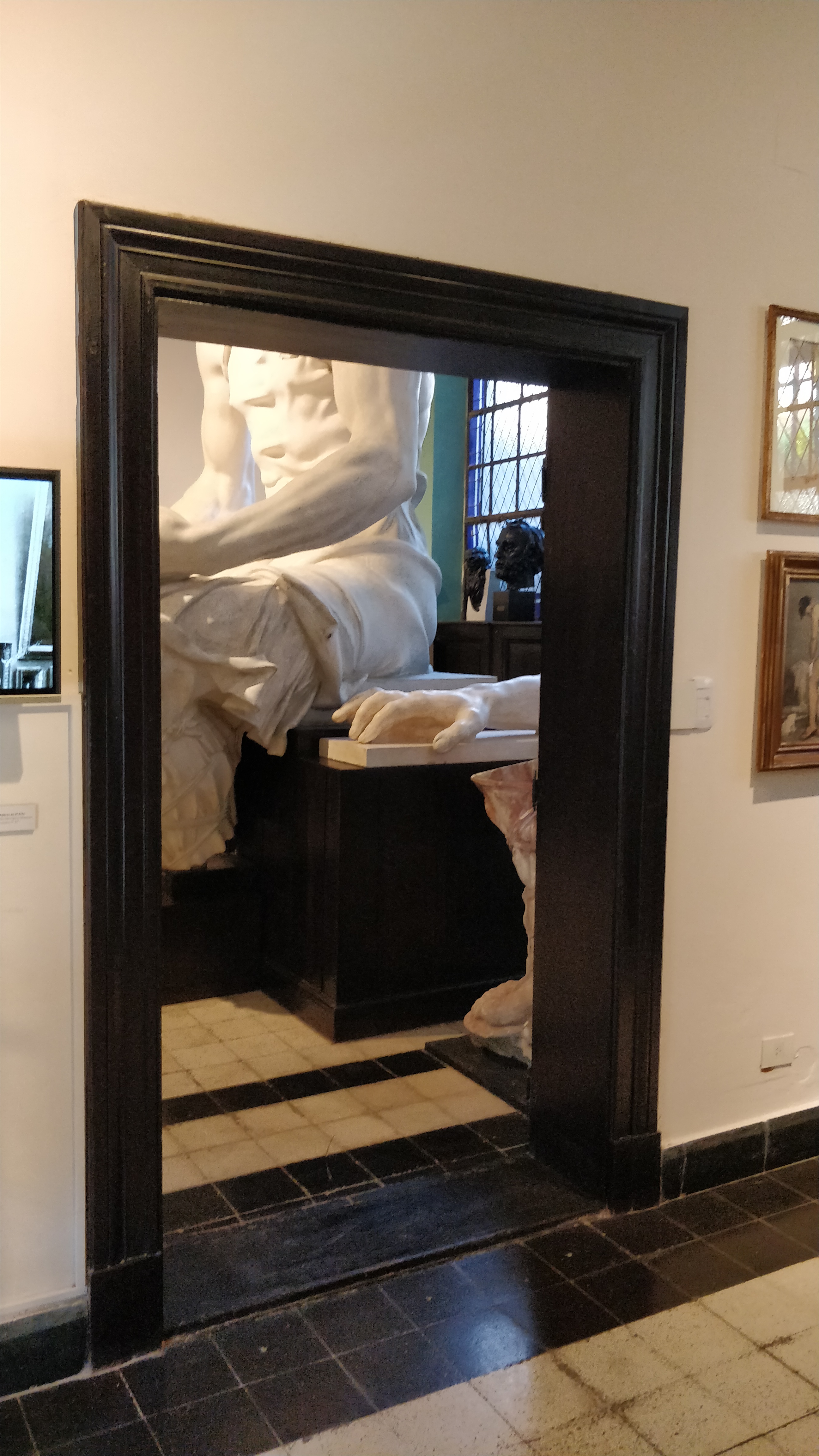
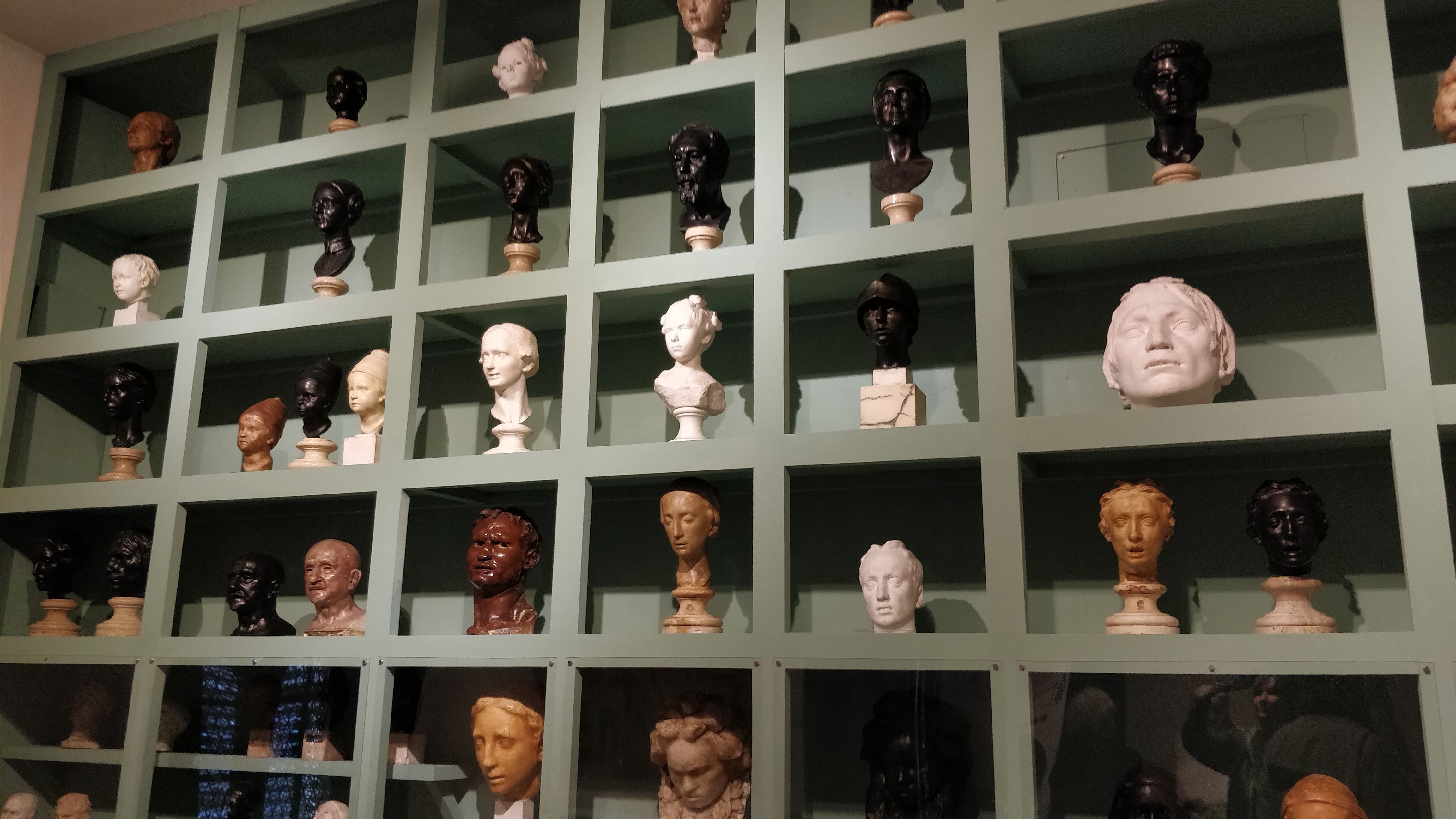
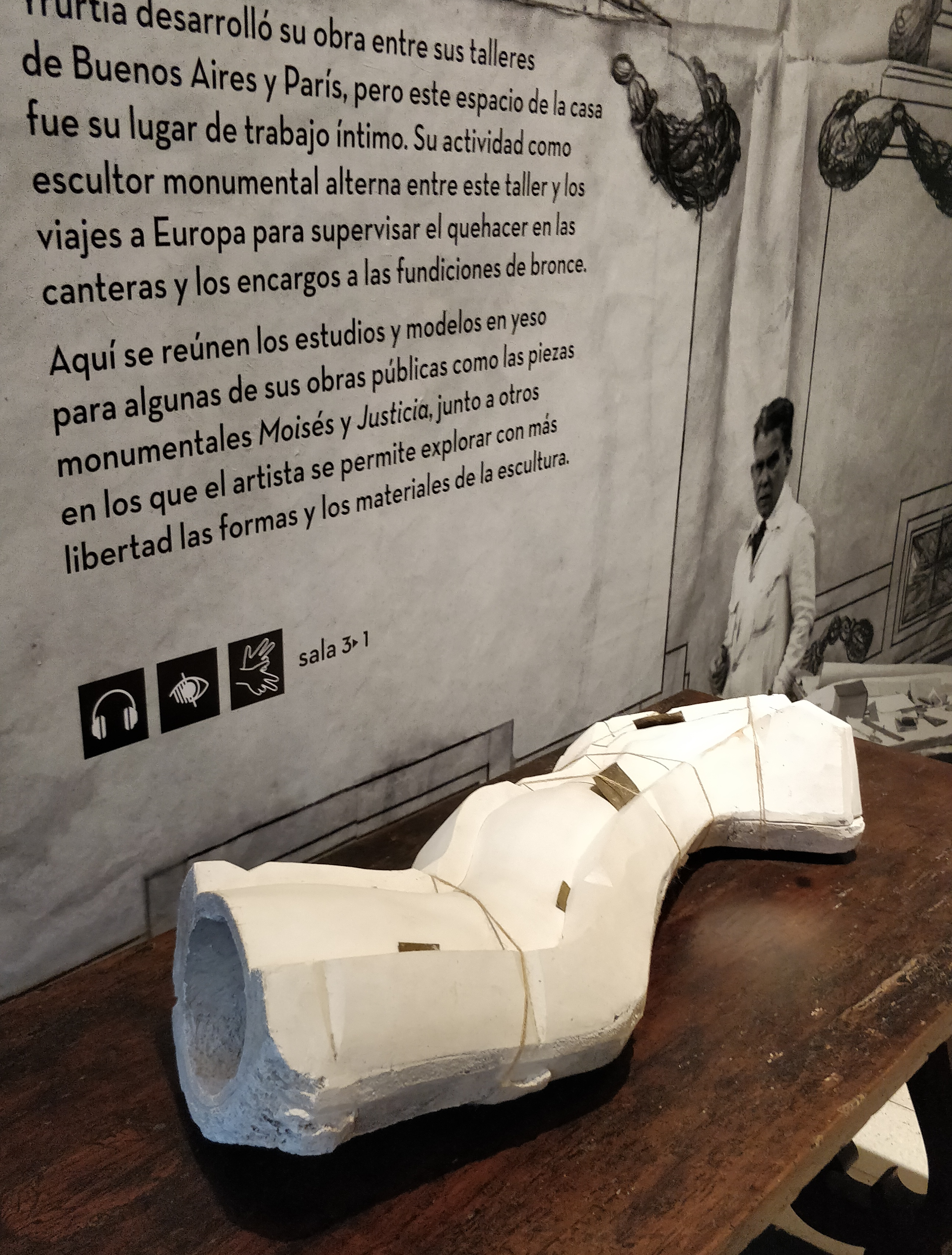
The collection on display isn’t really extensive, but it is really interesting and frequently huge. Stands to reason; Yrurtia was a big deal in public and monument art. Maybe you think it’s kind of a juvenile assessment, being stuck on the size, but that’s probably because you haven’t been in the same small room as stuff that was designed to be viewed from far away.
That is a normal-sized doorway.
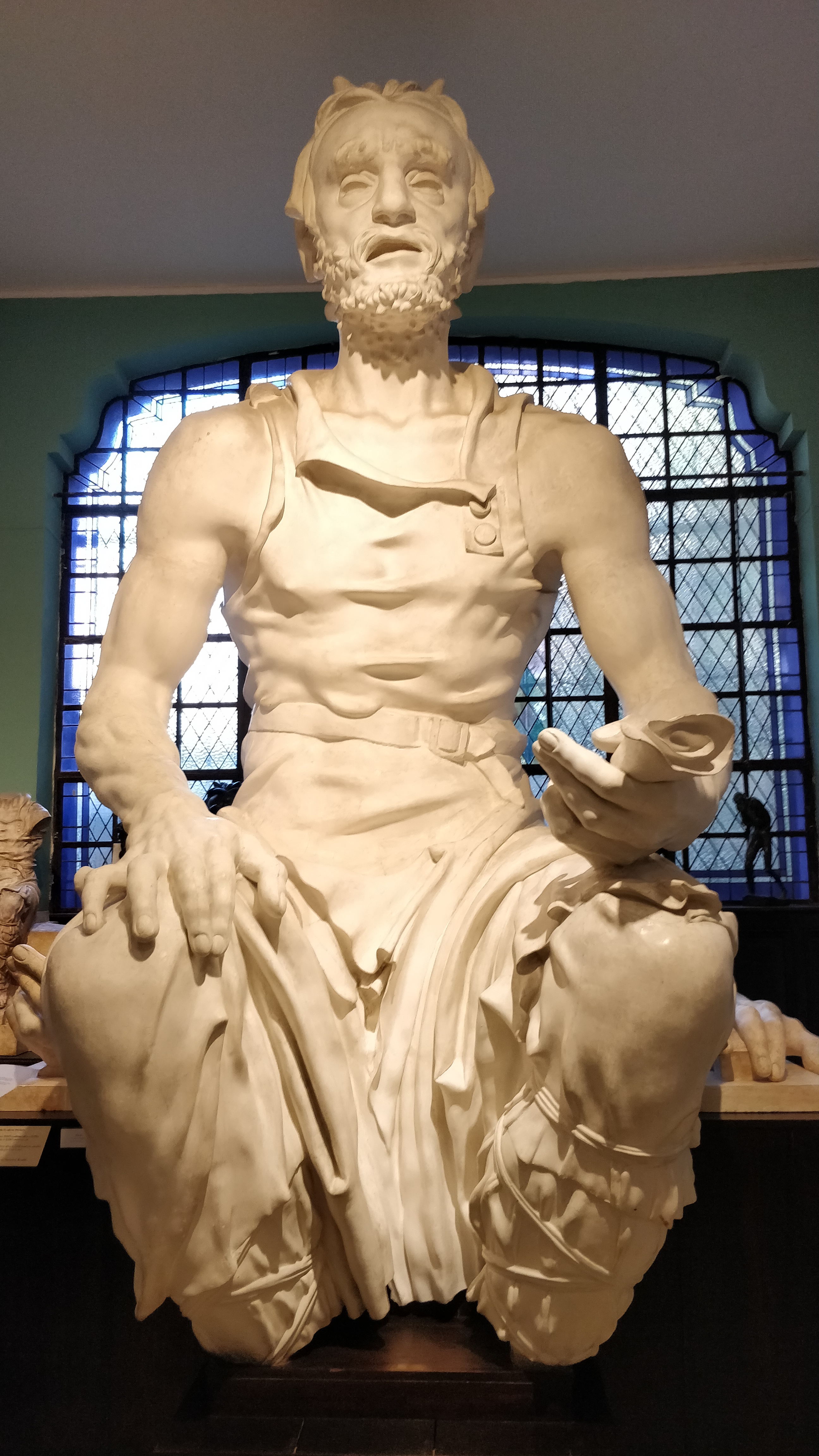
At a certain point, the size is kind of an overwhelming feature.
A study for a big Moses.
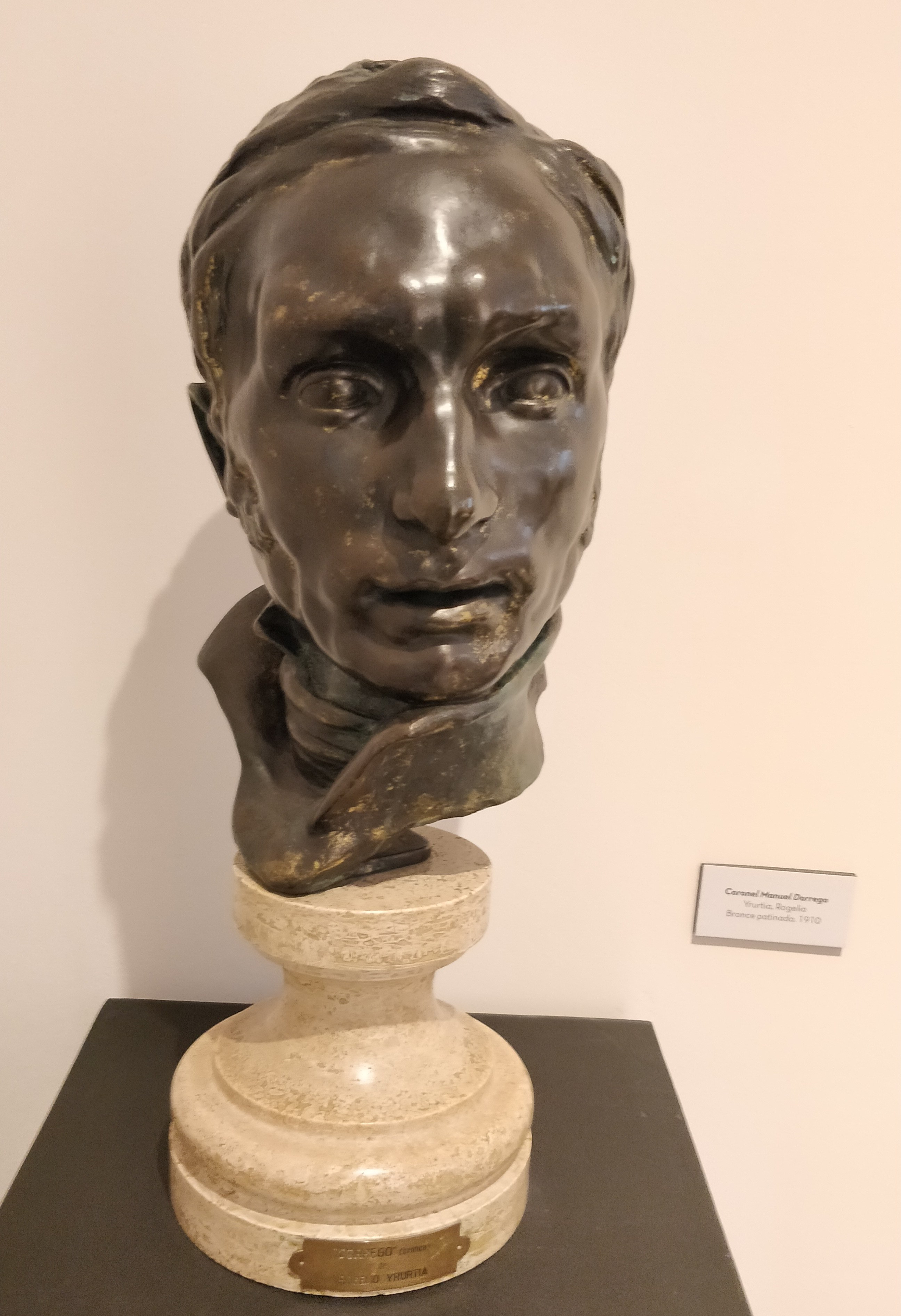
Yrurtia created a monument to Manuel Dorrego, who had (stay with me here, Argentine history is kind of dramatic) opposed the government of the first president, Bernardino Rivadavia, and was named governor of Buenos Aires province following Rivadavia’s resignation. Dorrego himself was not long after overthrown and executed in 1828.
He’s interred in Recoleta cemetery. And so is the guy who executed him. And Founding Father José de San Martín, who had been in Europe, took one look at the whole mess, declined to get involved and went back to Europe.
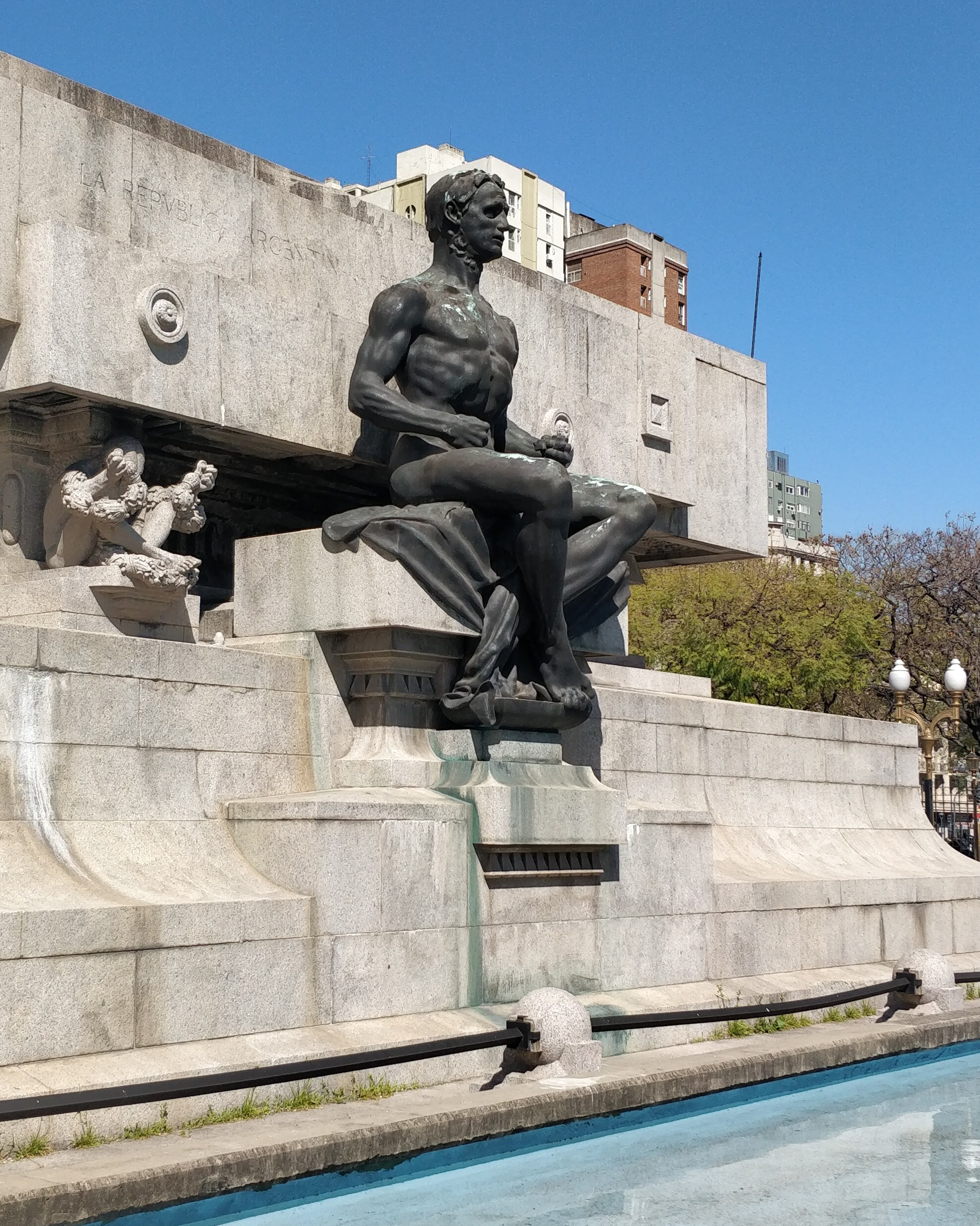
Incidentally, Yrurtia also sculpted the tomb of Bernardino Rivadavia, which is in Plaza Miserere.
He specifically asked that his body not be returned to Buenos Aires after he died (in Spain), but alas.
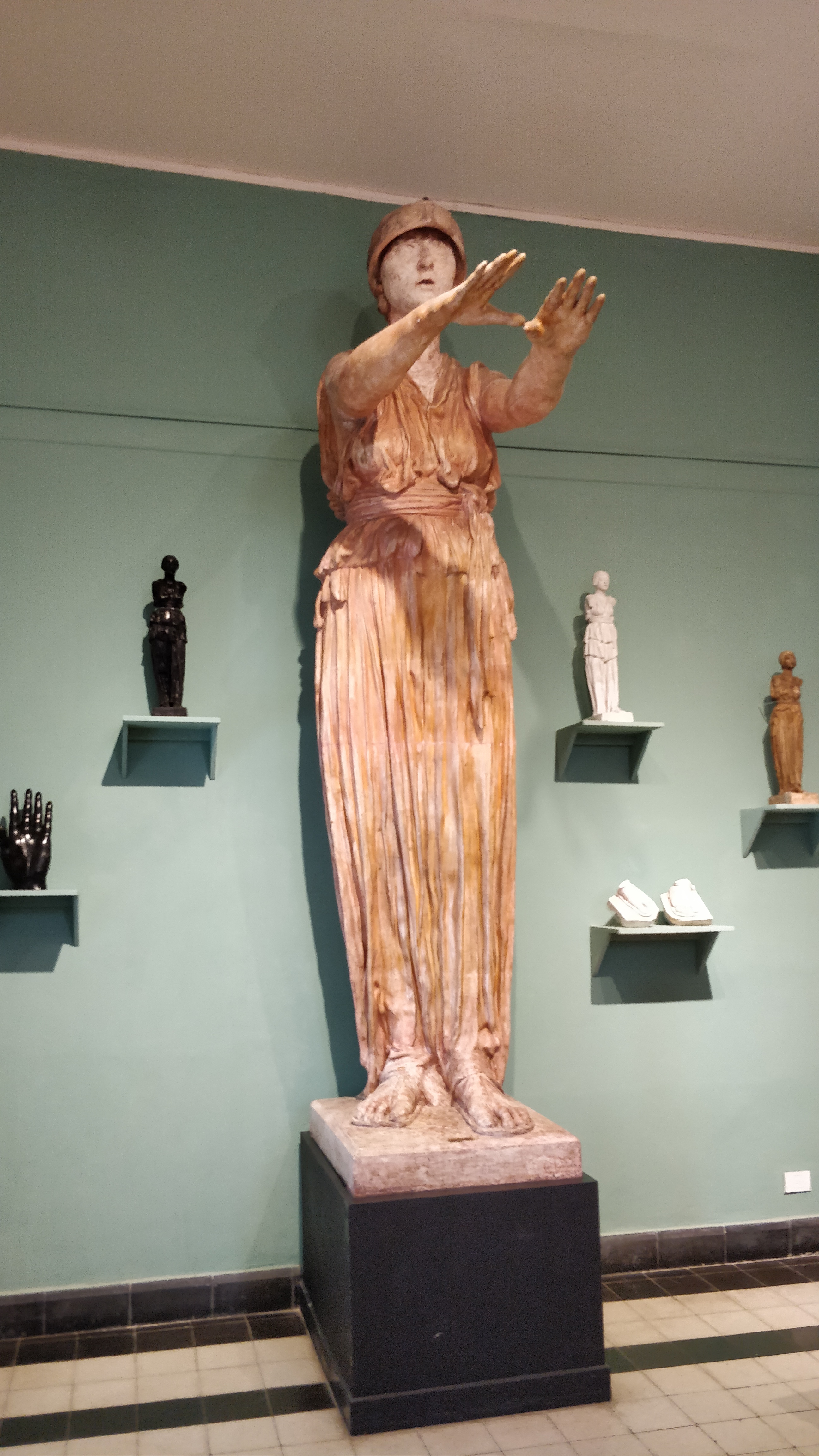
And here is a Justice (commissioned by super rich guy Carlos Delcasse for his tomb and copied in bronze for the national Supreme Court), depicted non-traditionally, without scales or blindfold.
But also kind of like she’s going to strangle you?
The museum also shows how the sausage is made, sculpture-ly speaking, which I recall reading somewhere was part of the point of the museum’s creation (as the house was also his workshop) but now I can’t find the source for that.
How to get a “head” in sculpture lololol
These are videos of the process.
The museum does have a room about Lía Correa Morales, which it should, as she was also an important artist and doesn’t even get her name on the museum itself.
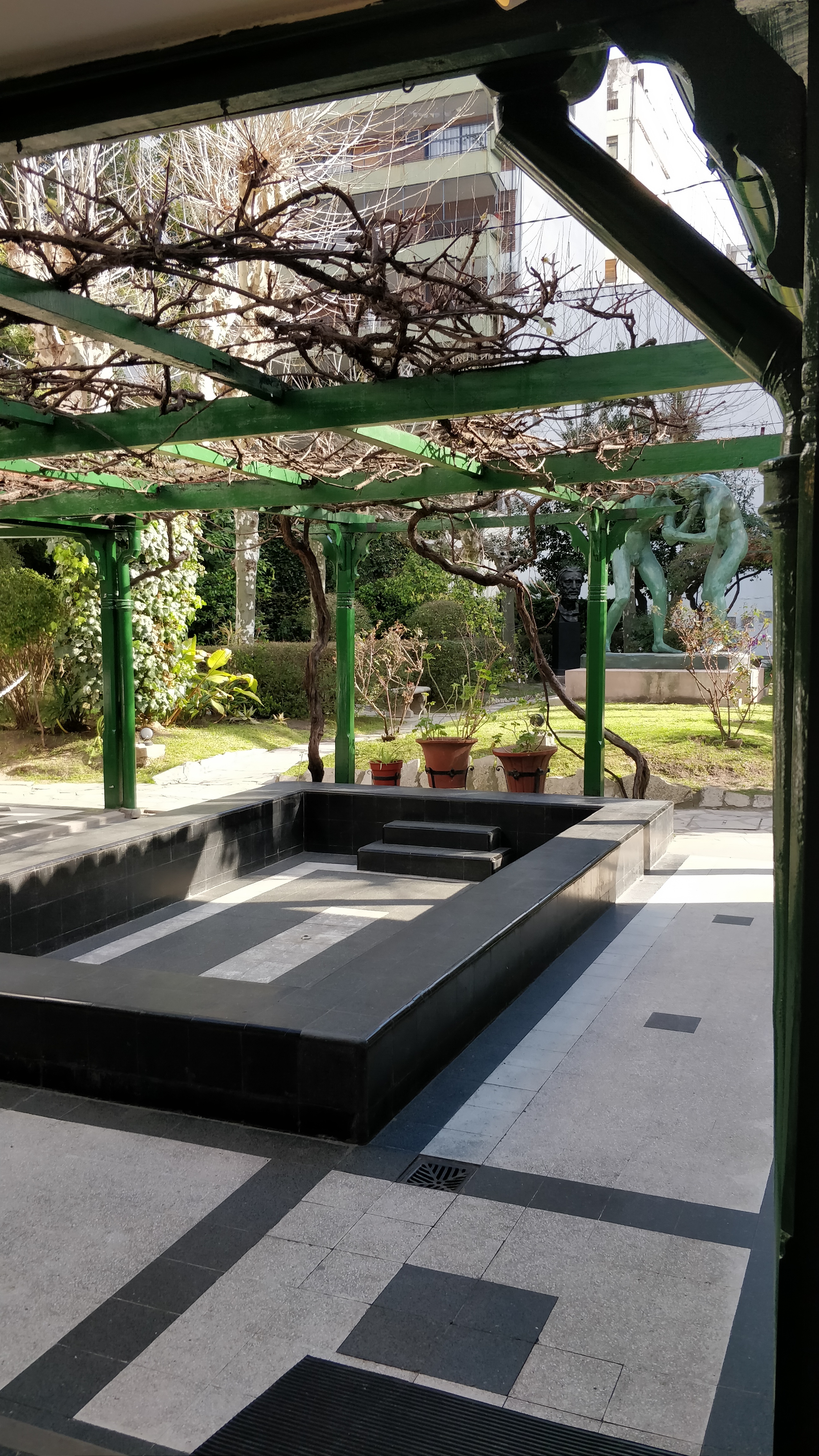
Finally, the house has a sweet garden, in which stands one of Yrurtia’s last works, The Boxers.
Uh, it’s in the back there.
Like most (all?) of the small, state- or city-run museums, this one also hosts workshops and events. The staff is very nice! There wasn’t any English material on hand, so they printed out some translations for us. The museum is in Belgrano, not terribly far from the D subway line, and open Wednesday through Friday from 10am to 6pm and Saturday and Sunday from 11am to 6pm.
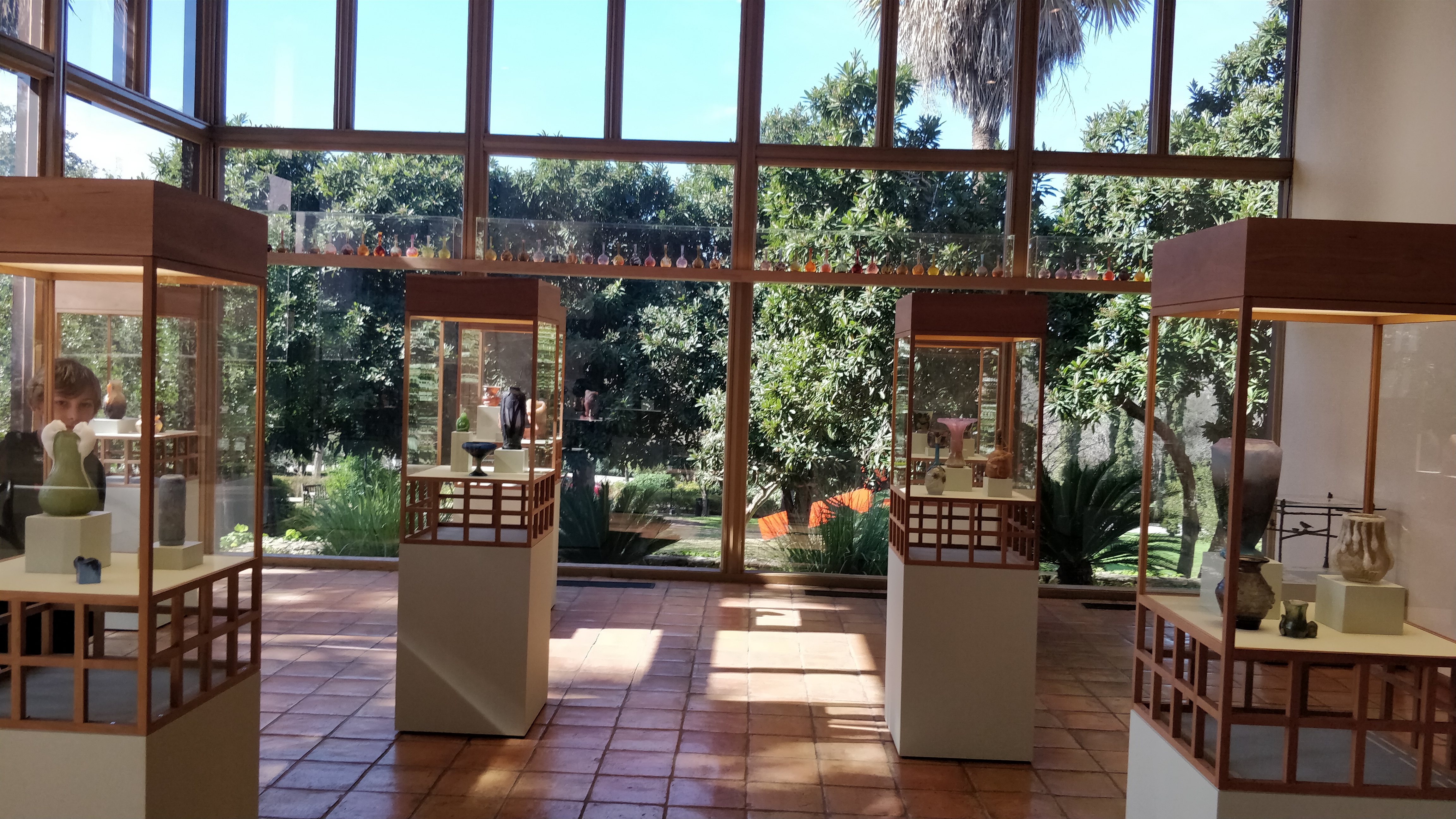
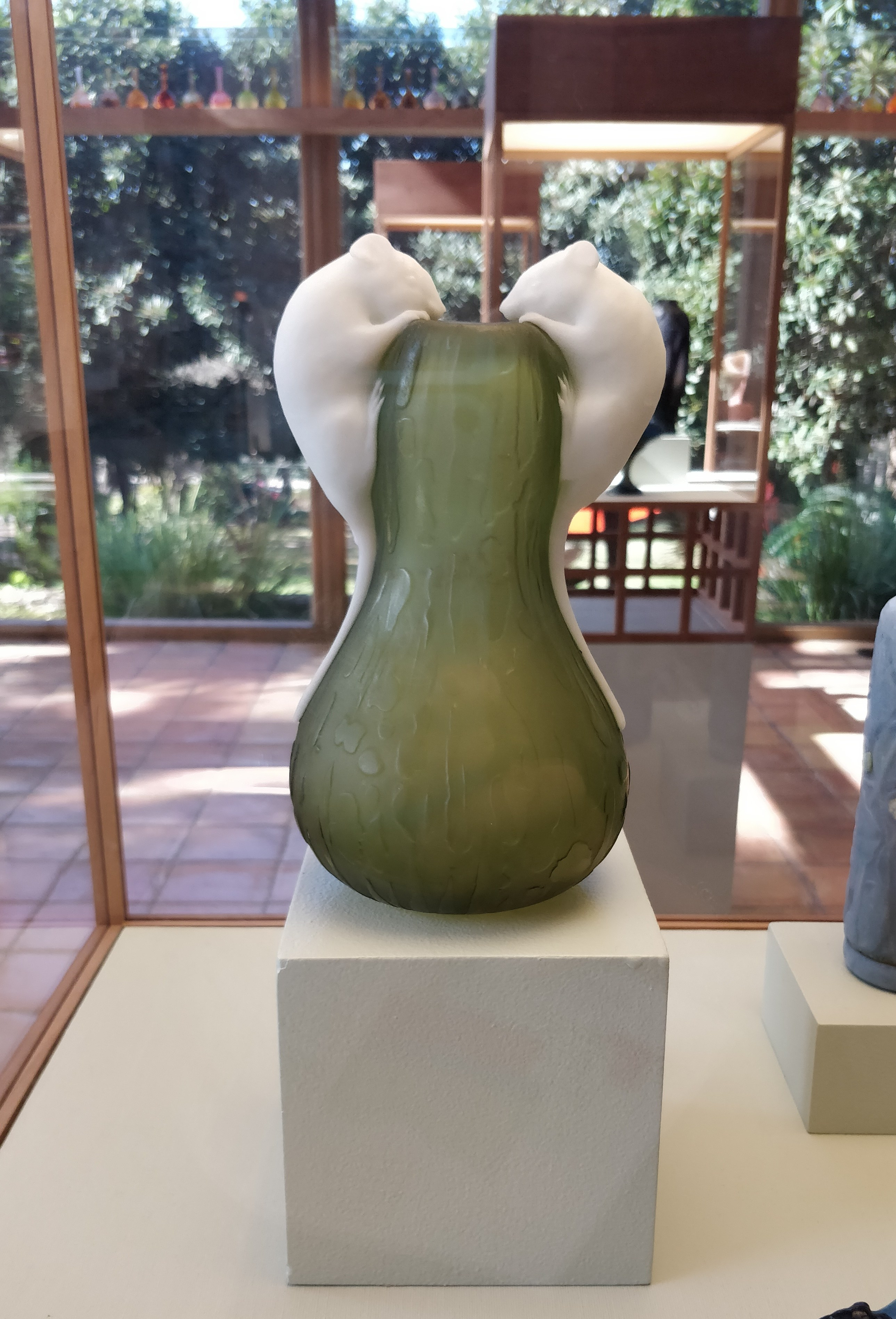
I spent January in the US, and managed, during my relentless pursuit of Tex-Mex and Whataburger, to visit the McNay Art Museum, a place that will always be special to me.
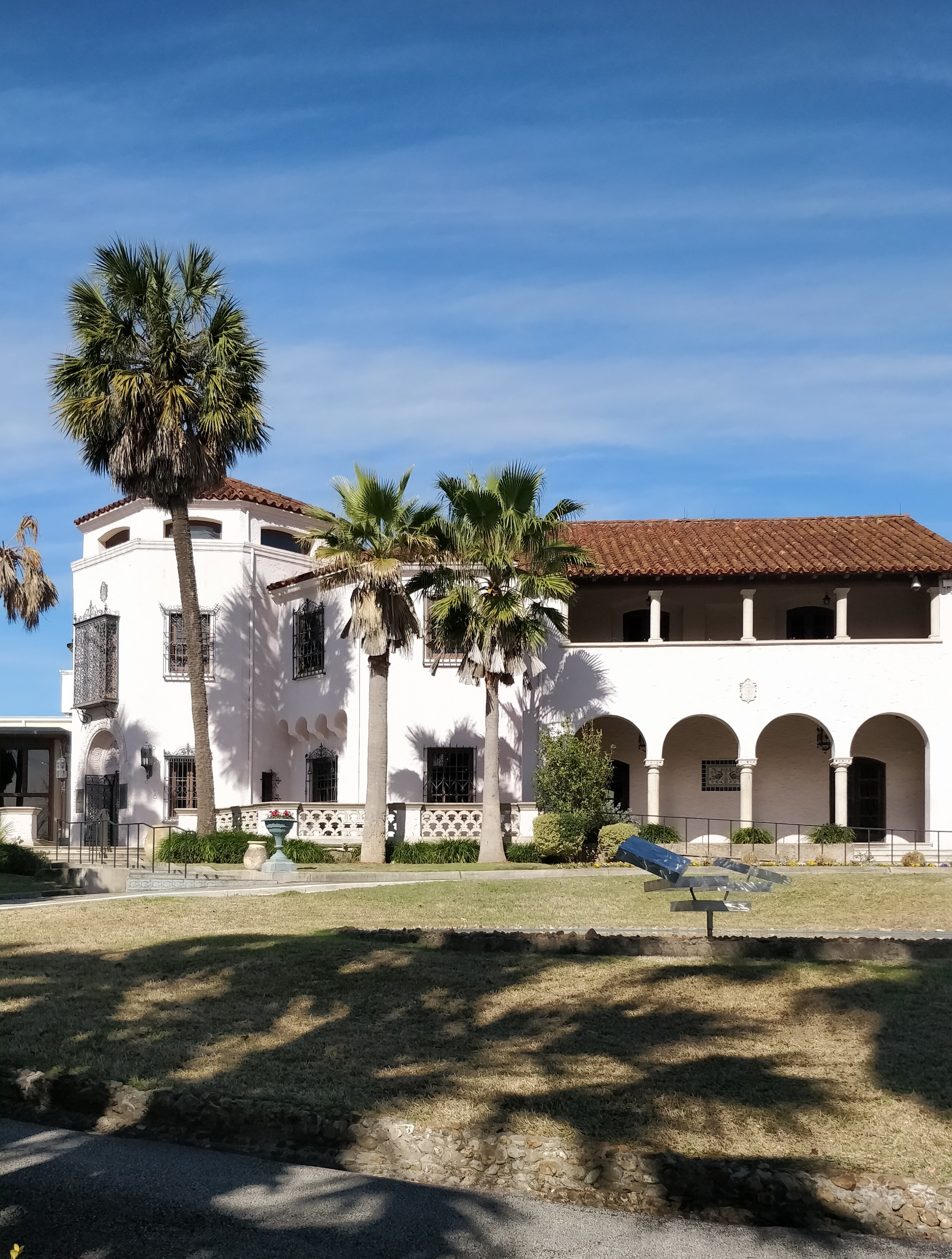
“Expecto Patronum,” I shouted, as a silvery Spanish Colonial-Revival mansion sprang from my wand. “After all this time?” “Always.”
The McNay opened in 1954, with the home, collection, and an endowment of Marion Koogler McNay, as established in her will. It was the first modern art museum in Texas, although the holdings expanded outside of that frame.
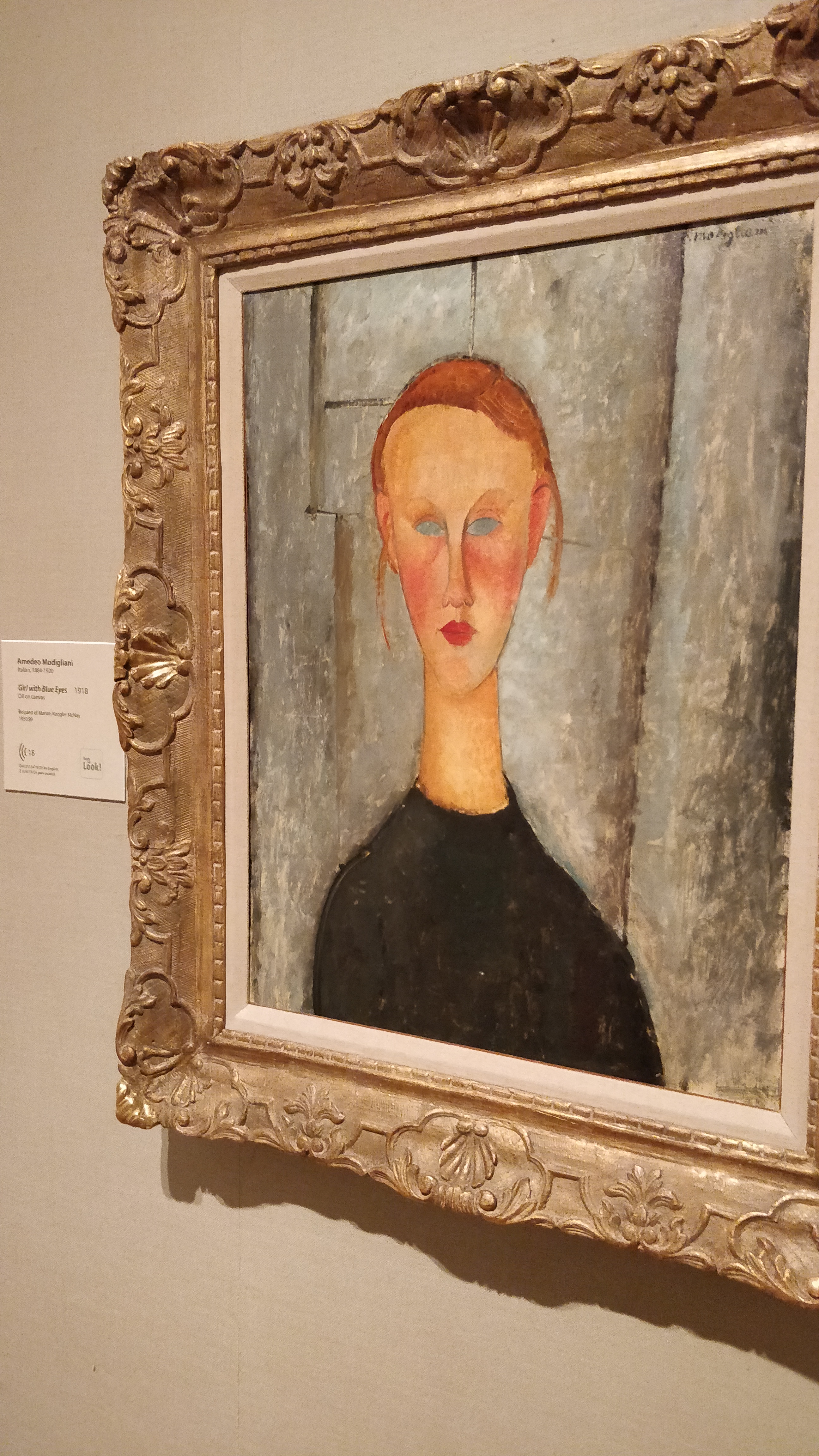
When I was a regular visitor, as a teenager, it was already a super cool place. There was an auditorium and workshop space, the grounds were beautiful, and the museum was free. I went often, and I got pretty familiar with the collection.
She isn’t where she used to be, but I still found her.
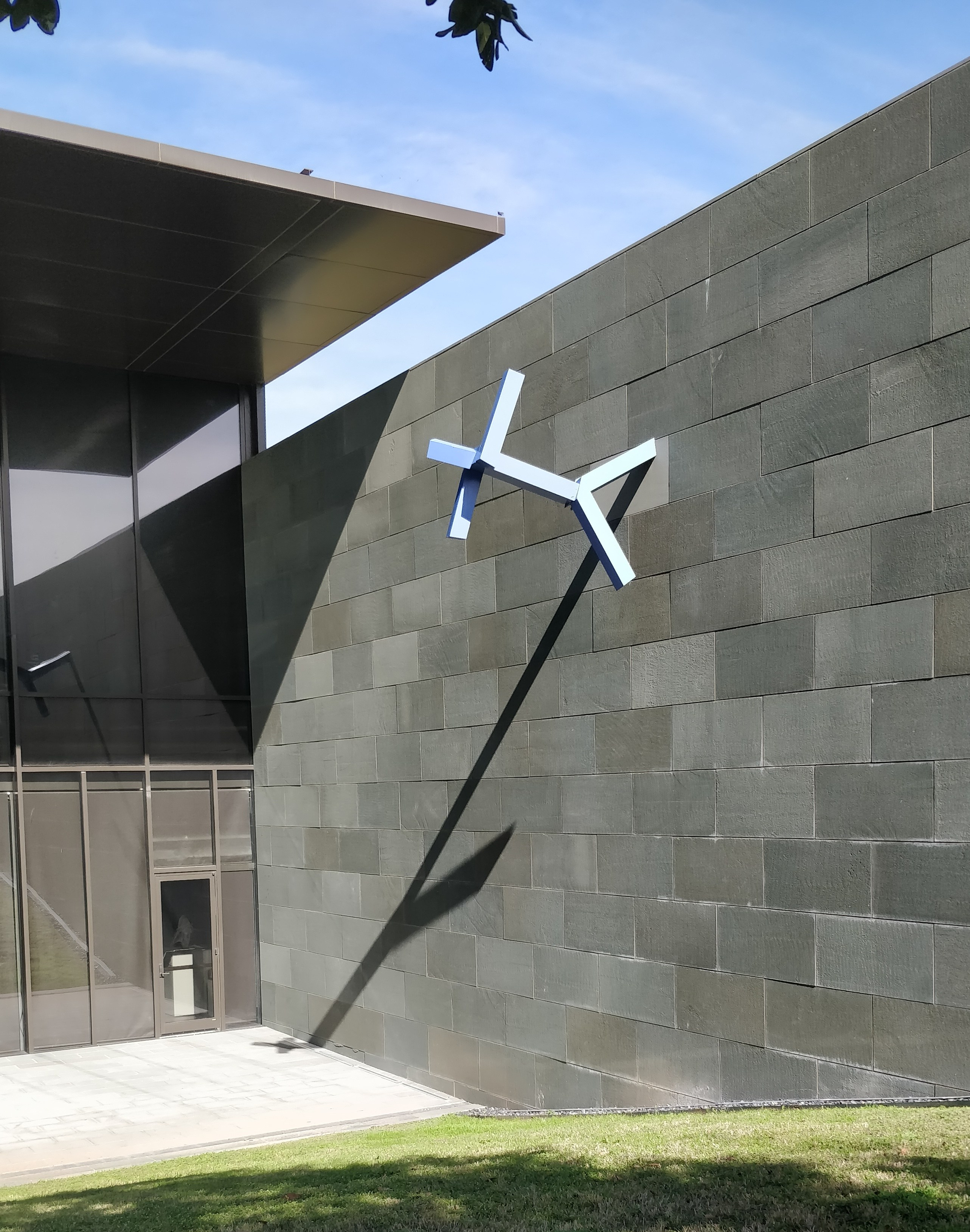
In 2008, the museum underwent a heckin big expansion, adding 45,000 square feet of space plus a sculpture garden. It isn’t free anymore, but it does have a cool gift shop and also lots of exhibitions. I do feel a bit wistful for the smaller oasis the McNay was for me back in the day, but it has grown and it is thriving and one must be satisfied with that.
Plus now it has this guy, who could hardly be less than an object of delight.
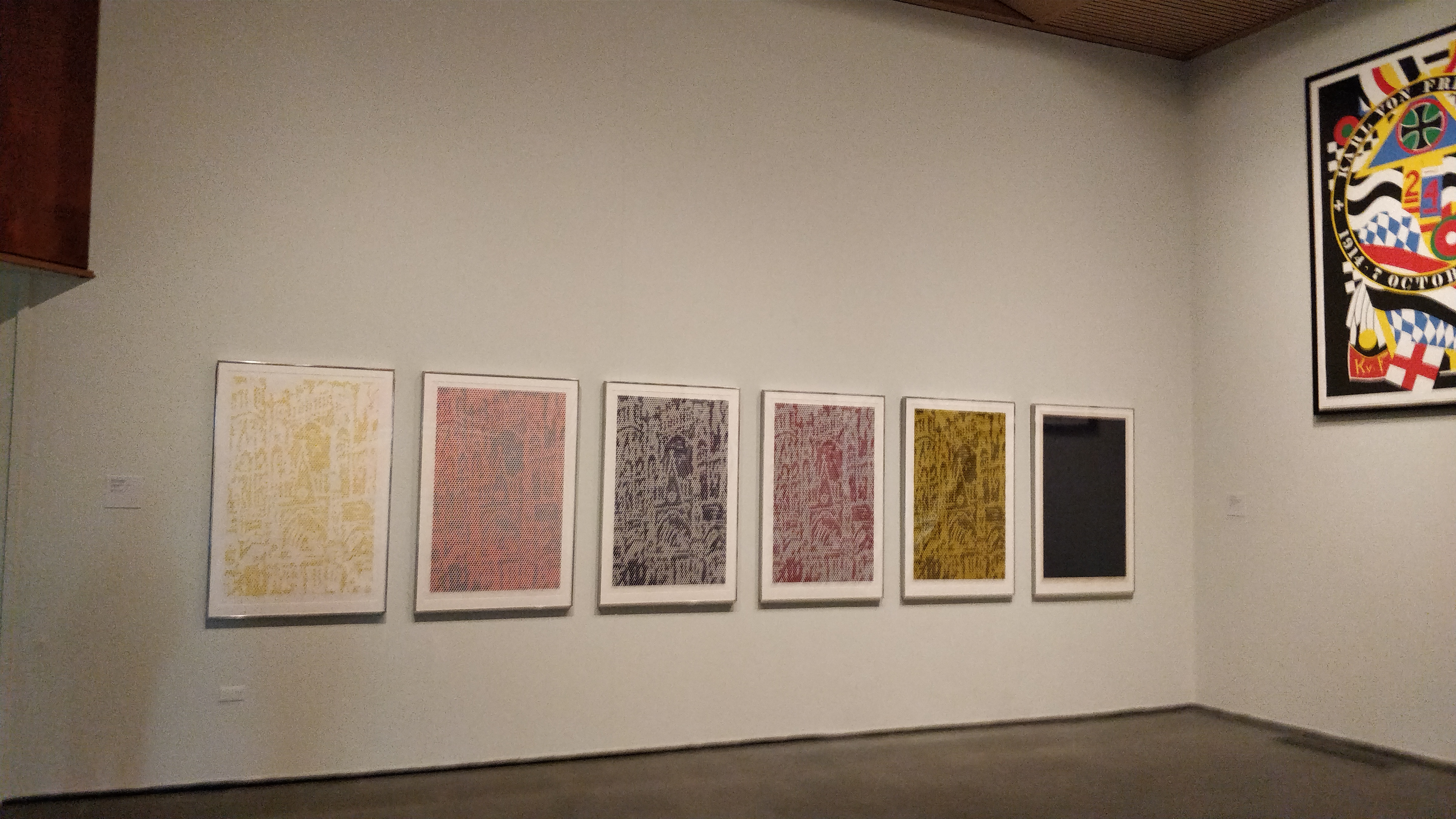
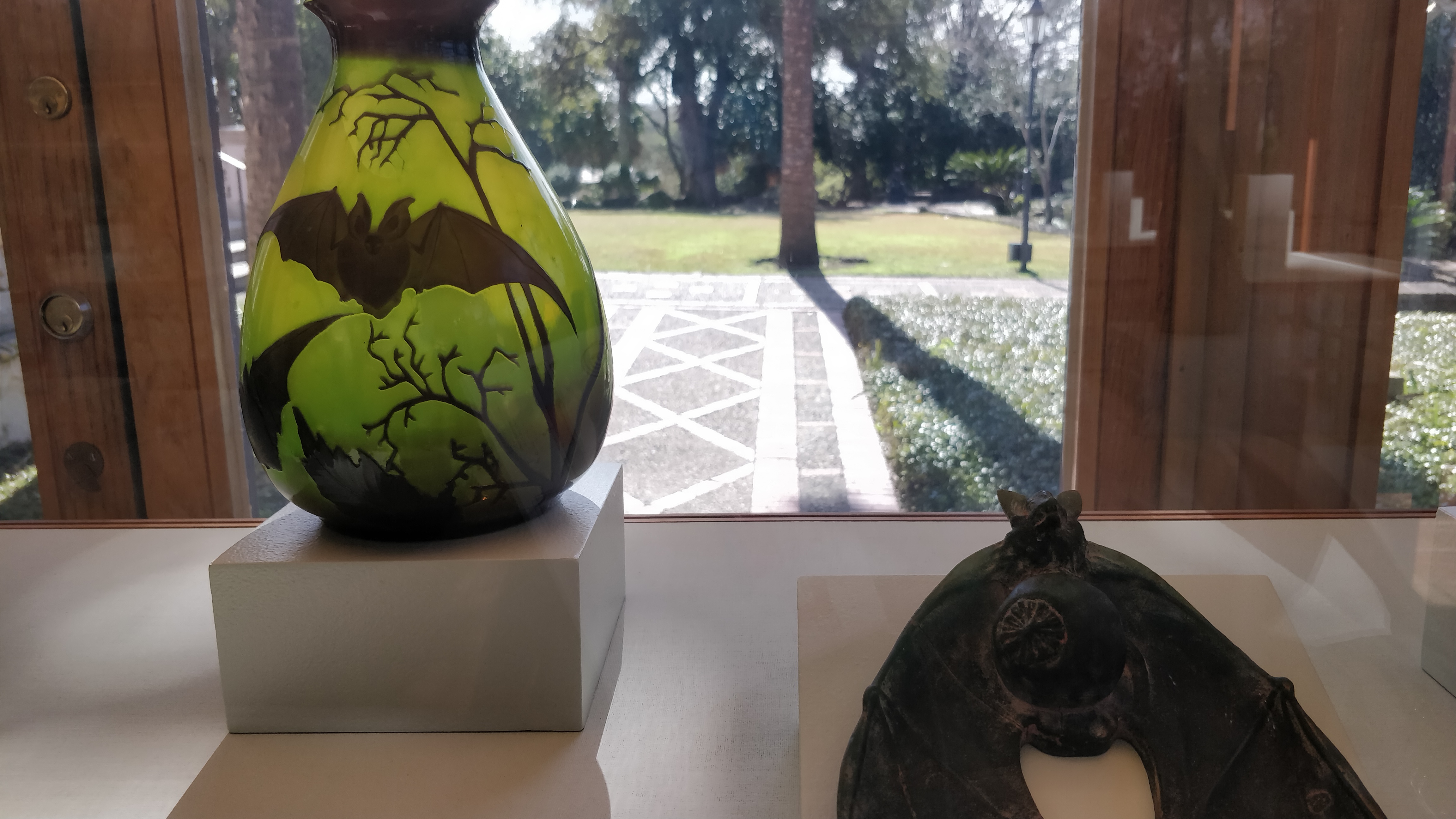
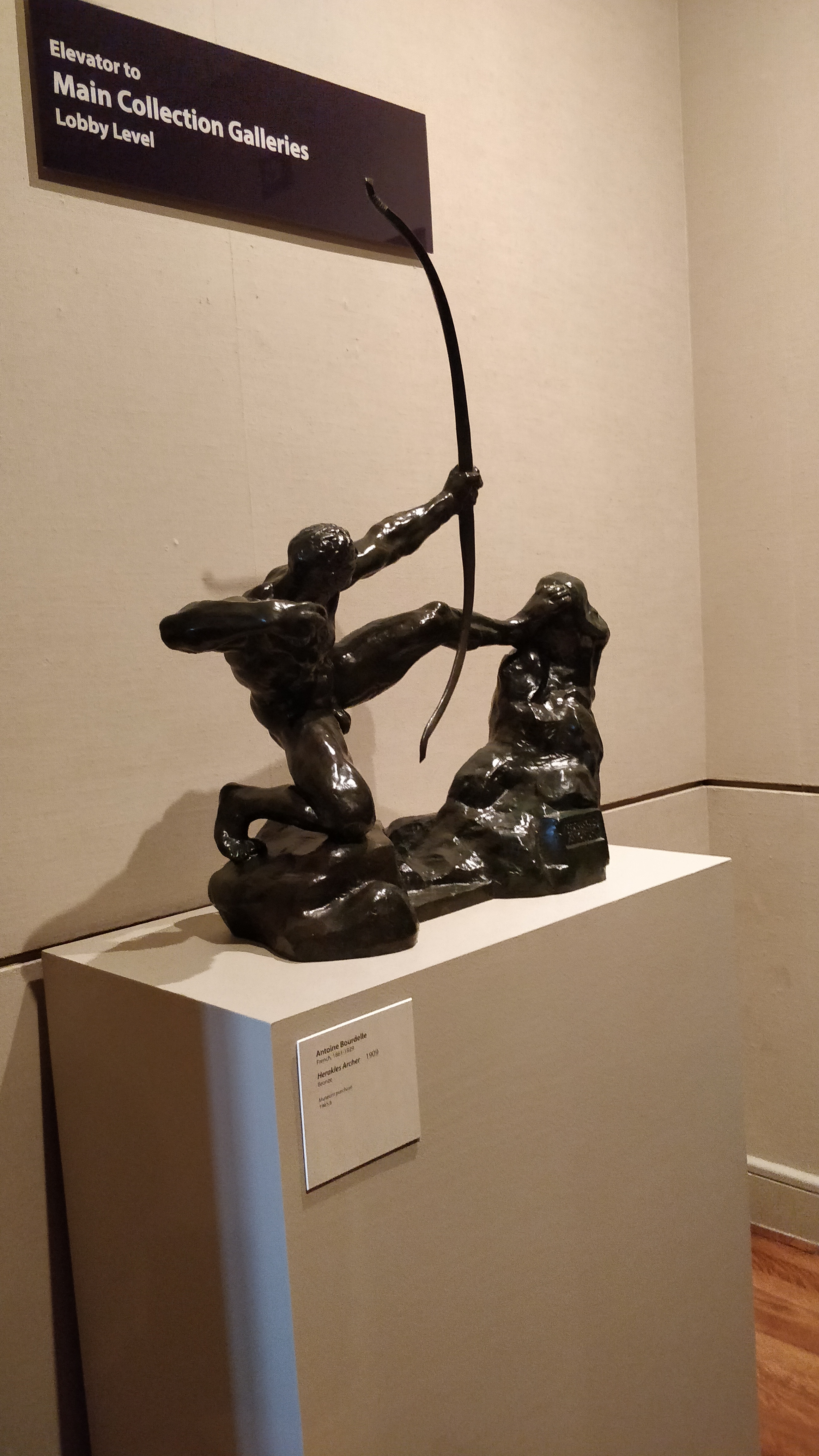
I took a metric ton of photos, but I won’t subject you to them all. Mainly, I was just very happy to visit some old friends.
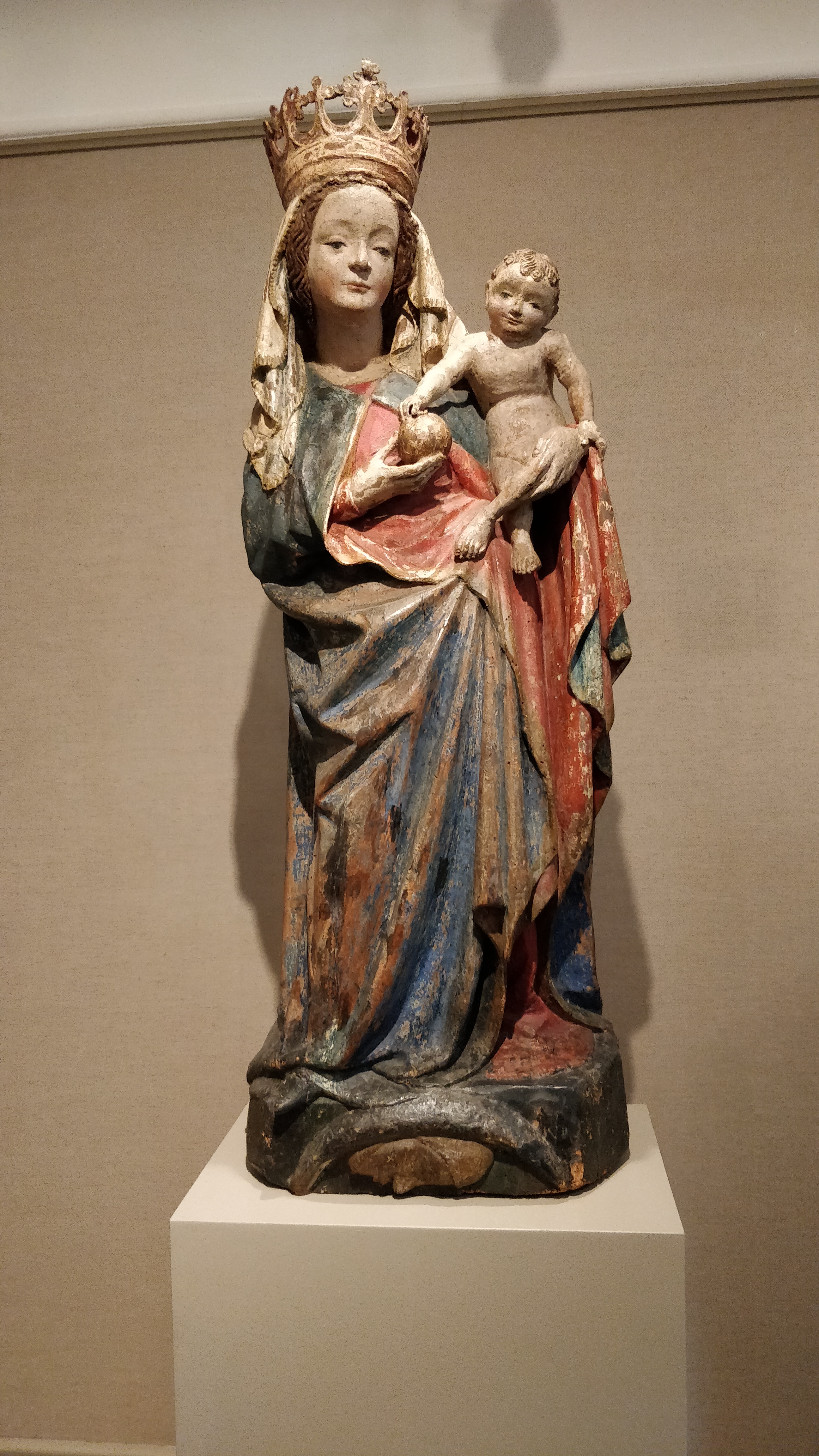
My girl here is obviously not modern; she’s 15th century German. But you could still say baby Jesus here is a whole #mood.
And meet some new ones.
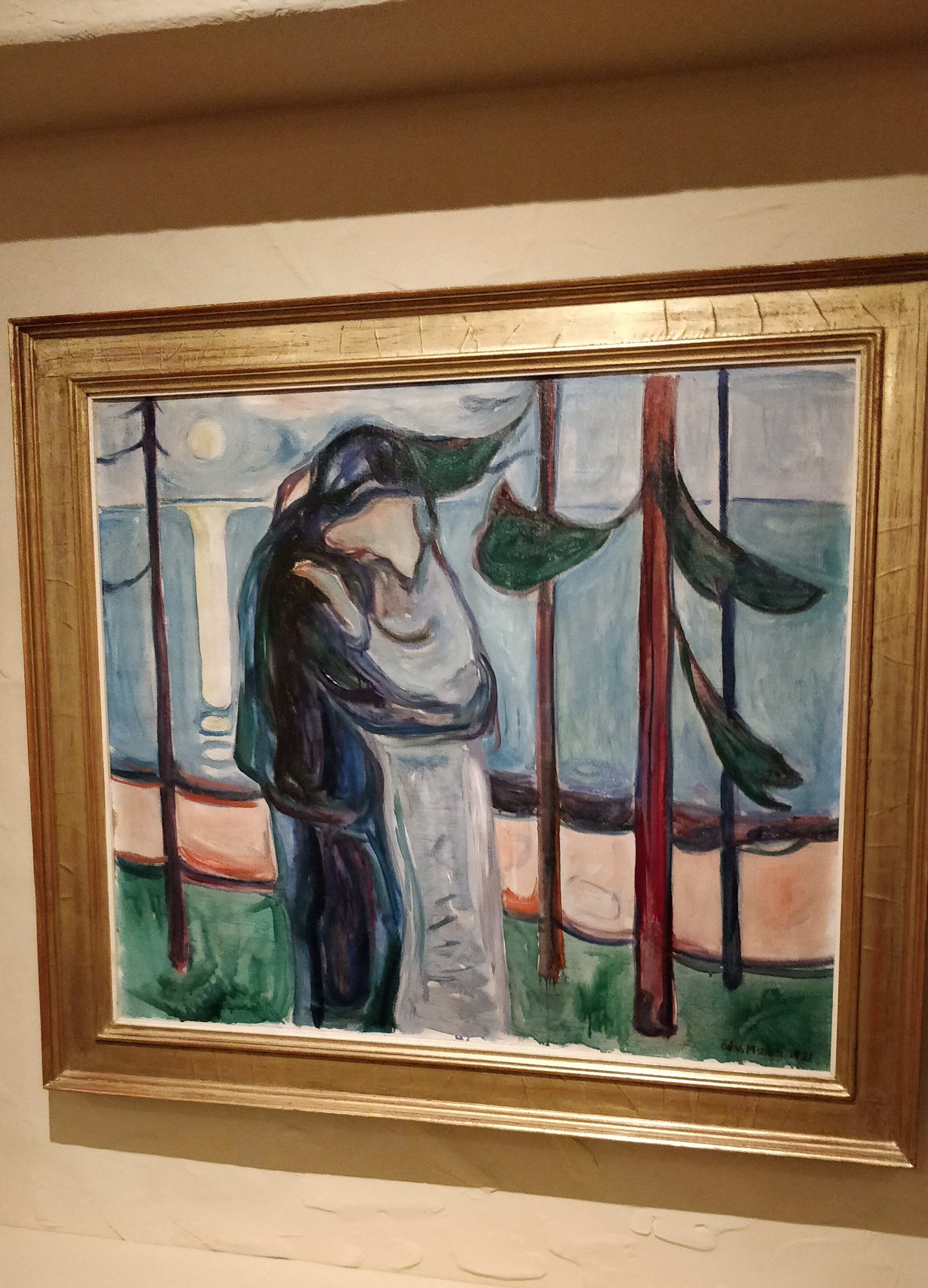
Is that a Munch moon or are you just happy to see me
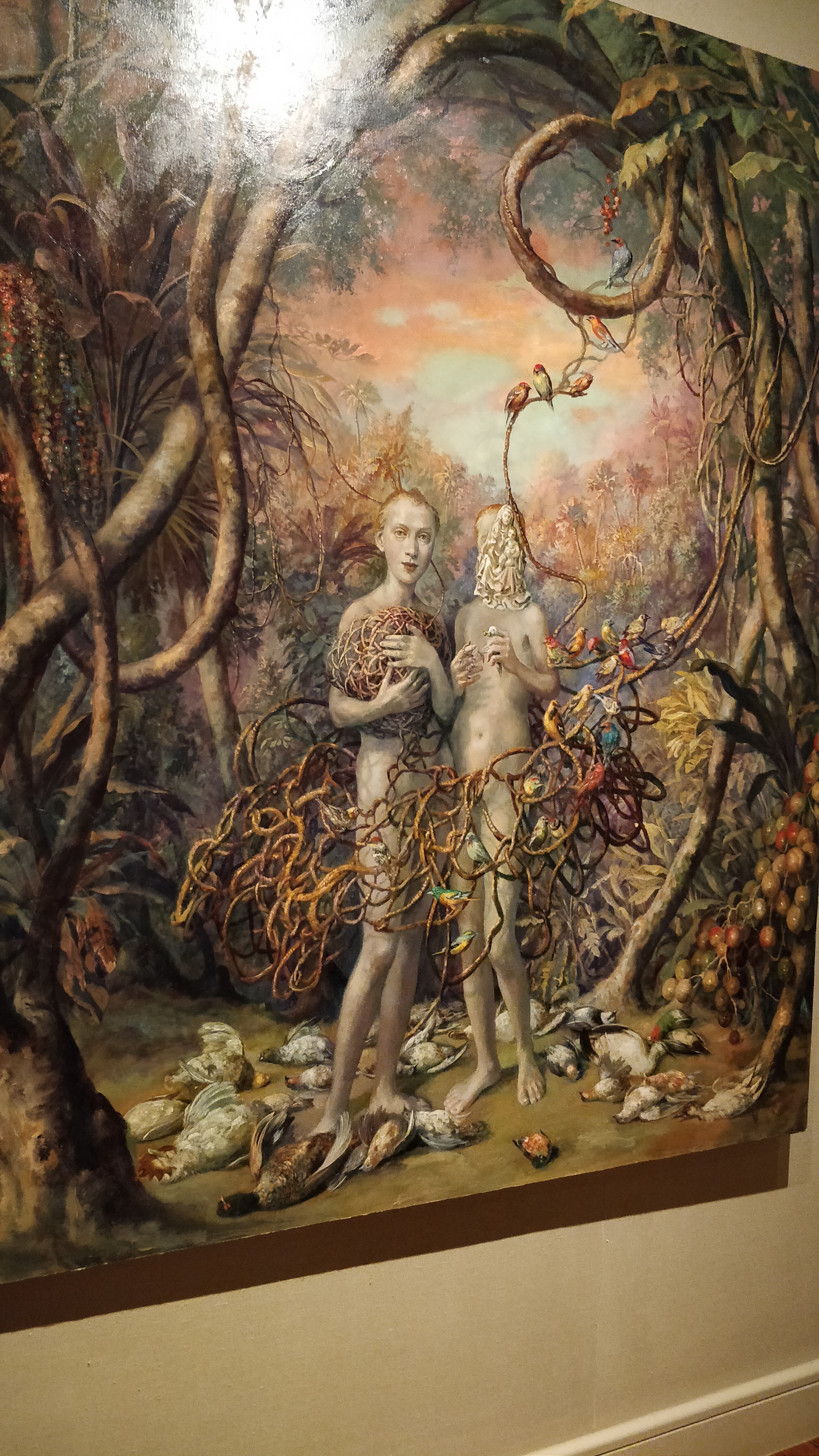
Julie Hefferman’s Self-Portrait as a Tangled Nest (2006), which is…a lot
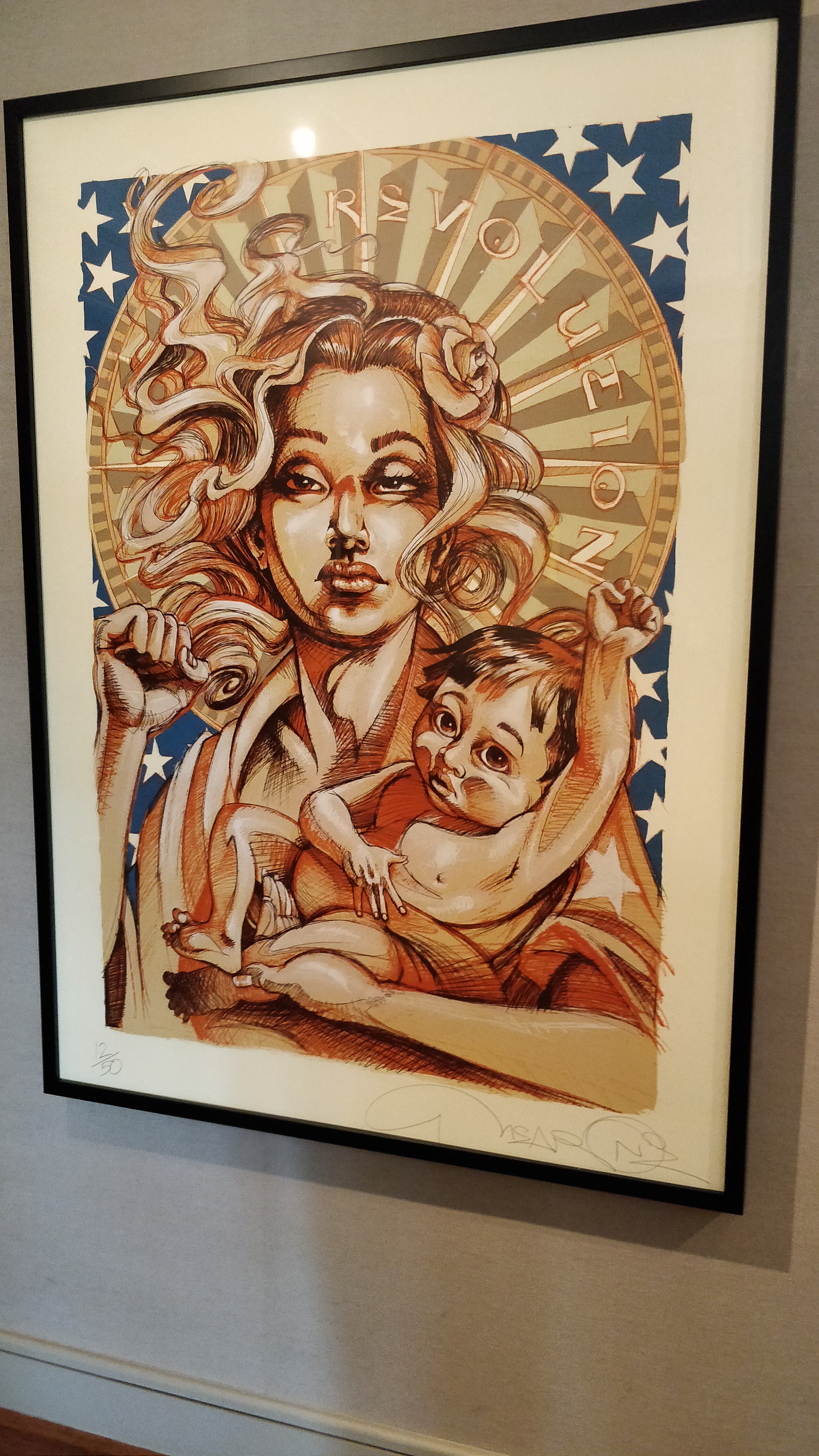
Mear One’s Revolution (2012), just saying what we’re all thinking.
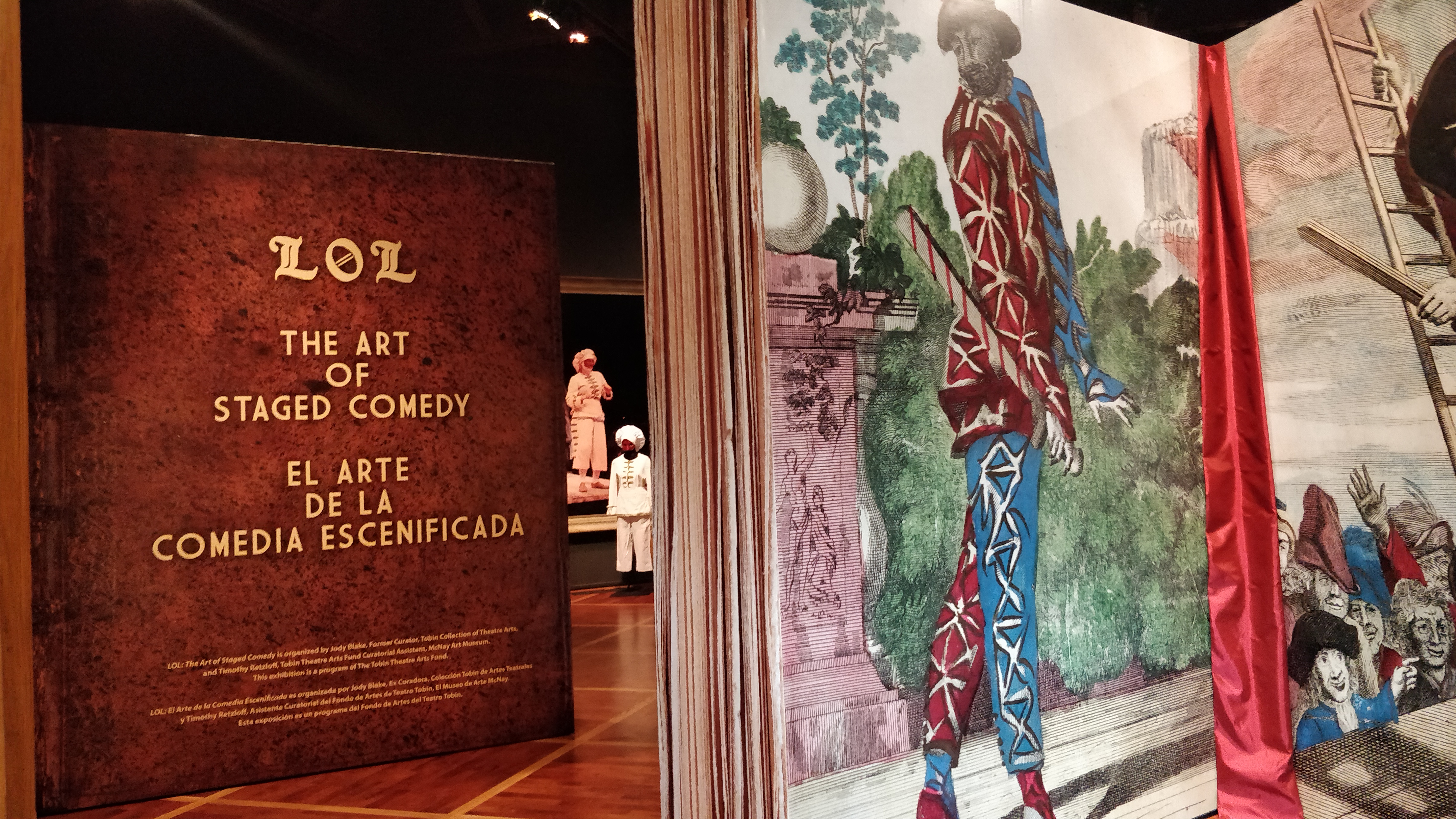
The McNay also has a big-time theatre arts collection, some of which formed part of this exceptionally fun show:
They did it for the lolz
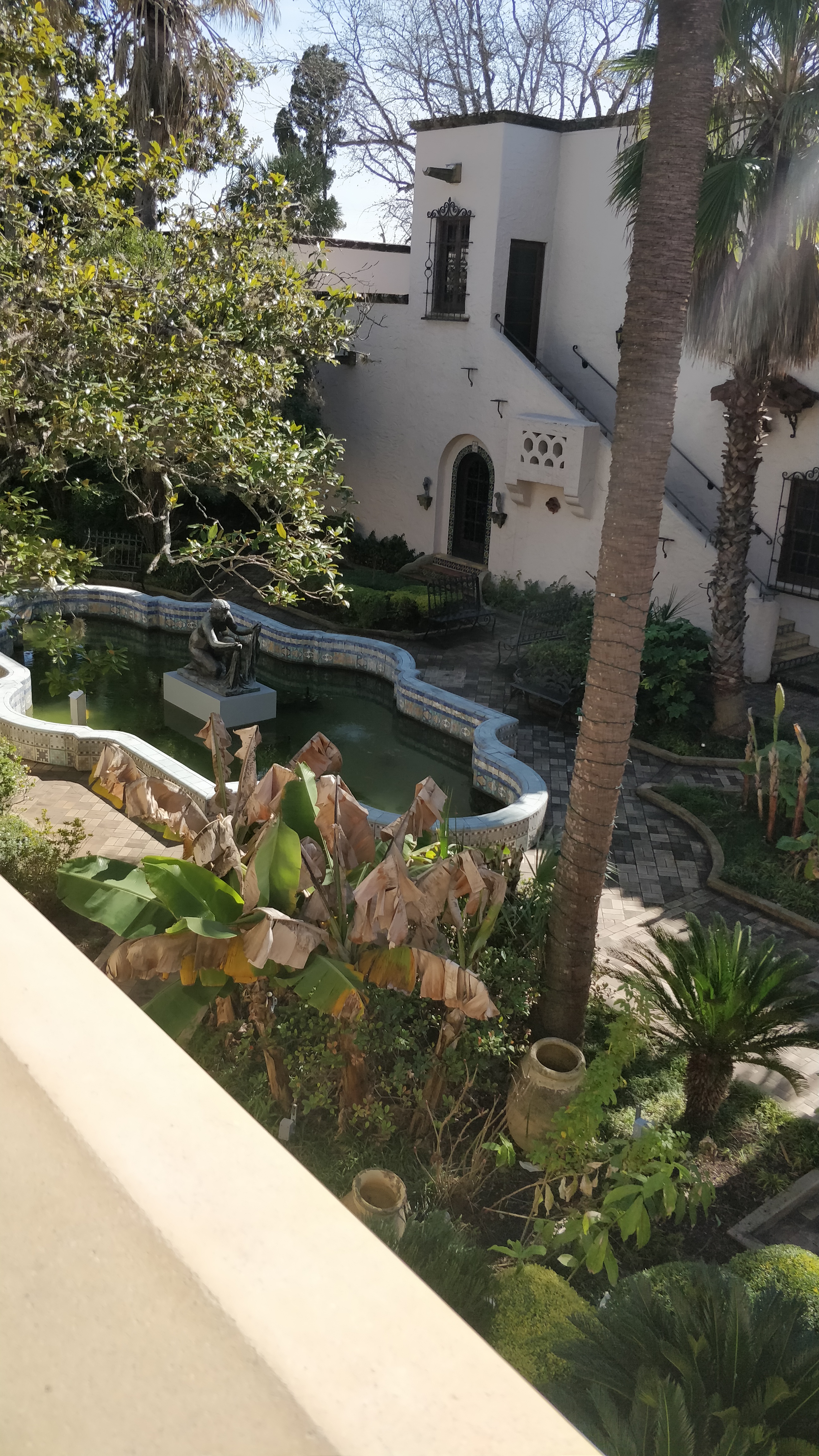
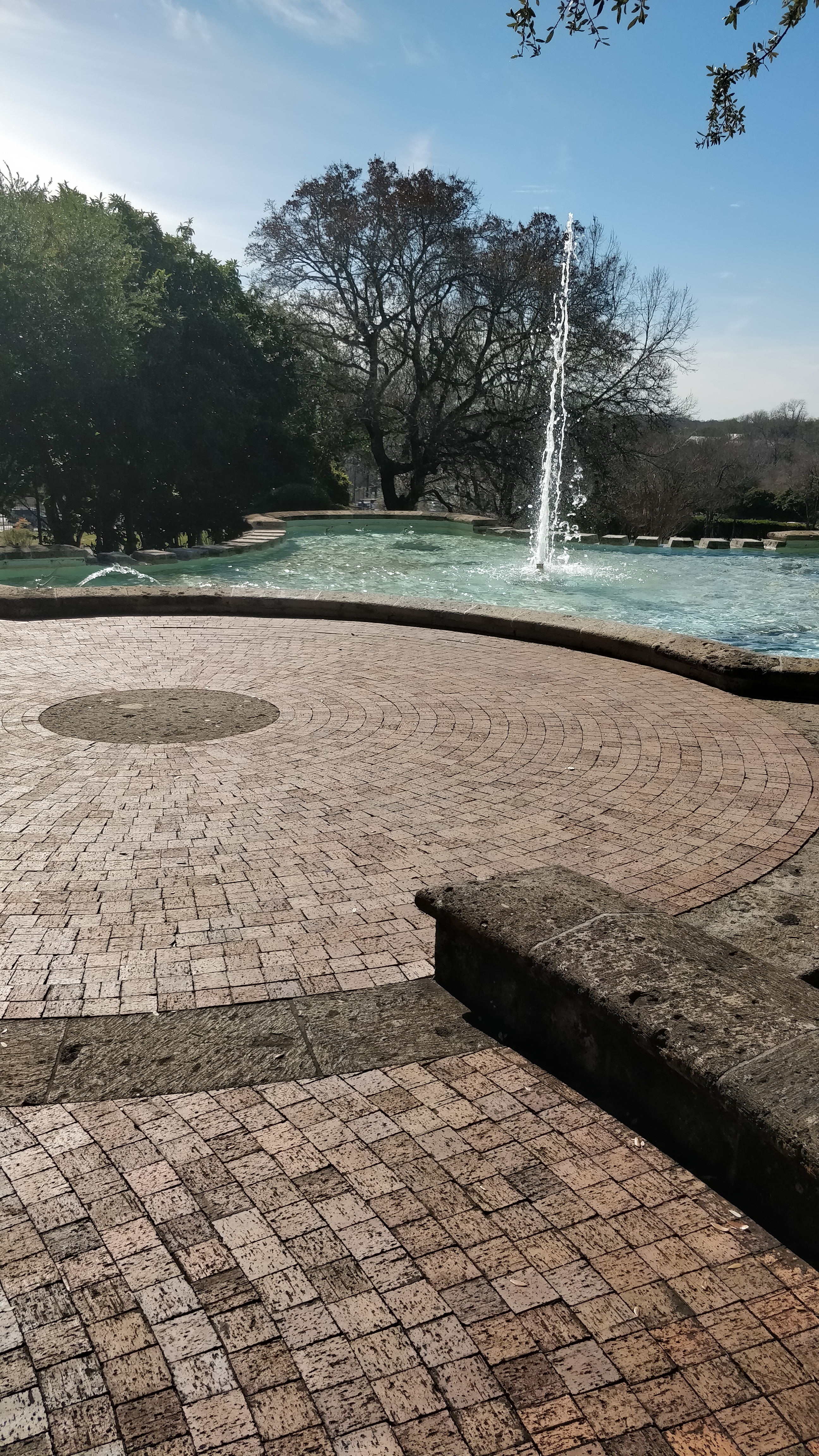
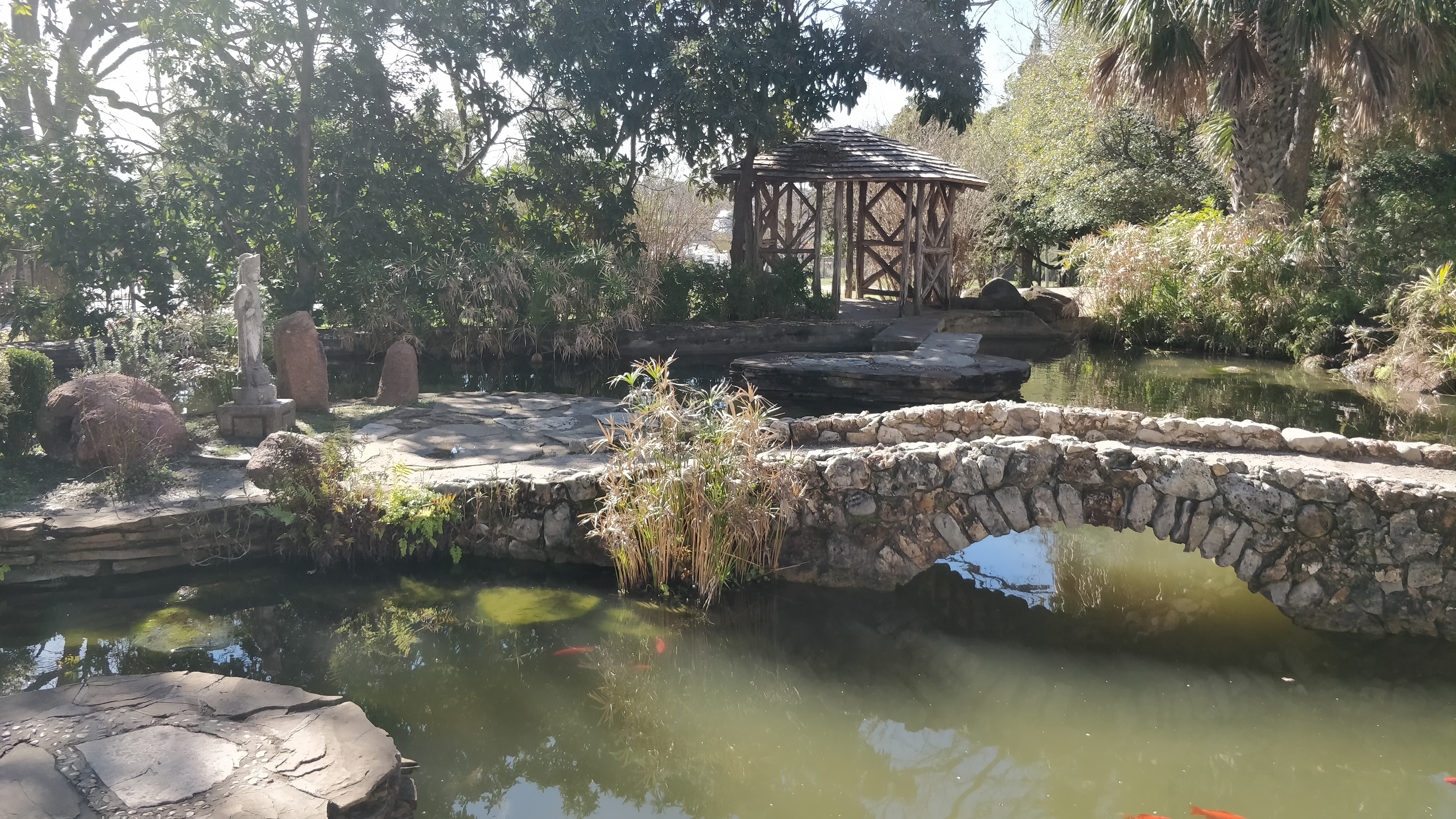
Just a couple more pictures of the courtyard and grounds, I promise:
Should you wish to explore the collection and temporary exhibits more, the museum has a robust online presence. But do go visit if you’re ever in the area; you’ll be so glad you did. The McNay is treasure of San Antonio.
The McNay Art Museum is closed Monday and Tuesday, and general admission is relatively steep, at least to me (as I’m used to the inexpensive entry fees of Argentina), but they have a pretty extensive free and discount list. See the website for all the where, when, and how much nitty gritty.
December is here, and despite my strenuous objections, spring is warming up the city. These will be the last weeks to enjoy the parks and gardens without feeling super hot and gross the whole time. It’s time to visit the plant museum.
But for real what’s a garden if not a plant museum
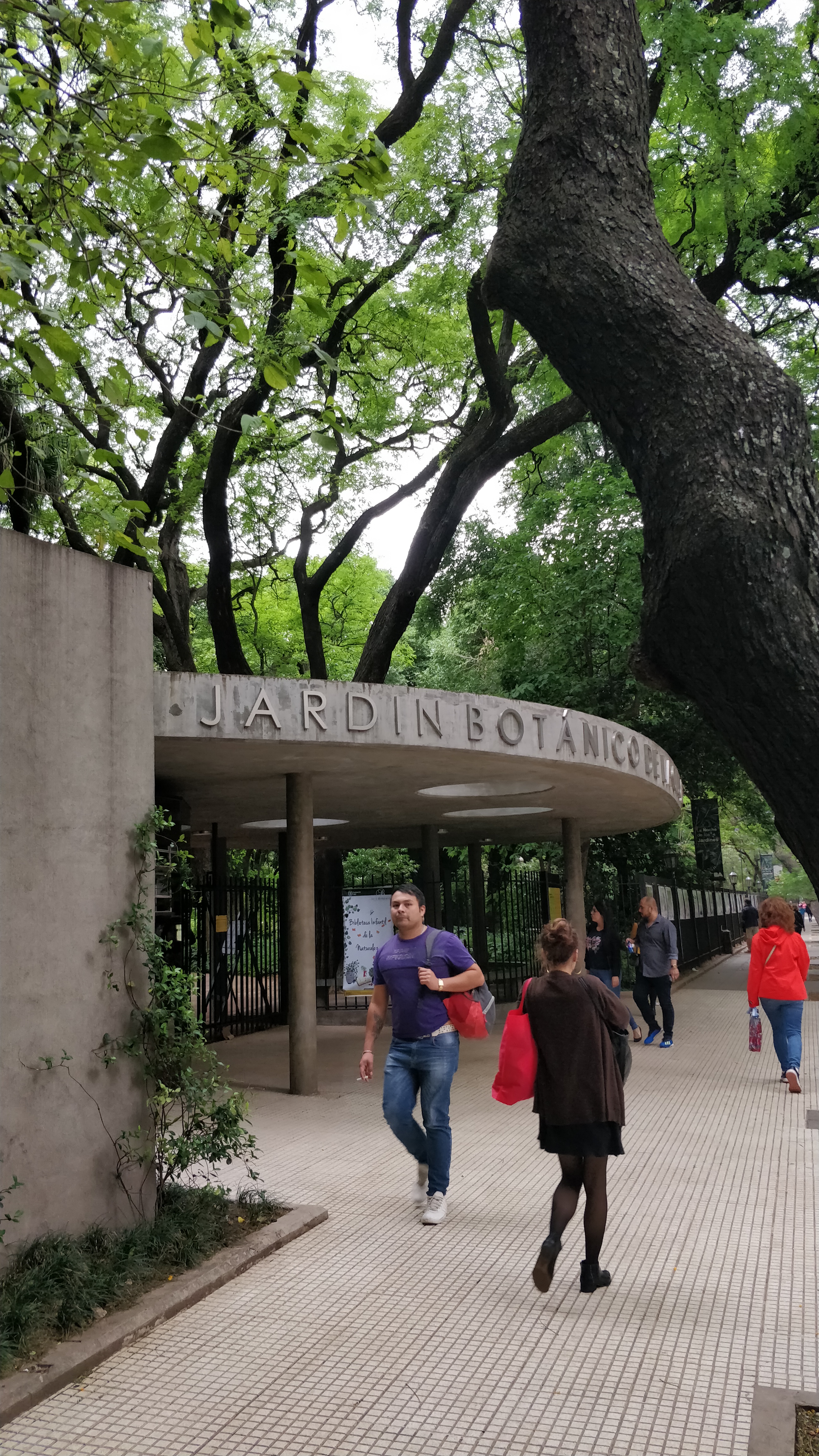
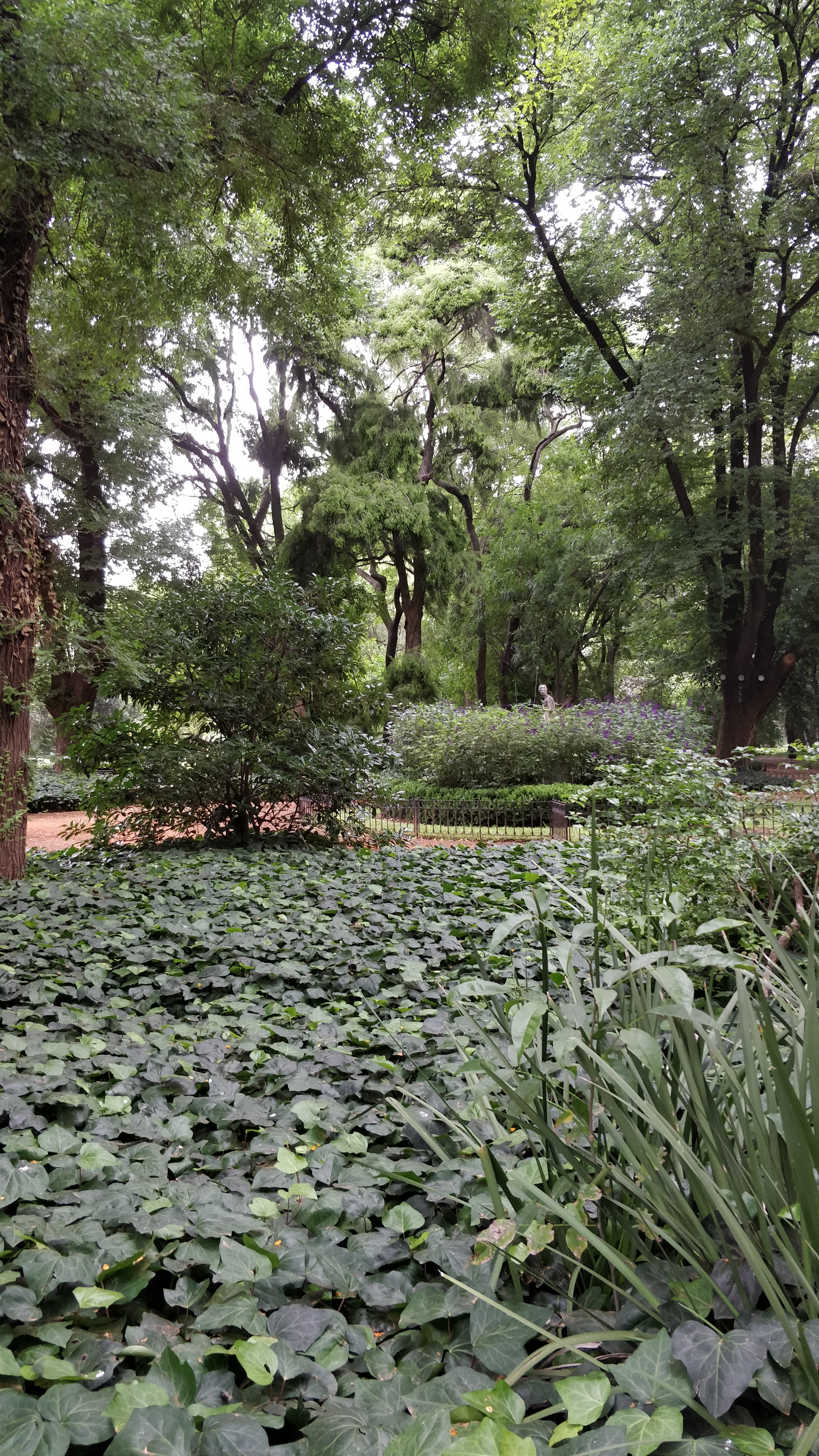
The Buenos Aires Botanical Garden is, objectively speaking, the best place in the entire city. It’s one good soundproofing and a few shady hammocks from achieving empirical perfection. These are just the facts.
Luscious, green facts.
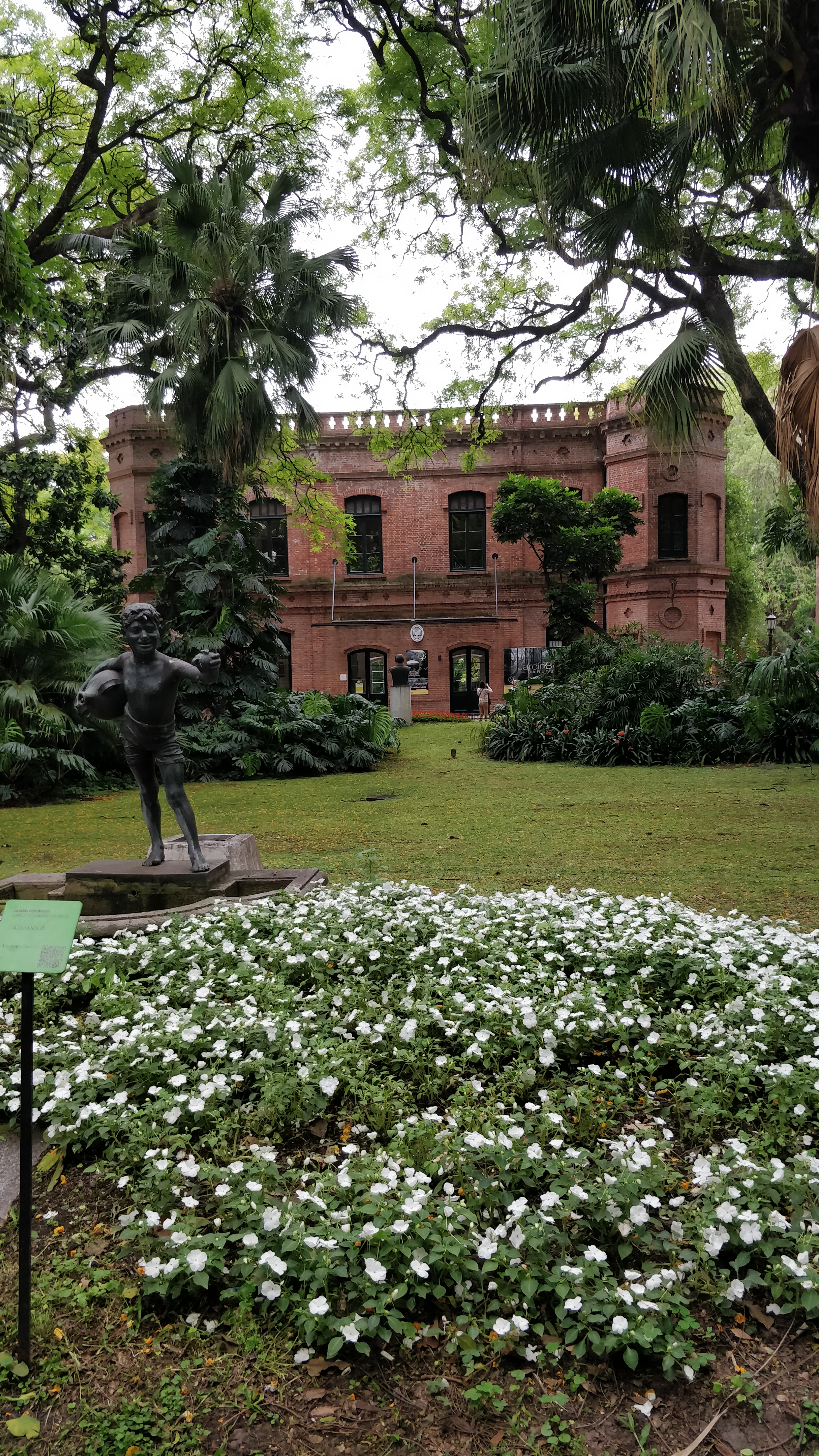
And there is a small sort of museum on the grounds: the main building, where garden designer Carlos Thays lived while he was director of parks and walks, so there’s a nice perk you don’t see in city governments much today.
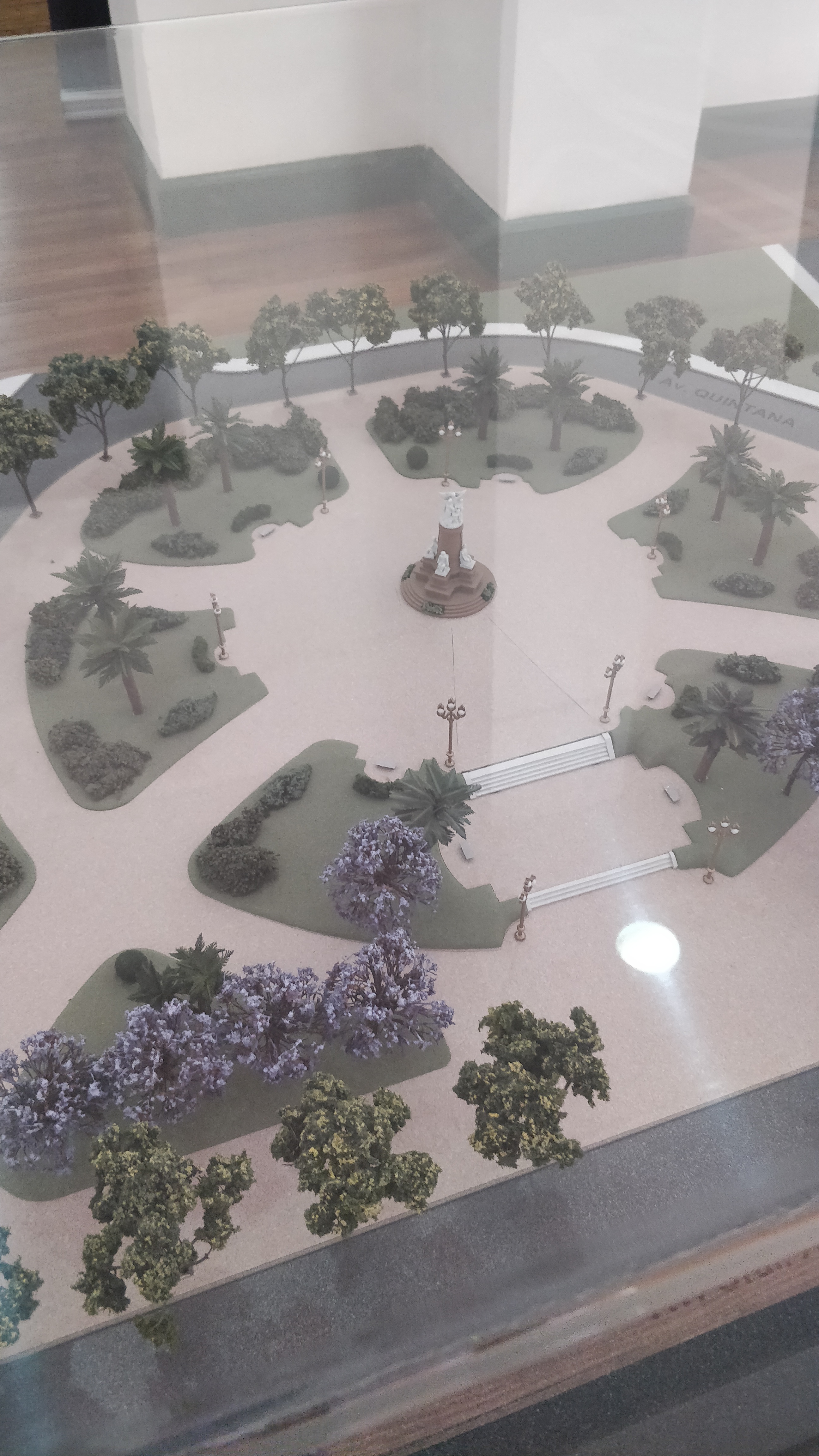
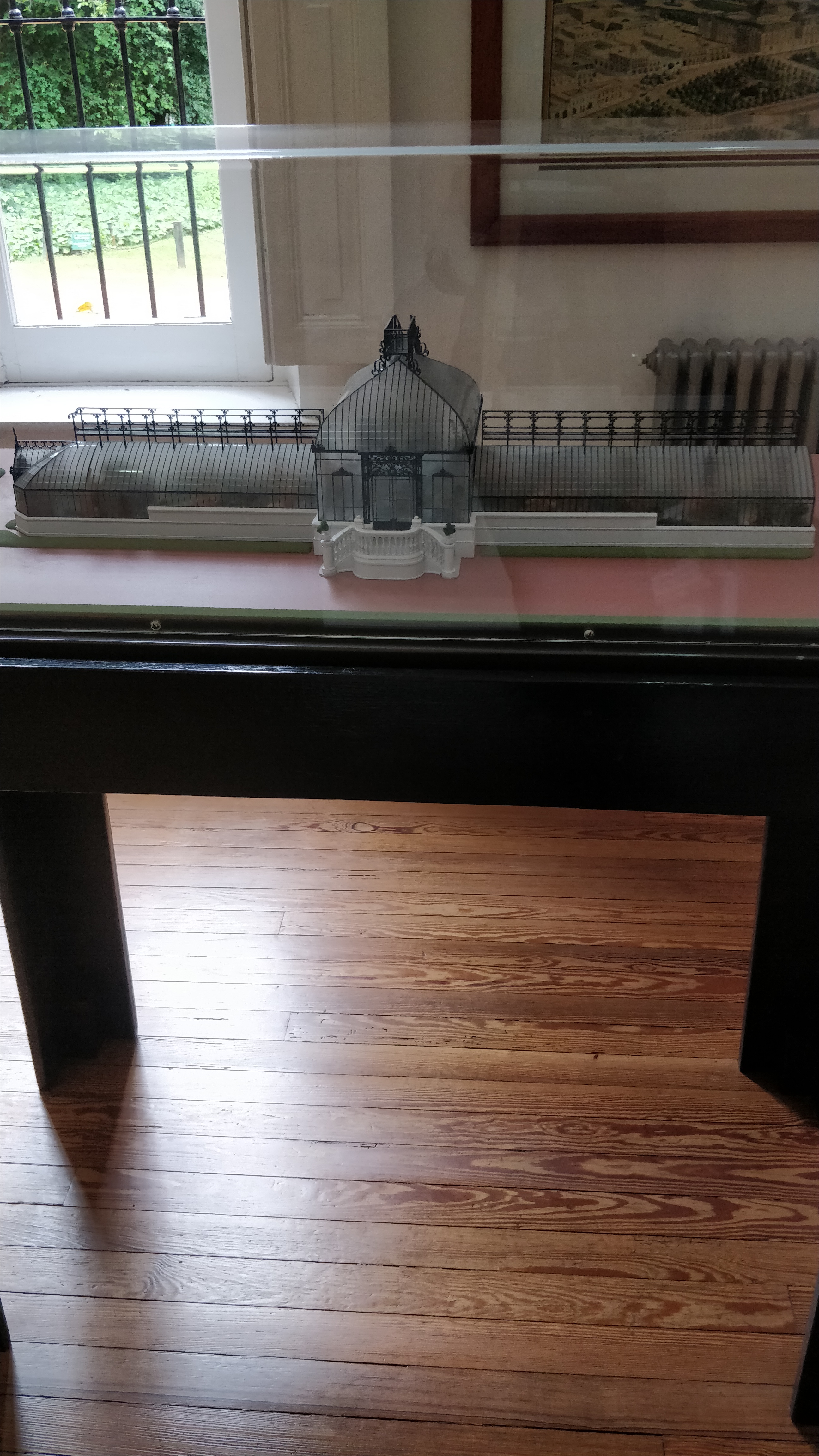
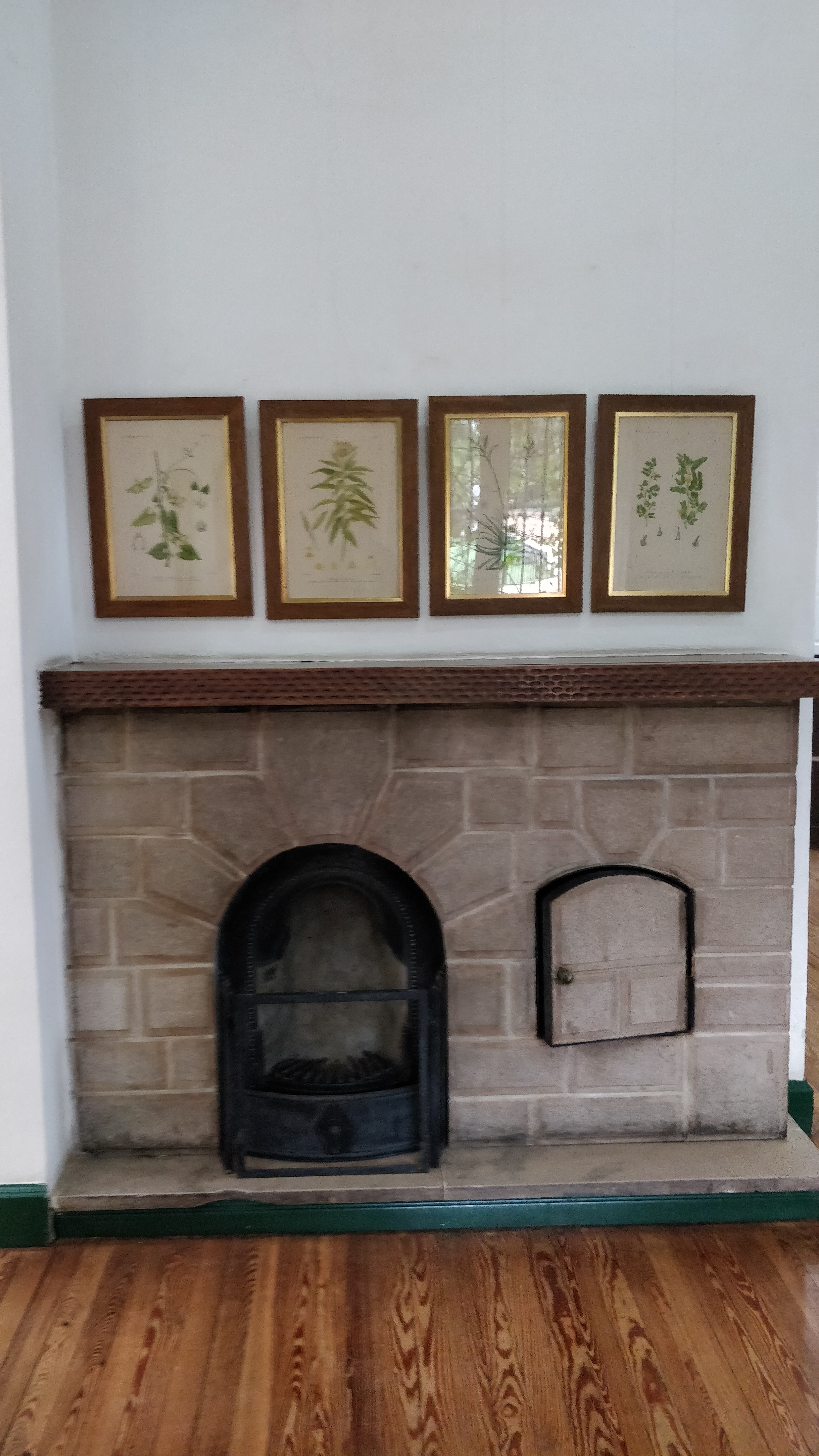
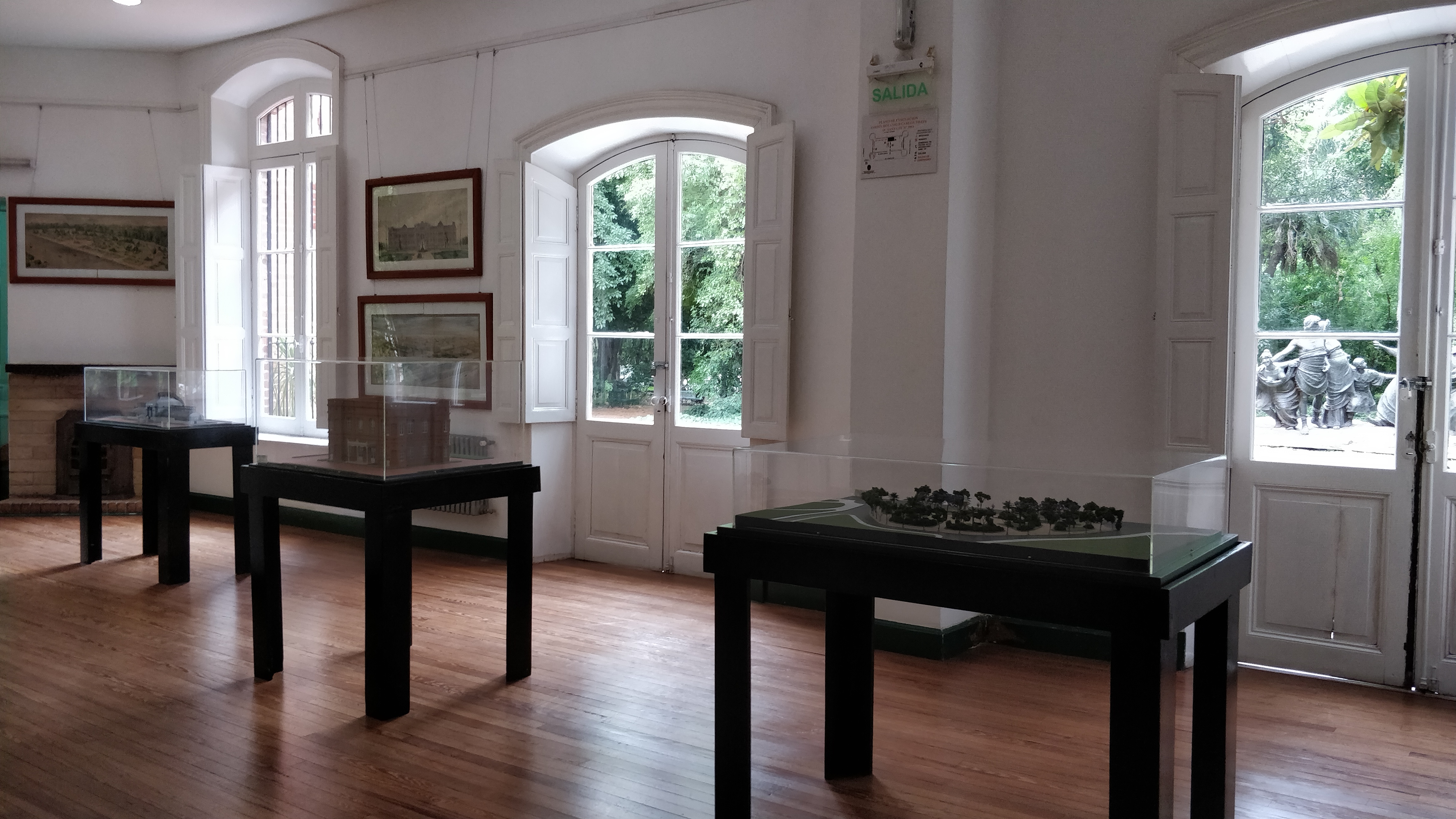
Inside, you’ll find some models of the gardens and structures and antique prints and maps. The whole thing is very picturesque.
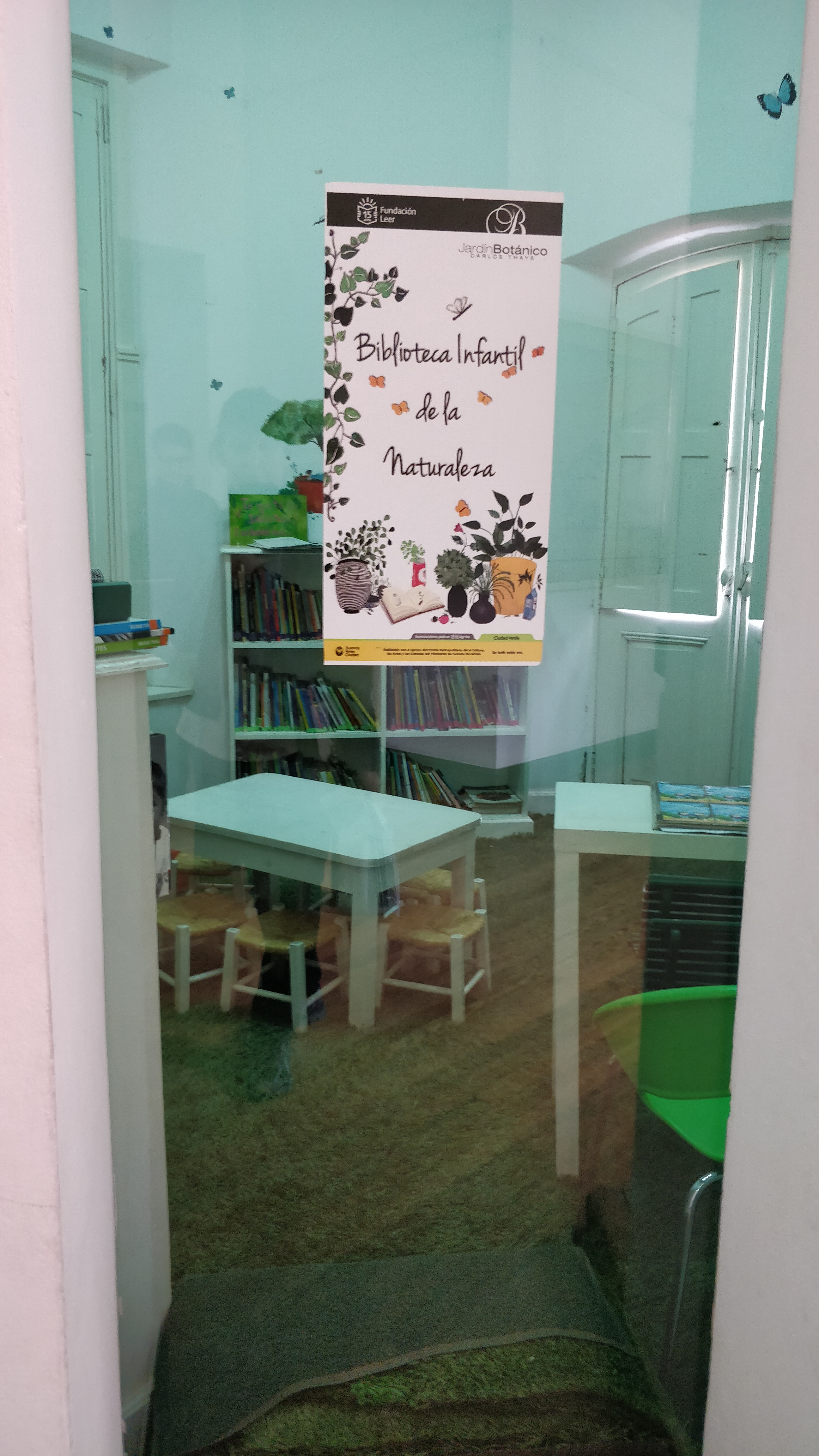
The museum/administration building is the center of the activities for the Garden, and there’s also a wee children’s library, which is adorbs.
The Children’s Library of Nature
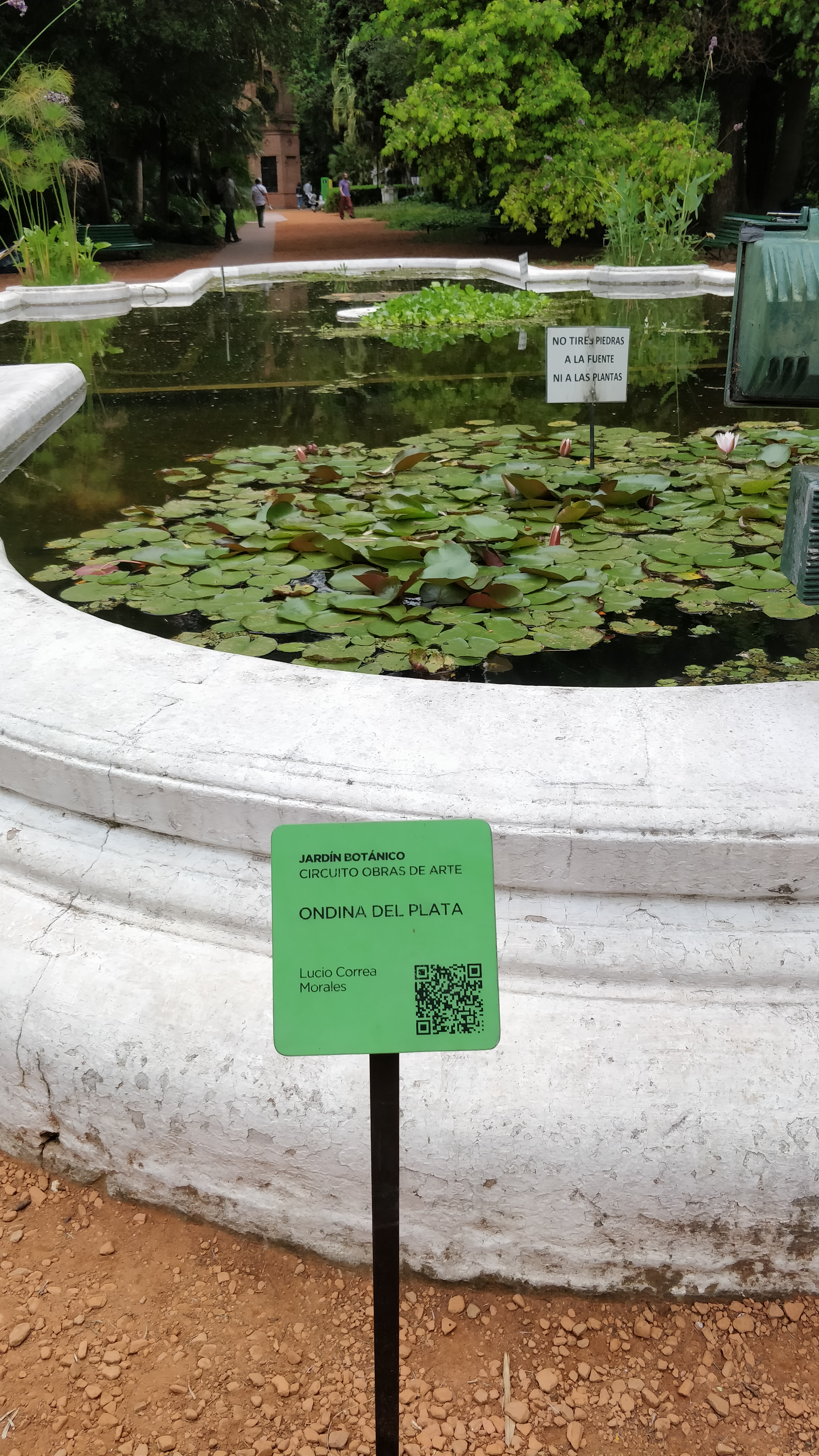
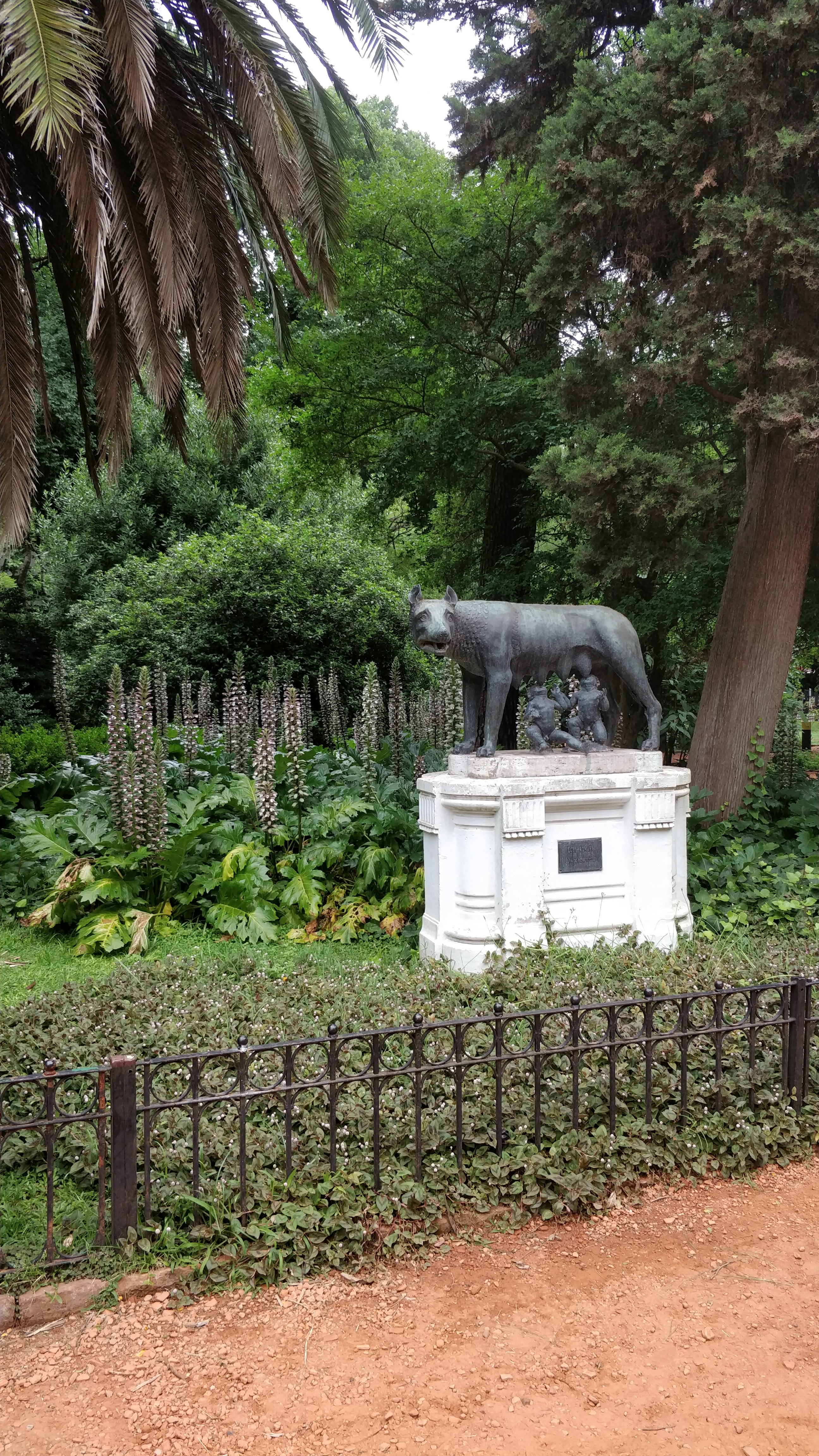
The Garden itself has QR code labels for some of its collection, which is very handy for an outdoor museum (just go with it okay), as you see here on the artwork circuit.
I don’t remember if this one had a QR code, but c’mon it’s a gimme.
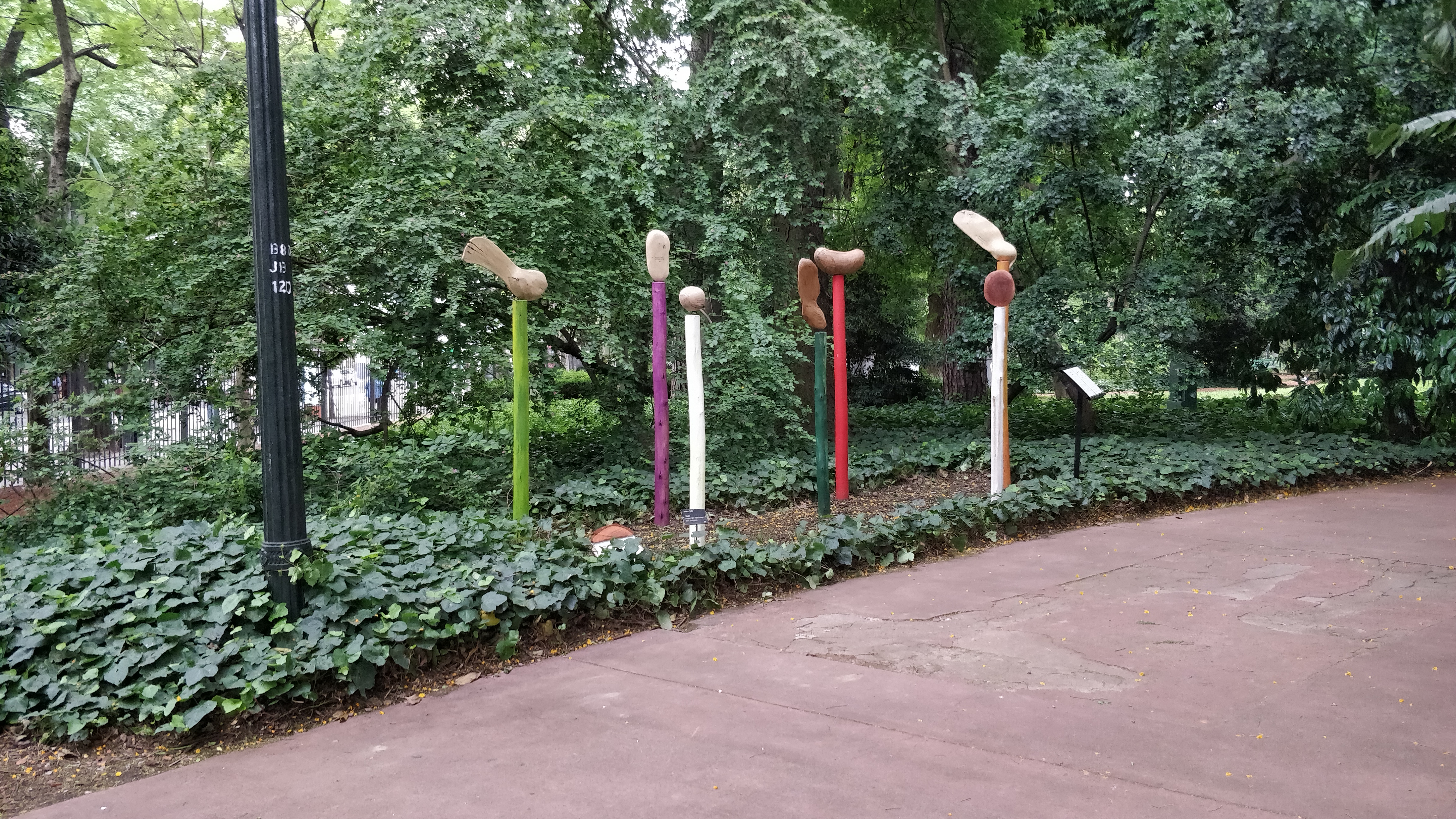
And like many large public gardens, you can find contemporary art installations, too, such as “Instalación Mesológica” by Didier Rousseau-Navarre, which is meant to “question our relationship with the earth in the Anthropocene Age.” The seeds are made from the wood of their species.
The Botanical Garden hosts many workshops and activities and is a goddamn delight. It’s in Palermo, near the Rural, the Japanese Garden, the former zoo, the Museo Evita, and lots of other stuff. It’s a nice place in the city to find some birds; I saw a really pretty green hummingbird. It’s free and open every day except Mondays, and closing times depend on the season; check the website. It’s accessible via the Plaza Italia stop of the D line of the subway and a whole mess of buses.
Tango, as you might have deduced if you’ve spent 15 seconds in Buenos Aires, is kind of a big deal here. There are tango street dancers, tiny stages for performers at touristy restaurants, and ample opportunities to be tutored. There are big, flashy tango shows, small tango shows, tango shows at historic tango bars/restaurants. Tango postcards, tango art, tango CDs, tango souvenirs. Hand to god, I have seen a wooden statue of Jesus playing a bandoneon for sale in San Telmo. I totally should have bought it.
But the tango isn’t just for the tourists. The dance and the music are very real and integral parts of the Buenos Aires cultural identity. There are milongas of all sorts, where people go to dance. The two parks closest to my place roll out temporary dance floors on Sunday evenings in the summer. Tango music is everywhere.
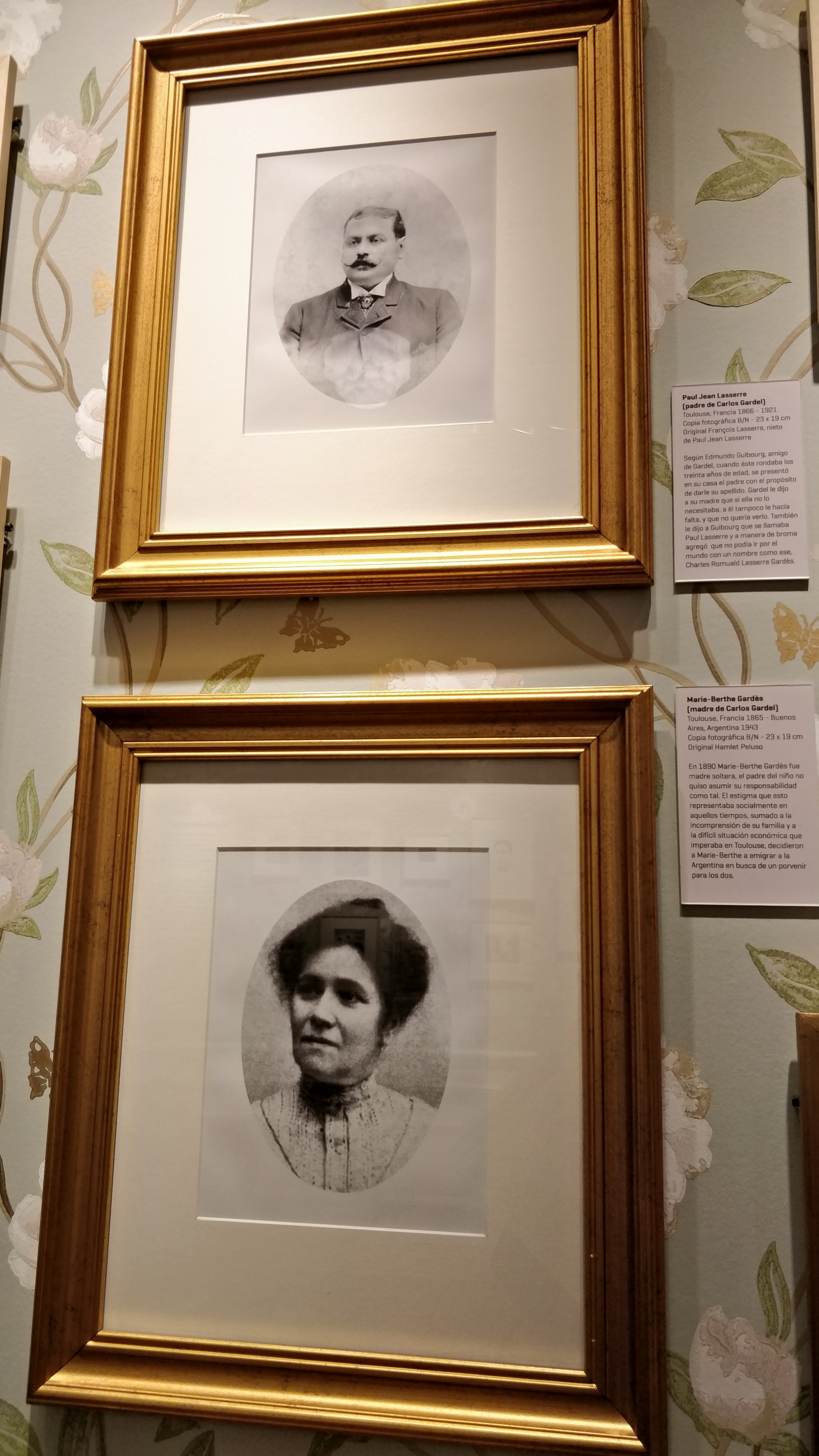
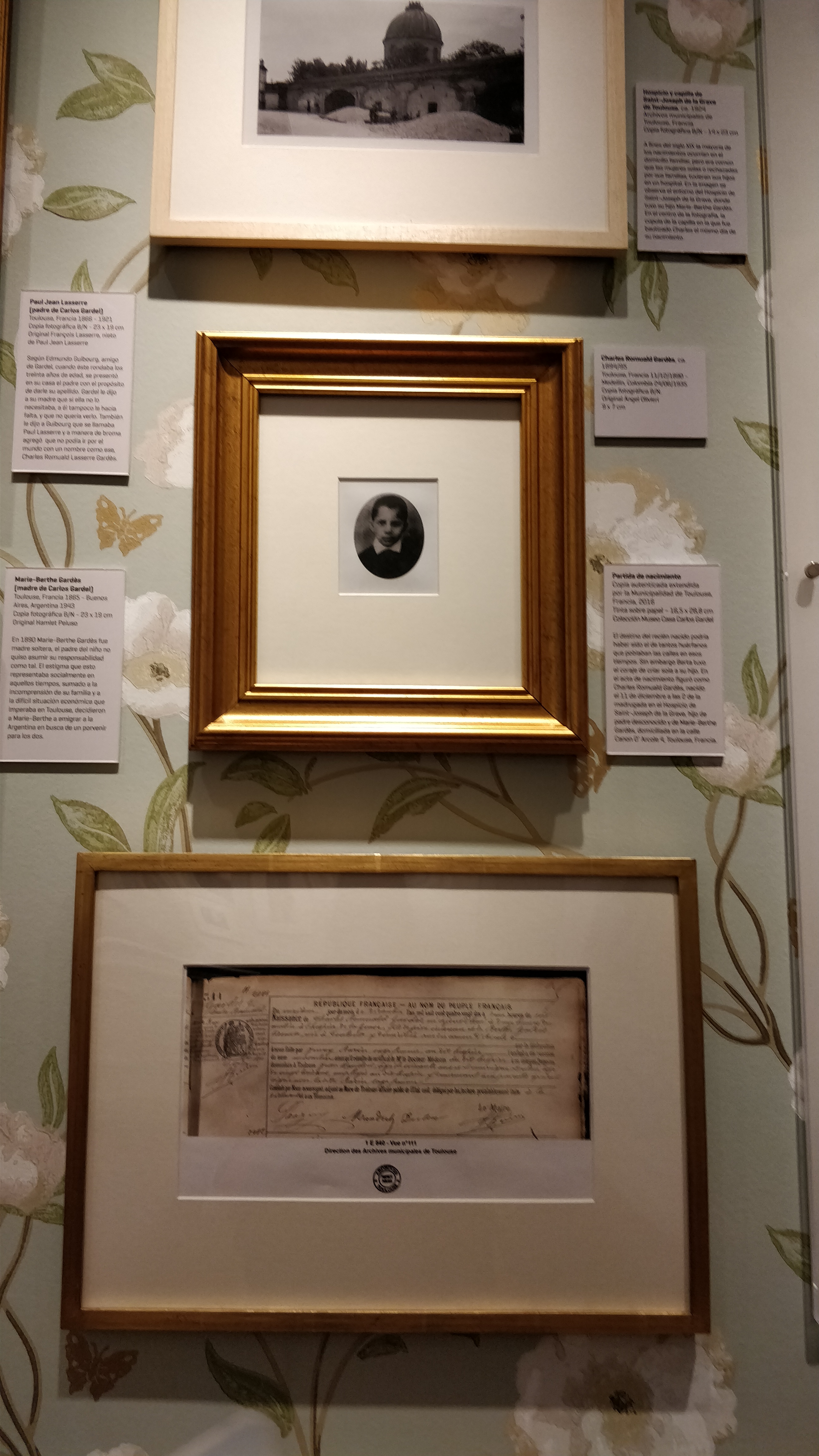
Gardel was born Charles Gardès in 1890 in Toulouse, France, to a young laundress and a dude who was married to someone else. Berthe Gardès did officially call out her baby-daddy, but we know how these things go for women, and when little Charles was two, Berthe moved them to Buenos Aires to begin a new life as a “widow.” There, they would be called by the Spanish version of their names, Berta and Carlos Gardel.
Berthe, called Berta in her new homeland, [bottom] and the sperm donor [top]Incidentally, Paul Laserre would show up in Buenos Aires to ask Berta to marry him and “legitimize” Carlos when Carlos was around 30 years old and had conveniently released his first hit record. Carlos told his mom that if she could live without the guy, so could he, and didn’t see him. WELL PLAYED.
Carlos himself would muddy the facts of his birthplace by claiming Uruguayan citizenship, stating he was born in Tacuarembó, Uruguay (he then acquired Argentine citizenship). This was probably done to smooth over an upcoming tour of France, has he had never registered for military service, as required of French citizens. This paper trail has led to different early biographies and native son claims, but look the museum has a copy of his French birth certificate so Uruguay should pipe down.
I took a particularly poor photograph of it.
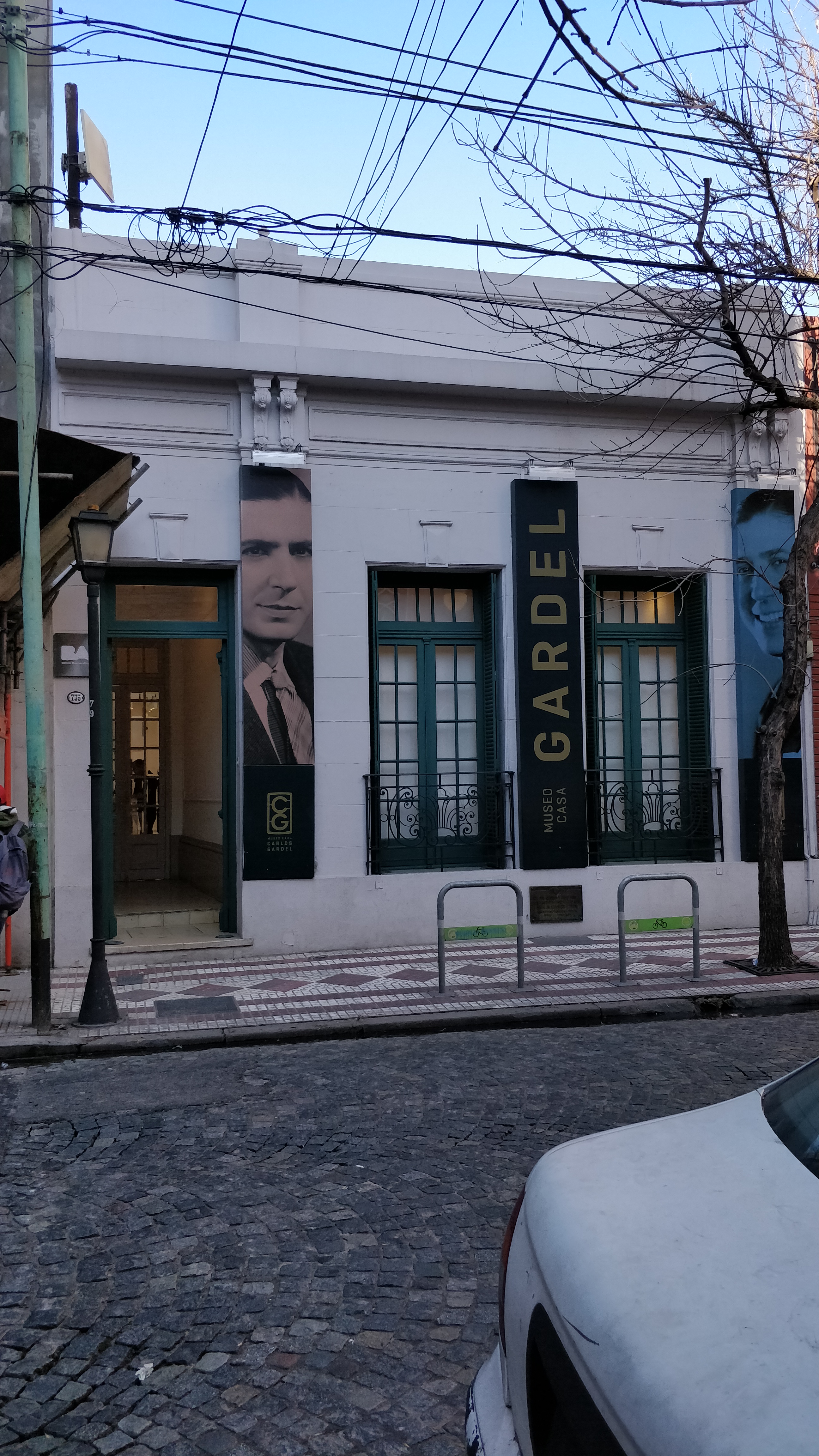
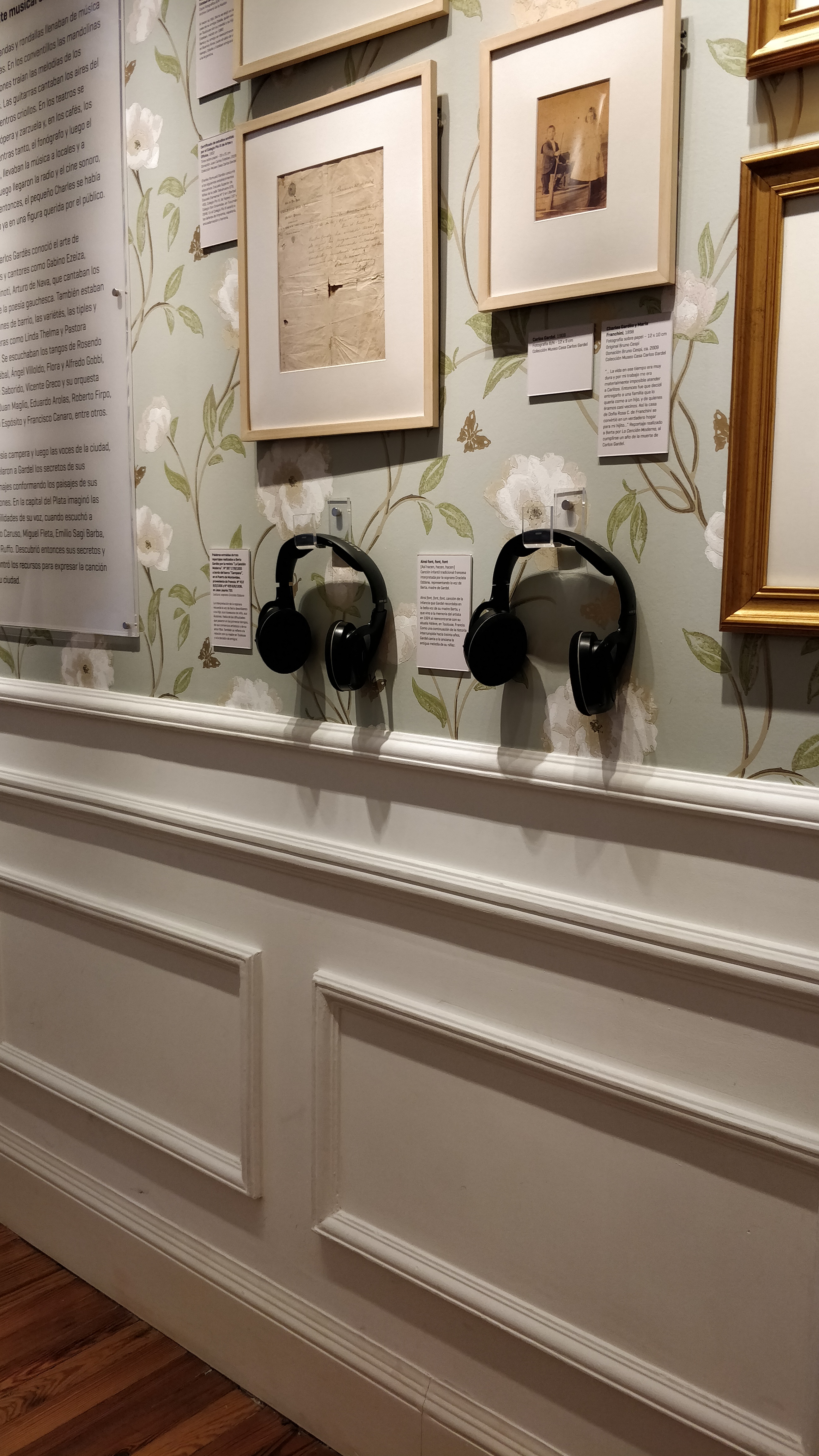
The museum is inside a house in Abasto that Gardel bought for his mom (he lived there for awhile, as well), and consists of four rooms. The first room is dedicated to his early life. In a museum dedicated to a musician, the multimedia experience is pretty important, and the Museo Carlos Gardel does a pretty credible job providing it, including the rather touching addition of the sort of song Berta would have sung for little Carlos.
Gardel would develop as a musician, and in 1917 create the “tango canción,” the form of tango vocals that united the voice with the musical and dance themes of tango, when he recorded Mi Noche Triste (listen to it here). This style became an enormous part of tango, and tango became an enormous part of Gardel’s life.
The sheet music for Mi Noche Triste from 1917.
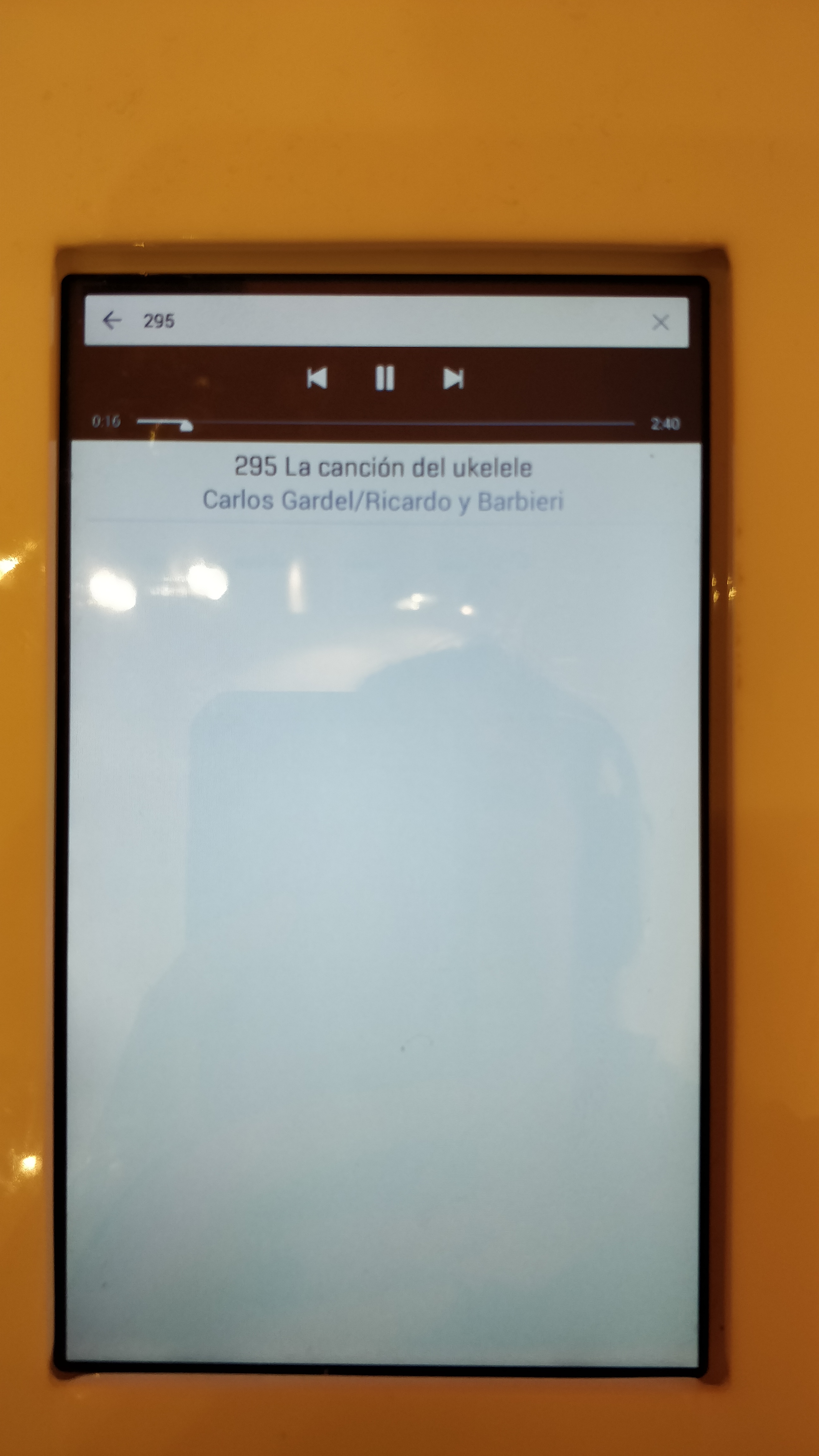
The next room of the museum is the recording room. It’s quite small, but here you can see artifacts from his music career and select from over 300 recordings made by Gardel to listen to at the listening stations.
As a nacent ukelele player, I immediately spotted what had to be his greatest work.
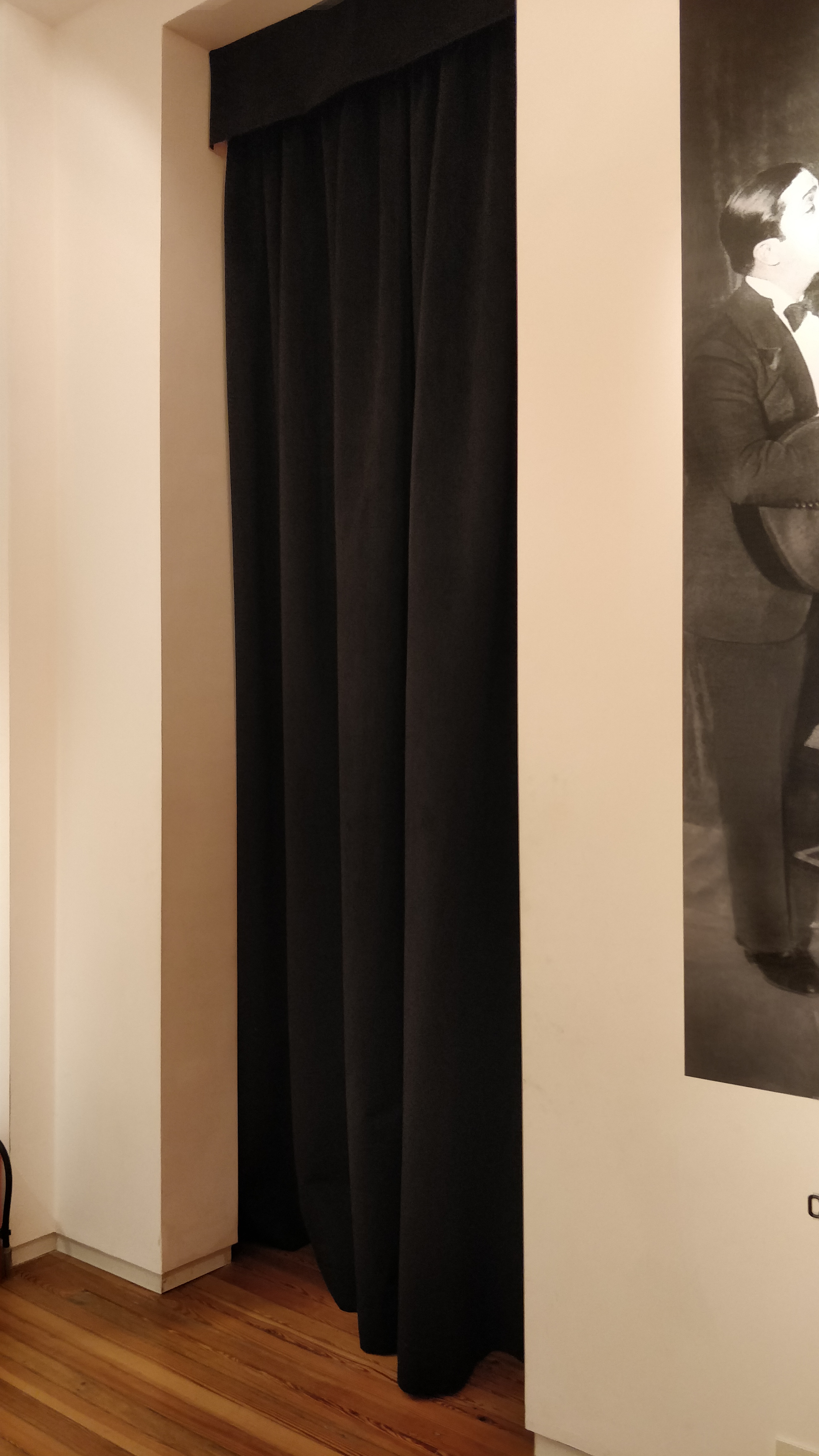
To continue on from the record room, you go through this doorway:
It’s a particularly ominous doorway, and thanks to the museum design, even if you know nothing of Carlos Gardel, you know that good news is not on the other side.
The room on the other side of the heavy curtain is the funeral room. Gardel died at the age of 44, at the height of his music and film career, in a plane crash in Colombia.
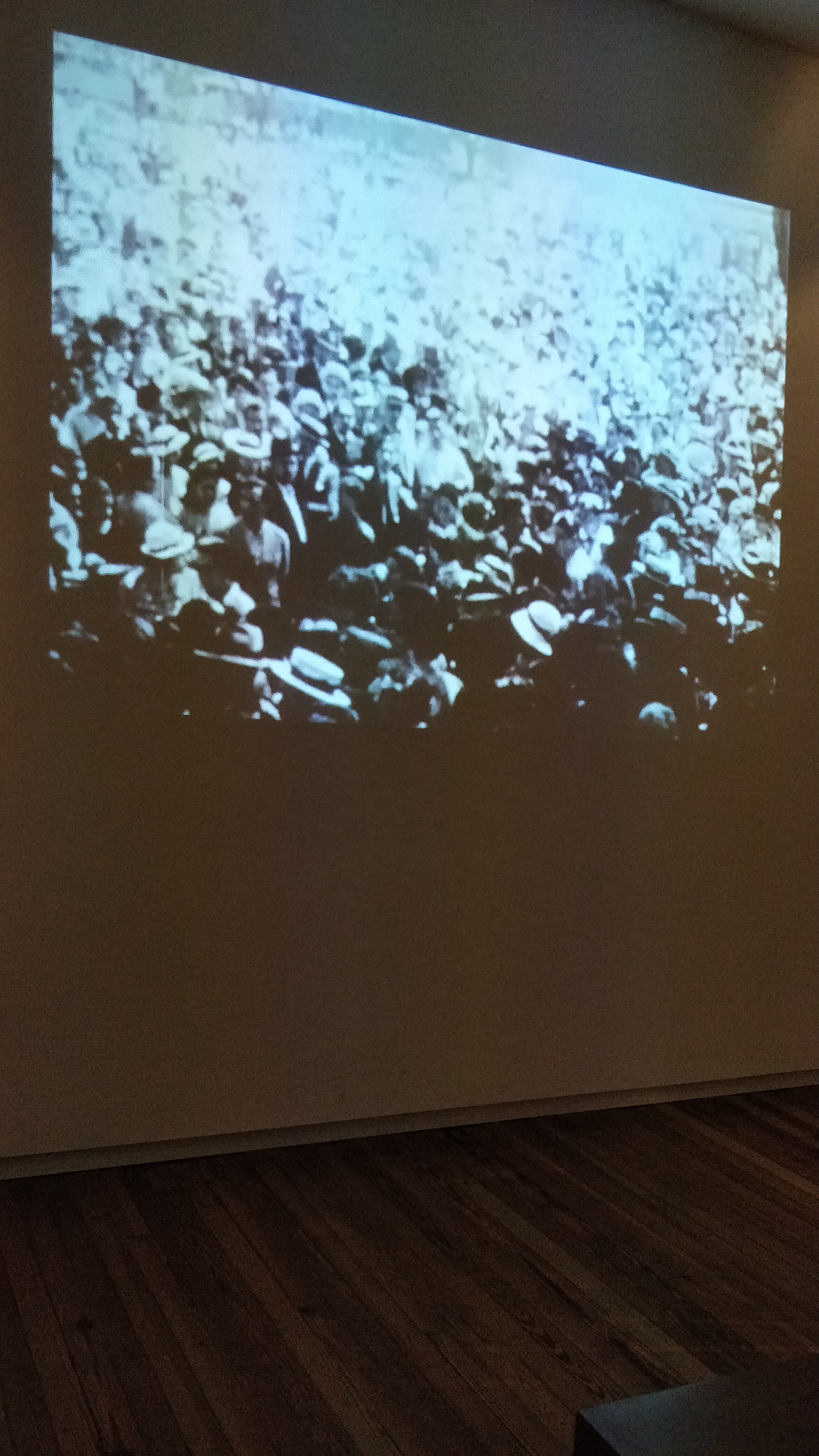
The room includes film from the funeral, the scene of an outpouring of national and international grief. His mom, heartbroken, would shortly thereafter follow her son in death.
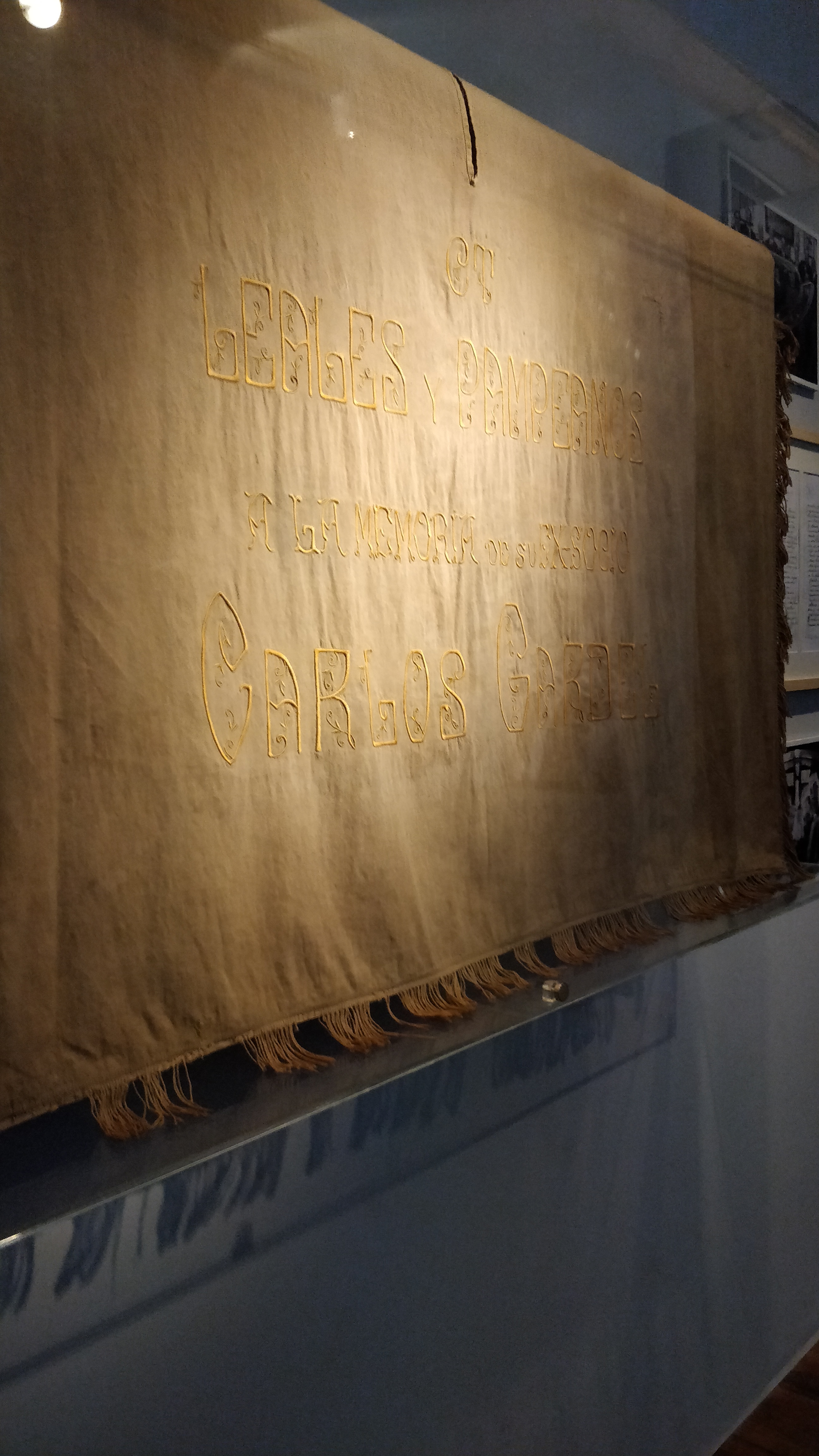
I can tell you the group that made this memorial poncho asked a pilot to throw it out of her plane before it was placed on his coffin; what I cannot tell you is why.
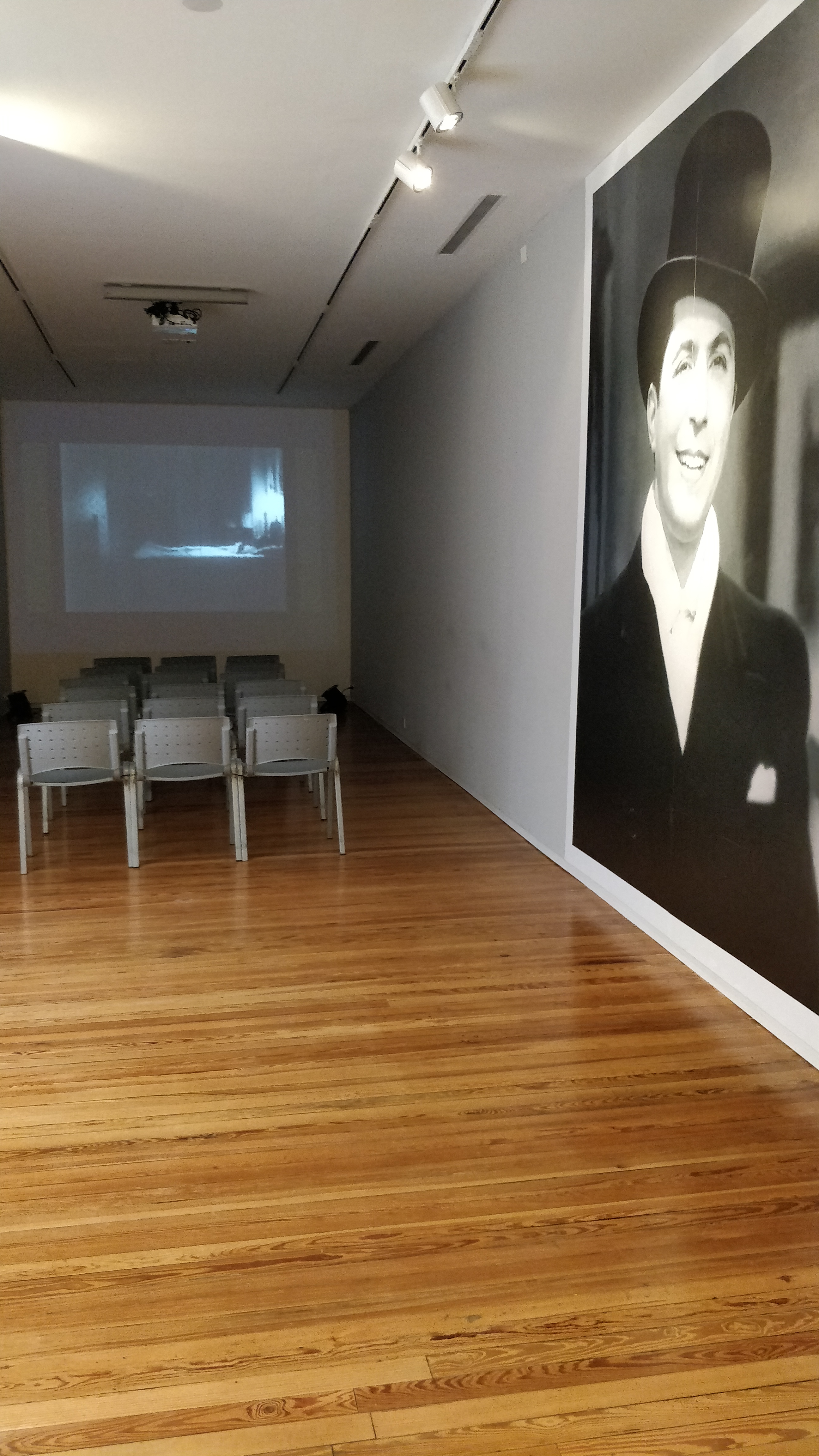
The final room is the cinema room, which I think is a fitting way to end the museum, not only in terms of floor plan, but also in terms of image. After all, Berta would continue watching Carlos’s movies to see him again, and this is a lasting legacy for a performer.
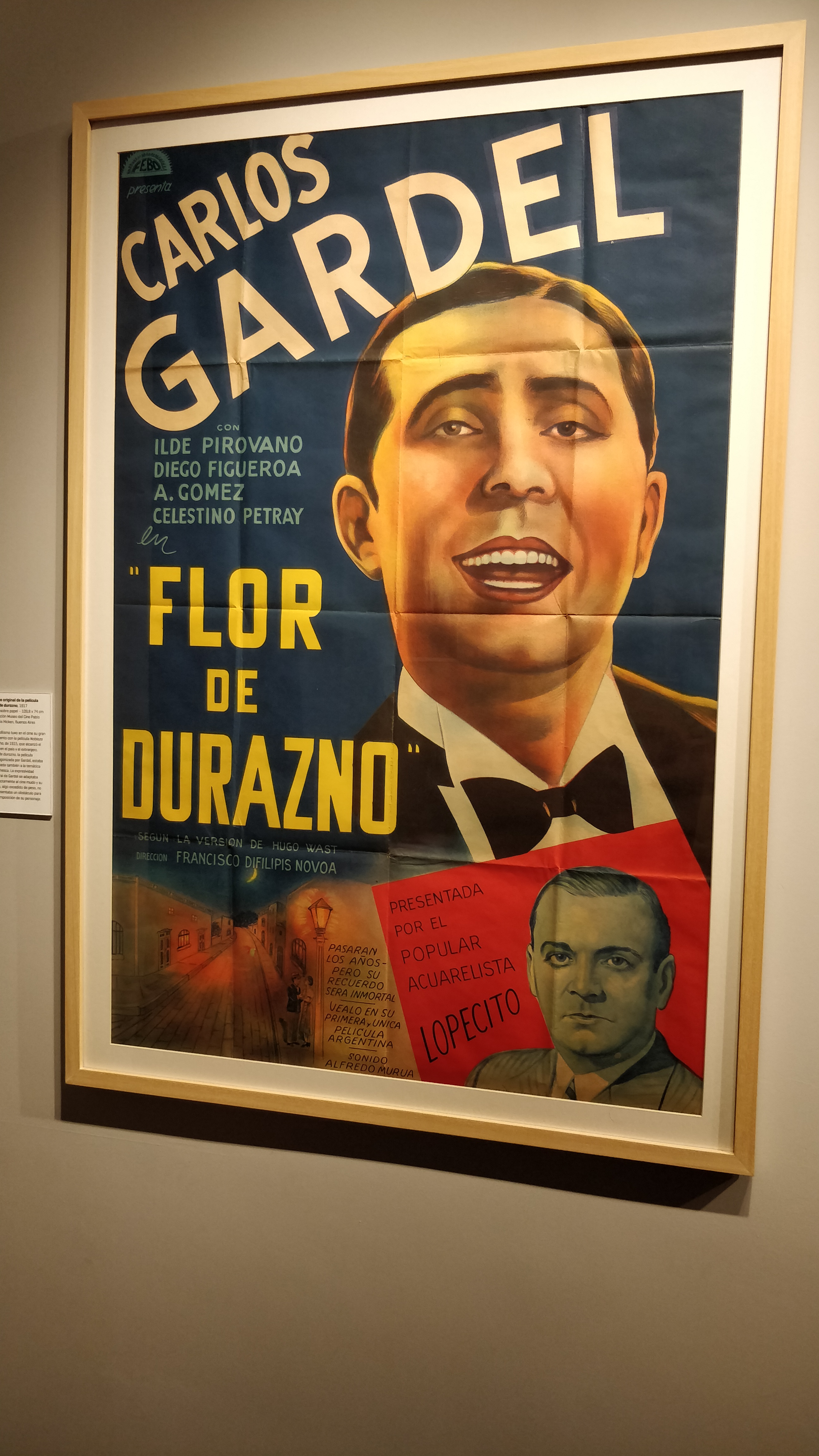
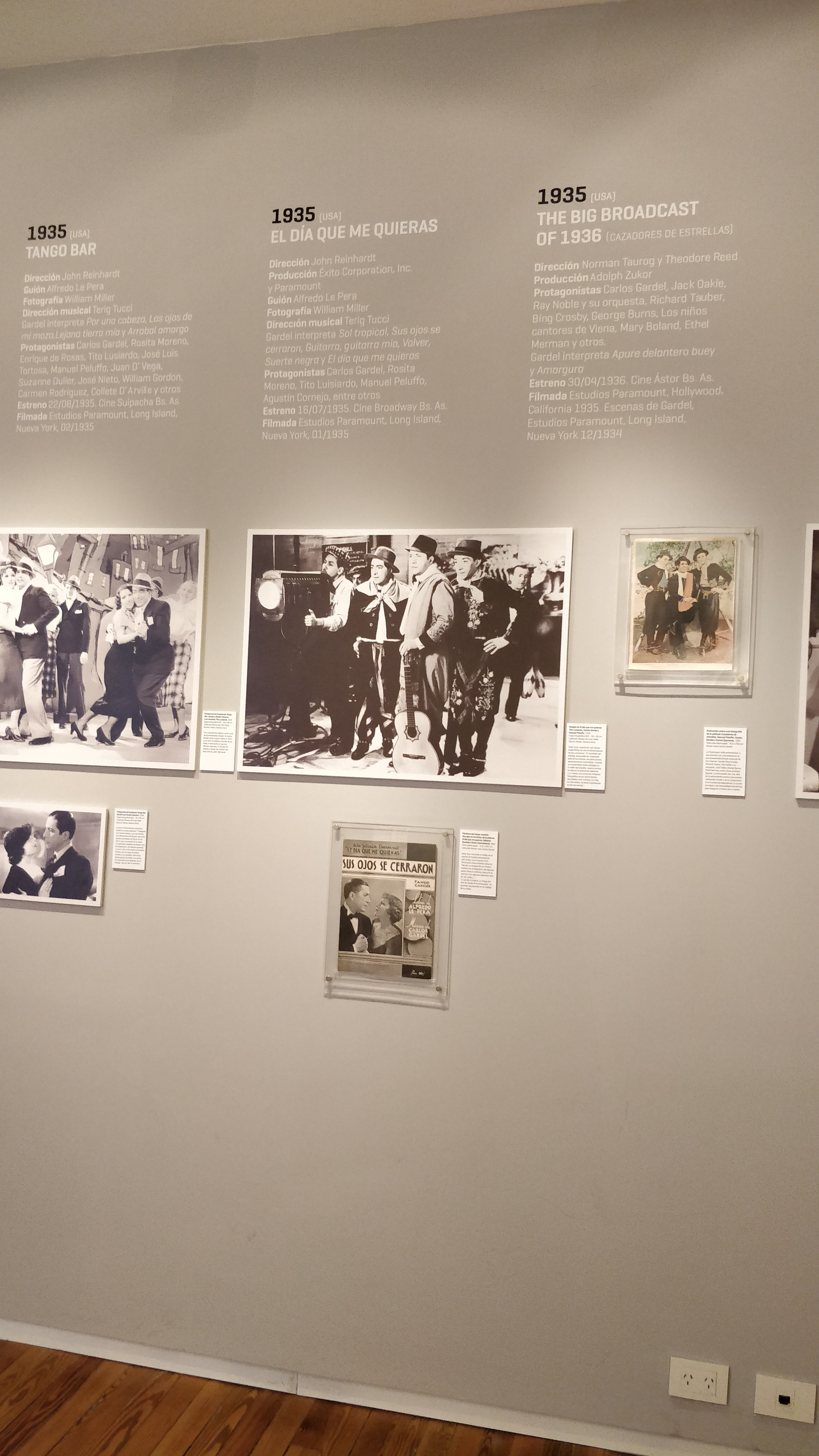
The room includes a timeline of his movies, photos from the production, and posters.
Terrifying posters!
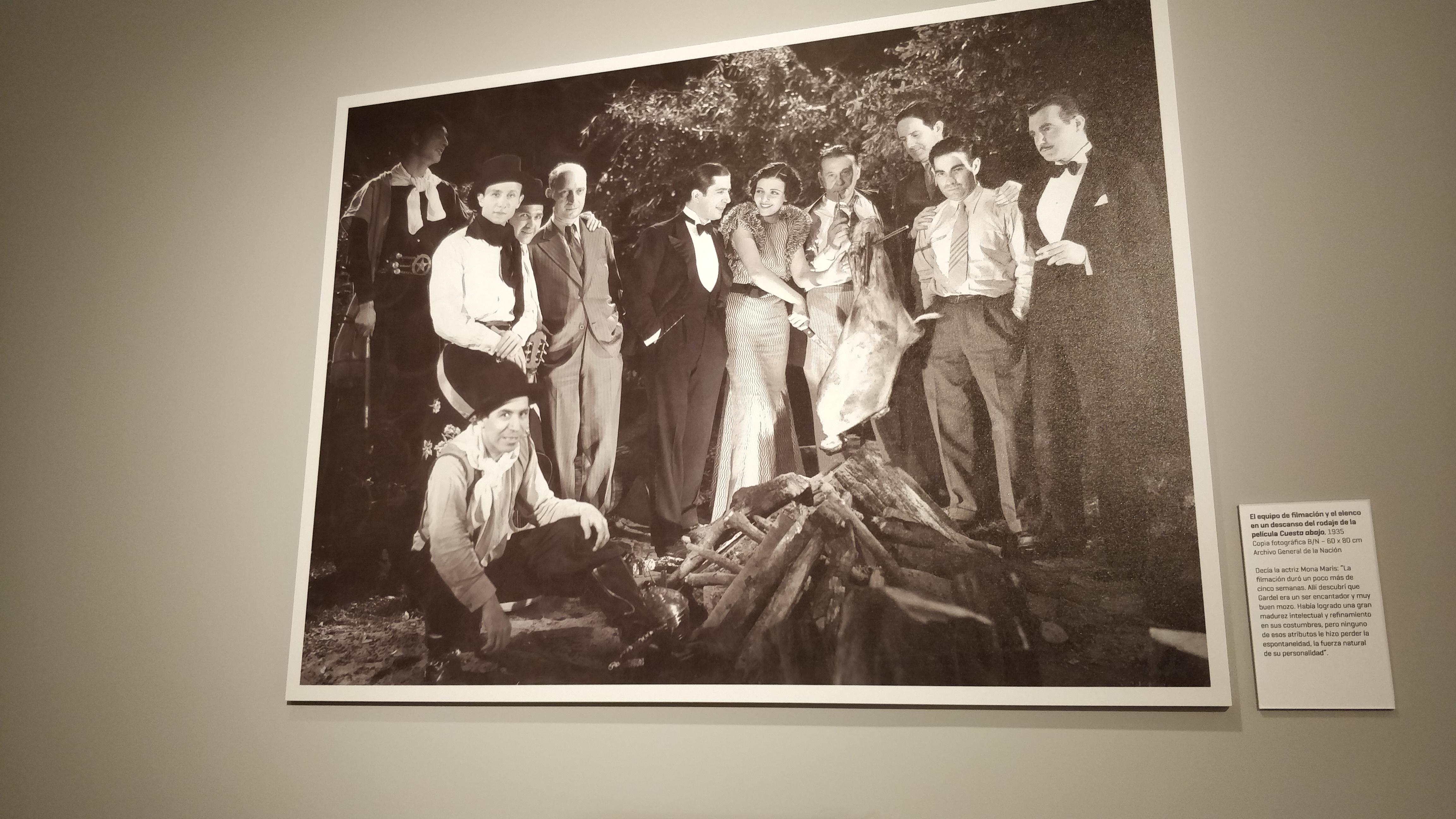
A totally normal asado, which are often attended by pristinely dressed gauchos and men in tuxedos while the hostess cuts meat over the fire wearing an evening gown.
So, if you’re super into the history of tango, 1930s cinema, or turn of the century music, Museo Casa Carlos Gardel is worth a visit (not to be confused with the Gardel museum outside of Tacuarembó because Uruguay just cannot let it go). The signage is all in Spanish, but they do have an English language handout that will walk you through the rooms.
The museum is located at Jean Jaurés 735, close to the H and B subway lines, in Abasto. As always, check their website for current information, but as of this writing, the entry is 30 pesos (about US$1 right now), free on Wednesdays and generally for students, school groups, retirees, disabled visitors and their attendants and those under 12. It’s closed on Tuesdays. It’s a residential area, so there are some places to eat here and there. There’s also some pretty nice fileteado-style murals across from the museum.









 The Exhibitist