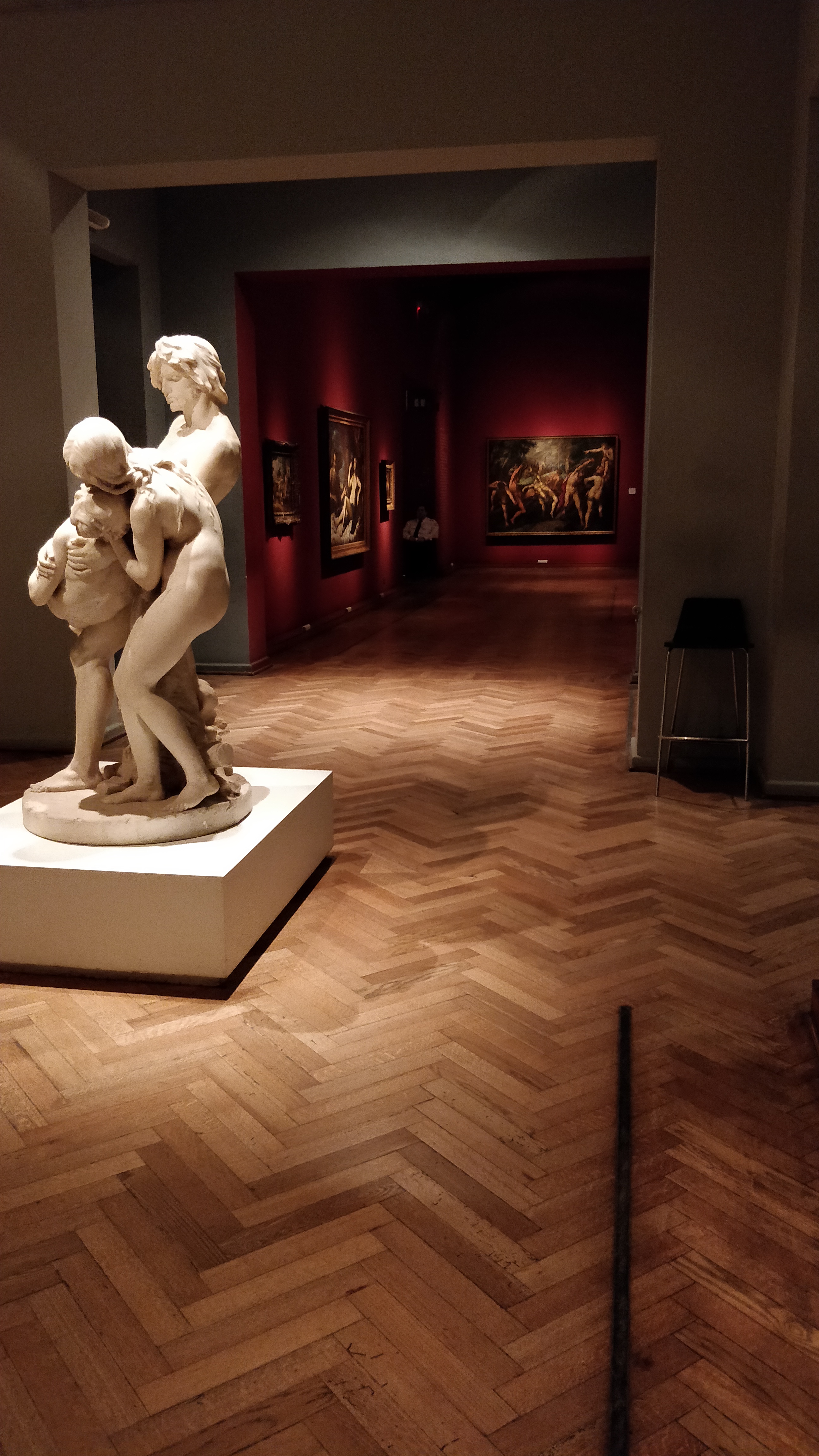
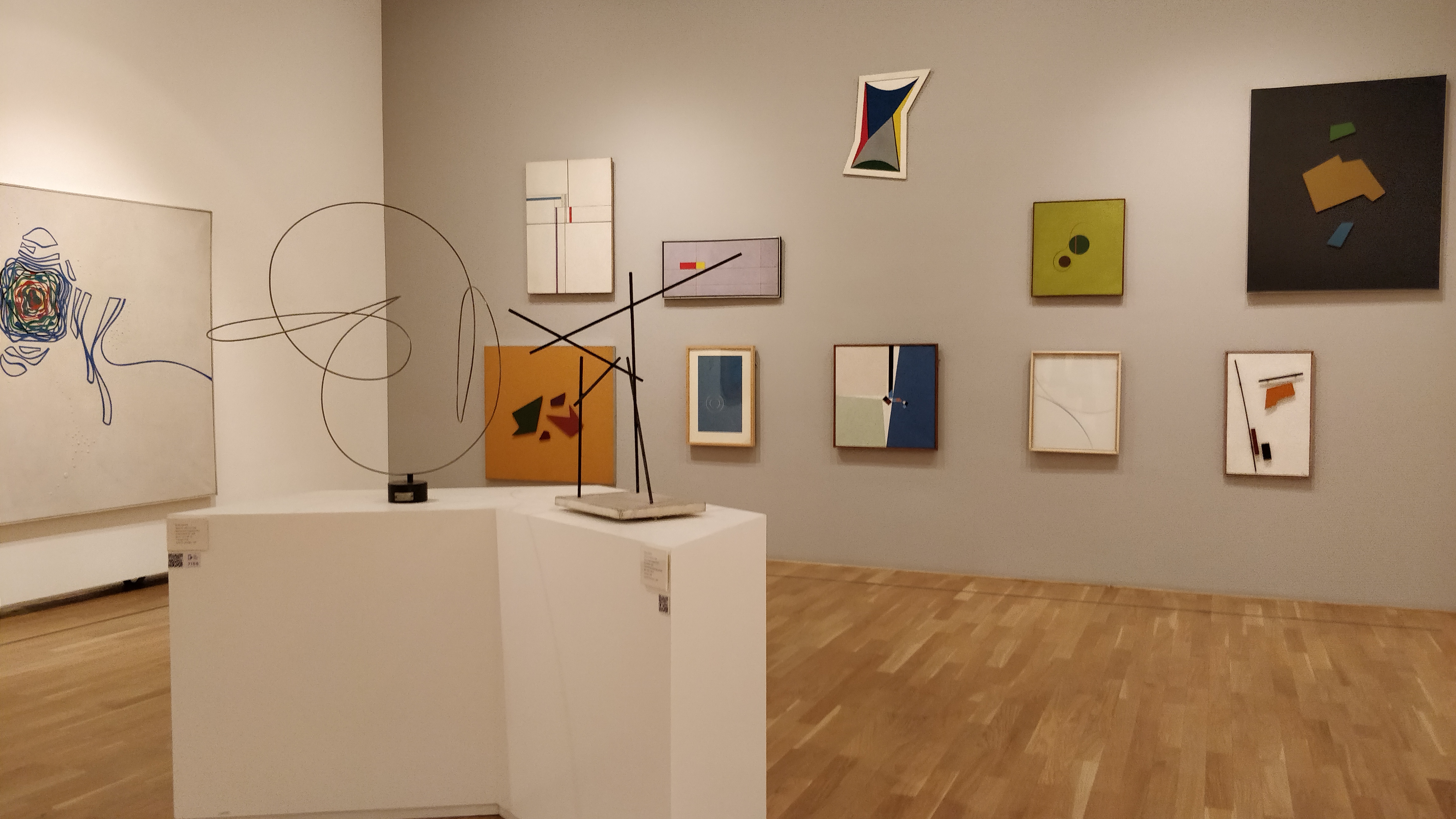
The Cemetery Series: Cementerio de la Recoleta

God, you know what sucks? Knowing that you’ve been to a place a gajillion times and you definitely took a bunch of photos, but this was years ago and somehow, you can’t find any of them.
And last time I was in Buenos Aires I had other priorities

So I’m going to cobble together a post with what I can scrounge up and some royalty-free photos taken by actual photographers. At least the lighting will be good.

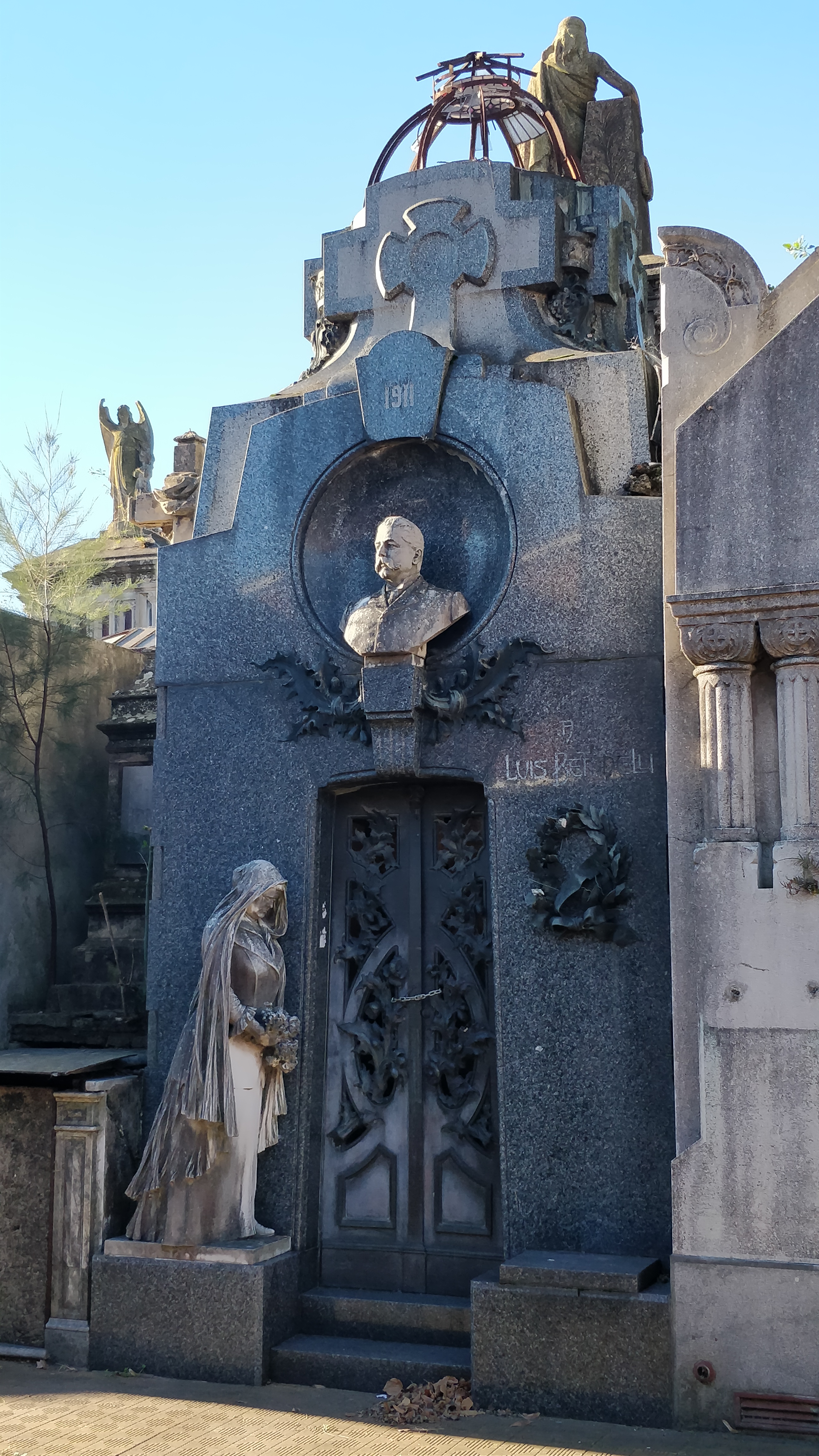
Recoleta Cemetery is renowned the world over, packed with mausoleums for Argentina’s wealthy and notable. It opened as the city’s first public cemetery in 1822, after the disbanding of the Franciscan order that settled there roughly 100 years before. Occupying 14 acres of some of the ritziest real estate in Buenos Aires, smack dab in the middle of the Recoleta neighborhood, the cemetery is a perennial stop for tourists and taphophiles alike–so much so that it is the first of three examples in the Wikipedia article on tombstone tourism (and yes, I have been to all three).
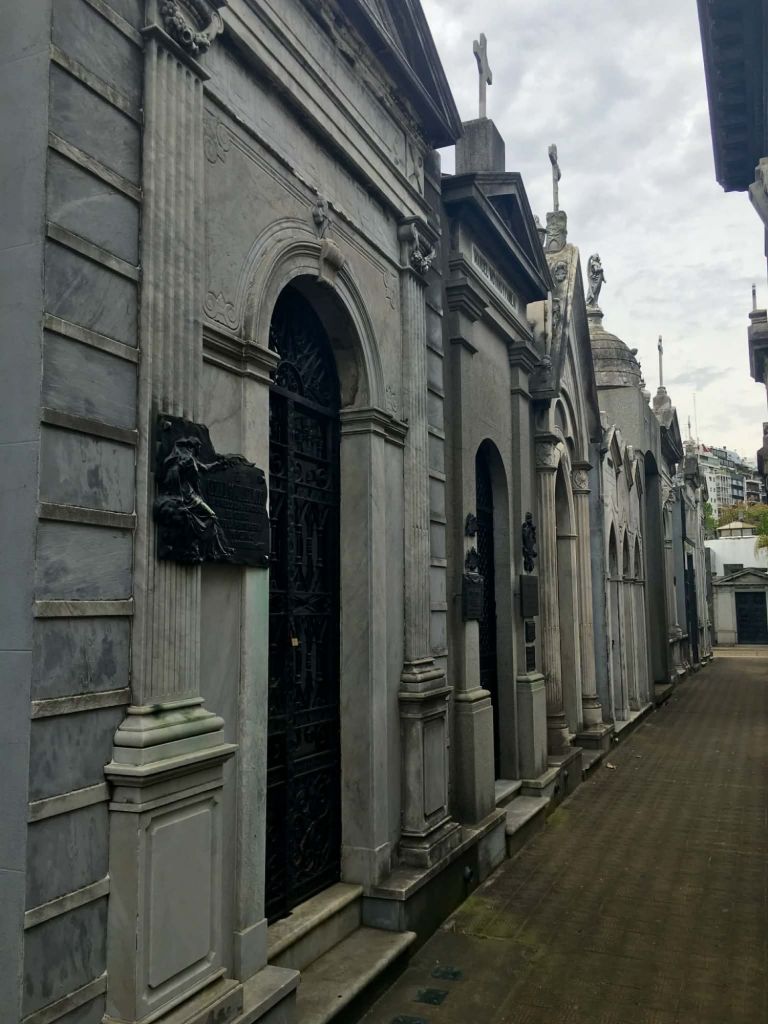
The side streets are quieter; you definitely don’t want to buy on the main drag.   (Photo by my amazing sister-in-law.)

There is no lack of tour guides available at the gates, so even if you turn up without one you can probably still hire one on the spot. Alternatively, there’s an app.

It is very brown, but also free.

At the time of this writing, the audio is only available in Spanish, but the text guide is in Spanish, French and English, sort of. You can choose a route that highlights authors, scientists, presidents, or “our selection,” which includes a few from the other routes plus other notable tombs.

But nevermind the Great and Good and Total Bastards–let’s talk about the ones I wanna talk about.
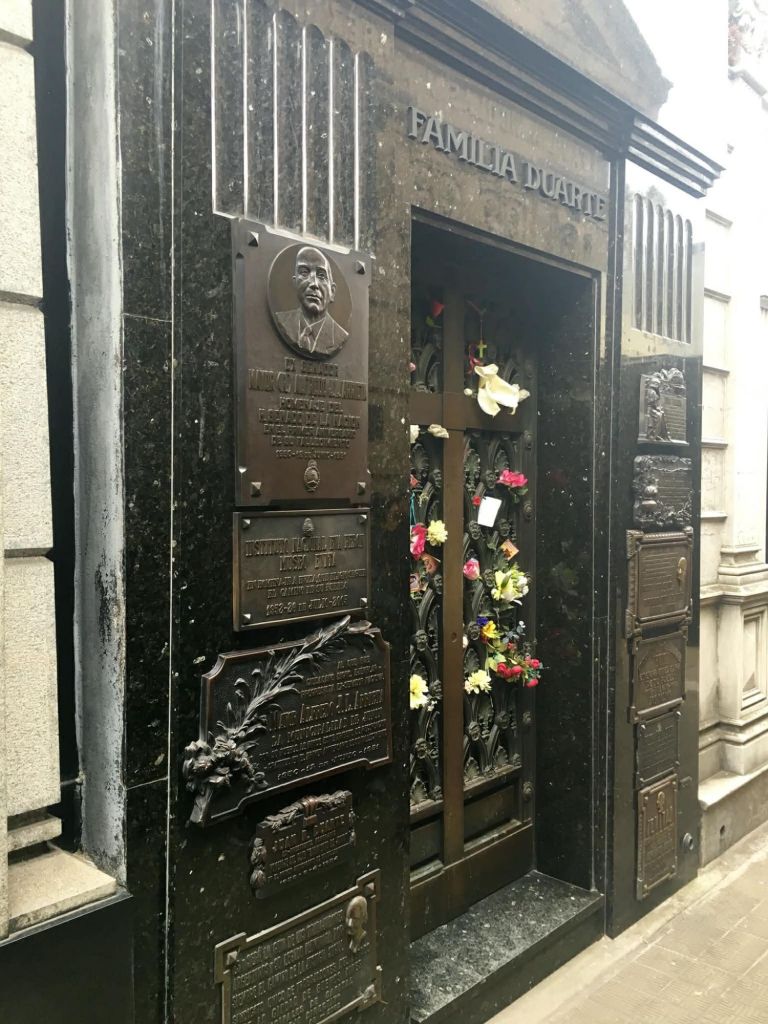
Yes Eva Perón is buried here in herfathersfamilycryptseemsweirdtomegivenherfamilyhistoryyestherearealwaysflowersandvisitorsandtourgroupsanywaymovingooooooon

Liliana Crociati de Szaszak was killed in an avalanche in Europe while on honeymoon, aged 26. She’s depicted in her wedding dress outside her Neo-Gothic tomb.
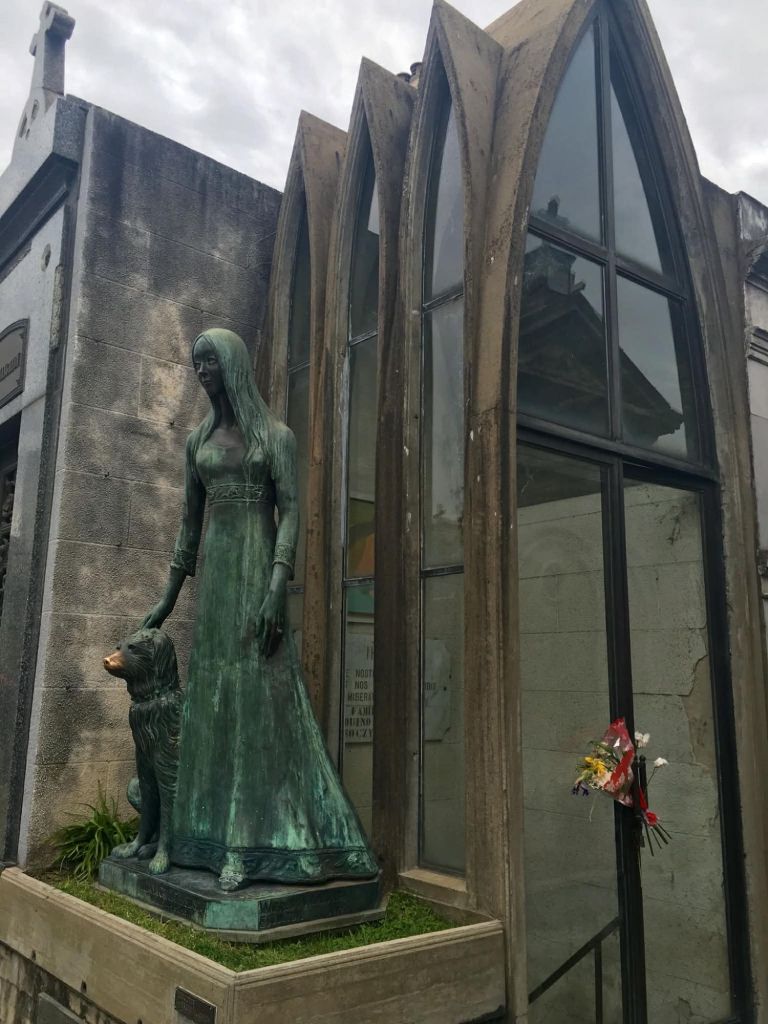
After her dog, Sabú, died, his sculpture was made and placed next to her. Visitors rub his nose, hence the shine. (Photo by my excellent sister-in-law.)

As we all know, young women make the best ghost stories and while I don’t know of any specifically linked to Liliana, 19-year-old Rufina Cambacérès is said to haunt the place.
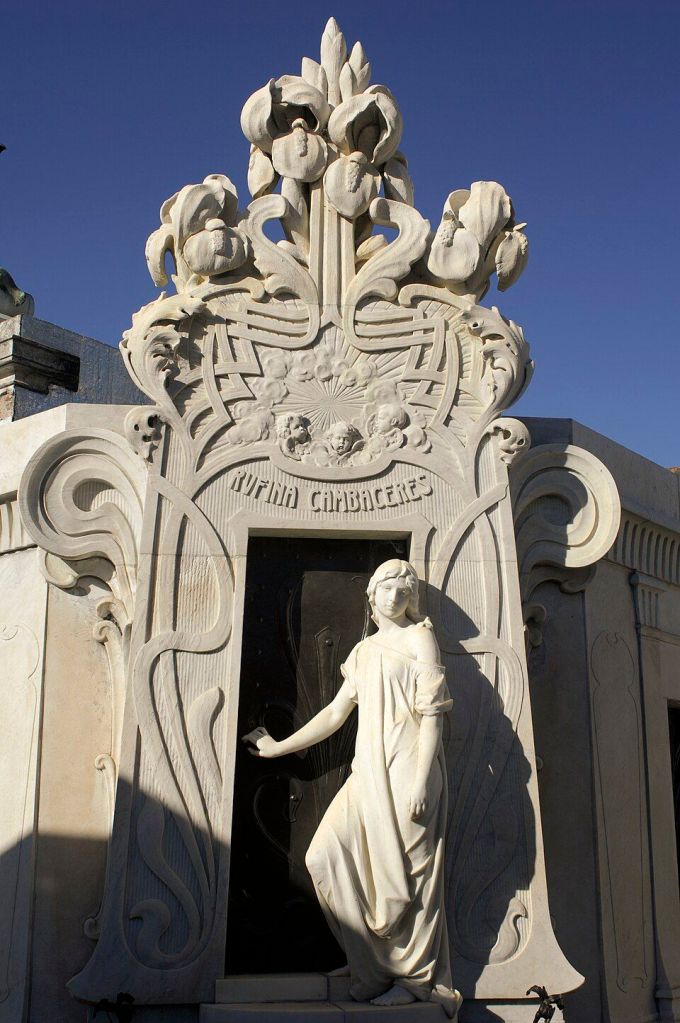
And frankly, not without cause. 
(Photo by Andrew Shiva, who is not my sister-in-law but I’m sure is cool.)

The story goes that Rufina collapsed and was pronounced dead, only to–you guessed it–not actually be dead. After discovering the displaced coffin (or investigating after hearing noises the previous night, depends on the version you hear), she was found having died, for real this time, in a panic after frantically clawing at the coffin lid.
The face you make when your mom cannot just give it a minute before interring you.

General Tomás Guido, national hero and bestie of José de San Martín, took part in San Martin’s grueling campaign, the Crossing of the Andes, during the wars of independence. He wanted to be buried under those mountains where so many had died, and in the great tradition of loopholes, his son had stones from the Andes brought to Buenos Aires and built the tomb himself.
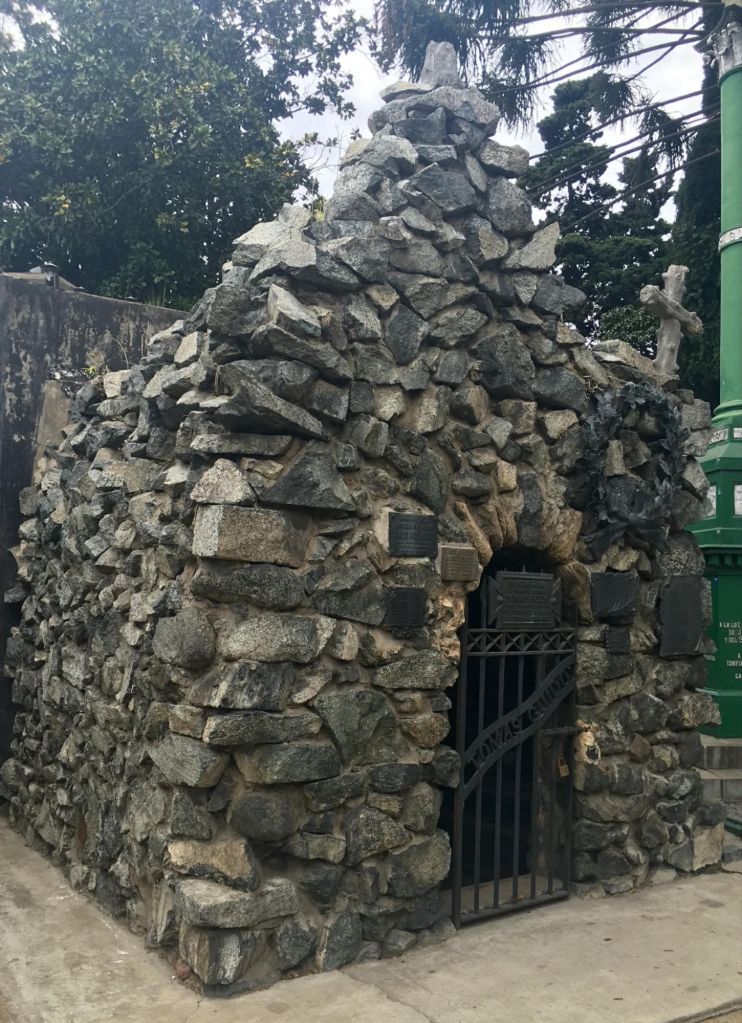
“See you’re technically under the Andes, Dad.”

Annoying technicalities aside, it’s a unique tomb, sharply contrasting with its neighbors. Also, Guido is no longer there. But he still isn’t under the Andes! He was relocated to the Cathedral of Buenos Aires next to San Martín, because who doesn’t want to be buried with their boss.

Speaking of work-adjacent entombment, cemetery caretaker David Alleno saved up for years for his own statue and burial. He supposedly killed himself upon the vault’s completion. His statue depicts him with his keys, duster, broom and watering can.
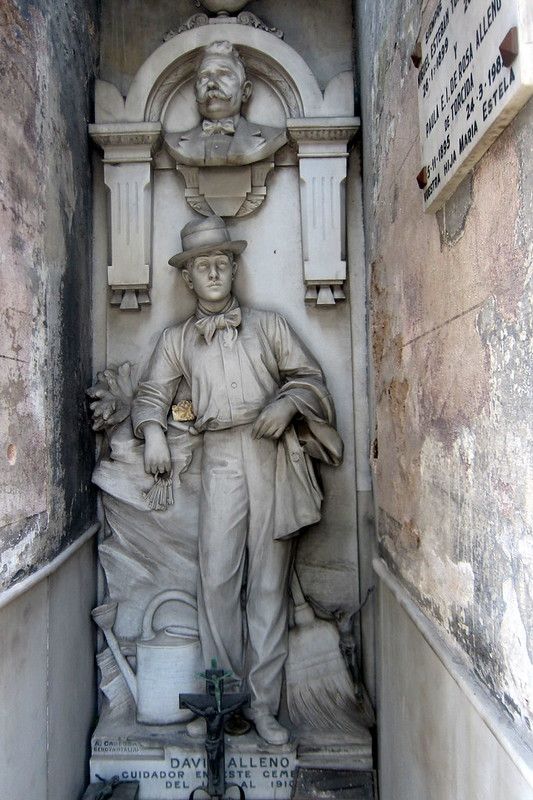
Sure, why not.  (Photo by Wally Gobetz.)

The story is tantalizingly incomplete. It seems like the purchaser of the crypt was his brother, Juan, and I don’t know why one brother would be wealthy enough to buy a family vault in the exclusive cemetery while the other is just a caretaker there. There’s a death certificate that cites “trauma and cerebral contusion” as the cause of death with apparently no follow up available. It’s said that his keys can be heard clinking at night or dawn, so perhaps David himself also feels his story is unresolved.
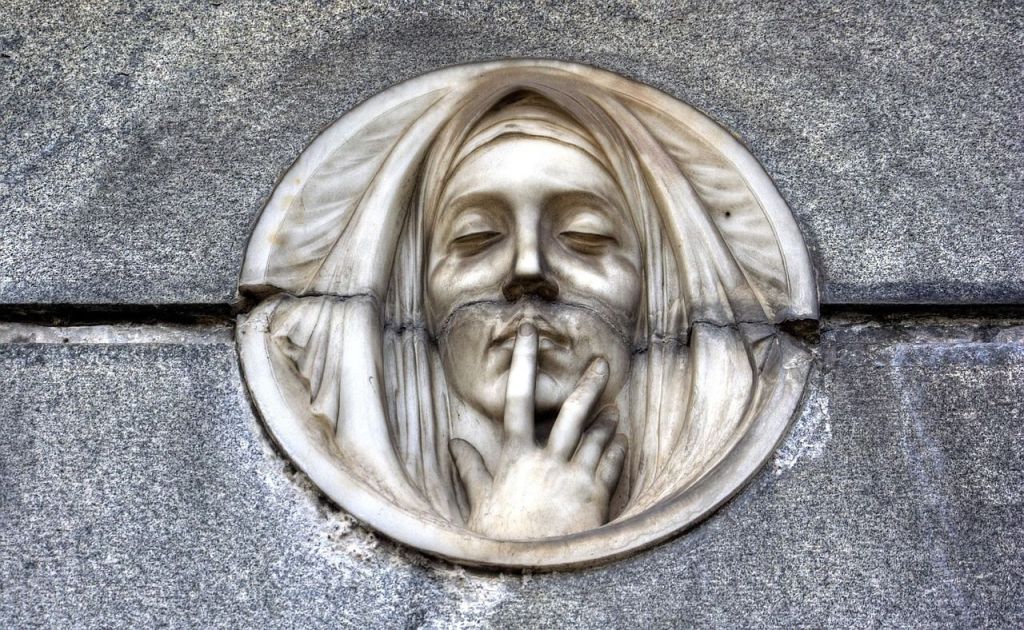
Maybe the Avelino Quijano vault just wants him to keep it down

Of course, there are some massive family crypts, the kind you can commission when you own half of Argentina.
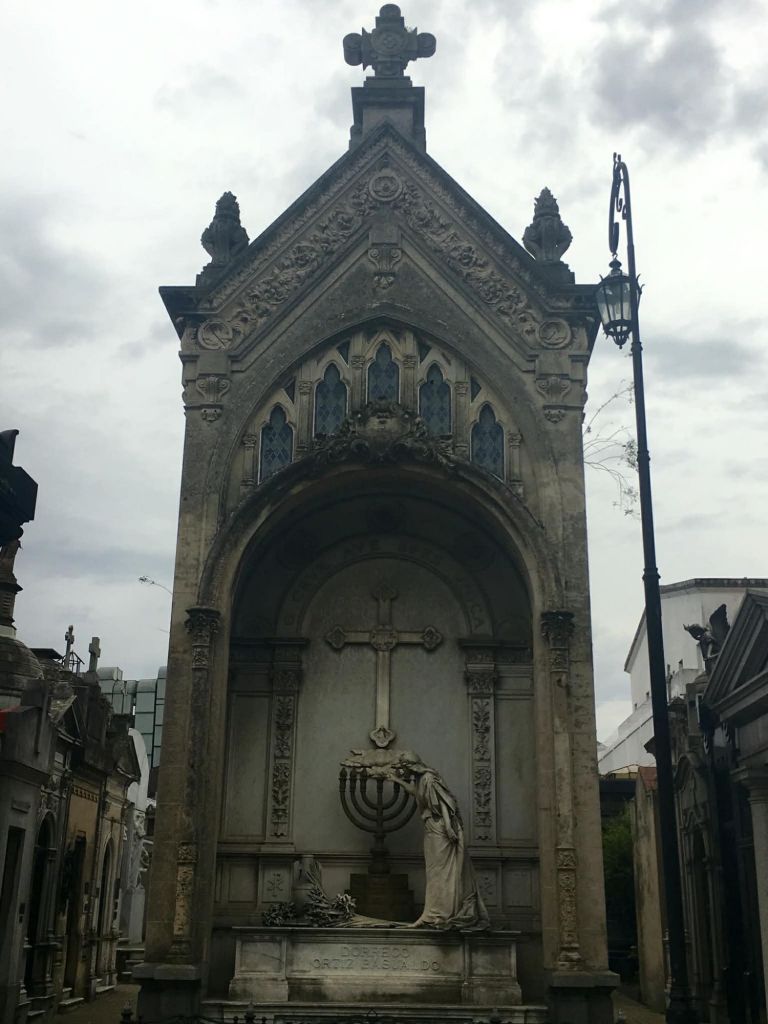
Probably not hyperbole.    (Fantastic sister-in-law strikes again.)

The Dorrego-Ortiz Basualdo family died as they lived: flexing on the rest of the neighborhood. One of the former family residences is the current French embassy.

Then there is the mausoleum of Justa Lima de Atucha, who as far as I can tell had it built after her husband died and labeled it “Justa Lima de Atucha to her husband.”
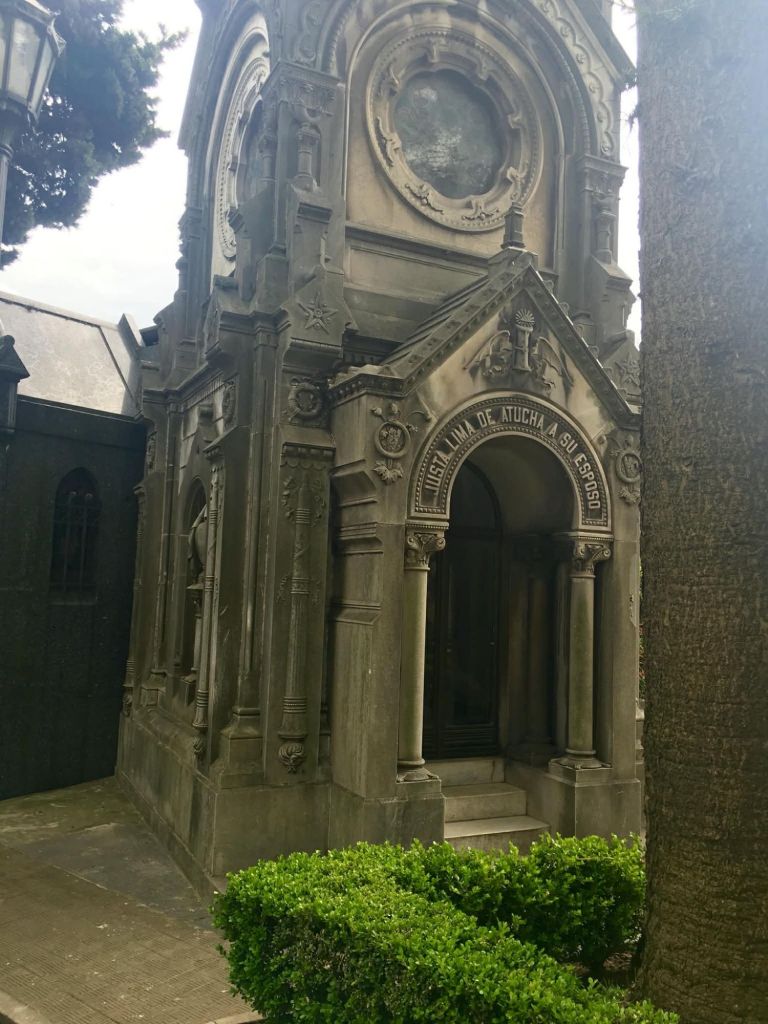
(Sister-in-laaaaaaaaw.)

Despite the opulence of most of the vaults, there are many that are now neglected and broken, and in this way the cemetery mirrors the city itself. I have no photos of those, however, so you’ll have to go hunt them out yourself. Or Google it I guess.

Finally, there is another big draw at Recoleta, unmatched in dignity, presence, and grace.
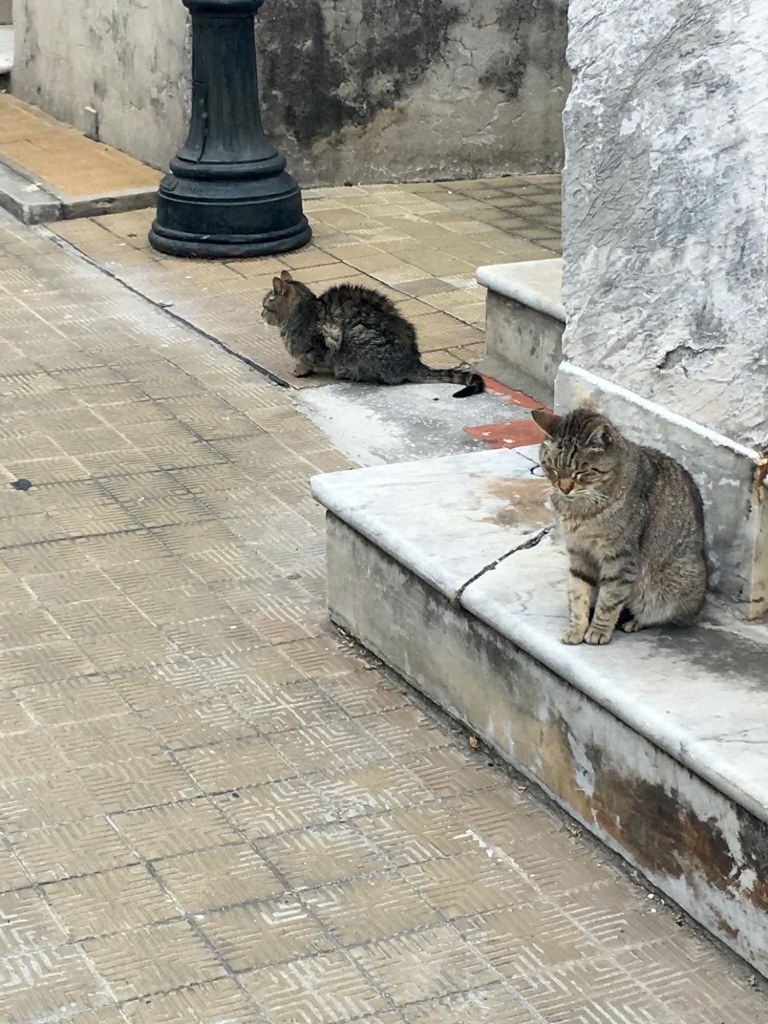
Do. Not. Touch.

There are only six cats left in Recoleta Cemetery, and they are meant to be the last. If you happen to spot one during your visit, consider yourself fortunate. I don’t know how they’re going to keep the ghosts in line after that; presumably the final six felines will deign to haunt the place as well.

El Cementerio de la Recoleta is at Junín 1760 in, yes, the Recoleta neighborhood. It’s next to a mall, a large park that hosts a huge weekend feria, an absolute unit of a gomero tree, museums, hotels, that big flower sculpture and innumerable public transportation stops. It’s open daily from 9 to 5. You will not miss it unless you try.
National Museum, New Delhi (India)

*sheepishly peeks around the website*

…hello?

So. Been a hot minute.

But hey let’s pretend like it hasn’t been! Let’s just jump right into talking about big ol’ collections of neat stuff.

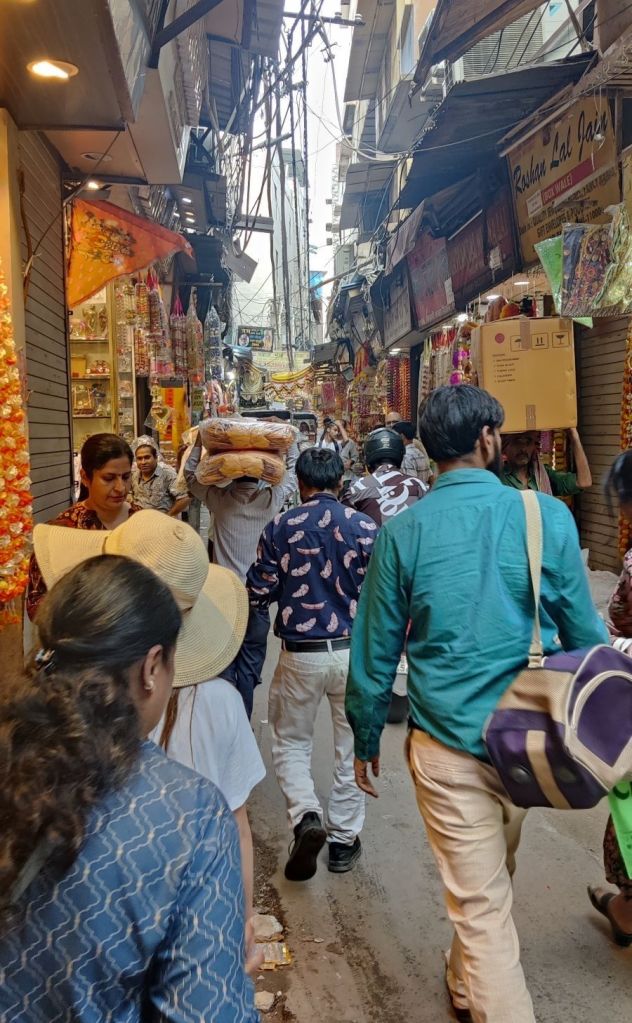
About a year and a half ago, I found myself in India, as you do. I’d never been there before. I have been in a few very large cities, and Delhi makes Buenos Aires feel like Megacity Easy Mode.

The population of Delhi is about 30 million, and they are all on the same block as you.

As a pedestrian, if you are waiting for someone to let you through/across/around, you are waiting forever. You live on that spot now. You are either an active entity of self-determination or a passive obstacle.

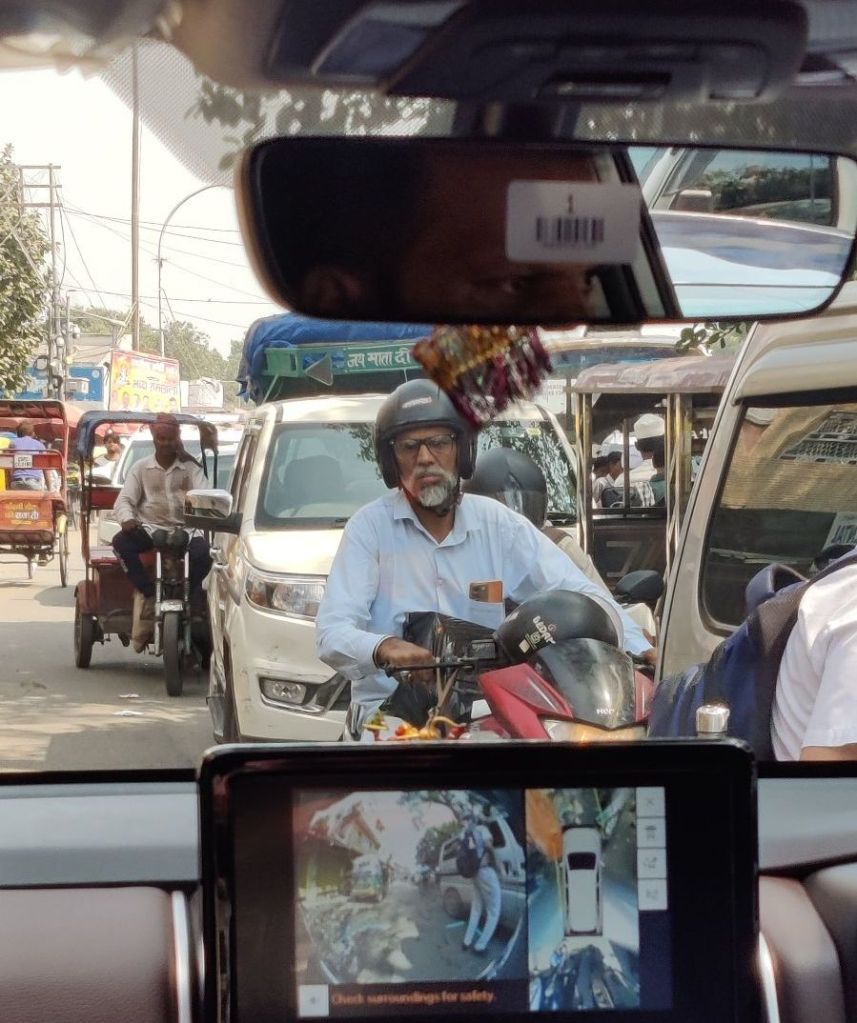
To travel in a vehicle in India is to experience existence as a drop of ocean water.

As far as I could tell, there are only two traffic laws in India: fortune favors the brave, and it doesn’t matter what color the traffic light is as long as it’s green in your heart.

…which way are we supposed to be facing

There is clearly a logic and rhythm to the flow of traffic; otherwise there would just be piles of bodies and tuktuks everywhere all the time. But as an outsider, you do not understand it. It is language you cannot speak, and you can only consign yourself to the expertise of your translator/driver or if on foot, make tenuous, lamb-like attempts at the basic grammar of crossing the street. Traffic density is lessened outside of the cities, but your driver is going to book it regardless of the slower road obstacles, so buckle up and sit tight while he plays cow slalom.

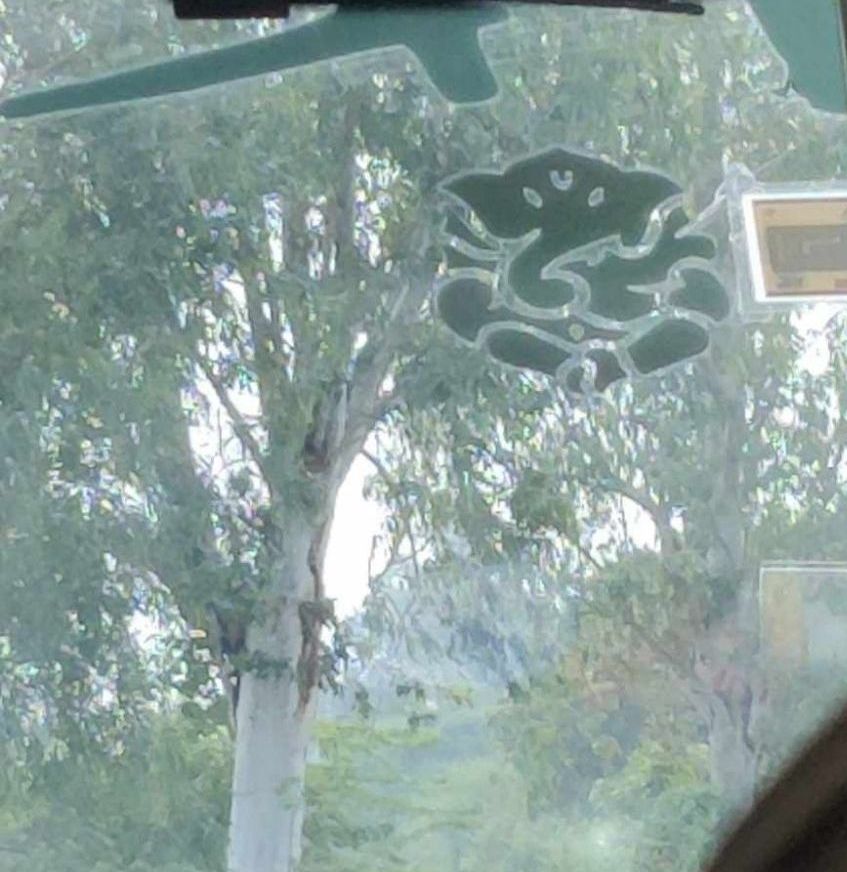
Ganesh is my copilot.

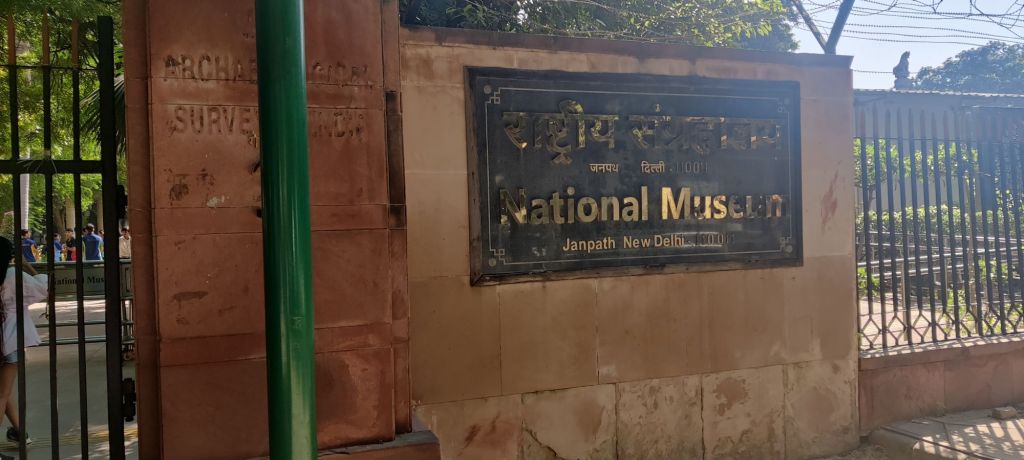
But back to the big city. Despite offering all the personal space of a platelet in a blood stream, Delhi is an amazing experience that should be visited if at all possible. It’s been a city for a couple thousand years, and a capital for hundreds of those years. It is rich with culture, history and art. Among its many museums is the National Museum, which holds artifacts that span 5,000 years.

The first thing to remember is that when you are in line in India, you are either pushing up against the person in front of you or you are not, in fact, in line. I was without a guide on that day and while purchasing the tickets, I found myself not so much in line as standing near the ticket counter as others filed past me. A teenage girl immediately clocked my problem and attempted to convey how to line up effectively, and after some moments and, likely, pity on the part of some of my fellow line mates, I managed to pay.

After pausing in the entry hall for a group selfie with some teens on a school trip (embrace being in strangers’ photos), I set about exploring in no particular pattern, which will be reflected in my random-ass pictures.

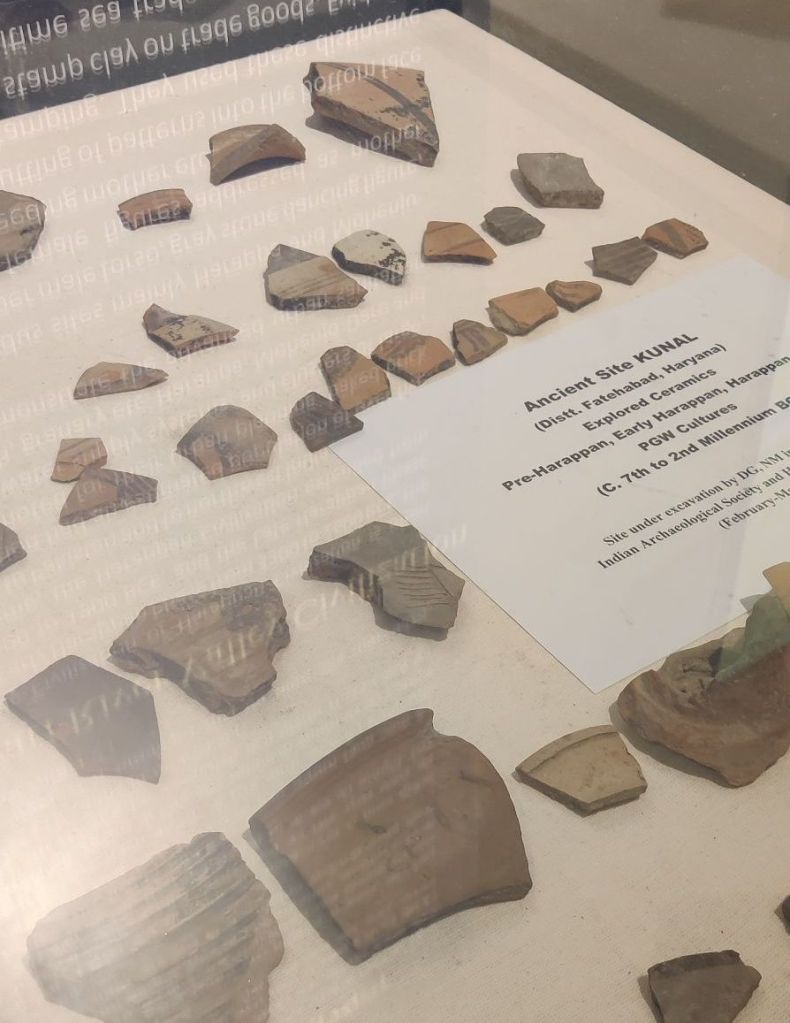
Some of this pottery is Nine. Thousand. Years. Old.

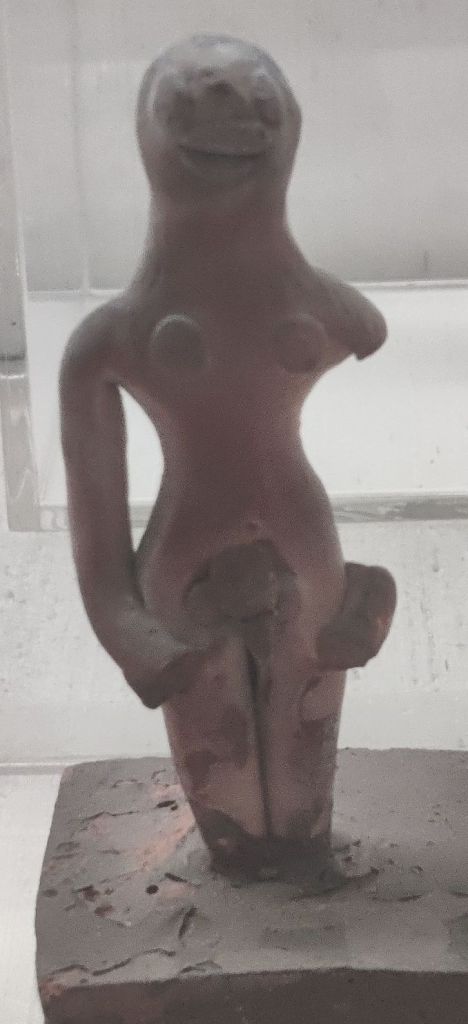
The museum holds a huge collection of artifacts from the Harappan era, the Indus Valley civilization of the Bronze Age, and earlier.

With apologies to the Harappan sculpture for taking a craptastic photo and slapping it on the Internet four thousand years later.
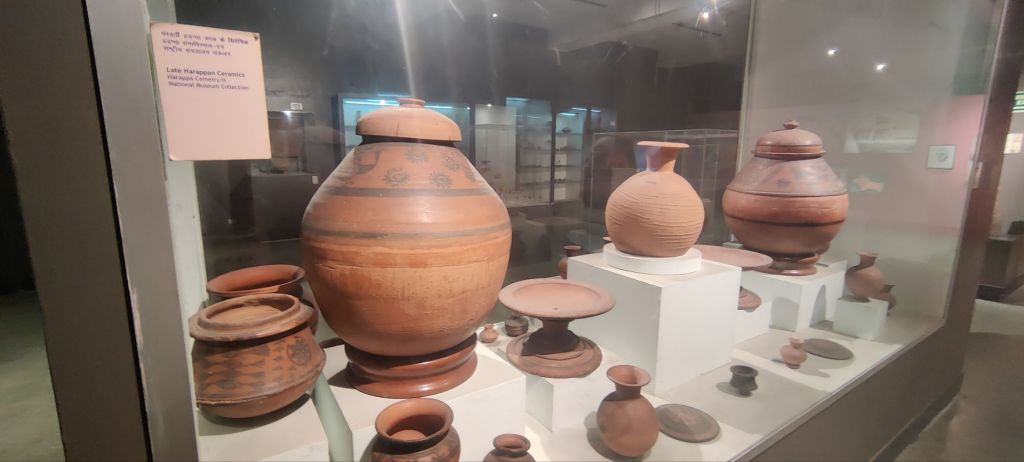
Late Harappan ceramics, flexing the kind of durability Pyrex can only dream of.

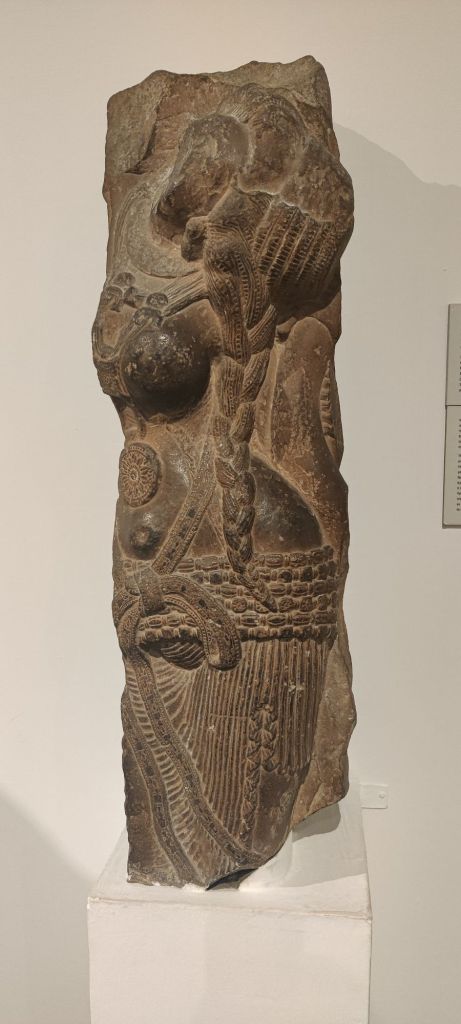
Excuse me while I shamelessly skip centuries of treasures and move to the Kushana Gallery, which includes this sandstone pillar from a Buddhist stupa, carved in the second century. The figure is a tree spirit motif rooted in a pre-Buddhism fertility rite, here incorporated into a stupa’s pillar to bless the site it was built on.
I am a noted tree enthusiast and so she makes the blog cut.

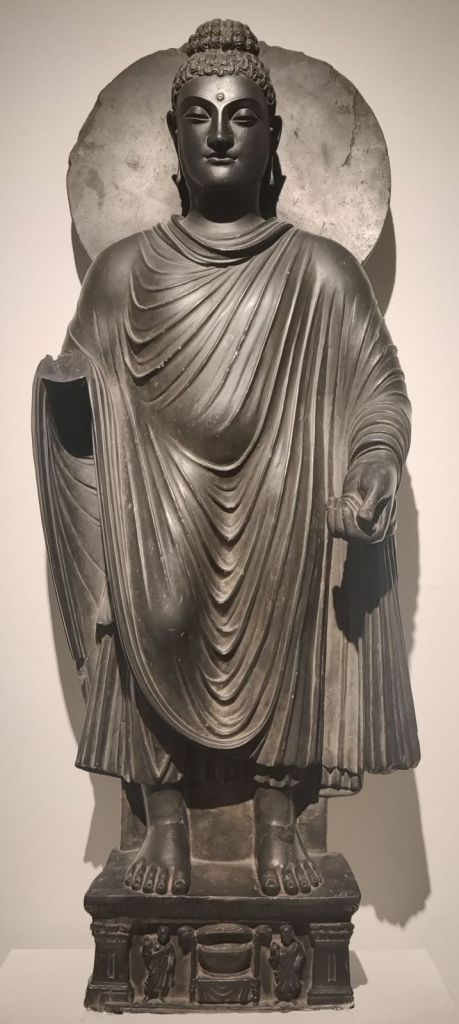
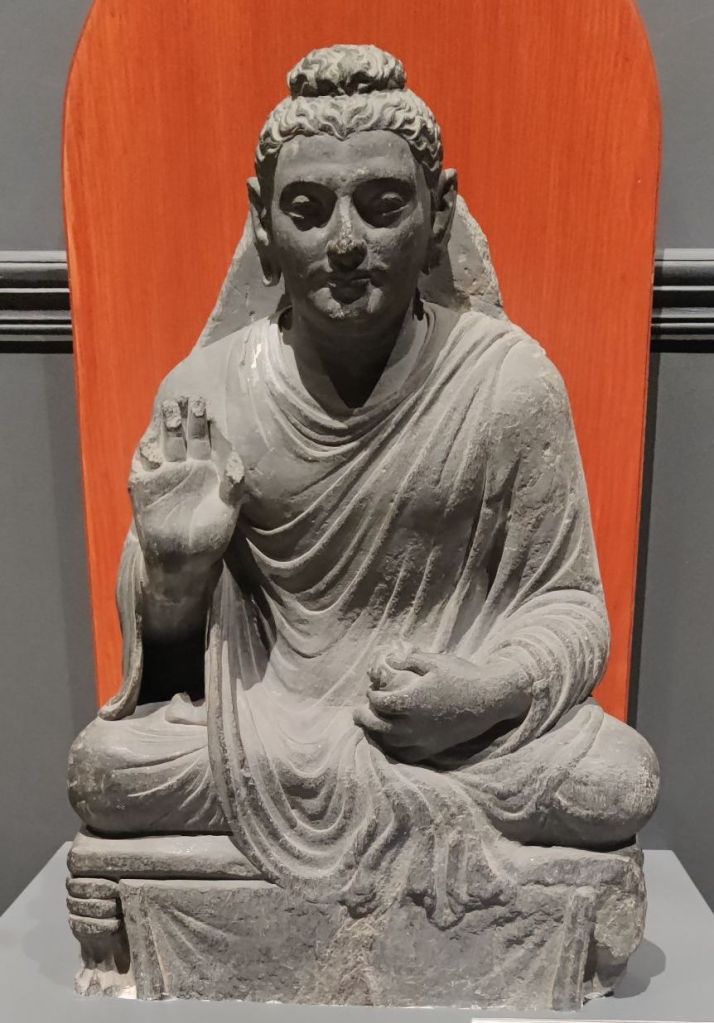
From the same time period is this Standing Buddha from the Gandhara School, which was heavily influenced by Greek art. The standing Buddhas of this era mark the start of depicting Buddha in human form.

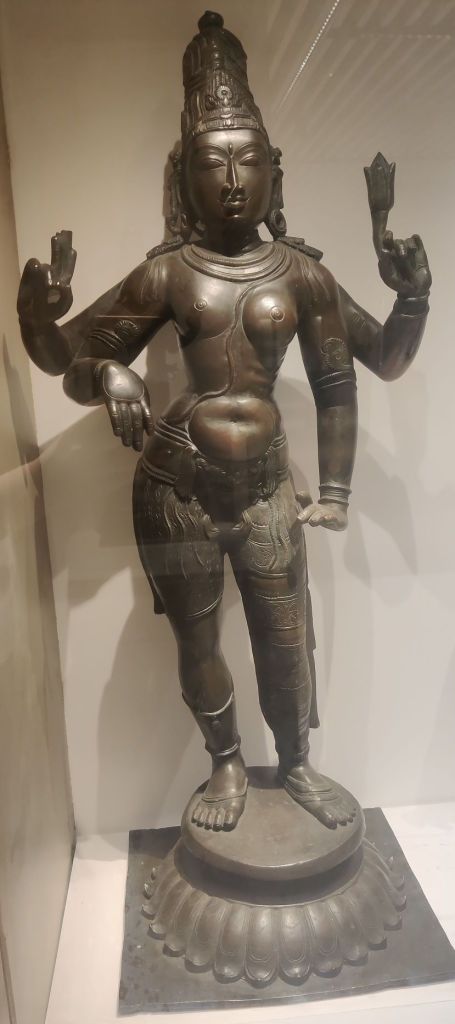
And one more statue before we go stampeding to the Decorative Arts galleries; that of a bronze Ardhanarishvara–a god form of Shiva and Parvati combined–from the 15th century.
Now, let’s get ornamental in the Decorative Arts galleries!

The two galleries are divided by material rather than time period, and between them cover pre-history to the present day.
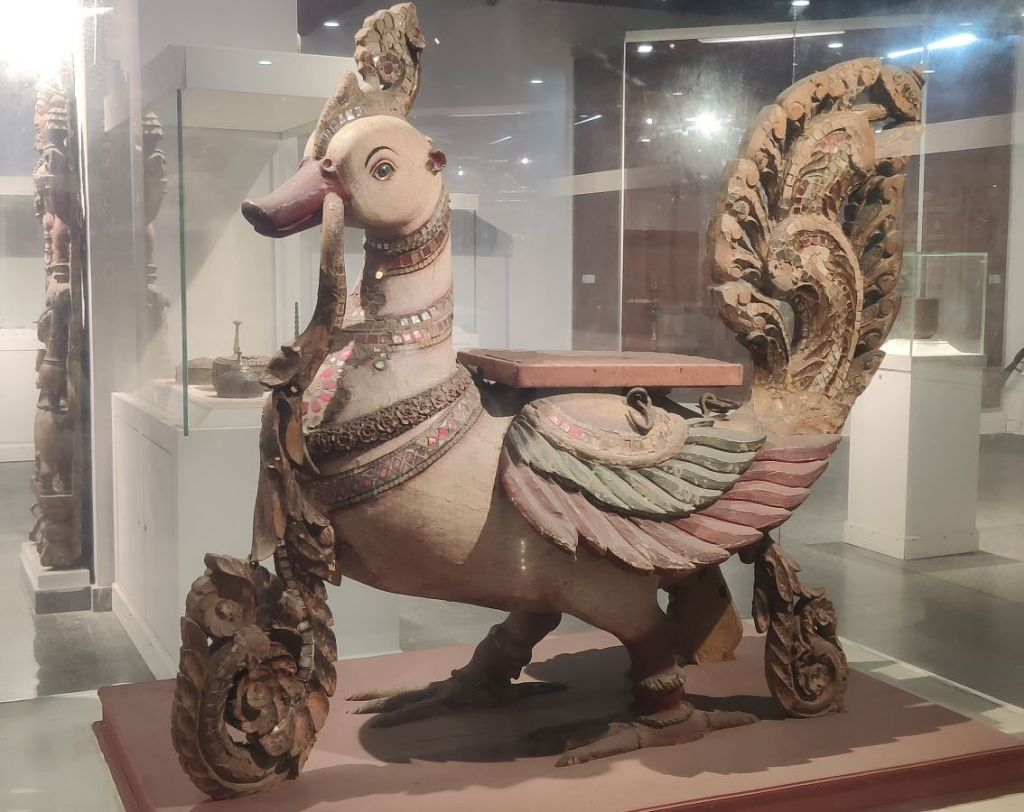
Speaking of stampeding

This is a wood and glass peacock, the mount of war god Karttikeya, from the 1800s.

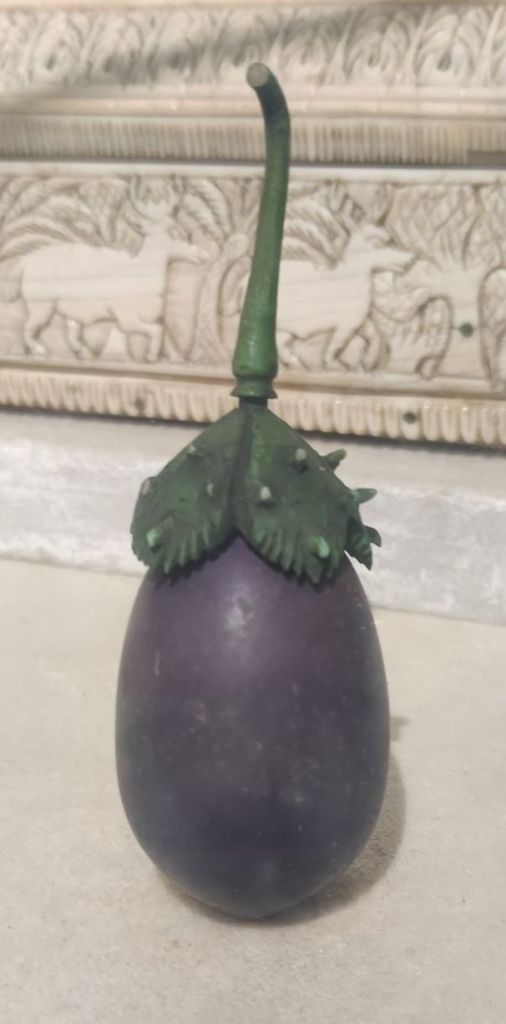
And I passed over photographing many magnificent objects in favor of this 20th century ivory eggplant-shaped perfume container, solely because it amused me:

🍆

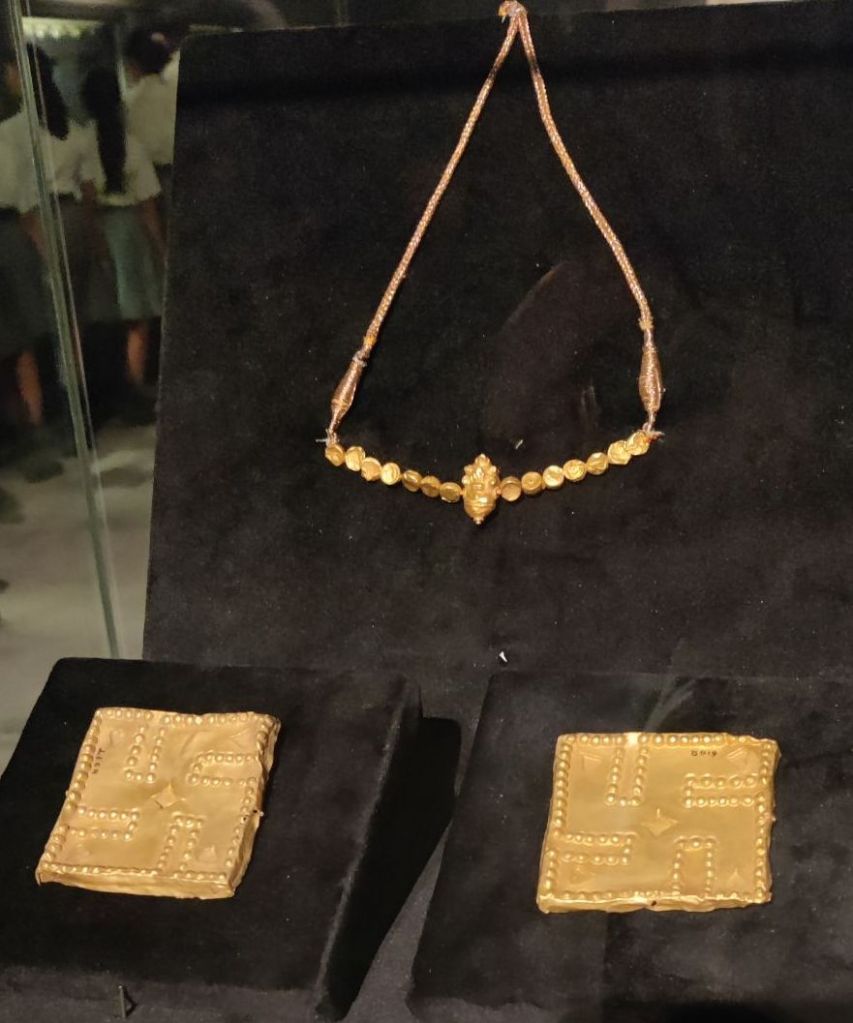
And in metalworking, gold amulets from the first century:

Photos at a weird angle brought to you by my eternal struggle with glare

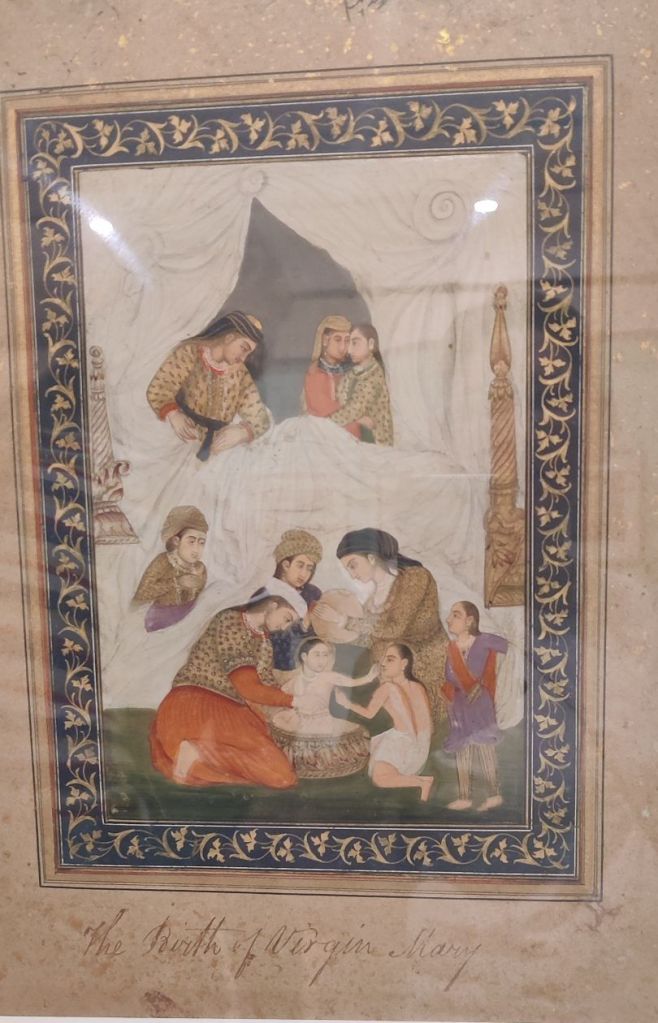
Here’s one quick example from the Miniature Paintings gallery, Mughal division. The plaque says “The Nativity” but the writing on the painting says “Birth of Virgin Mary.” From 1720ish.

In the Holy Adult-Baby tradition

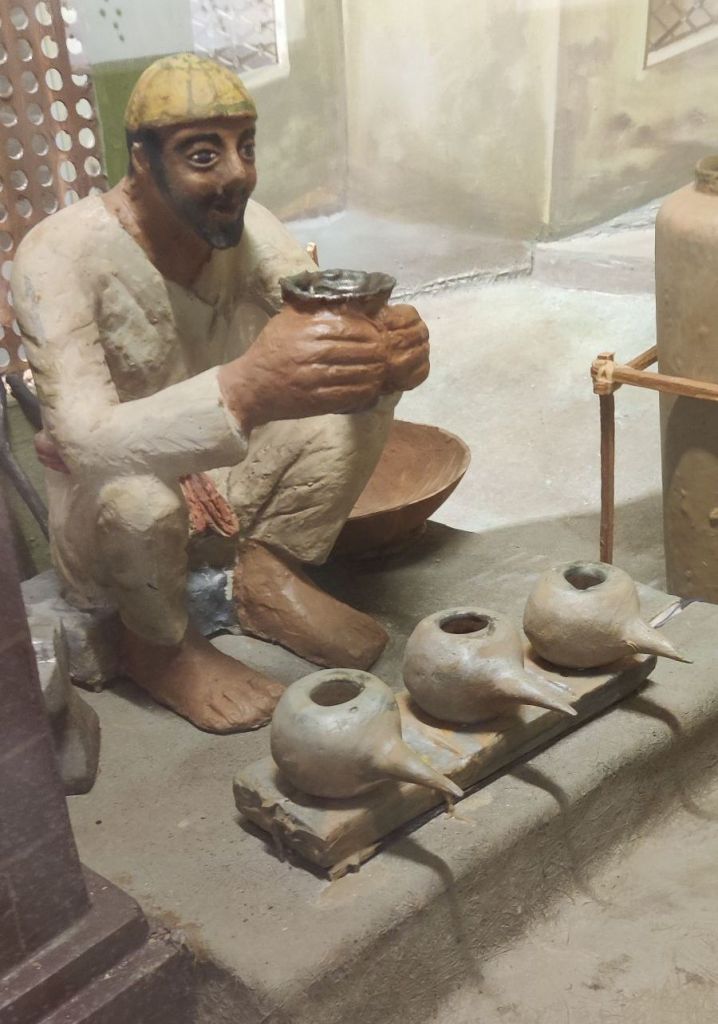
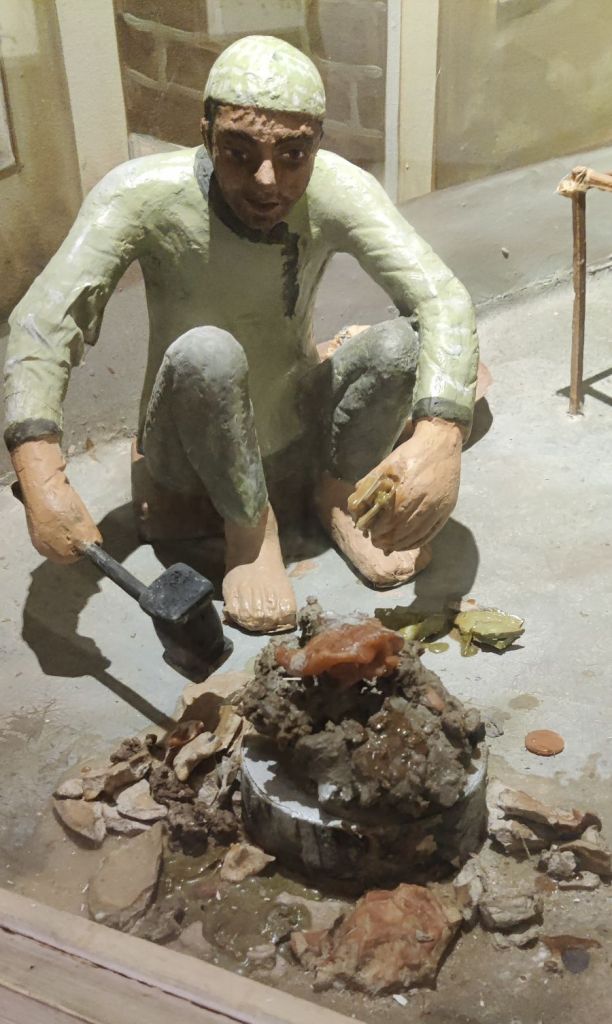
There’s a Coins gallery for all your numismatic needs and desires, and if you’re wondering if the National Museum also has some unsettling mannequin type things, the Coins section has an answer for you.

Coin minting has never looked so gooey.

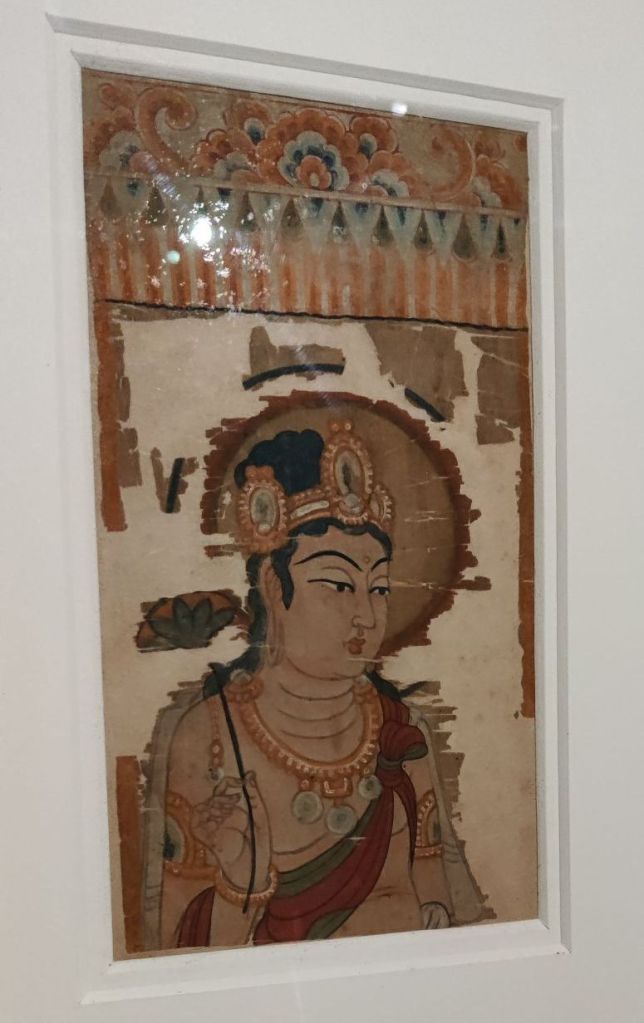
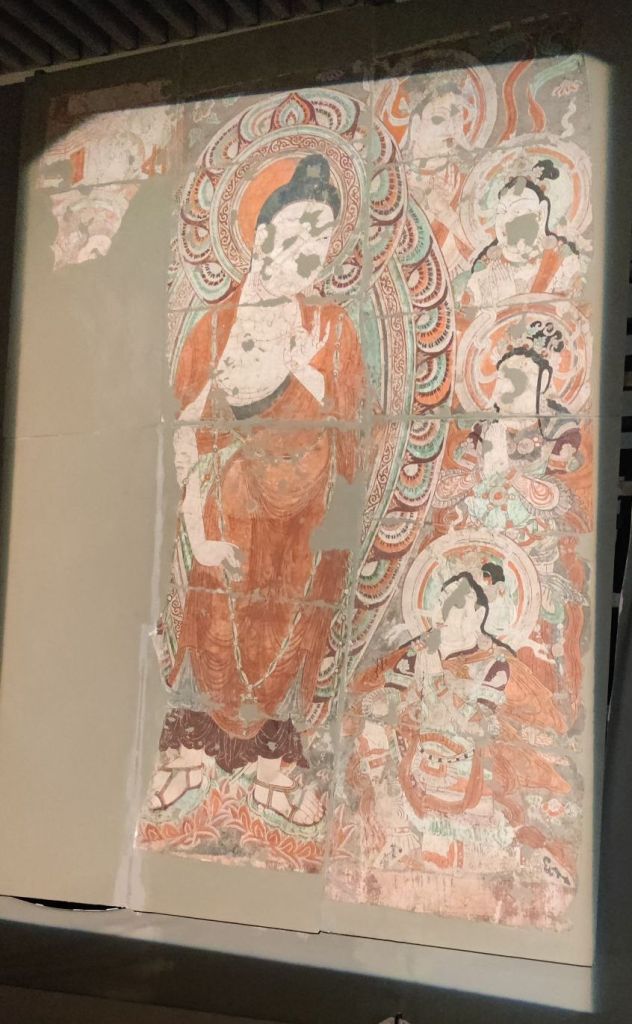
From the Central Asian collection, there are murals from the Mogao Caves  (Thousand Buddha Grottoes) in China, which were an important site along the Silk Road. The caves hold a thousand years of Buddhist sculpture and painting, making them a UNESCO World Heritage site. The Library Cave was discovered in 1990 with tens of thousands of manuscripts; most of the silk paintings in this room are from there.

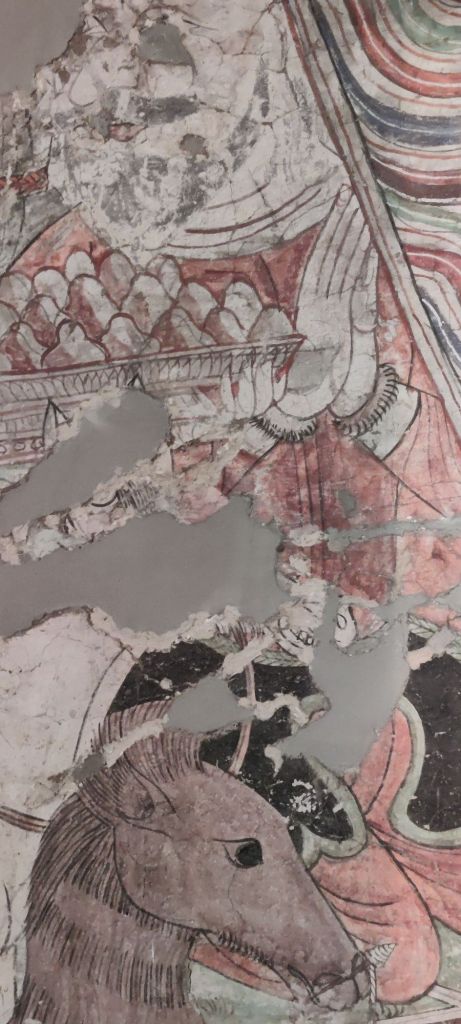
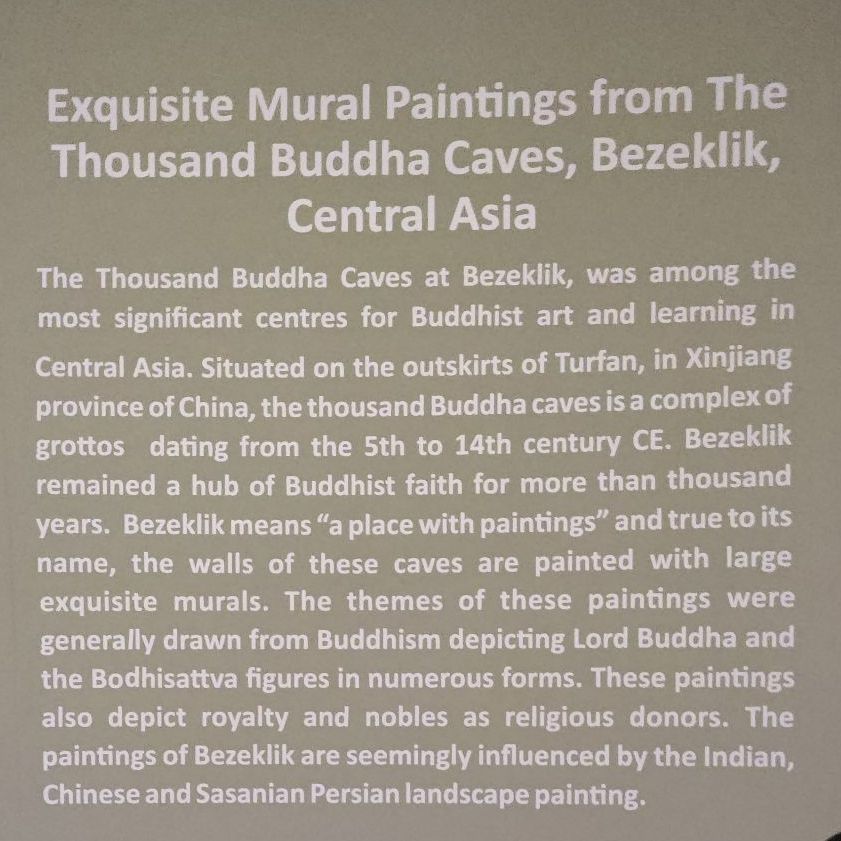
There are also some works from the Bezeklik Thousand Buddha Caves, also a site on the Silk Road in China.

One Buddha….two Buddhas…
…982 Buddhas…
Ctrl C, Ctrl V

Absolutely stunning stuff.

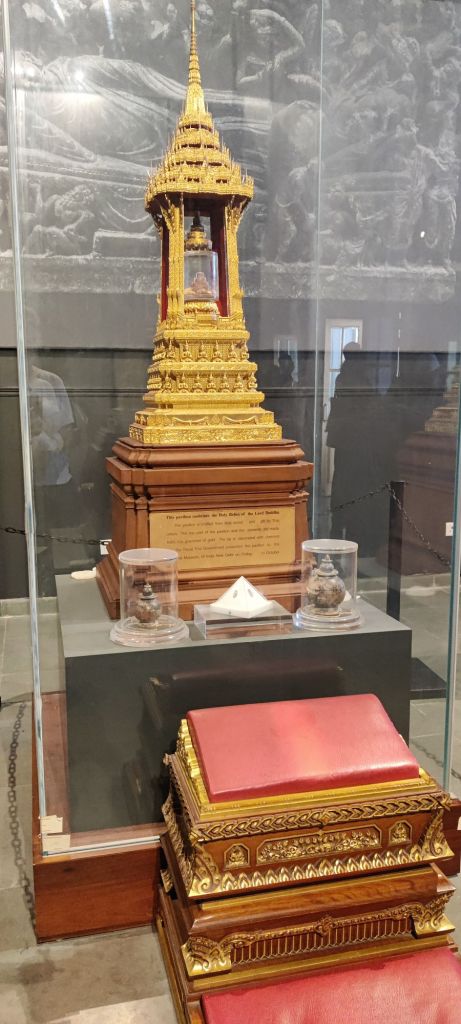
There is a huge collection of Buddhist objects in the museum, and some of the most important and exemplary are housed in the Buddha pavilion. This exhibit has objects from all over Asia, in varying materials and from many time periods. The centerpiece is a reliquary holding bone fragments excavated from Piprehwa and believed to be those of the Buddha.

There is a guard with an automatic rifle in the room and he’s pretty chill, but it does distract just a teensy bit.
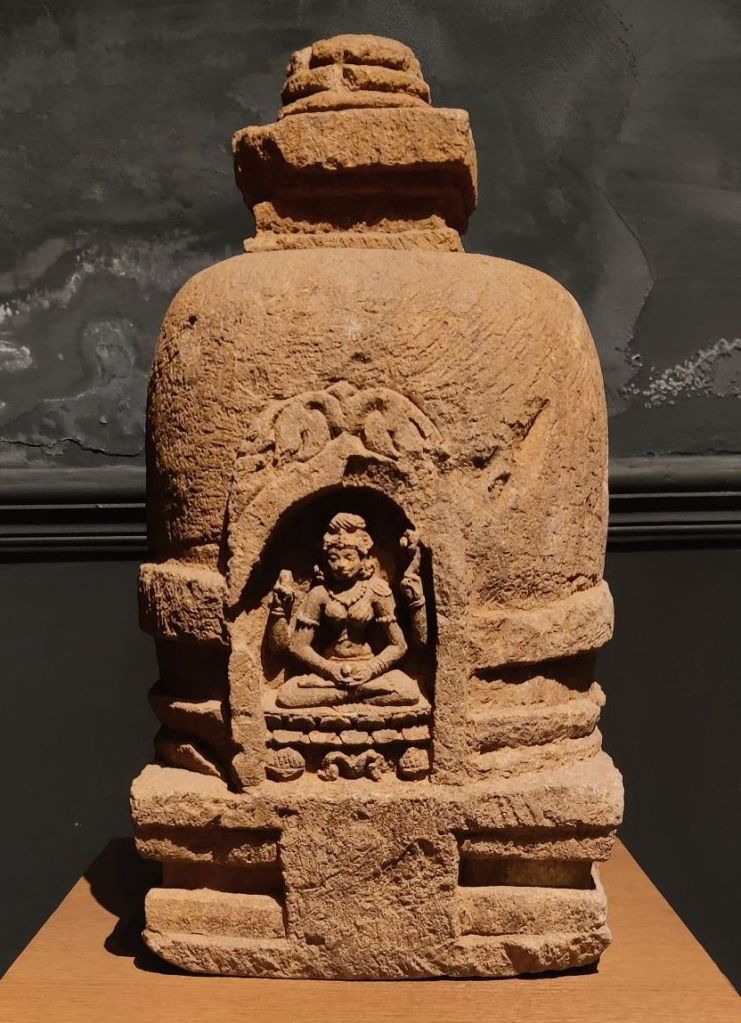
Chunda with four arms, a goddess of some Buddhist traditions, on a votive stupa from the 700s
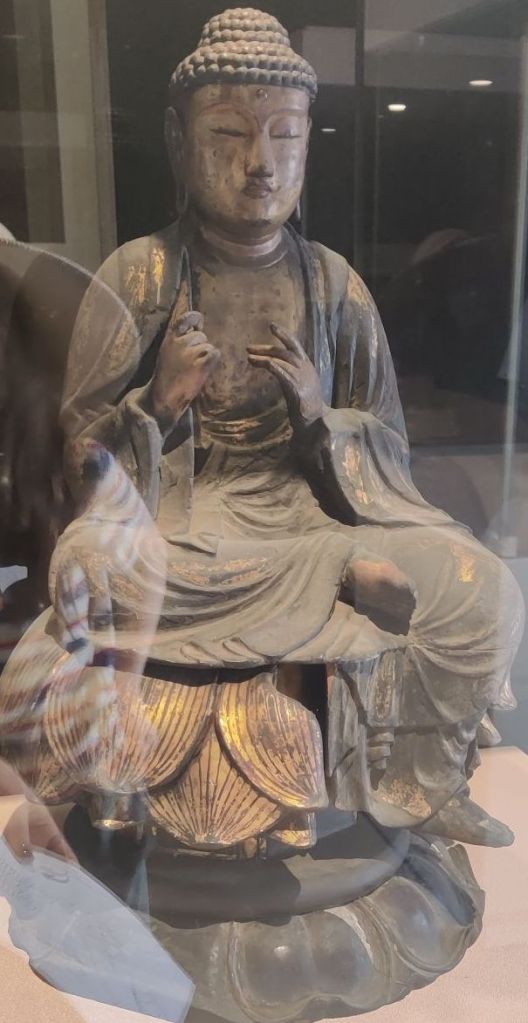
A 15th century wooden Buddha from Japan, and reflections of tourists reflecting on him
A second century stone Buddha from Gandhara, and my personal favorite thing in the museum.

There is. So. Much. More. The history of Indian writing, textiles, bronzes, manuscripts, maritime history, whatever was in all those crates being stored in the corridors–artifacts, relics and art for days. There is a small store with very inexpensive books available, so don’t miss that. The National Museum is open 10-6, Tuesday through Friday and 10-8 Saturday and Sunday. You can get there by hiring a driver and telling him that’s where you want to go.

Museo Casa de Yrurtia [Yrurtia House Museum]

HELLO HI

I AM BACK

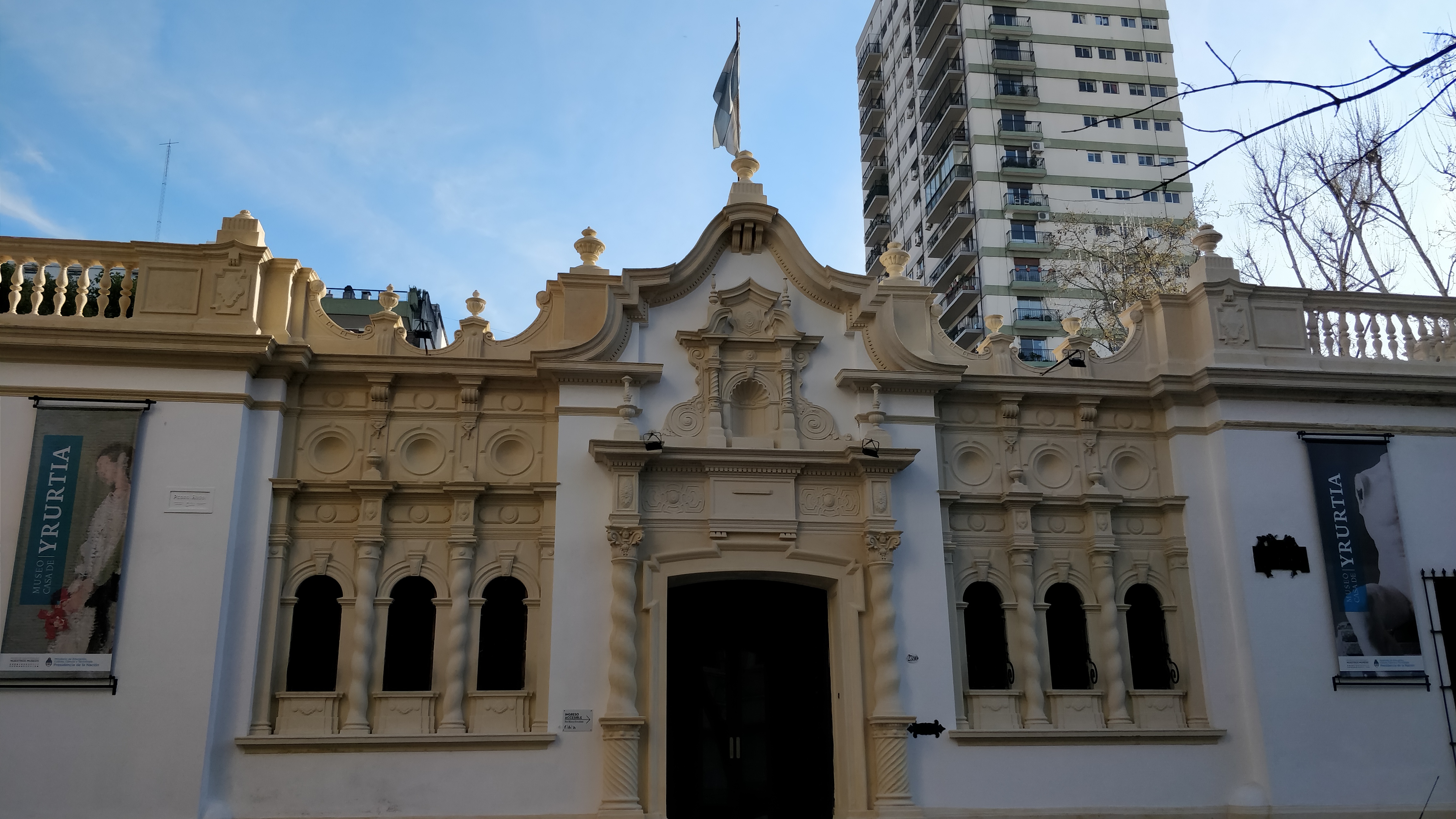
And for today I have the long-closed-for-renovations-but-now-open Casa de Yrurtia!  And it is looking pretty nice after years of closure.

IMG_20190913_164343.jpg
Quaint!

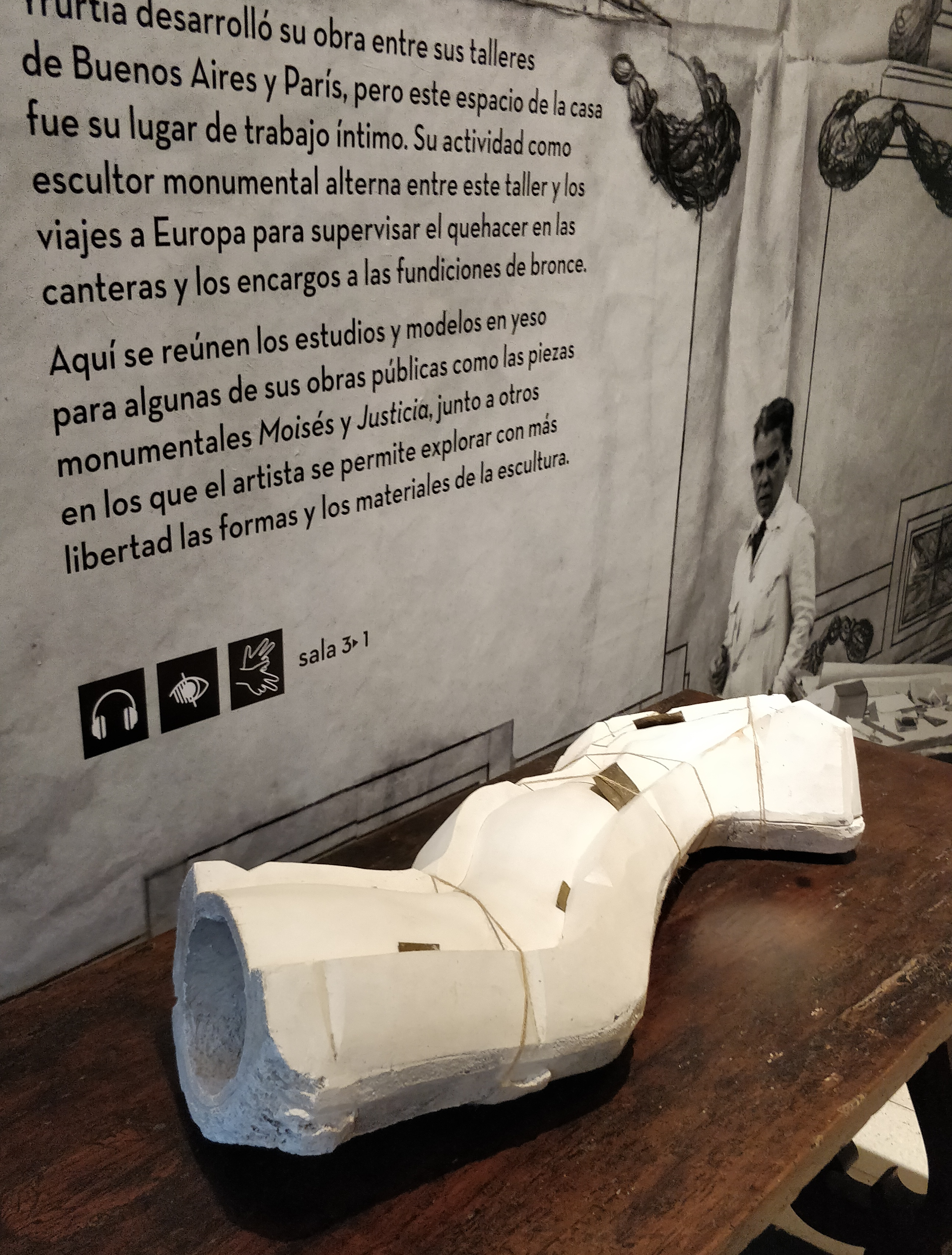
Rogelio Yrurtia was an important Argentine sculptor in the early 20th century.  As a talented young man in 1899, he was awarded a scholarship, on which he traveled to Paris.  He would spend his career moving between Paris and Buenos Aires, where he would be known for his large scale, public works.

IMG_20190913_162856.jpg
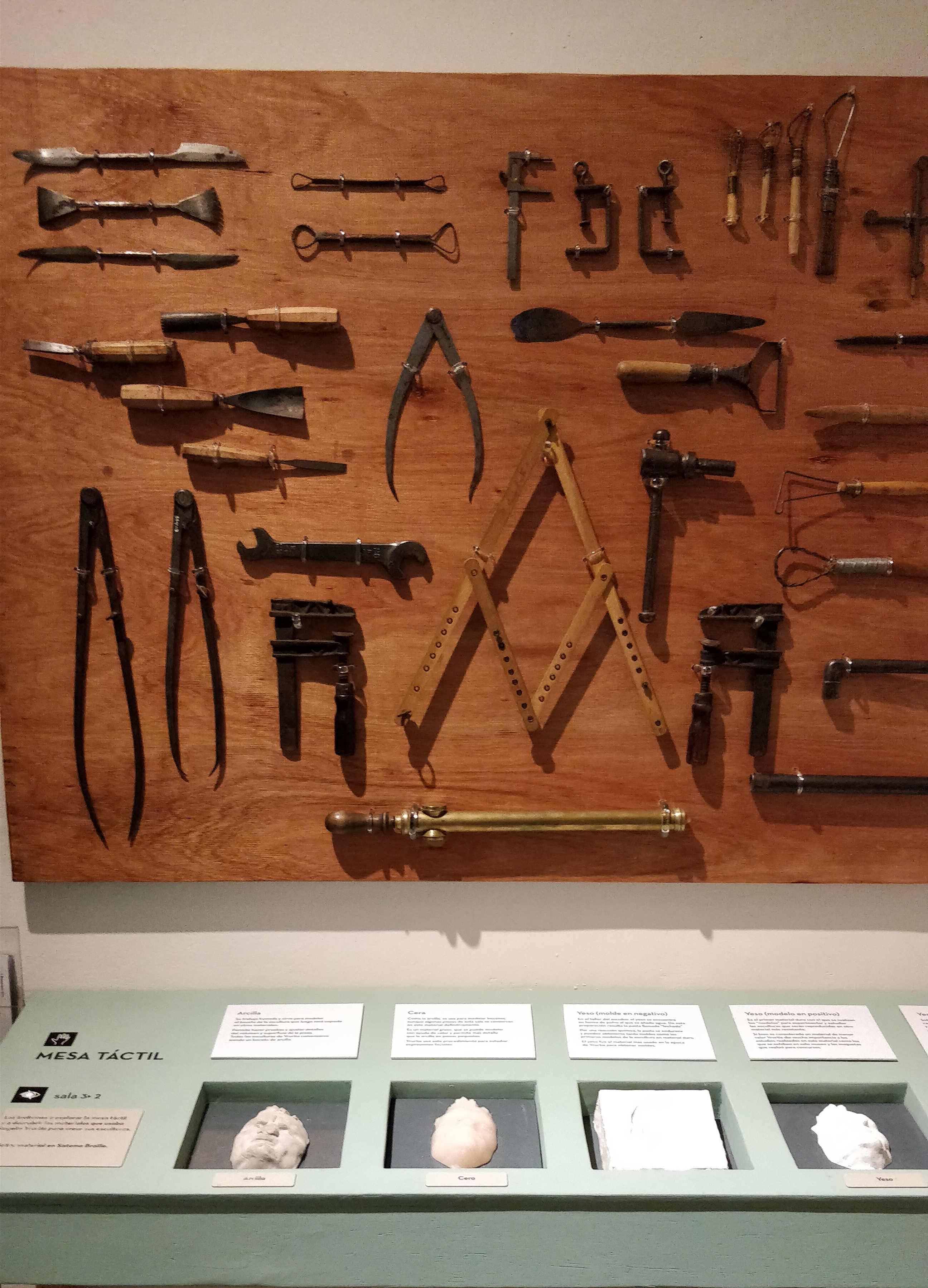
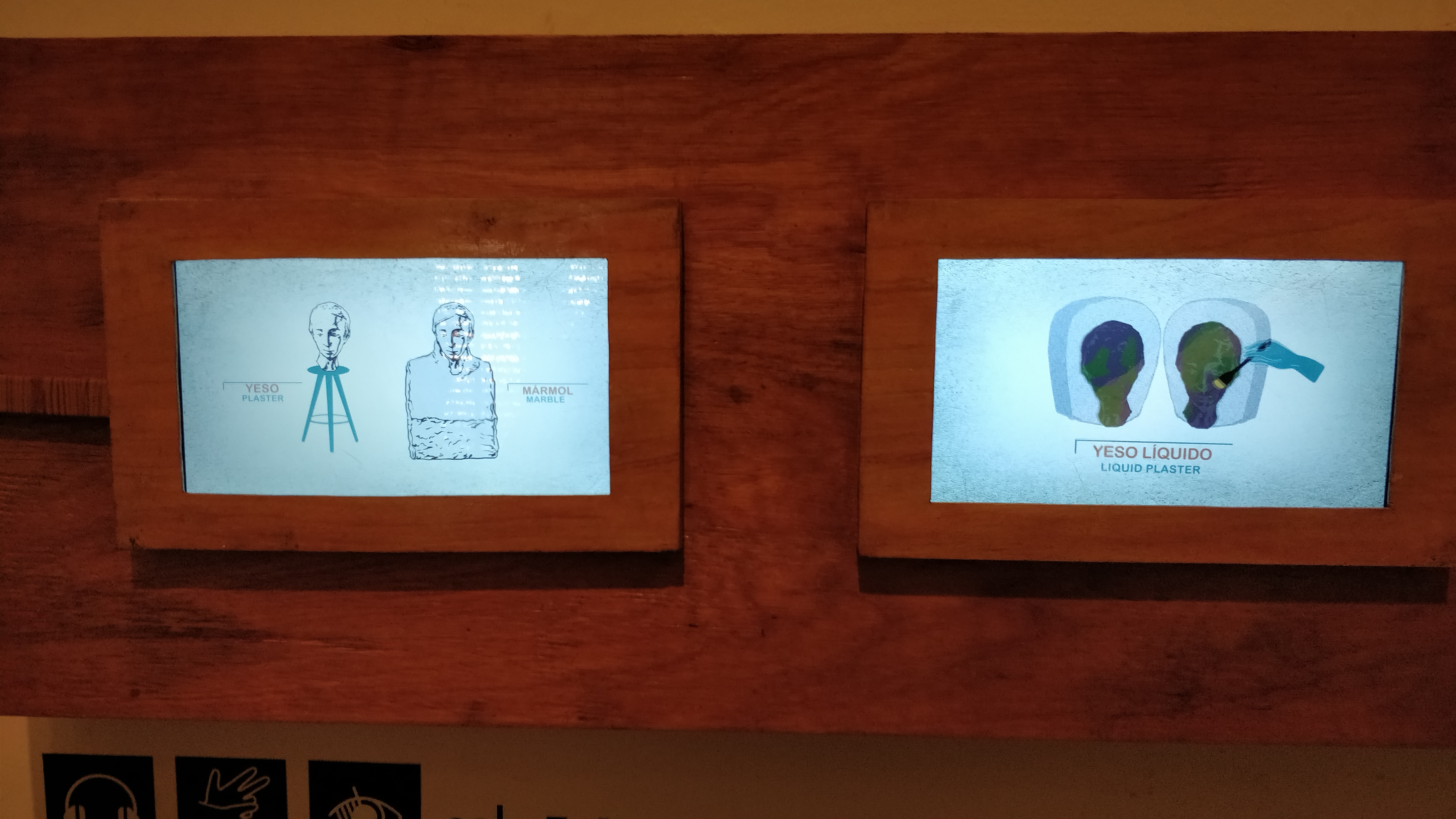
The man’s own tools, and a really nifty table about the sculpting process that visitors can put their grubby fingers all over.

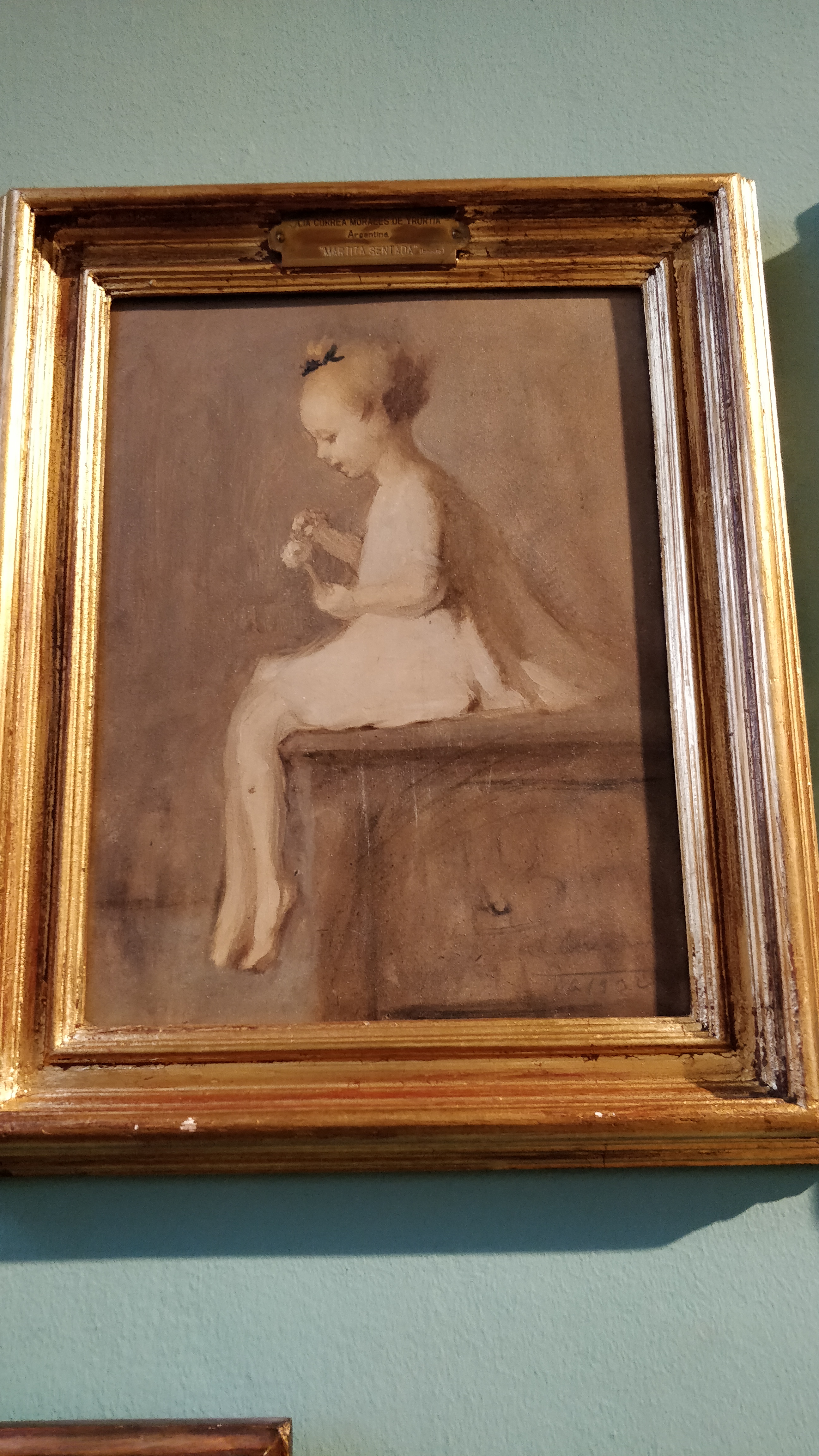
The museum is in the home of Yrurtia and his wife, the also very important artist Lía Correa Morales.  The couple donated the house to the country to establish as a museum.  It opened to the public in 1949; Yrurtia died the following year. Lía Correa Morales then served as the museum’s director.


IMG_20190913_160116.jpg
The house side. 

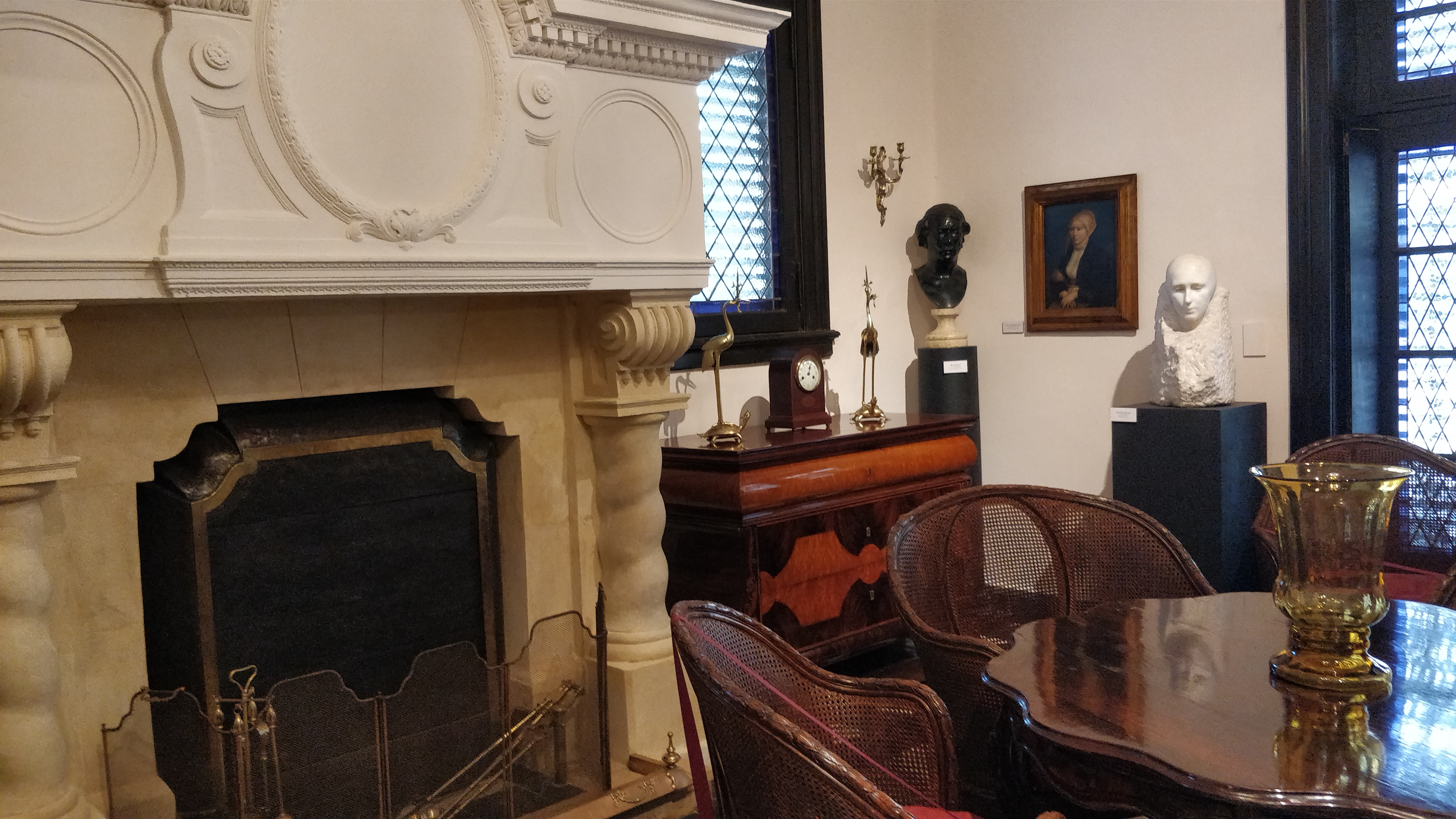
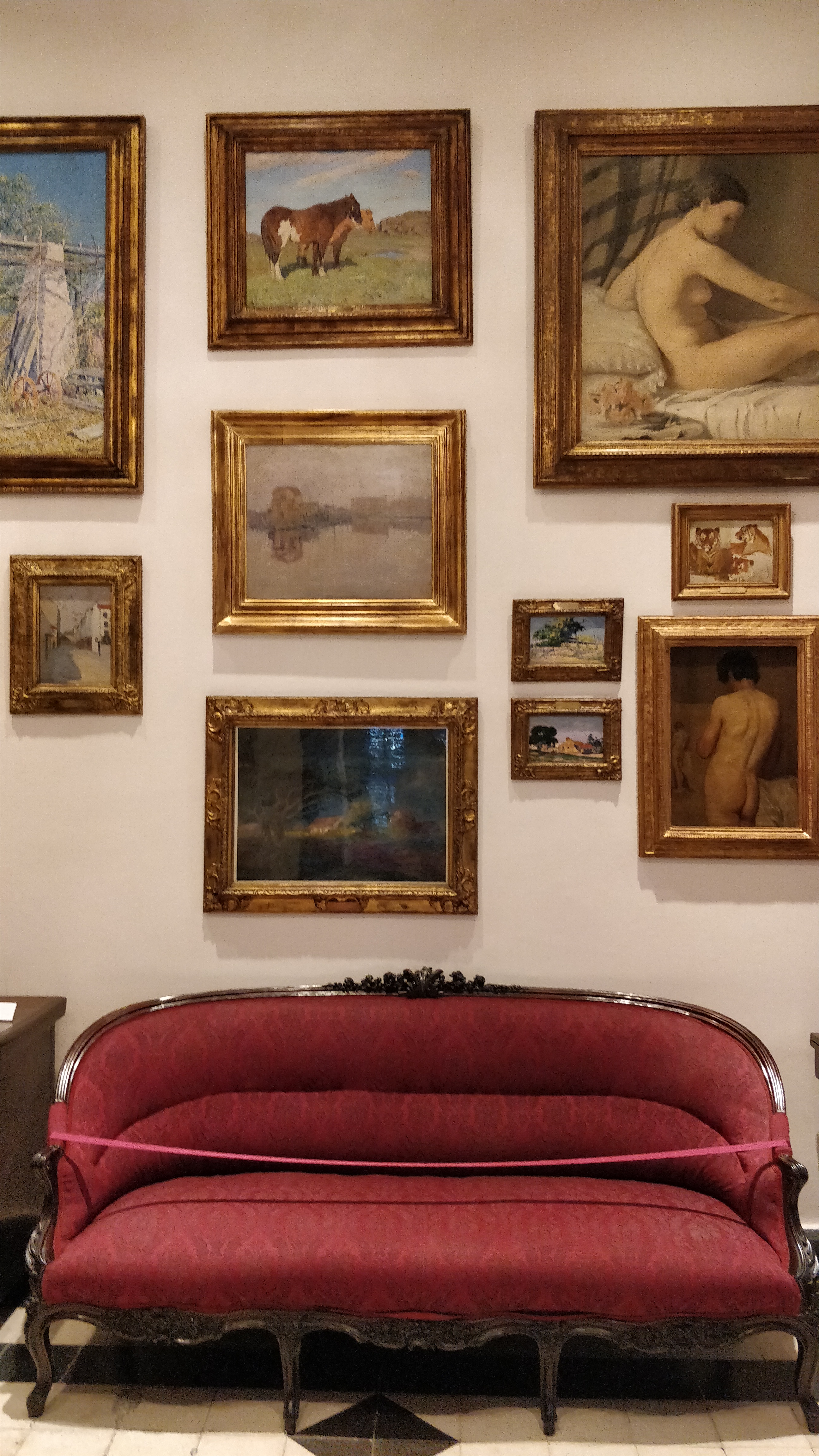
The house rooms include the some of the couple’s own art collection, which I guess is a big plus to having a lot of artist friends.

IMG_20190913_160254.jpg
Yeah well *I* have a bunch of pretty cool postcards.

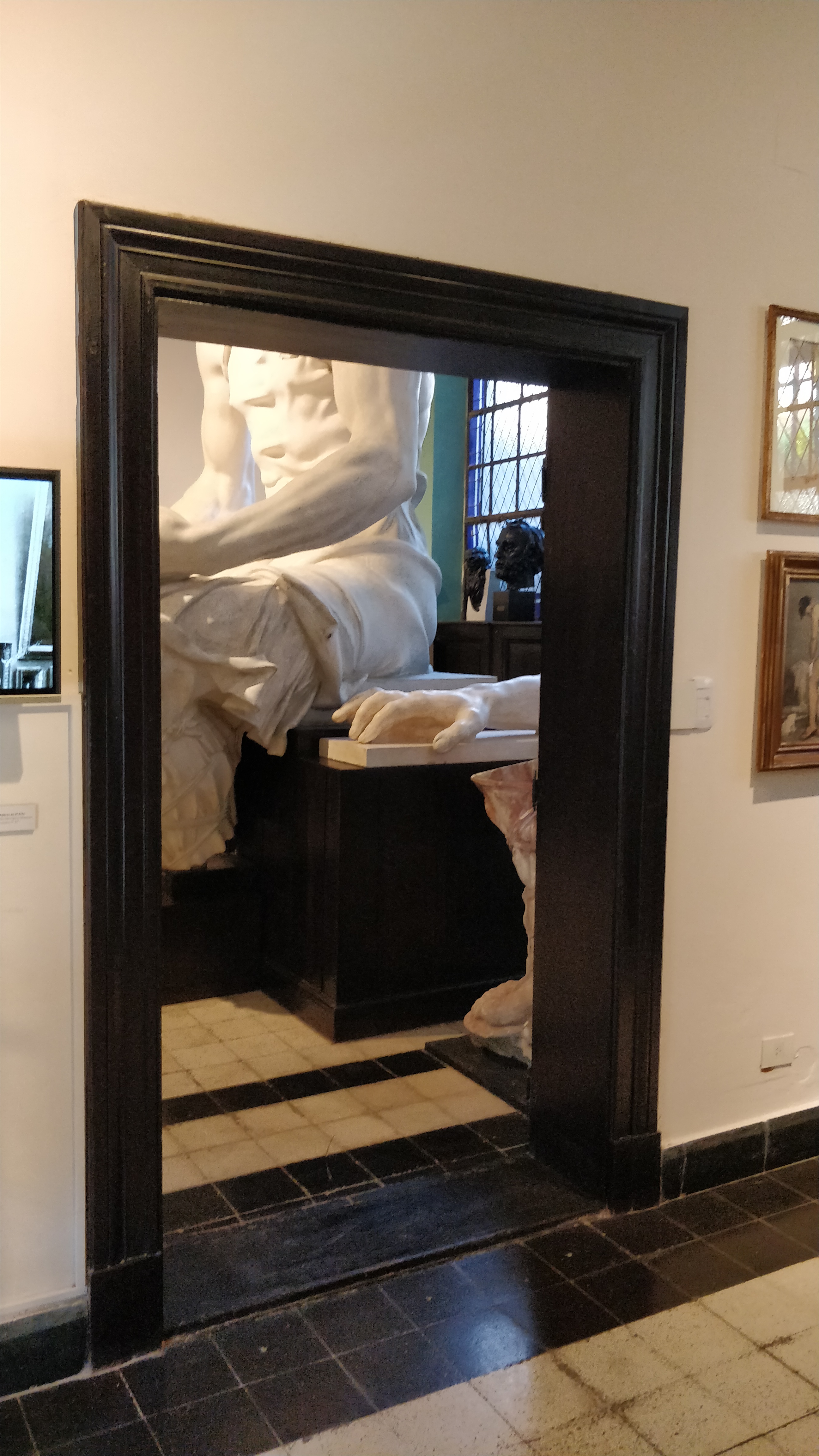
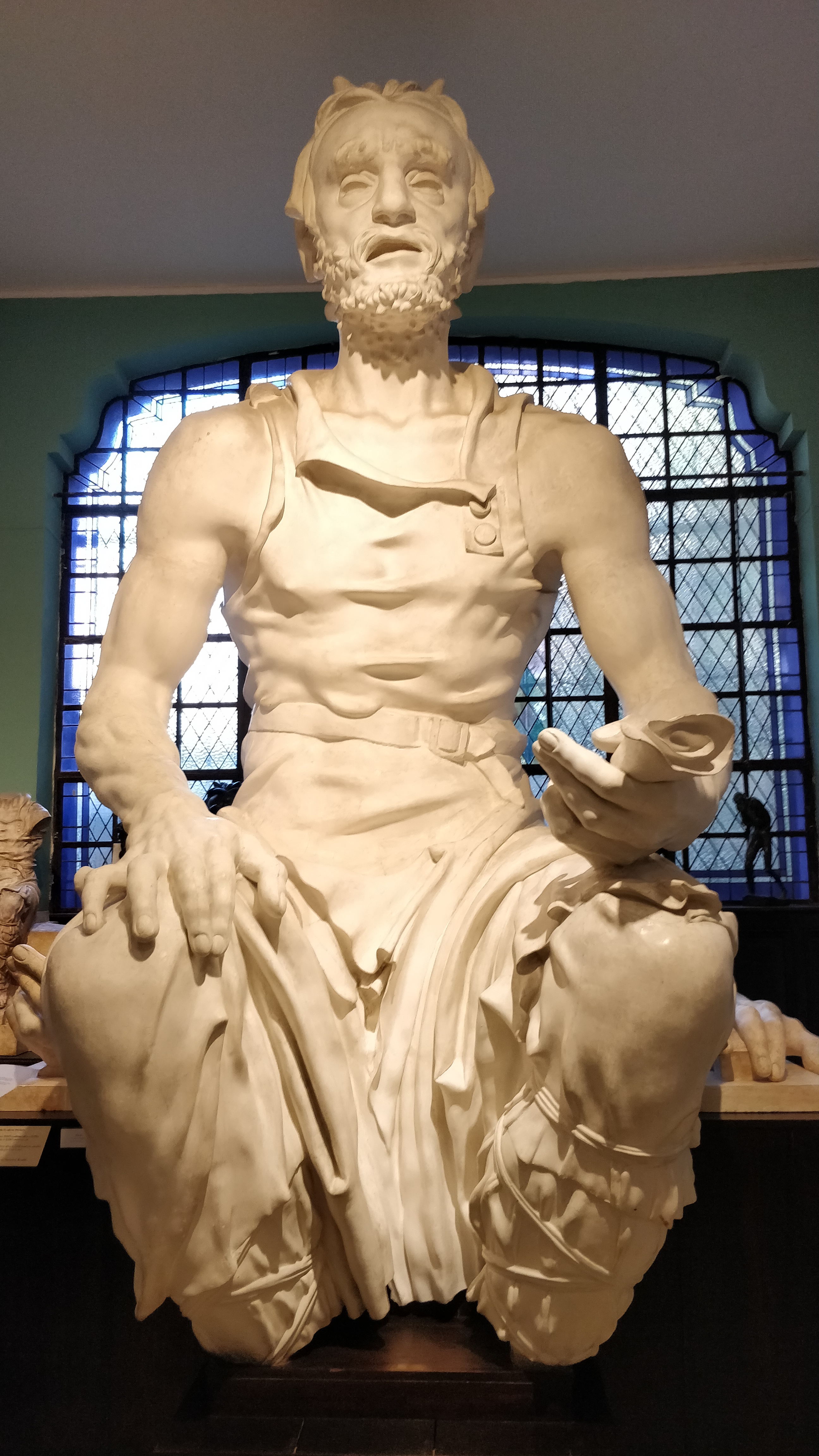
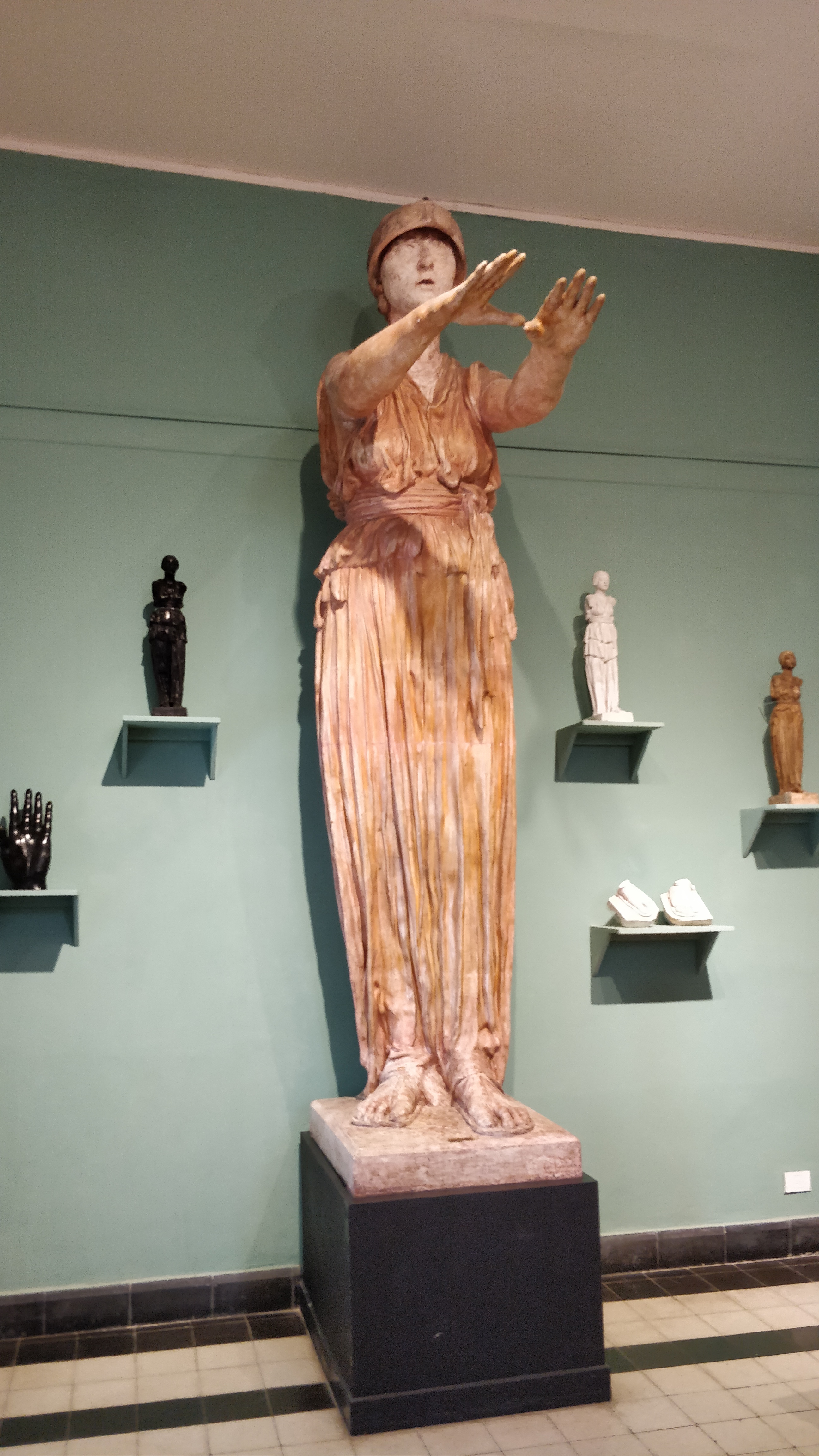
The collection on display isn’t really extensive, but it is really interesting and frequently huge.  Stands to reason; Yrurtia was a big deal in public and monument art.  Maybe you think it’s kind of a juvenile assessment, being stuck on the size, but that’s probably because you haven’t been in the same small room as stuff that was designed to be viewed from far away.

IMG_20190913_162044.jpg
That is a normal-sized doorway.

At a certain point, the size is kind of an overwhelming feature.

IMG_20190913_162326.jpg
A study for a big Moses.

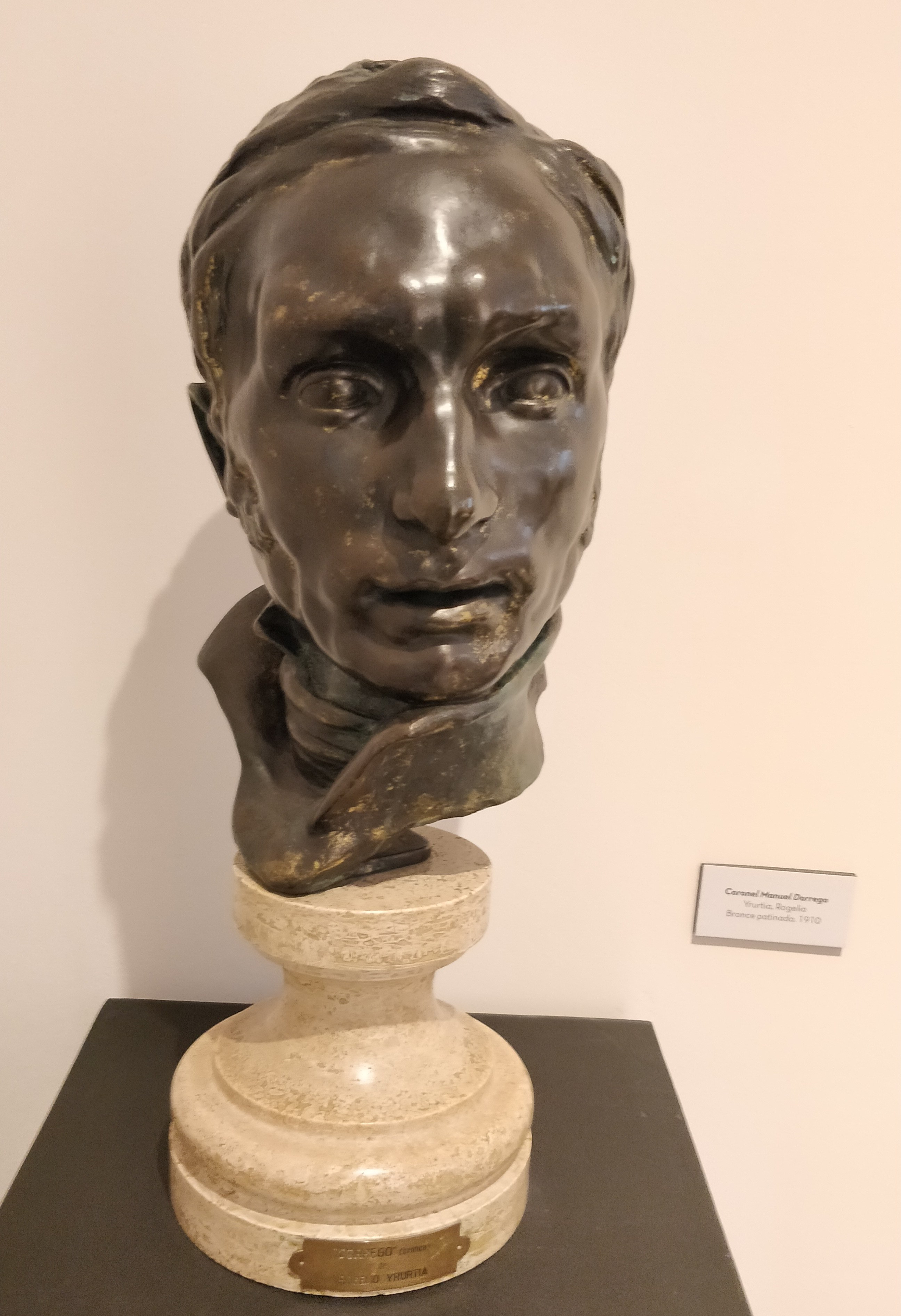
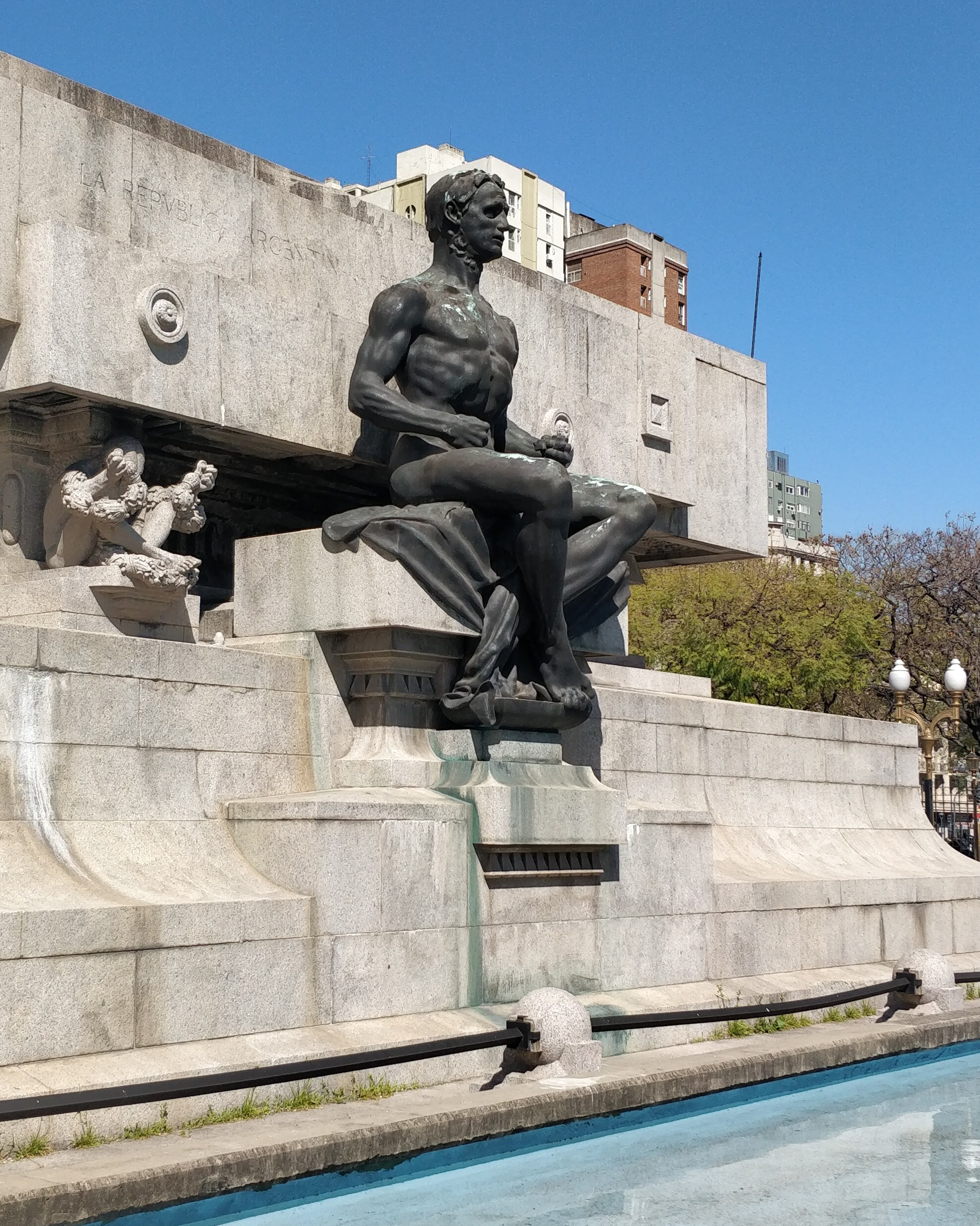
Yrurtia created a monument to Manuel Dorrego, who had (stay with me here, Argentine history is kind of dramatic) opposed the government of the first president, Bernardino Rivadavia, and was named governor of Buenos Aires province following Rivadavia’s resignation.  Dorrego himself was not long after overthrown and executed in 1828.

img_20190913_161723.jpg
He’s interred in Recoleta cemetery.  And so is the guy who executed him.  And Founding Father José de San Martín, who had been in Europe, took one look at the whole mess, declined to get involved and went back to Europe.

Incidentally, Yrurtia also sculpted the tomb of Bernardino Rivadavia, which is in Plaza Miserere.

img_20190918_110341.jpg
He specifically asked that his body not be returned to Buenos Aires after he died (in Spain), but alas.

And here is a Justice (commissioned by super rich guy Carlos Delcasse for his tomb and copied in bronze for the national Supreme Court), depicted non-traditionally, without scales or blindfold.

IMG_20190913_162348.jpg
But also kind of like she’s going to strangle you?

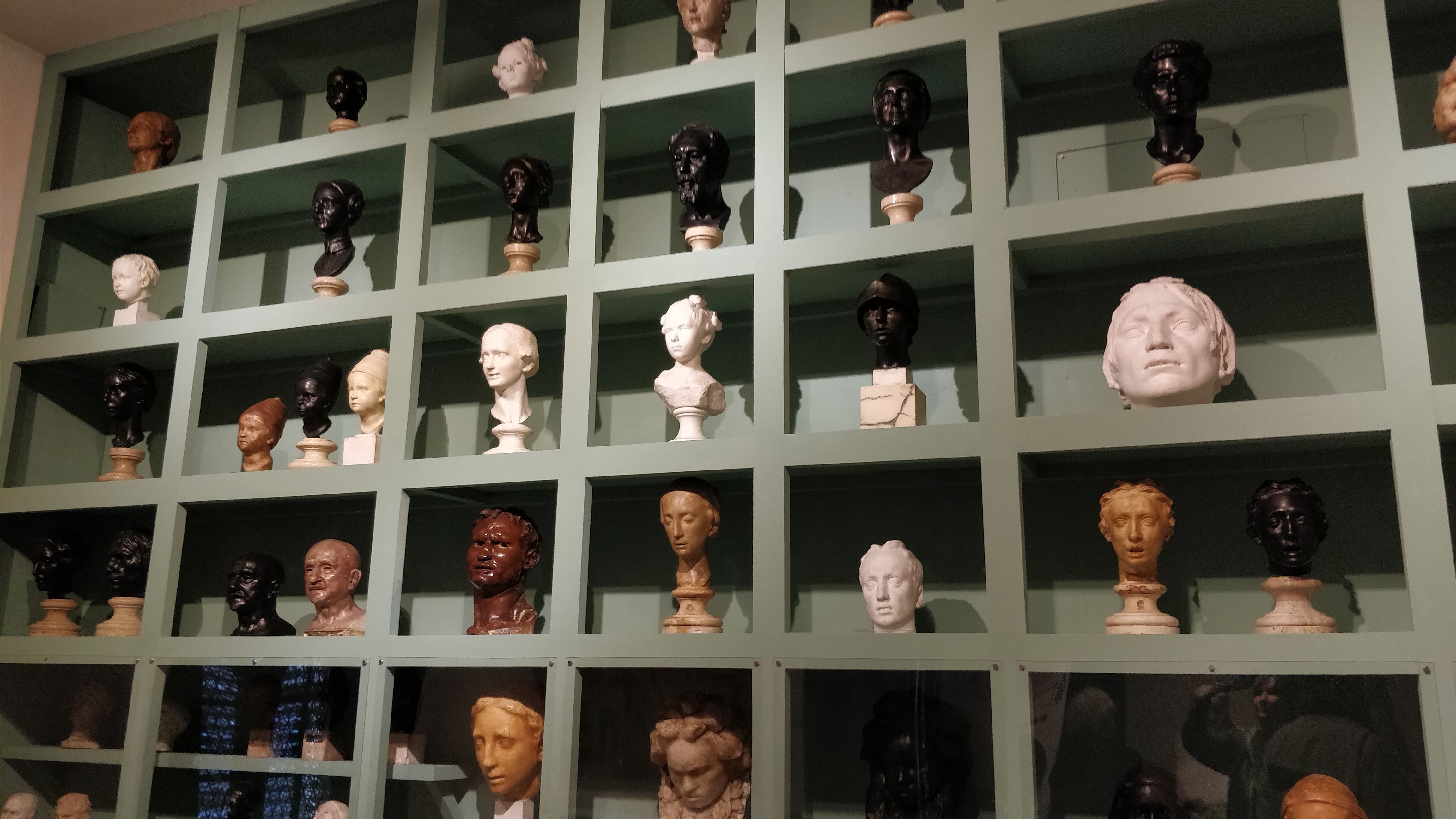
The museum also shows how the sausage is made, sculpture-ly speaking, which I recall reading somewhere was part of the point of the museum’s creation (as the house was also his workshop) but now I can’t find the source for that.

IMG_20190913_162818.jpg
How to get a “head” in sculpture lololol

IMG_20190913_162754.jpg
These are videos of the process.

img_20190913_162341.jpg

The museum does have a room about Lía Correa Morales, which it should, as she was also an important artist and doesn’t even get her name on the museum itself.

IMG_20190913_162006.jpg

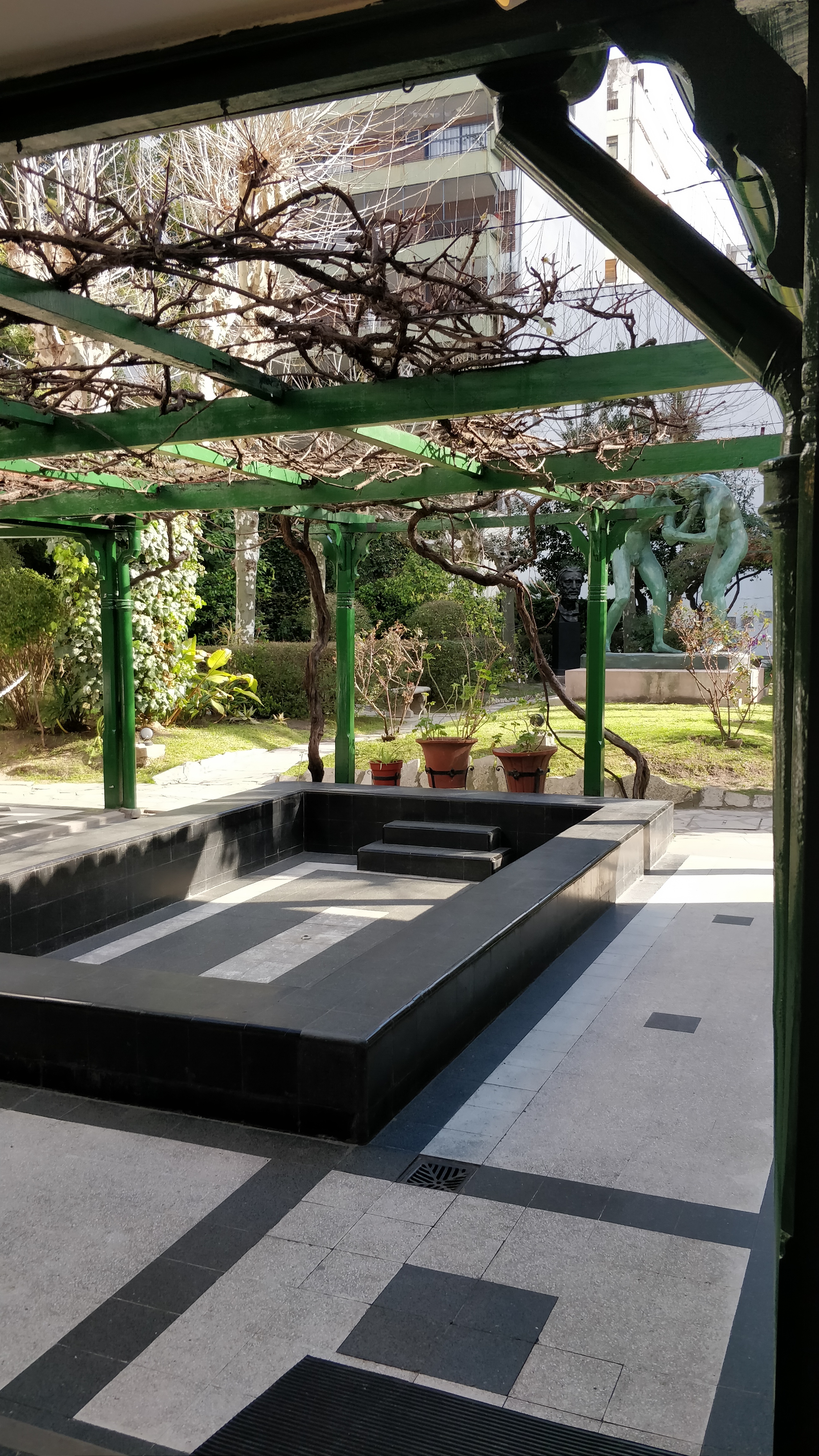
Finally, the house has a sweet garden, in which stands one of Yrurtia’s last works, The Boxers.

IMG_20190913_161039.jpg
Uh, it’s in the back there.

Like most (all?) of the small, state- or city-run museums, this one also hosts workshops and events.  The staff is very nice!  There wasn’t any English material on hand, so they printed out some translations for us.  The museum is in Belgrano, not terribly far from the D subway line, and open Wednesday through Friday from 10am to 6pm and Saturday and Sunday from 11am to 6pm.


The Cemetery Series: Cementerio de la Chacarita

La Chacarita is the national cemetery of Argentina, and also the country’s largest.  It doesn’t get near the attention that Recoleta gets, which might explain why I saw maybe 10 other people and was asked twice if I was looking for something in the 90 minutes I was there.

IMG_20190607_160446.jpg
Yeah I am. I’m looking for ideas.

The enormous cemetery was established in 1887 following a yellow fever epidemic and is 230 acres.  It is chock full of notable figures including scientists (Nobel laureate Bernardo Houssay), artists (Antonio Berni, whose work I included in the MALBA post), and tango luminaries (Homero Manzi, Ángel Villoldo, Osvaldo Pugliese, and many others).  There are a number of former presidents, though they seem mostly from dictatorship eras, and also labor leaders and at least one guerrilla leader.  Botanical garden designer and namesake Carlos Thays is buried here, as well.  La Chacarita is absolutely full of Argentina’s history.

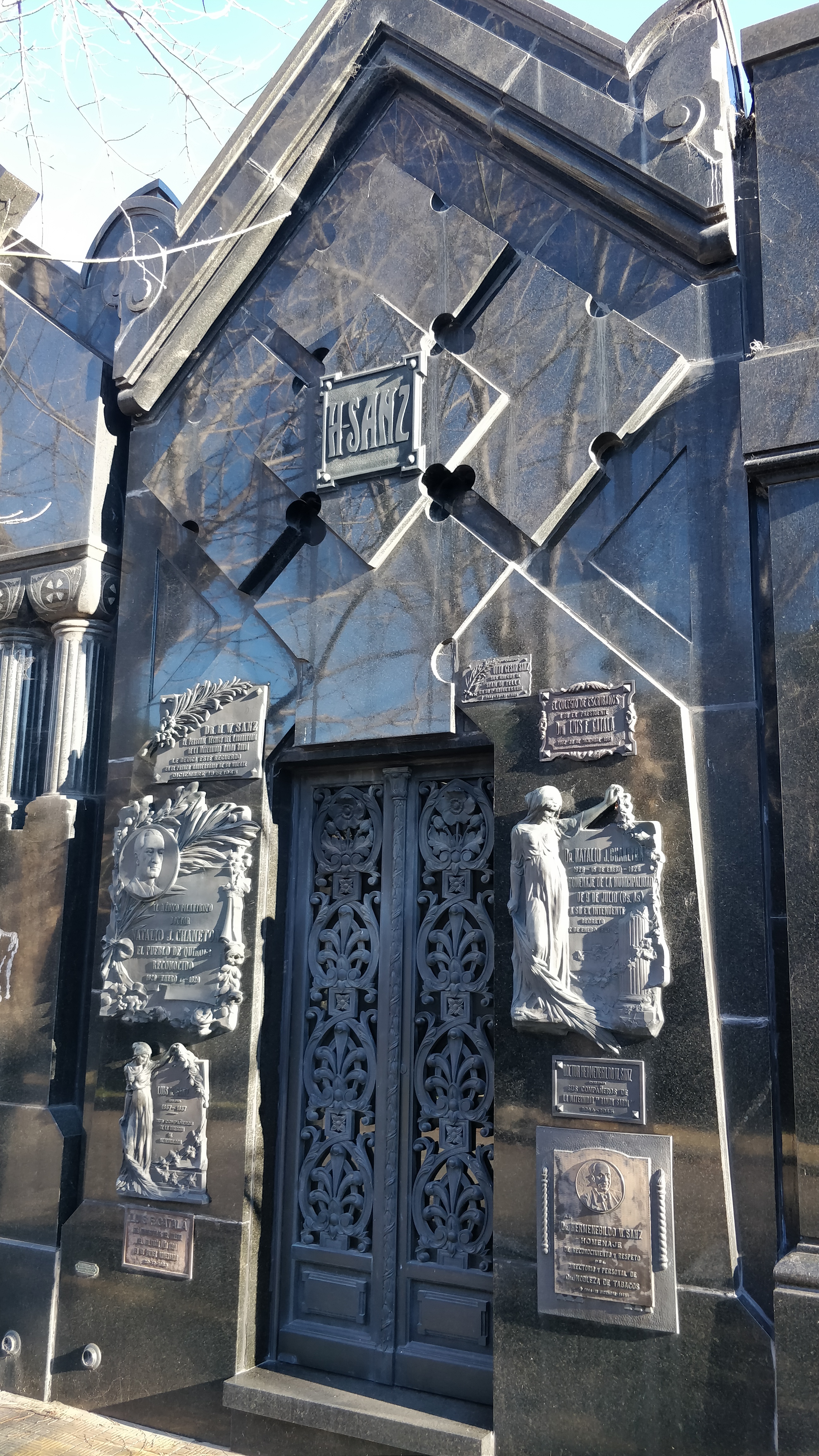
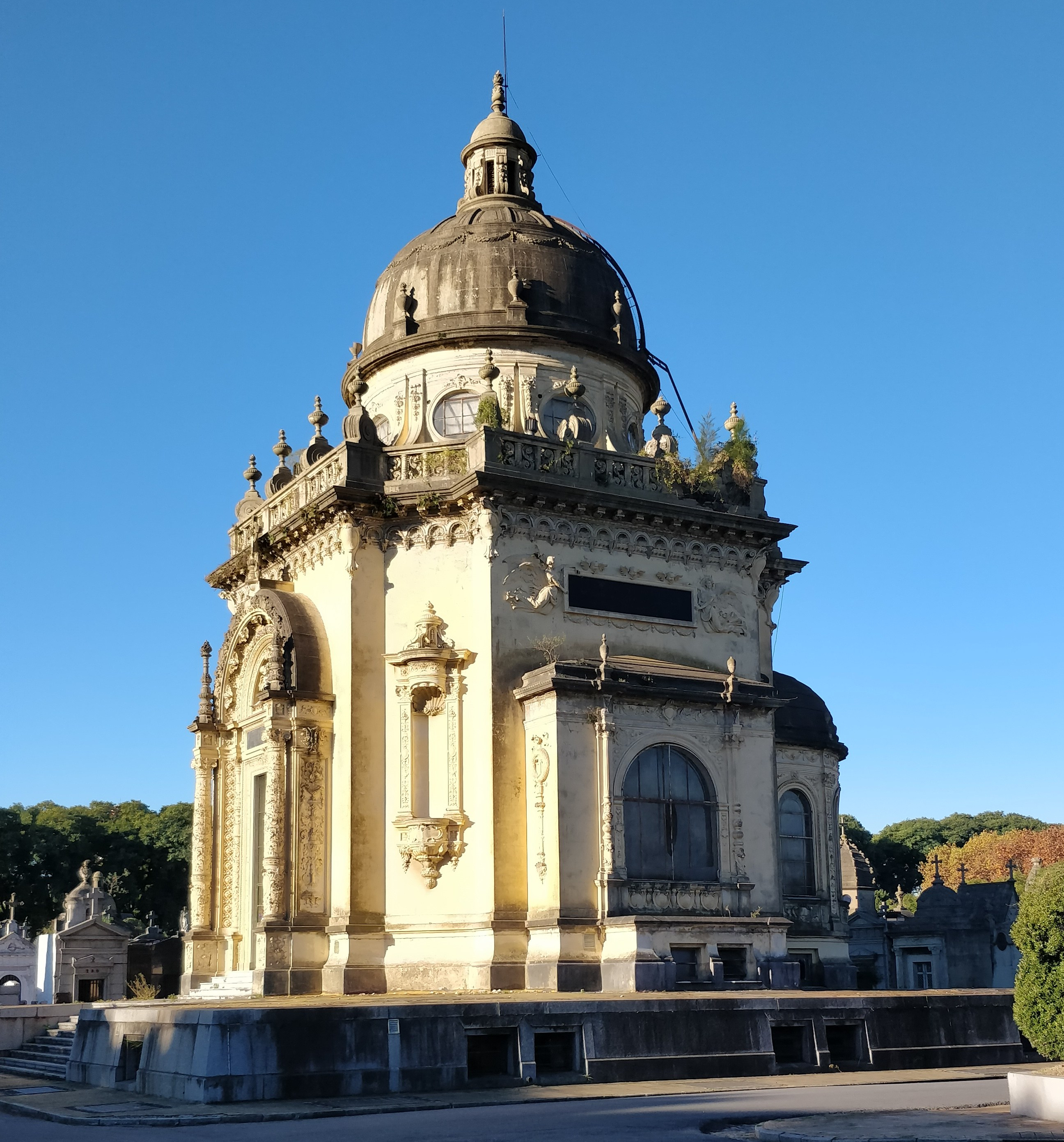
It is, unsurprisingly, also chock full of fancy, fancy vaults.

IMG_20190607_154849.jpg

img_20190607_154505.jpg
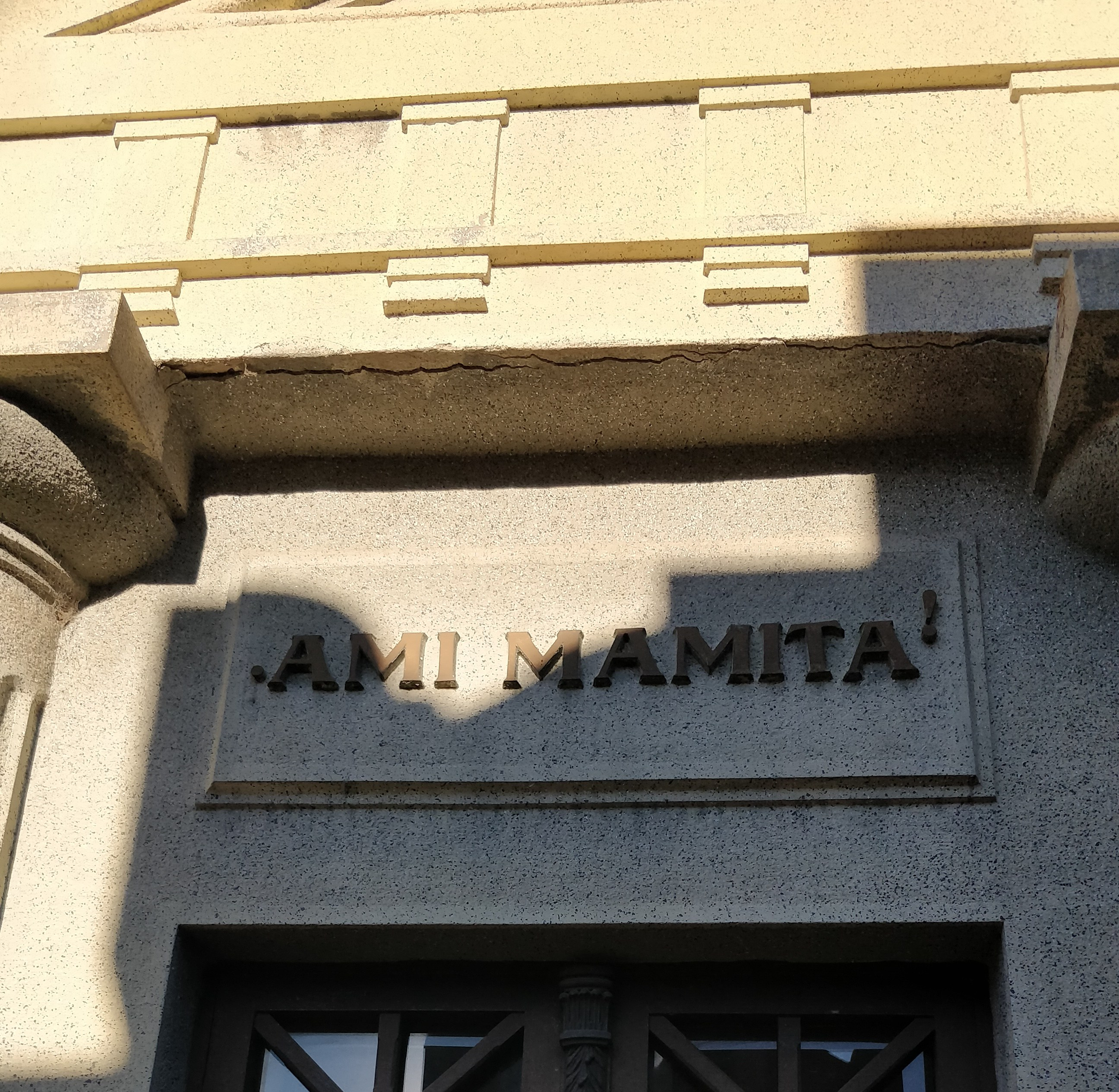
Tribute to a beloved mother, now missing its inverted exclamation mark

IMG_20190607_160152.jpg
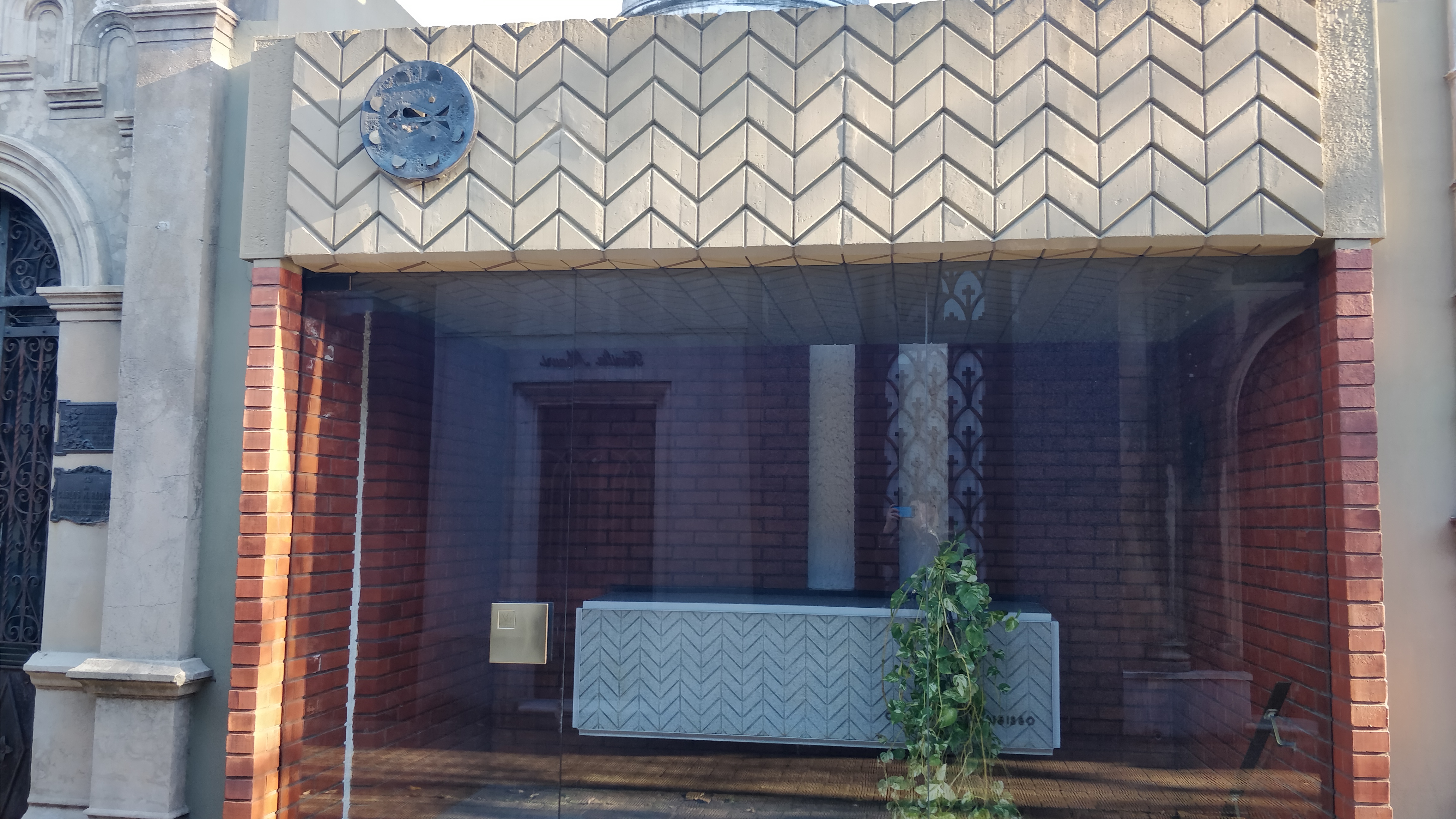
Very modern design for this crypt.

IMG_20190607_160251.jpg
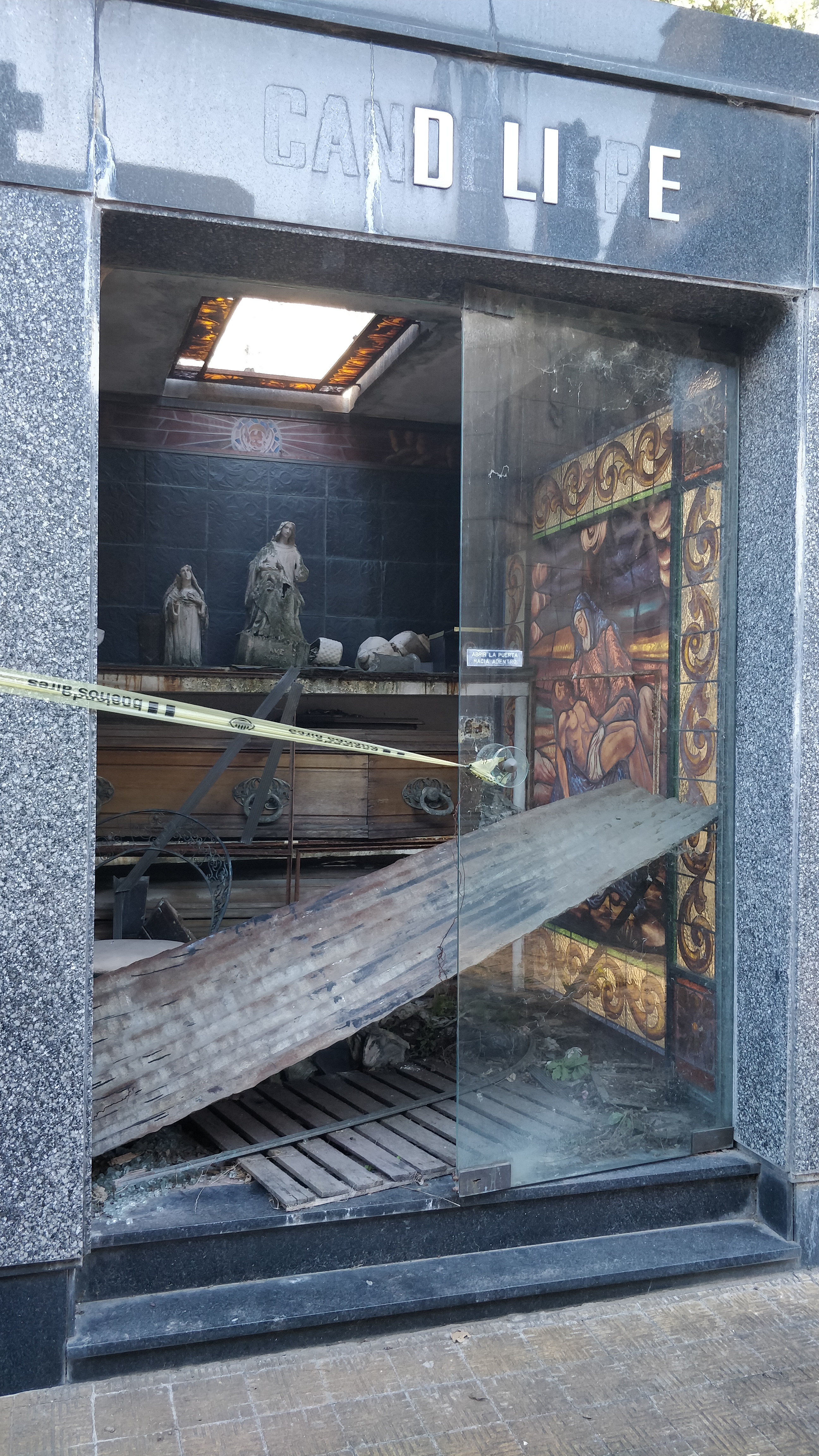
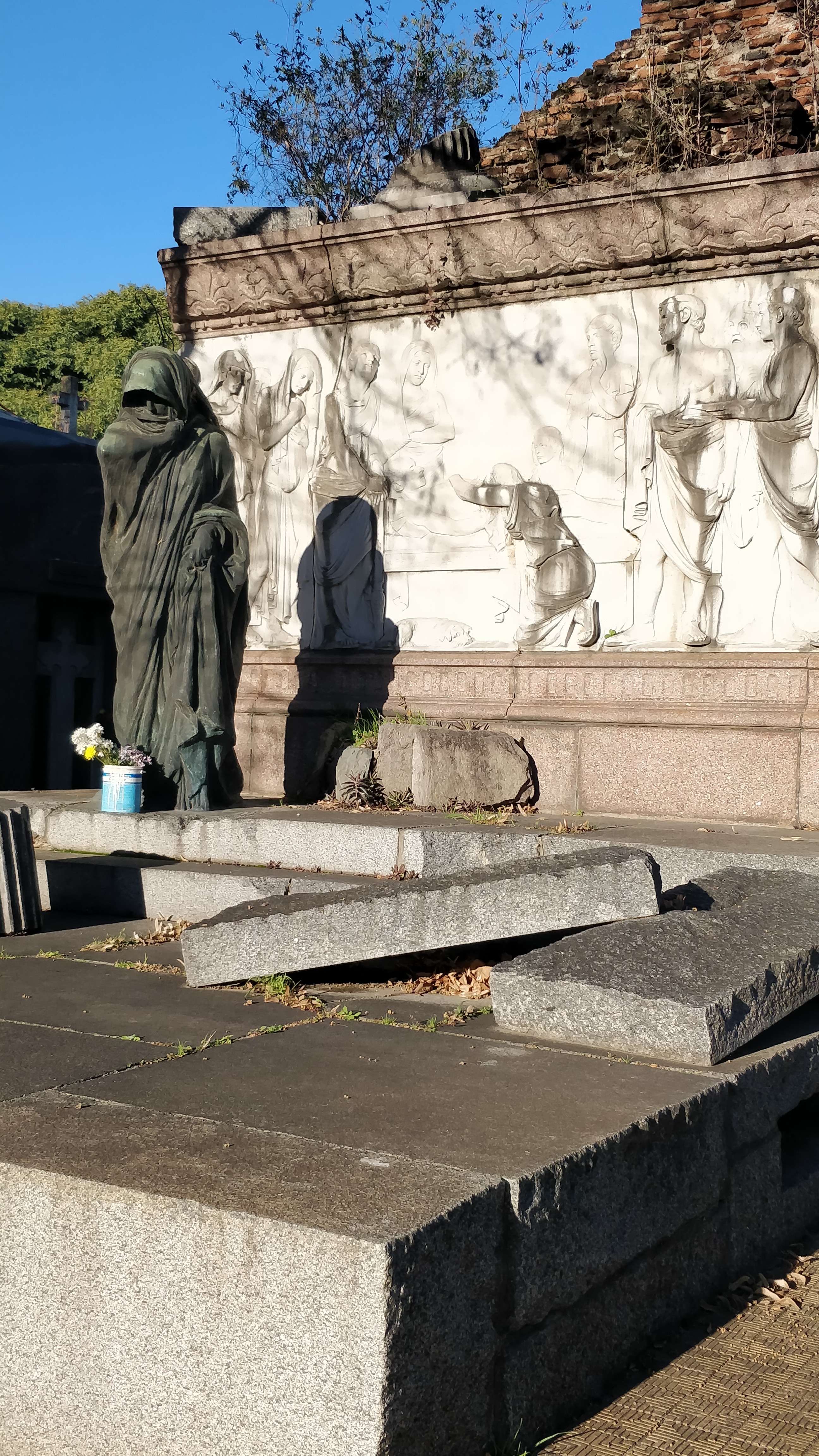
Just like in Recoleta, some crypts are in really, really bad shape.

Group pantheons and vaults are also very common.

img_20190607_161325.jpg
Spanish-Argentine Mutual Society Pantheon

img_20190607_154348.jpg
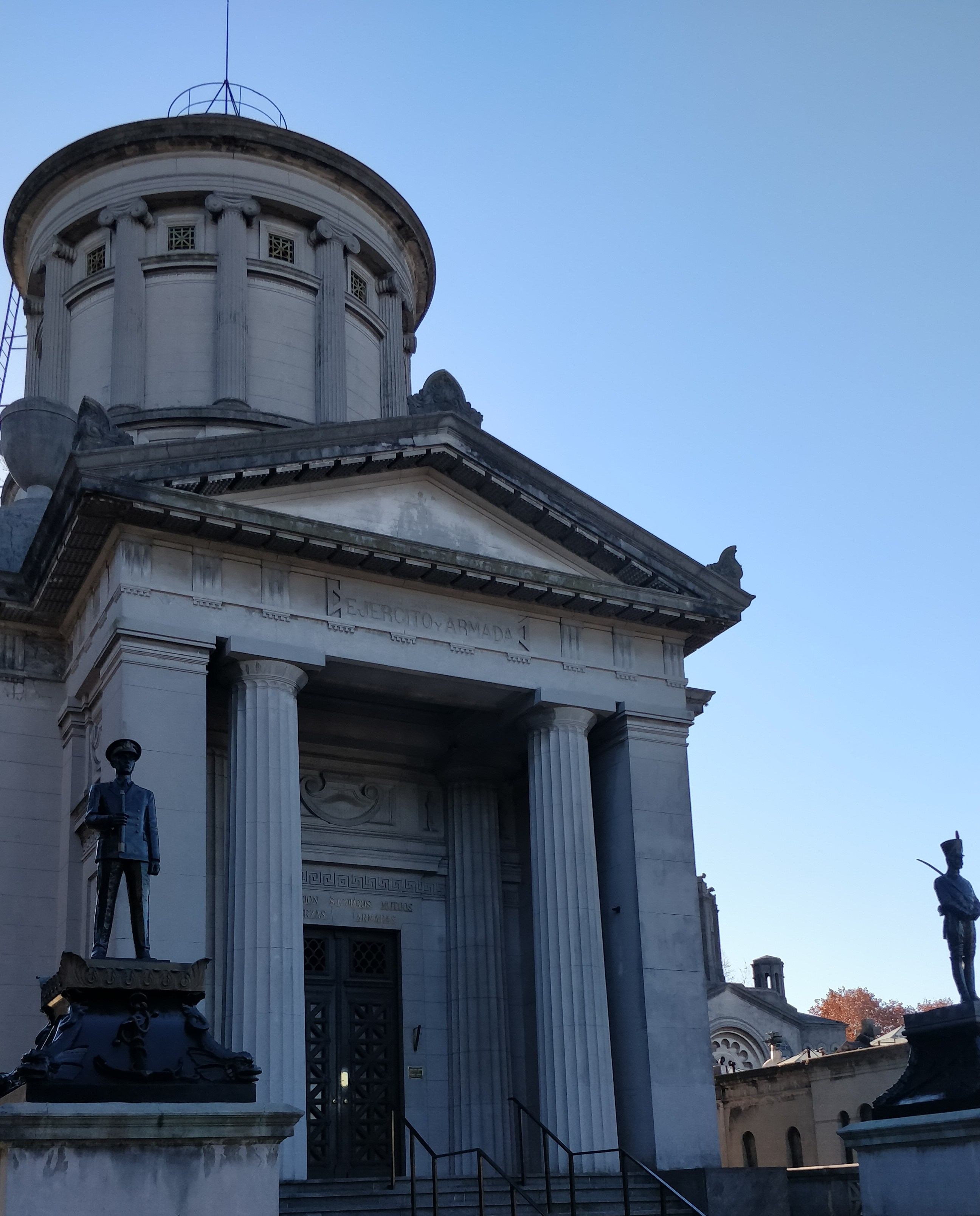
Military pantheon

IMG_20190607_155402.jpg
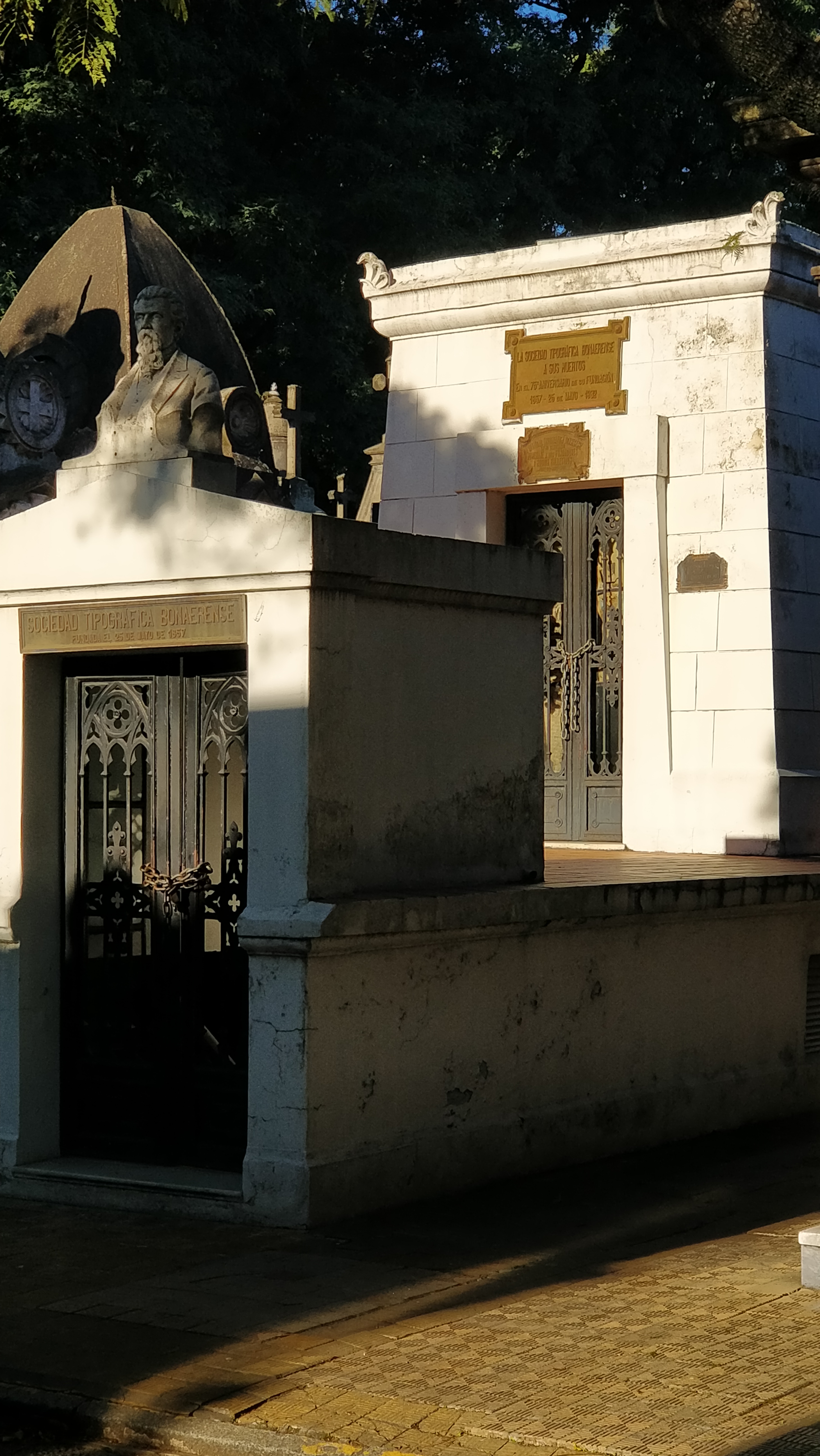
The vault for the Sociedad Tipográfica Bonaerense, a 160 year old labor union of typographic workers, one of the first unions here.

IMG_20190607_161615.jpg
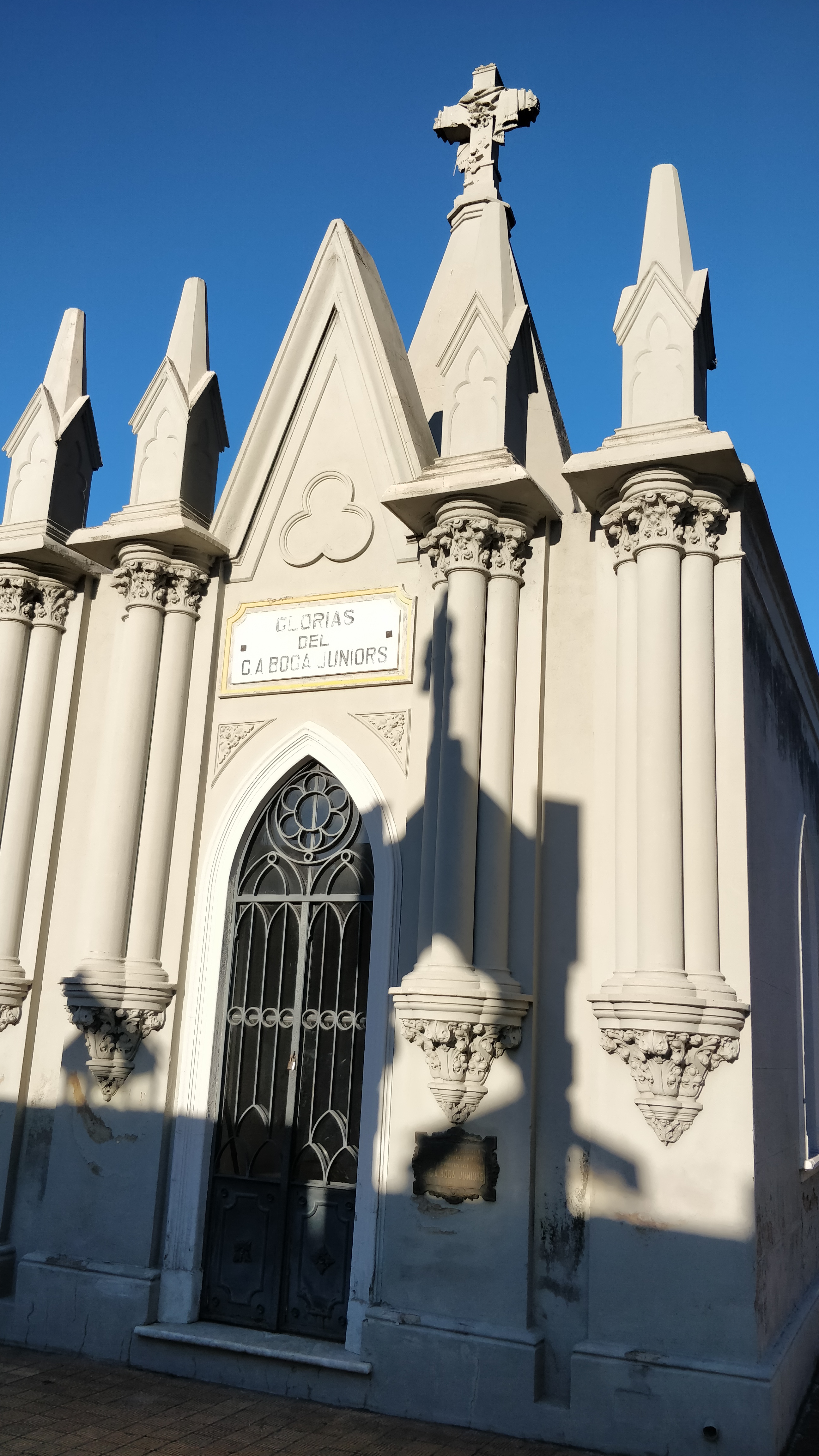
Here lie the founders of the Boca Juniors; I literally cannot overstate the importance of football (soccer) or of the Boca Juniors to it.

IMG_20190607_163735.jpg
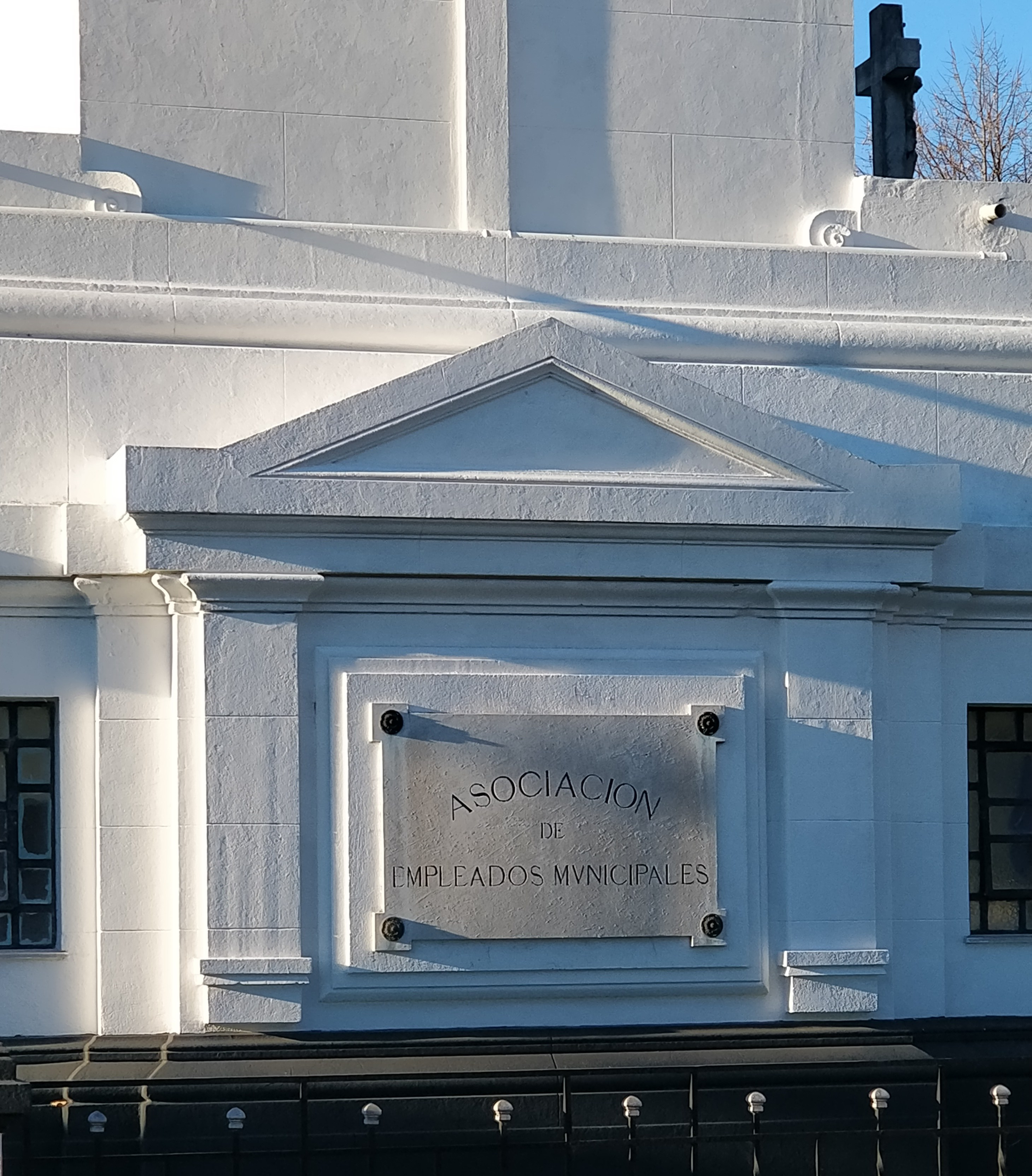
Municipal employees, just in case you want to be buried with your closest co-workers.

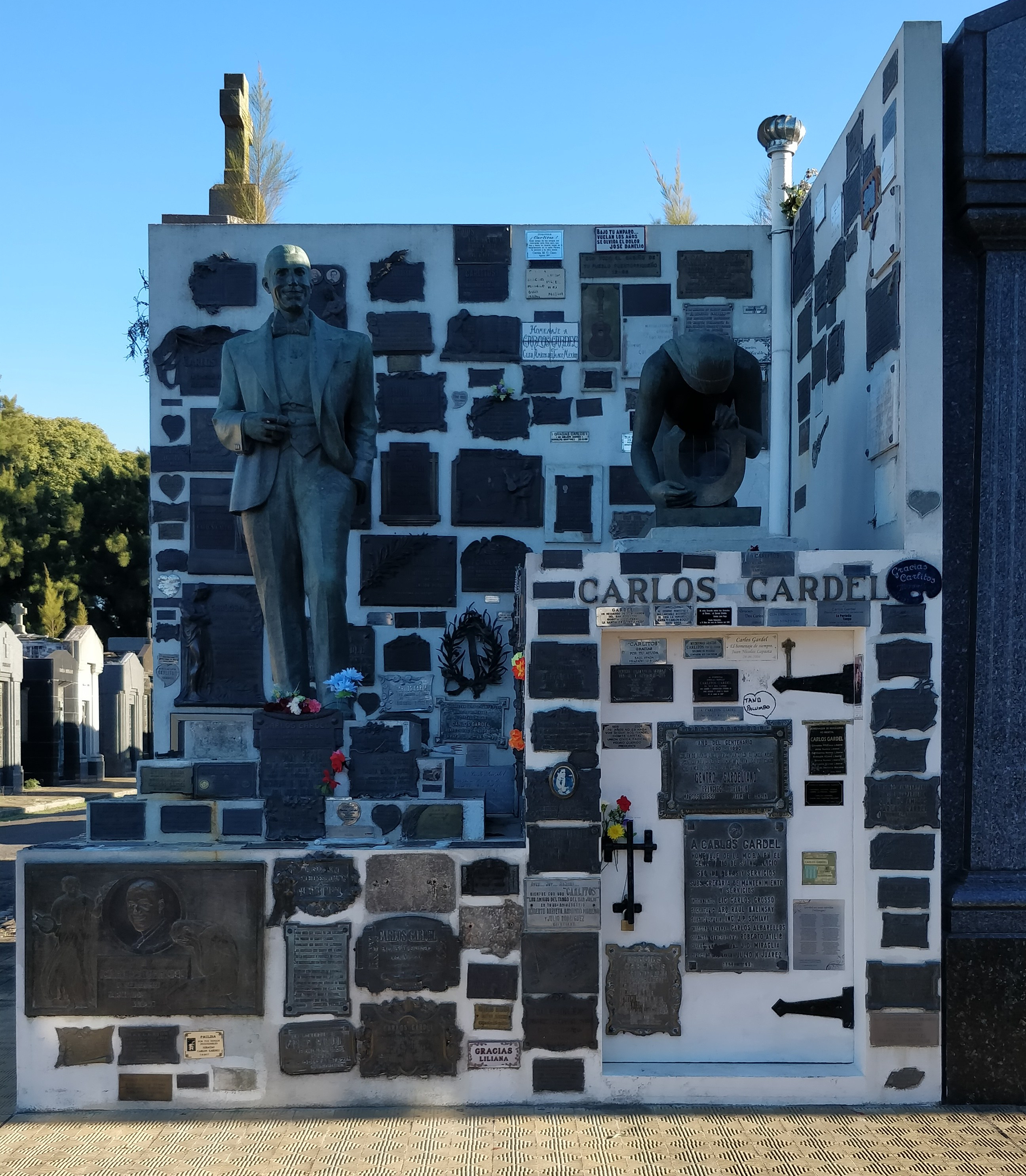
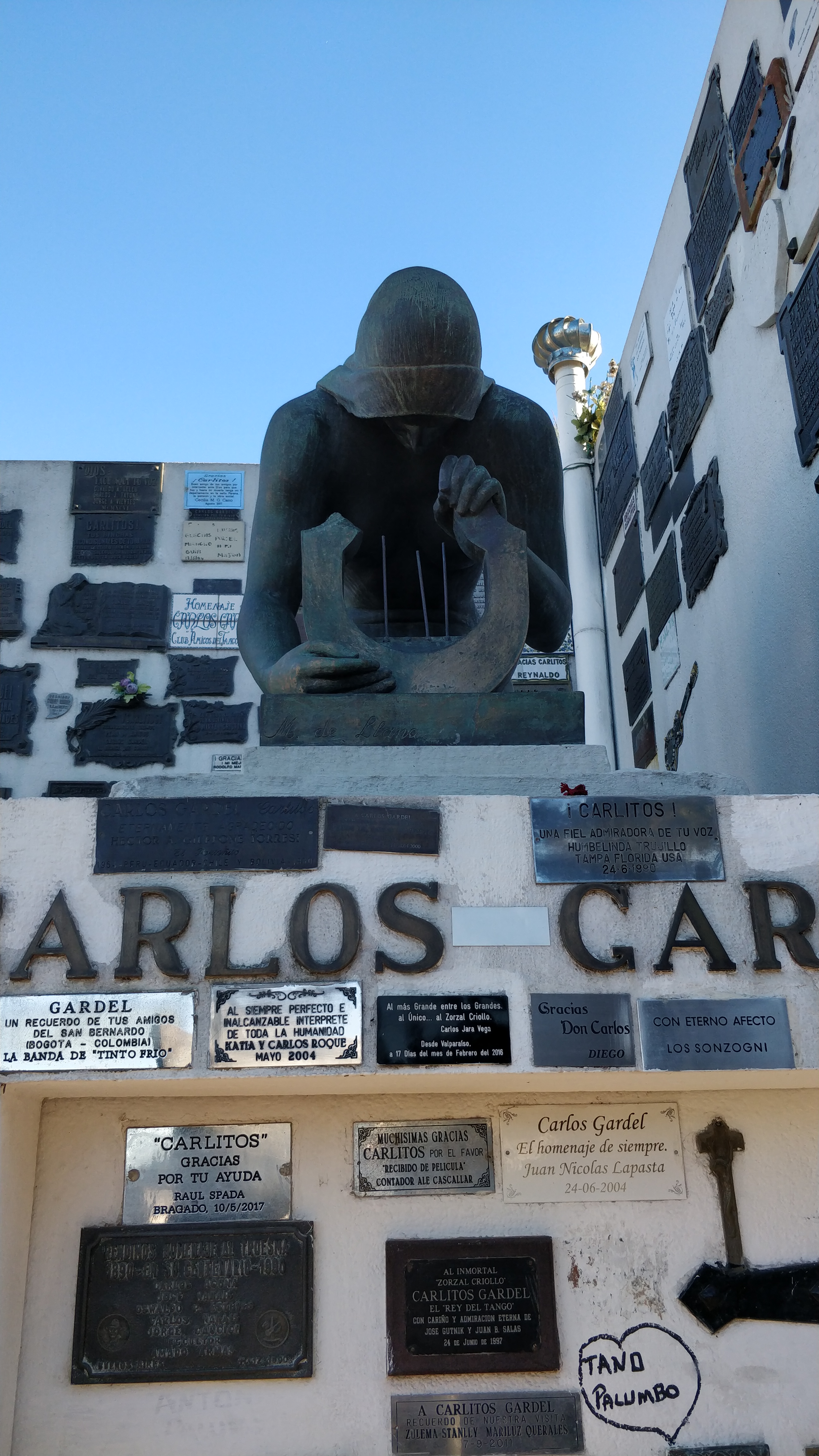
Let’s look at two of the most famous burials in La Chacarita.  First up, Carlos Gardel, immensely famous and important tango guy.

img_20190607_162522.jpg
I was there around 4 pm and the shadows were terrible for photos.

The figure on the left is the man himself, who died tragically at the height of his career, at age 45.  Visitors often leave lit cigarettes in his hand.  The figure on the right mournfully hunches over a broken lyre.

IMG_20190607_162542.jpg

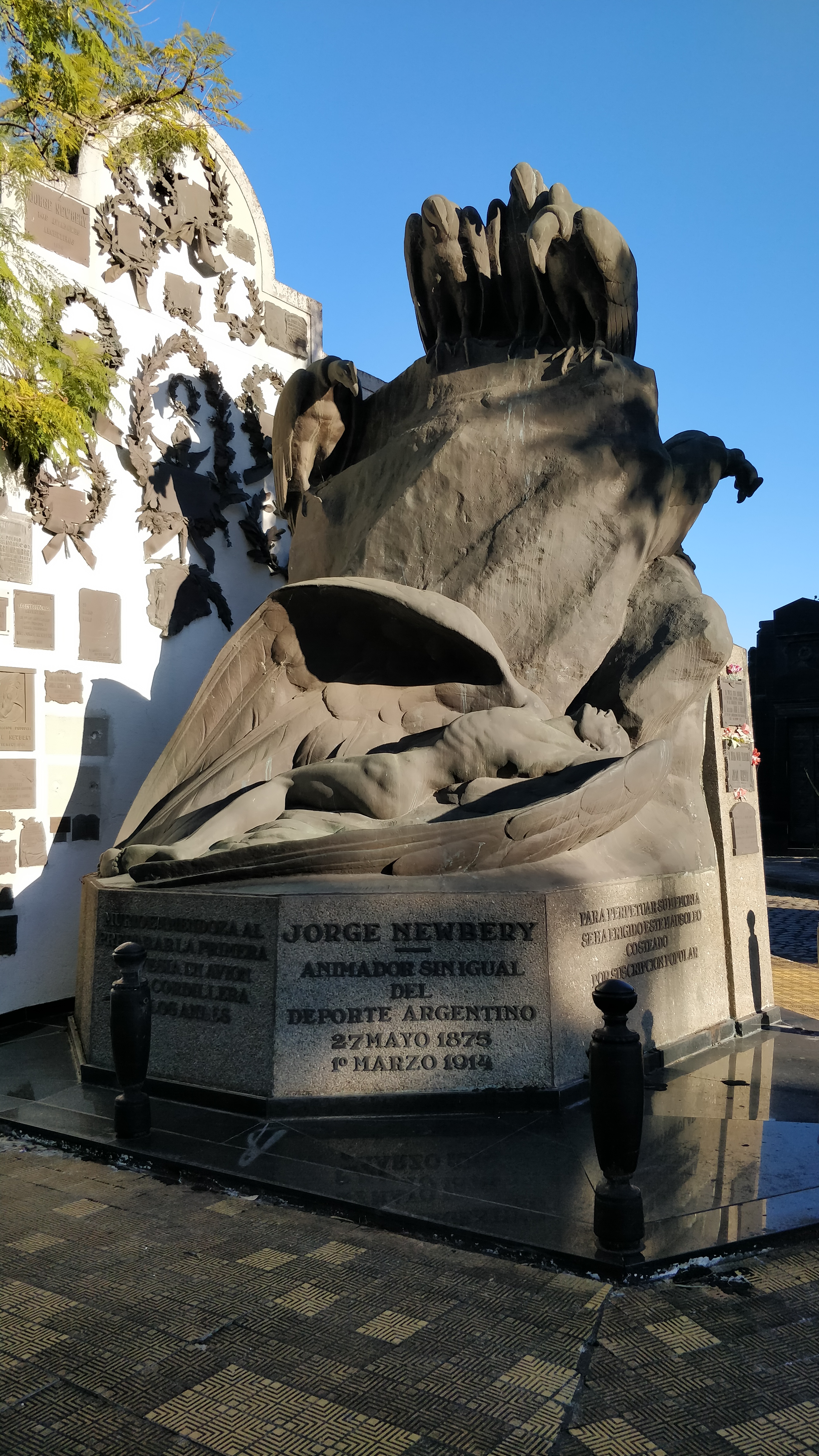
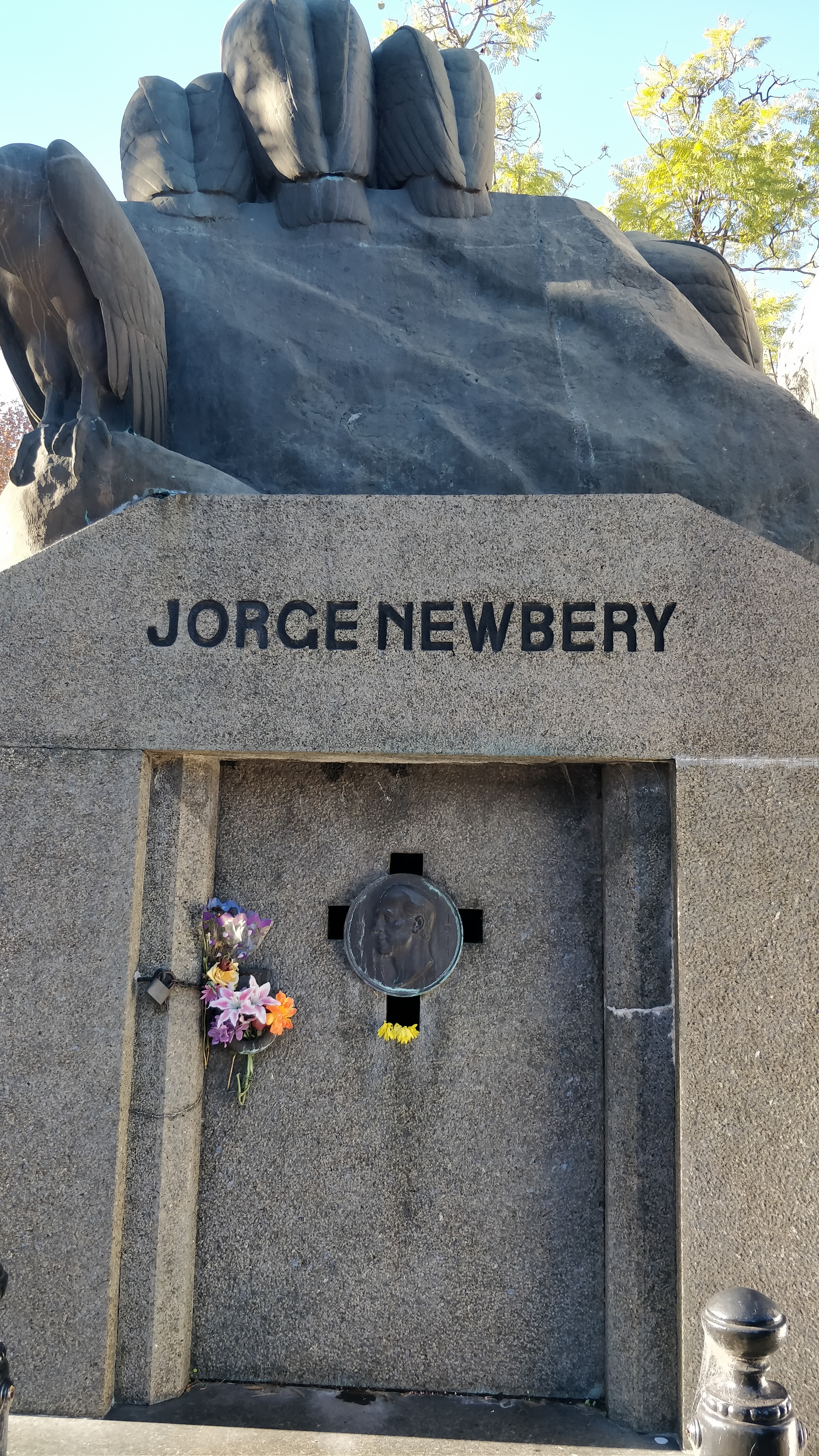
This is the tomb Jorge Newbery, aviation hero and namesake of one of Buenos Aires’s airports (although generally, that airport is referred to as “Aeroparque”).  He died in a plane crash at age 38.  Whoever designed his tomb really brought the drama.

IMG_20190607_162026.jpg
“Sorry, did you say there’s going to be a carrion bird on the tomb?”  “No, I said there’s going to be five carrion birds on the tomb.”

IMG_20190607_162117.jpg
“One of them is going to lurk over the actual crypt door.”

Don’t for a second think that I don’t believe with my whole being that this is incredibly awesome.

There are some pretty nice sculptures in La Chacarita, too.

IMG_20190607_160821.jpg
The broken columns and crumbling look are intentional, by the way.

IMG_20190607_155826.jpg
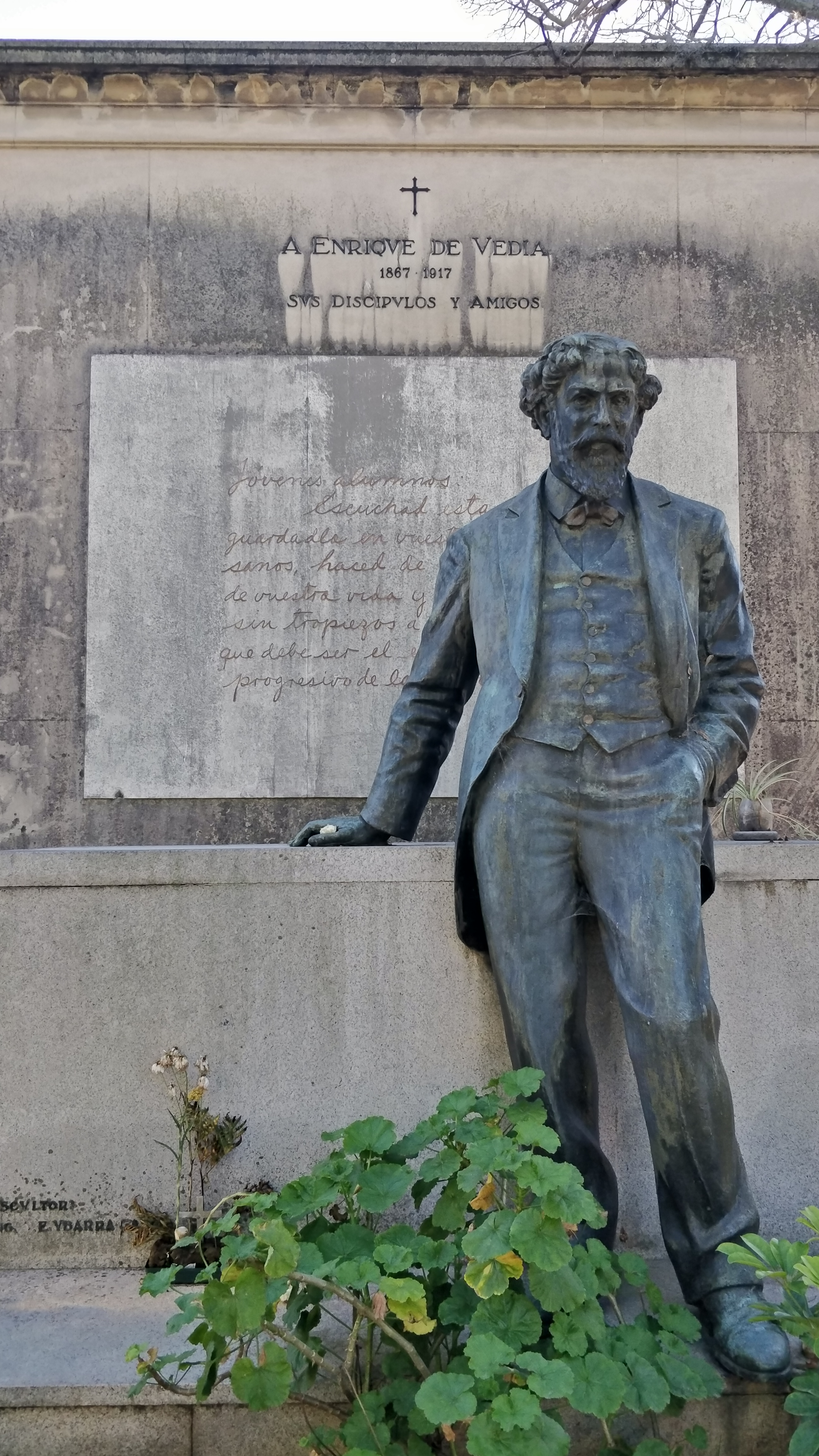
This is the memorial and tomb of Enrique de Vedia, a writer and teacher.

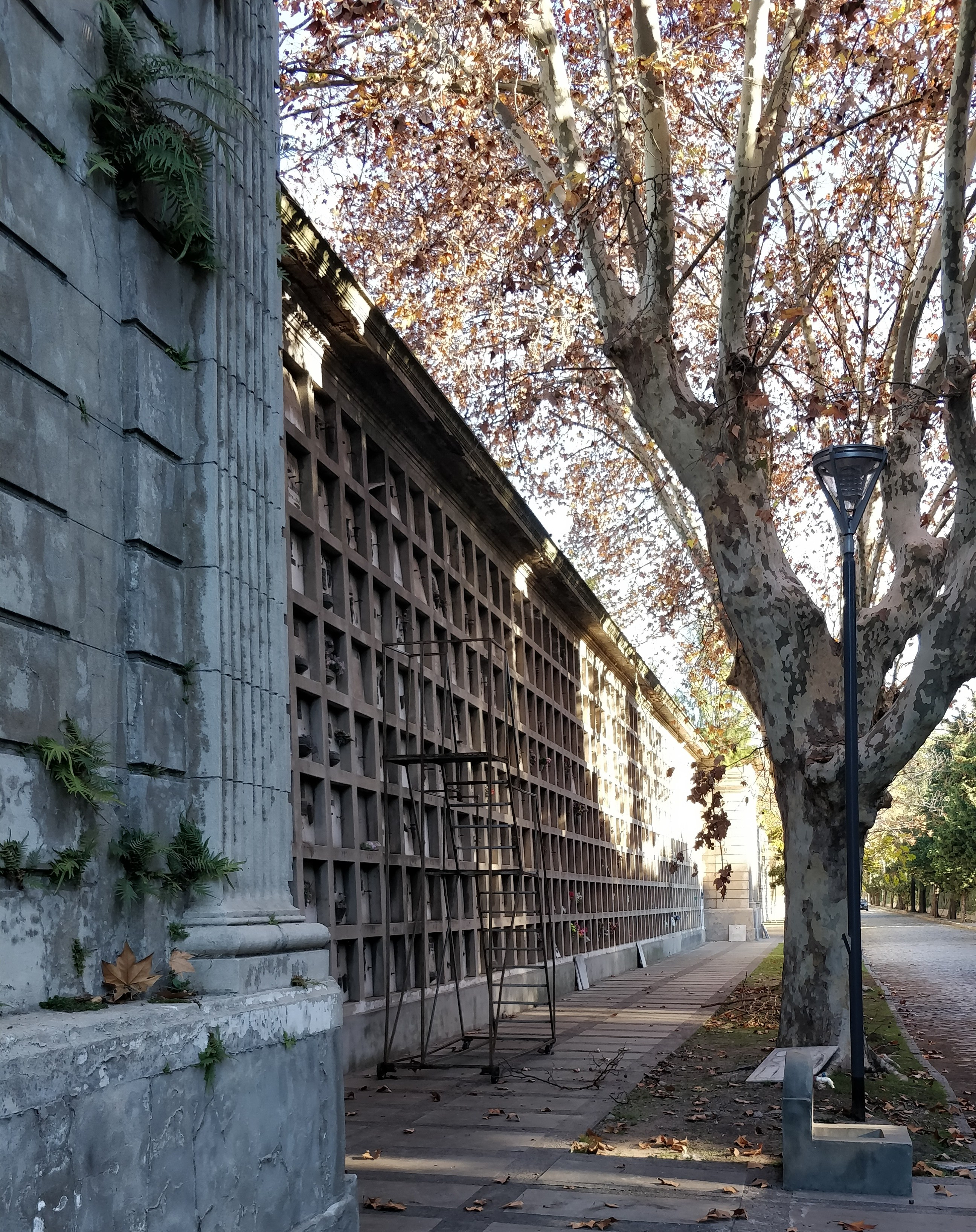
Just in case you’re not flush with crypt-levels of cash, the cemetery has several columbarium walls, the oldest of which (at least, as it appeared to me) serve in places as the cemetery’s border wall.

img_20190607_153918.jpg

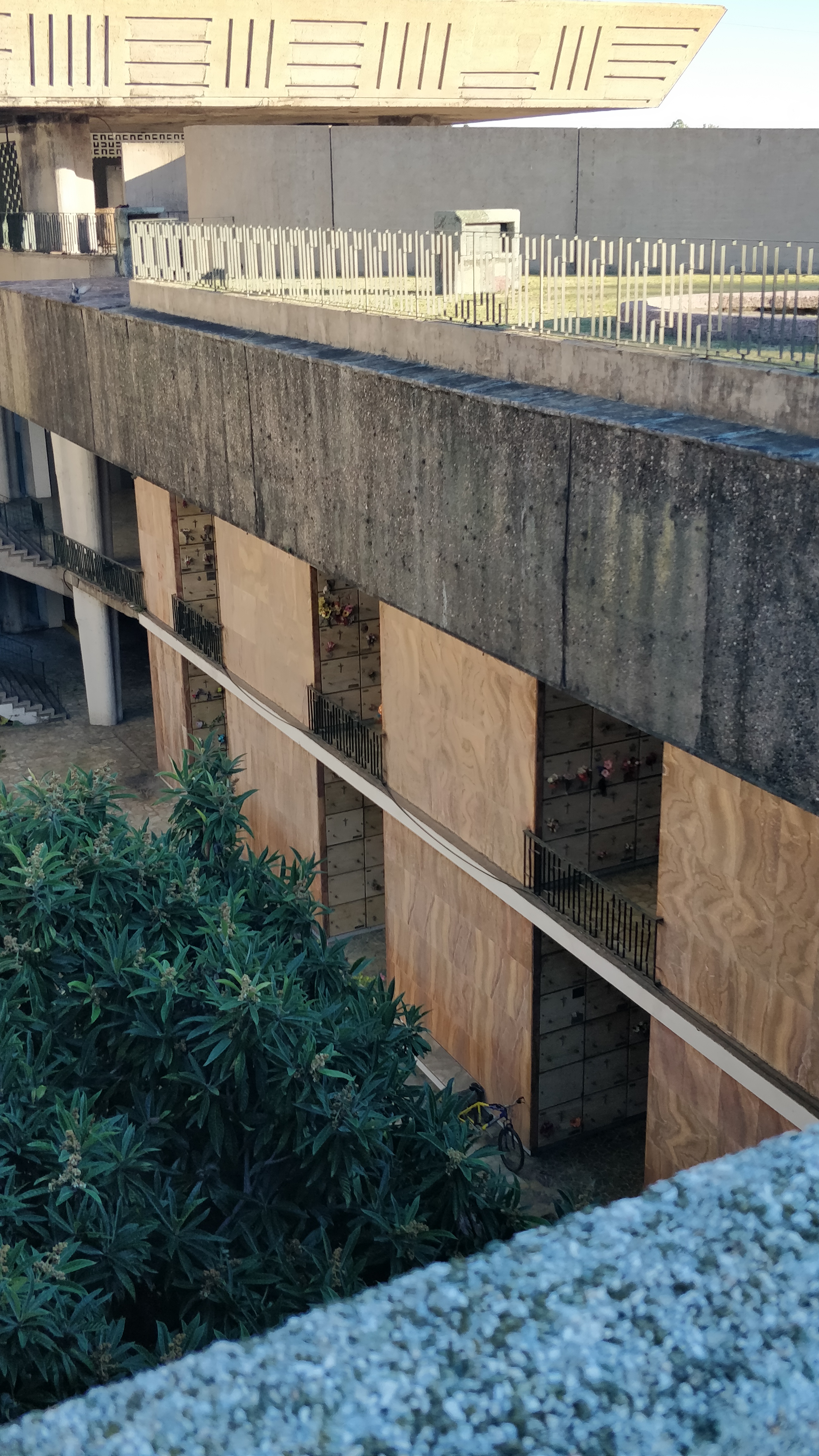
The newer interments of this type are actually below ground, in a sort of open-air cavern of columbarium walls.

IMG_20190607_163429.jpg

I didn’t get a picture of the main entry of La Chacarita, as I came in one of the side gates, or a bunch of other buildings and tombs; the place is so freakin’ big, you guys.  I didn’t go into the British or German sections at all (I didn’t even find them).  I’m going to go back at some point, so I will post on those sections when I do.

El Cementerio de La Chacarita is the largest single thing in La Chacarita, with several bus lines and a few stops on the B subway line right near it.  It’s open from 7:30 am to 5 pm.  There’s a free tour in Spanish on the second and fourth Saturdays every month at 10 am (cancelled if it’s raining); check the website for the most up to date information available.


Museo Nacional de Bellas Artes [National Museum of Fine Arts]

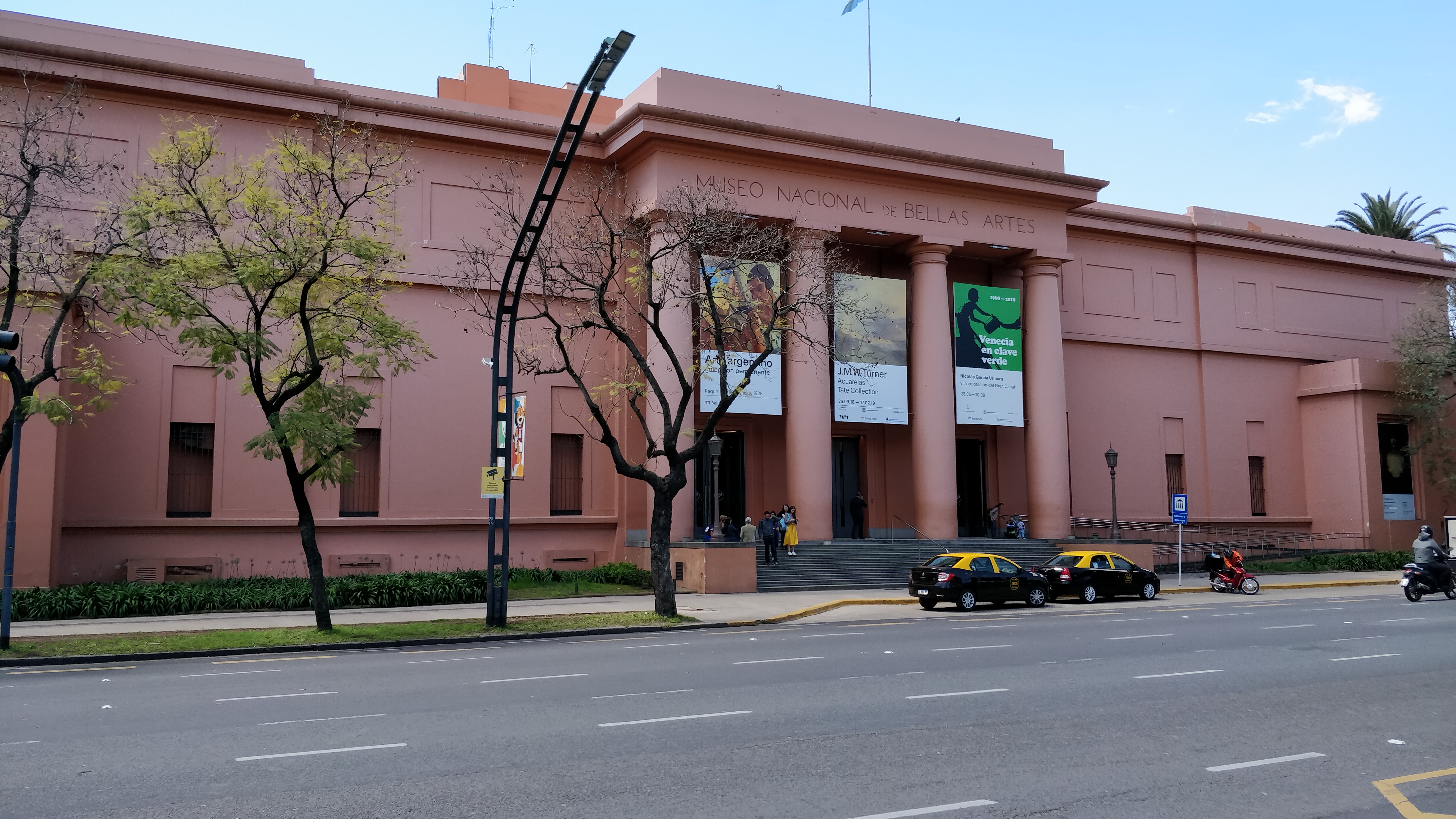
Bellas Artes is one of the big dogs, obviously.

IMG_20181003_133728.jpg
It contains not one but two gift shops.

As such, it has a very fine collection, and since this is a blog post, I will not be providing a thorough overview.   For one thing, the museum has a very nice website partially available in English (and a guide app only in Spanish).  So I’m just going to do a light overview!  There’s just so much art!

Obviously, as a national fine arts museum, Bellas Artes has a strong collection of Argentine and Latin American art.  The international collection trends noticeably to European art.  Let’s have a peek, starting with these things, because I am a big fan of hair decoration:

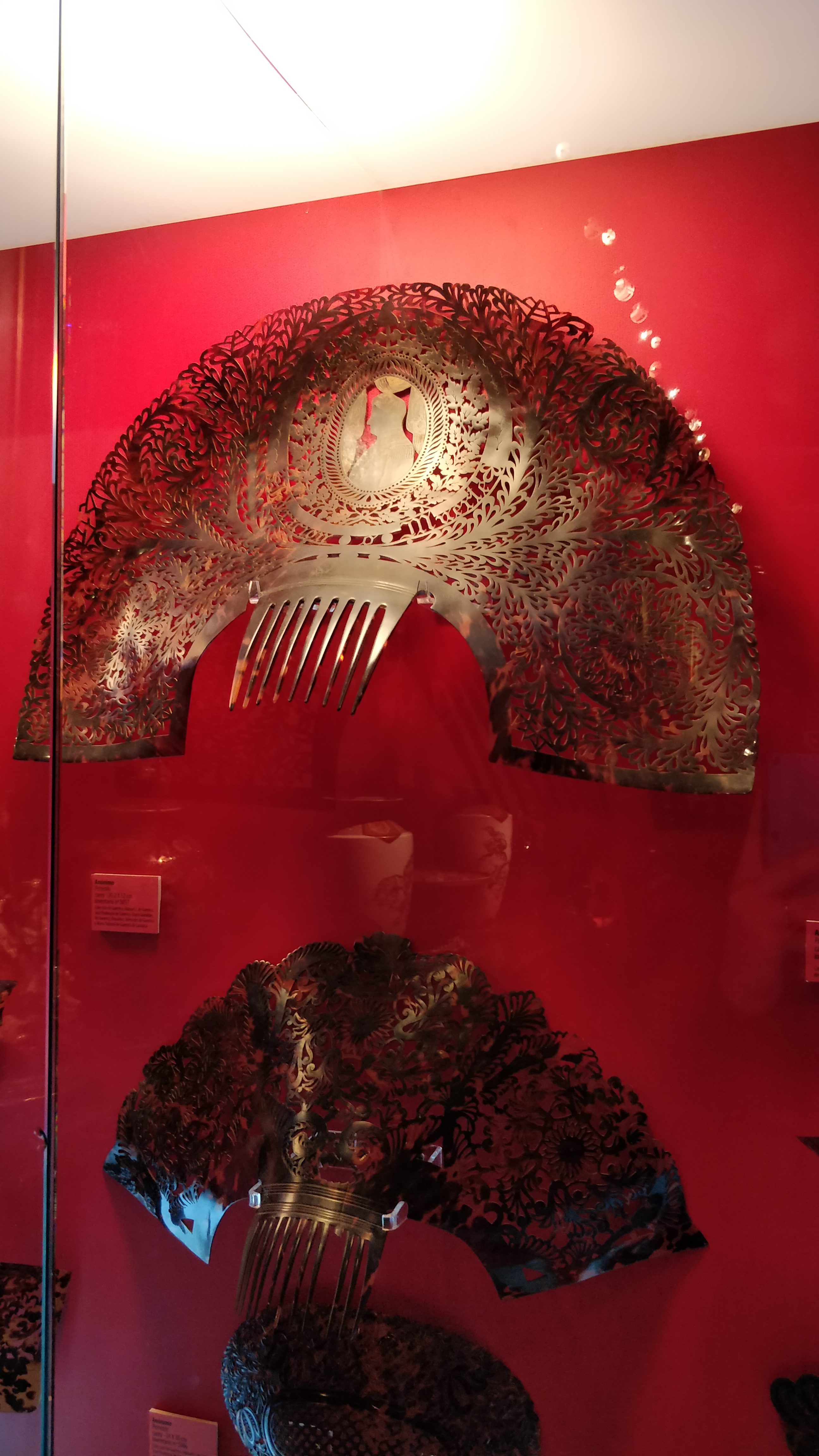
IMG_20181003_143348.jpg
Who has this much hair

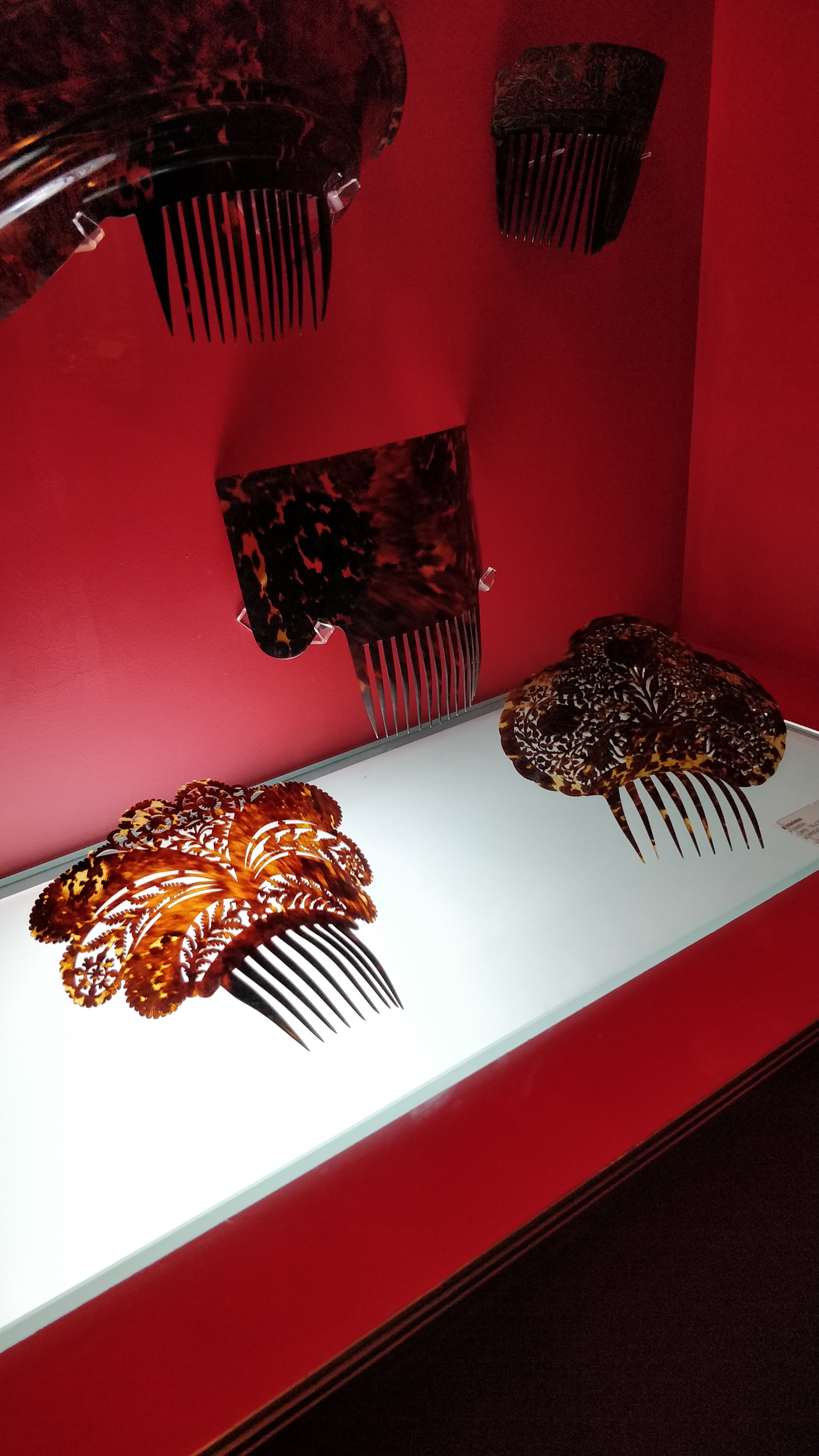
IMG_20181003_143436.jpg
How do these not cause headaches

These are peinetónes, very large versions of the Spanish peineta that were distinct to the fashion of the Rio de la Plata region in the 1830s, until shitty men took to criticizing the elaborate and expensive combs in the most sexist way possible (“terrible women neglect their families and whore themselves out in pursuit of this extravagance!”), and their use declined.  You can find several contemporary illustrations mocking the peinetón.  Certainly, there are reasonable criticisms to be made of fashions that are uncomfortable, inconvenient, and costly, but “look at these shallow immoral bimbos” is just the worst.

On to the older European stuff!

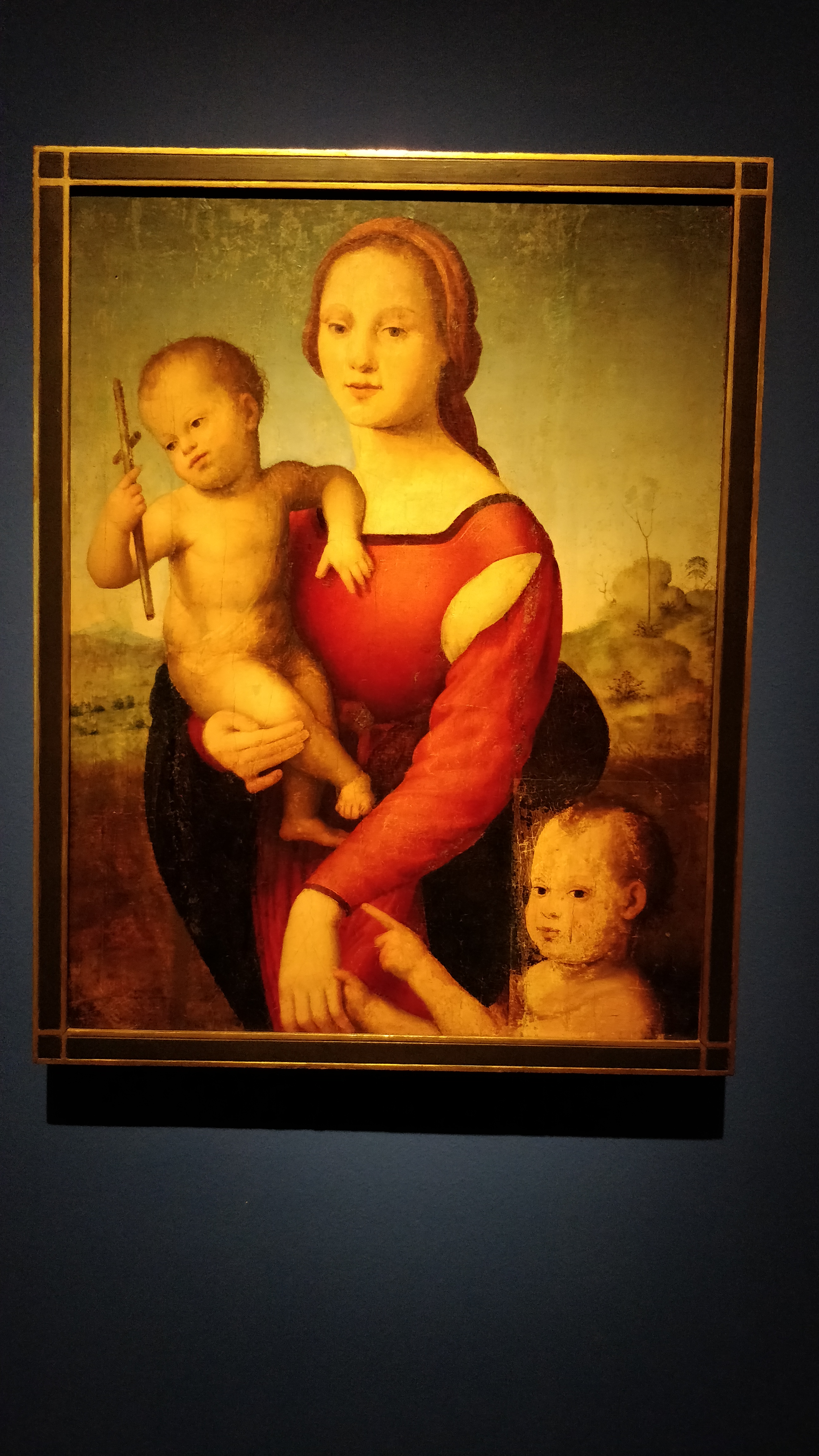
IMG_20181003_150908.jpg
St John here giving you a big hint as to who the principal subject here is, or else trying to draw attention to the incredibly inappropriate baby toy.

Early 1500s Virgin and Child with St John from Florence.

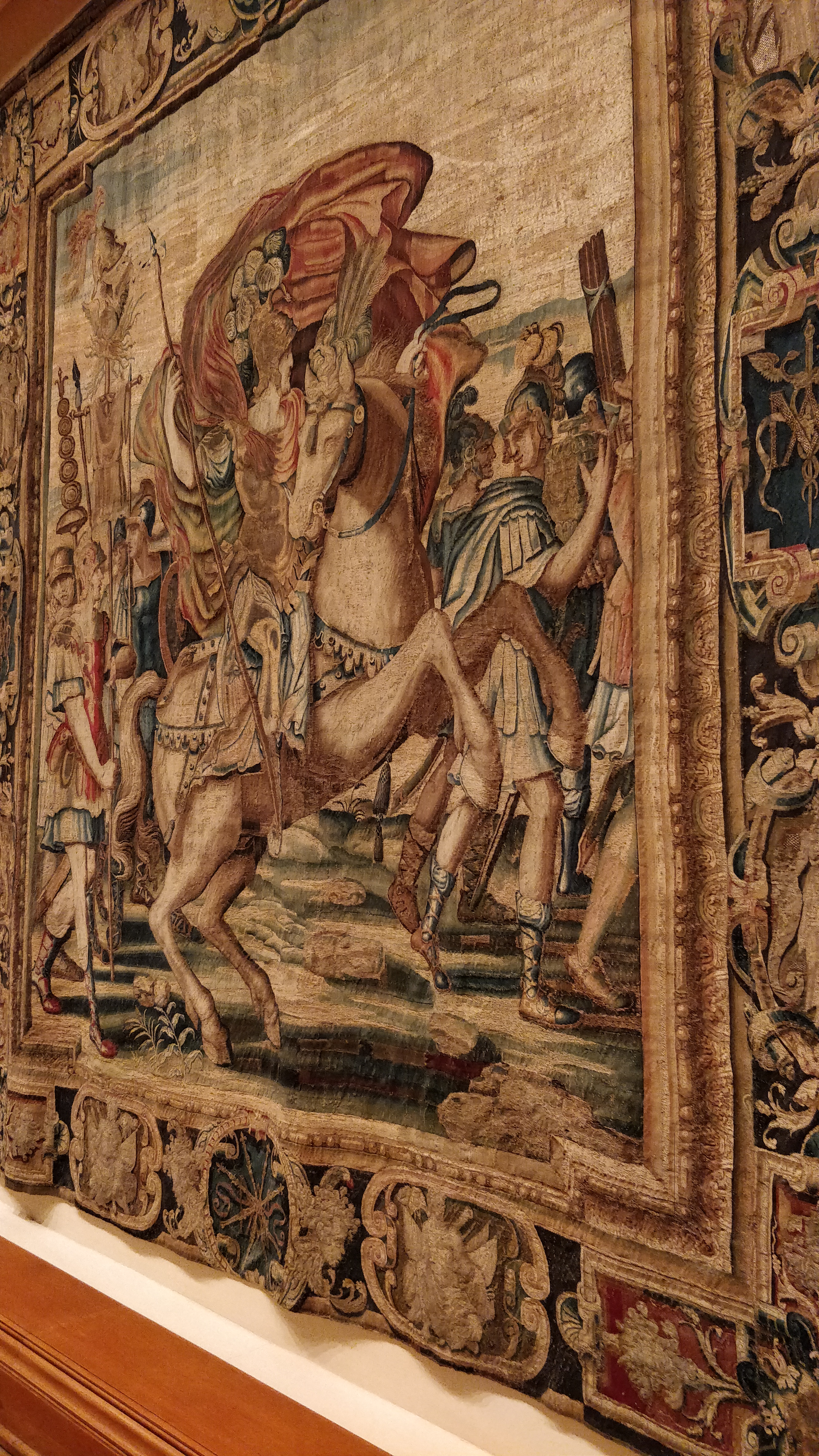
IMG_20181003_150438.jpg
If I ever have a castle, Imma get so many tapestries

This is a Belgian-made tapestry from the early 1600s.  As someone who can barely sit still long enough to embroider a simple outline figure on a handkerchief, I am always deeply impressed by tapestries.

IMG_20181003_150154.jpg
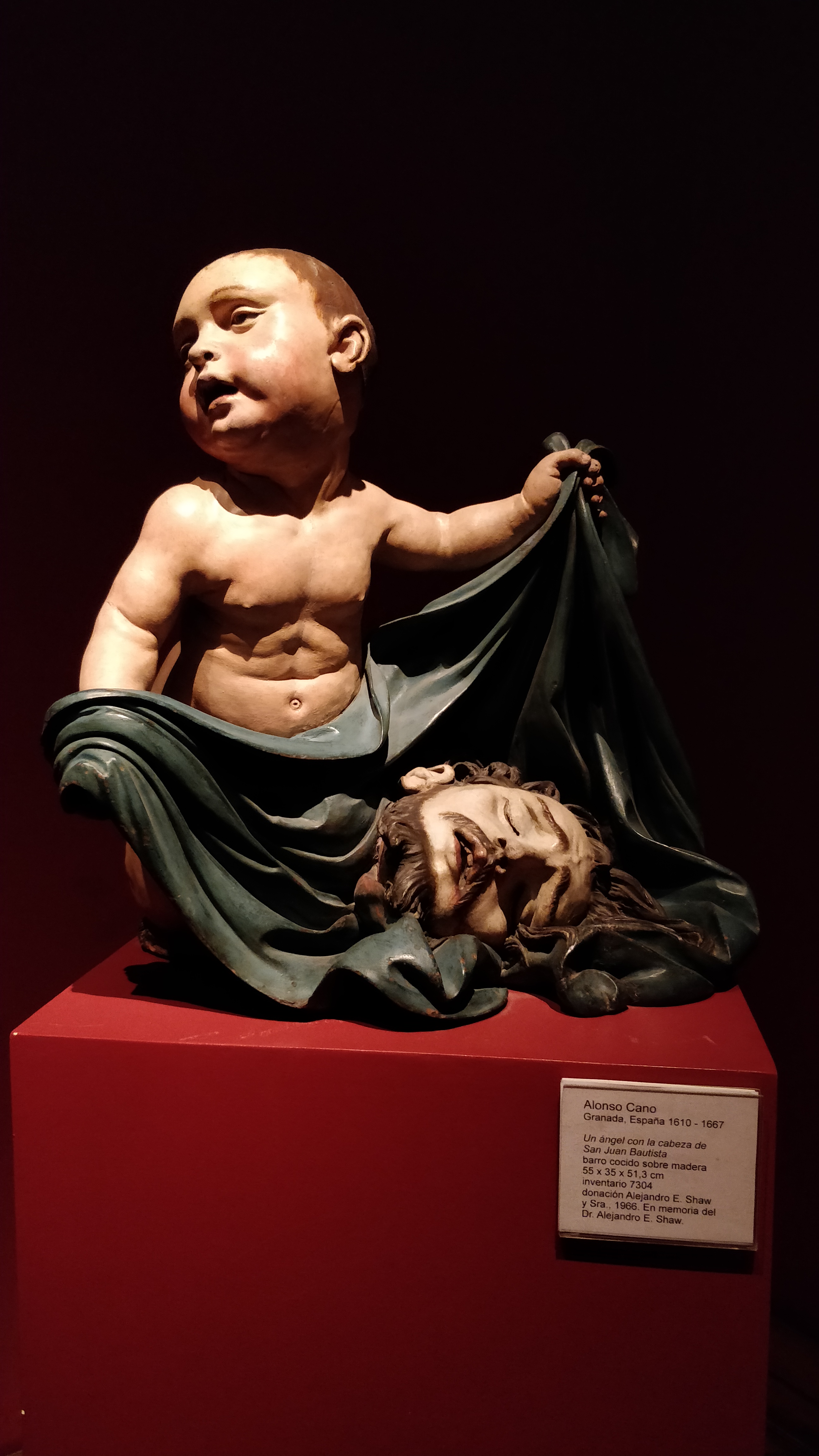
If you leave severed heads laying around, the baby is totally going to get into them.

This is a 17th century wood sculpture, “An angel with the head of St John the Baptist.”  This stuff is all pretty typical of the time and region.

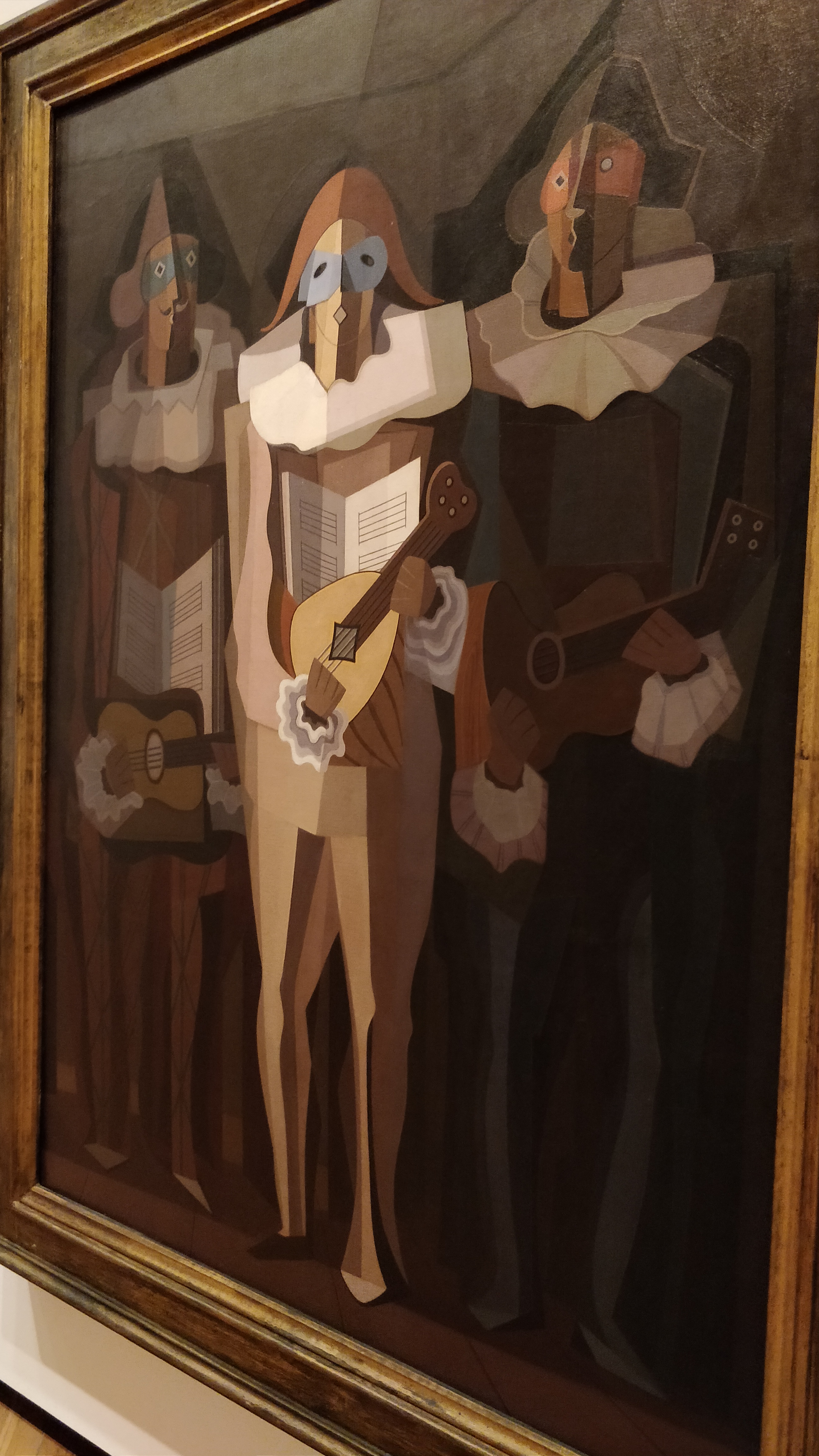
Moving forward, time-wise, the collection includes examples from a lot of the big dudes, El Greco, Rubens, Rembrant, Degas, van Gogh, Monet, Kandinsky, Pollock, Rothko, and so on.

IMG_20181003_144719.jpg
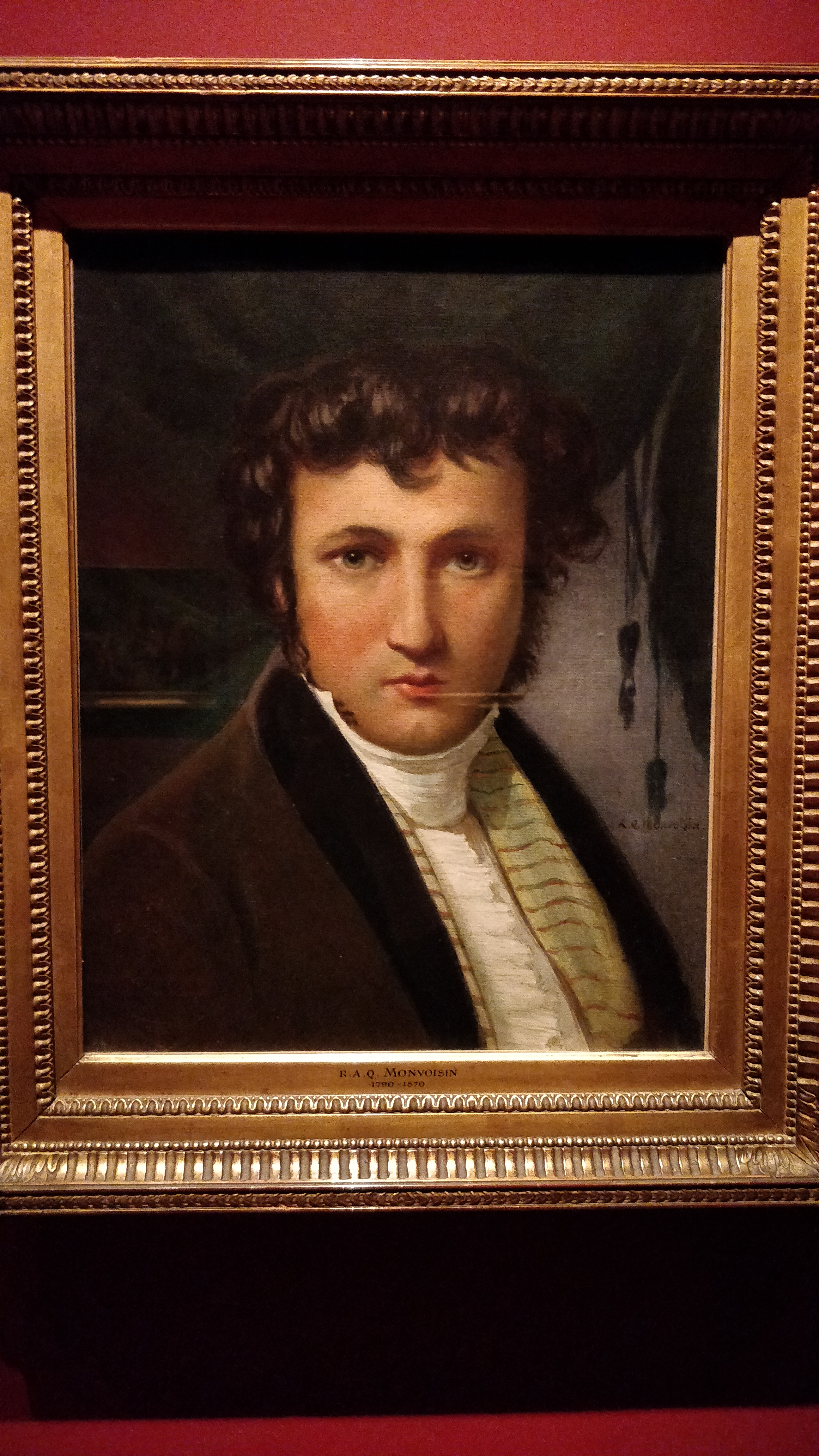
Raymond Monvoision, “self portrait,” early 1800s France.

IMG_20181003_145959.jpg
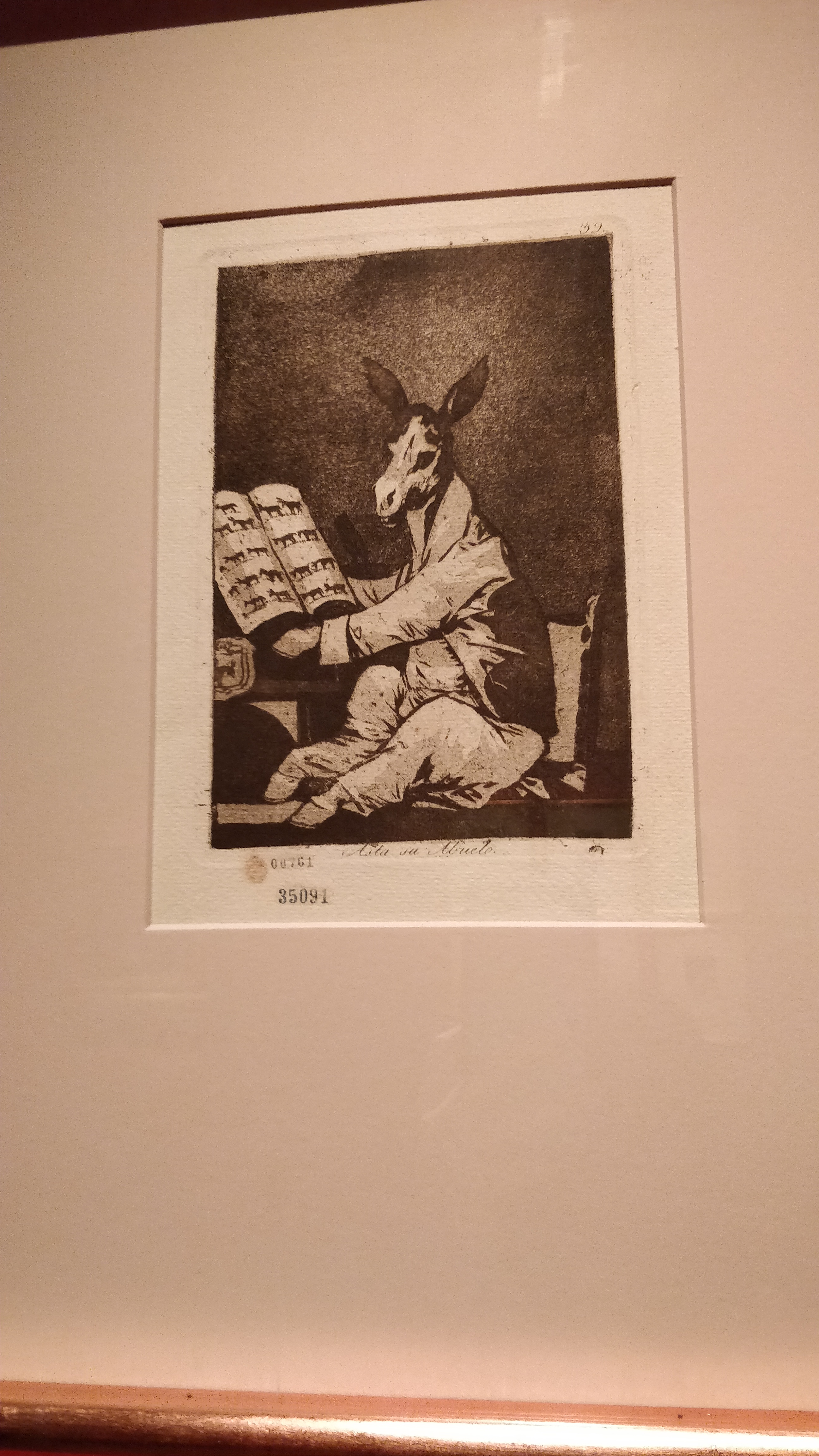
Goya, doing Goya things.

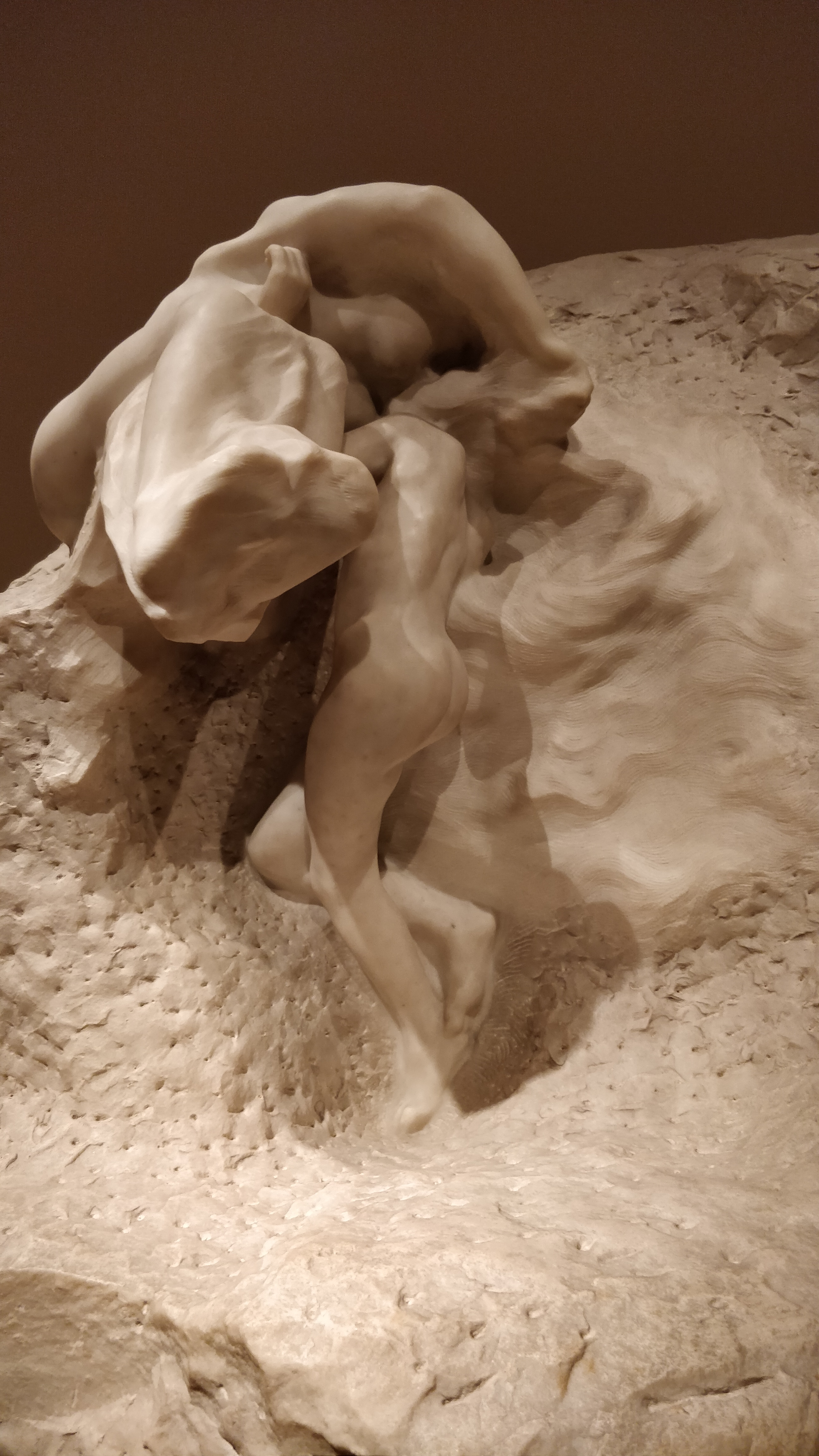
There’s a lot of Rodin, owing to the museum’s first director’s admiration of him.

IMG_20181003_145632.jpg
“The Earth and the Moon,” 1898, because how many times do you really want to look at “The Kiss”

IMG_20181003_151707.jpg
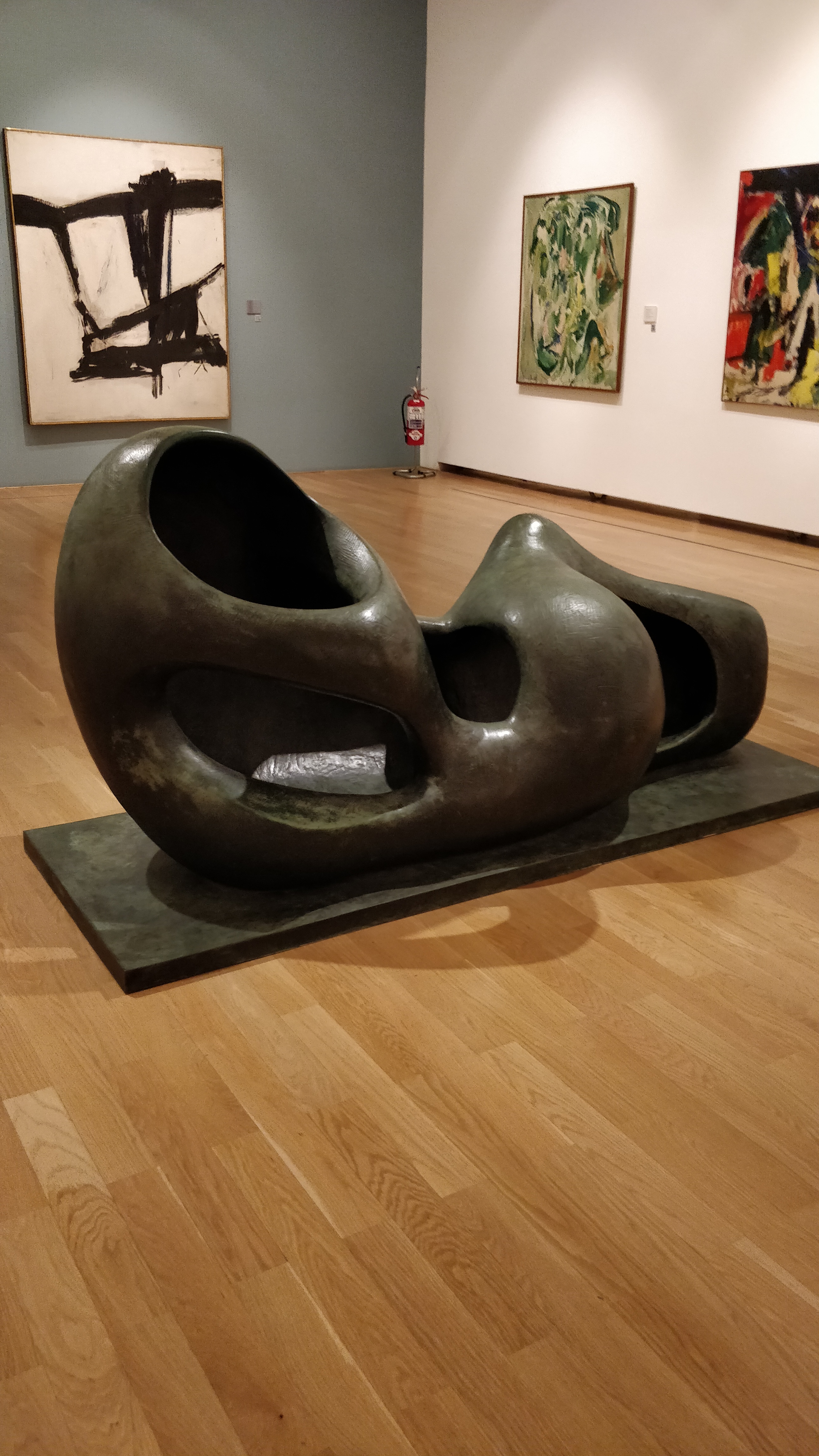
Henry Moore, “Reclining Figure, External Forms

But let’s turn our attention to the Argentine artists, my very favorite feature of Bellas Artes.

IMG_20181003_144602.jpg
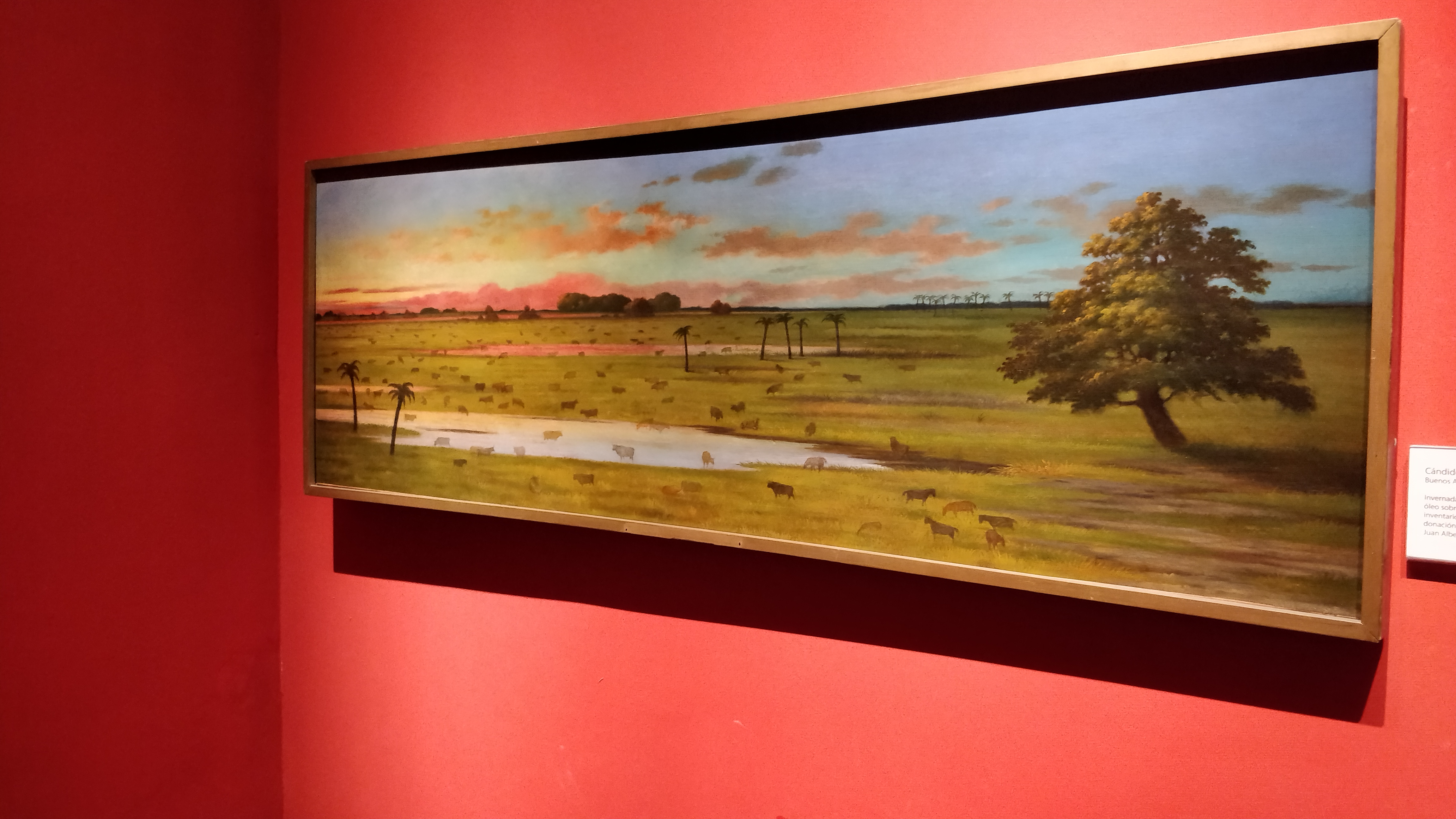
Cándido López’s “Wintering Eastern Army,” more beautiful in person than any photo I’ve seen.

IMG_20181003_152708.jpg
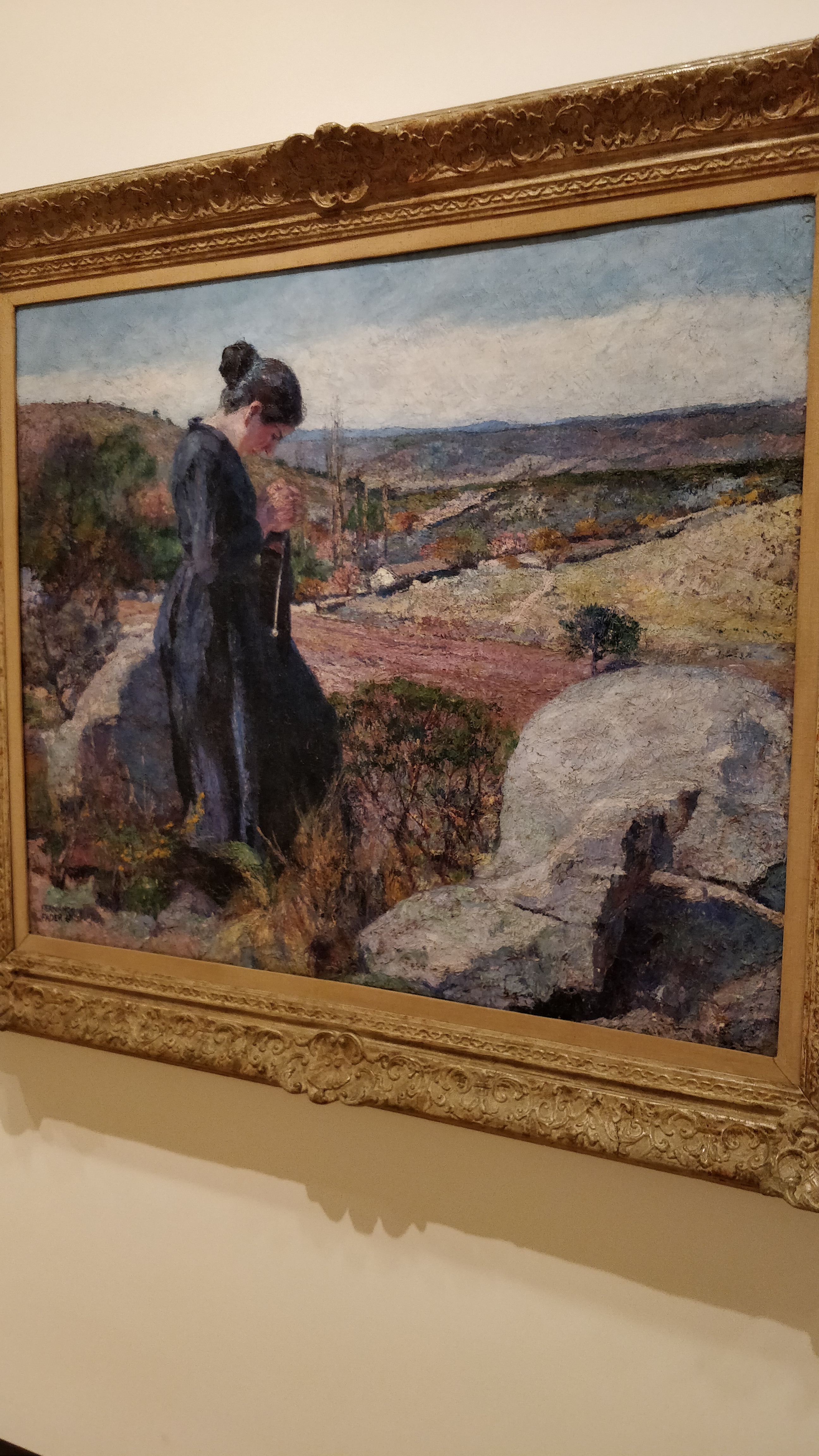
“To the Sunshine” by Fernando Fader, 1922, included here because she’s knitting.

IMG_20181003_151317.jpg
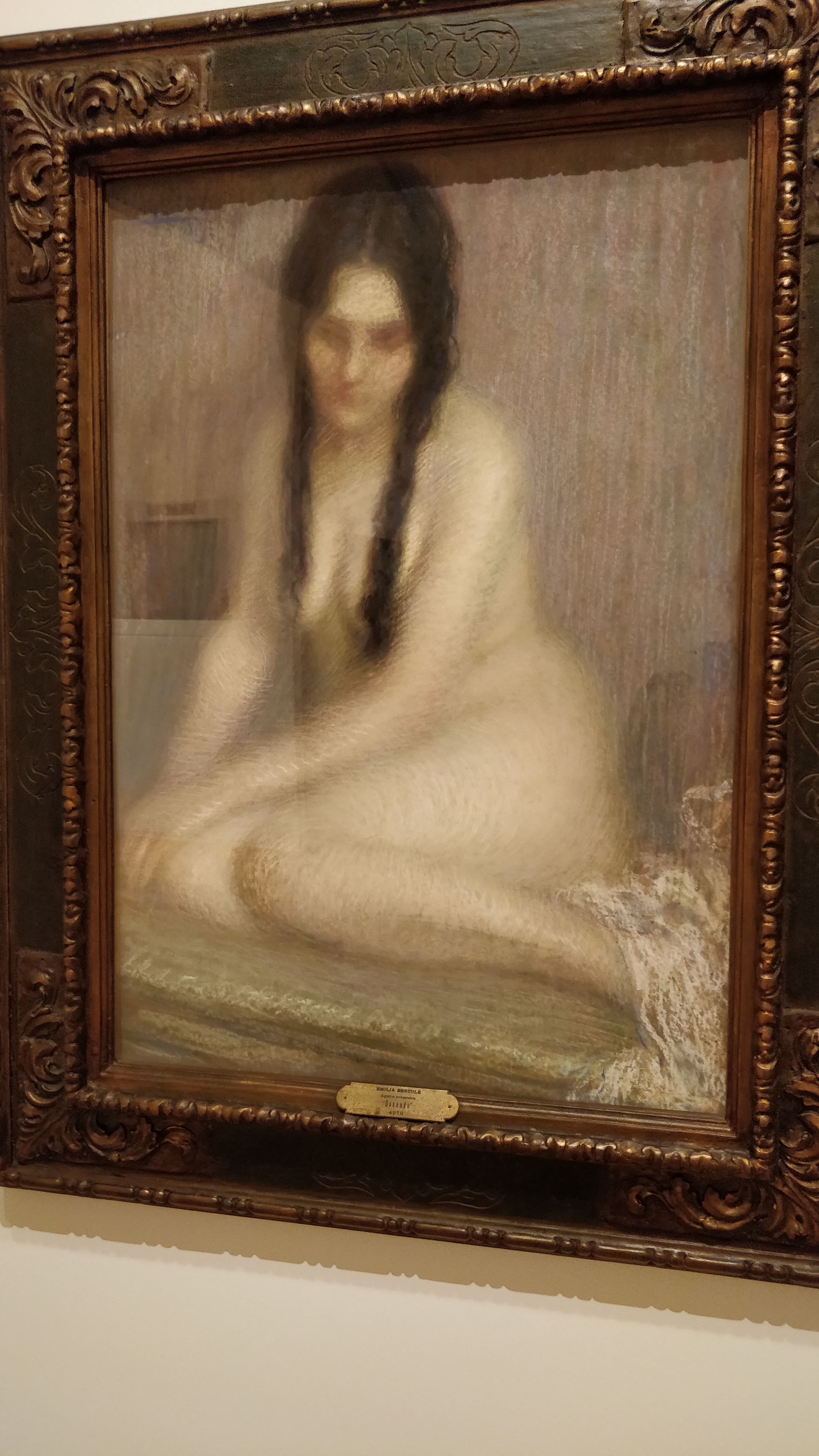
“Nude” by Emilia Bertolé, 1919

And into more modern styles:

IMG_20181003_153226.jpg
“The Improviser,” Emilio Pettoruti, 1937

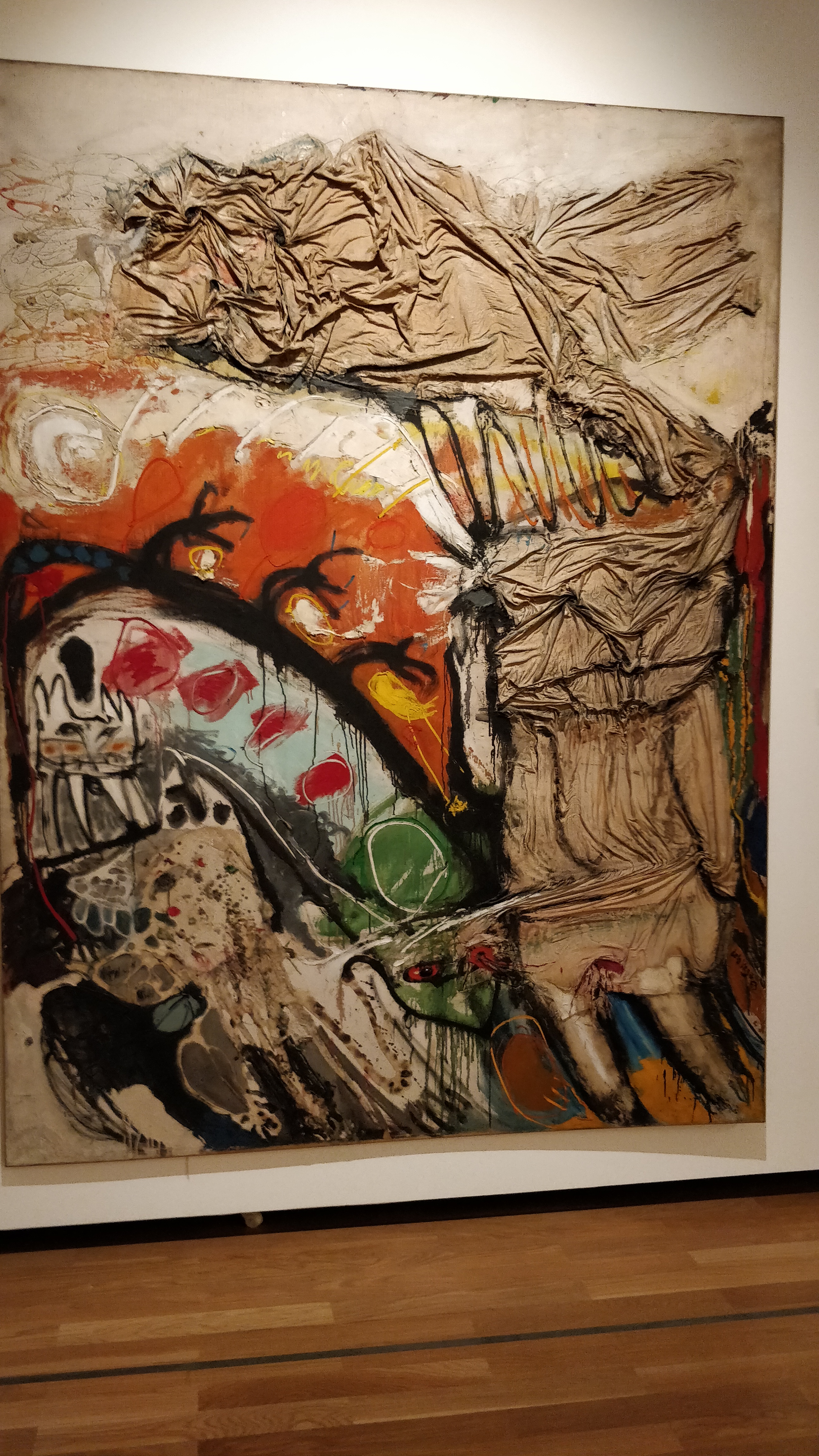
And mixed media works, such as Jorge de la Vega’s “A Timid Person’s Intimacy” (1963):

IMG_20181003_152507.jpg

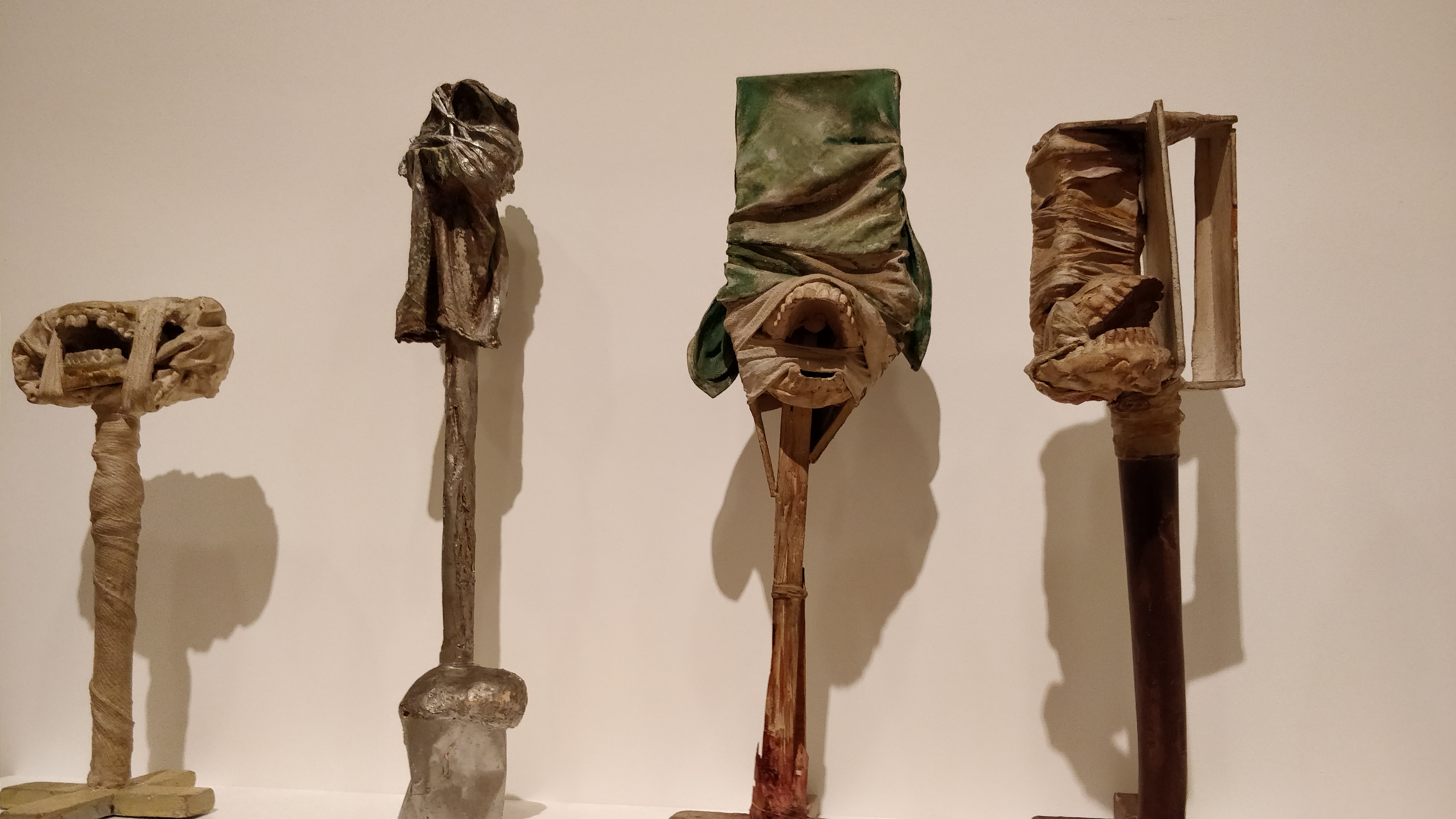
There are also, of course, Argentine sculptors represented, such as Alberto Heredia, who worked with discarded items to create his censorship allegory “The Gagged” in the early 1970s.

IMG_20181003_152243.jpg
JEEEEEZUS WHAT THE HELL MAN

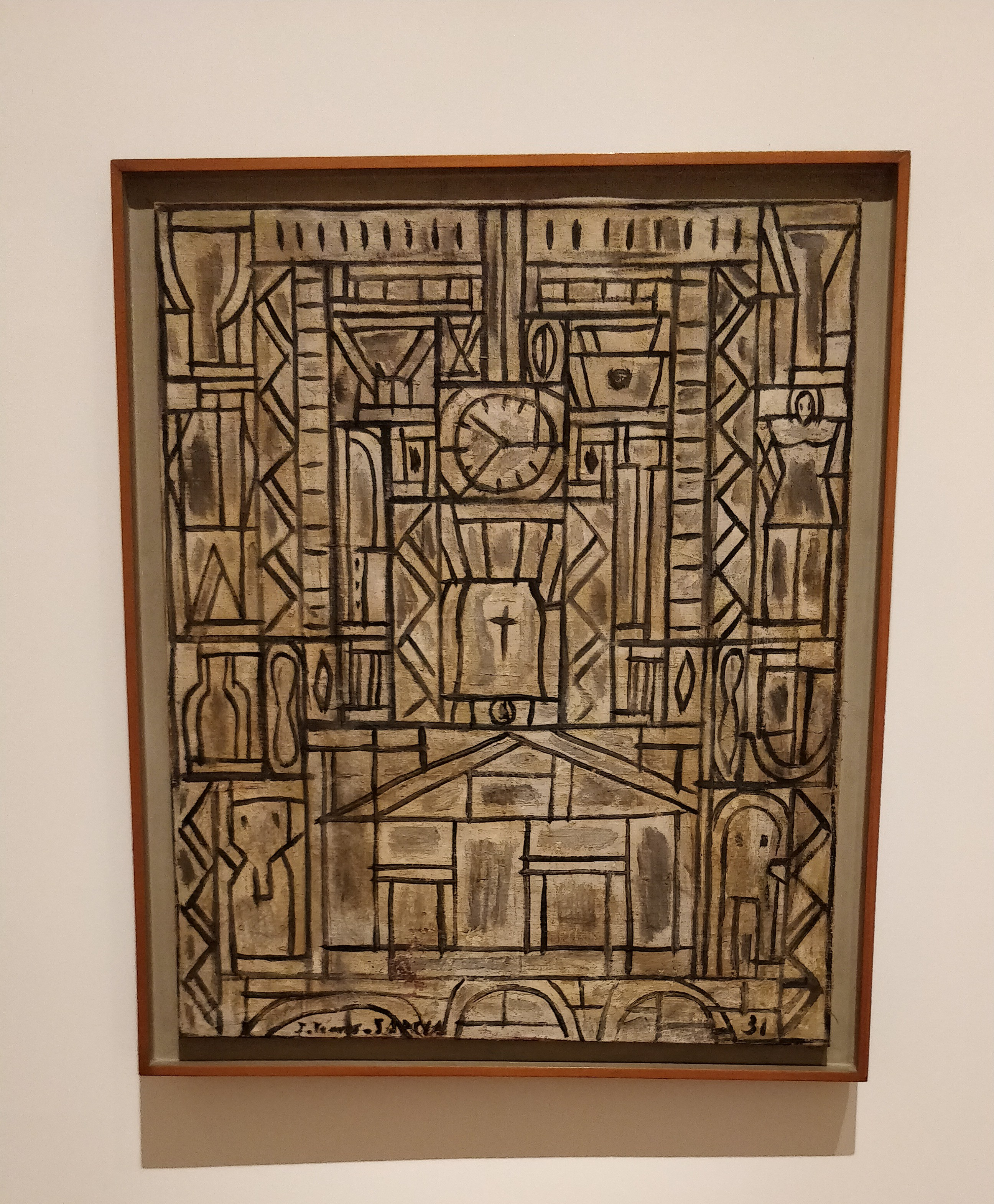
I’m also tacking on Joaquín Torres Garcia, who wasn’t Argentine but Uruguayan, because I really love his stuff so much.

IMG_20181003_153310.jpg
“Contrast,” 1931

Finally, here’s views of a couple of galleries, to give you a feel for the place, and the difference between the classical art galleries and the modern ones.

IMG_20181003_150035-1.jpgIMG_20181003_151823.jpg

The Museo Nacional de Bellas Artes is big and pink and hard to miss at Av. de Libertador 1473 in Recoleta.  You can get there on a lot of bus lines and the H line of the subway.  It’s open 11am to 8pm Tuesdays through Fridays and 10am to 8pm Saturdays and Sundays.  It’s free for Argentina residents and 100 pesos (currenetly about 3 bucks US) for non-residents, although it is free on Tuesdays and 645pm-8pm Wednesdays through Sundays.  There’s a free English tour at 230pm on Wednesdays and Fridays.  Most of the signage is also in English.