The Cemetery Series: Cementerio de la Recoleta

God, you know what sucks? Knowing that you’ve been to a place a gajillion times and you definitely took a bunch of photos, but this was years ago and somehow, you can’t find any of them.
And last time I was in Buenos Aires I had other priorities

So I’m going to cobble together a post with what I can scrounge up and some royalty-free photos taken by actual photographers. At least the lighting will be good.

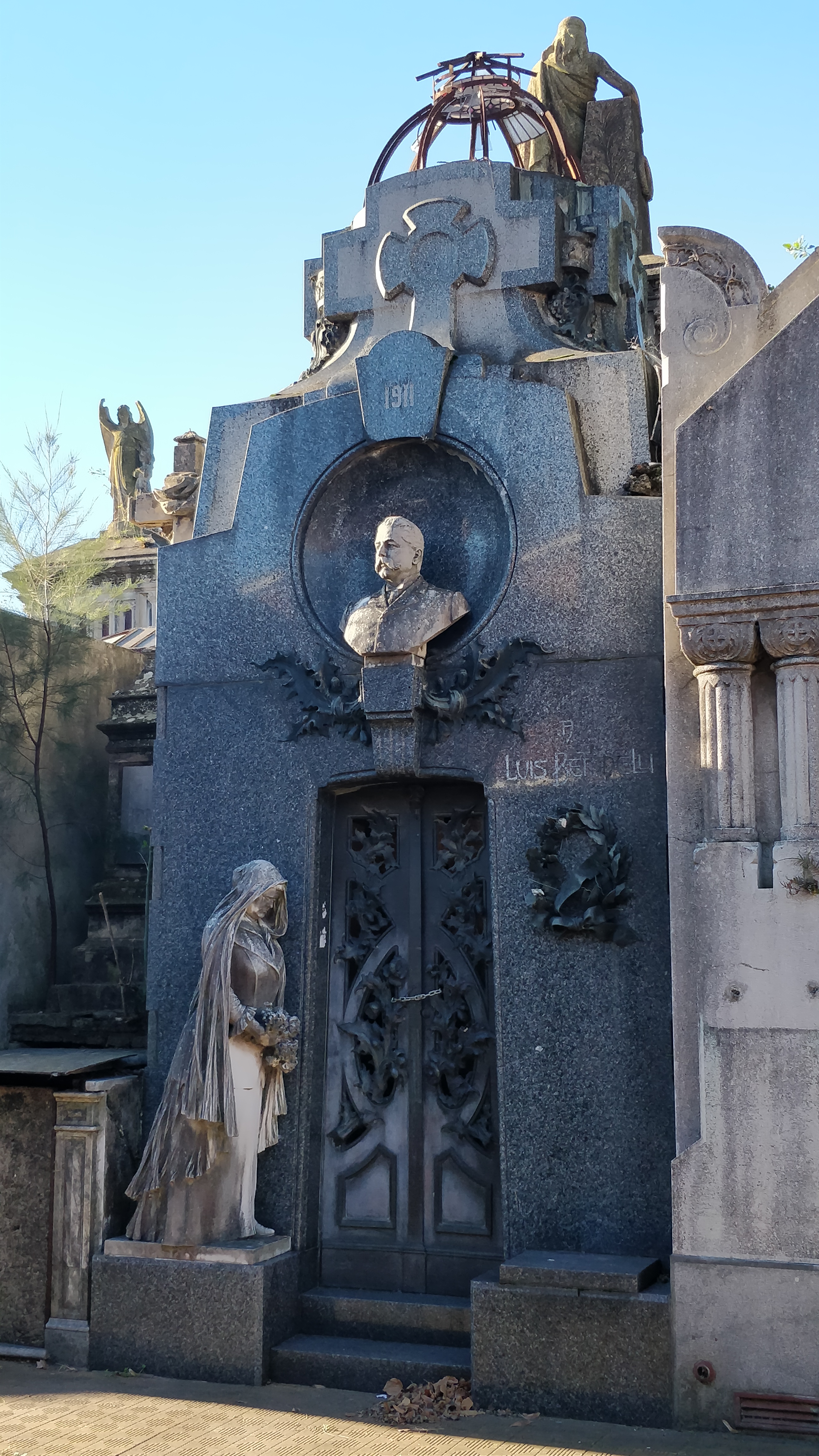
Recoleta Cemetery is renowned the world over, packed with mausoleums for Argentina’s wealthy and notable. It opened as the city’s first public cemetery in 1822, after the disbanding of the Franciscan order that settled there roughly 100 years before. Occupying 14 acres of some of the ritziest real estate in Buenos Aires, smack dab in the middle of the Recoleta neighborhood, the cemetery is a perennial stop for tourists and taphophiles alike–so much so that it is the first of three examples in the Wikipedia article on tombstone tourism (and yes, I have been to all three).
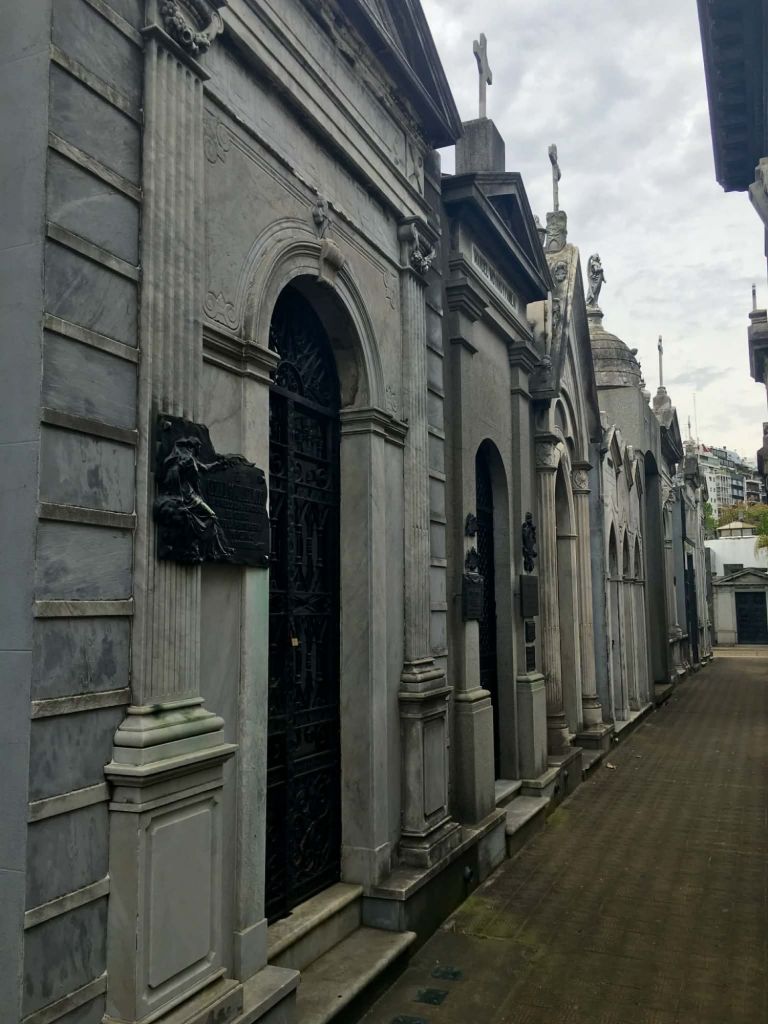
The side streets are quieter; you definitely don’t want to buy on the main drag.   (Photo by my amazing sister-in-law.)

There is no lack of tour guides available at the gates, so even if you turn up without one you can probably still hire one on the spot. Alternatively, there’s an app.

It is very brown, but also free.

At the time of this writing, the audio is only available in Spanish, but the text guide is in Spanish, French and English, sort of. You can choose a route that highlights authors, scientists, presidents, or “our selection,” which includes a few from the other routes plus other notable tombs.

But nevermind the Great and Good and Total Bastards–let’s talk about the ones I wanna talk about.
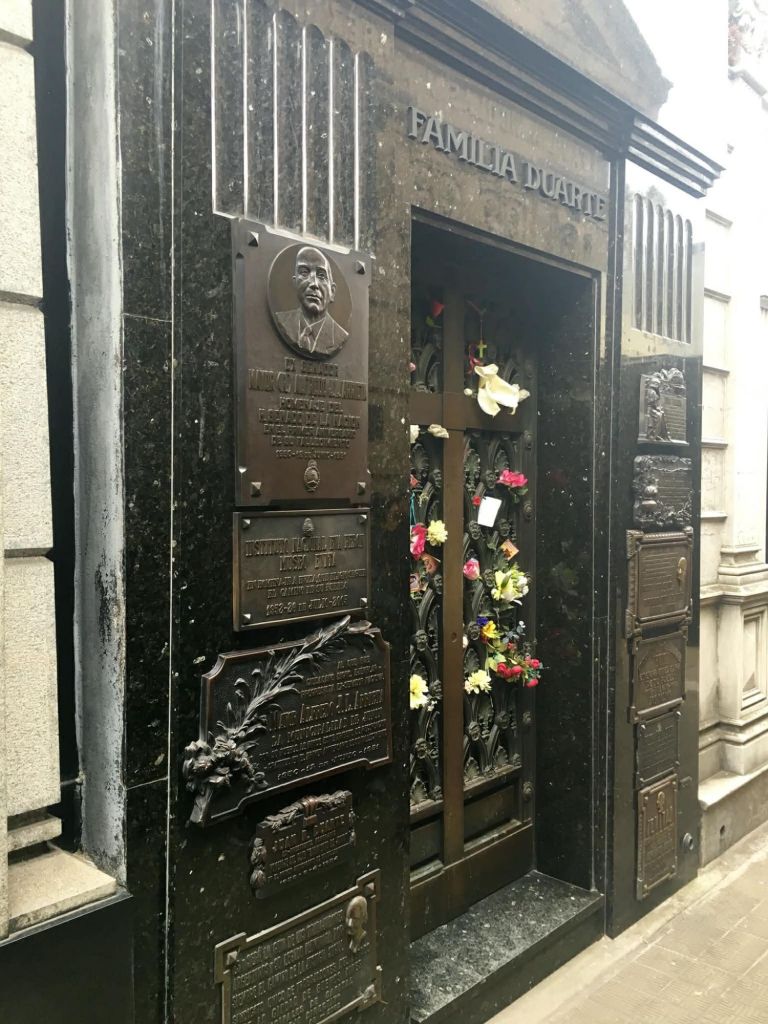
Yes Eva Perón is buried here in herfathersfamilycryptseemsweirdtomegivenherfamilyhistoryyestherearealwaysflowersandvisitorsandtourgroupsanywaymovingooooooon

Liliana Crociati de Szaszak was killed in an avalanche in Europe while on honeymoon, aged 26. She’s depicted in her wedding dress outside her Neo-Gothic tomb.
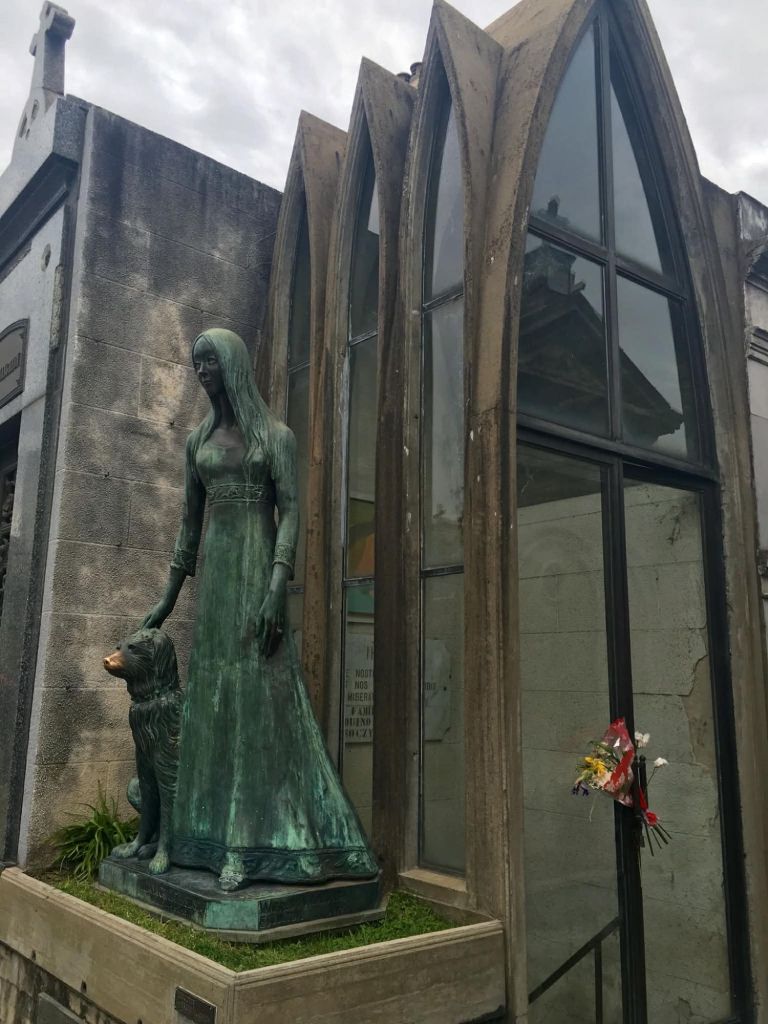
After her dog, Sabú, died, his sculpture was made and placed next to her. Visitors rub his nose, hence the shine. (Photo by my excellent sister-in-law.)

As we all know, young women make the best ghost stories and while I don’t know of any specifically linked to Liliana, 19-year-old Rufina Cambacérès is said to haunt the place.
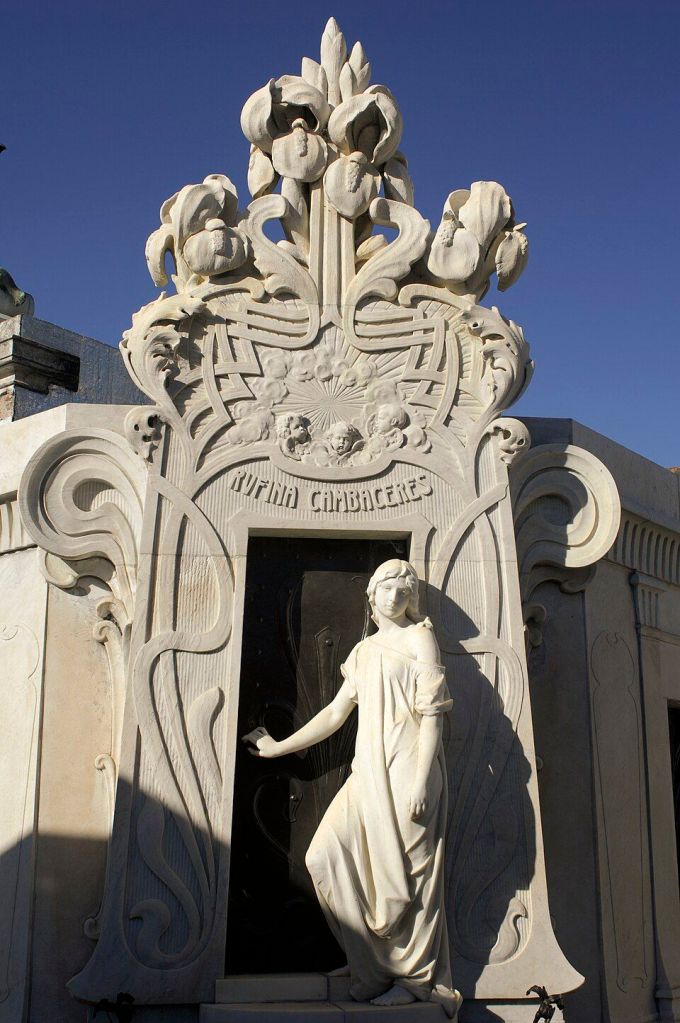
And frankly, not without cause. 
(Photo by Andrew Shiva, who is not my sister-in-law but I’m sure is cool.)

The story goes that Rufina collapsed and was pronounced dead, only to–you guessed it–not actually be dead. After discovering the displaced coffin (or investigating after hearing noises the previous night, depends on the version you hear), she was found having died, for real this time, in a panic after frantically clawing at the coffin lid.
The face you make when your mom cannot just give it a minute before interring you.

General Tomás Guido, national hero and bestie of José de San Martín, took part in San Martin’s grueling campaign, the Crossing of the Andes, during the wars of independence. He wanted to be buried under those mountains where so many had died, and in the great tradition of loopholes, his son had stones from the Andes brought to Buenos Aires and built the tomb himself.
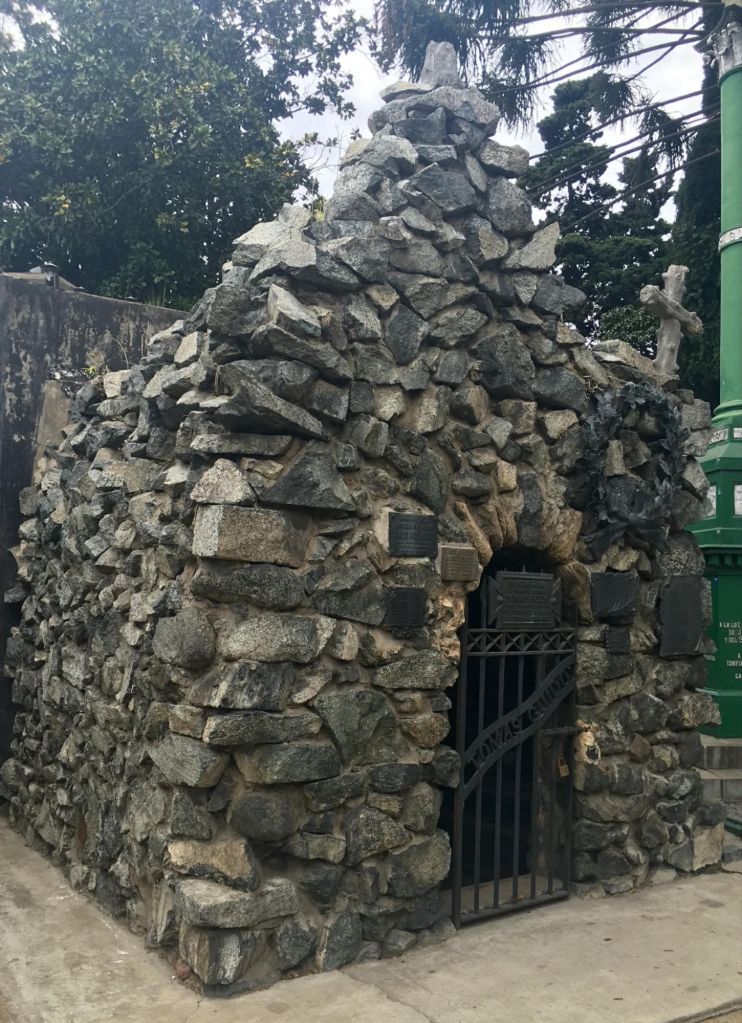
“See you’re technically under the Andes, Dad.”

Annoying technicalities aside, it’s a unique tomb, sharply contrasting with its neighbors. Also, Guido is no longer there. But he still isn’t under the Andes! He was relocated to the Cathedral of Buenos Aires next to San Martín, because who doesn’t want to be buried with their boss.

Speaking of work-adjacent entombment, cemetery caretaker David Alleno saved up for years for his own statue and burial. He supposedly killed himself upon the vault’s completion. His statue depicts him with his keys, duster, broom and watering can.
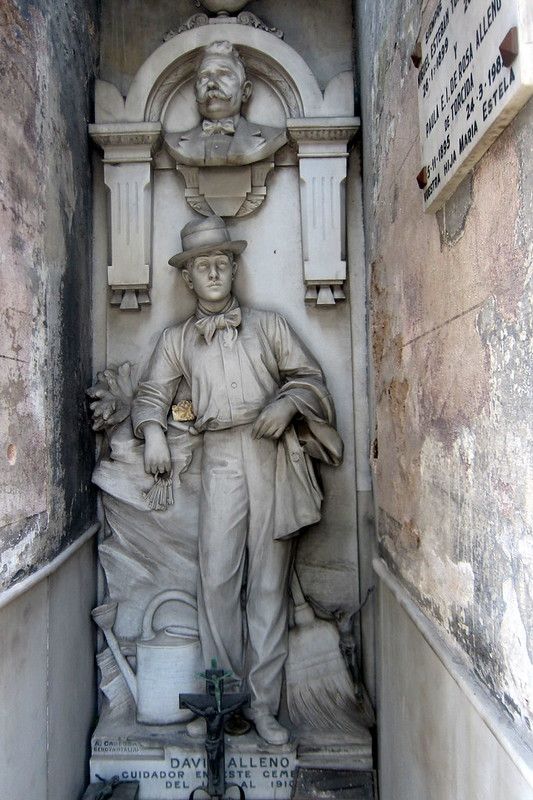
Sure, why not.  (Photo by Wally Gobetz.)

The story is tantalizingly incomplete. It seems like the purchaser of the crypt was his brother, Juan, and I don’t know why one brother would be wealthy enough to buy a family vault in the exclusive cemetery while the other is just a caretaker there. There’s a death certificate that cites “trauma and cerebral contusion” as the cause of death with apparently no follow up available. It’s said that his keys can be heard clinking at night or dawn, so perhaps David himself also feels his story is unresolved.
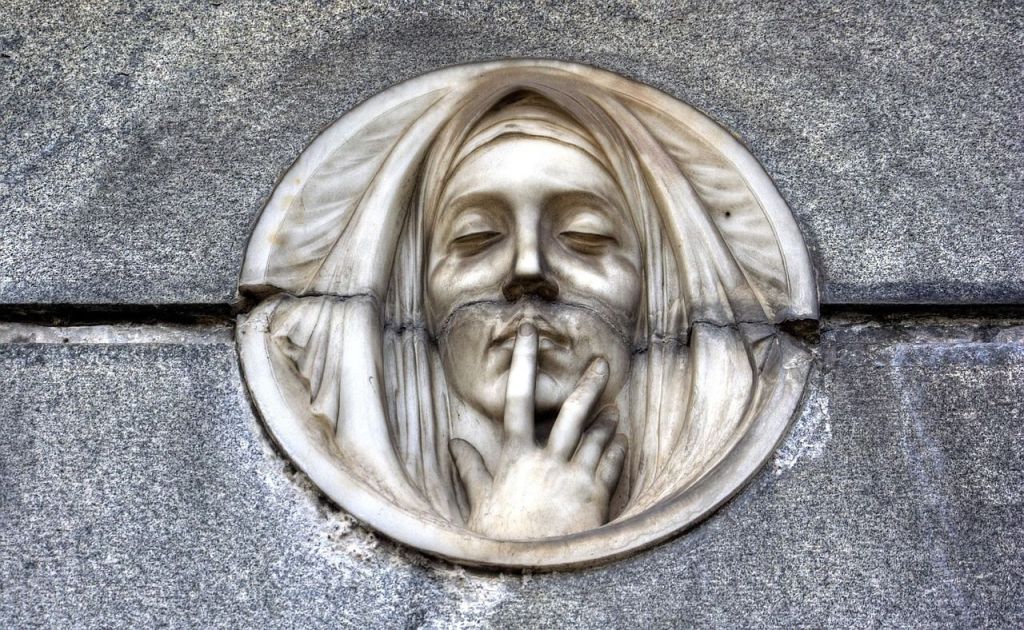
Maybe the Avelino Quijano vault just wants him to keep it down

Of course, there are some massive family crypts, the kind you can commission when you own half of Argentina.
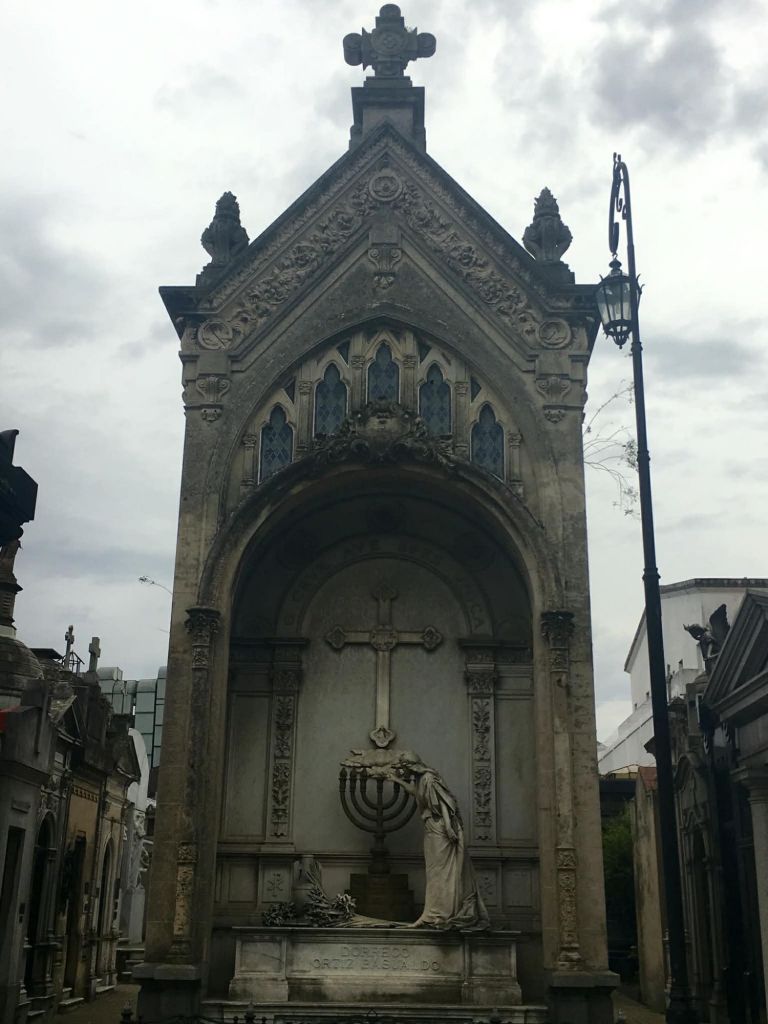
Probably not hyperbole.    (Fantastic sister-in-law strikes again.)

The Dorrego-Ortiz Basualdo family died as they lived: flexing on the rest of the neighborhood. One of the former family residences is the current French embassy.

Then there is the mausoleum of Justa Lima de Atucha, who as far as I can tell had it built after her husband died and labeled it “Justa Lima de Atucha to her husband.”
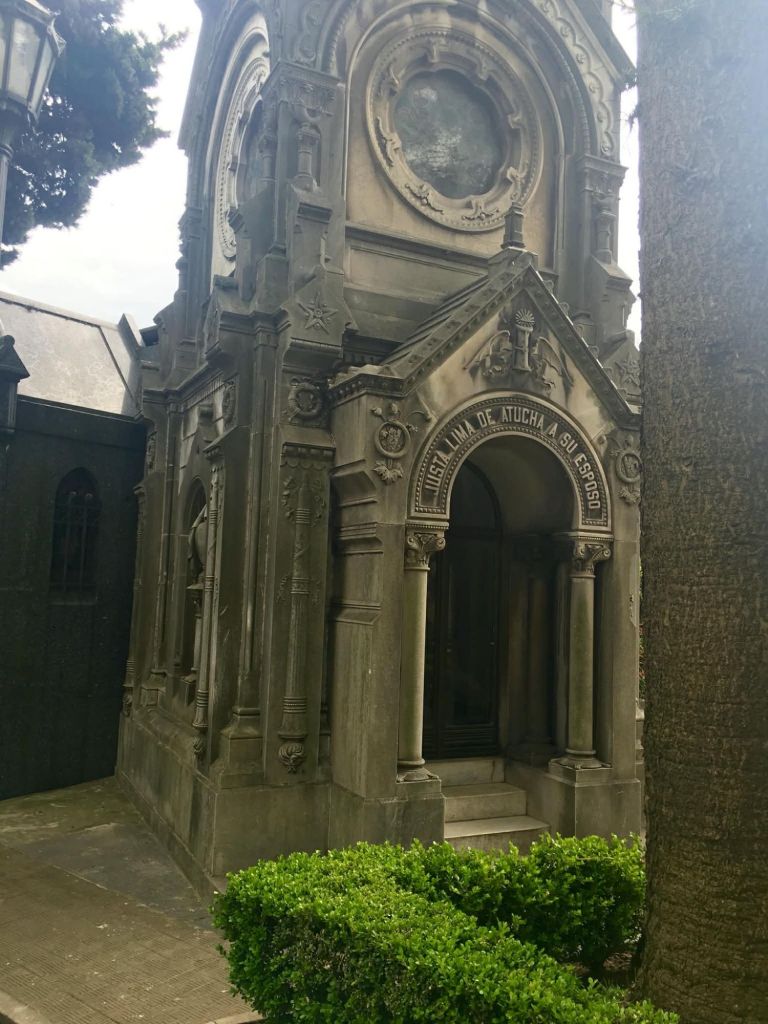
(Sister-in-laaaaaaaaw.)

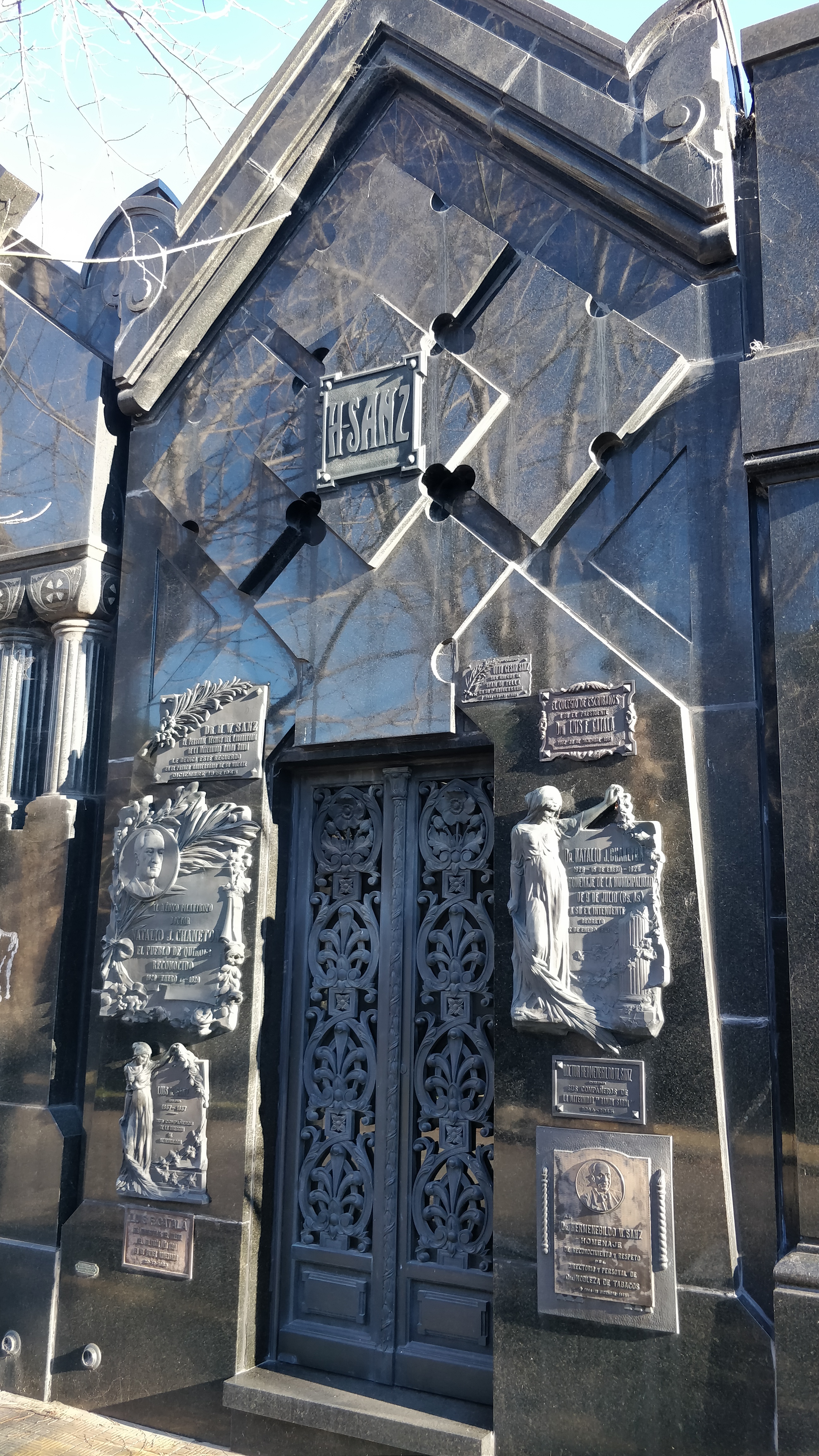
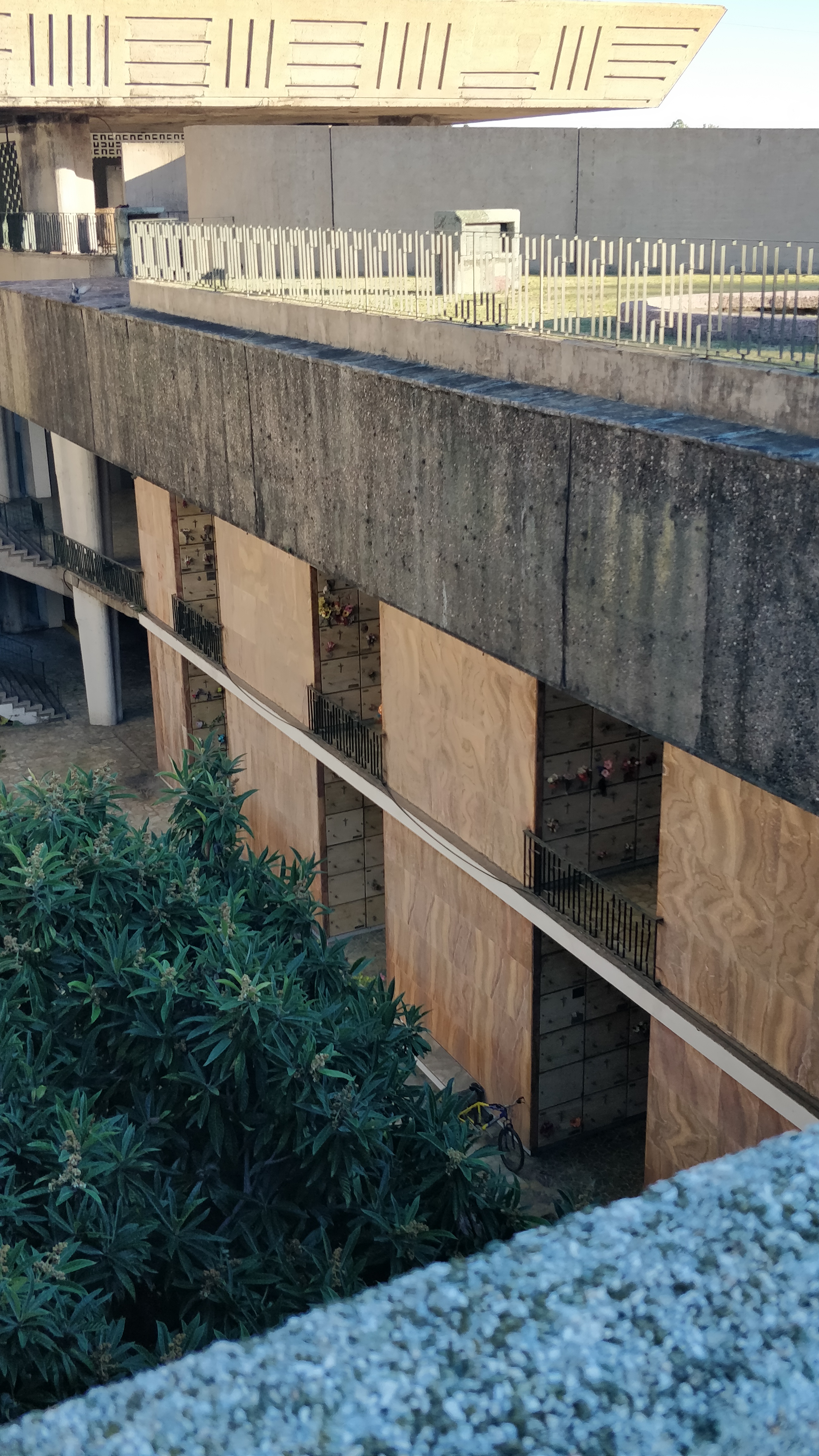
Despite the opulence of most of the vaults, there are many that are now neglected and broken, and in this way the cemetery mirrors the city itself. I have no photos of those, however, so you’ll have to go hunt them out yourself. Or Google it I guess.

Finally, there is another big draw at Recoleta, unmatched in dignity, presence, and grace.
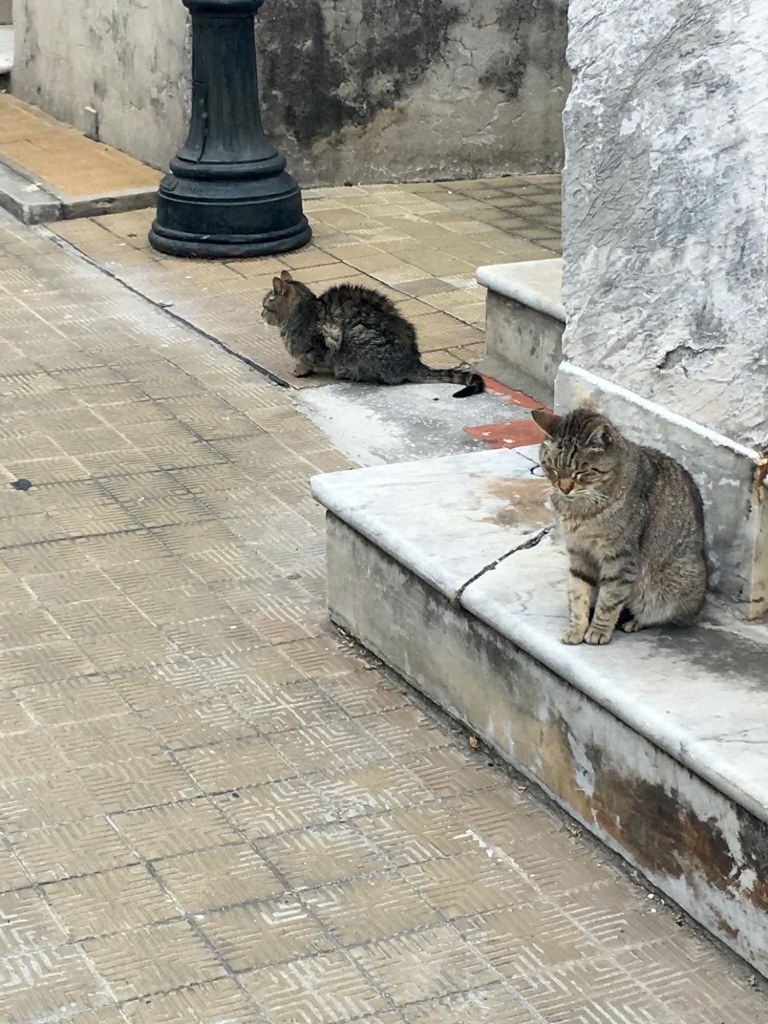
Do. Not. Touch.

There are only six cats left in Recoleta Cemetery, and they are meant to be the last. If you happen to spot one during your visit, consider yourself fortunate. I don’t know how they’re going to keep the ghosts in line after that; presumably the final six felines will deign to haunt the place as well.

El Cementerio de la Recoleta is at Junín 1760 in, yes, the Recoleta neighborhood. It’s next to a mall, a large park that hosts a huge weekend feria, an absolute unit of a gomero tree, museums, hotels, that big flower sculpture and innumerable public transportation stops. It’s open daily from 9 to 5. You will not miss it unless you try.
Some of My Favorite Trees in Buenos Aires

Feliz Primavera!

It seems like a good time to make a post about trees.

Not that there’s a bad time to post about trees, honestly.

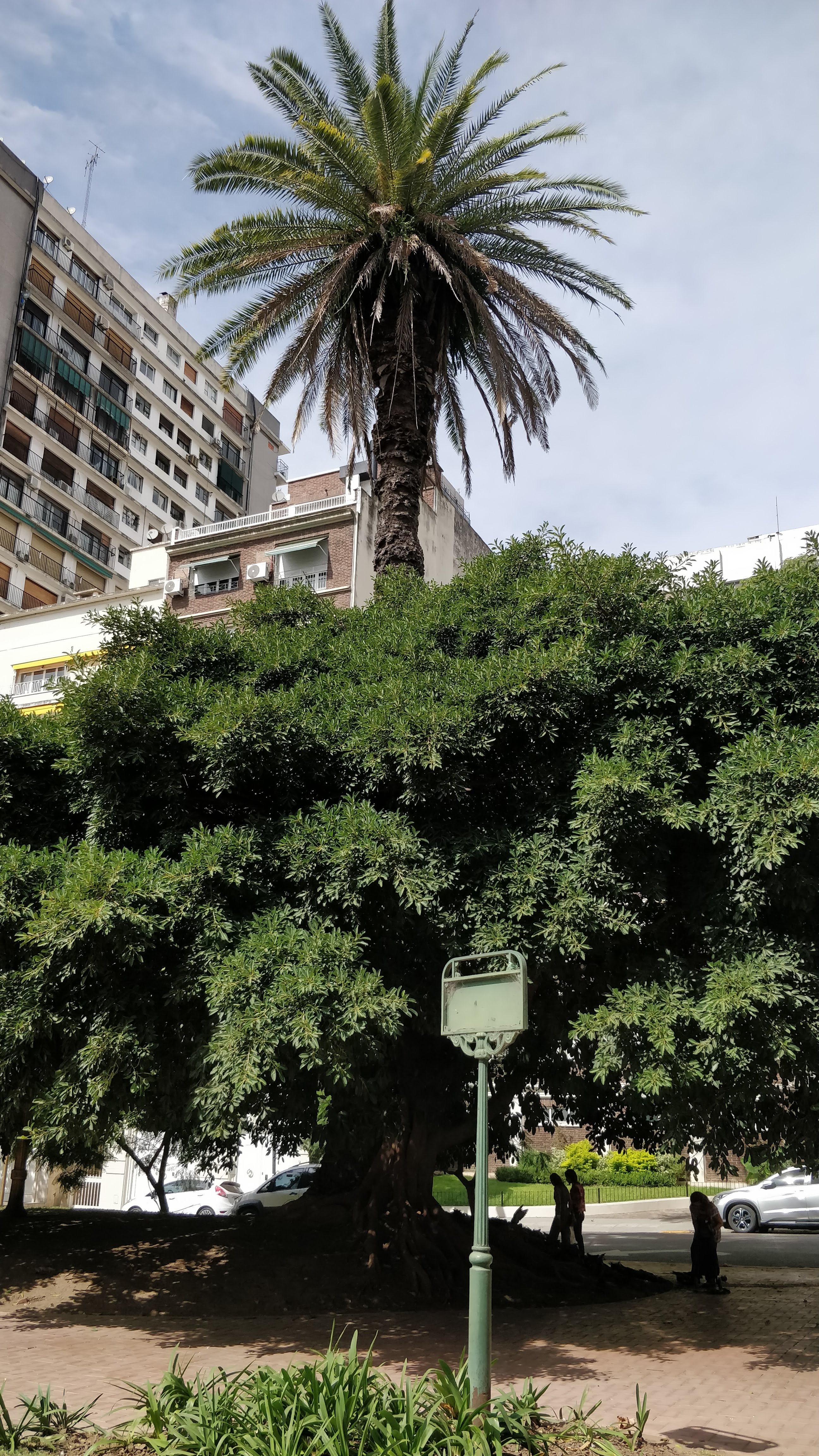
First off, though, this is not a comprehensive list of every rad tree in the city.  In fact, one very rad tree is absent, although I will add it whenever I make it to Recoleta and photograph the famous 200-year-old Grand Gomero.  The following trees aren’t so well known; they labor in obscurity, providing shade and bird housing and sometimes even brilliant floral displays.

Please note–I am not great at identifying tree species, but I’ll do my best where I can.

IMG_20190912_120517.jpg
If you thought I was bad at photographing small things in museums, wait til you see me try to fit huge trees into frame.

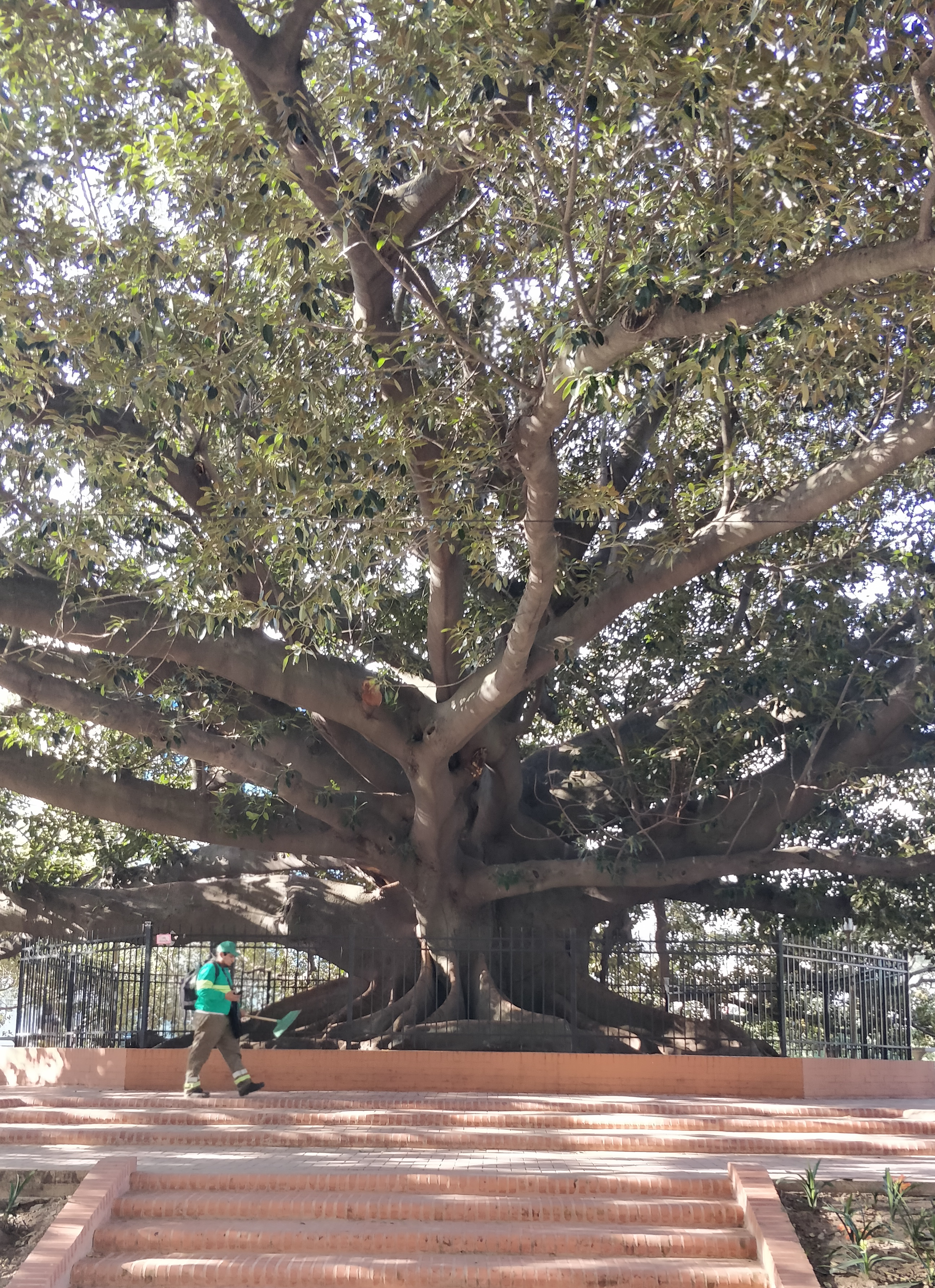
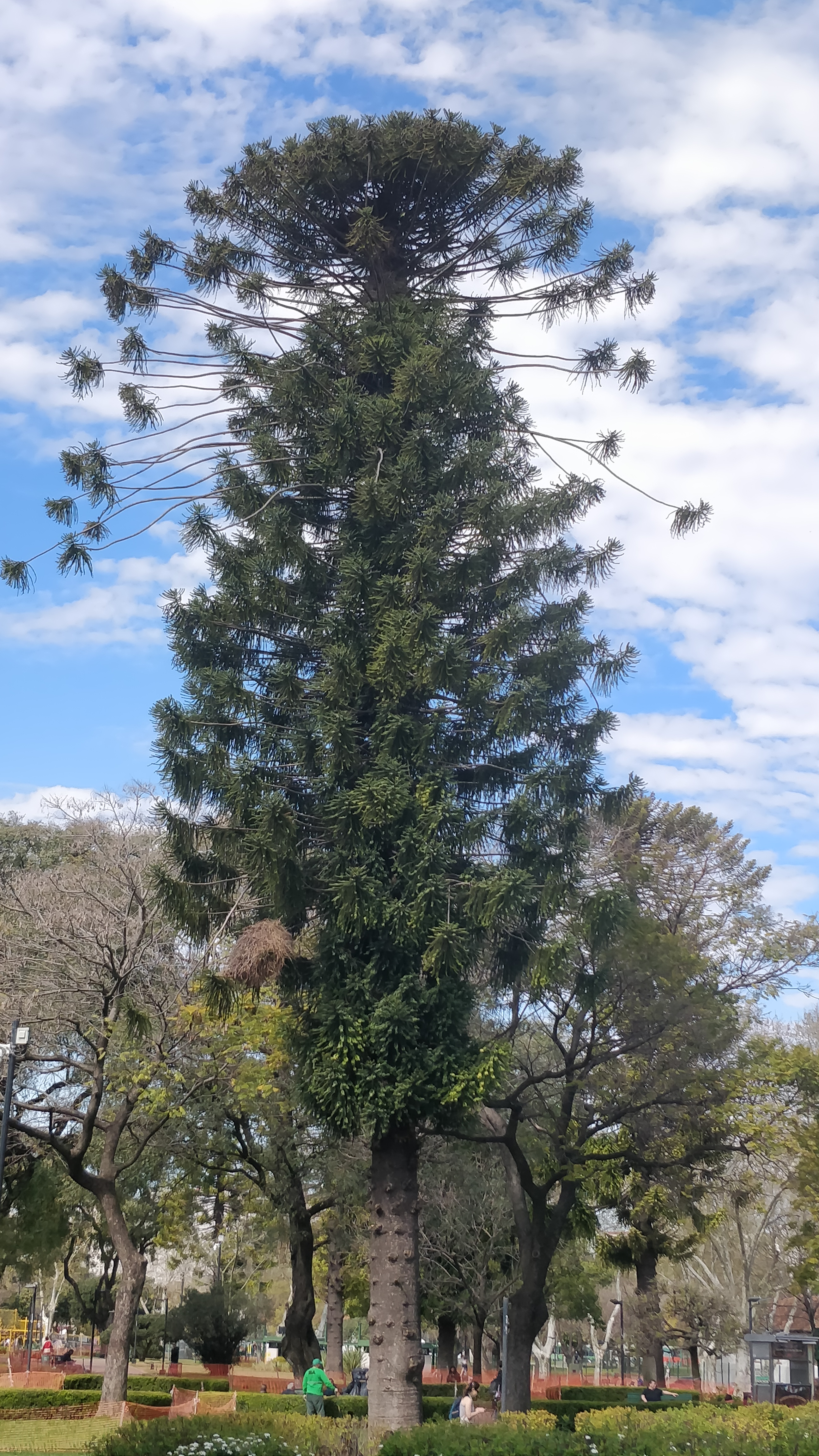
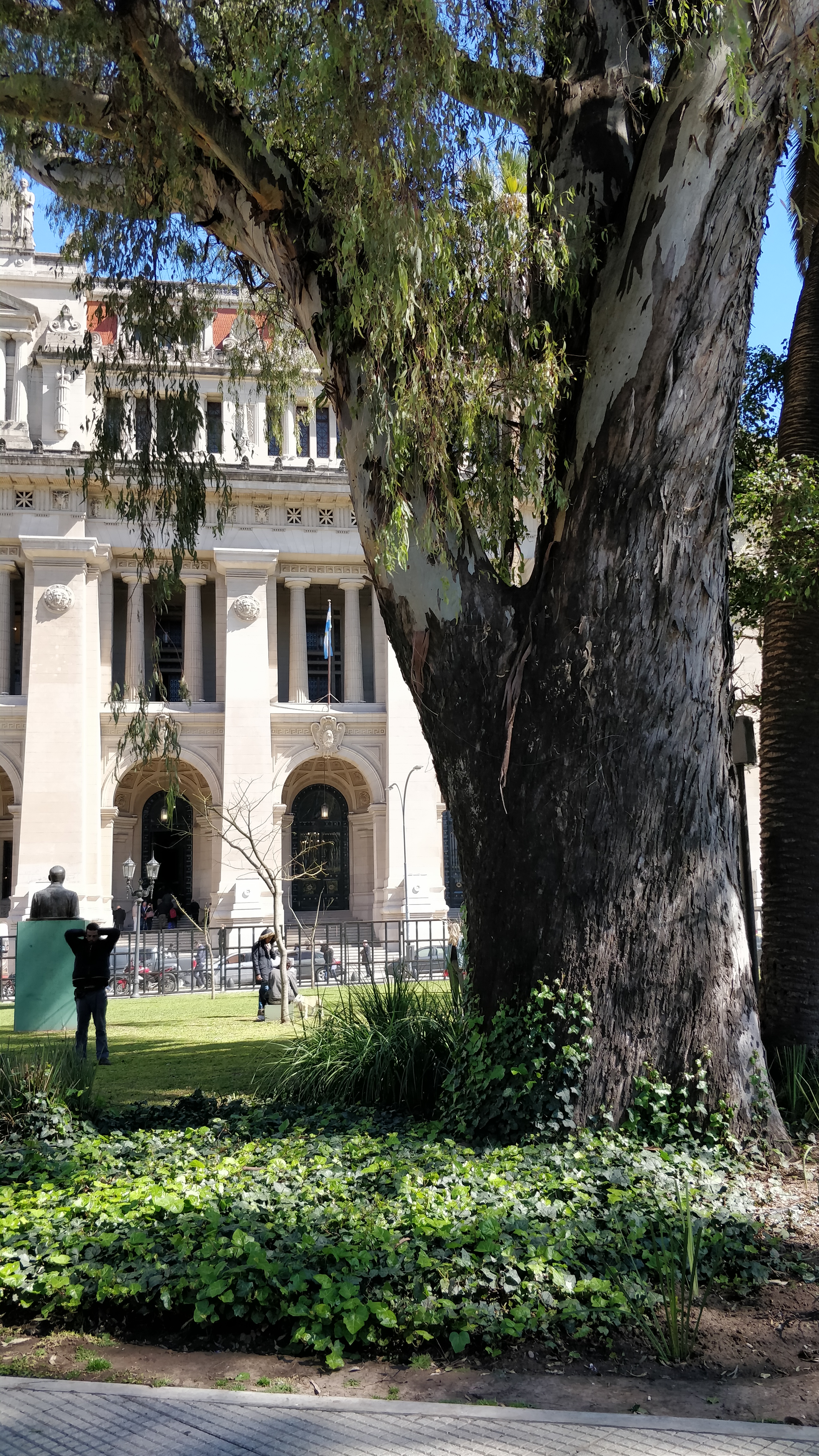
This stately guy here gets to go first because the Supreme Court building is in the background and this is the last landmark you’re going to see in this post.  This tree lives in the Plaza Lavalle, and if you’re visiting the city, you have a good chance of seeing it.  It’s one block over from the back of the Teatro Colon, right on the D subway line, so if you’re seeing any of the sights of the area, stop by and tell it that it’s doing a great job.  I haven’t the foggiest idea what kind of tree it is.

LOOK AT THIS ABSOLUTE UNIT.

img_20190923_164646-1.jpg


img_20190923_164730.jpg

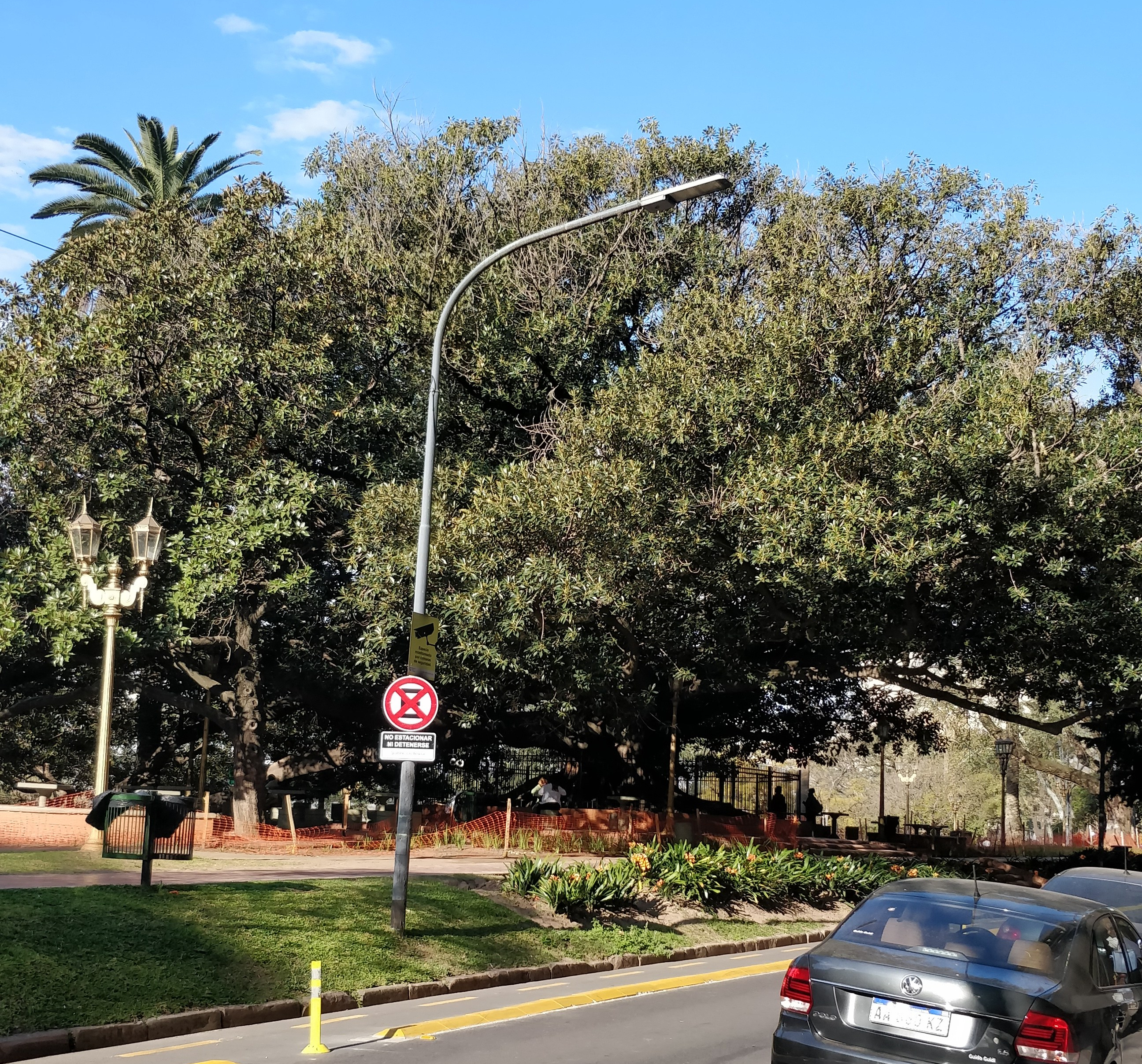
This chunky beast is an ombú.  I think.  Shading several chess tables and then some, this expansive benevolent overlord stands at one end of the Barrancas de Belgrano, a large park that slopes a bit and therefore earned the name of “Barrancas” (cliffs) because people have given a slight incline far too much consideration.

As a bonus, these two are at the other end of Barrancas and I like them because it looks like a tree and its pet tree.

IMG_20190401_132958.jpg

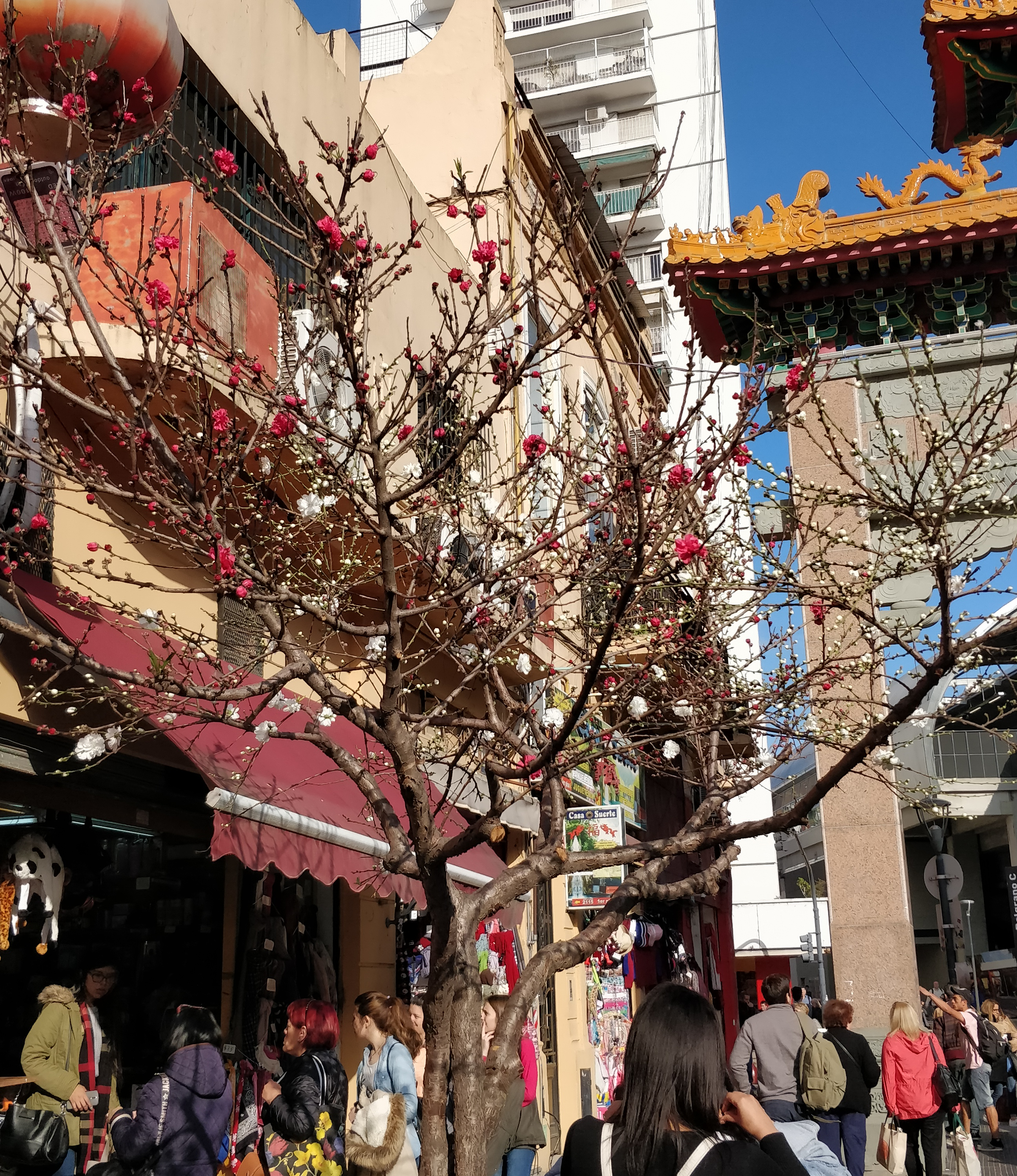
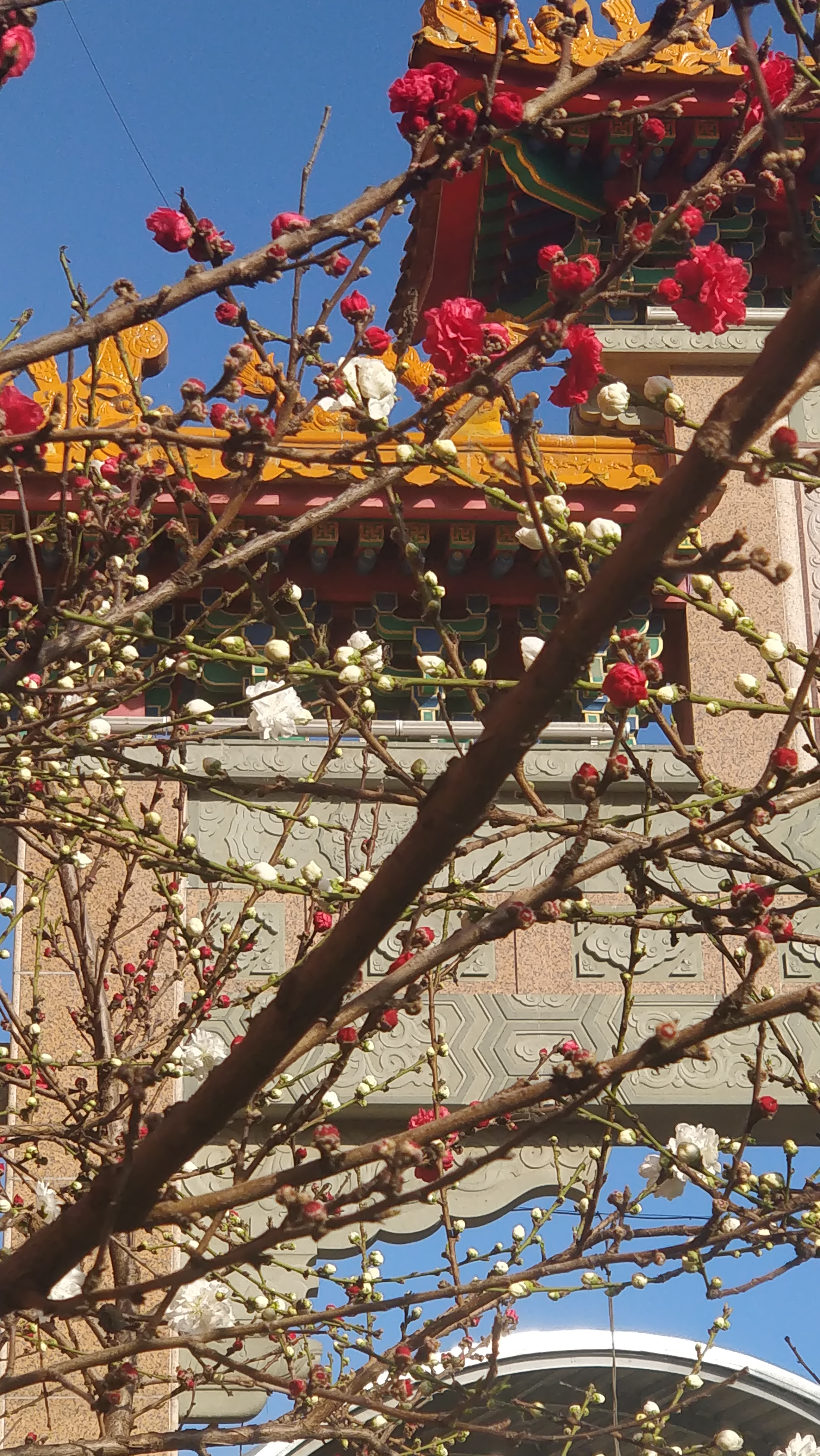
Speaking of residing in Belgrano, here are two trees in Barrio Chino, very close to Barrancas, that might only be noticed in the spring.

img_20190923_164137.jpg
Kinda lied about the Supreme Court building being the only landmark; that’s the arch at the entry to Barrio Chino there on the right.

These sweet little things bear white and red flowers and are practically hugging, so it looks like one tree with two colors.

IMG_20190923_164148.jpg

I guess that’s sort of cheating but this is my list and I can do what I want.

IMG_20190916_141820.jpg
A tree of high comedy.

This is a monkey puzzle, which wins best name for a tree species.  It looks like a twirling weirdo, and therefore I empathize with it strongly.  This particular monkey puzzle provides a home for roughly a jillion monk parakeets in the Parque Centenario.

IMG_20190408_153106.jpg
speaking of comedy trees

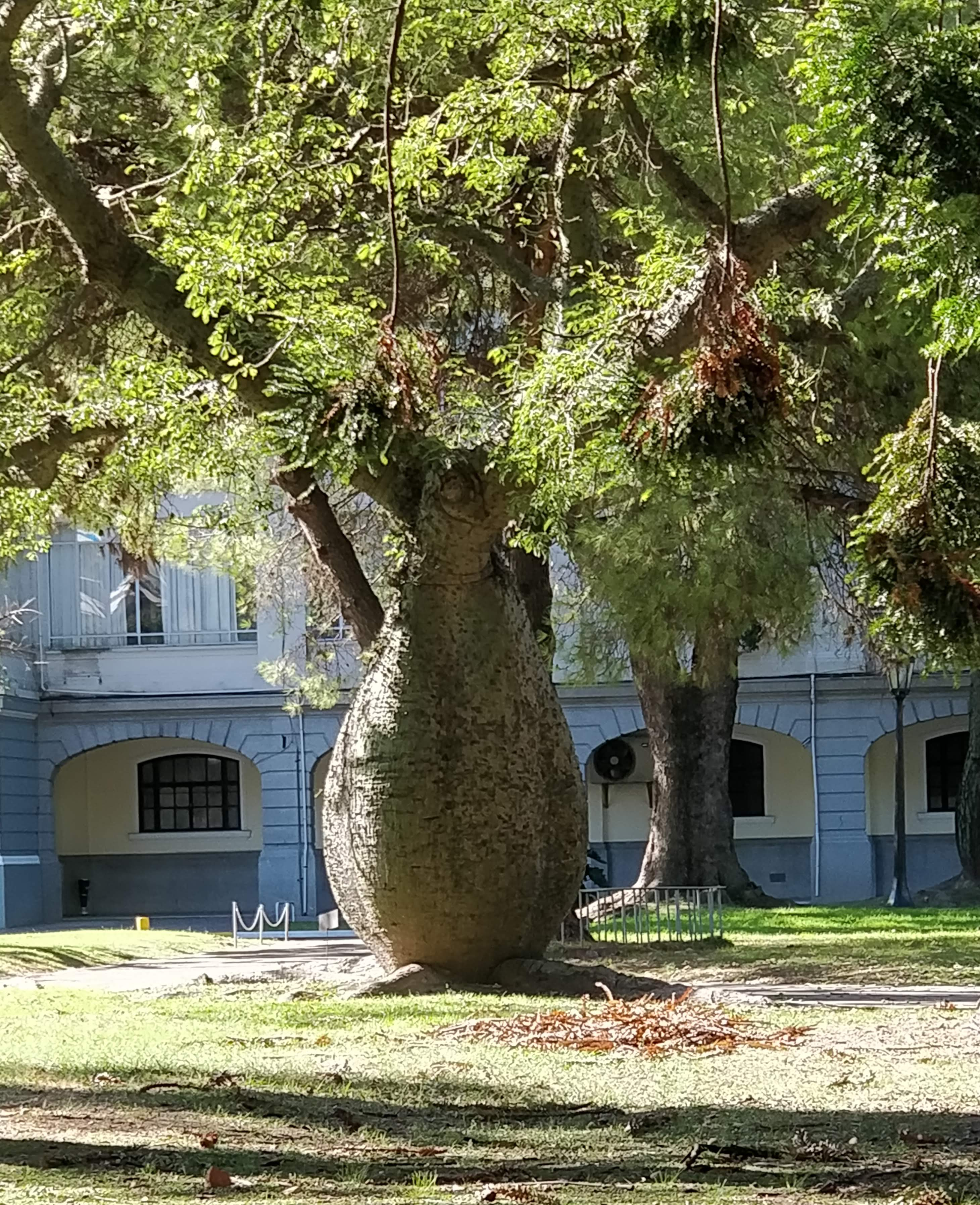
There are a lot of palo borracho trees in the city, but damn if this one (on the grounds of the Museo Historico del Regimiento Granaderos a Caballo General San Martín) isn’t just extra.  “Palo borracho” means “drunken stick,” but the more dignified name for the species is the silk floss tree.  There’s a lot more to this tree than its sexy curves.  The flowers are big and bright pink and the fruits are eight inch long capsules filled with cottony floofy fluff.  There’s just a lot going on there.

img_20190917_120650.jpg

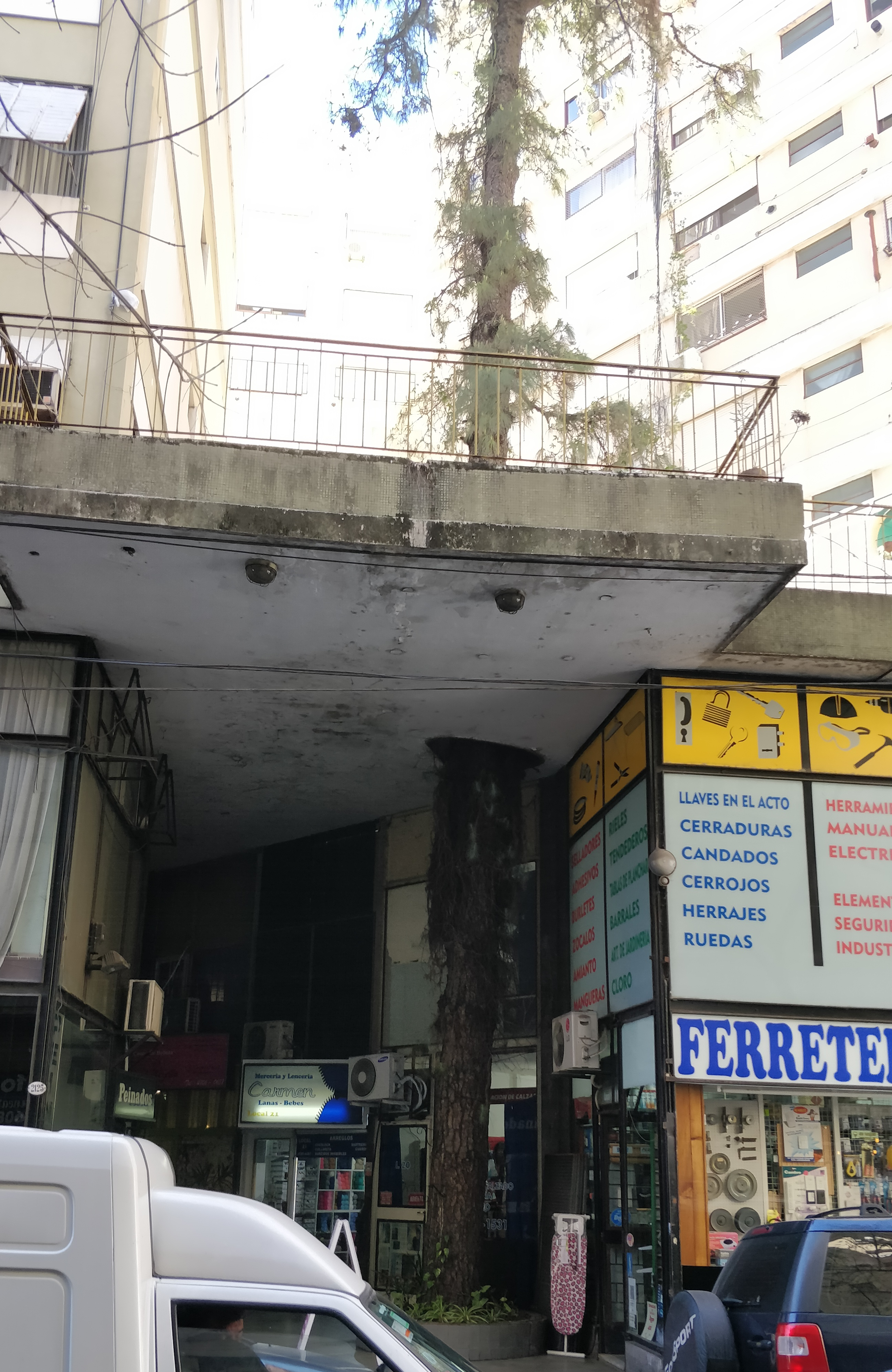
I don’t know anything about this situation, but I find it utterly delightful.

Finally, I give you this little unassuming guy.

img_20190903_115031.jpg

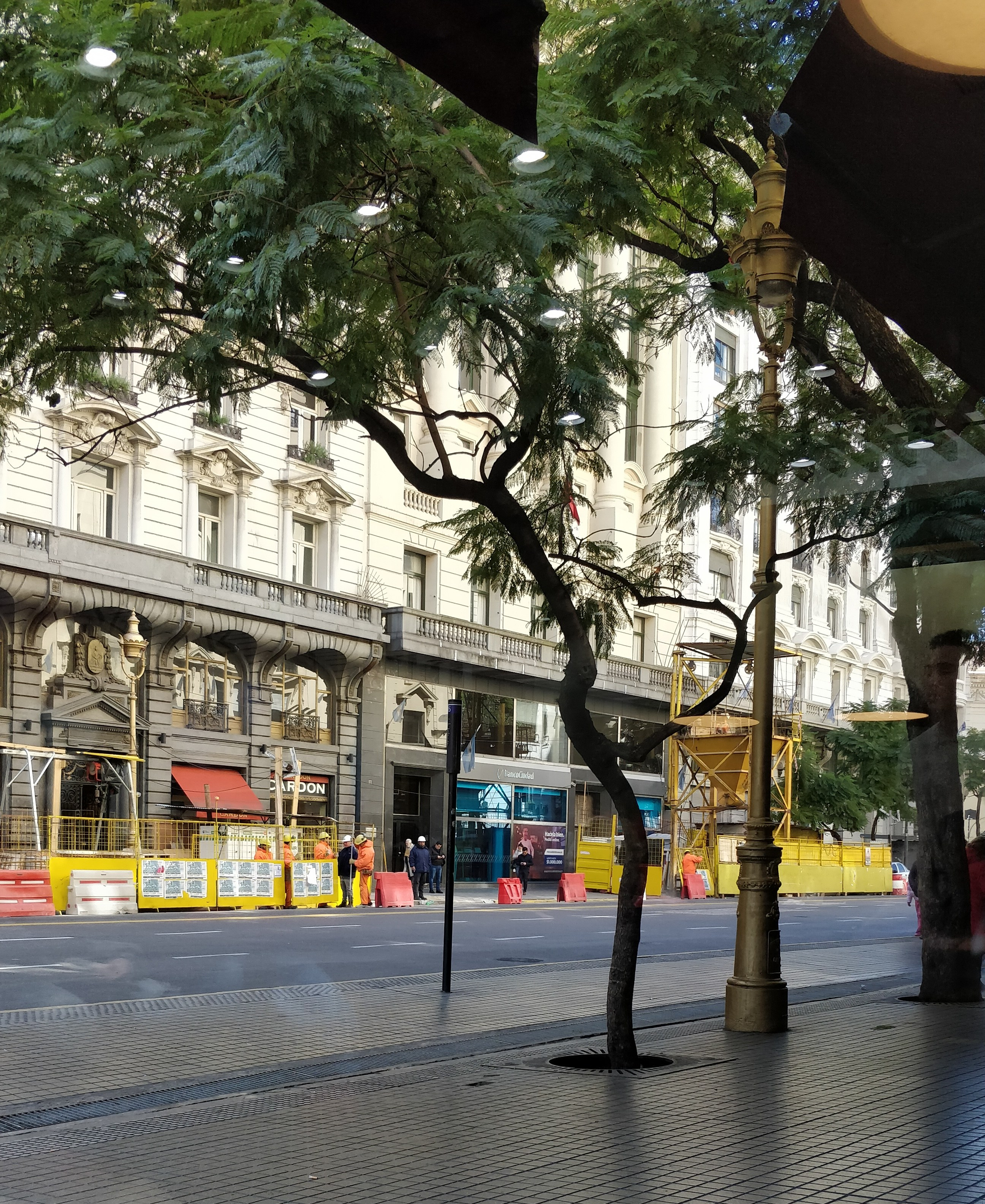
This is a young jacaranda, and it is not shown in all its glory.  There are also many far grander jacarandas in the city.  But this one is right outside the window of a burger joint in Microcentro that I often find myself in when I need a quick bite before hopping on the subway.  I usually sit next to that window, and I’m looking forward to watching my small tree friend bloom in the next month, even if the burgers are decidedly subpar.

So there you have it.  A collection of my favorite trees in the city.  I’ll add the Grand Gomero at the end when I can, but for now, here’s the sign for a shop that combines two things I love most about this city: the trees and the book shops.

img_20190408_160402.jpg


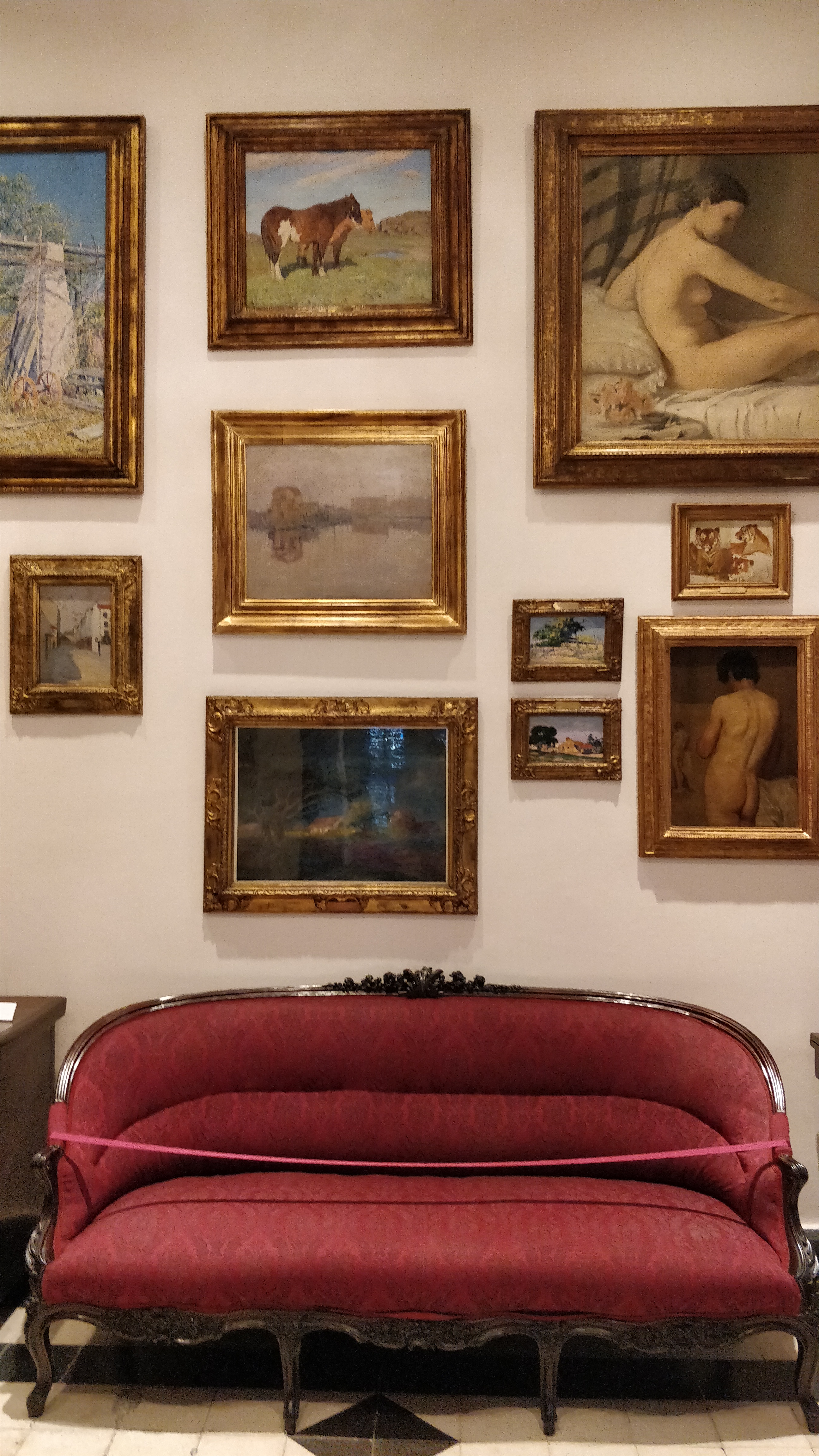
Museo Casa de Yrurtia [Yrurtia House Museum]

HELLO HI

I AM BACK

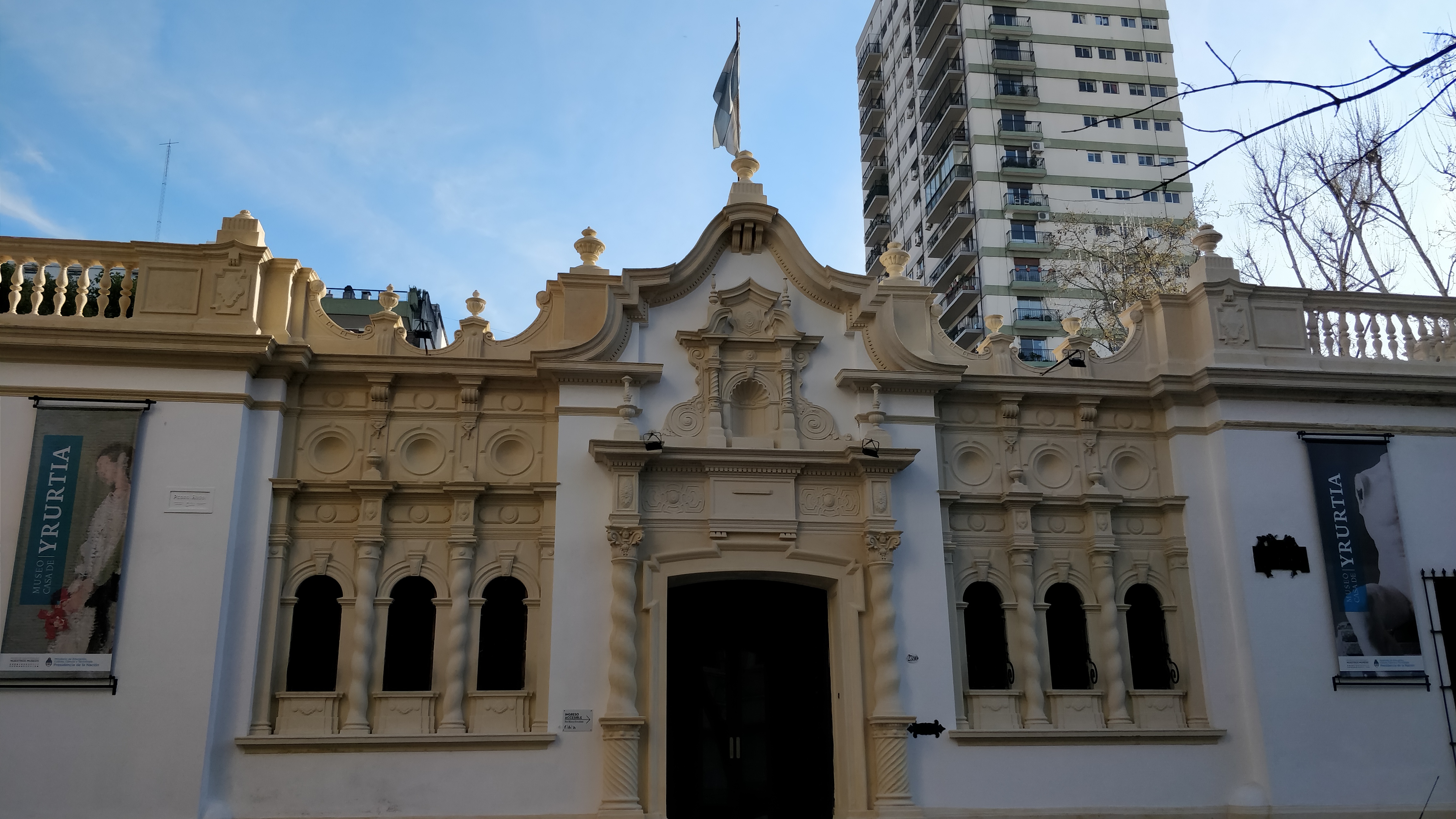
And for today I have the long-closed-for-renovations-but-now-open Casa de Yrurtia!  And it is looking pretty nice after years of closure.

IMG_20190913_164343.jpg
Quaint!

Rogelio Yrurtia was an important Argentine sculptor in the early 20th century.  As a talented young man in 1899, he was awarded a scholarship, on which he traveled to Paris.  He would spend his career moving between Paris and Buenos Aires, where he would be known for his large scale, public works.

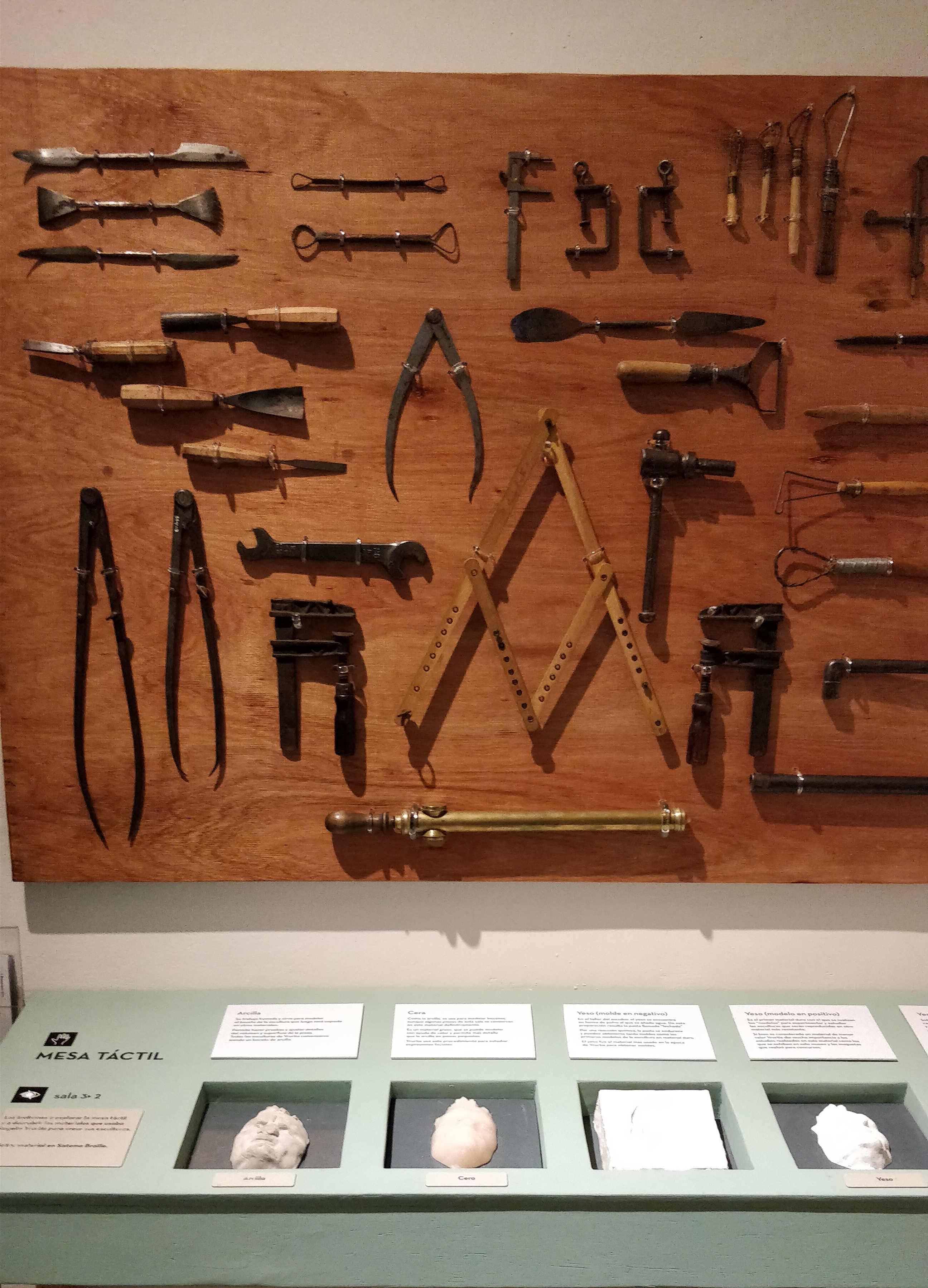
IMG_20190913_162856.jpg
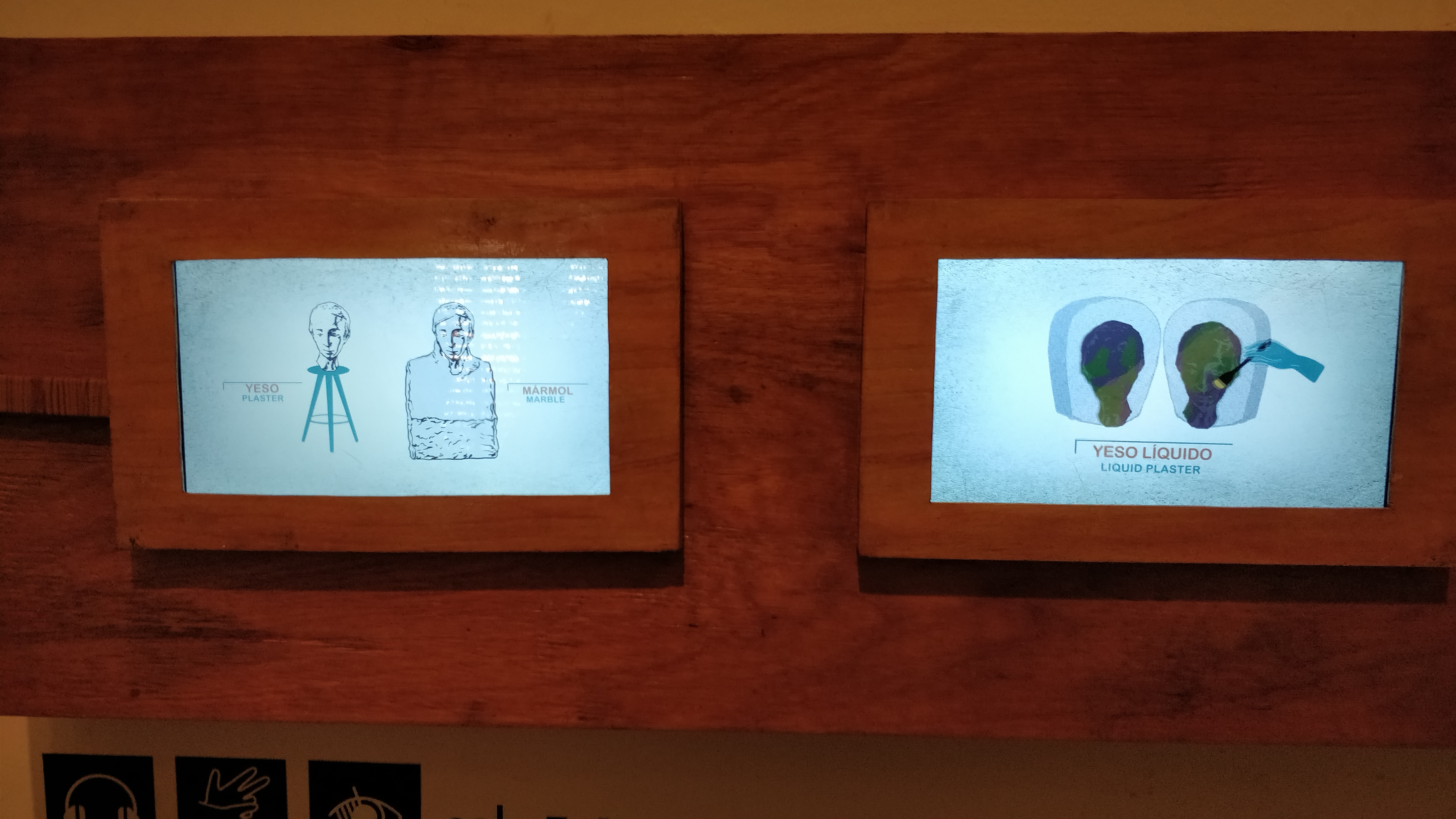
The man’s own tools, and a really nifty table about the sculpting process that visitors can put their grubby fingers all over.

The museum is in the home of Yrurtia and his wife, the also very important artist Lía Correa Morales.  The couple donated the house to the country to establish as a museum.  It opened to the public in 1949; Yrurtia died the following year. Lía Correa Morales then served as the museum’s director.


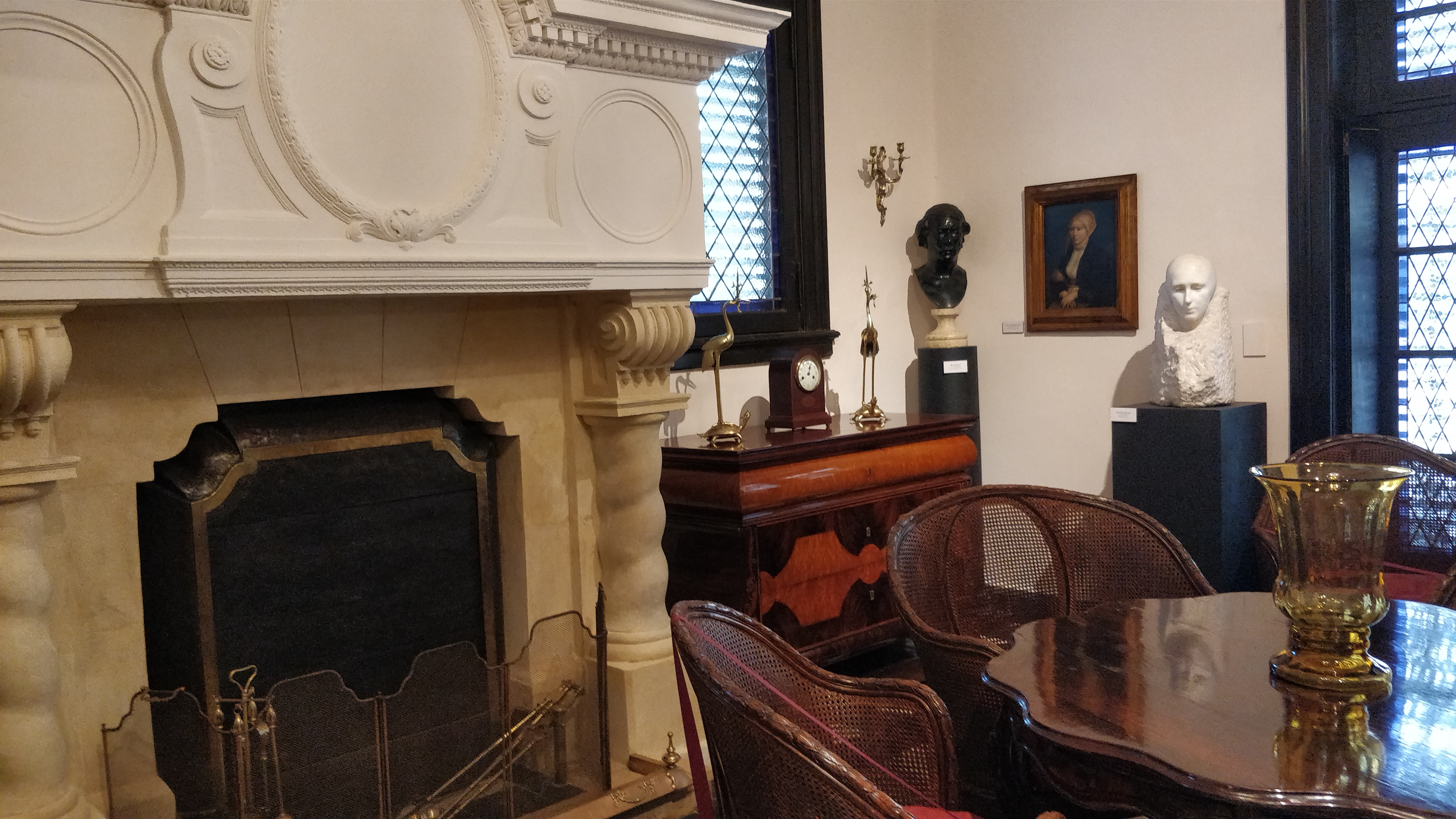
IMG_20190913_160116.jpg
The house side. 

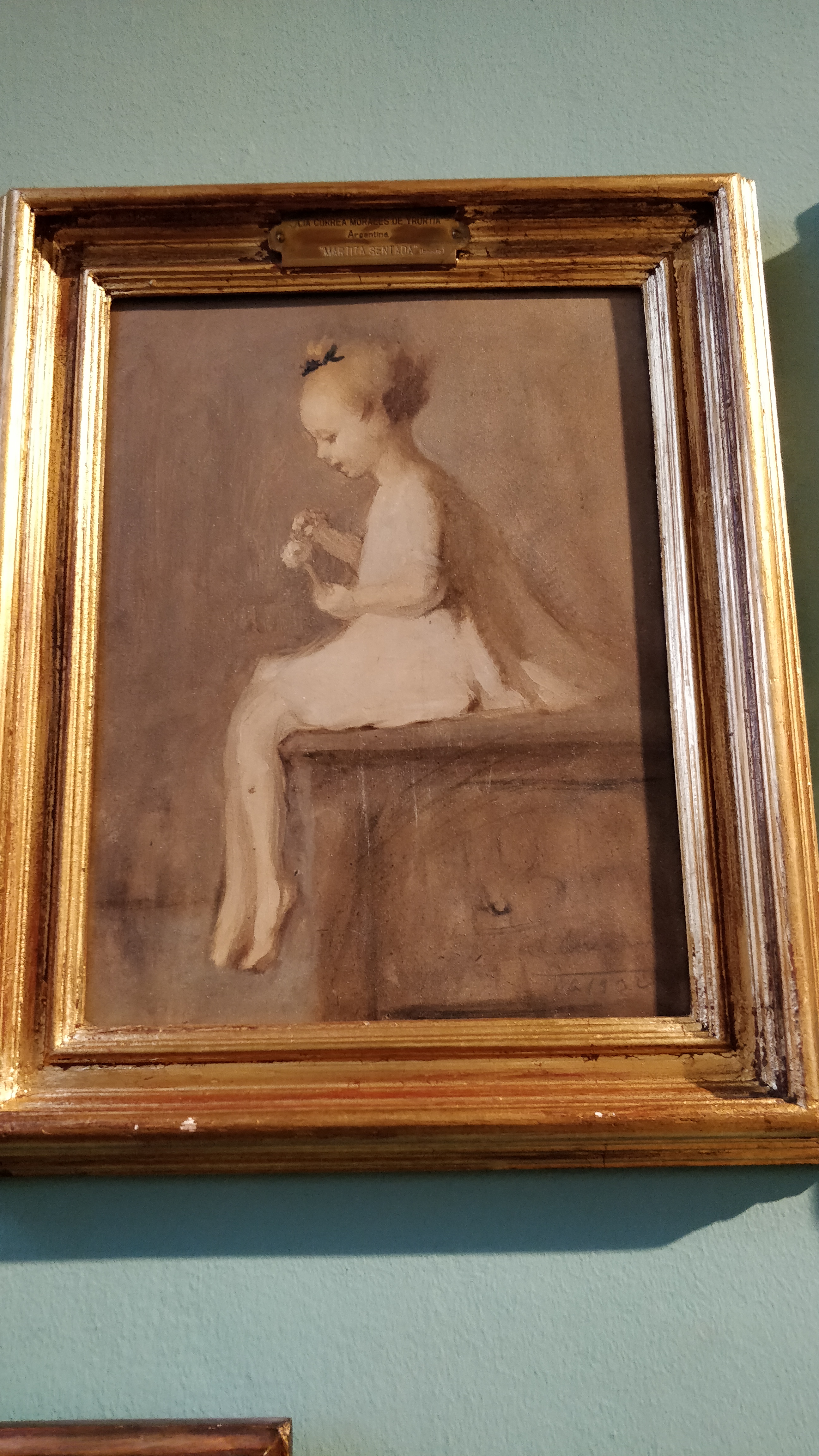
The house rooms include the some of the couple’s own art collection, which I guess is a big plus to having a lot of artist friends.

IMG_20190913_160254.jpg
Yeah well *I* have a bunch of pretty cool postcards.

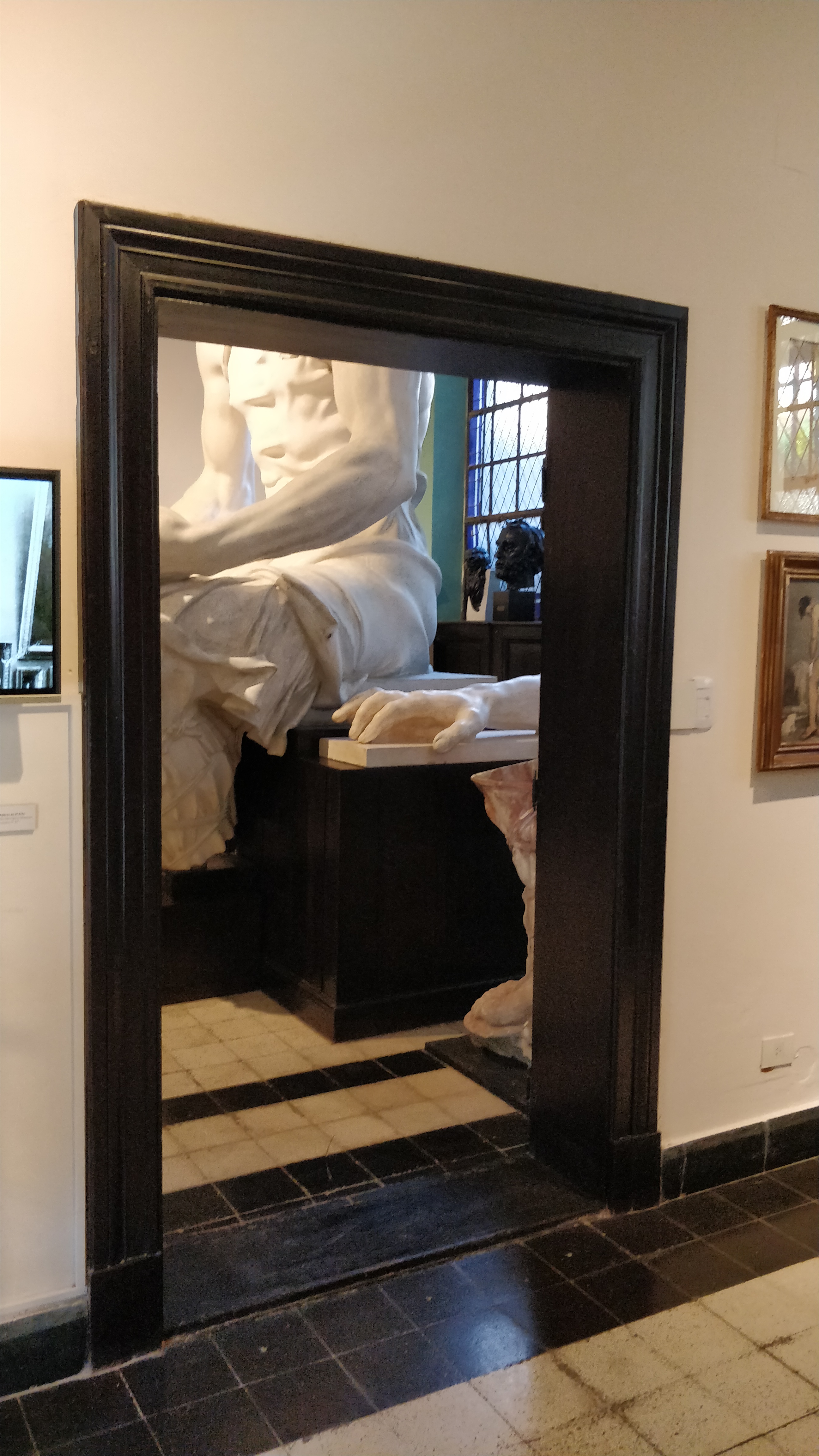
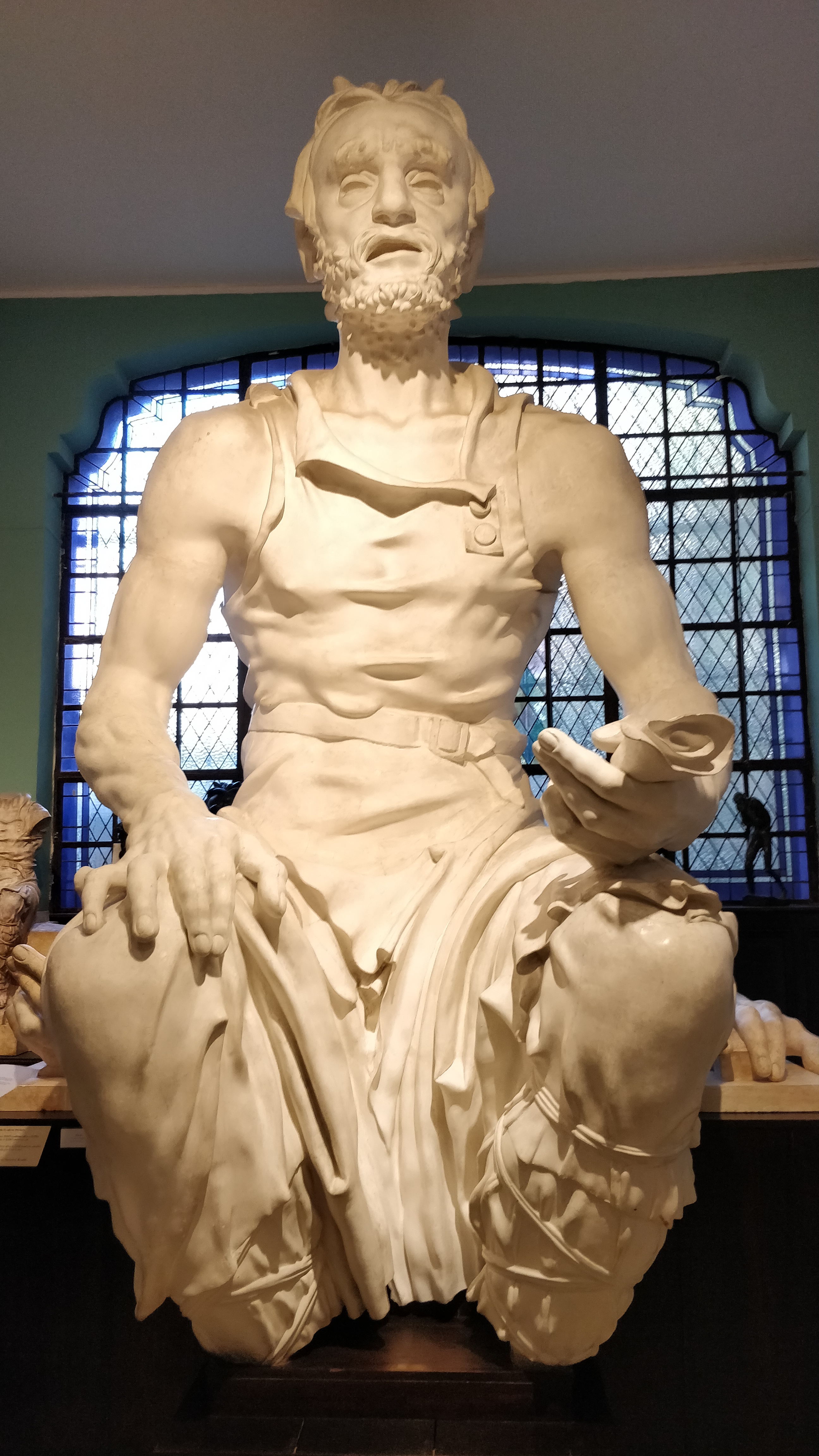
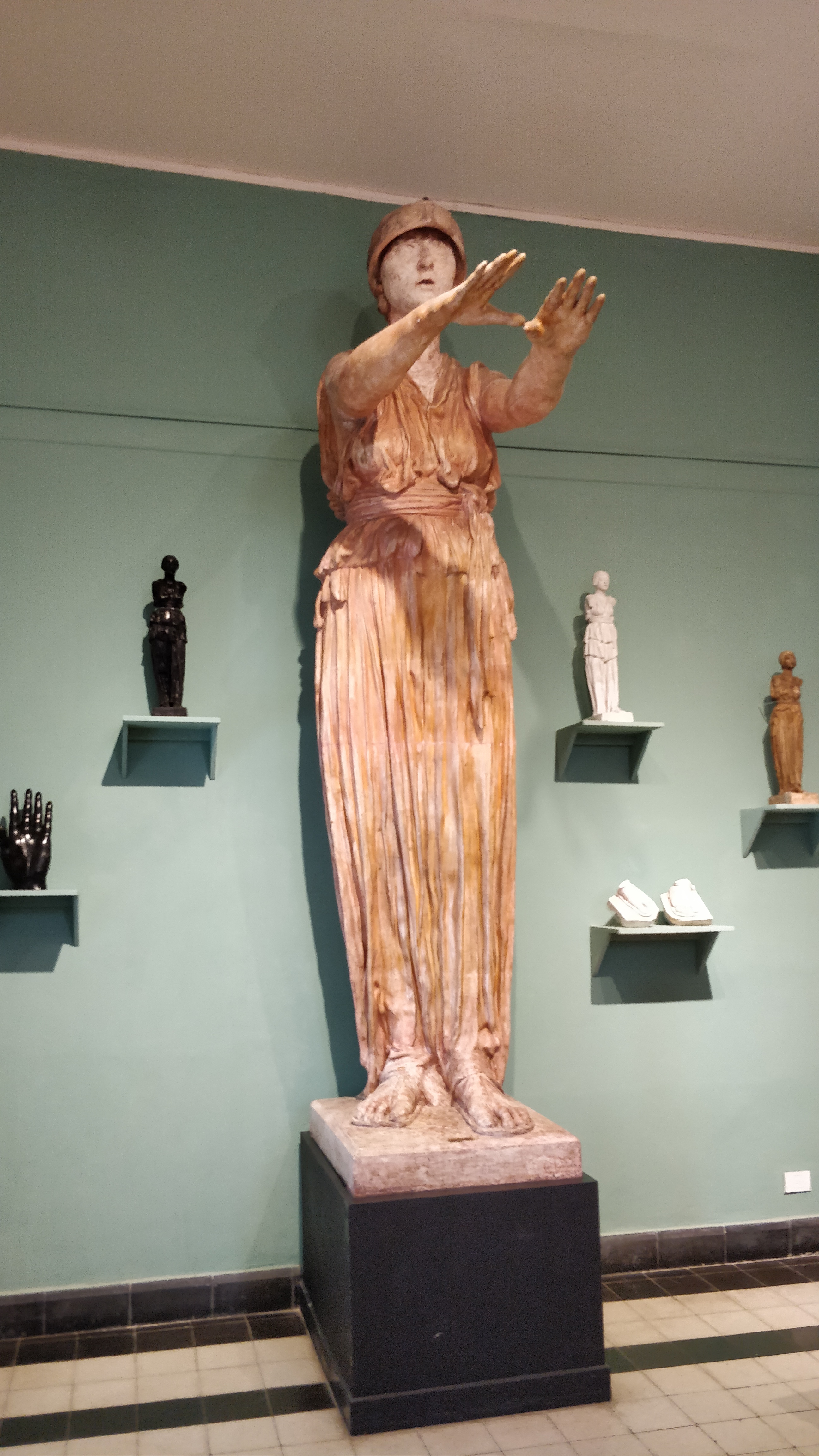
The collection on display isn’t really extensive, but it is really interesting and frequently huge.  Stands to reason; Yrurtia was a big deal in public and monument art.  Maybe you think it’s kind of a juvenile assessment, being stuck on the size, but that’s probably because you haven’t been in the same small room as stuff that was designed to be viewed from far away.

IMG_20190913_162044.jpg
That is a normal-sized doorway.

At a certain point, the size is kind of an overwhelming feature.

IMG_20190913_162326.jpg
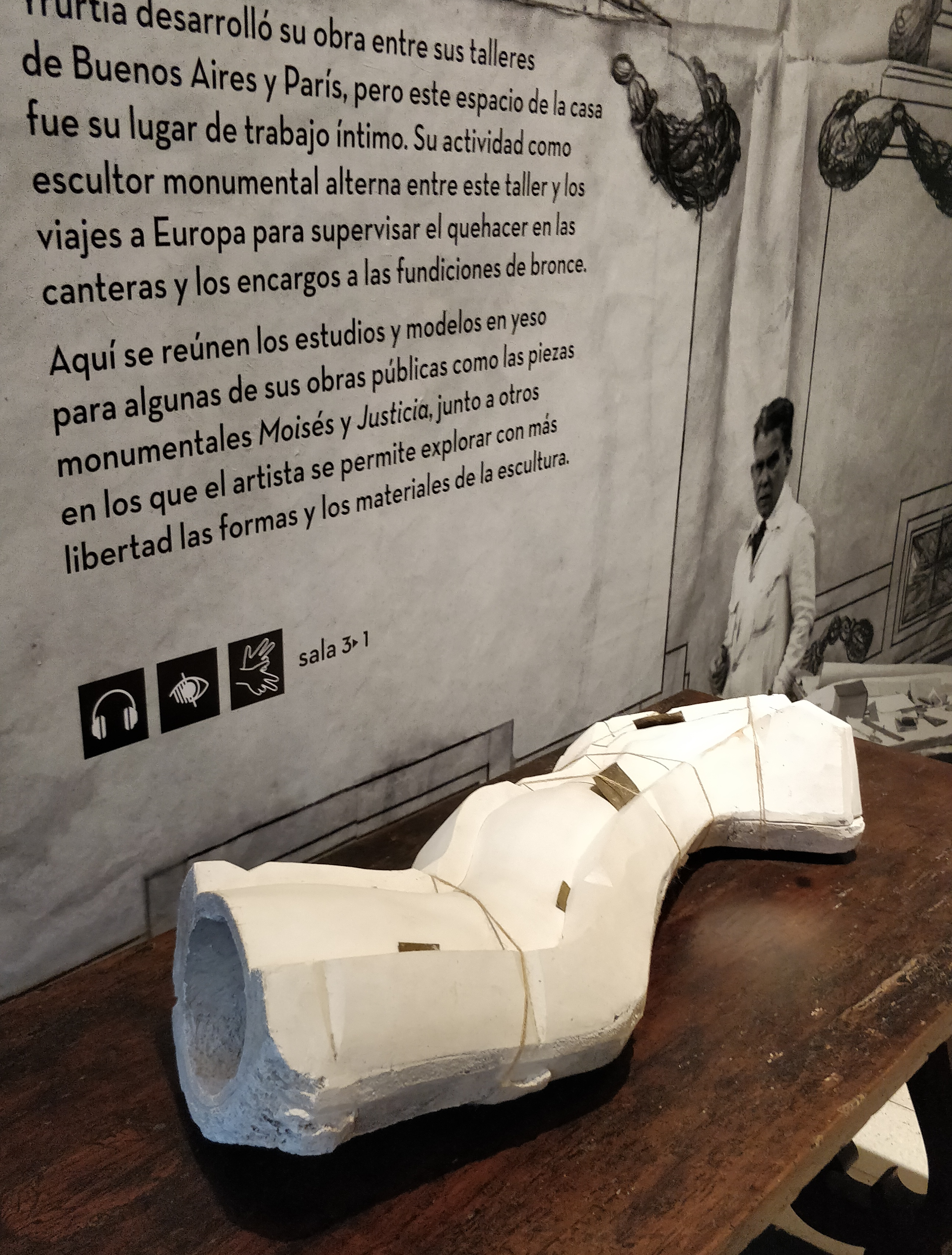
A study for a big Moses.

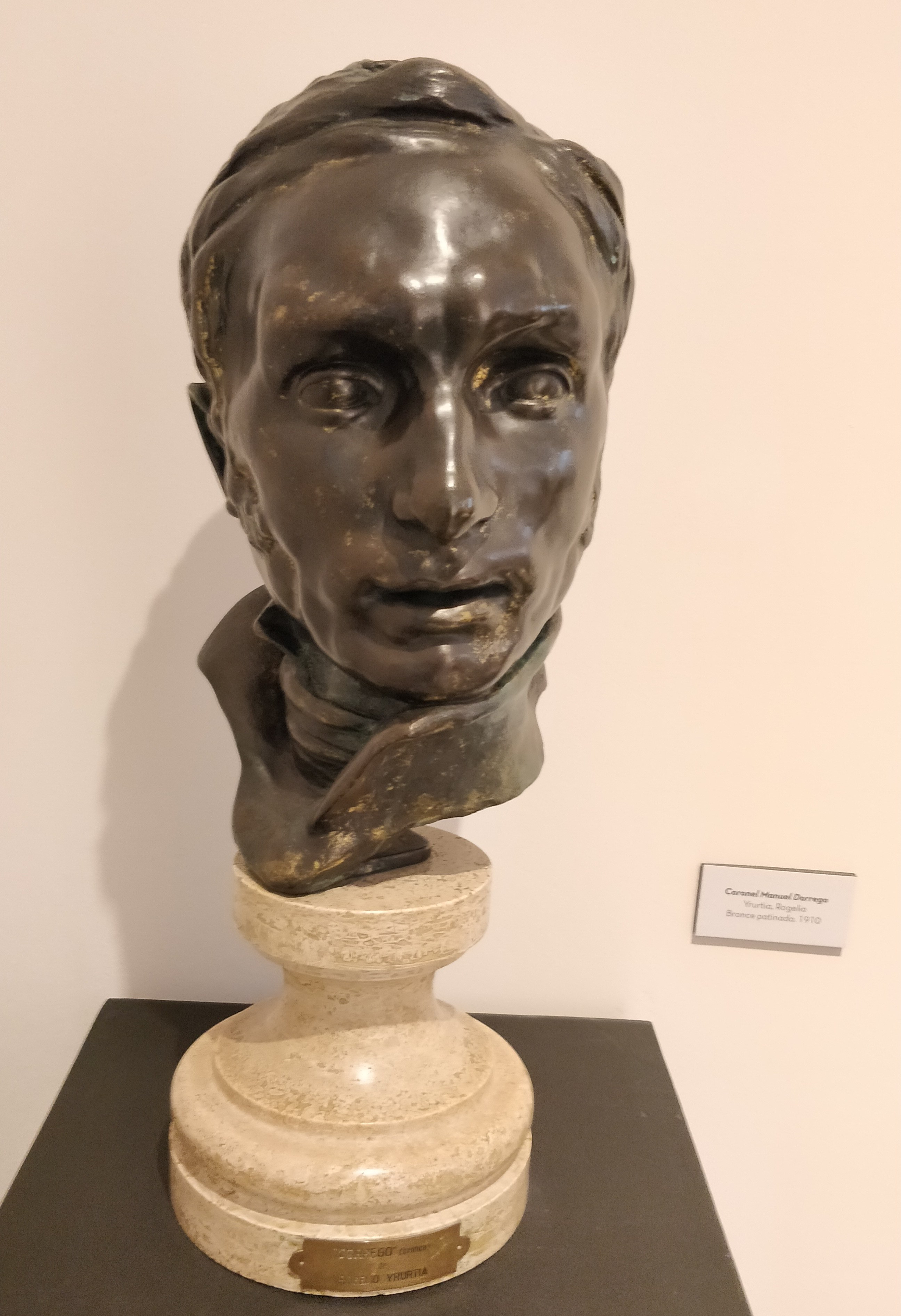
Yrurtia created a monument to Manuel Dorrego, who had (stay with me here, Argentine history is kind of dramatic) opposed the government of the first president, Bernardino Rivadavia, and was named governor of Buenos Aires province following Rivadavia’s resignation.  Dorrego himself was not long after overthrown and executed in 1828.

img_20190913_161723.jpg
He’s interred in Recoleta cemetery.  And so is the guy who executed him.  And Founding Father José de San Martín, who had been in Europe, took one look at the whole mess, declined to get involved and went back to Europe.

Incidentally, Yrurtia also sculpted the tomb of Bernardino Rivadavia, which is in Plaza Miserere.

img_20190918_110341.jpg
He specifically asked that his body not be returned to Buenos Aires after he died (in Spain), but alas.

And here is a Justice (commissioned by super rich guy Carlos Delcasse for his tomb and copied in bronze for the national Supreme Court), depicted non-traditionally, without scales or blindfold.

IMG_20190913_162348.jpg
But also kind of like she’s going to strangle you?

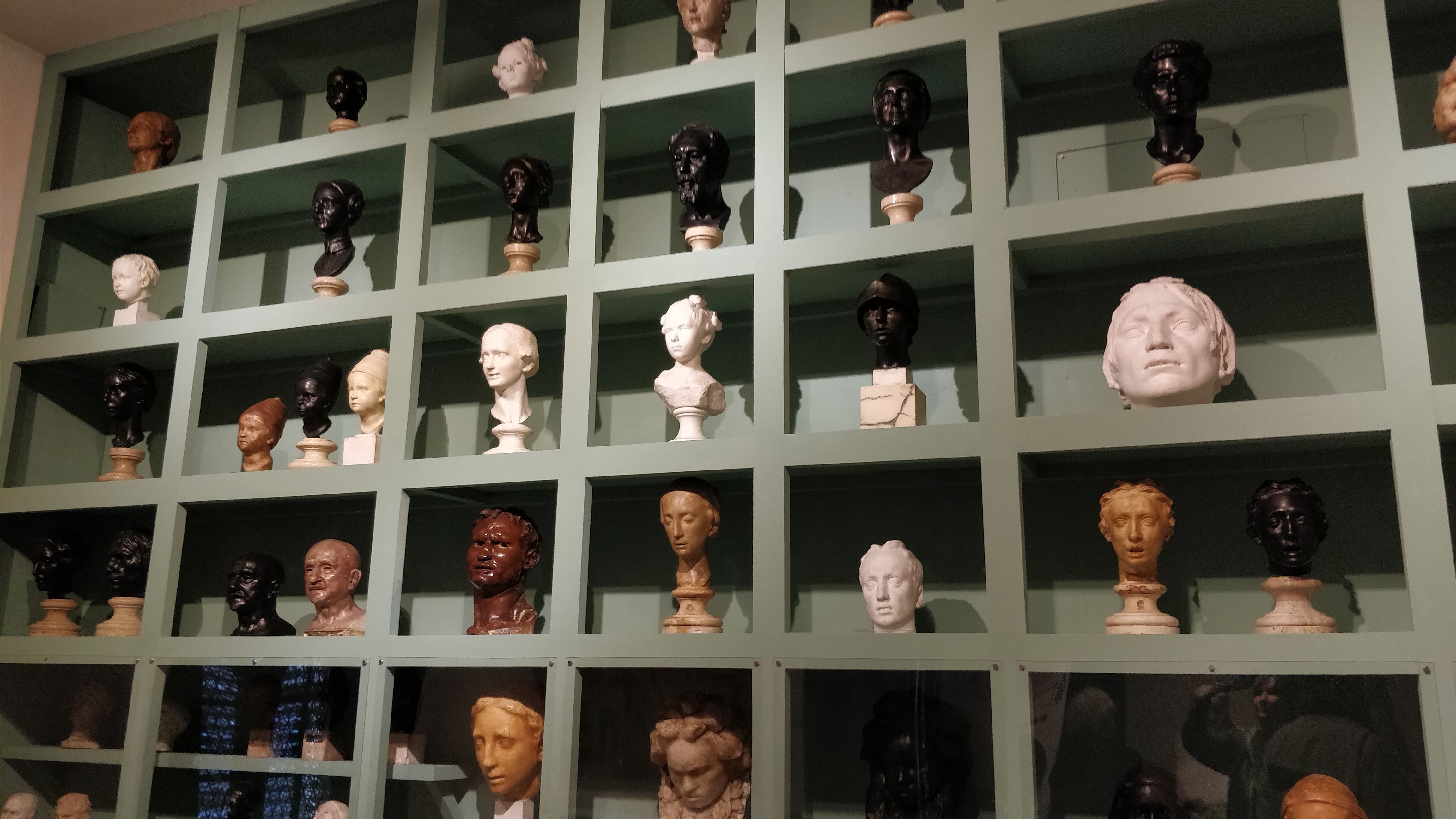
The museum also shows how the sausage is made, sculpture-ly speaking, which I recall reading somewhere was part of the point of the museum’s creation (as the house was also his workshop) but now I can’t find the source for that.

IMG_20190913_162818.jpg
How to get a “head” in sculpture lololol

IMG_20190913_162754.jpg
These are videos of the process.

img_20190913_162341.jpg

The museum does have a room about Lía Correa Morales, which it should, as she was also an important artist and doesn’t even get her name on the museum itself.

IMG_20190913_162006.jpg

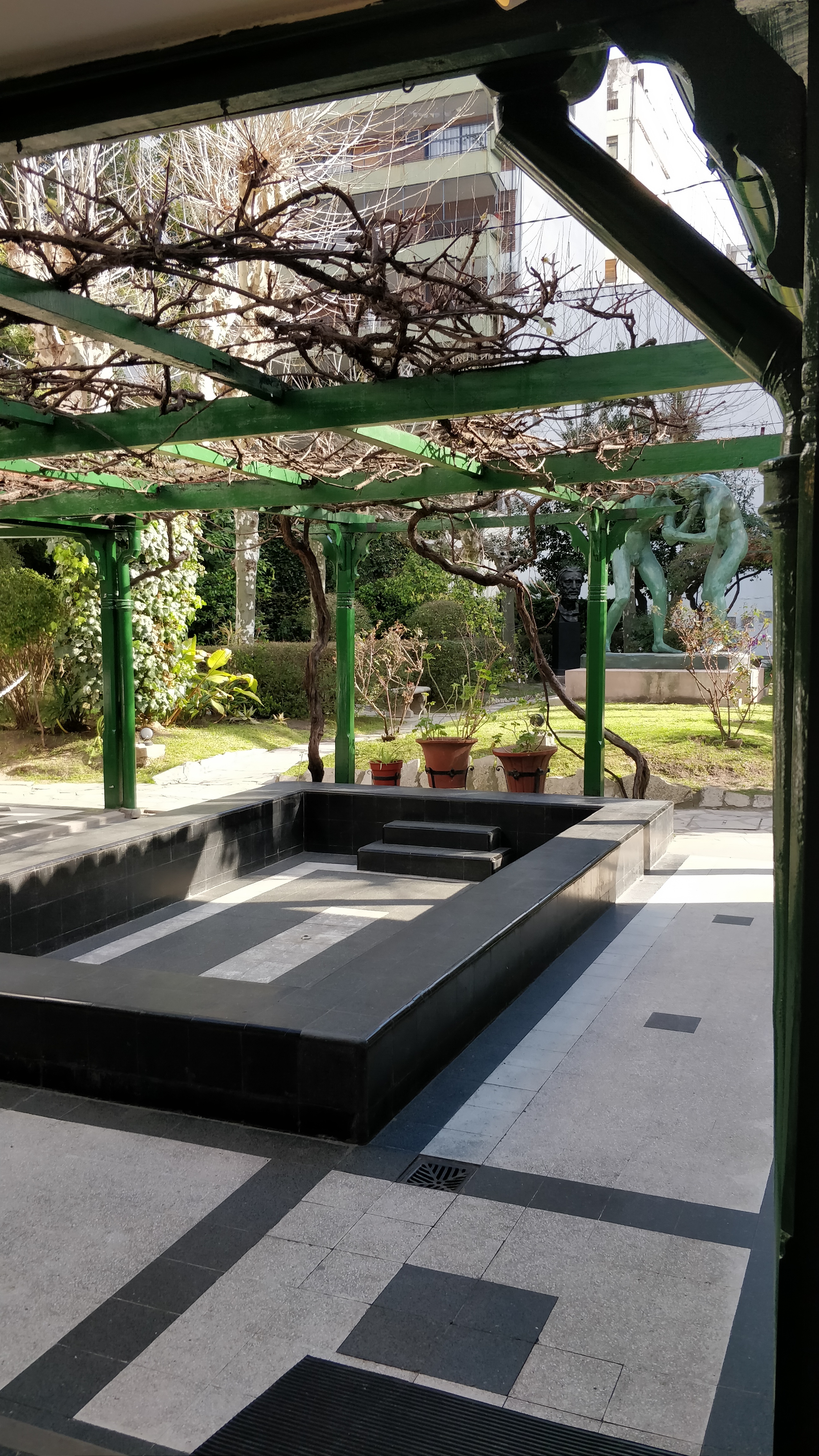
Finally, the house has a sweet garden, in which stands one of Yrurtia’s last works, The Boxers.

IMG_20190913_161039.jpg
Uh, it’s in the back there.

Like most (all?) of the small, state- or city-run museums, this one also hosts workshops and events.  The staff is very nice!  There wasn’t any English material on hand, so they printed out some translations for us.  The museum is in Belgrano, not terribly far from the D subway line, and open Wednesday through Friday from 10am to 6pm and Saturday and Sunday from 11am to 6pm.


Tinytour: Museo de Arquitectura y Diseño [Museum of Architecture and Design]

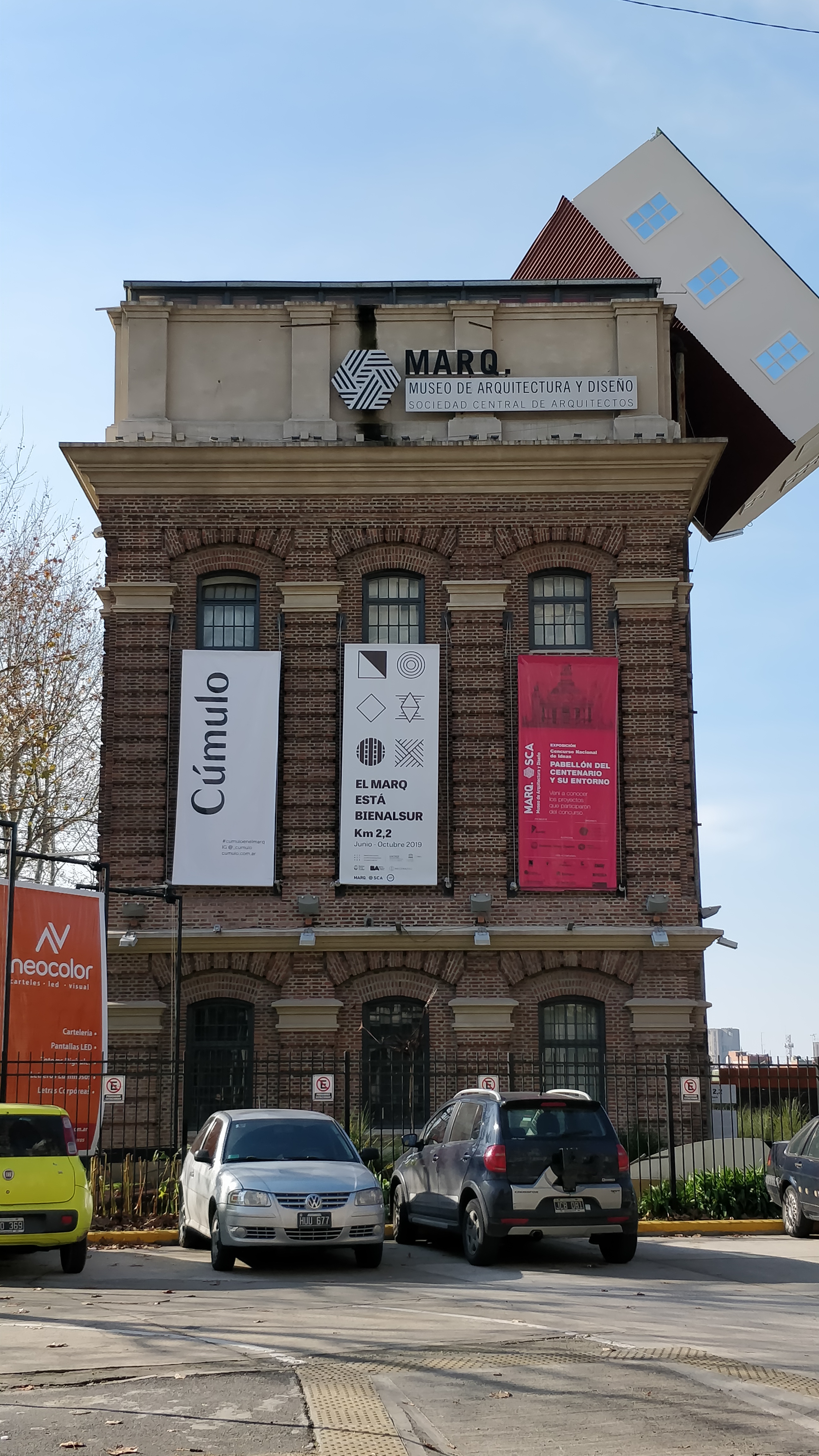
The MARQ is a small building that seems to be used primarily as temporary show space.  It’s the only architecture museum in the country.  The building dates from 1915 and used to be the water tower for the Retiro train station.  It is currently one of the sites of a BIENALSUR contemporary art installation called “House Attack.”
IMG_20190719_142437.jpg
The MARQ building, having a normal one.

The exhibition, called Invading/Resisting, is also tied to BIENALSUR.  It’s a multimedia collaborative work on the interplay of the actions of humans and the natural world.

IMG_20190719_143101.jpg
ATMOSPHERE.

IMG_20190719_144203_01.jpg
    

IMG_20190719_144100.jpg
   

This is a Tinytour because it’s a wee space!  You’ll just have to see what’s showing when you’re looking to go.

The MARQ is open Tuesday through Sunday from 1pm to 8pm.  It’s located near Retiro train station.  Admission is free and they have a tiny swag store, and I honestly respect the hustle.

Museo River Plate [River Plate Museum]

It’s hard to explain football culture to people who weren’t raised in places so deeply entrenched in it.  I certainly don’t understand it fully myself.  So, before I jump in here, allow me to create a bit of context.

Club Atlético River Plate and Club Atlético Boca Juniors are the biggest teams in Argentina, with a long and storied rivalry.  For utterly bananas reasons you can read about here, the 2018 Copa Libertadores Final’s second leg between River and Boca was played not in Buenos Aires, but Spain.  River won that game and the Cup, and this was a restaurant I happened to be near at the time (I live in the area of the River stadium).
So.  River Plate and Boca Juniors are kind of a big deal.

The athletic clubs are entire ecosystems, with different sports and teams and members and fans–but the team that is synonymous with the club name is the senior men’s football team.  The stadium museums are focused on them.  Which leads me to:

IMG_20190710_135726.jpg

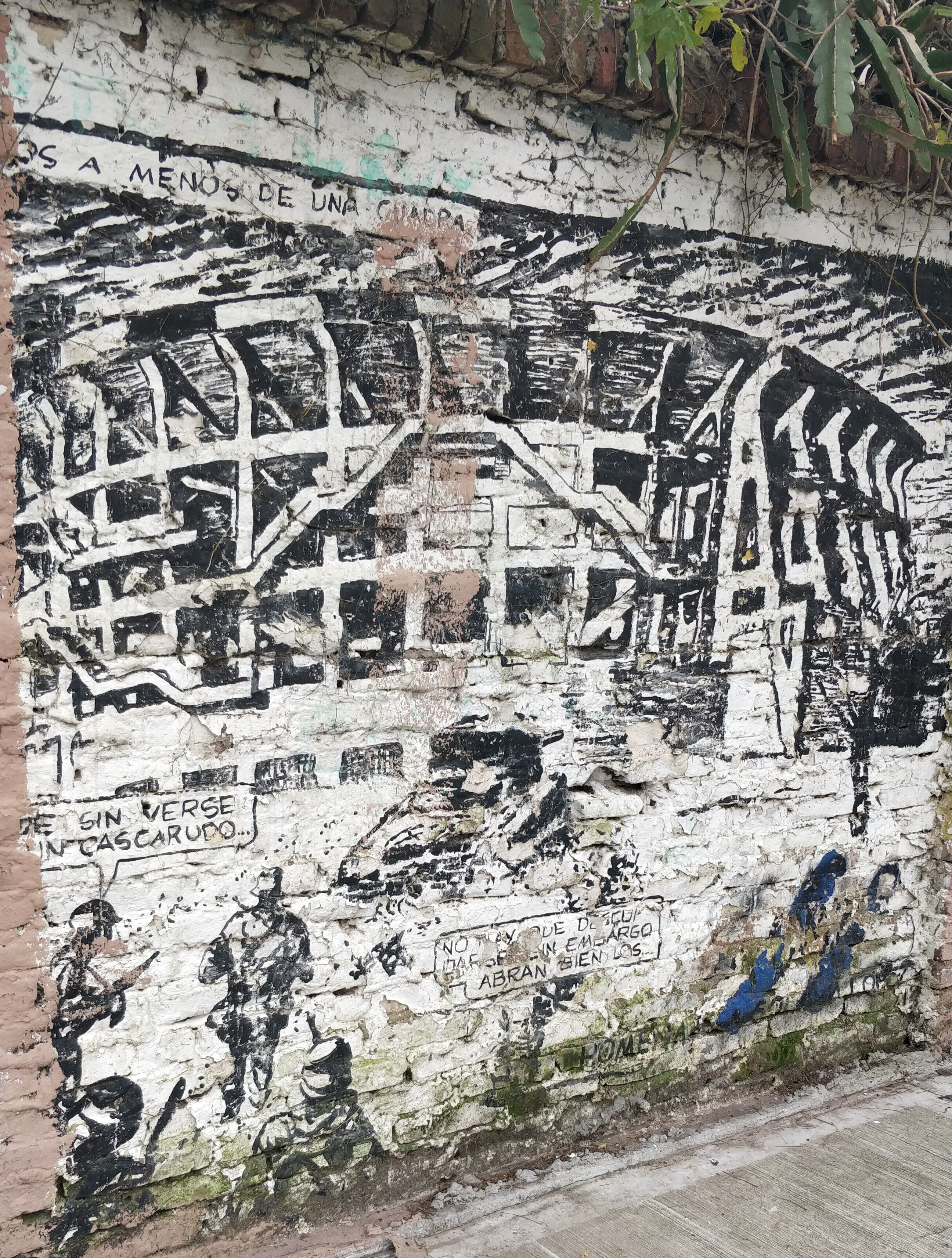
The Museo River Plate is at the stadium, which has one large, non-sports-related claim on my interest:  Estadio Monumental is a major setting in The Eternaut, a famous Argentine sci-fi comic.

img_20190710_140509-e1562896908762.jpg
As seen in a mural near The Monumental.

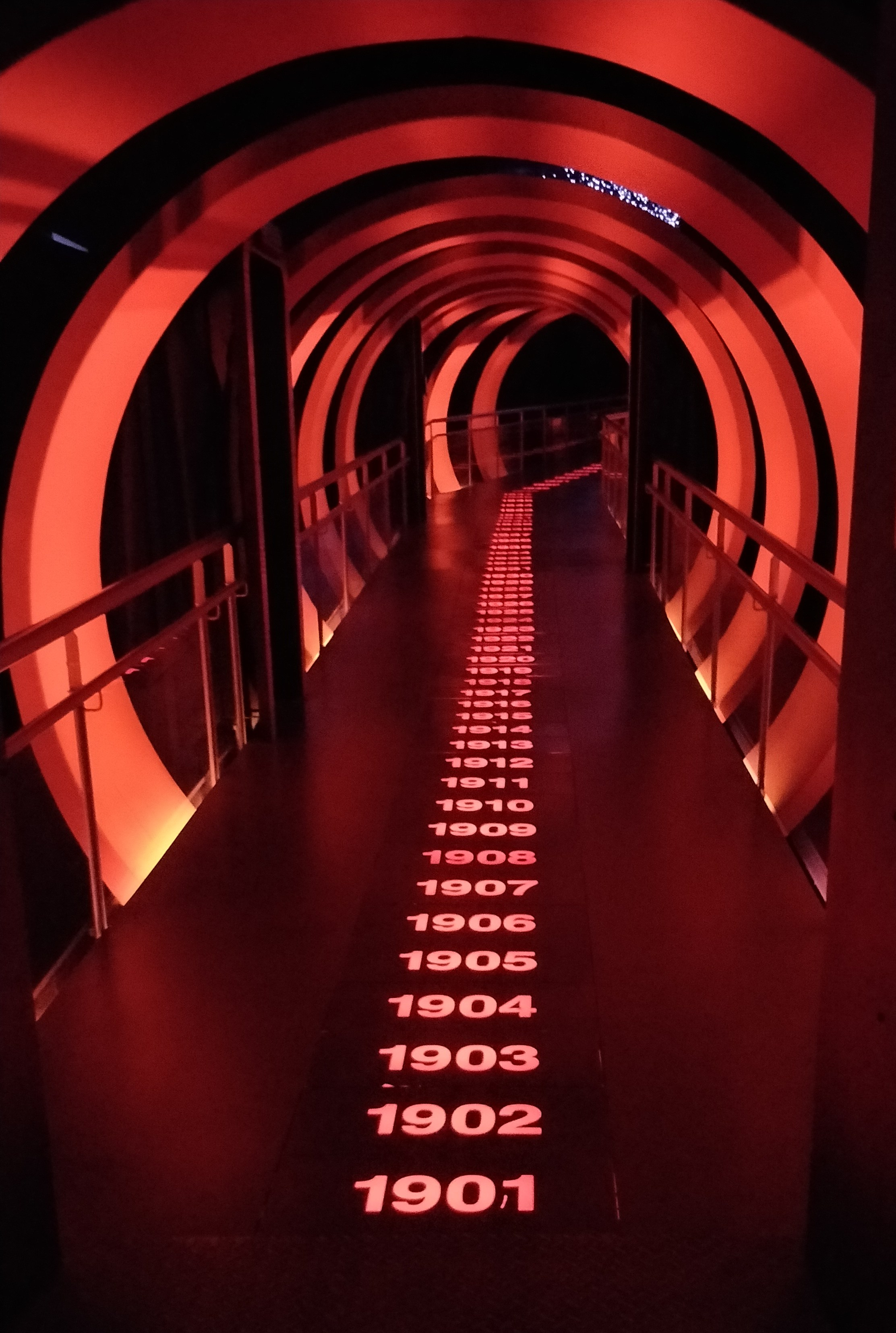
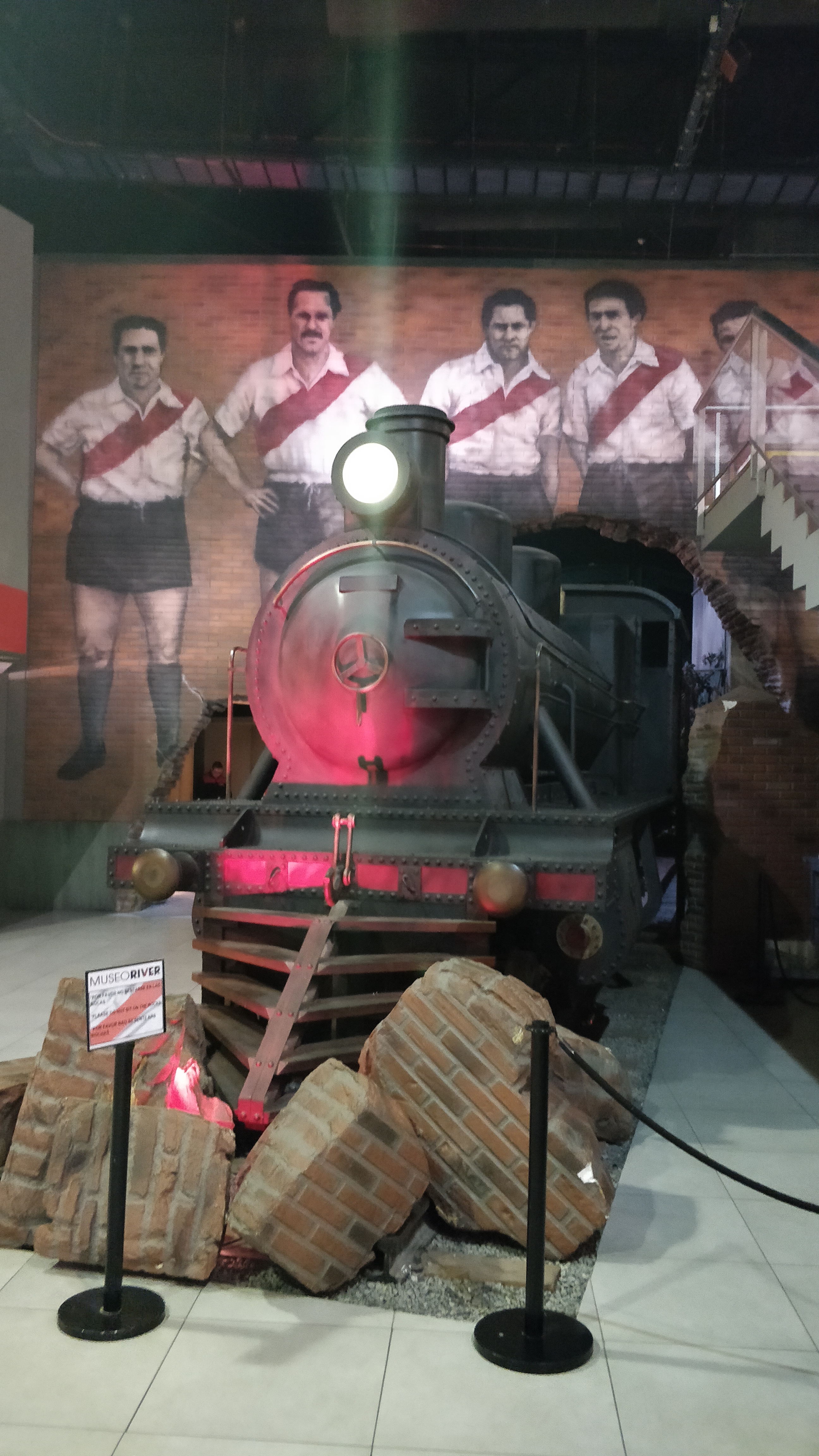
But on to the museum.  It begins with a futuristic look back at the team’s past.

img_20190710_131814.jpg

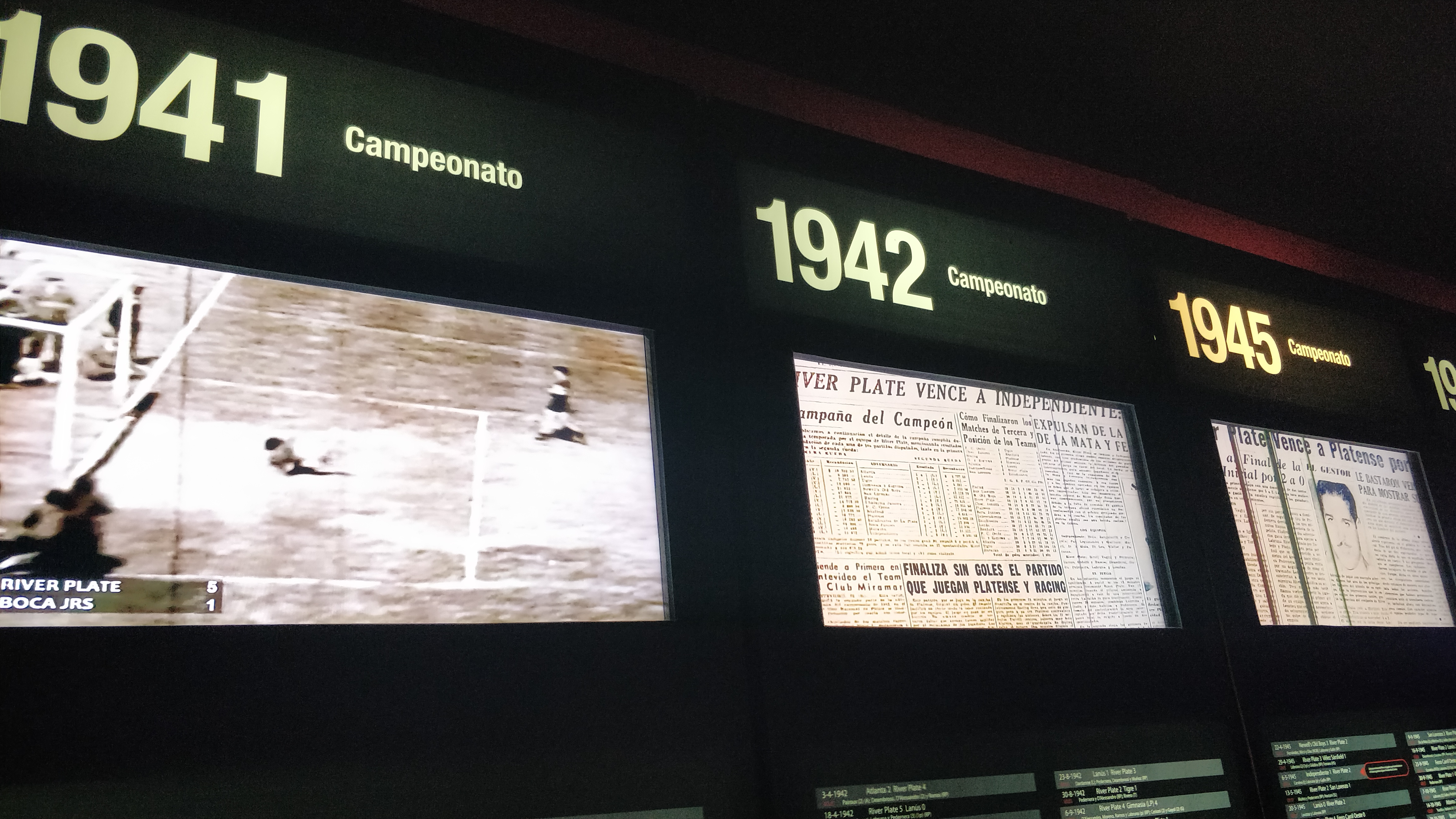
Those black tunnel-looking rooms to the sides give the team’s history and its wider context in that particular decade, and, given the dearth of artifacts, it does a creditable job of giving a physical sense to long history.
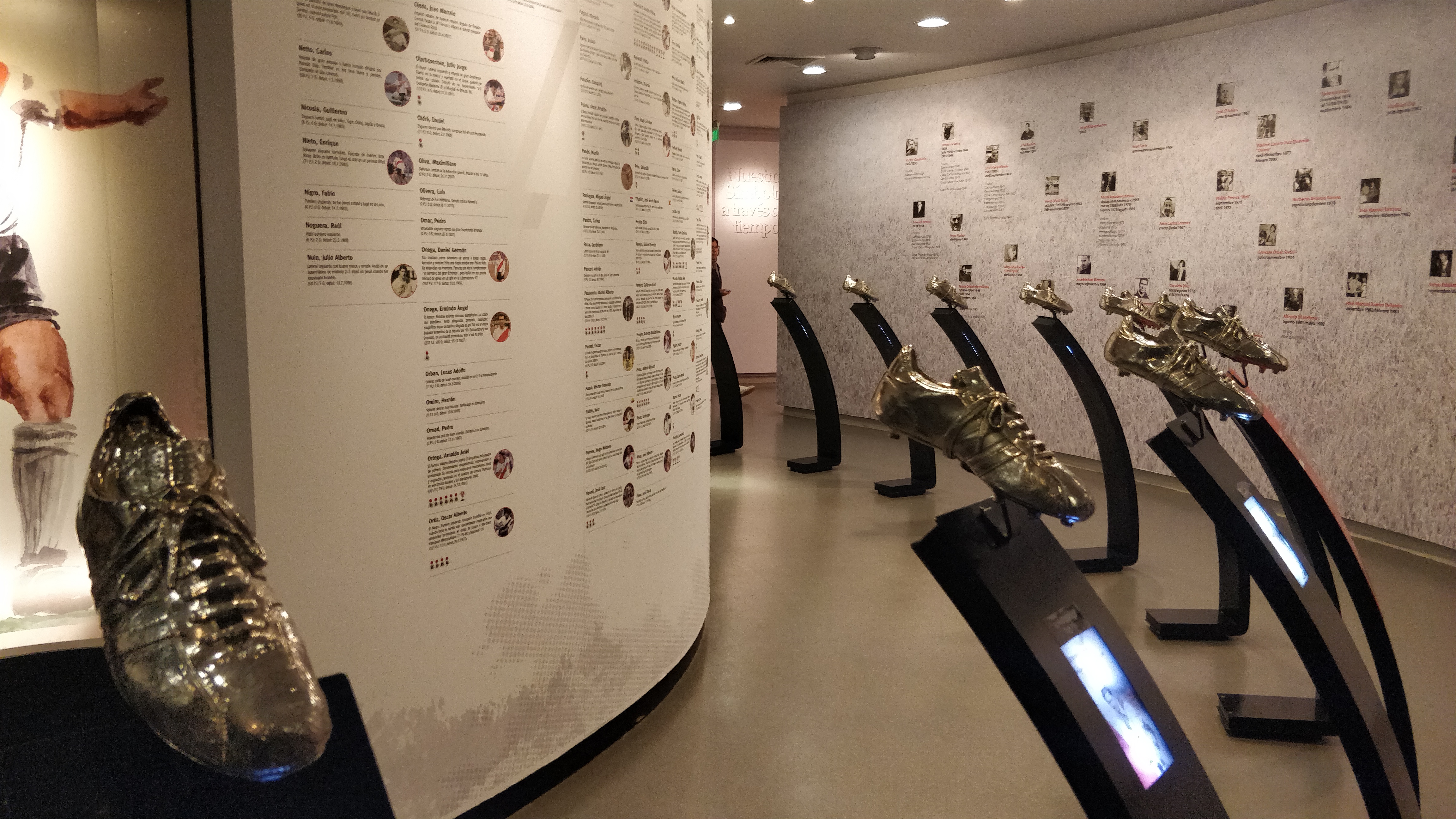
IMG_20190710_132255.jpg

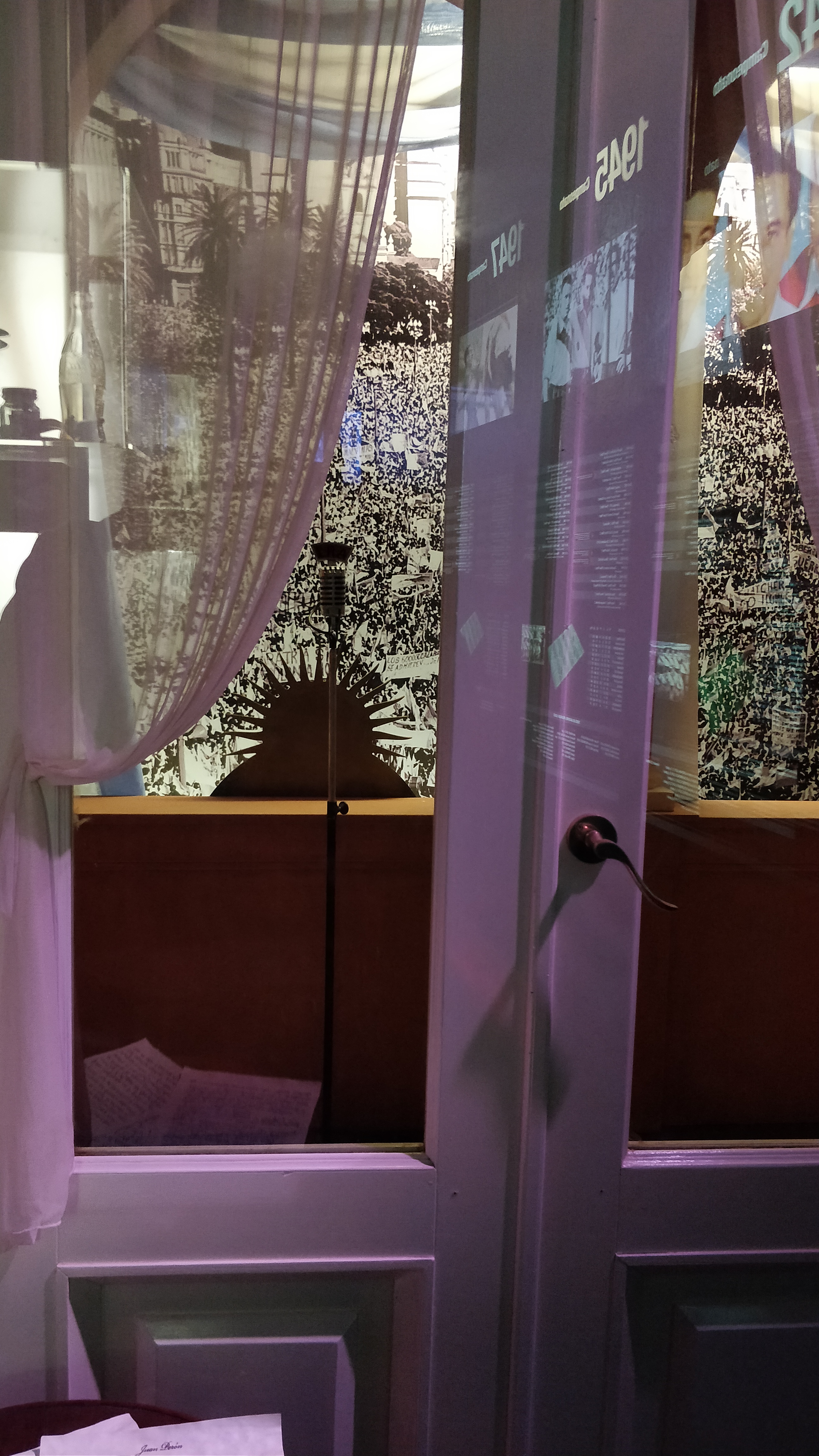
Each of the tunnel rooms has some information about the teams of the time, and also a diorama that shows a notable non-soccer scene of the era.  For instance, for the 40s, you have the above team stuff, and also a balcony set for a Perón speech.
IMG_20190710_132304.jpg
Glare, glare, everywhere.

The stadium was also the site of Argentina’s win of the 1978 World Cup (the national team still plays its home games here).

IMG_20190710_132709.jpg
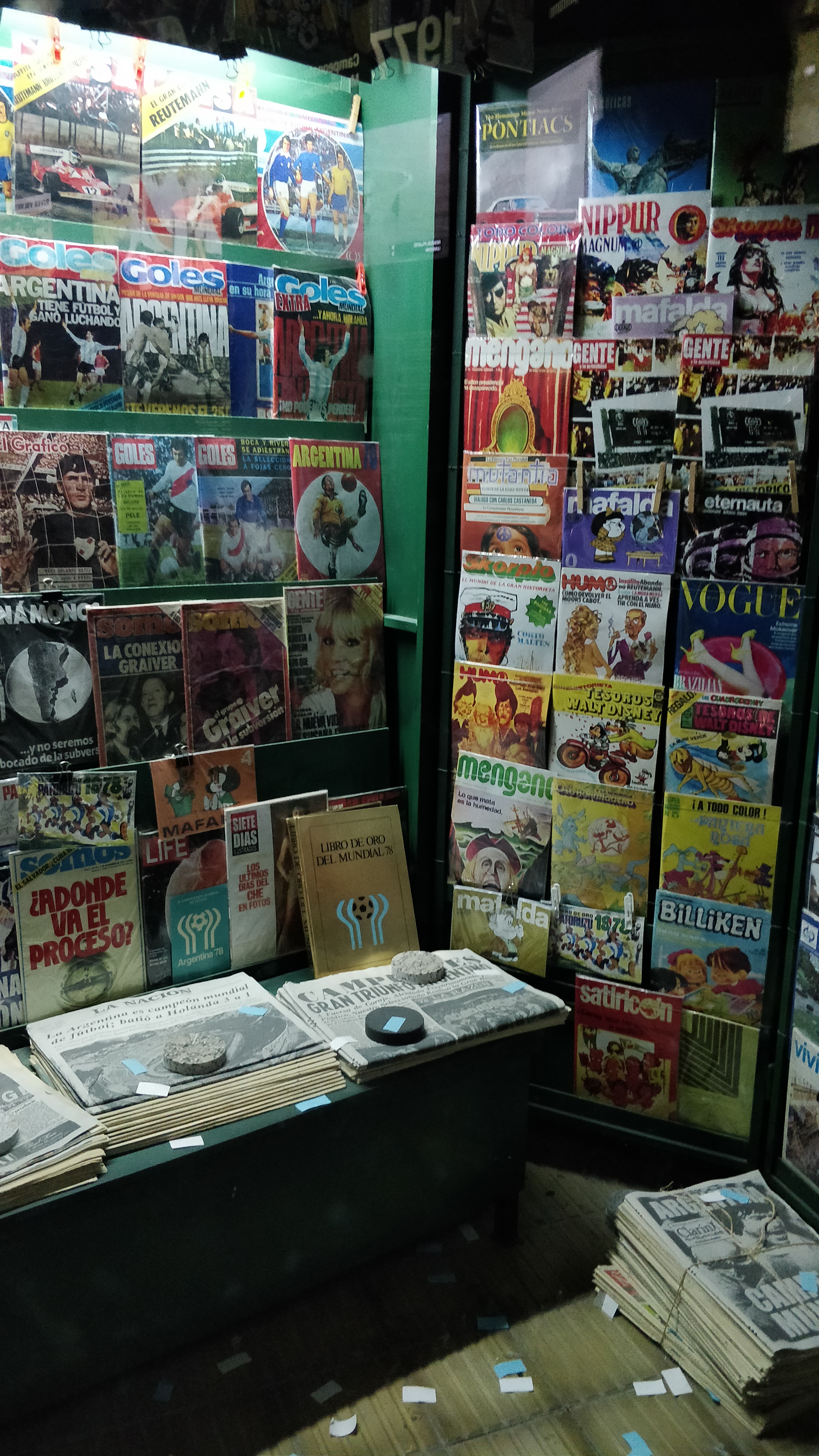
The 70s diorama is a newsstand (also haven’t really changed), and it includes a nod to “The Eternaut” (on the right, above the Vogue), which feels a bit poignant, as the author was disappeared and murdered by the military dictatorship in power at that time.

Eventually, the tunnel ends and you’re deposited among several years’ worth of team hardware.

IMG_20190710_133150.jpg

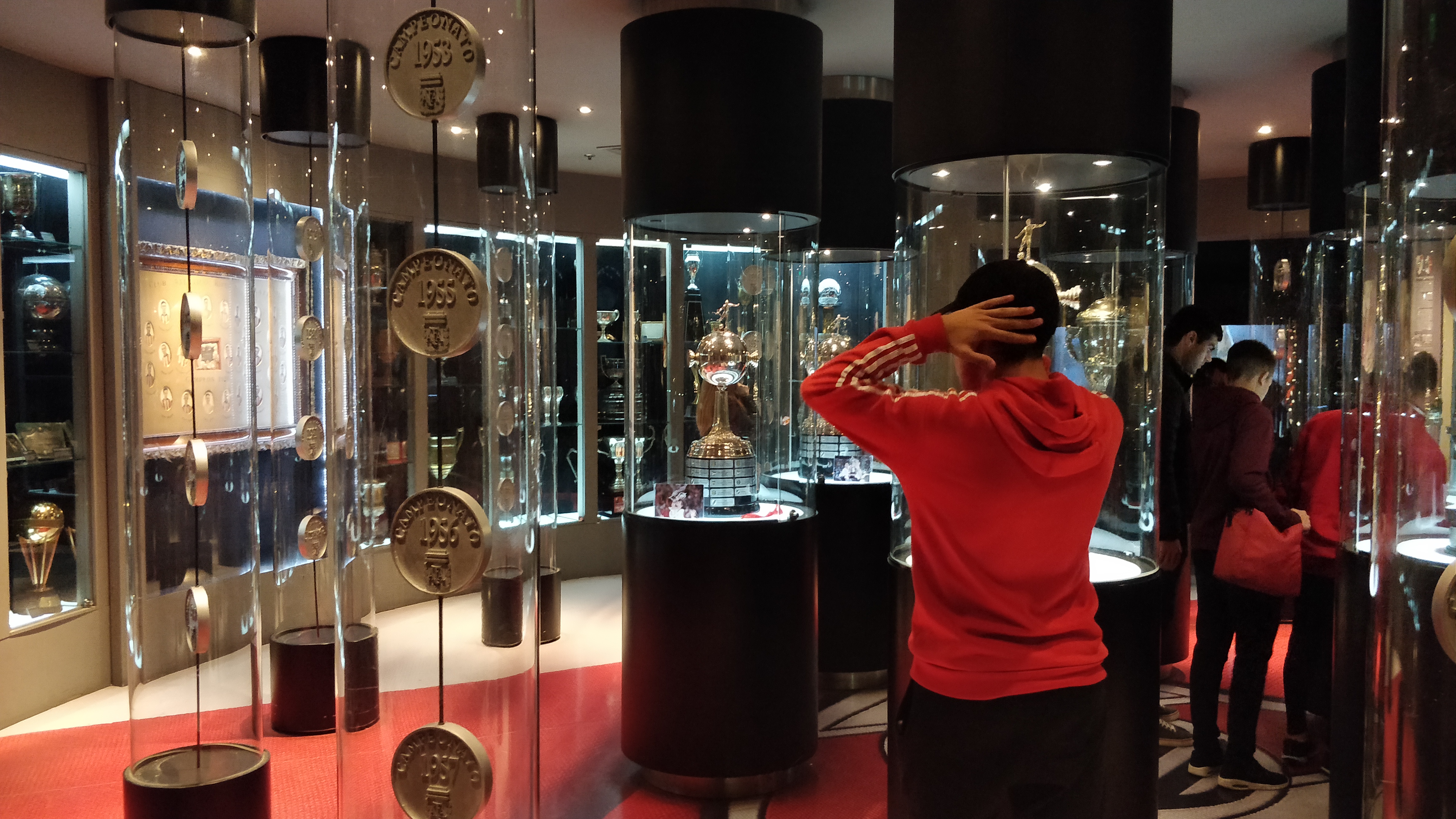
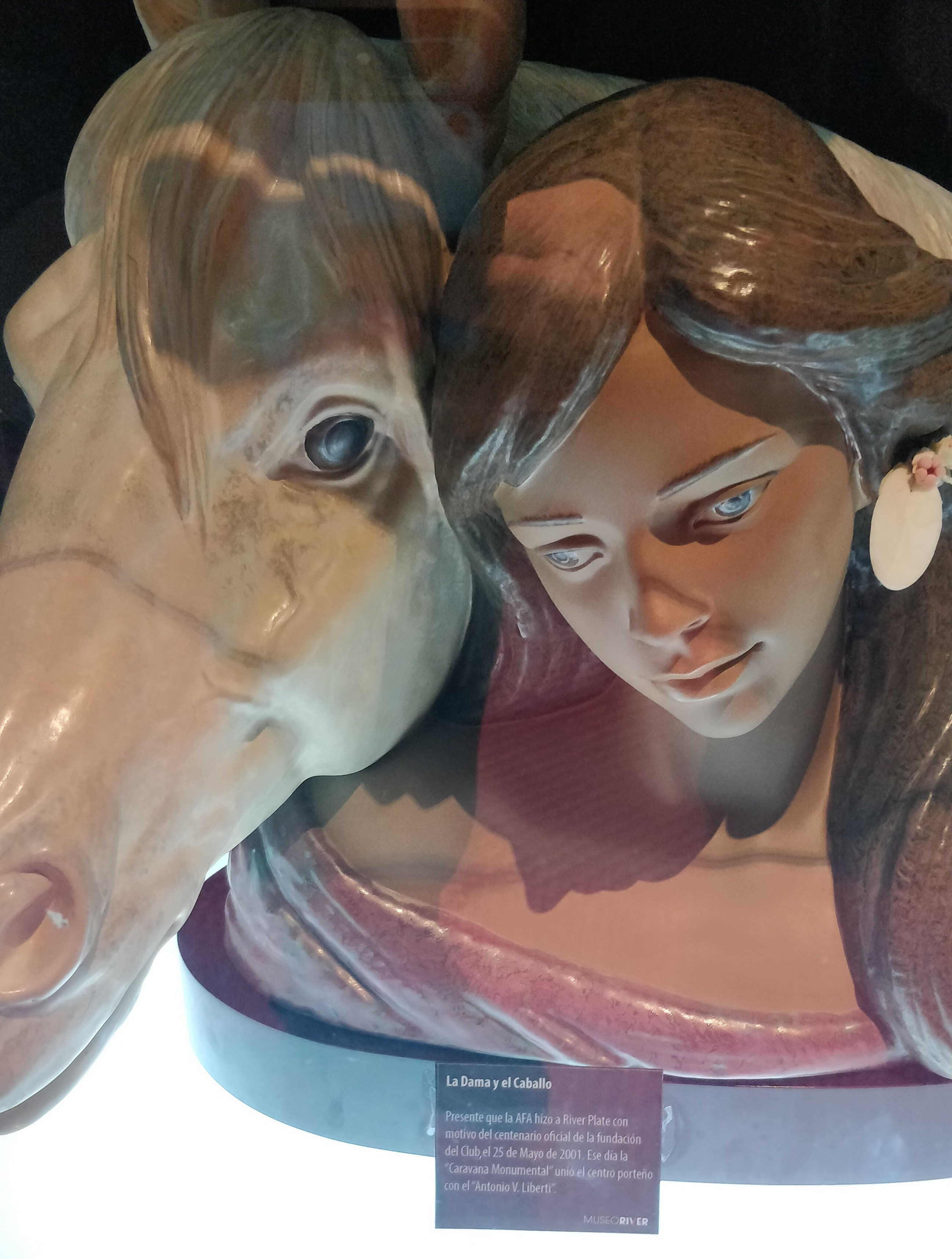
And this rather unique gift to the club from the national football association commemorating the club’s 100th birthday.

img_20190710_133227.jpg
…’kay.

There were a few other interesting things in that room, but with all the lights and glass, the photos rather prominently feature the back of my phone and hands, alas.

Famous players have their area, of course.

IMG_20190710_133657.jpg
I do not know a single one of them, which lessens the impact somewhat but the other visitors were pretty stoked.

Some of these pillars have QR codes that are supposed to show the player’s best goals, but I tried to download the app it required and watch them and could never make it work, which was a bit disappointing.

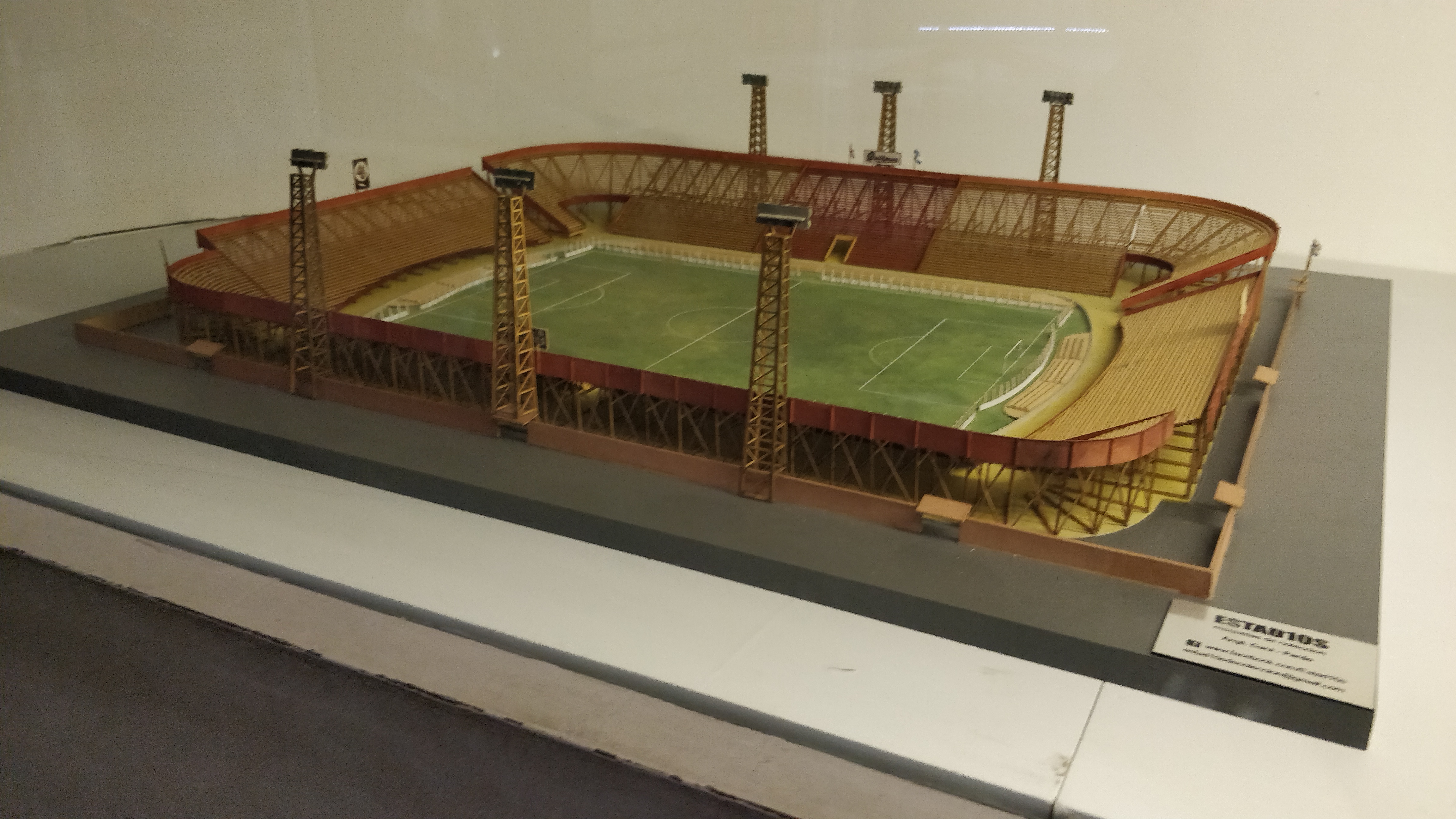
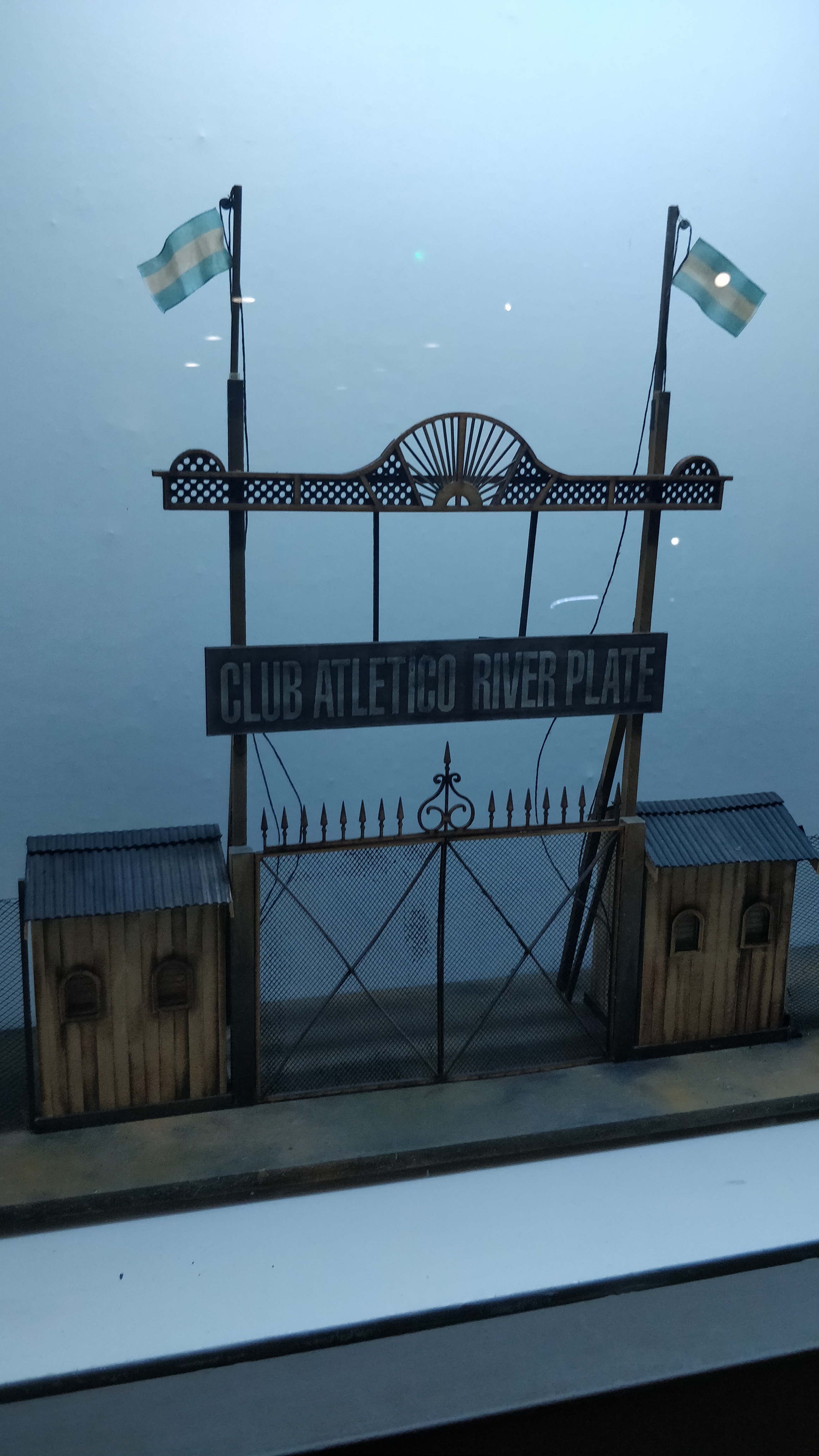
There’s some stadium history!  The current location dates back to the 30s.  There’s a pretty neat little model of the old gates and seating.

IMG_20190710_133526.jpgIMG_20190710_133544.jpg

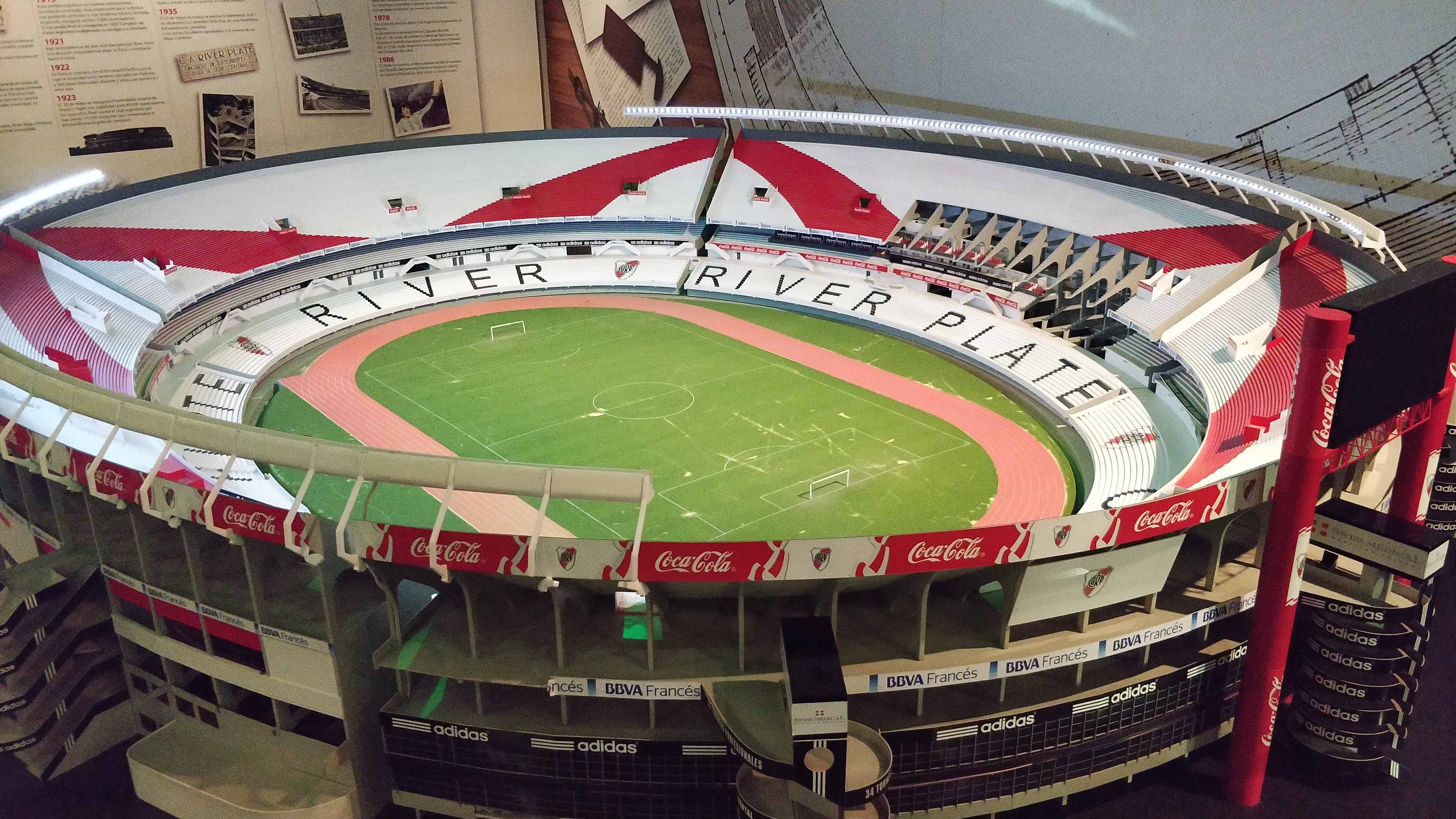
And the current look:

IMG_20190710_133501.jpg

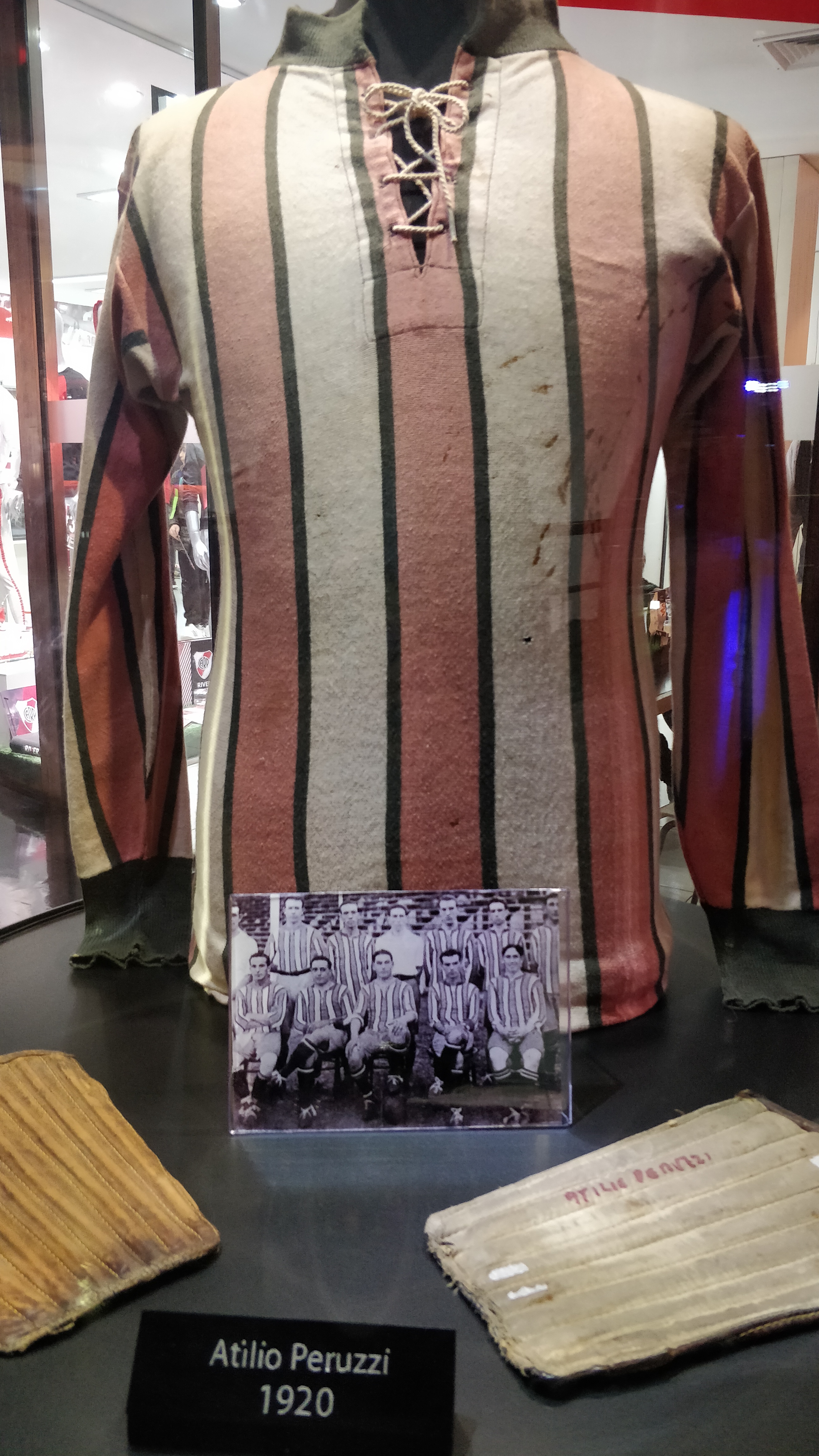
Textile nerds gonna textile nerd, so here’s an old jersey.  I bet that’s blood on it.

IMG_20190710_135232.jpg

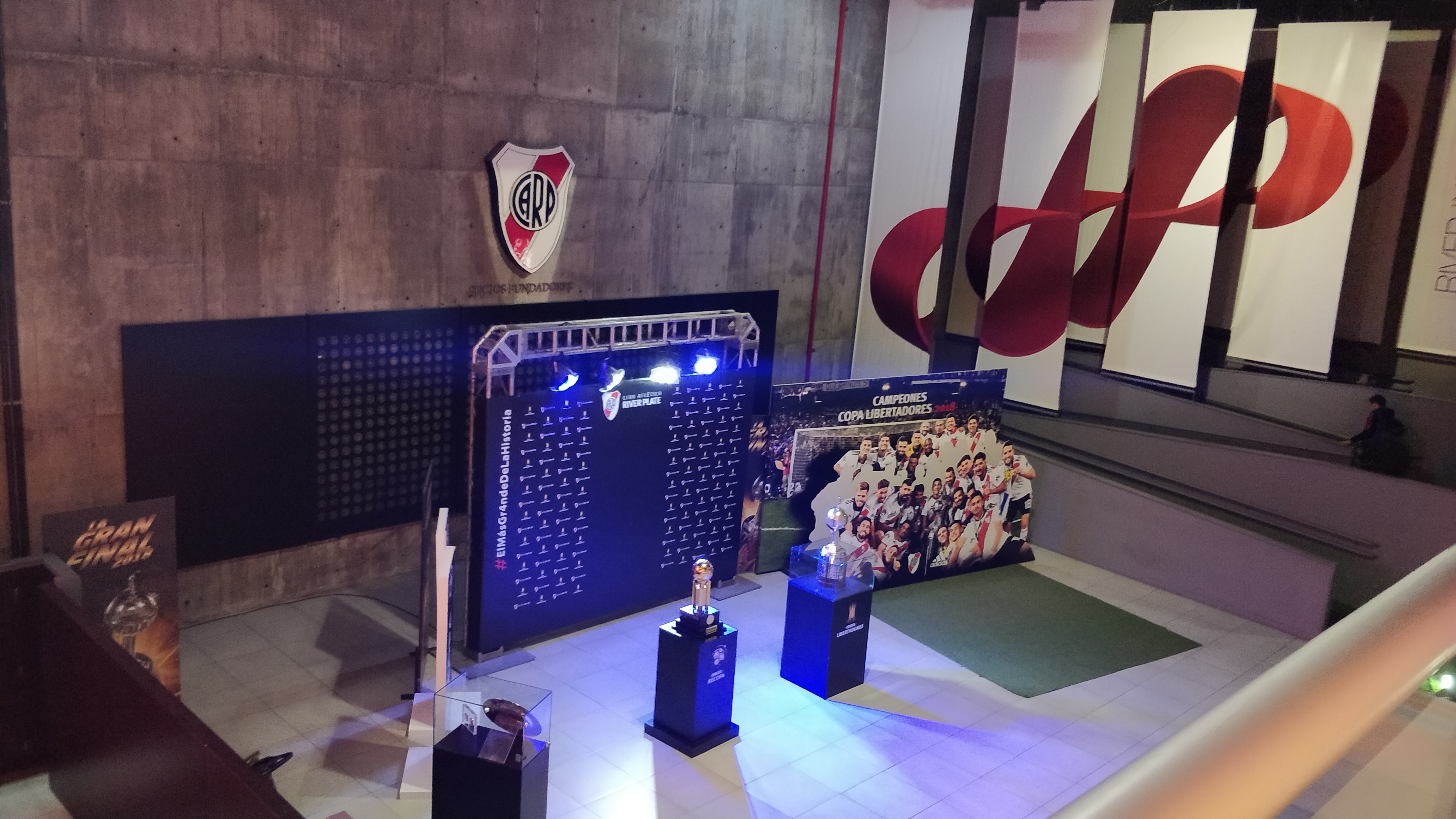
It’s a two-storey building, which accommodates a theater and an overhead view of the entrance, where the current team hardware is available for photo ops.

IMG_20190710_133805.jpg

There’s also this, which must mean something but hell if I know what.

IMG_20190710_134451.jpg

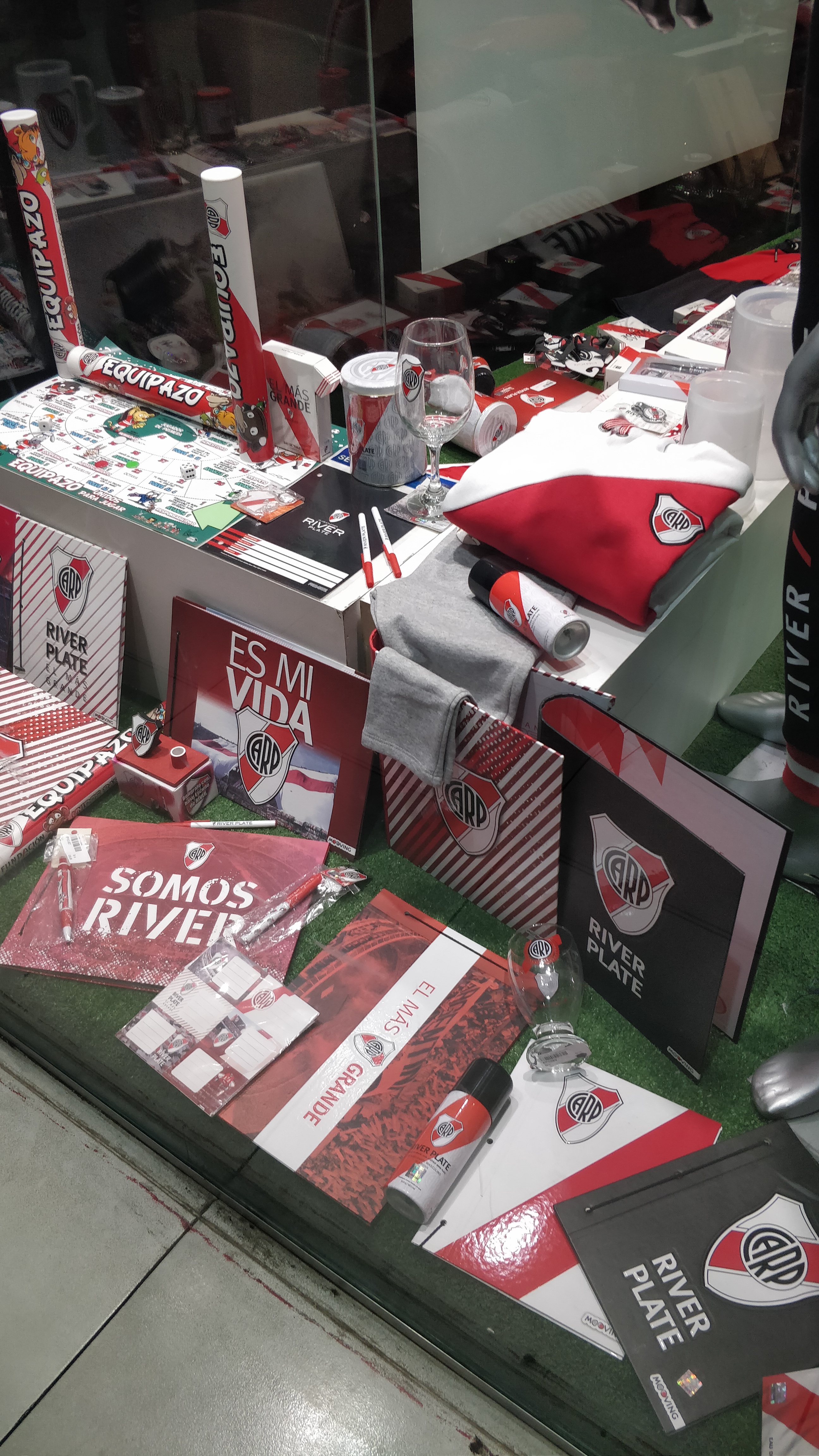
Now, Mr Exhibitist is a lifelong fan of a different football club, so I am forbidden by the articles of marriage from patronizing the museum swag shop.  But dear lord, the merch.

IMG_20190710_135516.jpg
The variety rivals that of Hello Kitty.

It’s an interesting visit for those into sport, and stadium tours are also available on the hour.  For what it’s worth, every local football team I’ve googled has their own museum, although I imagine the River and Boca ones are probably the biggest and best funded.

Museo River Plate is at Figueroa Alcorta 7509, part of the stadium complex (the stadium’s official name is Estadio Antonio Vespucio Liberti, but it’s only ever called The Monumental).  It’s open every day from 10am to 7pm, although I would guess not on game days.  I would not advise being anywhere near the stadium on game days, in any case.  The entry fee for the museum alone is 340 pesos, although I believe that’s the price for Argentines and local residents–foreigners pay a bit more.  The guided stadium tour is extra.

Museo de Armas de la Nación [Weapons Museum of the Nation]

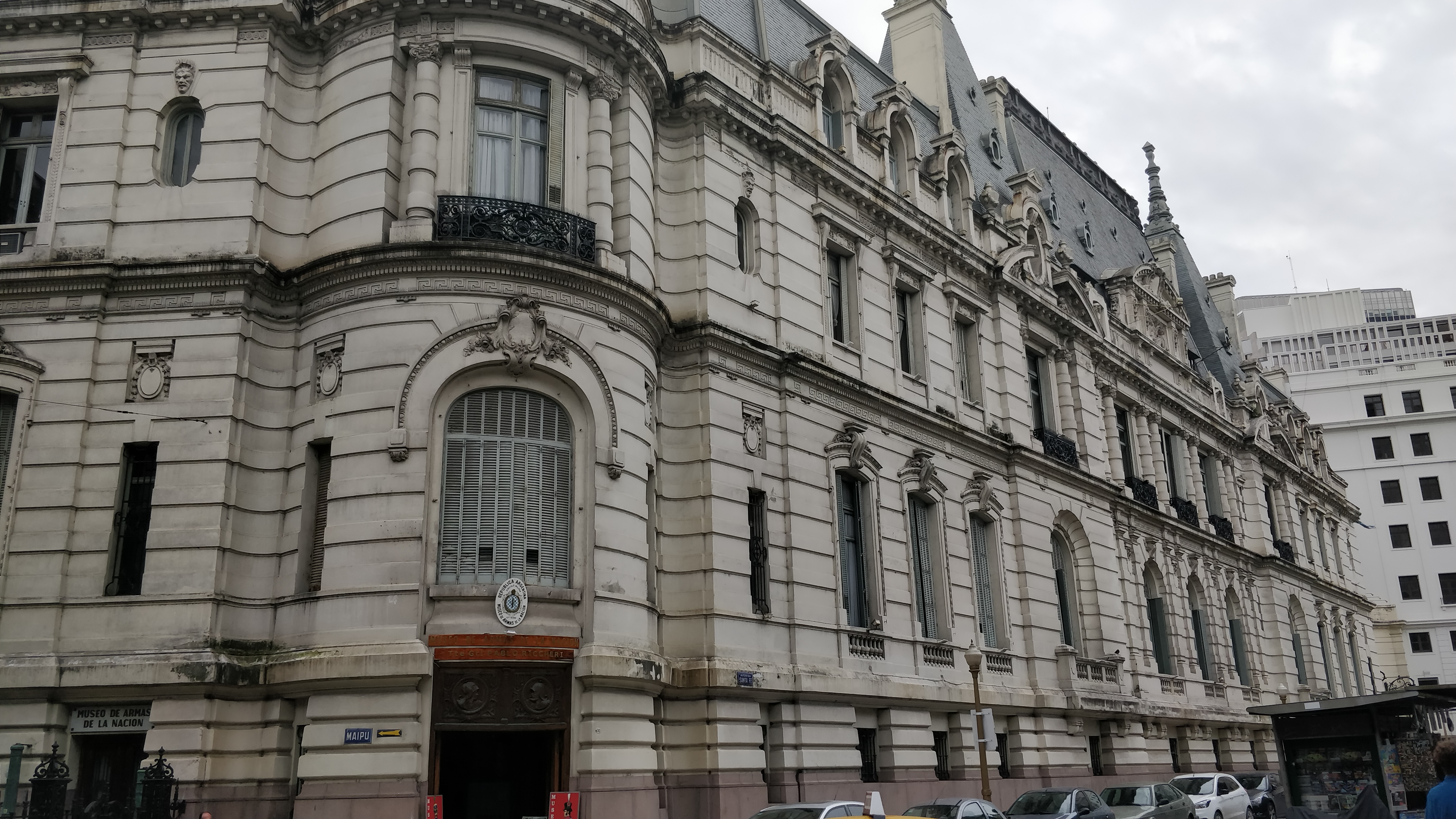
Across from the Plaza de General San Martín, which is a lovely, large plaza near the Retiro train station, in quite a stately building, is the Museo de Armas, originally founded in 1904.

IMG_20190702_140718.jpg
Right there, below the official oval.

I’m not particularly interested in all the tools humans use to disassemble each other, but swords are neat, so I went to check it out.

IMG_20190702_132035.jpg
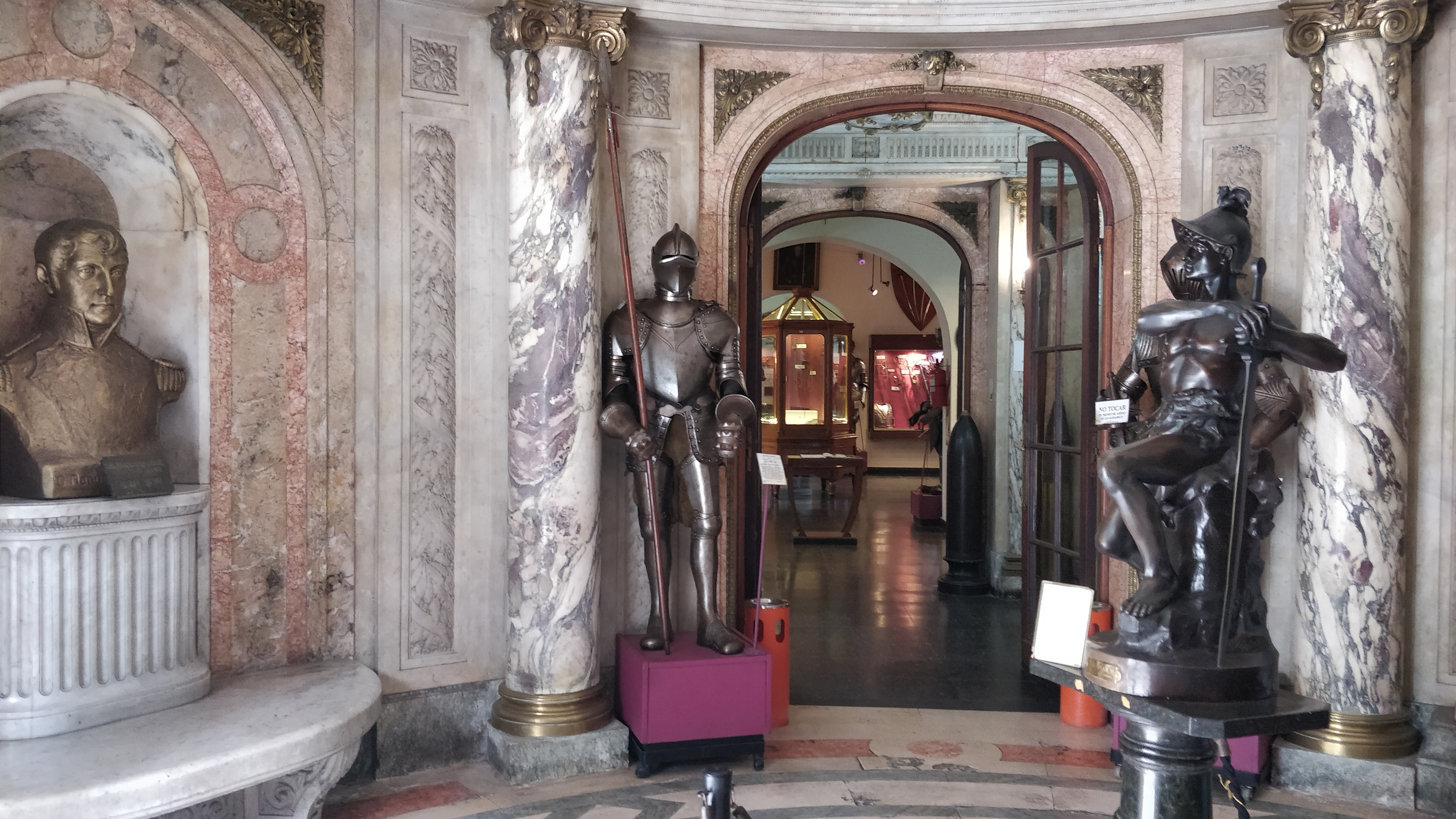
Pretty stately on the inside, too.

The first displays are of medieval armor and weaponry, both replicas and originals.  There was also some disconcertingly incongruous pop music playing in those rooms.

img_20190702_132206.jpg
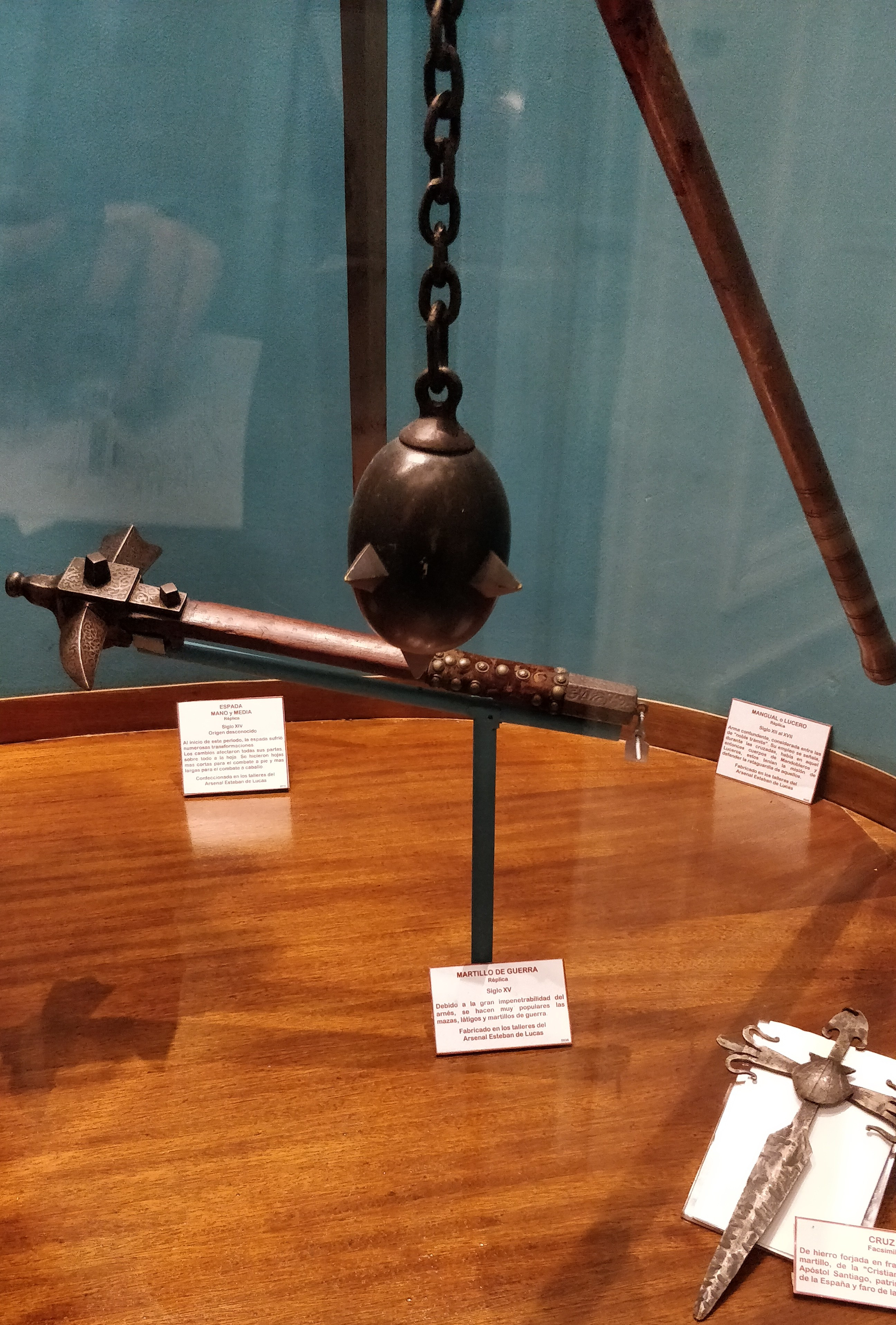
Replicas of a war hammer and a flail, my favorite medieval weapons.

IMG_20190702_132420.jpg
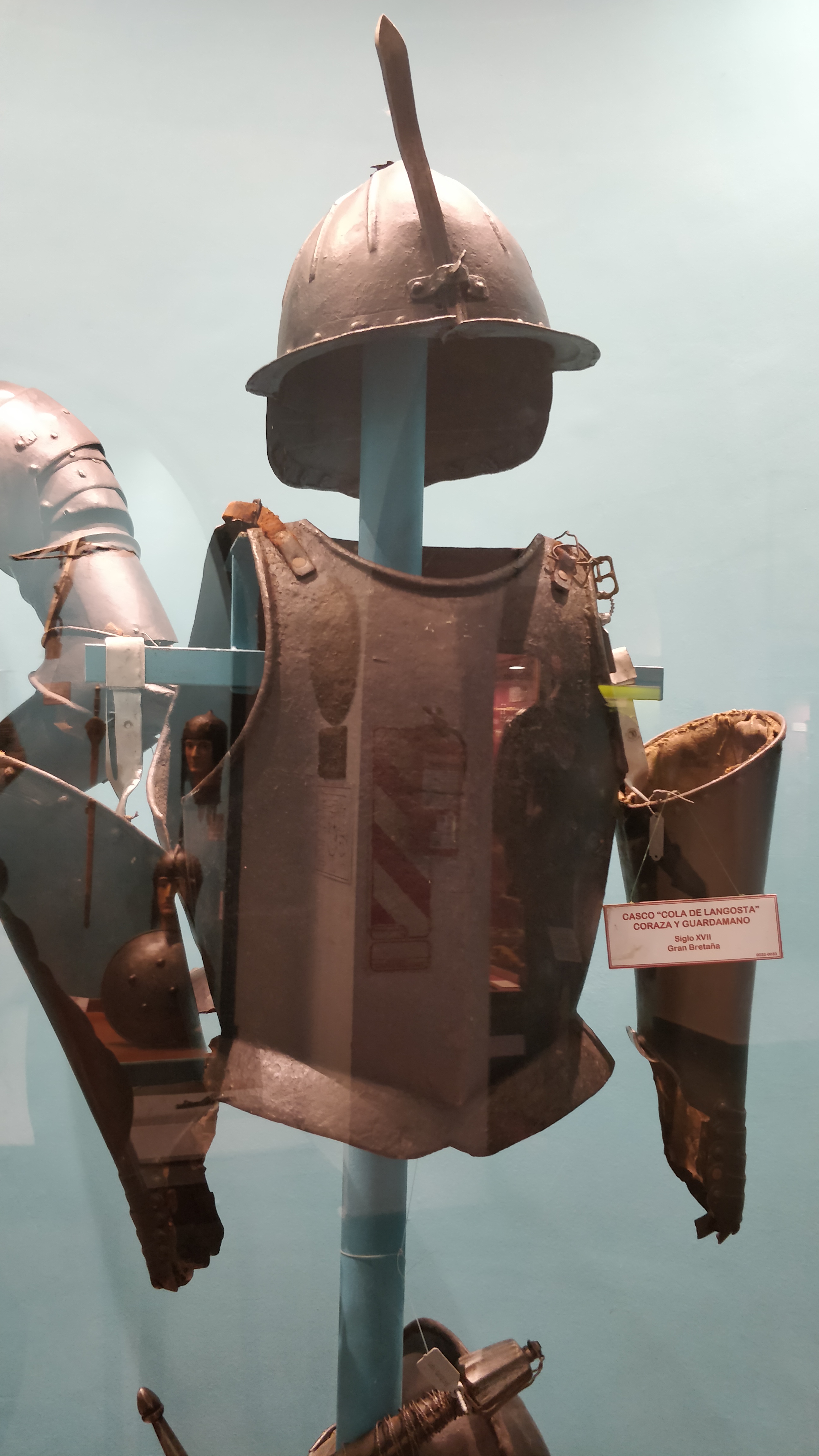
Lobster tail helmet from Great Britain, 1600s.

A great variety of pointy things is available for examination, though without much of anything in the way of information–just the sort of label you see above.

IMG_20190702_132648.jpg
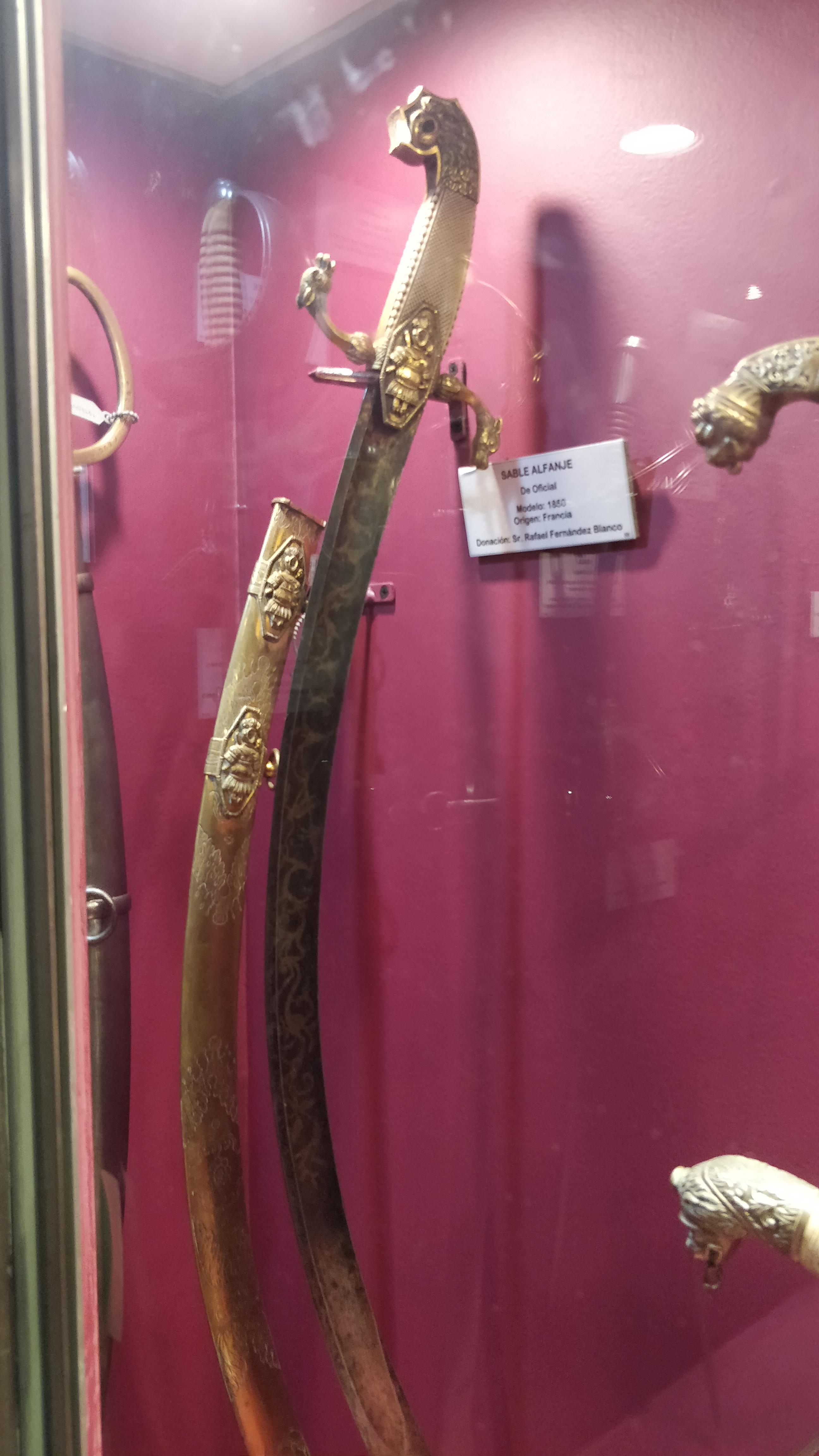
Fancy shmancy French saber.

IMG_20190702_132717.jpg
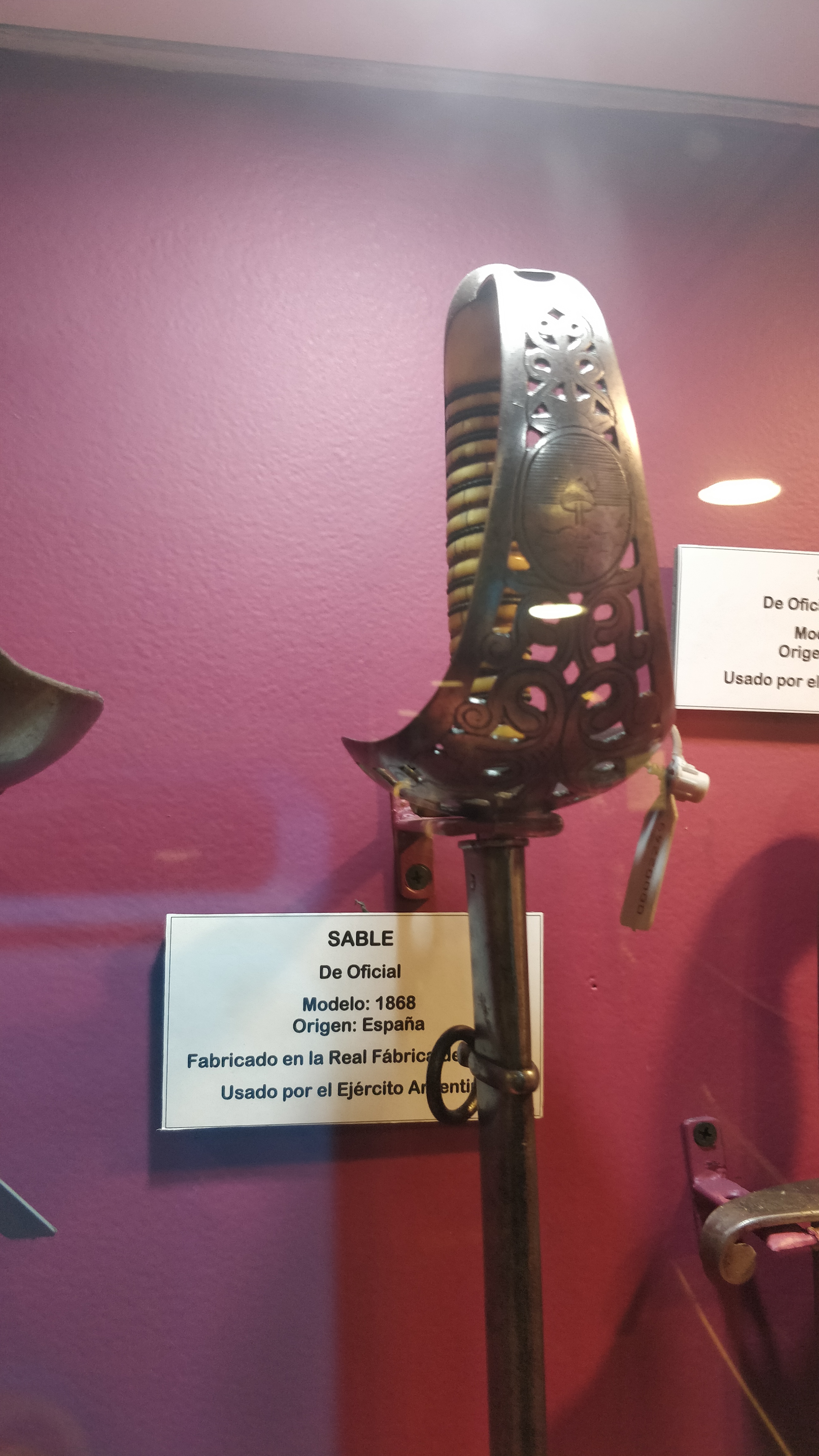
Spanish-made saber for the Argentine Army.

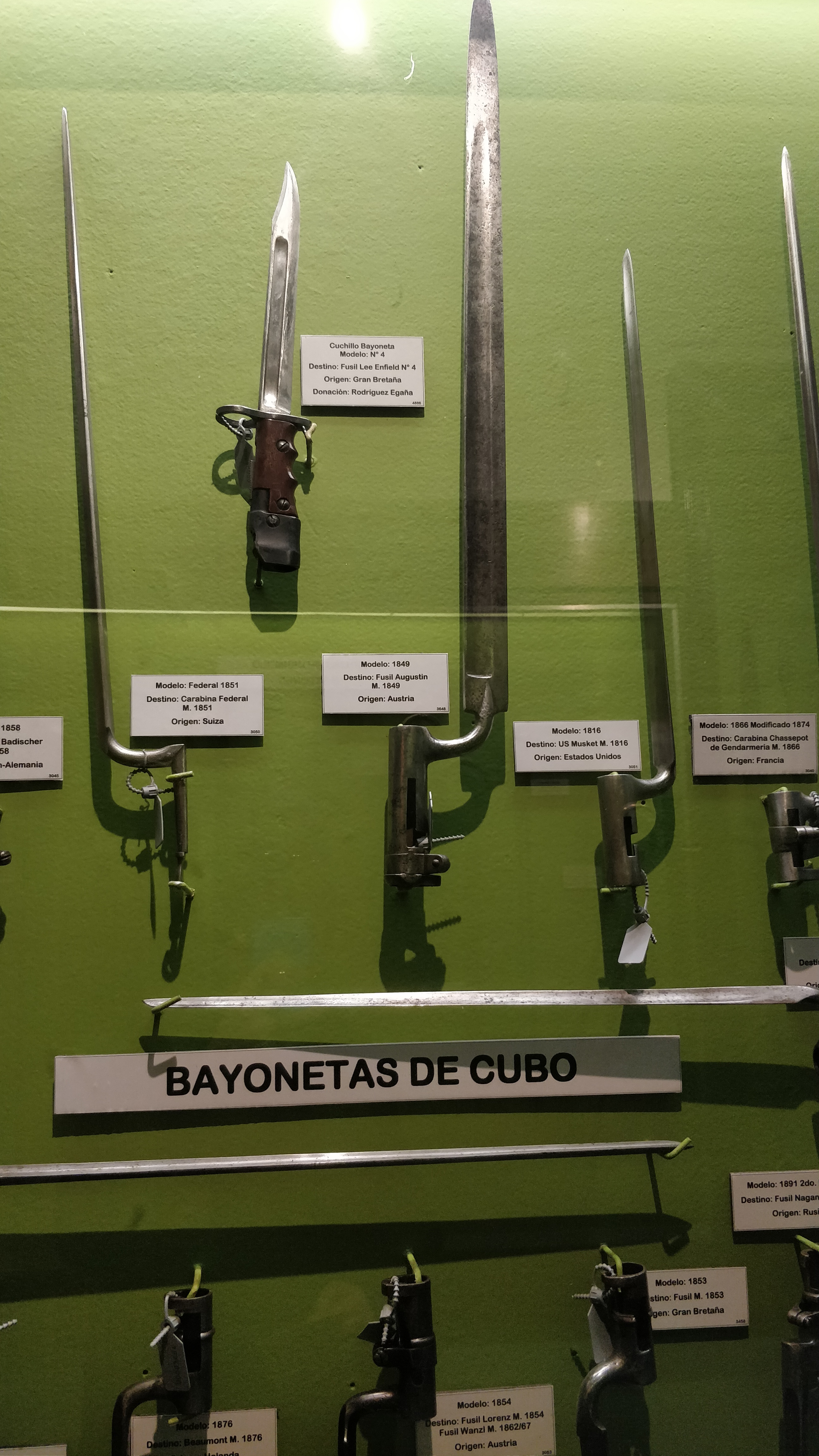
Firearms were of course already a thing by the time these swords were made, but the museum also has some artifacts from those more transitional times, when one might still find a rifle’s effectiveness reduced to that of a spear.

IMG_20190702_133044.jpg
Bayonets have always creeped me out; something about the desperation that must attend having to use one.

Artistry wasn’t limited to swords in the 1800s; this is a hunting rifle that belonged to President Victorino de la Plaza.

Prettier and less bayonet-y, for sure.

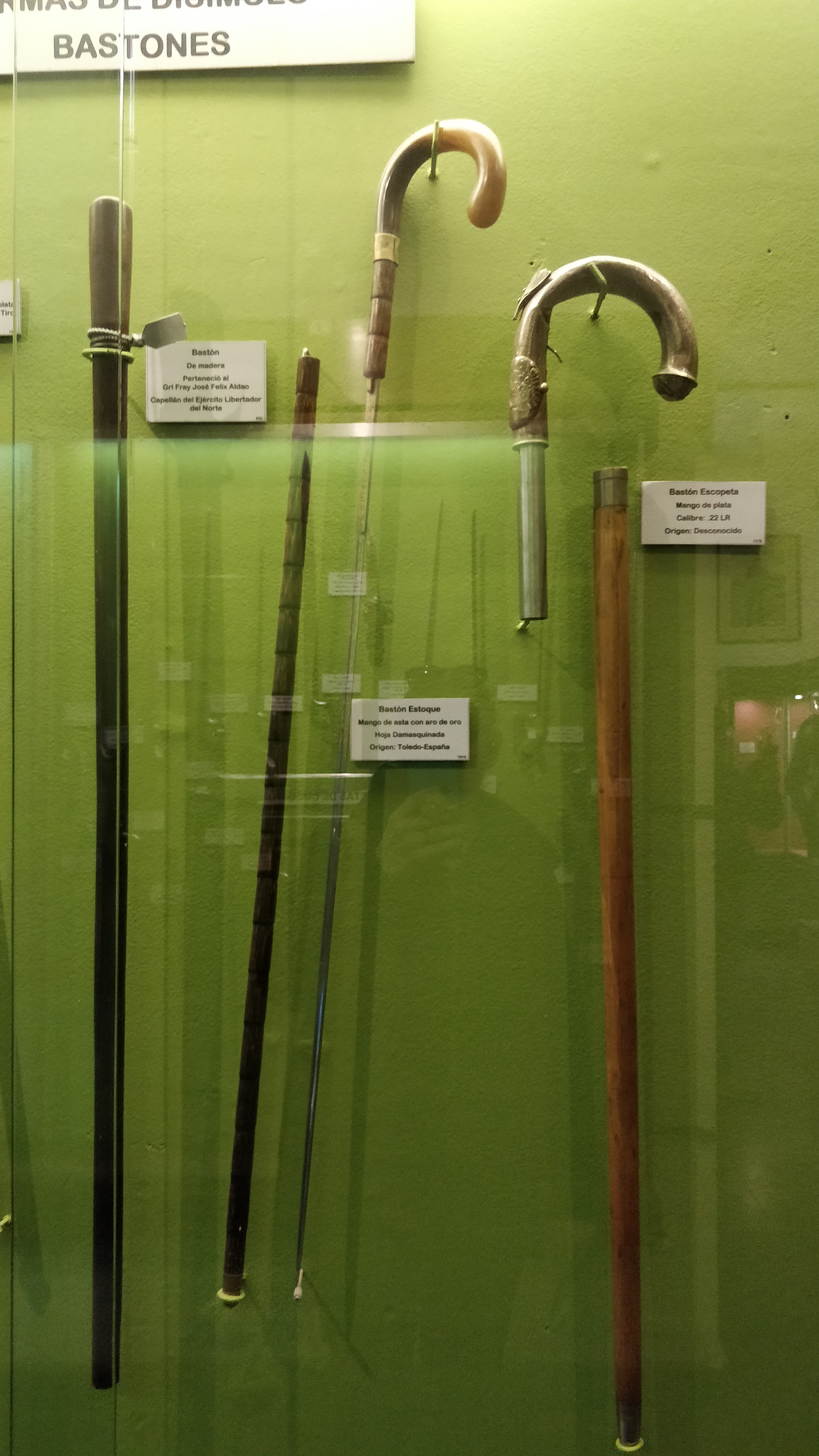
But you know what is even cooler than fancy sabers with official ovals and detailed German hunting rifles?  Bonkers cane weapons.

IMG_20190702_133119.jpg
Debonair, dashing, DANGEROUS

Cane swords AND cane pistols.  Wonder if there’s a safety on that thing.

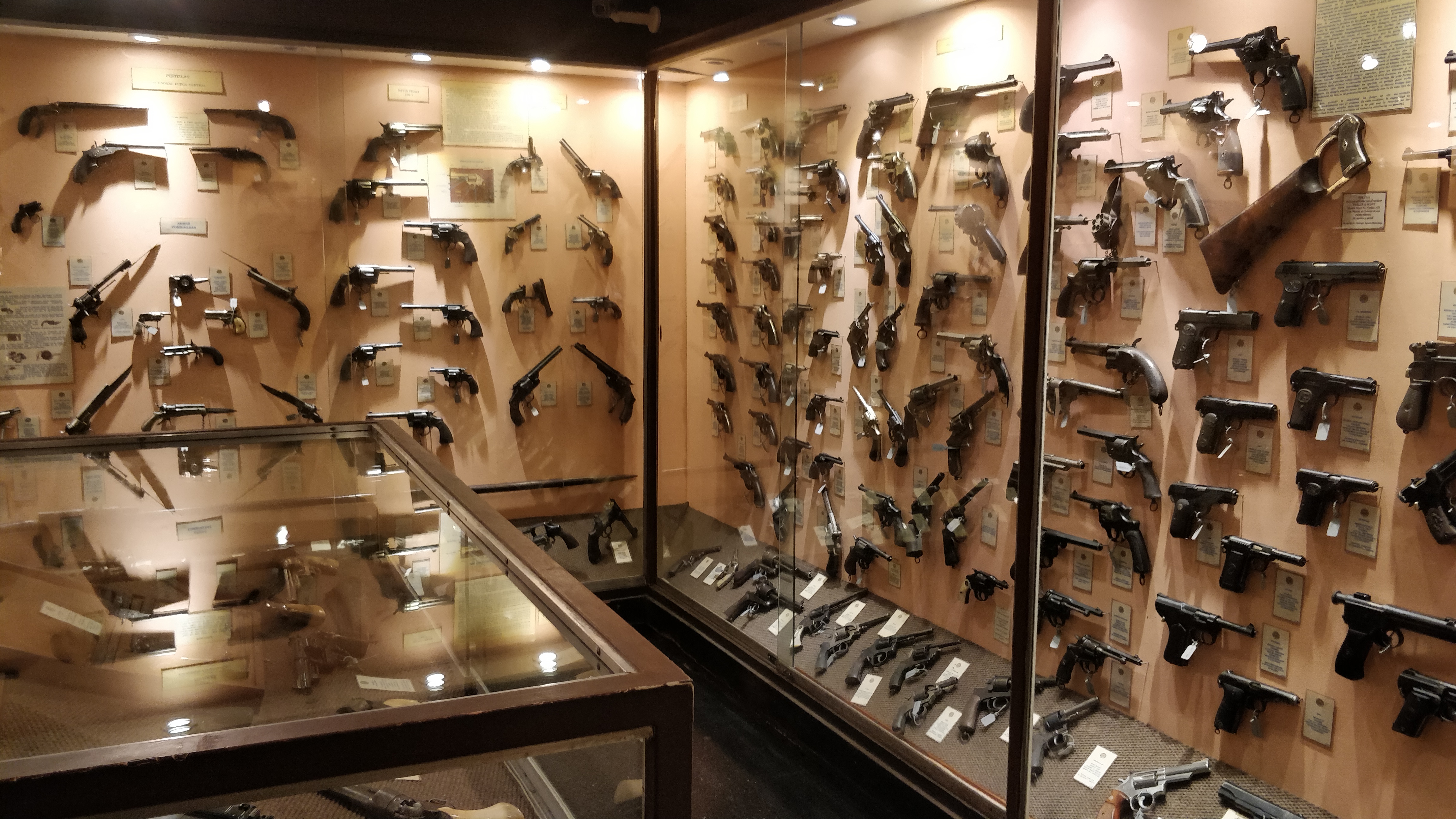
Of course, there’s plenty of more modern kill stuff.

IMG_20190702_134457.jpg
*yawn*

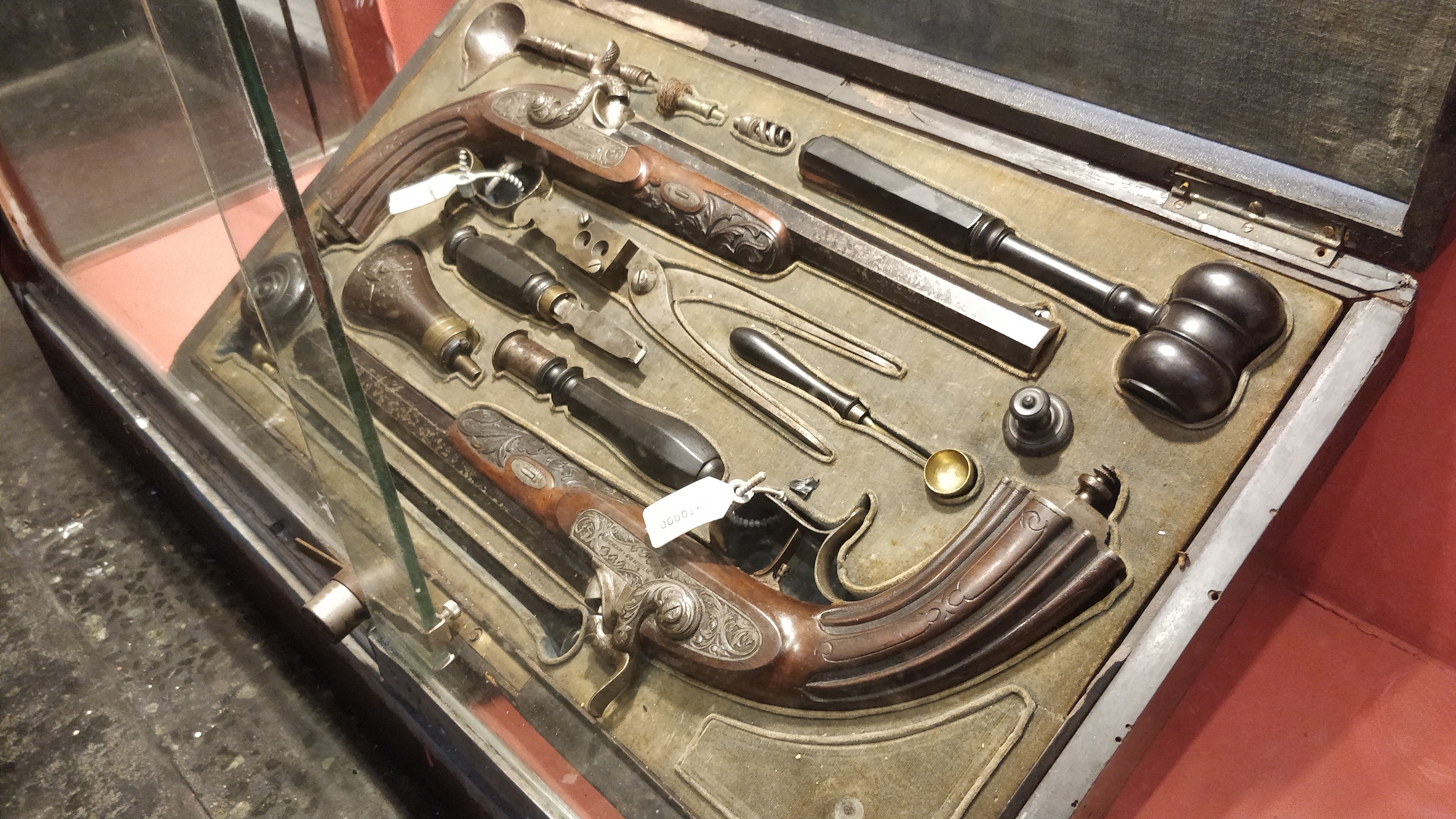
But there’s also a few box sets of dueling pistols–including this one, which says it was used in the duel between Pantaleón Gómez and Lucio Victorio Mansilla on Feb. 7, 1880.  Both men were former soldiers, politicians, and journalists, but Gómez ended up the dead one in a story that the Wikipedia entry made sound kind of insane.  Dudes gonna dude, I guess.

IMG_20190702_134002.jpg
I can’t even.

As weaponry is always pretty closely tied to the military, the museum also has several minifigs that illustrate the history of the uniforms.

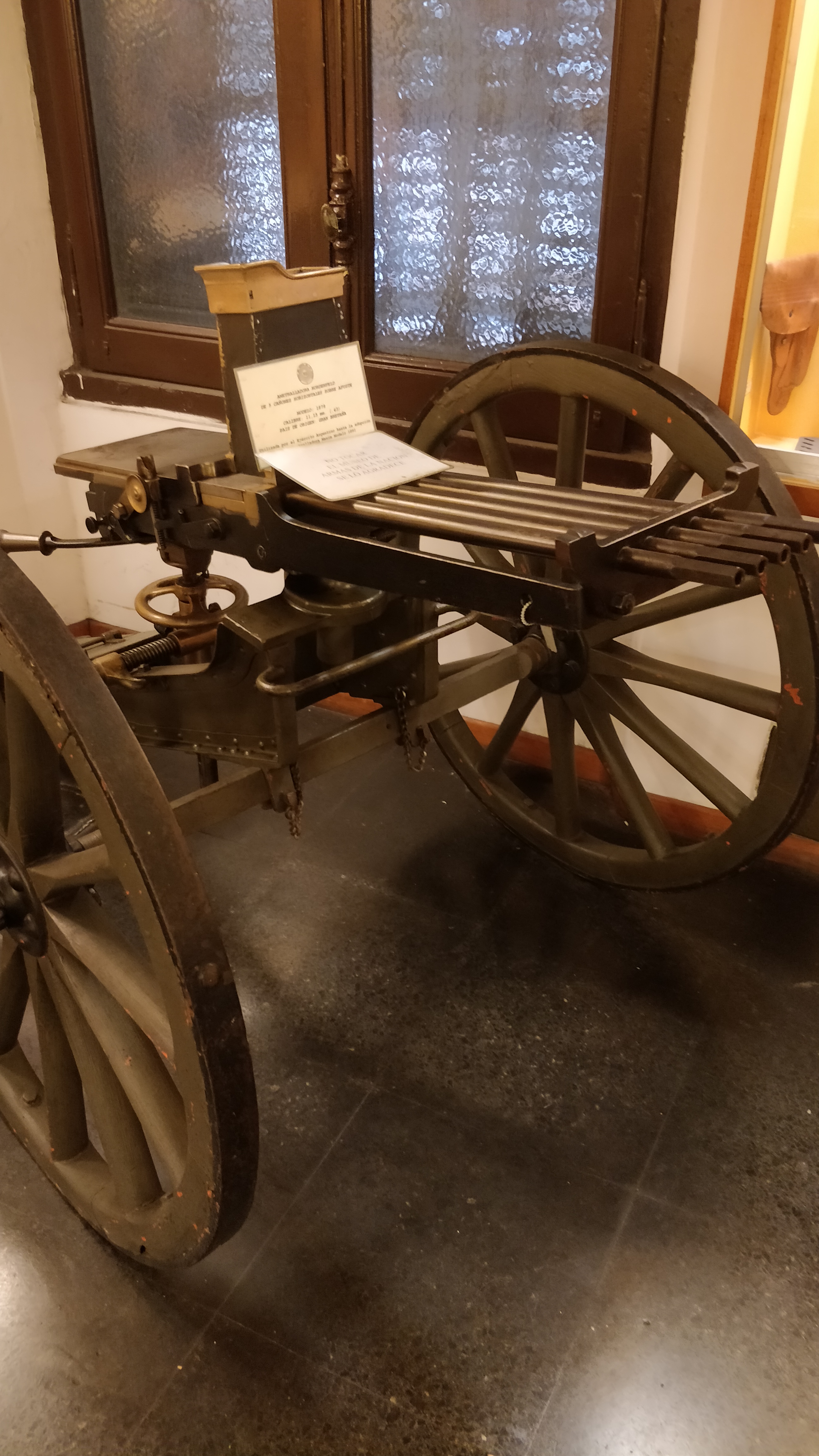
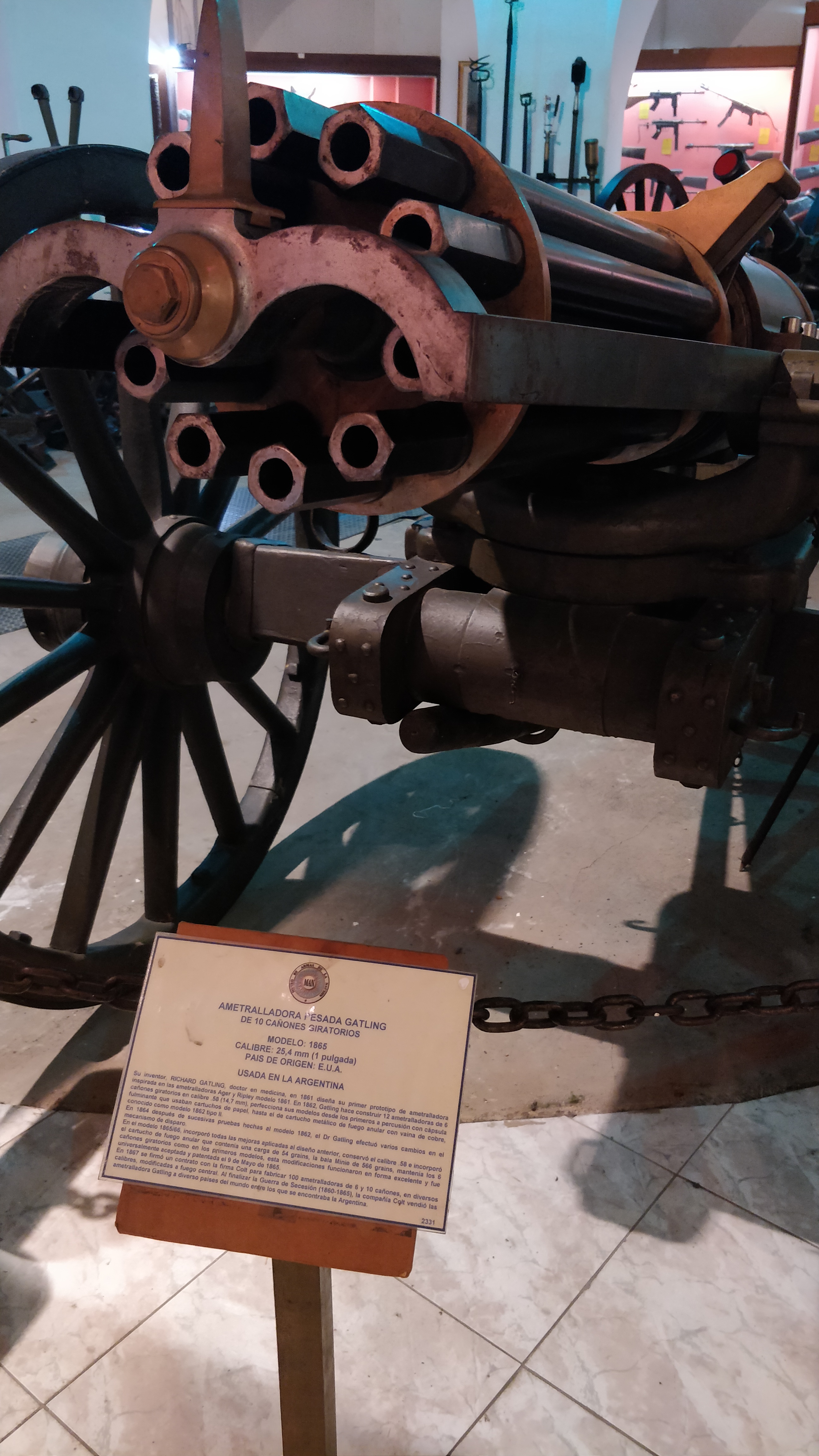
The items on display aren’t limited to melee combat and small caliber things, of course.

IMG_20190702_134758.jpg

IMG_20190702_135858.jpg
Both of these are mid-19th century, the bottom one being a Gatling design, Gatling having been a medical doctor who rather blew off that whole Hippocratic Oath thing. 

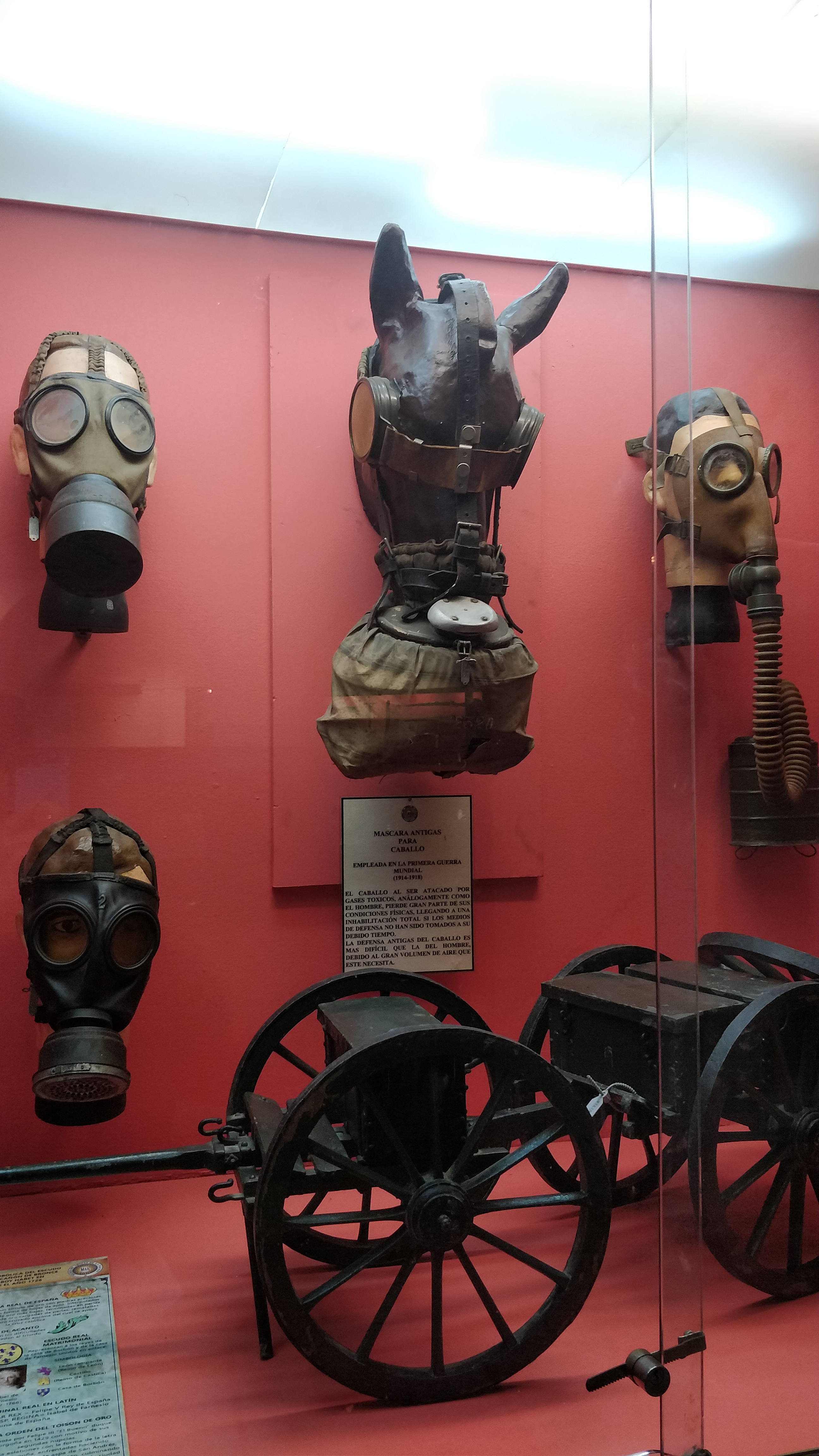
Remember what an absolute, unique horror show World War I was, with its meeting of traditional cavalry and horse-drawn supply wagons and mechanized death and chemical warfare?

IMG_20190702_135735.jpg
Imagine putting a gas mask on a horse, or, hell, being a horse that had to wear a gas mask.

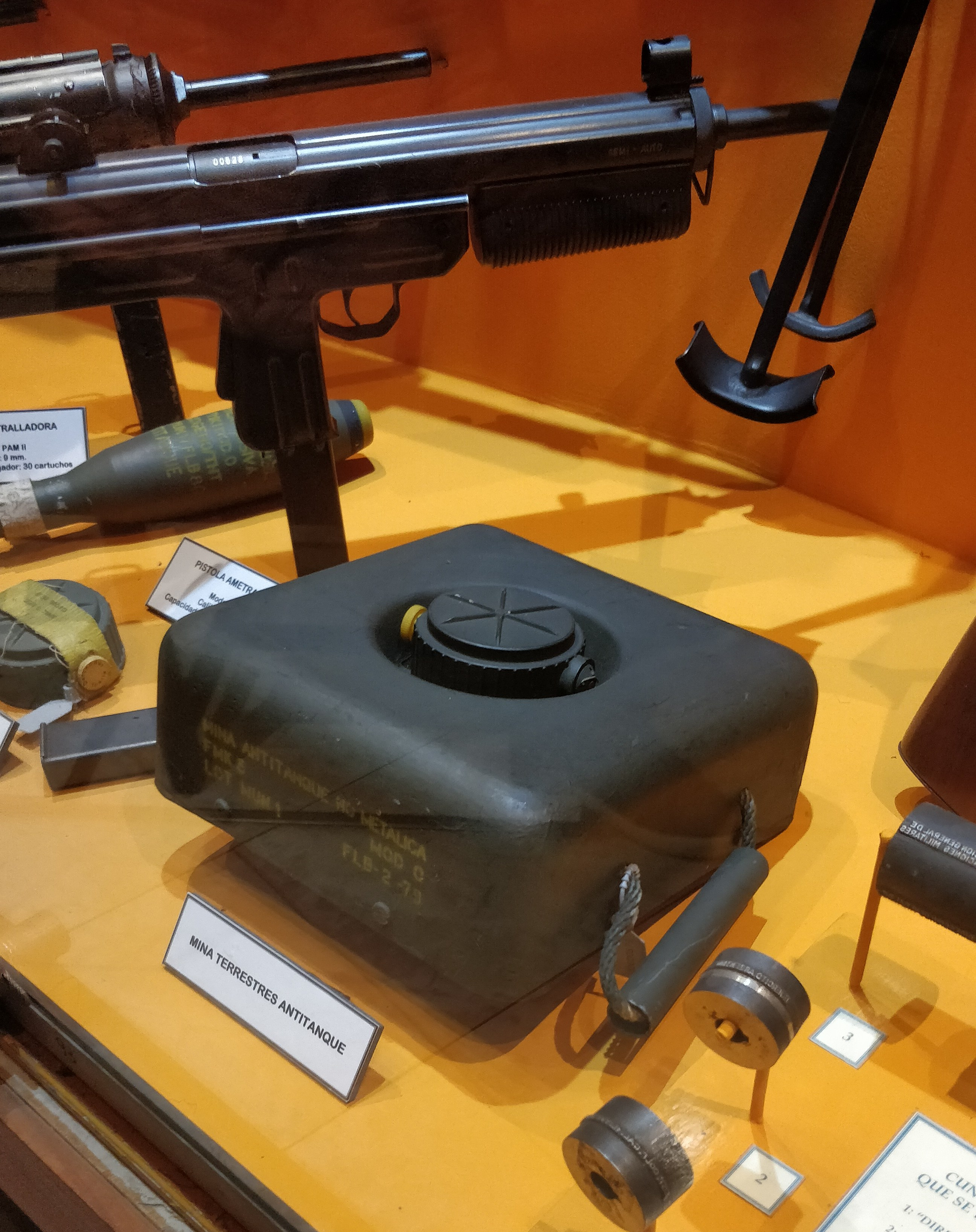
Look, an anti-tank mine.  It’s smaller than my backpack.


IMG_20190702_135952.jpg
That circle to its left is the size of my palm and designed to blow up a human being.

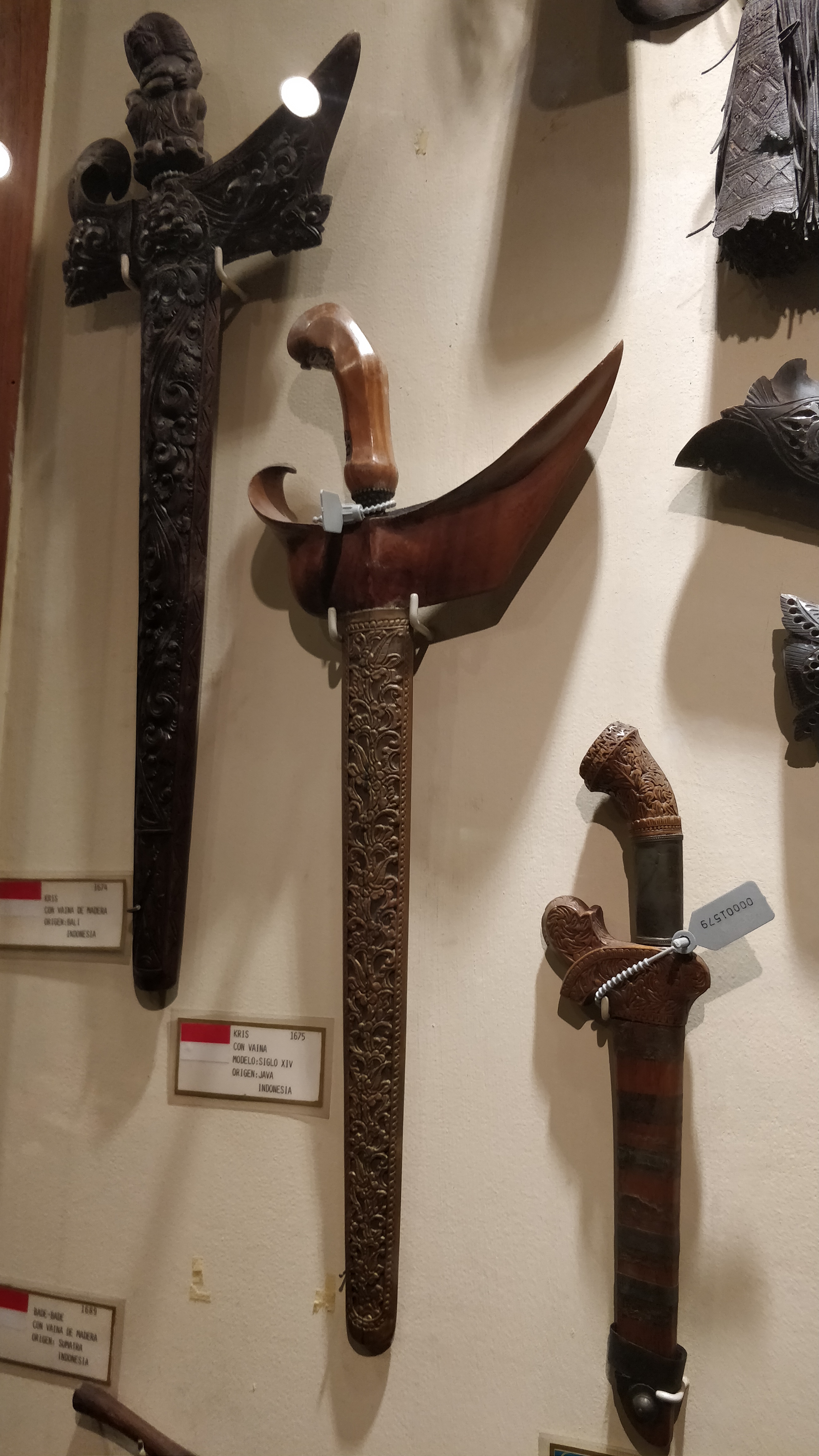
There’s also a room that’s full of weapons from all over Asia, which at least can restore the more comfortable feeling of looking at museum pieces with some artistry to them instead of just efficient kill boxes used within living memory.
IMG_20190702_135130.jpg
14th century Indonesian.


img_20190702_135000.jpg
*sigh* stupid glass cases

IMG_20190702_135429.jpg
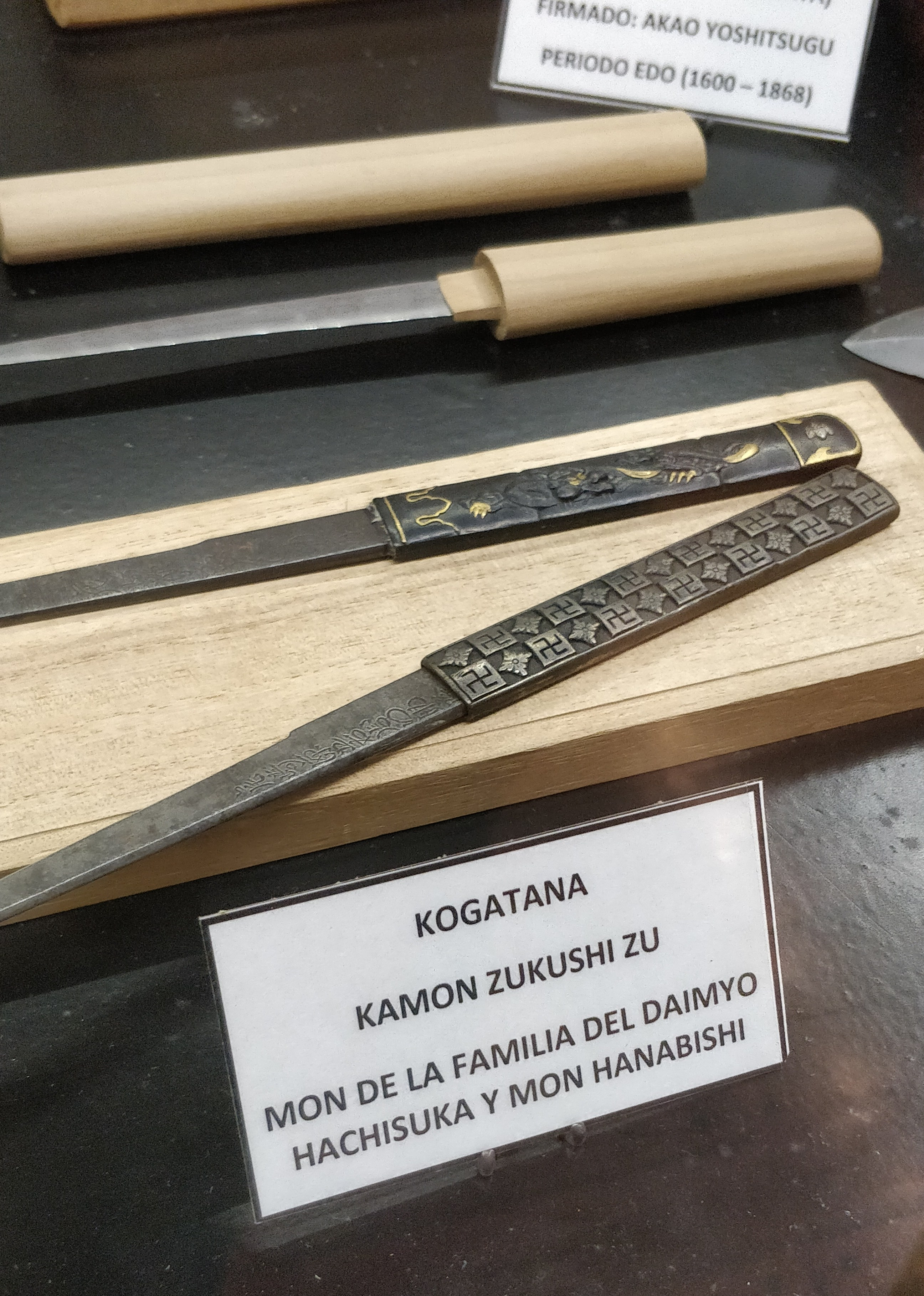
Small utility knife. Nazis ruin everything

So there you have it!  Certainly a very interesting collection of early firearms, fancy swords and Argentine military history.  Not much on the informational side of things, but certainly more interesting than I thought it would be for me.  The Museo de Armas de la Nación is located in Retiro at Santa Fe 702, right across from the Plaza, and very near other sights, like the Kavanagh building and the Basílica Santísimo Sacramento.  It’s easy to get to from the C and E subway lines and Retiro train station.  As of this post, the entry fee is 100 pesos (about US$2).
Tinytour: Archivo General de la Nación: Huellas de Mujeres Trabajadoras

Popped into the National Archive for the small, temporary exhibit on women workers!  Not super sure on the best translation.  Let’s go with “Impressions of Working Women.”

img_20190702_114952.jpg
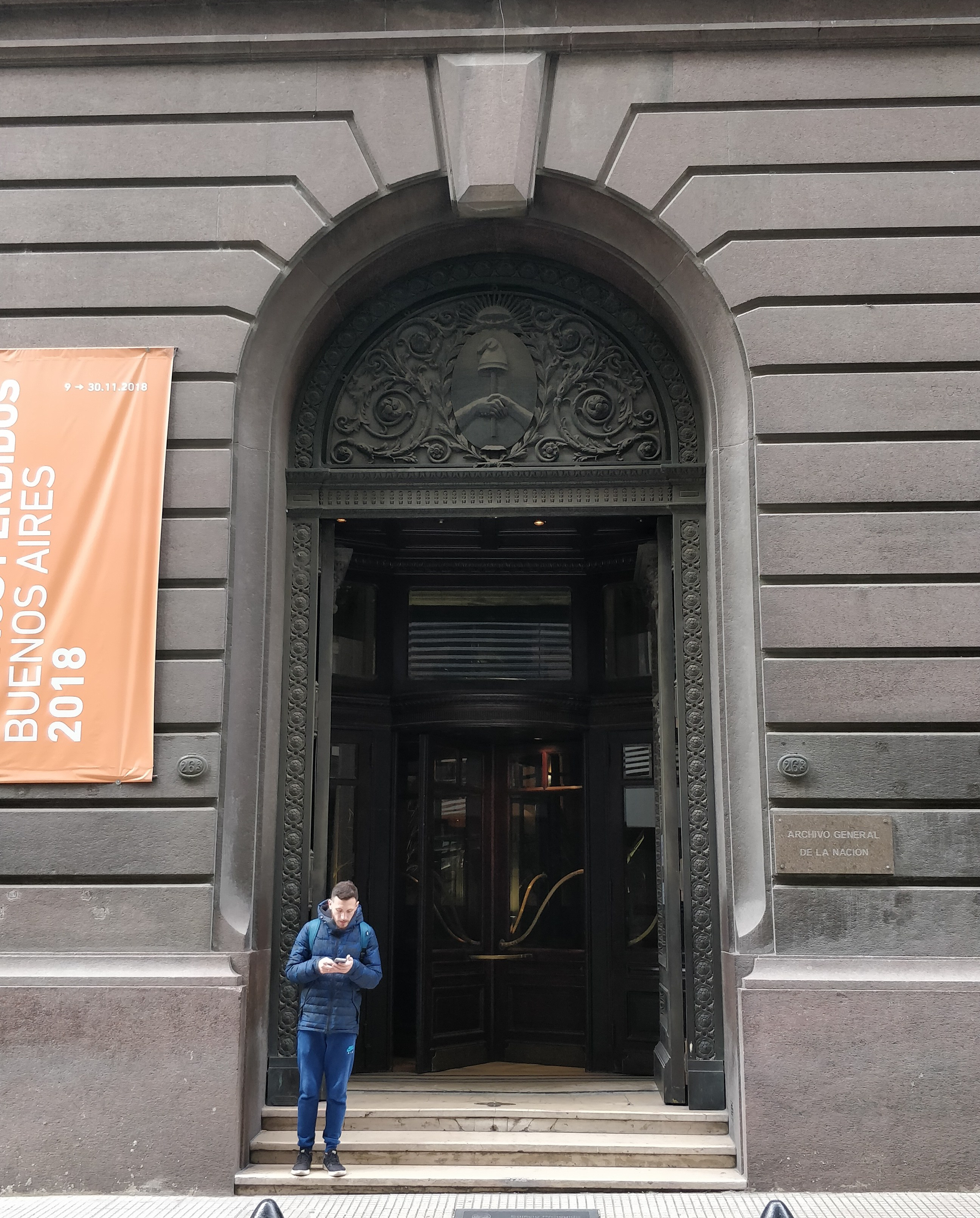
That guy’s got nothing to do with anything; it’s just the best photo I got of the door.

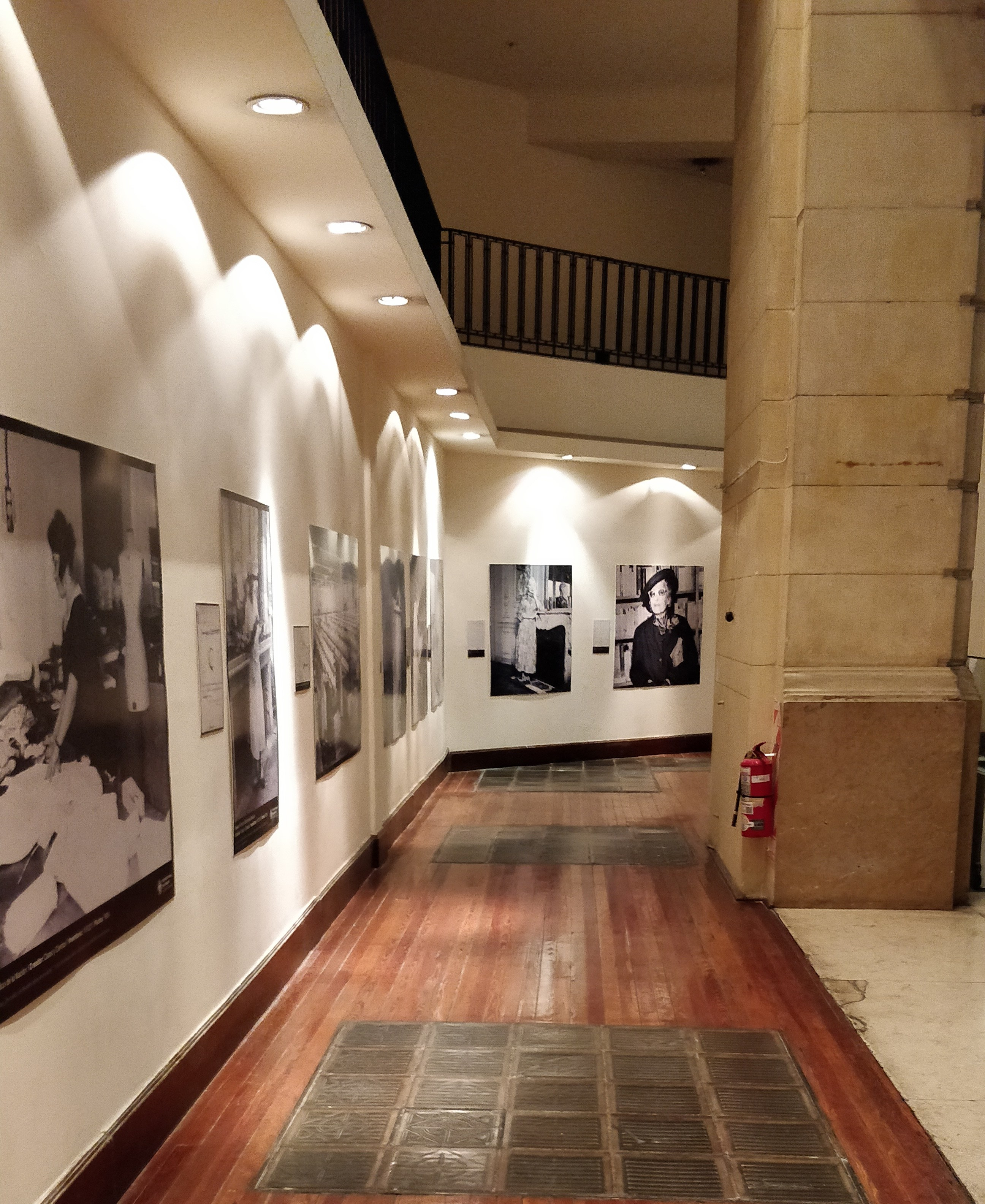
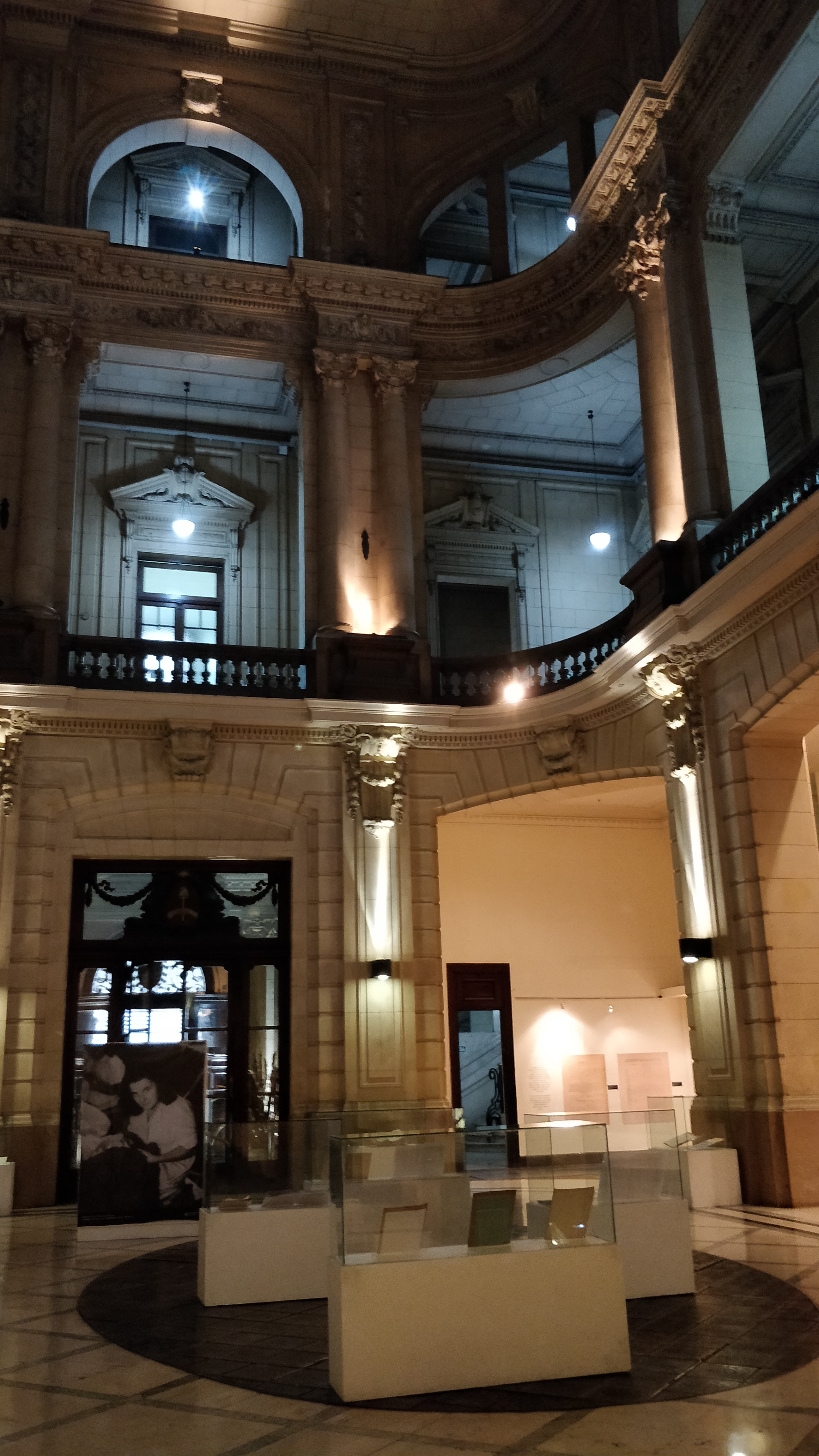
There’s an exhibit room just inside the Archive, where visitors don’t have to go through security.  It’s pretty small, but a nice place for a curated show of documents.

img_20190702_114740.jpg
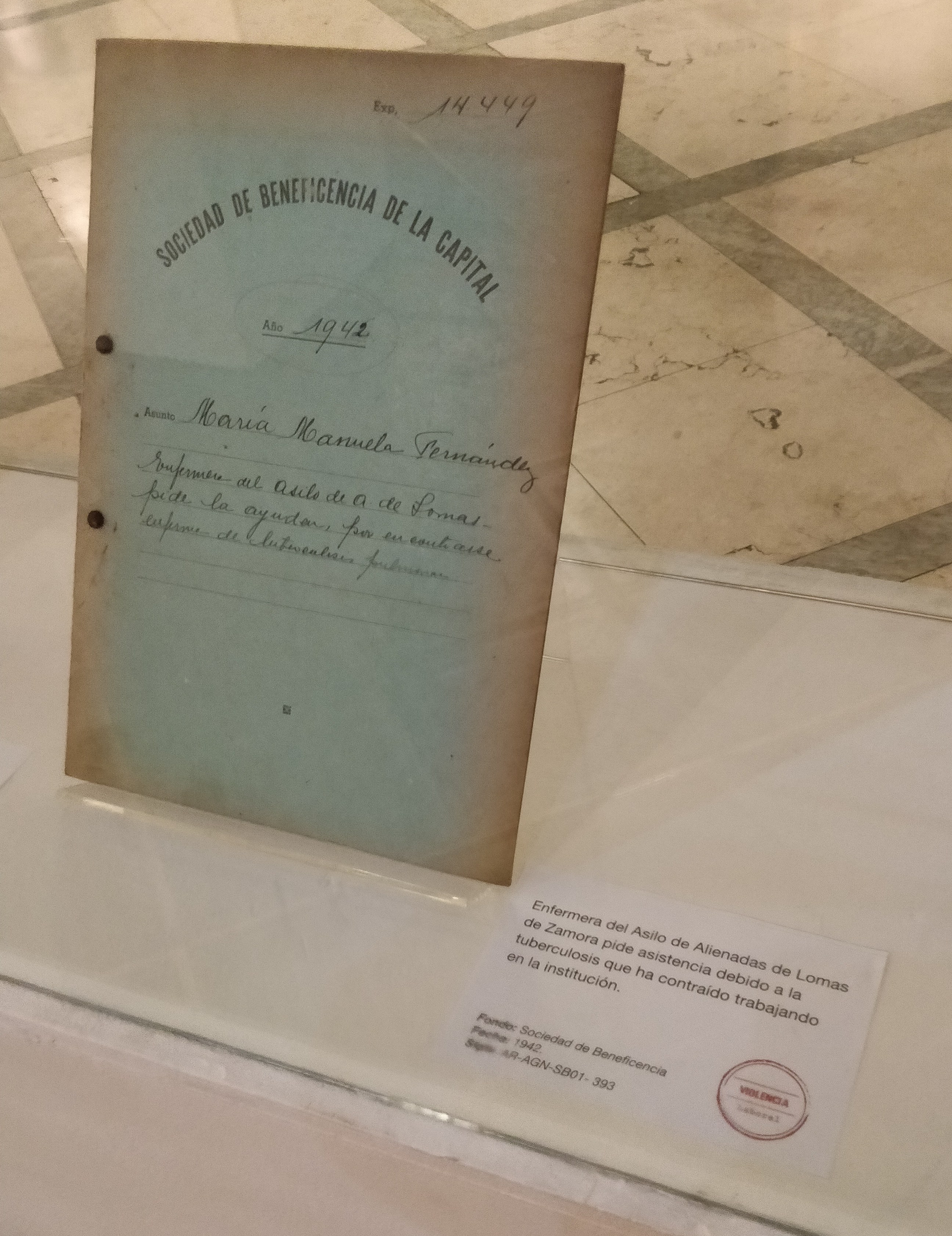
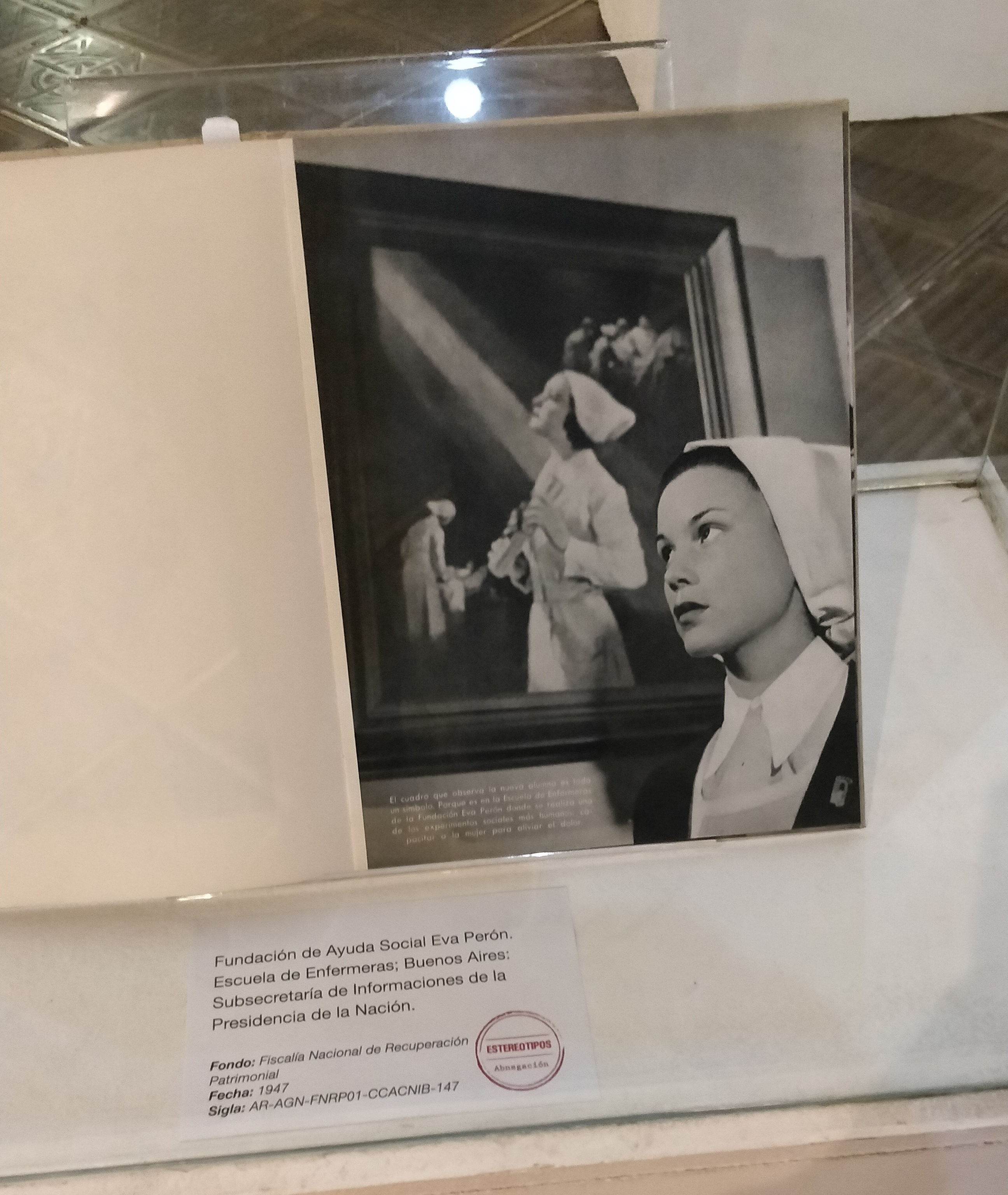
Including not happy documents, like this 1942 petition to a charity for assistance from a nurse who contracted tuberculosis in the course of her work.

Plenty of great old photos, which, of course.  It’s the Archive.

IMG_20190702_114102.jpg
From the School of Nursing affiliated with the Eva Perón Social Help Foundation in 1947.

Actually, though, know what was most impressive?  The freaking exhibit room.

img_20190702_114344.jpg

IMG_20190702_114624.jpg

That’s all for this minipost!  If you’re in Microcentro taking in the government-affiliated tourist sights, you’ll be close to the Archivo General de la Nación.  Pop in for a few minutes to see whatever historic documents they have out for eyeballing and the amazing exhibit room at 25 de mayo 263, weekdays from 10 to 5.

The Cemetery Series: Cementerio de la Chacarita

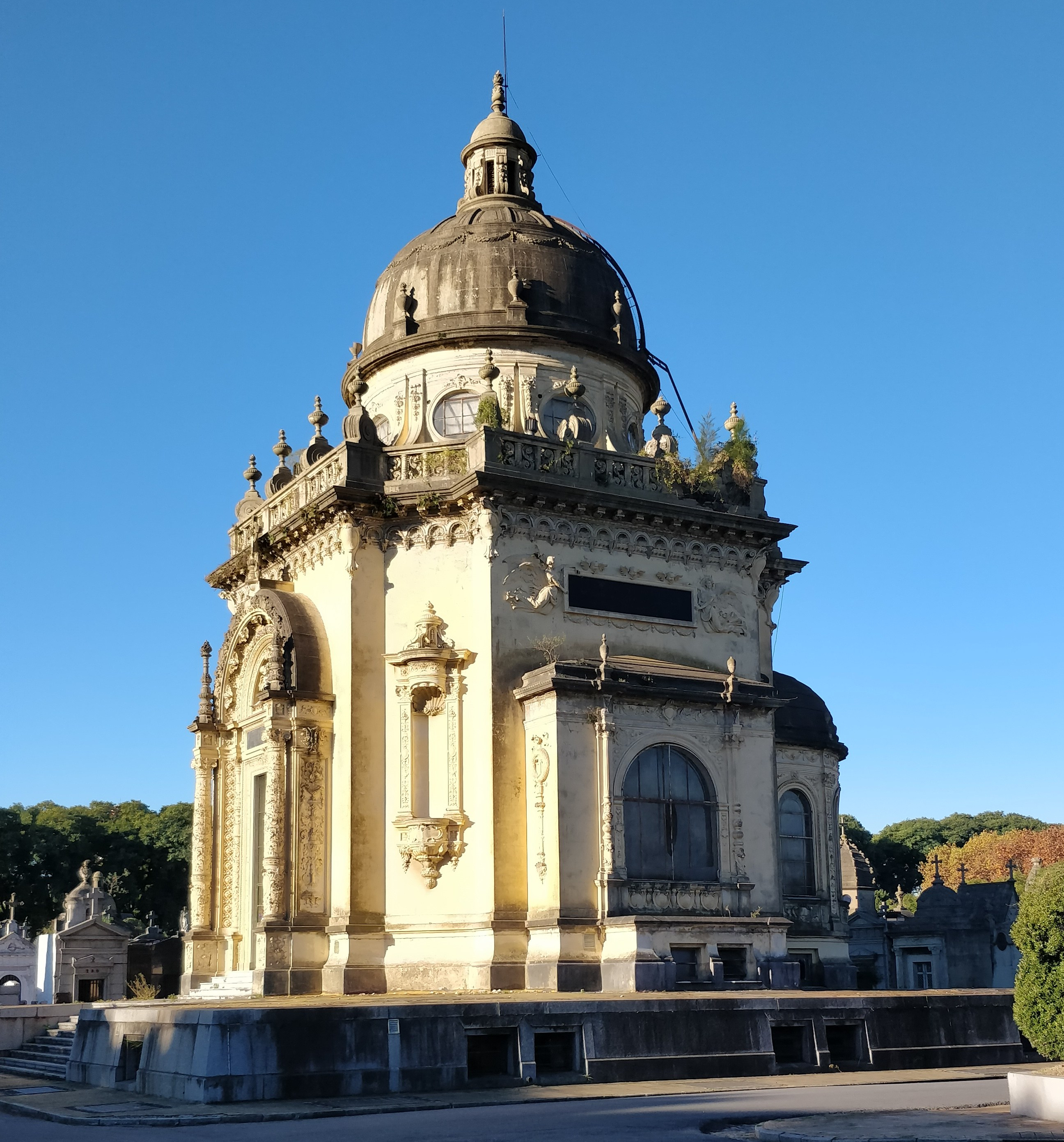
La Chacarita is the national cemetery of Argentina, and also the country’s largest.  It doesn’t get near the attention that Recoleta gets, which might explain why I saw maybe 10 other people and was asked twice if I was looking for something in the 90 minutes I was there.

IMG_20190607_160446.jpg
Yeah I am. I’m looking for ideas.

The enormous cemetery was established in 1887 following a yellow fever epidemic and is 230 acres.  It is chock full of notable figures including scientists (Nobel laureate Bernardo Houssay), artists (Antonio Berni, whose work I included in the MALBA post), and tango luminaries (Homero Manzi, Ángel Villoldo, Osvaldo Pugliese, and many others).  There are a number of former presidents, though they seem mostly from dictatorship eras, and also labor leaders and at least one guerrilla leader.  Botanical garden designer and namesake Carlos Thays is buried here, as well.  La Chacarita is absolutely full of Argentina’s history.

It is, unsurprisingly, also chock full of fancy, fancy vaults.

IMG_20190607_154849.jpg

img_20190607_154505.jpg
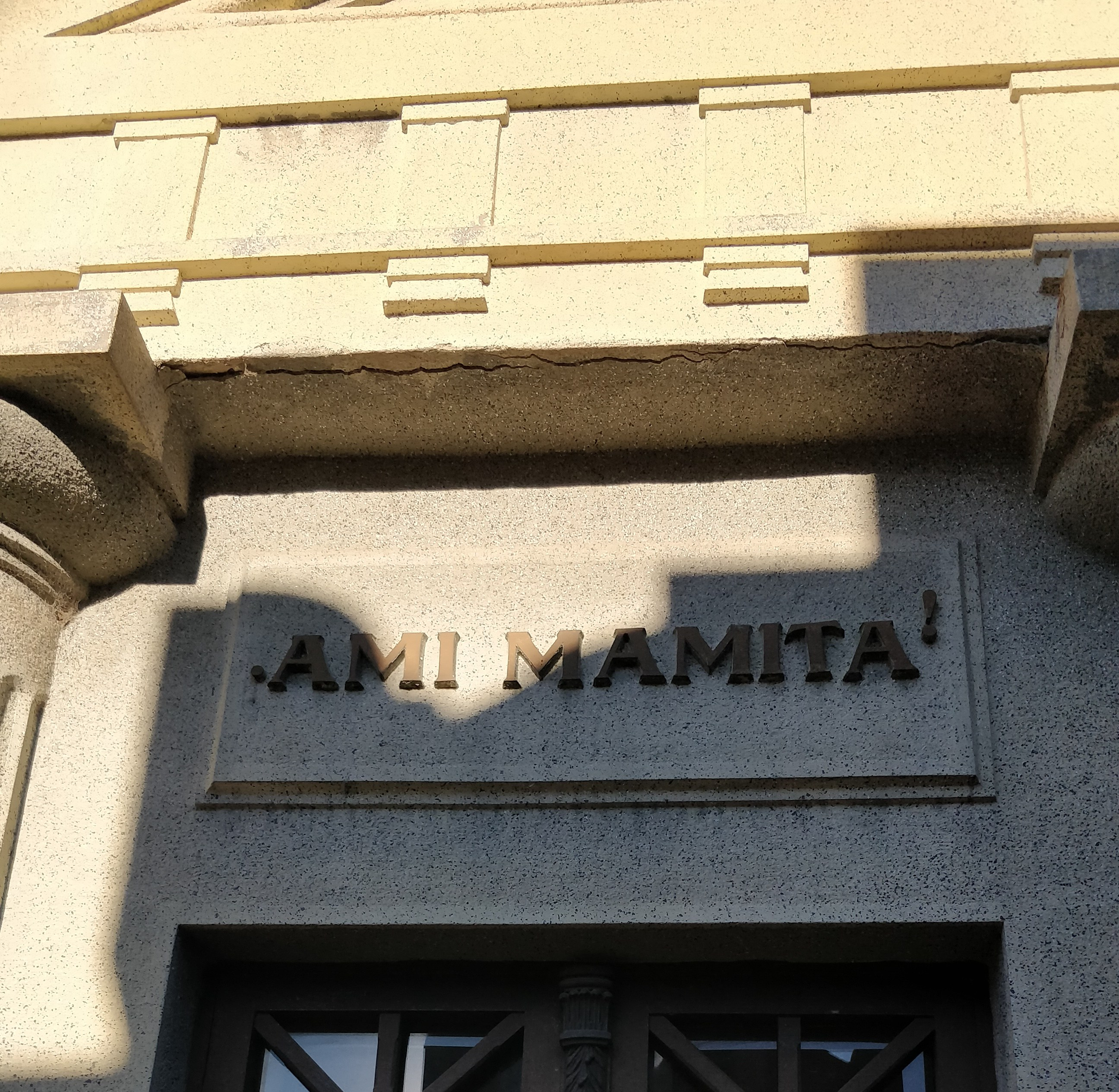
Tribute to a beloved mother, now missing its inverted exclamation mark

IMG_20190607_160152.jpg
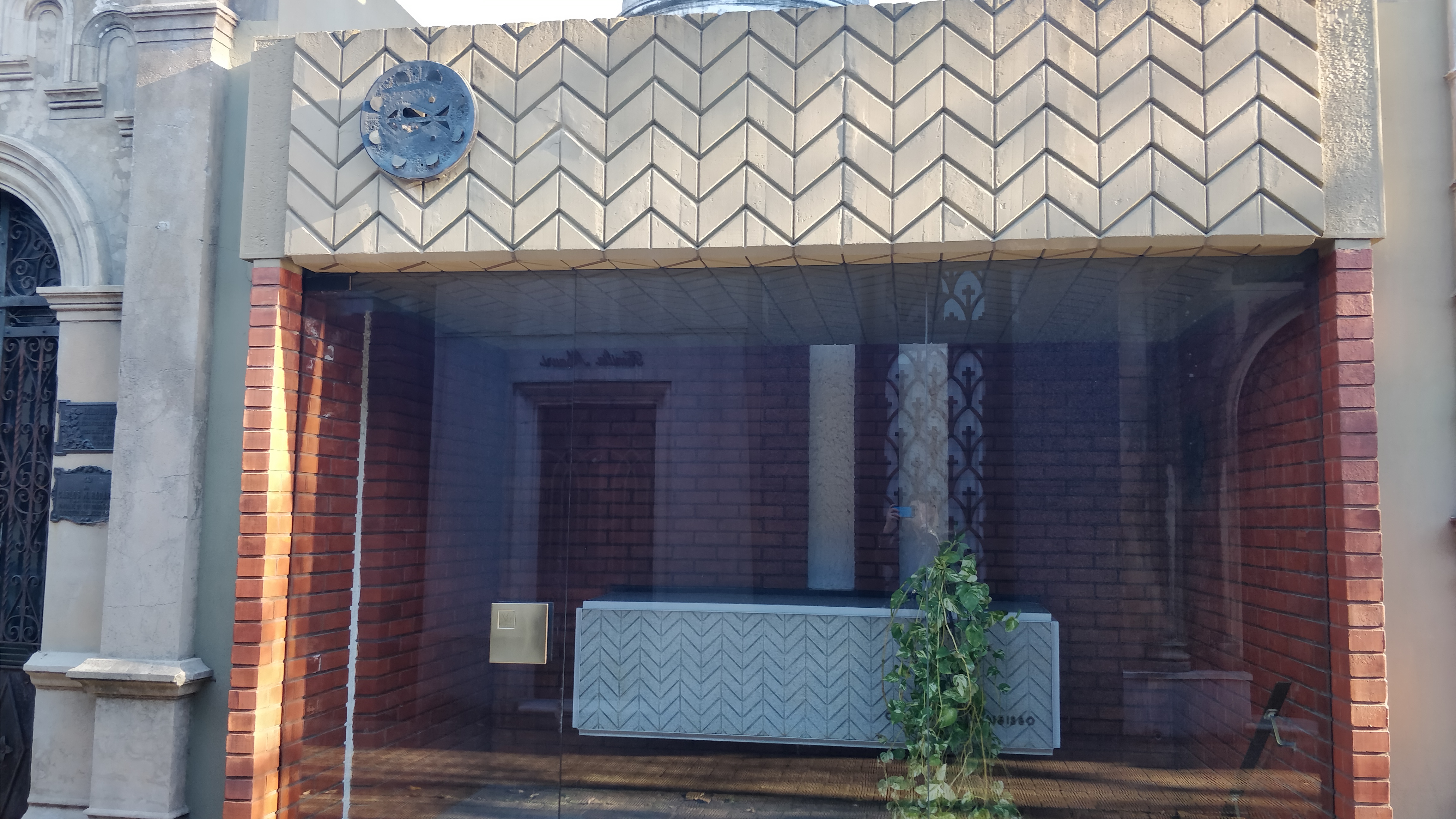
Very modern design for this crypt.

IMG_20190607_160251.jpg
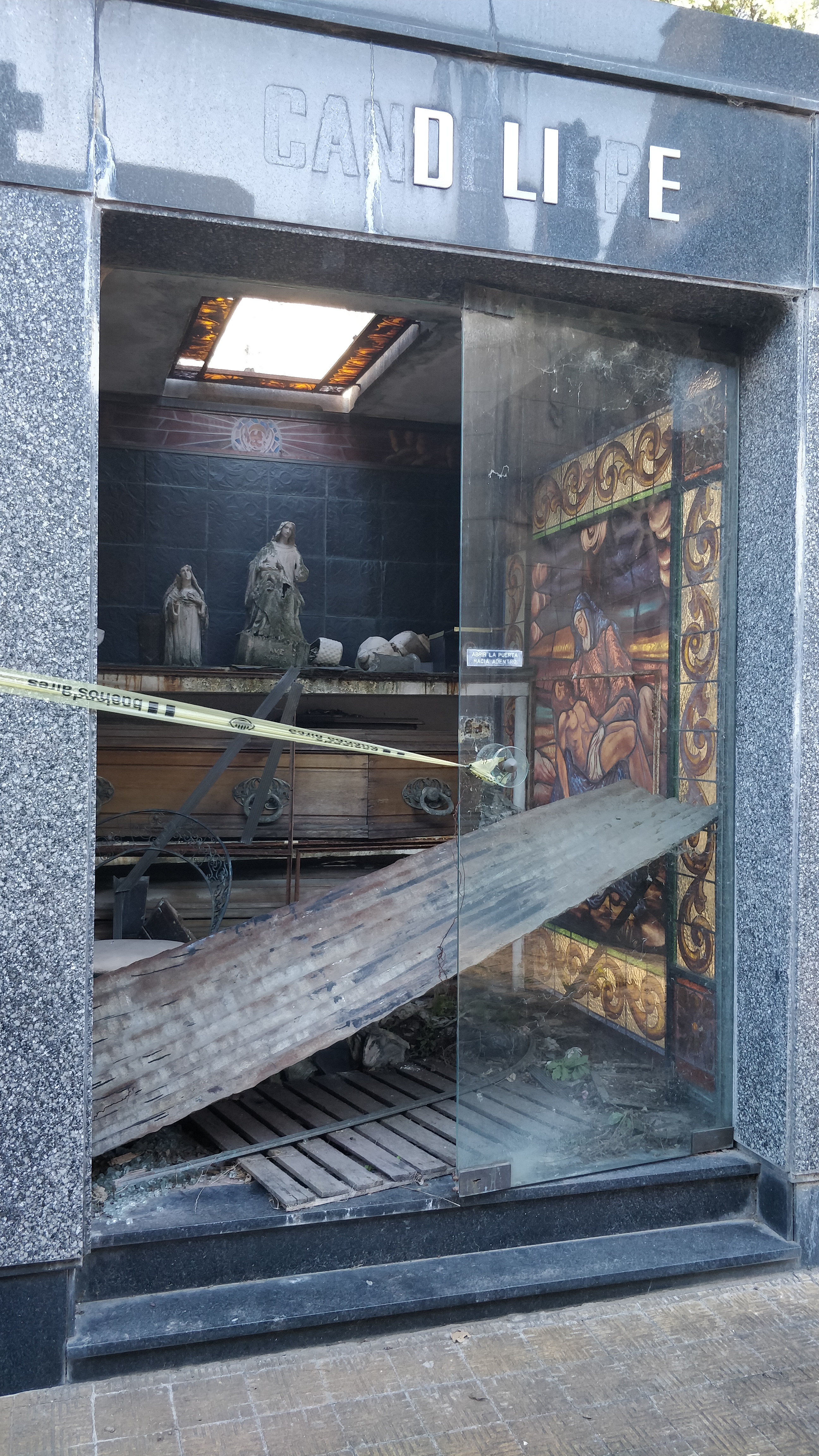
Just like in Recoleta, some crypts are in really, really bad shape.

Group pantheons and vaults are also very common.

img_20190607_161325.jpg
Spanish-Argentine Mutual Society Pantheon

img_20190607_154348.jpg
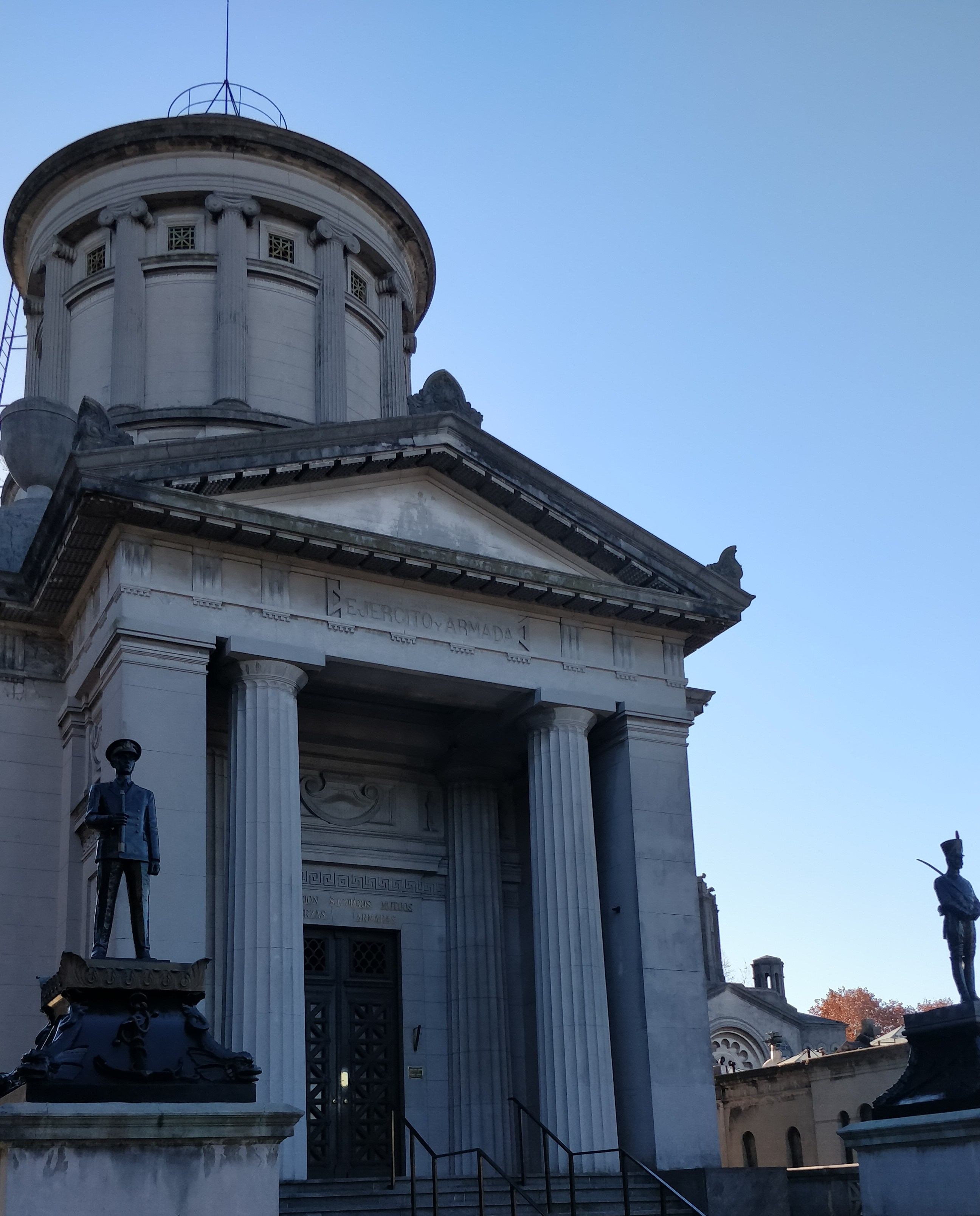
Military pantheon

IMG_20190607_155402.jpg
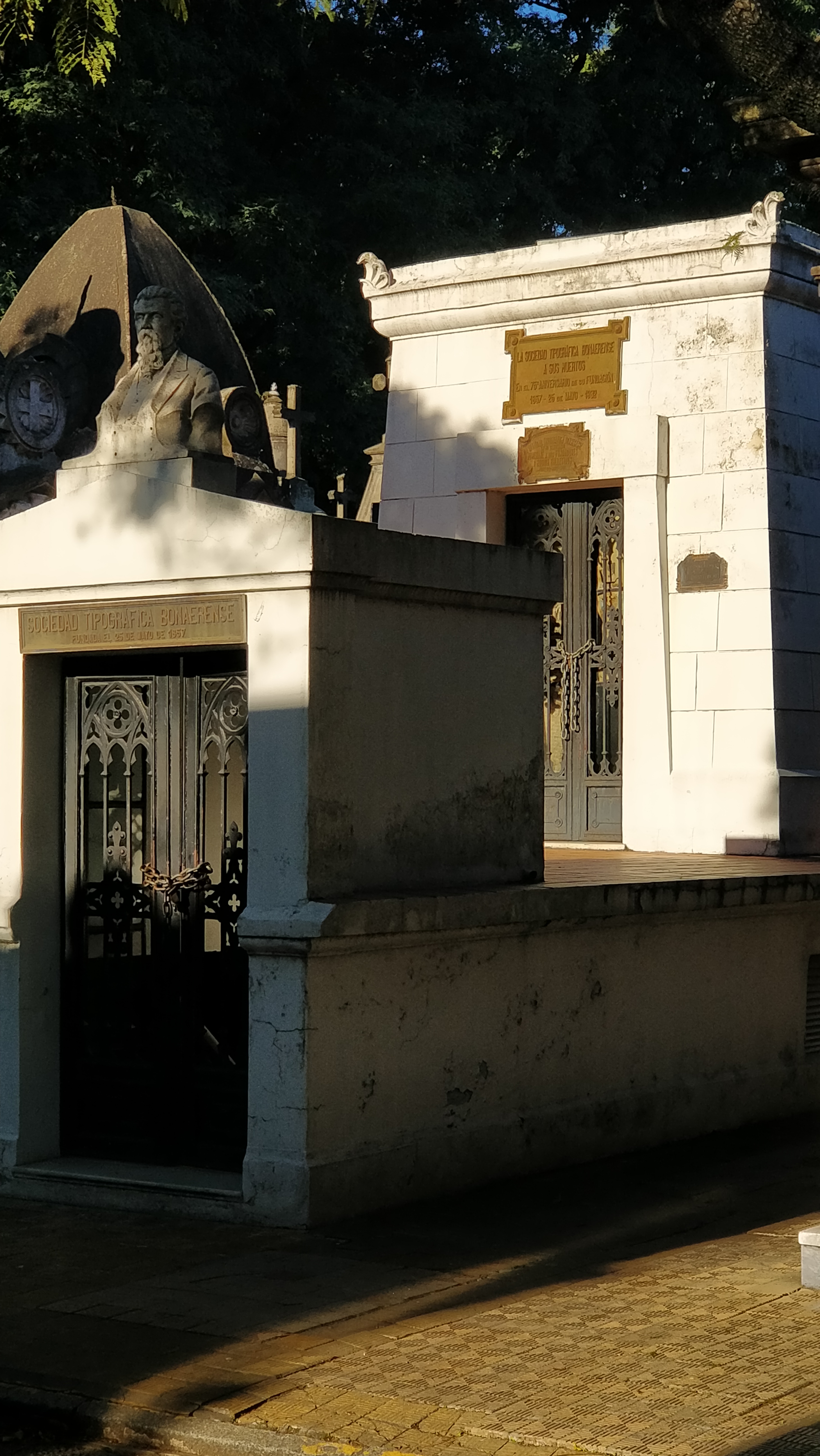
The vault for the Sociedad Tipográfica Bonaerense, a 160 year old labor union of typographic workers, one of the first unions here.

IMG_20190607_161615.jpg
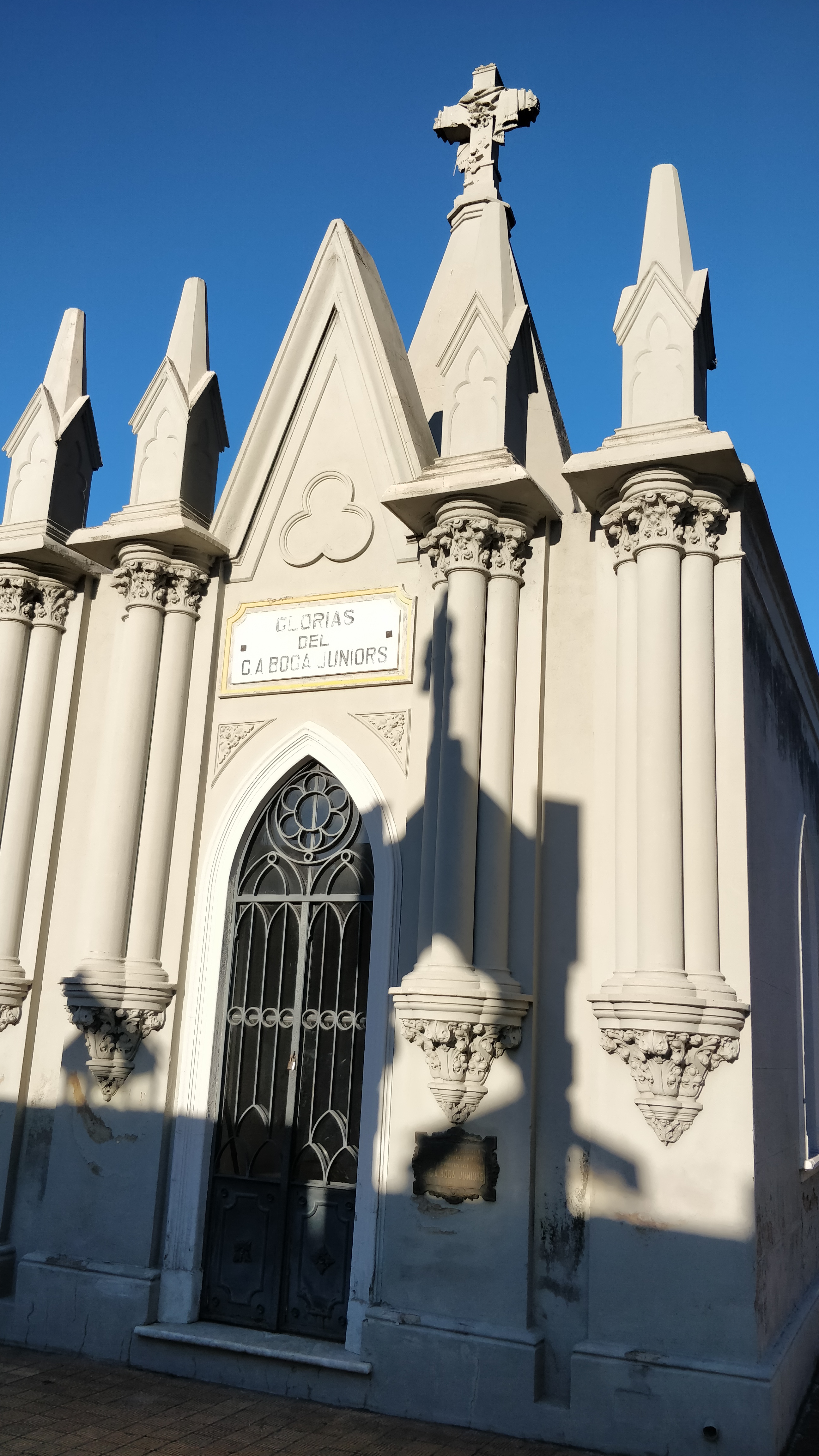
Here lie the founders of the Boca Juniors; I literally cannot overstate the importance of football (soccer) or of the Boca Juniors to it.

IMG_20190607_163735.jpg
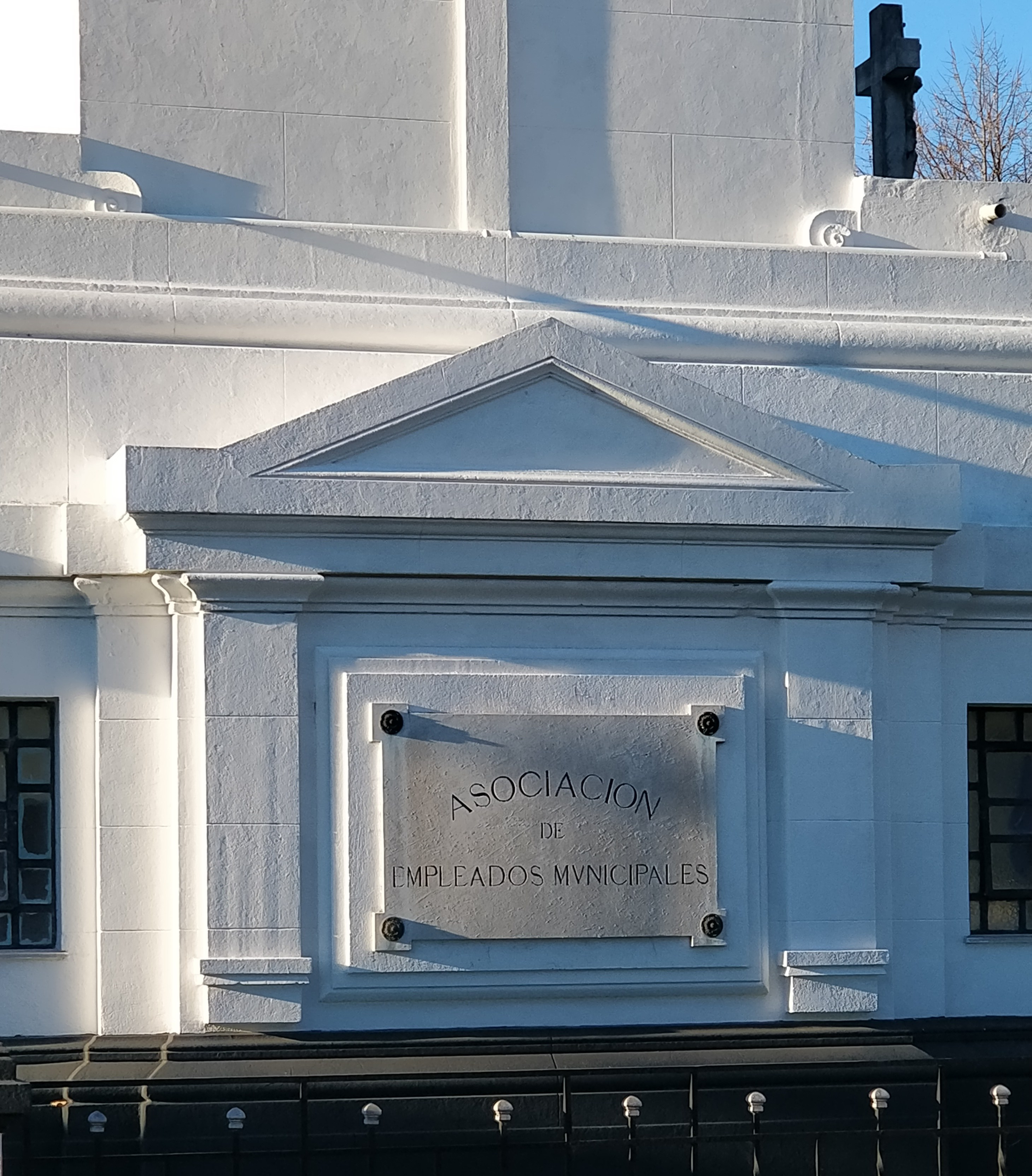
Municipal employees, just in case you want to be buried with your closest co-workers.

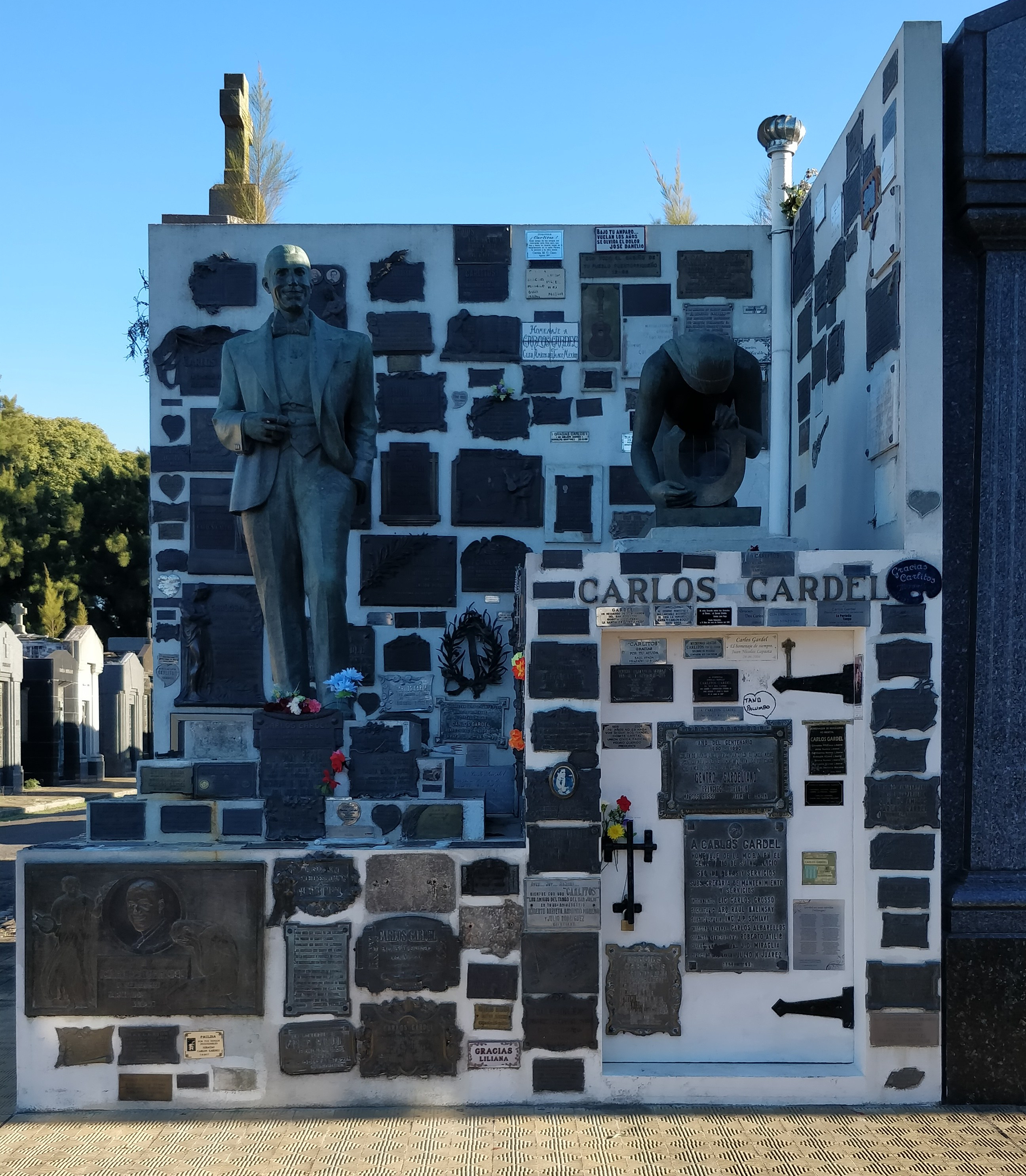
Let’s look at two of the most famous burials in La Chacarita.  First up, Carlos Gardel, immensely famous and important tango guy.

img_20190607_162522.jpg
I was there around 4 pm and the shadows were terrible for photos.

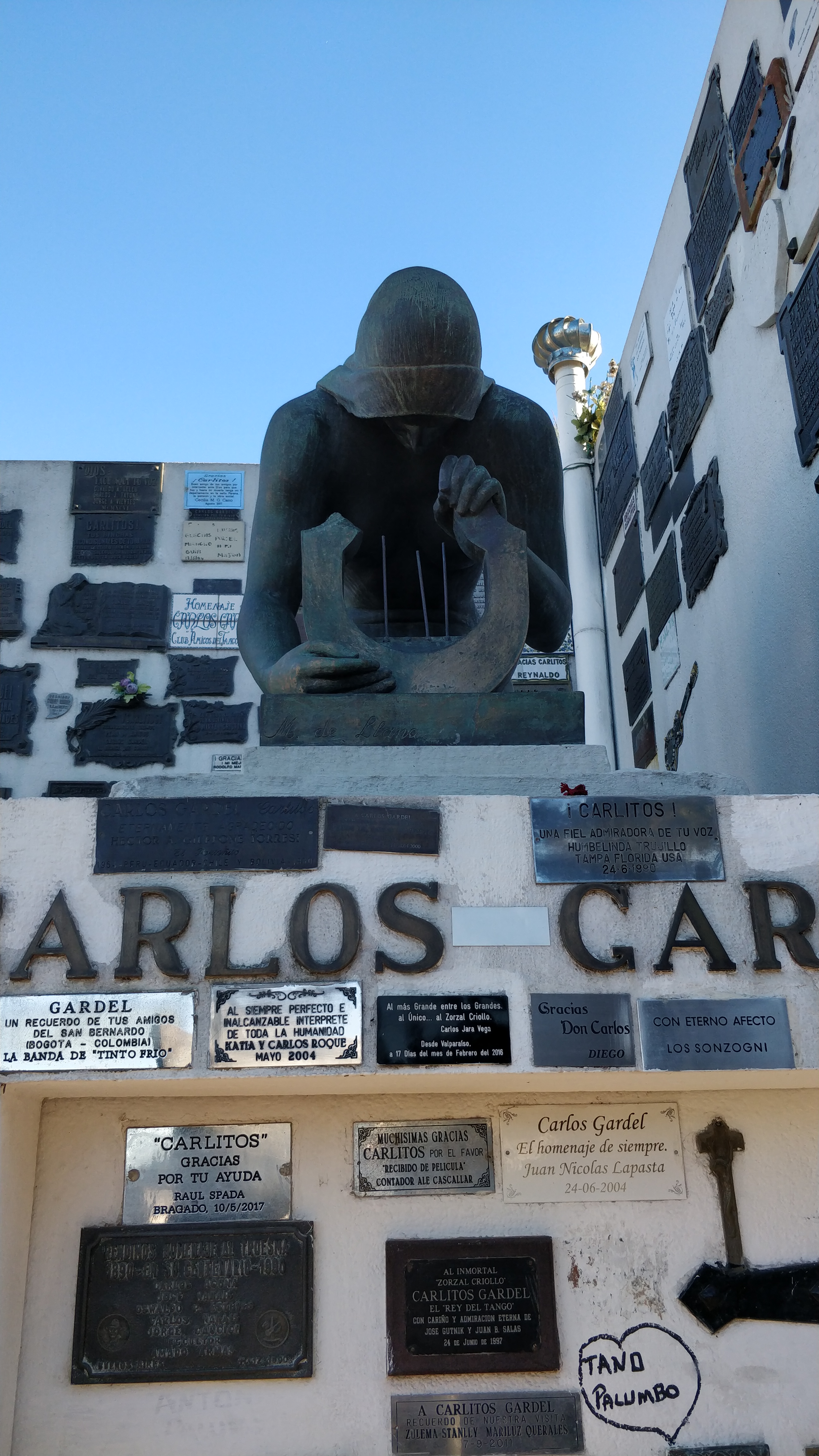
The figure on the left is the man himself, who died tragically at the height of his career, at age 45.  Visitors often leave lit cigarettes in his hand.  The figure on the right mournfully hunches over a broken lyre.

IMG_20190607_162542.jpg

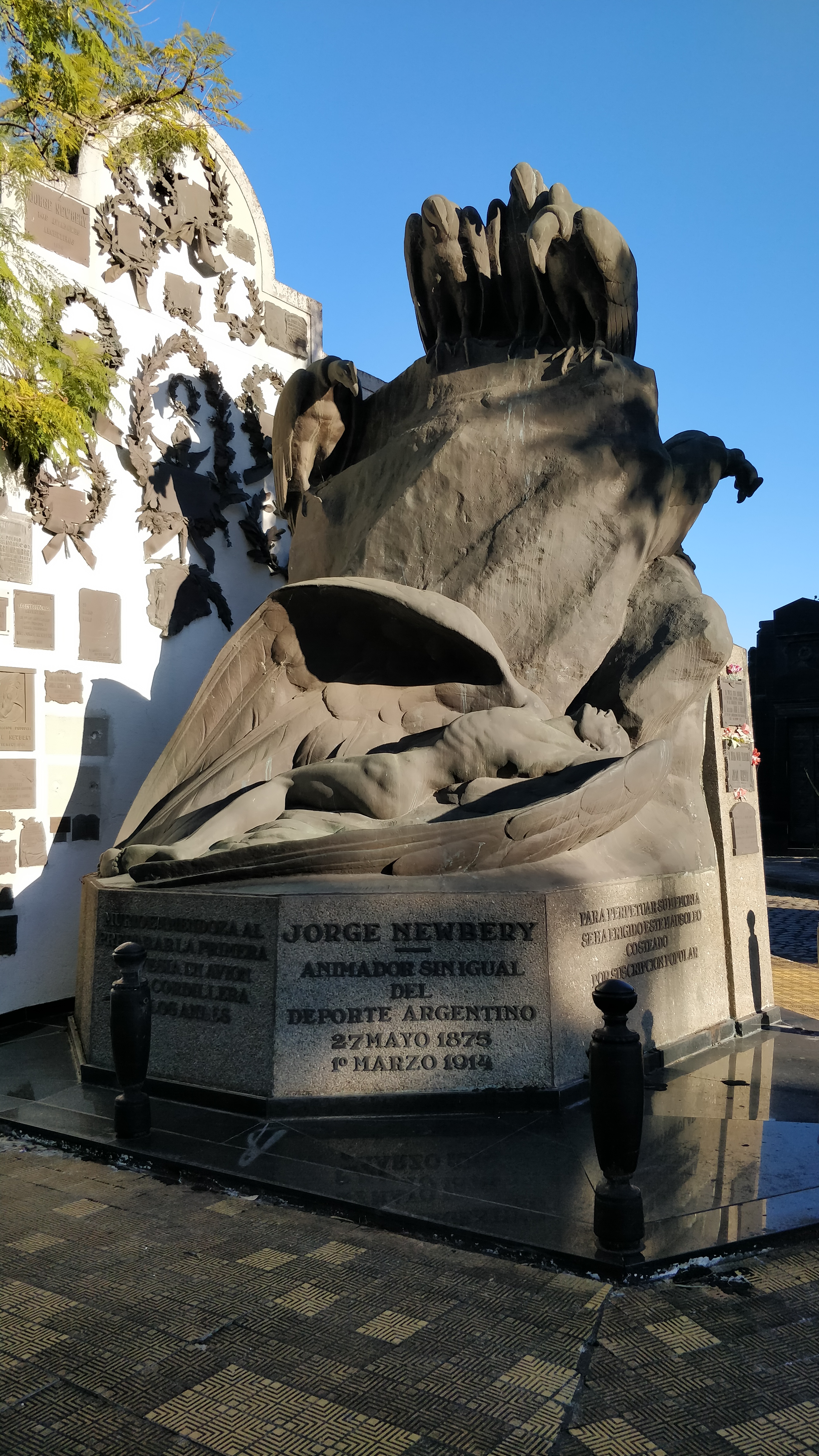
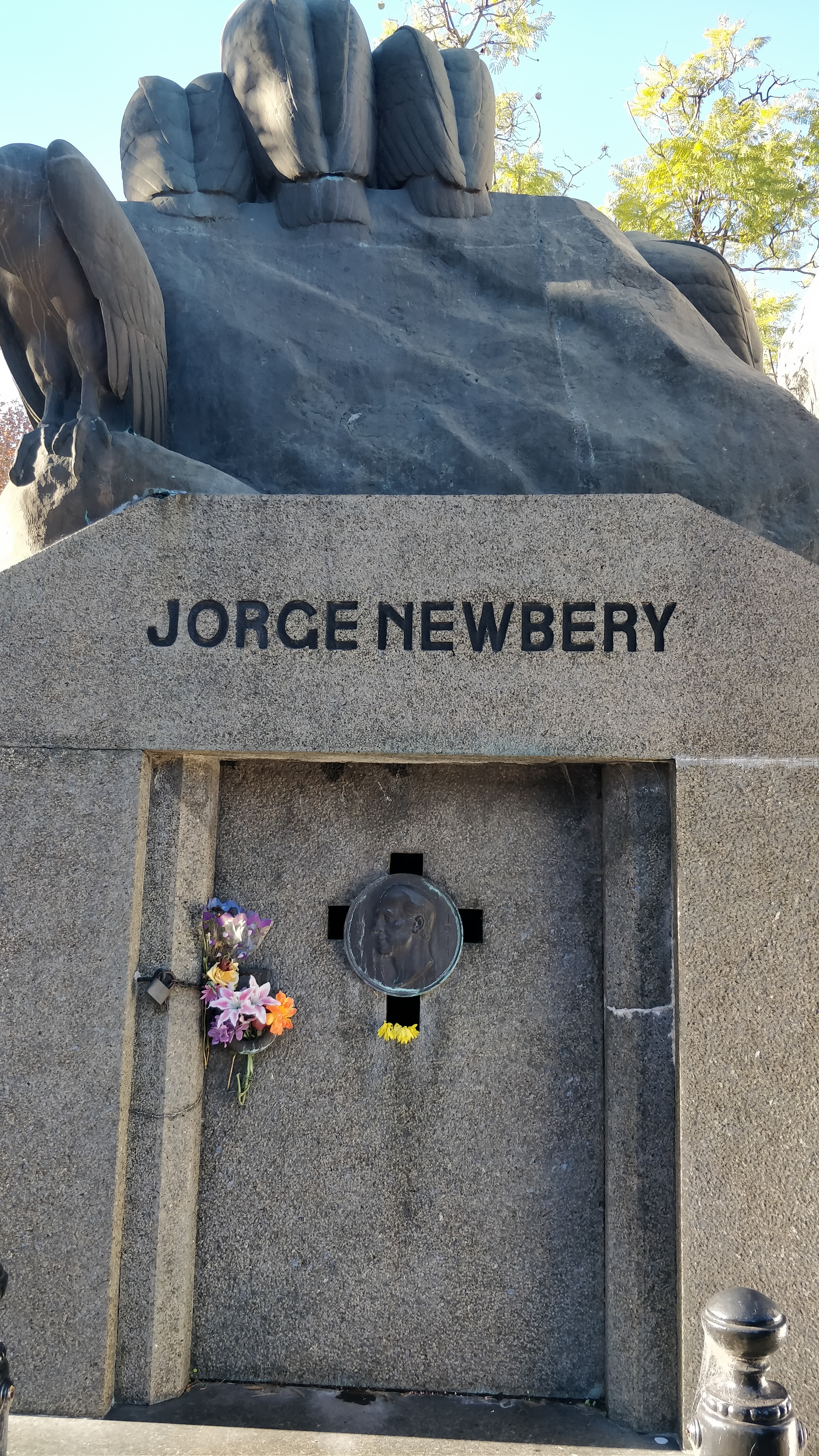
This is the tomb Jorge Newbery, aviation hero and namesake of one of Buenos Aires’s airports (although generally, that airport is referred to as “Aeroparque”).  He died in a plane crash at age 38.  Whoever designed his tomb really brought the drama.

IMG_20190607_162026.jpg
“Sorry, did you say there’s going to be a carrion bird on the tomb?”  “No, I said there’s going to be five carrion birds on the tomb.”

IMG_20190607_162117.jpg
“One of them is going to lurk over the actual crypt door.”

Don’t for a second think that I don’t believe with my whole being that this is incredibly awesome.

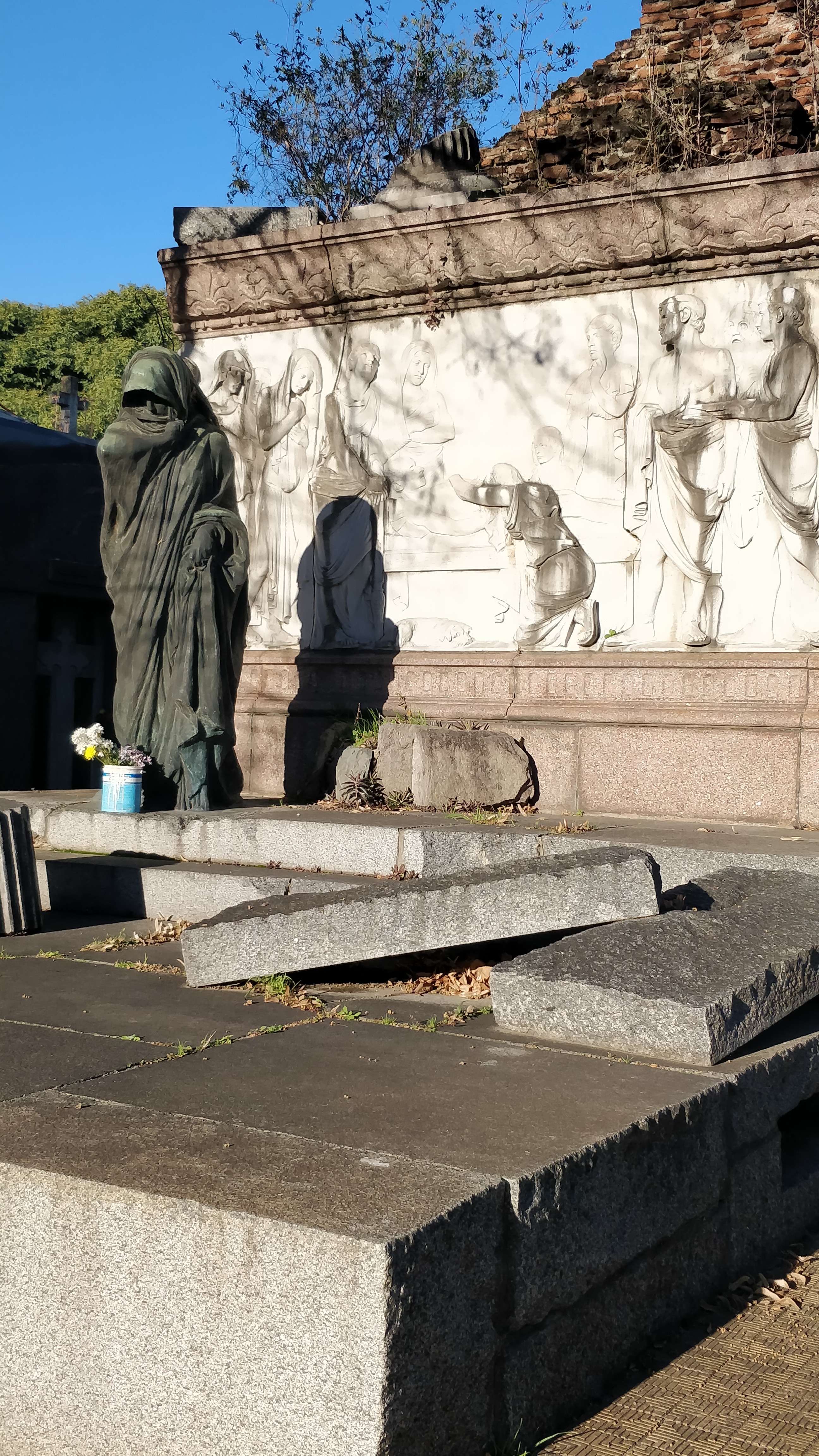
There are some pretty nice sculptures in La Chacarita, too.

IMG_20190607_160821.jpg
The broken columns and crumbling look are intentional, by the way.

IMG_20190607_155826.jpg
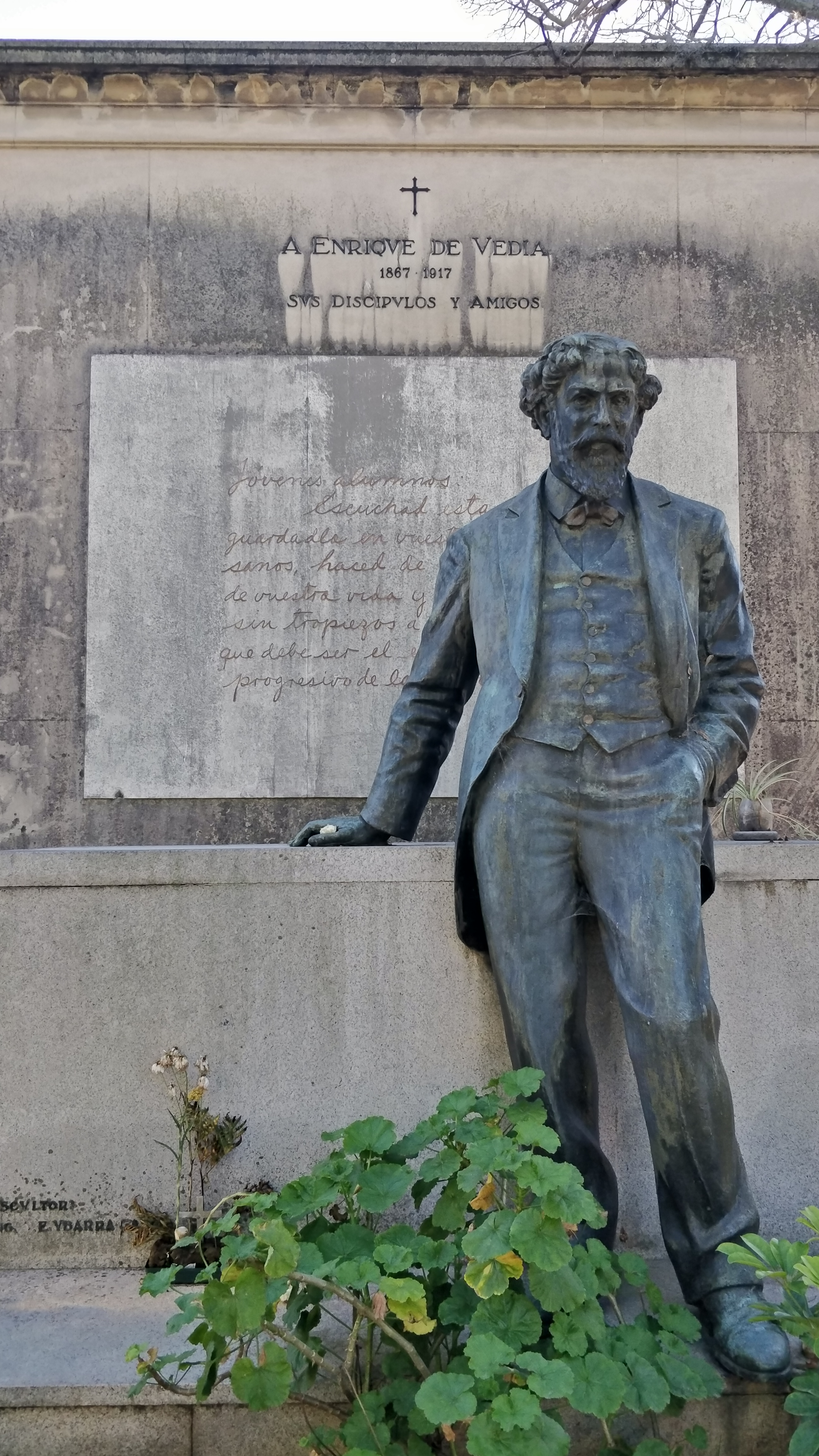
This is the memorial and tomb of Enrique de Vedia, a writer and teacher.

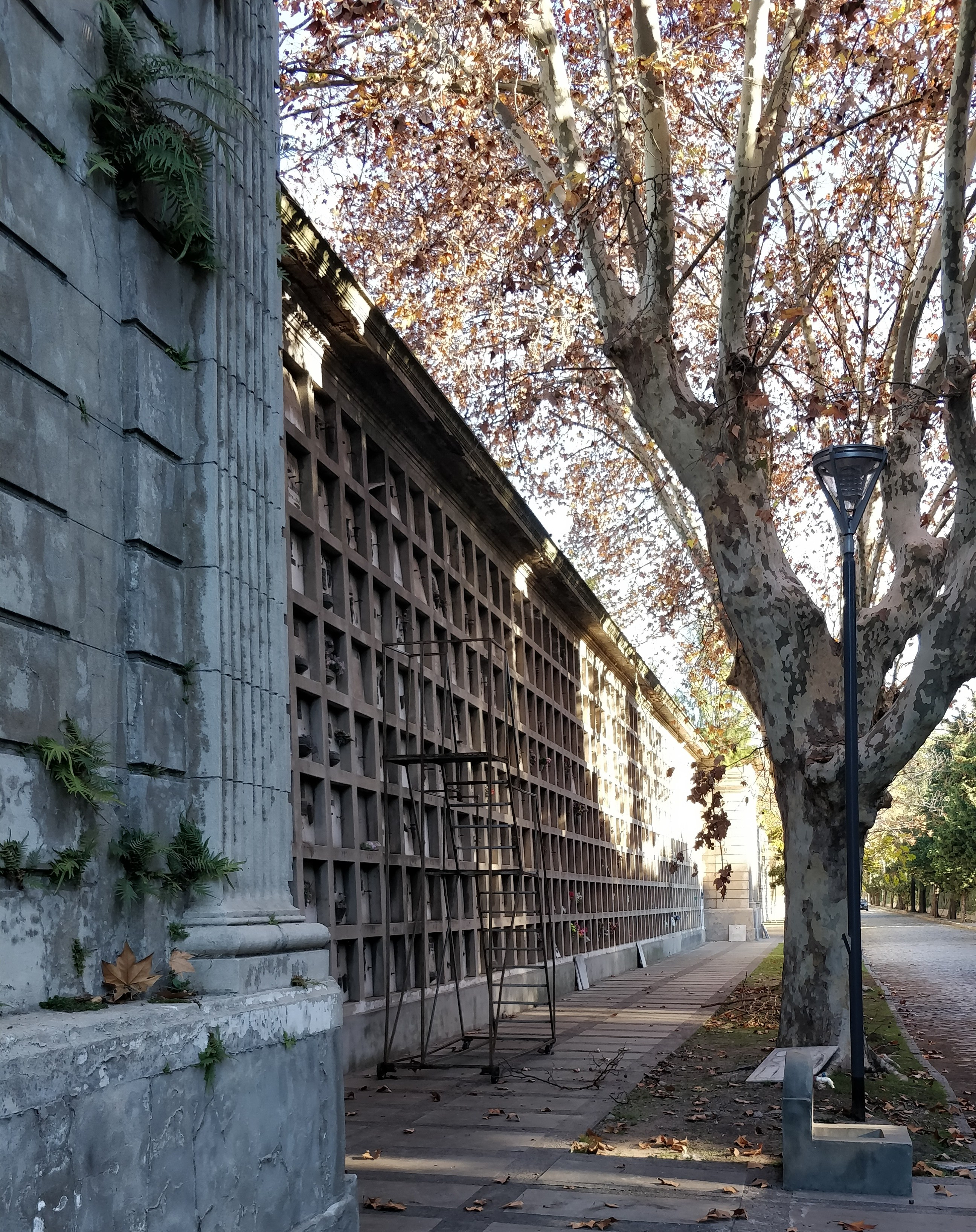
Just in case you’re not flush with crypt-levels of cash, the cemetery has several columbarium walls, the oldest of which (at least, as it appeared to me) serve in places as the cemetery’s border wall.

img_20190607_153918.jpg

The newer interments of this type are actually below ground, in a sort of open-air cavern of columbarium walls.

IMG_20190607_163429.jpg

I didn’t get a picture of the main entry of La Chacarita, as I came in one of the side gates, or a bunch of other buildings and tombs; the place is so freakin’ big, you guys.  I didn’t go into the British or German sections at all (I didn’t even find them).  I’m going to go back at some point, so I will post on those sections when I do.

El Cementerio de La Chacarita is the largest single thing in La Chacarita, with several bus lines and a few stops on the B subway line right near it.  It’s open from 7:30 am to 5 pm.  There’s a free tour in Spanish on the second and fourth Saturdays every month at 10 am (cancelled if it’s raining); check the website for the most up to date information available.


Museo Beatle [Beatle Museum]

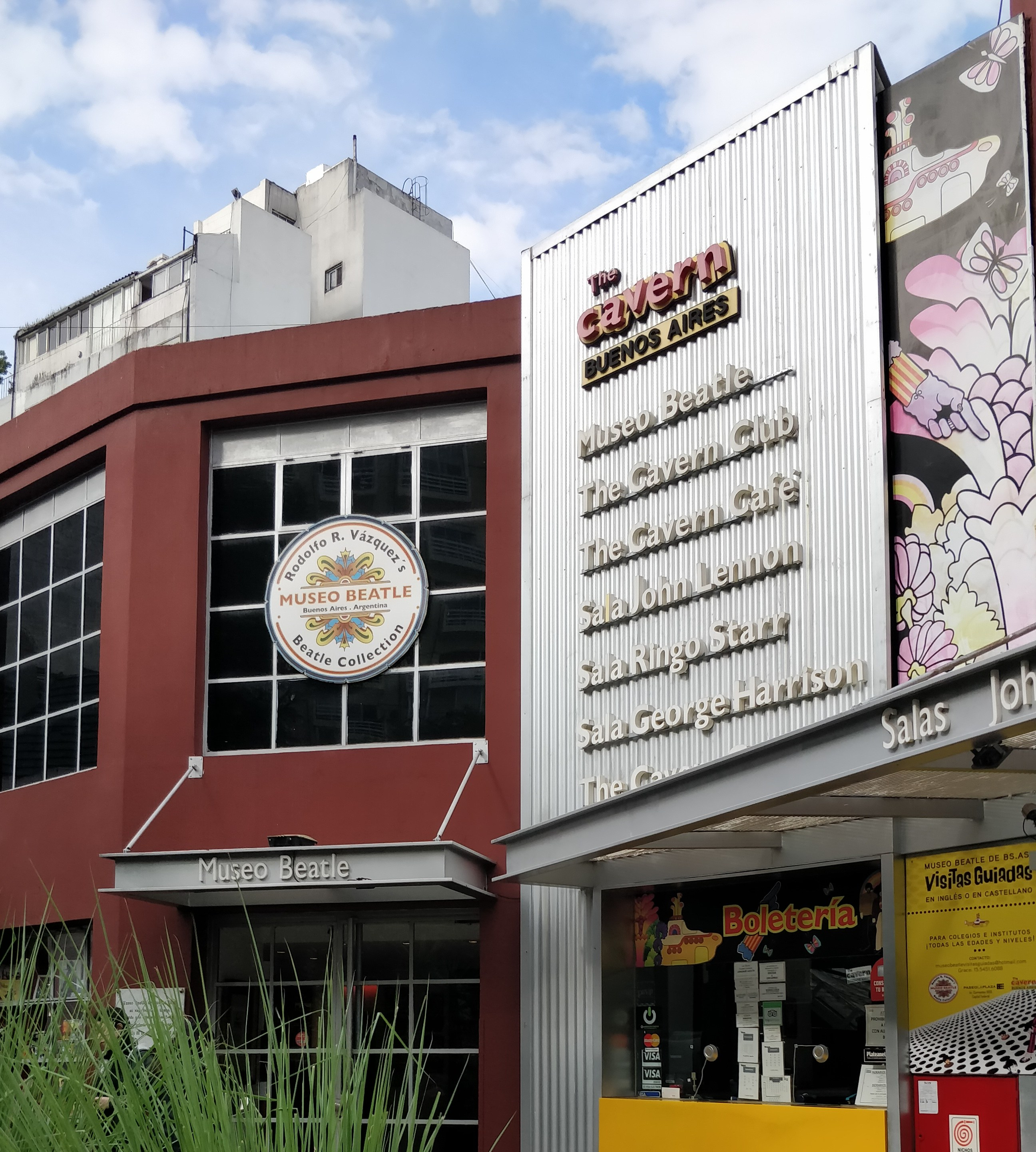
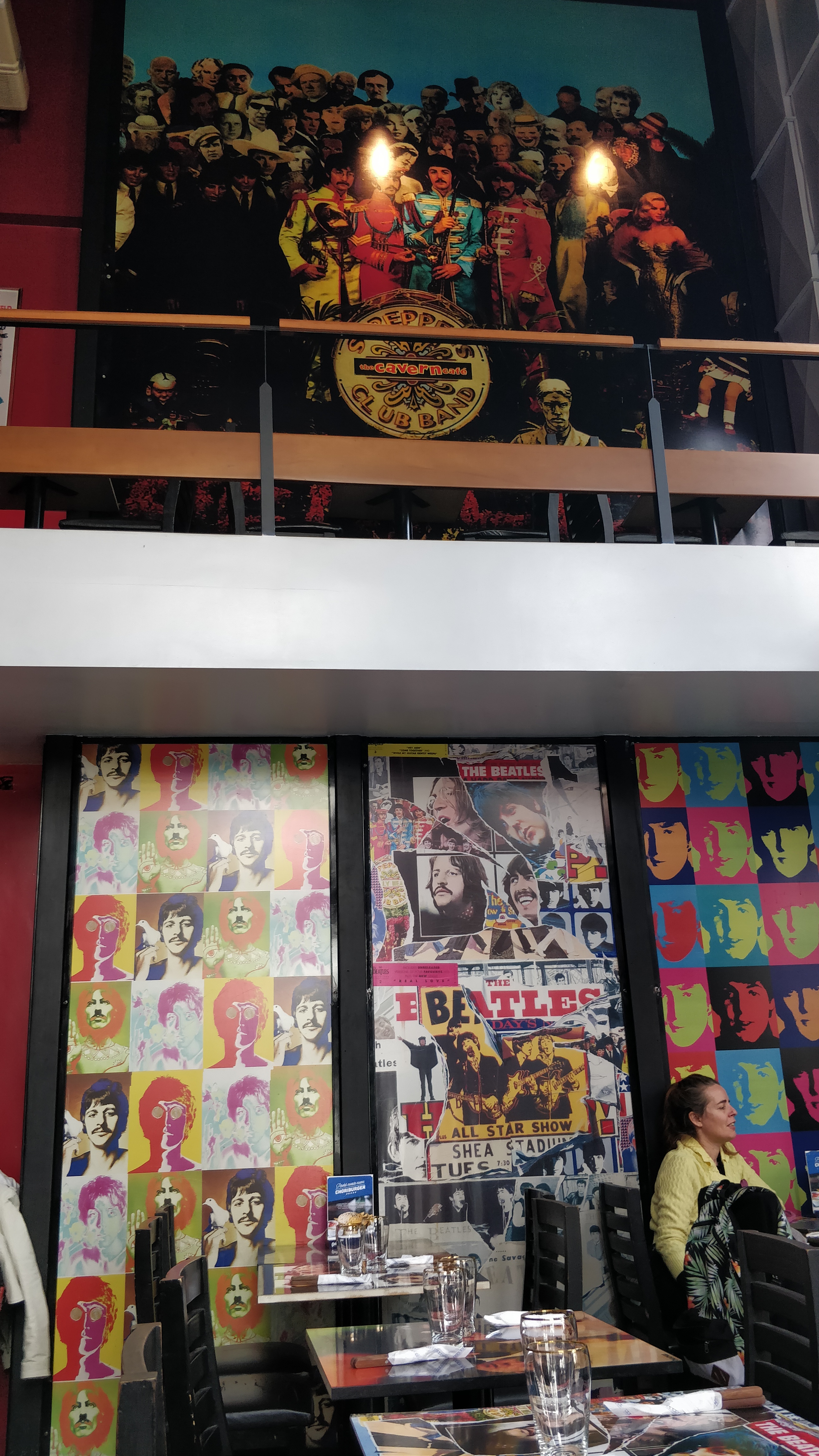
Tucked in the Paseo La Plaza on Corrientes Ave, the “street that never sleeps” and a center of theater and tango, is the Cavern.


img_20190606_122033.jpg
Can’t buy me love, but can buy me a ticket to ride if by “ride” you mean “go into the museum”

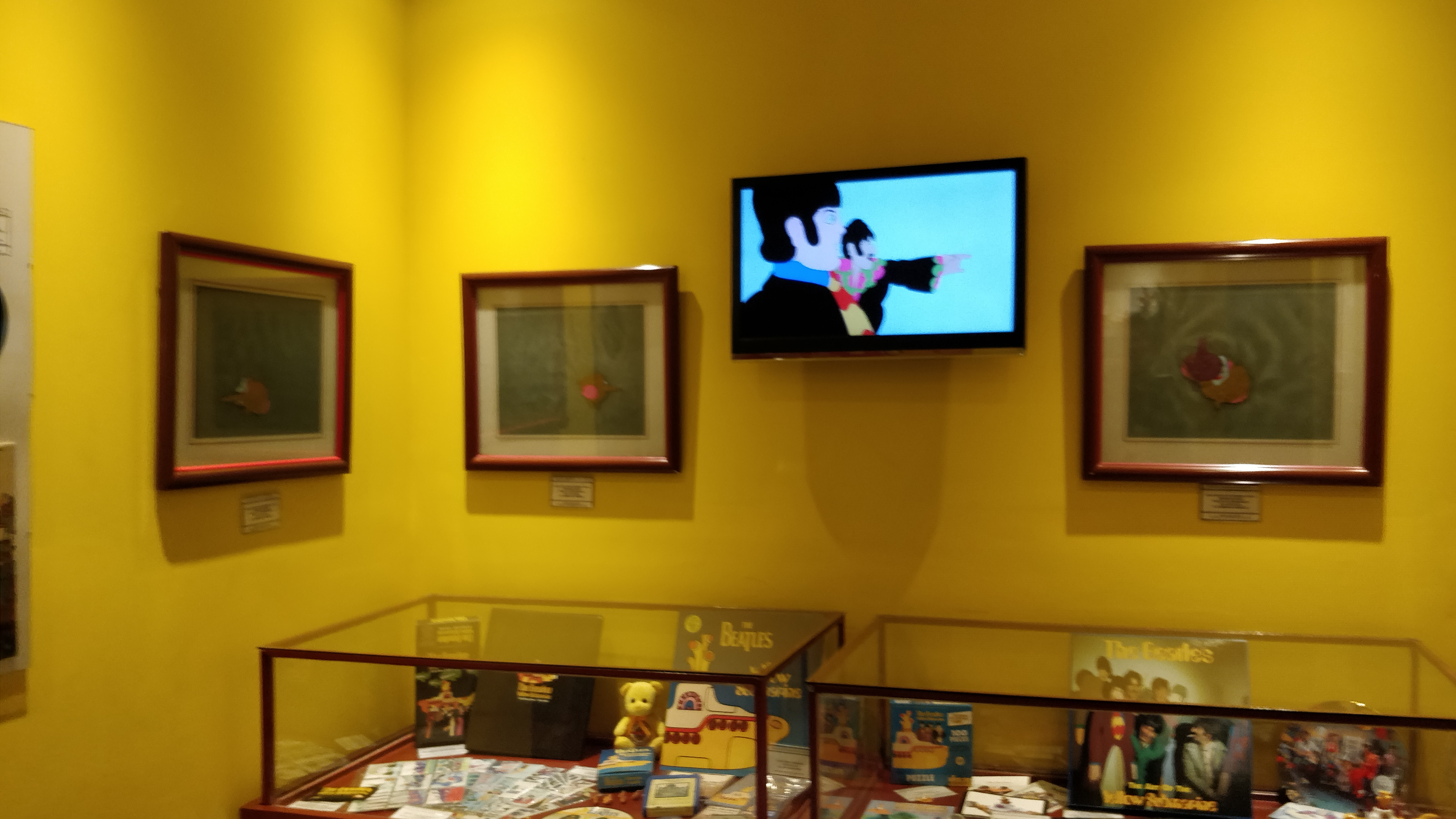
Named for the Beatles’ frequent venue, it’s a Beatles-themed complex that includes a cafe, a club, a theater, performance spaces, and a museum.

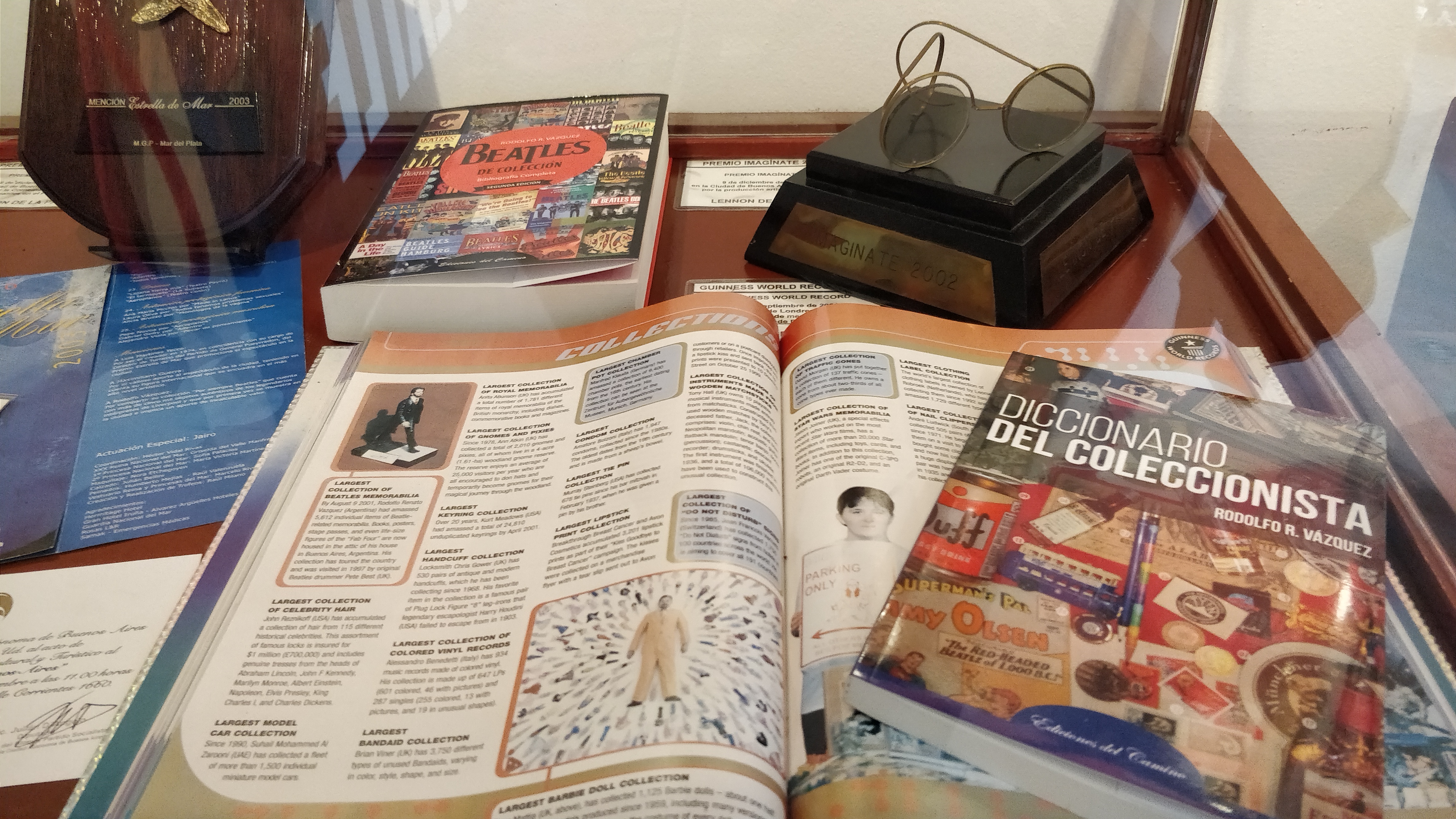
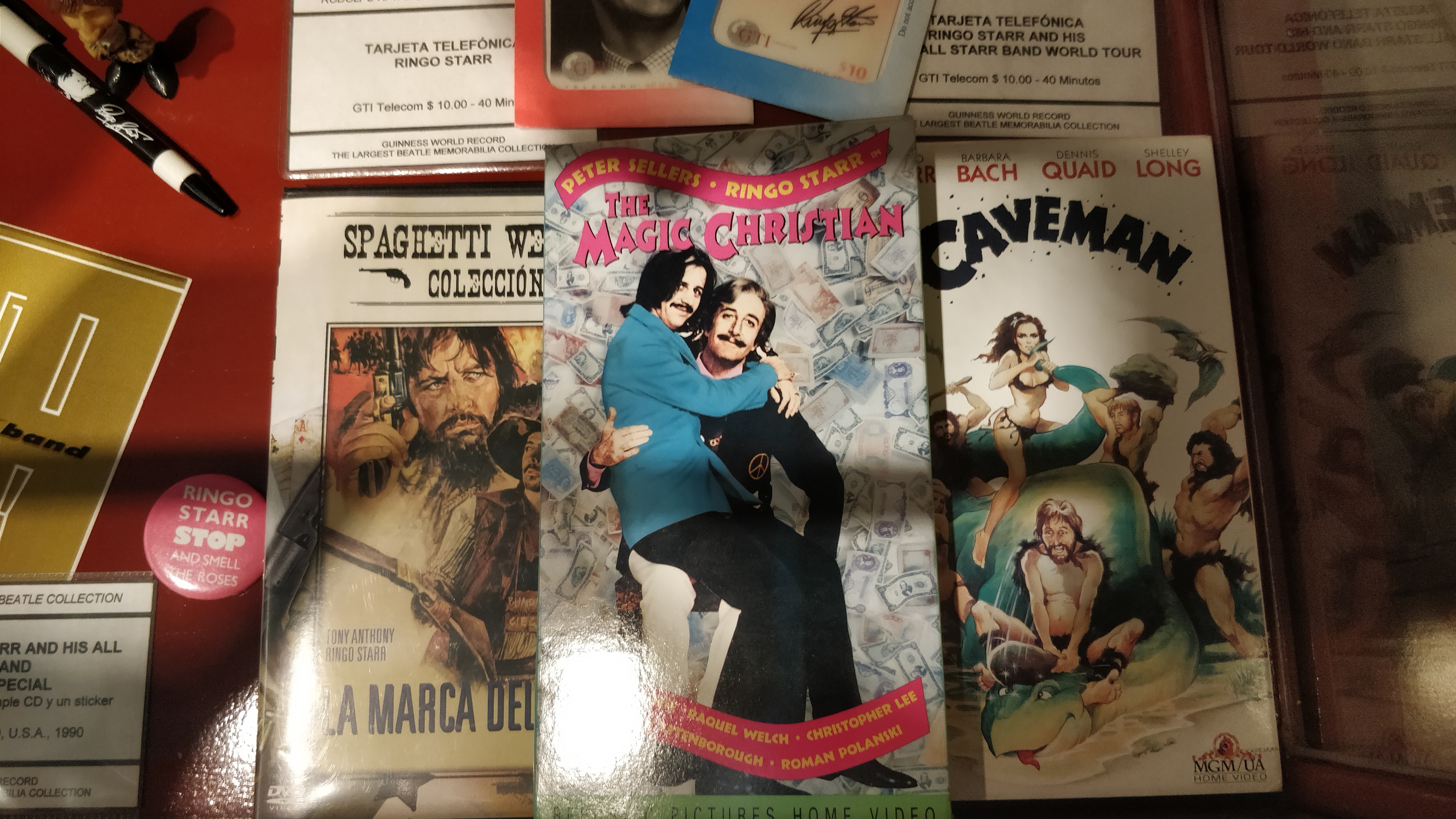
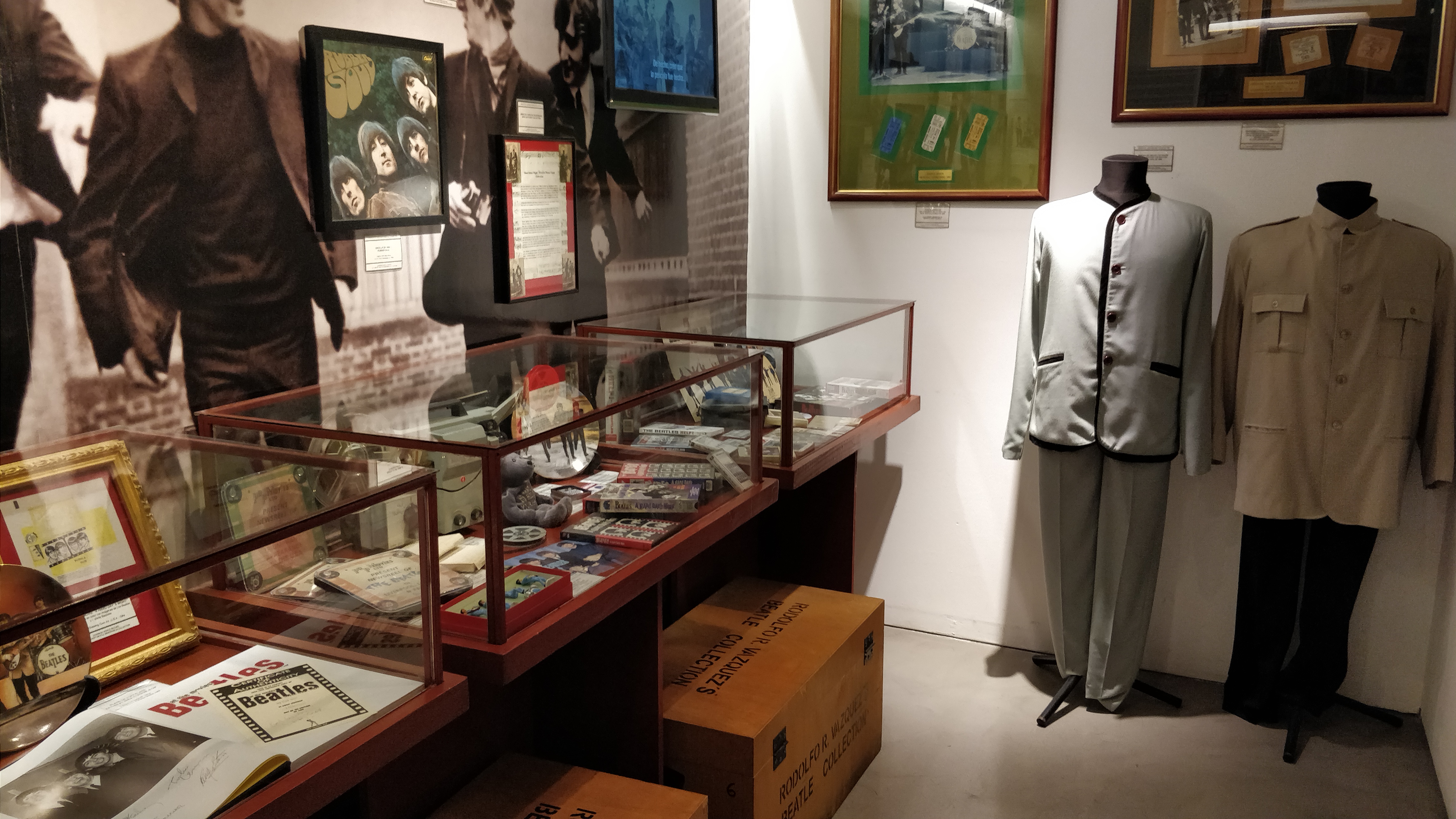
The Museo Beatle belongs to one of the most charming categories of museum, “personal collection that got way out of hand.”  In this case, Rodolfo Vázquez began collecting Beatles stuff at the age of 10, and by 2001, he had the Guinness Book of World Records certified biggest damn Beatles collection (re-certified in 2011 by Guinness as having 7,700 items).

IMG_20190606_122657.jpg
Can’t buy me love, but can buy me the catalog in the gift shop

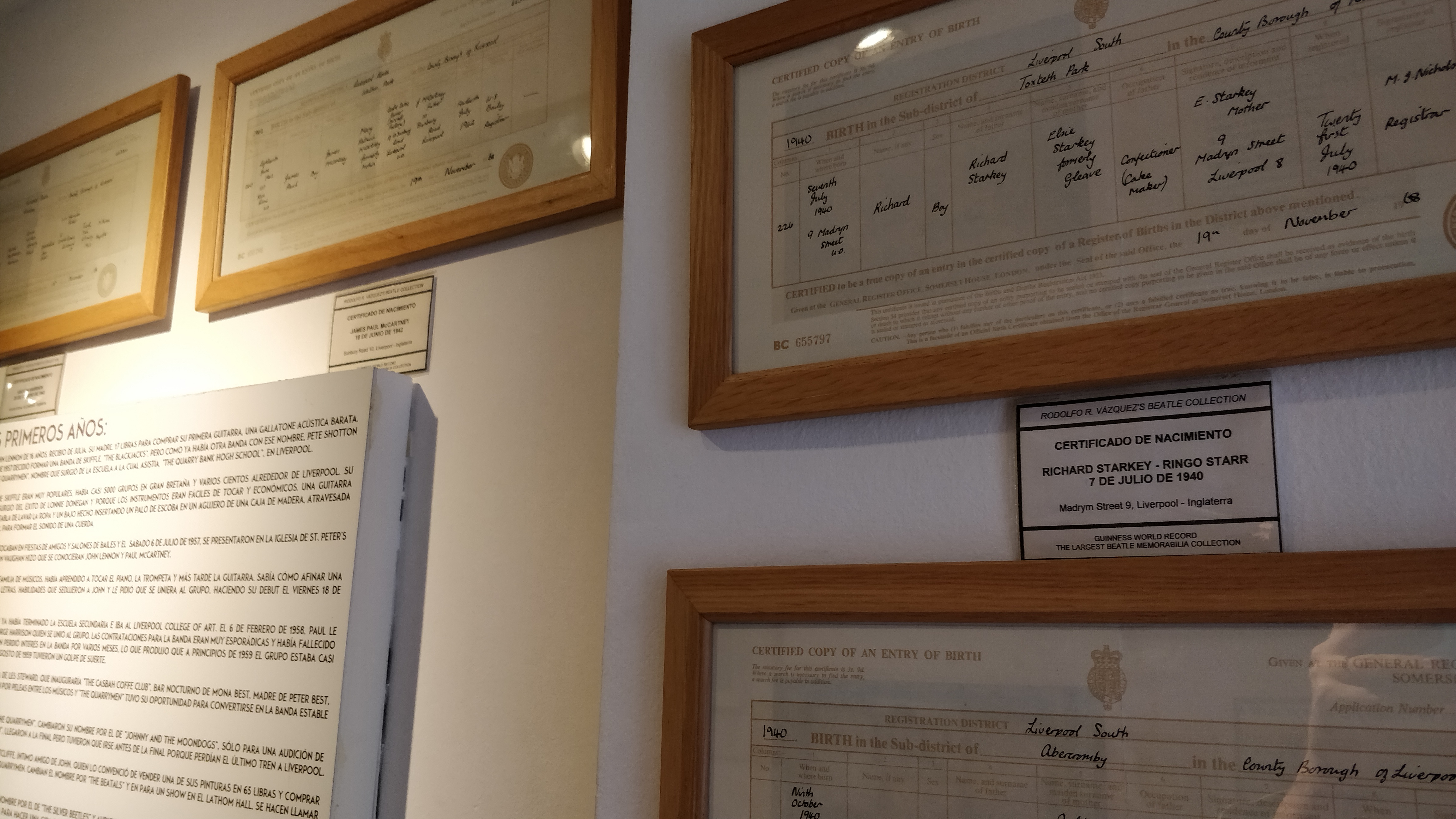
The museum is organized chronologically, and how else would you start, but with the Fab Four’s frickin’ births?

IMG_20190606_122712.jpg
Original birth certificates, I was told

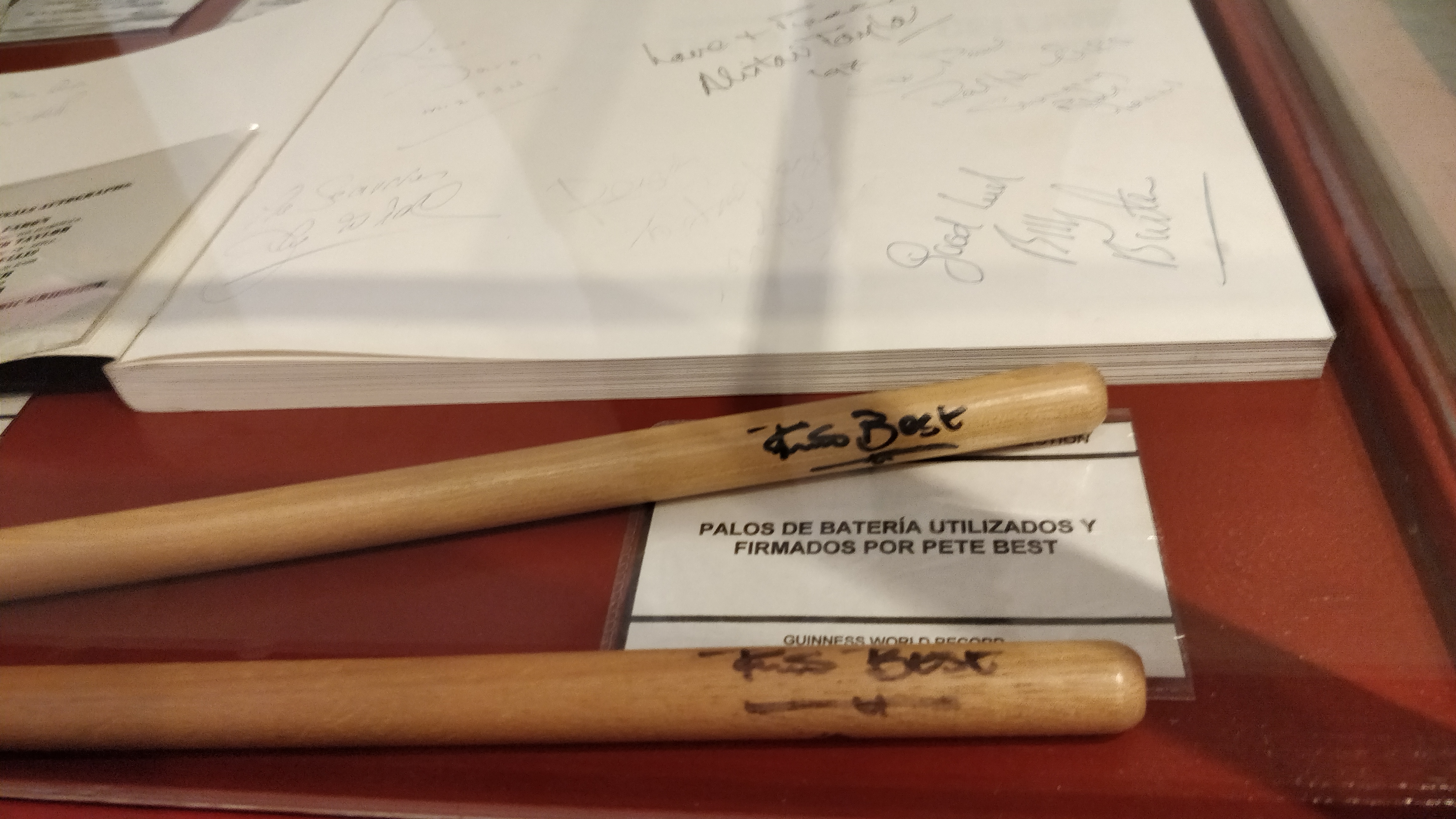
Don’t worry, Pete Best fans, the museum’s got you covered.

IMG_20190606_122923.jpg

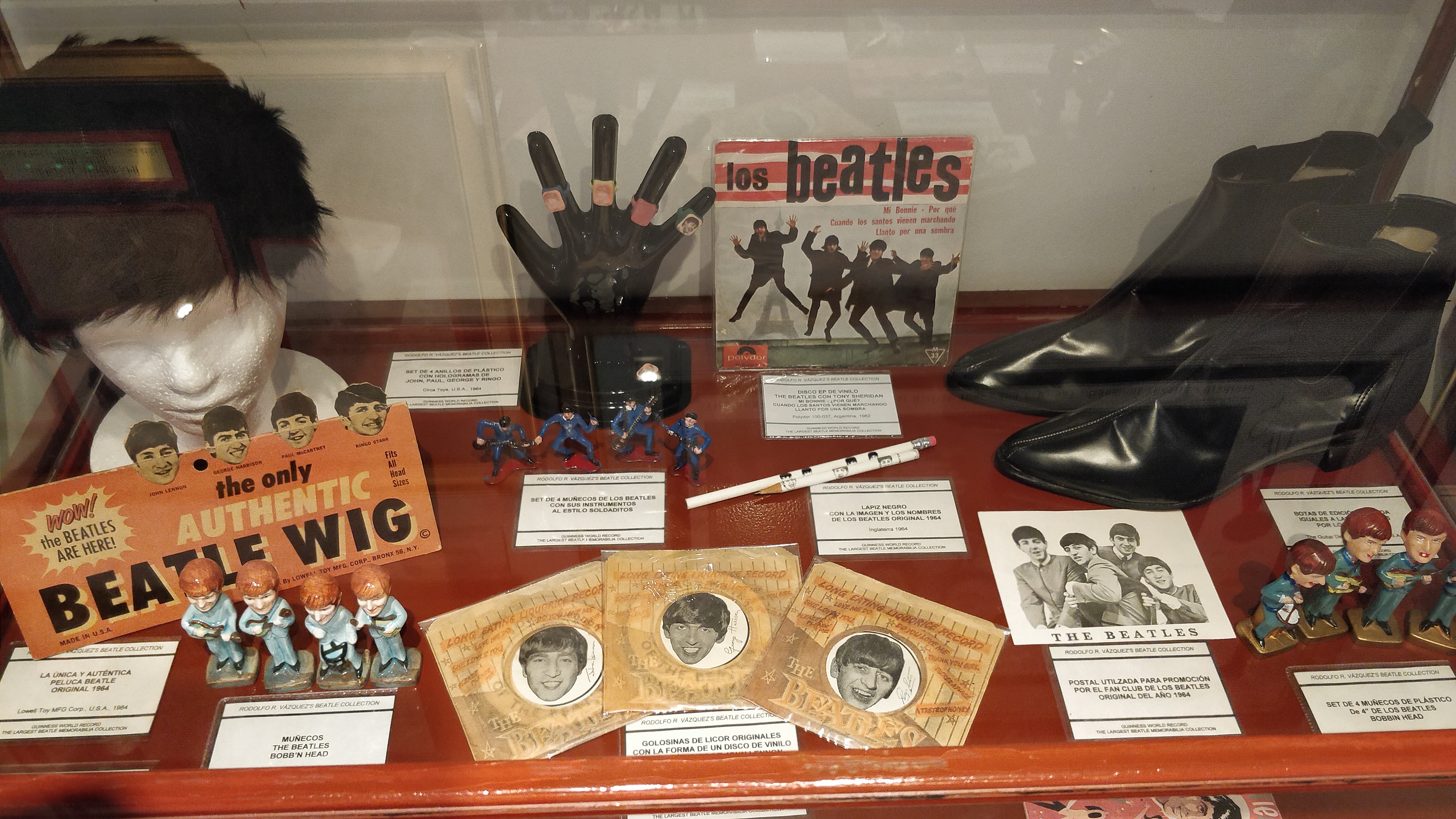
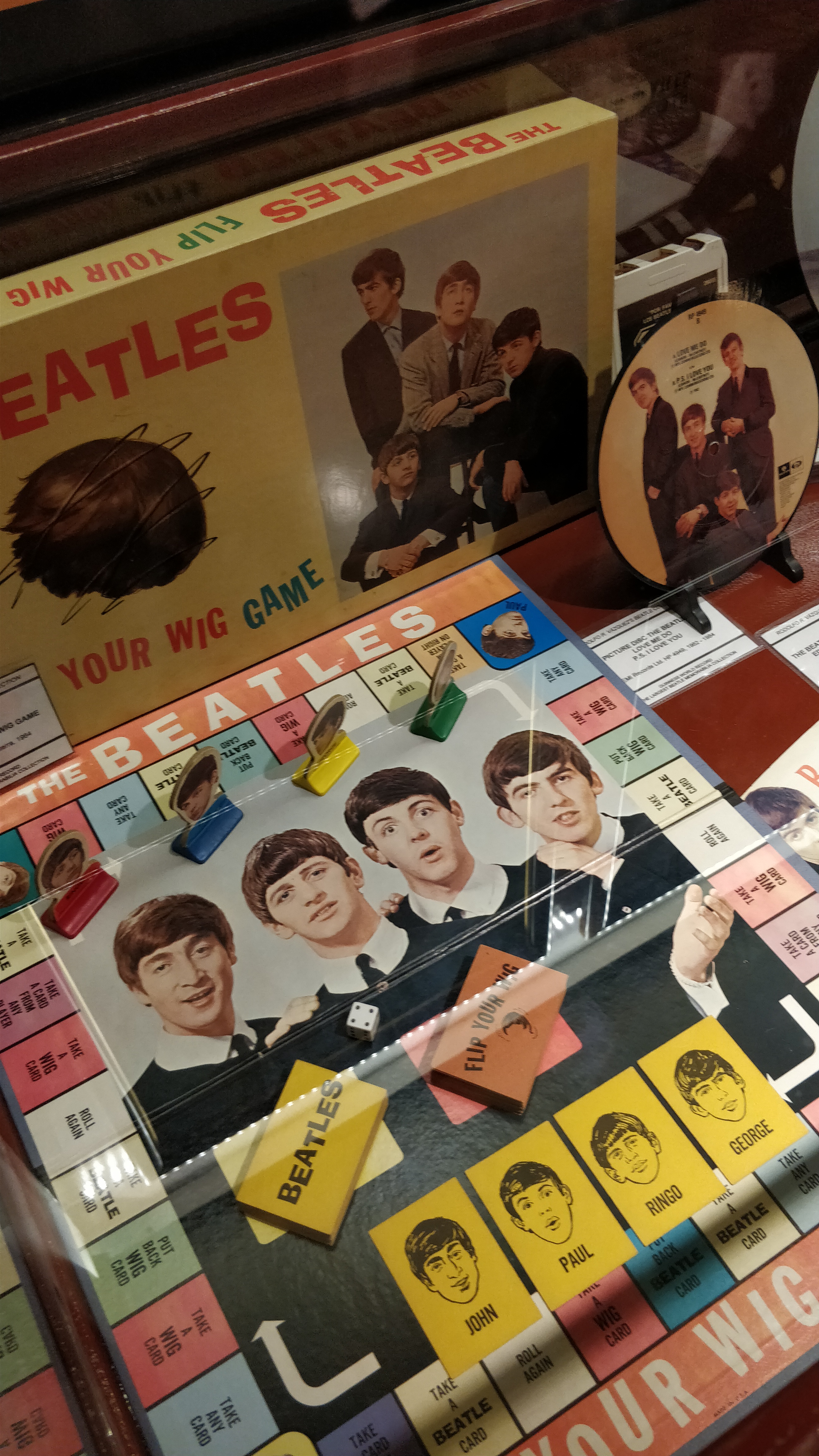
I’m not actually a big Beatles fan; I don’t know much about them.  I was surprised by how meteoric their rise really was.  They added Ringo and recorded their first album in 1962, released it in 1963, and by 1964, the merch production was insane.

IMG_20190606_123108.jpg
Authentic Beatle wig, and those squares at the bottom are candy. Licorice candy.


IMG_20190606_123337.jpg
Sure, sounds fun.


IMG_20190606_123257.jpg
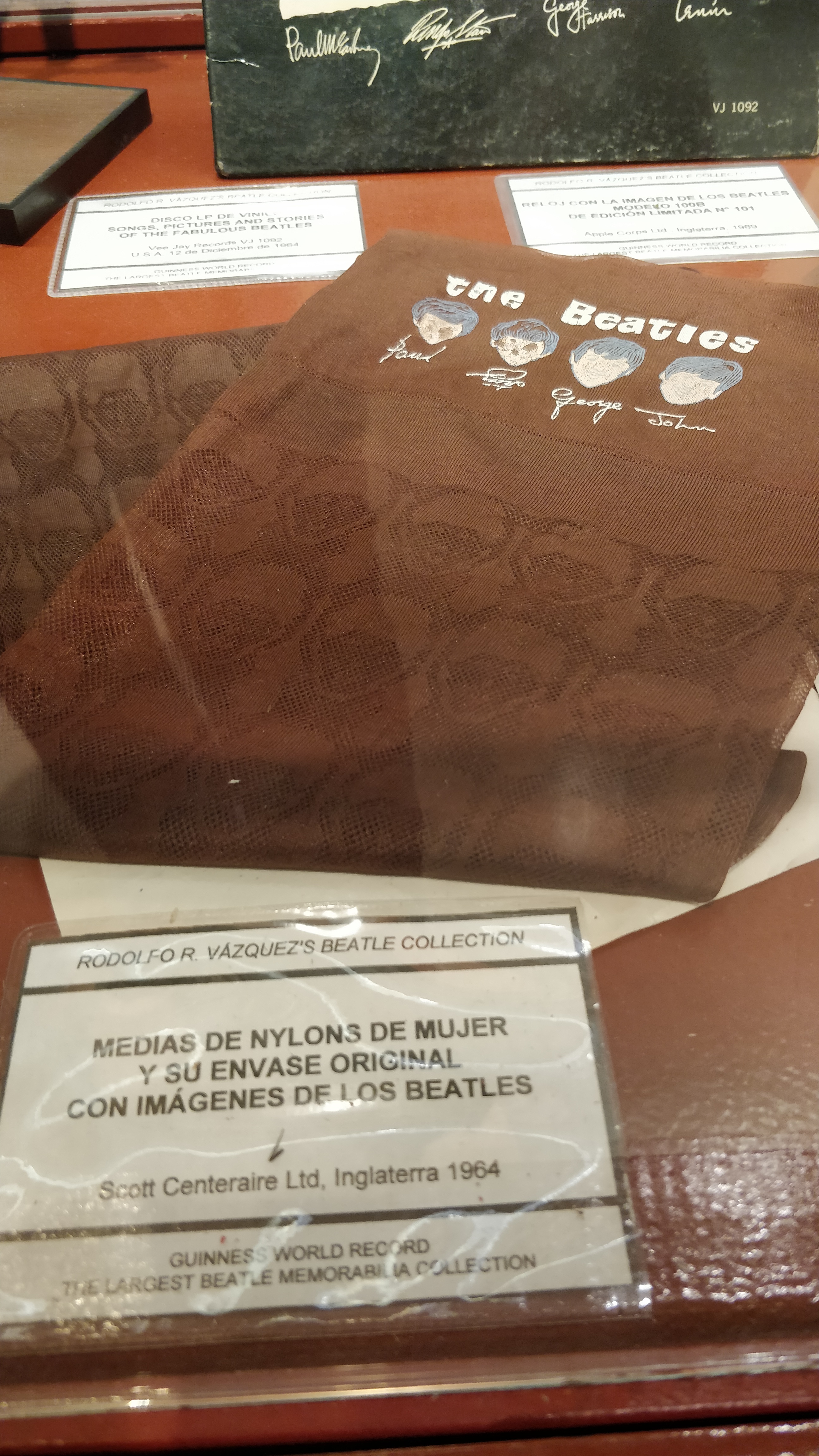
That is PANTYHOSE, with their FACES ON IT.

Continuing on through Beatlemania…

IMG_20190606_123348.jpg
Several videos available throughout the timeline.

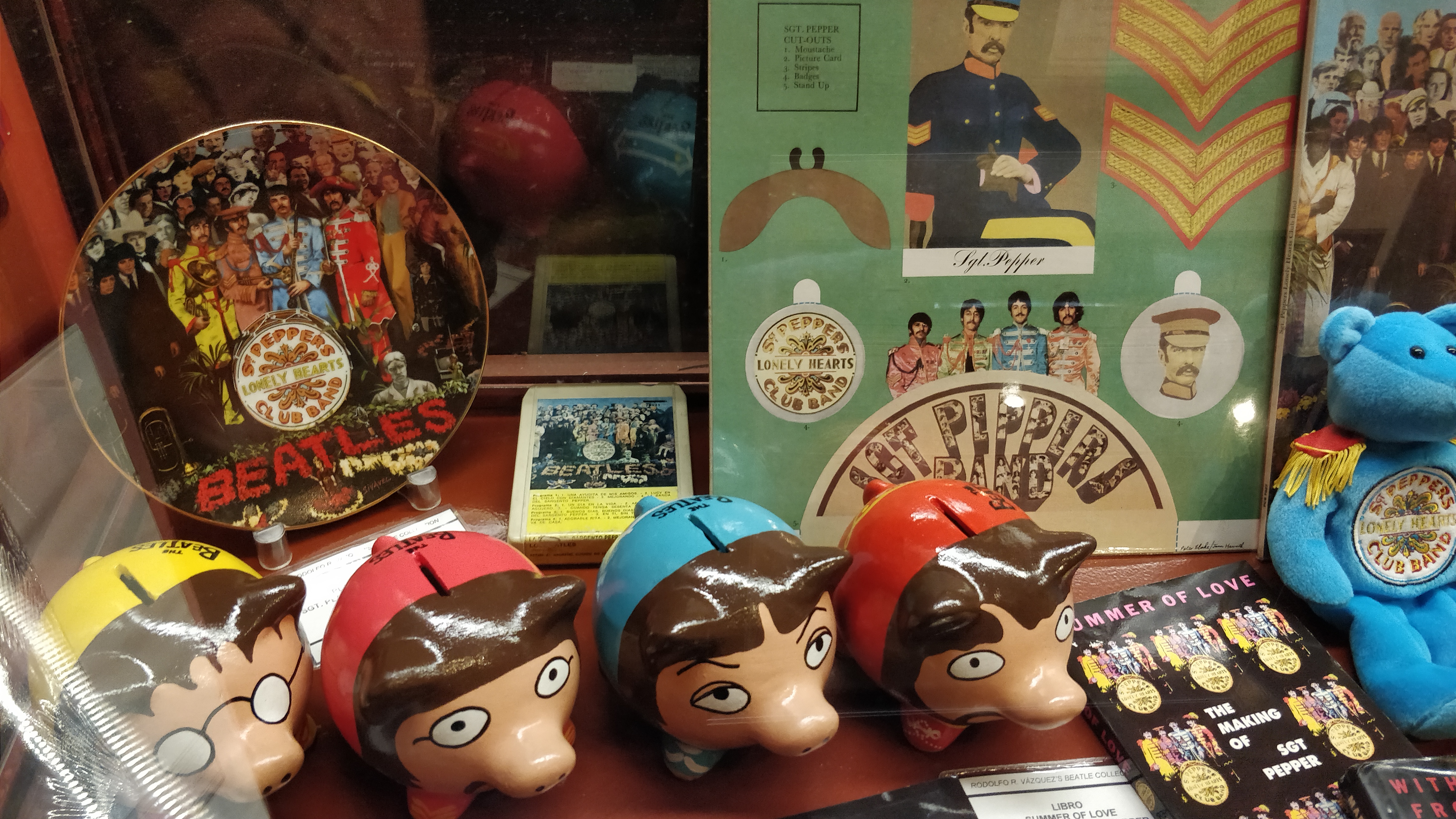
…and on to Sgt Pepper’s something something.

IMG_20190606_124010.jpg
Pig Ringo’s eyeliner wings on point.

I understand Beatles memorabilia, not unlike their aesthetic, gets weirder from here.

IMG_20190606_124301.jpg
All of us cohabitate in a lemon-hued submersible.

IMG_20190606_124135.jpg
And we are clean and sober as the day is long.

There are various records, advertisements, and autographs of anyone even tangentially related to the band throughout the museum.  All that is well and good, but you want a photo op.  Of course you do.

IMG_20190606_124405.jpg
The only true Beatles photo op.

You do, eventually, come to that point on the timeline when things, as all good things do, come to an end.

IMG_20190606_124455.jpg
Bummer.

But as I’m sure every other person on the planet knows, because I know this, the Beatles didn’t just vanish in 1970.  They all had solo careers!

Visitors will find nooks dedicated to each man’s solo efforts and life decisions.

IMG_20190606_124731.jpg
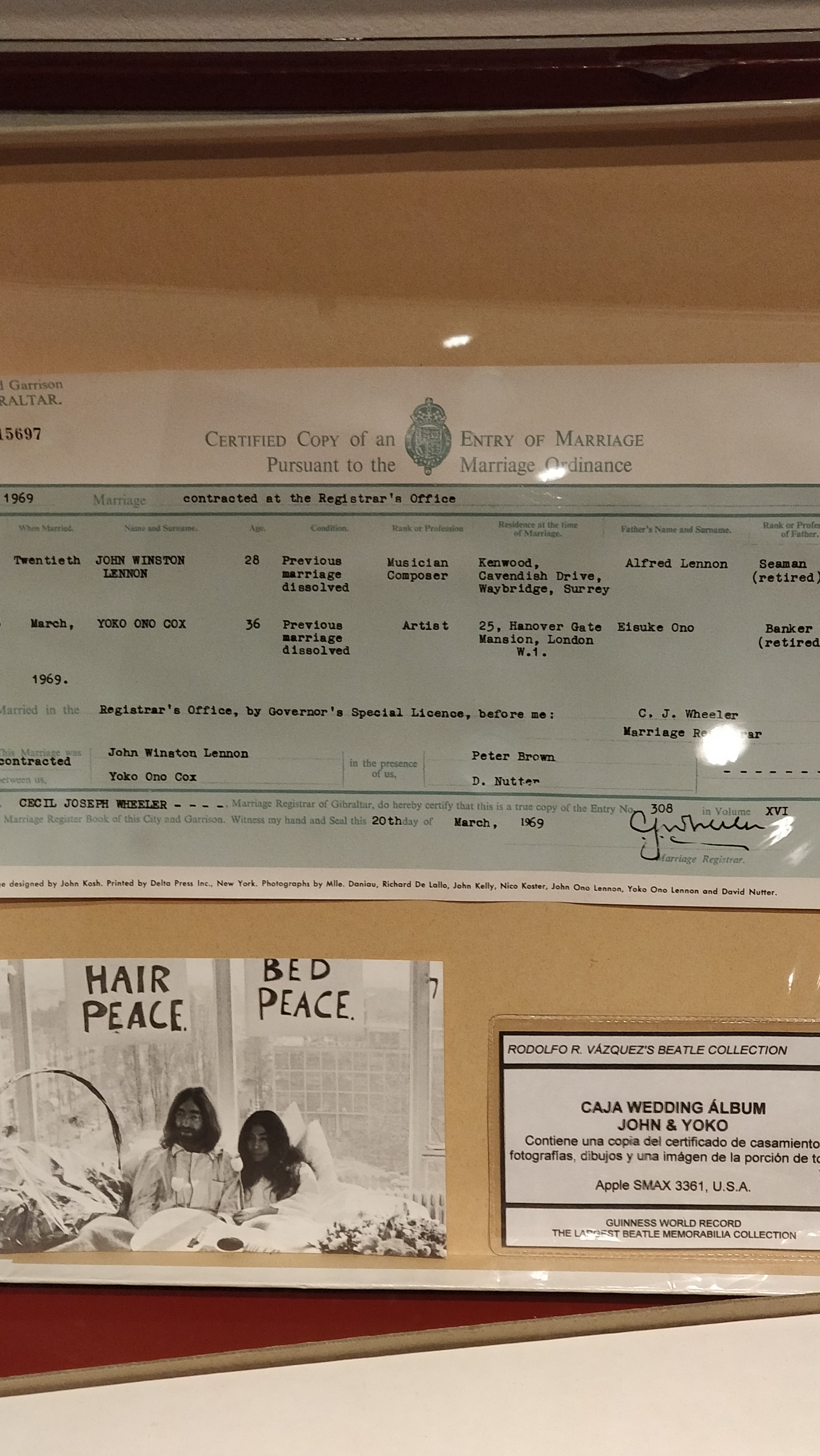
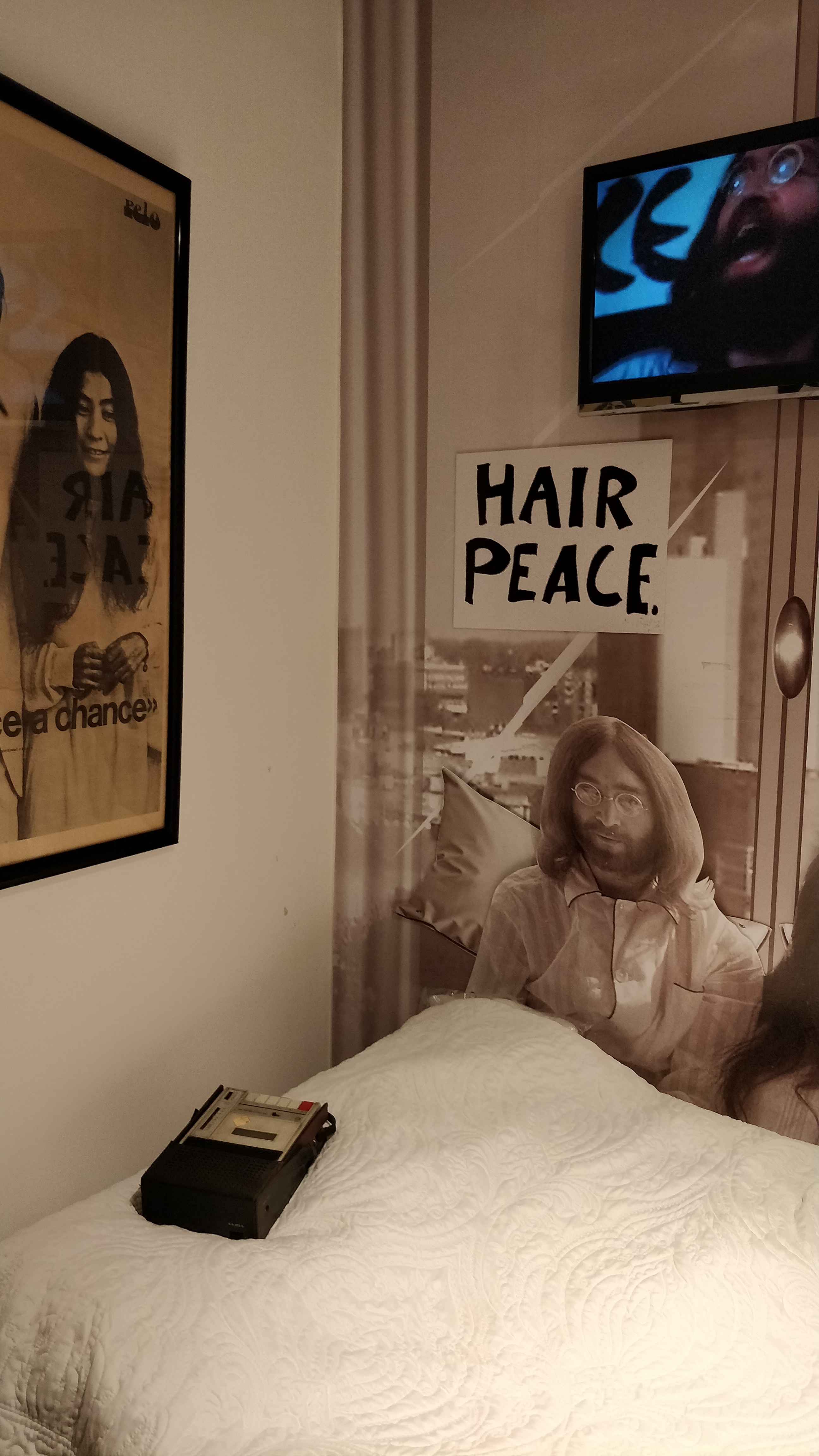
I heard John remarried.

IMG_20190606_125602.jpg


Ringo…well Ringo did some things I was entirely unaware of until five seconds before I took this photo.

IMG_20190606_125114.jpg

After visiting the museum, you can walk across the courtyard to the cafe and have a typical and filling Argentine lunch for 250 pesos (about US$5.50).

IMG_20190606_130727.jpg

If you’re a Beatles fan or just want to see a bunch of Beatles stuff, you’ll find The Cavern in the San Nicolás barrio at Av Corrientes 1660, inside the Paseo La Plaza, which is a actually a really lovely complex of shops, restaurants, performance spaces, and trees in the middle of a busy place.  It’s close to the D line and B line of the subway, Congress, the Obelisk–a thousand ways to get there.  The museum entries are 250 pesos (about US$5.50) for foreigners, 200 pesos for Argentines and residents, and free for kids 10 and under.  Check the website for the hours.

Buque Museo Fragata ARA Presidente Sarmiento [Frigate ARA Presidente Sarmiento Museum Ship]

AHOY!

IMG_20190528_115619.jpg

There are two museum ships in Puerto Madero:  the ARA Uruguay  and her more famous yet less interesting sister, the ARA Presidente Sarmiento.  But just because she doesn’t have the very cool history of the Uruguay doesn’t mean the Presidente Sarmiento is boring.

IMG_20190528_122244.jpg
I’d say that it might be unfair to compare them, but it’s impossible not to, as they are literally within sight of each other.

The Sarmiento was a training ship for the naval academy.  It was English-built and launched in 1897.  Retired in 1961, it’s been a museum since 1964.

IMG_20190528_121024.jpg
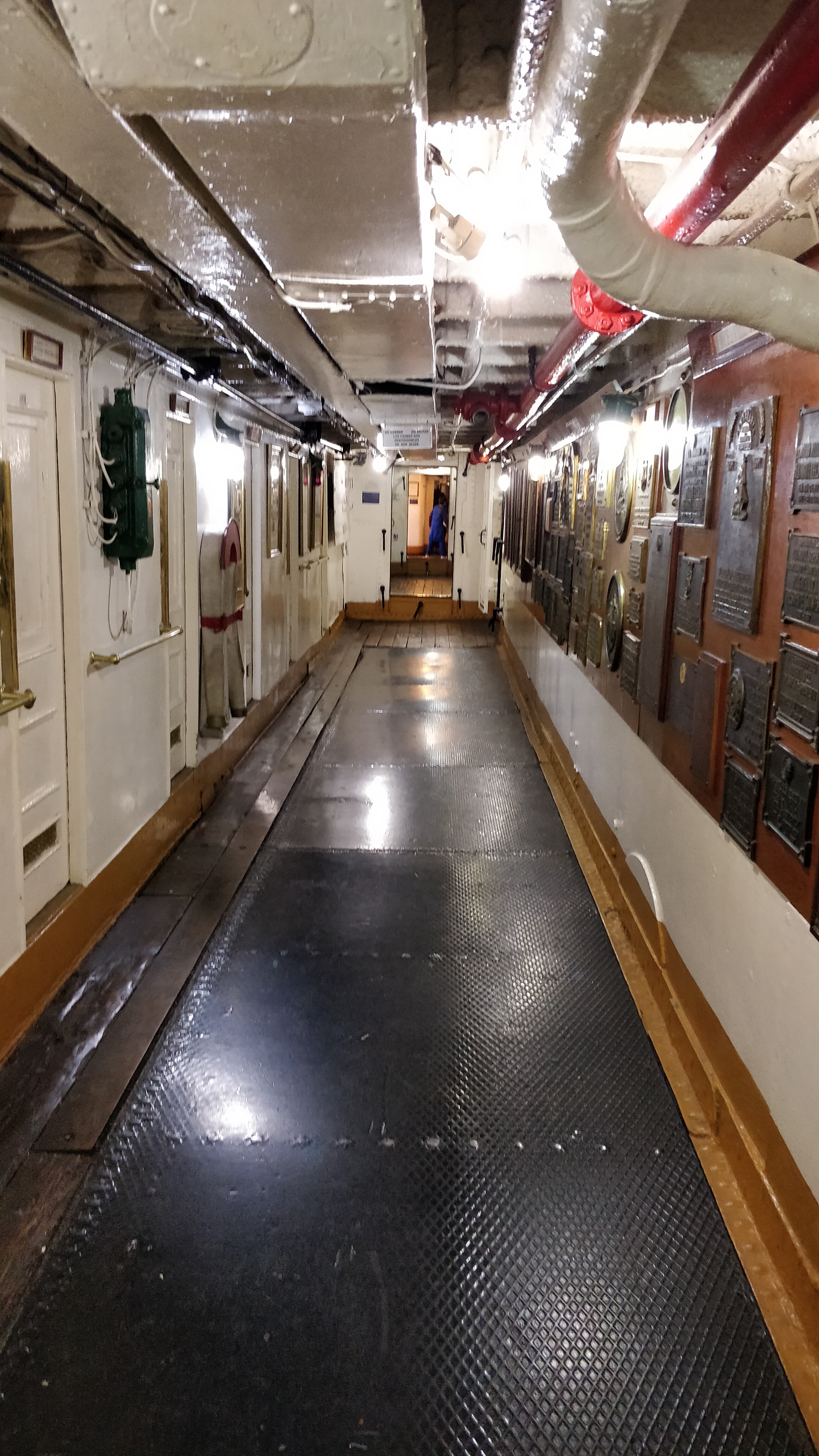
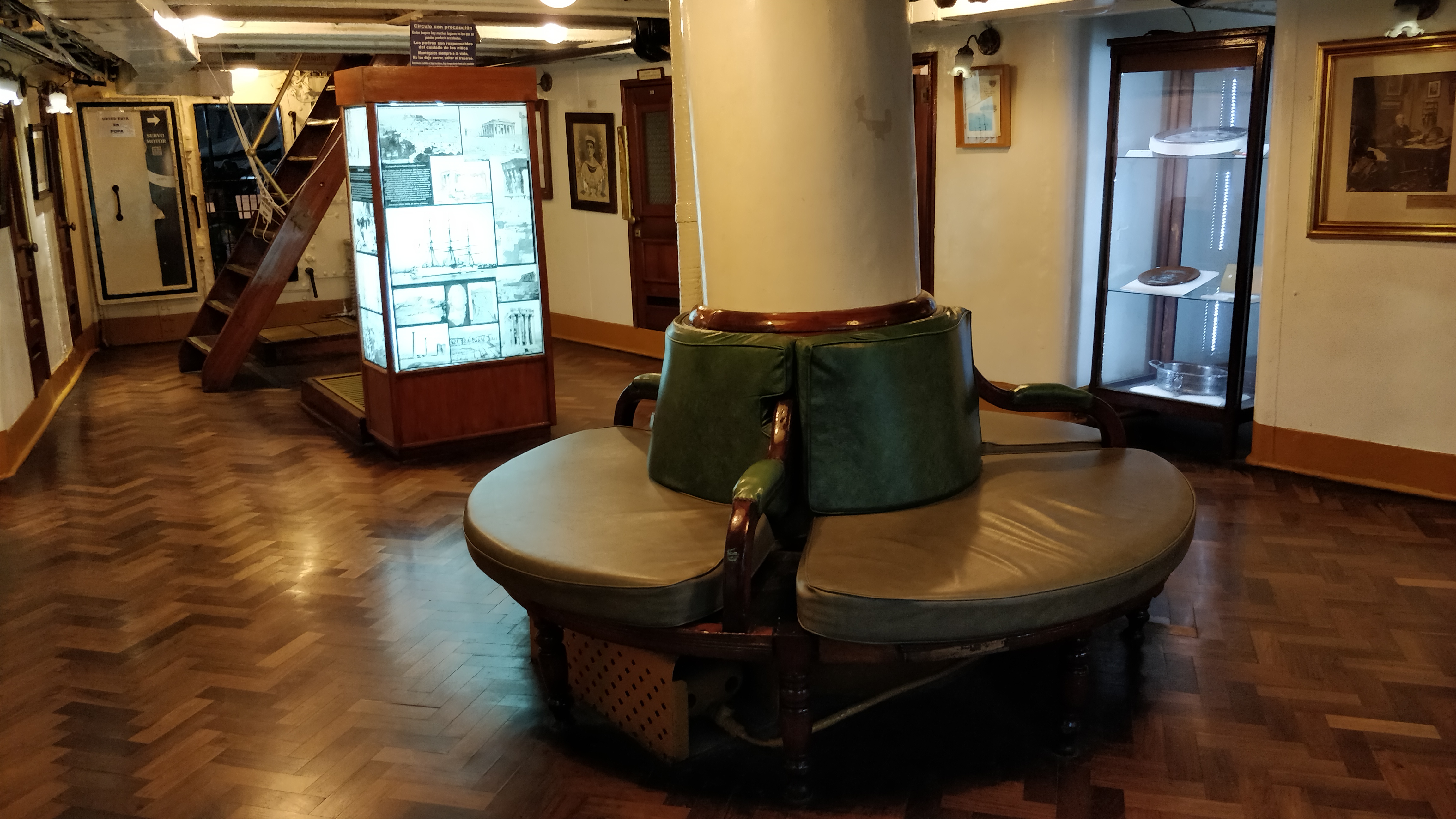
I love passageways on ships!  This one has a lot of plaque bling.

Lots of stuff to see from the glory days:

IMG_20190528_121508.jpgIMG_20190528_120435.jpgIMG_20190528_120419.jpgIMG_20190528_120445.jpg

IMG_20190528_120943.jpg
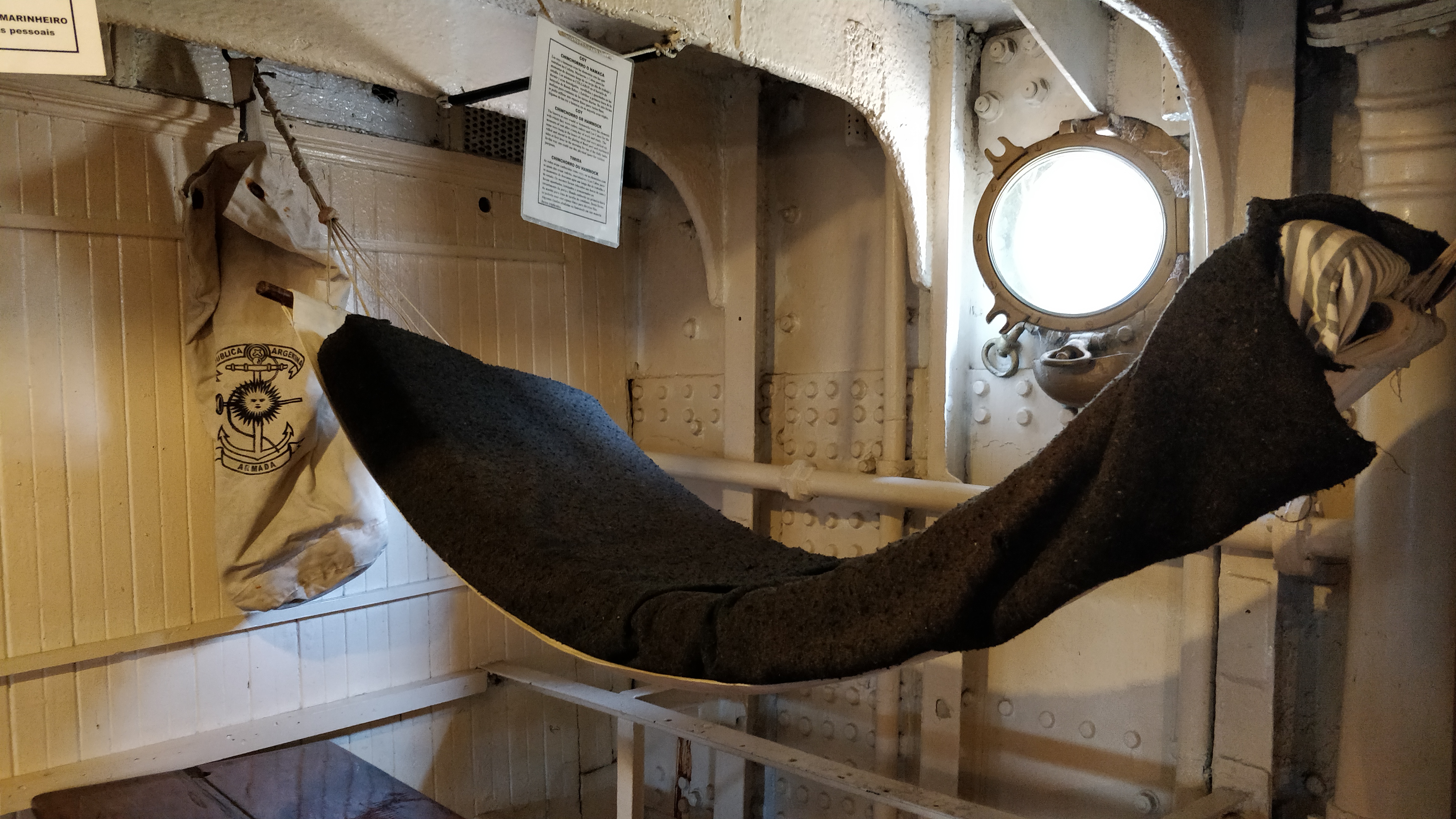
Training sailors got a mattress on their hammocks, so that’s cool.

img_20190528_120905.jpg
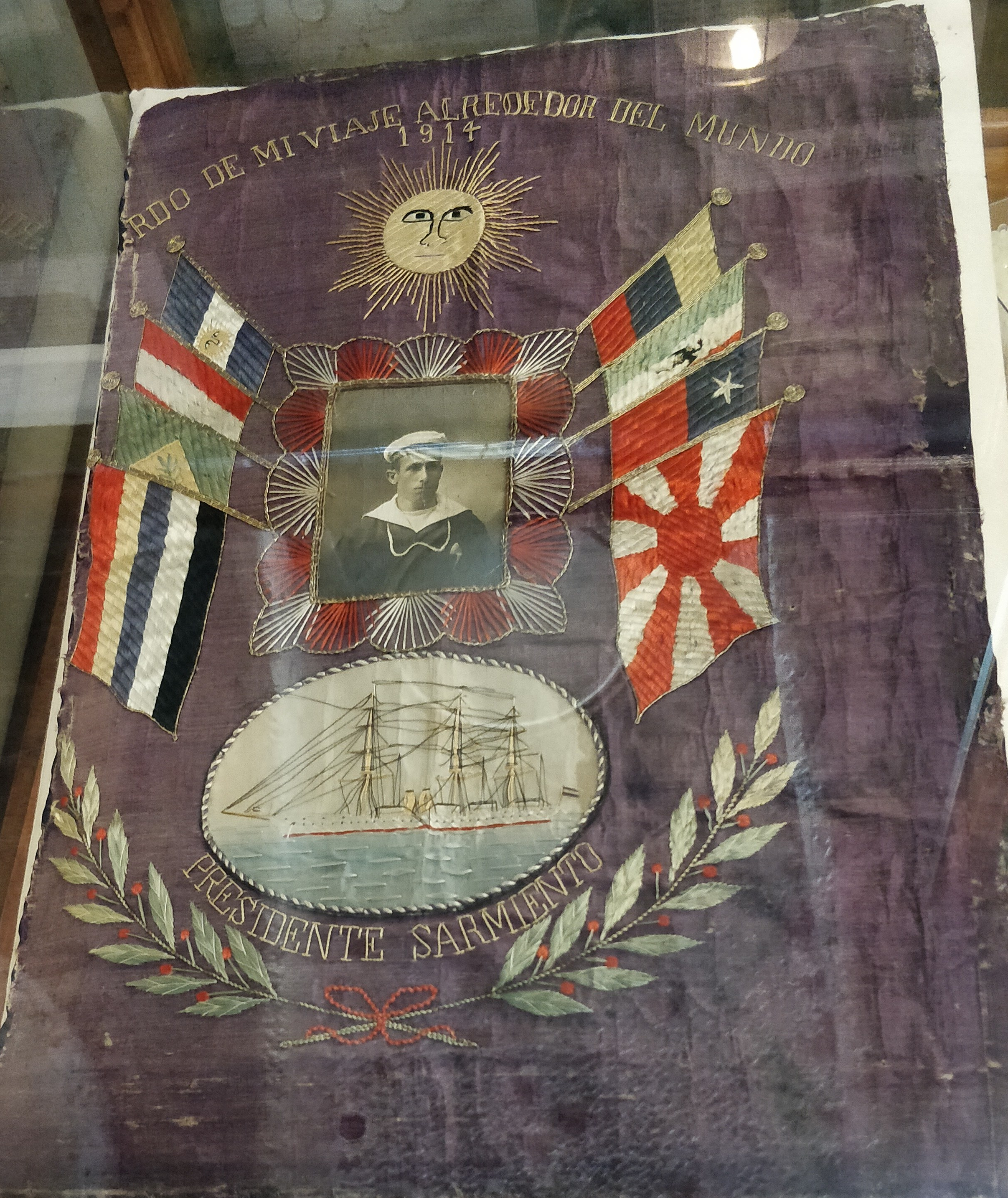
This guy had a really fancy pillow embroidered to commemorate his voyage around the world.

IMG_20190528_120644.jpg
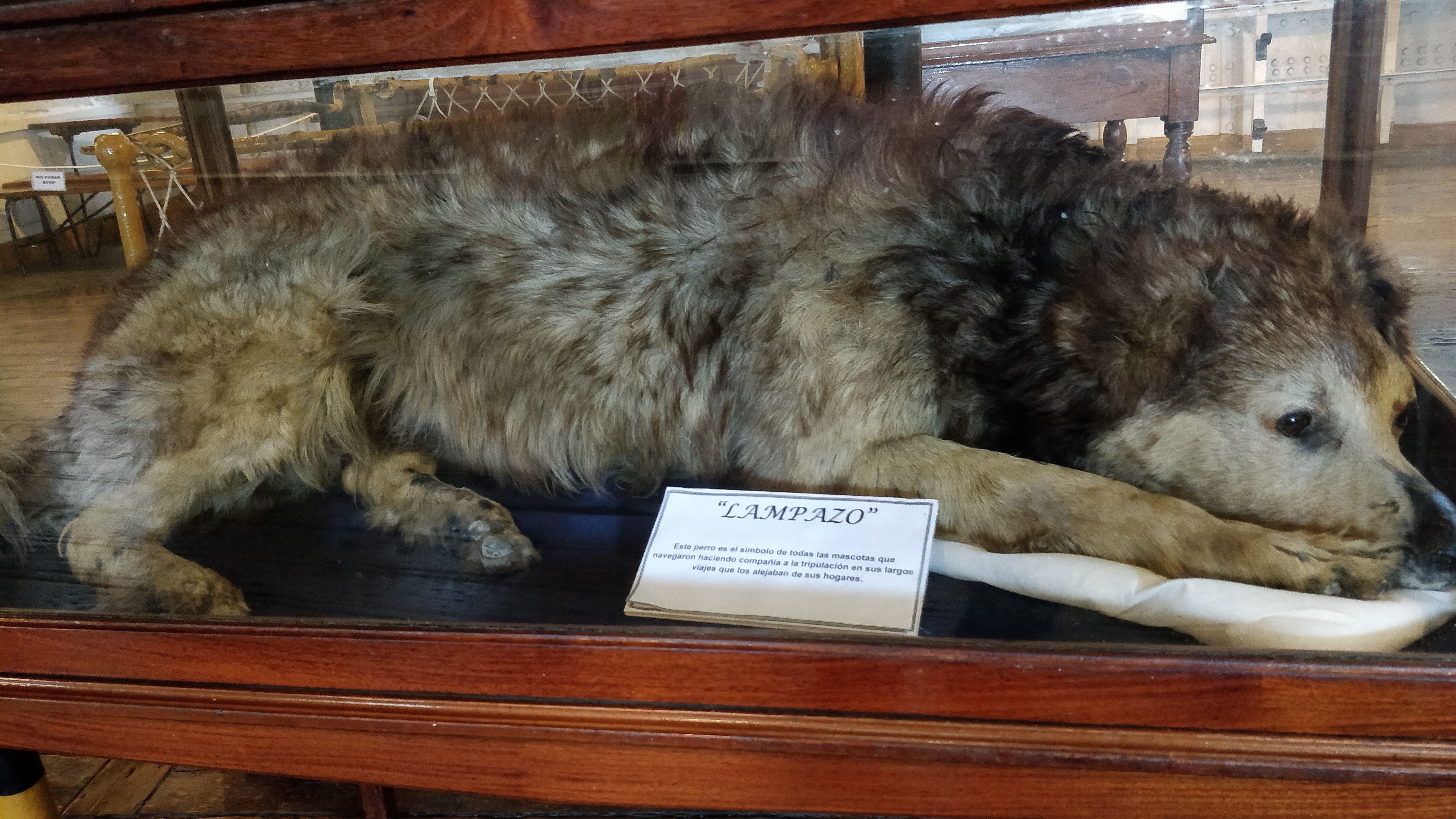
Arf.

The sign wasn’t super clear on the origin of the taxidermied Lampazo here, but it seems like in 2014 they decided that he’s probably Buli, owned by Lt Calderon and ship’s pupper on the 37th voyage.  I don’t know how he came to be taxidermied and under glass on the Sarmiento, and I didn’t see anything on board to shed light on that.  Such pressing questions remain mysteries.

IMG_20190528_121431.jpg
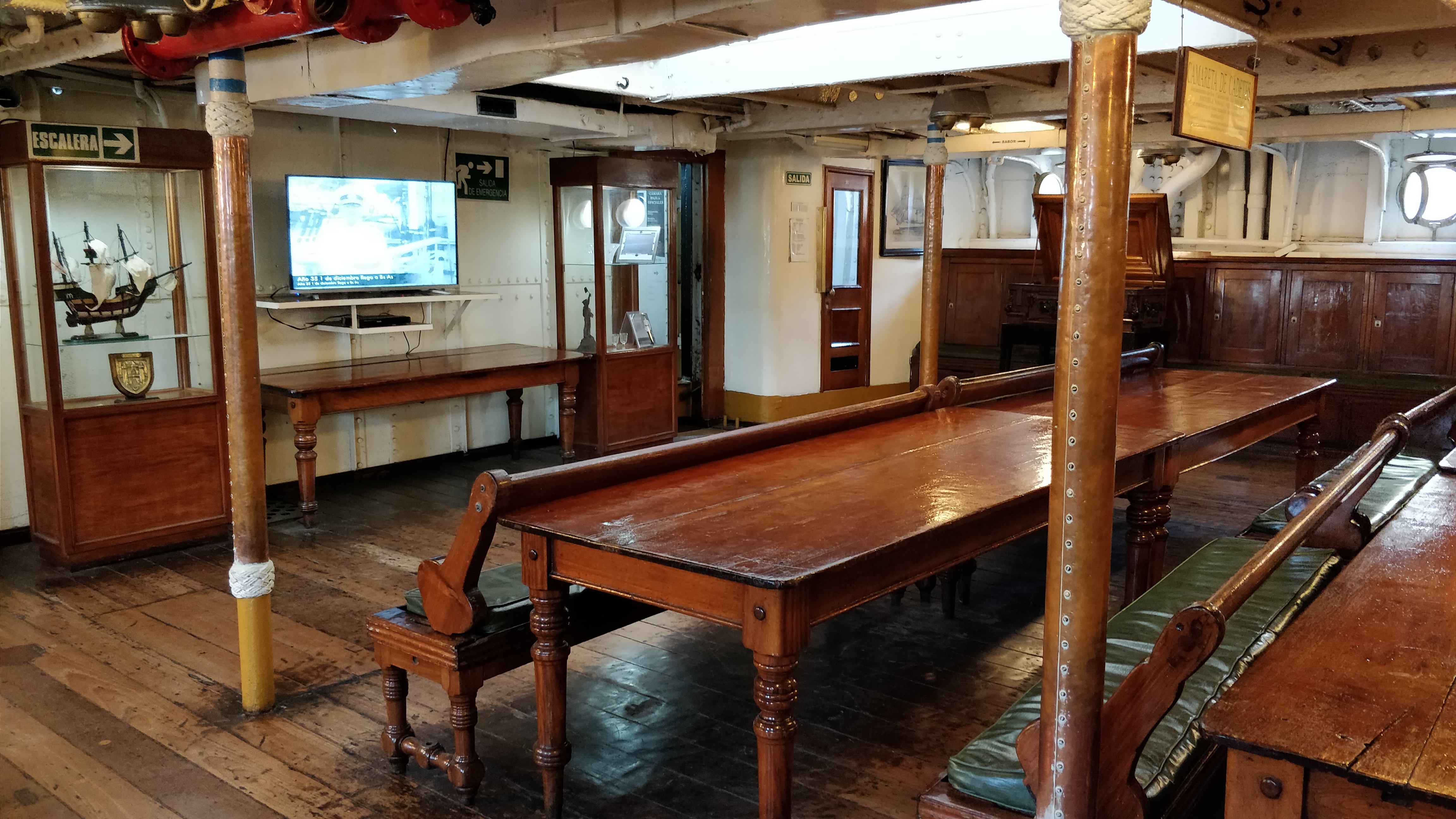
There’s no meal service.

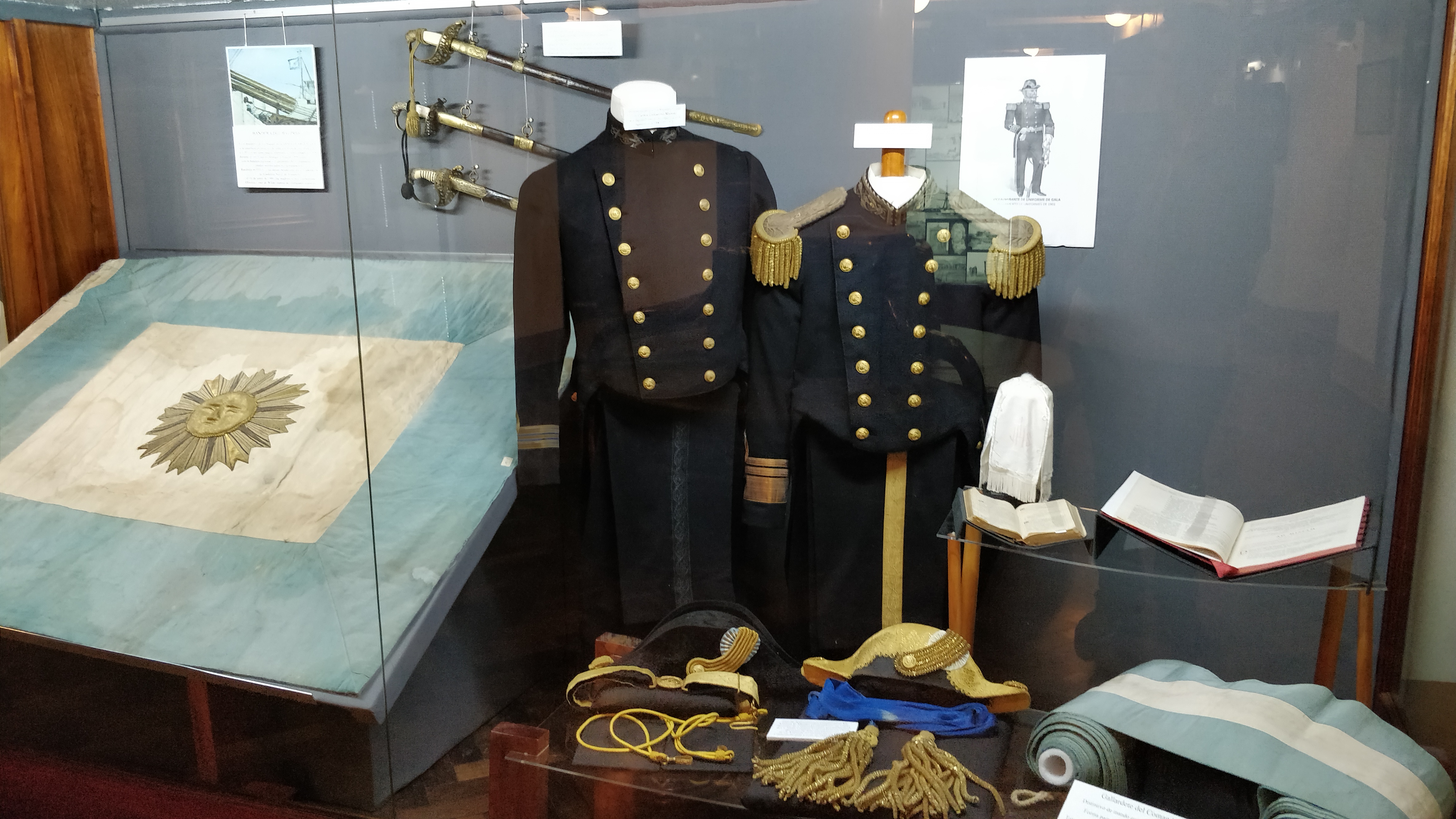
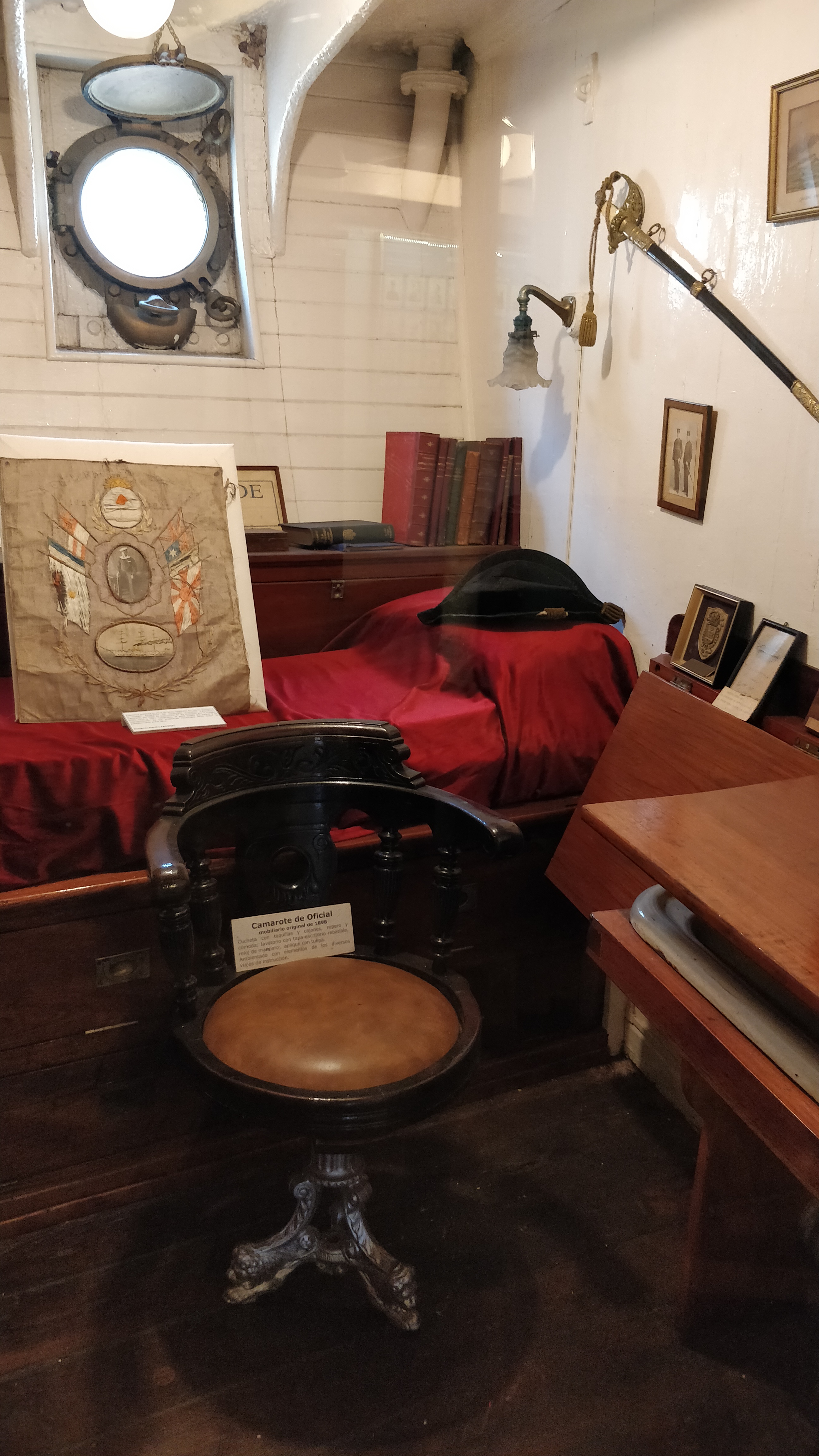
The crew dining room now has a video you can watch, and going on through it leads to the officers’ digs, which are nicer.

IMG_20190528_121455.jpg

IMG_20190528_121621.jpg
If you’re an officer, you mattress doesn’t swing.

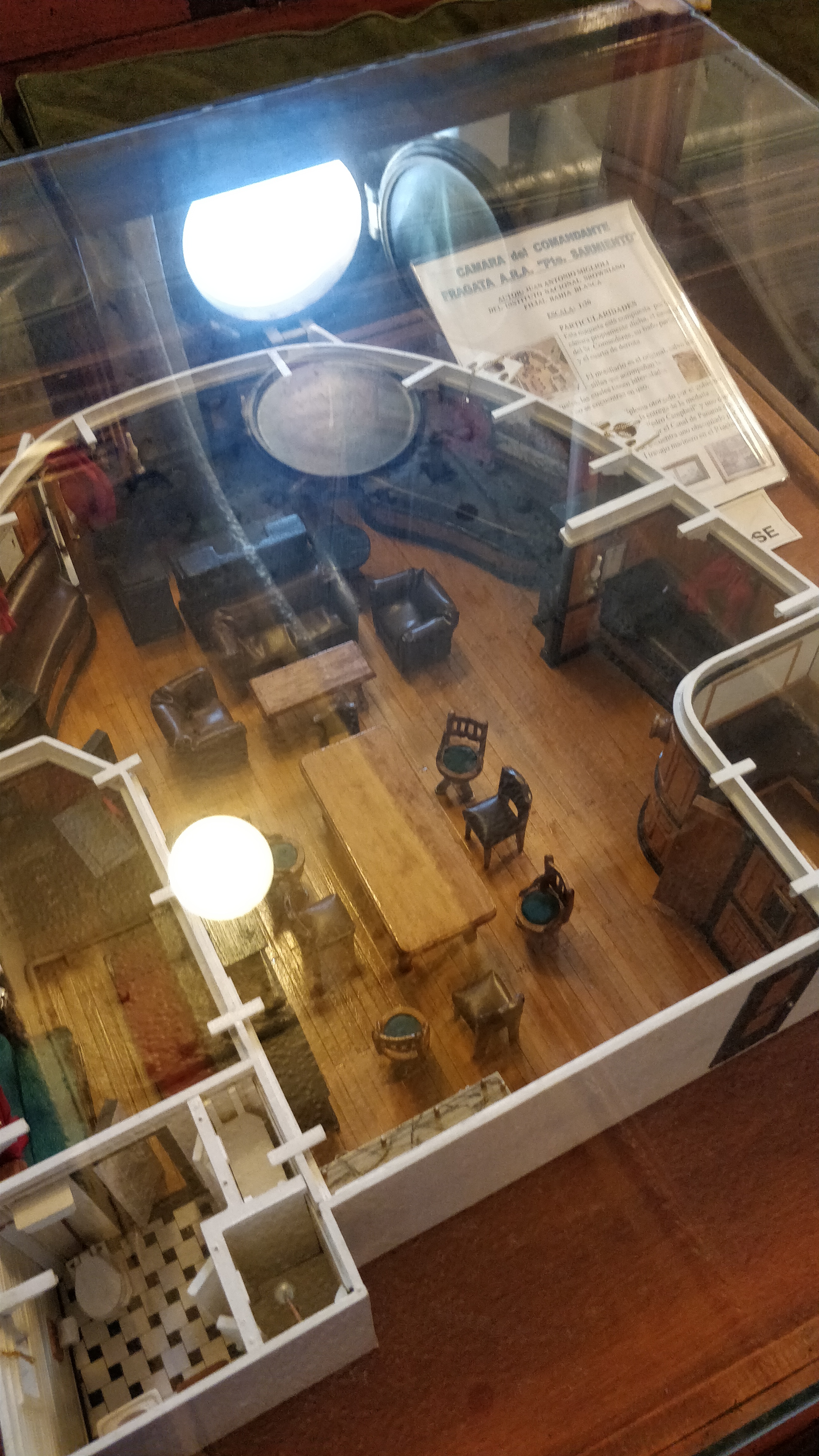
The Captain’s quarters are off-limits to visitors, presumably because the naval personnel currently assigned to the ship have taken over the best space for offices.  But there’s a nice little model of it.

IMG_20190528_122004.jpg
Command and comfort.

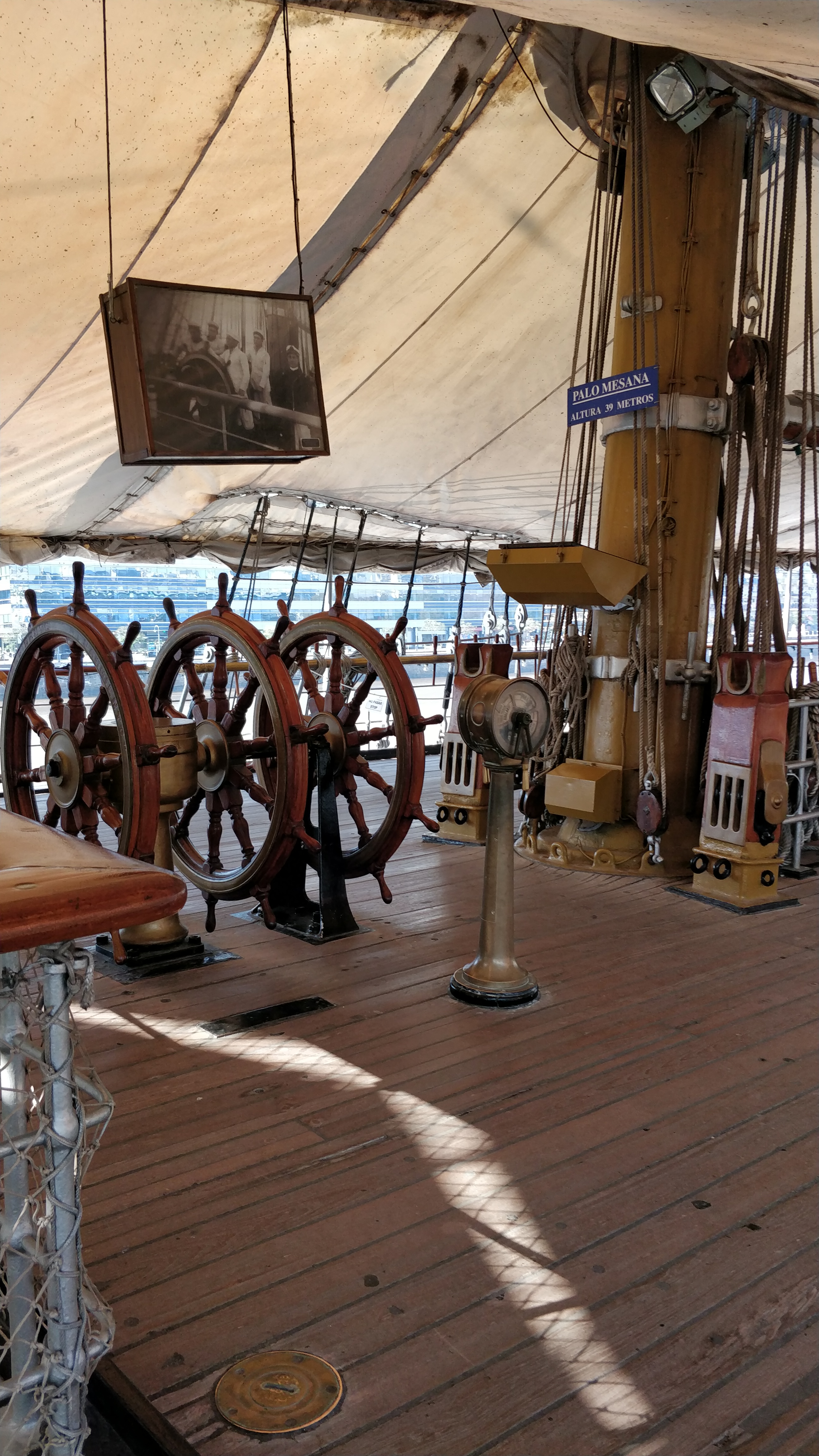
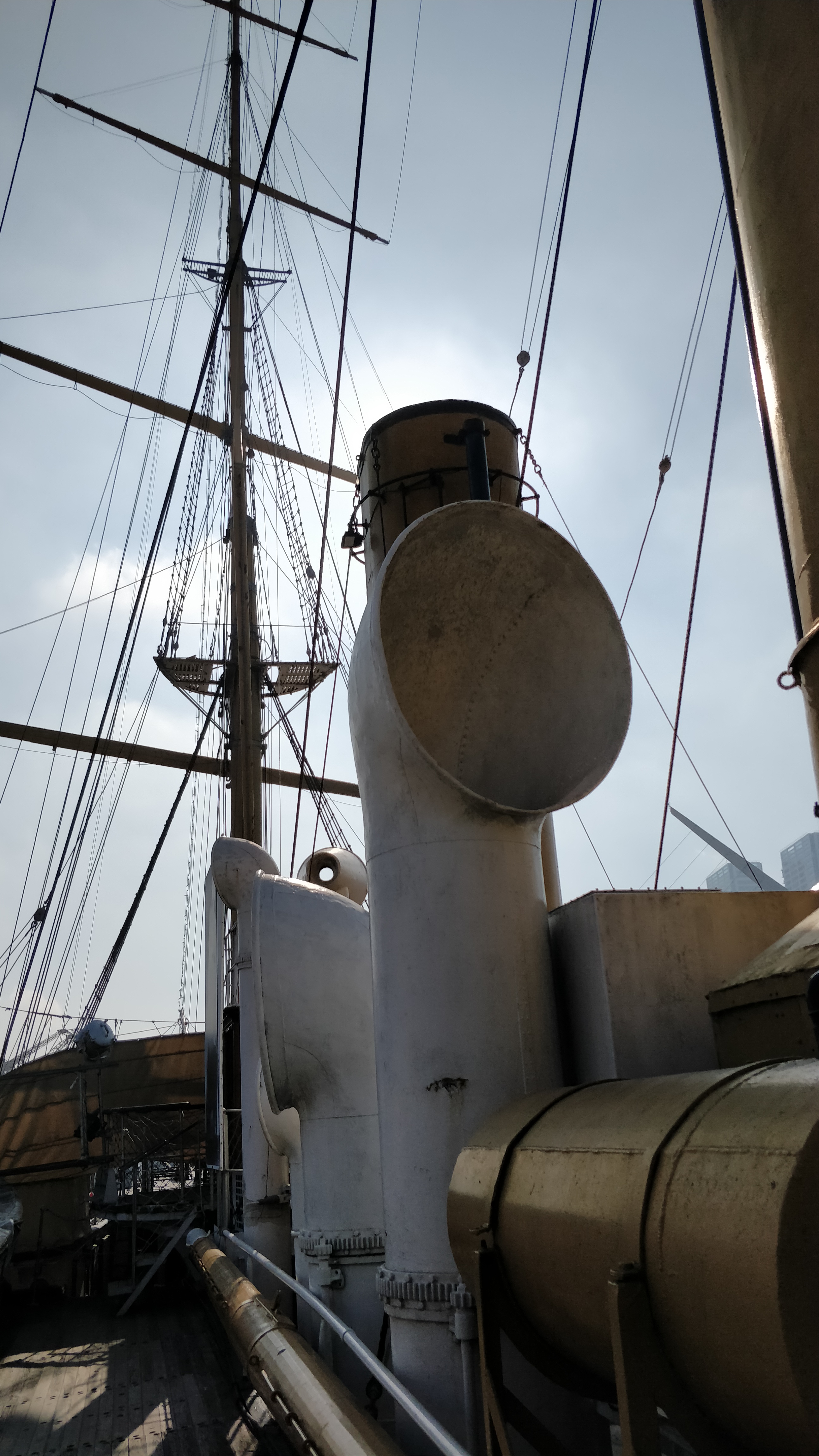
You can climb up on the decks, too, which afford a nice view of the Woman’s Bridge and other ship stuff.

IMG_20190528_122549.jpg
I wasn’t entirely sure I was allowed up on this part, but two navy dudes saw me climbing down and didn’t yell at me, so I assume I was.

The Presidente Sarmiento is open seven days a week, 10 am to 7 pm.  It’s 20 pesos to get on board (at the moment!) and located in Puerto Madero, kind of across the street and to the right from the Casa Rosada.  It’s a very short walk along the river to the ARA Uruguay, so if you’re super into museum ships, you can hit them both.