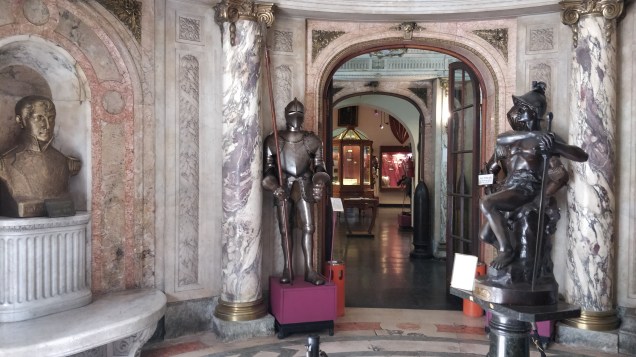
Across from the Plaza de General San Martín, which is a lovely, large plaza near the Retiro train station, in quite a stately building, is the Museo de Armas, originally founded in 1904.
Right there, below the official oval.
I’m not particularly interested in all the tools humans use to disassemble each other, but swords are neat, so I went to check it out.
Pretty stately on the inside, too.
The first displays are of medieval armor and weaponry, both replicas and originals. There was also some disconcertingly incongruous pop music playing in those rooms.
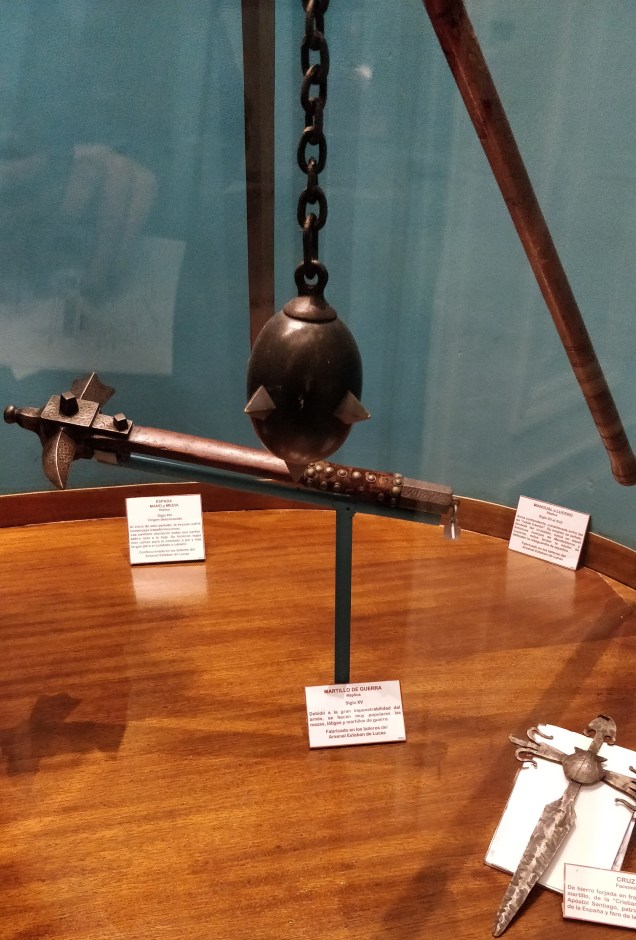
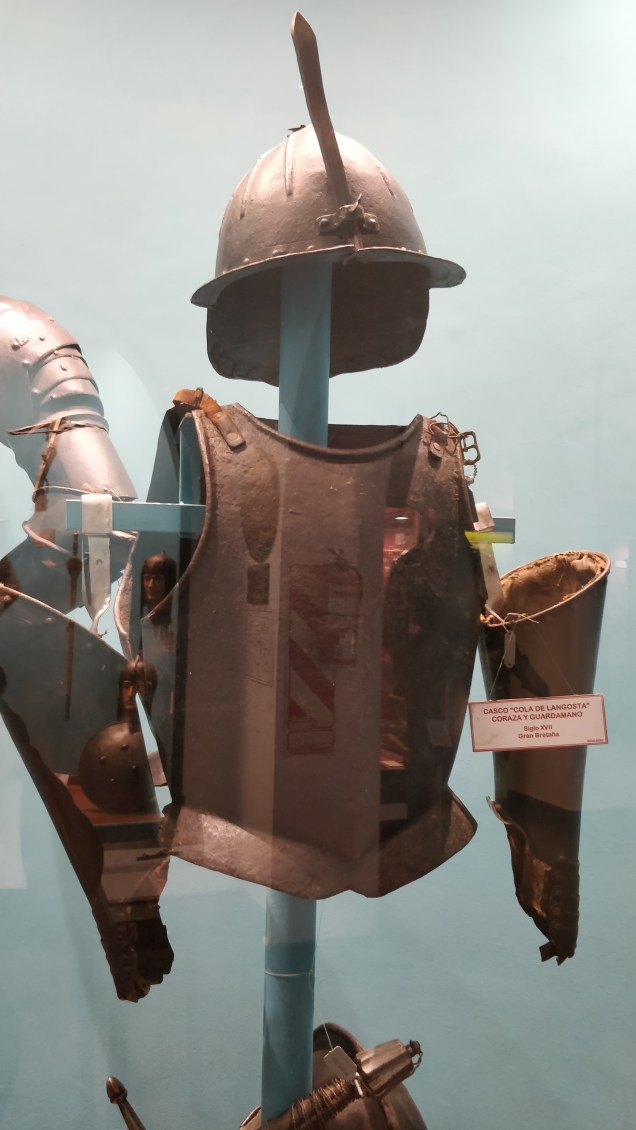
Replicas of a war hammer and a flail, my favorite medieval weapons.Lobster tail helmet from Great Britain, 1600s.
A great variety of pointy things is available for examination, though without much of anything in the way of information–just the sort of label you see above.
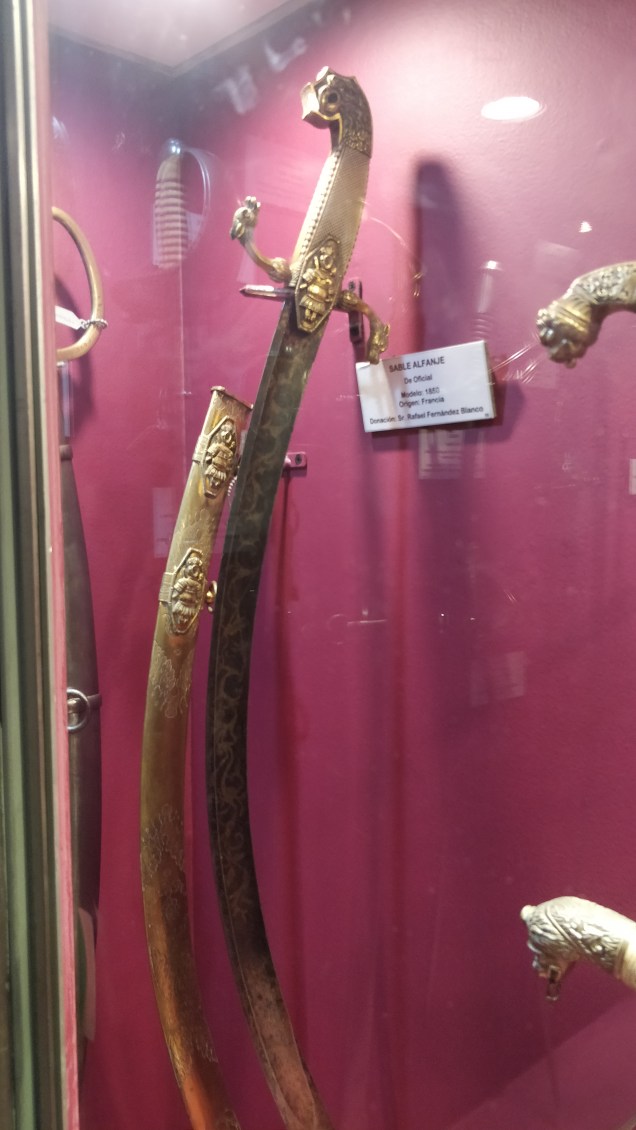
Fancy shmancy French saber.Spanish-made saber for the Argentine Army.
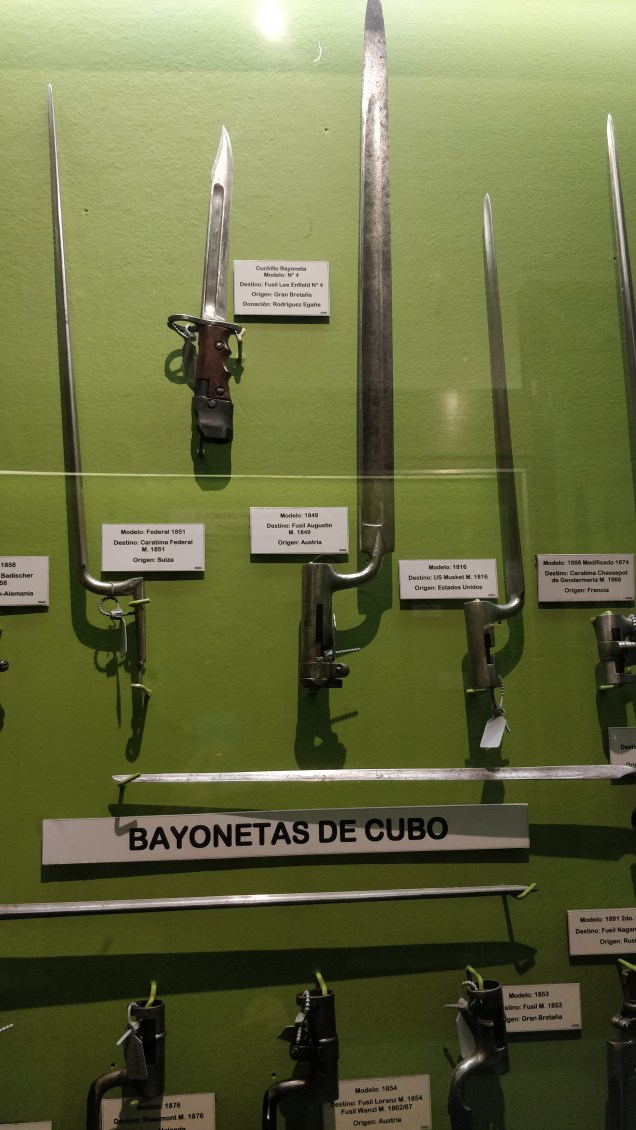
Firearms were of course already a thing by the time these swords were made, but the museum also has some artifacts from those more transitional times, when one might still find a rifle’s effectiveness reduced to that of a spear.
Bayonets have always creeped me out; something about the desperation that must attend having to use one.
Artistry wasn’t limited to swords in the 1800s; this is a hunting rifle that belonged to President Victorino de la Plaza.
Prettier and less bayonet-y, for sure.
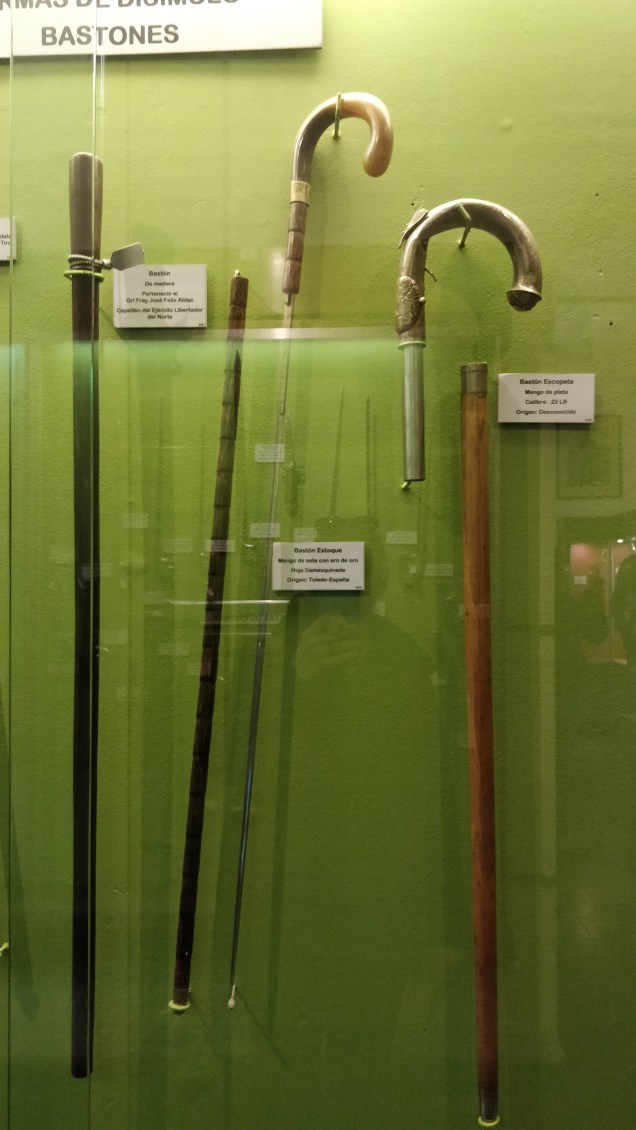
But you know what is even cooler than fancy sabers with official ovals and detailed German hunting rifles? Bonkers cane weapons.
Debonair, dashing, DANGEROUS
Cane swords AND cane pistols. Wonder if there’s a safety on that thing.
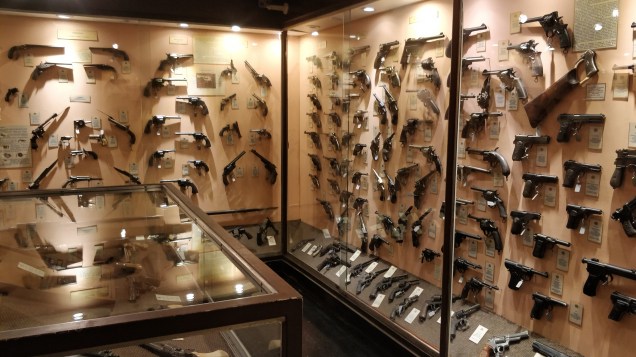
Of course, there’s plenty of more modern kill stuff.
*yawn*
But there’s also a few box sets of dueling pistols–including this one, which says it was used in the duel between Pantaleón Gómez and Lucio Victorio Mansilla on Feb. 7, 1880. Both men were former soldiers, politicians, and journalists, but Gómez ended up the dead one in a story that the Wikipedia entry made sound kind of insane. Dudes gonna dude, I guess.
I can’t even.
As weaponry is always pretty closely tied to the military, the museum also has several minifigs that illustrate the history of the uniforms.
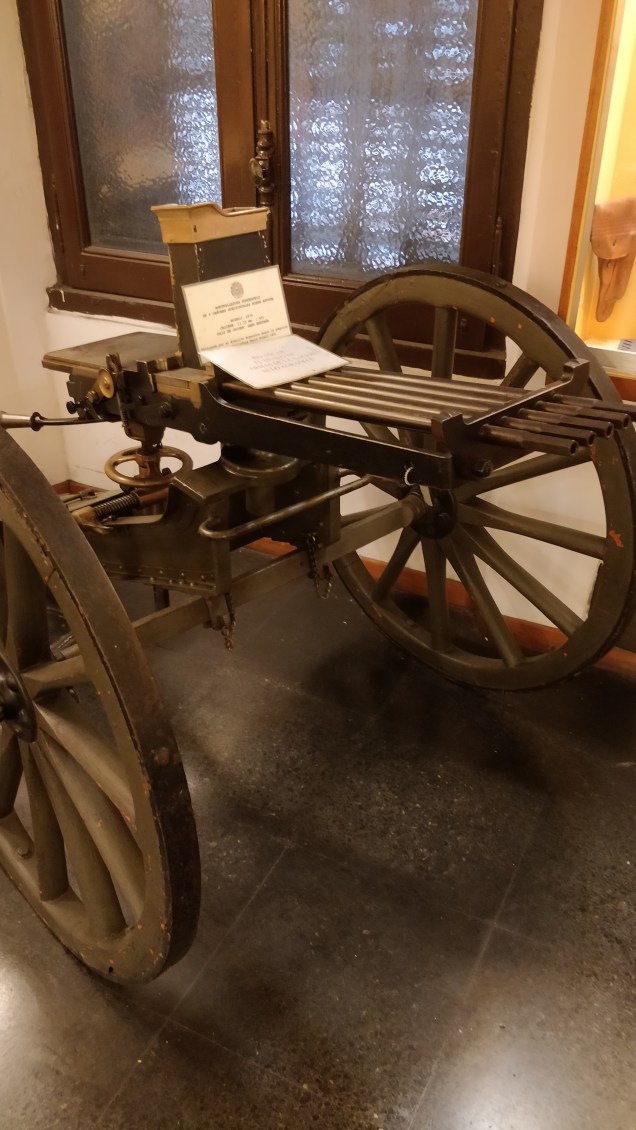
The items on display aren’t limited to melee combat and small caliber things, of course.
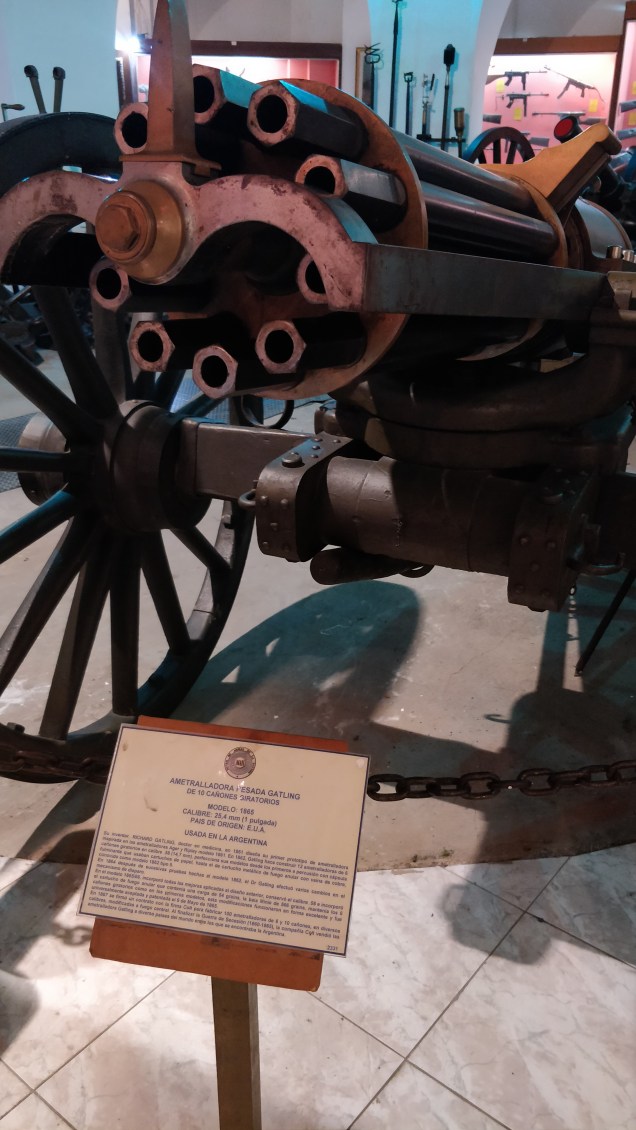
Both of these are mid-19th century, the bottom one being a Gatling design, Gatling having been a medical doctor who rather blew off that whole Hippocratic Oath thing.
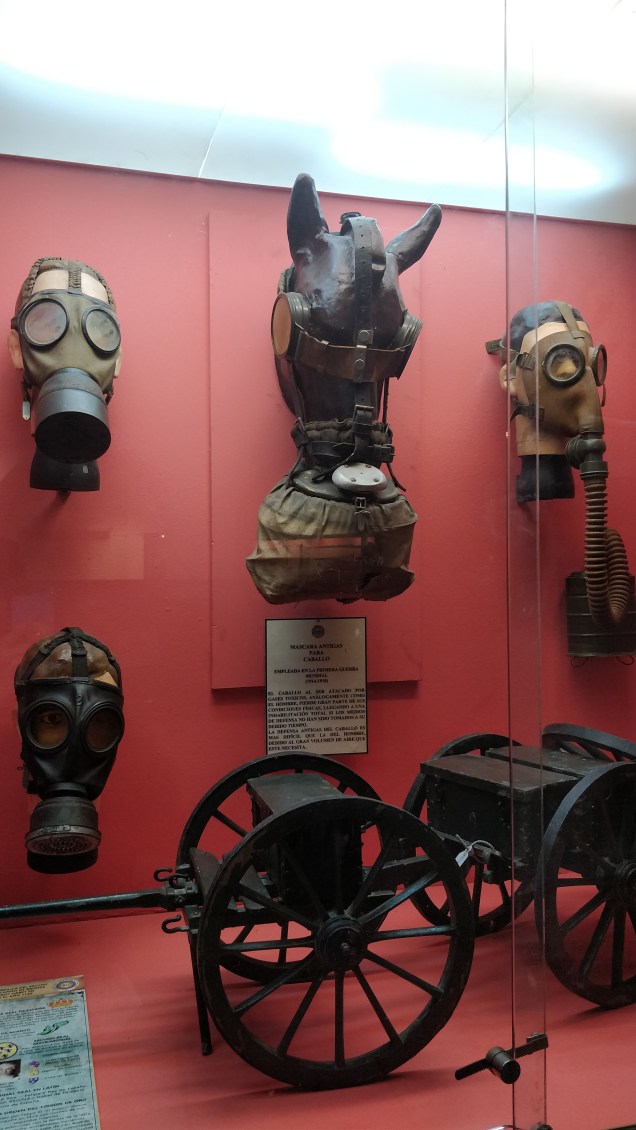
Remember what an absolute, unique horror show World War I was, with its meeting of traditional cavalry and horse-drawn supply wagons and mechanized death and chemical warfare?
Imagine putting a gas mask on a horse, or, hell, being a horse that had to wear a gas mask.
Look, an anti-tank mine. It’s smaller than my backpack.
That circle to its left is the size of my palm and designed to blow up a human being.
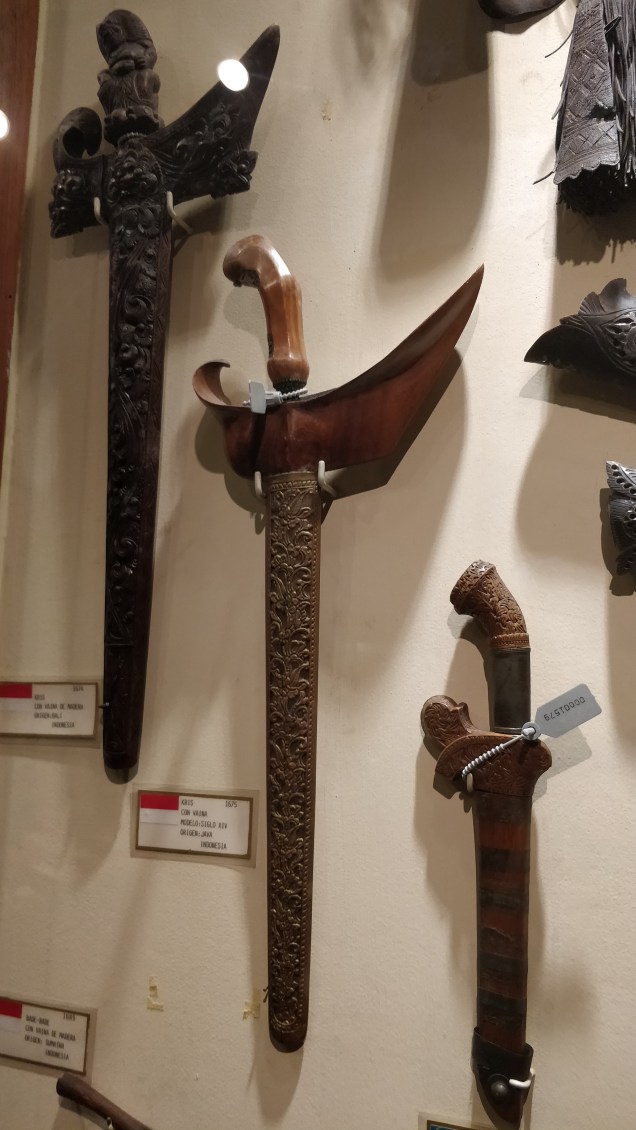
There’s also a room that’s full of weapons from all over Asia, which at least can restore the more comfortable feeling of looking at museum pieces with some artistry to them instead of just efficient kill boxes used within living memory.
So there you have it! Certainly a very interesting collection of early firearms, fancy swords and Argentine military history. Not much on the informational side of things, but certainly more interesting than I thought it would be for me. The Museo de Armas de la Nación is located in Retiro at Santa Fe 702, right across from the Plaza, and very near other sights, like the Kavanagh building and the Basílica Santísimo Sacramento. It’s easy to get to from the C and E subway lines and Retiro train station. As of this post, the entry fee is 100 pesos (about US$2).
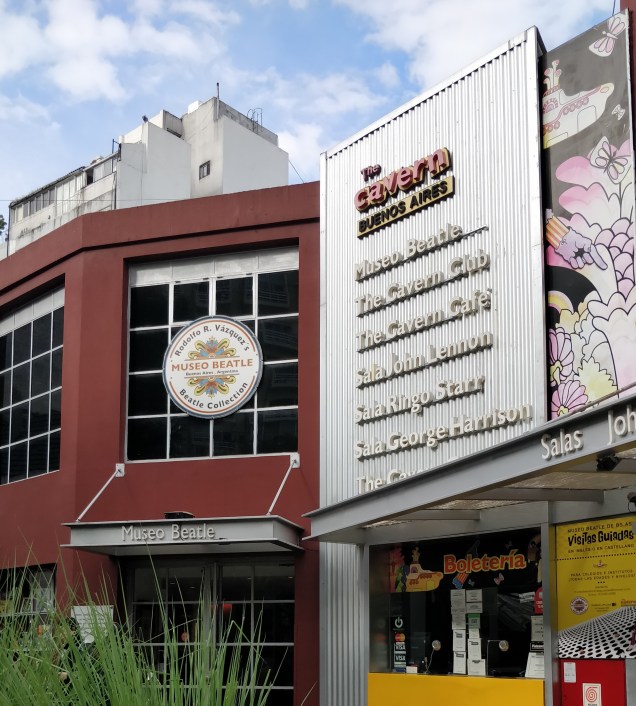
Tucked in the Paseo La Plaza on Corrientes Ave, the “street that never sleeps” and a center of theater and tango, is the Cavern.
Can’t buy me love, but can buy me a ticket to ride if by “ride” you mean “go into the museum”
Named for the Beatles’ frequent venue, it’s a Beatles-themed complex that includes a cafe, a club, a theater, performance spaces, and a museum.
The Museo Beatle belongs to one of the most charming categories of museum, “personal collection that got way out of hand.” In this case, Rodolfo Vázquez began collecting Beatles stuff at the age of 10, and by 2001, he had the Guinness Book of World Records certified biggest damn Beatles collection (re-certified in 2011 by Guinness as having 7,700 items).
Can’t buy me love, but can buy me the catalog in the gift shop
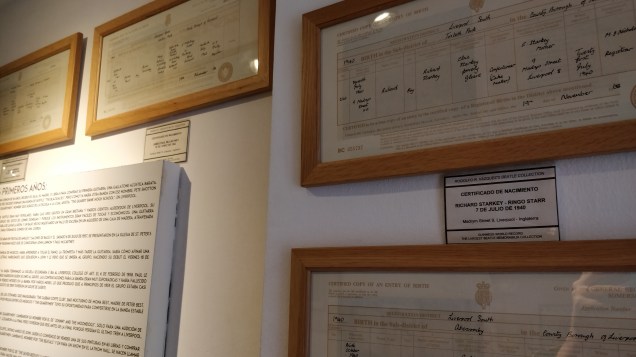
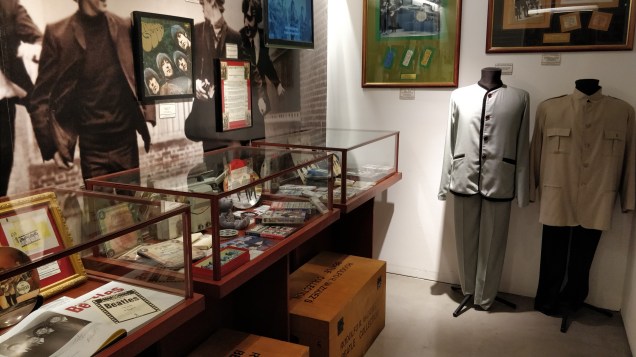
The museum is organized chronologically, and how else would you start, but with the Fab Four’s frickin’ births?
Original birth certificates, I was told
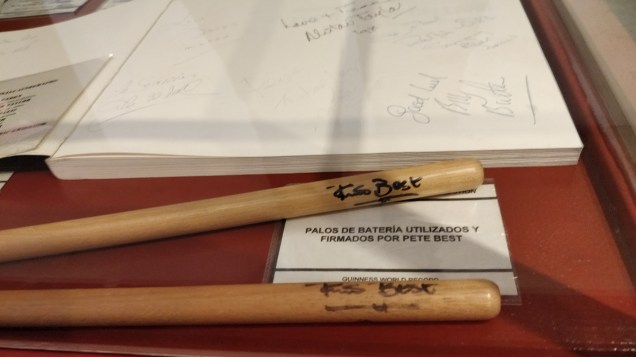
Don’t worry, Pete Best fans, the museum’s got you covered.
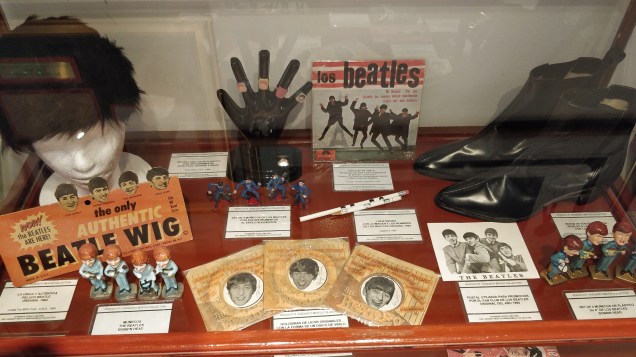
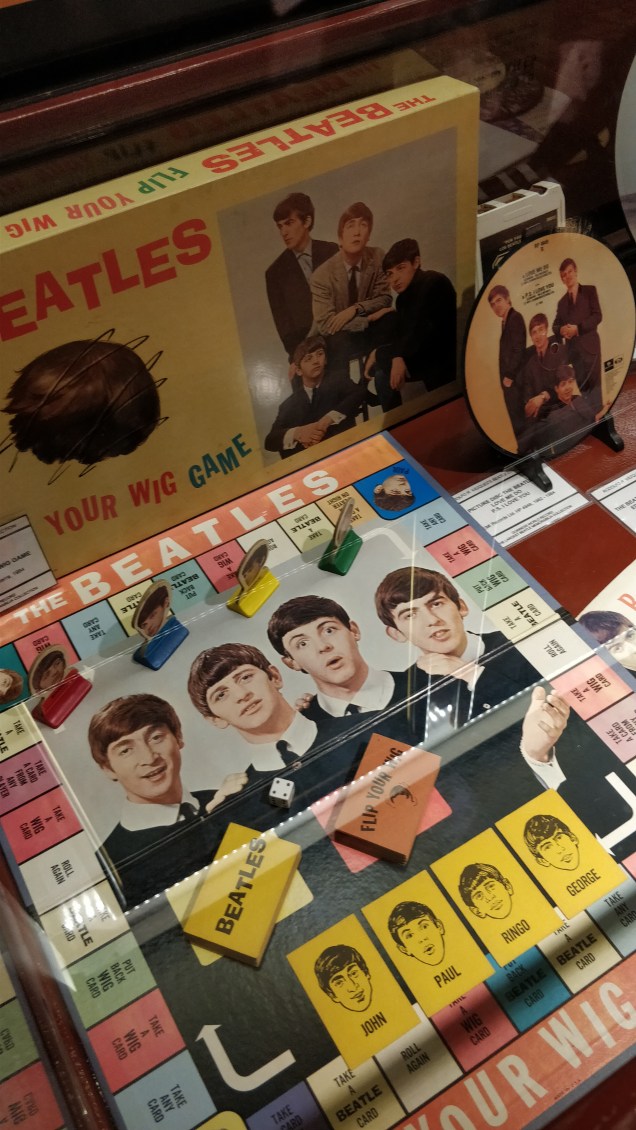
I’m not actually a big Beatles fan; I don’t know much about them. I was surprised by how meteoric their rise really was. They added Ringo and recorded their first album in 1962, released it in 1963, and by 1964, the merch production was insane.
Authentic Beatle wig, and those squares at the bottom are candy. Licorice candy.
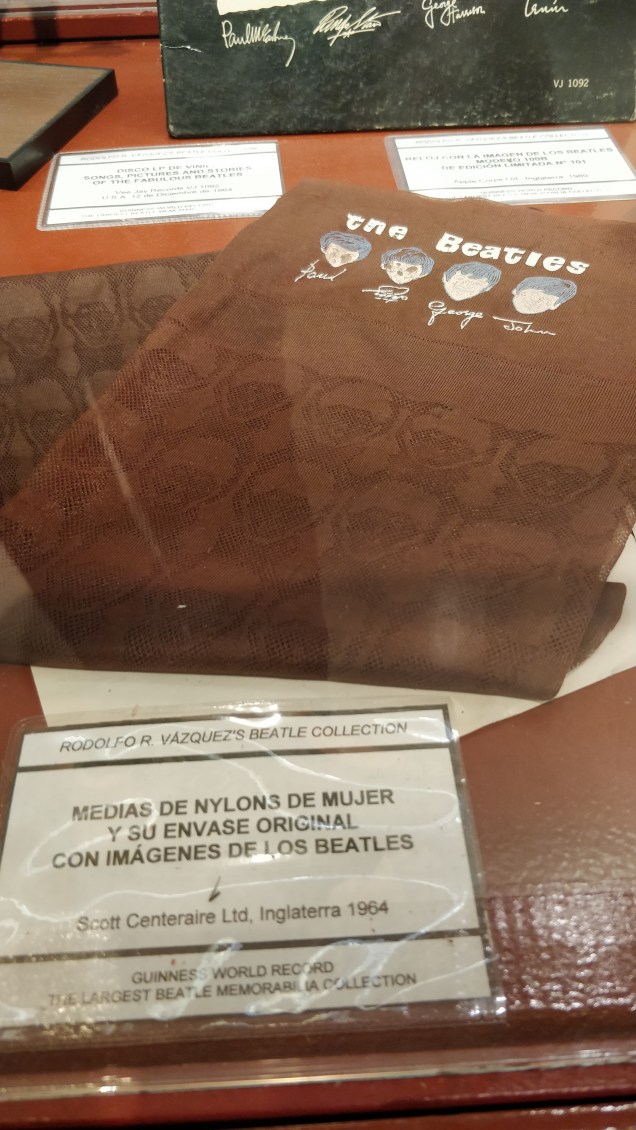
Sure, sounds fun.
That is PANTYHOSE, with their FACES ON IT.
Continuing on through Beatlemania…
Several videos available throughout the timeline.
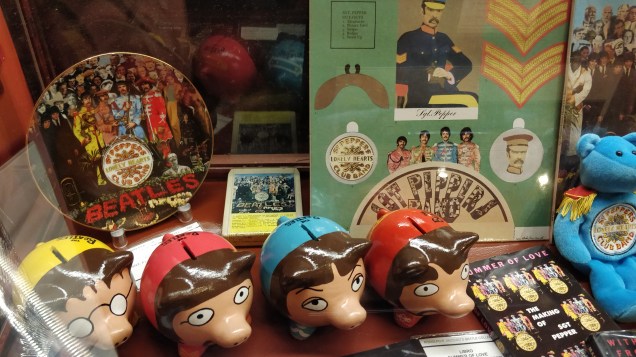
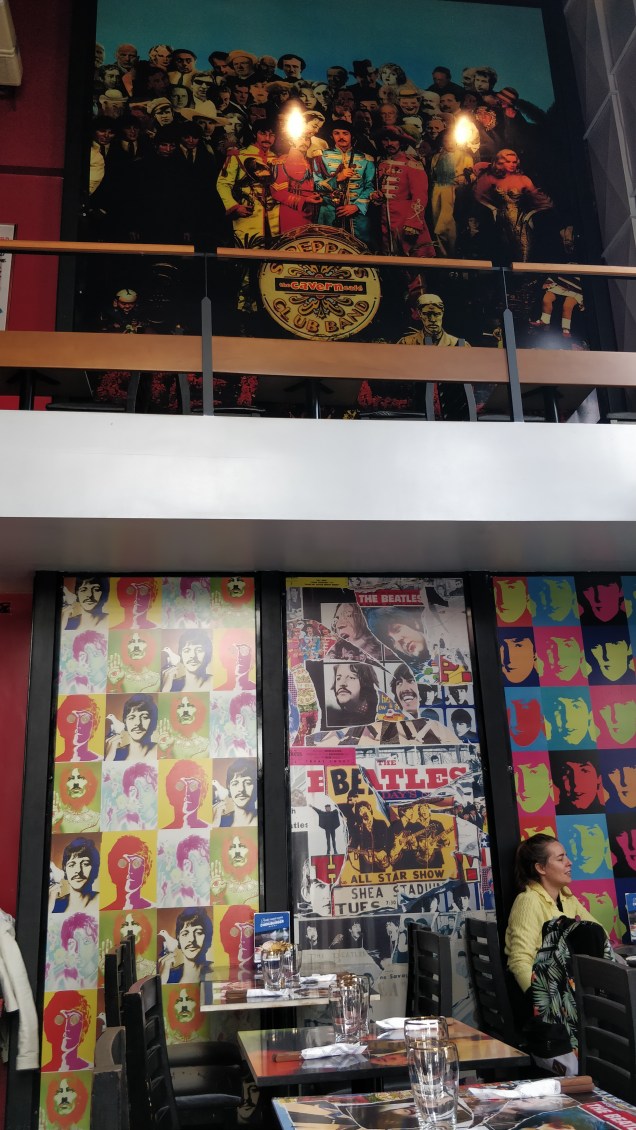
…and on to Sgt Pepper’s something something.
Pig Ringo’s eyeliner wings on point.
I understand Beatles memorabilia, not unlike their aesthetic, gets weirder from here.
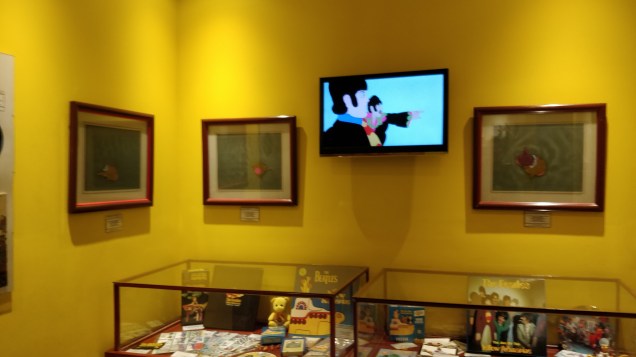
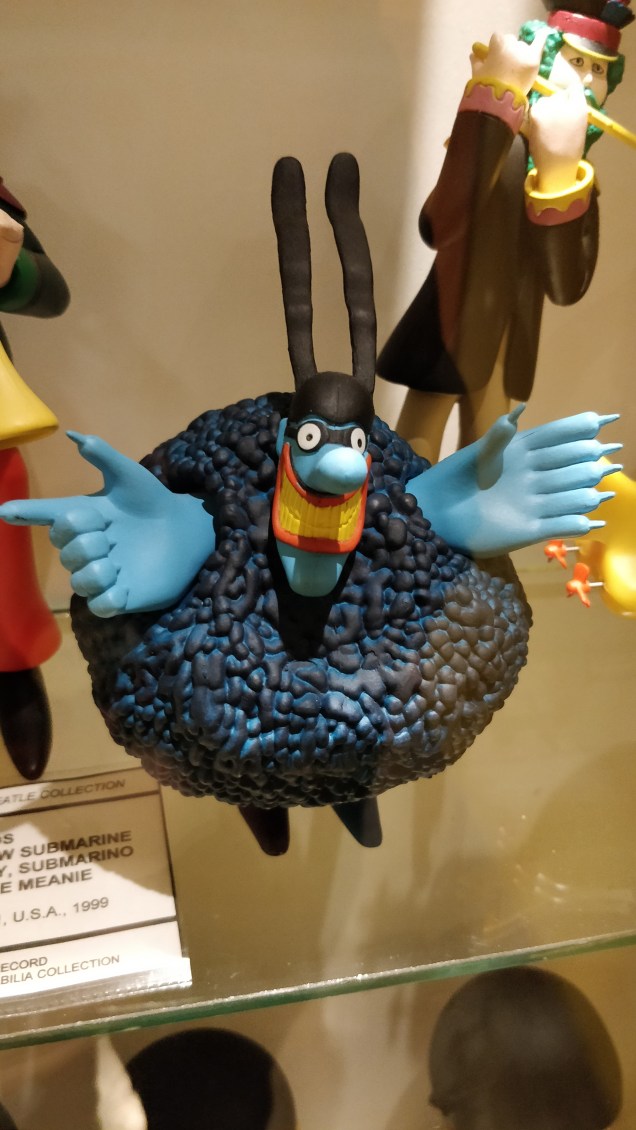
All of us cohabitate in a lemon-hued submersible.And we are clean and sober as the day is long.
There are various records, advertisements, and autographs of anyone even tangentially related to the band throughout the museum. All that is well and good, but you want a photo op. Of course you do.
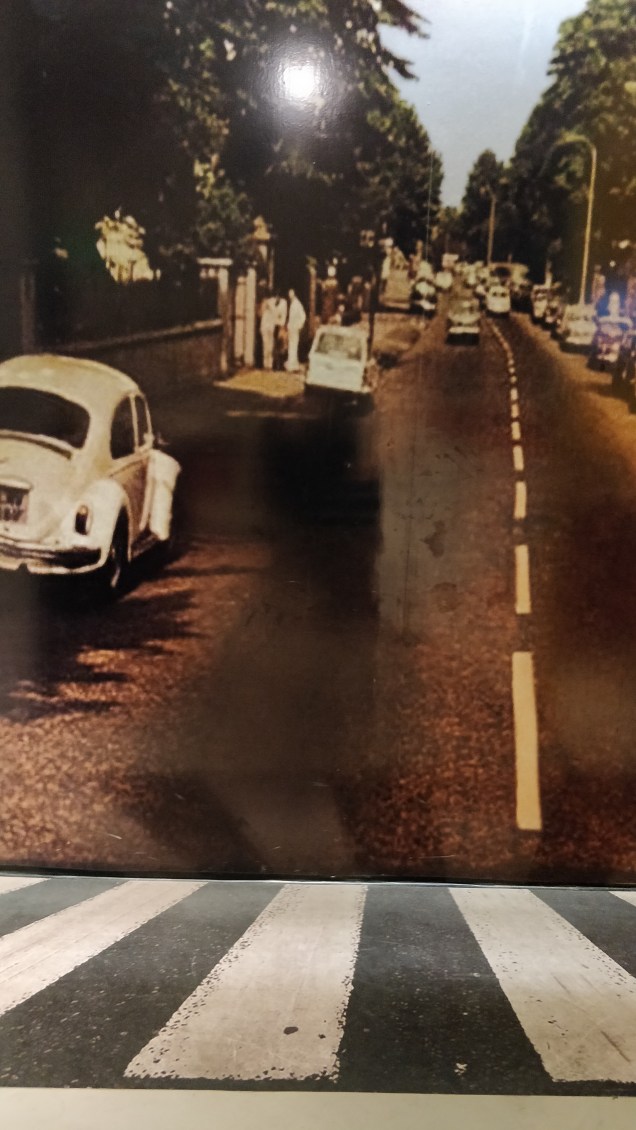
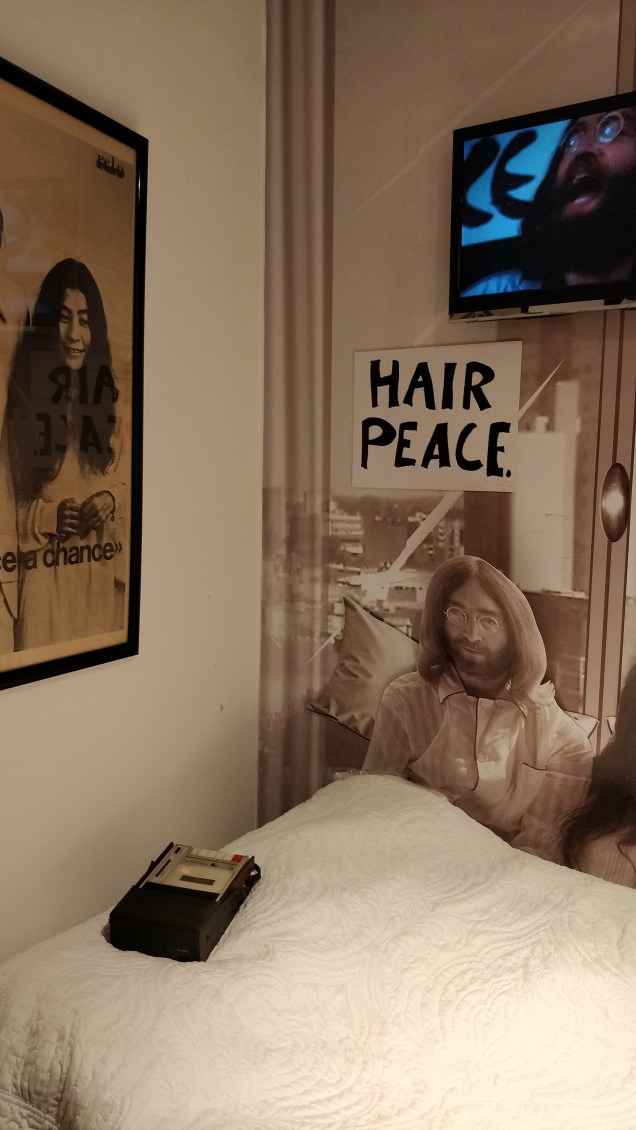
The only true Beatles photo op.
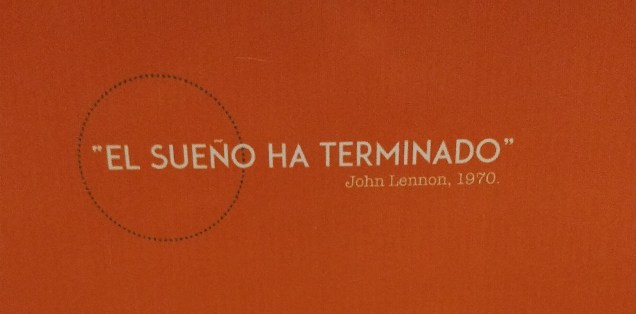
You do, eventually, come to that point on the timeline when things, as all good things do, come to an end.
Bummer.
But as I’m sure every other person on the planet knows, because I know this, the Beatles didn’t just vanish in 1970. They all had solo careers!
Visitors will find nooks dedicated to each man’s solo efforts and life decisions.
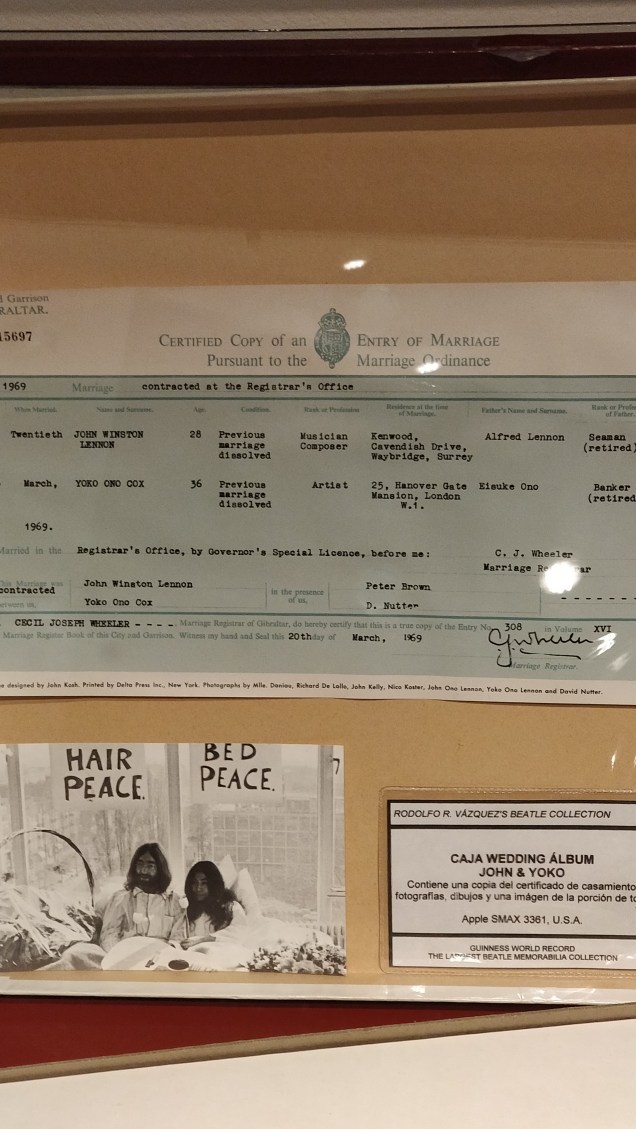
I heard John remarried.
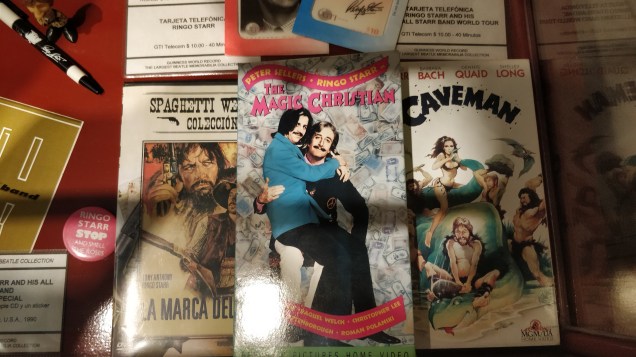
Ringo…well Ringo did some things I was entirely unaware of until five seconds before I took this photo.
After visiting the museum, you can walk across the courtyard to the cafe and have a typical and filling Argentine lunch for 250 pesos (about US$5.50).
If you’re a Beatles fan or just want to see a bunch of Beatles stuff, you’ll find The Cavern in the San Nicolás barrio at Av Corrientes 1660, inside the Paseo La Plaza, which is a actually a really lovely complex of shops, restaurants, performance spaces, and trees in the middle of a busy place. It’s close to the D line and B line of the subway, Congress, the Obelisk–a thousand ways to get there. The museum entries are 250 pesos (about US$5.50) for foreigners, 200 pesos for Argentines and residents, and free for kids 10 and under. Check the website for the hours.
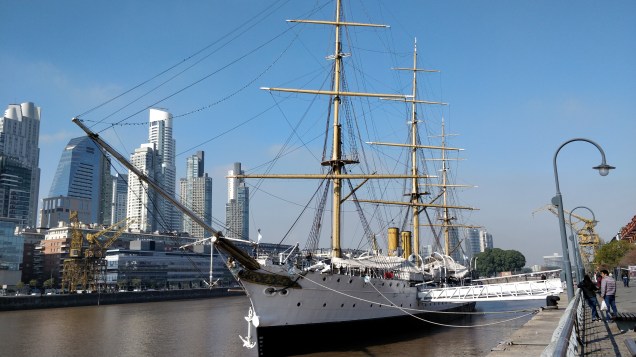
There are two museum ships in Puerto Madero: the ARA Uruguay and her more famous yet less interesting sister, the ARA Presidente Sarmiento. But just because she doesn’t have the very cool history of the Uruguay doesn’t mean the Presidente Sarmiento is boring.
I’d say that it might be unfair to compare them, but it’s impossible not to, as they are literally within sight of each other.
The Sarmiento was a training ship for the naval academy. It was English-built and launched in 1897. Retired in 1961, it’s been a museum since 1964.
I love passageways on ships! This one has a lot of plaque bling.
Lots of stuff to see from the glory days:
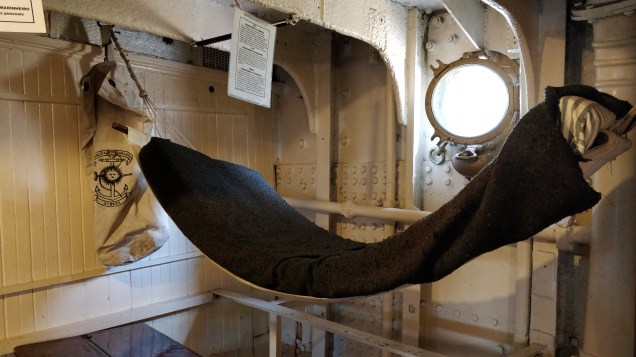
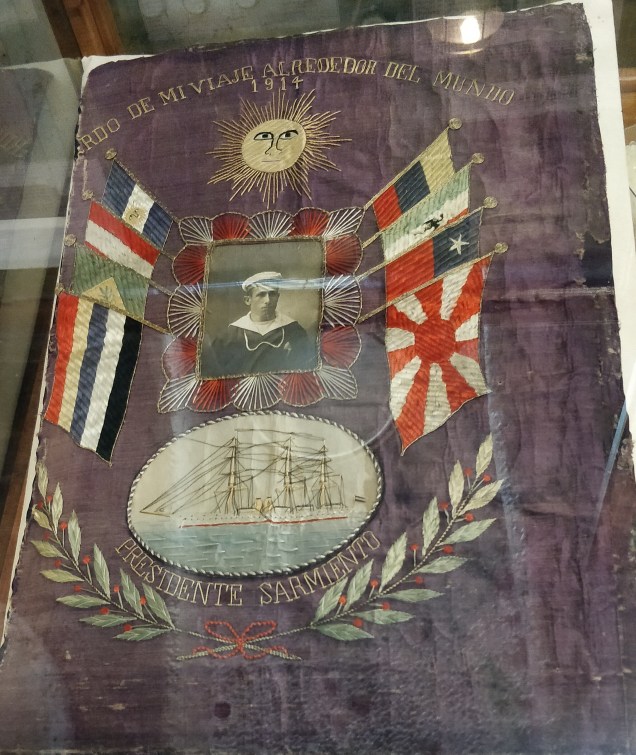
Training sailors got a mattress on their hammocks, so that’s cool.This guy had a really fancy pillow embroidered to commemorate his voyage around the world.Arf.
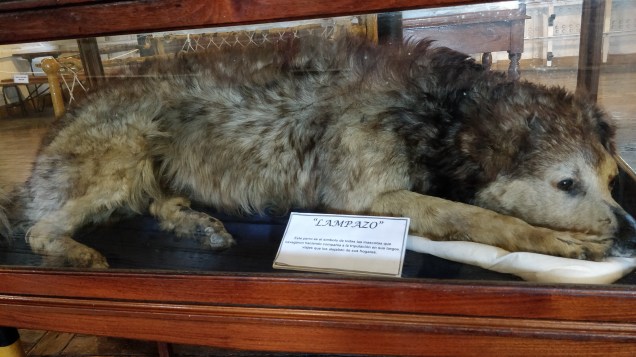
The sign wasn’t super clear on the origin of the taxidermied Lampazo here, but it seems like in 2014 they decided that he’s probably Buli, owned by Lt Calderon and ship’s pupper on the 37th voyage. I don’t know how he came to be taxidermied and under glass on the Sarmiento, and I didn’t see anything on board to shed light on that. Such pressing questions remain mysteries.
There’s no meal service.
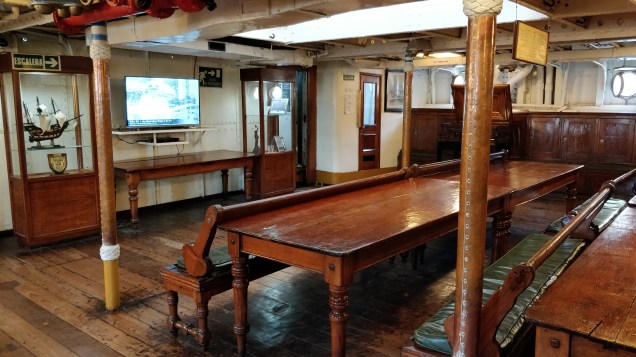
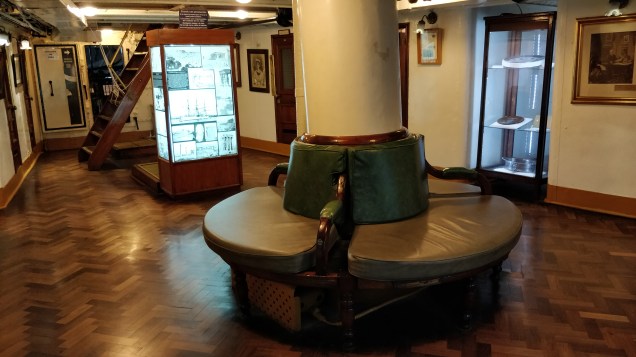
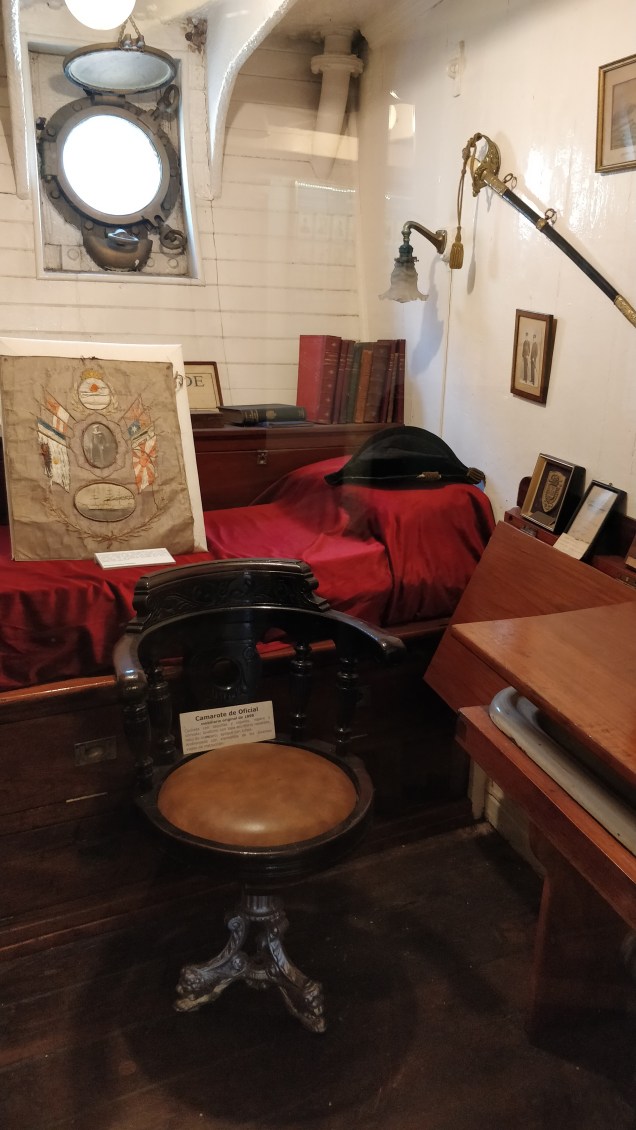
The crew dining room now has a video you can watch, and going on through it leads to the officers’ digs, which are nicer.
If you’re an officer, you mattress doesn’t swing.
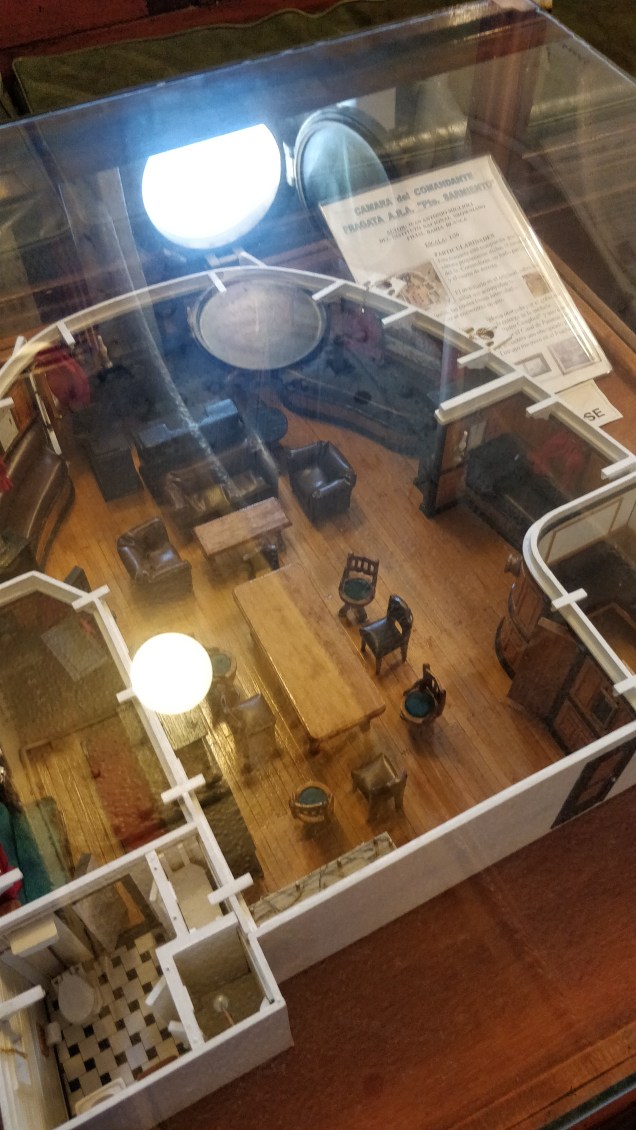
The Captain’s quarters are off-limits to visitors, presumably because the naval personnel currently assigned to the ship have taken over the best space for offices. But there’s a nice little model of it.
Command and comfort.
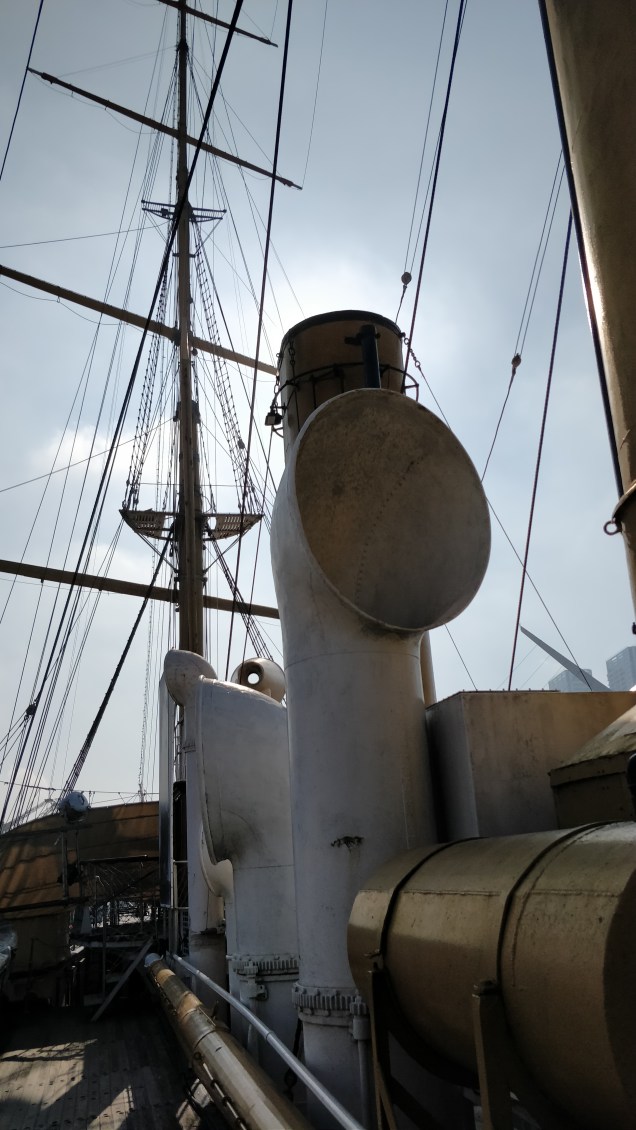
You can climb up on the decks, too, which afford a nice view of the Woman’s Bridge and other ship stuff.
I wasn’t entirely sure I was allowed up on this part, but two navy dudes saw me climbing down and didn’t yell at me, so I assume I was.
The Presidente Sarmiento is open seven days a week, 10 am to 7 pm. It’s 20 pesos to get on board (at the moment!) and located in Puerto Madero, kind of across the street and to the right from the Casa Rosada. It’s a very short walk along the river to the ARA Uruguay, so if you’re super into museum ships, you can hit them both.
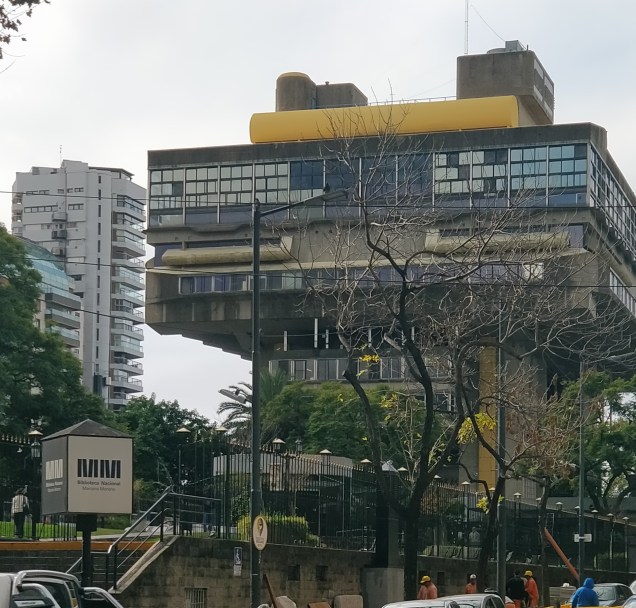
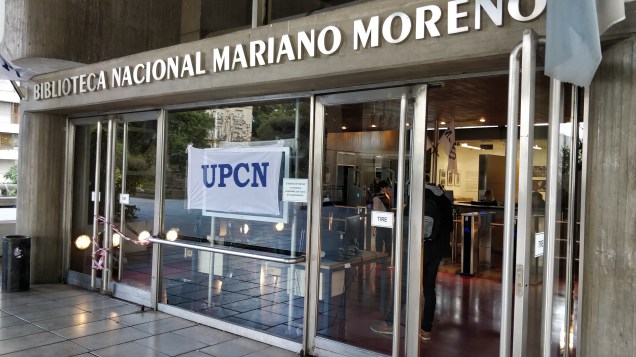
Sometimes the beauty of a library is in the idea, and not the stupid brutalist architecture.
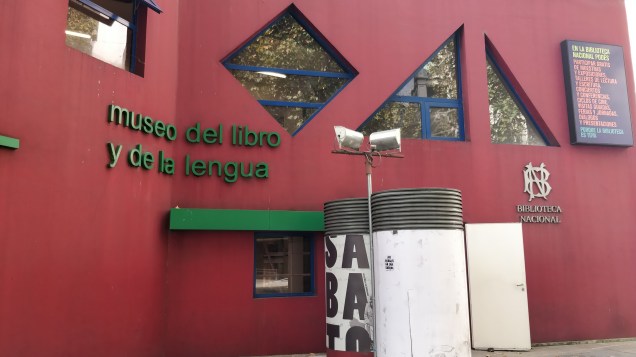
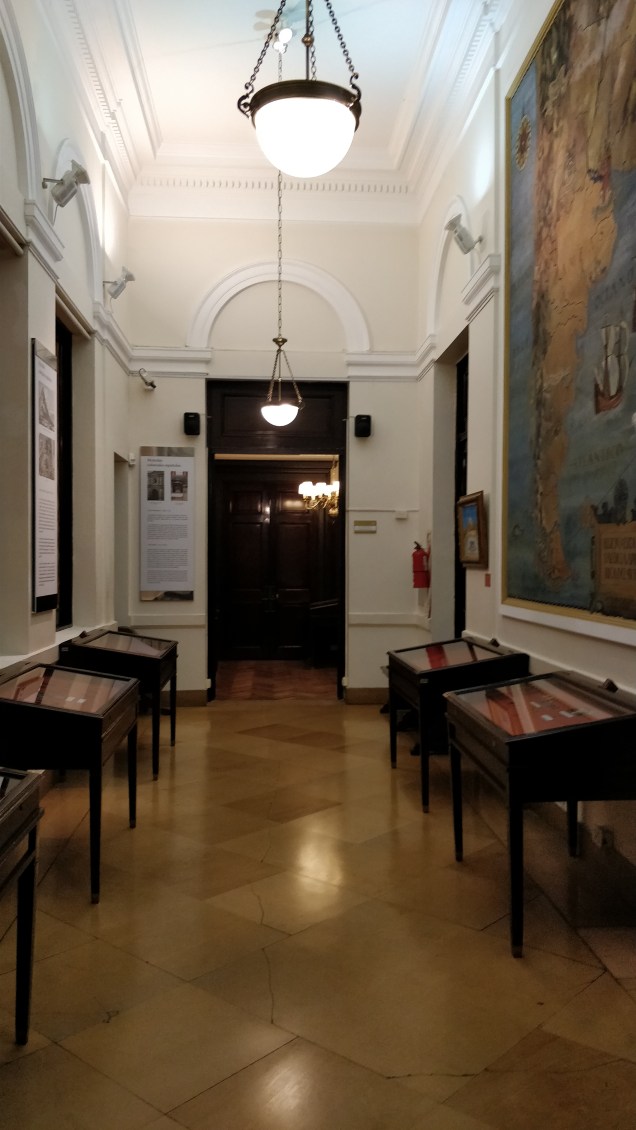
Established in 1810, the library inaugurated its current building in 1992, thirty years after it was first designed (because Argentina). There are a few things associated with the National Library that I will be including here, such as the Museo del Libro y de la Lengua, which is actually more of a small space for temporary exhibitions and events–not quite enough to do a whole post on.
“…because the library is yours.” Hell. Yes.
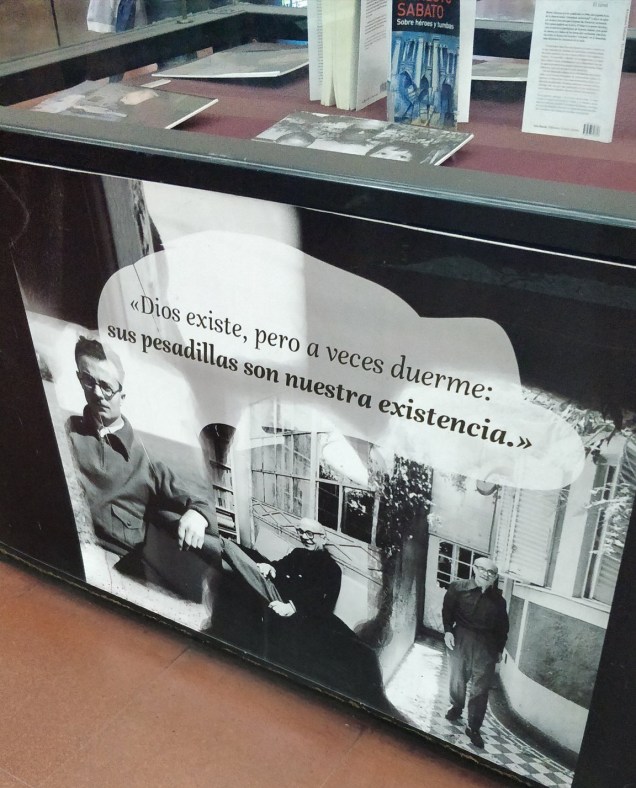
Currently, there’s a couple of exhibits up, one of which is on scientist, novelist, and impressive prizewinner Ernesto Sabato. You might remember him from a really life-affirming subway display I found awhile back.
“God exists, but sometimes dreams: his nightmares are our existence.”
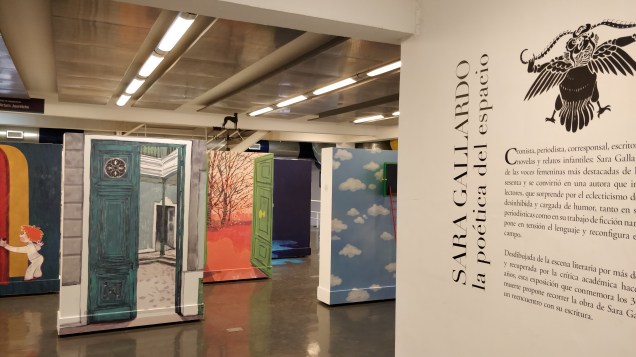
The upstairs currently houses a show on Sara Gallardo.
Like I said, not a whole lot to the museum itself, but as it’s at the back of the library complex, it can easily included in a visit to the whole shebang.
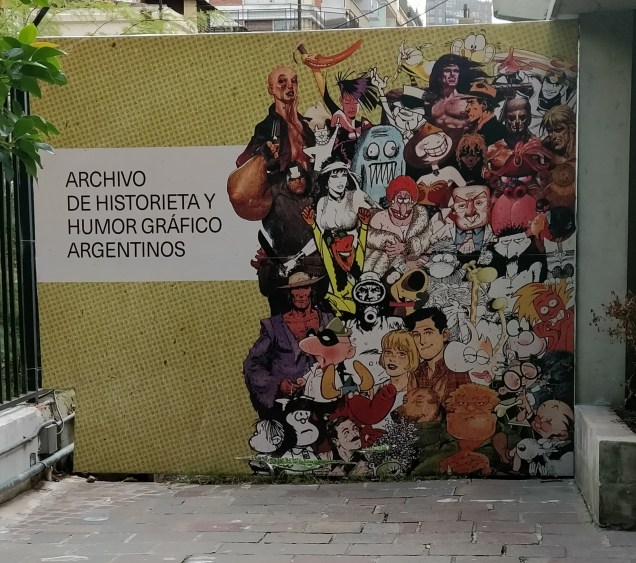
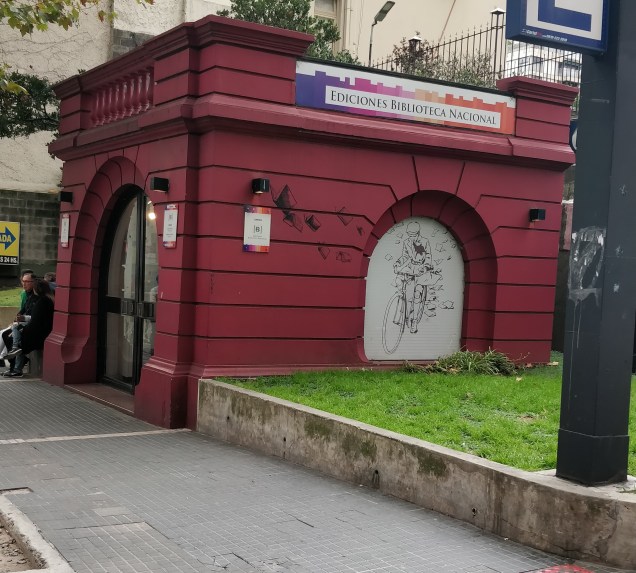
There’s some remodeling happening on the grounds of the library, but there is one small open building that houses the showroom of the Centro de Historieta y Humor Gráfico Argentinos (Argentine Comic and Graphic Humor Center).
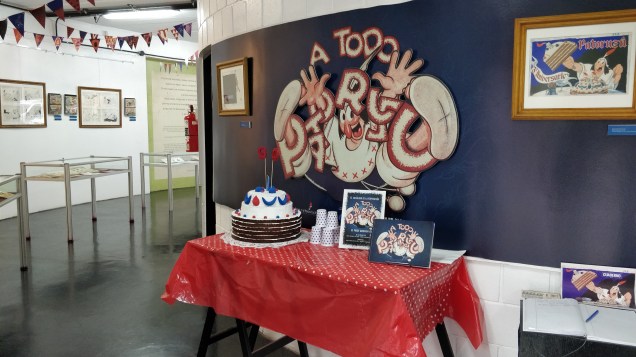
At the moment, the building is dedicated to the 90th anniversary of Patoruzú, who looks VERY QUESTIONABLE to me but is still an icon here, and widely considered Argentina’s first super hero (he’s got super strength and he’s also rich, which is Batman’s sole power, so Patoruzú already has one up on that guy).
Pictured: Most secure border in the Western hemisphere.
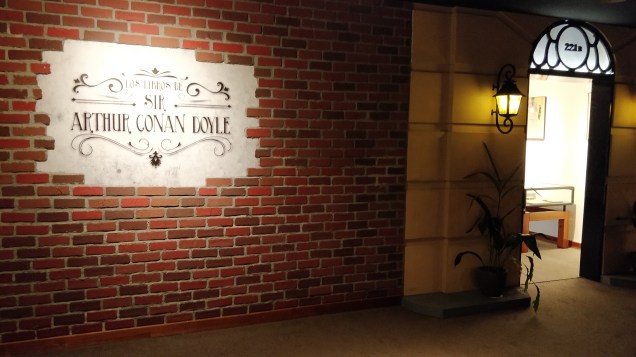
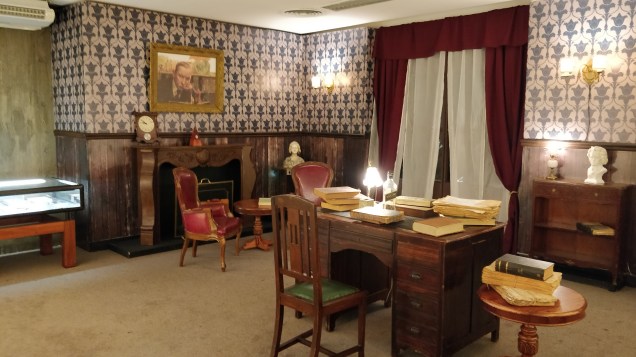
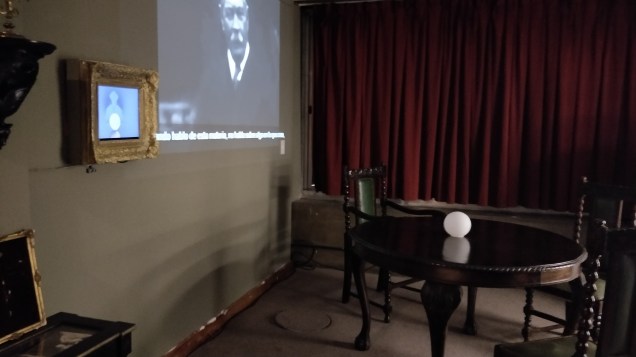
Right now, there’s an exhibit on the books of Arthur Conan Doyle. It’s pretty fun.
Sherlock Holmes fan fic has been a hugely profitable genre in its own right, and I especially enjoyed the inclusion of “Cat Holmes.”
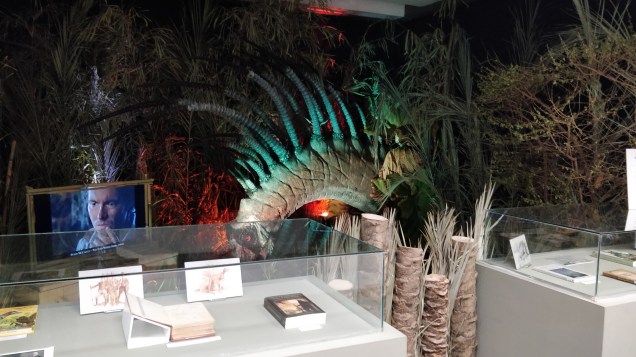
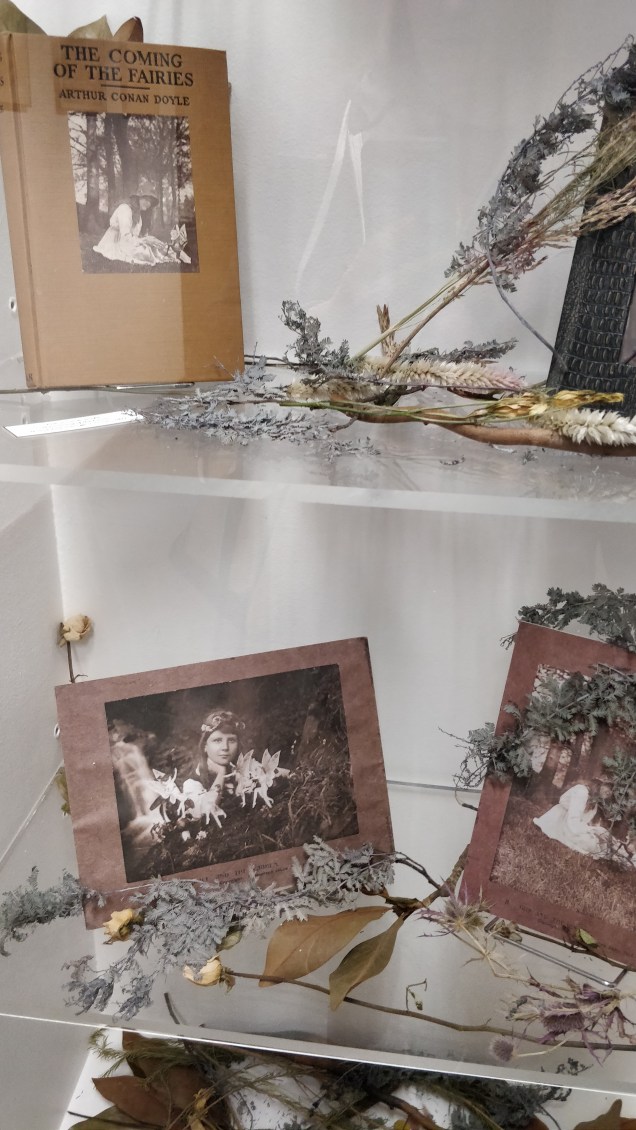
The Lost World room! Argentina is rich in dinosaur fossils, and that there is native son Bajadasaurus pronuspinax.Yeah, they even got the fairy stuff.Interview with the man himself in the spiritualism room.
I can absolutely feel the librarian’s giddy enthusiasm for being able to create this room.
If I don’t get a haunted mirror for Christmas this year, why do I even have a family.
There were a few of these pictures that were activated when you walked close to them. This whole thing was neat.
At the back of the library’s complex, near the Museo del Libro y de la Lengua, is an adorable little shop.
ADORKABLE
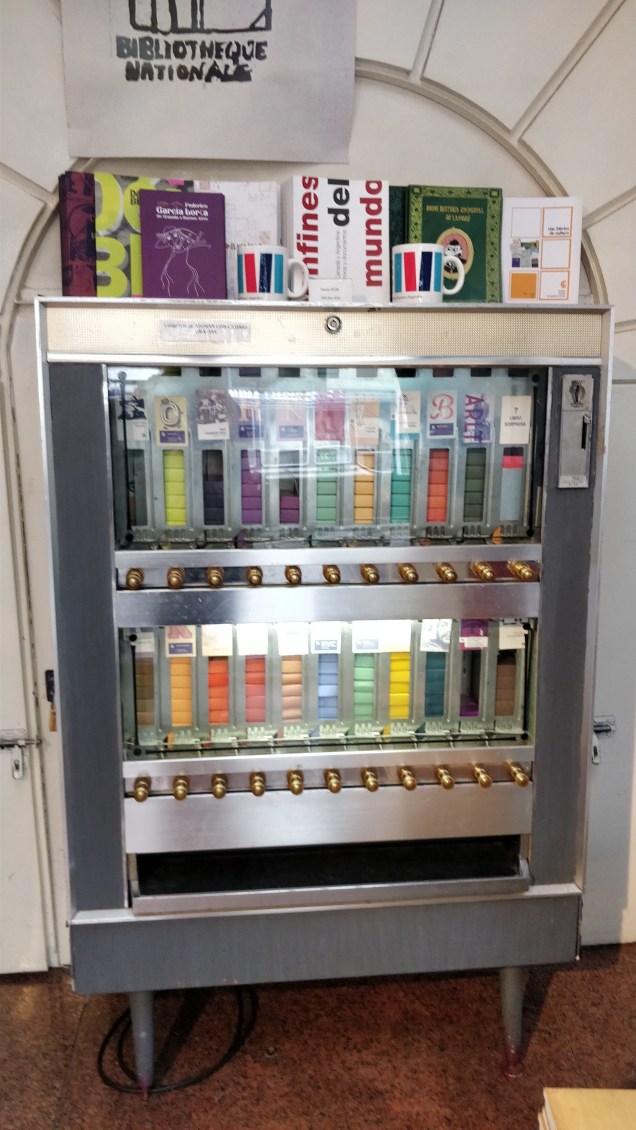
It’s the National Library’s bookstore for its publications, where you can also get sweet library merch, like a coffee mug or poster. There’s also this TINY BOOK VENDING MACHINE SO BRING 20 PESOS IN COINS OK?
Objects in photo less blurry than they appear
So if libraries are a thing for you (as they are for all quality people), you can roll a visit to the National Library into your Recoleta meanderings, as it’s a couple of blocks from the Recoleta Cemetery, the Museo Nacional de Bellas Artes, and the Las Heras subway stop on the H line. There’s a cafe of the basic snack and coffee sort on the first floor of the main library building (second floor by US reckoning), but obviously plenty of other places are around. Check the website for the hours of all the various elements mentioned here.
You might recall I have visited a bank museum before, that of the Banco Ciudad. It was a very interesting look at the bank’s founding and role in society, and I was slow to add any other bank museums to my list when I found another one. I assumed it would be similar.
Banco Central is the national bank of Argentina, and its history is of course tied to the economic history of the country, which is, to put it generously, bonkers. The museum, officially known as the Museo Histórico y Numismático Héctor Carlos Janson, takes an entirely different course than that of Banco Ciudad and focuses on the history and development of currency. That history is also bonkers.
The first room of the museum looks briefly at the history of currency in South America.
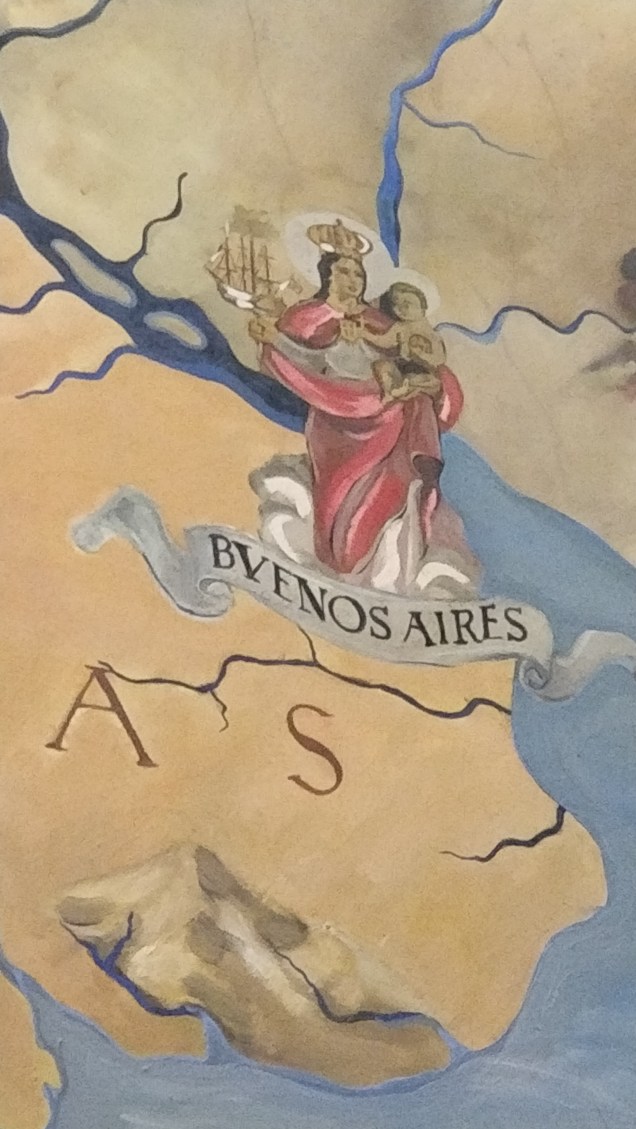
Oh, hey, is that a painting the recreates elements of a 17th century map? Probably pretty charming!Is…is Buenos Aires Mary? Or Jesus? You know what, nevermind.
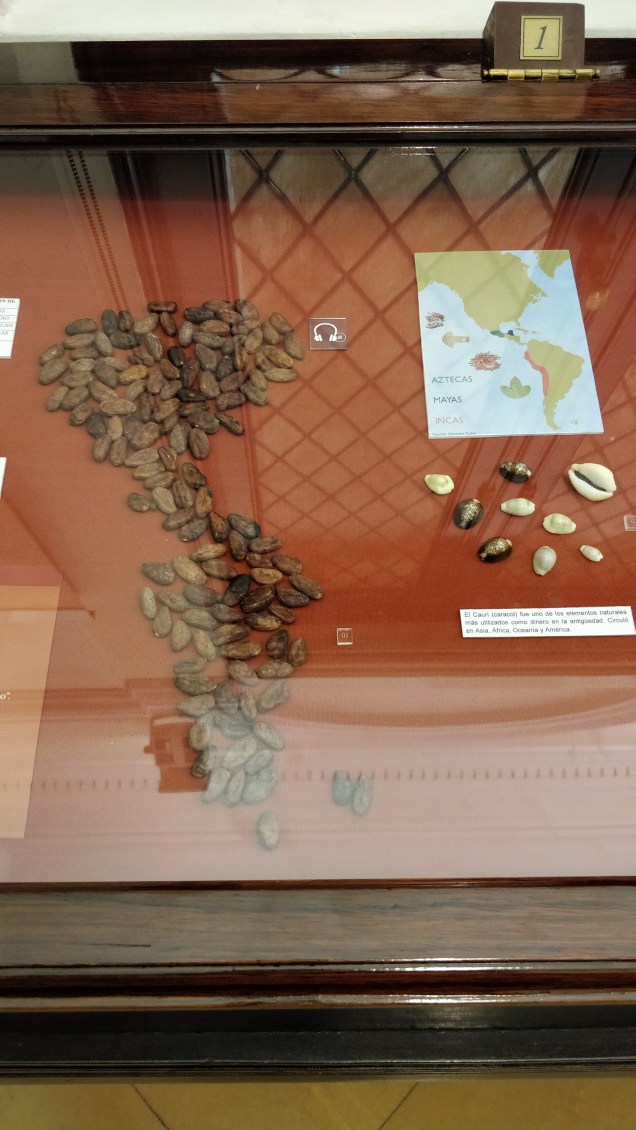
Anyway, back before Europeans arrived for their extended pillage-murder spree, frequently used currency items included cocoa beans, leaves, small metal pieces, and cowrie shells.
Only nobles had access to cocoa trees and the bean store houses. Yes, there were also counterfeit beans.
Next up are examples of colonial-era currency.
Obviously everything in this museum was in a glass case, so it’s a whole post of just super shitty photography.
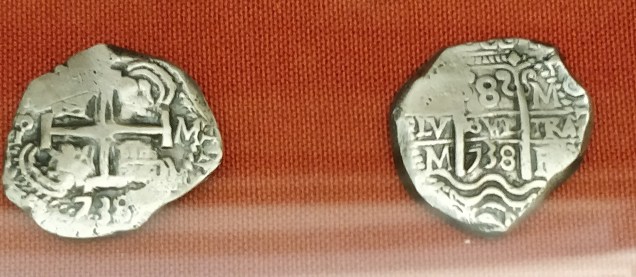
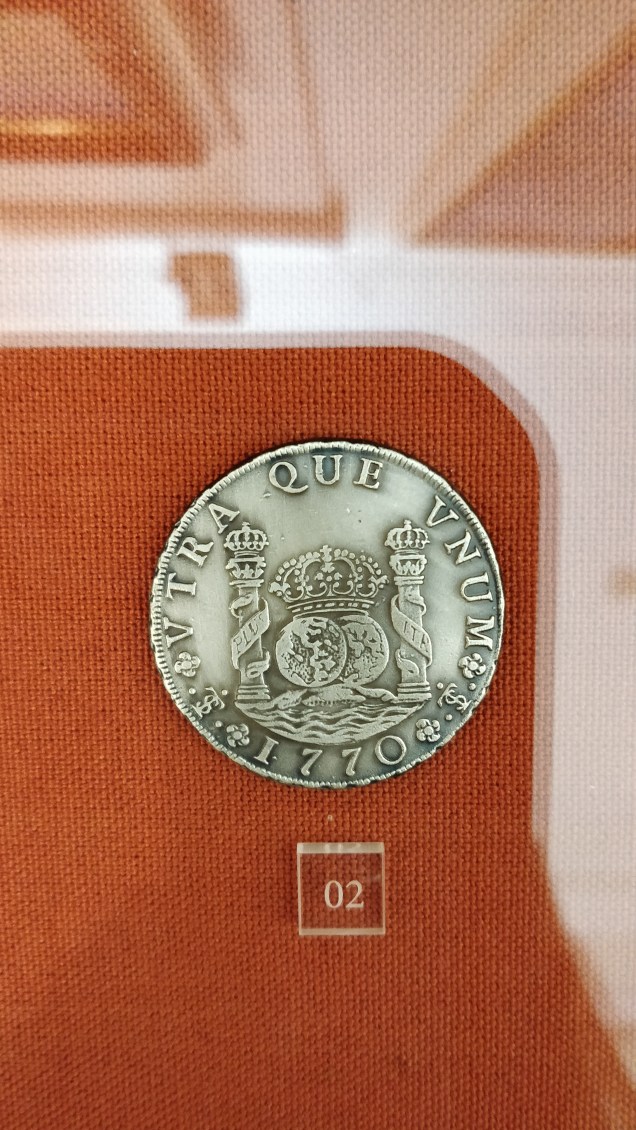
The colonial coins were minted in Potosí, in Bolivia, close to Cerro Rico, a huge silver mine that Spain spent years plundering. A stunning number of miners have died there over time, earning the place the name “the mountain that eats men,” because nothing in colonial history isn’t horrifically grim (mining the mountain continues to be horrifically grim).
VTRAQUE VNUM: “Both Are One” (Spain and the colonies), LOL.
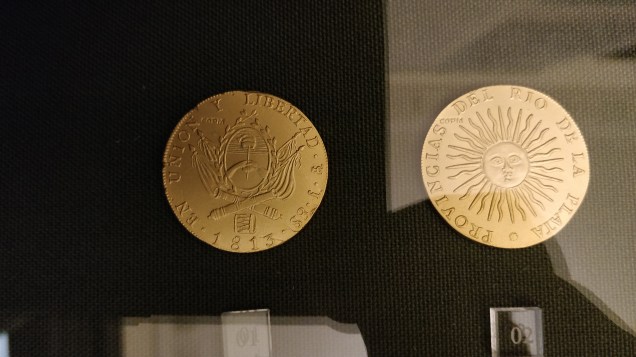
Next up, the first currency minted following independence:
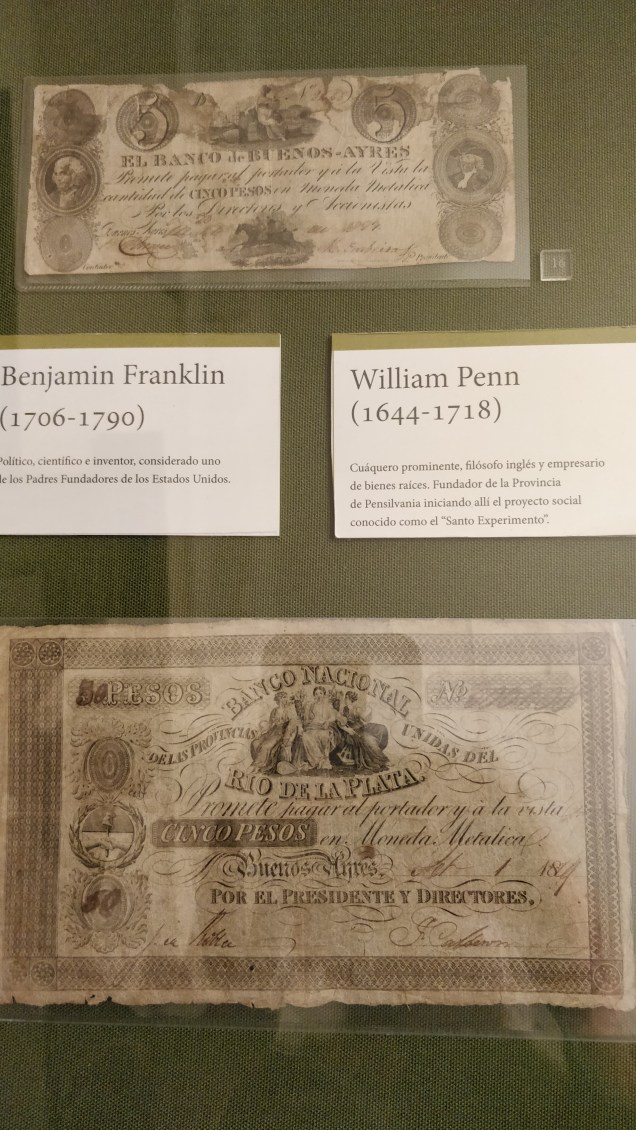
Money was minted by the provincial governments, which is why the gold coin above says “Provinces of the Rio de la Plata.” The Banco de las Provincias Unidas del Río de la Plata was created with the aim of unifying the nation’s printed currency, but the other provinces were not cool with this so it did not happen (had a lot to do with economic troubles from the war with Brazil). So, money from all over continued.
Notes were printed abroad, and included portraits of important figures of independence in the New World, such as Simón Bolivar, George Washington, Ben Franklin, and William Penn.
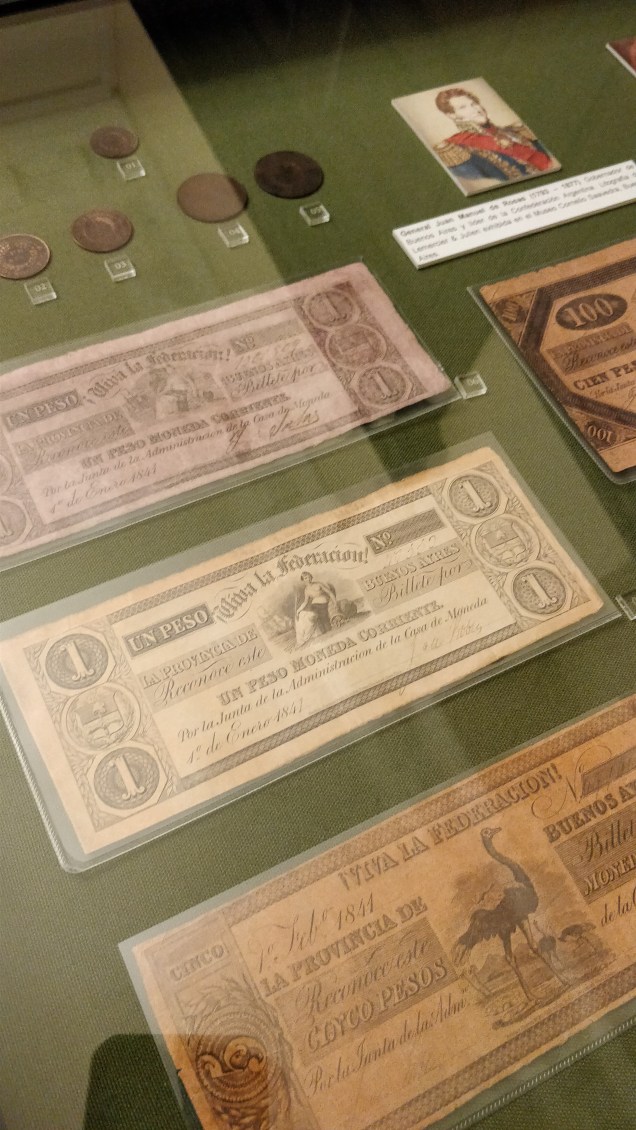
Things got weird, as things tend to do, during the civil war. General de Rosas, blurrily pictured below, dissolved the national bank and created an administration to issue paper money and coins. These were monedas corrientes. I am not nearly as well-versed in Argentine history as the museum’s informational panels assume, so I can’t much fill you in beyond that.
You will note, possibly, two things about the following bill: One, its domination is 1000, which means it was rapidly devaluating, generally not at all a good thing; and two, it’s got palm trees and kangaroos on it.
Unexpected!
The money was at the time printed in Buenos Aires, but the plates were engraved in London. The museum notes that printing houses at the time worked for several countries and contends that’s why the kangaroo and llama appear together on an Argentine banknote, but frankly I still have a lot of questions.
I also find the next phase of currency a wee bit confusing, something that can likely be attributed once again to my lack of knowledge of the nation’s history, but next you get “pesos fuertes” and “pesos corrientes.”
If there is any unifying lesson to this museum, it’s that the Argentine economy has never been all that stable.
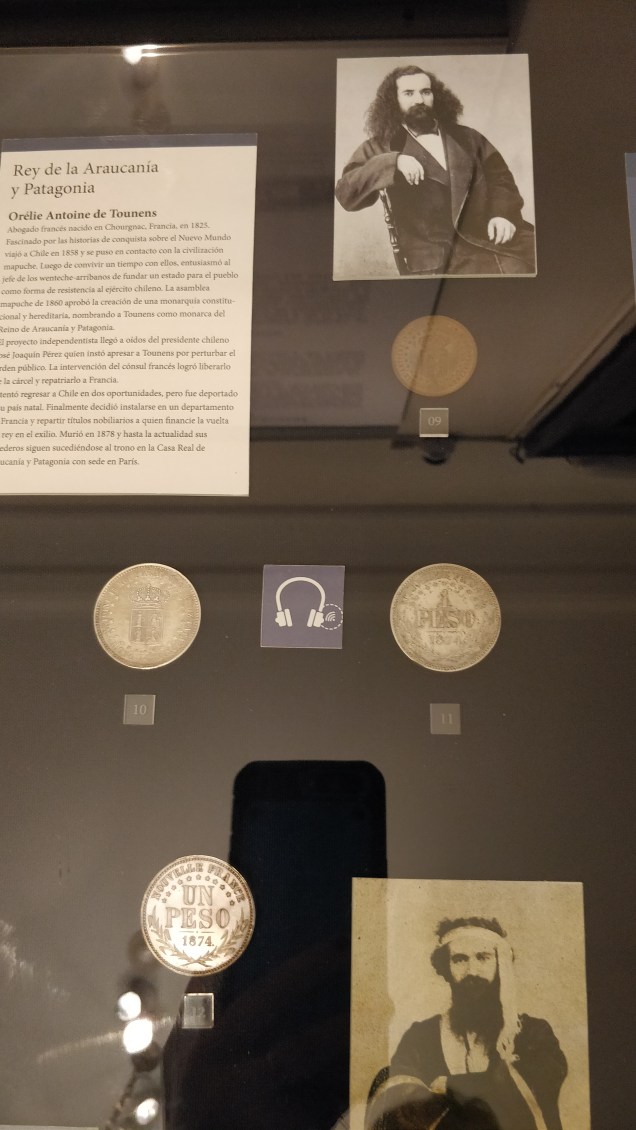
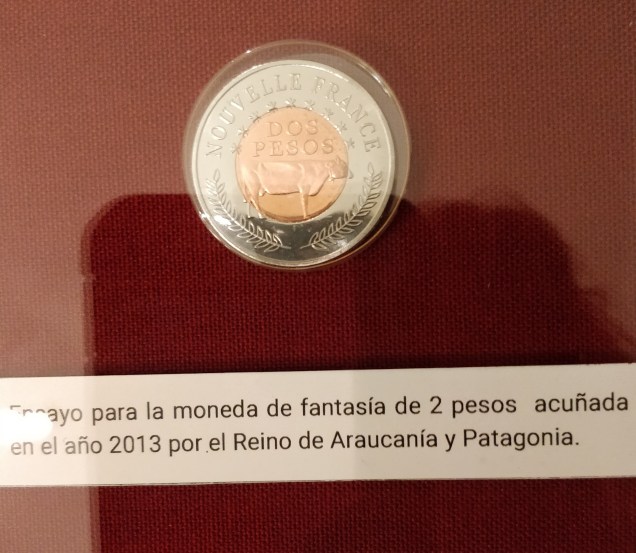
Here we take a small detour into a historical oddity. A French lawyer showed up in the west of the country and in 1860 declared himself “King of the Araucania and Patagonia.” He then created a constitution, a flag, and a national anthem, and started minting money.
Orélie-Antoine de Tounens, looking a lot like a dude that would just go do something like that.
He was arrested, declared insane, and deported, but he apparently took his claim very seriously and tried, for the rest of his life and without success, to really make it stick. He died childless, but people have claimed to be his heirs for awhile now, and they actually still mint (technically worthless) coins, I guess for the sole purpose of having them displayed at the Central Bank museum.
Cool?
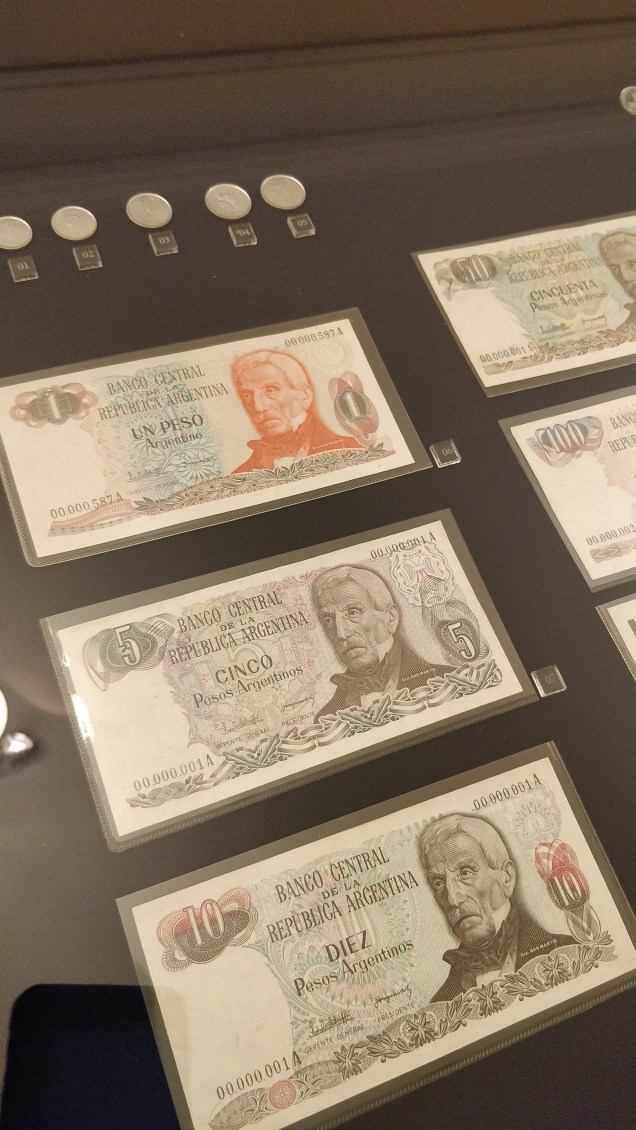
Now, I’m going to hop forward about 100 years, skipping a major financial crisis, to get to the financial crises of recent history. There was a substantial devaluation during the military dictatorship, which attempted to stabilize things, but, spoiler alert, did not.
These are from the last couple years of the dictatorship, the early 80s.
The military dictatorship fell and democracy was restored in 1983, but there was still a huuuuge problem in the form of a massive external debt, currency devaluation, and serious inflation. The new government started whacking off zeroes, so that 10000 old pesos would equal one new peso.
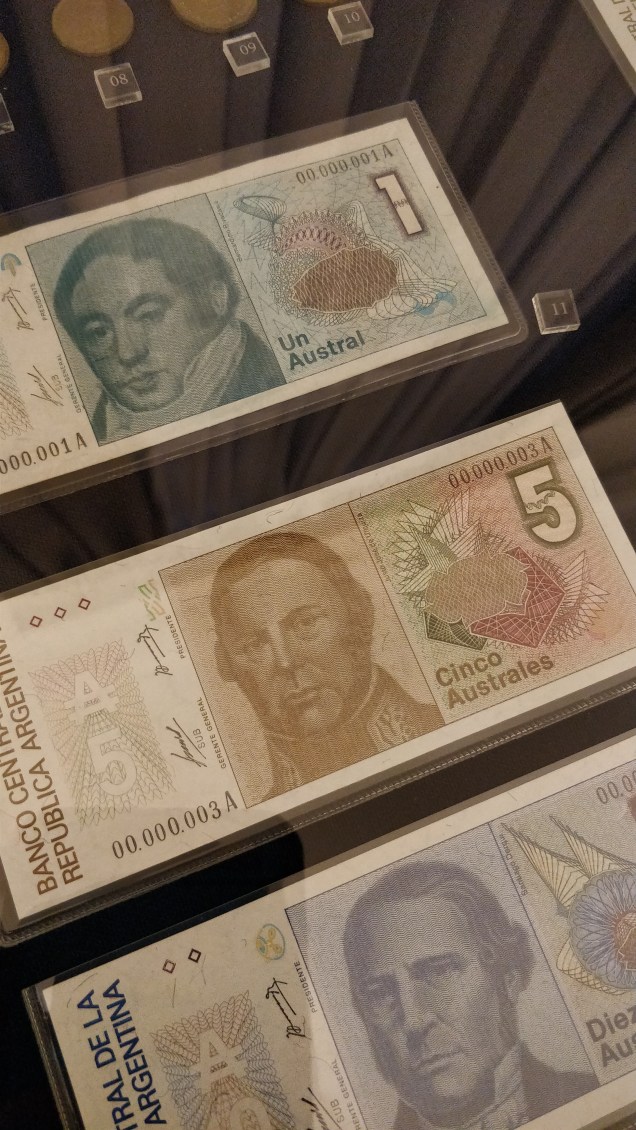
It did not work. These were printed in 1983; by 1985, 10000 peso notes were back in circulation. That year, the president decided what the country really needed was to start from scratch. The peso was old and busted. The Austral was the new hotness.
Alas:
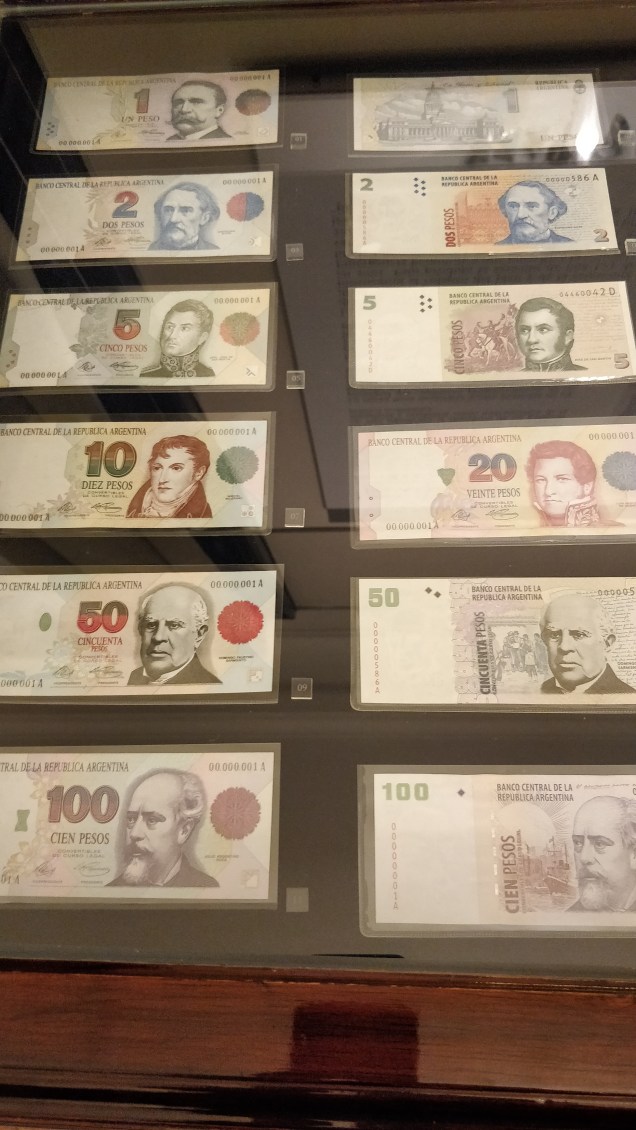
The name “peso” made its return with the “pesos convertibles” in the 90s, when the peso was pegged to the US dollar at a 1 to 1 rate. This also didn’t work and led to the financial crisis of 2001, which many Argentines can tell you absolutely wild stories about. The president famously fled the Pink House by helicopter. Some of the bills from this period are still in circulation; I could dig some out of my wallet right now.
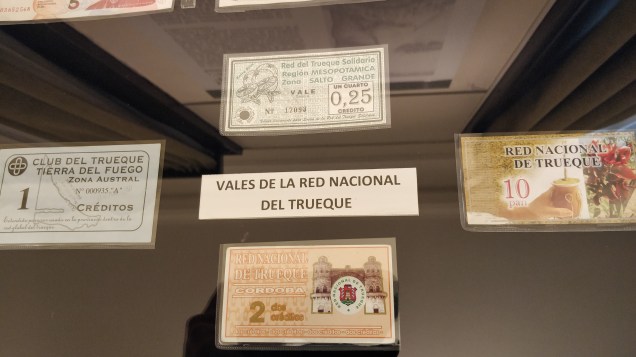
This time of utter economic collapse led to a widespread return to a barter economy, leading to the use of these barter network vouchers.
Things got…okay after that. And then less okay. That’s kind of how it goes here.
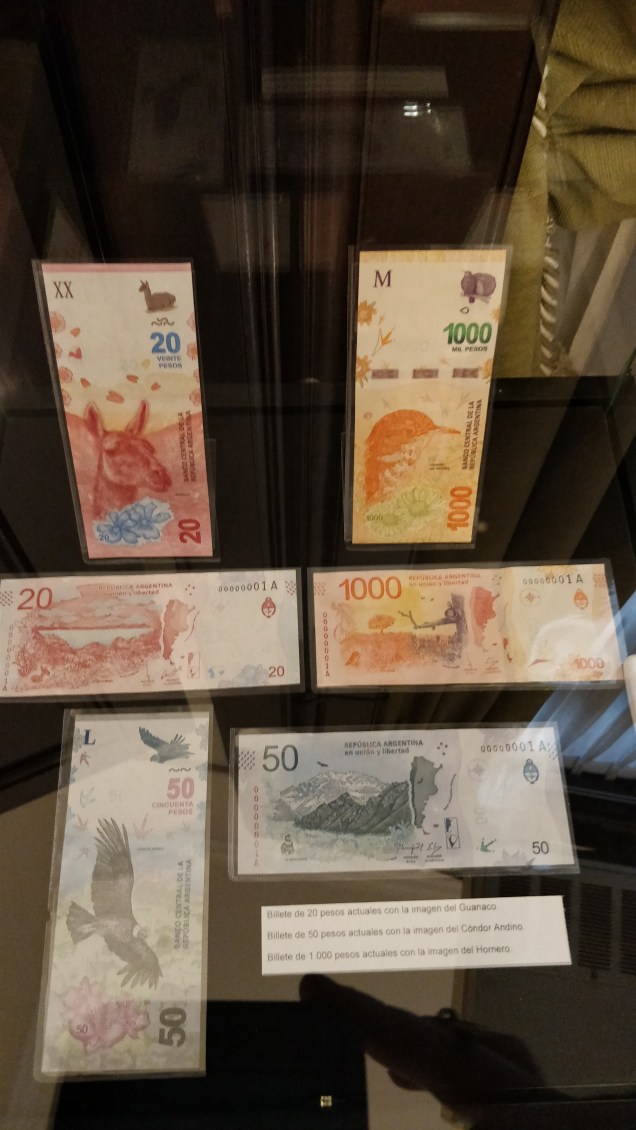
The current government, for political reasons I’m not going to get into, decided that the money needed a makeover, so now it’s all about the nature.
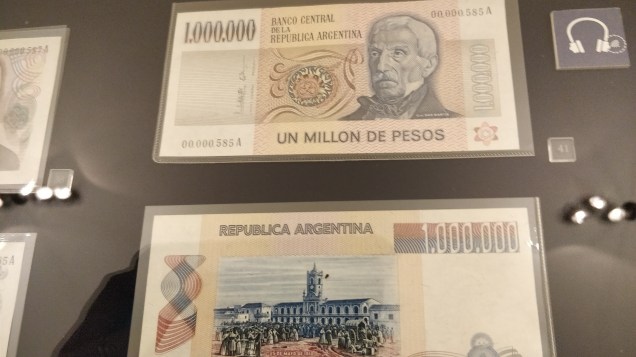
Oh, hey…we’re back up to 1000 pesos notes. Huh.
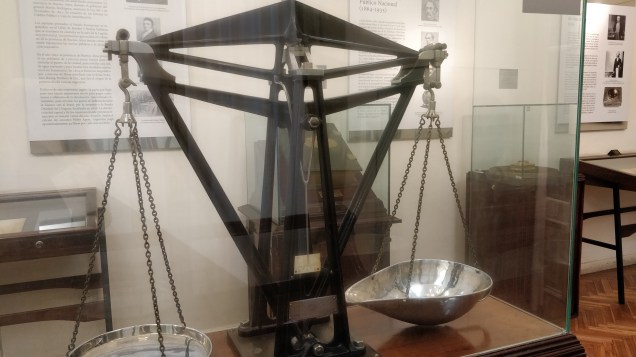
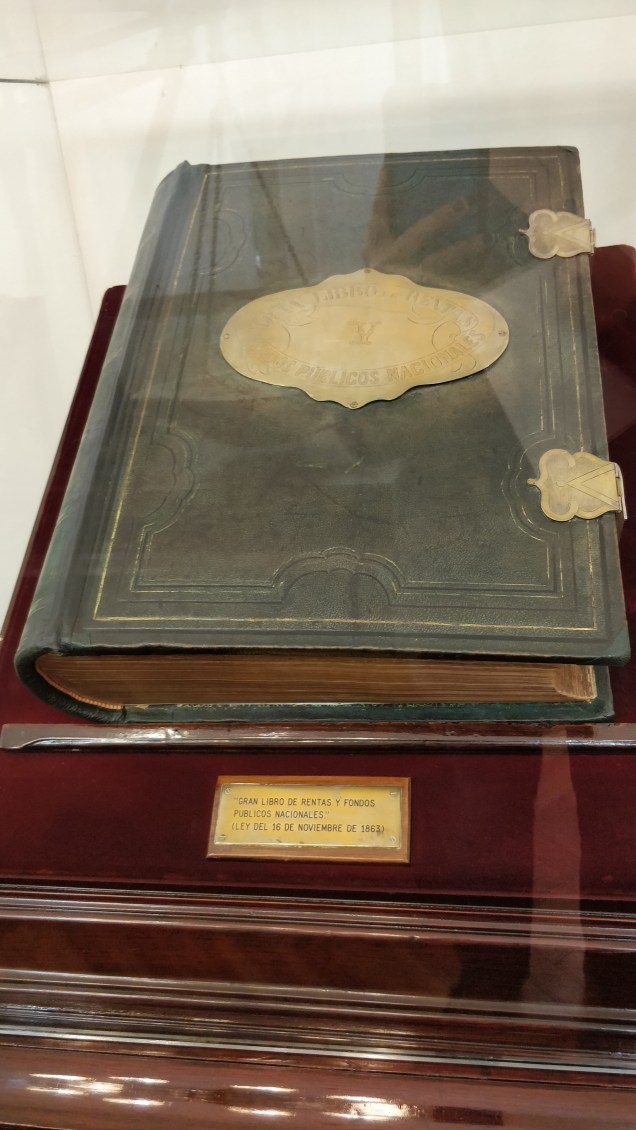
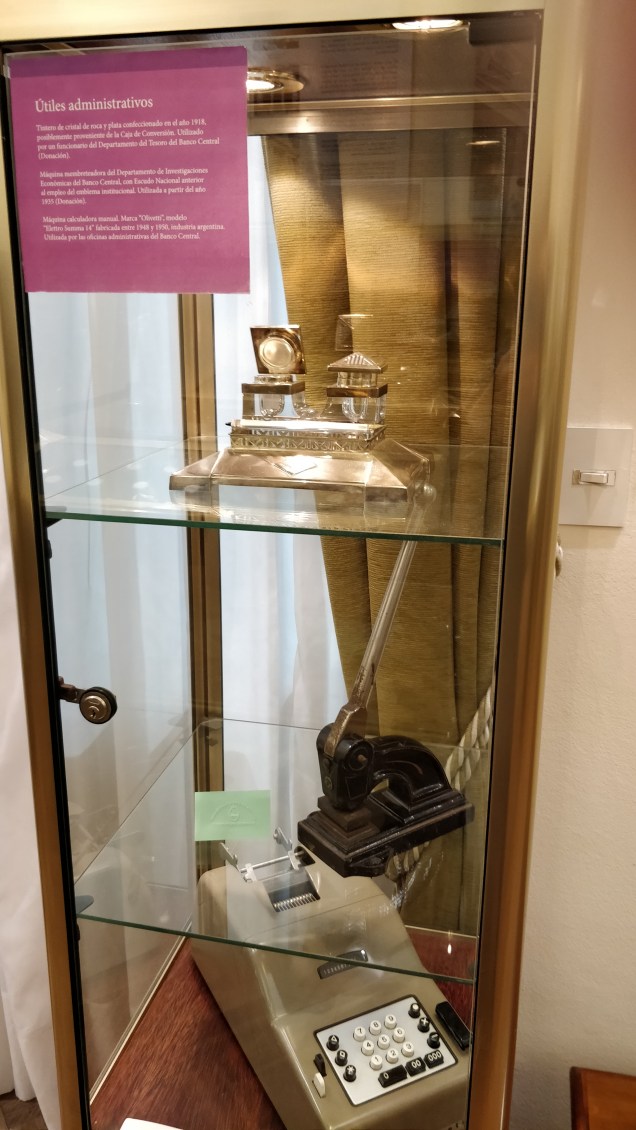
After the rooms of currency, the museum has some historical artifacts related to the history of banking in Argentina, including French scales used to weigh coins.
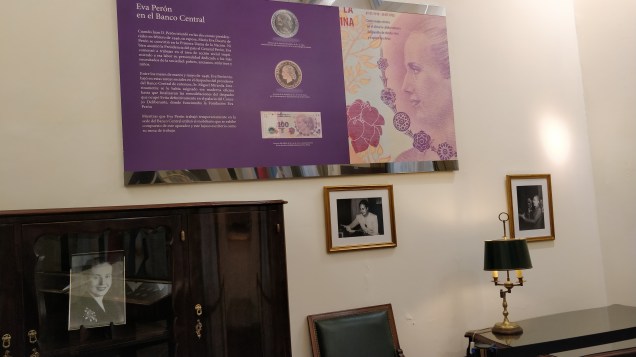
Eva Perón spent a few months working out of the Central Bank, and they have her office furniture.
I think I’ve mentioned before that it’s hard to overstate Evita’s importance here.
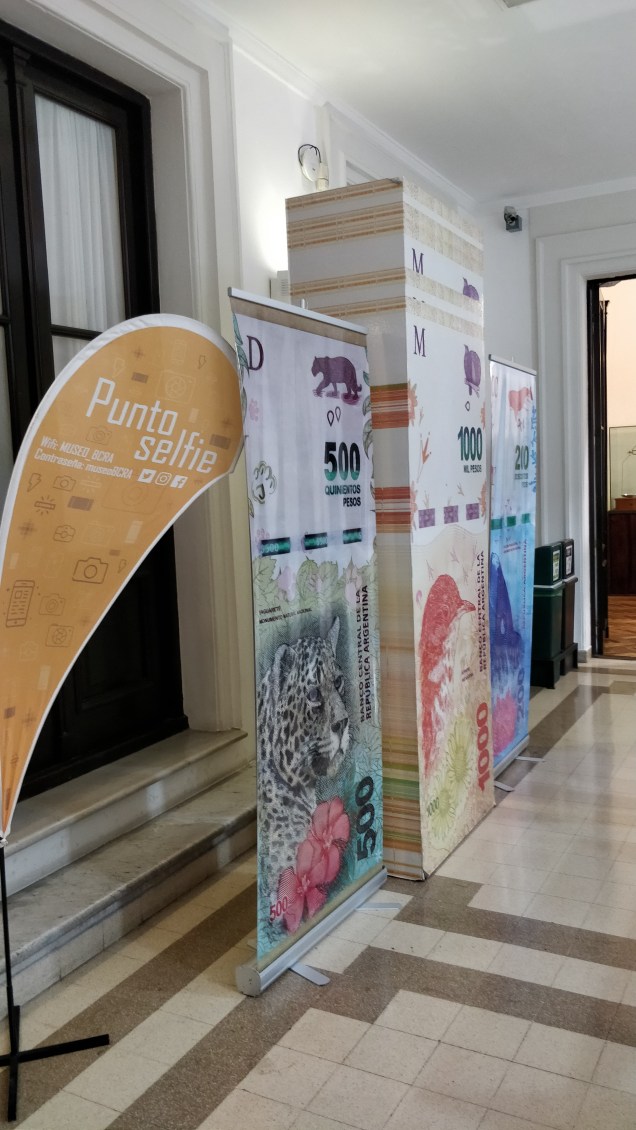
I’m going to wrap this us with the museum’s most endearing feature, a selfie point.
These denominations should be good for a few months, at least.
The Banco Central Museum is located in the financial district of Buenos Aires, blocks from the Plaza de Mayo, at San Martín 216. It is open Monday through Friday, 10am to 4pm, and is free. There are some information cards in English for each room, although several were missing when I visited, and they are not particularly complete. The main signage is solely in Spanish. As it is located in the city’s heart, you can get to the museum in a million, billion ways.
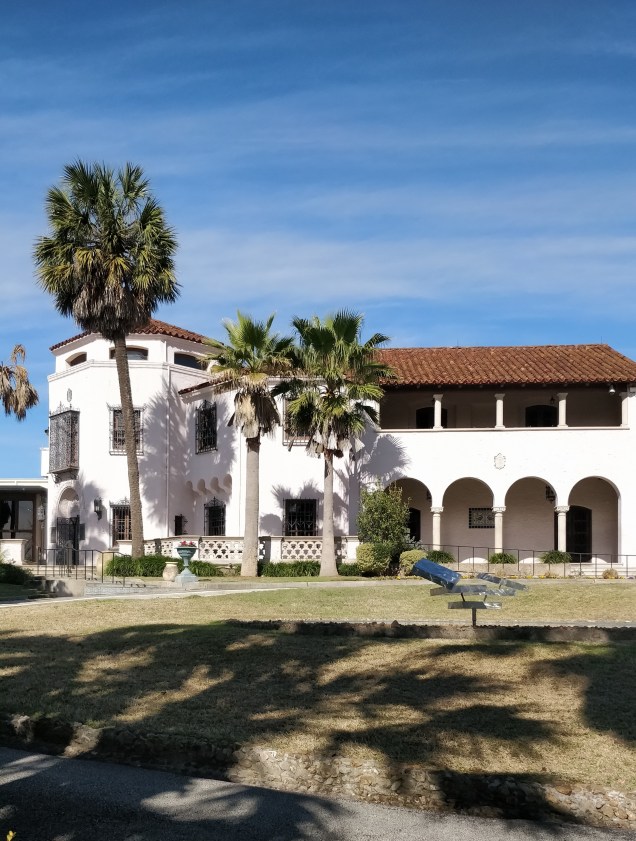
I spent January in the US, and managed, during my relentless pursuit of Tex-Mex and Whataburger, to visit the McNay Art Museum, a place that will always be special to me.
“Expecto Patronum,” I shouted, as a silvery Spanish Colonial-Revival mansion sprang from my wand. “After all this time?” “Always.”
The McNay opened in 1954, with the home, collection, and an endowment of Marion Koogler McNay, as established in her will. It was the first modern art museum in Texas, although the holdings expanded outside of that frame.
When I was a regular visitor, as a teenager, it was already a super cool place. There was an auditorium and workshop space, the grounds were beautiful, and the museum was free. I went often, and I got pretty familiar with the collection.
She isn’t where she used to be, but I still found her.
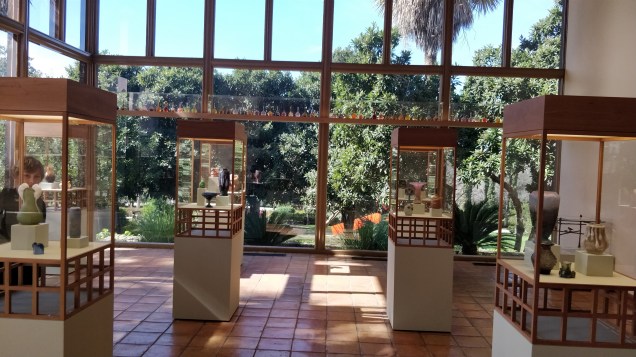
In 2008, the museum underwent a heckin big expansion, adding 45,000 square feet of space plus a sculpture garden. It isn’t free anymore, but it does have a cool gift shop and also lots of exhibitions. I do feel a bit wistful for the smaller oasis the McNay was for me back in the day, but it has grown and it is thriving and one must be satisfied with that.
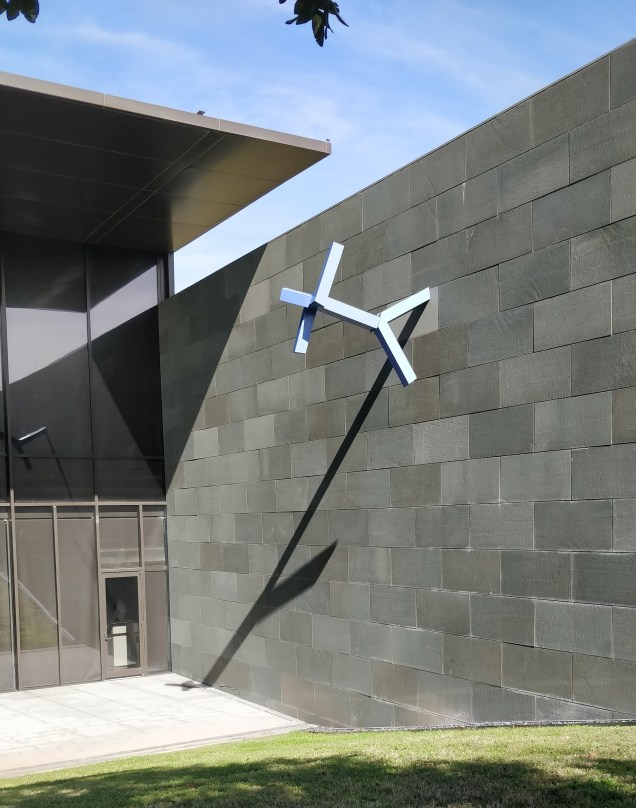
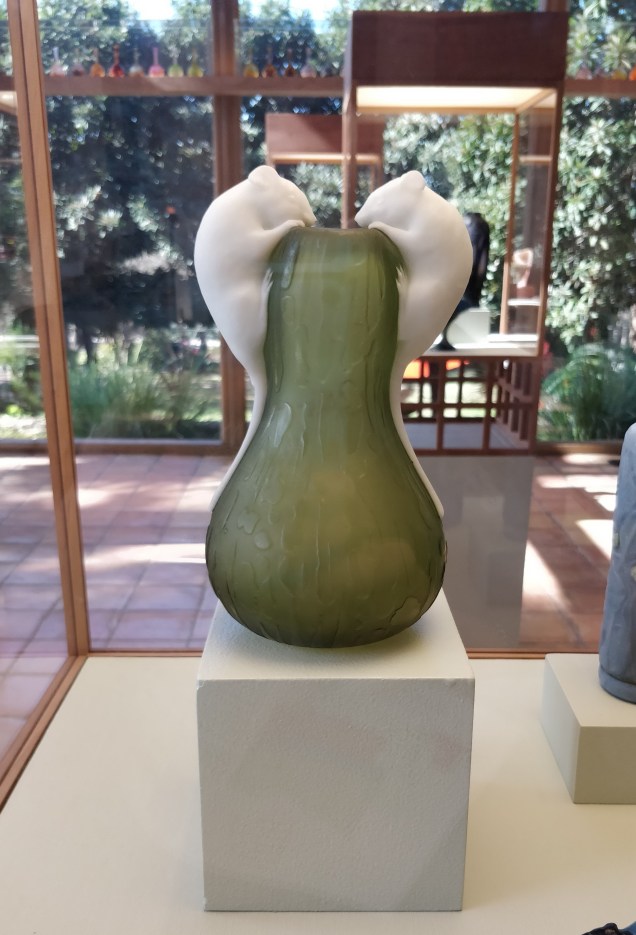
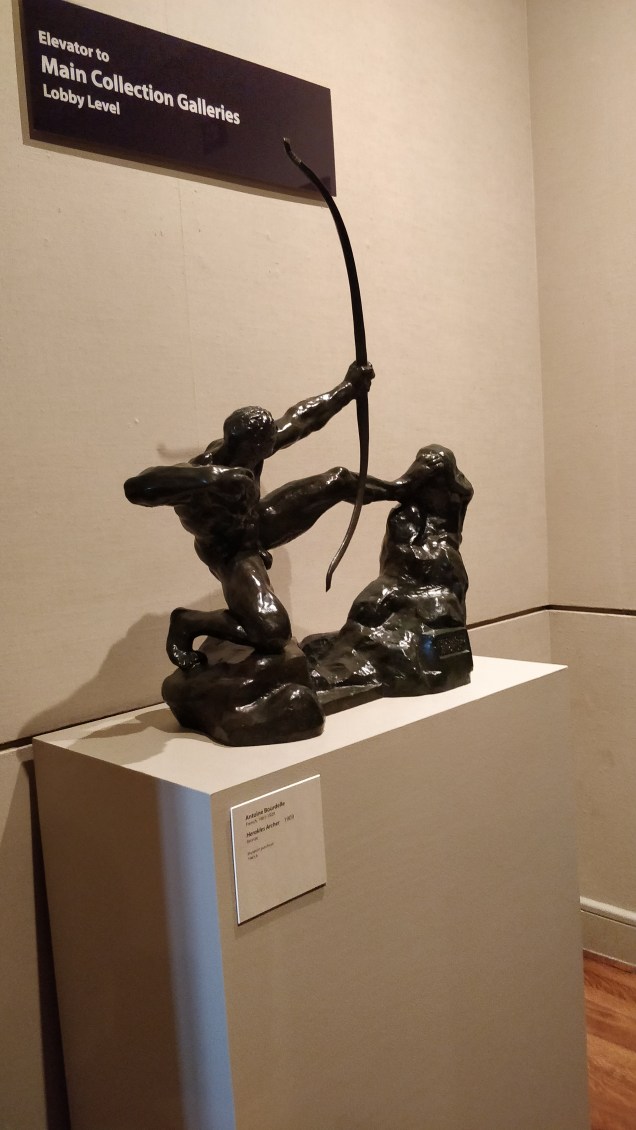
Plus now it has this guy, who could hardly be less than an object of delight.
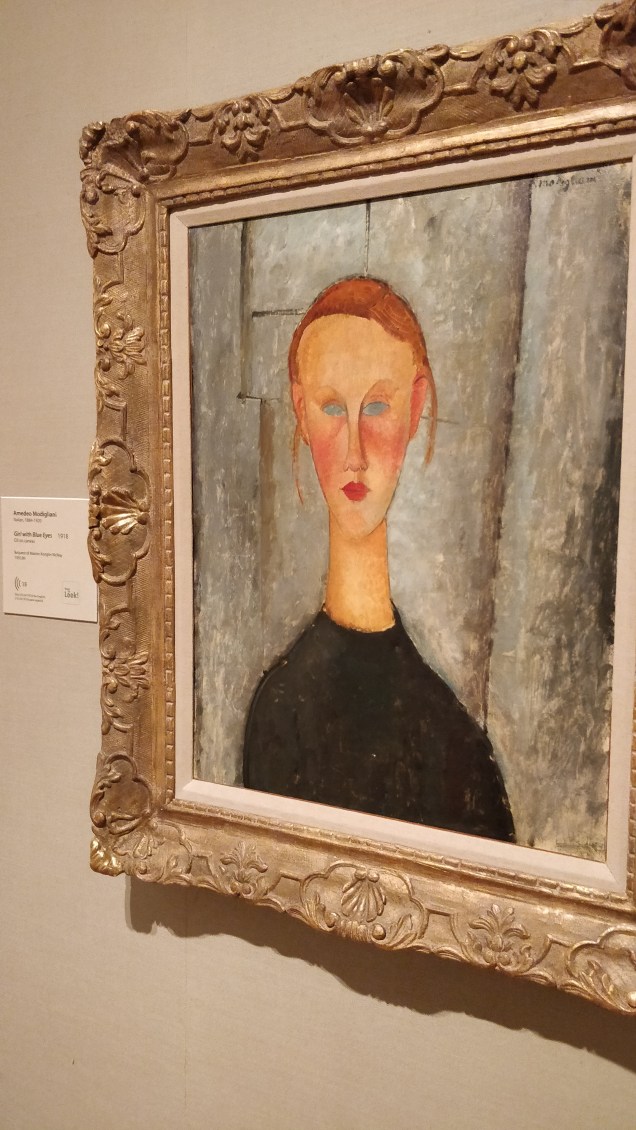
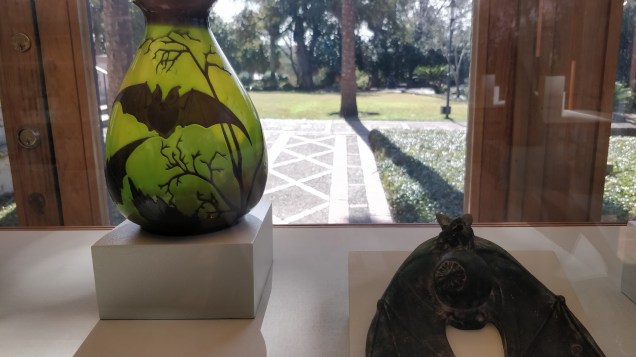
I took a metric ton of photos, but I won’t subject you to them all. Mainly, I was just very happy to visit some old friends.
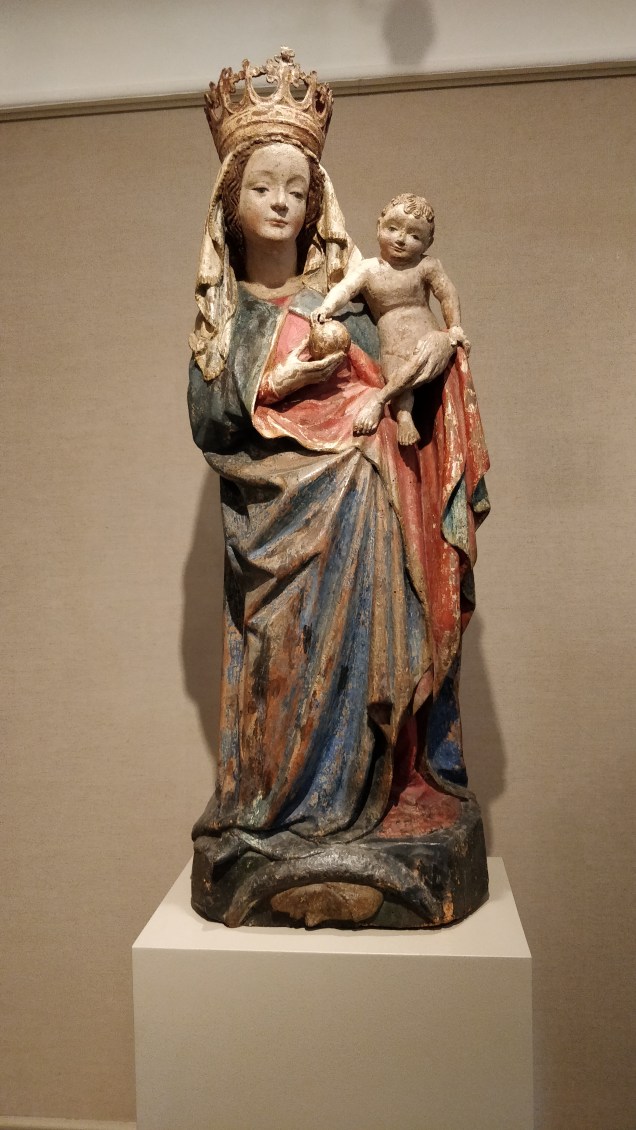
My girl here is obviously not modern; she’s 15th century German. But you could still say baby Jesus here is a whole #mood.
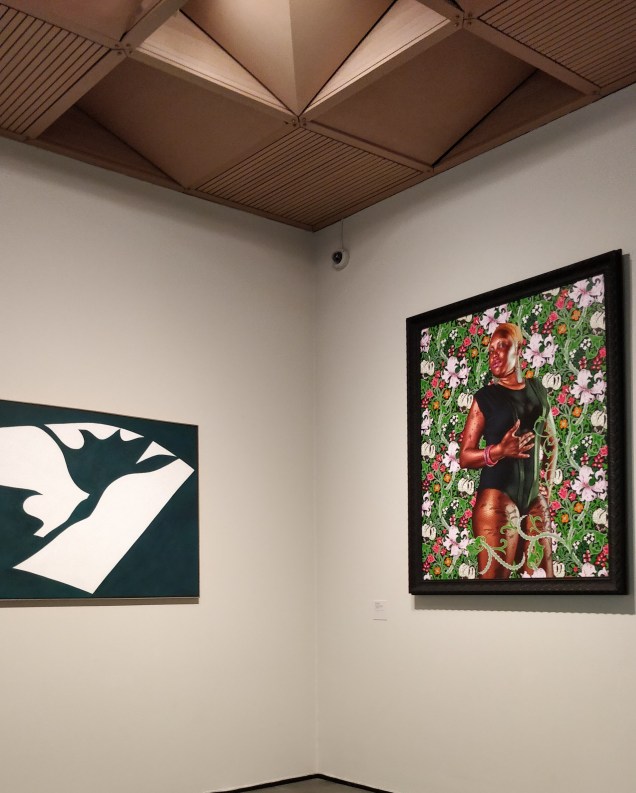
And meet some new ones.
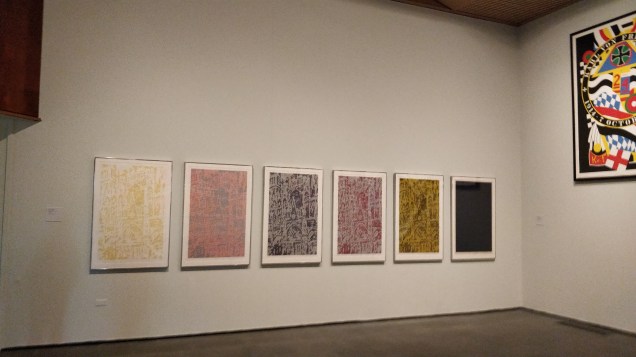
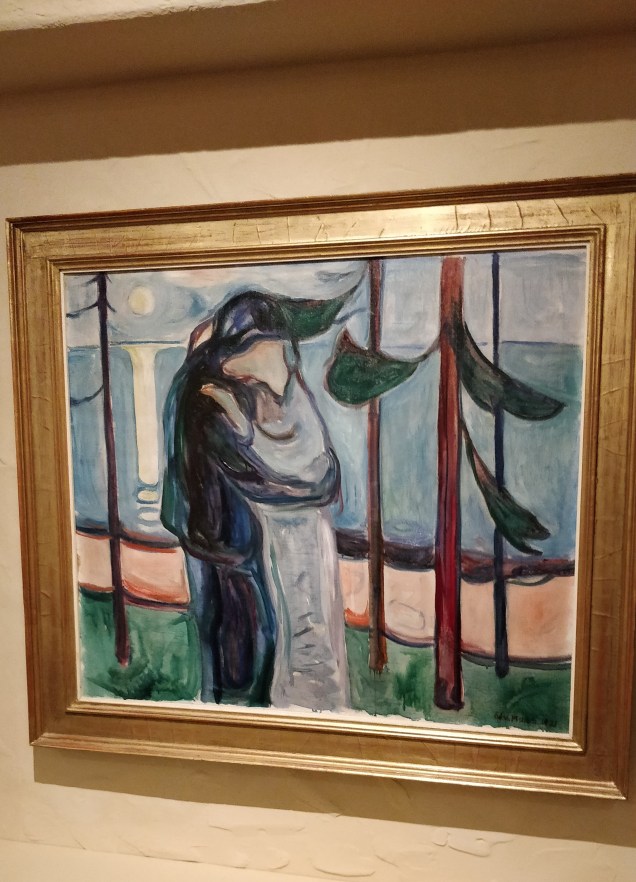
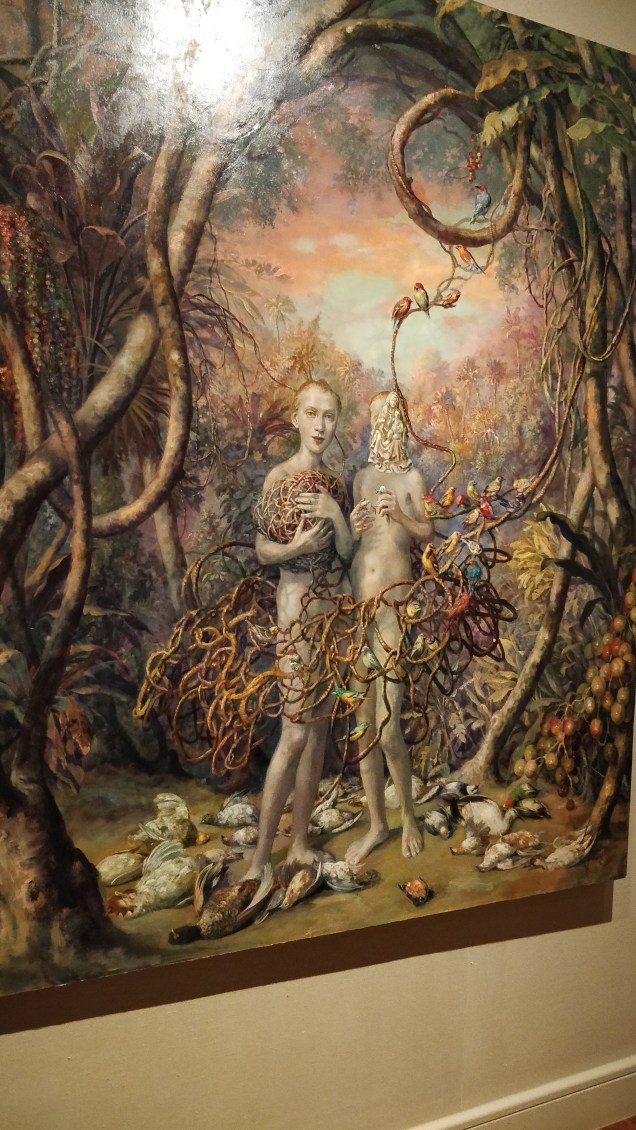
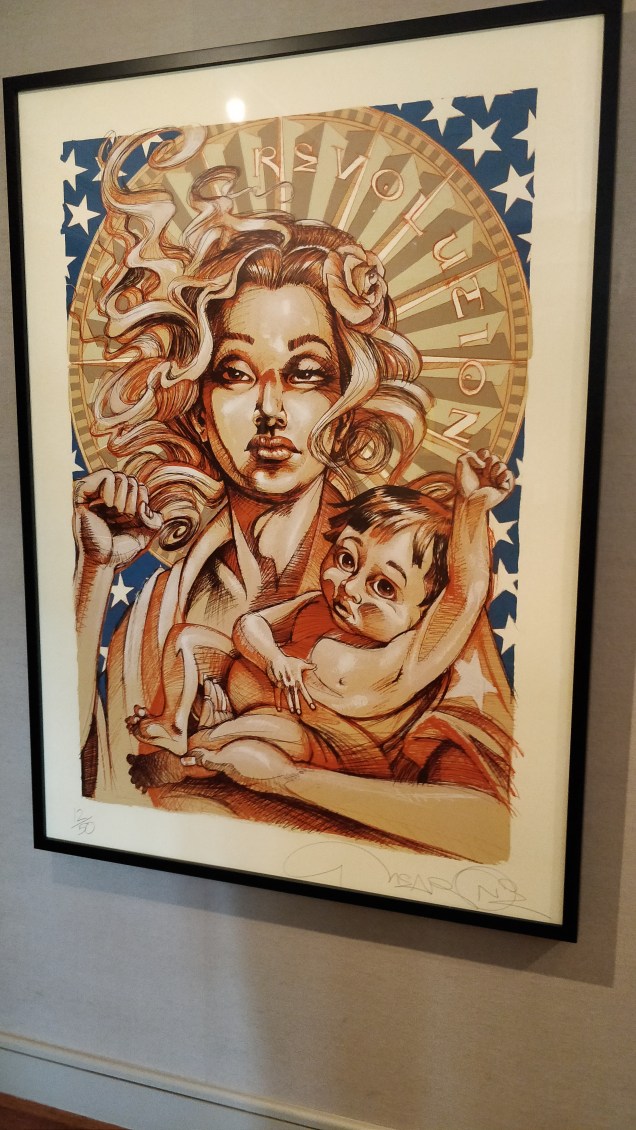
Is that a Munch moon or are you just happy to see meJulie Hefferman’s Self-Portrait as a Tangled Nest (2006), which is…a lotMear One’s Revolution (2012), just saying what we’re all thinking.
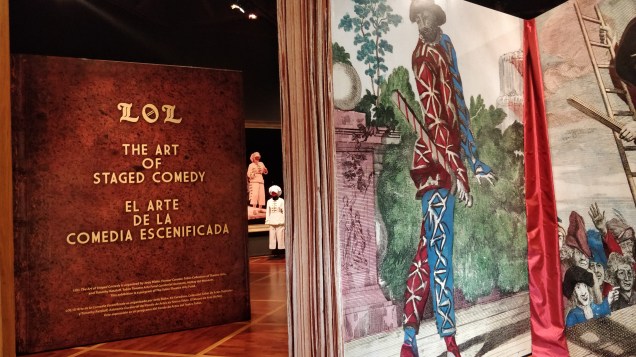
The McNay also has a big-time theatre arts collection, some of which formed part of this exceptionally fun show:
They did it for the lolz
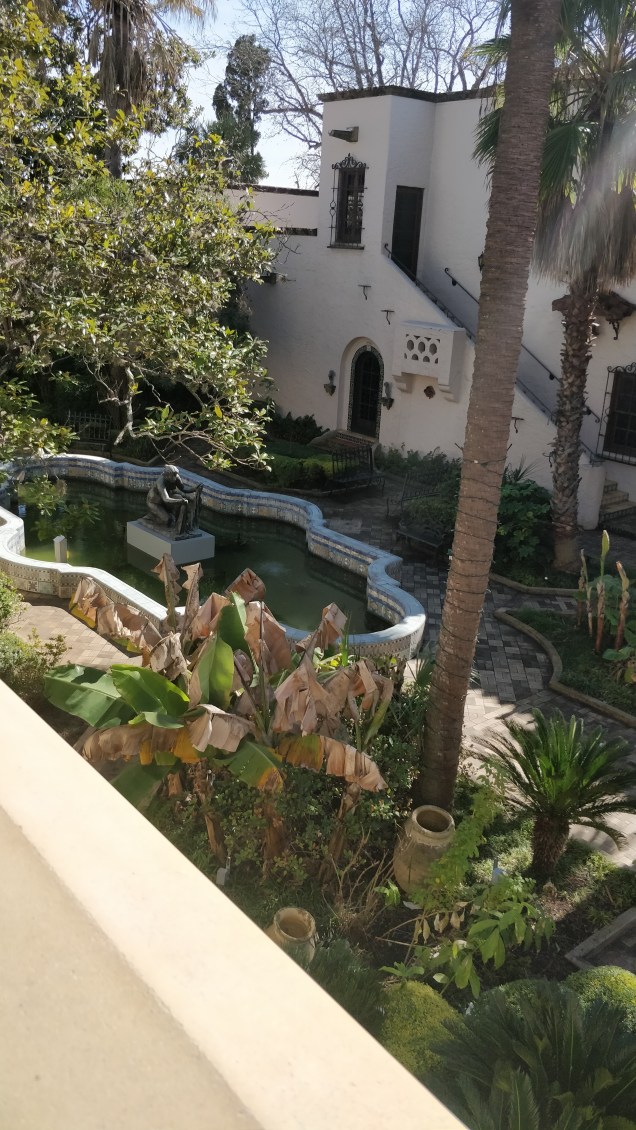
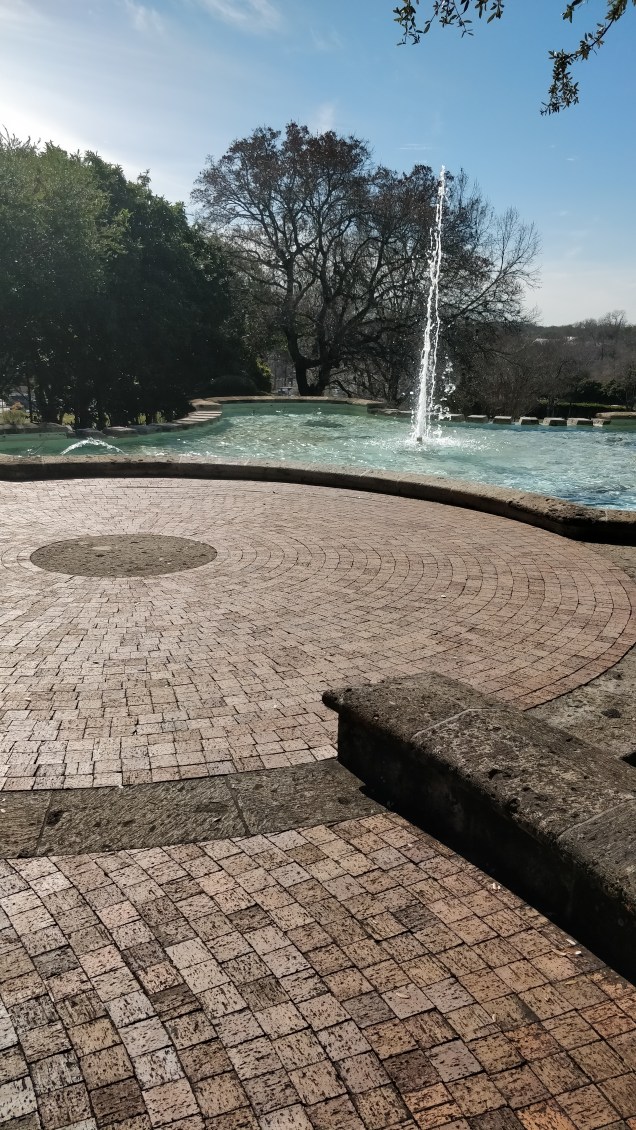
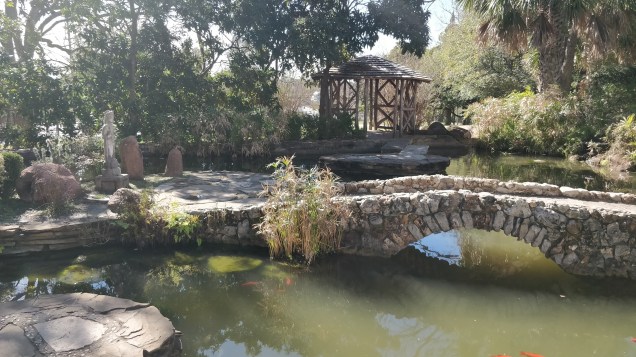
Just a couple more pictures of the courtyard and grounds, I promise:
Should you wish to explore the collection and temporary exhibits more, the museum has a robust online presence. But do go visit if you’re ever in the area; you’ll be so glad you did. The McNay is treasure of San Antonio.
The McNay Art Museum is closed Monday and Tuesday, and general admission is relatively steep, at least to me (as I’m used to the inexpensive entry fees of Argentina), but they have a pretty extensive free and discount list. See the website for all the where, when, and how much nitty gritty.
Having been elbow-deep in various other obligations and pursuits, I have been a terrible blogger. But I’m actively scheduling some upcoming visits, so I had better work through my backlog here. I’m not going to say too much about the MALBA, as it is widely called, because…it’s really famous. If you’re an art-interested traveler touring Buenos Aires, it’s already on your agenda. As it should be.
The Museo de Arte Lantinoamericano de Buenos Aires was founded in 2001 to promote modern Latin American art. It is very active in the cultural scene, regularly screens films, and gets around a million visitors a year.
You actually don’t have to buy a ticket to get to the shop or the restaurant on the first floor; the art is up the escalators.
There’s an impressive permanent collection, with all the usual suspects and more.
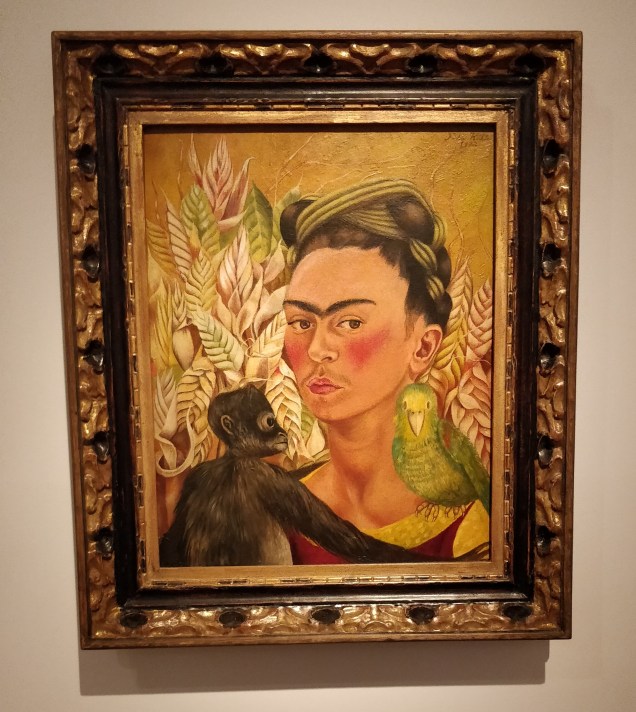
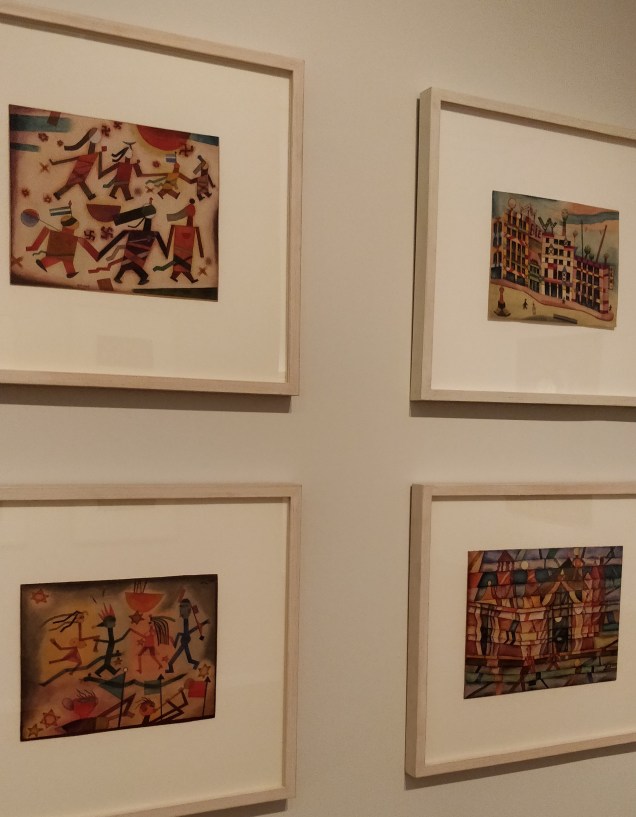
You do not have a Latin American collection without the Queen.You do not have a Latin American collection without the working-class-focused New Realism of Antonio Berni.You do not have a Latin American collection without my Art Bae, Xul Solar.
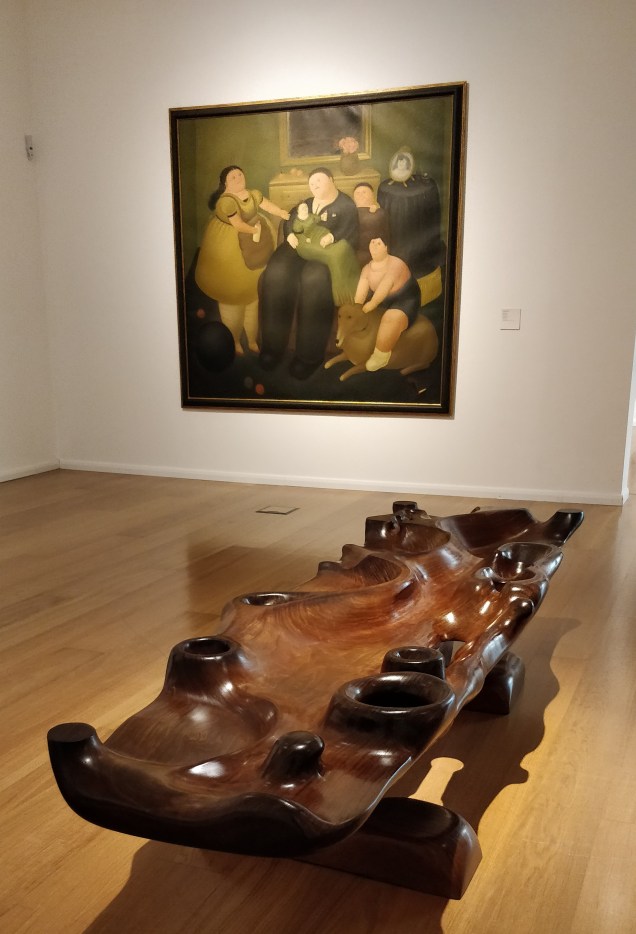
There’s also these amazing benches, probably my favorite museum seating in the world so far. It’s actually very comfortable.
Latin American collection, Botero, etc
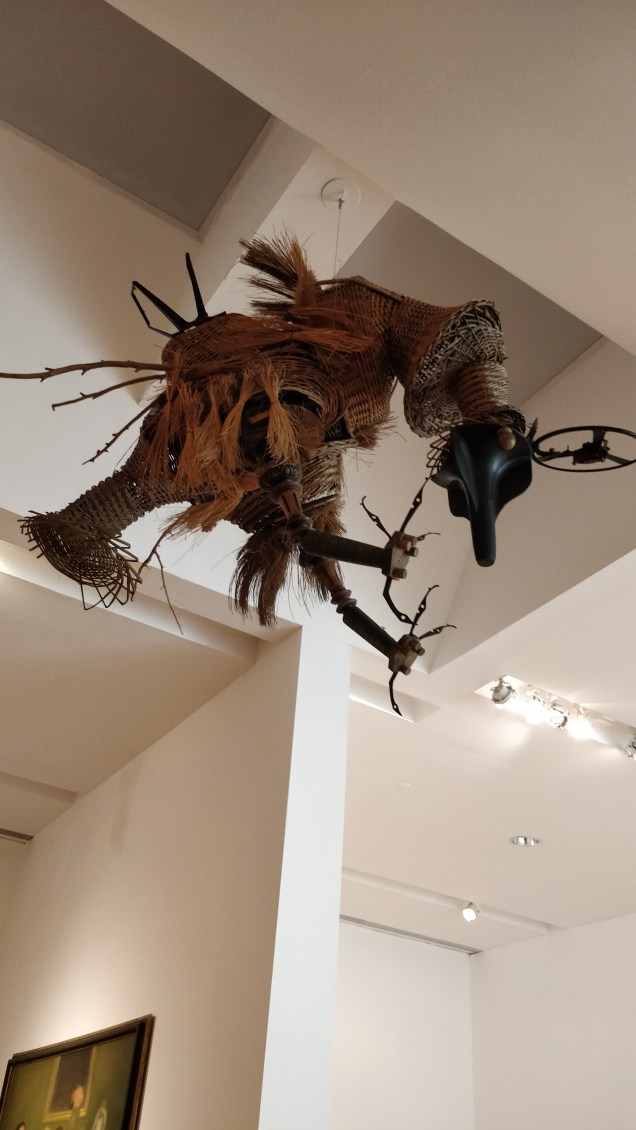
I am very fond of birds.
…looming over my comfortable seating, menacingly.
What’s that? Fun, interactive pieces? Duh.
(Seven Unexpected Movements, Julio Le Parc)
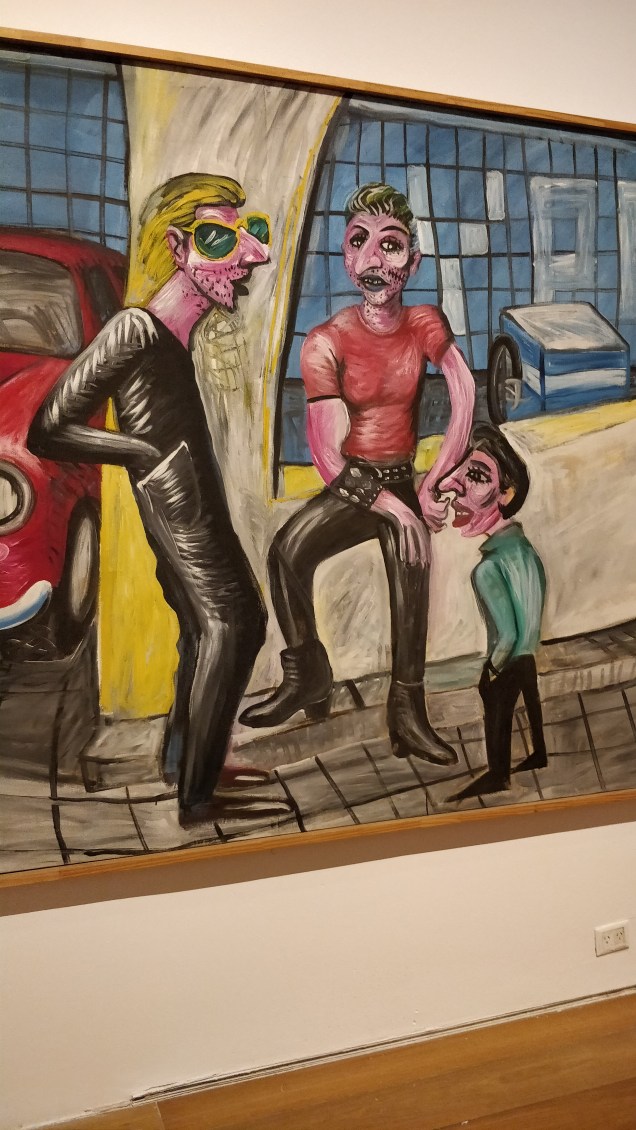
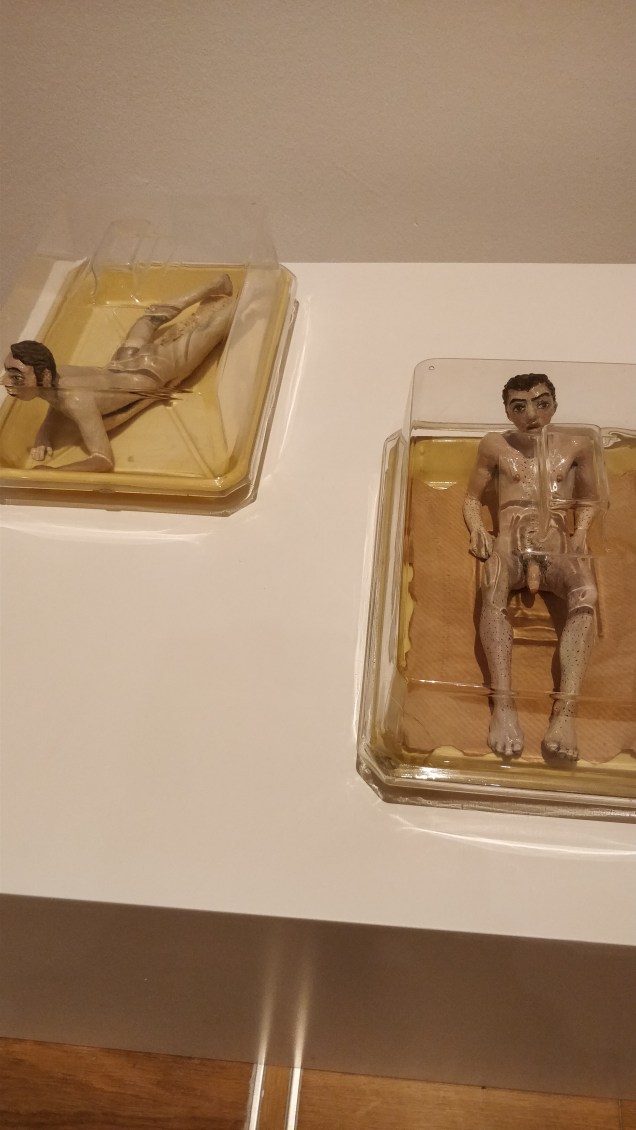
The permanent collection is a real treat, but the MALBA also moves some pretty extensive temporary exhibitions through. When I visited, there was an exhibition of Pablo Suárez, an Argentine painter and sculptor with a pretty broad stylistic range.
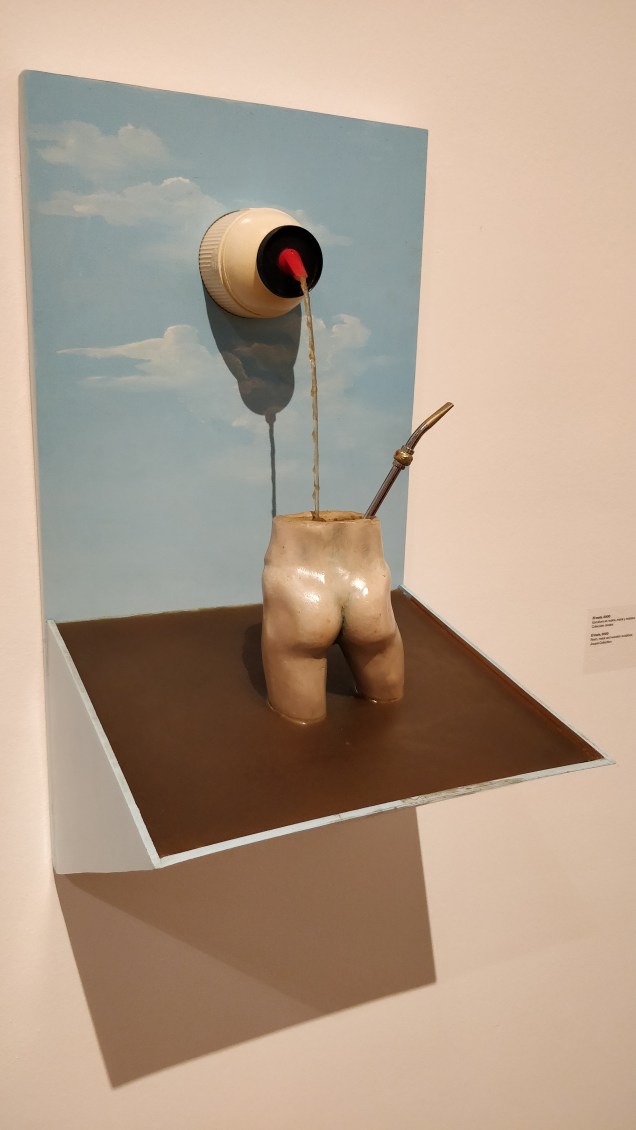
This milanesa is making a break for itI collect mates, so I was particularly tickled by this one.
You’ll burn a few hours in the MALBA, which is pretty much a can’t-miss stop in Buenos Aires if you’re at all into Latin American art and culture. Signage is in Spanish and English. There’s a nice restaurant with a solid menu, and a pricey gift shop. The museum is open from 12 to 8 (and an hour later on Wednesdays) except Tuesdays, when it is closed. General admission is, at the time of this post but haha Argentina inflation so do double check, $170 pesos (reduced admission for students, teachers, and local retirees is $85), except on Wednesdays when it’s $85 (and reduced admission patrons are free). Under 5 and disabled visitors are always free. Private group guided visits in English can be arranged by email.
The MALBA is located in Palermo, kind of between the Japanese Gardens and the Museo Nacional de Bellas Artes, close to many other major museums and attractions. Fewer places in the city are easier to get to via bus, taxi, subway (D line), or on foot.
Well, hello, 2019. I have been a terrible writer. I was in the US for the end of December and all of January, and even though I took with me a backlog of museum visits to work on while I was there, it obviously never happened because a good 97% of my focus at home is devoted to getting tacos. Thank you for your understanding.
So now I’m home, and also sick, which is a great condition for acclimating to the change in time zone, but whatever, my point is I have time. So–
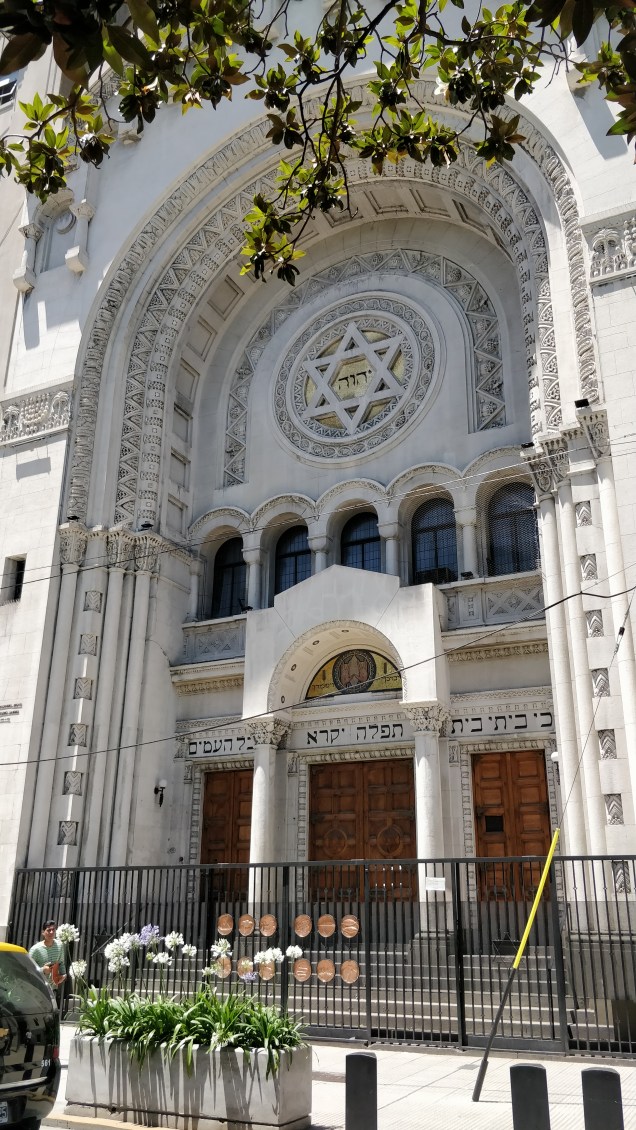
This is the Museo Judío de Buenos Aires, and if you’re thinking that’s a bit unassuming and you might miss it, don’t worry, because this is the temple next door:
You are not going to miss it.
The museum is connected to the Templo Libertad, the central synagogue of Buenos Aires. It faces the same stretch of squares as the Teatro Colón and the Supreme Court building. I’ll touch on the history of Jewish Argentines lightly as I go here, but Argentina has the largest Jewish population in Latin America, and their history is, of course, extensive.
Visitors to the museum will encounter first a heavy, locked door, and they must be buzzed into the antechamber. Visitors are at this point required to show identification to the doorman, who sits behind a shield. After that, the doorman is able to buzz visitors through the next heavy, locked door. You will find extra security precautions at many Jewish schools and synagogues in the city; 1992 and 1994 saw two major terrorist attacks against the Jewish community (the Israeli Embassy and the Jewish Community Center [AMIA], respectively). They are accustomed to foreign visitors, and passports are welcome forms of identification.
Inside, you will find a warm and welcoming staff. The signage is in Spanish, although an audioguide is available in multiple languages for download on smartphones, so bring some headphones. It does not appear that the guide is linked on the museum’s website, so it requires Internet access within the building or a local data plan. I hope they consider linking it in the main website so it can be downloaded prior to visiting. I also hope they expand the content someday, as it is on the lean side, but nevertheless a pleasant way to tour the museum.
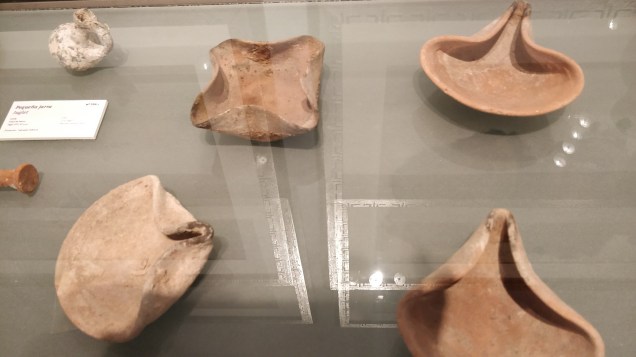
The museum’s collection is entirely donated, and it includes ancient artifacts:
Bronze Age oil lamps made of clay
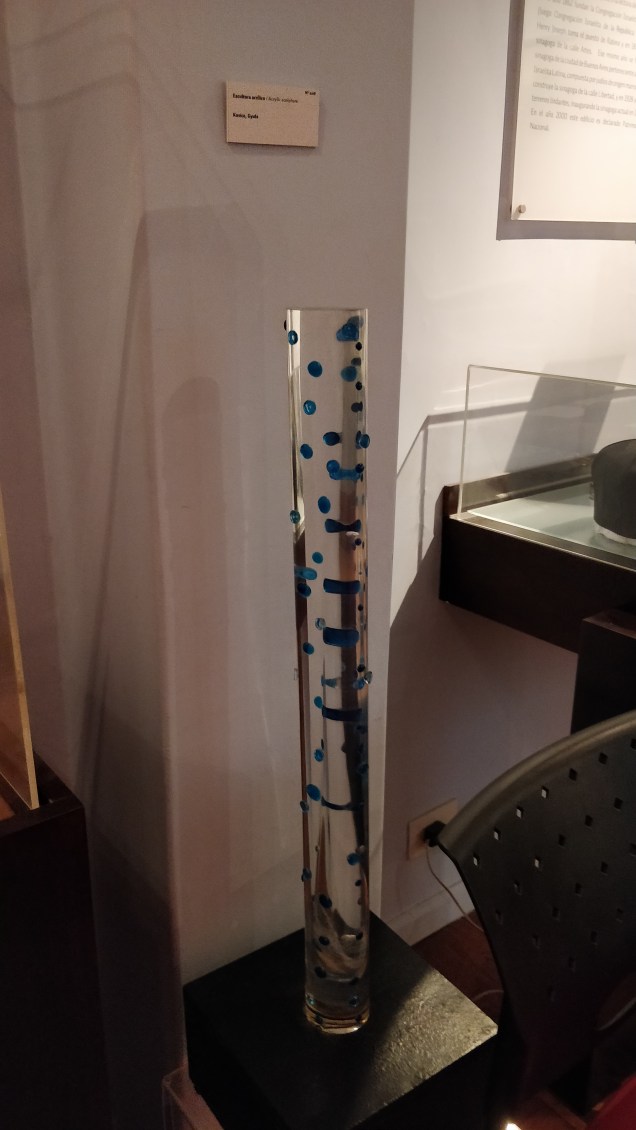
As well as a few contemporary art pieces here and there:
…which is a nice touch, a reminder of the museum’s place within a community that is both ancient and living.
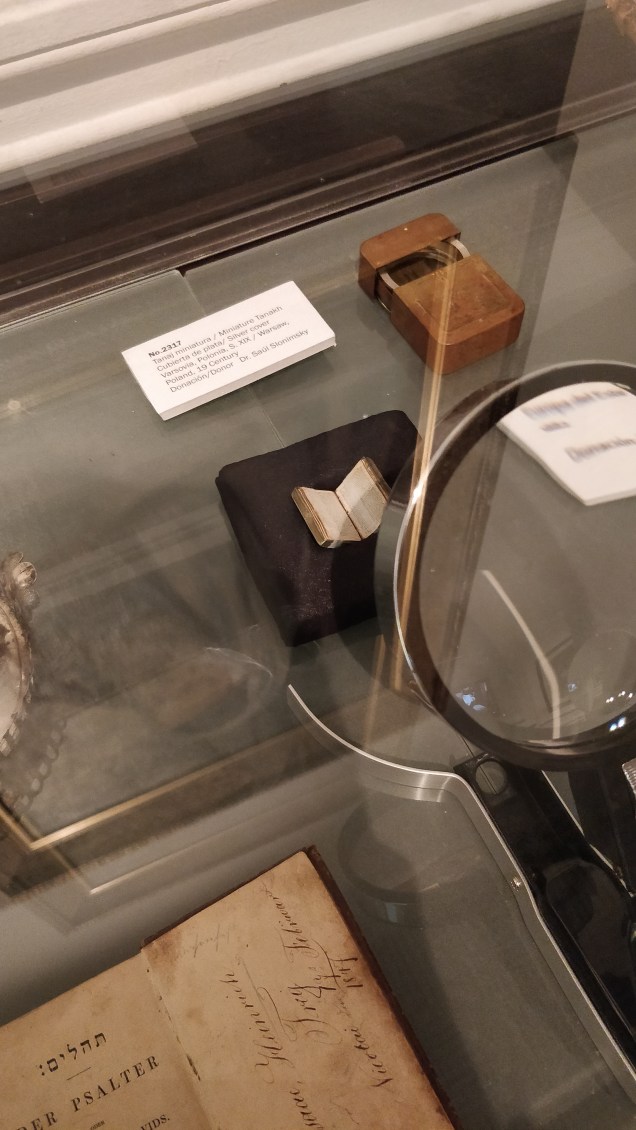
Most of the items are from the 19th and 20th centuries. This is a 19th century Polish Tanahk (Hebrew Bible) in miniature that could be hidden on one’s person as necessary.
There are other religious texts and cases:
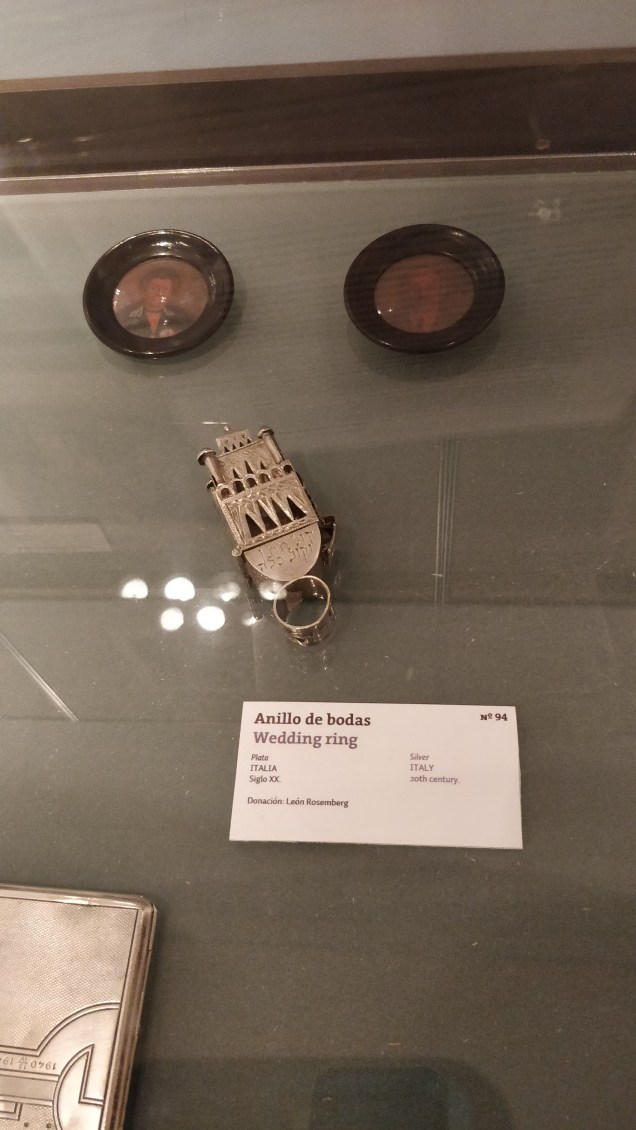
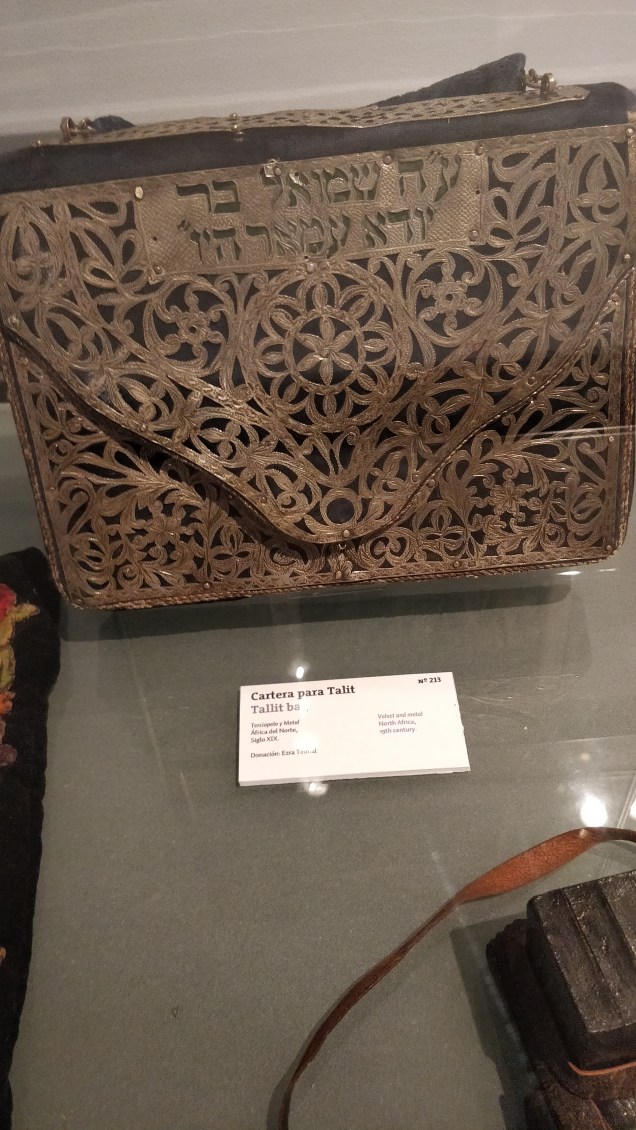
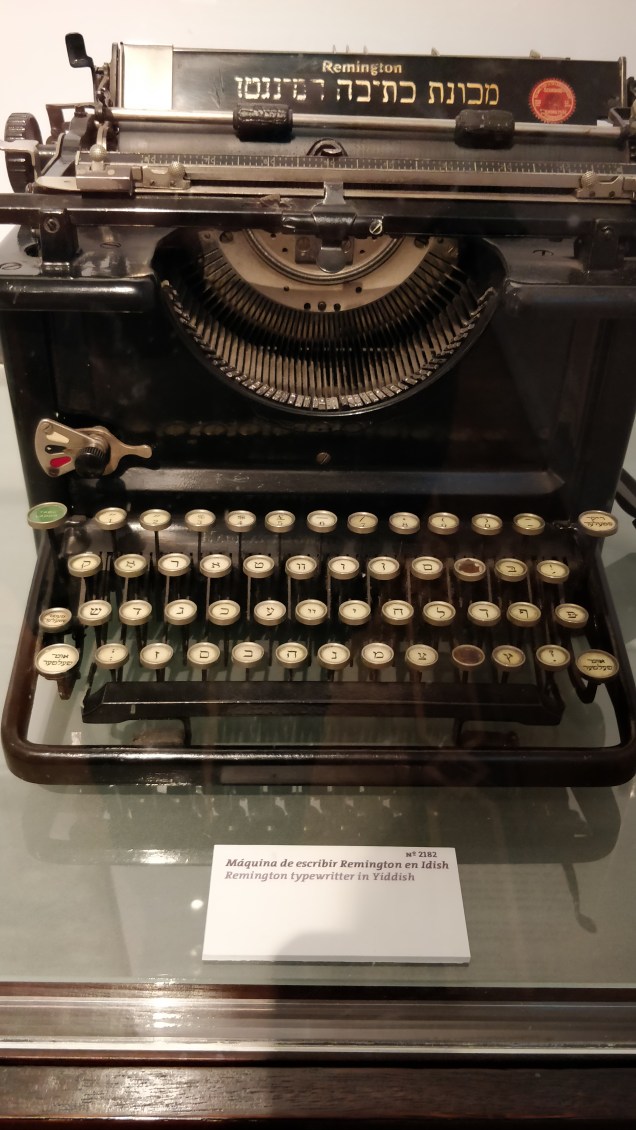
…as well as items related to Jewish life from all over the world:
“Tallit Bag”–the glare is obscuring the label there.
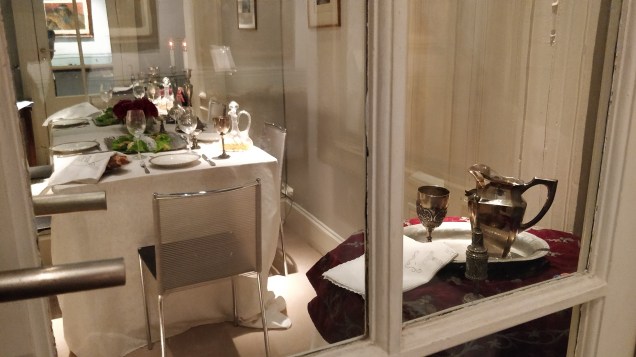
An example of a table set for Passover
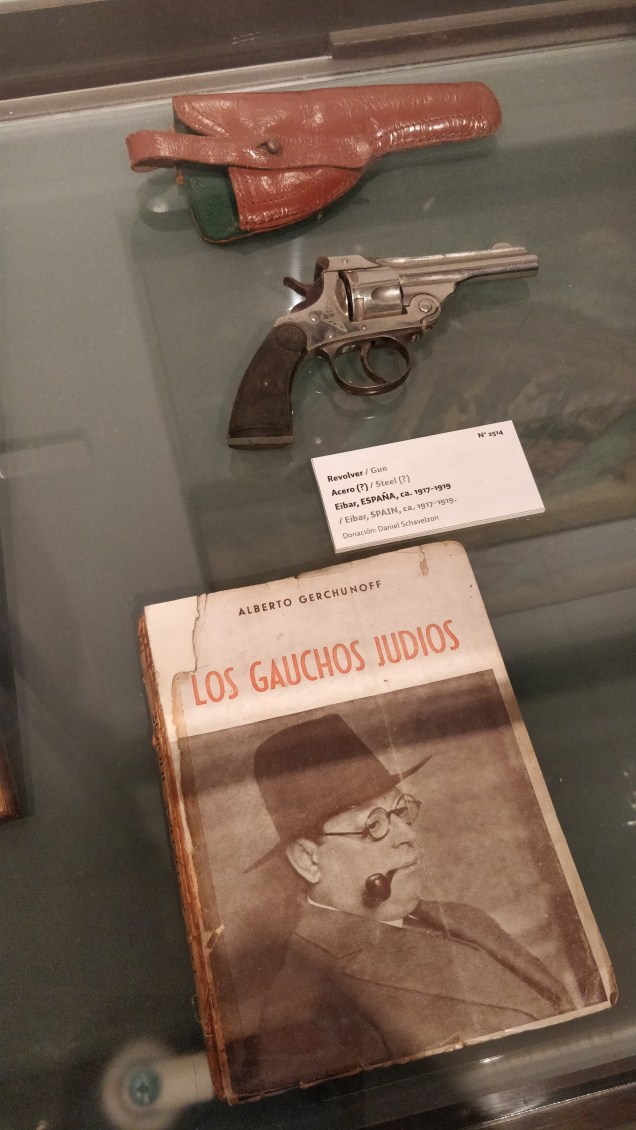
In the late 1800s-early 1900s, there was a large number of Jewish immigrants from Russia and Eastern Europe, escaping violence and attracted by Argentina’s liberal immigration policy. Thousands settled into agricultural life, and Jewish gauchos became a thing.
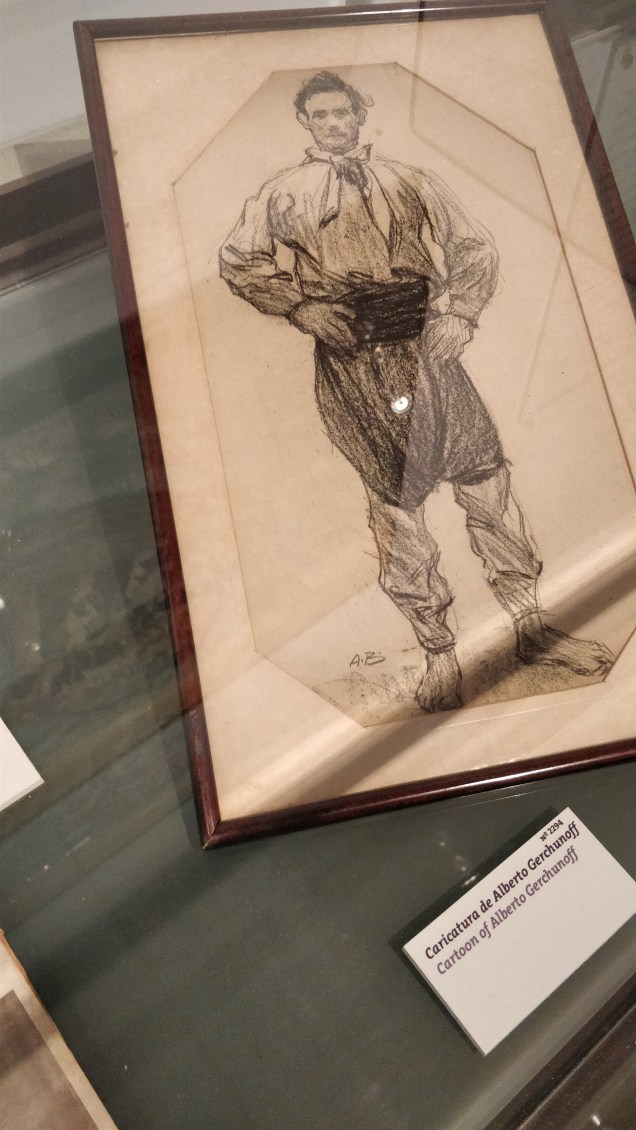
Alberto Gerchunoff emigrated to an Argentine Jewish agriculture colony as a small child from what is now Ukraine, and later became a writer, although gaucho seemed to be a better look on him.
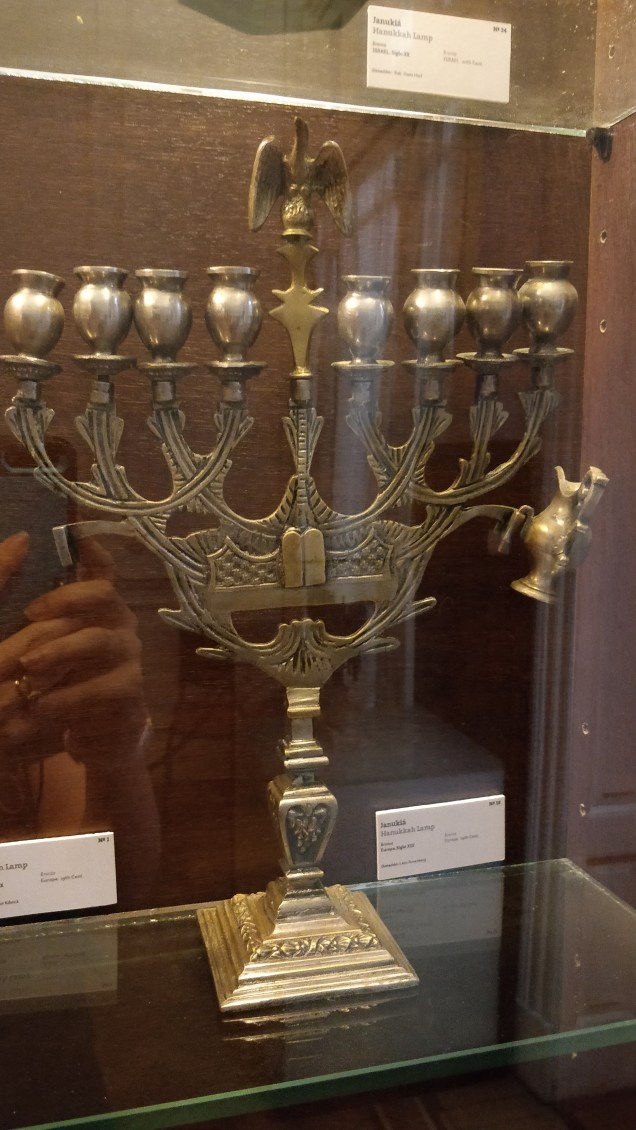
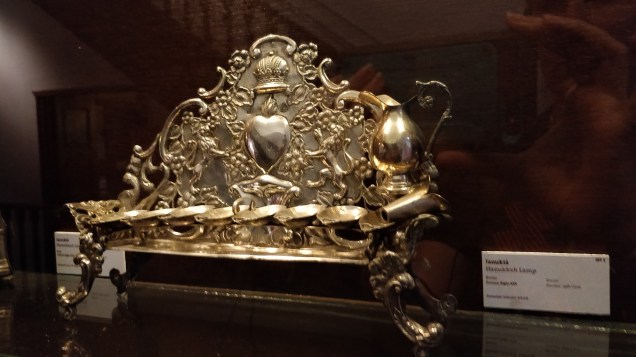
My favorite part was the Menorah collection!
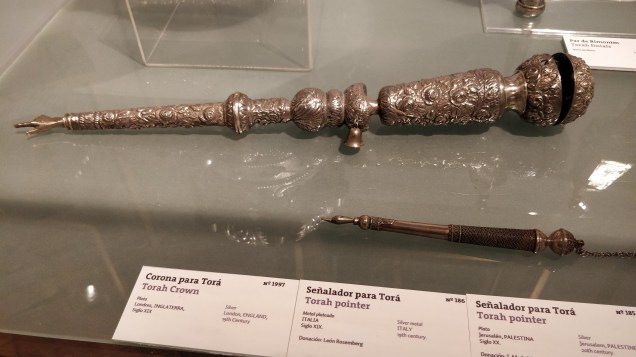
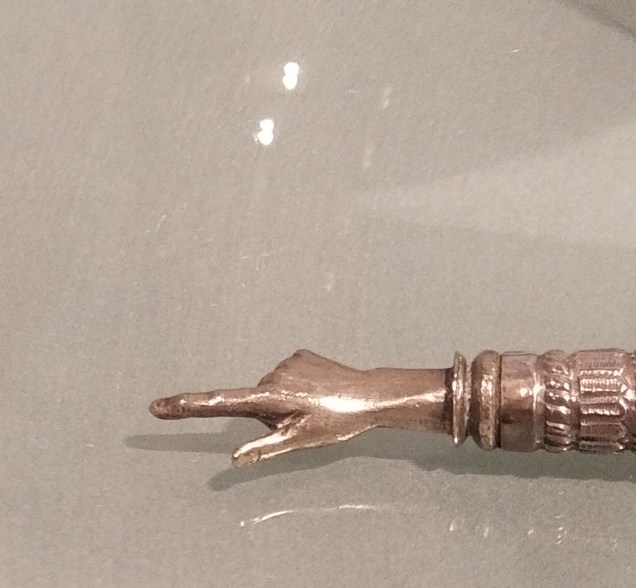
Also the Torah pointer, which is just a really practical design.
YOU ARE HERE
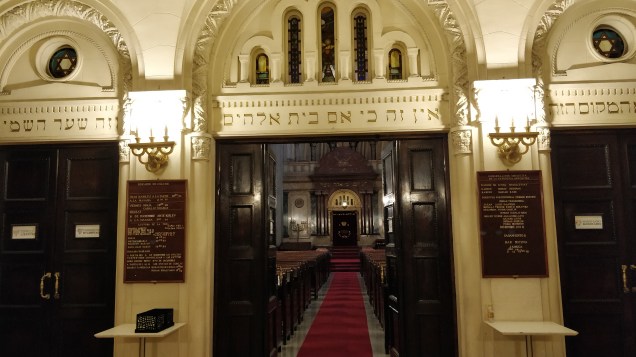
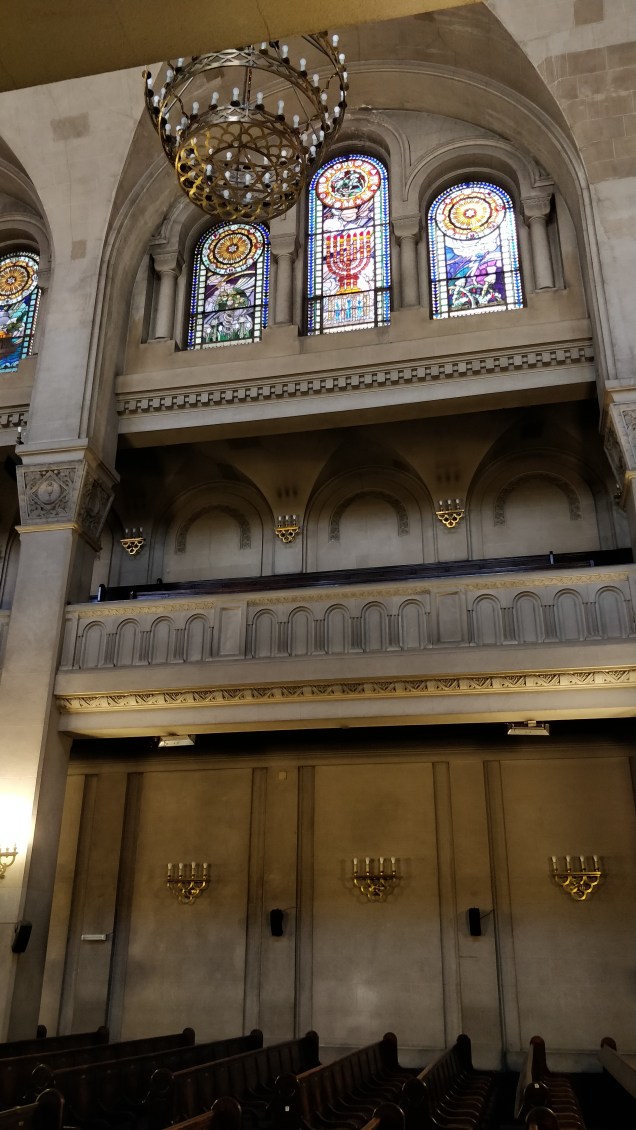
Visitors can also see the temple itself, which is very impressive, and hosts an active congregation.
The museum has a small gift shop.
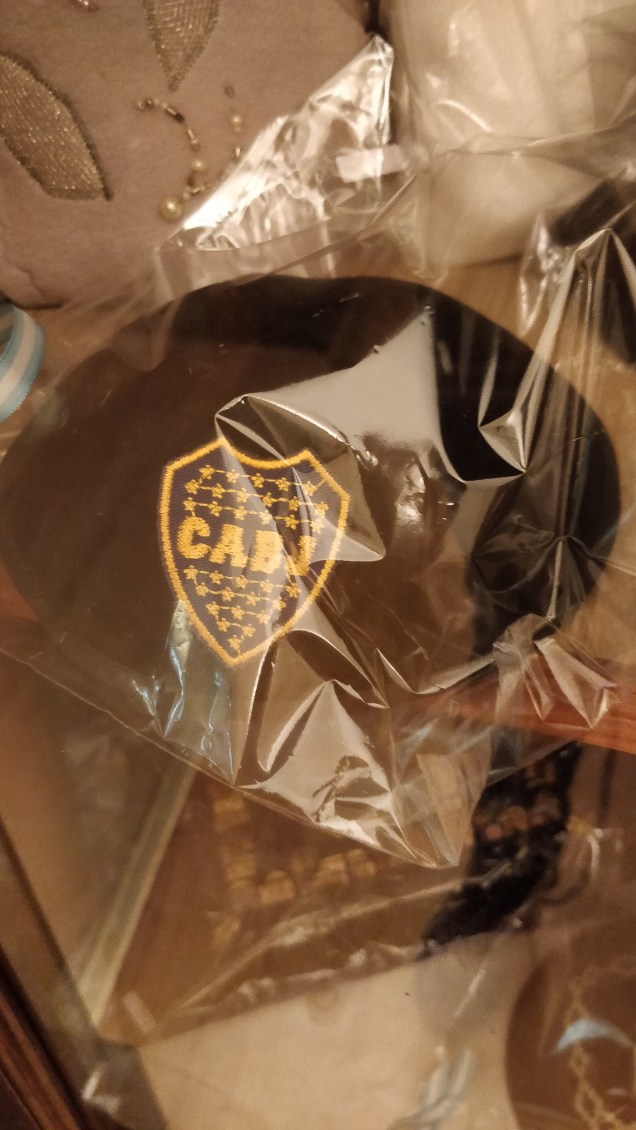
For game day.Don’t worry; God doesn’t play favorites.
A unique history museum and worthwhile visit, the Museo Judío de Buenos Aires is open Monday through Friday from 10am to 6pm. The entry fee is a relatively steep US $10 for foreigners (but currently 80 pesos for Argentine residents and 50 pesos for Argentine retirees). It’s easy to get to via the B and D subway lines and a multitude of buses, and just down the street from Teatro Colón, so it’s right in the thick of things.
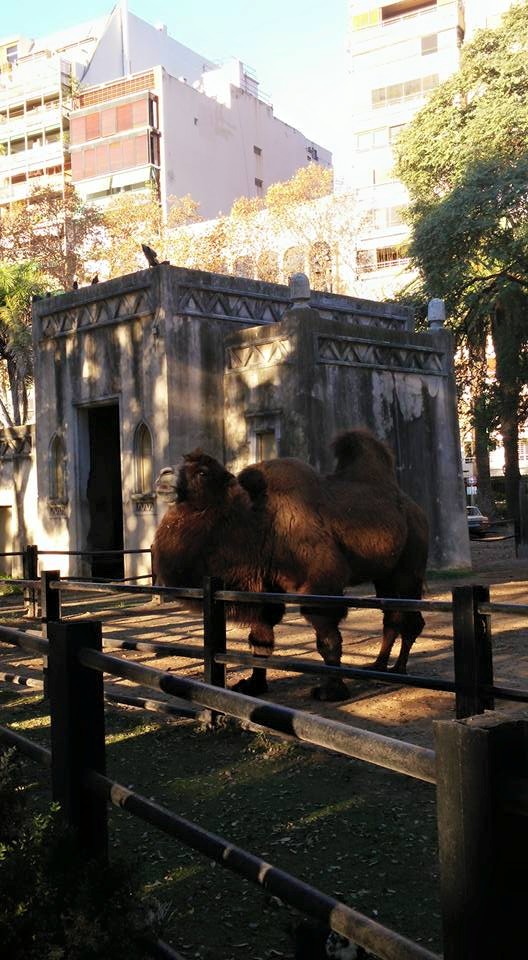
I am still recovering from a “flu-like” virus, which wasn’t too bothersome as I mainly slept for three days, but I managed to make a quick visit to the Centro de Arte y Naturaleza (part of the Museums of the National University of Tres de Febrero, which also includes the Museo de la Inmigración). It’s in a really lovely building on the perimeter of the old Buenos Aires Zoo, which was chiefly built around the turn of the 20th century and as such is a fascinating example of old zoo architecture but was closed down for being a cruelly terrible zoo.
In 2016.
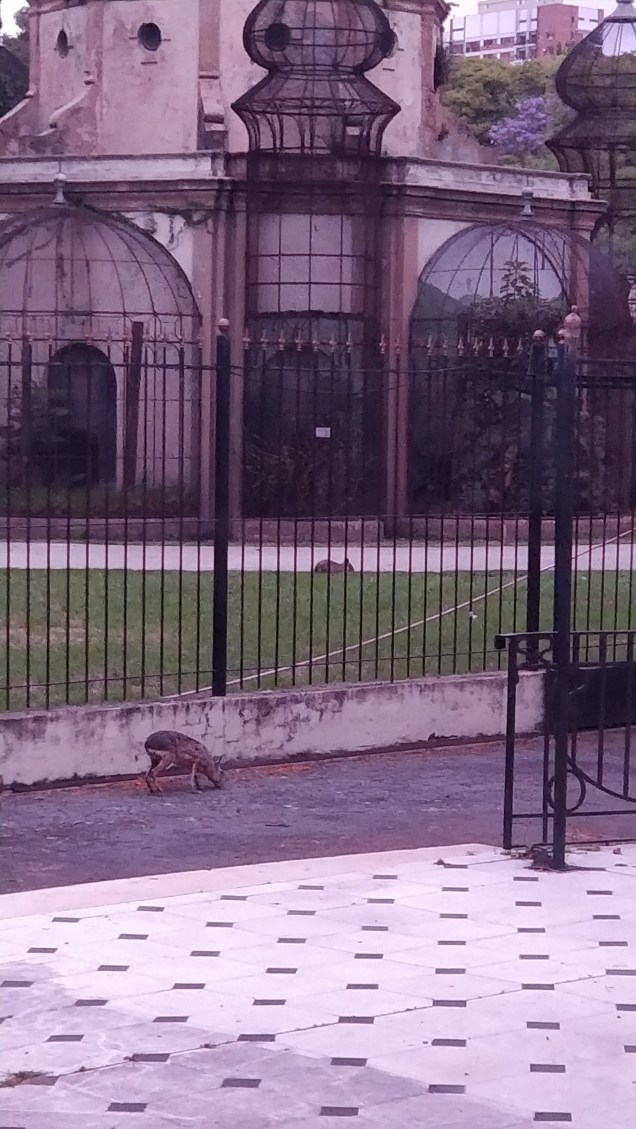
Despite being technically within the limited-capacity (now called) Buenos Aires Eco-Park, a transformation that has not been going well, incidentally, the Centro is accessible from the outside, although you can peek out the back windows and see the maras wandering around the grounds:
The maras are large Patagonian rodents that were always allowed to range freely within the zoo.
The Centro itself faces the large and busy Av. Sarmiento:
You cannot move in.
It’s quite small and doesn’t take much time to visit–but it is free, has a helpful staff, changes exhibits entirely every few months, and is right within a nexus of other attractions, making it an easy addition to any plans that include La Rural or the Botanical Gardens, or any other of the numerous museums and gardens within walking distance.
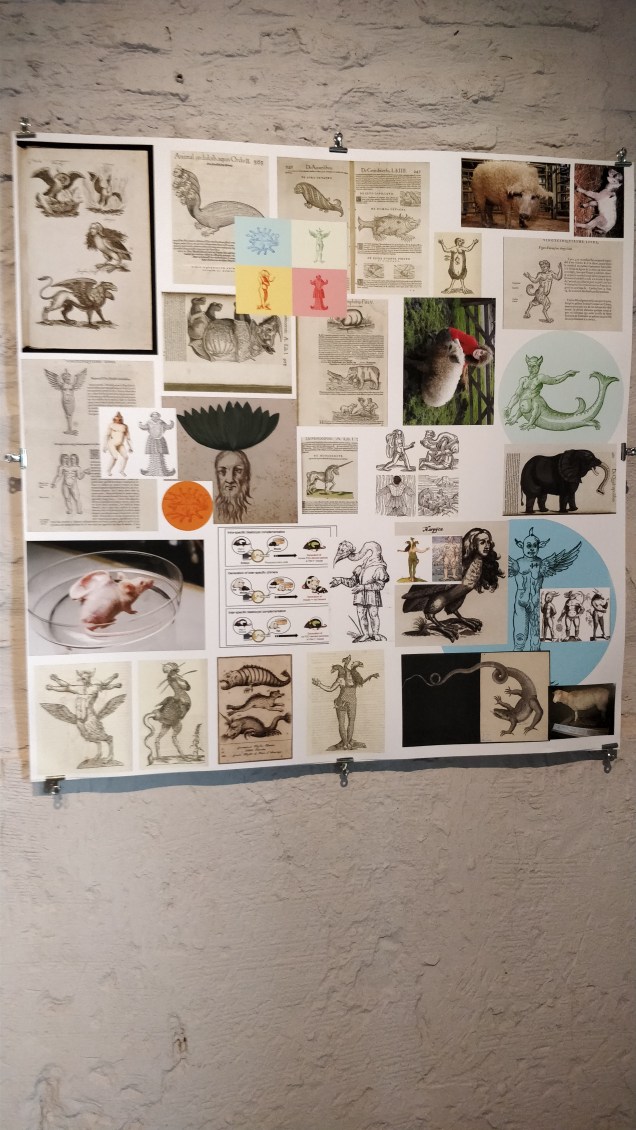
Two artists are currently featured. The first floor holds Zoología Fantástica, by Argentine biologist and artist Pablo La Padula. From the description on the MUNTREF website: “…it invites us to re-read the historical-cultural markers that reside in scientific devices and their interpretations, as well as in the decisions that are made for scientific dissemination, and the forms that these constructions assume in the social imagination. The materials that are used, the assembly, the lighting and the organization system, come together to place the spectator in the place of the scientist.”
The upstairs houses a show by Peruvian artist Claudia Coca called “Do Not Tell Me I Do Not Know How to Catch the Wind.” It examines the city’s life forms and their interaction, and includes embroidered verses.
“Who is the one that, like the tiger, rides the wind with a ghostly body?”
If you’re already in the area, and if you spend much time in Buenos Aires at all you eventually will be, pop into the Centro and see what they have showing. It’s free and open Wednesday to Sunday from 2pm to 7pm. I really hope they put whale kid on a postcard.
As such, it has a very fine collection, and since this is a blog post, I will not be providing a thorough overview. For one thing, the museum has a very nice website partially available in English (and a guide app only in Spanish). So I’m just going to do a light overview! There’s just so much art!
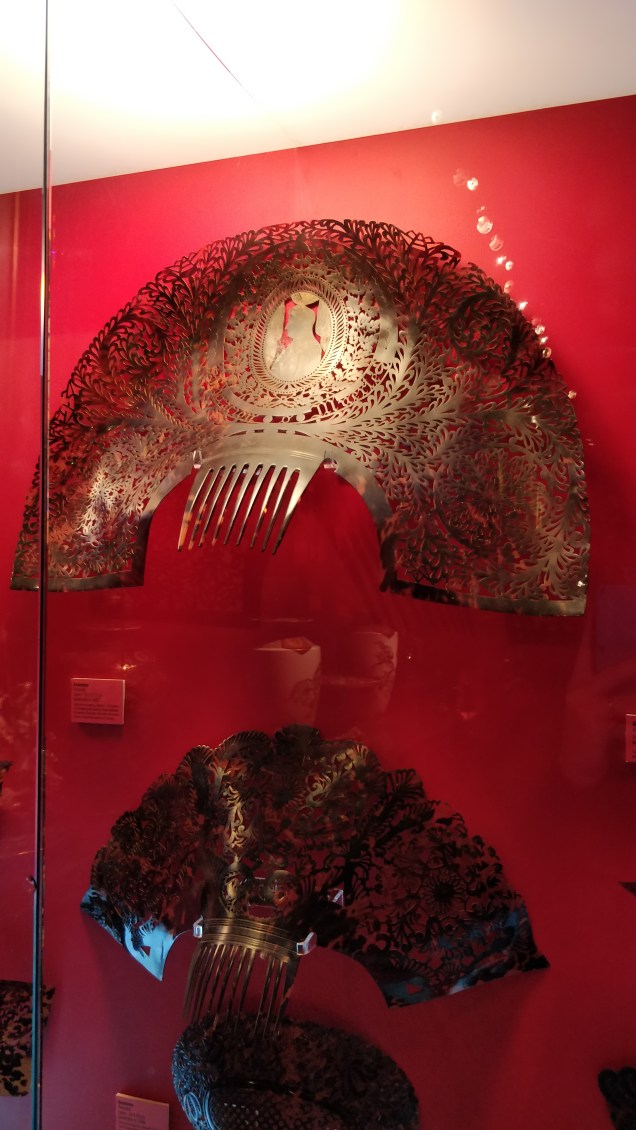
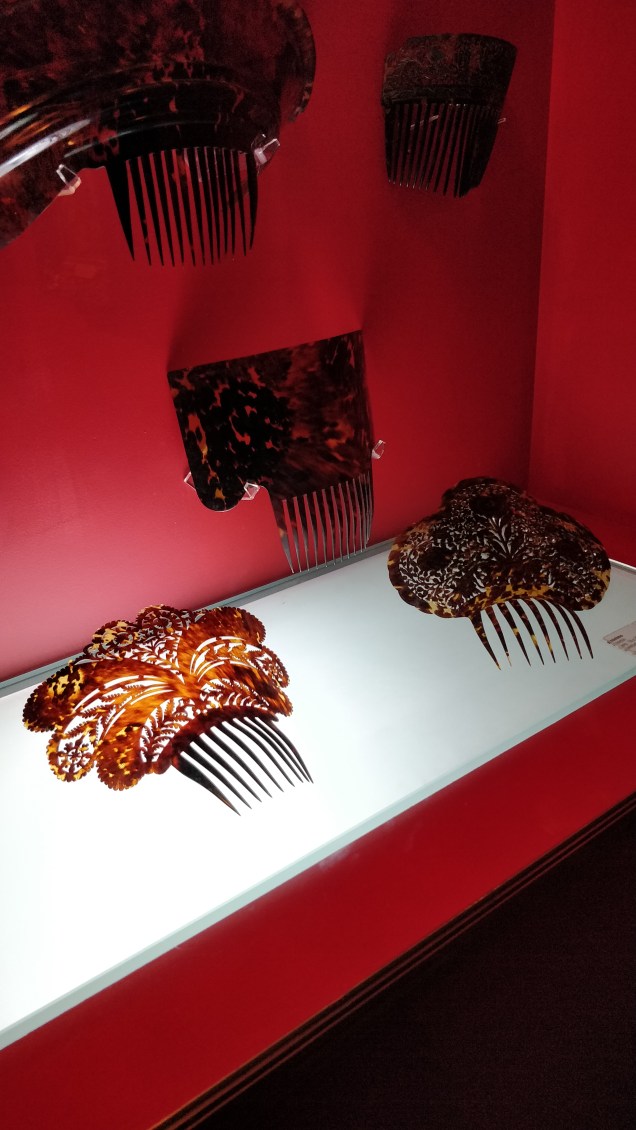
Obviously, as a national fine arts museum, Bellas Artes has a strong collection of Argentine and Latin American art. The international collection trends noticeably to European art. Let’s have a peek, starting with these things, because I am a big fan of hair decoration:
Who has this much hairHow do these not cause headaches
These are peinetónes, very large versions of the Spanish peineta that were distinct to the fashion of the Rio de la Plata region in the 1830s, until shitty men took to criticizing the elaborate and expensive combs in the most sexist way possible (“terrible women neglect their families and whore themselves out in pursuit of this extravagance!”), and their use declined. You can find several contemporary illustrations mocking the peinetón. Certainly, there are reasonable criticisms to be made of fashions that are uncomfortable, inconvenient, and costly, but “look at these shallow immoral bimbos” is just the worst.
On to the older European stuff!
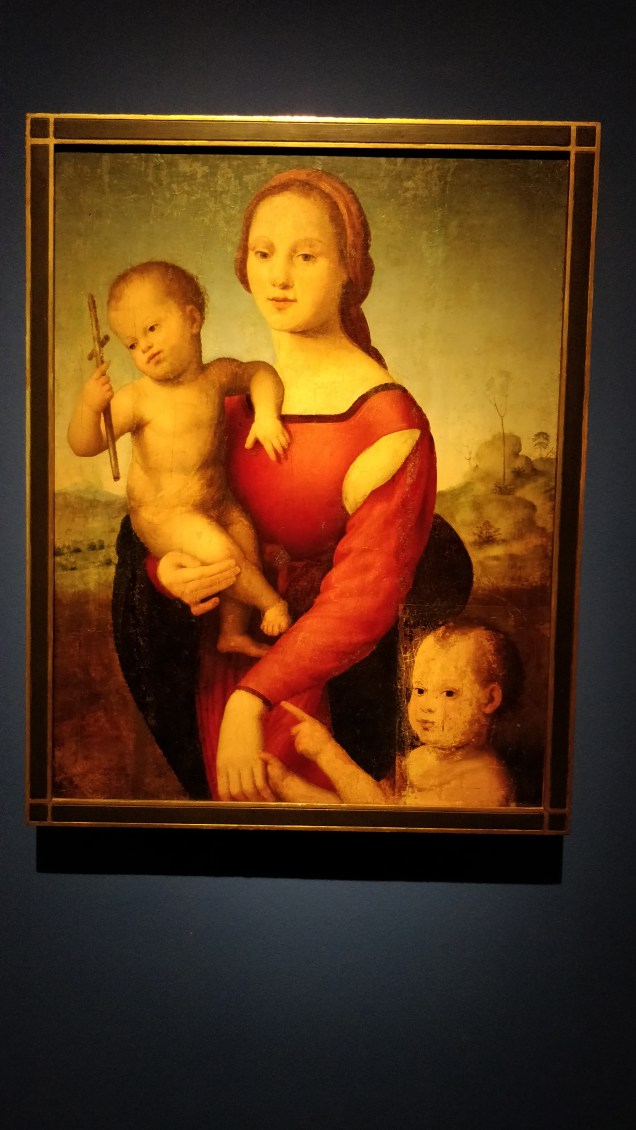
St John here giving you a big hint as to who the principal subject here is, or else trying to draw attention to the incredibly inappropriate baby toy.
Early 1500s Virgin and Child with St John from Florence.
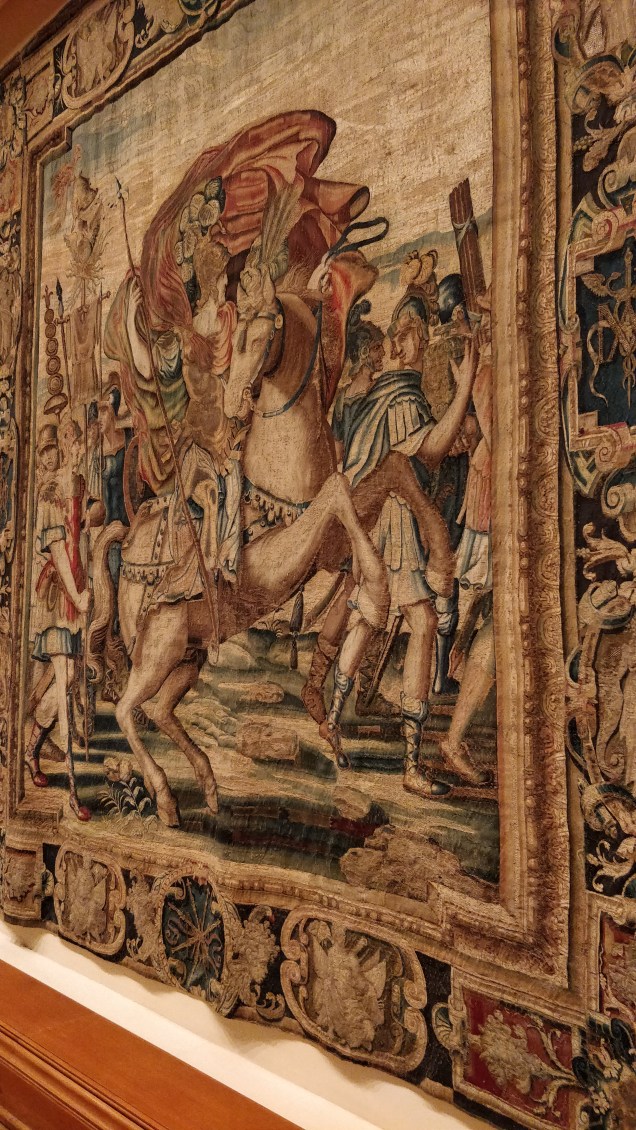
If I ever have a castle, Imma get so many tapestries
This is a Belgian-made tapestry from the early 1600s. As someone who can barely sit still long enough to embroider a simple outline figure on a handkerchief, I am always deeply impressed by tapestries.
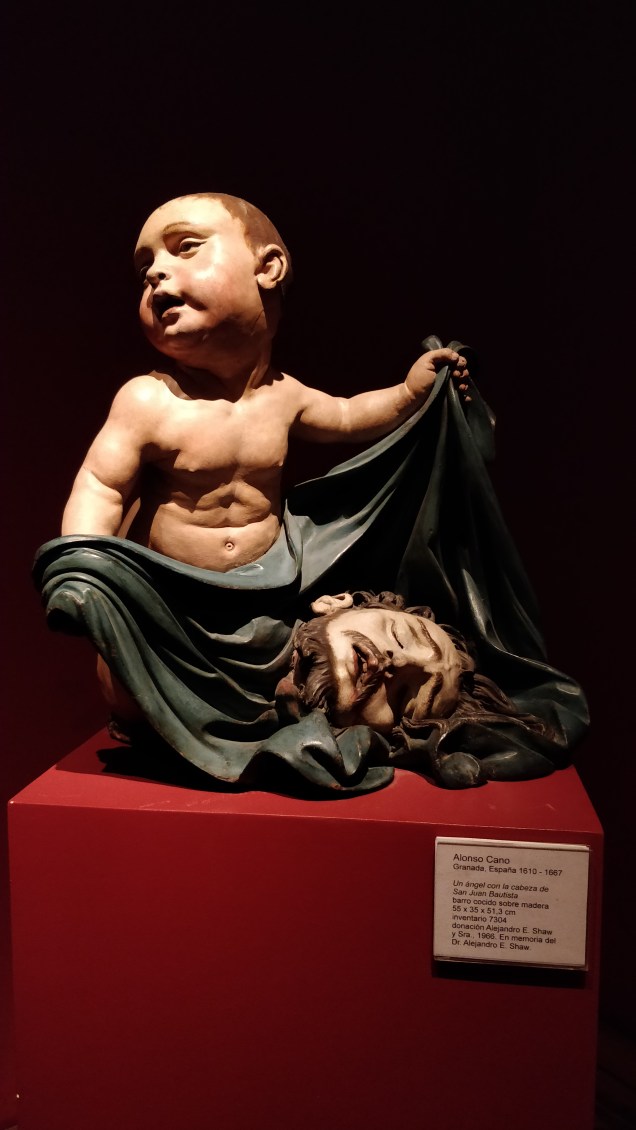
If you leave severed heads laying around, the baby is totally going to get into them.
This is a 17th century wood sculpture, “An angel with the head of St John the Baptist.” This stuff is all pretty typical of the time and region.
Moving forward, time-wise, the collection includes examples from a lot of the big dudes, El Greco, Rubens, Rembrant, Degas, van Gogh, Monet, Kandinsky, Pollock, Rothko, and so on.
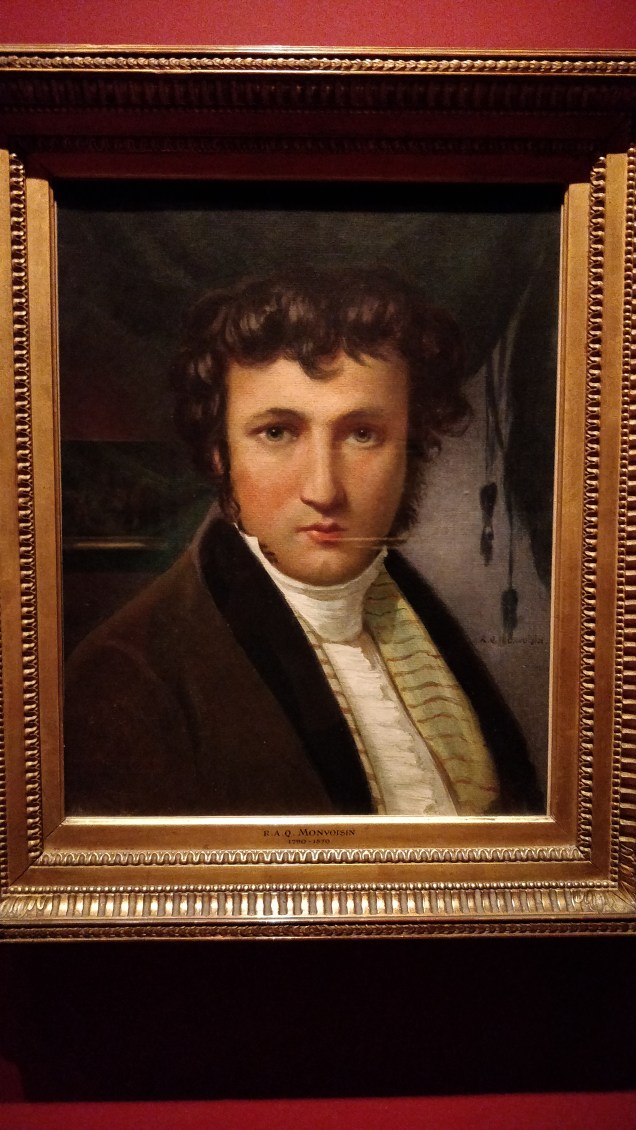
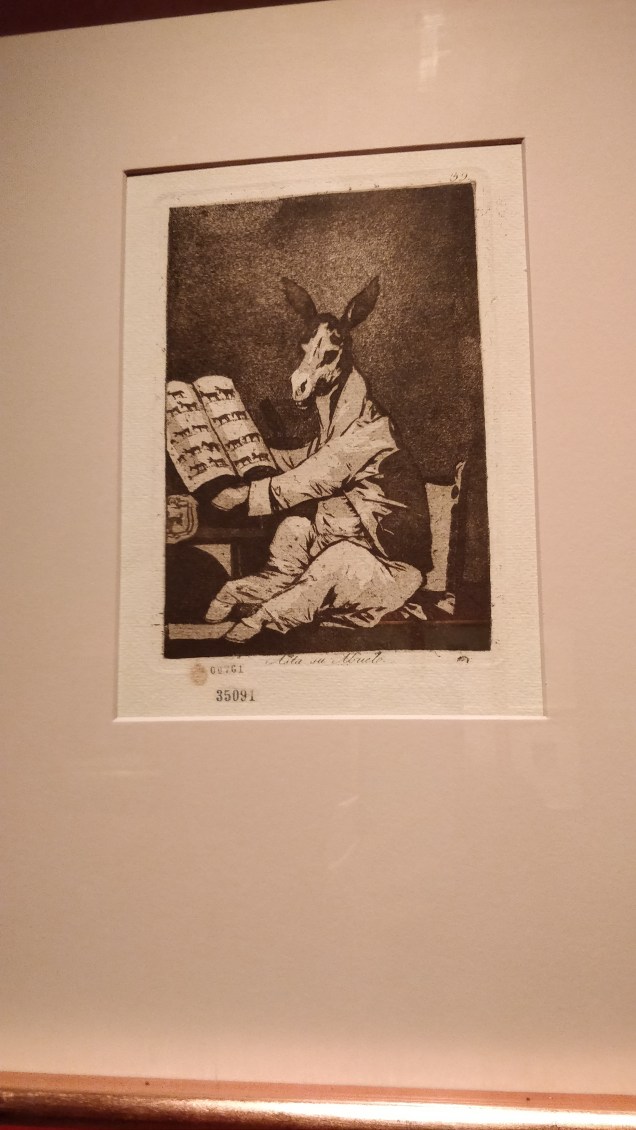
Raymond Monvoision, “self portrait,” early 1800s France.Goya, doing Goya things.
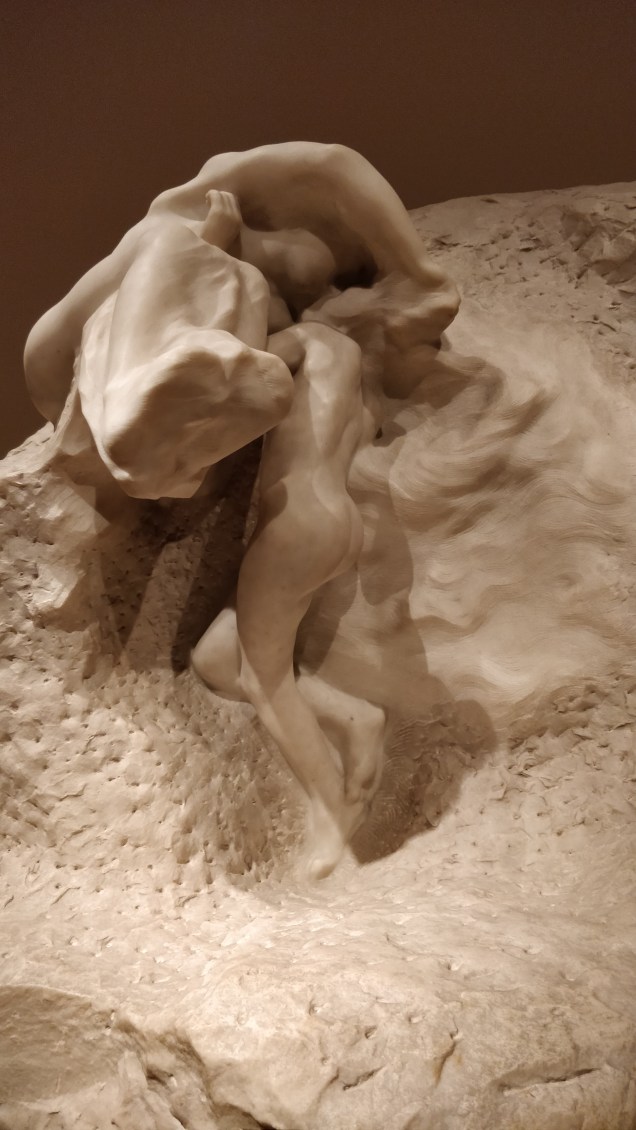
There’s a lot of Rodin, owing to the museum’s first director’s admiration of him.
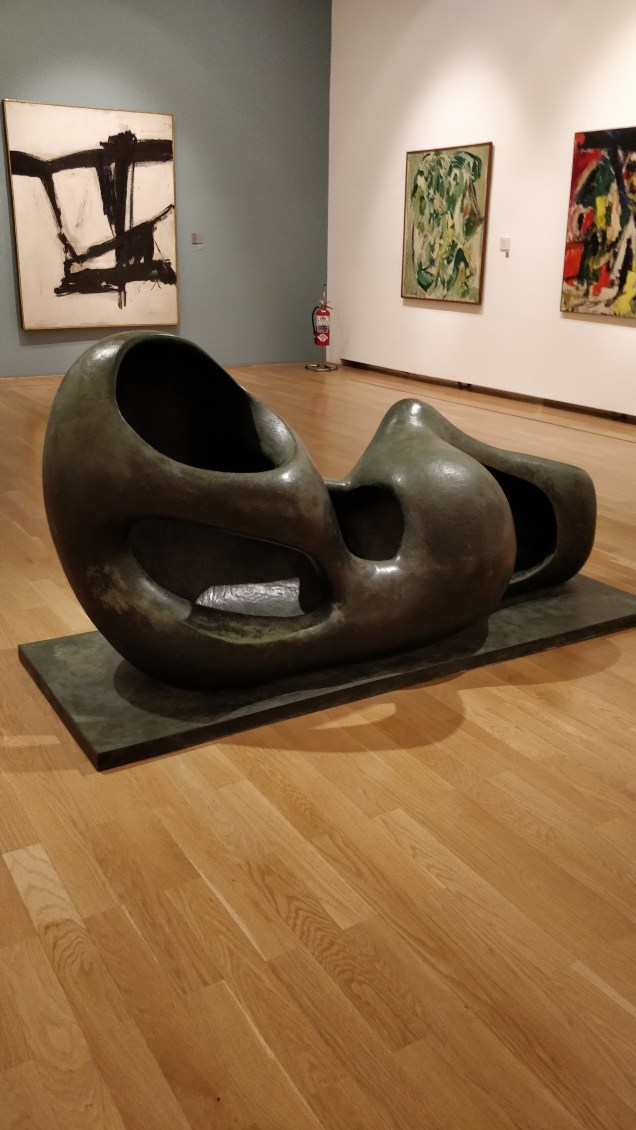
“The Earth and the Moon,” 1898, because how many times do you really want to look at “The Kiss”Henry Moore, “Reclining Figure, External Forms“
But let’s turn our attention to the Argentine artists, my very favorite feature of Bellas Artes.
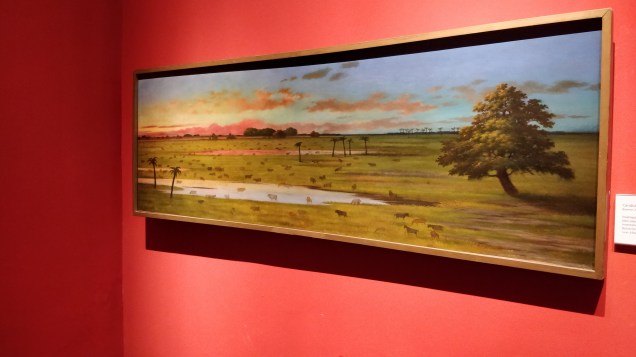
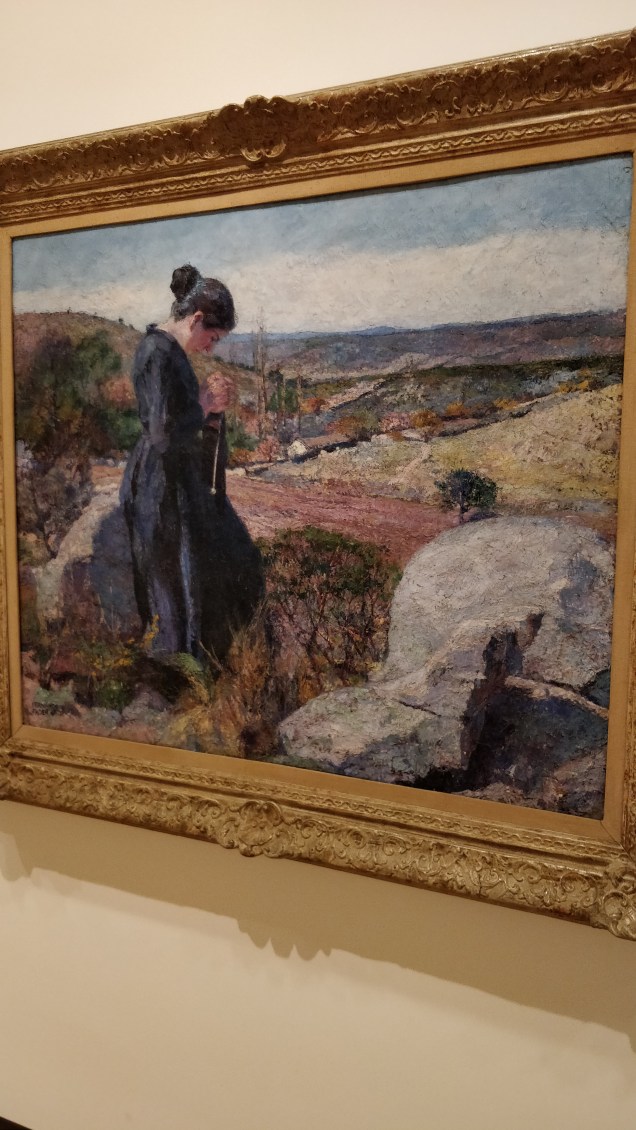
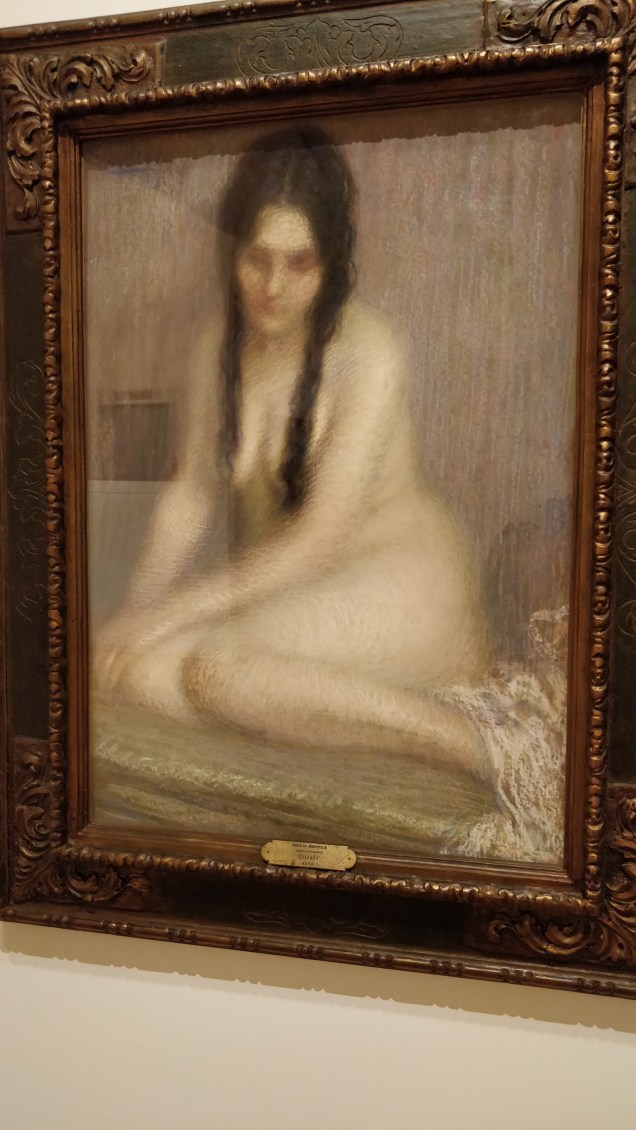
Cándido López’s “Wintering Eastern Army,” more beautiful in person than any photo I’ve seen.“To the Sunshine” by Fernando Fader, 1922, included here because she’s knitting.“Nude” by Emilia Bertolé, 1919
And into more modern styles:
“The Improviser,” Emilio Pettoruti, 1937
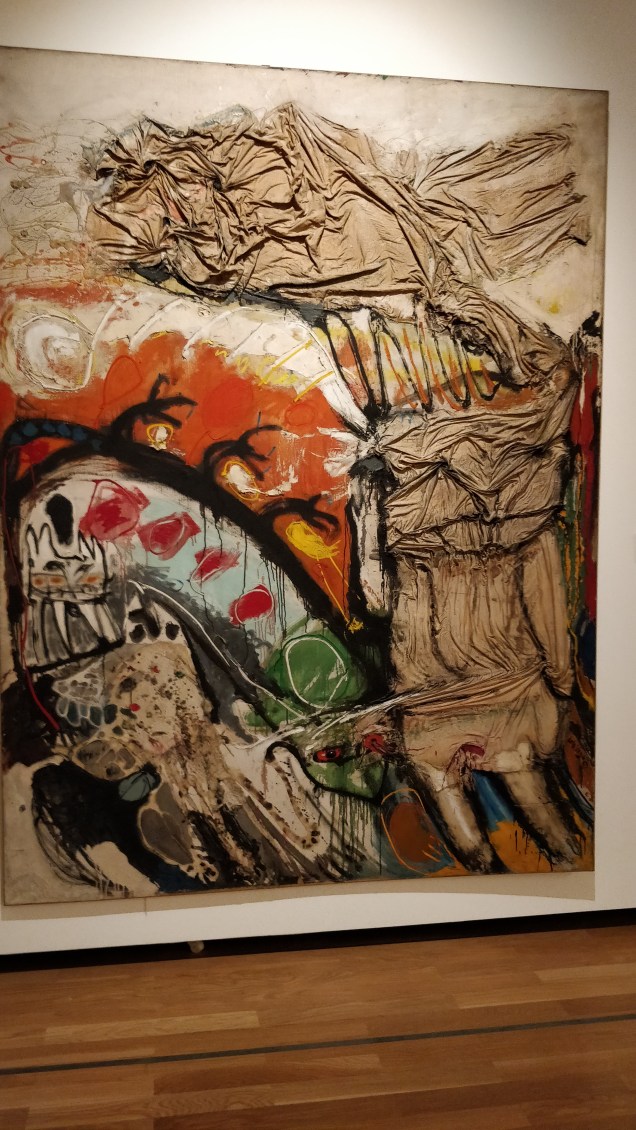
And mixed media works, such as Jorge de la Vega’s “A Timid Person’s Intimacy” (1963):
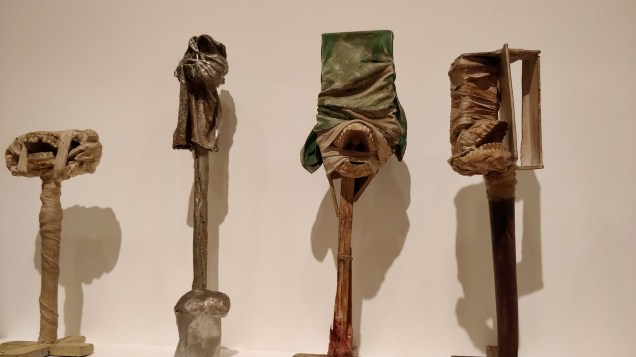
There are also, of course, Argentine sculptors represented, such as Alberto Heredia, who worked with discarded items to create his censorship allegory “The Gagged” in the early 1970s.
JEEEEEZUS WHAT THE HELL MAN
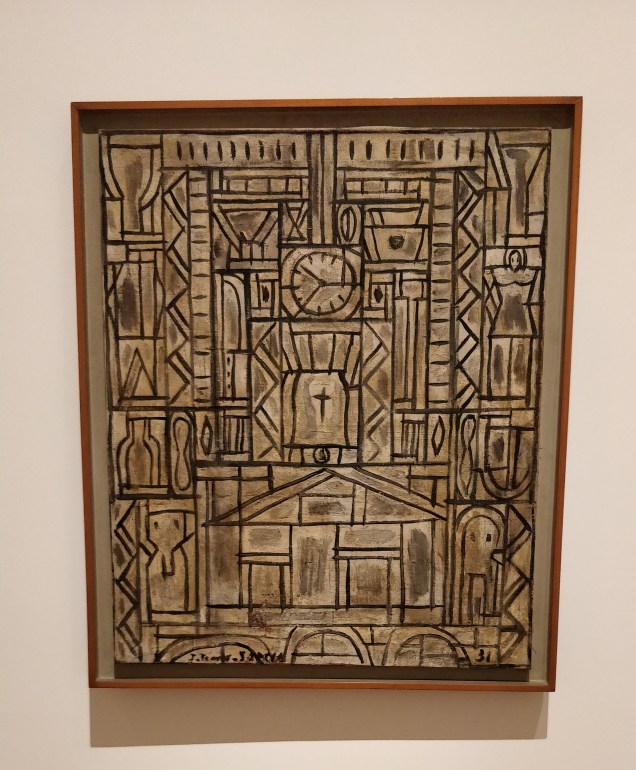
I’m also tacking on Joaquín Torres Garcia, who wasn’t Argentine but Uruguayan, because I really love his stuff so much.
“Contrast,” 1931
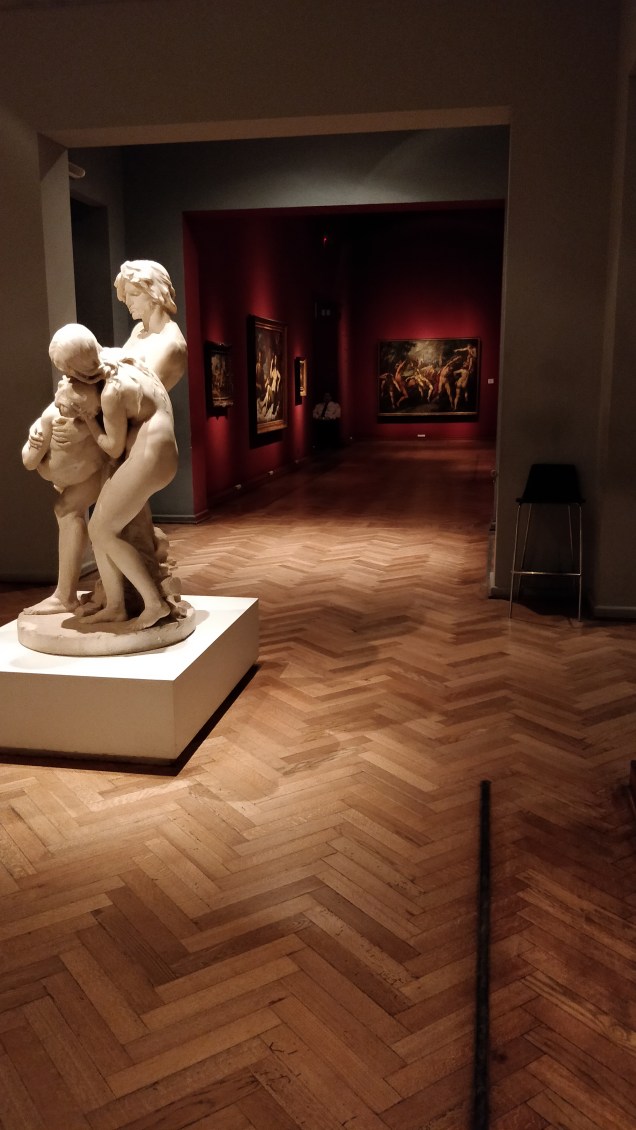
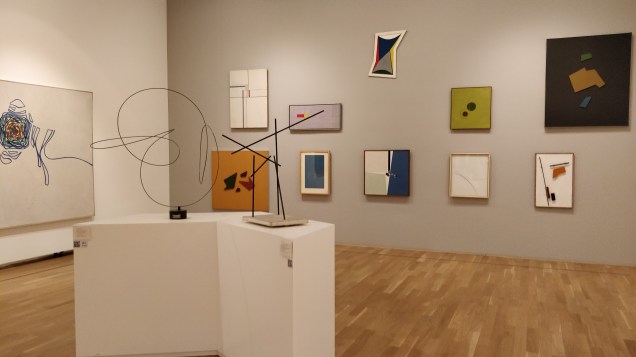
Finally, here’s views of a couple of galleries, to give you a feel for the place, and the difference between the classical art galleries and the modern ones.
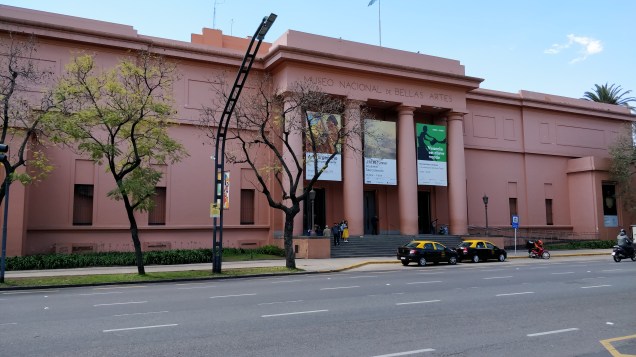
The Museo Nacional de Bellas Artes is big and pink and hard to miss at Av. de Libertador 1473 in Recoleta. You can get there on a lot of bus lines and the H line of the subway. It’s open 11am to 8pm Tuesdays through Fridays and 10am to 8pm Saturdays and Sundays. It’s free for Argentina residents and 100 pesos (currenetly about 3 bucks US) for non-residents, although it is free on Tuesdays and 645pm-8pm Wednesdays through Sundays. There’s a free English tour at 230pm on Wednesdays and Fridays. Most of the signage is also in English.






























 The Exhibitist